EP0520370A2 - Procédé de préparation de polysulfures d'arylène utilisant des déchets - Google Patents
Procédé de préparation de polysulfures d'arylène utilisant des déchets Download PDFInfo
- Publication number
- EP0520370A2 EP0520370A2 EP92110561A EP92110561A EP0520370A2 EP 0520370 A2 EP0520370 A2 EP 0520370A2 EP 92110561 A EP92110561 A EP 92110561A EP 92110561 A EP92110561 A EP 92110561A EP 0520370 A2 EP0520370 A2 EP 0520370A2
- Authority
- EP
- European Patent Office
- Prior art keywords
- poly
- polymer
- arylene sulfide
- polymerization
- waste material
- Prior art date
- Legal status (The legal status is an assumption and is not a legal conclusion. Google has not performed a legal analysis and makes no representation as to the accuracy of the status listed.)
- Withdrawn
Links
Images




Classifications
-
- C—CHEMISTRY; METALLURGY
- C08—ORGANIC MACROMOLECULAR COMPOUNDS; THEIR PREPARATION OR CHEMICAL WORKING-UP; COMPOSITIONS BASED THEREON
- C08J—WORKING-UP; GENERAL PROCESSES OF COMPOUNDING; AFTER-TREATMENT NOT COVERED BY SUBCLASSES C08B, C08C, C08F, C08G or C08H
- C08J11/00—Recovery or working-up of waste materials
- C08J11/04—Recovery or working-up of waste materials of polymers
- C08J11/06—Recovery or working-up of waste materials of polymers without chemical reactions
-
- C—CHEMISTRY; METALLURGY
- C08—ORGANIC MACROMOLECULAR COMPOUNDS; THEIR PREPARATION OR CHEMICAL WORKING-UP; COMPOSITIONS BASED THEREON
- C08G—MACROMOLECULAR COMPOUNDS OBTAINED OTHERWISE THAN BY REACTIONS ONLY INVOLVING UNSATURATED CARBON-TO-CARBON BONDS
- C08G63/00—Macromolecular compounds obtained by reactions forming a carboxylic ester link in the main chain of the macromolecule
- C08G63/68—Polyesters containing atoms other than carbon, hydrogen and oxygen
- C08G63/688—Polyesters containing atoms other than carbon, hydrogen and oxygen containing sulfur
-
- C—CHEMISTRY; METALLURGY
- C08—ORGANIC MACROMOLECULAR COMPOUNDS; THEIR PREPARATION OR CHEMICAL WORKING-UP; COMPOSITIONS BASED THEREON
- C08G—MACROMOLECULAR COMPOUNDS OBTAINED OTHERWISE THAN BY REACTIONS ONLY INVOLVING UNSATURATED CARBON-TO-CARBON BONDS
- C08G75/00—Macromolecular compounds obtained by reactions forming a linkage containing sulfur with or without nitrogen, oxygen, or carbon in the main chain of the macromolecule
- C08G75/02—Polythioethers
- C08G75/0204—Polyarylenethioethers
- C08G75/025—Preparatory processes
- C08G75/0259—Preparatory processes metal hydrogensulfides
-
- C—CHEMISTRY; METALLURGY
- C08—ORGANIC MACROMOLECULAR COMPOUNDS; THEIR PREPARATION OR CHEMICAL WORKING-UP; COMPOSITIONS BASED THEREON
- C08J—WORKING-UP; GENERAL PROCESSES OF COMPOUNDING; AFTER-TREATMENT NOT COVERED BY SUBCLASSES C08B, C08C, C08F, C08G or C08H
- C08J2381/00—Characterised by the use of macromolecular compounds obtained by reactions forming in the main chain of the macromolecule a linkage containing sulfur with or without nitrogen, oxygen, or carbon only; Polysulfones; Derivatives of such polymers
- C08J2381/02—Polythioethers; Polythioether-ethers
-
- Y—GENERAL TAGGING OF NEW TECHNOLOGICAL DEVELOPMENTS; GENERAL TAGGING OF CROSS-SECTIONAL TECHNOLOGIES SPANNING OVER SEVERAL SECTIONS OF THE IPC; TECHNICAL SUBJECTS COVERED BY FORMER USPC CROSS-REFERENCE ART COLLECTIONS [XRACs] AND DIGESTS
- Y02—TECHNOLOGIES OR APPLICATIONS FOR MITIGATION OR ADAPTATION AGAINST CLIMATE CHANGE
- Y02W—CLIMATE CHANGE MITIGATION TECHNOLOGIES RELATED TO WASTEWATER TREATMENT OR WASTE MANAGEMENT
- Y02W30/00—Technologies for solid waste management
- Y02W30/50—Reuse, recycling or recovery technologies
- Y02W30/62—Plastics recycling; Rubber recycling
Definitions
- This invention relates to poly(arylene sulfide), (PAS) polymers.
- this invention relates to a process for the preparation of poly(arylene sulfide) polymers wherein waste material is used as a reactant in the polymerization.
- the waste material is obtained as an undesired by-product of a previous poly(arylene sulfide) polymerization. In another embodiment, the waste material is obtained as an undesired product during the purification of a previously prepared poly(arylene sulfide) polymer. In yet another embodiment, the waste material is previously prepared poly(arylene sulfide) polymer obtained from commercial production which is not within the specifications for the desired product. In yet another embodiment, the waste material is poly(arylene sulfide) material that has been sufficiently contaminated during preparation and/or recovery so that it is unacceptable for its originally intended use.
- Poly(arylene sulfide) polymers are generally known in the art and have been found useful due to their high chemical and thermal resistance. Processes for the preparation of such poly(arylene sulfide) polymers have been disclosed in the art. In a typical preparation, at least one dihaloaromatic compound, a sulfur source, and a polar organic compound are contacted under polymerization conditions. Often certain molecular weight enhancing agents are also added during the polymerisation. At the termination of the polymerization, the desirable product is recovered from the polar organic compound, unconsumed reactants and by-product inorganic salts and any water which may be present.
- Some recovery processes for poly(arylene sulfide) polymers additionally separate desirable higher molecular weight product from the less desirable low molecular weight poly(arylene sulfide) and cyclic and linear oligomers. Occasionally, a recovered poly(arylene sulfide) polymer is subjected to a purification process to remove lower molecular weight portions, oligomers and other impurities from the more desirable higher molecular weight portions.
- poly(arylene sulfide) polymer is occasionally produced which is not within the specifications for the desired product.
- polymer product can become contaminated by coming into contact with compounds which are not intended to be a part of the particular product.
- undesired materials must be disposed of in some manner, for example, by placing such material in a landfill or blending such material with other product to render it usable. It would be economically and environmentally desirable to have a process using at least a portion of such undesirable or waste materials so that some of the material need not be disposed of.
- poly(arylene sulfide) polymers are prepared by contacting a polymerization reaction mixture comprising at least one dihaloaromatic compound, a sulfur source, and a polar organic compound with a poly(arylene sulfide) waste material under polymerization conditions.
- the waste material comprises relatively low molecular weight poly(arylene sulfide) polymer when compared to the poly(arylene sulfide) polymer prepared by the invention process.
- the waste material comprises poly(arylene sulfide) polymer of equal or higher molecular weight than the poly(arylene sulfide) polymer prepared by the invention process.
- This invention provides a method whereby material that is ordinarily discarded or otherwise disposed of can be used in subsequent polymerizations to produce desirable polymer.
- Figure 1 depicts a molecular weight distribution measured by gel permeation chromatography (GPC) for a poly(arylene sulfide) waste material.
- Figure 2 depicts the GPC molecular weight distribution of a poly(arylene sulfide) polymer prepared by conventional methods.
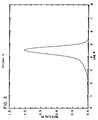
- Figure 3 depicts the GPC molecular weight distribution of a poly(arylene sulfide) polymer prepared according to the invention method.
- Figure 4 depicts a comparison of a theoretical GPC molecular weight distribution prepared by mathematically combining the GPC distributions of a poly(arylene sulfide) polymer and a poly(arylene sulfide) waste material with a measured GPC molecular weight distribution for a polymer prepared according to the invention.
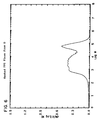
- Figures 5 and 6 depict the GPC molecular weight distributions of poly(arylene sulfide) polymer waste materials that were washed to remove certain components.
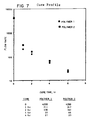
- Figure 7 graphically depicts a comparison of curing behavior of a conventionally prepared poly(arylene sulfide) polymer and a polymer prepared according to this invention.
- the poly(arylene sulfide) polymer is prepared according to this invention by contacting a polymerization reaction mixture comprising at least one dihaloaromatic compound, a sulfur source, and a polar organic compound with poly(arylene sulfide) waste material under polymerization conditions.
- Dihaloaromatic compounds which can be employed in the process of this invention can be represented by the formula where each X is selected from the group consisting of chlorine, bromine, and iodine, and each R is selected from the group consisting of hydrogen and hydrocarbyl in which the hydrocarbyl can be an alkyl, cycloalkyl, or aryl radical or combination thereof such as alkaryl, aralkyl, or the like, the total number of carbon atoms in each molecule being within the range of 6 to about 24. While the halogen atoms can be in any position in the dihaloaromatic compound, it is preferred to employ p-dihalobenzenes as the dihaloaromatic compound.
- p-dihalobenzenes examples include p-dichlorobenzene (DCB), p-dibromobenzene, p-diiodobenzene, 1-chloro-4-bromobenzene, 1-chloro-4-iodobenzene, 1-bromo-4-iodobenzene, 2,5-dichlorotoluene.
- DCB p-dichlorobenzene
- DCB p-dibromobenzene
- p-diiodobenzene 1-chloro-4-bromobenzene
- 1-chloro-4-iodobenzene 1-bromo-4-iodobenzene
- 2,5-dichlorotoluene 2,5-dichlorotoluene.
- Any suitable sulfur source can be employed in the process of this invention.
- Suitable sulfur sources are disclosed in U.S. 3,919,177, which is hereby incorporated by reference.
- Such suitable sulfur sources include, but are not limited to thiosulfates, thioureas, thioamides, elemental sulfur, thiocarbamates, metal disulfides and oxysulfides, thiocarbonates, organic mercaptans, organic mercaptides, organic sulfides, alkali metal sulfides and bisulfides and hydrogen sulfide. It is presently preferred to use an alkali metal sulfide as the sulfur source.
- Alkali metal sulfides which can be employed in the process of this invention include lithium sulfide, sodium sulfide, potassium sulfide, rubidium sulfide, cesium sulfide, and mixtures thereof.
- the alkali metal sulfide is used as a hydrate or as an aqueous mixture.
- the alkali metal sulfide can be prepared as an aqueous solution by the reaction of an alkali metal hydroxide with an alkali metal bisulfide in aqueous solution. It is preferred to use sodium sulfide or a combination of sodium bisulfide and sodium hydroxide as the sulfur source in this invention.
- the polar organic compounds useful in the present invention are solvents for the dihaloaromatic compounds and the sulfur source used in the production of poly(arylene sulfide) polymers.
- Examples of such polar organic compounds include amides, including lactams, and sulfones.
- polar organic compounds include hexamethylphosphoramide, tetramethylurea, N,N'-ethylenedipyrrolidone, N-methyl-2-pyrrolidone (NMP), pyrrolidone, caprolactam, N-ethylcaprolactam, sulfolane, N,N'-dimethylacetamide, 1,3-dimethyl-2-imidazolidinone, low molecular weight polyamides, and the like.
- NMP N-methyl-2-pyrrolidone
- the polar organic compound presently preferred is NMP.
- alkali metal carboxylates such as alkali metal carboxylates, lithium halides, or water can be added or produced during polymerization.
- Suitable alkali metal carboxylates which can be employed include those having the formula R'CO2M where R' is a hydrocarbyl radical selected from alkyl, cycloalkyl, aryl, alkylaryl, arylalkyl, and the number of carbon atoms in R' is in the range of 1 to about 20, and M is an alkali metal selected from lithium, sodium, potassium, rubidium and cesium.
- the alkali metal carboxylate can be employed as a hydrate or as a solution or dispersion in water.
- the preferred alkali metal carboxylate is sodium acetate due to availability and effectiveness.
- the poly(arylene sulfide) waste material which is contacted with the polymerization reaction mixture according to this invention generally comprises relatively low molecular weight poly(arylene sulfide) polymer as compared to the poly(arylene sulfide) polymer prepared by the invention process.
- the poly(arylene sulfide) waste material which is employed in the invention process comprises poly(arylene sulfide) polymer of equal or higher molecular weight than the poly(arylene sulfide) polymer prepared using the waste material.
- the waste material can also contain of other components such as, for example, cyclic and linear oligomers, polar organic compound, dihaloaromatic compounds and tri- or tetra- haloaromatic compounds, inorganic salts, poly(arylene sulfide) polymerization by-products, and various contaminants introduced during a poly(arylene sulfide) polymerization or recovery.
- other components such as, for example, cyclic and linear oligomers, polar organic compound, dihaloaromatic compounds and tri- or tetra- haloaromatic compounds, inorganic salts, poly(arylene sulfide) polymerization by-products, and various contaminants introduced during a poly(arylene sulfide) polymerization or recovery.
- the waste material can be obtained as undesired material (by-product) during the recovery of useful and desired poly(arylene sulfide) polymer following the termination of a poly(arylene sulfide) polymerization.
- Poly(arylene sulfide) polymerizations are generally disclosed in the art.
- U.S. 3,354,129 which is hereby incorporated by reference
- U.S. 3,919,177, and U.S. 4,645,826 all disclose methods of preparing poly(arylene sulfide) polymers.
- the above-cited patent publications also disclose methods for recovering a useful poly(arylene sulfide) polymer product.
- Another suitable method of recovering poly(arylene sulfide) polymer products is disclosed in U.S. 4,415,729, which is hereby incorporated by reference.
- Another method of producing poly(arylene sulfide) waste material is by separating the waste material from a desired product in a process to purify an already prepared and recovered poly(arylene sulfide) polymer.
- the waste material obtained from a purification of previously prepared poly(arylene sulfide) can contain relatively low molecular weight poly(arylene sulfide) polymers, cyclic and linear oligomers, inorganic salts and water.
- poly(arylene sulfide) waste material is as recovered polymer product from a commercial production run which is determined to be outside the desired specifications for sellable product.
- This material can be otherwise acceptable polymer of either relatively low or high molecular weight and can be prepared by any method known to those of ordinary skill in the art, such as those previously referenced.
- Poly(arylene sulfide) waste material can also be obtained as otherwise acceptable polymer product which was contaminated during production or recovery by coming into contact with materials which were not meant to be in that particular product. Contamination can occur, for example, by contacting the polymer with dirty equipment or surfaces in the production facility.
- the poly(arylene sulfide) polymer prepared by the invention method can be either high or low molecular weight polymer.
- the term low molecular weight poly(arylene arylene sulfide) polymer is generally meant to denote a poly(arylene sulfide) polymer having a melt flow value in the range of greater than 1000 g/10 min. to about 30,000 g/10 min. when measured according to ASTM D 1238, Condition 316/5.
- high molecular weight poly(arylene sulfide) polymer is generally meant to denote an essentially linear poly(arylene sulfide) polymer having a melt flow value less than about 1000 g/10 min when in an uncured state.
- Essentially linear poly(arylene sulfide), as used herein is defined as a polymer having no branching or such a small amount of branching as to have substantially no effect on the polymer properties. For example, the amount of polyhaloaromatic impurity found in the dihaloaromatic used in the poly(arylene sulfide) polymerization process would not be sufficient to cause the resultant poly(arylene sulfide) to be outside the essentially linear definition).
- poly(arylene sulfide) polymer which is of relatively lower molecular weight than the polymer prepared by the invention method.
- relatively lower molecular weight poly(arylene sulfide) polymer used herein to refer to the waste material, is meant to denote that the poly(arylene sulfide) polymer contained in the waste material is of lower molecular weight than the molecular weight of the desired poly(arylene sulfide) product resulting from the invention polymerization process.
- any poly(arylene sulfide) polymer portion which is of lower molecular weight than the desired product can be used, however it is envisioned that the relatively lower molecular weight poly(arylene sulfide) polymer in the waste stream would have a low enough molecular weight that its inclusion in the desired product from which it was separated would detrimentally effect the desired product's properties. In this manner, the economics of the invention method's operation are optimized. Generally, the relatively lower molecular weight poly(arylene sulfide) polymer which is separated out as undesirable will have extrusion rates and melt flow rates which are at least 50% greater than those of the desired product from which it was separated, when measured according to ASTM D 1238, Condition 316/0.345 and Condition 316/5, respectively.
- the waste material can contain poly(arylene sulfide) polymer having the same or a higher molecular weight than the polymer prepared by the invention method.
- cyclic and/or linear oligomers will generally have the formula where 4 ⁇ n ⁇ 15.
- Linear oligomers contained in the waste material will generally have the formula where X and Y are end-groups occurring as by-products of the polymerization. End groups that will typically be present are hydrogen atoms, halogen atoms, thiols and the salts thereof, phenoxy groups, hydroxyls and the salts thereof, cyclic amides groups and substituted and unsubstituted amines of the formula where R1 and R2 are selected from hydrogen, alkyl groups having 1-10 carbon atoms and carboxylic acids having from 1 to 10 carbon atoms and the salts thereof.
- the waste material can optionally contain other components such as unreacted polymerization reactants and polymerization modifiers.
- alkali metal carboxylates can be used as polymerization modifiers as disclosed in U.S. 3,919,177, and can therefore be present in the waste material.
- Lithium halides can also be used as modifiers and can therefore be present in the waste material.
- the waste material may also contain some amount of water, which was added during polymerization as a modifier or with the other reactants, produced during the polymerization reaction, or added during recovery of the polymer.
- the waste material can contain otherwise acceptable poly(arylene sulfide) polymer which was contaminated during polymerization and/or recovery. It should be noted that the waste material which is used in this invention should not contain components which might act as polymerization chain terminating agents during polymerization. For example, the waste material should not contain significant amounts of thiophenol.
- waste material that has had one or more components removed by various methods such as, for example, distillation, solvent extraction, and filtration.
- the ratio of reactants employed in the polymerization process can vary widely. It is preferred that the molar ratio of the amount of dihaloaromatic compound to amount of sulfur source be in the range of about 0.8/1 to about 2/1. If an alkali metal carboxylate is employed as a molecular weight modifying agent, it is preferred that the molar ratio of alkali metal carboxylate to dihaloaromatic compound be within the range of about 0.05/1 to about 4/1.
- the amount of polar organic compound employed can vary during the polymerization over a wide range.
- the molar ratio of the amount of polar organic compound to the range of sulfur source is in the range of 1/1 to 10/1.
- the amount of waste material which is contacted with the polymerization reaction mixture can vary widely. Generally, the upper limit on the amount of waste material employed will be imposed by the various limitations of the process vessels such as volume or solids handling limitations.
- the amount of waste material should be limited in combination with the components of the reaction mixture so that the general guidelines regarding relative amounts of reactants set forth above are followed.
- the waste material can contain amounts of certain reactants so that it is not necessary to add any additional amount of that particular reactant to the polymerization mixture.
- higher molecular weight poly(arylene sulfide) waste material is added to poly(arylene sulfide) polymerization, it is preferred that the amount added not exceed that amount necessary to cause liquid-liquid phase separation of the polymerization mixture, so that the invention process produces polymer having the originally intended molecular weight.
- the components of the reaction mixture can be contacted with each other in any order.
- the waste material can be contacted with the components of the polymerization reaction mixture at any time prior to or during polymerization. If the waste material contains a significant amount of water, it is preferred that the waste material be contacted with the sulfur source and polar organic compound under conditions sufficient to remove at least a portion of the water prior to addition of the dihaloaromatic compound and commencement of the polymerization; or in the alternative, it is preferred that the waste material be added at a later point during the polymerization so that the addition of the waste material containing water does not adversely affect the polymerization. If the waste material containing water is to be added after commencement of the polymerization, it is preferred that at least 40% conversion of the dihaloaromatic monomer has taken place prior to the addition.
- the waste material is preferably contacted with the polymerization reaction mixture during a time sufficiently prior to termination of the polymerization in order to allow reaction of the waste material with the polymerization reaction mixture. It is therefore presently preferred to contact the waste material with the polymerization reaction mixture at least 30 minutes prior to termination of the polymerization.
- commencement of the polymerization is defined as that point at which the polymerization reaction mixture is first subjected to polymerization conditions sufficient to initiate polymerization.
- termination of polymerization is defined as that point at which an affirmative step is taken to effect a removal of the conditions necessary for polymerization to effectively continue, for example, by beginning the recovery of the poly(arylene sulfide) polymer from the polymerization mixture. It must be noted that use of the term termination of the polymerization does not imply that complete reaction of the polymerization reaction components has occurred. It should also be noted that, as used herein, the term termination of the polymerization is not meant to imply that no further polymerization of the reactants can take place.
- poly(arylene sulfide) polymer recovery is typically begun at a time when polymerization is substantially completed, that is, the increase in polymer molecular weight which would result from further polymerization is not significant enough to warrant the additional polymerization time.
- reaction temperature at which the polymerization is conducted can vary over a wide range, generally it will be within the range of about 170°C (347°F) to about 325°C (617°F), preferably about 200°C to about 290°C.
- the reaction time can vary widely, depending in part on the reaction temperature, but generally will be within the range of about 10 minutes to about 72 hours, preferably about 1 hour to about 8 hours.
- the pressure should be sufficient to maintain the polar organic compound and the dihaloaromatic compound substantially in the liquid phase.
- the poly(arylene sulfide) polymer prepared according to this invention can be recovered by any method known to those of ordinary skill in the art. It is within the scope of this invention to obtain poly(arylene sulfide) waste material for use in subsequent polymerizations during the recovery of desired poly(arylene sulfide) polymer prepared according to this invention. In this manner, a portion of the waste material resulting from the manufacture of poly(arylene sulfide) polymer can continuously be reused in subsequent polymerizations, avoiding the necessity of disposing of at least a portion of such waste material.
- the polymer extrusion rates reported as grams per 10 minutes (g/10 min), were determined by the method of ASTM D 1238, Condition 316/0.345.
- the orifice used for measuring the extrusion rate had a 2.096 +/- 0.005 mm diameter and a 31.75 +/- 0.05 mm length.
- Polymer melt flow values, in units of g/10 min, were determined by the method of ASTM D 1238, Condition 316/5.
- the orifice used for measuring the melt flow had a 2.096 +/-0.005 mm diameter and a 8.000 +/- 0.025 mm length.
- Poly(phenylene sulfide) (PPS) molecular weight determinations were done on a specially constructed high temperature gel permeation chromatography (GPC) instrument with a flame ionization detector. GPC analyses were carried out at 220°C in 1-chloronaphthalene. Results are reported in terms of the weight average molecular weight (Mw). Molecular weight values are based on polystyrene standards. For purposes of characterization of molecular weight distribution, the quantity of lower molecular weight material found in the samples have been described herein in terms of the weight percent in the 100 to 10,000 g/mol range.
- waste material employed in the following example has been described in terms of "fines” or “fine particle sized” material, it should be recognized that the poly(arylene sulfide) waste material employed in the invention process can be in any form or phase which can be added to the polymerization mixture.
- the waste material containing poly(arylene sulfide) polymer in the solid phase either in the form of fine particles or in a slurry where the polymer particles are dispersed in a liquid comprising a polar organic compound.
- This example describes the general preparation of a poly(p-phenylene sulfide) polymer, (PPS), according to the method disclosed in U.S. 3,919,177, and the separation of crude polymerization product into a granular, higher molecular weight product and a finer particle sized, lower molecular weight product.
- PPS poly(p-phenylene sulfide) polymer
- aqueous sodium bisulfide (NaSH) (419.8 moles), 428.2 moles aqueous sodium hydroxide (NaOH), a portion of the total 1400 moles of N-methyl-2-pyrrolidone (NMP), and 127.3 moles aqueous sodium acetate (NaOAc) in a stirred reactor were heated and a portion of the water was removed in a dehydration step.
- NaSH aqueous sodium bisulfide
- NaOH sodium hydroxide
- NMP N-methyl-2-pyrrolidone
- NaOAc aqueous sodium acetate
- the crude reactor product was filtered on a coarse filter (120 mesh screen) to remove the granular PPS product.
- An additional 983 moles of NMP was added to the reactor and was then used to rinse the solid PPS on the coarse filter.
- the filtrate a mixture of fine solids and liquid comprising, salts (primarily NaOAc and NaCl), NMP (including NMP rinse), DCB, water, and by-products, is referred to herein as the "crude filtrate".
- Control PPS polymerization Run 1 was carried out in a one-liter, stirred autoclave.
- the autoclave was charged with 1.0 g-mol NaSH as an aqueous mixture containing 73.4 weight percent NaSH, 1.02 g-mol NaOH, and 2.00 g-mol NMP. After the autoclave had been flushed with nitrogen, the stirred autoclave was heated and dehydration was carried out.
- Invention Run 2 was carried out using the procedure described for Run 1, except that approximately 5 g of washed PPS fines A from a sodium acetate-modified PPS polymerization were added to the reactor after the DCB charge. Washed PPS fines A had a Mw of 38000 g/mol and 29.0 weight percent in the lower molecular weight range between 100 and 10,000 g/mol. A comparison of the products from Runs 1 and 2 is shown in Table I. Both products have essentially the same extrusion rate, Mw, and level of low molecular weight material. The addition of the washed PPS fines in polymerization 2 gave an increase in product yield without increasing the amount of low molecular weight PPS compared with Run 1.
- Washed PPS fines B was prepared from another PPS crude filtrate using the same procedure as described in Example I. Washed PPS fines B had a Mw of 31,100 g/mol and had 37.9 weight percent between 100 and 10,000 g/mol. The GPC distribution of washed PPS fines B is shown in FIG. 1.
- Runs 3 and 4 were control runs without added fines. These runs were done in a manner similar to the procedure for Run 1 in Example II except for the use of three hours at 265°C instead of two hours. All polymerizations in these examples used three hours at 265°C, except for Runs 1 and 2.
- Runs 5, 6, and 7 involved the addition of three different levels of washed PPS fines B immediately after the NMP-DCB charge.
- Run 5 1.01 g-mol of DCB in 0.75 g-mol NMP was charged to the dehydrated mixture, followed by 5.4 g of washed PPS fines B in 0.25 g-mol NMP and a rinse with 10 g of NMP. Some of the fines remained in the charging cylinder; these fines were recovered and weighed and found to weight 0.6 g, so the amount of fines actually added to the polymerization was calculated to be 4.8 g.
- Runs 8 and 9 added washed PPS fines B at later times during the polymerization.
- 1.01 g-mol of DCB in 0.75 g-mol NMP was charged to the reactor after dehydration and after one hour at 235°C, 5.4 g of washed fines B in 0.25 g-mol NMP was charged to the mixture with a rinse with 10 g of NMP. It was calculated that 4.66 g of the fines was actually added.
- This example demonstrates the addition of a concentrated filtrate recovered from a PPS polymerization to another PPS polymerization.
- the concentrated filtrate C was prepared by placing a crude filtrate slurry on a filter to remove a portion of the liquid.
- the concentrated filtrate C thus comprised NMP, water, NaCl, NaOAc, DCB, PPS and minor amounts of other polymerization by-products. From analyses of both the original filtrate slurry and the concentrate by filtering a small portion, washing with hot water, (approximately 80°C) and drying in a vacuum oven, the poly(arylene sulfide) fines were found to comprise 1.27 weight percent in the original slurry and 2.6 weight percent in the concentrated filtrate C.
- a washed sample of the PPS fines from concentrated filtrate C had a Mw (measured by GPC) of 13,400 g/mol and 74.0 weight percent between 100 and 10,000 g/mol.
- the GPC distribution (FIG. 5) of the washed PPS fines from filtrate C shows the large amount of low molecular weight material present.
- This example describes the use of larger levels of a crude filtrate slurry from a PPS recovery process in another PPS polymerization.
- the crude filtrate slurry D contained 78.70 weight percent NMP, 4.42 weight percent water, 0.97 weight percent PPS fines, 15.53 weight percent salts, and 0.38 weight percent DCB.
- a small portion of the slurry D was filtered and washed with hot water to recover the washed PPS fines for analysis.
- the washed PPS fines had a weight average molecular weight of 25,100 g/mol. As shown in the GPC molecular weight distribution (FIG. 6), 55.7 weight percent of the washed PPS fines from D was in the 100 to 10,000 g/mol range.
- Table IV shows the results of the two invention runs with the results of Runs 3 and 4 from Example III for comparison.
- the GPC molecular weight values for the polymers from Runs 3 and 4 were re-run at this time for the most accurate comparison.
- the yield for Runs 10 and 11 were increased and the extrusion rates were about the same compared with the polymers in Runs 3 and 4.
- Run 14 is a control run with no added fines or crude filtrate.
- a one-liter, titanium autoclave was charged with 1.0 g-mol of aqueous NaSH, 1.02 g-mol NaOH, 0.3 g-mol NaOAc, and 2.5 g-mol of NMP.
- the autoclave was flushed with nitrogen, closed and heated with stirring. During dehydration, water was removed through a vent line.
- Run 15 was another control run carried out in the same manner as in Run 14 except that the DCB charge was reduced to 1.005 g-mole.
- Invention run 16 was done in a manner similar to that in Run 14 except that 10.8 g of washed PPS fines B (described in Example III) with 74.34 g of NMP were added after the DCB charge.
- DCB was charged along with 0.25 g-mol NMP.
- the fines addition was followed with a rinse consisting of 49.57 g of NMP. About 2.1 g of the fines remained in the charge vessel, so it was calculated that 8.7 g was actually introduced into the polymerization.
- Invention Run 17 was carried out in a manner similar to that described for Run 14 except that the DCB was charged with 125.38 g of crude filtrate slurry D (described in Example V) as a source of NMP.
- Invention Run 18 added 10.8 g of washed PPS fines A (described in Example II) in 80 g of NMP after the charge of DCB in 0.5 g-mol NMP. Approximately 19 g NMP was used as a final rinse.
- Invention Run 19 was carried out as in Run 18 except for a smaller amount (5.4 g) of washed fines A added with the DCB.
- Invention Run 20 was similar to Run 17 except that crude filtrate D was used in both the dehydration and polymerization as the source of NMP.
- Invention Run 21 was similar to Run 20 except for being run at 1 ⁇ 2 the scale of Run 20 to improve agitation of the polymerization mixture.
- the reactor was charged with 0.50 g-mol NaSH, 0.51 g-mol NaOH, 0.15 g-mol NaOAc, and 156.7 g of crude filtrate D before dehydration.
- 0.505 g-mol of DCB and 62.69 g of crude filtrate D were added after dehydration.
- the resulting polymer had a flow rate of 262 g/10 min.
- Control Run 22 was carried out as described in Run 14.
- the PPS product of Run 22 had a flow rate of 165 g/10 min. and the washed PPS fines E from Run 22 were found to have a weight of 9.6 g after filtering on a 200 mesh screen, washing with hot water, and drying.
- Washed PPS fines E (9.6 g) from Run 22 were added before the dehydration in Run 23.
- Run 23 was carried out as in Run 22 except for the added PPS fines.
- the product of the polymerization of Run 23 had a flow rate of 164 g/10 min and the recovered and washed fines F from Run 23 weighed 10.9 g.
- Run 24 was carried out as described for Run 23 except that 10.0 g of PPS fines F from Run 23 were added before the dehydration.
- the polymerization product had a flow rate of 235 g/10 min.
Landscapes
- Chemical & Material Sciences (AREA)
- Health & Medical Sciences (AREA)
- Chemical Kinetics & Catalysis (AREA)
- Medicinal Chemistry (AREA)
- Polymers & Plastics (AREA)
- Organic Chemistry (AREA)
- Life Sciences & Earth Sciences (AREA)
- Sustainable Development (AREA)
- Polymers With Sulfur, Phosphorus Or Metals In The Main Chain (AREA)
Applications Claiming Priority (2)
| Application Number | Priority Date | Filing Date | Title |
|---|---|---|---|
| US71985291A | 1991-06-24 | 1991-06-24 | |
| US719852 | 1991-06-24 |
Publications (2)
| Publication Number | Publication Date |
|---|---|
| EP0520370A2 true EP0520370A2 (fr) | 1992-12-30 |
| EP0520370A3 EP0520370A3 (en) | 1993-01-27 |
Family
ID=24891619
Family Applications (1)
| Application Number | Title | Priority Date | Filing Date |
|---|---|---|---|
| EP19920110561 Withdrawn EP0520370A3 (en) | 1991-06-24 | 1992-06-23 | Process for preparing poly(arylene sulfide) polymers using waste materials |
Country Status (6)
| Country | Link |
|---|---|
| US (2) | US5354841A (fr) |
| EP (1) | EP0520370A3 (fr) |
| JP (1) | JP2732551B2 (fr) |
| KR (1) | KR100189767B1 (fr) |
| CA (1) | CA2072165C (fr) |
| TW (1) | TW224475B (fr) |
Cited By (4)
| Publication number | Priority date | Publication date | Assignee | Title |
|---|---|---|---|---|
| US5384391A (en) * | 1991-08-06 | 1995-01-24 | Tosoh Corporation | Polyarylene sulfide and preparation thereof |
| EP0605007A3 (fr) * | 1992-12-31 | 1995-04-12 | Phillips Petroleum Co | Procédé pour la préparation de polymères de poly(arylène sulfide) utilisant comme réactif poly(arylène sulfide) à haut poids moléculaire. |
| EP2116562A4 (fr) * | 2007-02-28 | 2015-02-25 | Toray Industries | Procédé de fabrication d'un poly (sulfure d'arylène) cyclique |
| WO2015095362A1 (fr) * | 2013-12-19 | 2015-06-25 | Chevron Phillips Chemical Company Lp | Procédé de production de poly(sulfure d'arylène) |
Families Citing this family (25)
| Publication number | Priority date | Publication date | Assignee | Title |
|---|---|---|---|---|
| US5869599A (en) * | 1995-04-10 | 1999-02-09 | Hay; Allan S. | Free radical ring opening for polymerization of cyclic oligomers containing an aromatic sulfide linkage |
| US7312196B2 (en) * | 1997-01-08 | 2007-12-25 | Amylin Pharmaceuticals, Inc. | Formulations for amylin agonist peptides |
| US6201097B1 (en) * | 1998-12-31 | 2001-03-13 | Phillips Petroleum Company | Process for producing poly (arylene sulfide) |
| US6380347B1 (en) | 1999-04-09 | 2002-04-30 | Honeywell International Inc. | Nanoporous polymers comprising macrocycles |
| JP2003252610A (ja) * | 2001-12-27 | 2003-09-10 | Idemitsu Petrochem Co Ltd | 硫化リチウムの再生方法及びポリアリーレンスルフィドの製造方法 |
| JP3898542B2 (ja) * | 2002-03-22 | 2007-03-28 | 日本ジーイープラスチックス株式会社 | 重縮合系樹脂のリサイクル法 |
| WO2003082953A1 (fr) * | 2002-03-22 | 2003-10-09 | General Electric Company | Processus de recyclage de resines de polycondensation |
| JP2004131602A (ja) * | 2002-10-10 | 2004-04-30 | Idemitsu Petrochem Co Ltd | ポリアリーレンスルフィド系樹脂の製造方法 |
| US8263734B2 (en) * | 2009-02-13 | 2012-09-11 | Chevron Phillips Chemical Company Lp | System and method for reducing off-gassing of polyphenylene sulfide |
| US8785571B2 (en) * | 2010-10-29 | 2014-07-22 | Toray Industries, Inc. | Method for producing polyarylene sulfide, and polyarylene sulfide |
| US20130317159A1 (en) | 2012-05-22 | 2013-11-28 | Chevron Phillips Chemical Company Lp | Reinforced Poly(Arylene Sulfide) Compositions |
| JP6797687B2 (ja) | 2013-09-25 | 2020-12-09 | ティコナ・エルエルシー | ポリアリーレンスルフィド結晶化方法 |
| JP6684206B2 (ja) | 2013-09-25 | 2020-04-22 | ティコナ・エルエルシー | ポリアリーレンスルフィドの形成中における塩副生成物の分離 |
| US9617387B2 (en) | 2013-09-25 | 2017-04-11 | Ticona Llc | Scrubbing process for polyarylene sulfide formation |
| US9562139B2 (en) | 2013-09-25 | 2017-02-07 | Ticona Llc | Process for forming low halogen content polyarylene sulfides |
| WO2015047718A1 (fr) | 2013-09-25 | 2015-04-02 | Ticona Llc | Procédé multi-étapes pour la formation de sulfures de polyarylène |
| US9604156B2 (en) | 2013-09-25 | 2017-03-28 | Ticona Llc | Method and system for separation of a polymer from multiple compounds |
| WO2016133739A1 (fr) | 2015-02-19 | 2016-08-25 | Ticona Llc | Procédé de formation d'un poly(sulfure d'arylène) de poids moléculaire élevé |
| WO2016133740A1 (fr) | 2015-02-19 | 2016-08-25 | Ticona Llc | Procédé de précipitation de poly(sulfure d'arylène) |
| JP6803844B2 (ja) | 2015-02-19 | 2020-12-23 | ティコナ・エルエルシー | 低粘度のポリアリーレンスルフィドを形成する方法 |
| WO2016153610A1 (fr) | 2015-03-25 | 2016-09-29 | Ticona Llc | Technique pour former un poly(sulfure d'arylène) à haute viscosité à l'état fondu |
| US11407861B2 (en) | 2019-06-28 | 2022-08-09 | Ticona Llc | Method for forming a polyarylene sulfide |
| WO2021126543A1 (fr) | 2019-12-20 | 2021-06-24 | Ticona Llc | Procédé de formation d'un sulfure de polyarylène |
| US12024596B2 (en) | 2021-09-08 | 2024-07-02 | Ticona Llc | Anti-solvent technique for recovering an organic solvent from a polyarylene sulfide waste sludge |
| KR20240060812A (ko) | 2021-09-08 | 2024-05-08 | 티코나 엘엘씨 | 폴리아릴렌 설파이드 폐슬러지로부터 유기 용매를 회수하기 위한 추출 기술 |
Family Cites Families (13)
| Publication number | Priority date | Publication date | Assignee | Title |
|---|---|---|---|---|
| US3354129A (en) | 1963-11-27 | 1967-11-21 | Phillips Petroleum Co | Production of polymers from aromatic compounds |
| US3607843A (en) * | 1969-05-16 | 1971-09-21 | Phillips Petroleum Co | Process for making poly (phenylene sulfide) polymers of increased molecular weight |
| US3919177A (en) | 1973-11-19 | 1975-11-11 | Phillips Petroleum Co | P-phenylene sulfide polymers |
| US4415729A (en) | 1982-06-04 | 1983-11-15 | Phillips Petroleum Company | Recovering granular poly(arylene sulfide) particles from a poly(arylene sulfide) reaction mixture |
| US4405767A (en) * | 1982-06-22 | 1983-09-20 | Phillips Petroleum Company | Treatment of poly(arylene sulfide) |
| US4645826A (en) | 1984-06-20 | 1987-02-24 | Kureha Kagaku Kogyo Kabushiki Kaisha | Process for production of high to ultra-high molecular weight linear polyarylenesulfides |
| DE3527492C2 (de) * | 1984-07-31 | 1997-09-11 | Dainippon Ink & Chemicals | Verfahren zur Herstellung eines Polyarylensulfidpolymeren |
| JPS6153325A (ja) * | 1984-08-23 | 1986-03-17 | Toyo Soda Mfg Co Ltd | ポリアリ−レン・サルフアイド反応液スラリ−より溶媒の回収蒸留精製法 |
| JPH0651794B2 (ja) * | 1986-04-28 | 1994-07-06 | 呉羽化学工業株式会社 | N−メチルピロリドンの回収法 |
| US4730034A (en) * | 1987-01-23 | 1988-03-08 | Phillips Petroleum Company | Recovering poly(arylene sulfide) oligomers from a poly(arylene sulfide) reaction mixture |
| JPH0722645B2 (ja) * | 1988-10-18 | 1995-03-15 | 出光石油化学株式会社 | ポリアリーレンスルフィド製造溶媒の回収方法 |
| JPH0672185B2 (ja) * | 1989-07-17 | 1994-09-14 | 出光石油化学株式会社 | ポリアリーレンスルフィドの製造方法 |
| EP0413257A3 (en) * | 1989-08-14 | 1992-06-03 | The Dow Chemical Company | Cyclic poly(aryl ether) oligomers, a process for preparation thereof, and polymerization of cyclic poly (aryl ether) oligomers |
-
1992
- 1992-06-23 EP EP19920110561 patent/EP0520370A3/en not_active Withdrawn
- 1992-06-23 CA CA 2072165 patent/CA2072165C/fr not_active Expired - Fee Related
- 1992-06-23 KR KR1019920010912A patent/KR100189767B1/ko not_active Expired - Fee Related
- 1992-06-24 TW TW81104971A patent/TW224475B/zh active
- 1992-06-24 JP JP16643792A patent/JP2732551B2/ja not_active Expired - Lifetime
-
1993
- 1993-08-09 US US08/103,847 patent/US5354841A/en not_active Expired - Fee Related
- 1993-09-13 US US08/120,305 patent/US6281326B1/en not_active Expired - Fee Related
Cited By (5)
| Publication number | Priority date | Publication date | Assignee | Title |
|---|---|---|---|---|
| US5384391A (en) * | 1991-08-06 | 1995-01-24 | Tosoh Corporation | Polyarylene sulfide and preparation thereof |
| EP0527055B1 (fr) * | 1991-08-06 | 1997-11-05 | Tosoh Corporation | Procédé pour la préparation de polysulfure d'arylène |
| EP0605007A3 (fr) * | 1992-12-31 | 1995-04-12 | Phillips Petroleum Co | Procédé pour la préparation de polymères de poly(arylène sulfide) utilisant comme réactif poly(arylène sulfide) à haut poids moléculaire. |
| EP2116562A4 (fr) * | 2007-02-28 | 2015-02-25 | Toray Industries | Procédé de fabrication d'un poly (sulfure d'arylène) cyclique |
| WO2015095362A1 (fr) * | 2013-12-19 | 2015-06-25 | Chevron Phillips Chemical Company Lp | Procédé de production de poly(sulfure d'arylène) |
Also Published As
| Publication number | Publication date |
|---|---|
| CA2072165A1 (fr) | 1992-12-25 |
| JP2732551B2 (ja) | 1998-03-30 |
| TW224475B (fr) | 1994-06-01 |
| CA2072165C (fr) | 2000-09-19 |
| US5354841A (en) | 1994-10-11 |
| EP0520370A3 (en) | 1993-01-27 |
| KR930000564A (ko) | 1993-01-15 |
| KR100189767B1 (ko) | 1999-06-01 |
| JPH05186593A (ja) | 1993-07-27 |
| US6281326B1 (en) | 2001-08-28 |
Similar Documents
| Publication | Publication Date | Title |
|---|---|---|
| US6281326B1 (en) | Process for preparing poly(arylene sulfide) polymers using waste material | |
| EP0096384B2 (fr) | Récupération de particules granulées de poly(sulfide d'arylène) à partir d'un mélange de réaction de poly(sulfide d'arylène) | |
| EP0226998B1 (fr) | Procédé de fabrication de polyarylène sulfure à haut poids moléculaire | |
| US4786711A (en) | P-phenylene sulfide polymer preparation with dehydrated mixture of alkali metal hydroxide and excess alkali metal bisulfide | |
| US6201097B1 (en) | Process for producing poly (arylene sulfide) | |
| US5023315A (en) | Process for preparing arylene sulfide polymers | |
| US8183336B2 (en) | Poly (arylene sulfide) | |
| US4730034A (en) | Recovering poly(arylene sulfide) oligomers from a poly(arylene sulfide) reaction mixture | |
| JP3118347B2 (ja) | ポリ(アリーレンスルフィド)の調製方法 | |
| JPH08183858A (ja) | ポリフェニレンスルフィドの製造方法 | |
| US6242501B1 (en) | Processes for the recovery of poly(arylene sulfide) | |
| US5235032A (en) | Process for the preparation of poly(arylene sulfide) with low metal contamination | |
| JPH10245434A (ja) | ポリアリーレンスルフィドの製造法 | |
| JP2674713B2 (ja) | 新規なポリアリ―レンスルフィド樹脂の調製方法 | |
| EP0594189A1 (fr) | Production de polymères de poly(arylène sulphide) ayant une teneur d'oligomères réduite | |
| EP0346795A2 (fr) | Procédé pour la production de polyarylènesulfides | |
| JPH032178B2 (fr) | ||
| JPH04275334A (ja) | フェニレンスルフィドポリマーの製造法 | |
| US5171831A (en) | Producing high molecular weight poly(arylene sulfide) polymers by adding second polar solvent prior to termination of polymerization | |
| EP1242508B1 (fr) | Procede permettant de reduire la corrosivite des reactifs dans la production d'un polymere de poly(sulfure d'arylene) | |
| EP0534359A1 (fr) | Procédé pour la de préparation de polysulfure d'arylène | |
| JP2690228B2 (ja) | アリーレンスルフィド重合体とその調製方法 | |
| EP0605007A2 (fr) | Procédé pour la préparation de polymères de poly(arylène sulfide) utilisant comme réactif poly(arylène sulfide) à haut poids moléculaire |
Legal Events
| Date | Code | Title | Description |
|---|---|---|---|
| PUAI | Public reference made under article 153(3) epc to a published international application that has entered the european phase |
Free format text: ORIGINAL CODE: 0009012 |
|
| PUAL | Search report despatched |
Free format text: ORIGINAL CODE: 0009013 |
|
| AK | Designated contracting states |
Kind code of ref document: A2 Designated state(s): AT BE DE DK ES FR GB IT NL |
|
| AK | Designated contracting states |
Kind code of ref document: A3 Designated state(s): AT BE DE DK ES FR GB IT NL |
|
| 17P | Request for examination filed |
Effective date: 19930527 |
|
| 17Q | First examination report despatched |
Effective date: 19950607 |
|
| STAA | Information on the status of an ep patent application or granted ep patent |
Free format text: STATUS: THE APPLICATION IS DEEMED TO BE WITHDRAWN |
|
| 18D | Application deemed to be withdrawn |
Effective date: 19980116 |