EP0526854A2 - Méthode pour la récuperation d'alpha-L-aspartyl-L-phénylalanine, L-phénylalanine et L-acide-aspartique - Google Patents
Méthode pour la récuperation d'alpha-L-aspartyl-L-phénylalanine, L-phénylalanine et L-acide-aspartique Download PDFInfo
- Publication number
- EP0526854A2 EP0526854A2 EP92113125A EP92113125A EP0526854A2 EP 0526854 A2 EP0526854 A2 EP 0526854A2 EP 92113125 A EP92113125 A EP 92113125A EP 92113125 A EP92113125 A EP 92113125A EP 0526854 A2 EP0526854 A2 EP 0526854A2
- Authority
- EP
- European Patent Office
- Prior art keywords
- phenylalanine
- aspartyl
- methyl ester
- apm
- acid
- Prior art date
- Legal status (The legal status is an assumption and is not a legal conclusion. Google has not performed a legal analysis and makes no representation as to the accuracy of the status listed.)
- Granted
Links
Images

Classifications
-
- C—CHEMISTRY; METALLURGY
- C07—ORGANIC CHEMISTRY
- C07K—PEPTIDES
- C07K5/00—Peptides containing up to four amino acids in a fully defined sequence; Derivatives thereof
- C07K5/04—Peptides containing up to four amino acids in a fully defined sequence; Derivatives thereof containing only normal peptide links
- C07K5/06—Dipeptides
- C07K5/06104—Dipeptides with the first amino acid being acidic
- C07K5/06113—Asp- or Asn-amino acid
- C07K5/06121—Asp- or Asn-amino acid the second amino acid being aromatic or cycloaliphatic
- C07K5/0613—Aspartame
-
- C—CHEMISTRY; METALLURGY
- C07—ORGANIC CHEMISTRY
- C07C—ACYCLIC OR CARBOCYCLIC COMPOUNDS
- C07C227/00—Preparation of compounds containing amino and carboxyl groups bound to the same carbon skeleton
- C07C227/38—Separation; Purification; Stabilisation; Use of additives
- C07C227/40—Separation; Purification
Definitions
- the present invention relates to a method for the recovery of a-L-aspartyl-L-phenylalanine methyl ester, L-phenylalanine and L-aspartic acid from dilute solutions containing a-L-aspartyl-L-phenylalanine methyl ester (hereafter abbreviated as a-APM) which comprises recovering a-APM from a mother liquor from which a-APM has already been crystallized out , and also recovering L-phenylalanine and L-aspartic acid after hydrolysis.
- a-APM a-L-aspartyl-L-phenylalanine methyl ester
- the present invention relates to a method for recovery of a-L-aspartyl-L-phenylalanine methyl ester, L-phenylalanine and L-aspartic acid which comprises concentrating part or all of the mother liquor obtained by the solid-liquid separation of a suspension of a-L-aspartyl-L-phenylalanine methyl ester crystals, either taking a part of the resulting concentrate (solution A) and adding a mineral acid and methanol thereto or mixing solution A with a solvent comprising mineral acid, methanol, water, and, optionally, a-L-aspartyl-L-phenylalanine methyl ester, to recover a-L-aspartyl-L-phenylalanine methyl ester and/or its acid addition salt analogue (a-L-aspartyl-L-phenylalanine methyl ester acid salt), and hydrolyzing the remaining concentrate and, if desired, the remaining mother liquor with a mineral acid to recover L-phen
- a-APM is a peptide sweetener which exhibits a sweetness about 200 times that of sucrose. Because of its sweetness, extremely high flavor quality and low calorie content, a-APM has been widely used as a dietetic sweetener in recent years. It is expected that world a-APM demand will exceed 10,000 tons/year by 1995.
- a-APM has been prepared on an industrial scale according to the following methods: (1) condensing an N-protected aspartic anhydride with L-phenylalanine methyl ester in an organic solvent and removing the protecting group in a conventional manner (US-A-3,786,039); (2) converting a-L-aspartyl-L-phenylalanine in a mixture of water, methanol and hydrochloric acid into the methyl ester to form a-APM hydrochloride, followed by neutralizing the hydrochloride to give a-APM (Japanese Patent Application Laid-open No.
- impurities including ⁇ -isomers i.e., ,8-L-aspartyl-L-phenylalanine methyl ester
- a method for purification which comprises contacting impure a-APM with a hydrohalic acid and performing solid-liquid separation to isolate a-APM as the hydrohalide salt (4).
- the most popular method of industrial preparation of a-APM is via the methyl ester hydrochloride obtained after esterification, as shown in (2) above. Further, and as shown in (4) above, the purification of a-APM is often pursued through the hydrohalide.
- the mother liquors formed during the course of isolating and purifying a-APM contain, in addition to un-isolated a-APM, compounds associated with its production such as a-L-aspartyl-L-phenylalanine (a-AP), ,8-L-aspartyl-L-phenylalanine methyl ester (Q-APM,), ,8-L-aspartyl-L-phenylalanine (Q-AP), 5-benzyl-3,6-dioxo-2-piperazineacetic acid (DKP), ⁇ -L-aspartyl( ⁇ -methyl)-L-phenylalanine methyl ester (a-A(M)PM), ⁇ -L-aspartyl( ⁇ -methyl)-L-phenylalanine (a-A(M)P), N-formyl-a-L-aspartyl-L-phenylalanine methyl ester, and large quantities of in
- a-AP a-L-a
- inorganic salts vary depending upon an alkali used to neutralize the a-APM hydrohalide such as a-APM hydrochloride, etc.
- the inorganic salts are NaCl, NH 4 Cl, KCI, etc.
- the foregoing problem has been solved by developing a method comprising concentrating part or all of the mother liquor obtained from the solid-liquid separation of a suspension of a-L-aspartyl-L-phenylalanine methyl ester crystals from which no inorganic salt per se has been removed to "desalt" the a-APM out of solution (Solution A) and then either adding a mineral acid and methanol to a part of the resulting concentrate or mixing a part of the resulting concentrate with a solvent comprising of a mineral acid, methanol and water containing, or free of, a-L-aspartyl-L-phenylalanine methyl ester, to recover a-L-aspartyl-L-phenylalanine methyl ester and/or its acid analogue (a-L-aspartyl-L-phenylalanine methyl ester acid salt), and hydrolyzing the remaining Solution A with a mineral acid to recover L-phenylalanine or L-phenylalan
- part by volume is meant, said part being any non-zero percentage less than 100 percent of the original volume of the initial solution.
- the amount of mineral acid and methanol to be mixed with concentrated solution A obtained by subjecting a suspension of a-APM crystals to solid-liquid separation and concentrating all or part of the mother liquor
- concentrated solution A obtained by subjecting a suspension of a-APM crystals to solid-liquid separation and concentrating all or part of the mother liquor
- a-APM as its acid salt
- the mineral acid is used in at least a 1 to 1 mol/mol ratio of a-APM present in the concentrate, and methanol is used in such an amount so as not to produce the dimethyl ester (a-A(M)PM) from a-APM (not greater than 15 wt% based on the mixture).
- inorganic salts may sometimes be precipitated depending upon the composition of the mineral acid and methanol; in this case, the inorganic salts are filtered together with the a-APM acid addition salt and brought into the following step of neutralization and crystallization of a-APM.
- the inorganic salts are present in such small amounts that they can be removed in the neutralization and crystallization step, the salts are not taken up into the final a-APM product.
- Another embodiment for recovering a-APM from Solution A includes, where the main steps for the preparation of a-APM contain a step of crystallization the a-APM acid salt, incorporation of part of Solution A into the crystallization step. In this manner, the amounts of solution components are controlled so as to avoid precipitation of inorganic salts, making the ensuing steps easier.
- the acid salt is the hydrochloride
- additional Solution A be added to adjust the sodium chloride concentration after crystallization of a-APM hydrochloride to 6 g/dl or less, assuming that the concentration of hydrochloric acid in the solution of a-APM hydrochloride is 3.5 normal and the a-APM hydrochloride solution is cooled to 5°C after neutralization.
- the solubility of the a-APM acid salt decreases in the presence of inorganic salts formed in the solution because of the effect associated with salting out or "desalting". Accordingly, when the salt concentration is too low after neutralization of the a-APM acid salt solution, the yield of the a-APM acid salt is reduced.
- a-AP crystallizes during the crystallization of the a-APM acid salt, resulting in reduction in yield and purity.
- at least 2 mols of methanol per mol of a-AP and hydrochloric acid are added prior to a-APM recovery attempts to convert a-AP into the dimethyl ester (a-A(M)PM).
- a-APM can be recovered as the hydrochloride according to the method of Japanese patent Application Laid-Open No. 59-219258, whereby purity and yield can be improved.
- the mother liquor may be concentrated batchwise or continuously; any shape and/or mode of apparatus known in the art may be used.
- the precipitation of a-APM or any salts as the result of concentration or neutralization steps is to be avoided, however. Therefore, it is preferred that the concentration of a-APM be controlled to obtain solutions whose concentration of a-APM is not greater than the solubility of a-APM at the temperature used for concentration (the solubility of a-APM at 80 ° C is 10 g/dl).
- the remaining Solution A not used in recovery of a-APM may be concentrated again, if desired.
- the mother liquor obtained after separating the initially obtained a-APM acid salt may be combined with remaining Solution A and the resulting mixture may be concentrated to recover L-phenylalanine and L-aspartic acid after hydrolysis. This embodiment is more efficient than independent recovery.
- a mineral acid especially hydrochloric acid, or sulfuric acid is used. It is conventional to perform hydrolysis at a temperature near the boiling point. Hydrolysis over a long period of time is to be avoided in order to prevent racemization.
- hydrolysis over a long period of time is to be avoided in order to prevent racemization.
- One skilled in the art is familiar with the conditions necessary for hydrolysis.
- the pH of the hydrolysate is adjusted to between 4 and 7 using a base such as ammonia, sodium hydroxide, etc. to precipitate L-phenylalanine.
- the pH of the mother liquor from which L-phenylalanine has been isolated is further adjusted to 2 to 3 with a mineral acid such as hydrochloric acid, etc. to recover L-aspartic acid.
- the recovered L-phenylalanine and L-aspartic acid are generally re-used to reduce the unit consumption of L-phenylalanine and L-aspartic acid preparing one mole of a-APM
- the recovered L-phenylalanine and L-aspartic acid may also be used as raw materials for synthesis of other chemical substances, without re-cycling them into the production of a-APM.
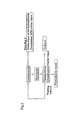
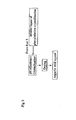
- Figs. 1, 2 and 3 are flow charts describing the runs in Example 1.
- a-APM solution having the composition shown in Table 1 were added 80 ml of 35% hydrochloric acid and 134 ml of water. Crystallization of a-APM hydrochloride with stirring was carried out at 20 °C for 3 days in a vessel having a volume of 500 ml, and the resulting slurry was sufficiently desupersaturated at 5 ° C over a half a day. Filtration gave crystals of a-APM hydrochloride. The thus obtained a-APM hydrochloride crystals were dissolved in 1350 ml of water at 50 C.
- a-APM hydrochloride crystals were filtered and the formed mother liquor obtained was later used in Run 3.
- the thus obtained a-APM hydrochloride crystals were dissolved in 1350 ml of water at 50 °C. Thereafter pH of this solution was adjusted to 4.8 with 16.4 g/dl of sodium carbonate aqueous solution to neutralize a-APM hydrochloride.
- a-APM neutralization solution a-APM was crystallized to give a slurry solution of a-APM crystals.
- the resulting a-APM crystal slurry solution was subjected to solid-liquid separation to give 80 g of wet crystals of a-APM.
- Runs 1-4 were repeated 7 times, producing a-APM, recovering additional a-APM, and then recovering L-phenylalanine and L-aspartic acid. Recovered L-phenylalanine and L-aspartic acid were reused as raw materials in preparing a-APM. Where either L-phenylalanine or L-aspartic acid were short, fresh L-phenylalanine or L-aspartic acid were replenished as needed. On and after the second repetition, 1090 ml of the concentrated a-APM crystallization mother liquor and 730 ml of water were supplemented upon crystallization of the hydrochloride in Run 2, instead of 1820 ml of water. The unit consumption (weight in kg of fresh raw materials for the preparation of 1 kg of a-APM) of L-phenylalanine and L-aspartic acid were 0.695 and 0.644, respectively. See Table 2.
- Example 2 The same procedures as in Runs 1 to 4 of Example 2 were repeated seven times. On and after the second repetition, 730 ml of the concentrated a-APM crystallization mother liquor and 1090 ml of water were supplemented upon crystallization of the hydrochloride in Run 3 of Example 2, instead of 1820 ml of water. The same procedures as in Example 2 were repeated except that 730 ml out of the mother liquor (Solution A) obtained by solid-liquid separation in Run 4 was stored for circulating to the a-APM hydrochloride crystallization solution in the next run and the remaining 1090 ml was used for recovering L-phenylalanine and L-aspartic acid. The procedures were repeated 7 times. As the result, the unit consumption of L-phenylalanine and L-aspartic acid were 0.717 and 0.670, respectively. See Table 2.
- Example 2 The same procedures as in Runs 1 to 4 of Example 2 were repeated seven times. On and after the second repetition, 360 ml of the concentrated a-APM crystallization mother liquor and 1460 ml of water were supplemented upon crystallization of the hydrochloride in Run 3 of Example 2, instead of 1820 ml of water. The same procedures as in Example 2 were repeated except that 360 ml out of the mother liquor (Solution A) obtained by solid-liquid separation in Run 4 was stored for circulating to the a-APM hydrochloride crystallization solution in the next run and the remaining 1460 ml was used for recovering L-phenylalanine and L-aspartic acid. These procedures were repeated seven times. As a result, the unit consumption of L-phenylalanine and L-aspartic acid was 0.728 and 0.684, respectively. See Table 2.
- a-APM solution having the composition shown in Table 1 were added 80 ml of 35% hydrochloric acid and 134 ml of water followed by crystallization of a-APM hydrochloride. After crystallization with stirring was carried out at 20 ° C for 3 days in a vessel having a volume of 500 ml, the slurry was sufficiently desupersaturated at 5 ° C over a half day. Filtration gave crystals of a-APM hydrochloride. In this case, 290 ml of the mother liquor was obtained and used in Run 3. The thus obtained a-APM hydrochloride crystals were dissolved in 1350 ml of water at 50 C.
- Example 2 The same procedures as in Runs 1 to 4 in Example 2 were repeated. Also on and after the second repetition, the same procedures as in Example 2 were performed except that 1820 ml of water was added upon crystallization of the hydrochloride in Run 2. The procedures were repeated 7 times. As the result, the unit consumption of L-phenylalanine and L-aspartic acid were 0.739 and 0.697, respectively. See Table 2.
Landscapes
- Chemical & Material Sciences (AREA)
- Organic Chemistry (AREA)
- Genetics & Genomics (AREA)
- Biochemistry (AREA)
- Biophysics (AREA)
- General Health & Medical Sciences (AREA)
- Health & Medical Sciences (AREA)
- Medicinal Chemistry (AREA)
- Molecular Biology (AREA)
- Proteomics, Peptides & Aminoacids (AREA)
- Life Sciences & Earth Sciences (AREA)
- Peptides Or Proteins (AREA)
- Organic Low-Molecular-Weight Compounds And Preparation Thereof (AREA)
Applications Claiming Priority (2)
| Application Number | Priority Date | Filing Date | Title |
|---|---|---|---|
| JP195404/91 | 1991-08-05 | ||
| JP19540491A JP3163661B2 (ja) | 1991-08-05 | 1991-08-05 | α−L−アスパルチル−L−フェニルアラニンメチルエステル、及びL−フェニルアラニン、L−アスパラギン酸の回収方法 |
Publications (3)
| Publication Number | Publication Date |
|---|---|
| EP0526854A2 true EP0526854A2 (fr) | 1993-02-10 |
| EP0526854A3 EP0526854A3 (fr) | 1994-04-06 |
| EP0526854B1 EP0526854B1 (fr) | 1997-05-02 |
Family
ID=16340551
Family Applications (1)
| Application Number | Title | Priority Date | Filing Date |
|---|---|---|---|
| EP92113125A Expired - Lifetime EP0526854B1 (fr) | 1991-08-05 | 1992-07-31 | Méthode pour la récuperation d'alpha-L-aspartyl-L-phénylalanine, L-phénylalanine et L-acide-aspartique |
Country Status (5)
| Country | Link |
|---|---|
| US (1) | US5304671A (fr) |
| EP (1) | EP0526854B1 (fr) |
| JP (1) | JP3163661B2 (fr) |
| CA (1) | CA2075307C (fr) |
| DE (1) | DE69219419T2 (fr) |
Cited By (2)
| Publication number | Priority date | Publication date | Assignee | Title |
|---|---|---|---|---|
| EP0657416A1 (fr) * | 1993-12-13 | 1995-06-14 | Ajinomoto Co., Inc. | Procédé de récupération de L-phénylalanine |
| EP0673921A1 (fr) * | 1994-03-24 | 1995-09-27 | Ajinomoto Co., Inc. | Procédé pour la récupération de L'phénylalanine |
Families Citing this family (5)
| Publication number | Priority date | Publication date | Assignee | Title |
|---|---|---|---|---|
| JPH05178889A (ja) * | 1991-10-30 | 1993-07-20 | Ajinomoto Co Inc | α−L−アスパルチル−L−フェニルアラニンメチルエステルの晶析方法 |
| JP3239452B2 (ja) * | 1992-08-05 | 2001-12-17 | 味の素株式会社 | α−L−アスパルチル−L−フェニルアラニンメチルエステル塩酸塩の製造法 |
| CN101284796B (zh) * | 2008-05-30 | 2011-05-04 | 何关昌 | 母液回收制备dl—苯丙氨酸和dl—天冬氨酸的方法 |
| CN103113248A (zh) * | 2013-02-20 | 2013-05-22 | 江苏汉光生物工程有限公司 | 一种从生产阿斯巴甜废水中回收dl-天门冬氨酸的方法 |
| CN116478055A (zh) * | 2023-05-05 | 2023-07-25 | 新疆苏源生物工程有限公司 | 一种天门冬氨酸手性精制方法 |
Family Cites Families (5)
| Publication number | Priority date | Publication date | Assignee | Title |
|---|---|---|---|---|
| US4348317A (en) * | 1980-12-29 | 1982-09-07 | Monsanto Company | Recovery of L-phenylalanine and L-aspartic acid during preparation of α-L-aspartyl-L-phenylalanine methyl ester |
| GB2140805B (en) * | 1983-05-31 | 1986-08-13 | Erba Farmitalia | Isolation of aspartame |
| US4677220A (en) * | 1985-10-31 | 1987-06-30 | Monsanto Company | Process for the preparation of α-L-aspartyl-L-phenylalanine methyl ester |
| JPH0657719B2 (ja) * | 1986-06-03 | 1994-08-03 | 味の素株式会社 | α−L−アスパルチル−L−フエニルアラニンメチルエステルの回収方法 |
| JPS63159355A (ja) * | 1986-12-23 | 1988-07-02 | Mitsui Toatsu Chem Inc | L−フェニルアラニンおよびl−アスパラキン酸の回収方法 |
-
1991
- 1991-08-05 JP JP19540491A patent/JP3163661B2/ja not_active Expired - Fee Related
-
1992
- 1992-07-31 EP EP92113125A patent/EP0526854B1/fr not_active Expired - Lifetime
- 1992-07-31 DE DE69219419T patent/DE69219419T2/de not_active Expired - Fee Related
- 1992-08-05 US US07/925,039 patent/US5304671A/en not_active Expired - Lifetime
- 1992-08-05 CA CA002075307A patent/CA2075307C/fr not_active Expired - Fee Related
Cited By (4)
| Publication number | Priority date | Publication date | Assignee | Title |
|---|---|---|---|---|
| EP0657416A1 (fr) * | 1993-12-13 | 1995-06-14 | Ajinomoto Co., Inc. | Procédé de récupération de L-phénylalanine |
| US5532407A (en) * | 1993-12-13 | 1996-07-02 | Ajinomoto Co., Inc. | Process for recovering L-phenylalanine |
| EP0673921A1 (fr) * | 1994-03-24 | 1995-09-27 | Ajinomoto Co., Inc. | Procédé pour la récupération de L'phénylalanine |
| US5530155A (en) * | 1994-03-24 | 1996-06-25 | Ajinomoto Co., Inc. | Process for recovering L-phenylalanine |
Also Published As
| Publication number | Publication date |
|---|---|
| US5304671A (en) | 1994-04-19 |
| EP0526854B1 (fr) | 1997-05-02 |
| DE69219419T2 (de) | 1997-12-18 |
| JP3163661B2 (ja) | 2001-05-08 |
| EP0526854A3 (fr) | 1994-04-06 |
| CA2075307C (fr) | 1999-09-28 |
| CA2075307A1 (fr) | 1993-02-06 |
| JPH0641029A (ja) | 1994-02-15 |
| DE69219419D1 (de) | 1997-06-05 |
Similar Documents
| Publication | Publication Date | Title |
|---|---|---|
| EP0127411B1 (fr) | Procédé pour la fabrication d'ester méthyle d'alpha-L-aspartyl-L-phénylalanine et son chlorhydrate | |
| US5304671A (en) | Method for recovery of α-L-aspartyl-L-phenylalanine methyl ester, L-phenylalanine and L-aspartic acid | |
| EP0075160B1 (fr) | Procédé pour la récupération d'un dérivé dipeptidique | |
| US4348317A (en) | Recovery of L-phenylalanine and L-aspartic acid during preparation of α-L-aspartyl-L-phenylalanine methyl ester | |
| CA1155453A (fr) | Methode de preparation d'acide n-benzyloxycarbonyl-l-aspartique | |
| US4847409A (en) | Recovery of L-amino acid isomers from their racemic mixtures | |
| JP3208874B2 (ja) | α−L−アスパルチル−L−フェニルアラニンの製造法 | |
| JP2896259B2 (ja) | フェニルアラニンの単離方法 | |
| JP3162366B2 (ja) | フェニルアラニンの単離方法 | |
| JP3314515B2 (ja) | L−フェニルアラニンの回収方法 | |
| JP2976609B2 (ja) | α−L−アスパルチル−L−フェニルアラニンメチルエステル又はその塩酸塩の製造法 | |
| JP3307491B2 (ja) | L−フェニルアラニンの回収方法 | |
| JP3316910B2 (ja) | L−フェニルアラニンの回収方法 | |
| JPH0338839B2 (fr) | ||
| JPH07278076A (ja) | L−フェニルアラニン・モノメチル硫酸塩の晶析方法 | |
| JPH0212239B2 (fr) | ||
| JPH0212240B2 (fr) | ||
| JPH08157432A (ja) | アスパラギン酸アンモニウムからのアスパラギン酸の製造方法 |
Legal Events
| Date | Code | Title | Description |
|---|---|---|---|
| PUAI | Public reference made under article 153(3) epc to a published international application that has entered the european phase |
Free format text: ORIGINAL CODE: 0009012 |
|
| AK | Designated contracting states |
Kind code of ref document: A2 Designated state(s): BE CH DE FR GB IT LI NL |
|
| PUAL | Search report despatched |
Free format text: ORIGINAL CODE: 0009013 |
|
| AK | Designated contracting states |
Kind code of ref document: A3 Designated state(s): BE CH DE FR GB IT LI NL |
|
| 17P | Request for examination filed |
Effective date: 19940919 |
|
| 17Q | First examination report despatched |
Effective date: 19950327 |
|
| GRAG | Despatch of communication of intention to grant |
Free format text: ORIGINAL CODE: EPIDOS AGRA |
|
| GRAH | Despatch of communication of intention to grant a patent |
Free format text: ORIGINAL CODE: EPIDOS IGRA |
|
| GRAH | Despatch of communication of intention to grant a patent |
Free format text: ORIGINAL CODE: EPIDOS IGRA |
|
| GRAA | (expected) grant |
Free format text: ORIGINAL CODE: 0009210 |
|
| ITF | It: translation for a ep patent filed | ||
| AK | Designated contracting states |
Kind code of ref document: B1 Designated state(s): BE CH DE FR GB IT LI NL |
|
| REG | Reference to a national code |
Ref country code: CH Ref legal event code: NV Representative=s name: A. BRAUN, BRAUN, HERITIER, ESCHMANN AG PATENTANWAE Ref country code: CH Ref legal event code: EP |
|
| REF | Corresponds to: |
Ref document number: 69219419 Country of ref document: DE Date of ref document: 19970605 |
|
| ET | Fr: translation filed | ||
| PLBE | No opposition filed within time limit |
Free format text: ORIGINAL CODE: 0009261 |
|
| STAA | Information on the status of an ep patent application or granted ep patent |
Free format text: STATUS: NO OPPOSITION FILED WITHIN TIME LIMIT |
|
| 26N | No opposition filed | ||
| REG | Reference to a national code |
Ref country code: GB Ref legal event code: IF02 |
|
| PGFP | Annual fee paid to national office [announced via postgrant information from national office to epo] |
Ref country code: DE Payment date: 20070726 Year of fee payment: 16 |
|
| PGFP | Annual fee paid to national office [announced via postgrant information from national office to epo] |
Ref country code: CH Payment date: 20070727 Year of fee payment: 16 |
|
| PGFP | Annual fee paid to national office [announced via postgrant information from national office to epo] |
Ref country code: GB Payment date: 20070725 Year of fee payment: 16 |
|
| PGFP | Annual fee paid to national office [announced via postgrant information from national office to epo] |
Ref country code: NL Payment date: 20070715 Year of fee payment: 16 Ref country code: IT Payment date: 20070730 Year of fee payment: 16 |
|
| PGFP | Annual fee paid to national office [announced via postgrant information from national office to epo] |
Ref country code: BE Payment date: 20071004 Year of fee payment: 16 |
|
| REG | Reference to a national code |
Ref country code: CH Ref legal event code: PFA Owner name: AJINOMOTO CO., INC. Free format text: AJINOMOTO CO., INC.#NO. 15-1, KYOBASHI 1-CHOME, CHUO-KU#TOKYO 104 (JP) -TRANSFER TO- AJINOMOTO CO., INC.#NO. 15-1, KYOBASHI 1-CHOME, CHUO-KU#TOKYO 104 (JP) |
|
| REG | Reference to a national code |
Ref country code: CH Ref legal event code: PL |
|
| GBPC | Gb: european patent ceased through non-payment of renewal fee |
Effective date: 20080731 |
|
| NLV4 | Nl: lapsed or anulled due to non-payment of the annual fee |
Effective date: 20090201 |
|
| PG25 | Lapsed in a contracting state [announced via postgrant information from national office to epo] |
Ref country code: DE Free format text: LAPSE BECAUSE OF NON-PAYMENT OF DUE FEES Effective date: 20090203 |
|
| PG25 | Lapsed in a contracting state [announced via postgrant information from national office to epo] |
Ref country code: NL Free format text: LAPSE BECAUSE OF NON-PAYMENT OF DUE FEES Effective date: 20090201 |
|
| PG25 | Lapsed in a contracting state [announced via postgrant information from national office to epo] |
Ref country code: CH Free format text: LAPSE BECAUSE OF NON-PAYMENT OF DUE FEES Effective date: 20080731 Ref country code: LI Free format text: LAPSE BECAUSE OF NON-PAYMENT OF DUE FEES Effective date: 20080731 Ref country code: GB Free format text: LAPSE BECAUSE OF NON-PAYMENT OF DUE FEES Effective date: 20080731 |
|
| PG25 | Lapsed in a contracting state [announced via postgrant information from national office to epo] |
Ref country code: IT Free format text: LAPSE BECAUSE OF NON-PAYMENT OF DUE FEES Effective date: 20080731 |
|
| PG25 | Lapsed in a contracting state [announced via postgrant information from national office to epo] |
Ref country code: BE Free format text: LAPSE BECAUSE OF NON-PAYMENT OF DUE FEES Effective date: 20080731 |
|
| PGFP | Annual fee paid to national office [announced via postgrant information from national office to epo] |
Ref country code: FR Payment date: 20110727 Year of fee payment: 20 |