EP0535007B1 - Monoklonale antikörper gegen gag-protein-vorläufer-p55 von hiv-virus - Google Patents
Monoklonale antikörper gegen gag-protein-vorläufer-p55 von hiv-virus Download PDFInfo
- Publication number
- EP0535007B1 EP0535007B1 EP91909824A EP91909824A EP0535007B1 EP 0535007 B1 EP0535007 B1 EP 0535007B1 EP 91909824 A EP91909824 A EP 91909824A EP 91909824 A EP91909824 A EP 91909824A EP 0535007 B1 EP0535007 B1 EP 0535007B1
- Authority
- EP
- European Patent Office
- Prior art keywords
- hiv
- antibody
- gag
- fusion protein
- protease
- Prior art date
- Legal status (The legal status is an assumption and is not a legal conclusion. Google has not performed a legal analysis and makes no representation as to the accuracy of the status listed.)
- Expired - Lifetime
Links
Images


Classifications
-
- C—CHEMISTRY; METALLURGY
- C12—BIOCHEMISTRY; BEER; SPIRITS; WINE; VINEGAR; MICROBIOLOGY; ENZYMOLOGY; MUTATION OR GENETIC ENGINEERING
- C12P—FERMENTATION OR ENZYME-USING PROCESSES TO SYNTHESISE A DESIRED CHEMICAL COMPOUND OR COMPOSITION OR TO SEPARATE OPTICAL ISOMERS FROM A RACEMIC MIXTURE
- C12P21/00—Preparation of peptides or proteins
-
- C—CHEMISTRY; METALLURGY
- C07—ORGANIC CHEMISTRY
- C07K—PEPTIDES
- C07K14/00—Peptides having more than 20 amino acids; Gastrins; Somatostatins; Melanotropins; Derivatives thereof
- C07K14/005—Peptides having more than 20 amino acids; Gastrins; Somatostatins; Melanotropins; Derivatives thereof from viruses
-
- C—CHEMISTRY; METALLURGY
- C07—ORGANIC CHEMISTRY
- C07K—PEPTIDES
- C07K16/00—Immunoglobulins [IG], e.g. monoclonal or polyclonal antibodies
- C07K16/08—Immunoglobulins [IG], e.g. monoclonal or polyclonal antibodies against material from viruses
- C07K16/10—RNA viruses
- C07K16/112—Retroviridae (F), e.g. leukemia viruses
- C07K16/114—Lentivirus (G), e.g. human immunodeficiency virus [HIV], feline immunodeficiency virus [FIV] or simian immunodeficiency virus [SIV]
- C07K16/1143—Gag-pol proteins, e.g. p17or p24
-
- C—CHEMISTRY; METALLURGY
- C12—BIOCHEMISTRY; BEER; SPIRITS; WINE; VINEGAR; MICROBIOLOGY; ENZYMOLOGY; MUTATION OR GENETIC ENGINEERING
- C12N—MICROORGANISMS OR ENZYMES; COMPOSITIONS THEREOF; PROPAGATING, PRESERVING, OR MAINTAINING MICROORGANISMS; MUTATION OR GENETIC ENGINEERING; CULTURE MEDIA
- C12N2740/00—Reverse transcribing RNA viruses
- C12N2740/00011—Details
- C12N2740/10011—Retroviridae
- C12N2740/16011—Human Immunodeficiency Virus, HIV
- C12N2740/16211—Human Immunodeficiency Virus, HIV concerning HIV gagpol
- C12N2740/16222—New viral proteins or individual genes, new structural or functional aspects of known viral proteins or genes
Definitions
- HIV human immunodeficiency virus
- AIDS acquired immunodeficiency syndrome
- HIV is a member of the lentivirus sub-family of retroviruses and infects human CD4+T-lymphocytes, macrophages, and perhaps other cell types (see A.S. Fauci: "The human immunodeficiency virus: Infectivity and mechanisms of pathogenesis", Science 239:617-622, 1988.
- D.D. Ho, R.J. Pomerantzk and J.C. Kaplan "Pathogenesis of infection with human immunodeficiency virus", N.Engl.J.Med. 317:278-286, 1987).
- the genome of the virus like other retroviruses, contains gag, pol and env genes, which code for the viral core proteins, viral enzymes including the reverse transcriptase and the viral envelope protein, respectively.
- the virus also contains at least five additional genes, three of which have regulatory functions and the expression of these genes almost certainly has an impact on the pathogenic mechanism exerted by the virus.
- HIV drugs are the essential viral functions such as the entry of the virus into the cell, enzymatic activities and the cellular activation and proliferation. These functions are regulated by the expression of viral genes.
- the gag, pol and env genes encode for precursor polypeptides that are post-translationally modified by proteolytic processing and other modifications.
- the enzymatic activities derived from the pol gene polypeptide precursor including protease, reverse transcriptase and endonuclease are considered interesting targets for inhibitors.
- the protease cleaves the precursor product of the gag gene, the p55 protein, into 4 structural proteins of the viral core, among which there is p24, the major internal core protein and p17.
- protease also cleaves the gag-pol precursor to yield the protease itself (autolytic activation), the reverse transcriptase and the endonuclease (see W.C. Robey, B. Safai, S.Oroszlan, L.O. Arthur, M.A. Gonda, R.C. Fallo and P.J. Fischinger: "Characterization of envelope and core structural gene products of HTLV-III with sera from AIDS patients", Science 228:593-595, 1985. I. Katoh, T.Yasunaga, Y.Ikawa and Y.
- Yoshinaka "Inhibition of retroviral protease activity by an aspartyl proteinase inhibitor", Nature 329:654-656, 1987.
- Assays for HIV-1 detection are generally based on immunological reactions and inactivated whole virus is employed as the antigen reagent to generate appropriate antibodies.
- Antibodies against HIV-1 proteins essential for viral replication are also described in the recent patent and scientific literature, as well as their use in both the early detection of HIV-1 antigens and in the monitoring of the antiviral therapy in patients infected with HIV-1.
- a mouse monoclonal antibody to HIV-1 gp41 is described in EP-A Publication No. 335134.
- Mouse monoclonal antibodies with specific reactivity toward HIV-1 p24 are disclosed in EP-A Publication No. 345461.
- Monoclonal and polyclonal antibodies specific toward gp48 are described in International Patent Appln. Publ. No. WO 90/00617.
- This invention provides a monoclonal antibody against the precursor product of the gag genes, that is the protein p55, or a portion thereof which contains the p55 cleavage site by the HIV-1 protease which generates the p24 and p17 polypeptides ("p24/p17 HIV-1 protease cleavage site").
- the monoclonal antibody of this invention is useful for detecting the presence of the gag precursor of both p24 and the other smaller polypeptides in biological fluids and/or tissues containing it for the purpose of monitoring the protease activity as marker of the viral activity, for instance in persons who have been exposed to HIV-1 and have not yet developed AIDS or patients who are undergoing therapeutical treatment.
- biological fluids and/or tissues includes besides mammalian whole blood, plasma,lymphocytes and cell cultures also cellular or bacterial extracts derived from the expression of gag gene in eukaryotic or prokaryotic host as well as any mixture or solution which contain natural or synthetic polypeptides containing the same aminoacid sequence of p55 or a fragment thereof which contains the p55 cleavage site by the HIV-1 protease which generates the p24 and p17 polypeptides.
- one of the main uses of the antibody of this invention is in enzymatic immunoassays of serum and other body fluids and/or tissues of people exposed to HIV-1.
- a further use of the antibody is in the isolation and/or purification of natural or synthetic peptides containing the p55 cleavage site by the HIV-1 protease which generates the p24 and p17 polypeptides.
- the antibody may be bound to an inert support to form an affinity matrix according to the method known in the art (see, for instance, J.W. Goding: Monoclonal Antibodies Principles and Practice, Academic Press, New York, 1983, 188-207).
- the antibody of this invention may also be drawn by analogy from EP-A Publication No. 345461 and EP-A publication No. 335134.
- a peculiar characteristic of the antibody of this invention is the specific reactivity with an epitope of the p55 protein which comprises the cleavage site of the HIV-1 protease which generates the p24 and p17 polypeptides
- this antibody is particularly suitable for devising immunoassay tests for screening both known and unknown substances for HIV-1 protease inhibitory activity in fluids, tissues and cultured cells.
- the tests presently used for detecting such activity usually rely on polyclonal or monoclonal antibodies mainly directed against the viral polypeptides resulting from the cleavage of the gag precursor.
- Said antibodies cannot discriminate between gag precursor and cleaved polypeptide product (either p17 or p24) and therefore are commonly used as primary antibodies in Western blot techniques (see T.D. Meek et al, Nature, 343, 90-92, 1990 and McQuade et al: "A synthetic HIV-1 protease inhibitor with antiviral activity arrests HIV-like particle maturation", Science, 247, 454-456, 1990).
- the proteins contained in fluids, tissues or cell lysates are separated by polyacrylamide gel electrophoresis (PAGE) and then blotted on nitrocellulose filters.
- PAGE polyacrylamide gel electrophoresis
- gag precursor a fragment thereof or a synthetic polypeptide containing the same aminoacid sequence of the p24/p17 cleavage site region: "precursor-like polypeptides”
- precursor-like polypeptides a fragment thereof or a synthetic polypeptide containing the same aminoacid sequence of the p24/p17 cleavage site region: "precursor-like polypeptides”
- the amount of gag precursor or precursor-like polypeptide can be subsequently determined by incubating with a different antibody (either -mono- or polyclonal) which recognizes a different epitope of the precursor (either on the p24 or the p17 portion of it) and which has been previously labelled with a marker enzyme (for example, horse radish peroxidase or alkaline phosphatase and others).
- a marker enzyme for example, horse radish peroxidase or alkaline phosphatase and others.
- a further use of this antibody is for the screening of potential inhibitors of HIV-1 protease in a test which utilizes as protease specific substrate an HIV-gag fusion protein containing a p55 fragment, which in turn comprises a portion of both p24 and p17 and includes the p24/p17 HIV-1 protease cleavage site, bound to a marker enzyme, e.g. ⁇ -galactosidase.
- This fusion protein may be prepared , for instance, by isolating the DNA fragment which codes such protein fragment from the viral genome of the HIV strain LAV and inserting such DNA fragment into the structural gene of E . coli ⁇ -galactosidase contained in the vector plasmid pVR292. Such insertion being in the same reading frame of the ⁇ -galactosidase coding sequence allows the expression of the gag protein fragment in E . Coli as a protein fused with the ⁇ -galactosidase enzyme.
- test samples could be of any origin. They can be compounds of known or unknown structure, derived from chemical synthesis or natural products. Also, they can be purified substances or complex mixtures, i.e. cellular extracts, microbial fermentation broths, solutions containing synthetic products or extracts of biological materials, including vegetables.
- This assay is also relatively unaffected by the presence of low concentrations (5-10%) of organic solvents like methanol, acetonitrile or DMSO, a feature particularly useful when the assay is used to monitor the purification of an inhibitory activity.
- This invention includes also a method for preparing the selective monoclonal antibody and the analytical assays or purification procedures which employ it.
- the preferred method of production of the antibody of this invention is particularly useful for producing commercial amounts of this latter, since it does not involve direct use of virus or essential viral protein or polypeptides as the antigen, which is potentially hazardous but, rather, the use of the "inactive" p55 precursor or, preferably, a genetically engineered fusion protein containing portions of p24 and p17 polypeptides which comprise the cleavage site of HIV-1 protease which generates the two polypeptides.
- the monoclonal antibody of this invention can be produced by antibody producing cell lines, which usually are hybridoma cell lines.
- the hybridomas are formed by fusion of antibody producing cells and a stabilized cell line which imparts long term tissue culture stability to the hybrid cells.
- the antibody producing cells may be spleen cells from animal immunized against the protein p55 or a portion thereof which contains the p24/p17 HIV-I protease cleavage site.
- the animals immunized are usually small malians, preferably rodents, such as rats or mice.
- the second fusion partner, the stabilized cell line may be a lymphoblastoid cell line or a myeloma cell line, preferably, syngenic with the first fusion partner.
- Several cell lines of this type are known and available to the public from public collections such as the American Type Culture Collection (ATCC), Rockville, Maryland (USA).
- HAT hyperxantine, aminopterin, thymidine
- the fusion technique is usually following the standard procedure described by C. Milstein and G. Köhler, Nature , 256, 495-497 (1975) and reviewed in "Monoclonal Hybridoma Antibodies: Techniques and Applications", editor J.G.R. Hurrell C.R.C. Press Inc. (1982).
- the antigen useful for the immunization of the animal may be composed of inactivated whole HIV-1 virus, or partially purified natural p55 protein, cloned proteins containing the p55 sequence or a fragment thereof which comprises the p24/p17 cleavage site are preferably employed.
- Recombinant proteins of this type have the advantage to be obtained in amounts sufficient to carry out the process of this invention without hazardous handling of HIV-1 infected host materials, as it would require the utilization of the natural p55 protein.
- the patent and scientific literature report methods of expression of HIV-1 gag fusion proteins which can provide fusion proteins useful as antigens for immunizing the animals to obtain the epitope specific monoclonal antibody of this invention. See for instance EP-A Publ. No.
- a particularly suitable antigen for producing the antibody of this invention is a HIV-gag fusion protein containing the p55 fragment, which in turn comprises a portion of both p24 and p17 and includes the p24/p17 HIV-1 protease cleavage site, fused with a suitable marker enzyme, e.g. ⁇ -galactosidase.
- the antibody showing specific reactivity with an epitope of the p55 protein which comprises the p24/p17 cleavage site of the HIV-1 protease can be produced by: (i) immunizing mice with the above mentioned fusion protein; (ii) recovering spleen cells from immunized mice and fusing them with HAT sensitive non-producer mouse myeloma Sp 2/0-Ag 14 cells; (iii) testing the obtained hybrids by an appropriate immunoassay for the production of monoclonal antibodies against the p55 portion of the fusion protein; (iv) sub-cloning the cells positive to the previous assay; (v) analyzing the subcloned cells for the epitope specificity and selecting for larger cultivation those hybridomas which secrete
- the immunization step is carried out by using a purified preparation of the fusion protein containing both the p24 and p17 portions.
- the animals are given 3 to 5 injections spaced 12 to 17 days after the previous one.
- a satisfactory titre of antibodies is usually obtained sixty days after the start of the immunization.
- the mice are usually given a final booster 2 to 5 days before sacrification.
- the plasma and other lymphoid cells removed from the spleen are fused with the mouse myeloma cell, usually in the presence of a fusion promoter such as polyethylene glycol 2500. Following the fusion, the myeloma cells are eliminated by addition of HAT medium while the non-hybridized spleen cells die spontaneously in a few days.
- the antibody producing hybridomas are determined by testing the supernatants by an appropriate anti-HIV gag protein enzyme-linked immunoassay (ELISA) whereby the reactivity of the antibodies secreted by the hybridoma toward the fused HIV-gag/ ⁇ -galactosidase protein is compared with that toward ⁇ -galactosidase alone.
- ELISA anti-HIV gag protein enzyme-linked immunoassay
- the hybridomas furnishing supernatants which are positive to the fusion protein and negative to the ⁇ -galactosidase are sub-cloned and their supernatants are analyzed for epitope specificity by testing the reactivity toward the fusion protein before and after cleavage by the HIV-1 protease by immunoblotting.
- the clones which yield supernatants demonstrating good affinity for the fusion protein before cleavage and which do not bind to the same protein when cleaved by the protease are selected for further subcloning and mass culture.
- 880 clones were screened. Twenty one clones were found positive on both gal-gag 110 fusion protein and ⁇ -galactosidase, 8 were positive only on ⁇ -galactosidase and 7 only on gal-gag 110 fusion protein. The 7 clones recognising the gal-gag 110 fusion protein were sub-cloned and selected for further characterization for epitope specificity.
- the isolation and purification of the 1G12 antibody can be carried out by applying a solution containing said antibody to an affinity chromatography column, for instance, a Staphylococcus aureus Protein-A-Sepharose column previously equilibrated with a binding buffer pH 8.9, washing the unbound proteins by addition of binding buffer and then eluting the bound fraction with a specific elution buffer at pH 6.
- the recovered antibody is then dyalyzed against PBS (phosphate buffer saline) tested by SDS-PAGE (sodium dodecylsulfate-polyacrylamide gel electrophoresis) in reducing conditions for homogeneity and stored at -20°C (minus twenty °C).
- the purified monoclonal antibody 1G12 showing specific reactivity toward an epitope of the p55 HIV gag protein precursor which contains the p24/p17 protease cleavage site is further characterized by class specificity by an ELISA assay and is found to belong to the IgG1 class and to possess light chains of the k type.
- the SDS-PAGE analysis in reducing and non reducing conditions indicates an approximate molecular weight of the order of 150,000 Dalton.
- the approximate value of the affinity constant of the 1G12 antibody toward the gal-gag 110 fusion protein containing portions of p24 and p17 protein with the p24/p17 protease cleavage site and covalently bound to ⁇ -galactosidase is 5x10⁹ M ⁇ 1.
- Protein-A Sepharose Pharmacia, Uppsala, Sweden
- sheep anti-mouse Ig horseradish peroxidase linked F(ab')2 fragment
- goat anti-mouse Igs Janssen Biochimica, Beerse, Belgium
- humane endothelial cell supernatants HECS
- the HAT sensitive non-producer mouse myeloma cell line Sp2/0 - Ag14 (M.C.Shulman, C.D.Wilde and G. Köhler: "A better cell line for making hybridomas secreting specific antibodies"; Nature 276, 269-270, 1978) used for the fusion experiments was grown in Dulbecco's modified Eagle medium (DMEM) supplemented with 10% foetal calf serum (FCS, Flow laboratories), 1mM glutamine, 10 U/ml penicillin, 0.01 mg/ml streptomycin.
- DMEM Dulbecco's modified Eagle medium
- FCS foetal calf serum
- the hybridoma lines were maintained in DMEM with 5% FCS, 5% HECS, HAT (0.1 mM hypoxanthine/0.4 »M aminopterin/16 »M thymidine), 1mM glutamine, 10 U/ml penicillin, 0.01 mg/ml streptomycin.
- Hind III-Hind III fragment from bp 631 to 1258 of HIV-gag DNA was subcloned into the unique Hind-III site of pUC19 (GIBCO BRL, International Division, Gaithersburg, MD).
- PstI-PstI fragment containing 8 bp from the pUC19 polylinker (PstI-Hind III) fused to the Hind III-PstI fragment from bp 631 to 961 of HIV-1 DNA was isolated and inserted into the unique PstI site of pUR292 (U.
- bacteria were harvested and resuspended in 1/50 volume of 50 mM tris-HCl, pH 8, 50 mM NaCl, 1 mM EDTA (Buffer A), containing 0.1 mM PMSF, 1 mM benzamidine-HCl, 0.1 M arginine and 1 mg/ml lysozyme. After 30 minutes at 4°C cells were disrupted by sonication and centrifuged for 10 minutes at 25,000 g. The pellet was washed twice by resuspension in Buffer A containing 70 mM 2-mercaptoethanol (2-ME) and 0.05% Triton-X100 and centrifuged at 25,000 g.
- Buffer A containing 70 mM 2-mercaptoethanol (2-ME) and 0.05% Triton-X100 and centrifuged at 25,000 g.
- the pellet was finally dissolved in 0.1 M Tris-HCl, pH 7.8, 0.1 M NaCl, 1mM MgCl2, 0.5 mM EDTA, 70 mM 2-ME (Buffer B), containing 8 M urea. After centrifugation for 20 minutes at 50,000 g, the supernatant was first diluted with Buffer B to 5 M urea, then extensively dialyzed against Buffer B without 2-ME. Affinity chromatography on TPEG-Sepharose was performed essentially as described (A. Ullmann: Gene, 29, 27-31, 1984). Recovery of gal-gag 110 in each purification step was checked by SDS-PAGE with the PHAST-GEL system (Pharmacia).
- the purified fusion protein was examined by SDS-PAGE where it gave a major band of about 130,000 Da (see Fig. 1A, lane NO EX). This corresponds to 116,000 Da, the molecular weight of ⁇ -galactosidase, plus about 14,000 Da, the expected molecular weight of the gag portion fused to the enzyme.
- Such protein is indeed cleaved by the HIV protease (as shown in Fig. 1A, lanes 0, 15 and 30) to yield a band at about 120,000 Da.
- the HIV protease employed was a recombinant HIV-1 protease obtained by expression of a synthetic gene in E . coli according to C.
- Fig 1B An immuno-blot analysis of the purified fusion protein before and after cleavage by the HIV protease (Fig 1B) shows that such protein is recognized by a monoclonal antibody specific for E . coli ⁇ -galactosidase (Boehringer Mannheim, W. Germany) both before and after cleavage.
- the resulting protein contains the Ala100 to Ala210 fragment from HIV-1 gag polypeptide (p55) fused to the carboxy-terminus of E. coli ⁇ -galactosidase (Fig. 1D).
- gag portion of this "gal-gag 110" fusion protein comprises the p17/p24 HIV-1 protease cleavage site Tyr132-Pro133 (A. Wain-Hobson, P. Sonigo, O. Danos, S. Cole and M. Alizon: Cell 40, 9-17, 1985), while the ⁇ -galactosidase portion provides an easily measurable enzymatic activity.
- Example 2 Production of the monoclonal antibodies against gal-gag 110 fusion protein
- mice Female Balb/c mice were immunized by injecting into the peritoneum of the animals 0.050 mg of the fusion protein of Example 1 in complete Freund's adjuvant (diluted 1:1) at day -60. The same quantity in incomplete Freund's adjuvant was injected in the peritoneum of the animals at day -42, -30,-18. At day -3 a final booster of 0.05 mg was given intravenously to the animals.
- spleen cells 5 x 10⁷) of the immunized mice were fused to 1 x 10⁷ HAT sensitive non-producer mouse myeloma Sp2/0-Ag 14 cells.
- the fusion was carried out with polyethylene glycol 1500 and then cells were plated onto five different 96-well microtiter plates (Costar, One Alewife Center, Cambridge, MA, USA) in DMEM supplemented with 5% FCS, 5% HECS, HAT, 1mM glutamine, 10 U/ml penicillin, 0.01 mg/ml streptomycin. Supernatants of the growing hybrids were tested every 2-3 days by an enzyme-linked immunoadsorbent assay (ELISA) for production of monoclonal antibodies against the portion of the gal-gag 110 protein (See example 3).
- ELISA enzyme-linked immunoadsorbent assay
- Example 3 Anti-gal-gag 110 protein monoclonal antibody enzyme-linked immunoadsorbent assay
- 96-well microtiter plates (Falcon-Beckton Dickinson) were coated at alternate strips with 0.05 ml/well (0.000125 mg/well) of a) gal-gag 110 fusion protein in PBS (phosphate buffer saline), 0.1 M sodium chloride pH 7.3 or of b) ⁇ -galactosidase in the same buffer. After an overnight incubation at 4° C plates were washed with PBS and incubated with 1% BSA (bovine serum albumin) pH 7.3 in PBS for one hour and half at room temperature. Then 0.05 ml/well of supernatants of hybridomas were added and left to incubate for two hours at room temperature.
- PBS phosphate buffer saline
- BSA bovine serum albumin
- a Western blot analysis of the gel electrophoresis of the gal-gag 110 fusion protein before and after incubation with HIV-1 protease was carried out by using the supernatants of the four clones confirmed positive to gal-gag 110 fusion protein (see Example 3) as primary antibody according to the conditions given in the Figure 1C.
- HIV protein detection kit Novapath Immunoblot Strips, BIORAD, Richmond, CA, USA
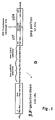
- HIV-1 total viral proteins blotted onto different nitrocellulose strips was used following the protocol described in Figure 2. Only one of the four clones showing affinity for the gal-gag 110 fusion protein showed no binding with the gal-gag 110 protein after incubation with the protease (see Figure 1C).
- the clone secreting this antibody was selected for further larger scale production of the monoclonal antibody and for its isolation and purification.
- the antibody was named 1G12.
- Monoclonal antibody 1G12 was purified from fluid according to the following protocol: 10 ml of the fluid were mixed with 20 ml of acetate buffer 0.06 M, pH 4 and with 0.5 ml of octanoic acid (caprylic acid, Merck AG, Darmstadt, West Germany), then vigorously shaked for 30 minutes at room temperature. The solution was then centrifuged at 20,000 rpm for 30 minutes, at 15°C, in a Beckman SW 28 rotor. The supernatant was collected and dialyzed overnight against phosphate buffer saline, 0.02 M sodium chloride pH 7.3. The dialyzed solution (1ml) was applied on a Staph .
- 10 ml of the fluid were mixed with 20 ml of acetate buffer 0.06 M, pH 4 and with 0.5 ml of octanoic acid (caprylic acid, Merck AG, Darmstadt, West Germany), then vigorously shaked for 30 minutes at room temperature. The solution was then centrif
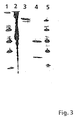
- aureus Protein A-Sepharose CL4B (Pharmacia LKB Biotechnology, Uppsala, Sweden) column, previously equilibrated with a binding buffer, 1.5 M glycine, 3 M sodium chloride pH 8.9. The unbound proteins are washed out with 5 column volumes of binding buffer, while the bound fraction was eluted with the specific elution buffer (0.1 M citric acid pH 6). The column was cleaned with a regeneration buffer (0.1 M citric acid pH 3). Monoclonal antibody 1G12 was dialyzed against PBS, tested by SDS-PAGE in reducing and non reducing conditions for homogeneity (see Figure 3) and stored at -20°C.
- the monoclonal antibody 1G12 was tested for class specificity by enzyme-linked immunoadsorbent assay using the BIORAD kit (Mouse-Typer Sub-isotyping Panel, including: Rabbit-anti-mouse subclass specific to IgG1, IgG 2a , IgG 2b , IgG3, IgM, IgA, k chain, ⁇ chain). The results of this test show that monoclonal antibody 1G12 belongs to IgG1 class and that its light chains are of type k.
- Molecular weight The molecular weight of the monoclonal antibody was evaluated by SDS-PAGE in reducing and non reducing conditions and compared with molecular weight standards (Fig. 3).
- the SDS-PAGE analysis in non reducing conditions indicates that monoclonal antibody 1G12 is constituted by an homogeneous band of 150,000 D as all immunoglobulins of IgG1 class. This band is reduced by 2-mercaptoethanol in two bands of 50,000 and 25,000 D corresponding to the heavy and light chains of immunoglobulins.
- Affinity The approximate value of affinity constant of monoclonal antibody 1G12 for the fusion protein is 5 x 10⁹ M ⁇ 1 as evaluated by competitive enzyme immunoassay.
- the product of the competition was then plated onto the microtiter wells and the amount of the 1G12 that did not react with the antigen in solution was titrated on the fusion protein with a sheep-anti-mouse F(ab')2 antiserum conjugated with peroxidase following the protocol of the enzyme immunoassay used during the screening of monoclonal antibodies.
- the 50% value of the competition curve was assumed as an approximate value of the affinity constant of the antibody for the fusion protein (M.W. Steward, J. Steensgaard: "Antibody Affinity", CRC Press, Inc. Boca Raton, Florida, USA, 1983).
- Example 7 Use of the monoclonal antibody 1G12 in an enzyme immunoassay for detection of HIV-1 protease innibitory activity
- microtiter wells for example "MICROELISA", from Greiner, FRG 5 »l of samples which contain putative HIV-1 protease inhibitors were mixed with 40 »l of a mixture containing 0.25 M 2-(N-morpholino)ethane-sulfonic acid/sodium hydroxide buffer, pH 6.0, 0.6 % bovine serum albumin, 0.025 % Tween 20 and, preferentially, a cocktail of protease inhibitors to prevent non-specific proteolytic degradation by the proteases which might be present in the biological samples to be tested.
- MICROELISA MICROELISA
- coli expressing the HIV-1 protease were added to each well and the solutions were kept for a certain time (usually 5 to 20 minutes) at room temperature to allow binding of the putative inhibitors to the HIV-1 protease.
- 25 »l of conveniently diluted gal-gag 110 fusion protein of Example 2 were added to each well and the microtiter plates were incubated at 37°C for 40 minutes. After incubation, 50 »l of solution from each well were transferred into the corresponding well of a similar microtiter plate on which monoclonal antibody 1G12 had previously been immobilized.
- Such binding of monoclonal antibody 1G12 to the plastic wells was achieved by incubating 50 »l of a 50-100 »g/ml solution of monoclonal antibody in each well of a similar microtiter plate (i.e. MICROELISA) for a time varying between 1 hour and overnight at room temperature.
- MICROELISA MICROELISA
- 250 »l of a 3% solution of bovine serum albumin in PBS were added to each well and the microtiter plates were incubated at room temperature for 1 hour. After discarding all the solutions and washing 3-4 times with PBS, the plates were ready.
- the solutions containing the HIV-1 protease, the gal-gag 110 fusion protein and the putative inhibitors were incubated with the immobilized monoclonal antibody 1G12 for 2 hours at room temperature to allow the monoclonal antibody 1G12-mediated binding of the uncleaved fusion protein to the microtiter wells. The solutions were then discarded and the plates were washed 4-5 times with PBS containing 0.05% Tween 20.
- the transfer of proteins to nitrocellulose filter was performed by heating the gel at 70°C for 30 minutes, as suggested in the Phast-gel instruction manual. After blocking with 5% BSA (bovine serum albumin) in PBS for 1 hour at room temperature, the filter was incubated overnight with 1:1500 dilution of the anti- ⁇ -galactosidase antibody in PBS containing 0.25% BSA. The antibody bound to the filter was then detected by incubating with Gold-labelled Goat Anti-mouse serum (Janssen, Beerse, Belgium) followed by Silver Enhancement (Janssen).
- BSA bovine serum albumin
Landscapes
- Chemical & Material Sciences (AREA)
- Life Sciences & Earth Sciences (AREA)
- Organic Chemistry (AREA)
- Health & Medical Sciences (AREA)
- Molecular Biology (AREA)
- Virology (AREA)
- Biochemistry (AREA)
- General Health & Medical Sciences (AREA)
- Genetics & Genomics (AREA)
- Biophysics (AREA)
- Medicinal Chemistry (AREA)
- Proteomics, Peptides & Aminoacids (AREA)
- Zoology (AREA)
- Wood Science & Technology (AREA)
- Engineering & Computer Science (AREA)
- Microbiology (AREA)
- Chemical Kinetics & Catalysis (AREA)
- General Chemical & Material Sciences (AREA)
- Biotechnology (AREA)
- Gastroenterology & Hepatology (AREA)
- Immunology (AREA)
- Bioinformatics & Cheminformatics (AREA)
- General Engineering & Computer Science (AREA)
- Preparation Of Compounds By Using Micro-Organisms (AREA)
- Peptides Or Proteins (AREA)
- Micro-Organisms Or Cultivation Processes Thereof (AREA)
Claims (21)
- Monoclonaler Antikörper gegen die HIV-1-gag-Proteinvorstufe p55, gekennzeichnet durch seine Spezifität für ein Epitop, das die p24/p17-HIV-1-Proteasespaltstelle enthält.
- Monoclonaler Antikörper nach Anspruch 1, weiter gekennzeichnet durch folgende Merkmale:a) sein Molekulargewicht liegt in der Größenordnung von 150 000 Dalton;b) er gehört zur IgG1-Klasse und besitzt leichte Ketten vom κ-Typ;c) er weist eine Affinitätskonstante mit einem Wert von etwa 5 x 10⁹ M⁻¹ auf.
- Antikörper nach Anspruch 1 oder 2, weiter dadurch gekennzeichnet, daß er unter Verwendung eines HIV-gag-Fusionsproteins als Antigen hergestellt wurde, das 110 mit β-Galactosidase fusionierte Aminosäurereste enthält und ein p55-Fragment umfaßt, das die p24/p17-HIV-1-Protease-spaltstelle enthält (gal-gag 110-Fusionsprotein).
- Zellinie, die den Antikörper nach einem der Ansprüche 1 bis 3 produziert und ein Hybridom ist.
- Hybridom nach Anspruch 4, das aus einer Fusion einer lyphopblastoiden Zelle oder einer Myelomzelle mit einer Antikörper-produzierenden Zelle aus der Milz von Tieren stammt, die gegen die HIV-1-gag-Proteinvorstufe p55 oder ein Fragment davon immunisiert wurden, die/das die p24/p17-HIV-1-Proteasespaltstelle enthält.
- Hybridom nach Anspruch 4 oder 5, wobei die immunisierten Tiere kleine Säugetiere, vorzugsweise Ratten oder Mäuse, und die Fusionspartner syngen sind.
- Hybridom nach einem der Ansprüche 4 bis 6, wobei die Myelomzellinie die HAT-sensitive, nicht-produzierende Mausmyelomzellinie Sp 2/0-Ag14 ist.
- Hybridom nach einem der Ansprüche 4 bis 7, wobei das Immunogen ein rekombinantes HIV-gag-Fusionsprotein ist, das ein p55-Fragment enthält, das seinerseits einen Teil von p24 und p17 umfaßt und die p24/p17-HIV-1-Proteasespaltstelle enthält, gebunden an β-Galactosidase.
- Hybridom nach Anspruch 8, wobei das Immunogen das gal-gag 110-Fusionsprotein ist.
- Verfahren zur Herstellung eines monoclonalen Antikörpers nach einem der Ansprüche 1 bis 3, das die folgenden Schritte umfaßt:(i) Immunisierung von Mäusen mit einem HIV-gag-Fusionsprotein, das die p55-Sequenz oder ein Fragment davon umfaßt, die/das ihrerseits/seinerseits einen Teil von p24 und p17 umfaßt und die p24/p17-HIV-1-Proteasespaltstelle enthält, gebunden an β-Galactosidase;(ii) Entnahme von Milzzellen aus immunisierten Mäusen und deren Fusion mit HAT-sensitiven nicht-produzierenden Sp 2/0-Ag 14-Mausmyelomzellen;(iii) Untersuchung der erhaltenen Hybride mittels eines geeigneten Immuntests auf die Produktion von monoclonalen Antikörpern gegen den p55-Anteil des Fusionsproteins;(iv) Subclonierung der in dem vorherigen Test positiven Zellen;(v) Analyse der subclonierten Zellen auf ihre Epitopspezifität und Auswahl derjenigen Hybridome für die Züchtung in größerem Umfang, die einen Antikörper sezernieren, der spezifisch gegen die p24/p17-HIV-1-Proteasespaltstelle des Fusionsproteins gerichtet ist;(vi) Isolierung und Reinigung der spezifischen Antikörper nach Standardverfahren.
- Verfahren nach Anspruch 10, wobei das Immunogen ein Fusionsprotein gemäß Anspruch 10 ist, das 110 Aminosäurereste, verknüpft mit β-Galactosidase, enthält.
- Antikörper nach einem der Ansprüche 1 bis 3 zur Verwendung in einem enzymatischen Immuntest zum Nachweis der HIV-1-gag-Proteinvorstufe p55 oder eines Fragmentes davon, die/das die p24/p17-HIV-1-Protease-Spaltstelle enthält, eines natürlichen oder synthetischen Polypeptids, das dieselbe Aminosäuresequenz wie p55 enthält, oder eines Fragmentes davon, das die p24/p17-HIV-1-Proteasespaltstelle enthält.
- Verwendung eines Antikörpers nach einem der Ansprüche 1 bis 3 zur Isolierung und Reinigung der HIV-1-gag-Proteinvorstufe p55 oder eines Fragmentes davon, die/das die p24/p17-HIV-1-Proteasespaltstelle enthält, eines natürlichen oder synthetischen Polypeptids, das dieselbe Aminosäuresequenz wie p55 enthält, oder eines Fragmentes davon, das die p24/p17-HIV-1-Proteasespaltstelle enthält.
- Verwendung eines Antikörpers nach einem der Ansprüche 1 bis 3 in einer Affinitätsmatrix zur Isolierung und Reinigung nach Anspruch 13.
- Antikörper nach einem der Ansprüche 1 bis 3 zur Verwendung beim Absuchen auf HIV-1-Proteaseinhibitoraktivität.
- Verwendung nach Anspruch 15, wobei der Antikörper in einem Sandwich-ELISA-Test eingesetzt wird.
- Antikörper nach einem der Ansprüche 1 bis 3 zur Verwendung in der Diagnose und Überwachung von HIV-1-Exponierung.
- Verwendung des monoclonalen Antikörpers nach einem der Ansprüche 1 bis 3 gemäß Anspruch 15, wobei die auf HIV-Proteaseinhibitoraktivität zu testende Probe ausgewählt ist aus Zellextrakten, mikrobiellen Fermentationsbrühen, synthetische oder natürliche Produkte enthaltenden Lösungen oder Extrakten aus biologischen Materialien, einschließlich Pflanzen.
- Verwendung nach Anspruch 18, wobei(a) die zu testende Probe inkubiert wird mit einer HIV-1-Protease und einem HIV-gag-Fusionsprotein, das ein p55-Fragment enthält, das seinerseits einen Teil von p24 und p17 umfaßt und die p24/p17-Proteasespaltstelle enthält, gebunden an ein Markerenzym, vorzugsweise β-Galactosidase;(b) das Reaktionsgemisch mit einem immobilisierten monoclonalen Antikörper nach einem der Ansprüche 1 bis 3 inkubiert wird;(c) das so erhaltene Reaktionsgemisch vom immobilisierten Antikörper abgetrennt wird;(d) ein Reaktionspartner des Markerenzymanteils des Fusionsproteins, vorzugsweise ein chromogenes Substrat spezifisch für β-Galactosidase, zu dem immobilisierten monoclonalen Antikörper zugesetzt wird; und(e) die HIV-1-Proteaseinhibitoraktivität durch Quantifizierung des Markerenzyms gemessen wird, wobei als Vergleich eine Leerprobe herangezogen wird, die den potentiellen Inhibitor nicht enthält.
- Verwendung nach Anspruch 19, wobei das HIV-gag-Fusionsprotein das gal-gag 110-Fusionsprotein ist.
- Kit für die Verwendung nach einem der Ansprüche 12, 15, 16, 17, 18, 19 und 20, der den selektiven Antikörper nach einem der Ansprüche 1 bis 3 in Verbindung mit den anderen Reagentien und Mitteln enthält, die für die Durchführung eines analytischen Tests notwendig sind.
Applications Claiming Priority (7)
| Application Number | Priority Date | Filing Date | Title |
|---|---|---|---|
| EP90110461 | 1990-06-01 | ||
| EP90110461 | 1990-06-01 | ||
| EP90113658 | 1990-07-17 | ||
| EP90113658 | 1990-07-17 | ||
| EP90122813 | 1990-11-29 | ||
| EP90122813 | 1990-11-29 | ||
| PCT/EP1991/000947 WO1991019000A1 (en) | 1990-06-01 | 1991-05-21 | A MONOCLONAL ANTIBODY AGAINST THE GAG PROTEIN PRECURSOR p55 OF HUMAN IMMUNODEFICIENCY VIRUS |
Publications (2)
| Publication Number | Publication Date |
|---|---|
| EP0535007A1 EP0535007A1 (de) | 1993-04-07 |
| EP0535007B1 true EP0535007B1 (de) | 1995-08-09 |
Family
ID=27233285
Family Applications (1)
| Application Number | Title | Priority Date | Filing Date |
|---|---|---|---|
| EP91909824A Expired - Lifetime EP0535007B1 (de) | 1990-06-01 | 1991-05-21 | Monoklonale antikörper gegen gag-protein-vorläufer-p55 von hiv-virus |
Country Status (11)
| Country | Link |
|---|---|
| EP (1) | EP0535007B1 (de) |
| JP (1) | JPH05507409A (de) |
| KR (1) | KR930701619A (de) |
| AT (1) | ATE126238T1 (de) |
| CA (1) | CA2083399A1 (de) |
| DE (1) | DE69112059T2 (de) |
| DK (1) | DK0535007T3 (de) |
| ES (1) | ES2075958T3 (de) |
| GR (1) | GR3017444T3 (de) |
| IE (1) | IE68597B1 (de) |
| WO (1) | WO1991019000A1 (de) |
Families Citing this family (2)
| Publication number | Priority date | Publication date | Assignee | Title |
|---|---|---|---|---|
| GB9929674D0 (en) * | 1999-12-15 | 2000-02-09 | Novartis Res Found | Protease-activated receptor (PAR) modulator assays |
| US6821744B2 (en) | 2002-10-29 | 2004-11-23 | Roche Diagnostics Operations, Inc. | Method, assay, and kit for quantifying HIV protease inhibitors |
Family Cites Families (2)
| Publication number | Priority date | Publication date | Assignee | Title |
|---|---|---|---|---|
| US4886742A (en) * | 1987-06-15 | 1989-12-12 | Coulter Corporation | Enzyme immunoassay for detecting HIV antigens in human sera |
| US4888290A (en) * | 1987-11-06 | 1989-12-19 | Coulter Corporation | Monoclonal antibody specific to HIV antigens |
-
1991
- 1991-05-21 DE DE69112059T patent/DE69112059T2/de not_active Expired - Fee Related
- 1991-05-21 CA CA002083399A patent/CA2083399A1/en not_active Abandoned
- 1991-05-21 KR KR1019920703048A patent/KR930701619A/ko not_active Ceased
- 1991-05-21 WO PCT/EP1991/000947 patent/WO1991019000A1/en not_active Ceased
- 1991-05-21 JP JP91509722A patent/JPH05507409A/ja active Pending
- 1991-05-21 DK DK91909824.4T patent/DK0535007T3/da active
- 1991-05-21 AT AT91909824T patent/ATE126238T1/de not_active IP Right Cessation
- 1991-05-21 EP EP91909824A patent/EP0535007B1/de not_active Expired - Lifetime
- 1991-05-21 ES ES91909824T patent/ES2075958T3/es not_active Expired - Lifetime
- 1991-05-31 IE IE186691A patent/IE68597B1/en not_active IP Right Cessation
-
1995
- 1995-09-20 GR GR950402570T patent/GR3017444T3/el unknown
Also Published As
| Publication number | Publication date |
|---|---|
| WO1991019000A1 (en) | 1991-12-12 |
| GR3017444T3 (en) | 1995-12-31 |
| KR930701619A (ko) | 1993-06-12 |
| DE69112059D1 (de) | 1995-09-14 |
| CA2083399A1 (en) | 1991-12-02 |
| IE68597B1 (en) | 1996-06-26 |
| DK0535007T3 (da) | 1995-09-25 |
| ATE126238T1 (de) | 1995-08-15 |
| IE911866A1 (en) | 1991-12-04 |
| JPH05507409A (ja) | 1993-10-28 |
| DE69112059T2 (de) | 1996-02-29 |
| ES2075958T3 (es) | 1995-10-16 |
| EP0535007A1 (de) | 1993-04-07 |
Similar Documents
| Publication | Publication Date | Title |
|---|---|---|
| Gorny et al. | Generation of human monoclonal antibodies to human immunodeficiency virus. | |
| EP0201540B1 (de) | Lymphadenopathie-assoziierte hüllenantigene und deren verwendungen | |
| Papsidero et al. | Human immunodeficiency virus type 1-neutralizing monoclonal antibodies which react with p17 core protein: characterization and epitope mapping | |
| Matsushita et al. | Human monoclonal antibody directed against an envelope glycoprotein of human T-cell leukemia virus type I. | |
| US6383765B1 (en) | Polypeptides of feline T-cell lymphotropic lentivirus | |
| JPH02160800A (ja) | ヒト免疫不全ウイルス(HIV)env‐コードペプチド | |
| EP0330359A2 (de) | Zusammensetzung, verwendbar zur Diagnose und Behandlung von HIV-I-Infektion | |
| JPH04507094A (ja) | ネコt細胞リンパトロピック レンチウィルスのポリペプチド | |
| JP2958346B2 (ja) | 抗HIV―2モノクローナル抗体およびそれを用いた抗HIV―2gp41抗体の検出方法 | |
| US5731189A (en) | Human monoclonal antibodies to human immunodeficiency virus | |
| US5254457A (en) | Monoclonal antibodies and method for identifying different aids-related viruses | |
| US6657050B1 (en) | Chimeric viral-neutralizing immunoglobulins | |
| DE3850593T2 (de) | Synthetische Antigene zur Bestimmung der AIDS-bezogenen, von LAV-2 verursachten Krankheiten. | |
| EP0535007B1 (de) | Monoklonale antikörper gegen gag-protein-vorläufer-p55 von hiv-virus | |
| Chandra et al. | Serological relationship between reverse transcriptases from human T-cell lymphotropic viruses denned by monoclonal antibodies: Evidence for two forms of reverse transcriptases in the AIDS-associated virus, HTLV-III/LAV | |
| DeVICO et al. | Purification and partial characterization of human immunodeficiency virus type 2 reverse transcriptase | |
| AU657479B2 (en) | The retrovirus SIV cpz-ant and its uses | |
| Tatsumi et al. | Characterization of monoclonal antibodies directed against distinct conserved epitopes of human immunodeficiency virus type 1 core proteins | |
| EP0418347A1 (de) | Menschliche monoklonale antikörper gegen den menschlichen immunomangelvirus | |
| JP2824429B2 (ja) | ヒト免疫不全ウイルス(hiv)のコアタンパク質を認識するモノクローナル抗体および該抗体を産生するハイブリドーマ | |
| AU605478B2 (en) | Sor gene product from human t-cell lymphotropic virus iii | |
| Bodéus et al. | An anti-HIV-1 gag protein rat monoclonal antibody library | |
| Burtonboy et al. | Rat Monoclonal Antibodies Against Viral Antigens | |
| JPH09188699A (ja) | ネコ免疫不全ウイルス(fiv)キャプシド抗原に対するモノクローナル抗体 |
Legal Events
| Date | Code | Title | Description |
|---|---|---|---|
| PUAI | Public reference made under article 153(3) epc to a published international application that has entered the european phase |
Free format text: ORIGINAL CODE: 0009012 |
|
| 17P | Request for examination filed |
Effective date: 19921106 |
|
| AK | Designated contracting states |
Kind code of ref document: A1 Designated state(s): AT BE CH DE DK ES FR GB GR IT LI LU NL SE |
|
| RAP1 | Party data changed (applicant data changed or rights of an application transferred) |
Owner name: GRUPPO LEPETIT S.P.A. |
|
| 17Q | First examination report despatched |
Effective date: 19940407 |
|
| GRAA | (expected) grant |
Free format text: ORIGINAL CODE: 0009210 |
|
| AK | Designated contracting states |
Kind code of ref document: B1 Designated state(s): AT BE CH DE DK ES FR GB GR IT LI LU NL SE |
|
| REF | Corresponds to: |
Ref document number: 126238 Country of ref document: AT Date of ref document: 19950815 Kind code of ref document: T |
|
| ITF | It: translation for a ep patent filed | ||
| REF | Corresponds to: |
Ref document number: 69112059 Country of ref document: DE Date of ref document: 19950914 |
|
| ET | Fr: translation filed | ||
| REG | Reference to a national code |
Ref country code: DK Ref legal event code: T3 |
|
| REG | Reference to a national code |
Ref country code: ES Ref legal event code: FG2A Ref document number: 2075958 Country of ref document: ES Kind code of ref document: T3 |
|
| REG | Reference to a national code |
Ref country code: GR Ref legal event code: FG4A Free format text: 3017444 |
|
| PLBE | No opposition filed within time limit |
Free format text: ORIGINAL CODE: 0009261 |
|
| STAA | Information on the status of an ep patent application or granted ep patent |
Free format text: STATUS: NO OPPOSITION FILED WITHIN TIME LIMIT |
|
| 26N | No opposition filed | ||
| PGFP | Annual fee paid to national office [announced via postgrant information from national office to epo] |
Ref country code: FR Payment date: 19970320 Year of fee payment: 7 |
|
| PGFP | Annual fee paid to national office [announced via postgrant information from national office to epo] |
Ref country code: SE Payment date: 19970324 Year of fee payment: 7 Ref country code: GB Payment date: 19970324 Year of fee payment: 7 Ref country code: DK Payment date: 19970324 Year of fee payment: 7 |
|
| PGFP | Annual fee paid to national office [announced via postgrant information from national office to epo] |
Ref country code: GR Payment date: 19970327 Year of fee payment: 7 |
|
| PGFP | Annual fee paid to national office [announced via postgrant information from national office to epo] |
Ref country code: BE Payment date: 19970409 Year of fee payment: 7 |
|
| PGFP | Annual fee paid to national office [announced via postgrant information from national office to epo] |
Ref country code: CH Payment date: 19970422 Year of fee payment: 7 |
|
| PGFP | Annual fee paid to national office [announced via postgrant information from national office to epo] |
Ref country code: ES Payment date: 19970513 Year of fee payment: 7 |
|
| PGFP | Annual fee paid to national office [announced via postgrant information from national office to epo] |
Ref country code: NL Payment date: 19970531 Year of fee payment: 7 |
|
| PGFP | Annual fee paid to national office [announced via postgrant information from national office to epo] |
Ref country code: LU Payment date: 19970617 Year of fee payment: 7 |
|
| PGFP | Annual fee paid to national office [announced via postgrant information from national office to epo] |
Ref country code: AT Payment date: 19970624 Year of fee payment: 7 |
|
| PGFP | Annual fee paid to national office [announced via postgrant information from national office to epo] |
Ref country code: DE Payment date: 19970630 Year of fee payment: 7 |
|
| PG25 | Lapsed in a contracting state [announced via postgrant information from national office to epo] |
Ref country code: LU Free format text: LAPSE BECAUSE OF NON-PAYMENT OF DUE FEES Effective date: 19980521 Ref country code: GB Free format text: LAPSE BECAUSE OF NON-PAYMENT OF DUE FEES Effective date: 19980521 Ref country code: AT Free format text: LAPSE BECAUSE OF NON-PAYMENT OF DUE FEES Effective date: 19980521 |
|
| PG25 | Lapsed in a contracting state [announced via postgrant information from national office to epo] |
Ref country code: ES Free format text: LAPSE BECAUSE OF EXPIRATION OF PROTECTION Effective date: 19980522 Ref country code: SE Free format text: LAPSE BECAUSE OF NON-PAYMENT OF DUE FEES Effective date: 19980522 |
|
| PG25 | Lapsed in a contracting state [announced via postgrant information from national office to epo] |
Ref country code: LI Free format text: LAPSE BECAUSE OF NON-PAYMENT OF DUE FEES Effective date: 19980531 Ref country code: GR Free format text: LAPSE BECAUSE OF NON-PAYMENT OF DUE FEES Effective date: 19980531 Ref country code: FR Free format text: LAPSE BECAUSE OF NON-PAYMENT OF DUE FEES Effective date: 19980531 Ref country code: DK Free format text: LAPSE BECAUSE OF NON-PAYMENT OF DUE FEES Effective date: 19980531 Ref country code: CH Free format text: LAPSE BECAUSE OF NON-PAYMENT OF DUE FEES Effective date: 19980531 Ref country code: BE Free format text: LAPSE BECAUSE OF NON-PAYMENT OF DUE FEES Effective date: 19980531 |
|
| BERE | Be: lapsed |
Owner name: GRUPPO LEPETIT S.P.A. Effective date: 19980531 |
|
| PG25 | Lapsed in a contracting state [announced via postgrant information from national office to epo] |
Ref country code: NL Free format text: LAPSE BECAUSE OF NON-PAYMENT OF DUE FEES Effective date: 19981201 |
|
| GBPC | Gb: european patent ceased through non-payment of renewal fee |
Effective date: 19980521 |
|
| REG | Reference to a national code |
Ref country code: CH Ref legal event code: PL |
|
| EUG | Se: european patent has lapsed |
Ref document number: 91909824.4 |
|
| NLV4 | Nl: lapsed or anulled due to non-payment of the annual fee |
Effective date: 19981201 |
|
| PG25 | Lapsed in a contracting state [announced via postgrant information from national office to epo] |
Ref country code: DE Free format text: LAPSE BECAUSE OF NON-PAYMENT OF DUE FEES Effective date: 19990302 |
|
| REG | Reference to a national code |
Ref country code: FR Ref legal event code: ST |
|
| REG | Reference to a national code |
Ref country code: DK Ref legal event code: EBP |
|
| REG | Reference to a national code |
Ref country code: ES Ref legal event code: FD2A Effective date: 20000201 |
|
| PG25 | Lapsed in a contracting state [announced via postgrant information from national office to epo] |
Ref country code: IT Free format text: LAPSE BECAUSE OF NON-PAYMENT OF DUE FEES Effective date: 20050521 |