EP0541120B1 - Xanthinderivate zur Behandlung der Demenz - Google Patents
Xanthinderivate zur Behandlung der Demenz Download PDFInfo
- Publication number
- EP0541120B1 EP0541120B1 EP92119080A EP92119080A EP0541120B1 EP 0541120 B1 EP0541120 B1 EP 0541120B1 EP 92119080 A EP92119080 A EP 92119080A EP 92119080 A EP92119080 A EP 92119080A EP 0541120 B1 EP0541120 B1 EP 0541120B1
- Authority
- EP
- European Patent Office
- Prior art keywords
- straight
- compound
- same
- branched chain
- substituted
- Prior art date
- Legal status (The legal status is an assumption and is not a legal conclusion. Google has not performed a legal analysis and makes no representation as to the accuracy of the status listed.)
- Expired - Lifetime
Links
- 0 *c(cc1)ccc1-c1nc(N(CCc(cc2)ccc2N)C(N(C2=O)I)=O)c2[n]1 Chemical compound *c(cc1)ccc1-c1nc(N(CCc(cc2)ccc2N)C(N(C2=O)I)=O)c2[n]1 0.000 description 8
Classifications
-
- C—CHEMISTRY; METALLURGY
- C07—ORGANIC CHEMISTRY
- C07D—HETEROCYCLIC COMPOUNDS
- C07D473/00—Heterocyclic compounds containing purine ring systems
- C07D473/02—Heterocyclic compounds containing purine ring systems with oxygen, sulphur, or nitrogen atoms directly attached in positions 2 and 6
- C07D473/04—Heterocyclic compounds containing purine ring systems with oxygen, sulphur, or nitrogen atoms directly attached in positions 2 and 6 two oxygen atoms
- C07D473/06—Heterocyclic compounds containing purine ring systems with oxygen, sulphur, or nitrogen atoms directly attached in positions 2 and 6 two oxygen atoms with radicals containing only hydrogen and carbon atoms, attached in position 1 or 3
Definitions
- the present invention relates to xanthine derivatives having anti-dementia activity and being useful as an anti-dementia drug.
- Xanthine derivatives have been hitherto known in the prior art.
- USP 5068236 Japanese Published Unexamined Patent Application No. 173888/92 discloses xanthine derivatives of the formula: wherein R A and R B are lower alkyl; and R C and R D are substituted or unsubstituted alicyclic alkyl.
- the xanthine derivatives have exhibited diuretic activity, renal protecting activity and vasodilator activity.
- EP 415456A Japanese Published Unexamined Patent Application No. 173889/92 discloses xanthine derivatives of the formula: wherein R E and R F is lower alkyl; and Q A represents or (wherein ---- is a single bond or double bond; Y A is a single bond or alkylene; and n a is 0 or 1).
- CA 724173 discloses xanthine derivatives of the formula: R G and R H are alkyl or aralkyl; and Q C is cycloalkyl.
- the xanthine derivatives have diuretic activity.
- WO 86/01724 discloses an insecticide containing xanthine derivatives of the formula: wherein R J , R K and Q D are substituted or unsubstituted aliphatic or alicyclic hydrocarbon having 1 to 8 carbon atoms (substituents are selected from halogen, alkyl and hydroxy) or substituted or unsubstituted aromatic hydrocarbon (substituents are selected from halogen, alkyl and hydroxy) or phenethyl.
- EP 203721A Japanese Unexamined Patent Application No. 42986/857 discloses xanthine derivatives of the formula: wherein R L and R M are alkyl or amino-substituted aralkyl; one of R N and R P is hydrogen and the other is -Y B -Z (wherein Y B is alkenylene and Z is carboxy).
- the xanthine derivatives have adenosine antagonistic activity.
- EP-A-0 374 808 discloses xanthine derivatives having adenosine antagonistic activity.
- the object of the invention is to provide novel xanthine derivatives having excellent anti-dementia activity.
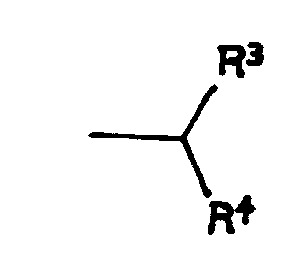
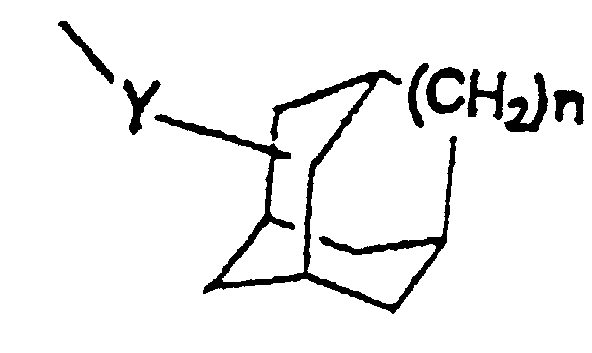
- the present invention provides a xanthine derivative of the formula (I) [hereinafter merely referred to as the compound (I)] wherein either R 1 or R 2 represents substituted or unsubstituted lower alkyl, lower alkenyl, lower alkynyl, substituted or unsubstituted alicyclic alkyl, substituted or unsubstituted phenyl, or substituted or unsubstituted benzyl; and the other represents -(CH 2 ) m -X, wherein n is 2 or 3, and X is where a is NH, O or S, and b and d are the same or different and are CH or N, or where e, g and h are the same or different and are CH or N; Q represents (wherein R 3 and R 4 are the same or different and are substituted or unsubstituted alicyclic alkyl), (wherein Y is single bond or alkylene; and n is 0 or 1), (wherein
- the alkyl moiety in the substituted or unsubstituted lower alkyl represented by R 1 and R 2 is straight or branched chain alkyl having 1 to 6 carbon atoms such as methyl, ethyl, propyl, isopropyl, butyl, isobutyl, sec-butyl, tert-butyl, pentyl, neopentyl or hexyl.
- Substituents of the lower alkyl are alicyclic alkyl having 3 to 8 carbon atoms, for example, cyclopropyl, cyclobutyl, cyclopentyl, cyclohexyl or cyclooctyl.
- Lower alkenyl is straight or branched chain alkenyl having 2 to 4 carbon atoms such as vinyl, allyl, propenyl, isopropenyl, butenyl, or isobutenyl.
- Lower alkynyl is straight or branched chain alkynyl having 2 to 4 carbon atoms such as propargyl or 3-butynyl.
- the alicyclic alkyl moiety in the substituted or unsubstituted alicyclic alkyl is cycloalkyl having 3 to 8 carbon atoms such as cyclopropyl, cyclobutyl, cyclopentyl, cyclohexyl or cyclooctyl.
- the alicyclic alkyl, phenyl and benzyl may have 1 to 3 substituents and they are the same or different and are lower alkyl, hydroxy, lower alkoxy, halogen, nitro or amino.
- the alkyl moieties of the lower alkyl and the lower alkoxy are the same as those described above.
- the halogen includes fluorine, chlorine, bromine and iodine.
- the alkylene represented by Y is straight or branched chain alkylene having 1 to 4 carbon atoms such as methylene, ethylene, trimethylene, tetramethylene, methylmethylene, propylene or ethylethylene.
- the pharmacologically acceptable salt of the compound (I) includes pharmacologically acceptable acid addition salts, metal salts, ammoniun salts, organic amine addition salts, amino acid addition salts and the like.
- the pharmacologically acceptable acid addition salt there are salts formed with inorganic acids such as hydrochloride, sulfate or phosphate, salts formed with organic acids such as acetate, maleate, fumarate, tartrate or citrate.
- the metal salt there are alkali metal salts such as sodium salt or potassium salt, alkaline earth metal salts such as magnesium salt or calcium salt, aluminum salt and zinc salt.
- the ammonium salts there are ammonium salt, tetramethylammonium salt and the like.
- the organic amine addition salt there are morpholine addition salt, piperidine addition salt and the like.
- the amino acid addition salt there are lysine addition salt, phenylalanine addition salt and the like.
- the present invention provides a xanthine derivative of the formula (I) wherein one of R 1 and R 2 represents unsubstituted straight or branched chain C 1-6 alkyl; and the other represents
- the present invention provides further a xanthine derivative of the formula (I) wherein one of R 1 and R 2 represents unsubstituted straight or branched chain C 1-6 alkyl; and the other represents and wherein Q is
- the compound (I) can be produced according to the following reaction scheme: wherein one of R 5 and R 6 is substituted or unsubstituted lower alkyl, lower alkenyl, lower alkynyl, substituted or unsubstituted alicyclic alkyl, substituted or unsubstituted phenyl, or substituted or unsubstituted benzyl, and the other is -(CH 2 ) m -X A , wherein m is the same as defined above, and X A is or wherein a, b, d, e, g and h are the same as defined above, and P is a protecting group of the amino group; Hal is halogen; and R 1 , R 2 and Q are as defined above.
- protecting group there are tert-butoxycarbonyl, benzyloxycarbonyl, acetyl, formyl and the like.
- Halogen is the same as defined above.
- the compound (IV) is obtained by reacting the compound (II) which can be obtained according to a known method (for example, EP 103497A) with the compound (III) or a reactive derivative thereof.
- the reactive derivative of the compound (III) for example, there are acid halides such as acid chloride or acid bromide , active esters such as p-nitrophenyl ester or N-oxysuccinimide, acid anhydrides obtained by using carbodiimide such as 1-ethyl-3-(3-dimethylaminopropyl)carbodiimide, diisopropylcarbodiimide or dicyclohexylcarbodiimide, mixed acid anhydrides with monoethyl carbonate ester, monoisobutyl carbonate ester and the like.
- acid halides such as acid chloride or acid bromide
- active esters such as p-nitrophenyl ester or N-oxysuccinimide
- acid anhydrides obtained by using carbodiimide such as 1-ethyl-3-(3-dimethylaminopropyl)carbodiimide, diisopropylcarbodiimide or dicyclohexylcarbodi
- the compound (III) is used in an amount of 1 to 5 equivalents per 1 equivalent of the compound (II).
- the reaction is carried out by heating to 50 to 200 °C in the absence of a solvent.
- the reaction can be carried out according to a common method in the field of peptide chemistry.
- the reaction can be carried out in a solvent selected from halogenated hydrocarbons such as methylene chloride, chloroform or ethane dichloride, ethers such as dioxane or tetrahydrofuran, dimethylformamide, dimethyl sulfoxide, if necessary, water and the like.
- the reaction is carried out at a temperature of -80 to S0 °C and is completed within 0.5 to 24 hours.
- the reaction can be carried out in the presence of an additive such as 1-hydroxybenzotriazole, or a base such as pyridine, triethylamine, 4-dimethylaminopyridine or N-methylmorpholine.
- the compound (V) is obtained by ring closure reaction of the compound (IV) in the presence of a base (Process A), by treatment with a dehydrating agent (Process B), or by heating (Process C).
- the compound (V) is obtained by reacting the compound (IV) at a temperature of 4 °C to 180 °C for 10 minutes to 6 hours in a solvent in the presence of a base.
- alkali metal hydroxides such as sodium hydroxide or potassium hydroxide.
- solvent there are water, lower alkanols such as methanol or ethanol, ethers such as dioxane or tetrahydrofuran, dimethylformamide, dimethyl sulfoxide and the like. These solvents can be used alone or in combination thereof.
- the compound (V) is obtained by reacting the compound (IV) at a temperature of 4 °C to 180 °C for 0.5 to 12 hours in a solvent or without any solvent in the presence of a dehydrating agent.
- thionyl halides such as thionyl chloride, phosphorus oxyhalides such as phosphorus oxychloride.
- solvent there are halogenated hydrocarbons such as methylene chloride, chloroform or ethane dichloride, dimethylformamide, dimethyl sulfoxide and the like.
- the compound (V) is obtained by heating the compound (IV) at 50 to 200 °C for 1 to 20 hours in a solvent.
- solvent there are dimethylformamide, dimethyl sulfoxide, Dowthermo A (manufactured by Dow Chemical Co., U.S.A.) and the like.
- the compound (I) is obtained by deprotecting the protecting group P of the compound (V) according to a conventional method employed in the field of synthetic organic chemistry.
- the protecting group P is, for example, benzyloxycarbonyl group
- catalytic hydrogenation is carried out with hydrogen gas in a solvent at an atmospheric pressure in the presence of a hydrogenation catalyst.
- the reaction is carried out at a temperature of 4 °C to 100 °C for 0.5 to 48 hours.
- the hydrogenation catalyst there are platinum catalysts such as platinum oxide or activated carbon on platinum (Pt/C), palladium catalysts such as activated carbon on palladium (Pd/C) or palladium black, nickel catalysts such as Raney nickel, activated carbon on rhodium (Rh/C) and the like.
- platinum catalysts such as platinum oxide or activated carbon on platinum (Pt/C)
- palladium catalysts such as activated carbon on palladium (Pd/C) or palladium black
- nickel catalysts such as Raney nickel
- the solvent there are alcohols such as methanol or ethanol, esters such as ethyl acetate, ethers such as dioxane or tetrahydrofuran, N,N-dimethylformamide, acetic acid and the like.
- the compound (VI) is obtained from the compound (IV) according to the same manner as that described in Step 3.
- the compound (I) is obtained from the compound (VI) according to the same procedure as that described in Step 2.
- the compound (VIII) is obtained by reacting the compound (II) with the compound (VII) at -80 to 100 °C for 10 minutes to 5 hours in a solvent.
- the compound (VII) is used in an amount of 1 to 2 equivalents per 1 equivalent of the compound (II).
- the solvent there are mixed solvents of acetic acid with lower alcohols such as methanol or ethanol.
- the compound (V) is obtained by reacting the compound (VIII) at 4 °C to 180 °C for 30 minutes to 10 hours in a solvent in the presence of an oxidizing agent.
- oxidizing agent there are oxygen, ferric chloride, ammonium cerium (IV) nitrate, diethylazodicarboxylate and the like.
- solvent there are lower alcohols such as methanol or ethanol, halogenated hydrocarbons such as methylene chloride or chloroform, aromatic hydrocarbons such as toluene, xylene or nitrobenzene.
- the compound (XI) is obtained by reacting the compound (X) and the compound (IX) at a temperature of 50 to 150°C for 30 minutes to 10 hours.
- the compound (X) is used in an amount of 1 to 2 equivalents per 1 equivalent of the compound (IX).
- the solvent there are lower alcohols such as methanol or ethanol, dimethylformamide, dimethyl sulfoxide and the like.
- the compound (V) is obtained by reacting the compound (XI) and a nitrosating agent at a temperature of 4°C to the boiling point of the solvent for 30 minutes to 10 hours in a solvent in the presence of an acid.
- the nitrosating agent is used in an amount of 1 to 3 equivalents per 1 equivalent of the compound (XI).
- nitrosating agent there are nitrous acid derivatives such as sodium nitrite or isoamyl nitrite.
- the acid there are acetic acid, dilute hydrochloric acid and the like.
- the solvent there are lower alcohols such as methanol or ethanol.
- the compound (I) is obtained from the compound (V) according to the same procedure as that described in Step 3.
- the desired compounds in the above respective steps can be isolated and purified by a conventional purification method usually employed in the field of synthetic organic chemistry such as filtration, extraction, washing, drying, concentration, recrystallization or various chromatographic processes.
- the salt of the compound (I) can be obtained by a conventional method usually employed in the field of synthetic organic chemistry.
- the compound (I) when the compound (I) is obtained in a salt form, it may be purified as it is.
- the compound (I) When the compound (I) is obtained in the free form, it may be dissolved or suspended in a suitable solvent and thereafter an acid or base may be added thereto to form a salt.
- the compound (I) or pharmacologically acceptable salt thereof may be in an addition form of water or various solvents, and these addition forms are included in the scope of the present invention.
- the compound (I) can exist in the form of optical isomers.
- the present invention includes all possible stereoisomers or mixture thereof including the optical active isomer.
- mice Male whister rats (Charles River Laboratories) weighing 220 g to 280 g were used for the test, and each group consisted of 12 to 13 animals. The test was performed with a step-through type passive avoidance apparatus (the bright and dark box).
- the bright and dark box was made up of a bright compartment (25 x 25 x 25 cm) lighted by 4W white luminescent and a dark compartment (25 x 25 x 25 cm). These two compartments were partitioned by a guillotine door (9 x 9 cm) and had a grid floor of stainless steel. In order to give a foot shock, the electric current (2 mA : 2 sec) may be passed through the grid floor of the dark compartment.
- the compound to be tested was suspended in 0.3% aqueous carboxymethyl cellulose solution and the suspension was orally administered 60 minutes before the acquired trial (only 0.3% aqueous carboxymethyl cellulose solution was given to the control group).
- Amnesia treatment was carried out by intraperitoneally administering 1 mg/kg of scopolamine 30 minutes before the following acquired trial.
- the training for acquisition of learning was carried out.
- the rat was then introduced into the bright compartment and, after 5 to 10 seconds, the guillotine door was opened.
- the rat in the bright compartment rapidly moved into the dark compartment.
- the guillotine door was closed.
- An electric current of 2 mA was immediately passed through the grid floor for two seconds (foot shock).
- the rat receiving the foot shock acquisition of learning was taken out of the dark compartment.
- a test trial was carried out for observing the retention and recall of the memory, as follows. Twenty-four hours after the acquired trial, the rat was placed in the bright compartment and the guillotine door was opened. The time required from opening of the guillotine door to movement of the rat from the bright compartment into the dark compartment (latency) was measured. The time (latency) was measured up to 600 seconds and the time of over 600 seconds was regarded as 600 seconds.
- amnesia control group had undergone amnesia treatment and the normal control group had not undergone amnesia treatment.
- Latency of test compound treated group and latency of amnesia control group were compared in Table 2.
- test of significance was performed by Mann Whitney U-test.
- Test compound Dose (mg/kg) p.o.) Amnesia treatment Number of animals Recall trial mean reaction latent time (sec.) Comparison to amnesia control Normal control 0 - 10 557.8 ⁇ 232.8 - Amnesia control 0 + 15 13.5 ⁇ 3.0
- Compound 1 0.02 + 15 22.9 ⁇ 5.5 not significant 0.08 + 15 20.5 ⁇ 3.5 not significant 0.31 + 15 95.9 ⁇ 41.1 p ⁇ 0.01 1.25 + 15 136.4 ⁇ 41.9 p ⁇ 0.001 5.0 + 15 182.3 ⁇ 57.5 p ⁇ 0.01 20.0 + 15 231.4 ⁇ 76.2 p ⁇ 0.001
- Compound 3 0.02 + 14 47.7 ⁇ 16.4 not significant 0.08 + 14 119.2 ⁇
- the compound 1, 2, 3 and 4 were orally administered to dd strain male mice (body weight: 20 ⁇ 1 g, 3 mice/group).
- the lethal state was observed 7 days after administration to obtain the minimum lethal dose (MLD).
- MLD of the all compounds were >300 mg/kg. This is weak toxicity and therefore the compound can be used safely in a wide dose range.
- the compound (I) or a pharmacologically acceptable salt thereof can be used as it is or in various pharmaceutical composition forms.
- the pharmaceutical composition of the present invention can be prepared by uniformly mixing an effective amount of the compound (I) or a pharmacologically acceptable salt thereof as an active component with a pharmacologically acceptable carrier.
- the pharmaceutical composition are preferably in the form of a unit dosage form suitable for oral administration or injection.
- any useful pharmacologically acceptable carrier or diluent can be used.
- suspensions and syrups can be prepared using water, sugars such as sucrose, sorbitol or fructose, glycols such as polyethylene glycol or propylene glycol, oils such as sesame oil, olive oil or soybean oil, preservatives such as p-hydroxybenzoic acid esters flavors such as strawberry flavor or peppermint.
- Powders, pills, capsules and tablets can be prepared using excipients such as lactose, glucose, sucrose or mannitol, disintegrating agents such as starch or sodium alginate lubricants such as magnesium stearate or talc, binders such as polyvinyl alcohol, hydroxypropyl cellulose or gelatin, surfactants such as fatty acid esters plasticizers such as glycerin. Tablets and capsules are most useful oral unit dosage forms because of easy administration.
- excipients such as lactose, glucose, sucrose or mannitol
- disintegrating agents such as starch or sodium alginate lubricants such as magnesium stearate or talc
- binders such as polyvinyl alcohol, hydroxypropyl cellulose or gelatin
- surfactants such as fatty acid esters plasticizers such as glycerin. Tablets and capsules are most useful oral unit dosage forms because of easy administration.
- Injectable preparations can be prepared using a carrier such as distilled water, a salt solution, glucose solution or mixture of a salt solution and glucose solution.
- a carrier such as distilled water, a salt solution, glucose solution or mixture of a salt solution and glucose solution.
- the preparations can be prepared in the form of solutions, suspensions or dispersions by using a suitable method.
- the compound (I) or a pharmacologically acceptable salt thereof can be used to be administered orally in the said dosages forms or parenterally as injections.
- the effective dosage regimen and administration route vary depending upon a particular dosage form and particular age, weight and conditions of the patient. However, normally, the compound (I) or a pharmacologically acceptable salt thereof is to be administered in the amount of 0.02 to 50 mg/kg per day and the dosage can be divided to be administered 3 to 4 times per day.
- 3-Noradamantanecarboxylic acid (2.79 g, 16.8 mmol) was dissolved in a mixture of tetrahydrofuran (50 ml) and methylene chloride (50 ml).
- 1-Hydroxybenzotriazole (2.57 g, 16.8 mmol)
- 1-ethyl-3-(3-dimethylamino)propylcarbodiimide hydrochloride (3.22 g, 16.8 mmol) were added at 0°C, and reacted at room temperature for 4 hours.
Landscapes
- Chemical & Material Sciences (AREA)
- Organic Chemistry (AREA)
- Pharmaceuticals Containing Other Organic And Inorganic Compounds (AREA)
Claims (8)
- Xanthinderivat der Formel (I):in der ein Rest von R1 und R2 einen substituierten oder unsubstituierten, unverzweigten oder verzweigten C1-6-Alkylrest bedeutet, wobei die Substituenten alicyclische C3-8-Alkylreste, unverzweigte oder verzweigte C2-4-Alkenylreste, unverzweigte oder verzweigte C2-4-Alkinylreste, substituierte oder unsubstituierte C3-8-Cycloalkylreste, substituierte oder unsubstituierte Phenylreste oder substituierte oder unsubstituierte Benzylreste sind, wobei die C3-8-Cycloalkyl-, Phenyl- oder Benzylreste 1 bis 3 Substituenten aufweisen, die gleich oder verschieden und verzweigte oder unverzweigte C1-6-Alkylreste, eine Hydroxygruppe, unverzweigte oder verzweigte C1-6-Alkoxyreste, ein Halogenatom, eine Nitro- oder Aminogruppe sind, und der andere
 in der a die Bedeutung NH, O oder S hat, und b und d gleich oder verschieden sind und CH oder N bedeuten, oder
 wobei e, g und h gleich oder verschieden sind und CH oder N bedeuten, der Rest Q eine der folgenden Formeln aufweist
 (wobei R3 und R4 gleich oder verschieden sind und substituierte oder unsubstituierte C3-8-Cycloalkylreste bedeuten, wobei die Anzahl der Substituenten 1 bis 3 ist, diese gleich oder verschieden sind und unverzweigte oder verzweigte C1-6-Alkylreste, eine Hydroxygruppe, unverzweigte oder verzweigte C1-6-Alkoxyreste, ein Halogenatom, eine Nitro- oder Aminogruppe bedeuten), oder
 (wobei Y eine einfache Bindung oder ein unverzweigter oder verzweigter C1-4-Alkylenrest ist und n 0 oder 1 ist), oder
 (wobei ---- eine einfache Bindung oder eine Doppelbindung bedeutet und Y wie oben definiert ist), oder
 (wobei Y wie oben definiert ist);
oder dessen pharmazeutisch verträgliches Salz. - Xanthinverbindung nach Anspruch 1, in der ein Rest von R1 und R2 ein unsubstituierter, unverzweigter oder verzweigter C1-6-Alkylrest bedeutet, und der anderebedeutet.

- Xanthinverbindung nach Anspruch 2, in der Qbedeutet.

- Verbindung nach einem der Ansprüche 1 bis 3, wobei das Salz ausgewählt ist aus Säureadditionssalzen, Metallsalzen, Ammoniumsalzen, organischen Aminen als Additionssalze und Aminosäuren als Additionssalze.
- Arzneimittel umfassend einen pharmazeutisch verträglichen Träger und als Wirkstoff eine wirksame Menge des Derivats nach einem der Ansprüche 1 bis 4.
- Xanthinderivat der Formel (V):
 wobei a die Bedeutung NH, O oder S hat, b und d gleich oder verschieden sind und CH oder N bedeuten, oderin der R1 substituierte oder unsubstituierte, unverzweigte oder verzweigte C1-6-Alkylreste bedeutet, wobei die Substituenten alicyclische C3-8-Alkylreste, unverzweigte oder verzweigte C2-4-Alkenylreste, unverzweigte oder verzweigte C2-4-Alkinylreste, substituierte oder unsubstituierte C3-8-Cycloalkylreste, substituierte oder unsubstituierte Phenylreste oder substituierte oder unsubstituierte Benzylreste sind, wobei die C3-8-Cycloalkyl-, Phenyl- oder Benzylreste 1 bis 3 Substituenten aufweisen, die gleich oder verschieden und verzweigte oder unverzweigte C1-6-Alkylreste, eine Hydroxygruppe, unverzweigte oder verzweigte C1-6-Alkoxyreste, ein Halogenatom, eine Nitro- oder Aminogruppe sind,und R2 den Rest -(CH2)m-X bedeutet, wobei m 2 oder 3 ist, und X eine der folgenden Formeln aufweist
 wobei e, g und h gleich oder verschieden sind und CH oder N bedeuten;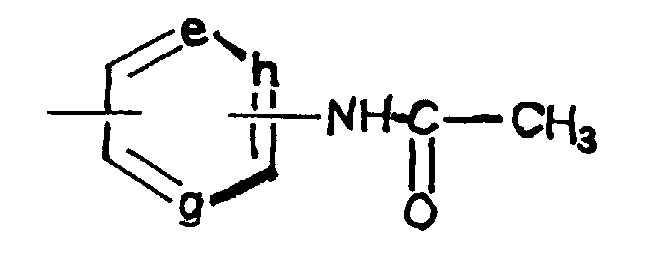
der Rest Q eine der folgenden Formeln aufweist(wobei R3 und R4 gleich oder verschieden sind und substituierte oder unsubstituierte C3-8-Cycloalkylreste bedeuten, wobei die Anzahl der Substituenten 1 bis 3 ist, diese gleich oder verschieden sind und unverzweigte oder verzweigte C1-6-Alkylreste, eine Hydroxygruppe, unverzweigte oder verzweigte C1-6-Alkoxyreste, ein Halogenatom, eine Nitro- oder Aminogruppe bedeuten), oder (wobei Y eine einfache Bindung oder ein unverzweigter oder verzweigter C1-4-Alkylenrest ist und n 0 oder 1 ist), oder
 (wobei ---- eine einfache Bindung oder eine Doppelbindung bedeutet, und Y wie oben definiert ist), oder
 (wobei Y wie oben definiert ist).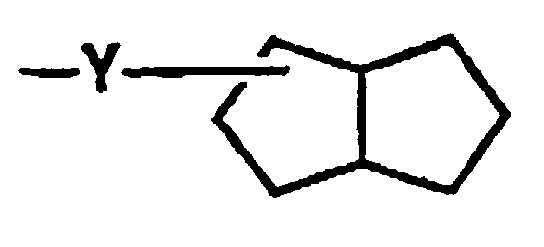
- Xanthinverbindung nach Anspruch 6, in der R1 einen unsubstituierten, unverzweigten oder verzweigten C1-6-Alkylrest bedeutet, und R2bedeutet.
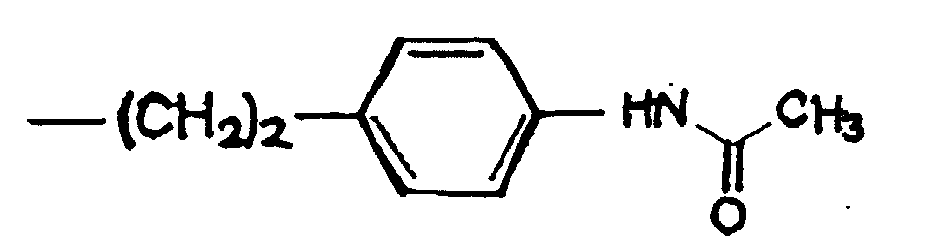
- Xanthinverbindung nach Anspruch 7, in der Qbedeutet.
Applications Claiming Priority (2)
| Application Number | Priority Date | Filing Date | Title |
|---|---|---|---|
| JP29326991 | 1991-11-08 | ||
| JP293269/91 | 1991-11-08 |
Publications (3)
| Publication Number | Publication Date |
|---|---|
| EP0541120A2 EP0541120A2 (de) | 1993-05-12 |
| EP0541120A3 EP0541120A3 (en) | 1993-07-21 |
| EP0541120B1 true EP0541120B1 (de) | 1999-05-26 |
Family
ID=17792638
Family Applications (1)
| Application Number | Title | Priority Date | Filing Date |
|---|---|---|---|
| EP92119080A Expired - Lifetime EP0541120B1 (de) | 1991-11-08 | 1992-11-06 | Xanthinderivate zur Behandlung der Demenz |
Country Status (5)
| Country | Link |
|---|---|
| US (1) | US5447933A (de) |
| EP (1) | EP0541120B1 (de) |
| AT (1) | ATE180482T1 (de) |
| CA (1) | CA2082325A1 (de) |
| DE (1) | DE69229257D1 (de) |
Families Citing this family (22)
| Publication number | Priority date | Publication date | Assignee | Title |
|---|---|---|---|---|
| JPS62247149A (ja) * | 1986-04-18 | 1987-10-28 | Mitsubishi Electric Corp | 内燃機関の燃料制御装置 |
| DE8817122U1 (de) * | 1988-12-22 | 1993-02-04 | Boehringer Ingelheim Kg, 55218 Ingelheim | Neue Xanthinderivate mit Adenosinantogenistischer Wirkung |
| US5395836A (en) * | 1993-04-07 | 1995-03-07 | Kyowa Hakko Kogyo Co., Ltd. | 8-tricycloalkyl xanthine derivatives |
| DE4316576A1 (de) * | 1993-05-18 | 1994-11-24 | Boehringer Ingelheim Kg | Verbessertes Verfahren zur Herstellung von 1,3-Dipropyl-8-(3-Oxocyclopentyl)-xanthin |
| WO1995031460A1 (en) * | 1994-05-17 | 1995-11-23 | Kyowa Hakko Kogyo Co., Ltd. | Process for producing xanthine derivative |
| US5591776A (en) | 1994-06-24 | 1997-01-07 | Euro-Celtique, S.A. | Pheynl or benzyl-substituted rolipram-based compounds for and method of inhibiting phosphodiesterase IV |
| US6066641A (en) * | 1994-12-13 | 2000-05-23 | Euro-Celtique S.A. | Aryl thioxanthines |
| EP0799040B1 (de) * | 1994-12-13 | 2003-08-20 | Euroceltique S.A. | Dreifachsubstituierte thioxanthine |
| WO1996036638A1 (en) * | 1995-05-19 | 1996-11-21 | Chiroscience Limited | Xanthines and their therapeutic use |
| US5864037A (en) | 1996-06-06 | 1999-01-26 | Euro-Celtique, S.A. | Methods for the synthesis of chemical compounds having PDE-IV inhibitory activity |
| US5786360A (en) * | 1996-11-19 | 1998-07-28 | Link Technology Incorporated | A1 adenosine receptor antagonists |
| US6248746B1 (en) | 1998-01-07 | 2001-06-19 | Euro-Celtique S.A. | 3-(arylalkyl) xanthines |
| US6263850B1 (en) | 1999-08-03 | 2001-07-24 | Visteon Global Technologies, Inc. | Integrated air induction module for gasoline engines |
| MXPA02004795A (es) | 1999-11-12 | 2005-07-01 | Biogen Inc | Antagonistas del receptor de adenosina y los metodos para producir y utilizar los mismos. |
| CN100390178C (zh) | 1999-11-12 | 2008-05-28 | 拜奥根Idec马萨诸塞公司 | 作为腺苷受体拮抗剂的多环烷基嘌呤 |
| JP2006518390A (ja) * | 2003-02-19 | 2006-08-10 | エンダシア,インコーポレイテッド | A1アデノシンレセプターアンタゴニスト |
| US20040229901A1 (en) * | 2003-02-24 | 2004-11-18 | Lauren Otsuki | Method of treatment of disease using an adenosine A1 receptor antagonist |
| CA2528385C (en) * | 2003-06-06 | 2011-03-15 | Endacea, Inc. | A1 adenosine receptor antogonists |
| WO2004110379A2 (en) * | 2003-06-09 | 2004-12-23 | Endacea, Inc. | A1 adenosine receptor antagonists |
| US7598379B2 (en) | 2005-02-25 | 2009-10-06 | Pgx Health, Llc | Methods for the synthesis of unsymmetrical cycloalkyl substituted xanthines |
| EP2061793A2 (de) * | 2006-08-22 | 2009-05-27 | Novacardia, Inc. | Kw-3902-konjugate, die die blut-hirn-schranke nicht überwinden |
| CA2709772A1 (en) * | 2007-12-21 | 2009-07-09 | Endacea, Inc. | A1 adenosine receptor antagonists |
Family Cites Families (11)
| Publication number | Priority date | Publication date | Assignee | Title |
|---|---|---|---|---|
| DE1245969B (de) * | 1967-08-03 | VEB Arzneimittelwerk Dresden, Radebeul | Verfahren zur Herstellung von Xanthinderivaten | |
| CA724173A (en) * | 1965-12-21 | Goldner Herbert | Process for the production of xanthine derivatives | |
| US4576947A (en) * | 1967-12-16 | 1986-03-18 | Hoechst Aktiengesellschaft | Pharmaceutical compositions |
| FR2558162B1 (fr) * | 1984-01-17 | 1986-04-25 | Adir | Nouveaux derives de la xanthine, leurs procedes de preparation et les compositions pharmaceutiques les renfermant |
| EP0193599A1 (de) * | 1984-09-07 | 1986-09-10 | The General Hospital Corporation | Pestizidemittel aus xanthin |
| GB8510758D0 (en) * | 1985-04-27 | 1985-06-05 | Wellcome Found | Compounds |
| DE8817122U1 (de) * | 1988-12-22 | 1993-02-04 | Boehringer Ingelheim Kg, 55218 Ingelheim | Neue Xanthinderivate mit Adenosinantogenistischer Wirkung |
| JP2843634B2 (ja) * | 1989-03-06 | 1999-01-06 | 協和醗酵工業株式会社 | キサンチン誘導体 |
| JPH06102662B2 (ja) * | 1989-09-01 | 1994-12-14 | 協和醗酵工業株式会社 | キサンチン誘導体 |
| DE4019892A1 (de) * | 1990-06-22 | 1992-01-02 | Boehringer Ingelheim Kg | Neue xanthinderivate |
| CA2061544A1 (en) * | 1991-02-25 | 1992-08-26 | Fumio Suzuki | Xanthine compounds |
-
1992
- 1992-11-06 EP EP92119080A patent/EP0541120B1/de not_active Expired - Lifetime
- 1992-11-06 CA CA002082325A patent/CA2082325A1/en not_active Abandoned
- 1992-11-06 DE DE69229257T patent/DE69229257D1/de not_active Expired - Lifetime
- 1992-11-06 AT AT92119080T patent/ATE180482T1/de active
- 1992-11-09 US US07/973,959 patent/US5447933A/en not_active Expired - Fee Related
Also Published As
| Publication number | Publication date |
|---|---|
| CA2082325A1 (en) | 1993-05-09 |
| US5447933A (en) | 1995-09-05 |
| ATE180482T1 (de) | 1999-06-15 |
| EP0541120A2 (de) | 1993-05-12 |
| DE69229257D1 (de) | 1999-07-01 |
| EP0541120A3 (en) | 1993-07-21 |
Similar Documents
| Publication | Publication Date | Title |
|---|---|---|
| EP0541120B1 (de) | Xanthinderivate zur Behandlung der Demenz | |
| DE69027562T2 (de) | Xanthinverbindungen | |
| US5525607A (en) | Xanthine compounds | |
| US5670498A (en) | 8-substituted styryl xanthine derivatives | |
| CA2094270C (en) | Xanthine derivatives | |
| US4968672A (en) | Adenosine receptor prodrugs | |
| US6180791B1 (en) | Synthesis of 8-substituted xanthines | |
| DE69412322T2 (de) | Xanthin-Derivate | |
| US5270316A (en) | Condensed purine derivatives | |
| HK1000600B (en) | Xanthine compounds | |
| JPH0616559A (ja) | パーキンソン病治療剤 | |
| JPWO1995023148A1 (ja) | キサンチン誘導体 | |
| US5336769A (en) | Xanthine derivatives | |
| EP0411394B1 (de) | Imidazochinolonderivate | |
| US5378844A (en) | 8-(1-aminocycloalkyl)-1,3-dialkylxanthine derivatives, preparation process and antidepressant, nootropic and psychostimulant composition thereoff | |
| JP3115128B2 (ja) | キサンチン誘導体 | |
| EP0560354A1 (de) | Xanthin-Derivate | |
| US5756735A (en) | Xanthine derivatives | |
| JP2843671B2 (ja) | キサンチン誘導体 | |
| JPH05105631A (ja) | 抗痴呆薬 | |
| JP3097269B2 (ja) | アポビンカミン酸アミド誘導体 | |
| Peikov et al. | Synthesis, toxicological, pharmacological, and bronchodilating activity in vitro of some xanthineacetic acid derivatives | |
| JPWO1992006976A1 (ja) | キサンチン誘導体 | |
| JPH0616668A (ja) | キサンチン誘導体 |
Legal Events
| Date | Code | Title | Description |
|---|---|---|---|
| PUAI | Public reference made under article 153(3) epc to a published international application that has entered the european phase |
Free format text: ORIGINAL CODE: 0009012 |
|
| AK | Designated contracting states |
Kind code of ref document: A2 Designated state(s): AT BE CH DE DK ES FR GB GR IE IT LI LU MC NL PT SE |
|
| PUAL | Search report despatched |
Free format text: ORIGINAL CODE: 0009013 |
|
| AK | Designated contracting states |
Kind code of ref document: A3 Designated state(s): AT BE CH DE DK ES FR GB GR IE IT LI LU MC NL PT SE |
|
| 17P | Request for examination filed |
Effective date: 19930817 |
|
| 17Q | First examination report despatched |
Effective date: 19960905 |
|
| GRAG | Despatch of communication of intention to grant |
Free format text: ORIGINAL CODE: EPIDOS AGRA |
|
| GRAG | Despatch of communication of intention to grant |
Free format text: ORIGINAL CODE: EPIDOS AGRA |
|
| GRAH | Despatch of communication of intention to grant a patent |
Free format text: ORIGINAL CODE: EPIDOS IGRA |
|
| GRAH | Despatch of communication of intention to grant a patent |
Free format text: ORIGINAL CODE: EPIDOS IGRA |
|
| GRAA | (expected) grant |
Free format text: ORIGINAL CODE: 0009210 |
|
| AK | Designated contracting states |
Kind code of ref document: B1 Designated state(s): AT BE CH DE DK ES FR GB GR IE IT LI LU MC NL PT SE |
|
| PG25 | Lapsed in a contracting state [announced via postgrant information from national office to epo] |
Ref country code: IT Free format text: LAPSE BECAUSE OF FAILURE TO SUBMIT A TRANSLATION OF THE DESCRIPTION OR TO PAY THE FEE WITHIN THE PRE;WARNING: LAPSES OF ITALIAN PATENTS WITH EFFECTIVE DATE BEFORE 2007 MAY HAVE OCCURRED AT ANY TIME BEFORE 2007. THE CORRECT EFFECTIVE DATE MAY BE DIFFERENT FROM THE ONE RECORDED.SCRIBED TIME-LIMIT Effective date: 19990526 Ref country code: SE Free format text: THE PATENT HAS BEEN ANNULLED BY A DECISION OF A NATIONAL AUTHORITY Effective date: 19990526 Ref country code: LI Free format text: LAPSE BECAUSE OF FAILURE TO SUBMIT A TRANSLATION OF THE DESCRIPTION OR TO PAY THE FEE WITHIN THE PRESCRIBED TIME-LIMIT Effective date: 19990526 Ref country code: NL Free format text: LAPSE BECAUSE OF FAILURE TO SUBMIT A TRANSLATION OF THE DESCRIPTION OR TO PAY THE FEE WITHIN THE PRESCRIBED TIME-LIMIT Effective date: 19990526 Ref country code: GR Free format text: LAPSE BECAUSE OF NON-PAYMENT OF DUE FEES Effective date: 19990526 Ref country code: ES Free format text: THE PATENT HAS BEEN ANNULLED BY A DECISION OF A NATIONAL AUTHORITY Effective date: 19990526 Ref country code: BE Free format text: LAPSE BECAUSE OF FAILURE TO SUBMIT A TRANSLATION OF THE DESCRIPTION OR TO PAY THE FEE WITHIN THE PRESCRIBED TIME-LIMIT Effective date: 19990526 Ref country code: CH Free format text: LAPSE BECAUSE OF FAILURE TO SUBMIT A TRANSLATION OF THE DESCRIPTION OR TO PAY THE FEE WITHIN THE PRESCRIBED TIME-LIMIT Effective date: 19990526 Ref country code: AT Free format text: LAPSE BECAUSE OF FAILURE TO SUBMIT A TRANSLATION OF THE DESCRIPTION OR TO PAY THE FEE WITHIN THE PRESCRIBED TIME-LIMIT Effective date: 19990526 |
|
| REF | Corresponds to: |
Ref document number: 180482 Country of ref document: AT Date of ref document: 19990615 Kind code of ref document: T |
|
| REG | Reference to a national code |
Ref country code: CH Ref legal event code: EP |
|
| REF | Corresponds to: |
Ref document number: 69229257 Country of ref document: DE Date of ref document: 19990701 |
|
| ET | Fr: translation filed | ||
| REG | Reference to a national code |
Ref country code: IE Ref legal event code: FG4D |
|
| PG25 | Lapsed in a contracting state [announced via postgrant information from national office to epo] |
Ref country code: PT Free format text: LAPSE BECAUSE OF FAILURE TO SUBMIT A TRANSLATION OF THE DESCRIPTION OR TO PAY THE FEE WITHIN THE PRESCRIBED TIME-LIMIT Effective date: 19990826 Ref country code: DK Free format text: LAPSE BECAUSE OF FAILURE TO SUBMIT A TRANSLATION OF THE DESCRIPTION OR TO PAY THE FEE WITHIN THE PRESCRIBED TIME-LIMIT Effective date: 19990826 |
|
| PG25 | Lapsed in a contracting state [announced via postgrant information from national office to epo] |
Ref country code: DE Free format text: LAPSE BECAUSE OF FAILURE TO SUBMIT A TRANSLATION OF THE DESCRIPTION OR TO PAY THE FEE WITHIN THE PRESCRIBED TIME-LIMIT Effective date: 19990827 |
|
| PG25 | Lapsed in a contracting state [announced via postgrant information from national office to epo] |
Ref country code: GB Free format text: LAPSE BECAUSE OF NON-PAYMENT OF DUE FEES Effective date: 19991106 Ref country code: LU Free format text: LAPSE BECAUSE OF NON-PAYMENT OF DUE FEES Effective date: 19991106 Ref country code: IE Free format text: LAPSE BECAUSE OF NON-PAYMENT OF DUE FEES Effective date: 19991106 |
|
| REG | Reference to a national code |
Ref country code: CH Ref legal event code: PL |
|
| PLBE | No opposition filed within time limit |
Free format text: ORIGINAL CODE: 0009261 |
|
| STAA | Information on the status of an ep patent application or granted ep patent |
Free format text: STATUS: NO OPPOSITION FILED WITHIN TIME LIMIT |
|
| 26N | No opposition filed | ||
| PG25 | Lapsed in a contracting state [announced via postgrant information from national office to epo] |
Ref country code: MC Free format text: LAPSE BECAUSE OF NON-PAYMENT OF DUE FEES Effective date: 20000531 |
|
| GBPC | Gb: european patent ceased through non-payment of renewal fee |
Effective date: 19991106 |
|
| PG25 | Lapsed in a contracting state [announced via postgrant information from national office to epo] |
Ref country code: FR Free format text: LAPSE BECAUSE OF NON-PAYMENT OF DUE FEES Effective date: 20000731 |
|
| REG | Reference to a national code |
Ref country code: FR Ref legal event code: ST |
|
| REG | Reference to a national code |
Ref country code: IE Ref legal event code: MM4A |