EP0541633B1 - Reinigung von erwinia-l-asparaginase - Google Patents
Reinigung von erwinia-l-asparaginase Download PDFInfo
- Publication number
- EP0541633B1 EP0541633B1 EP91913903A EP91913903A EP0541633B1 EP 0541633 B1 EP0541633 B1 EP 0541633B1 EP 91913903 A EP91913903 A EP 91913903A EP 91913903 A EP91913903 A EP 91913903A EP 0541633 B1 EP0541633 B1 EP 0541633B1
- Authority
- EP
- European Patent Office
- Prior art keywords
- asparaginase
- process according
- purification
- crude extract
- subjected
- Prior art date
- Legal status (The legal status is an assumption and is not a legal conclusion. Google has not performed a legal analysis and makes no representation as to the accuracy of the status listed.)
- Expired - Lifetime
Links
Images


Classifications
-
- C—CHEMISTRY; METALLURGY
- C12—BIOCHEMISTRY; BEER; SPIRITS; WINE; VINEGAR; MICROBIOLOGY; ENZYMOLOGY; MUTATION OR GENETIC ENGINEERING
- C12N—MICROORGANISMS OR ENZYMES; COMPOSITIONS THEREOF; PROPAGATING, PRESERVING, OR MAINTAINING MICROORGANISMS; MUTATION OR GENETIC ENGINEERING; CULTURE MEDIA
- C12N9/00—Enzymes; Proenzymes; Compositions thereof; Processes for preparing, activating, inhibiting, separating or purifying enzymes
- C12N9/14—Hydrolases (3)
- C12N9/78—Hydrolases (3) acting on carbon to nitrogen bonds other than peptide bonds (3.5)
- C12N9/80—Hydrolases (3) acting on carbon to nitrogen bonds other than peptide bonds (3.5) acting on amide bonds in linear amides (3.5.1)
- C12N9/82—Asparaginase (3.5.1.1)
-
- Y—GENERAL TAGGING OF NEW TECHNOLOGICAL DEVELOPMENTS; GENERAL TAGGING OF CROSS-SECTIONAL TECHNOLOGIES SPANNING OVER SEVERAL SECTIONS OF THE IPC; TECHNICAL SUBJECTS COVERED BY FORMER USPC CROSS-REFERENCE ART COLLECTIONS [XRACs] AND DIGESTS
- Y10—TECHNICAL SUBJECTS COVERED BY FORMER USPC
- Y10S—TECHNICAL SUBJECTS COVERED BY FORMER USPC CROSS-REFERENCE ART COLLECTIONS [XRACs] AND DIGESTS
- Y10S435/00—Chemistry: molecular biology and microbiology
- Y10S435/814—Enzyme separation or purification
- Y10S435/815—Enzyme separation or purification by sorption
-
- Y—GENERAL TAGGING OF NEW TECHNOLOGICAL DEVELOPMENTS; GENERAL TAGGING OF CROSS-SECTIONAL TECHNOLOGIES SPANNING OVER SEVERAL SECTIONS OF THE IPC; TECHNICAL SUBJECTS COVERED BY FORMER USPC CROSS-REFERENCE ART COLLECTIONS [XRACs] AND DIGESTS
- Y10—TECHNICAL SUBJECTS COVERED BY FORMER USPC
- Y10S—TECHNICAL SUBJECTS COVERED BY FORMER USPC CROSS-REFERENCE ART COLLECTIONS [XRACs] AND DIGESTS
- Y10S435/00—Chemistry: molecular biology and microbiology
- Y10S435/8215—Microorganisms
- Y10S435/822—Microorganisms using bacteria or actinomycetales
- Y10S435/847—Erwinia
Definitions
- This invention relates to a process for the purification of L-asparaginase.
- L-asparaginase has been reported to occur in a range of bacteria, fungi, plants and mammals and its presence in Gram-negative bacteria has been well documented (Wriston J.C. & Yellin T.O. (1973). Adv. Enzymol. 39: 185-248; Wriston J.C. (1985). Methods Enzymol. 113: 608-618). L-asparaginases have considerable commercial importance because some of these enzymes particularly those from Escherichia coli (asparaginase II) and Erwinia chrysanthemi are effective against acute lymphoblastic leukaemia (Wriston, 1985 supra).
- the enzymes from Erwinia and E.coli show no immunological cross-reactivity and so can provide an alternative therapy for a patient who has become hypersensitive to one of these enzymes. (Cammack K.A., Marlborough D.I. & Miller D.S. (1972). Biochem J. 126: 361-379).
- the enzyme from Erwinia is a tetramer of relative molecular mass 140,000, with four identical subunits, and has an unusually high isoelectric point of pH 8.6.
- L-asparaginases have been prepared on a large scale by a combination of batch and column ion-exchange chromatography. A large number of stages are required to attain the necessary purity, with batch ion-exchange chromatography being particularly labour-intensive.
- Current commercial practice involves the growth of a cell culture, and then a crude protein extraction employing alkali disruption and acid precipitation. The resulting extract is then subjected to adsorption to and elution from CM-cellulose. There then follows a further acid precipitation step and chromatography steps using CM and DEAE-cellulose media.
- One of the major problems of the system is its complexity, thus it is not readily automated and cannot be easily adapted for continuous operation.
- a process for producing purified L-asparaginase which comprises (a) contacting a crude extract of L-asparaginase with a solid medium having cation exchange groups so as to adsorb L-asparaginase on the support and (b) eluting adsorbed L-asparaginase from the support, characterised in that the cation exchange groups comprise sulphonate groups and the elution step (b) is carried out at a pH which is higher than the pH used in step (a) and preferably is less than 8.0.
- the cation sulphonate (-SO 3 - ), groups may be provided, for example, by groups of the formula -(CH2) n SO 3 - wherein n is equal to 1 to 3.
- the nature of the matrix of the solid medium is not unduly critical, but in order to achieve a high flow rate in a continuous process a support with a high degree of porosity is preferred.
- Other desirable characteristics include rigidity, low non-specific binding of protein and general chemical stability. It has been found that these properties are provided by agarose or an agarose derivative.
- crude dilute extract of L-asparaginase is preferably applied to the solid medium at a pH of from 4.0 to 5.5, followed by a washing step at pH 6.0. Elution of adsorbed L-asparaginase may then be effected with a suitable buffer solution of pH in the range 6.0 to 7.5. This range is preferably between 6.5 to 7.0.
- the process of the invention may be advantageous applied to the purification of the L-asparaginase of E chrysanthemi.
- L-asparaginases are fairly ubiquitous in prokaryotes and eukaryotes alike, that of E chrysanthemi is preferably used for this process because of its therapeutic utility.
- the process of the invention may be employed to purify L-asparaginases extracted from cultures of E chrysanthemi or it may be employed to purify L-asparaginase from other sources.
- Examples include L-asparaginase having amino acid sequences related to that of the Erwinia enzyme. In order to retain a reasonably high specific activity it is desirable to retain a close sequence homology (e.g > 90%, most preferably >95%) with the wild type.
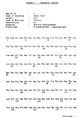
- the amino acid sequence of the wild type protein is depicted in Figure 1.
- This process may also be used for purification of L-asparaginase obtained from organisms subjected to transformation or other cloning techniques whereby the E chrysanthemi L-asparaginase gene is linked to systems promoting super-expression.
- a 12 h seed culture of E chrysanthemi is grown at 37°C and added to a stirred deep culture vessel in a medium containing yeast extract and sodium glutamate to a total volume of 400 litres, essentially as described by GB-A-1 314 530.
- the culture is harvested by centrifugation.
- Cell paste from 2.5 cultures are combined and suspended at a concentration of 1.5 g dry weight/100 ml of 6 mM EDTA.
- the suspension of 300-400 litres is stirred at 16°C and the pH adjusted 11.3- 11.5 with 0.5 M NaOH.
- the mixture is stirred for 30 minutes and the pH is adjusted to 6.3-6.7 with 12.5% v/v acetic acid.
- the precipitate is removed by centrifugation and the supernatant fluid is adjusted to pH 4.8 with 25% v/v acetic acid, then centrifuged to remove the deposit.
- Sodium acetate buffer is prepared by the addition of 25% v/v acetic acid to 40 mM sodium acetate to pH 4.8.
- Sodium phosphate buffer, pH 6.0 is prepared by addition of 2 M NaOH to NaH2PO4.
- Absorbance of protein is monitored at 280 nm and cytochrome b562 is additionally monitored at 405 nm.
- the dilute extract at pH 4.8 is applied to a column of S-Sepharose Fast Flow equilibrated with 40 mM sodium acetate buffer, pH 4.8, at a linear flow rate of 300 cm/h. Unbound protein is washed from the column with equilibration buffer at the same linear flow rate.
- Bound protein excluding asparaginase, but including cytochrome b562, is eluted from the column with about 20 column volumes of 40 mM sodium phosphate, pH 6.0 6.2, at a linear flow rate of 300 cm/h.
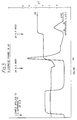
- L-asparaginase is eluted from the column at a linear flow rate of 100 cm/h with 40 mM sodium phosphate, pH 6.5 - 7.0. Successive fractions were analysed for L-asparaginase activity and the results are shown in the attached Figure 2. Fractions containing L-asparaginase are diafiltered into 20 mM sodium phosphate, pH 6.0, the conductivity reduced to less than 1.5 mS/cm and the solution concentrated and filter sterilised. In an alternative (and preferred) protocol, the pH was increased in a step-wise fashion and the enzyme was found to elute as a narrow peak immediately on introduction of a pH 6.8 buffer (see Figure 3).
- the supernatant fluid (conductivity ⁇ 6.5 mS/cm) is diluted with demineralised water to a conductivity of about 2.5 mS/cm and stirred at 14°C until all enzyme is adsorbed to 15 Kg CM-cellulose, previously equilibrated with 40 mM sodium acetate buffer, pH 4.8. Fluid is removed from the suspension by continuous flow centrifugation. The CM-cellulose is washed in the centrifuge with demineralised water and the excess water removed by centrifugation. The cellulose is transferred to a plastic container and the enzyme eluted from the CM-cellulose with 18 litres 40 mM NaOH containing 1 mM EDTA, pH 10.3.
- CM-cellulose slurry is applied to a smaller continuous flow centrifuge and the eluate collected and retained.
- the CM-cellulose is recovered, added to 18 litres of elution buffer and the pH readjusted to 10.3 with 2M NaOH.
- the slurry is replaced in the centrifuge and the eluate collected and combined with the first eluate.
- the pH of the combined eluates is adjusted to 6.0 with 20% v/v orthophosphoric acid and the pH is checked after a further 45 minutes.
- the solution is passed through a continuous flow centrifuge, diluted to 80 litres, then concentrated to 30 litres. 45-85 litres of demineralised water is added to reduce the conductivity to below 1 mS/cm and the solution is concentrated to 3 litres.
- the concentration system is flushed with 7 litres of demineralised water.
- the concentrate is passed through a 0.5 um filtration membrane and the filtration system is flushed with 2 litres of filtered demineralised water.
- the solution is concentrated to 2 litres on a smaller system. If the conductivity is greater than 1.3 mS/cm demineralised water is added and the solution is again concentrated to 2 litres.
- the concentrator system is flushed with up to 1.5 litres of demineralised water.
- the pH of the solution is adjusted to 6.0 with 20% v/v orthophosphoric acid and if necessary is diluted to reduce the conductivity to below 1.3 mS. Deposit is removed from the solution by centrifugation.
- the solution is sterile filtered and toluene added at 1 ml/litre.
- Unused CM 52-cellulose is treated with 60% v/v aqueous ethanol, extensively washed with filtered demineralised water and equilibrated against sodium phosphate buffer, pH 6.0.
- the cellulose is packed into a 25.2 x 60 cm column, washed with at least one bed volume of cooled equilibration buffer, and the extract of 18 litres applied to the column at a flow rate of approximately 4 litre/hour.
- the column is washed with at least one bed volume of the buffer.
- the enzyme is eluted from the column with 60 mM sodium phosphate buffer, pH 6.0, and the active fractions collected, filtered through a 0.2 um filter membrane and combined.
- the combined protein solution is concentrated to 40-60 mg/ml using a hollow fibre system and then adjusted to pH 8.5 with 1 M sodium hydroxide.
- Enzyme purified in the manner described in either of Examples 2 and 3 may be subjected to the following finishing steps:
- Ammonium sulphate is added to the protein solution to a final concentration of 40% w/v and the suspension stirred for 1-3 h at 18-25°C.
- the precipitate is recovered by centrifugation (5986g, 30 min), dissolved in sterile distilled water and diafiltered against sterile distilled water using a hollow fibre system until the conductivity of the solution is in the range of 0.9 to 1.15 mS/cm.
- the solution is concentrated so the enzyme activity is in the range 65,000 to 85,000 U/ml.
- the pH is adjusted to 8.7 with 1 M sodium hydroxide and the conductivity to between 1.2 and 1.6 mS/cm with 0.25 M sodium borate buffer pH 8.7.
- CM 52-cellulose is treated with 60% v/v aqueous ethanol, then equilibrated with 20 mM sodium borate buffer, pH 8.7, and packed into a 25.2 x 45 cm column.
- the enzyme is applied to the column at a flow rate of approximately 5 litres/hour. The enzyme does not bind, but passes through the column.
- the active fractions are filtered and combined.
- DEAE 52 cellulose is equilibrated with sodium borate buffer, pH 8.7, and packed into a 25.2 x 60 cm column.
- the enzyme solution is applied to the column at a flow rate of approximately 6 litres/hour and fractions collected, filtered and combined.
- the concentration of the enzyme solution is adjusted to between 25,000 and 35,000 U/ml by dilution with 20 mM sodium borate buffer, pH 8.7, and 0.66 volumes of ethanol is added.
- the solution is adjusted to pH 8.5 with 1 M acetic acid and the suspension stirred for a further 1 hour at 18-25°C.
- the precipitate is removed by centrifugation (5968g for 45 mins), and 0.09 volumes ethanol is added.
- the solution is stored at -2°C for 24 h before the crystals are resuspended, a further 0.1 volumes of ethanol added and the solution returned to -2°C for at least 48 h.
- the supernatant fluid is decanted from the crystals, and the crystals are centrifuged (5986g for 20 min).
- the sedimented crystals are dissolved in a minimum volume of sterile distilled water, and dialysed extensively against sterile distilled water at 2-4°C.
- the combined dialysed enzyme solution is then made 10 mM with respect to sodium chloride and the resultant bulk enzyme solution frozen at -20°C to await final processing.
- a sufficient amount of bulk enzyme solution is thawed and combined to provide material for a batch of 10,000 vials filled to 1 ml.
- the protein concentration is adjusted to 30 to 50 mg/ml with sterile distilled water, separated into conveniently sized batches, adjusted to pH 6.0 with 1.0 M acetic acid and treated at 18-25°C with 0.5 volumes Alhydrogel. After stirring for 30 mins. the solutions are centrifuged (5986g for 45 min) to remove the aluminium oxide and the supernatant fluids combined.
- the solution is adjusted to pH 7.4 with 1.0 M sodium hydroxide and diluted to 14,000 U/ml with sterile distilled water. Sterile sodium chloride and glucose monohydrate are added to final concentrations of 10 mM and 0.5% w/v respectively.
- the solution is finally diluted with sterile distilled water to give an enzyme activity of 10.500 U/ml and filtered through a 0.2 um positively charged membrane filter into a sterile collection vessel.
- the sterile bulk product is filled into 3 ml glass vials, freeze dried and capped and crimpled under 0.5 atmosphere nitrogen.
Landscapes
- Life Sciences & Earth Sciences (AREA)
- Chemical & Material Sciences (AREA)
- Health & Medical Sciences (AREA)
- Genetics & Genomics (AREA)
- Organic Chemistry (AREA)
- Zoology (AREA)
- Engineering & Computer Science (AREA)
- Bioinformatics & Cheminformatics (AREA)
- Wood Science & Technology (AREA)
- Microbiology (AREA)
- Medicinal Chemistry (AREA)
- Biomedical Technology (AREA)
- Molecular Biology (AREA)
- Biochemistry (AREA)
- General Engineering & Computer Science (AREA)
- General Health & Medical Sciences (AREA)
- Biotechnology (AREA)
- Enzymes And Modification Thereof (AREA)
- Micro-Organisms Or Cultivation Processes Thereof (AREA)
- Detergent Compositions (AREA)
- Peptides Or Proteins (AREA)
- Medicines That Contain Protein Lipid Enzymes And Other Medicines (AREA)
- Preparation Of Compounds By Using Micro-Organisms (AREA)
Claims (14)
- Verfahren zur Herstellung aufgereinigter L-Asparaginase, bei dem man (a) einen Rohextrakt der L-Asparaginase mit einem festen Medium mit Kationaustauschergruppen in Kontakt bringt, um die L-Asparaginase auf dem Träger zu adsorbieren, und (b) die adsorbierte L-Asparaginase vom Träger eluiert, dadurch gekennzeichnet, daß die Kationenaustauschergruppen Sulfonatgruppen enthalten und das Eluieren (b) bei einem höheren pH-Wert als in Schritt (a) erfolgt.
- Verfahren gemäß Anspruch 1, bei dem Schritt (b) bei einem pH unterhalb 8,0 ausgeführt wird.
- Verfahren gemäß Anspruch 2, bei dem die Sulfonatgruppen einen Bestandteil der Gruppen der Formel -(CH₂)nSO3 ⊖ darstellen, wobei n = 1 - 3 ist.
- Verfahren gemäß einem der vorstehenden Ansprüche, bei dem der Träger von Agarose abgeleitet ist.
- Verfahren gemäß einem der vorstehenden Ansprüche, bei dem das In-Kontakt-Bringen des Rohextrakts mit dem festen Medium in Schritt (a) bei einem pH von 4,0 bis 5,5 erfolgt.
- Verfahren gemäß einem der vorstehenden Ansprüche, bei dem das Eluieren der adsorbierten L-Asparaginase in Schritt (b) bei einem pH von 6,0 bis 7,5 erfolgt.
- Verfahren gemäß Anspruch 6, bei dem der pH in Schritt (b) im Bereich von 6,6 bis 7,0 liegt.
- Verfahren gemäß einem der vorstehenden Ansprüche, bei dem man(i) die L-Asparaginase bei einem pH von 11,3-11,5 aus aufgebrochenen Zellen extrahiert,(ii) den pH auf einen Wert im Bereich von 6,3 bis 6,7 einstellt,(iii) den Überstand von ausgefällten Verunreinigungen abtrennt,(iv) den Überstand aus Schritt (iii) der Adsorbtion auf dem festen Medium mit Kationenaustauschergruppen unterwirft, und(v) die adsorbierte L-Asparaginase eluiert.
- Verfahren gemäß einem der vorstehenden Ansprüche, bei dem die der Aufreinigung unterworfene L-Asparaginase im wesentlichen die Aminosäuresequenz der L-Asparaginase aus E. chrysanthemi hat.
- Verfahren gemäß einem der vorstehenden Ansprüche, bei dem die der Aufreinigung unterworfene L-Asparaginase eine Sequenzhomologie von mindestens 90 % zu der in Fig. 1 dargestellten Aminosäuresequenz aufweist.
- Verfahren gemäß Anspruch 10, bei dem die der Aufreinigung unterworfene L-Asparaginase eine Sequenzhomologie von mindestens 95 % zu der in Fig.1 dargestellten Aminosäuresequenz aufweist.
- Verfahren gemäß Anspruch 11, bei welchem die der Aufreinigung unterworfene L-Asparaginase eine Sequenzhomologie von mindestens 99 % zu der in Fig. 1 dargestellten Aminosäuresequenz aufweist.
- Verfahren gemäß einem der vorstehenden Ansprüche, bei dem der Rohextrakt dadurch hergestellt wird, daß man einen transformierten Mikroorganismus kultiviert, der ein rekombinantes Plasmid mit einem für die L-Asparaginase codierenden DNA-Insert enthält.
- Verfahren gemäß einem der Ansprüche 1 - 9, bei dem der Rohextrakt durch die Kultivierung von E. chrysanthemi erhalten wird.
Applications Claiming Priority (3)
| Application Number | Priority Date | Filing Date | Title |
|---|---|---|---|
| GB909017002A GB9017002D0 (en) | 1990-08-02 | 1990-08-02 | Improved method for the purification of erwina l-asparaginase |
| GB9017002 | 1990-08-02 | ||
| PCT/GB1991/001308 WO1992002616A1 (en) | 1990-08-02 | 1991-08-01 | Purification of erwinia-l-asparaginase |
Publications (2)
| Publication Number | Publication Date |
|---|---|
| EP0541633A1 EP0541633A1 (de) | 1993-05-19 |
| EP0541633B1 true EP0541633B1 (de) | 1996-03-13 |
Family
ID=10680081
Family Applications (1)
| Application Number | Title | Priority Date | Filing Date |
|---|---|---|---|
| EP91913903A Expired - Lifetime EP0541633B1 (de) | 1990-08-02 | 1991-08-01 | Reinigung von erwinia-l-asparaginase |
Country Status (10)
| Country | Link |
|---|---|
| US (1) | US5310670A (de) |
| EP (1) | EP0541633B1 (de) |
| JP (1) | JPH05508546A (de) |
| AT (1) | ATE135402T1 (de) |
| AU (1) | AU647819B2 (de) |
| CA (1) | CA2075289A1 (de) |
| DE (1) | DE69117956T2 (de) |
| DK (1) | DK0541633T3 (de) |
| GB (1) | GB9017002D0 (de) |
| WO (1) | WO1992002616A1 (de) |
Families Citing this family (13)
| Publication number | Priority date | Publication date | Assignee | Title |
|---|---|---|---|---|
| ATE372059T1 (de) | 2002-10-11 | 2007-09-15 | Novozymes As | Verfahren zur herstellung von wärmebehandelten produkten |
| BR0317298A (pt) * | 2002-12-19 | 2005-11-08 | Dsm Ip Assets Bv | Processo para produção de alimentos |
| WO2006138181A2 (en) | 2005-06-14 | 2006-12-28 | Amgen Inc. | Self-buffering protein formulations |
| AU2013204044B2 (en) * | 2007-11-30 | 2017-08-31 | Abbvie Biotechnology Ltd. | Protein formulations and methods of making same |
| KR20210049186A (ko) * | 2007-11-30 | 2021-05-04 | 애브비 바이오테크놀로지 리미티드 | 단백질 제형 및 이의 제조방법 |
| US8883146B2 (en) | 2007-11-30 | 2014-11-11 | Abbvie Inc. | Protein formulations and methods of making same |
| WO2011003633A1 (en) | 2009-07-06 | 2011-01-13 | Alize Pharma Ii | Pegylated l-asparaginase |
| EP3463308B2 (de) | 2016-06-01 | 2026-01-07 | Servier IP UK Limited | Formulierungen von polyalkylen-oxid-asparaginase und verfahren zur herstellung und verwendung davon |
| ES3064802T3 (en) | 2016-10-21 | 2026-04-29 | Amgen Inc | Pharmaceutical formulations and methods of making the same |
| KR102727396B1 (ko) * | 2017-06-21 | 2024-11-08 | 재즈 파마슈티칼즈 아일랜드 리미티드 | 변형된 l-아스파라기나아제 |
| WO2019083793A1 (en) | 2017-10-27 | 2019-05-02 | Pfenex Inc. | Method for production of recombinant erwinia asparaginase |
| US10662433B2 (en) | 2017-10-27 | 2020-05-26 | Pfenex Inc. | Method for production of recombinant E. coli asparaginase |
| US20220313798A1 (en) | 2021-03-30 | 2022-10-06 | Jazz Pharmaceuticals Ireland Ltd. | Dosing of recombinant l-asparaginase |
Family Cites Families (7)
| Publication number | Priority date | Publication date | Assignee | Title |
|---|---|---|---|---|
| DE1767389A1 (de) * | 1968-05-06 | 1971-09-02 | Bayer Ag | Verfahren zur Abtrennung von Pyrogenen aus Rohpraeparaten von L-Asparaginase |
| DE1916723C3 (de) * | 1968-04-05 | 1973-07-05 | Kyowa Hakko Kogyo Kk | Verfahren zur Reinigung von L-Asparaginase |
| US3597323A (en) * | 1968-06-07 | 1971-08-03 | Wadley Res Inst & Blood Bank | Method of purifying l-asparaginase |
| US3637462A (en) * | 1969-04-21 | 1972-01-25 | Wadley Res Inst & Blood Bank | Purification of enzymes |
| SU436085A1 (ru) * | 1972-08-07 | 1974-07-15 | В. М. Денисов, В. И. Максимов , Г. А. Молодова | Способ очистки l-аспарагиназы |
| US4729957A (en) * | 1984-12-13 | 1988-03-08 | The United States Of America As Represented By The Department Of Health And Human Services | Process for manufacture of L-asparaginase from erwinia chrysanthemi |
| AU6773487A (en) * | 1985-12-13 | 1987-06-30 | United States of America, as represented by the Secretary, U.S. Department of Commerce, The | Process for manufacture of l-asparaginase from erwinia carotovora |
-
1990
- 1990-08-02 GB GB909017002A patent/GB9017002D0/en active Pending
-
1991
- 1991-08-01 EP EP91913903A patent/EP0541633B1/de not_active Expired - Lifetime
- 1991-08-01 AT AT91913903T patent/ATE135402T1/de not_active IP Right Cessation
- 1991-08-01 DK DK91913903.0T patent/DK0541633T3/da active
- 1991-08-01 US US07/867,105 patent/US5310670A/en not_active Expired - Fee Related
- 1991-08-01 WO PCT/GB1991/001308 patent/WO1992002616A1/en not_active Ceased
- 1991-08-01 JP JP91512838A patent/JPH05508546A/ja active Pending
- 1991-08-01 CA CA002075289A patent/CA2075289A1/en not_active Abandoned
- 1991-08-01 AU AU82805/91A patent/AU647819B2/en not_active Ceased
- 1991-08-01 DE DE69117956T patent/DE69117956T2/de not_active Expired - Fee Related
Non-Patent Citations (1)
| Title |
|---|
| Chemical Abstracts, vol. 114, no. 15, April 15, 1991, Columbus, Ohio, US; abstract no. 138655W, M.P. Allen, p. 328, column R * |
Also Published As
| Publication number | Publication date |
|---|---|
| DK0541633T3 (da) | 1996-07-22 |
| EP0541633A1 (de) | 1993-05-19 |
| GB9017002D0 (en) | 1990-09-19 |
| ATE135402T1 (de) | 1996-03-15 |
| AU8280591A (en) | 1992-03-02 |
| DE69117956T2 (de) | 1996-07-25 |
| AU647819B2 (en) | 1994-03-31 |
| WO1992002616A1 (en) | 1992-02-20 |
| CA2075289A1 (en) | 1992-02-03 |
| DE69117956D1 (de) | 1996-04-18 |
| US5310670A (en) | 1994-05-10 |
| JPH05508546A (ja) | 1993-12-02 |
Similar Documents
| Publication | Publication Date | Title |
|---|---|---|
| AU647819B2 (en) | Purification of erwinia-L-asparaginase | |
| EP0885955A2 (de) | Hitzestabile gereinigte Endoglucanasen aus thermophilem Bakterium Acidohermus Cellulolyticus | |
| EP0227834A1 (de) | Verfahren zur reinigung eines interferons | |
| EP0058686B1 (de) | Verfahren zur herstellung von heparinase | |
| Melling et al. | Preparation of gram quantities of a purified R-factor-mediated penicillinase from Escherichia coli strain W3310 | |
| EP0477285B1 (de) | Wiedergewinnungsverfahren von mikrobiell erzeugtem chymosin | |
| EP0142169B1 (de) | 2,5-Diketo-D-Glukonsäure-Reduktase | |
| EP0219673B1 (de) | Verfahren zur Herstellung einer thermostabilen Transglucosidase | |
| EP0164754B1 (de) | Verfahren zur Herstellung von N-Acetylneuraminat-Lyase | |
| OSMUNDSVAG et al. | Cellulases from Sporocytophaga myxococcoides: Purification and properties | |
| JPH0838185A (ja) | 遺伝子的に修飾された生物体を用いるビタミンc先駆体の製造に係る酵素、およびその製造方法 | |
| CA2073043C (en) | Improved method for purification of recombinant copper/zinc (cu-zn) superoxide dismutase from bacteria or eucaryotic cells | |
| US5360729A (en) | Method for purification of recombinant copper/zinc (CU-ZN) superoxide dismutase from bacteria or eucaryotic cells | |
| EP0374771B1 (de) | Verfahren zur Herstellung der Restriktionsendonucklease PvuI | |
| US3594282A (en) | Process for purifying l-asparaginase | |
| JPH0480675B2 (de) | ||
| US3660238A (en) | Extraction of asparaginase from bacterial culture | |
| Sato et al. | Subunit structure of chondroitinase ABC from Proteus vulgaris | |
| WO1988008031A1 (en) | Process for preparing cyclodextrins | |
| CN1348010A (zh) | 金属硫蛋白的制备方法 | |
| Solioz et al. | [53] Purification of the ATPase of Streptococcus faecalis | |
| JP2815449B2 (ja) | 低分子量へパリンの製造方法 | |
| Porton | The Production of L-Asparaginase | |
| JPH01228477A (ja) | β−マンナナーゼ遺伝子DNA、該DNAを含む組換え体プラスミド及び形質転換体 | |
| KR100374307B1 (ko) | 재조합효모로부터발현된감마인터페론의정제방법 |
Legal Events
| Date | Code | Title | Description |
|---|---|---|---|
| PUAI | Public reference made under article 153(3) epc to a published international application that has entered the european phase |
Free format text: ORIGINAL CODE: 0009012 |
|
| 17P | Request for examination filed |
Effective date: 19920604 |
|
| AK | Designated contracting states |
Kind code of ref document: A1 Designated state(s): AT BE CH DE DK ES FR GB GR IT LI LU NL SE |
|
| 17Q | First examination report despatched |
Effective date: 19950112 |
|
| ITPR | It: changes in ownership of a european patent |
Owner name: CO N.E EPO REG 92;MICROBIOLOGICAL RESEARCH AUTORIT |
|
| GRAA | (expected) grant |
Free format text: ORIGINAL CODE: 0009210 |
|
| AK | Designated contracting states |
Kind code of ref document: B1 Designated state(s): AT BE CH DE DK ES FR GB GR IT LI LU NL SE |
|
| PG25 | Lapsed in a contracting state [announced via postgrant information from national office to epo] |
Ref country code: GR Free format text: LAPSE BECAUSE OF FAILURE TO SUBMIT A TRANSLATION OF THE DESCRIPTION OR TO PAY THE FEE WITHIN THE PRESCRIBED TIME-LIMIT Effective date: 19960313 Ref country code: ES Free format text: THE PATENT HAS BEEN ANNULLED BY A DECISION OF A NATIONAL AUTHORITY Effective date: 19960313 |
|
| REF | Corresponds to: |
Ref document number: 135402 Country of ref document: AT Date of ref document: 19960315 Kind code of ref document: T |
|
| RAP2 | Party data changed (patent owner data changed or rights of a patent transferred) |
Owner name: MICROBIOLOGICAL RESEARCH AUTHORITY CENTRE FOR APPL |
|
| REF | Corresponds to: |
Ref document number: 69117956 Country of ref document: DE Date of ref document: 19960418 |
|
| NLT2 | Nl: modifications (of names), taken from the european patent patent bulletin |
Owner name: MICROBIOLOGICAL RESEARCH AUTHORITY CENTRE FOR APPL |
|
| ITF | It: translation for a ep patent filed | ||
| REG | Reference to a national code |
Ref country code: GB Ref legal event code: 732E |
|
| ET | Fr: translation filed | ||
| REG | Reference to a national code |
Ref country code: CH Ref legal event code: PUE Owner name: PUBLIC HEALTH LABORATORY SERVICE BOARD TRANSFER- M Ref country code: CH Ref legal event code: NV Representative=s name: ISLER & PEDRAZZINI AG PATENTANWAELTE |
|
| REG | Reference to a national code |
Ref country code: FR Ref legal event code: TP |
|
| REG | Reference to a national code |
Ref country code: DK Ref legal event code: T3 |
|
| PG25 | Lapsed in a contracting state [announced via postgrant information from national office to epo] |
Ref country code: LU Free format text: LAPSE BECAUSE OF NON-PAYMENT OF DUE FEES Effective date: 19960831 |
|
| NLXE | Nl: other communications concerning ep-patents (part 3 heading xe) |
Free format text: PAT.BUL.06/96 PAGE 824:CORR.:MICROBIOLOGICAL RESEARCH AUTHORITY |
|
| PLBE | No opposition filed within time limit |
Free format text: ORIGINAL CODE: 0009261 |
|
| STAA | Information on the status of an ep patent application or granted ep patent |
Free format text: STATUS: NO OPPOSITION FILED WITHIN TIME LIMIT |
|
| 26N | No opposition filed | ||
| PGFP | Annual fee paid to national office [announced via postgrant information from national office to epo] |
Ref country code: FR Payment date: 19980730 Year of fee payment: 8 |
|
| PGFP | Annual fee paid to national office [announced via postgrant information from national office to epo] |
Ref country code: SE Payment date: 19980731 Year of fee payment: 8 Ref country code: CH Payment date: 19980731 Year of fee payment: 8 |
|
| PGFP | Annual fee paid to national office [announced via postgrant information from national office to epo] |
Ref country code: GB Payment date: 19980803 Year of fee payment: 8 |
|
| PGFP | Annual fee paid to national office [announced via postgrant information from national office to epo] |
Ref country code: DK Payment date: 19980819 Year of fee payment: 8 |
|
| PGFP | Annual fee paid to national office [announced via postgrant information from national office to epo] |
Ref country code: AT Payment date: 19980821 Year of fee payment: 8 |
|
| PGFP | Annual fee paid to national office [announced via postgrant information from national office to epo] |
Ref country code: BE Payment date: 19980828 Year of fee payment: 8 |
|
| PGFP | Annual fee paid to national office [announced via postgrant information from national office to epo] |
Ref country code: NL Payment date: 19980831 Year of fee payment: 8 |
|
| PGFP | Annual fee paid to national office [announced via postgrant information from national office to epo] |
Ref country code: DE Payment date: 19980930 Year of fee payment: 8 |
|
| PG25 | Lapsed in a contracting state [announced via postgrant information from national office to epo] |
Ref country code: GB Free format text: LAPSE BECAUSE OF NON-PAYMENT OF DUE FEES Effective date: 19990801 Ref country code: DK Free format text: LAPSE BECAUSE OF NON-PAYMENT OF DUE FEES Effective date: 19990801 Ref country code: AT Free format text: LAPSE BECAUSE OF NON-PAYMENT OF DUE FEES Effective date: 19990801 |
|
| PG25 | Lapsed in a contracting state [announced via postgrant information from national office to epo] |
Ref country code: SE Free format text: THE PATENT HAS BEEN ANNULLED BY A DECISION OF A NATIONAL AUTHORITY Effective date: 19990830 |
|
| PG25 | Lapsed in a contracting state [announced via postgrant information from national office to epo] |
Ref country code: LI Free format text: LAPSE BECAUSE OF NON-PAYMENT OF DUE FEES Effective date: 19990831 Ref country code: CH Free format text: LAPSE BECAUSE OF NON-PAYMENT OF DUE FEES Effective date: 19990831 Ref country code: BE Free format text: LAPSE BECAUSE OF NON-PAYMENT OF DUE FEES Effective date: 19990831 |
|
| BERE | Be: lapsed |
Owner name: MICROBIOLOGICAL RESEARCH AUTHORITY Effective date: 19990831 |
|
| PG25 | Lapsed in a contracting state [announced via postgrant information from national office to epo] |
Ref country code: NL Free format text: LAPSE BECAUSE OF NON-PAYMENT OF DUE FEES Effective date: 20000301 |
|
| GBPC | Gb: european patent ceased through non-payment of renewal fee |
Effective date: 19990801 |
|
| REG | Reference to a national code |
Ref country code: CH Ref legal event code: PL |
|
| PG25 | Lapsed in a contracting state [announced via postgrant information from national office to epo] |
Ref country code: FR Free format text: LAPSE BECAUSE OF NON-PAYMENT OF DUE FEES Effective date: 20000428 |
|
| EUG | Se: european patent has lapsed |
Ref document number: 91913903.0 |
|
| NLV4 | Nl: lapsed or anulled due to non-payment of the annual fee |
Effective date: 20000301 |
|
| REG | Reference to a national code |
Ref country code: DK Ref legal event code: EBP |
|
| PG25 | Lapsed in a contracting state [announced via postgrant information from national office to epo] |
Ref country code: DE Free format text: LAPSE BECAUSE OF NON-PAYMENT OF DUE FEES Effective date: 20000601 |
|
| REG | Reference to a national code |
Ref country code: FR Ref legal event code: ST |
|
| PG25 | Lapsed in a contracting state [announced via postgrant information from national office to epo] |
Ref country code: IT Free format text: LAPSE BECAUSE OF NON-PAYMENT OF DUE FEES Effective date: 20050801 |