EP0541633B1 - Purification de erwinia-l-asparaginase - Google Patents
Purification de erwinia-l-asparaginase Download PDFInfo
- Publication number
- EP0541633B1 EP0541633B1 EP91913903A EP91913903A EP0541633B1 EP 0541633 B1 EP0541633 B1 EP 0541633B1 EP 91913903 A EP91913903 A EP 91913903A EP 91913903 A EP91913903 A EP 91913903A EP 0541633 B1 EP0541633 B1 EP 0541633B1
- Authority
- EP
- European Patent Office
- Prior art keywords
- asparaginase
- process according
- purification
- crude extract
- subjected
- Prior art date
- Legal status (The legal status is an assumption and is not a legal conclusion. Google has not performed a legal analysis and makes no representation as to the accuracy of the status listed.)
- Expired - Lifetime
Links
Images


Classifications
-
- C—CHEMISTRY; METALLURGY
- C12—BIOCHEMISTRY; BEER; SPIRITS; WINE; VINEGAR; MICROBIOLOGY; ENZYMOLOGY; MUTATION OR GENETIC ENGINEERING
- C12N—MICROORGANISMS OR ENZYMES; COMPOSITIONS THEREOF; PROPAGATING, PRESERVING, OR MAINTAINING MICROORGANISMS; MUTATION OR GENETIC ENGINEERING; CULTURE MEDIA
- C12N9/00—Enzymes; Proenzymes; Compositions thereof; Processes for preparing, activating, inhibiting, separating or purifying enzymes
- C12N9/14—Hydrolases (3)
- C12N9/78—Hydrolases (3) acting on carbon to nitrogen bonds other than peptide bonds (3.5)
- C12N9/80—Hydrolases (3) acting on carbon to nitrogen bonds other than peptide bonds (3.5) acting on amide bonds in linear amides (3.5.1)
- C12N9/82—Asparaginase (3.5.1.1)
-
- Y—GENERAL TAGGING OF NEW TECHNOLOGICAL DEVELOPMENTS; GENERAL TAGGING OF CROSS-SECTIONAL TECHNOLOGIES SPANNING OVER SEVERAL SECTIONS OF THE IPC; TECHNICAL SUBJECTS COVERED BY FORMER USPC CROSS-REFERENCE ART COLLECTIONS [XRACs] AND DIGESTS
- Y10—TECHNICAL SUBJECTS COVERED BY FORMER USPC
- Y10S—TECHNICAL SUBJECTS COVERED BY FORMER USPC CROSS-REFERENCE ART COLLECTIONS [XRACs] AND DIGESTS
- Y10S435/00—Chemistry: molecular biology and microbiology
- Y10S435/814—Enzyme separation or purification
- Y10S435/815—Enzyme separation or purification by sorption
-
- Y—GENERAL TAGGING OF NEW TECHNOLOGICAL DEVELOPMENTS; GENERAL TAGGING OF CROSS-SECTIONAL TECHNOLOGIES SPANNING OVER SEVERAL SECTIONS OF THE IPC; TECHNICAL SUBJECTS COVERED BY FORMER USPC CROSS-REFERENCE ART COLLECTIONS [XRACs] AND DIGESTS
- Y10—TECHNICAL SUBJECTS COVERED BY FORMER USPC
- Y10S—TECHNICAL SUBJECTS COVERED BY FORMER USPC CROSS-REFERENCE ART COLLECTIONS [XRACs] AND DIGESTS
- Y10S435/00—Chemistry: molecular biology and microbiology
- Y10S435/8215—Microorganisms
- Y10S435/822—Microorganisms using bacteria or actinomycetales
- Y10S435/847—Erwinia
Definitions
- This invention relates to a process for the purification of L-asparaginase.
- L-asparaginase has been reported to occur in a range of bacteria, fungi, plants and mammals and its presence in Gram-negative bacteria has been well documented (Wriston J.C. & Yellin T.O. (1973). Adv. Enzymol. 39: 185-248; Wriston J.C. (1985). Methods Enzymol. 113: 608-618). L-asparaginases have considerable commercial importance because some of these enzymes particularly those from Escherichia coli (asparaginase II) and Erwinia chrysanthemi are effective against acute lymphoblastic leukaemia (Wriston, 1985 supra).
- the enzymes from Erwinia and E.coli show no immunological cross-reactivity and so can provide an alternative therapy for a patient who has become hypersensitive to one of these enzymes. (Cammack K.A., Marlborough D.I. & Miller D.S. (1972). Biochem J. 126: 361-379).
- the enzyme from Erwinia is a tetramer of relative molecular mass 140,000, with four identical subunits, and has an unusually high isoelectric point of pH 8.6.
- L-asparaginases have been prepared on a large scale by a combination of batch and column ion-exchange chromatography. A large number of stages are required to attain the necessary purity, with batch ion-exchange chromatography being particularly labour-intensive.
- Current commercial practice involves the growth of a cell culture, and then a crude protein extraction employing alkali disruption and acid precipitation. The resulting extract is then subjected to adsorption to and elution from CM-cellulose. There then follows a further acid precipitation step and chromatography steps using CM and DEAE-cellulose media.
- One of the major problems of the system is its complexity, thus it is not readily automated and cannot be easily adapted for continuous operation.
- a process for producing purified L-asparaginase which comprises (a) contacting a crude extract of L-asparaginase with a solid medium having cation exchange groups so as to adsorb L-asparaginase on the support and (b) eluting adsorbed L-asparaginase from the support, characterised in that the cation exchange groups comprise sulphonate groups and the elution step (b) is carried out at a pH which is higher than the pH used in step (a) and preferably is less than 8.0.
- the cation sulphonate (-SO 3 - ), groups may be provided, for example, by groups of the formula -(CH2) n SO 3 - wherein n is equal to 1 to 3.
- the nature of the matrix of the solid medium is not unduly critical, but in order to achieve a high flow rate in a continuous process a support with a high degree of porosity is preferred.
- Other desirable characteristics include rigidity, low non-specific binding of protein and general chemical stability. It has been found that these properties are provided by agarose or an agarose derivative.
- crude dilute extract of L-asparaginase is preferably applied to the solid medium at a pH of from 4.0 to 5.5, followed by a washing step at pH 6.0. Elution of adsorbed L-asparaginase may then be effected with a suitable buffer solution of pH in the range 6.0 to 7.5. This range is preferably between 6.5 to 7.0.
- the process of the invention may be advantageous applied to the purification of the L-asparaginase of E chrysanthemi.
- L-asparaginases are fairly ubiquitous in prokaryotes and eukaryotes alike, that of E chrysanthemi is preferably used for this process because of its therapeutic utility.
- the process of the invention may be employed to purify L-asparaginases extracted from cultures of E chrysanthemi or it may be employed to purify L-asparaginase from other sources.
- Examples include L-asparaginase having amino acid sequences related to that of the Erwinia enzyme. In order to retain a reasonably high specific activity it is desirable to retain a close sequence homology (e.g > 90%, most preferably >95%) with the wild type.
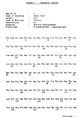
- the amino acid sequence of the wild type protein is depicted in Figure 1.
- This process may also be used for purification of L-asparaginase obtained from organisms subjected to transformation or other cloning techniques whereby the E chrysanthemi L-asparaginase gene is linked to systems promoting super-expression.
- a 12 h seed culture of E chrysanthemi is grown at 37°C and added to a stirred deep culture vessel in a medium containing yeast extract and sodium glutamate to a total volume of 400 litres, essentially as described by GB-A-1 314 530.
- the culture is harvested by centrifugation.
- Cell paste from 2.5 cultures are combined and suspended at a concentration of 1.5 g dry weight/100 ml of 6 mM EDTA.
- the suspension of 300-400 litres is stirred at 16°C and the pH adjusted 11.3- 11.5 with 0.5 M NaOH.
- the mixture is stirred for 30 minutes and the pH is adjusted to 6.3-6.7 with 12.5% v/v acetic acid.
- the precipitate is removed by centrifugation and the supernatant fluid is adjusted to pH 4.8 with 25% v/v acetic acid, then centrifuged to remove the deposit.
- Sodium acetate buffer is prepared by the addition of 25% v/v acetic acid to 40 mM sodium acetate to pH 4.8.
- Sodium phosphate buffer, pH 6.0 is prepared by addition of 2 M NaOH to NaH2PO4.
- Absorbance of protein is monitored at 280 nm and cytochrome b562 is additionally monitored at 405 nm.
- the dilute extract at pH 4.8 is applied to a column of S-Sepharose Fast Flow equilibrated with 40 mM sodium acetate buffer, pH 4.8, at a linear flow rate of 300 cm/h. Unbound protein is washed from the column with equilibration buffer at the same linear flow rate.
- Bound protein excluding asparaginase, but including cytochrome b562, is eluted from the column with about 20 column volumes of 40 mM sodium phosphate, pH 6.0 6.2, at a linear flow rate of 300 cm/h.
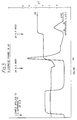
- L-asparaginase is eluted from the column at a linear flow rate of 100 cm/h with 40 mM sodium phosphate, pH 6.5 - 7.0. Successive fractions were analysed for L-asparaginase activity and the results are shown in the attached Figure 2. Fractions containing L-asparaginase are diafiltered into 20 mM sodium phosphate, pH 6.0, the conductivity reduced to less than 1.5 mS/cm and the solution concentrated and filter sterilised. In an alternative (and preferred) protocol, the pH was increased in a step-wise fashion and the enzyme was found to elute as a narrow peak immediately on introduction of a pH 6.8 buffer (see Figure 3).
- the supernatant fluid (conductivity ⁇ 6.5 mS/cm) is diluted with demineralised water to a conductivity of about 2.5 mS/cm and stirred at 14°C until all enzyme is adsorbed to 15 Kg CM-cellulose, previously equilibrated with 40 mM sodium acetate buffer, pH 4.8. Fluid is removed from the suspension by continuous flow centrifugation. The CM-cellulose is washed in the centrifuge with demineralised water and the excess water removed by centrifugation. The cellulose is transferred to a plastic container and the enzyme eluted from the CM-cellulose with 18 litres 40 mM NaOH containing 1 mM EDTA, pH 10.3.
- CM-cellulose slurry is applied to a smaller continuous flow centrifuge and the eluate collected and retained.
- the CM-cellulose is recovered, added to 18 litres of elution buffer and the pH readjusted to 10.3 with 2M NaOH.
- the slurry is replaced in the centrifuge and the eluate collected and combined with the first eluate.
- the pH of the combined eluates is adjusted to 6.0 with 20% v/v orthophosphoric acid and the pH is checked after a further 45 minutes.
- the solution is passed through a continuous flow centrifuge, diluted to 80 litres, then concentrated to 30 litres. 45-85 litres of demineralised water is added to reduce the conductivity to below 1 mS/cm and the solution is concentrated to 3 litres.
- the concentration system is flushed with 7 litres of demineralised water.
- the concentrate is passed through a 0.5 um filtration membrane and the filtration system is flushed with 2 litres of filtered demineralised water.
- the solution is concentrated to 2 litres on a smaller system. If the conductivity is greater than 1.3 mS/cm demineralised water is added and the solution is again concentrated to 2 litres.
- the concentrator system is flushed with up to 1.5 litres of demineralised water.
- the pH of the solution is adjusted to 6.0 with 20% v/v orthophosphoric acid and if necessary is diluted to reduce the conductivity to below 1.3 mS. Deposit is removed from the solution by centrifugation.
- the solution is sterile filtered and toluene added at 1 ml/litre.
- Unused CM 52-cellulose is treated with 60% v/v aqueous ethanol, extensively washed with filtered demineralised water and equilibrated against sodium phosphate buffer, pH 6.0.
- the cellulose is packed into a 25.2 x 60 cm column, washed with at least one bed volume of cooled equilibration buffer, and the extract of 18 litres applied to the column at a flow rate of approximately 4 litre/hour.
- the column is washed with at least one bed volume of the buffer.
- the enzyme is eluted from the column with 60 mM sodium phosphate buffer, pH 6.0, and the active fractions collected, filtered through a 0.2 um filter membrane and combined.
- the combined protein solution is concentrated to 40-60 mg/ml using a hollow fibre system and then adjusted to pH 8.5 with 1 M sodium hydroxide.
- Enzyme purified in the manner described in either of Examples 2 and 3 may be subjected to the following finishing steps:
- Ammonium sulphate is added to the protein solution to a final concentration of 40% w/v and the suspension stirred for 1-3 h at 18-25°C.
- the precipitate is recovered by centrifugation (5986g, 30 min), dissolved in sterile distilled water and diafiltered against sterile distilled water using a hollow fibre system until the conductivity of the solution is in the range of 0.9 to 1.15 mS/cm.
- the solution is concentrated so the enzyme activity is in the range 65,000 to 85,000 U/ml.
- the pH is adjusted to 8.7 with 1 M sodium hydroxide and the conductivity to between 1.2 and 1.6 mS/cm with 0.25 M sodium borate buffer pH 8.7.
- CM 52-cellulose is treated with 60% v/v aqueous ethanol, then equilibrated with 20 mM sodium borate buffer, pH 8.7, and packed into a 25.2 x 45 cm column.
- the enzyme is applied to the column at a flow rate of approximately 5 litres/hour. The enzyme does not bind, but passes through the column.
- the active fractions are filtered and combined.
- DEAE 52 cellulose is equilibrated with sodium borate buffer, pH 8.7, and packed into a 25.2 x 60 cm column.
- the enzyme solution is applied to the column at a flow rate of approximately 6 litres/hour and fractions collected, filtered and combined.
- the concentration of the enzyme solution is adjusted to between 25,000 and 35,000 U/ml by dilution with 20 mM sodium borate buffer, pH 8.7, and 0.66 volumes of ethanol is added.
- the solution is adjusted to pH 8.5 with 1 M acetic acid and the suspension stirred for a further 1 hour at 18-25°C.
- the precipitate is removed by centrifugation (5968g for 45 mins), and 0.09 volumes ethanol is added.
- the solution is stored at -2°C for 24 h before the crystals are resuspended, a further 0.1 volumes of ethanol added and the solution returned to -2°C for at least 48 h.
- the supernatant fluid is decanted from the crystals, and the crystals are centrifuged (5986g for 20 min).
- the sedimented crystals are dissolved in a minimum volume of sterile distilled water, and dialysed extensively against sterile distilled water at 2-4°C.
- the combined dialysed enzyme solution is then made 10 mM with respect to sodium chloride and the resultant bulk enzyme solution frozen at -20°C to await final processing.
- a sufficient amount of bulk enzyme solution is thawed and combined to provide material for a batch of 10,000 vials filled to 1 ml.
- the protein concentration is adjusted to 30 to 50 mg/ml with sterile distilled water, separated into conveniently sized batches, adjusted to pH 6.0 with 1.0 M acetic acid and treated at 18-25°C with 0.5 volumes Alhydrogel. After stirring for 30 mins. the solutions are centrifuged (5986g for 45 min) to remove the aluminium oxide and the supernatant fluids combined.
- the solution is adjusted to pH 7.4 with 1.0 M sodium hydroxide and diluted to 14,000 U/ml with sterile distilled water. Sterile sodium chloride and glucose monohydrate are added to final concentrations of 10 mM and 0.5% w/v respectively.
- the solution is finally diluted with sterile distilled water to give an enzyme activity of 10.500 U/ml and filtered through a 0.2 um positively charged membrane filter into a sterile collection vessel.
- the sterile bulk product is filled into 3 ml glass vials, freeze dried and capped and crimpled under 0.5 atmosphere nitrogen.
Landscapes
- Life Sciences & Earth Sciences (AREA)
- Chemical & Material Sciences (AREA)
- Health & Medical Sciences (AREA)
- Genetics & Genomics (AREA)
- Organic Chemistry (AREA)
- Zoology (AREA)
- Engineering & Computer Science (AREA)
- Bioinformatics & Cheminformatics (AREA)
- Wood Science & Technology (AREA)
- Microbiology (AREA)
- Medicinal Chemistry (AREA)
- Biomedical Technology (AREA)
- Molecular Biology (AREA)
- Biochemistry (AREA)
- General Engineering & Computer Science (AREA)
- General Health & Medical Sciences (AREA)
- Biotechnology (AREA)
- Enzymes And Modification Thereof (AREA)
- Micro-Organisms Or Cultivation Processes Thereof (AREA)
- Detergent Compositions (AREA)
- Preparation Of Compounds By Using Micro-Organisms (AREA)
- Peptides Or Proteins (AREA)
- Medicines That Contain Protein Lipid Enzymes And Other Medicines (AREA)
Claims (14)
- Procédé pour la production de L-asparaginase purifiée qui comprend (a) la mise en contact d'un extrait brut de L-asparaginase avec un milieu solide ayant des groupes d'échange cationiques de façon à adsorber la L-asparaginase sur le support et (b) la séparation par élution de la L-asparaginase adsorbée du support, caractérisé en ce que les groupes d'échange cationiques comprennent des groupes sulfonates et que l'étape d'élution (b) est conduite à un pH qui est supérieur au pH utilisé dans l'étape (a).
- Procédé suivant la revendication 1, dans lequel l'étape (b) est conduite à un pH inférieur à 8,0.
- Procédé suivant la revendication 2, dans lequel les groupes sulfonates font partie des groupes de formule -(CH₂)nSO3 -, dans laquelle n est égal à 1 à 3.
- Procédé suivant l'une quelconque des revendications précédentes, dans lequel le support provient d'agarose.
- Procédé suivant l'une quelconque des revendications précédentes, dans lequel la mise en contact de l'extrait brut avec le milieu solide dans l'étape (a) est effectuée à un pH compris entre 4,0 et 5,5.
- Procédé suivant l'une quelconque des revendications précédentes, dans lequel l'élution de la L-asparaginase adsorbée dans l'étape (b) est effectuée à un pH compris entre 6,0 et 7,5.
- Procédé suivant la revendication 1, dans lequel le pH dans l'étape (b) est compris dans la gamme de 6,6 à 7,0.
- Procédé suivant l'une quelconque des revendications précédentes comprenant les étapes suivantes :(i) extraction de la L-asparaginase à partir de cellules brisées à un pH compris dans la gamme de 11,3 à 11,5.(ii) ajustement du pH dans la gamme de 6,3 à 6,7,(iii)séparationdusurnageantdesimpuretésprécipitées,(iv) soumission du surnageant provenant de l'étape (iii) à une adsorption sur ce milieu solide ayant des groupes d'échange cationiques, et(v) élution de la L-asparaginase adsorbée.
- Procédé suivant l'une quelconque des revendications précédentes, dans lequel la L-asparaginase soumise à une purification présente pratiquement la séquence d'acides aminés de la L-asparaginase de E. chrysanthemi.
- Procédé suivant l'une quelconque des revendications précédentes, dans lequel la L-asparaginase soumise à une purification a une homologie de séquence d'au moins 90% avec la séquence d'acides aminés représentée dans la figure 1.
- Procédé suivant l'une quelconque des revendications précédentes, dans lequel la L-asparaginase soumise à une purification a une homologie de séquence d'au moins 95% avec la séquence d'acides aminés représentée dans la figure 1.
- Procédé suivant l'une quelconque des revendications précédentes, dans lequel la L-asparaginase soumise à une purification a une homologie de séquence d'au moins 99% avec la séquence d'acides aminés représentée dans la figure 1.
- Procédé suivant l'une quelconque des revendications précédentes, dans lequel l'extrait brut est produit par culture d'un microorganisme transformé contenant un plasmide recombinant ayant un insert d'ADN codant pour cette L-asparaginase.
- Procédé suivant l'une quelconque des revendications 1 à 9, dans lequel l'extrait brut est obtenu par culture de E. chrysanthemi.
Applications Claiming Priority (3)
| Application Number | Priority Date | Filing Date | Title |
|---|---|---|---|
| GB909017002A GB9017002D0 (en) | 1990-08-02 | 1990-08-02 | Improved method for the purification of erwina l-asparaginase |
| GB9017002 | 1990-08-02 | ||
| PCT/GB1991/001308 WO1992002616A1 (fr) | 1990-08-02 | 1991-08-01 | Purification de erwinia-l-asparaginase |
Publications (2)
| Publication Number | Publication Date |
|---|---|
| EP0541633A1 EP0541633A1 (fr) | 1993-05-19 |
| EP0541633B1 true EP0541633B1 (fr) | 1996-03-13 |
Family
ID=10680081
Family Applications (1)
| Application Number | Title | Priority Date | Filing Date |
|---|---|---|---|
| EP91913903A Expired - Lifetime EP0541633B1 (fr) | 1990-08-02 | 1991-08-01 | Purification de erwinia-l-asparaginase |
Country Status (10)
| Country | Link |
|---|---|
| US (1) | US5310670A (fr) |
| EP (1) | EP0541633B1 (fr) |
| JP (1) | JPH05508546A (fr) |
| AT (1) | ATE135402T1 (fr) |
| AU (1) | AU647819B2 (fr) |
| CA (1) | CA2075289A1 (fr) |
| DE (1) | DE69117956T2 (fr) |
| DK (1) | DK0541633T3 (fr) |
| GB (1) | GB9017002D0 (fr) |
| WO (1) | WO1992002616A1 (fr) |
Families Citing this family (13)
| Publication number | Priority date | Publication date | Assignee | Title |
|---|---|---|---|---|
| ES2533469T3 (es) * | 2002-10-11 | 2015-04-10 | Novozymes A/S | Método de preparación de un producto tratado con calor |
| US8105815B2 (en) * | 2002-12-19 | 2012-01-31 | Dsm Ip Assets B.V. | Asparaginase and its use in food production |
| MX2007015476A (es) | 2005-06-14 | 2008-02-25 | Amgen Inc | Formulaciones de proteina autoamortiguadoras. |
| US8883146B2 (en) | 2007-11-30 | 2014-11-11 | Abbvie Inc. | Protein formulations and methods of making same |
| TWI543768B (zh) * | 2007-11-30 | 2016-08-01 | 艾伯維生物技術有限責任公司 | 蛋白質調配物及製造其之方法 |
| AU2013204044B2 (en) * | 2007-11-30 | 2017-08-31 | Abbvie Biotechnology Ltd. | Protein formulations and methods of making same |
| WO2011003633A1 (fr) | 2009-07-06 | 2011-01-13 | Alize Pharma Ii | L-asparaginase pegylée |
| KR102783452B1 (ko) | 2016-06-01 | 2025-03-19 | 세르비에 아이피 유케이 리미티드 | 폴리알킬렌 옥시드-아스파라기나제의 제형, 및 그의 제조 및 사용 방법 |
| AU2017345490B2 (en) | 2016-10-21 | 2022-07-07 | Amgen Inc. | Pharmaceutical formulations and methods of making the same |
| IL271504B2 (en) * | 2017-06-21 | 2024-05-01 | Jazz Pharmaceuticals Ireland Ltd | Modified l-asparaginase |
| WO2019083794A1 (fr) | 2017-10-27 | 2019-05-02 | Pfenex Inc. | Procédé de production d'une asparaginase d'e. coli recombinée |
| JP7784804B2 (ja) | 2017-10-27 | 2025-12-12 | フェネックス インク. | 組み換えerwiniaアスパラギナーゼの製造のための方法 |
| WO2022211829A1 (fr) | 2021-03-30 | 2022-10-06 | Jazz Pharmaceuticals Ireland Ltd. | Dosage de l-asparaginase recombinante |
Family Cites Families (7)
| Publication number | Priority date | Publication date | Assignee | Title |
|---|---|---|---|---|
| DE1767389A1 (de) * | 1968-05-06 | 1971-09-02 | Bayer Ag | Verfahren zur Abtrennung von Pyrogenen aus Rohpraeparaten von L-Asparaginase |
| GB1208225A (en) * | 1968-04-05 | 1970-10-07 | Kyowa Hakko Kogyo Kk | Process for purifying l-asparaginase |
| US3597323A (en) * | 1968-06-07 | 1971-08-03 | Wadley Res Inst & Blood Bank | Method of purifying l-asparaginase |
| US3637462A (en) * | 1969-04-21 | 1972-01-25 | Wadley Res Inst & Blood Bank | Purification of enzymes |
| SU436085A1 (ru) * | 1972-08-07 | 1974-07-15 | В. М. Денисов, В. И. Максимов , Г. А. Молодова | Способ очистки l-аспарагиназы |
| US4729957A (en) * | 1984-12-13 | 1988-03-08 | The United States Of America As Represented By The Department Of Health And Human Services | Process for manufacture of L-asparaginase from erwinia chrysanthemi |
| WO1987003618A1 (fr) * | 1985-12-13 | 1987-06-18 | United States Of America, Represented By The Unite | Procede de production de l-asparaginase a partir de l'erwinia carotovora |
-
1990
- 1990-08-02 GB GB909017002A patent/GB9017002D0/en active Pending
-
1991
- 1991-08-01 CA CA002075289A patent/CA2075289A1/fr not_active Abandoned
- 1991-08-01 DK DK91913903.0T patent/DK0541633T3/da active
- 1991-08-01 AT AT91913903T patent/ATE135402T1/de not_active IP Right Cessation
- 1991-08-01 AU AU82805/91A patent/AU647819B2/en not_active Ceased
- 1991-08-01 EP EP91913903A patent/EP0541633B1/fr not_active Expired - Lifetime
- 1991-08-01 US US07/867,105 patent/US5310670A/en not_active Expired - Fee Related
- 1991-08-01 DE DE69117956T patent/DE69117956T2/de not_active Expired - Fee Related
- 1991-08-01 JP JP91512838A patent/JPH05508546A/ja active Pending
- 1991-08-01 WO PCT/GB1991/001308 patent/WO1992002616A1/fr not_active Ceased
Non-Patent Citations (1)
| Title |
|---|
| Chemical Abstracts, vol. 114, no. 15, April 15, 1991, Columbus, Ohio, US; abstract no. 138655W, M.P. Allen, p. 328, column R * |
Also Published As
| Publication number | Publication date |
|---|---|
| DE69117956D1 (de) | 1996-04-18 |
| CA2075289A1 (fr) | 1992-02-03 |
| EP0541633A1 (fr) | 1993-05-19 |
| DK0541633T3 (da) | 1996-07-22 |
| ATE135402T1 (de) | 1996-03-15 |
| JPH05508546A (ja) | 1993-12-02 |
| WO1992002616A1 (fr) | 1992-02-20 |
| GB9017002D0 (en) | 1990-09-19 |
| AU647819B2 (en) | 1994-03-31 |
| DE69117956T2 (de) | 1996-07-25 |
| AU8280591A (en) | 1992-03-02 |
| US5310670A (en) | 1994-05-10 |
Similar Documents
| Publication | Publication Date | Title |
|---|---|---|
| EP0541633B1 (fr) | Purification de erwinia-l-asparaginase | |
| EP0885955B1 (fr) | Endoglucanases thermostables purifiées tirées de la bactérie thermophile acidothermus cellulolyticus | |
| EP0058686B1 (fr) | Procede de production d'heparinase | |
| EP0477285B1 (fr) | Procede pour la recuperation de chymosine obtenue de fa on microbienne | |
| EP0142169B1 (fr) | Réductase de l'acide 2,5-D-cétogluconique | |
| EP0219673B1 (fr) | Procédé de préparation d'une transglucosidase thermostable | |
| EP0164754B1 (fr) | Procédé pour la production de N-acétylneuraminate-lyase | |
| OSMUNDSVAG et al. | Cellulases from Sporocytophaga myxococcoides: Purification and properties | |
| JPH0838185A (ja) | 遺伝子的に修飾された生物体を用いるビタミンc先駆体の製造に係る酵素、およびその製造方法 | |
| CA2073043C (fr) | Methode de purification de la cuivre/zinc (cu-zn) superoxyde dismutase obtenue a partir de recombinants de bacteries ou de cellules d'eucaryotes | |
| US5360729A (en) | Method for purification of recombinant copper/zinc (CU-ZN) superoxide dismutase from bacteria or eucaryotic cells | |
| US3594282A (en) | Process for purifying l-asparaginase | |
| JPH0480675B2 (fr) | ||
| US3660238A (en) | Extraction of asparaginase from bacterial culture | |
| EP0374771A1 (fr) | Méthode de production de l'endonucléase de restriction PvuI | |
| CN100371439C (zh) | 一种重组假丝酵母尿酸氧化酶的制备方法 | |
| WO1988008031A1 (fr) | Procede de preparation de cyclodextrines | |
| CN1348010A (zh) | 金属硫蛋白的制备方法 | |
| Solioz et al. | [53] Purification of the ATPase of Streptococcus faecalis | |
| JP2815449B2 (ja) | 低分子量へパリンの製造方法 | |
| Porton | The Production of L-Asparaginase | |
| JPH01228477A (ja) | β−マンナナーゼ遺伝子DNA、該DNAを含む組換え体プラスミド及び形質転換体 | |
| KR100374307B1 (ko) | 재조합효모로부터발현된감마인터페론의정제방법 | |
| JPS6251987A (ja) | サイクロデキストリン グルカノトランスフエラ−ゼの製造法 |
Legal Events
| Date | Code | Title | Description |
|---|---|---|---|
| PUAI | Public reference made under article 153(3) epc to a published international application that has entered the european phase |
Free format text: ORIGINAL CODE: 0009012 |
|
| 17P | Request for examination filed |
Effective date: 19920604 |
|
| AK | Designated contracting states |
Kind code of ref document: A1 Designated state(s): AT BE CH DE DK ES FR GB GR IT LI LU NL SE |
|
| 17Q | First examination report despatched |
Effective date: 19950112 |
|
| ITPR | It: changes in ownership of a european patent |
Owner name: CO N.E EPO REG 92;MICROBIOLOGICAL RESEARCH AUTORIT |
|
| GRAA | (expected) grant |
Free format text: ORIGINAL CODE: 0009210 |
|
| AK | Designated contracting states |
Kind code of ref document: B1 Designated state(s): AT BE CH DE DK ES FR GB GR IT LI LU NL SE |
|
| PG25 | Lapsed in a contracting state [announced via postgrant information from national office to epo] |
Ref country code: GR Free format text: LAPSE BECAUSE OF FAILURE TO SUBMIT A TRANSLATION OF THE DESCRIPTION OR TO PAY THE FEE WITHIN THE PRESCRIBED TIME-LIMIT Effective date: 19960313 Ref country code: ES Free format text: THE PATENT HAS BEEN ANNULLED BY A DECISION OF A NATIONAL AUTHORITY Effective date: 19960313 |
|
| REF | Corresponds to: |
Ref document number: 135402 Country of ref document: AT Date of ref document: 19960315 Kind code of ref document: T |
|
| RAP2 | Party data changed (patent owner data changed or rights of a patent transferred) |
Owner name: MICROBIOLOGICAL RESEARCH AUTHORITY CENTRE FOR APPL |
|
| REF | Corresponds to: |
Ref document number: 69117956 Country of ref document: DE Date of ref document: 19960418 |
|
| NLT2 | Nl: modifications (of names), taken from the european patent patent bulletin |
Owner name: MICROBIOLOGICAL RESEARCH AUTHORITY CENTRE FOR APPL |
|
| ITF | It: translation for a ep patent filed | ||
| REG | Reference to a national code |
Ref country code: GB Ref legal event code: 732E |
|
| ET | Fr: translation filed | ||
| REG | Reference to a national code |
Ref country code: CH Ref legal event code: PUE Owner name: PUBLIC HEALTH LABORATORY SERVICE BOARD TRANSFER- M Ref country code: CH Ref legal event code: NV Representative=s name: ISLER & PEDRAZZINI AG PATENTANWAELTE |
|
| REG | Reference to a national code |
Ref country code: FR Ref legal event code: TP |
|
| REG | Reference to a national code |
Ref country code: DK Ref legal event code: T3 |
|
| PG25 | Lapsed in a contracting state [announced via postgrant information from national office to epo] |
Ref country code: LU Free format text: LAPSE BECAUSE OF NON-PAYMENT OF DUE FEES Effective date: 19960831 |
|
| NLXE | Nl: other communications concerning ep-patents (part 3 heading xe) |
Free format text: PAT.BUL.06/96 PAGE 824:CORR.:MICROBIOLOGICAL RESEARCH AUTHORITY |
|
| PLBE | No opposition filed within time limit |
Free format text: ORIGINAL CODE: 0009261 |
|
| STAA | Information on the status of an ep patent application or granted ep patent |
Free format text: STATUS: NO OPPOSITION FILED WITHIN TIME LIMIT |
|
| 26N | No opposition filed | ||
| PGFP | Annual fee paid to national office [announced via postgrant information from national office to epo] |
Ref country code: FR Payment date: 19980730 Year of fee payment: 8 |
|
| PGFP | Annual fee paid to national office [announced via postgrant information from national office to epo] |
Ref country code: SE Payment date: 19980731 Year of fee payment: 8 Ref country code: CH Payment date: 19980731 Year of fee payment: 8 |
|
| PGFP | Annual fee paid to national office [announced via postgrant information from national office to epo] |
Ref country code: GB Payment date: 19980803 Year of fee payment: 8 |
|
| PGFP | Annual fee paid to national office [announced via postgrant information from national office to epo] |
Ref country code: DK Payment date: 19980819 Year of fee payment: 8 |
|
| PGFP | Annual fee paid to national office [announced via postgrant information from national office to epo] |
Ref country code: AT Payment date: 19980821 Year of fee payment: 8 |
|
| PGFP | Annual fee paid to national office [announced via postgrant information from national office to epo] |
Ref country code: BE Payment date: 19980828 Year of fee payment: 8 |
|
| PGFP | Annual fee paid to national office [announced via postgrant information from national office to epo] |
Ref country code: NL Payment date: 19980831 Year of fee payment: 8 |
|
| PGFP | Annual fee paid to national office [announced via postgrant information from national office to epo] |
Ref country code: DE Payment date: 19980930 Year of fee payment: 8 |
|
| PG25 | Lapsed in a contracting state [announced via postgrant information from national office to epo] |
Ref country code: GB Free format text: LAPSE BECAUSE OF NON-PAYMENT OF DUE FEES Effective date: 19990801 Ref country code: DK Free format text: LAPSE BECAUSE OF NON-PAYMENT OF DUE FEES Effective date: 19990801 Ref country code: AT Free format text: LAPSE BECAUSE OF NON-PAYMENT OF DUE FEES Effective date: 19990801 |
|
| PG25 | Lapsed in a contracting state [announced via postgrant information from national office to epo] |
Ref country code: SE Free format text: THE PATENT HAS BEEN ANNULLED BY A DECISION OF A NATIONAL AUTHORITY Effective date: 19990830 |
|
| PG25 | Lapsed in a contracting state [announced via postgrant information from national office to epo] |
Ref country code: LI Free format text: LAPSE BECAUSE OF NON-PAYMENT OF DUE FEES Effective date: 19990831 Ref country code: CH Free format text: LAPSE BECAUSE OF NON-PAYMENT OF DUE FEES Effective date: 19990831 Ref country code: BE Free format text: LAPSE BECAUSE OF NON-PAYMENT OF DUE FEES Effective date: 19990831 |
|
| BERE | Be: lapsed |
Owner name: MICROBIOLOGICAL RESEARCH AUTHORITY Effective date: 19990831 |
|
| PG25 | Lapsed in a contracting state [announced via postgrant information from national office to epo] |
Ref country code: NL Free format text: LAPSE BECAUSE OF NON-PAYMENT OF DUE FEES Effective date: 20000301 |
|
| GBPC | Gb: european patent ceased through non-payment of renewal fee |
Effective date: 19990801 |
|
| REG | Reference to a national code |
Ref country code: CH Ref legal event code: PL |
|
| PG25 | Lapsed in a contracting state [announced via postgrant information from national office to epo] |
Ref country code: FR Free format text: LAPSE BECAUSE OF NON-PAYMENT OF DUE FEES Effective date: 20000428 |
|
| EUG | Se: european patent has lapsed |
Ref document number: 91913903.0 |
|
| NLV4 | Nl: lapsed or anulled due to non-payment of the annual fee |
Effective date: 20000301 |
|
| REG | Reference to a national code |
Ref country code: DK Ref legal event code: EBP |
|
| PG25 | Lapsed in a contracting state [announced via postgrant information from national office to epo] |
Ref country code: DE Free format text: LAPSE BECAUSE OF NON-PAYMENT OF DUE FEES Effective date: 20000601 |
|
| REG | Reference to a national code |
Ref country code: FR Ref legal event code: ST |
|
| PG25 | Lapsed in a contracting state [announced via postgrant information from national office to epo] |
Ref country code: IT Free format text: LAPSE BECAUSE OF NON-PAYMENT OF DUE FEES Effective date: 20050801 |