EP0543477A2 - Verfahren zum Additivieren von Brenn- oder Kraftstoffen mit Ferrocen - Google Patents
Verfahren zum Additivieren von Brenn- oder Kraftstoffen mit Ferrocen Download PDFInfo
- Publication number
- EP0543477A2 EP0543477A2 EP92250345A EP92250345A EP0543477A2 EP 0543477 A2 EP0543477 A2 EP 0543477A2 EP 92250345 A EP92250345 A EP 92250345A EP 92250345 A EP92250345 A EP 92250345A EP 0543477 A2 EP0543477 A2 EP 0543477A2
- Authority
- EP
- European Patent Office
- Prior art keywords
- ferrocene
- combustion
- carrier gas
- gas stream
- sublimator
- Prior art date
- Legal status (The legal status is an assumption and is not a legal conclusion. Google has not performed a legal analysis and makes no representation as to the accuracy of the status listed.)
- Granted
Links
Images


Classifications
-
- C—CHEMISTRY; METALLURGY
- C10—PETROLEUM, GAS OR COKE INDUSTRIES; TECHNICAL GASES CONTAINING CARBON MONOXIDE; FUELS; LUBRICANTS; PEAT
- C10L—FUELS NOT OTHERWISE PROVIDED FOR; NATURAL GAS; SYNTHETIC NATURAL GAS OBTAINED BY PROCESSES NOT COVERED BY SUBCLASSES C10G OR C10K; LIQUIFIED PETROLEUM GAS; USE OF ADDITIVES TO FUELS OR FIRES; FIRE-LIGHTERS
- C10L1/00—Liquid carbonaceous fuels
- C10L1/10—Liquid carbonaceous fuels containing additives
-
- C—CHEMISTRY; METALLURGY
- C10—PETROLEUM, GAS OR COKE INDUSTRIES; TECHNICAL GASES CONTAINING CARBON MONOXIDE; FUELS; LUBRICANTS; PEAT
- C10L—FUELS NOT OTHERWISE PROVIDED FOR; NATURAL GAS; SYNTHETIC NATURAL GAS OBTAINED BY PROCESSES NOT COVERED BY SUBCLASSES C10G OR C10K; LIQUIFIED PETROLEUM GAS; USE OF ADDITIVES TO FUELS OR FIRES; FIRE-LIGHTERS
- C10L1/00—Liquid carbonaceous fuels
- C10L1/10—Liquid carbonaceous fuels containing additives
- C10L1/14—Organic compounds
-
- C—CHEMISTRY; METALLURGY
- C10—PETROLEUM, GAS OR COKE INDUSTRIES; TECHNICAL GASES CONTAINING CARBON MONOXIDE; FUELS; LUBRICANTS; PEAT
- C10L—FUELS NOT OTHERWISE PROVIDED FOR; NATURAL GAS; SYNTHETIC NATURAL GAS OBTAINED BY PROCESSES NOT COVERED BY SUBCLASSES C10G OR C10K; LIQUIFIED PETROLEUM GAS; USE OF ADDITIVES TO FUELS OR FIRES; FIRE-LIGHTERS
- C10L1/00—Liquid carbonaceous fuels
- C10L1/10—Liquid carbonaceous fuels containing additives
- C10L1/14—Organic compounds
- C10L1/30—Organic compounds compounds not mentioned before (complexes)
- C10L1/305—Organic compounds compounds not mentioned before (complexes) organo-metallic compounds (containing a metal to carbon bond)
-
- C—CHEMISTRY; METALLURGY
- C10—PETROLEUM, GAS OR COKE INDUSTRIES; TECHNICAL GASES CONTAINING CARBON MONOXIDE; FUELS; LUBRICANTS; PEAT
- C10L—FUELS NOT OTHERWISE PROVIDED FOR; NATURAL GAS; SYNTHETIC NATURAL GAS OBTAINED BY PROCESSES NOT COVERED BY SUBCLASSES C10G OR C10K; LIQUIFIED PETROLEUM GAS; USE OF ADDITIVES TO FUELS OR FIRES; FIRE-LIGHTERS
- C10L10/00—Use of additives to fuels or fires for particular purposes
- C10L10/02—Use of additives to fuels or fires for particular purposes for reducing smoke development
-
- C—CHEMISTRY; METALLURGY
- C10—PETROLEUM, GAS OR COKE INDUSTRIES; TECHNICAL GASES CONTAINING CARBON MONOXIDE; FUELS; LUBRICANTS; PEAT
- C10L—FUELS NOT OTHERWISE PROVIDED FOR; NATURAL GAS; SYNTHETIC NATURAL GAS OBTAINED BY PROCESSES NOT COVERED BY SUBCLASSES C10G OR C10K; LIQUIFIED PETROLEUM GAS; USE OF ADDITIVES TO FUELS OR FIRES; FIRE-LIGHTERS
- C10L10/00—Use of additives to fuels or fires for particular purposes
- C10L10/06—Use of additives to fuels or fires for particular purposes for facilitating soot removal
-
- F—MECHANICAL ENGINEERING; LIGHTING; HEATING; WEAPONS; BLASTING
- F02—COMBUSTION ENGINES; HOT-GAS OR COMBUSTION-PRODUCT ENGINE PLANTS
- F02M—SUPPLYING COMBUSTION ENGINES IN GENERAL WITH COMBUSTIBLE MIXTURES OR CONSTITUENTS THEREOF
- F02M25/00—Engine-pertinent apparatus for adding non-fuel substances or small quantities of secondary fuel to combustion-air, main fuel or fuel-air mixture
-
- C—CHEMISTRY; METALLURGY
- C10—PETROLEUM, GAS OR COKE INDUSTRIES; TECHNICAL GASES CONTAINING CARBON MONOXIDE; FUELS; LUBRICANTS; PEAT
- C10L—FUELS NOT OTHERWISE PROVIDED FOR; NATURAL GAS; SYNTHETIC NATURAL GAS OBTAINED BY PROCESSES NOT COVERED BY SUBCLASSES C10G OR C10K; LIQUIFIED PETROLEUM GAS; USE OF ADDITIVES TO FUELS OR FIRES; FIRE-LIGHTERS
- C10L1/00—Liquid carbonaceous fuels
- C10L1/10—Liquid carbonaceous fuels containing additives
- C10L1/14—Organic compounds
- C10L1/18—Organic compounds containing oxygen
- C10L1/182—Organic compounds containing oxygen containing hydroxy groups; Salts thereof
- C10L1/1822—Organic compounds containing oxygen containing hydroxy groups; Salts thereof hydroxy group directly attached to (cyclo)aliphatic carbon atoms
- C10L1/1824—Organic compounds containing oxygen containing hydroxy groups; Salts thereof hydroxy group directly attached to (cyclo)aliphatic carbon atoms mono-hydroxy
-
- F—MECHANICAL ENGINEERING; LIGHTING; HEATING; WEAPONS; BLASTING
- F02—COMBUSTION ENGINES; HOT-GAS OR COMBUSTION-PRODUCT ENGINE PLANTS
- F02B—INTERNAL-COMBUSTION PISTON ENGINES; COMBUSTION ENGINES IN GENERAL
- F02B1/00—Engines characterised by fuel-air mixture compression
- F02B1/02—Engines characterised by fuel-air mixture compression with positive ignition
- F02B1/04—Engines characterised by fuel-air mixture compression with positive ignition with fuel-air mixture admission into cylinder
-
- F—MECHANICAL ENGINEERING; LIGHTING; HEATING; WEAPONS; BLASTING
- F02—COMBUSTION ENGINES; HOT-GAS OR COMBUSTION-PRODUCT ENGINE PLANTS
- F02B—INTERNAL-COMBUSTION PISTON ENGINES; COMBUSTION ENGINES IN GENERAL
- F02B3/00—Engines characterised by air compression and subsequent fuel addition
- F02B3/06—Engines characterised by air compression and subsequent fuel addition with compression ignition
Definitions
- the invention relates to a method for additizing fuels with ferrocene for the improved combustion thereof with atmospheric oxygen or gases containing oxygen.
- liquid hydrocarbon mixtures consisting essentially of gasoline and an organometallic compound from the Group of [bis ( l1 - cyclopentadienyl) iron], hereinafter referred to as ferrocene, and gasoline-soluble derivatives of ferrocene have been proposed, cf. DE - OS 25 02 307.
- the task is derived from this to enable an improved metering of the additive ferrocene into the combustion chamber of an internal combustion engine or an oil heater without prior admixture as a solid or as a stock solution to the fuel, fuel or lubricant.
- vaporous ferrocene is converted by sublimation into a stream of the combustion gas or a partial stream thereof and is fed to the chemical reaction by combustion with the fuel or fuel present in fine distribution as solid or liquid particles or in evaporated form.
- the advantageous solution to the problem is based on the utilization of the sublimation properties of ferrocene.
- This measure offers the advantage that the amount of ferrocene can be easily adapted to the optimally required amounts for the individual different operating states of the internal combustion engine by means of control measures.
- the compacts or pellets produced from ferrocene crystals preferably have dimensions of 1 to 10 mm and are subjected to a carrier gas stream of the combustion gas or of parts of the combustion gas in a sublimator at values of pressure and temperature in the region of the boundary or coexistence line between solid and gaseous phase . From there, the carrier gas stream containing ferrocene is fed further into the combustion chamber.
- Ferrocene is a substance that, depending on the manufacturing process, is obtained in the form of yellow-orange needles.
- Moldings made of technically produced ferrocene such as pellets, pressed pieces or chips with dimensions of 1 to 10 mm can advantageously be placed in a suitable container of the sublimator.
- the ferrocene compacts can be produced from solvent-moist ferrocene crystals, for example ethanol-moist (purity at least 98.5% by weight) from a crystallization solution, without the addition of binding agents or the like.
- a preheating or preheating of the combustion air functioning as carrier gas stream to a temperature of 20 to 175, preferably 50 to 150 ° C. can be provided.
- the operating states of the sublimator can vary from around minus 40 ° C at cold outside temperatures and an unprotected location to plus 150 ° C with appropriate heating by the burner or Result in engine operation.
- additional heating for the sublimator, which helps to even out the operating behavior even when starting up.
- the pressure prevailing in the sublimator due to the pressure of the carrier gas stream is preferably between 100 mbar and 3 bar.
- the pressure and temperature conditions as well as the geometric dimensions of the sublimator and the amount of carrier gas can be specified so that an evaporated amount of ferrocene of 0.1 to 1,000, preferably 1 to 100 mg per kg of fuel or fuel is obtained.
- a preferred mode of operation is that the carrier gas stream is preheated to a temperature of 20 to 175, preferably 50 to 150 ° C.
- One application of the present method relates to the introduction of a carrier gas stream containing ferrocene into the combustion chamber of a diesel engine.
- the diesel engine can be equipped on the exhaust side with a particle filter for retaining carbon-containing particles contained in the exhaust gas, referred to by the person skilled in the art as soot particles, which originate from an imperfect combustion of the diesel fuel with the combustion air in the engine.
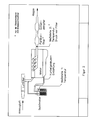
- FIG. 1 An arrangement in which the carrier gas stream is fed from the intake air line and is passed via the sublimator, which is fed with compacts from ferrocene and integrated in a motor vehicle engine, is shown in FIG.
- the sublimator is arranged upstream of the air filter for the combustion air sucked in by the diesel engine.
- the crankcase ventilation is, as usual, downstream of the air filter connected to the line of combustion air.
- Points 1 and 2 designate the measuring point for the temperature in the sublimator or the temperature and the pressure upstream of the diesel particle filter.
- FIG. 2 Another variant of the introduction of ferrocene is shown in FIG. 2.
- Figures 1 and 2 are designed in more detail so that the carrier gas flow branches off from the intake air line provided in each motor vehicle engine or from the crankcase ventilation and from there into the sublimator charged with ferrocene pellets is introduced so that one at the selected Pressure and temperature conditions, the most complete possible transition of the ferrocene vapor into the carrier vapor stream is effected.
- the ferrocene-laden carrier gas stream is combined with the necessary amount of intake air on the downstream side by an intake air filter, avoiding condensation, and supplied to the combustion chamber of the engine.
- the exhaust gas from the fuel combustion is released into the atmosphere on the downstream side of the engine via the particle filter and a silencer.
- Points 1 and 2 each designate measuring points for the temperature in the sublimator or for the temperature and the pressure before the combustion exhaust gases enter the particle filter.
- test engine was a model of the make Opel 2.3 1 car diesel, naturally aspirated with a swirl chamber combustion process and a nominal output of 54 kw.
- the engine was operated at 2,000 rpm and a load of 28 Nm torque (partial load).
- the temperature in the sublimator was approximately 40 ° C.
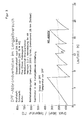
- the dotted curve denotes the measured values of the temperature at measuring point 2 in front of the diesel particle filter.
- the solid sawtooth - like curve shows the course of the pressure on the upstream side of the diesel particulate filter.
- the diesel particulate filter was regenerated by burning off the soot particles collected in the filter, reducing the pressure to approximately 50 mbar.
- an exhaust gas counterpressure was built up again, which after values of approximately 200 to max. 350 mbar each followed by a spontaneous combustion after a cycle time of about 2 to 3 hours, so that overall an acceptable engine operating behavior resulted over the running time.
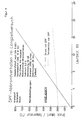
- FIG. 4 shows a long-term test on the diesel particulate filter combustion behavior under comparable conditions as the diagram in FIG. 3, with the only difference that the combustion air was not additized by means of a carrier gas flow from the crankcase ventilation.
- the arrangement also contained the sublimator as shown in FIG. 2, but the sublimator was not loaded with ferrocene pellets.
- the dotted curve represents the temperature at measuring point 2 according to FIG. 2 in front of the diesel particle filter. It can be seen that a slow but steady increase from about 190 to about 280 ° C. was observed here.
- the solid line shows an almost linear increase in the exhaust gas back pressure upstream of the diesel particle filter measured at measuring point 2 according to FIG. 2.
- the proposed method achieves the object in an advantageous manner, since with a specialist selection reserved specification of the operating data of the sublimator, the form of use of the ferrocene substance as pellets, other molded parts such.
- the introduction of the carrier gas stream additized with ferrocene into the combustion chamber significantly improves the combustion behavior in the engine, which is operated with commercially available fuels, in Otto or Wankel engines with and without a downstream catalyst for exhaust gas afterburning.
- the occurrence of knocking in the engine is strongly suppressed.
- the power output of the engine can be increased.
- the influence of the active ingredient reduces fuel consumption.
- the suppression of knocking processes by introducing the ferrocene active ingredient according to the invention is far stronger than if the active ingredient is contained in the fuel in a dissolved form.
- ferrocene into the engine process according to the invention increases the combustion chamber cleanliness by reducing existing residues and prevents the build-up of new deposits on pistons, piston rings, in the cylinder and on the cylinder head.
- gasoline engines without a downstream catalytic converter for exhaust gas afterburning or pollutant reduction, which are still equipped with exhaust valves that are susceptible to wear the ferrocene addition acts as a wear - reducing component on the exhaust valve seats.
- ferrocene as an additive in the combustion of fuel in the combustion chamber reduces the particle emission and the proportion of polycyclic aromatic hydrocarbons that are attached to the carbon-containing particles.
- the ferrocene addition according to the invention makes the regeneration capacity of a diesel particle filter connected downstream of a diesel engine without additional devices for increasing the temperature or for initiating processes for periodic combustion of the carbon-containing particles (diesel soot) accumulating on the filter in order to maintain lower acceptable values for the pressure drop on the downstream side improved or made possible by the filter.
Landscapes
- Chemical & Material Sciences (AREA)
- Engineering & Computer Science (AREA)
- Oil, Petroleum & Natural Gas (AREA)
- Organic Chemistry (AREA)
- Combustion & Propulsion (AREA)
- Chemical Kinetics & Catalysis (AREA)
- General Chemical & Material Sciences (AREA)
- General Engineering & Computer Science (AREA)
- Mechanical Engineering (AREA)
- Liquid Carbonaceous Fuels (AREA)
- Processes For Solid Components From Exhaust (AREA)
- Catalysts (AREA)
- Compounds Of Iron (AREA)
- Physical Or Chemical Processes And Apparatus (AREA)
- Solid Fuels And Fuel-Associated Substances (AREA)
- Filtering Of Dispersed Particles In Gases (AREA)
Abstract
Description
- Die Erfindung betrifft ein Verfahren zum Additivieren von Brenn - oder Kraftstoffen mit Ferrocen für die verbesserte Verbrennung derselben mit Luftsauerstoff oder sauerstoffhaltigen Gasen.
- Zur Reduzierung des Brenn - oder Kraftstoffverbrauches und zur Minderung von Emissionen bei der Verbrennung von Brenn - oder Kraftstoffen sowie zur Entfernung oder Herabsetzung der Kohlenstoffab - scheidungen beim Betrieb von Kraftfahrzeugmotoren sind flüssige Kohlenwasserstoffmischungen, beste - hend im wesentlichen aus Benzin und einer organometallischen Verbindung aus der Gruppe von [Bis(l1- cyclopentadienyl)eisen], nachfolgend als Ferrocen bezeichnet, und benzinlöslichen Derivaten des Ferrocens vorgeschlagen worden, vgl. DE - OS 25 02 307.
- Ferner ist zwecks Verringerung des Kraftstoffverbrauches sowie der Abgasemissionen bei einem mit einem Abgaskatalysatorsystem zur Abgasnachverbrennung ausgerüsteten Ottomotor die Verwendung eines flüssigen Kraftstoffes mit einem Zusatz von 1 bis 100 Gew. - ppm Ferrocen vorgeschlagen worden, vgl. DE 38 01 947 A1.
- Zwecks Vermeidung eines unzulässig hohen Abgasgegendrucks beim Betrieb eines mit einem Parti - kelfilter im Abgasstrom ausgerüsteten Dieselmotors ist ein mit einem katalytisch wirksamen Gehalt in einer Menge von 5 bis 20 000 ppm einer Eisenverbindung additiviertes Motorschmieröl zum Einsatz vorgeschlagen worden. Als Eisenverbindung wurde unter anderem Ferrocen in Betracht gezogen, vgl. DE 38 09 307 A1.
- In einer älteren deutschen Patentanmeldung P 41 29 408 sind eine Vorrichtung und ein Verfahren zur direkten Feststoffadditivierung von Flüssigkraftstoffen mit Ferrocen vorgeschlagen worden, bei denen Ferrocen mittels Vermahlung von Ferrocenpreßlingen kontrolliert dem Flüssigkraftstoff in dosierter Menge zugegeben wird.
- Allen diesen Verfahren ist gemeinsam, daß hier eine Additivierung des flüssigen Kraftstoffes oder auch Brennstoffes, z. B. Heizöl, unter Ausnutzung der Löslichkeitseigenschaften des eingesetzten Additivs, hier Ferrocen oder Ferrocenderivate, erfolgt. Das gleiche gilt für die Additivierung des Motorschmieröls, die durch Direktauflösung oder auch vermittels der Herstellung konzentrierter Lösungen in mit dem Motorschmieröl verträglichen Lösungsmitteln und deren Zugabe zum Schmieröl erfolgen kann.
- Die Herstellung entsprechender Lösungen oder Stammlösungen ist umständlich und aufwendig auf - grund der benötigten Dosier- und Mischeinrichtungen und der zugehörigen Arbeitsgänge. Außerdem sind zusätzliche Maßnahmen erforderlich, um die Stabilität und die spezifizierten Eigenschaften der mit Ferrocen oder Ferrocenderivaten additivierten Kraft- oder Brennstoffe zu sichern. Diese Form der Eindosierung hat zudem den Nachteil, daß die Additivierung nur für einen bestimmten Betriebspunkt optimiert werden kann.
- Hieraus leitet sich die Aufgabe ab, eine verbesserte Zudosierung des Additivs Ferrocen in den Brennraum eines Verbrennungsmotors oder einer Ölheizung ohne vorherige Zumischung als Feststoff oder als Stammlösung zum Brenn -, Kraft- oder Schmierstoff zu ermöglichen.
- Die Aufgabe wird dadurch gelöst, daß dampfförmiges Ferrocen durch Sublimation in einen Strom des Verbrennungsgases bzw. einen Teilstrom desselben übergeführt und mit dem in feiner Verteilung als Fest-oder Flüssigpartikel oder in verdampfter Form vorliegenden Brenn - oder Kraftstoff der chemischen Umsetzung durch Verbrennung zugeführt wird. Die vorteilhafte Lösung der Aufgabe beruht also auf der Ausnutzung der Sublimationseigenschaften von Ferrocen.
- Diese Maßnahme bietet den Vorteil, daß die Ferrocenmenge durch Regelmaßnahmen den optimal erforderlichen Mengen für die einzelnen unterschiedlichen Betriebszustände der Verbrennungskraftmaschi - ne leicht angepaßt werden kann.
- Die aus Ferrocenkristallen hergestellten Preßlinge oder Pellets haben Abmessungen von vorzugsweise 1 bis 10 mm und werden in einen Sublimator bei Werten des Druckes und der Temperatur im Bereich der Grenz- oder Koexistenzlinie zwischen fester und gasförmiger Phase mit einem Trägergasstrom des Verbrennungsgases oder von Teilen des Verbrennungsgases beaufschlagt. Der ferrocenhaltige Trägergas - strom wird von dort aus weiter in den Brennraum geleitet.
- Bei Ferrocen handelt es sich um eine Substanz, die je nach Herstellungsweise in Form gelb - oranger Nadeln anfällt. Einige chemische und physikalische Daten sind nachfolgend zusammengestellt:

- In Römpps-Chemielexikon, 9. Auflage, Band 2, Seite 1330 wird unter dem Stichwort Ferrocen mitgeteilt, daß dieses oberhalb 100 ° C sublimiert.
- Es wurde aber überraschend festgestellt, daß auch bereits bei Temperaturen unter 100 ° C in einem geeigneten Sublimator ausreichende Mengen Ferrocen in einen Trägergasstrom übergehen. Beim Einleiten des ferrocenhaltigen Trägergasstroms in den Brennraum zwecks bestimmungsgemäßer Verbrennung der Brenn - oder Kraftstoffe mit Luftsauerstoff oder sauerstoffhaltigen Gasen zeigen sich Wirkungen, die besser oder gleich gut sind wie die Wirkungen bei der Additivierung des flüssigen Kraftstoffes selbst.
- Mit Vorteil können Formteile aus technisch hergestelltem Ferrocen wie Pellets, Preßlinge oder Chips mit Abmessungen von 1 bis 10 mm in einem geeigneten Behälter des Sublimators vorgelegt werden. Die Ferrocenpreßlinge können aus lösungsmittelfeuchten aus einer Kristallisationslösung stammenden, bei - spielsweise ethanolfeuchten Ferrocenkristallen (Reinheit mindestens 98,5 G. - %) ohne Zusatz von Binde - mittel o. dgl., hergestellt werden.
- Es kann aber auch technisch hergestelltes Ferrocen ohne vorherige Verdichtung zu Formteilen in entsprechend vorgesehenen und für den Ferrocendampf durchlässigen Einsätzen wie Filterpatronen oder dergleichen des Luftfilters für die Verbrennungsluft von Heizvorrichtungen oder Kraftfahrzeugmotoren vorgelegt werden.
- Je nach gewünschter Konzentration des durch Sublimation in den Trägergasstrom übergeführten Ferrocens kann eine Vorwärmung oder Vorheizung der als Trägergasstrom fungierenden Verbrennungsluft auf eine Temperatur von 20 bis 175, vorzugsweise 50 bis 150 ° C, vorgesehen werden.
- Ohne Zusatzbeheizung können sich Betriebszustände des Sublimators, je nach dessen konstruktiver Einbindung in den Motorraum oder in einem Brenner einer Heizvorrichtung benachbarten Raum, von etwa minus 40 ° C bei kalten Außentemperaturen und ungeschütztem Standort bis plus 150 ° C bei entsprechender Erwärmung durch den Brenner- oder Motorbetrieb ergeben. Selbstverständlich ist es aber auch möglich, eine Zusatzheizung für den Sublimator vorzusehen, was zu einer Vergleichmäßigung des Betriebsverhaltens auch bei Inbetriebnahmebeginn beiträgt.
- Der in dem Sublimator durch den Druck des Trägergasstromes herrschende Druck liegt vorzugsweise zwischen 100 mbar bis 3 bar.
- Die Druck- und Temperaturverhältnisse sowie die geometrischen Abmessungen des Sublimators und die Menge des Trägergases können so vorgegeben werden, daß sich eine verdampfte Ferrocenmenge von 0,1 bis 1 000, vorzugsweise 1 bis 100 mg pro kg Brenn - oder Krafststoff einstellt.
- Eine bevorzugte Betriebsweise besteht darin, daß der Trägergasstrom auf eine Temperatur von 20 bis 175, vorzugsweise 50 bis 150 ° C, vorgeheizt wird.
- Eine Anwendung des vorliegenden Verfahrens betrifft die Einleitung eines ferrocenhaltigen Trägergas - stromes in den Brennraum eines Dieselmotors. Der Dieselmotor kann abgasseitig mit einem Partikelfilter zur Zurückhaltung von in dem Abgas enthaltenen kohlenstoffhaltigen Teilchen, vom Fachmann als Rußpartikel bezeichnet, die aus einer unvollkommenen Verbrennung des Dieselkraftstoffes mit der Verbrennungsluft in dem Motor stammen, ausgerüstet sein.
- Eine Anordnung, bei der der Trägergasstrom aus der Ansaugluftleitung gespeist und über den mit Preßlingen aus Ferrocen beschickten und in einem Kraftfahrzeugmotor integrierten Sublimator geleitet wird, ist in der Figur 1 dargestellt.
- Bei dieser Anordnung ist der Sublimator aufstromseitig von dem Luftfilter für die von dem Dieselmotor angesaugte Verbrennungsluft angeordnet. Die Kurbelgehäuseentlüftung wird wie üblich abstromseitig von dem Luftfilter mit der Leitung der Verbrennungsluft verbunden. Die Punkte 1 und 2 bezeichnen die Meßstelle für die Temperatur in dem Sublimator bzw. die Temperatur und den Druck aufstromseitig von dem Dieselpartikelfilter.
- Eine andere Variante der Ferroceneinbringung ist in Figur 2 gezeigt.
- Die Anordnungen von Figur 1 und 2 sind weiter ins Einzelne gehend so ausgestaltet, daß der Trägergasstrom von der in jedem Kraftfahrzeugmotor vorgesehenen Ansaugluftleitung bzw. von der Kurbelgehäuseentlüftung abgezweigt und von dort in den mit vorgelegten Ferrocenpellets beaufschlagten Sublimator so eingeleitet wird, daß ein bei den gewählten Druck- und Temperaturbedingungen möglichst vollständiger Übergang des Ferrocendampfes in den Trägerdampfstrom bewirkt wird. Von dem Sublimator wird der ferrocenbeladene Trägergasstrom unter Vermeidung von Kondensation mit der notwendigen Menge Ansaugluft abstromseitig von einem Ansaugluftfilter vereinigt und dem Brennraum des Motors zugeführt. Das Abgas der Kraftstoffverbrennung wird abstromseitig vom Motor über den Partikelfilter und einen Schalldämpfer in die Atmosphäre entlassen.
- Die Punkte 1 und 2 bezeichnen jeweils Meßstellen für die Temperatur in dem Sublimator bzw. für die Temperatur und den Druck vor Eintritt der Verbrennungsabgase in den Partikelfilter.
- Die mit einer derartigen Anordnung, nämlich einem mit Ferrocen - Pellets befüllten Sublimator in der Kurbelgehäuse - Entlüftung erzielten Ergebnisse bezüglich des Abbrandverhaltens des Dieselpartikelfilters sind in einem über 20 Stunden durchgeführten Langzeitversuch in der Grafik gemäß Figur 3 dargestellt.
- Bei diesen Versuchen wurde ein Dieselkraftstoff (clear) entsprechend der DIN-Spezifikation (Sommerqualität) mit folgenden Kenndaten:

- Bei dem Versuchsmotor handelte es sich um ein Modell des Fabrikates Opel 2,3 1 Pkw-Diesel, freisaugend mit Wirbelkammer - Brennverfahren und einer Nennleistung von 54 kw.
- Der Motor wurde bei 2 000 U/min und einer Belastung von 28 Nm Drehmonment (Teillast) betrieben. Die Temperatur in dem Sublimator betrug ca. 40 ° C. In dem Diagramm der Figur 3 bezeichnet die gepunktete Kurve die gemessenen Werte der Temperatur an der Meßstelle 2 vor dem Dieselpartikelfilter. Die durchgezogene sägezahnartige Kurve gibt den Verlauf des Druckes aufstromseitig von dem Dieselpar - tikelfilter wieder.
- Hierbei erfolgte zunächst ein Druckaufbau von etwa 80 auf 350 mbar aufgrund der Ablagerung kohlenstoffhaltiger Partikel in dem Verbrennungsabgas auf dem Filter bis zu einer Betriebszeit von etwa 7 Stunden. Zu diesem Zeitpunkt erfolgte eine Regeneration des Dieselpartikelfilters durch Abbrand der im Filter gesammelten Rußpartikel, dadurch reduziert sich der Druck auf etwa 50 mbar. Anschließend baute sich entsprechend der durch die Rußemission des Dieselmotors verursachten Beladung des Filters erneut ein Abgasgegendruck auf, dem nach Erreichen von Werten von etwa 200 bis max. 350 mbar jeweils nach einer Zykluszeit von etwa 2 bis 3 Stunden ein spontaner Abbrand folgte, so daß sich insgesamt über die Laufzeit ein akzeptables Motorbetriebsverhalten ergab.
- Zum Vergleich ist in Figur 4 ein Langzeitversuch über das Dieselpartikelfilterabbrandverhalten bei vergleichbaren Bedingungen wie sie dem Diagramm von Figur 3 zugrunde lagen gezeigt, mit dem einzigen Unterschied, daß eine Additivierung der Verbrennungsluft mittels eines Trägergasstromes aus der Kurbel - gehäuseentlüftung nicht vorgesehen war. Die Anordnung enthielt ebenfalls den Sublimator wie in Figur 2 dargestellt, der Sublimator war aber nicht mit Ferrocen - Pellets beschickt. Hierbei stellt die gepunktete Kurve eine Auftragung der Temperatur an Meßstelle 2 gemäß Figur 2 vor dem Dieselpartikelfilter dar. Es ist zu sehen, daß hier ein langsamer aber stetiger Anstieg von etwa 190 auf etwa 280 ° C zu beobachten war. Die durchgezogene Linie zeigt einen fast linearen Anstieg des Abgasgegendruckes vor dem Dieselpartikel - filter gemessen an Meßstelle 2 gemäß Figur 2. Nach einer Versuchszeit von etwa 18 Stunden hatte der Abgasgegendruck einen Wert von 800 mbar erreicht, ein Wert, der in keiner Weise mehr einen akzeptablen Motorbetrieb ermöglicht. Der Versuch wurde abgebrochen. Obwohl die Temperatur an Meßstelle 2 gemäß Figur 2 zu dem genannten Zeitpunktes des Abbruches des Versuches einen Wert von etwa 280 ° C erreicht hatte, war kein Abbrand des Dieselpartikelfilters erfolgt, wohingegen gemäß den Ergebnissen nach Figur 3 bei der erfindungsgemäßen Ferrocenadditivierung ein Abbrand bereits bei Temperaturwerten, gemessen an der gleichen Meßstelle von etwa 220 ° C erfolgte.
- Durch das vorgeschlagene Verfahren wird die gestellte Aufgabe in vorteilhafter Weise gelöst, da bei einer fachmännischer Auswahl vorbehaltenen Spezifizierung der Betriebsdaten des Sublimators, der Gebrauchsform der Ferrocensubstanz als Pellets, sonstige Formteile wie z. B. Preßlinge oder in Form eines kristallinen Pulvers eine effektive Additivierung bei der Verbrennung von flüssigen Heiz - oder Kraftstoffen mit Ferrocen gewährleistet ist.
- Die Einbringung des mit Ferrocen additivierten Trägergasstromes in den Verbrennungsraum verbessert bei Otto - oder Wankelmotoren mit und ohne nachgeschalteten Katalysator zur Abgasnachverbrennung erheblich das Verbrennungsverhalten im Motor, der mit marktüblichen Kraftstoffen betrieben wird. Insbesondere wird das Auftreten von Klopfvorgängen im Motor stark unterdrückt. Durch Änderung des Zünd - zeitpunktes kann damit die Leistungsabgabe des Motors erhöht werden. Bei Betrieb mit gleicher Leistung verringert sich durch den Einfluß des Wirkstoffes der Kraftstoffverbrauch.
- Die Unterdrückung von Klopfvorgängen durch die erfindungsgemäße Einbringung des Ferrocenwirkstoffes ist weitaus stärker als wenn der Wirkstoff in dem Kraftstoff in gelöster Form enthalten ist. Hierzu wird auf die Angaben mit zugehörigen Vergleichsversuchsangaben in Figur 5 verwiesen.
- Die erfindungsgemäße Einbringung von Ferrocen in den motorischen Prozeß erhöht die Brennraum - sauberkeit durch Reduzierung vorhandener Rückstände und verhindert den Aufbau neuer Beläge an Kolben, Kolbenringen, im Zylinder und am Zylinderkopf. Bei Otto - Motoren ohne nachgeschalteten Kataly - sator zur Abgasnachverbrennung bzw. Schadstoffverminderung, die noch mit verschleißgefährdeten Aus - laßventilen ausgerüstet sind, wirkt die Ferrocenzugabe als verschleißmindernde Komponente an den Auslaßventilsitzen.
- Bei Dieselmotoren bewirkt die Einbringung von Ferrocen als Addltiv bei der Kraftstoffverbrennung im Brennraum eine Verringerung der Partikelemission und des Anteils polyzyklischer aromatischer Kohlen - wasserstoffe, die an den kohlenstoffhaltigen Partikeln angelagert sind.
- Durch die erfindungsgemäße Ferrocenzugabe wird die Regenerationsfähigkeit eines einem Dieselmotor nachgeschalteten Dieselpartikelfilters ohne Zusatzvorrichtungen zur Temperaturerhöhung bzw. zur Einlei - tung von Vorgängen zu einem periodischen Abbrand der auf dem Filter sich ansammelnden kohlenstoff - haltigen Teilchen (Dieselruß) zwecks Aufrechterhaltung niedriger akzeptabler Werte für den Druckabfall abstromseitig von dem Filter verbessert bzw. erst ermöglicht.
Claims (12)
Applications Claiming Priority (2)
| Application Number | Priority Date | Filing Date | Title |
|---|---|---|---|
| DE4138216A DE4138216C2 (de) | 1991-11-21 | 1991-11-21 | Verfahren zum Additivieren von Brenn- oder Kraftstoffen mit Ferrocen |
| DE4138216 | 1991-11-21 |
Publications (3)
| Publication Number | Publication Date |
|---|---|
| EP0543477A2 true EP0543477A2 (de) | 1993-05-26 |
| EP0543477A3 EP0543477A3 (en) | 1993-08-25 |
| EP0543477B1 EP0543477B1 (de) | 1996-01-17 |
Family
ID=6445230
Family Applications (1)
| Application Number | Title | Priority Date | Filing Date |
|---|---|---|---|
| EP92250345A Expired - Lifetime EP0543477B1 (de) | 1991-11-21 | 1992-11-23 | Verfahren zum Additivieren von Brenn- oder Kraftstoffen mit Ferrocen |
Country Status (7)
| Country | Link |
|---|---|
| US (1) | US5386804A (de) |
| EP (1) | EP0543477B1 (de) |
| JP (1) | JP3370707B2 (de) |
| KR (1) | KR100245839B1 (de) |
| AT (1) | ATE133194T1 (de) |
| DE (2) | DE4138216C2 (de) |
| ES (1) | ES2084271T3 (de) |
Cited By (2)
| Publication number | Priority date | Publication date | Assignee | Title |
|---|---|---|---|---|
| US5386804A (en) * | 1991-11-21 | 1995-02-07 | Veba Oel Aktiengesellschaft | Process for the addition of ferrocene to combustion or motor fuels |
| WO2007080070A1 (de) * | 2006-01-09 | 2007-07-19 | Fraenkle Gerhard Juergen | Verfahren zur beimengung eines additives zu einem fluid, und anlage hierfür |
Families Citing this family (12)
| Publication number | Priority date | Publication date | Assignee | Title |
|---|---|---|---|---|
| US5823148A (en) * | 1996-05-29 | 1998-10-20 | Housand, Sr.; Raymond W. | Apparatus for introducing combustion supporting particles to an internal combustion engine |
| JP5064640B2 (ja) * | 2000-08-31 | 2012-10-31 | イノスペック リミテッド | 2量体又はオリゴマーフェロセンを含有する組成物 |
| US20060167184A1 (en) * | 2000-10-18 | 2006-07-27 | Waddell Walter H | Innerliners for use in tires |
| DE60237323D1 (de) * | 2001-08-30 | 2010-09-23 | Innospec Ltd | Zusammensetzung enthaltend Ferrocen-Derivate und Treibstoff diese enthaltend |
| KR100428749B1 (ko) * | 2002-03-12 | 2004-04-28 | 한국화학연구원 | 연소분진 억제용 액상 조연소 촉매 조성물 |
| US6892531B2 (en) | 2003-04-02 | 2005-05-17 | Julius J. Rim | System for and methods of operating diesel engines to reduce harmful exhaust emissions and to improve engine lubrication |
| DE102004025327A1 (de) | 2004-05-19 | 2005-12-08 | Hjs Fahrzeugtechnik Gmbh & Co. Kg | Verfahren zum Beladen eines Kraftstoff-Luft-Gemisches mit einem Additiv in Gasphase sowie Vorrichtung zum Bereitstellen eines Additivs in Gasphase |
| US8101014B2 (en) | 2004-11-10 | 2012-01-24 | Chemetall Gmbh | Process for coating metallic surfaces with a multicomponent aqueous composition |
| CA2668181C (en) * | 2006-11-01 | 2012-01-24 | Bharat Petroleum Corporation Limited | Hydrocarbon fuel compositions |
| BRPI0900653A2 (pt) * | 2009-03-13 | 2010-11-09 | Magneti Marelli Ltda | sensor lógico para biodiesel |
| DE102010038143A1 (de) | 2010-10-13 | 2012-04-19 | Hjs Emission Technology Gmbh & Co. Kg | Verfahren zum Absenken der Rußzündtemperatur von auf einem Partikelfilter akkumuliertem Ruß |
| CN104532182A (zh) * | 2014-11-05 | 2015-04-22 | 汕头高新区腾力高分子材料科技有限公司 | 汽车节油减排器及节油方法 |
Family Cites Families (30)
| Publication number | Priority date | Publication date | Assignee | Title |
|---|---|---|---|---|
| FR767839A (de) * | 1934-07-24 | |||
| FR1078519A (fr) * | 1952-03-19 | 1954-11-18 | Du Pont | Carburant pour moteurs et agent antidétonant destiné à ce carburant |
| GB737109A (en) * | 1953-01-01 | 1955-09-21 | Shell Refining & Marketing Co | Improvements in and relating to the production of dicyclopentadienyl iron and substitution products thereof |
| US3341311A (en) * | 1953-07-27 | 1967-09-12 | Du Pont | Liquid hydrocarbon fuels |
| US2835686A (en) * | 1953-11-12 | 1958-05-20 | Du Pont | Organometallic compounds containing cyclopentadienyl nuclei bonded directly to a group viii metal and to a group i or a group ii metal |
| US2867516A (en) * | 1954-08-18 | 1959-01-06 | Du Pont | Process for burning gaseous fuels |
| US3160592A (en) * | 1959-10-16 | 1964-12-08 | Ethyl Corp | Engine operation and compositions therefor |
| US4070212A (en) * | 1964-11-23 | 1978-01-24 | Thiokol Corporation | High performance fast burning solid propellant |
| US3886007A (en) * | 1968-05-20 | 1975-05-27 | Thiokol Corp | Solid propellant having a ferrocene containing polyester fuel binder |
| US3927992A (en) * | 1969-11-19 | 1975-12-23 | Ethyl Corp | Coal combustion process and composition |
| BE767839R (en) * | 1971-05-28 | 1971-10-18 | Maingeot Raymond | Reducing combustion pollutants by mixing combustion - supporter with catalyst |
| US3783841A (en) * | 1971-10-04 | 1974-01-08 | Ethyl Corp | Fuel system |
| US4295816A (en) * | 1977-12-20 | 1981-10-20 | Robinson B Joel | Catalyst delivery system |
| US4222746A (en) * | 1979-04-25 | 1980-09-16 | Texaco Inc. | Diesel fuel containing wax oxidates to reduce particulate emissions |
| US4318760A (en) * | 1979-09-20 | 1982-03-09 | Atlantic Research Corporation | Solid propellant containing diferrocenyl ketone |
| US4416710A (en) * | 1980-02-14 | 1983-11-22 | United Technologies Corporation | Polynorbornene-based combustible compositions and processes for the fabrication thereof |
| US4389220A (en) * | 1980-06-04 | 1983-06-21 | Syntex (U.S.A.) Inc. | Method of conditioning diesel engines |
| DE3105914A1 (de) * | 1981-02-18 | 1982-09-09 | Agfa-Gevaert Ag, 5090 Leverkusen | Verfahren zur entgasung von fluessigkeiten und vorrichtung zur durchfuehrung des verfahrens |
| US4612880A (en) * | 1982-12-20 | 1986-09-23 | Union Oil Company Of California | Method for control of octane requirement increase in an internal combustion engine having manifold and/or combustion surfaces which inhibit the formation of engine deposits |
| US4525174A (en) * | 1982-12-20 | 1985-06-25 | Union Oil Company Of California | Method and fuel composition for control of octane requirement increase |
| DE3715473C1 (en) * | 1987-05-08 | 1988-08-18 | Chemische Betr E Pluto Gmbh | Method of running a four-stroke spark-ignition engine |
| DE3801947A1 (de) * | 1988-01-23 | 1989-08-03 | Veba Oel Ag | Verfahren zum betreiben eines otto-motors |
| DE3809307A1 (de) * | 1988-03-19 | 1989-09-28 | Veba Oel Ag | Motorschmieroel fuer dieselmotoren und verfahren zum betreiben eines dieselmotors |
| US4998876A (en) * | 1988-08-15 | 1991-03-12 | Velino Ventures Inc. | Combustion of liquid hydrocarbons |
| US4908045A (en) | 1988-12-23 | 1990-03-13 | Velino Ventures, Inc. | Engine cleaning additives for diesel fuel |
| EP0423417A1 (de) * | 1989-09-15 | 1991-04-24 | SAT Chemie G.m.b.H. | Verfahren zur selektiven nichtkatalytischen Reduktion der Emission von Schadstoffen aus ölbefeuerten Kesselanlagen |
| US5113804A (en) * | 1991-02-04 | 1992-05-19 | Advanced Combustion Technology, Inc. | Combustion enhancement system |
| DE4129408C1 (de) * | 1991-09-04 | 1992-10-22 | Chemische Betriebe Pluto Gmbh, 4690 Herne, De | |
| DE4138216C2 (de) * | 1991-11-21 | 1994-02-03 | Veba Oel Ag | Verfahren zum Additivieren von Brenn- oder Kraftstoffen mit Ferrocen |
| US5235936A (en) * | 1992-12-04 | 1993-08-17 | Kracklauer John J | Ferrocene injection system |
-
1991
- 1991-11-21 DE DE4138216A patent/DE4138216C2/de not_active Expired - Fee Related
-
1992
- 1992-11-19 US US07/978,755 patent/US5386804A/en not_active Expired - Lifetime
- 1992-11-20 KR KR1019920021850A patent/KR100245839B1/ko not_active Expired - Fee Related
- 1992-11-20 JP JP31243492A patent/JP3370707B2/ja not_active Expired - Fee Related
- 1992-11-23 ES ES92250345T patent/ES2084271T3/es not_active Expired - Lifetime
- 1992-11-23 EP EP92250345A patent/EP0543477B1/de not_active Expired - Lifetime
- 1992-11-23 DE DE59205100T patent/DE59205100D1/de not_active Expired - Lifetime
- 1992-11-23 AT AT92250345T patent/ATE133194T1/de not_active IP Right Cessation
Cited By (2)
| Publication number | Priority date | Publication date | Assignee | Title |
|---|---|---|---|---|
| US5386804A (en) * | 1991-11-21 | 1995-02-07 | Veba Oel Aktiengesellschaft | Process for the addition of ferrocene to combustion or motor fuels |
| WO2007080070A1 (de) * | 2006-01-09 | 2007-07-19 | Fraenkle Gerhard Juergen | Verfahren zur beimengung eines additives zu einem fluid, und anlage hierfür |
Also Published As
| Publication number | Publication date |
|---|---|
| DE4138216A1 (de) | 1993-05-27 |
| DE59205100D1 (de) | 1996-02-29 |
| US5386804A (en) | 1995-02-07 |
| EP0543477A3 (en) | 1993-08-25 |
| EP0543477B1 (de) | 1996-01-17 |
| DE4138216C2 (de) | 1994-02-03 |
| KR930010164A (ko) | 1993-06-22 |
| JPH05239478A (ja) | 1993-09-17 |
| KR100245839B1 (ko) | 2000-03-02 |
| ES2084271T3 (es) | 1996-05-01 |
| JP3370707B2 (ja) | 2003-01-27 |
| ATE133194T1 (de) | 1996-02-15 |
Similar Documents
| Publication | Publication Date | Title |
|---|---|---|
| DE102020104552A1 (de) | Verfahren und system zum erhitzen von emissionsbegrenzungsvorrichtungen | |
| EP0543477B1 (de) | Verfahren zum Additivieren von Brenn- oder Kraftstoffen mit Ferrocen | |
| DE4423003C2 (de) | Verfahren und Vorrichtung zum Reduzieren von NO¶x¶ in den Abgasen von Kraftfahrzeugverbrennungsmotoren | |
| EP2115277B1 (de) | Verfahren zur regeneration von russfiltern in der abgasanlage eines magermotors und abgasanlage hierfür | |
| DE202009019001U1 (de) | Anordnung zur Behandlung von Stickoxide (NOx) und Kohlenwasserstoffe (HC) enthaltenden Dieselmotorenabgasen | |
| EP0077524A1 (de) | Verfahren zur Herabsetzung der Zündtemperatur von Dieselruss | |
| DE10112521A1 (de) | Automobilmotor mit geregelter Auspuffgastemperatur und Sauerstoffkonzentration | |
| EP0806553A2 (de) | Verfahren zur Abgasreinigung bei Dieselmotoren | |
| DE10043144C1 (de) | Verwendung von 2,2-Bisferrocenylalkanen als Kraftstoffadditive | |
| DE102017201401B4 (de) | Abgasnachbehandlung | |
| DE3322168A1 (de) | Dieselbrennkraftmaschine | |
| DE102006026159A1 (de) | Vorrichtung und Verfahren zur Abgasnachbehandlung | |
| DE10347834B4 (de) | Abgasnachbehandlung des Abgases einer einen Partikelfilter aufweisenden Dieselbrennkraftmaschine | |
| EP1026380B1 (de) | Brennkraftmaschine mit einer Versorgungseinrichtung für ein Verbrennungsmedium | |
| DE2759055A1 (de) | Fluessiger kohlenwasserstoff-kraftstoff | |
| DE102013202803A1 (de) | Anordnung von Brennkraftmaschinen | |
| DE102010038143A1 (de) | Verfahren zum Absenken der Rußzündtemperatur von auf einem Partikelfilter akkumuliertem Ruß | |
| DE102017218573B4 (de) | Verfahren zur Vorbehandlung eines Partikelfilters, Partikelfilter und Motoranordnung | |
| DE2537076A1 (de) | Mit benzin betriebene verbrennungskraftmaschine | |
| DE102026104806A1 (de) | Antriebsstrang mit Abgasreinigung für einen mit gasförmigem Kraftstoff betriebenen Verbrennungsmotor und Steuergerät | |
| EP4083399A1 (de) | Brennkraftmaschine mit elektrischer abgasturbine und abgasnachbehandlungseinrichtung stromauf der abgasturbine | |
| AT143546B (de) | Verfahren und Einrichtung zum Vergasen von schwer verdunstenden Brennstoffen für Brennkraftmaschinen. | |
| DE102014226659A1 (de) | Verfahren zum Betreiben eines Methanoxidationskatalysators und Abgasnachbehandlungssystem | |
| für Straßenwesen | Regeneration von Partikelfiltern bei Benzin-und Dieselkraftfahrzeugen | |
| DE102019008944A1 (de) | Abgasanlage für eine Verbrennungskraftmaschine eines Kraftfahrzeugs, insbesondere eines Kraftwagens |
Legal Events
| Date | Code | Title | Description |
|---|---|---|---|
| PUAI | Public reference made under article 153(3) epc to a published international application that has entered the european phase |
Free format text: ORIGINAL CODE: 0009012 |
|
| AK | Designated contracting states |
Kind code of ref document: A2 Designated state(s): AT BE CH DE DK ES FR GB GR IE IT LI LU MC NL PT SE |
|
| PUAL | Search report despatched |
Free format text: ORIGINAL CODE: 0009013 |
|
| AK | Designated contracting states |
Kind code of ref document: A3 Designated state(s): AT BE CH DE DK ES FR GB GR IE IT LI LU MC NL PT SE |
|
| 17P | Request for examination filed |
Effective date: 19930917 |
|
| 17Q | First examination report despatched |
Effective date: 19950307 |
|
| GRAA | (expected) grant |
Free format text: ORIGINAL CODE: 0009210 |
|
| AK | Designated contracting states |
Kind code of ref document: B1 Designated state(s): AT BE CH DE DK ES FR GB GR IE IT LI LU MC NL PT SE |
|
| PG25 | Lapsed in a contracting state [announced via postgrant information from national office to epo] |
Ref country code: NL Free format text: LAPSE BECAUSE OF FAILURE TO SUBMIT A TRANSLATION OF THE DESCRIPTION OR TO PAY THE FEE WITHIN THE PRESCRIBED TIME-LIMIT Effective date: 19960117 Ref country code: DK Effective date: 19960117 Ref country code: BE Effective date: 19960117 Ref country code: GR Free format text: LAPSE BECAUSE OF FAILURE TO SUBMIT A TRANSLATION OF THE DESCRIPTION OR TO PAY THE FEE WITHIN THE PRESCRIBED TIME-LIMIT Effective date: 19960117 |
|
| REF | Corresponds to: |
Ref document number: 133194 Country of ref document: AT Date of ref document: 19960215 Kind code of ref document: T |
|
| REG | Reference to a national code |
Ref country code: IE Ref legal event code: FG4D Free format text: 66942 |
|
| GBT | Gb: translation of ep patent filed (gb section 77(6)(a)/1977) |
Effective date: 19960119 |
|
| ET | Fr: translation filed | ||
| REF | Corresponds to: |
Ref document number: 59205100 Country of ref document: DE Date of ref document: 19960229 |
|
| ITF | It: translation for a ep patent filed | ||
| PG25 | Lapsed in a contracting state [announced via postgrant information from national office to epo] |
Ref country code: SE Effective date: 19960417 Ref country code: PT Effective date: 19960417 |
|
| REG | Reference to a national code |
Ref country code: ES Ref legal event code: FG2A Ref document number: 2084271 Country of ref document: ES Kind code of ref document: T3 |
|
| NLV1 | Nl: lapsed or annulled due to failure to fulfill the requirements of art. 29p and 29m of the patents act | ||
| PG25 | Lapsed in a contracting state [announced via postgrant information from national office to epo] |
Ref country code: IE Free format text: LAPSE BECAUSE OF NON-PAYMENT OF DUE FEES Effective date: 19960815 |
|
| REG | Reference to a national code |
Ref country code: IE Ref legal event code: FD4D Ref document number: 66942 Country of ref document: IE |
|
| PLBE | No opposition filed within time limit |
Free format text: ORIGINAL CODE: 0009261 |
|
| PG25 | Lapsed in a contracting state [announced via postgrant information from national office to epo] |
Ref country code: LU Free format text: LAPSE BECAUSE OF NON-PAYMENT OF DUE FEES Effective date: 19961130 Ref country code: LI Effective date: 19961130 Ref country code: CH Effective date: 19961130 |
|
| 26N | No opposition filed | ||
| PG25 | Lapsed in a contracting state [announced via postgrant information from national office to epo] |
Ref country code: MC Effective date: 19970531 |
|
| REG | Reference to a national code |
Ref country code: CH Ref legal event code: PL |
|
| REG | Reference to a national code |
Ref country code: FR Ref legal event code: TP |
|
| PGFP | Annual fee paid to national office [announced via postgrant information from national office to epo] |
Ref country code: AT Payment date: 20000905 Year of fee payment: 9 |
|
| PGFP | Annual fee paid to national office [announced via postgrant information from national office to epo] |
Ref country code: ES Payment date: 20000914 Year of fee payment: 9 |
|
| PGFP | Annual fee paid to national office [announced via postgrant information from national office to epo] |
Ref country code: GB Payment date: 20001120 Year of fee payment: 9 |
|
| REG | Reference to a national code |
Ref country code: GB Ref legal event code: 732E |
|
| REG | Reference to a national code |
Ref country code: ES Ref legal event code: PC2A |
|
| PG25 | Lapsed in a contracting state [announced via postgrant information from national office to epo] |
Ref country code: GB Free format text: LAPSE BECAUSE OF NON-PAYMENT OF DUE FEES Effective date: 20011123 Ref country code: AT Free format text: LAPSE BECAUSE OF NON-PAYMENT OF DUE FEES Effective date: 20011123 |
|
| PG25 | Lapsed in a contracting state [announced via postgrant information from national office to epo] |
Ref country code: ES Free format text: LAPSE BECAUSE OF NON-PAYMENT OF DUE FEES Effective date: 20011124 |
|
| REG | Reference to a national code |
Ref country code: GB Ref legal event code: IF02 |
|
| GBPC | Gb: european patent ceased through non-payment of renewal fee |
Effective date: 20011123 |
|
| PGFP | Annual fee paid to national office [announced via postgrant information from national office to epo] |
Ref country code: FR Payment date: 20021128 Year of fee payment: 11 |
|
| REG | Reference to a national code |
Ref country code: ES Ref legal event code: FD2A Effective date: 20021213 |
|
| PG25 | Lapsed in a contracting state [announced via postgrant information from national office to epo] |
Ref country code: FR Free format text: LAPSE BECAUSE OF NON-PAYMENT OF DUE FEES Effective date: 20040730 |
|
| REG | Reference to a national code |
Ref country code: FR Ref legal event code: ST |
|
| PG25 | Lapsed in a contracting state [announced via postgrant information from national office to epo] |
Ref country code: IT Free format text: LAPSE BECAUSE OF NON-PAYMENT OF DUE FEES;WARNING: LAPSES OF ITALIAN PATENTS WITH EFFECTIVE DATE BEFORE 2007 MAY HAVE OCCURRED AT ANY TIME BEFORE 2007. THE CORRECT EFFECTIVE DATE MAY BE DIFFERENT FROM THE ONE RECORDED. Effective date: 20051123 |
|
| PGFP | Annual fee paid to national office [announced via postgrant information from national office to epo] |
Ref country code: DE Payment date: 20101028 Year of fee payment: 19 |
|
| REG | Reference to a national code |
Ref country code: DE Ref legal event code: R119 Ref document number: 59205100 Country of ref document: DE Effective date: 20120601 |
|
| PG25 | Lapsed in a contracting state [announced via postgrant information from national office to epo] |
Ref country code: DE Free format text: LAPSE BECAUSE OF NON-PAYMENT OF DUE FEES Effective date: 20120601 |