EP0544293A2 - Procédé pour la préparation de bêta-NGF biologiquement actif par génie génétique - Google Patents
Procédé pour la préparation de bêta-NGF biologiquement actif par génie génétique Download PDFInfo
- Publication number
- EP0544293A2 EP0544293A2 EP92120207A EP92120207A EP0544293A2 EP 0544293 A2 EP0544293 A2 EP 0544293A2 EP 92120207 A EP92120207 A EP 92120207A EP 92120207 A EP92120207 A EP 92120207A EP 0544293 A2 EP0544293 A2 EP 0544293A2
- Authority
- EP
- European Patent Office
- Prior art keywords
- ngf
- sequence
- amino acids
- und
- terminal
- Prior art date
- Legal status (The legal status is an assumption and is not a legal conclusion. Google has not performed a legal analysis and makes no representation as to the accuracy of the status listed.)
- Granted
Links
Images





Classifications
-
- C—CHEMISTRY; METALLURGY
- C12—BIOCHEMISTRY; BEER; SPIRITS; WINE; VINEGAR; MICROBIOLOGY; ENZYMOLOGY; MUTATION OR GENETIC ENGINEERING
- C12N—MICROORGANISMS OR ENZYMES; COMPOSITIONS THEREOF; PROPAGATING, PRESERVING, OR MAINTAINING MICROORGANISMS; MUTATION OR GENETIC ENGINEERING; CULTURE MEDIA
- C12N9/00—Enzymes; Proenzymes; Compositions thereof; Processes for preparing, activating, inhibiting, separating or purifying enzymes
- C12N9/14—Hydrolases (3)
- C12N9/48—Hydrolases (3) acting on peptide bonds (3.4)
- C12N9/50—Proteinases, e.g. Endopeptidases (3.4.21-3.4.25)
- C12N9/64—Proteinases, e.g. Endopeptidases (3.4.21-3.4.25) derived from animal tissue
- C12N9/6421—Proteinases, e.g. Endopeptidases (3.4.21-3.4.25) derived from animal tissue from mammals
- C12N9/6424—Serine endopeptidases (3.4.21)
- C12N9/6456—Plasminogen activators
- C12N9/6459—Plasminogen activators t-plasminogen activator (3.4.21.68), i.e. tPA
-
- A—HUMAN NECESSITIES
- A61—MEDICAL OR VETERINARY SCIENCE; HYGIENE
- A61P—SPECIFIC THERAPEUTIC ACTIVITY OF CHEMICAL COMPOUNDS OR MEDICINAL PREPARATIONS
- A61P25/00—Drugs for disorders of the nervous system
-
- A—HUMAN NECESSITIES
- A61—MEDICAL OR VETERINARY SCIENCE; HYGIENE
- A61P—SPECIFIC THERAPEUTIC ACTIVITY OF CHEMICAL COMPOUNDS OR MEDICINAL PREPARATIONS
- A61P25/00—Drugs for disorders of the nervous system
- A61P25/28—Drugs for disorders of the nervous system for treating neurodegenerative disorders of the central nervous system, e.g. nootropic agents, cognition enhancers, drugs for treating Alzheimer's disease or other forms of dementia
-
- C—CHEMISTRY; METALLURGY
- C07—ORGANIC CHEMISTRY
- C07K—PEPTIDES
- C07K1/00—General methods for the preparation of peptides, i.e. processes for the organic chemical preparation of peptides or proteins of any length
- C07K1/107—General methods for the preparation of peptides, i.e. processes for the organic chemical preparation of peptides or proteins of any length by chemical modification of precursor peptides
- C07K1/113—General methods for the preparation of peptides, i.e. processes for the organic chemical preparation of peptides or proteins of any length by chemical modification of precursor peptides without change of the primary structure
- C07K1/1133—General methods for the preparation of peptides, i.e. processes for the organic chemical preparation of peptides or proteins of any length by chemical modification of precursor peptides without change of the primary structure by redox-reactions involving cystein/cystin side chains
-
- C—CHEMISTRY; METALLURGY
- C07—ORGANIC CHEMISTRY
- C07K—PEPTIDES
- C07K14/00—Peptides having more than 20 amino acids; Gastrins; Somatostatins; Melanotropins; Derivatives thereof
- C07K14/435—Peptides having more than 20 amino acids; Gastrins; Somatostatins; Melanotropins; Derivatives thereof from animals; from humans
- C07K14/475—Growth factors; Growth regulators
- C07K14/48—Nerve growth factor [NGF]
-
- C—CHEMISTRY; METALLURGY
- C12—BIOCHEMISTRY; BEER; SPIRITS; WINE; VINEGAR; MICROBIOLOGY; ENZYMOLOGY; MUTATION OR GENETIC ENGINEERING
- C12Y—ENZYMES
- C12Y304/00—Hydrolases acting on peptide bonds, i.e. peptidases (3.4)
- C12Y304/21—Serine endopeptidases (3.4.21)
- C12Y304/21069—Protein C activated (3.4.21.69)
-
- A—HUMAN NECESSITIES
- A61—MEDICAL OR VETERINARY SCIENCE; HYGIENE
- A61K—PREPARATIONS FOR MEDICAL, DENTAL OR TOILETRY PURPOSES
- A61K38/00—Medicinal preparations containing peptides
-
- C—CHEMISTRY; METALLURGY
- C07—ORGANIC CHEMISTRY
- C07K—PEPTIDES
- C07K2319/00—Fusion polypeptide
-
- C—CHEMISTRY; METALLURGY
- C07—ORGANIC CHEMISTRY
- C07K—PEPTIDES
- C07K2319/00—Fusion polypeptide
- C07K2319/01—Fusion polypeptide containing a localisation/targetting motif
- C07K2319/02—Fusion polypeptide containing a localisation/targetting motif containing a signal sequence
-
- C—CHEMISTRY; METALLURGY
- C07—ORGANIC CHEMISTRY
- C07K—PEPTIDES
- C07K2319/00—Fusion polypeptide
- C07K2319/33—Fusion polypeptide fusions for targeting to specific cell types, e.g. tissue specific targeting, targeting of a bacterial subspecies
-
- C—CHEMISTRY; METALLURGY
- C07—ORGANIC CHEMISTRY
- C07K—PEPTIDES
- C07K2319/00—Fusion polypeptide
- C07K2319/70—Fusion polypeptide containing domain for protein-protein interaction
- C07K2319/74—Fusion polypeptide containing domain for protein-protein interaction containing a fusion for binding to a cell surface receptor
- C07K2319/75—Fusion polypeptide containing domain for protein-protein interaction containing a fusion for binding to a cell surface receptor containing a fusion for activation of a cell surface receptor, e.g. thrombopoeitin, NPY and other peptide hormones
Definitions
- the invention relates to a method for the genetic engineering production of biologically active ⁇ -NGF by expression of a corresponding DNA sequence in prokaryotes as host cells, recombinant modified ⁇ -NGF, a DNA sequence and an expression vector and the use of the recombinant modified ⁇ -NGF in one therapeutic composition.
- Nerve Growth Factor is a multi-component protein with a molecular weight of approximately 130,000 daltons. It consists of the three subunits ⁇ , ⁇ and ⁇ . However, its ability to cause the growth of sensory neurons and sympathetic neurons lies only in the ⁇ subunit. No biological activity has yet been assigned to the ⁇ subunit, while the ⁇ subunit is responsible, at least in some cell species, for the processing of the ⁇ -NGF, which is initially synthesized as a long precursor (precursor). The mature ⁇ -NGF probably consists of 118 amino acids. It contains 3 disulfide bridges and is not glycosylated. In order to be biologically active, it must exist as a dimer.
- Nerve growth factor is particularly interesting for the treatment of neurological diseases such as Alzheimer's disease or Parkinson's disease.
- cDNA sequence had been described for the first time in 1983 (Ullrich et al., Nature Vol. 303 (1983), 821-825), attempts were therefore made to produce the protein by genetic engineering.
- EP-B 0 121 338 describes the DNA and amino acid sequence of ⁇ -NGF and - hypothetically - the expression in E. coli. It is in this European patent Although it was explained how the gene for ⁇ -NGF was isolated and how the sequence was obtained from it, only the expression system used was stated for direct expression in E. coli. However, no active protein could be obtained.
- EP-A 0 329 175 describes the production of active human ⁇ -NGF using a fusion gene in which the ⁇ -NGF gene is preceded by a recognition sequence for cleavage with thrombin.
- the fusion is cleaved by thrombin after the expression of the fusion protein.
- the disadvantage of this method lies among others in the low yield of biologically active ⁇ -NGF.
- EP-A 0 370 171 describes a method for producing active ⁇ -NGF using a baculovirus expression system. Virus-infected insect cells are used for expression. However, the cultivation of such cells is very complex, and their usability as economically interesting production cells has not yet been demonstrated.
- EP-A 0 450 386 describes a process for producing ⁇ -NGF from E. coli.
- the product obtained is a mixture of ⁇ -NGF of the natural sequence and ⁇ -NGF with an N-terminal methionine residue in the ratio of approx. 85:15.
- the object of the invention was therefore to provide a method which enables the inexpensive and simple production of active human ⁇ -NGF in prokaryotes, in particular in E. coli, a high expression rate and, after naturation, a protein with the same activity as that from natural sources isolated ⁇ -NGF should be achieved.
- ⁇ -NGF in high yields in prokaryotes.
- the protein is initially obtained in the form of insoluble aggregates, so-called inclusion bodies (IBs), and only then is it converted into the soluble active form.
- IBs inclusion bodies
- a biologically active ⁇ -NGF which contains an additional N-terminal amino acid sequence is obtained (N-terminally extended ⁇ -NGF), which is also the subject of the present invention.
- N-terminally extended ⁇ -NGF N-terminally extended ⁇ -NGF
- a protein identical to mature human ⁇ -NGF can then also be obtained.
- the DNA sequence used in the method according to the invention corresponds to that described by Ullrich et al., Nature 303 (1983), 821-825. This can be done either in the usual way the cDNA are made. A synthesis of a DNA sequence consisting of the exons of the natural gene would also be possible.
- the codon for the start amino acid methionic acid and codons for amino acids which are known to be 3-5 amino acids corresponding to an N-terminal sequence of a protein, are preceded to obtain a high yield of protein of the DNA sequence of ⁇ -NGF which is well expressed in the host strain used.
- this is preferably a DNA sequence which codes for the amino acids of the N-terminal sequence Ser-Tyr-Gln-Val-Ile (SEQ ID NO 4) from tPA (tissue plasminogen activator) .
- these are codons which code for the amino acids Ser-Tyr-Gln (SEQ ID NO 3).
- codons are preferably introduced into the DNA sequence which code for amino acids which are located in the precursor directly in front of the amino acid sequence of the mature ⁇ -NGF.
- codons are used which code for the last 7 amino acids of the pro sequence (Arg-Thr-His-Arg-Ser-Lys-Arg) (SEQ ID NO 2).
- expression is carried out in E. coli as host cells and in particular in the strain E. coli C600+ (DSM 5443).
- the factors necessary for the expression of a DNA sequence are known to the person skilled in the art, including, inter alia, a promoter, ribosomal binding sites etc. which are present on the usual vectors used for the expression.
- an inducible promoter it is preferred to use an inducible promoter and to carry out the induction of this promoter in the logarithmic growth phase. This makes it possible to obtain a particularly high protein yield, since the expression of the foreign protein does not lead to a death of the host cells in an earlier growth phase.
- inducible promoters are the tac promoter, which can be induced by adding IPTG, the trp promoter or the ⁇ P L promoter.
- solubilization, derivatization and naturation - together also called renaturation - of proteins which are obtained after expression in E. coli in the form of inclusion bodies is known per se and e.g. in EP-A 0 219 874.
- the solubilization - it leads to inactive, soluble protein - is carried out with the aid of a denaturing agent, preferably guanidinium hydrochloride or urea, a concentration of the denaturing agent of 4 to 6 mol / l (guanidinium hydrochloride) and 5 to 8 mol / l (urea) for good results leads.
- a denaturing agent preferably guanidinium hydrochloride or urea
- the protein can then optionally be derivatized to the desired disulfide.
- the derivatization with GSSG, cystamine or cystine is carried out in the process according to the invention. These compounds are preferably added to the incubation batch in amounts of up to 75 mmol / l.
- dialysis is preferably interposed again. As well dialysis can be performed prior to the naturation of the solubilized protein.
- the renaturation is preferably carried out at concentrations of urea below 2 mol / l, preferably below 0.5 mol / l, and the renaturation is carried out analogously to European patent application No. 91 919 945.5 in the presence of tris base or tris salt and / or arginine ( analogous to EP-A 0 219 874).
- the pH range between 8 and 10 is preferred.
- the naturation which converts the solubilized or derivatized proteins into the ultimately active soluble form, is preferably carried out according to the invention with oxidized glutathione (GSSG) and / or GSH, cystine and / or cysteine, cystamine and / or cysteamine. If no derivatization has been carried out, it is particularly preferred in the method according to the invention to naturate with cystamine, GSSG or cystine or the redox systems cystamine / cysteamine, GSH / GSSG or cystine / cysteine. However, if the protein has been converted into the mixed disulfides, that is to say derivatized, it is preferably only naturalized with reduced compounds. The advantageous concentrations and further reaction conditions can easily be determined by orientation tests.
- a pulse renaturation according to EP-A 0 241 022 is particularly preferably carried out.
- the temperature in the entire renaturation should expediently be between 0 and 30 ° C. in the reaction mixture.
- Naturation is preferably carried out for 2 to 60 hours. Prolonged naturation leads to a higher yield of biologically active protein.
- sequences (a), (b) and (c) are trypsin, endoproteinase Arg C or a protease of homologous specificity.
- the amino acid methionine (sequence a) is already split off by E. coli own proteases.
- trypsin or a protease with trypsin-like specificity is preferably added.
- recombinant ⁇ -NGF of the natural sequence is obtained, which is easily (eg via a Mono-S Column) and then contains 5% and less of impurities from modified ⁇ -NGF or ⁇ -NGF cleavage products.
- the recombinant ⁇ -NGF contains 2% or less of these contaminants.
- ⁇ -NGF can additionally be obtained completely free of other mammalian cell proteins. The protease cleavage can take place before or after the cleaning of the naturalized product.
- Another object of the invention is thus a recombinantly produced, isolated ⁇ -NGF of the natural sequence, which contains 5% and less, preferably 2% and less, of impurities by modified ⁇ -NGF or ⁇ -NGF cleavage products and preferably free of others Is mammalian cell proteins.
- the protein is obtained in high yields and has a high activity.
- the process according to the invention in which the insoluble aggregates obtained after expression are first renatured and only then the sequences (a), (b) and (c) are cleaved off, it is ensured that the correct folding and also the cleavage takes place before the cleavage Dimerization of the protein necessary for the biological activity has taken place.
- Protease cleavage sites are thus e.g. no longer accessible to trypsin within the protein and cleavage of only sequences (a), (b) and (c) and, if appropriate, up to 9 amino acids of the N-terminus can be carried out.
- Another object of the invention is therefore a recombinant N-terminally elongated ⁇ -NGF which, in comparison to mature human ⁇ -NGF, additionally has a 3 to 5 amino acids of an N-terminal sequence of a protein at the amino terminus which is present in the prokaryotic host cells with a high expression rate is expressible, and has 4 to 10 amino acids of the pro sequence of human ⁇ -NGF.
- the recombinant N-terminally extended ⁇ -NGF according to the invention preferably contains the prepro sequence of tPA, in particular the amino acid sequence Ser-Thr-Glu.
- the modified ⁇ -NGF according to the invention preferably contains the last amino acids of the pro-sequence in the ⁇ -NGF precursor before the mature amino acid sequence, in particular the last 7.
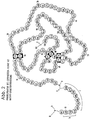
- the amino acid sequence of the particularly preferred modified ⁇ -NGF is shown in FIG. 2.
- Another object of the invention is a DNA sequence which codes for the recombinant N-terminally extended ⁇ -NGF according to the invention, and an expression vector which contains the DNA sequence according to the invention.
- Vectors known to the person skilled in the art such as plasmids, are suitable for the expression vectors according to the invention.
- Such an expression vector contains all the elements necessary for expression in certain host organisms, such as promoters, ribosomal binding sites, termination sequences etc. According to the invention, it is preferred that the expression vector contains an inducible promoter.
- Such an expression vector according to the invention is, for example, the plasmid pNGF1, which is shown schematically in FIG. 1.
- N-terminally elongated and shortened ⁇ -NGF show an effect on neurons like natural ⁇ -NGF.
- Another object of the invention is therefore their use in a pharmaceutical, as well as the use of the recombinantly produced ⁇ -NGF according to the invention for this purpose.
- Another object of the invention is also a therapeutic composition containing, in addition to conventional carriers and auxiliary substances, a recombinantly produced, recombinant N-terminally elongated or shortened ⁇ -NGF as active ingredient.
- Batch A represents the approximately 4.6 kb EcoRI / BamHI fragment of the plasmid pBTac1.
- the plasmid pBTac1 was treated with the two restriction enzymes EcoRI and BamHI.
- the restriction mixture was separated on an agarose gel.
- the approximately 4.6 kb fragment was excised and the DNA eluted from the gel.
- Batch B was prepared by restriction of the plasmid pUC18-NGF (British Biotechnology, Code BBG26).
- the two enzymes BspMI and BamHI were used for the restriction.
- the restriction mixture was separated by gel electrophoresis and a BspMI / BamHI fragment of 370 bp was obtained preparatively.
- Approach C was created by annealing two synthetically produced oligonucleotides with the following sequence: Oligonucleotide 1: 5'-AATTCTTATGTCTTACCAAAGAACTCACCGTAGCAAGCGC-3 '(SEQ ID NO. 5) Oligonucleotide 2: 5'-ATGAGCGCTTGCTACGGTGAGTTCTTTGGTAAGACATAAG-3 '(SEQ ID NO. 6) In the annealing reaction, 2 ⁇ g oligonucleotides per 10 ⁇ g were used; the oligonucleotides were incubated for 10 minutes at 68 ° C and cooled to room temperature.
- the 3 batches were ligated according to known methods and transformed in E. coli C600+ (DSM 5443) together with the plasmid pUBS520 (described in Brinkmann et al., 1989, Gene 85, 109-114).
- the desired clones could be found by selection for ampicillin and kanamycin.
- the plasmid pNGF1 obtained is described in FIG. 1 and differs from the starting plasmid pBTac1 and others. in that it contains a second ScaI interface.
- the amino acid sequence of the encoded protein is shown in Fig. 2.
- One of the clones obtained was examined for expression of the ⁇ -NGF minifusion. For this, the cells were measured at 37 ° C. to an optical density of 0.4 (measured at 550 nm) grown. Expression of the ⁇ -NGF fusion protein was induced by the addition of 5 mmol / l IPTG. The cells were incubated for an additional 4 hours and then concentrated by centrifugation. The inclusion bodies were prepared by known methods (see Example 2) and analyzed on a 15% SDS polyacrylamide gel. In this way, an expression strength of at least 20% based on the total protein could be determined.
- ⁇ -NGF-containing IBs To prepare the rec. ⁇ -NGF-containing IBs, the expression strain E.coli C600+ described in Example 1 was fermented with the plasmid pNGF1 in a 10 l fermenter for 8 hours. Expression of ⁇ -NGF was induced by adding IPTG in the logarithmic growth phase approx. 4 hours after the start of fermentation.
- the solution was diluted with the same volume of 0.1 mol / l Tris / HCl, 6% Triton-X-100, 1.5 mol / l NaCl, 60 mmol / l EDTA, pH 7.0 and 20 Incubated for minutes in an ice bath. Insoluble components (IBs) were then removed by centrifugation. The precipitate was suspended in 1 l of 0.5 mol / l guanidinium HCl (GdmCl), 20 mmol / l EDTA, pH 4.5. After 20 minutes of incubation at 20 ° C, the IBs were centrifuged again harvested.
- GdmCl 0.5 mol / l guanidinium HCl
- the following resuspension of the precipitate was carried out in 1.5 l 0.1 mol / l Tris / HCl, 20 mmol / l EDTA, pH 6.5. After 30 minutes of incubation at 20 ° C, the IBs were obtained by further centrifugation in the precipitate.
- the fraction of ⁇ -NGF in the total protein in the dissolved IBs was determined after separation of the proteins by means of SDS gel electrophoresis by densitometric measurement of the sample web.
- the IBs isolated from the 10 l fermentation broth contained 6.0 g of ⁇ -NGF.
- IBs were in a solution of 6 mol / l Gdmcl, 0.1 mol / l DTE, 5 mmol / l EDTA, 0.1 mol / l Tris / HCl, pH 8.5 to a concentration of 5 to 50 g IB / 1 l suspended and stirred at 25 ° C for 1 hour.
- solubilizate thus produced was used directly for the subsequent naturalization.
- the pH of the solubilizate was adjusted to pH 3 with HCl (25%) and the acidic solution was dialyzed repeatedly against 6 mol / l GdmCl, 5 mmol / l EDTA, pH 3. This dialysate was used for both renaturation and subsequent derivatization.
- the pH of the dialyzed solubilizate was adjusted to pH 8.5 by adding 5 N NaOH.
- the mixture was then diluted with 1 volume of a solution of 6 mol / l GdmCl, 0.2 mol / l Tris HCl, 5 mmol / l EDTA pH 8.5 and oxidized glutathione (GSSG), cystamine or cystine in solid form to a concentration of 75 mmol / l was added and incubated at 20 ° C. for 1 hour. In the case of cystine, the incubation was carried out at pH 9.5 instead of pH 8.5.
- the pH of the solution was then adjusted to pH 3 with 25% HCl and dialyzed several times against 6 mol / l GdmCl, 1 mmol / l EDTA, pH 3.0.
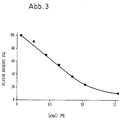
- ⁇ -NGF in inactive solutions containing soluble form were diluted 12.5 to 1000 times in different renaturation buffers.
- the results are shown in Tables 1 to 3 and Fig. 3 to 5.
- the renaturation solutions were dialyzed against 50 mmol / l Tris / HCl pH 7.5 after an incubation period of 24 hours and then clarified by centrifugation.
- 100 ⁇ l pure or after dilution with medium F14 medium; Coon, MG and Row, MG, 1969, Proc.Natl.Acad.Sci. USA 62 , 852-859
- medium F14 medium; Coon, MG and Row, MG, 1969, Proc.Natl.Acad.Sci. USA 62 , 852-859
- Cell culture plates (Costar) mixed with 750 ⁇ l medium and 150 ⁇ l cell suspension of the dissociated ganglia and incubated for 48 hours at 37 ° C.
- the number of cells with developed dendrites was quantified as a measure of the biological activity.
- a solution of known concentration of 2.5 S-NGF from mouse submaxillary glands (Fa. Boehringer Mannheim) was used as reference
- renaturation solutions dialyzed against 50 mmol / l Tris / HCl pH 7.5 were also used to compare the results with the DRG test. Otherwise, the renaturation solutions were used immediately after clarification by centrifugation.
- a 96-well microtiter plate from Nunc-Immuno; type Maxisorp F96 was coated with a monoclonal antibody against mouse 2.5 S NGF (from Boehringer Mannheim GmbH) by using per well 0.1 ml antibody solution from 0.3 ⁇ g antibody / ml 50 mmol / l Na2CO3, 0.1% Na-azide, pH 9.6 was incubated at 4 ° C for 16 hours.
- Boehringer Mannheim was carried out in the concentration range 0.1 ⁇ g / ml to 20 pg / ml per plate. After 2 hours of incubation at 37 ° C, the solution was removed by washing three times. Then 0.1 ml of a solution of ⁇ -galactosidase-conjugated monoclonal antibody against mouse 2.5 S NGF (from Boehringer Mannheim; 0.4 U / ml in washing buffer with 1% BSA) was added to each well and 4 hours Incubated at 37 ° C.
- each well was treated with 0.2 ml of a solution of 40 mg chlorophenol red- ⁇ -D-galactopyranoside in 20 ml 100 mmol / l Hepes, 150 mmol / l NaCl, 2 mmol / l MgCl2, 0.1% Na -azide, 1% BSA pH 7 filled.
- the absorption of the samples was measured after 10 to 60 minutes with an ELISA reader (e.g. type EAR 400 AT from SLT-Labinstruments, Austria).
- the ⁇ -NGF concentration in renaturation solutions was calculated using the calibration curve with 2.5 S NGF from mouse.
- renaturation solutions were analyzed after an incubation period of 24 hours.
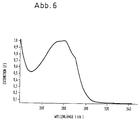
- the UV spectrum from 240 to 340 nm of samples dialyzed against 50 mmol / l Tris / HCl, 1 mmol / l EDTA, pH 7.5 was analyzed with a UV / Vis Spectrophotometer (eg diode array spectrophotometer type HP 8452 A from Hewlett-Packard, USA) measured.
- the ⁇ -NGF concentration in the solution was calculated from the absorption of the sample at 280 nm.
- Example 7c For the N-terminal sequence analysis, the ⁇ -NGF isolated and then concentrated in Example 7c using RP-HPLC was used.
- the N-terminal sequence was carried out using a gas phase protein sequence analyzer (Model 477 A, from Applied Biosystems, USA). The following sequence was found with a signal strength of approx. 400 pmol per PTH amino acid: H2N-Ser-Tyr-Gln-Arg-Thr-His-Arg-Ser (SEQ ID NO 7)
- SEQ ID NO 7 The N-terminal amino acid methionine is apparently already split off in E. coli.
- the DRG test for determining the biological activity of ⁇ -NGF was carried out as described in Example 4.
- the samples were diluted with medium to 200, 20 and 2 ng / ml, each of which 100 ⁇ l was mixed with 750 ⁇ l medium and 150 ⁇ l cell suspension and incubated.
- the cell test was carried out with a medium which contained a monoclonal anti- ⁇ - (2.5 S) NGF antibody, so that the antibody concentration in the test mixture was 200 ng / ml.
- Table 6 Biological activity of rec.
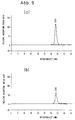
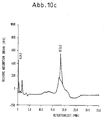
- ⁇ -NGF concentrations in the fractions of the peaks collected were determined by means of the absorption of the samples at 280 nm. Solutions containing 1 nmol rec ⁇ -NGF were concentrated by RP-C18-HPLC and the N-terminal sequence was determined by gas phase sequencing. In addition, samples of the collected fractions were diluted to ⁇ -NGF concentrations of 20, 10 and 5 ng / ml in the DRG test to determine the biological activity of the truncated ⁇ -NGF molecules. The biological activity was inhibited with an anti- ⁇ -NGF antibody as described in Example 7f.
- Table 7 N-terminal sequences of the proteolytically truncated ⁇ -NGF molecules protease used Retention time ⁇ -NGF on MonoS N-terminal sequence Position * 1st AS --- 18.5 minutes Ser Tyr Gln Arg Thr His Arg Ser (SEQ ID NO 7) - 9 Trypsin 13.4 minutes Gly Glu Phe Ser Val Cys Asp Ser (SEQ ID NO 8) + 10 Trypsin 14.2 minutes Ser Ser Ser His Pro Ile Phe His (SEQ ID NO 9) + 1 Arg C 14.6 minutes Ser Ser Ser His Pro Ile Phe His (SEQ ID NO 10) + 1 *
Landscapes
- Health & Medical Sciences (AREA)
- Chemical & Material Sciences (AREA)
- Organic Chemistry (AREA)
- Life Sciences & Earth Sciences (AREA)
- Engineering & Computer Science (AREA)
- Bioinformatics & Cheminformatics (AREA)
- General Health & Medical Sciences (AREA)
- Biomedical Technology (AREA)
- Genetics & Genomics (AREA)
- Medicinal Chemistry (AREA)
- Biochemistry (AREA)
- Zoology (AREA)
- Chemical Kinetics & Catalysis (AREA)
- Neurosurgery (AREA)
- Molecular Biology (AREA)
- General Chemical & Material Sciences (AREA)
- Wood Science & Technology (AREA)
- Neurology (AREA)
- Animal Behavior & Ethology (AREA)
- General Engineering & Computer Science (AREA)
- Veterinary Medicine (AREA)
- Public Health (AREA)
- Proteomics, Peptides & Aminoacids (AREA)
- Nuclear Medicine, Radiotherapy & Molecular Imaging (AREA)
- Biophysics (AREA)
- Pharmacology & Pharmacy (AREA)
- Analytical Chemistry (AREA)
- Hospice & Palliative Care (AREA)
- Psychiatry (AREA)
- Toxicology (AREA)
- Gastroenterology & Hepatology (AREA)
- Biotechnology (AREA)
- Microbiology (AREA)
- Preparation Of Compounds By Using Micro-Organisms (AREA)
- Peptides Or Proteins (AREA)
- Medicines That Contain Protein Lipid Enzymes And Other Medicines (AREA)
- Micro-Organisms Or Cultivation Processes Thereof (AREA)
- Saccharide Compounds (AREA)
Priority Applications (1)
| Application Number | Priority Date | Filing Date | Title |
|---|---|---|---|
| EP96118979A EP0786520A1 (fr) | 1991-11-27 | 1992-11-26 | Méthode de production de béta-NGF biologiquement actif par génie génétique |
Applications Claiming Priority (2)
| Application Number | Priority Date | Filing Date | Title |
|---|---|---|---|
| DE4139000A DE4139000A1 (de) | 1991-11-27 | 1991-11-27 | Verfahren zur gentechnologischen herstellung von biologisch aktivem ss-ngf |
| DE4139000 | 1991-11-27 |
Related Child Applications (1)
| Application Number | Title | Priority Date | Filing Date |
|---|---|---|---|
| EP96118979.2 Division-Into | 1996-11-27 |
Publications (3)
| Publication Number | Publication Date |
|---|---|
| EP0544293A2 true EP0544293A2 (fr) | 1993-06-02 |
| EP0544293A3 EP0544293A3 (en) | 1994-09-21 |
| EP0544293B1 EP0544293B1 (fr) | 1997-10-01 |
Family
ID=6445700
Family Applications (2)
| Application Number | Title | Priority Date | Filing Date |
|---|---|---|---|
| EP96118979A Withdrawn EP0786520A1 (fr) | 1991-11-27 | 1992-11-26 | Méthode de production de béta-NGF biologiquement actif par génie génétique |
| EP92120207A Expired - Lifetime EP0544293B1 (fr) | 1991-11-27 | 1992-11-26 | Procédé pour la préparation de bêta-NGF biologiquement actif par génie génétique |
Family Applications Before (1)
| Application Number | Title | Priority Date | Filing Date |
|---|---|---|---|
| EP96118979A Withdrawn EP0786520A1 (fr) | 1991-11-27 | 1992-11-26 | Méthode de production de béta-NGF biologiquement actif par génie génétique |
Country Status (4)
| Country | Link |
|---|---|
| EP (2) | EP0786520A1 (fr) |
| JP (2) | JP2611102B2 (fr) |
| AT (1) | ATE158814T1 (fr) |
| DE (2) | DE4139000A1 (fr) |
Cited By (3)
| Publication number | Priority date | Publication date | Assignee | Title |
|---|---|---|---|---|
| WO1996008562A1 (fr) * | 1994-09-12 | 1996-03-21 | Max-Planck-Gesellschaft zur Förderung der Wissenschaften e.V., Berlin | Molecules biologiquement actives derivees de neurotrophines |
| EP0772627A4 (fr) * | 1994-05-09 | 1997-06-11 | ||
| EP0994188A1 (fr) * | 1998-10-09 | 2000-04-19 | Rainer Dr. Rudolph | Procédé d'obtention du NGF-bêta biologiquement actif |
Families Citing this family (2)
| Publication number | Priority date | Publication date | Assignee | Title |
|---|---|---|---|---|
| DE19957904A1 (de) * | 1999-12-01 | 2001-06-07 | Merck Patent Gmbh | Insektengift-Allergene mit verminderter IgE-Reaktivität und Verfahren zu ihrer Herstellung |
| CN104203264B (zh) * | 2011-12-19 | 2018-08-28 | 瓦克化学有限公司 | 新型proNGF突变体及其在生产β-NGF中的用途 |
Family Cites Families (10)
| Publication number | Priority date | Publication date | Assignee | Title |
|---|---|---|---|---|
| DK161152C (da) | 1983-03-03 | 1991-11-11 | Genentech Inc | Polypeptid med egenskaber som human beta-nervevaekstfaktor og fremgangsmaade til fremstilling deraf, dna-isolat omfattende en sekvens som koder for polypeptidet, replicerbar udtrykkelsesvektor for dna-sekvensen, rekombinant vaertscelle transformeret med vektoren, farmaceutisk praeparat indeholdende polypeptidet og fremg. der omfatter anvendelsen af polypeptidet til fremst. af et farmaceutisk praeparat |
| DE3537708A1 (de) * | 1985-10-23 | 1987-04-23 | Boehringer Mannheim Gmbh | Verfahren zur aktivierung von t-pa nach expression in prokaryonten |
| DE3611817A1 (de) | 1986-04-08 | 1987-10-15 | Boehringer Mannheim Gmbh | Verfahren zur renaturierung von proteinen |
| JPH01211490A (ja) | 1988-02-19 | 1989-08-24 | Tosoh Corp | ヒト神経成長因子遺伝子セグメント |
| CA1304907C (fr) | 1988-03-29 | 1992-07-14 | Gad Shaanan | Dispositif a came servant a assembler des panneaux d'elements de mobilier |
| JPH0771509B2 (ja) * | 1988-07-12 | 1995-08-02 | 工業技術院長 | ヒトβ−NGFの発現法 |
| US5272063A (en) | 1988-11-22 | 1993-12-21 | Syntex (U.S.A.) Inc. | Process of making human nerve growth factor |
| ATE119938T1 (de) * | 1989-08-21 | 1995-04-15 | Takeda Chemical Industries Ltd | Produktion von menschlichen nervenwachstumsfaktoren. |
| US5235043A (en) * | 1990-04-06 | 1993-08-10 | Synergen, Inc. | Production of biologically active, recombinant members of the ngf/bdnf family of neurotrophic proteins |
| DE4139001A1 (de) * | 1991-11-27 | 1993-06-03 | Boehringer Mannheim Gmbh | Verfahren zur einschleusung von nukleinsaeuren in zellen |
-
1991
- 1991-11-27 DE DE4139000A patent/DE4139000A1/de not_active Withdrawn
-
1992
- 1992-11-26 AT AT92120207T patent/ATE158814T1/de not_active IP Right Cessation
- 1992-11-26 EP EP96118979A patent/EP0786520A1/fr not_active Withdrawn
- 1992-11-26 DE DE59208942T patent/DE59208942D1/de not_active Expired - Fee Related
- 1992-11-26 EP EP92120207A patent/EP0544293B1/fr not_active Expired - Lifetime
- 1992-11-27 JP JP4318680A patent/JP2611102B2/ja not_active Expired - Fee Related
-
1996
- 1996-06-10 JP JP8147369A patent/JP2637392B2/ja not_active Expired - Fee Related
Cited By (6)
| Publication number | Priority date | Publication date | Assignee | Title |
|---|---|---|---|---|
| EP0772627A4 (fr) * | 1994-05-09 | 1997-06-11 | ||
| WO1996008562A1 (fr) * | 1994-09-12 | 1996-03-21 | Max-Planck-Gesellschaft zur Förderung der Wissenschaften e.V., Berlin | Molecules biologiquement actives derivees de neurotrophines |
| EP0994188A1 (fr) * | 1998-10-09 | 2000-04-19 | Rainer Dr. Rudolph | Procédé d'obtention du NGF-bêta biologiquement actif |
| WO2000022119A1 (fr) * | 1998-10-09 | 2000-04-20 | Scil Proteins Gmbh | PROCEDE D'OBTENTION DE NGF-β ACTIF |
| US8318671B1 (en) | 1998-10-09 | 2012-11-27 | Scil Proteins Gmbh | Pharmaceutical preparations comprising human proNGF |
| US8501439B2 (en) | 1998-10-09 | 2013-08-06 | Scil Proteins Gmbh | Method for obtaining active pro-NGF and beta-NGF |
Also Published As
| Publication number | Publication date |
|---|---|
| JPH0923883A (ja) | 1997-01-28 |
| DE4139000A1 (de) | 1993-06-03 |
| EP0544293B1 (fr) | 1997-10-01 |
| JPH06327489A (ja) | 1994-11-29 |
| JP2637392B2 (ja) | 1997-08-06 |
| JP2611102B2 (ja) | 1997-05-21 |
| EP0544293A3 (en) | 1994-09-21 |
| ATE158814T1 (de) | 1997-10-15 |
| DE59208942D1 (de) | 1997-11-06 |
| EP0786520A1 (fr) | 1997-07-30 |
Similar Documents
| Publication | Publication Date | Title |
|---|---|---|
| DE3785864T2 (de) | Verfahren zur Herstellung von menschlichem Epidermalwachstumsfaktor und dessen Analogen. | |
| DE69125810T2 (de) | Verfahren zur enzymatischen herstellung von basischen fibroblasten-wachstumsfaktors | |
| EP0464867B1 (fr) | Protéines de fusion de l'interleukine-alpha et l'hirudine | |
| EP0500108B1 (fr) | Activation améliorée de protéines recombinantes | |
| DE4423131A1 (de) | Neue hIL-4-Mutantenproteine als Antagonisten oder partielle Agonisten des humanen Interleukin 4 | |
| EP0994188B1 (fr) | Procédé d'obtention du NGF-bêta biologiquement actif | |
| EP0229998B1 (fr) | Protéines de fusion avec une séquence de lest eukaryotique | |
| DE3856203T2 (de) | Produktion von gereinigtem, biologisch aktivem, bakteriell hergestelltem human-csf-1 | |
| EP0904355B1 (fr) | Procede d'activation de proteine denaturee | |
| DE69012377T2 (de) | Polypeptid und dessen Herstellung. | |
| EP0242836A1 (fr) | Dérivé de l'activateur tissulaire du plasminogène (tPA) et sa production | |
| DE69028499T2 (de) | Neues Verfahren zur Produktion von nichtfusioniertem Protein in E. coli | |
| EP0408945B1 (fr) | Plasmides, leur préparation et leur utilisation pour obtenir un activateur de plasminogène | |
| EP0544293B1 (fr) | Procédé pour la préparation de bêta-NGF biologiquement actif par génie génétique | |
| EP0496327B1 (fr) | Procédé pour la préparation de polypeptides ayant l'activité de la prourokinase | |
| DE68913090T2 (de) | Modifizierter menschlicher PSTI. | |
| DE69017793T2 (de) | Produktion von menschlichen Nervenwachstumsfaktoren. | |
| DE69028935T2 (de) | Methode zur Produktion von Glukagon | |
| DE3688816T2 (de) | Dns-sequenz. | |
| DE68927009T2 (de) | EXPRESSION UND PROZESSIERUNG VON ACETYLIERTEN FGFs IN HEFEN | |
| DE19547933A1 (de) | Multimere Formen von IL-16, Verfahren zu ihrer Herstellung und Verwendung | |
| DE3854517T2 (de) | Serin-protease und serin-protease-gen. | |
| DE3811921A1 (de) | Verfahren zur herstellung von proteinen, die n-terminal mit prolin beginnen | |
| DE19535445A1 (de) | Verfahren zur Herstellung von natriuretischen Peptiden über Streptavidin-Fusionsproteine | |
| EP0219839A2 (fr) | Dérivé de l'interleukine-2, sa préparation et utilisation |
Legal Events
| Date | Code | Title | Description |
|---|---|---|---|
| PUAI | Public reference made under article 153(3) epc to a published international application that has entered the european phase |
Free format text: ORIGINAL CODE: 0009012 |
|
| 17P | Request for examination filed |
Effective date: 19921126 |
|
| AK | Designated contracting states |
Kind code of ref document: A2 Designated state(s): AT BE CH DE DK ES FR GB GR IE IT LI LU NL PT SE |
|
| PUAL | Search report despatched |
Free format text: ORIGINAL CODE: 0009013 |
|
| AK | Designated contracting states |
Kind code of ref document: A3 Designated state(s): AT BE CH DE DK ES FR GB GR IE IT LI LU NL PT SE |
|
| 17Q | First examination report despatched |
Effective date: 19950928 |
|
| GRAG | Despatch of communication of intention to grant |
Free format text: ORIGINAL CODE: EPIDOS AGRA |
|
| GRAH | Despatch of communication of intention to grant a patent |
Free format text: ORIGINAL CODE: EPIDOS IGRA |
|
| GRAH | Despatch of communication of intention to grant a patent |
Free format text: ORIGINAL CODE: EPIDOS IGRA |
|
| GRAA | (expected) grant |
Free format text: ORIGINAL CODE: 0009210 |
|
| AK | Designated contracting states |
Kind code of ref document: B1 Designated state(s): AT BE CH DE DK ES FR GB GR IE IT LI LU NL PT SE |
|
| PG25 | Lapsed in a contracting state [announced via postgrant information from national office to epo] |
Ref country code: IT Free format text: LAPSE BECAUSE OF FAILURE TO SUBMIT A TRANSLATION OF THE DESCRIPTION OR TO PAY THE FEE WITHIN THE PRESCRIBED TIME-LIMIT;WARNING: LAPSES OF ITALIAN PATENTS WITH EFFECTIVE DATE BEFORE 2007 MAY HAVE OCCURRED AT ANY TIME BEFORE 2007. THE CORRECT EFFECTIVE DATE MAY BE DIFFERENT FROM THE ONE RECORDED. Effective date: 19971001 Ref country code: GR Free format text: LAPSE BECAUSE OF FAILURE TO SUBMIT A TRANSLATION OF THE DESCRIPTION OR TO PAY THE FEE WITHIN THE PRESCRIBED TIME-LIMIT Effective date: 19971001 Ref country code: NL Free format text: LAPSE BECAUSE OF FAILURE TO SUBMIT A TRANSLATION OF THE DESCRIPTION OR TO PAY THE FEE WITHIN THE PRESCRIBED TIME-LIMIT Effective date: 19971001 Ref country code: FR Free format text: LAPSE BECAUSE OF FAILURE TO SUBMIT A TRANSLATION OF THE DESCRIPTION OR TO PAY THE FEE WITHIN THE PRESCRIBED TIME-LIMIT Effective date: 19971001 Ref country code: GB Free format text: LAPSE BECAUSE OF FAILURE TO SUBMIT A TRANSLATION OF THE DESCRIPTION OR TO PAY THE FEE WITHIN THE PRESCRIBED TIME-LIMIT Effective date: 19971001 Ref country code: ES Free format text: THE PATENT HAS BEEN ANNULLED BY A DECISION OF A NATIONAL AUTHORITY Effective date: 19971001 Ref country code: DK Free format text: LAPSE BECAUSE OF NON-PAYMENT OF DUE FEES Effective date: 19971001 |
|
| REF | Corresponds to: |
Ref document number: 158814 Country of ref document: AT Date of ref document: 19971015 Kind code of ref document: T |
|
| XX | Miscellaneous (additional remarks) |
Free format text: TEILANMELDUNG 96118979.2 EINGEREICHT AM 27/11/96. |
|
| REG | Reference to a national code |
Ref country code: CH Ref legal event code: EP |
|
| REF | Corresponds to: |
Ref document number: 59208942 Country of ref document: DE Date of ref document: 19971106 |
|
| PG25 | Lapsed in a contracting state [announced via postgrant information from national office to epo] |
Ref country code: LU Free format text: LAPSE BECAUSE OF NON-PAYMENT OF DUE FEES Effective date: 19971126 Ref country code: AT Free format text: LAPSE BECAUSE OF NON-PAYMENT OF DUE FEES Effective date: 19971126 |
|
| PG25 | Lapsed in a contracting state [announced via postgrant information from national office to epo] |
Ref country code: LI Free format text: LAPSE BECAUSE OF NON-PAYMENT OF DUE FEES Effective date: 19971130 Ref country code: CH Free format text: LAPSE BECAUSE OF NON-PAYMENT OF DUE FEES Effective date: 19971130 Ref country code: BE Free format text: LAPSE BECAUSE OF NON-PAYMENT OF DUE FEES Effective date: 19971130 |
|
| PG25 | Lapsed in a contracting state [announced via postgrant information from national office to epo] |
Ref country code: SE Effective date: 19980101 |
|
| PG25 | Lapsed in a contracting state [announced via postgrant information from national office to epo] |
Ref country code: PT Free format text: LAPSE BECAUSE OF FAILURE TO SUBMIT A TRANSLATION OF THE DESCRIPTION OR TO PAY THE FEE WITHIN THE PRESCRIBED TIME-LIMIT Effective date: 19980102 |
|
| EN | Fr: translation not filed | ||
| NLV1 | Nl: lapsed or annulled due to failure to fulfill the requirements of art. 29p and 29m of the patents act | ||
| GBV | Gb: ep patent (uk) treated as always having been void in accordance with gb section 77(7)/1977 [no translation filed] |
Effective date: 19971001 |
|
| BERE | Be: lapsed |
Owner name: BOEHRINGER MANNHEIM G.M.B.H. Effective date: 19971130 |
|
| REG | Reference to a national code |
Ref country code: IE Ref legal event code: FD4D Ref document number: 76743 Country of ref document: IE |
|
| REG | Reference to a national code |
Ref country code: CH Ref legal event code: PL |
|
| PLBE | No opposition filed within time limit |
Free format text: ORIGINAL CODE: 0009261 |
|
| STAA | Information on the status of an ep patent application or granted ep patent |
Free format text: STATUS: NO OPPOSITION FILED WITHIN TIME LIMIT |
|
| 26N | No opposition filed | ||
| PGFP | Annual fee paid to national office [announced via postgrant information from national office to epo] |
Ref country code: DE Payment date: 20081128 Year of fee payment: 17 |
|
| PG25 | Lapsed in a contracting state [announced via postgrant information from national office to epo] |
Ref country code: DE Free format text: LAPSE BECAUSE OF NON-PAYMENT OF DUE FEES Effective date: 20100601 |