EP0547876B1 - Gène codant pour un enzyme avec activité réduisant les flavines et activité nitroréductase - Google Patents
Gène codant pour un enzyme avec activité réduisant les flavines et activité nitroréductase Download PDFInfo
- Publication number
- EP0547876B1 EP0547876B1 EP92311476A EP92311476A EP0547876B1 EP 0547876 B1 EP0547876 B1 EP 0547876B1 EP 92311476 A EP92311476 A EP 92311476A EP 92311476 A EP92311476 A EP 92311476A EP 0547876 B1 EP0547876 B1 EP 0547876B1
- Authority
- EP
- European Patent Office
- Prior art keywords
- activity
- enzyme
- dna
- gene
- nucleotide sequence
- Prior art date
- Legal status (The legal status is an assumption and is not a legal conclusion. Google has not performed a legal analysis and makes no representation as to the accuracy of the status listed.)
- Expired - Lifetime
Links
Images



Classifications
-
- C—CHEMISTRY; METALLURGY
- C12—BIOCHEMISTRY; BEER; SPIRITS; WINE; VINEGAR; MICROBIOLOGY; ENZYMOLOGY; MUTATION OR GENETIC ENGINEERING
- C12N—MICROORGANISMS OR ENZYMES; COMPOSITIONS THEREOF; PROPAGATING, PRESERVING, OR MAINTAINING MICROORGANISMS; MUTATION OR GENETIC ENGINEERING; CULTURE MEDIA
- C12N9/00—Enzymes; Proenzymes; Compositions thereof; Processes for preparing, activating, inhibiting, separating or purifying enzymes
- C12N9/0004—Oxidoreductases (1.)
- C12N9/0012—Oxidoreductases (1.) acting on nitrogen containing compounds as donors (1.4, 1.5, 1.6, 1.7)
- C12N9/0036—Oxidoreductases (1.) acting on nitrogen containing compounds as donors (1.4, 1.5, 1.6, 1.7) acting on NADH or NADPH (1.6)
-
- C—CHEMISTRY; METALLURGY
- C12—BIOCHEMISTRY; BEER; SPIRITS; WINE; VINEGAR; MICROBIOLOGY; ENZYMOLOGY; MUTATION OR GENETIC ENGINEERING
- C12Y—ENZYMES
- C12Y105/00—Oxidoreductases acting on the CH-NH group of donors (1.5)
- C12Y105/01—Oxidoreductases acting on the CH-NH group of donors (1.5) with NAD+ or NADP+ as acceptor (1.5.1)
- C12Y105/01029—FMN reductase (1.5.1.29)
Definitions
- the present invention relates to a gene encoding an enzyme having a flavin reducing activity and a nitroreductase activity, the enzyme produced therefrom, a recombinant vector containing the gene and bacteria containing the recombinant vector.
- a bacterial luciferase derived from luminous bacteria is used to produce oxidized flavin adenine mononucleotide (hereinafter referred to as "oxidized FMN”) and a long-chain carboxylic acid in the presence of a long-chain aliphatic aldehyde, oxygen and a reduced flavin adenine mononucleotide (hereinafter referred to as "FMNH 2 ”) as a luminescent substrate, and in this case, the bacterial luciferase catalyzes a reaction in which blue light is emitted.
- oxidized FMN oxidized flavin adenine mononucleotide
- FMNH 2 reduced flavin adenine mononucleotide
- FMNH 2 which is a substrate can be obtained from a reduced nicotinamide adenine dinucleotide:flavin mononucleotide (NADH:FMN) reductase and a reduced nicotinamide adenine dinucleotide phosphate:flavin mononucleotide (NADPH:FMN) reductase, and the long-chain aldehyde can be obtained from a fatty acid reductase complex.
- NADH:FMN reduced nicotinamide adenine dinucleotide:flavin mononucleotide
- NADPH:FMN reduced nicotinamide adenine dinucleotide phosphate:flavin mononucleotide
- Lavi et. al. disclose a modified purification method for bacterial luciferases and NAD(P)H:FMN oxidoreductases, which uses FMN-Sepharose alone or coupled to DEAE ion exchange chromatography for the simultaneous purification of luciferase and the various oxidoreductases from Vibrio harveyi , a bright mutant of Vibrio harveyi, Vibrio fischeri , and Photobacterium phosphoreum .
- Nitroarenes are members of one group of environmental mutagens, and they are contained in the exhaust gas of automobiles, the smoke of incinerators, the atmosphere of cities, the bottoms of rivers, the air in rooms where stoves are lighted, and the burnt portions of grilled chickens.
- 2-nitrofluorene is well known.
- a nitroarene itself does not react directly with DNA to damage the same, but a metabolite of the nitroarene gives rise to a mutation in DNA to damage the DNA.
- nitrofluorene is reduced to an N-hydroxy form in the cell of a microorganism by a nitroreductase and then activated by an o-acetyl transferase, to thus finally produce nitrenium ions which attack the DNA. Therefore, it can be considered that the reaction of the nitroreductase with 2-nitrofluorene is a rate determining step in the mutagenesis of DNA by 2-nitrofluorene.
- Watanabe et al. have isolated a nitroreductase gene from Salmonella, which is disclosed in Watanabe M., Ishidate M, Jr and Nohmi T., Mutation Research, p. 216 211-220 (1989). Furthermore, its primary structure has been elucidated in Watanabe M., Ishidate M, Jr and Nohmi T., Nucleic Acid Research, 18 , p. 1059 (1990).
- the FMN reductase is essential to utilize the luminescent reaction of bacterial luciferase to the utmost. Therefore, the isolation of the FMN reductase gene permits preparing the enzyme in large quantities, and thus, an important object is the isolation of the gene encoding this enzyme.
- nitroreductase gene is useful to improve the detection sensitivity of the above-mentioned mutagen or carcinogen.
- the present inventors have succeeded in isolating a gene encoding an enzyme having the FMN reducing activity and the nitroreductase activity from the luminous bacteria Vibrio fischeri (ATCC 7744), and in elucidating its primary structure.
- they have succeeded in cultivating Escherichia coli transformed with a vector containing the gene which can express the protein in large quantities.
- the present invention has now been completed.
- the present invention has the following parts (1) to (8).
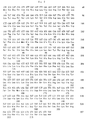
- Fig. 1 shows a nucleotide sequence of a gene encoding an enzyme having a flavin reducing activity and a nitroreductase activity.
- This triplet represents a purine base (Pu) and a pyrimidine base (Py) constituting a nucleotide sequence.
- Fig. 2 shows a typical nucleotide sequence of the gene encoding the enzyme having a flavin reducing activity and a nitroreductase activity.
- Fig. 3 shows a nucleotide sequence of a gene encoding an enzyme having a flavin reducing activity and a nitroreductase activity.
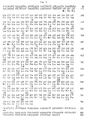
- Fig. 4 shows an amino acid sequence of an enzyme having a flavin reducing activity and a nitroreductase activity.
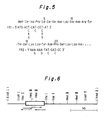
- Fig. 5 shows an N-terminal amino acid sequence of an NAD(P)H:FMN reductase and synthetic oligonucleotide probes (FR1 and FR2).
- Fig. 6 shows a restriction map of the gene of the present invention and a sequencing strategy. Arrows denote directions for the determination of the nucleotide sequences. The portion indicated by a box corresponds to the gene.
- Fig. 7 shows a process of constructing a recombinant vector (an expression vector pFR7) containing a gene encoding an enzyme having an FNM reducing activity and a nitroreductase activity of luminous bacteria according to the present invention.
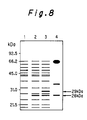
- Fig. 8 shows the confirmation of the expressed protein by SDS-polyacrylamide gel electrophoresis.
- Lane 1 is a pUC8/D1210 strain
- lane 2 is a pFR7/D1210 strain
- lane 3 is a pFR5/D1210 strain
- lane 4 is a Boehringer Mannheim NAD(P)H:FMN reductase.
- the gene of the present invention is characterized by containing a nucleotide sequence having a sequence length of 657 bases as shown in Fig. 1.
- the nucleotide sequence in Fig.1 can be predicted from an amino acid sequence shown in Fig. 4 as mentioned later.
- a preferable sequence contains a nucleotide sequence as shown in Fig. 2.
- a typical nucleotide sequence is a DNA having a sequence length of 929 bases as shown in Fig. 3.
- the basic nucleotide sequence of the present invention is derived from Genomic DNA isolated from luminous bacteria Vibrio fischeri (ATCC 7744). This sequence is characterized by encoding a protein having a molecular weight of 24562 and comprising 218 amino acids, corresponding to nucleotides numbered 109 to 762.
- the gene of the present invention encodes a protein having a flavin reducing activity and a nitroreductase activity, for example, an FMN reducing activity and a nitrofurazone reducing activity.
- An enzyme of the present invention is a protein having an amino acid sequence shown in Fig. 4 which can be predicted from the nucleotide sequence in Fig. 3.
- This protein comprises 218 amino acids and has a molecular weight of 24562 and the two activities of luminous bacteria, i.e., the flavin reducing activity and the nitroreductase activity.
- a recombinant vector of the present invention contains a DNA whose nucleotide sequence is shown in Fig. 1. That is, the recombinant vector of the present invention contains a nucleotide sequence which is the same or is functionally equal to the DNA having the nucleotide sequence shown in Fig. 3.
- a "functionally equal nucleotide sequence” means any DNA fragment which can be used in accordance with a substantially similar method to the present invention so as to obtain the substantially identical results, i.e. the production of an enzyme having the FMN reducing activity and the nitroreductase activity of luminous bacteria in a suitable host.
- the "functionally equal nucleotide sequence” means any DNA fragment which can encode a protein having the same amino acid sequence, even if the nucleotide sequence is different, or a DNA fragment which can code a protein having the FMN reducing activity and the nitroreductase activity, even if there is a slight difference in the amino acid sequence attributed to a slight difference in the nucleotide sequence.
- Typical examples are the nucleotide sequence of Fig. 3 and the nucleotide sequence of Fig. 1 into which a site-specific mutation may be introduced.
- the technique makes use of a fundamental relationship which exists in all living organisms between the genetic material, usually DNA, and the proteins synthesized by the organism. This relationship is such that the amino acid sequence of the protein is reflected in the nucleotide sequence of the DNA.
- the specific relationship between each given trinucleotide sequence and its corresponding amino acid constitutes the genetic code.
- the genetic code is believed to be the same or similar for all living organisms.
- the amino acid sequence of every protein or peptide is reflected by a corresponding nucleotide sequence, according to a well understood relationship.
- this sequence of nucleotides can, in principle, be translated by any living organism.
- the trinucleotides are presented as DNA trinucleotides, as they exist in the genetic material of a living organism. Expression of these codons in protein synthesis requires intermediate formation of messenger RNA (mRNA).
- mRNA messenger RNA
- the mRNA codons have the same sequences as the DNA codons, except that uracil is found in place of thymine.
- Complementary trinucleotide DNA sequences having opposite strand polarity are functionally equivalent to the codons, as is understood in the art.
- An important and well known feature of the genetic code is its redundancy, whereby, for most of the amino acids used to make proteins, more than one coding nucleotide triplet may be employed.
- nucleotide sequences may code for a given amino acid sequence. Such nucleotide sequences are considered functionally equivalent since they can result in the production of the same amino acid sequence in all organisms, although certain strains may translate some sequences more efficiently than they do others. Occasionally, a methylated variant of a purine or pyrimidine may be found in a given nucleotide sequence. Such methylations do not affect the coding relationship in any way.
- the typical example is a plasmid vector into which the DNA fragment having the nucleotide sequence is introduced.
- this kind of vector there can be used pUC [C. Yanisch-Perron, J. Vieira and J. Messing, Gene, 33 , p. 110-115 (1985)] and pIN III [Y. Masui, J. Coleman, M. Inouye, Experimental Manipulation of Gene Expression (ed. M. Inouye), Academic Press, p. 15 (1983)].
- Fig. 7 shows a construction process of this recombinant vector (the expression vector).
- a vector pFR3 having a reductase gene is cleaved with restriction enzymes HincII and StuI to obtain a fragment including a coding region, and this fragment is then inserted into an SmaI site of a pUC8 plasmid DNA [Hanna Z., Fregeau C., Prefontaine G. and Brousseau R., Gene, p. 30247 (1984)] to construct a recombinant vector pFR5. Furthermore, this vector pFR5 is cleaved with a restriction enzyme EcoRI and then subjected to a Klenow treatment in the presence of dNTP.
- the vector is recirculized using a T4 DNA ligase to construct a recombinant vector pFR7 (an expression vector).
- a restriction enzyme cleavage site is shown in an ampicillin resistant gene (Amp r ).
- Bacteria of the present invention contain a recombinant vector DNA having the nucleotide sequence shown in Fig. 1.
- the bacteria of the present invention are characterized by producing a protein having the flavin reducing activity and the nitroreductase activity.
- a method for preparing the enzyme of the present invention comprises the steps of cultivating bacteria modified with a recombinant vector (an expression vector) containing a DNA whose nucleotide sequence is shown in Fig. 3, and then producing a protein containing an amino acid sequence shown in Fig. 4.
- a recombinant vector an expression vector
- Examples of the bacteria include Escherichia coli and Bacillus subtilis
- examples of a culture medium to be used include an LB culture medium and a YT culture medium.
- a gene of the present invention is that which has been isolated for the first time encoding an enzyme having an FMN reducing activity and a nitroreductase activity.
- This gene can be used to produce a highly sensitive strain of bacteria to a mutagen or a carcinogen by the use of a suitable host such as Escherichia coli. Additionally, from this Escherichia coli, a reductase protein can also be prepared in large quantities.
- organisms or bacteria By inserting this expression vector into a suitable host such as Escherichia coli, organisms or bacteria can be produced which express an enzyme having the FMN reducing activity and the nitroreductase activity of luminous bacteria. Furthermore, the reductase can also be prepared in large quantities by extraction from the organisms into which the gene is introduced.
- the organisms or microorganisms into which the gene is introduced have a high sensitivity to a mutagen or a carcinogen owing to the above-mentioned function, and thus they are useful as an indicator for detecting the mutagen or the carcinogen.
- the reductase amplifies a luminous reaction of bacterial luciferase owing to the above-mentioned function.
- the reductase can be applied to many measuring methods and it is useful, for example, as a diagnosis drug or an inspection drug.
- NAD(P)H:FMN reductase sample (available from Boehringer Mannheim) was introduced into a "Sparose 12" gel filtration column (made by Pharmacya Co., Ltd.) to fractionate the sample.
- NADH and NADPH:FMN reducing activities were measured by a procedure described in Jablonski E. and DeLuca M., Biochemistry, 16 , p. 2932 (1977), and analysis was then made in accordance with a procedure described in Laemmli, U.K. Nature, 277, p. 680 (1970) by means of sodium dodecyl sulfate-polyacrylamide gel electrophoresis.
- a photobacterium medium containing luminescent bacteria Vibrio fischeri was shaken at 26°C overnight to cultivate the bacteria.
- the bacteria were collected by means of centrifugal separation at 10000 rpm, and the resultant cell pellets were then dispersed in a Tris-HCl ⁇ EDTA buffer solution (hereinafter referred to as "a TE buffer”).
- a TE buffer Tris-HCl ⁇ EDTA buffer solution
- SDS sodium dodecyl sulfate
- a phenol treatment was carried out three times, followed by ethanol precipitation.
- the dried material was dissolved in the TE buffer, and then subjected to the proteinase K treatment again. Afterward, the three cycles of the phenol treatment and then the ethanol precipitation were carried out to recover the genomic DNA. 10 units of a restriction enzyme Sau3AI were reacted with 50 ⁇ m of this genomic DNA at 37°C. Some parts of the reaction mixture were taken out at reaction times of 5, 10, 20, 30, 45, 60, 90 and 120 minutes, and afterward, EDTA (ethylenediaminetetraacetic acid) was added to the reaction system to bring the reaction to an end. Each part of the DNA was subjected to agarose gel electrophoresis to confirm the degree of partial decomposition of the genomic DNA.
- EDTA ethylenediaminetetraacetic acid
- the reaction solutions at the respective times were combined into one, followed by the ethanol precipitation, to recover the DNA.
- this DNA was dissolved in a small amount of the TE buffer, and then subjected to agarose gel electrophoresis to recover a fraction of 4 to 6 Kb by the use of a DE81 paper.
- the DNA fraction of 4 to 6 Kb was dissolved out of the DE81 paper with 1 M NaCl, subjected to the phenol treatment three times, and then precipitated with ethanol.
- the sample was dissolved in the TE buffer so as to be about 200 ng/ ⁇ l.
- the DNA fraction of 4 to 6 Kb was reacted with a pUC18 plasmid DNA (a plasmid vector), which was previously cleaved with a restriction enzyme BamH I and then treated with an alkaline phosphatase (an enzyme for catalyzing dephosphorization at the 5' terminal of the DNA), at 16°C overnight in the presence of a T4 DNA ligase (an enzyme for ligating DNA chains to each other or ligating the DNA and the 3'OH of an RNA or the 5'P terminal by a phosphodiester bond), whereby the DNA fraction was ligated to the plasmid.
- the resultant ligation reaction solution was transferred to JM109 Escherichia coli so as to perform transformation, and the thus obtained transductant represented a gene library.
- the gene library of Example 2 was screened in accordance with a colony hybridization method by the use of the FR-1 probe and the FR-2 probe.
- the FR-1 probe and the FR-2 probe were labelled at the 5' terminal with [ ⁇ - 32 P]ATP and then used as labelled probes.
- this gene library was scattered on a nitrocellulose filter so as to be 200 colonies per plate. Cultivation was made at 37°C overnight, and two replicas were taken per filter. Each pair of two replicas was cultivated at 37°C and then used for hybridization. The filter was air-dried and then irradiated with ultraviolet rays (UV) to fix the DNA.
- UV ultraviolet rays
- the filter was put in a hybridization solution ⁇ 20 ml of a 6xSET buffer [20xSET buffer:3 M of NaCl, 0.6 M of Tris-HCl (pH 8.0) and 0.04 M of EDTA], a 10xDehhardt's solution [(a solution containing 0.2% of each of serum albumin, polyvinylpyrrolidone and Ficoll), a 0.1% SDS and a salmon sperm DNA (thermally denatured, 50 ⁇ m/ml)], and it was then maintained at 68°C for 1 hour. Furthermore, the solution was replaced with a new one and then maintained for 1 hour, and a 32 P-levelling probe was added, followed by hybridization at room temperature overnight.
- a 6xSET buffer [20xSET buffer:3 M of NaCl, 0.6 M of Tris-HCl (pH 8.0) and 0.04 M of EDTA]
- 10xDehhardt's solution (a solution containing 0.2% of each of serum albumin, poly
- the solution was thrown away, and the filter was then washed with the 6xSET buffer, followed by shaking at 37°C for 20 minutes. After this operation was repeated twice, the filter was air-dried and then subjected to autoradiography. The filter was superposed upon a developed X-ray film, and the position of an ink marker was photographed on the film. Identification was made by aligning signals which were coincident with each other on the two films of the probe FR-1 and the probe FR-2 made from the one plate, and thus, five identified colonies (clones) were obtained.
- a recombinant vector pFR3 plasmid DNA was cleaved with a restriction enzyme Hinc II/Stu I and then treated at -80°C for 10 minutes. The thus treated DNA was then subjected to agarose gel electrophoresis to separate and recover a DNA fragment of about 1 Kb by the use of a DE81 paper. The DNA was dissolved out of the DE81 paper with 1 M NaCl, subjected to the phenol treatment three times, and then precipitated with ethanol. Next, the sample was dissolved in the TE buffer so as to be about 200 ng/ ⁇ l.
- the above-mentioned DNA was reacted, at 16°C overnight in the presence of a T4DNA ligase, with a pUC8 plasmid DNA (a plasmid vector) which was previously cleaved with a restriction enzyme Sma I and then treated with an alkaline phosphatase, whereby the DNA was ligated to the plasmid.
- the resultant ligation reaction solution was transferred to JM109 Escherichia coli to perform transformation, and the Escherichia coli was selected and then cultivated overnight in a culture medium containing 5-bromo-4-chloro-3-indolyl- ⁇ -D-galactoside (Xgal) to form a white colony.
- This white colony was a transductant containing the plasmid into which the heterologous DNA was inserted.
- a plasmid DNA was prepared from these transductants, and a restriction analysis was then carried out to obtain a strain containing a transformed vector pFR5.
- a plasmid DNA of the recombinant vector pFR5 was prepared, cleaved with EcoR I, subjected to a Klenow treatment, ligated with a T4DNA ligase, and then was transferred to D1210 Escherichia coli to perform transformation. Of the transductants, one in which an EcoR I cleavage site disappeared was selected. This was a recombinant vector (an expression vector) pFR7.
- the recombinant vector pFR5 was constructed so as to express a peptide derived from a N-terminal ⁇ -galactosidase gene (lacZ) and a fused protein of the FMN reductase enzyme.
- the expression vector pFR7 was constructed so as to express lacZ and frameshift FMN reductase singly.
- Expression vectors pFR5 and pFR7 and a pUC8 plasmid DNA were transferred to D1210 Escherichia coli to perform transformation.
- transductants were incubated overnight, and 0.25 ml of the resultant incubation solution was transferred to an LB liquid (10 ml) culture medium containing ampicillin. After the culture medium was shaken at 37°C for 2 hours to cultivate the transductants, isopropyl- ⁇ -D(-)-thiolactopyranoside (hereinafter abbreviated to "IPTG”) was added thereto so that a final concentration might be 1 mM, and the transductants were further cultivated for 3 hours. For the bacteria, an SDS-PAGE analysis was carried out to confirm the expression of a protein (this protein corresponds to the enzyme of the present invention).
- IPTG isopropyl- ⁇ -D(-)-thiolactopyranoside
- the activities of pFR5 and pFR7 are about 1 to 3 orders higher than those of pUC13 which is a negative control.
- This gene could therefore be identified as a gene encoding an enzyme protein having a flavin reducing activity and a nitroreductase activity.
Landscapes
- Chemical & Material Sciences (AREA)
- Organic Chemistry (AREA)
- Life Sciences & Earth Sciences (AREA)
- Health & Medical Sciences (AREA)
- Engineering & Computer Science (AREA)
- Bioinformatics & Cheminformatics (AREA)
- Zoology (AREA)
- Wood Science & Technology (AREA)
- Genetics & Genomics (AREA)
- Biochemistry (AREA)
- General Health & Medical Sciences (AREA)
- General Engineering & Computer Science (AREA)
- Medicinal Chemistry (AREA)
- Molecular Biology (AREA)
- Biomedical Technology (AREA)
- Biotechnology (AREA)
- Microbiology (AREA)
- Enzymes And Modification Thereof (AREA)
- Micro-Organisms Or Cultivation Processes Thereof (AREA)
Claims (8)
- Gène isolé et purifié contenant la séquence nucléotidique de la figure 1 et codant un enzyme ayant une activité réduisant les flavines et une activité de nitroréductase.
- Gène isolé et purifié contenant la séquence des nucléotides de la figure 2 et codant un enzyme ayant une activité réduisant les flavines et une activité de nitroréductase.
- Gène isolé et purifié contenant la séquence des nucléotides de la figure 3 et codant un enzyme ayant une activité réduisant les flavines et une activité de nitroréductase.
- Enzyme contenant la séquence d'acides aminés de la figure 4 et ayant une activité réduisant les flavines et une activité de nitroréductase.
- Vecteur de recombinaison contenant le DNA dont la séquence nucléotidique est la séquence de la figure 1.
- Vecteur de recombinaison selon la revendication 5 dans lequel la séquence nucléotidique de la figure 1 est insérée dans un vecteur plasmidique.
- Hôte bactériologique contenant un vecteur de recombinaison selon les revendications 5 ou 6.
- Procédé de préparation d'un enzyme contenant la séquence d'acides aminés de la figure 4, comprenant une étape de culture de bactéries modifiées par un vecteur de recombinaison selon les revendications 5 ou 6.
Applications Claiming Priority (6)
| Application Number | Priority Date | Filing Date | Title |
|---|---|---|---|
| JP35171791 | 1991-12-16 | ||
| JP35171791 | 1991-12-16 | ||
| JP351717/91 | 1991-12-16 | ||
| JP4279029A JPH0875B2 (ja) | 1991-12-16 | 1992-10-16 | フラビン還元活性を有する酵素の遺伝子 |
| JP279029/92 | 1992-10-16 | ||
| JP27902992 | 1992-10-16 |
Publications (2)
| Publication Number | Publication Date |
|---|---|
| EP0547876A1 EP0547876A1 (fr) | 1993-06-23 |
| EP0547876B1 true EP0547876B1 (fr) | 2001-10-10 |
Family
ID=26553148
Family Applications (1)
| Application Number | Title | Priority Date | Filing Date |
|---|---|---|---|
| EP92311476A Expired - Lifetime EP0547876B1 (fr) | 1991-12-16 | 1992-12-16 | Gène codant pour un enzyme avec activité réduisant les flavines et activité nitroréductase |
Country Status (4)
| Country | Link |
|---|---|
| US (1) | US5468631A (fr) |
| EP (1) | EP0547876B1 (fr) |
| JP (1) | JPH0875B2 (fr) |
| DE (1) | DE69232114T2 (fr) |
Families Citing this family (5)
| Publication number | Priority date | Publication date | Assignee | Title |
|---|---|---|---|---|
| JP2534968B2 (ja) * | 1993-05-27 | 1996-09-18 | チッソ株式会社 | フラビン還元酵素遺伝子 |
| EP0924294A3 (fr) * | 1997-09-09 | 1999-09-22 | Rafael Rangel-Aldao | Boisson à base de malt avec arÔme stabilisé et procédé pour sa production |
| GB9903019D0 (en) * | 1999-02-10 | 1999-03-31 | Microbiological Res Authority | Nitroreductase enzymes |
| WO2012008860A2 (fr) | 2010-07-16 | 2012-01-19 | Auckland Uniservices Limited | Enzymes nitroréductases bactériennes et procédés associés |
| CN117658341B (zh) * | 2023-12-11 | 2026-07-28 | 兵器工业卫生研究所 | 一种硝基还原酶Ntr3在降解CL-20中的应用 |
-
1992
- 1992-10-16 JP JP4279029A patent/JPH0875B2/ja not_active Expired - Fee Related
- 1992-12-16 DE DE69232114T patent/DE69232114T2/de not_active Expired - Fee Related
- 1992-12-16 EP EP92311476A patent/EP0547876B1/fr not_active Expired - Lifetime
-
1995
- 1995-03-28 US US08/412,108 patent/US5468631A/en not_active Expired - Lifetime
Also Published As
| Publication number | Publication date |
|---|---|
| US5468631A (en) | 1995-11-21 |
| EP0547876A1 (fr) | 1993-06-23 |
| JPH067171A (ja) | 1994-01-18 |
| DE69232114T2 (de) | 2002-06-06 |
| DE69232114D1 (de) | 2001-11-15 |
| JPH0875B2 (ja) | 1996-01-10 |
Similar Documents
| Publication | Publication Date | Title |
|---|---|---|
| JPH0811073B2 (ja) | ヒルジンの遺伝子工学的製法 | |
| Nakahigashi et al. | Isolation and characterization of a light-sensitive mutant of Escherichia coli K-12 with a mutation in a gene that is required for the biosynthesis of ubiquinone | |
| Mukhopadhyay et al. | Identification and characterization of hydrogen peroxide-sensitive mutants of Escherichia coli: genes that require OxyR for expression | |
| Lee et al. | Riboflavin synthesis genes are linked with the lux operon of Photobacterium phosphoreum | |
| JP2003509029A5 (fr) | ||
| JP2003509029A (ja) | ルシフェラーゼ発現カセットおよび使用法 | |
| Park et al. | Conserved Glu-181 and Arg-182 residues of Escherichia coli H+-ATPase (ATP synthase) β subunit are essential for catalysis: properties of 33 mutants between βGlu-161 and βLys-201 residues | |
| JP2729628B2 (ja) | 巨大菌からのグルコース・デヒドロゲナーゼの調製方法 | |
| Aronson et al. | Activation of a cryptic pathway for threonine metabolism via specific IS3-mediated alteration of promoter structure in Escherichia coli | |
| US5468631A (en) | Gene encoding enzyme having flavin reducing activity and nitroreductase activity | |
| CN115261363A (zh) | Apobec3a的rna脱氨酶活性测定方法及rna高活性的apobec3a变体 | |
| US5484723A (en) | Flavin reductase gene from Vibrio fischeri | |
| JP3953578B2 (ja) | 耐熱性ジアホラーゼ遺伝子 | |
| JP3694181B2 (ja) | 変異型ルシフェラーゼ、変異型ルシフェラーゼ遺伝子、新規な組み換え体dna及び変異型ルシフェラーゼの製造法 | |
| Washburn et al. | Characterization of DNA helicase II from a uvrD252 mutant of Escherichia coli | |
| US5250415A (en) | Process for the preparation of glucose dehydrogenase from Bacillus megaterium | |
| JP2534968B2 (ja) | フラビン還元酵素遺伝子 | |
| CN114480345A (zh) | MazF突变体、重组载体、重组工程菌及其应用 | |
| AU660342B2 (en) | Virulence-specific bacterial DNA sequence | |
| Giroux et al. | Evolution of a tRNA operon in gamma purple bacteria | |
| Miki et al. | Temperature-sensitive Escherichia coli mutant with an altered initiation codon of the uncG gene for the H+-ATPase gamma subunit | |
| US6265159B1 (en) | Method for producing DNA nested deletions by an in vitro reaction using transposase | |
| JPH07155188A (ja) | ニトロ還元酵素遺伝子 | |
| WO1994012211A1 (fr) | Sequence d'adn bacterien a specificite de virulence | |
| JP3829950B2 (ja) | 新規なクレアチニンアミドヒドロラーゼ |
Legal Events
| Date | Code | Title | Description |
|---|---|---|---|
| PUAI | Public reference made under article 153(3) epc to a published international application that has entered the european phase |
Free format text: ORIGINAL CODE: 0009012 |
|
| AK | Designated contracting states |
Kind code of ref document: A1 Designated state(s): CH DE FR LI |
|
| 17P | Request for examination filed |
Effective date: 19931018 |
|
| 17Q | First examination report despatched |
Effective date: 19980304 |
|
| GRAG | Despatch of communication of intention to grant |
Free format text: ORIGINAL CODE: EPIDOS AGRA |
|
| RIC1 | Information provided on ipc code assigned before grant |
Free format text: 7C 12N 15/53 A, 7C 12N 9/02 B |
|
| GRAG | Despatch of communication of intention to grant |
Free format text: ORIGINAL CODE: EPIDOS AGRA |
|
| GRAH | Despatch of communication of intention to grant a patent |
Free format text: ORIGINAL CODE: EPIDOS IGRA |
|
| GRAH | Despatch of communication of intention to grant a patent |
Free format text: ORIGINAL CODE: EPIDOS IGRA |
|
| GRAA | (expected) grant |
Free format text: ORIGINAL CODE: 0009210 |
|
| AK | Designated contracting states |
Kind code of ref document: B1 Designated state(s): CH DE FR LI |
|
| PG25 | Lapsed in a contracting state [announced via postgrant information from national office to epo] |
Ref country code: LI Free format text: LAPSE BECAUSE OF FAILURE TO SUBMIT A TRANSLATION OF THE DESCRIPTION OR TO PAY THE FEE WITHIN THE PRESCRIBED TIME-LIMIT Effective date: 20011010 Ref country code: FR Free format text: LAPSE BECAUSE OF FAILURE TO SUBMIT A TRANSLATION OF THE DESCRIPTION OR TO PAY THE FEE WITHIN THE PRESCRIBED TIME-LIMIT Effective date: 20011010 Ref country code: CH Free format text: LAPSE BECAUSE OF FAILURE TO SUBMIT A TRANSLATION OF THE DESCRIPTION OR TO PAY THE FEE WITHIN THE PRESCRIBED TIME-LIMIT Effective date: 20011010 |
|
| REG | Reference to a national code |
Ref country code: CH Ref legal event code: EP |
|
| REF | Corresponds to: |
Ref document number: 69232114 Country of ref document: DE Date of ref document: 20011115 |
|
| PGFP | Annual fee paid to national office [announced via postgrant information from national office to epo] |
Ref country code: DE Payment date: 20020109 Year of fee payment: 10 |
|
| REG | Reference to a national code |
Ref country code: CH Ref legal event code: PL |
|
| EN | Fr: translation not filed | ||
| PLBE | No opposition filed within time limit |
Free format text: ORIGINAL CODE: 0009261 |
|
| 26N | No opposition filed | ||
| PG25 | Lapsed in a contracting state [announced via postgrant information from national office to epo] |
Ref country code: DE Free format text: LAPSE BECAUSE OF NON-PAYMENT OF DUE FEES Effective date: 20030701 |