EP0548056A1 - Klonierung von methylierter DNS in einem bakteriellen Wirtsstamm der zur Wirtsrestriktion unfähig ist - Google Patents
Klonierung von methylierter DNS in einem bakteriellen Wirtsstamm der zur Wirtsrestriktion unfähig ist Download PDFInfo
- Publication number
- EP0548056A1 EP0548056A1 EP93200367A EP93200367A EP0548056A1 EP 0548056 A1 EP0548056 A1 EP 0548056A1 EP 93200367 A EP93200367 A EP 93200367A EP 93200367 A EP93200367 A EP 93200367A EP 0548056 A1 EP0548056 A1 EP 0548056A1
- Authority
- EP
- European Patent Office
- Prior art keywords
- vector
- host
- strain
- dna
- bacterial
- Prior art date
- Legal status (The legal status is an assumption and is not a legal conclusion. Google has not performed a legal analysis and makes no representation as to the accuracy of the status listed.)
- Granted
Links
- 230000001580 bacterial effect Effects 0.000 title claims abstract description 69
- 238000000034 method Methods 0.000 title claims abstract description 47
- 230000008569 process Effects 0.000 title claims abstract description 36
- 238000010367 cloning Methods 0.000 title claims abstract description 28
- 239000013598 vector Substances 0.000 claims abstract description 161
- 108020004414 DNA Proteins 0.000 claims abstract description 102
- 238000004806 packaging method and process Methods 0.000 claims abstract description 65
- 239000000284 extract Substances 0.000 claims abstract description 41
- 239000012634 fragment Substances 0.000 claims abstract description 33
- 241000644323 Escherichia coli C Species 0.000 claims abstract description 26
- 210000004962 mammalian cell Anatomy 0.000 claims abstract description 18
- 238000000338 in vitro Methods 0.000 claims abstract description 12
- 108091028043 Nucleic acid sequence Proteins 0.000 claims abstract description 11
- 239000013602 bacteriophage vector Substances 0.000 claims abstract description 6
- 241000588724 Escherichia coli Species 0.000 claims description 31
- 241000701959 Escherichia virus Lambda Species 0.000 claims description 16
- 239000013600 plasmid vector Substances 0.000 claims description 6
- 241001515965 unidentified phage Species 0.000 claims description 3
- 239000013601 cosmid vector Substances 0.000 claims 2
- 239000013599 cloning vector Substances 0.000 claims 1
- 230000035772 mutation Effects 0.000 abstract description 37
- 108090000623 proteins and genes Proteins 0.000 abstract description 35
- 210000004027 cell Anatomy 0.000 abstract description 30
- 239000003550 marker Substances 0.000 abstract description 28
- 238000012360 testing method Methods 0.000 abstract description 27
- 108091008146 restriction endonucleases Proteins 0.000 abstract description 16
- 241000124008 Mammalia Species 0.000 abstract description 15
- 230000009261 transgenic effect Effects 0.000 abstract description 15
- 230000014509 gene expression Effects 0.000 abstract description 8
- 230000002950 deficient Effects 0.000 abstract description 7
- 241000699666 Mus <mouse, genus> Species 0.000 description 32
- 238000011830 transgenic mouse model Methods 0.000 description 31
- 101150066555 lacZ gene Proteins 0.000 description 22
- 241000894006 Bacteria Species 0.000 description 19
- 230000036438 mutation frequency Effects 0.000 description 18
- 210000000056 organ Anatomy 0.000 description 18
- 241000699660 Mus musculus Species 0.000 description 17
- 239000003795 chemical substances by application Substances 0.000 description 16
- 241001465754 Metazoa Species 0.000 description 13
- FUSGACRLAFQQRL-UHFFFAOYSA-N N-Ethyl-N-nitrosourea Chemical compound CCN(N=O)C(N)=O FUSGACRLAFQQRL-UHFFFAOYSA-N 0.000 description 13
- 210000004556 brain Anatomy 0.000 description 12
- 210000004185 liver Anatomy 0.000 description 12
- 239000013611 chromosomal DNA Substances 0.000 description 11
- 210000001519 tissue Anatomy 0.000 description 11
- 238000002474 experimental method Methods 0.000 description 10
- 108090000790 Enzymes Proteins 0.000 description 7
- 102000004190 Enzymes Human genes 0.000 description 7
- 241000699670 Mus sp. Species 0.000 description 7
- LFQSCWFLJHTTHZ-UHFFFAOYSA-N Ethanol Chemical compound CCO LFQSCWFLJHTTHZ-UHFFFAOYSA-N 0.000 description 6
- 108010091358 Hypoxanthine Phosphoribosyltransferase Proteins 0.000 description 5
- 206010028980 Neoplasm Diseases 0.000 description 5
- 201000011510 cancer Diseases 0.000 description 5
- 239000003183 carcinogenic agent Substances 0.000 description 5
- 230000010354 integration Effects 0.000 description 5
- 231100000350 mutagenesis Toxicity 0.000 description 5
- 235000015097 nutrients Nutrition 0.000 description 5
- 238000007747 plating Methods 0.000 description 5
- 206010007269 Carcinogenicity Diseases 0.000 description 4
- 102000018251 Hypoxanthine Phosphoribosyltransferase Human genes 0.000 description 4
- 238000004458 analytical method Methods 0.000 description 4
- 231100000260 carcinogenicity Toxicity 0.000 description 4
- 230000007670 carcinogenicity Effects 0.000 description 4
- 230000006378 damage Effects 0.000 description 4
- 238000001727 in vivo Methods 0.000 description 4
- 239000000463 material Substances 0.000 description 4
- 238000000746 purification Methods 0.000 description 4
- 230000005855 radiation Effects 0.000 description 4
- 238000011084 recovery Methods 0.000 description 4
- 239000000126 substance Substances 0.000 description 4
- OPIFSICVWOWJMJ-AEOCFKNESA-N 5-bromo-4-chloro-3-indolyl beta-D-galactoside Chemical compound O[C@@H]1[C@@H](O)[C@@H](O)[C@@H](CO)O[C@H]1OC1=CNC2=CC=C(Br)C(Cl)=C12 OPIFSICVWOWJMJ-AEOCFKNESA-N 0.000 description 3
- 238000010953 Ames test Methods 0.000 description 3
- 231100000039 Ames test Toxicity 0.000 description 3
- IAZDPXIOMUYVGZ-UHFFFAOYSA-N Dimethylsulphoxide Chemical compound CS(C)=O IAZDPXIOMUYVGZ-UHFFFAOYSA-N 0.000 description 3
- KCXVZYZYPLLWCC-UHFFFAOYSA-N EDTA Chemical compound OC(=O)CN(CC(O)=O)CCN(CC(O)=O)CC(O)=O KCXVZYZYPLLWCC-UHFFFAOYSA-N 0.000 description 3
- 208000027418 Wounds and injury Diseases 0.000 description 3
- 238000000211 autoradiogram Methods 0.000 description 3
- 210000004602 germ cell Anatomy 0.000 description 3
- 208000014674 injury Diseases 0.000 description 3
- 230000011987 methylation Effects 0.000 description 3
- 238000007069 methylation reaction Methods 0.000 description 3
- 238000002156 mixing Methods 0.000 description 3
- 239000013612 plasmid Substances 0.000 description 3
- 230000001681 protective effect Effects 0.000 description 3
- 239000000523 sample Substances 0.000 description 3
- 238000013341 scale-up Methods 0.000 description 3
- 239000013605 shuttle vector Substances 0.000 description 3
- 108010077805 Bacterial Proteins Proteins 0.000 description 2
- HEDRZPFGACZZDS-UHFFFAOYSA-N Chloroform Chemical compound ClC(Cl)Cl HEDRZPFGACZZDS-UHFFFAOYSA-N 0.000 description 2
- 108010000912 Egg Proteins Proteins 0.000 description 2
- 102000002322 Egg Proteins Human genes 0.000 description 2
- 241001646716 Escherichia coli K-12 Species 0.000 description 2
- 102100026459 POU domain, class 3, transcription factor 2 Human genes 0.000 description 2
- 101710133394 POU domain, class 3, transcription factor 2 Proteins 0.000 description 2
- FAPWRFPIFSIZLT-UHFFFAOYSA-M Sodium chloride Chemical compound [Na+].[Cl-] FAPWRFPIFSIZLT-UHFFFAOYSA-M 0.000 description 2
- 238000002105 Southern blotting Methods 0.000 description 2
- 102000019197 Superoxide Dismutase Human genes 0.000 description 2
- 108010012715 Superoxide dismutase Proteins 0.000 description 2
- 239000007984 Tris EDTA buffer Substances 0.000 description 2
- 238000013459 approach Methods 0.000 description 2
- 230000037396 body weight Effects 0.000 description 2
- 230000008859 change Effects 0.000 description 2
- 230000002759 chromosomal effect Effects 0.000 description 2
- 230000037213 diet Effects 0.000 description 2
- 235000005911 diet Nutrition 0.000 description 2
- 230000002349 favourable effect Effects 0.000 description 2
- 238000001502 gel electrophoresis Methods 0.000 description 2
- 230000002779 inactivation Effects 0.000 description 2
- 238000005259 measurement Methods 0.000 description 2
- 238000000520 microinjection Methods 0.000 description 2
- 238000010172 mouse model Methods 0.000 description 2
- 239000003471 mutagenic agent Substances 0.000 description 2
- 210000004681 ovum Anatomy 0.000 description 2
- SCVFZCLFOSHCOH-UHFFFAOYSA-M potassium acetate Chemical compound [K+].CC([O-])=O SCVFZCLFOSHCOH-UHFFFAOYSA-M 0.000 description 2
- 238000011160 research Methods 0.000 description 2
- 230000002441 reversible effect Effects 0.000 description 2
- 239000000243 solution Substances 0.000 description 2
- 230000002269 spontaneous effect Effects 0.000 description 2
- WYWHKKSPHMUBEB-UHFFFAOYSA-N tioguanine Chemical compound N1C(N)=NC(=S)C2=C1N=CN2 WYWHKKSPHMUBEB-UHFFFAOYSA-N 0.000 description 2
- 238000001890 transfection Methods 0.000 description 2
- NHBKXEKEPDILRR-UHFFFAOYSA-N 2,3-bis(butanoylsulfanyl)propyl butanoate Chemical compound CCCC(=O)OCC(SC(=O)CCC)CSC(=O)CCC NHBKXEKEPDILRR-UHFFFAOYSA-N 0.000 description 1
- OSBLTNPMIGYQGY-UHFFFAOYSA-N 2-amino-2-(hydroxymethyl)propane-1,3-diol;2-[2-[bis(carboxymethyl)amino]ethyl-(carboxymethyl)amino]acetic acid;boric acid Chemical compound OB(O)O.OCC(N)(CO)CO.OC(=O)CN(CC(O)=O)CCN(CC(O)=O)CC(O)=O OSBLTNPMIGYQGY-UHFFFAOYSA-N 0.000 description 1
- LHEJDBBHZGISGW-UHFFFAOYSA-N 5-fluoro-3-(3-oxo-1h-2-benzofuran-1-yl)-1h-pyrimidine-2,4-dione Chemical compound O=C1C(F)=CNC(=O)N1C1C2=CC=CC=C2C(=O)O1 LHEJDBBHZGISGW-UHFFFAOYSA-N 0.000 description 1
- 206010000372 Accident at work Diseases 0.000 description 1
- CIWBSHSKHKDKBQ-JLAZNSOCSA-N Ascorbic acid Chemical compound OC[C@H](O)[C@H]1OC(=O)C(O)=C1O CIWBSHSKHKDKBQ-JLAZNSOCSA-N 0.000 description 1
- 108700003860 Bacterial Genes Proteins 0.000 description 1
- 102100026189 Beta-galactosidase Human genes 0.000 description 1
- 238000011765 DBA/2 mouse Methods 0.000 description 1
- 108010067770 Endopeptidase K Proteins 0.000 description 1
- 208000026350 Inborn Genetic disease Diseases 0.000 description 1
- UPYKUZBSLRQECL-UKMVMLAPSA-N Lycopene Natural products CC(=C/C=C/C=C(C)/C=C/C=C(C)/C=C/C1C(=C)CCCC1(C)C)C=CC=C(/C)C=CC2C(=C)CCCC2(C)C UPYKUZBSLRQECL-UKMVMLAPSA-N 0.000 description 1
- 208000024556 Mendelian disease Diseases 0.000 description 1
- 102100026456 POU domain, class 3, transcription factor 3 Human genes 0.000 description 1
- 101710133393 POU domain, class 3, transcription factor 3 Proteins 0.000 description 1
- 241000283984 Rodentia Species 0.000 description 1
- 239000008051 TBE buffer Substances 0.000 description 1
- 230000032683 aging Effects 0.000 description 1
- 230000003466 anti-cipated effect Effects 0.000 description 1
- 229960005070 ascorbic acid Drugs 0.000 description 1
- 230000009286 beneficial effect Effects 0.000 description 1
- 230000008901 benefit Effects 0.000 description 1
- 108010005774 beta-Galactosidase Proteins 0.000 description 1
- 210000000601 blood cell Anatomy 0.000 description 1
- 210000001185 bone marrow Anatomy 0.000 description 1
- KGBXLFKZBHKPEV-UHFFFAOYSA-N boric acid Chemical compound OB(O)O KGBXLFKZBHKPEV-UHFFFAOYSA-N 0.000 description 1
- 239000004327 boric acid Substances 0.000 description 1
- 230000000711 cancerogenic effect Effects 0.000 description 1
- 231100000315 carcinogenic Toxicity 0.000 description 1
- 150000001746 carotenes Chemical class 0.000 description 1
- 235000005473 carotenes Nutrition 0.000 description 1
- 238000012512 characterization method Methods 0.000 description 1
- 238000006243 chemical reaction Methods 0.000 description 1
- 210000000349 chromosome Anatomy 0.000 description 1
- 150000001875 compounds Chemical class 0.000 description 1
- 210000004748 cultured cell Anatomy 0.000 description 1
- OPTASPLRGRRNAP-UHFFFAOYSA-N cytosine Chemical group NC=1C=CNC(=O)N=1 OPTASPLRGRRNAP-UHFFFAOYSA-N 0.000 description 1
- 230000001419 dependent effect Effects 0.000 description 1
- 238000001514 detection method Methods 0.000 description 1
- 231100000673 dose–response relationship Toxicity 0.000 description 1
- 230000000694 effects Effects 0.000 description 1
- 238000001962 electrophoresis Methods 0.000 description 1
- ZMMJGEGLRURXTF-UHFFFAOYSA-N ethidium bromide Chemical compound [Br-].C12=CC(N)=CC=C2C2=CC=C(N)C=C2[N+](CC)=C1C1=CC=CC=C1 ZMMJGEGLRURXTF-UHFFFAOYSA-N 0.000 description 1
- 229960005542 ethidium bromide Drugs 0.000 description 1
- 230000003203 everyday effect Effects 0.000 description 1
- 238000000605 extraction Methods 0.000 description 1
- 101150045500 galK gene Proteins 0.000 description 1
- 230000002068 genetic effect Effects 0.000 description 1
- 230000036541 health Effects 0.000 description 1
- 238000009396 hybridization Methods 0.000 description 1
- 230000000266 injurious effect Effects 0.000 description 1
- 238000002955 isolation Methods 0.000 description 1
- 230000002147 killing effect Effects 0.000 description 1
- 101150109249 lacI gene Proteins 0.000 description 1
- 230000003902 lesion Effects 0.000 description 1
- 210000000265 leukocyte Anatomy 0.000 description 1
- 230000000670 limiting effect Effects 0.000 description 1
- 230000002101 lytic effect Effects 0.000 description 1
- 210000001161 mammalian embryo Anatomy 0.000 description 1
- 125000002496 methyl group Chemical group [H]C([H])([H])* 0.000 description 1
- 238000010369 molecular cloning Methods 0.000 description 1
- 238000002703 mutagenesis Methods 0.000 description 1
- 231100000219 mutagenic Toxicity 0.000 description 1
- 230000003505 mutagenic effect Effects 0.000 description 1
- 231100000299 mutagenicity Toxicity 0.000 description 1
- 230000007886 mutagenicity Effects 0.000 description 1
- 231100000150 mutagenicity / genotoxicity testing Toxicity 0.000 description 1
- 231100000376 mutation frequency increase Toxicity 0.000 description 1
- 108020004707 nucleic acids Proteins 0.000 description 1
- 150000007523 nucleic acids Chemical class 0.000 description 1
- 102000039446 nucleic acids Human genes 0.000 description 1
- 239000002773 nucleotide Substances 0.000 description 1
- 125000003729 nucleotide group Chemical group 0.000 description 1
- 210000004940 nucleus Anatomy 0.000 description 1
- 239000002245 particle Substances 0.000 description 1
- 235000011056 potassium acetate Nutrition 0.000 description 1
- 230000002265 prevention Effects 0.000 description 1
- 230000002035 prolonged effect Effects 0.000 description 1
- 239000003223 protective agent Substances 0.000 description 1
- 230000009467 reduction Effects 0.000 description 1
- 230000002829 reductive effect Effects 0.000 description 1
- 230000008439 repair process Effects 0.000 description 1
- 238000006798 ring closing metathesis reaction Methods 0.000 description 1
- 238000012216 screening Methods 0.000 description 1
- 238000000926 separation method Methods 0.000 description 1
- 238000012031 short term test Methods 0.000 description 1
- 239000011780 sodium chloride Substances 0.000 description 1
- 241000894007 species Species 0.000 description 1
- 239000000758 substrate Substances 0.000 description 1
- 108010040614 terminase Proteins 0.000 description 1
- 229960003087 tioguanine Drugs 0.000 description 1
- 238000012546 transfer Methods 0.000 description 1
- NCYCYZXNIZJOKI-UHFFFAOYSA-N vitamin A aldehyde Natural products O=CC=C(C)C=CC=C(C)C=CC1=C(C)CCCC1(C)C NCYCYZXNIZJOKI-UHFFFAOYSA-N 0.000 description 1
Images


Classifications
-
- C—CHEMISTRY; METALLURGY
- C12—BIOCHEMISTRY; BEER; SPIRITS; WINE; VINEGAR; MICROBIOLOGY; ENZYMOLOGY; MUTATION OR GENETIC ENGINEERING
- C12N—MICROORGANISMS OR ENZYMES; COMPOSITIONS THEREOF; PROPAGATING, PRESERVING, OR MAINTAINING MICROORGANISMS; MUTATION OR GENETIC ENGINEERING; CULTURE MEDIA
- C12N15/00—Mutation or genetic engineering; DNA or RNA concerning genetic engineering, vectors, e.g. plasmids, or their isolation, preparation or purification; Use of hosts therefor
- C12N15/09—Recombinant DNA-technology
- C12N15/63—Introduction of foreign genetic material using vectors; Vectors; Use of hosts therefor; Regulation of expression
- C12N15/70—Vectors or expression systems specially adapted for E. coli
- C12N15/73—Expression systems using phage (lambda) regulatory sequences
-
- C—CHEMISTRY; METALLURGY
- C12—BIOCHEMISTRY; BEER; SPIRITS; WINE; VINEGAR; MICROBIOLOGY; ENZYMOLOGY; MUTATION OR GENETIC ENGINEERING
- C12N—MICROORGANISMS OR ENZYMES; COMPOSITIONS THEREOF; PROPAGATING, PRESERVING, OR MAINTAINING MICROORGANISMS; MUTATION OR GENETIC ENGINEERING; CULTURE MEDIA
- C12N15/00—Mutation or genetic engineering; DNA or RNA concerning genetic engineering, vectors, e.g. plasmids, or their isolation, preparation or purification; Use of hosts therefor
- C12N15/09—Recombinant DNA-technology
- C12N15/10—Processes for the isolation, preparation or purification of DNA or RNA
-
- C—CHEMISTRY; METALLURGY
- C12—BIOCHEMISTRY; BEER; SPIRITS; WINE; VINEGAR; MICROBIOLOGY; ENZYMOLOGY; MUTATION OR GENETIC ENGINEERING
- C12N—MICROORGANISMS OR ENZYMES; COMPOSITIONS THEREOF; PROPAGATING, PRESERVING, OR MAINTAINING MICROORGANISMS; MUTATION OR GENETIC ENGINEERING; CULTURE MEDIA
- C12N15/00—Mutation or genetic engineering; DNA or RNA concerning genetic engineering, vectors, e.g. plasmids, or their isolation, preparation or purification; Use of hosts therefor
- C12N15/09—Recombinant DNA-technology
- C12N15/63—Introduction of foreign genetic material using vectors; Vectors; Use of hosts therefor; Regulation of expression
- C12N15/79—Vectors or expression systems specially adapted for eukaryotic hosts
- C12N15/85—Vectors or expression systems specially adapted for eukaryotic hosts for animal cells
-
- C—CHEMISTRY; METALLURGY
- C12—BIOCHEMISTRY; BEER; SPIRITS; WINE; VINEGAR; MICROBIOLOGY; ENZYMOLOGY; MUTATION OR GENETIC ENGINEERING
- C12Q—MEASURING OR TESTING PROCESSES INVOLVING ENZYMES, NUCLEIC ACIDS OR MICROORGANISMS; COMPOSITIONS OR TEST PAPERS THEREFOR; PROCESSES OF PREPARING SUCH COMPOSITIONS; CONDITION-RESPONSIVE CONTROL IN MICROBIOLOGICAL OR ENZYMOLOGICAL PROCESSES
- C12Q1/00—Measuring or testing processes involving enzymes, nucleic acids or microorganisms; Compositions therefor; Processes of preparing such compositions
- C12Q1/68—Measuring or testing processes involving enzymes, nucleic acids or microorganisms; Compositions therefor; Processes of preparing such compositions involving nucleic acids
-
- C—CHEMISTRY; METALLURGY
- C12—BIOCHEMISTRY; BEER; SPIRITS; WINE; VINEGAR; MICROBIOLOGY; ENZYMOLOGY; MUTATION OR GENETIC ENGINEERING
- C12Q—MEASURING OR TESTING PROCESSES INVOLVING ENZYMES, NUCLEIC ACIDS OR MICROORGANISMS; COMPOSITIONS OR TEST PAPERS THEREFOR; PROCESSES OF PREPARING SUCH COMPOSITIONS; CONDITION-RESPONSIVE CONTROL IN MICROBIOLOGICAL OR ENZYMOLOGICAL PROCESSES
- C12Q1/00—Measuring or testing processes involving enzymes, nucleic acids or microorganisms; Compositions therefor; Processes of preparing such compositions
- C12Q1/68—Measuring or testing processes involving enzymes, nucleic acids or microorganisms; Compositions therefor; Processes of preparing such compositions involving nucleic acids
- C12Q1/6813—Hybridisation assays
- C12Q1/6827—Hybridisation assays for detection of mutation or polymorphism
Definitions
- This invention relates to a process for the efficient rescue and cloning of DNA sequences from genomes in general, in particular methylated DNA sequences, and relates more specifically to a process for detecting mutations in one or more marker genes introduced into a mammalian genome by means of a vector, which process comprises isolating DNA from cells of the transgenic mammal or from the mammalian cells, recovering the vector from said DNA, multiplying the vector in a suitable bacterial host deficient with respect to at least one of the marker genes, and testing the expression of the marker gene.
- Such a process is known from the articles by Lohman et al. 1987; and Vijg and Uitterlinden, 1987, disclosing an animal test model, inter alia for estimating the risks of potentially carcinogenic agents. More in particular, they propose a mouse model for in vivo mutation analysis using transgenic mice of which all cells, including the germ cells, comprise a bacteriophage lambda vector integrated in the genome, which vector is provided with a selectable marker. Testing of agents for carcinogenicity is of great importance in a society in which more and more newly synthesized agents make their appearance. Many of these agents, as well as a number of already existing chemical compounds are suspected of carcinogenicity. According to present day insights cancer would be based on changes in the DNA base sequence of certain genes.
- Mutagenic agents i.e. agents that change the base sequence of the DNA
- An important problem with cultured mammalian cells as a model in mutagenicity tests is the artificial aspect of the in vitro situation and the impossibility to test for differences between organs and tissues as regards nature and frequency of induced mutations. For instance, it may be very important to know whether a certain agent preferably induces mutations in the germ cells, or just the reverse. On the other hand, information is necessary with respect to the possibility of drawing conclusions on mutations in certain organs on the basis of measurements on blood cells. This is important, for instance, when screening people who may have been exposed to dangerously high doses of a carcinogenic agent.
- HPRT test in which mutations in the HPRT gene are selected on the basis of the 6-thioguanine resistance of the isolated and cultured cells (Albertini et al., 1982). This method is labour-intensive and only allows measurements on cells that can still divide and are easy to culture. In addition the HPRT method is prone to artefacts (Featherstone et al., 1987).
- a marker gene is the bacterial gene lacZ.
- lacZ The lacZ gene codes for ⁇ -galactosidase which converts X-gal (the substrate) to a blue substance.
- X-gal can be added to the nutrient medium on which the bacteriophages are plated with an excess of bacteria. Each phage will give rise to a blue plaque if the lacZ gene is still intact. Mutations in this gene reveal themselves by leaving the plaques uncoloured as a result of the inactivation of the lacZ gene.
- Each uncoloured plaque is a small reservoir of mutated genes which can be easily analyzed further if this is deemed necessary.
- mutation target genes lacZ, lacI, lacZ ⁇ , supF, cI, galK, LacO, gpt, etc.
- the above described system can only operate if the vector can be recovered with a sufficiently high degree of efficiency.
- the assumption is that the spontaneous mutation frequency is at most about 1 to 100,000 (Albertini et al., 1985), i.e. out of 100,000 cells in normal adult individuals, on the average about one or less will be inactivated for each gene by a mutation at a certain site. This applies to protein-coding, naturally present genes.
- bacteriophage lambda vectors or other integrated vectors
- a very large amount of phage packaging extract is necessary to rescue the integrated vectors from more than a few micrograms of genomic DNA.
- phage packaging extract the enzyme cocktail
- the low phage packaging efficiency may be the reason that up to now the above described system has not been used as a mutation model, neither in the form of cell lines nor in the form of transgenic mice.
- the present invention provides a solution to this problem and thereby provides a method for the efficient rescue and cloning of methylated DNA in general, and more specifically for the efficient rescue of integrated vectors from total chromosomal DNA of different organs and tissues of a transgenic mammal or from total chromosomal DNA of a cultured mammalian cell line (in particular, this is to be taken to mean a cell line obtained by transfection with the vector, or more in particular, any mammalian cell line containing the vector, irrespective of how the cell line has been obtained).
- the invention is based on the insight resulting from further research that the integrated vectors were completely methylated with all tested mice.
- all tested cytosine residues in the vector were found to be provided with a covalently bound 5-methyl group.
- certain forms of methylation render bacteria capable of so-called host restriction (Raleigh et al., 1986). That is to say, entering DNAs (such as, for instance, the bacteriophage lambda vectors) are cut into pieces by way of defence before they get the chance of controlling and finally killing their host (which gives rise to lytic plaques). It was conceived that this phenomenon might be accountable for the low number of plaques obtained in practice.
- the conventional, commercially sold phage packaging extracts are made from bacteria and bacteria are also necessary to plate the phages (as a host), it was decided for both purposes to work only with bacterial strains which are incapable of host restriction.
- the phage packaging extracts could be obtained from Stratagene (Stratagene Cloning Systems, 11099 North Torrey Pines Road, LaJolla, CA 92037 USA), which in contrast to other firms supplies phage packaging extracts that according to our experiments probably originate from E . coli C, a strain incapable of host restriction. The latter has never been explicitly mentioned by this firm in their brochures or in their manuals. For plating, however, the firm does not supply a host restriction-negative strain, such as E .
- This phage packaging efficiency is by far the highest ever obtained from total chromosomal DNA and is in principle sufficient for research into induced mutations.
- a preferred embodiment of the invention is characterized by using as the bacterial host, an Escherichia coli strain which is incapable of host restriction.
- Escherichia coli C strains should be mentioned.
- a preferred embodiment of the present invention is characterized by using as the vector, a bacteriophage vector which is a suitable cloning vehicle for the bacterial host concerned, the step of in vitro packaging into phage coats being performed by means of a phage packaging extract obtained from a bacterial strain which is incapable of host restriction.
- An other, less preferred embodiment of the invention is characterized by using as the vector, a plasmid vector which is a suitable cloning vehicle for the bacterial host concerned.
- a preferred process for the rescue and cloning of a DNA sequence wherein a vector containing said DNA sequence is multiplied in a suitable bacterial host is characterized by using an Escherichia coli strain which is incapable of host restriction as the bacterial host and a bacteriophage lambda vector as the vector, the step of in vitro packaging into phage coats being performed by means of a phage packaging extract obtained from an Escherichia coli strain which is incapable of host restriction.
- Escherichia coli C strains incapable of host restriction as bacterial host and source of the phage packaging extract, respectively.
- the invention further provides a process for detecting mutations in one or more marker genes introduced into a mammalian genome by means of a vector, which process comprises isolating DNA from cells of the transgenic mammal or from the mammalian cells, recovering the vector from said DNA, multiplying the vector in a suitable bacterial host which is deficient with respect to at least one of the marker genes, and testing marker gene expression, characterized by using as the bacterial host, a bacterial strain which is incapable of host restriction.
- an Escherichia coli strain which is incapable of host restriction such as an Escherichia coli C strain, is used as the bacterial host.
- An alternative process according to the invention is characterized by using as the vector, a plasmid vector which is a suitable cloning vehicle for the bacterial host concerned.
- the invention provides a process for detecting mutations in one or more marker genes introduced into a mammalian genome by means of a vector, which process comprises isolating DNA from cells of the transgenic mammal or from the mammalian cells, recovering the vector from said DNA, multiplying the vector in a suitable bacterial host which is deficient with respect to at least one of the marker genes, and testing marker gene expression, which process is characterized by using an Escherichia coli strain which is incapable of host restriction as the bacterial host and a bacteriophage lambda vector as the vector, the step of in vitro packaging into phage coats being performed by means of a phage packaging extract obtained from an Escherichia coli strain which is incapable of host restriction.
- Escherichia coli C strains incapable of host restriction as bacterial host and source of the phage packaging extract, respectively.
- a highly preferred embodiment of the present invention is characterized in that the DNA isolated from cells of the transgenic mammal or the mammalian cells is pre-purified by fragmenting the DNA by means of a restriction enzyme which does not have a cutting site within the vector, separating the resulting fragments on the basis of a suitable criterion, such as differences in size, and collecting fragments comprising the vector, whereafter the vector is recovered from said pre-purified DNA.
- a preferred process for detecting mutations in one or more marker genes introduced into a mammalian genome by means of a vector comprises isolating DNA from cells of the transgenic mammal or from the mammalian cells, recovering the vector from said DNA, multiplying the vector in a suitable bacterial host which is deficient with respect to at least one of the marker genes, and testing marker gene expression, is characterized in that an Escherichia coli strain which is incapable of host restriction is used as the bacterial host, a bacteriophage lambda vector having a size of at least 30 kb is used as the vector, at least 3 copies of said vector are integrated in the mammalian genome in a head-to-tail arrangement, the step of in vitro packaging into phage coats is performed by means of a phage packaging extract obtained from an Escherichia coli strain which is incapable of host restriction, and the DNA isolated from cells of the transgenic mammal or the mammalian cells is pre-purified by fragmenting the DNA by
- An alternative process for detecting mutations in one or more marker genes introduced into a mammalian genome by means of a vector comprises isolating DNA from cells of the transgenic mammal or from the mammalian cells, recovering the vector from said DNA, multiplying the vector in a suitable bacterial host which is deficient with respect to at least one of the marker genes, and testing marker gene expression, is characterized in that an Escherichia coli strain which is incapable of host restriction is used as the bacterial host, the vector integrated in the mammalian genome is a plasmid vector flanked by restriction enzyme cutting sites which do not occur within the vector, and the vector is recovered by fragmenting the DNA isolated from cells of the transgenic mammal or the mammalian cells by means of said restriction enzyme and ring closure.
- the invention provides a process for detecting mutations in one or more marker genes introduced into a mammalian genome by means of a vector, which process comprises isolating DNA from cells of the transgenic mammal or from the mammalian cells, recovering the vector from said DNA, multiplying the vector in a suitable bacterial host which is deficient with respect to at least one of the marker genes, and testing marker gene expression, which process is characterized in that an Escherichia coli strain which is incapable of host restriction is used as the bacterial host, the vector integrated in the mammalian genome is a plasmid vector having a size of not more than 10 kb flanked by restriction enzyme cutting sites which do not occur within the vector and occur in such a small number in the mammalian genome for being capable of generating fragments having an average size above 20 kb, such as Not I restriction sites, and the DNA isolated from cells of the transgenic mammal or the mammalian cells is pre-purified by fragmenting the DNA by means of said restriction enzyme,
- each plaque is a small reservoir of lacZ genes which can be easily cultured further.
- the nucleotide sequence of the lacZ gene can now directly be determined by means of classical methods.
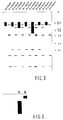
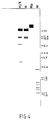
- FIG. 5 shows the results of preparative FIGE of DNA of transgenic mice, which DNA is cut with Xba I.
- FIG. 2 shows that, in case of head-to-tail integration in two or more copies, after cutting of total genomic mouse DNA there must be formed a Bam HI fragment of 12.6 kb containing one intact cos site. Besides, 5 other Bam HI fragments are formed. Cutting with Eco RI gives three fragments, one of which represents the lacZ.
- the procedure is based on mixing the lambda vectors (in our case the total genomic mouse DNA with the lambda vectors therein) with the packaging extract which provides for packaging each vector into a phage coat. After mixing with a large excess of bacteria (the host) these are grown on a nutrient medium. The bacteria which are first allowed the time to grow are all slowly but surely infected by the phages. This becomes visible through a large number of clear areas in the closed bacterial lawn. Each clear area (which is very small at the beginning but constantly increases until the whole bacterial lawn has turned clear) corresponds to one lambda vector. Because our vector contains the bacterial gene lacZ, the clear areas must be blue.
- FIGE Field Inversion Gel Electrophoresis
- Organ ENU dose (mg/kg) number of phages analyzed number of mutants mutation frequency brain 0 138,816 0 nd brain1 0 81,792 0 nd brain2 100 92,608 0 nd brain2 100 80,960 0 nd brain 10 198,208 3 1.5 x 10 ⁇ 5 brain 100 167,296 5 3.0 x 10 ⁇ 5 brain 100 204,032 7 3,4 x 10 ⁇ 5 brain 250 197,312 13 6.7 x 10 ⁇ 5 brain 250 67,832 5 7.4 x 10 ⁇ 5 liver 0 168,160 0 nd liver1 0 148,464 1 0,7 x 10 ⁇ 5 liver2 100 151,232 0 nd liver2 100 146,336 1 0.7 x 10 ⁇ 5 liver 10 121,632 0 nd liver 100 141,088 5 3,5 x 10 ⁇ 5 liver 100 95,808 3 3,1 x 10 ⁇ 5 liver 250 137,760 3 2.1 x 10 ⁇ 5 liver 250
Landscapes
- Life Sciences & Earth Sciences (AREA)
- Chemical & Material Sciences (AREA)
- Health & Medical Sciences (AREA)
- Genetics & Genomics (AREA)
- Engineering & Computer Science (AREA)
- Organic Chemistry (AREA)
- Wood Science & Technology (AREA)
- Zoology (AREA)
- Biotechnology (AREA)
- General Engineering & Computer Science (AREA)
- Bioinformatics & Cheminformatics (AREA)
- Biomedical Technology (AREA)
- General Health & Medical Sciences (AREA)
- Biophysics (AREA)
- Biochemistry (AREA)
- Molecular Biology (AREA)
- Physics & Mathematics (AREA)
- Microbiology (AREA)
- Proteomics, Peptides & Aminoacids (AREA)
- Plant Pathology (AREA)
- Immunology (AREA)
- Analytical Chemistry (AREA)
- Crystallography & Structural Chemistry (AREA)
- Virology (AREA)
- Micro-Organisms Or Cultivation Processes Thereof (AREA)
- Measuring Or Testing Involving Enzymes Or Micro-Organisms (AREA)
- Preparation Of Compounds By Using Micro-Organisms (AREA)
- Enzymes And Modification Thereof (AREA)
Priority Applications (1)
| Application Number | Priority Date | Filing Date | Title |
|---|---|---|---|
| EP95201753A EP0683238A3 (de) | 1988-07-19 | 1989-07-18 | Prozess zur Klonierung DNS |
Applications Claiming Priority (3)
| Application Number | Priority Date | Filing Date | Title |
|---|---|---|---|
| NL8801826 | 1988-07-19 | ||
| NL8801826A NL8801826A (nl) | 1988-07-19 | 1988-07-19 | Werkwijze voor het detecteren van mutaties in markergenen. |
| EP89201895A EP0353812B1 (de) | 1988-07-19 | 1989-07-18 | Verfahren für die Rettung von DNS und für den Nachweis von Mutationen in Markiergenen |
Related Parent Applications (2)
| Application Number | Title | Priority Date | Filing Date |
|---|---|---|---|
| EP89201895.3 Division | 1989-07-18 | ||
| EP89201895A Division EP0353812B1 (de) | 1988-07-19 | 1989-07-18 | Verfahren für die Rettung von DNS und für den Nachweis von Mutationen in Markiergenen |
Related Child Applications (2)
| Application Number | Title | Priority Date | Filing Date |
|---|---|---|---|
| EP95201753A Division EP0683238A3 (de) | 1988-07-19 | 1989-07-18 | Prozess zur Klonierung DNS |
| EP95201753.1 Division-Into | 1989-07-18 |
Publications (3)
| Publication Number | Publication Date |
|---|---|
| EP0548056A1 true EP0548056A1 (de) | 1993-06-23 |
| EP0548056B1 EP0548056B1 (de) | 1996-01-03 |
| EP0548056B2 EP0548056B2 (de) | 2001-04-04 |
Family
ID=19852648
Family Applications (3)
| Application Number | Title | Priority Date | Filing Date |
|---|---|---|---|
| EP89201895A Expired - Lifetime EP0353812B1 (de) | 1988-07-19 | 1989-07-18 | Verfahren für die Rettung von DNS und für den Nachweis von Mutationen in Markiergenen |
| EP95201753A Withdrawn EP0683238A3 (de) | 1988-07-19 | 1989-07-18 | Prozess zur Klonierung DNS |
| EP93200367A Expired - Lifetime EP0548056B2 (de) | 1988-07-19 | 1989-07-18 | Klonierung von methylierter DNS in einem bakteriellen Wirtsstamm der zur Wirtsrestriktion unfähig ist |
Family Applications Before (2)
| Application Number | Title | Priority Date | Filing Date |
|---|---|---|---|
| EP89201895A Expired - Lifetime EP0353812B1 (de) | 1988-07-19 | 1989-07-18 | Verfahren für die Rettung von DNS und für den Nachweis von Mutationen in Markiergenen |
| EP95201753A Withdrawn EP0683238A3 (de) | 1988-07-19 | 1989-07-18 | Prozess zur Klonierung DNS |
Country Status (8)
| Country | Link |
|---|---|
| US (1) | US5470706A (de) |
| EP (3) | EP0353812B1 (de) |
| JP (1) | JPH0829093B2 (de) |
| AT (2) | ATE100151T1 (de) |
| DE (2) | DE68912228T2 (de) |
| ES (2) | ES2081679T3 (de) |
| GR (1) | GR3018927T3 (de) |
| NL (1) | NL8801826A (de) |
Families Citing this family (8)
| Publication number | Priority date | Publication date | Assignee | Title |
|---|---|---|---|---|
| NL9100567A (nl) * | 1991-04-02 | 1992-11-02 | Ingeny Bv | Werkwijze voor het detecteren van mutaties, transgeen zoogdier, transgene zoogdiercel, en werkwijze voor het onderzoeken van stoffen of omstandigheden op mutagene eigenschappen. |
| CA2130081A1 (en) * | 1992-02-14 | 1993-08-19 | Jay M. Short | Mutagenesis testing using transgenic non-human animals carrying test dna sequences |
| AU4220093A (en) * | 1992-04-27 | 1993-11-29 | Indiana University Foundation | Live animal mutagenesis systems for testing mutagenic agents in vivo |
| DK0680517T4 (da) * | 1993-01-21 | 2005-05-02 | Harvard College | Fremgangsmåde og diagnostiske sæt til bestemmelse af en forbindelses toksicitet under anvendelse afstress-promotorer fra pattedyr |
| AU4216099A (en) | 1998-05-31 | 1999-12-20 | University Of Georgia Research Foundation, Inc., The | Bacteriophage-based transgenic fish for mutation detection |
| AU1323000A (en) | 1998-10-26 | 2000-05-15 | University Of Georgia Research Foundation, Inc., The | Transgenic fish carrying plasmid for mutation detection and methods |
| GB9924973D0 (en) * | 1999-10-21 | 1999-12-22 | Cobra Therapeutics Ltd | Preparation of cellular components that are substantially free of chromosomal DNA |
| PL373962A1 (en) * | 2001-05-21 | 2005-09-19 | Aclara Biosciences, Inc. | Methods and compositions for analyzing proteins |
Family Cites Families (2)
| Publication number | Priority date | Publication date | Assignee | Title |
|---|---|---|---|---|
| US4753874A (en) * | 1985-07-08 | 1988-06-28 | Board Of Trustees Of The Leland Stanford Junior University | Rapid mutation testing system for human cells |
| DE3854823T2 (de) * | 1987-05-01 | 1996-05-23 | Stratagene Inc | Mutagenesetest durch Verwendung von nicht menschlichen Lebewesen, die Test-DNS-Sequenzen enthalten |
-
1988
- 1988-07-19 NL NL8801826A patent/NL8801826A/nl not_active Application Discontinuation
-
1989
- 1989-07-18 ES ES93200367T patent/ES2081679T3/es not_active Expired - Lifetime
- 1989-07-18 AT AT89201895T patent/ATE100151T1/de not_active IP Right Cessation
- 1989-07-18 JP JP1187193A patent/JPH0829093B2/ja not_active Expired - Lifetime
- 1989-07-18 DE DE68912228T patent/DE68912228T2/de not_active Expired - Lifetime
- 1989-07-18 EP EP89201895A patent/EP0353812B1/de not_active Expired - Lifetime
- 1989-07-18 EP EP95201753A patent/EP0683238A3/de not_active Withdrawn
- 1989-07-18 DE DE68925369T patent/DE68925369T3/de not_active Expired - Lifetime
- 1989-07-18 EP EP93200367A patent/EP0548056B2/de not_active Expired - Lifetime
- 1989-07-18 ES ES89201895T patent/ES2061943T3/es not_active Expired - Lifetime
- 1989-07-18 AT AT93200367T patent/ATE132529T1/de not_active IP Right Cessation
-
1993
- 1993-01-29 US US08/013,198 patent/US5470706A/en not_active Expired - Lifetime
-
1996
- 1996-02-07 GR GR960400333T patent/GR3018927T3/el unknown
Non-Patent Citations (3)
| Title |
|---|
| NUCLEIC ACID RESEARCH vol. 16, no. 4, 11 October 1988, OXFORD UK page 9343 J.A. GOSSENS ET AL. 'E. coli C : a convenient host strain for rescue of highly methylated DNA:' * |
| NUCLEIC ACID RESEARCH vol. 16, no. 4, 25 February 1988, OXFORD UK pages 1563 - 1575 E.A. RALEIGH ET AL. 'McrA and McrB restriction phenotypes of some E. coli strains and implications for gene cloning.' * |
| PROCEEDINGS OF THE NATIONAL ACADEMY OF SCIENCES USA vol. 86, no. 20, 1 October 1989, WASHINGTON DC USA pages 7971 - 7975 J.A. GOSSENS ET AL. 'Efficient rescue of intregrated shuttle vectors from transgenic mice: a model for studying mutations in vivo.' * |
Also Published As
| Publication number | Publication date |
|---|---|
| EP0353812B1 (de) | 1994-01-12 |
| EP0548056B2 (de) | 2001-04-04 |
| DE68925369T3 (de) | 2001-08-09 |
| US5470706A (en) | 1995-11-28 |
| ATE100151T1 (de) | 1994-01-15 |
| DE68912228T2 (de) | 1994-08-04 |
| DE68912228D1 (de) | 1994-02-24 |
| GR3018927T3 (en) | 1996-05-31 |
| NL8801826A (nl) | 1990-02-16 |
| EP0353812A2 (de) | 1990-02-07 |
| DE68925369T2 (de) | 1996-05-15 |
| JPH02142471A (ja) | 1990-05-31 |
| EP0548056B1 (de) | 1996-01-03 |
| ES2081679T3 (es) | 1996-03-16 |
| ES2061943T3 (es) | 1994-12-16 |
| JPH0829093B2 (ja) | 1996-03-27 |
| EP0683238A3 (de) | 1995-12-20 |
| EP0353812A3 (en) | 1990-03-07 |
| EP0683238A2 (de) | 1995-11-22 |
| DE68925369D1 (de) | 1996-02-15 |
| ATE132529T1 (de) | 1996-01-15 |
Similar Documents
| Publication | Publication Date | Title |
|---|---|---|
| Boerrigter et al. | Plasmid-based transgenic mouse model for studying in vivo mutations. | |
| Ward et al. | The mitochondrial genome is large and variable in a family of plants (Cucurbitaceae) | |
| Weber et al. | Molecular cloning and biological characterization of a human gene, ERCC2, that corrects the nucleotide excision repair defect in CHO UV5 cells | |
| Kennison | The genetic and cytological organization of the Y chromosome of Drosophila melanogaster | |
| Sawyer et al. | Relative susceptibilities of mitochondrial and nuclear DNA to damage induced by hydrogen peroxide in two mouse germ cell lines | |
| Zhang et al. | The Drosophila salivary gland chromocenter contains highly polytenized subdomains of mitotic heterochromatin. | |
| Chapman et al. | Evidence for DNA modification in the maintenance of X-chromosome inactivation of adult mouse tissues. | |
| EP0548056B1 (de) | Klonierung von methylierter DNS in einem bakteriellen Wirtsstamm der zur Wirtsrestriktion unfähig ist | |
| Francis et al. | Genetic structure of a natural population of Dictyostelium discoideum, a cellular slime mould | |
| Weith et al. | Microclones from a mouse germ line HSR detect amplification and complex rearrangements of DNA sequences. | |
| Woudstra | Chromatin structure and cellular radiosensitivity: a comparison of two human tumour cell lines | |
| Kunkel et al. | Construction of a human X-chromosome-enriched phage library which facilitates analysis of specific loci | |
| Banga et al. | Cytogenetic characterization of the 4BC region on the X chromosome of Drosophila melanogaster: localization of the mei-9, norpA and omb genes | |
| Mori et al. | Genetic analysis of susceptibility to radiation-induced apoptosis of thymocytes in mice | |
| Jeggo et al. | Decreased stable transfection frequencies of six X-ray-sensitive CHO strains, all members of the xrs complementation group | |
| Verhaegh et al. | A gene that regulates DNA replication in response to DNA damage is located on human chromosome 4q | |
| Borodin et al. | Synapsis in single and double heterozygotes for partially overlapping inversions in chromosome 1 of the house mouse | |
| US5824287A (en) | Mutagenesis testing using transgenic non-human animals carrying test DNA sequences | |
| EP1409700A2 (de) | System zur erzeugung klonaler oder komplexer populationen rekombinanter adenoviren und deren anwendung | |
| Ferraro et al. | Cytogenetic characterization of the genome of mealybug Planococcus citri (Homoptera, Coccoidea) | |
| Dulhanty et al. | Complementation of the DNA-repair defect in a CHO mutant by human DNA that lacks highly abundant repetitive sequences | |
| Liebetrau et al. | Exploring the role of oxygen in Fanconi’s anemia | |
| Rubin | Effect of gamma rays on efficiency of gene transfer in DNA repair-proficient and-deficient cell lines | |
| Simon et al. | Newly acquired peri-telomeric heterochromatin in a transgenic mouse lineage | |
| Schoner | Escherichia coli K-12 F′ plasmids carrying insertion sequences IS1 and IS5 |
Legal Events
| Date | Code | Title | Description |
|---|---|---|---|
| PUAI | Public reference made under article 153(3) epc to a published international application that has entered the european phase |
Free format text: ORIGINAL CODE: 0009012 |
|
| AC | Divisional application: reference to earlier application |
Ref document number: 353812 Country of ref document: EP |
|
| AK | Designated contracting states |
Kind code of ref document: A1 Designated state(s): AT BE CH DE ES FR GB GR IT LI LU NL SE |
|
| 17P | Request for examination filed |
Effective date: 19930622 |
|
| 17Q | First examination report despatched |
Effective date: 19931028 |
|
| GRAA | (expected) grant |
Free format text: ORIGINAL CODE: 0009210 |
|
| AC | Divisional application: reference to earlier application |
Ref document number: 353812 Country of ref document: EP |
|
| AK | Designated contracting states |
Kind code of ref document: B1 Designated state(s): AT BE CH DE ES FR GB GR IT LI LU NL SE |
|
| PG25 | Lapsed in a contracting state [announced via postgrant information from national office to epo] |
Ref country code: GR Free format text: LAPSE BECAUSE OF FAILURE TO SUBMIT A TRANSLATION OF THE DESCRIPTION OR TO PAY THE FEE WITHIN THE PRESCRIBED TIME-LIMIT Effective date: 19960103 |
|
| REF | Corresponds to: |
Ref document number: 132529 Country of ref document: AT Date of ref document: 19960115 Kind code of ref document: T |
|
| XX | Miscellaneous (additional remarks) |
Free format text: TEILANMELDUNG 95201753.1 EINGEREICHT AM 18/07/89. |
|
| ITF | It: translation for a ep patent filed | ||
| REF | Corresponds to: |
Ref document number: 68925369 Country of ref document: DE Date of ref document: 19960215 |
|
| REG | Reference to a national code |
Ref country code: CH Ref legal event code: NV Representative=s name: ARNOLD & SIEDSMA AG |
|
| REG | Reference to a national code |
Ref country code: ES Ref legal event code: FG2A Ref document number: 2081679 Country of ref document: ES Kind code of ref document: T3 |
|
| REG | Reference to a national code |
Ref country code: GR Ref legal event code: FG4A Free format text: 3018927 |
|
| ET | Fr: translation filed | ||
| PG25 | Lapsed in a contracting state [announced via postgrant information from national office to epo] |
Ref country code: GB Effective date: 19960718 Ref country code: AT Effective date: 19960718 |
|
| PG25 | Lapsed in a contracting state [announced via postgrant information from national office to epo] |
Ref country code: SE Effective date: 19960719 |
|
| PG25 | Lapsed in a contracting state [announced via postgrant information from national office to epo] |
Ref country code: LU Free format text: LAPSE BECAUSE OF NON-PAYMENT OF DUE FEES Effective date: 19960731 Ref country code: LI Effective date: 19960731 Ref country code: CH Effective date: 19960731 Ref country code: BE Effective date: 19960731 |
|
| PLBI | Opposition filed |
Free format text: ORIGINAL CODE: 0009260 |
|
| 26 | Opposition filed |
Opponent name: BOEHRINGER MANNHEIM GMBH PATENTABTEILUNG Effective date: 19961002 |
|
| PLBF | Reply of patent proprietor to notice(s) of opposition |
Free format text: ORIGINAL CODE: EPIDOS OBSO |
|
| BERE | Be: lapsed |
Owner name: NEDERLANDSE ORGANISATIE VOOR TOEGEPAST-NATUURWETEN Effective date: 19960731 |
|
| PG25 | Lapsed in a contracting state [announced via postgrant information from national office to epo] |
Ref country code: NL Effective date: 19970201 |
|
| NLR1 | Nl: opposition has been filed with the epo |
Opponent name: BOEHRINGER MANNHEIM GMBH PATENTABTEILUNG |
|
| REG | Reference to a national code |
Ref country code: GR Ref legal event code: MM2A Free format text: 3018927 |
|
| GBPC | Gb: european patent ceased through non-payment of renewal fee |
Effective date: 19960718 |
|
| REG | Reference to a national code |
Ref country code: CH Ref legal event code: PL |
|
| PG25 | Lapsed in a contracting state [announced via postgrant information from national office to epo] |
Ref country code: FR Effective date: 19970328 |
|
| NLV4 | Nl: lapsed or anulled due to non-payment of the annual fee |
Effective date: 19970201 |
|
| EUG | Se: european patent has lapsed |
Ref document number: 93200367.6 |
|
| PLBF | Reply of patent proprietor to notice(s) of opposition |
Free format text: ORIGINAL CODE: EPIDOS OBSO |
|
| REG | Reference to a national code |
Ref country code: FR Ref legal event code: ST |
|
| PLBF | Reply of patent proprietor to notice(s) of opposition |
Free format text: ORIGINAL CODE: EPIDOS OBSO |
|
| PLBF | Reply of patent proprietor to notice(s) of opposition |
Free format text: ORIGINAL CODE: EPIDOS OBSO |
|
| PLAB | Opposition data, opponent's data or that of the opponent's representative modified |
Free format text: ORIGINAL CODE: 0009299OPPO |
|
| R26 | Opposition filed (corrected) |
Opponent name: ROCHE DIAGNOSTICS GMBH Effective date: 19961002 |
|
| PG25 | Lapsed in a contracting state [announced via postgrant information from national office to epo] |
Ref country code: ES Free format text: LAPSE BECAUSE OF EXPIRATION OF PROTECTION Effective date: 19990701 |
|
| REG | Reference to a national code |
Ref country code: ES Ref legal event code: FD2A Effective date: 19990601 |
|
| PLAW | Interlocutory decision in opposition |
Free format text: ORIGINAL CODE: EPIDOS IDOP |
|
| PLAW | Interlocutory decision in opposition |
Free format text: ORIGINAL CODE: EPIDOS IDOP |
|
| PUAH | Patent maintained in amended form |
Free format text: ORIGINAL CODE: 0009272 |
|
| STAA | Information on the status of an ep patent application or granted ep patent |
Free format text: STATUS: PATENT MAINTAINED AS AMENDED |
|
| 27A | Patent maintained in amended form |
Effective date: 20010404 |
|
| AK | Designated contracting states |
Kind code of ref document: B2 Designated state(s): AT BE CH DE ES FR GB GR IT LI LU NL SE |
|
| XX | Miscellaneous (additional remarks) |
Free format text: TEILANMELDUNG 95201753.1 EINGEREICHT AM 18/07/89. |
|
| EN | Fr: translation not filed | ||
| PG25 | Lapsed in a contracting state [announced via postgrant information from national office to epo] |
Ref country code: IT Free format text: LAPSE BECAUSE OF NON-PAYMENT OF DUE FEES;WARNING: LAPSES OF ITALIAN PATENTS WITH EFFECTIVE DATE BEFORE 2007 MAY HAVE OCCURRED AT ANY TIME BEFORE 2007. THE CORRECT EFFECTIVE DATE MAY BE DIFFERENT FROM THE ONE RECORDED. Effective date: 20050718 |
|
| PGFP | Annual fee paid to national office [announced via postgrant information from national office to epo] |
Ref country code: DE Payment date: 20080731 Year of fee payment: 20 |
|
| PG25 | Lapsed in a contracting state [announced via postgrant information from national office to epo] |
Ref country code: ES Free format text: LAPSE BECAUSE OF EXPIRATION OF PROTECTION Effective date: 19960731 |