EP0558663B1 - Arzneimittelfreisetzungssystem aus porphyrinzusammensetzungen und verfahren zu deren verwendung - Google Patents
Arzneimittelfreisetzungssystem aus porphyrinzusammensetzungen und verfahren zu deren verwendung Download PDFInfo
- Publication number
- EP0558663B1 EP0558663B1 EP92901966A EP92901966A EP0558663B1 EP 0558663 B1 EP0558663 B1 EP 0558663B1 EP 92901966 A EP92901966 A EP 92901966A EP 92901966 A EP92901966 A EP 92901966A EP 0558663 B1 EP0558663 B1 EP 0558663B1
- Authority
- EP
- European Patent Office
- Prior art keywords
- carborane
- compound
- boron
- closo
- tumor
- Prior art date
- Legal status (The legal status is an assumption and is not a legal conclusion. Google has not performed a legal analysis and makes no representation as to the accuracy of the status listed.)
- Expired - Lifetime
Links
Classifications
-
- A—HUMAN NECESSITIES
- A61—MEDICAL OR VETERINARY SCIENCE; HYGIENE
- A61K—PREPARATIONS FOR MEDICAL, DENTAL OR TOILETRY PURPOSES
- A61K51/00—Preparations containing radioactive substances for use in therapy or testing in vivo
- A61K51/02—Preparations containing radioactive substances for use in therapy or testing in vivo characterised by the carrier, i.e. characterised by the agent or material covalently linked or complexing the radioactive nucleus
- A61K51/04—Organic compounds
- A61K51/0474—Organic compounds complexes or complex-forming compounds, i.e. wherein a radioactive metal (e.g. 111In3+) is complexed or chelated by, e.g. a N2S2, N3S, NS3, N4 chelating group
- A61K51/0485—Porphyrins, texaphyrins wherein the nitrogen atoms forming the central ring system complex the radioactive metal
-
- A—HUMAN NECESSITIES
- A61—MEDICAL OR VETERINARY SCIENCE; HYGIENE
- A61K—PREPARATIONS FOR MEDICAL, DENTAL OR TOILETRY PURPOSES
- A61K41/00—Medicinal preparations obtained by treating materials with wave energy or particle radiation ; Therapies using these preparations
- A61K41/0057—Photodynamic therapy with a photosensitizer, i.e. agent able to produce reactive oxygen species upon exposure to light or radiation, e.g. UV or visible light; photocleavage of nucleic acids with an agent
- A61K41/0071—PDT with porphyrins having exactly 20 ring atoms, i.e. based on the non-expanded tetrapyrrolic ring system, e.g. bacteriochlorin, chlorin-e6, or phthalocyanines
-
- A—HUMAN NECESSITIES
- A61—MEDICAL OR VETERINARY SCIENCE; HYGIENE
- A61K—PREPARATIONS FOR MEDICAL, DENTAL OR TOILETRY PURPOSES
- A61K41/00—Medicinal preparations obtained by treating materials with wave energy or particle radiation ; Therapies using these preparations
- A61K41/009—Neutron capture therapy, e.g. using uranium or non-boron material
- A61K41/0095—Boron neutron capture therapy, i.e. BNCT, e.g. using boronated porphyrins
-
- A—HUMAN NECESSITIES
- A61—MEDICAL OR VETERINARY SCIENCE; HYGIENE
- A61K—PREPARATIONS FOR MEDICAL, DENTAL OR TOILETRY PURPOSES
- A61K47/00—Medicinal preparations characterised by the non-active ingredients used, e.g. carriers or inert additives; Targeting or modifying agents chemically bound to the active ingredient
- A61K47/50—Medicinal preparations characterised by the non-active ingredients used, e.g. carriers or inert additives; Targeting or modifying agents chemically bound to the active ingredient the non-active ingredient being chemically bound to the active ingredient, e.g. polymer-drug conjugates
- A61K47/51—Medicinal preparations characterised by the non-active ingredients used, e.g. carriers or inert additives; Targeting or modifying agents chemically bound to the active ingredient the non-active ingredient being chemically bound to the active ingredient, e.g. polymer-drug conjugates the non-active ingredient being a modifying agent
- A61K47/54—Medicinal preparations characterised by the non-active ingredients used, e.g. carriers or inert additives; Targeting or modifying agents chemically bound to the active ingredient the non-active ingredient being chemically bound to the active ingredient, e.g. polymer-drug conjugates the non-active ingredient being a modifying agent the modifying agent being an organic compound
- A61K47/545—Heterocyclic compounds
- A61K47/546—Porphyrines; Porphyrine with an expanded ring system, e.g. texaphyrine
-
- A—HUMAN NECESSITIES
- A61—MEDICAL OR VETERINARY SCIENCE; HYGIENE
- A61K—PREPARATIONS FOR MEDICAL, DENTAL OR TOILETRY PURPOSES
- A61K9/00—Medicinal preparations characterised by special physical form
- A61K9/10—Dispersions; Emulsions
- A61K9/127—Synthetic bilayered vehicles, e.g. liposomes or liposomes with cholesterol as the only non-phosphatidyl surfactant
- A61K9/1275—Lipoproteins or protein-free species thereof, e.g. chylomicrons; Artificial high-density lipoproteins [HDL], low-density lipoproteins [LDL] or very-low-density lipoproteins [VLDL]; Precursors thereof
-
- A—HUMAN NECESSITIES
- A61—MEDICAL OR VETERINARY SCIENCE; HYGIENE
- A61P—SPECIFIC THERAPEUTIC ACTIVITY OF CHEMICAL COMPOUNDS OR MEDICINAL PREPARATIONS
- A61P35/00—Antineoplastic agents
-
- C—CHEMISTRY; METALLURGY
- C07—ORGANIC CHEMISTRY
- C07F—ACYCLIC, CARBOCYCLIC OR HETEROCYCLIC COMPOUNDS CONTAINING ELEMENTS OTHER THAN CARBON, HYDROGEN, HALOGEN, OXYGEN, NITROGEN, SULFUR, SELENIUM OR TELLURIUM
- C07F5/00—Compounds containing elements of Groups 3 or 13 of the Periodic Table
- C07F5/02—Boron compounds
- C07F5/027—Organoboranes and organoborohydrides
-
- C—CHEMISTRY; METALLURGY
- C07—ORGANIC CHEMISTRY
- C07F—ACYCLIC, CARBOCYCLIC OR HETEROCYCLIC COMPOUNDS CONTAINING ELEMENTS OTHER THAN CARBON, HYDROGEN, HALOGEN, OXYGEN, NITROGEN, SULFUR, SELENIUM OR TELLURIUM
- C07F5/00—Compounds containing elements of Groups 3 or 13 of the Periodic Table
- C07F5/02—Boron compounds
- C07F5/05—Cyclic compounds having at least one ring containing boron but no carbon in the ring
-
- A—HUMAN NECESSITIES
- A61—MEDICAL OR VETERINARY SCIENCE; HYGIENE
- A61K—PREPARATIONS FOR MEDICAL, DENTAL OR TOILETRY PURPOSES
- A61K2121/00—Preparations for use in therapy
-
- Y—GENERAL TAGGING OF NEW TECHNOLOGICAL DEVELOPMENTS; GENERAL TAGGING OF CROSS-SECTIONAL TECHNOLOGIES SPANNING OVER SEVERAL SECTIONS OF THE IPC; TECHNICAL SUBJECTS COVERED BY FORMER USPC CROSS-REFERENCE ART COLLECTIONS [XRACs] AND DIGESTS
- Y02—TECHNOLOGIES OR APPLICATIONS FOR MITIGATION OR ADAPTATION AGAINST CLIMATE CHANGE
- Y02A—TECHNOLOGIES FOR ADAPTATION TO CLIMATE CHANGE
- Y02A50/00—TECHNOLOGIES FOR ADAPTATION TO CLIMATE CHANGE in human health protection, e.g. against extreme weather
- Y02A50/30—Against vector-borne diseases, e.g. mosquito-borne, fly-borne, tick-borne or waterborne diseases whose impact is exacerbated by climate change
Definitions
- the present invention generally relates to porphyrins and more particularly to porphyrins with glycol derivative substituents at pyrrole ring positions 2 and 4 where the substituents preferably have biological activity or are a fissionable or neutron-activatable nuclide, which compositions are useful in boron neutron capture therapy, photodynamic therapy, and other biomedical applications.
- thermal neutrons themselves are of subionizing energy and no significant effect from thermal neutron irradiation in human tissue has been noted in the literature.
- boron neutron capture theory BNCT
- BNCT boron neutron capture theory
- a significant concentration of 10 B in the neoplasm historically estimated to be 10-20 ⁇ g of 10 B per gram tissue (but potentially as low as about 1 ⁇ g)
- a ratio of tumor localized 10 B to plasma 10 B sufficient to avoid adverse effects on normal tissue in the immediate vicinity of the tumor, especially the vascular endothelium.
- BSH is currently being considered for clinical trials in the United States and Europe despite the fact that it does not show particularly strong preference for tumor cells of any type and almost certainly does not remain within or enter tumor cells for any significant time.
- Very recently another Japanese group led by dermatologist Dr. Yutaka Mishima, has announced the successful treatment of eight cases of human malignant melanoma using p-boronophenylalanine (BPA) as the boron carrier. Mishima, et al., Lancet 2:388 (1989).
- This compound is tumor cell-targeted by virtue of the excessive uptake of aromatic amino acids by melanotic melanoma cells where it is believed to serve as a false precursor for melanin biosynthesis, though the available evidence suggests it is not a tyrosinase substrate.
- BPA appears to be taken up in therapeutic amounts by the KHJJ murine mammary carcinoma, the GS-9L rat glioma, and the human U-87 MG glioma xenograft in nude mice.
- This compound delivers only a single boron atom per unit carrier, must be given in massive doses, and crosses the blood-brain barrier to a significant extent making it inappropriate for BNCT of glioma.
- the resultant open-cage compounds are still not sufficiently water-soluble to enable administration without the use of adjuvant substances (e.g., polyethylene glycol).
- adjuvant substances e.g., polyethylene glycol.
- the compounds which Miura et al. describe are (at most) 19% boron by weight in the physiologically useful (K + -salt) form. This is a disadvantage since limiting human doses may well be determined by the amount of porphyrin unit doses which may be tolerated.
- porphyrins in cancer therapies are those therapeutic strategies generally referred to as photodynamic therapy (PDT).
- PDT photodynamic therapy
- porphyrins of many structural types localize in a wide variety of malignant tumors, this localization has formed the basis for treatment of at least 3000 patients in the United States alone (twice that worldwide) over the past several years through PDT.
- Complete response (disappearance of tumor or biopsy proven) has occurred in a high percentage of patients in relatively advanced stages of skin, bladder, and lung cancers, and cancers of the reproductive system through photodynamic therapy.
- Hematoporphyrin derivative (HPD) and Photofrin II composition are complex mixtures of porphyrins. Aggregated hematoporphyrin dimer and trimers bound together with ester linkages appear to be the most likely structures o the tumor-localizing fractions of HPD when isolated by LH-20 gel filtration using organic solvents. Other evidence suggests that an ether linked oligomer fraction contributes significantly to the localizing fraction. Whatever the covalent linkage, these polymers have a very strong tendency to aggregate in aqueous media through non-covalent forces. This form is neither fluorescent nor an efficient singlet oxygen generator.
- PC phthalocyanines
- chlorins chlorins
- purpurins The phthalocyanines
- PC's containing a fissionable or neutron-activatable nuclide were even proposed for treatment of brain tumors 25 years ago.
- Both in vivo and in vitro studies with sulfonated PC's indicate that tumor cell localization and photoinduced tumoricidal activity for several water-soluble PC's are similar to HPD. Particularly noteworthy is the lack of toxicity of various PC's in various species.
- Other compounds which have recently received attention as photosensitizers are chlorins and purpurins, and benzoporphyrins (BPD).
- a compound having the structure where R is R 1 is -H or R 3 is a carborane, and R 2 is -H, an alkyl having 1 to about 7 carbon atoms, phenyl or benzyle, or a physiologically acceptable salt.
- R 3 is a closo-carborane, such as 1,2-icosahedral closo-carborane and 1,7-icosahedral closo-carborane (substituted or unsubstituted).
- the particularly preferred embodiments can be administered in pharmaceutically acceptable, water-based solutions for biomedical applications such as boron neutron capture therapy (where R 2 is a physiologically acceptable salt, such as potassium) or can be conjugated with lipoprotein (preferable when R 2 is an alkyl or an aryl) and administered to a patient in photodynamic therapy.
- boron neutron capture therapy where R 2 is a physiologically acceptable salt, such as potassium
- lipoprotein preferable when R 2 is an alkyl or an aryl
- compounds such as illustrated above, or wherein R 3 includes other moieties are prepared by contacting a porphine precursor compound with substituents on at least two of the pyrrol rings thereof at porphyrine ring positions 2,4,6 and 7, the substituents including a glycol with two hydroxyl groups, with an acid chloride having the structure in the presence of a reaction rate enhancing amount of p-dimethylamino pyridine, to acylate at least one hydroxyl group of each glycol substituent and to form a porphine reaction product having a plurality of R 3 groups covalently bonded to a respective two pyrrole rings thereof.
- DMAP hypo-acylation
- the invention relates to cellular drug delivery compositions and methods where the "delivery agent" can be viewed as built from a porphine precursor, whose basic structure is illustrated as Formula P:
- Porphine is the parent (or core) substance of the porphyrins, which have side chains and methyl groups substituted for some hydrogens in the porphine pyrrole rings.
- Compounds of the invention have substituents on at least two of the pyrrole rings of porphine at pyrrole ring positions 2 and 4. These substituents at pyrrole ring positions 2 and 4 are derivatives of glycol. These derivatives are preferably wherein at least one hydroxyl group of each substituent is derivatized to include a moiety with biological activity (such as anti-neoplastic or tumor-uptake properties) or with a nuclide that is fissionable or neutron-activatable.
- Preferred embodiments of the invention have the structure illustrated by Formula 1. where R and/or R' is derived from an acid chloride having the structure and R 3 preferably is a moiety with biological activity or with a fissionable or neutron-activatable nuclide. Particularly preferred embodiments of this invention are where R 3 is a carborane, and most preferred are closo-carboranes in a 10 boron enriched form.
- Carboranes Compounds with boron cage systems in which one or more carbon atom is present as an integral part of an electron-delocalized boron framework are given the general name "carboranes", which term includes both closed polyhedra and open-cage structures. Carboranes are distinct from other organoboron species, such as the alkyl boranes, because the carbon(s) are part of the cage itself rather than present as a ligand. An early monograph on these electron-deficient boron cage compounds is by Grimes, Carboranes, Academic Press (1970), which describes nomenclature, structure, synthesis, and properties of carboranes, including those of interest for this invention.
- R 3 is a closo-carborane, and most particularly is the 1,2-icosahedral isomer or 1,7-icosahedral isomer, whether substituted or unsubstituted.
- An illustrative substituent is, for example, a carboxyl group, which may be desirable to aid in solubilizing the porphyrin compound, or assisting in increasing tumor uptake.
- the physical properties of the 1,2-icosahedral isomer and the 1,7-icosahedral isomer are similar, but preparation of the 1,7-icosahedral isomer in the preferred 10 boron enriched form has been found to involve some additional steps.
- the closo-carboranes are particularly preferred because the open-cage carboranes lead to significantly increased toxicity of what can otherwise be substantially non-toxic compounds. Closed-cage and open-cage systems are typically designated by the prefixes "closo-" and "nido-”, respectively.
- R 1 is hydrogen or another moiety
- R 2 is hydrogen, an alkyl (having 1 to about 7 carbon atoms) phenyl or benzyl, or a physiologically acceptable salt, such as calcium or potassium.
- the particularly preferred embodiment is especially useful for applications where a stable, quite water-soluble, substantially non-toxic compound with a large number of boron atoms (40) is desired.
- boron atoms in the 10 boron form serve as nuclides that emit alpha particles when bombarded with thermal or epithermal neutrons (for boron neutron capture therapy).
- the BOPP embodiment is very water soluble and can be readily prepared in concentrations of at least about 10 mg/mL, yet the compound retains a high degree of lipophilicity.
- BOPP tetra-carborane carboxylate ester of 2,4-Di( ⁇ , ⁇ -dihydroxyethyl)deuteroporphyrin (IX).
- the preferred embodiment of BOPP for use in BNCT utilizes 10 B-enriched carborane. As this material is presently unavailable from commercial sources, it must be made from 10 B-enriched B 10 H 14 . For the preparation of small quantities, such as used in our preliminary studies, the method of Todd is suitable and is incorporated by reference. Kutal, et al., Inorganic Syntheses, 11:19-23 (1968).
- This method involves the conversion of 10 B 10 H 14 to 1,2-bis-acetoxymethyl carborane by reaction with 2-butyne-1,4-diol diacetate followed by conversion to the 1,2-bis-(hydroxymethyl) carborane and in situ oxidation of the diol to the product 1,2-dicarbaclosododecaborane with KMnO 4 .
- synthesis of larger quantities of the compound by the method of Fein et al., Inorganic Chemistry, 2:115 (1963) is to be preferred, incorporated by reference.
- this method involves reaction of B 10 H 14 with acetylene in benzene or toluene in the presence of a Lewis base such as acetonitrile or diethyl sulfide.
- a Lewis base such as acetonitrile or diethyl sulfide.
- the preferred embodiment for PDT and other uses utilizes natural abundance B 10 C 2 H 12 which is commercially available.
- the particularly preferred BOPP embodiment in addition to utility in a method of treating a patient with a malignant tumor through BNCT (by administering to the patient a tumor-concentrating dose and then activating the inventive embodiment with neutrons to cause alpha particle emission) is also useful in PPT when sufficient photons (such as from a source that emits red light, to convert ground state molecular oxygen to singlet oxygen) irradiate the patient's tumor.
- biomedical applications for compounds in accordance with the invention include diagnostic or therapeutic use for atherosclerosis. This is because the boron embodiments of the invention, particularly BOPP when conjugated with or encapsulated by lipoprotein such as an LDL-cholesterol fraction, have been found to localize in plaques of atherosclerosis patients. Once taken up by the plaques, methods such as laser angioplasty can be used to localize and diagnose the plaque areas through use of appropriate wavelengths of light.
- Conjugates of inventive embodiments with lipoprotein can be simply prepared.
- the second method is simpler, but results in fewer molecules of the sensitizer per LDL particle.
- Human plasma is incubated at 37°C with an aqueous solution of BOPP (in the potassium salt form; 4 ⁇ M) for 30 minutes.
- BOPP in the potassium salt form; 4 ⁇ M
- the plasma lipoprotein fractions are then separated by density gradient ultracentrifugation. Approximately 25% of the administered porphyrin is found bound to the LDL fraction, 20% to the VLDL, and 55% to the HDL fraction.
- the desired isotope may be administered so as to accumulate in the tumor in amounts potentially as low as about 1 ⁇ g of 10 B isotope per gram tissue (equivalent to 1 ppm).
- compounds of the invention are generally administered by injecting patients with a dose of about 100 mg/kg body wt. of the compound in a pharmaceutically acceptable medium prior to subjecting the patient to the neutron beam.
- the amount of compound in accordance with the invention that one desires to accumulate in the tumor will depend upon the amount of boron-10 present in the compound (with compounds enriched tp abpit 95% over the naturally occurring about 20% of 10 boron being preferred) and with the neutron beam power used. While i.v. administration is preferred, i.p. administration can be used and it is believed that the BOPP dimethyl ester embodiment is suitable for oral administration.
- Examples 1-4A describe the preparation of the particularly preferred embodiment of the invention in the 1,2-isomeric form that we have designated as "BOPP".
- the reaction scheme is diagrammatically represented in Example 5 along with mass spectrometric and spectroscopic structural evidence.
- Example 4B illustrates the preparation and structure of the 1,7-isomer of BOPP, and also illustrates a variety of other compounds (through R 3 variations) that have been made by following the principles of preparation as with BOPP and by using the core porphyrin precursor structure.
- Examples 6-9 describe various in vivo experiments by several means of administration. These experiments demonstrate that a significant therapeutic effect was obtained through practice of the invention. While the efficacy is illustrated in these examples with the KHJJ mammary tumor line, which has a demonstrated radio-resistance, we believe that the particularly preferred "BOPP" embodiment will behave in a similar manner with a wide variety of human carcinomas including, but not limited to, brain, mammary, lung, liver, pancreatic, colonic, bladder, prostate, cervix, and ovary.
- Example 10 illustrates by in vitro data the encapsulation of BOPP by lipoprotein including LDL and the use of the conjugate in two different cell lines and demonstrates that excellent tumor uptake was easily achieved.
- Dried protoporphyrin dimethyl ester (4.4 g) was dissolved in 1.6 L of dioxane and 3.0 mL of pyridine in the dark. This solution was thoroughly bubbled with argon to remove oxygen. Osmium tetroxide (4.0 g) was dissolved in 200 ml argon-degassed diethyl ether and added to the dioxane-porphyrin solution. The solution was well stirred under Ar in the dark for 24 hours. Sodium sulfite (8.8 g) was dissolved in 160 mL distilled, argon-degassed water and added to the solution. The reaction was heated to 75°C on a steam bath for 6 hours.
- the reaction solution was cooled to 53-55°C and filtered quickly through 1.5 L medium fritted funnel and washed with a small portion of dioxane. Filtrate was evaporated in vacuo and then 200 mL and 750 mL of water was added with stirring to crystallize the product. The crystals were filtered through 1.5 L medium fritted funnel and washed with 100 mL water. The filtered solid was suspended in 200 mL, 15% methanol/methylene chloride and 450 mL hexane added with stirring to complete crystallization. The procedure was repeated to remove impurities if necessary.
- Carborane carboxylic acid was synthesized from 1,2-B 10 C 2 H 12 by the method of Zakharkin et al., Akad. Nauk SSSR, Ser. Khim., p. 1376 (1967) and Zakharkin et al., Tet. Lett., p. 1147 (1964), incorporated by reference. Briefly, this method involves treatment of the o-carborane with one equivalent of n-butyl-lithium in benzene to produce the mono-lithio compound. This species is reacted with CO 2 to give the lithium salt of the carboxylate which gives the free carboxylic acid on acidifcation. Conversion to the acid chloride is also by the method of Zakharkin et al. using PCl 5 in toluene. Vacuum distillation of the reaction mixture gives the carborane carbonyl chloride.
- the bis-glycol porphyrin prepared as described by Example 1 (500 mg, 0.75 mmol) was dissolved in dry methylene chloride (200 mL), and the solution bubbled with argon. To the above solution o-carboranyl acid chloride (690 mg, 3.341 mmol) was added. The solution was stirred, and 4-dimethyl aminopyridine (DMAP) 371 mg, 3 mmol) was added to the solution. The solution was stirred at room temperature for one hour and poured into water. The organic layer was separated, washed with dilute hydrochloric acid three times, saturated sodium bicarbonate (3x), water (2x), and dried over sodium sulfate.
- DMAP 4-dimethyl aminopyridine
- the conversion of bis-glycol to tetra-ester critically depends upon the use of p-dimethylaminopyridine (DMAP) as a hyper-acylation reagent and upon its stoichiometric relationship with bis-glycol and acid chloride.
- DMAP p-dimethylaminopyridine
- the rate of formation of tetra-ester product in the absence of nitrogen base is extremely slow, if it occurs at all.
- pyridine or trimethylamine two other frequently used acylation agents
- these other acylation agents such as TEA
- the 1,7 closo- and other R 3 moieties carborane isomer of BOPP was prepared in the same manner using 1,7-carborane carbonyl chloride, but with the following difference.
- Thermal isomerization of the 1,2-carborane to the 1,7-carborane occurs at 450-500°C.
- the H ⁇ assigned to 7.68 ppm is strongly deshielded by virtue of its being bound to a carbon bearing two strongly deshielding groups: the porphyrin (ring current) and carboranyl acyl ( ⁇ effects).
- the two H ⁇ resonances have significant (0.7 ppm) chemical shift differences which might arise if the most stable configuration forces one of the H ⁇ protons into a position over the porphyrin ring when it is subject to ring current deshielding relative to the other.
- a stereotactically implanted murine brain tumor administration of 100 mg/kg (mpk) of BOPP by a single intravenous injection resulted in tumor porphyrin levels of approximately 200 ⁇ g/g at 24 hours post-injection. This converts to a tumor boron content in the 60 ⁇ g/g range, roughly 6 times that needed for boron neutron capture therapy (BNCT).
- Tumor-to-normal brain ratio at this time is ⁇ 240:1 and rises to -400:1 at 48 hours post-injection.
- Concurrent tumor-to-blood ratios are ⁇ 7:1 (24 hours) and -11:1 (48 hours).
- tumor/normal brain ratios exceeding 150:1 were found for doses for 50, 100, and 150 mpk.
- BOPP does not pass through the normal blood brain barrier and is thus an exceedingly tumor selective drug.
- No gross toxicity has been found with BOPP when given by single i.v. injection at doses up to 200 mpk.
- maximal tumor uptake occurs at approximately 24-36 hours post-administration.
- Maximal tumor-to-normal tissue and tumor-to-blood ratios occur at approximately 48 hours; however, therapeutic levels of BOPP persist in tumor for a week or more and are largely cleared from normal tissue and blood. BOPP does produce some skin photosensitivity.
- BOPP is efficacious in BNCT in vivo against the KHJJ mammary carcinoma.
- BOPP was given at a dose of 150 mg/kg either i.v. or i.p.
- Two modes of therapy were evaluated; therapy was delivered in a single acute dose and also in 3 fractions.
- Two experiments in each mode were carried out. Each experiment consisted of ⁇ 10 animals. Evaluation of biological efficacy was based on determination of growth delay relative to unirradiated, undrugged controls. In order to avoid variations induced by differences in tumor volume at the start of therapy, tumor growth delay was determined by the time necessary to obtain a tumor volume 8 times that at the start of irradiation. Drug alone produced no growth delay.
- BNCT neutron capture therapy
- mice bore a KHJJ mammary carcinoma on the flank. BOPP was given by i.p. injection over a 5-day period in 5 equal doses to give the total dose indicated. Each point represents 3 mice except as noted; standard deviations are ⁇ 20%. Especially noteworthy are the 120 hour (5-day) clearance points indicating the exceptional persistence of tumor boron levels. Lower liver and blood boron levels are possible using i.v. administration. Essentially no brain boron is found; the 6 and 24 hour points are likely from blood in brain capillaries. From data studying the tumor/blood boron ratio for intraperitoneal injections at 105 and 135 mpk, substantial blood clearance and even higher tumor/blood ratios should be possible at longer clearance times, e.g. 7-14 days.
- the concentration was reduced to 0.5 mg BOPP/mL, and infused at the rate of 2 mL per day for 3 days. Irradiations were carried out 3 to 5 days post injection to allow clearance from normal tissues. All the experiments were carried out under conditions which minimized ambient light in order to avoid possible effects of photosensitization.
- TCD 53.5 ⁇ 5 Gy.
- the tumor growth after a single acute exposure (6.1 MW minutes) was studied in mice after i.p. administration of BOPP (and also in undrugged controls).
- Table 3 summarizes the data.
- the growth delay ratio or GDR is the ratio of time to reach 10 V o for treated animals, relative to the same parameter for the irradiated control. Therefore, the GDR was determined for each animal, relative to an unirradiated control with an identical initial value V o , as determined with Equation 1.
- the use of the collimator reduced the thermal neutron fluence at the shielded parts of the mouse by three orders of magnitude. Only minor reductions were achieved in the other dose components; the fast neutron dose at 4 cm from the center of the treatment field was reduced by 20%, and no change was measured in the photon dose rate.
- the biologically effective wholebody dose is estimated to be -45 rads x RBE/MW-min (mouse midpoint)
- GDR ⁇ 0.996 exp (0.127 MW min + 0.012 C) where C is the 10 B concentration.
- the correlation coefficient r 0.982. Therefore, GDR was found to increase exponentially with dose to the tumor, and the influence of 10 ⁇ g 10 B/gbm administered to the animal was similar in effect to an increase in irradiation by about 1 MW-min.
- BOPP was incubated (4 ⁇ m) with fresh human plasma for 30 minutes at 37°C.
- the plasma lipoprotein fractions were then isolated by density gradient preparative ultracentrifugation and examined for porphyrin content by UV-vis spectrometry. Approximately 55 ⁇ 10% of the administered porphyrin bound to the HDL protein fraction, 25% to LDL and the remaining 20% to VLDL. These three fractions contained 90 ⁇ 10% of the total porphyrin.
Landscapes
- Health & Medical Sciences (AREA)
- Chemical & Material Sciences (AREA)
- Life Sciences & Earth Sciences (AREA)
- Animal Behavior & Ethology (AREA)
- Veterinary Medicine (AREA)
- Public Health (AREA)
- Medicinal Chemistry (AREA)
- General Health & Medical Sciences (AREA)
- Pharmacology & Pharmacy (AREA)
- Organic Chemistry (AREA)
- Epidemiology (AREA)
- Molecular Biology (AREA)
- Engineering & Computer Science (AREA)
- Proteomics, Peptides & Aminoacids (AREA)
- Physics & Mathematics (AREA)
- Optics & Photonics (AREA)
- Bioinformatics & Cheminformatics (AREA)
- Biochemistry (AREA)
- Dispersion Chemistry (AREA)
- Chemical Kinetics & Catalysis (AREA)
- General Chemical & Material Sciences (AREA)
- Nuclear Medicine, Radiotherapy & Molecular Imaging (AREA)
- Pharmaceuticals Containing Other Organic And Inorganic Compounds (AREA)
- Medicines That Contain Protein Lipid Enzymes And Other Medicines (AREA)
- Position Input By Displaying (AREA)
- Controls And Circuits For Display Device (AREA)
Claims (26)
- Verbindung mit der Struktur
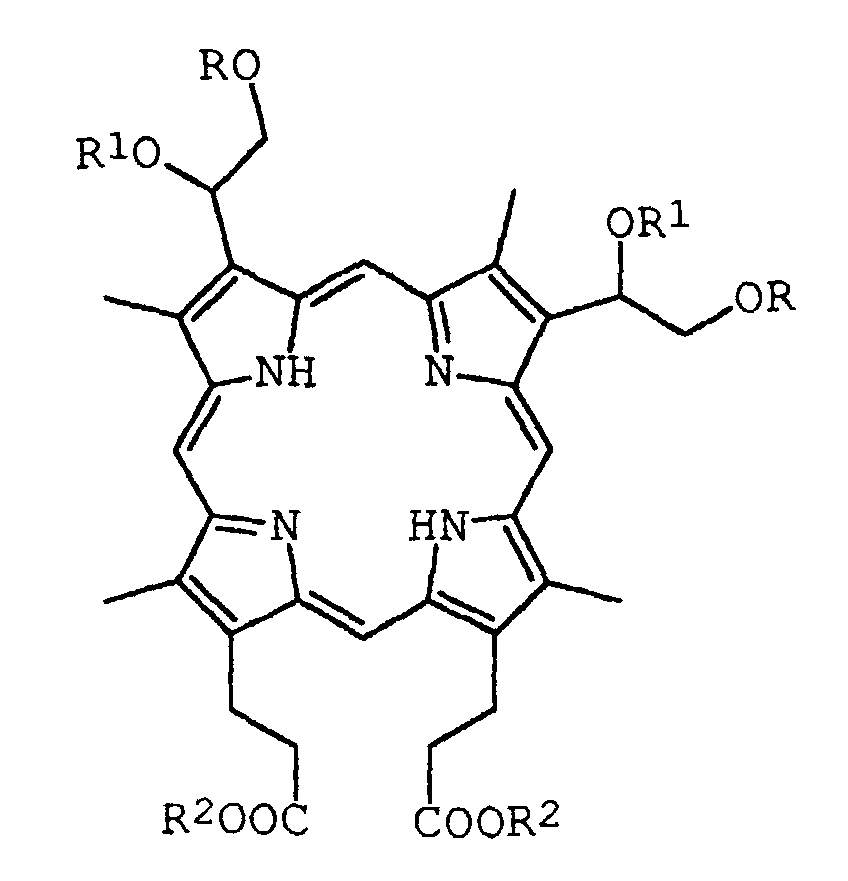


- Verbindung nach Anspruch 1, wobei R3 ein Closo-Carboran ist.
- Verbindung nach Anspruch 1, wobei R1

- Verbindung nach einem der Ansprüche 2 oder 3, wobei das Carboran ein substituiertes oder unsubstituiertes 1,2-icosahedrales Isomer ist.
- Verbindung nach einem der Ansprüche 2 oder 3, wobei das Carboran ein substituiertes oder unsubstituiertes 1,7-icosahedrales Isomer ist.
- Verbindung nach Anspruch 4, wobei R2 Kalium oder Natrium ist.
- Verbindung mit der Struktur
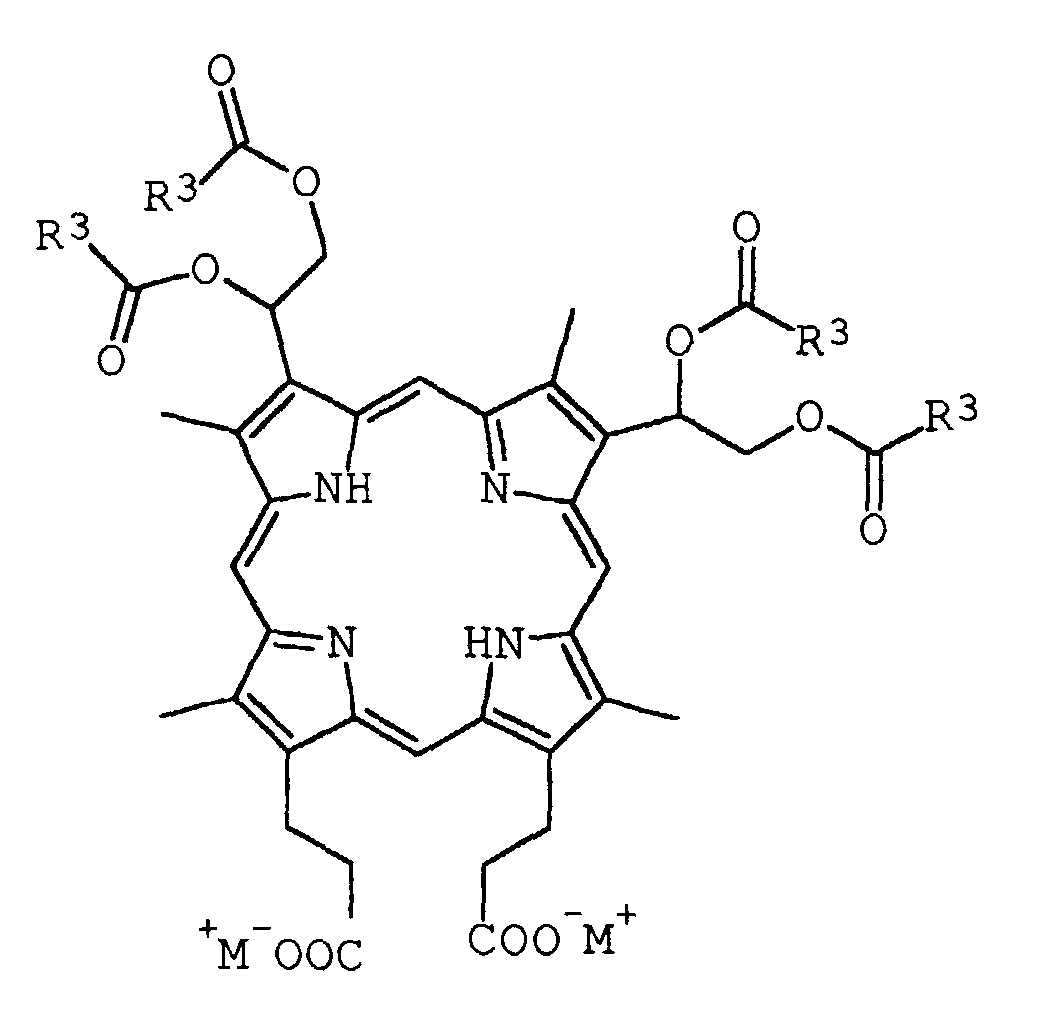
- Verbindung nach Anspruch 7, wobei der Closo-Carboran-Substituent einen Carbonyl-Kohlenstoff einschließt.
- Verbindung nach Anspruch 8, wobei der Closo-Carboran-Substituent eine Carboxylgruppe ist.
- Zusammensetzung, welche zur Abgabe von Boratomen an Zellen nützlich ist, umfassend:eine im wesentlichen nicht toxische Porphyrin-Verbindung mit der Struktur
 mindestens ein Lipoprotein, mit welchem die Porphyrin-Verbindung komplexiert ist.
 - Zusammensetzung nach Anspruch 10, wobei R3 ein substituiertes oder unsubstituiertes 1,2-icosahedrales Isomer oder ein mit 10Bor angereichertes 1,7-icosahedrales Isomer ist.
- Zusammensetzung nach Anspruch 10, wobei das Porphyrin im wesentlichen vom Lipoprotein umhüllt ist.
- Zusammensetzung nach Anspruch 12, wobei mindestens ein Lipoprotein LDL einschließt.
- Zusammensetzung nach Anspruch 10, wobei R3 ein substituiertes oder unsubstituiertes 1,2-icosahedrales Isomer oder 1,7-icosahedrales Isomer und R2 Methyl ist.
- Verfahren zur Herstellung einer zellulären Arzneimittelabgabe-Zusammensetzung, umfassenddie Bereitstellung einer Porphin-Vorstufenverbindung mit Substituenten an mindestens zwei ihrer Pyrrolringe an den Porphyrin-Ringpositionen 2, 4, 6 und 7, wobei die Substituenten ein Glykol mit zwei Hydroxylgruppen einschließen; unddas Zusammenbringen der Vorstufenverbindung mit mindestens zwei Äquivalenten eines Säurechlorids mit der Strukturwobei das Zusammenbringen in Gegenwart einer die Reaktionsgeschwindigkeit steigernden Menge an p-Dimethylaminopyridin durchgeführt wird, um mindestens eine Hydroxylgruppe jedes Bisglykol-Substituenten zu acylieren und ein Porphin-Reaktionsprodukt mit mindestens zwei R3-Gruppen, welche kovalent an entsprechend zwei Pyrrolringe davon gebunden sind, zu bilden.

- Verfahren nach Anspruch 15, wobei R3 eine Einheit mit biologischer Aktivität oder mit einem spaltbaren oder durch Neutronen aktivierbaren Nuklid ist.
- Verfahren nach Anspruch 15, wobei R3 ein Closo-Carboran ist.
- Verfahren nach Anspruch 15, wobei die Porphin-Vorstufenverbindung Substituenten an den Positionen 2, 4, 6 und 7 hat, wobei die Bisglykol-Substituenten sich an den Pyrrol-Ring-positionen 2 und 4 befinden und die Substituenten an den Positionen 6 und 7 die Struktur -C2H4-COOR2 haben und R2 ein Alkyl mit 1 bis etwa 7 Kohlenstoffatomen, Phenyl oder Benzyl ist.
- Verfahren nach Anspruch 18, wobei die geschwindigkeitssteigernde Menge an p-Dimethylaminopyridin weniger als etwa ein 1:1-Äquivalentverhältnis von p-Dimethylaminopyridin zum Säurechlorid ist.
- Verfahren nach Anspruch 19, wobei das p-Dimethylaminopyridin in einem Äquivalentverhältnis bezüglich des Säurechlorids zwischen etwa 0,5:1 und etwa 0,8:1 vorliegt.
- Verfahren nach Anspruch 15, wobei die Vorstufenverbindung die Struktur hat und mit mindestens etwa vier Äquivalenten des Säurechlorids in Berührung gebracht wird und der Hauptteil des gebildeten Porphin-Reaktionsprodukts die Struktur

- Verfahren nach Anspruch 21, wobei das Säurechlorid in einer Menge von etwa 4,5 Äquivalenten und das p-Dimethylaminopyridin in einer Menge von etwa 2 bis etwa 4 Äquivalenten vorliegt.
- Verfahren nach Anspruch 15, wobei R3 antineoplastische Aktivität hat oder mit 10Bor angereichert ist.
- Verwendung einer im allgemeinen nicht toxischen Tetracarboran-Verbindung mit der Struktur

- Verwendung nach Anspruch 24, wobei das Medikament in einer sich in einem Tumor konzentrierenden Dosis vorhanden ist, welche zur Anhäufung von mindestens etwa 3 ppm 10Bor im Tumor ausreichend ist.
- Verwendung eines Tetracarborancarboxylatesters von 2,4-DI (α,β-dihydroxyethyl) deuteroporphyrin (IX) zur Herstellung eines Mittels als Medikament gegen bösartige Tumore.
Applications Claiming Priority (3)
| Application Number | Priority Date | Filing Date | Title |
|---|---|---|---|
| US07/616,679 US5149801A (en) | 1990-11-21 | 1990-11-21 | Boronated porphyrin compounds |
| PCT/US1991/008627 WO1992009610A1 (en) | 1990-11-21 | 1991-11-19 | Drug delivery porphyrin compositions and methods |
| US616679 | 1996-03-15 |
Publications (3)
| Publication Number | Publication Date |
|---|---|
| EP0558663A1 EP0558663A1 (de) | 1993-09-08 |
| EP0558663A4 EP0558663A4 (en) | 1993-10-27 |
| EP0558663B1 true EP0558663B1 (de) | 1997-08-13 |
Family
ID=24470531
Family Applications (1)
| Application Number | Title | Priority Date | Filing Date |
|---|---|---|---|
| EP92901966A Expired - Lifetime EP0558663B1 (de) | 1990-11-21 | 1991-11-19 | Arzneimittelfreisetzungssystem aus porphyrinzusammensetzungen und verfahren zu deren verwendung |
Country Status (15)
| Country | Link |
|---|---|
| US (2) | US5149801A (de) |
| EP (1) | EP0558663B1 (de) |
| JP (1) | JPH06502647A (de) |
| AT (1) | ATE156826T1 (de) |
| AU (1) | AU656351B2 (de) |
| CA (1) | CA2096841C (de) |
| DE (1) | DE69127290T2 (de) |
| DK (1) | DK0558663T3 (de) |
| ES (1) | ES2112312T3 (de) |
| GR (1) | GR3025292T3 (de) |
| IE (1) | IE63077B1 (de) |
| IL (1) | IL100113A (de) |
| NO (1) | NO303389B1 (de) |
| WO (1) | WO1992009610A1 (de) |
| ZA (1) | ZA919221B (de) |
Families Citing this family (48)
| Publication number | Priority date | Publication date | Assignee | Title |
|---|---|---|---|---|
| US5654423A (en) * | 1990-11-21 | 1997-08-05 | Regents Of The University Of California | Boronated metalloporphyrine and therapeutic methods |
| GB9106678D0 (en) * | 1991-03-28 | 1991-05-15 | Ferguson Mark W J | Wound healing |
| US6362175B1 (en) * | 1991-09-20 | 2002-03-26 | The Trustees Of The University Of Pennsylvania | Porphyrin compounds for imaging tissue oxygen |
| US5371199B1 (en) * | 1992-08-14 | 1995-12-26 | Univ Pennsylvania | Substituted porphyrins porphyrin-containing polymers and synthetic methods therefor |
| US5493017A (en) * | 1992-08-14 | 1996-02-20 | The Trustees Of The University Of Pennsylvania | Ring-metalated porphyrins |
| US5817830A (en) * | 1992-08-14 | 1998-10-06 | Trustees Of The University Of Pennsylvania | Pyrrolic compounds |
| US5599924A (en) * | 1992-08-14 | 1997-02-04 | Trustees Of The University Of Pennsylvania | Electron-deficient porphyrins and processes and intermediates for preparing same |
| EP0658109B1 (de) * | 1992-09-03 | 2001-05-30 | The Regents Of The University Of California | Metallporphyrinzusammensetzungen |
| US5648532A (en) * | 1993-06-03 | 1997-07-15 | The Regents Of The University Of California | Compositions for boron neutron capture therapy and methods thereof |
| US5492900A (en) * | 1993-09-10 | 1996-02-20 | Neutron Technology Corporation | Method for enhancing the solubility of the boron delivery drug, boronophenylalanine (BPA) |
| US5935944A (en) * | 1993-09-10 | 1999-08-10 | Neutron Technology Corporation | Formulation for I.V. administration of the boron delivery drug, boronophenylalanine (BPA) |
| WO1995009856A1 (en) * | 1993-10-01 | 1995-04-13 | The Regents Of The University Of California | Boronated metalloporphyrins and therapeutic methods |
| US5630786A (en) * | 1994-06-27 | 1997-05-20 | Ionix Corporation | Boron neutron capture enhancement of fast neutron therapy |
| US5877165A (en) * | 1995-11-02 | 1999-03-02 | Brookhaven Science Associates | Boronated porhyrins and methods for their use |
| US5739313A (en) | 1995-11-13 | 1998-04-14 | Regents Of The University Of Minnesota | Radionuclide labeling of vitamin B12 and coenzymes thereof |
| US5955586A (en) * | 1996-03-22 | 1999-09-21 | Sessler; Jonathan L. | Highly boronated derivatives of texaphyrins |
| DE19627164C2 (de) * | 1996-07-05 | 1998-09-24 | Deutsches Krebsforsch | Herstellung polyether-aufweisender Chlorine und Bakteriochlorine, solche Verbindungen und ihre Verwendung |
| US7390668B2 (en) * | 1996-10-30 | 2008-06-24 | Provectus Pharmatech, Inc. | Intracorporeal medicaments for photodynamic treatment of disease |
| US6331286B1 (en) | 1998-12-21 | 2001-12-18 | Photogen, Inc. | Methods for high energy phototherapeutics |
| US6493570B1 (en) | 1998-11-02 | 2002-12-10 | Photogen, Inc. | Method for improved imaging and photodynamic therapy |
| US6128525A (en) * | 1997-07-29 | 2000-10-03 | Zeng; Haishan | Apparatus and method to monitor photodynamic therapy (PDT) |
| US8974363B2 (en) * | 1997-12-11 | 2015-03-10 | Provectus Pharmatech, Inc. | Topical medicaments and methods for photodynamic treatment of disease |
| US8557298B2 (en) * | 1998-08-06 | 2013-10-15 | Provectus Pharmatech, Inc. | Medicaments for chemotherapeutic treatment of disease |
| US20090117199A1 (en) * | 1998-08-06 | 2009-05-07 | Scott Timothy C | Method of treatment of cancer |
| US6986740B2 (en) * | 1998-11-02 | 2006-01-17 | Xantech Pharmaceuticals, Inc. | Ultrasound contrast using halogenated xanthenes |
| US20020001567A1 (en) * | 1998-12-21 | 2002-01-03 | Photogen, Inc. | Intracorporeal medicaments for high energy phototherapeutic treatment of disease |
| US8470296B2 (en) * | 1998-12-21 | 2013-06-25 | Provectus Pharmatech, Inc. | Intracorporeal medicaments for high energy phototherapeutic treatment of disease |
| US7384623B1 (en) | 1998-12-21 | 2008-06-10 | Provectus Pharmatech, Inc. | High energy phototherapeutic agents |
| US6433162B1 (en) | 1999-03-05 | 2002-08-13 | Emory University | Method for synthesizing porphyrin compounds |
| US6806363B1 (en) | 1999-04-16 | 2004-10-19 | Mayo Foundation For Medical Education & Research | Cobalamin conjugates useful as antitumor agents |
| MXPA01010395A (es) * | 1999-04-16 | 2004-08-12 | Mayo Of Foundation For Medical | Conjugados de cobalamina que son utiles como agentes antitumor. |
| US6395555B1 (en) | 1999-10-14 | 2002-05-28 | David F. Wilson | Method and apparatus for determining the effect of a drug on cells |
| JP2003531105A (ja) | 1999-10-15 | 2003-10-21 | メイオウ・フアウンデーシヨン・フオー・メデイカル・エジユケイシヨン・アンド・リサーチ | 造影剤および治療薬として有用なコバラミン結合体 |
| US7591995B2 (en) | 1999-10-15 | 2009-09-22 | Mayo Foundation For Medical Education And Research | Cobalamin conjugates useful as imaging and therapeutic agents |
| US6514523B1 (en) | 2000-02-14 | 2003-02-04 | Ottawa Heart Institute Research Corporation | Carrier particles for drug delivery and process for preparation |
| CA2427146A1 (en) | 2000-10-25 | 2002-07-18 | Mayo Foundation For Medical Education And Research | Transcobalamin binding conjugates useful for treating abnormal cellular proliferation |
| EP1404319B1 (de) * | 2001-06-06 | 2006-03-22 | Brookhaven Science Associates | Neue metalloporphyrine und ihre verwendung als radiosensibilisatoren für die strahlentherapie |
| US7267990B2 (en) * | 2002-11-15 | 2007-09-11 | Board Of Supervisors Of Louisiana State University And Agricultural And Mechanical College | Chelation of charged and uncharged molecules with porphyrin-based compounds |
| MXPA05005545A (es) * | 2002-11-25 | 2005-10-18 | Attenuon Llc | Peptidos que se dirigen a celulas tomurales y endoteliales, composiciones y usos de los mismos. |
| US20070149496A1 (en) * | 2003-10-31 | 2007-06-28 | Jack Tuszynski | Water-soluble compound |
| US20050249667A1 (en) * | 2004-03-24 | 2005-11-10 | Tuszynski Jack A | Process for treating a biological organism |
| US6989443B2 (en) * | 2004-06-28 | 2006-01-24 | Brookhaven Science Associates, Llc | Carboranylporphyrins and uses thereof |
| US6995260B2 (en) * | 2004-05-20 | 2006-02-07 | Brookhaven Science Associates, Llc | Carboranylporphyrins and uses thereof |
| US8287839B2 (en) | 2006-12-04 | 2012-10-16 | Brookhaven Science Associates, Llc | Carboranylporphyrins and uses thereof |
| US8444953B2 (en) * | 2007-03-22 | 2013-05-21 | Brookhaven Science Associates, Llc | Symmetric and asymmetric halogen-containing metallocarboranylporphyrins and uses thereof |
| US20080279781A1 (en) * | 2007-05-10 | 2008-11-13 | Brookhaven Science Associates, Llc | Glycosylated Carboranylporphyrins and Uses Thereof |
| US20160346219A1 (en) | 2015-06-01 | 2016-12-01 | Autotelic Llc | Phospholipid-coated therapeutic agent nanoparticles and related methods |
| WO2018083723A1 (ja) * | 2016-11-01 | 2018-05-11 | 富士通株式会社 | 電子装置、電子装置の製造方法及び電子機器 |
Family Cites Families (9)
| Publication number | Priority date | Publication date | Assignee | Title |
|---|---|---|---|---|
| US4220722A (en) * | 1978-02-10 | 1980-09-02 | Syva Company | Method for conjugating to polyamino compounds employing haloacyl groups and compositions prepared thereby |
| US4193983A (en) * | 1978-05-16 | 1980-03-18 | Syva Company | Labeled liposome particle compositions and immunoassays therewith |
| US4516535A (en) * | 1982-06-22 | 1985-05-14 | Nuclear Medicine, Inc. | Methods for neutron-capture tumor therapy |
| JPS6079423A (ja) * | 1983-10-07 | 1985-05-07 | Oki Electric Ind Co Ltd | ボインテイングデバイス |
| KR910009202B1 (ko) * | 1985-10-23 | 1991-11-04 | 니혼메디피직스 가부시끼가이샤 | 포르피린 유도체의 제조방법 |
| CA1315780C (en) * | 1986-01-17 | 1993-04-06 | Yozo Fukuda | Porphyrin derivatives |
| US4963655A (en) * | 1988-05-27 | 1990-10-16 | Mayo Foundation For Medical Education And Research | Boron analogs of amino acid/peptide protease inhibitors |
| US5015478A (en) * | 1988-08-15 | 1991-05-14 | Cytopharm, Inc. | Porphycene anti-cancer agents and treatment methods |
| US4959356A (en) * | 1989-05-26 | 1990-09-25 | The United States Of America As Represented By The United States Department Of Energy | Porphyrins for boron neutron capture therapy |
-
1990
- 1990-11-21 US US07/616,679 patent/US5149801A/en not_active Expired - Lifetime
-
1991
- 1991-11-19 DE DE69127290T patent/DE69127290T2/de not_active Expired - Fee Related
- 1991-11-19 ES ES92901966T patent/ES2112312T3/es not_active Expired - Lifetime
- 1991-11-19 CA CA002096841A patent/CA2096841C/en not_active Expired - Fee Related
- 1991-11-19 EP EP92901966A patent/EP0558663B1/de not_active Expired - Lifetime
- 1991-11-19 JP JP4501089A patent/JPH06502647A/ja not_active Withdrawn
- 1991-11-19 DK DK92901966.9T patent/DK0558663T3/da active
- 1991-11-19 AT AT92901966T patent/ATE156826T1/de not_active IP Right Cessation
- 1991-11-19 WO PCT/US1991/008627 patent/WO1992009610A1/en not_active Ceased
- 1991-11-19 AU AU90767/91A patent/AU656351B2/en not_active Ceased
- 1991-11-21 IL IL10011391A patent/IL100113A/en not_active IP Right Cessation
- 1991-11-21 IE IE405491A patent/IE63077B1/en not_active IP Right Cessation
- 1991-11-21 ZA ZA919221A patent/ZA919221B/xx unknown
-
1992
- 1992-04-16 US US07/869,611 patent/US5284831A/en not_active Expired - Lifetime
-
1993
- 1993-05-19 NO NO931843A patent/NO303389B1/no not_active IP Right Cessation
-
1997
- 1997-11-05 GR GR970402935T patent/GR3025292T3/el unknown
Non-Patent Citations (1)
| Title |
|---|
| vol. 87, no. 18, September 1990, pages 7265 - 7269 KAHL, S.B. ET AL. 'UPTAKE OF A NIDO-CARBORANYLPORPHYRIN BY HUMAN GLIOMA XENOGRAFTS IN ATHYMIC NUDE MICE AND BY SYNGENEIC OVARIAN CARCINOMAS IN IMMUNOCOMPETENT MICE' * |
Also Published As
| Publication number | Publication date |
|---|---|
| ES2112312T3 (es) | 1998-04-01 |
| EP0558663A4 (en) | 1993-10-27 |
| GR3025292T3 (en) | 1998-02-27 |
| ZA919221B (en) | 1992-08-26 |
| US5149801A (en) | 1992-09-22 |
| US5284831A (en) | 1994-02-08 |
| DK0558663T3 (da) | 1997-10-20 |
| IE63077B1 (en) | 1995-03-22 |
| IL100113A0 (en) | 1992-08-18 |
| HK1005291A1 (en) | 1998-12-31 |
| CA2096841A1 (en) | 1992-05-22 |
| CA2096841C (en) | 2002-09-03 |
| NO303389B1 (no) | 1998-07-06 |
| NO931843D0 (no) | 1993-05-19 |
| AU9076791A (en) | 1992-06-25 |
| NO931843L (no) | 1993-07-12 |
| JPH06502647A (ja) | 1994-03-24 |
| AU656351B2 (en) | 1995-02-02 |
| IL100113A (en) | 1996-07-23 |
| IE914054A1 (en) | 1992-06-03 |
| EP0558663A1 (de) | 1993-09-08 |
| ATE156826T1 (de) | 1997-08-15 |
| DE69127290T2 (de) | 1998-02-19 |
| WO1992009610A1 (en) | 1992-06-11 |
| DE69127290D1 (de) | 1997-09-18 |
Similar Documents
| Publication | Publication Date | Title |
|---|---|---|
| EP0558663B1 (de) | Arzneimittelfreisetzungssystem aus porphyrinzusammensetzungen und verfahren zu deren verwendung | |
| US5457183A (en) | Hydroxylated texaphyrins | |
| US5599923A (en) | Texaphyrin metal complexes having improved functionalization | |
| Bregadze et al. | Polyhedral boron derivatives of porphyrins and phthalocyanines | |
| Kessel | Photosensitization with derivatives of haematoporphyrin | |
| EP2099304B1 (de) | Carboranylporphyrine und ihre verwendungen | |
| KR100358273B1 (ko) | 광감작제 | |
| Evstigneeva et al. | Carboranylporphyrins for boron neutron capture therapy of cancer | |
| WO2008069974A1 (en) | Radiation enhancement agents for x-ray radiation therapy and boron neutron-capture therapy | |
| US6995260B2 (en) | Carboranylporphyrins and uses thereof | |
| US20080279781A1 (en) | Glycosylated Carboranylporphyrins and Uses Thereof | |
| US6989443B2 (en) | Carboranylporphyrins and uses thereof | |
| HK1005291B (en) | Drug delivery porphyrin compositions and methods | |
| US8444953B2 (en) | Symmetric and asymmetric halogen-containing metallocarboranylporphyrins and uses thereof | |
| RU2551539C2 (ru) | Способ получения борированных порфиринов | |
| Wu et al. | Carboranylporphyrins and uses thereof | |
| Miura et al. | Porphyrins for boron neutron capture therapy | |
| HK1133552B (en) | Carboranylporphyrins and uses thereof | |
| Miura et al. | Efficacy of Boron Neutron-Capture Therapy Using a Carborane-Containing Tetraphenylporphyrin in Mice Bearing EMT-6 Tumors |
Legal Events
| Date | Code | Title | Description |
|---|---|---|---|
| PUAI | Public reference made under article 153(3) epc to a published international application that has entered the european phase |
Free format text: ORIGINAL CODE: 0009012 |
|
| 17P | Request for examination filed |
Effective date: 19930518 |
|
| AK | Designated contracting states |
Kind code of ref document: A1 Designated state(s): AT BE CH DE DK ES FR GB GR IT LI LU NL SE |
|
| A4 | Supplementary search report drawn up and despatched |
Effective date: 19930907 |
|
| AK | Designated contracting states |
Kind code of ref document: A4 Designated state(s): AT BE CH DE DK ES FR GB GR IT LI LU NL SE |
|
| 17Q | First examination report despatched |
Effective date: 19960201 |
|
| GRAG | Despatch of communication of intention to grant |
Free format text: ORIGINAL CODE: EPIDOS AGRA |
|
| GRAH | Despatch of communication of intention to grant a patent |
Free format text: ORIGINAL CODE: EPIDOS IGRA |
|
| GRAH | Despatch of communication of intention to grant a patent |
Free format text: ORIGINAL CODE: EPIDOS IGRA |
|
| GRAA | (expected) grant |
Free format text: ORIGINAL CODE: 0009210 |
|
| AK | Designated contracting states |
Kind code of ref document: B1 Designated state(s): AT BE CH DE DK ES FR GB GR IT LI LU NL SE |
|
| REF | Corresponds to: |
Ref document number: 156826 Country of ref document: AT Date of ref document: 19970815 Kind code of ref document: T |
|
| REG | Reference to a national code |
Ref country code: CH Ref legal event code: EP |
|
| REF | Corresponds to: |
Ref document number: 69127290 Country of ref document: DE Date of ref document: 19970918 |
|
| ITF | It: translation for a ep patent filed | ||
| ET | Fr: translation filed | ||
| REG | Reference to a national code |
Ref country code: DK Ref legal event code: T3 |
|
| REG | Reference to a national code |
Ref country code: CH Ref legal event code: NV Representative=s name: A. BRAUN, BRAUN, HERITIER, ESCHMANN AG PATENTANWAE |
|
| REG | Reference to a national code |
Ref country code: GR Ref legal event code: FG4A Free format text: 3025292 |
|
| REG | Reference to a national code |
Ref country code: ES Ref legal event code: FG2A Ref document number: 2112312 Country of ref document: ES Kind code of ref document: T3 |
|
| PLBE | No opposition filed within time limit |
Free format text: ORIGINAL CODE: 0009261 |
|
| STAA | Information on the status of an ep patent application or granted ep patent |
Free format text: STATUS: NO OPPOSITION FILED WITHIN TIME LIMIT |
|
| 26N | No opposition filed | ||
| PGFP | Annual fee paid to national office [announced via postgrant information from national office to epo] |
Ref country code: LU Payment date: 19981201 Year of fee payment: 8 |
|
| PG25 | Lapsed in a contracting state [announced via postgrant information from national office to epo] |
Ref country code: LU Free format text: LAPSE BECAUSE OF NON-PAYMENT OF DUE FEES Effective date: 19991119 |
|
| PGFP | Annual fee paid to national office [announced via postgrant information from national office to epo] |
Ref country code: NL Payment date: 20001103 Year of fee payment: 10 Ref country code: CH Payment date: 20001103 Year of fee payment: 10 Ref country code: AT Payment date: 20001103 Year of fee payment: 10 |
|
| PGFP | Annual fee paid to national office [announced via postgrant information from national office to epo] |
Ref country code: SE Payment date: 20001106 Year of fee payment: 10 |
|
| PGFP | Annual fee paid to national office [announced via postgrant information from national office to epo] |
Ref country code: GR Payment date: 20001122 Year of fee payment: 10 |
|
| PGFP | Annual fee paid to national office [announced via postgrant information from national office to epo] |
Ref country code: BE Payment date: 20001127 Year of fee payment: 10 |
|
| PGFP | Annual fee paid to national office [announced via postgrant information from national office to epo] |
Ref country code: DK Payment date: 20011102 Year of fee payment: 11 |
|
| PG25 | Lapsed in a contracting state [announced via postgrant information from national office to epo] |
Ref country code: AT Free format text: LAPSE BECAUSE OF NON-PAYMENT OF DUE FEES Effective date: 20011119 |
|
| PG25 | Lapsed in a contracting state [announced via postgrant information from national office to epo] |
Ref country code: SE Free format text: LAPSE BECAUSE OF NON-PAYMENT OF DUE FEES Effective date: 20011120 |
|
| PG25 | Lapsed in a contracting state [announced via postgrant information from national office to epo] |
Ref country code: LI Free format text: LAPSE BECAUSE OF NON-PAYMENT OF DUE FEES Effective date: 20011130 Ref country code: GR Free format text: LAPSE BECAUSE OF NON-PAYMENT OF DUE FEES Effective date: 20011130 Ref country code: CH Free format text: LAPSE BECAUSE OF NON-PAYMENT OF DUE FEES Effective date: 20011130 Ref country code: BE Free format text: LAPSE BECAUSE OF NON-PAYMENT OF DUE FEES Effective date: 20011130 |
|
| REG | Reference to a national code |
Ref country code: GB Ref legal event code: IF02 |
|
| BERE | Be: lapsed |
Owner name: THE REGENTS OF THE UNIVERSITY OF CALIFORNIA Effective date: 20011130 |
|
| PG25 | Lapsed in a contracting state [announced via postgrant information from national office to epo] |
Ref country code: NL Free format text: LAPSE BECAUSE OF NON-PAYMENT OF DUE FEES Effective date: 20020601 |
|
| EUG | Se: european patent has lapsed |
Ref document number: 92901966.9 |
|
| REG | Reference to a national code |
Ref country code: CH Ref legal event code: PL |
|
| NLV4 | Nl: lapsed or anulled due to non-payment of the annual fee |
Effective date: 20020601 |
|
| PGFP | Annual fee paid to national office [announced via postgrant information from national office to epo] |
Ref country code: FR Payment date: 20021030 Year of fee payment: 12 |
|
| PGFP | Annual fee paid to national office [announced via postgrant information from national office to epo] |
Ref country code: GB Payment date: 20021114 Year of fee payment: 12 |
|
| PGFP | Annual fee paid to national office [announced via postgrant information from national office to epo] |
Ref country code: DE Payment date: 20021202 Year of fee payment: 12 |
|
| PGFP | Annual fee paid to national office [announced via postgrant information from national office to epo] |
Ref country code: ES Payment date: 20021204 Year of fee payment: 12 |
|
| PG25 | Lapsed in a contracting state [announced via postgrant information from national office to epo] |
Ref country code: DK Free format text: LAPSE BECAUSE OF NON-PAYMENT OF DUE FEES Effective date: 20021231 |
|
| PG25 | Lapsed in a contracting state [announced via postgrant information from national office to epo] |
Ref country code: GB Free format text: LAPSE BECAUSE OF NON-PAYMENT OF DUE FEES Effective date: 20031119 |
|
| PG25 | Lapsed in a contracting state [announced via postgrant information from national office to epo] |
Ref country code: ES Free format text: LAPSE BECAUSE OF NON-PAYMENT OF DUE FEES Effective date: 20031120 |
|
| REG | Reference to a national code |
Ref country code: DK Ref legal event code: EBP |
|
| PG25 | Lapsed in a contracting state [announced via postgrant information from national office to epo] |
Ref country code: DE Free format text: LAPSE BECAUSE OF NON-PAYMENT OF DUE FEES Effective date: 20040602 |
|
| GBPC | Gb: european patent ceased through non-payment of renewal fee |
Effective date: 20031119 |
|
| PG25 | Lapsed in a contracting state [announced via postgrant information from national office to epo] |
Ref country code: FR Free format text: LAPSE BECAUSE OF NON-PAYMENT OF DUE FEES Effective date: 20040730 |
|
| REG | Reference to a national code |
Ref country code: FR Ref legal event code: ST |
|
| REG | Reference to a national code |
Ref country code: ES Ref legal event code: FD2A Effective date: 20031120 |
|
| PG25 | Lapsed in a contracting state [announced via postgrant information from national office to epo] |
Ref country code: IT Free format text: LAPSE BECAUSE OF NON-PAYMENT OF DUE FEES Effective date: 20051119 |