EP0569806B1 - Composés ADN et vecteurs d'expression contenant ADN recombinant codant pour l'activité de riboflavine synthétase - Google Patents
Composés ADN et vecteurs d'expression contenant ADN recombinant codant pour l'activité de riboflavine synthétase Download PDFInfo
- Publication number
- EP0569806B1 EP0569806B1 EP93107120A EP93107120A EP0569806B1 EP 0569806 B1 EP0569806 B1 EP 0569806B1 EP 93107120 A EP93107120 A EP 93107120A EP 93107120 A EP93107120 A EP 93107120A EP 0569806 B1 EP0569806 B1 EP 0569806B1
- Authority
- EP
- European Patent Office
- Prior art keywords
- riboflavin
- dna
- cerevisiae
- gene
- rib5
- Prior art date
- Legal status (The legal status is an assumption and is not a legal conclusion. Google has not performed a legal analysis and makes no representation as to the accuracy of the status listed.)
- Revoked
Links
Images




Classifications
-
- C—CHEMISTRY; METALLURGY
- C12—BIOCHEMISTRY; BEER; SPIRITS; WINE; VINEGAR; MICROBIOLOGY; ENZYMOLOGY; MUTATION OR GENETIC ENGINEERING
- C12N—MICROORGANISMS OR ENZYMES; COMPOSITIONS THEREOF; PROPAGATING, PRESERVING, OR MAINTAINING MICROORGANISMS; MUTATION OR GENETIC ENGINEERING; CULTURE MEDIA
- C12N9/00—Enzymes; Proenzymes; Compositions thereof; Processes for preparing, activating, inhibiting, separating or purifying enzymes
- C12N9/10—Transferases (2.)
- C12N9/1085—Transferases (2.) transferring alkyl or aryl groups other than methyl groups (2.5)
-
- C—CHEMISTRY; METALLURGY
- C12—BIOCHEMISTRY; BEER; SPIRITS; WINE; VINEGAR; MICROBIOLOGY; ENZYMOLOGY; MUTATION OR GENETIC ENGINEERING
- C12P—FERMENTATION OR ENZYME-USING PROCESSES TO SYNTHESISE A DESIRED CHEMICAL COMPOUND OR COMPOSITION OR TO SEPARATE OPTICAL ISOMERS FROM A RACEMIC MIXTURE
- C12P25/00—Preparation of compounds containing alloxazine or isoalloxazine nucleus, e.g. riboflavin
Definitions
- the present invention relates to DNA compounds and recombinant DNA expression vectors expressing riboflavin synthetase activity from Saccharomyces cerevisiae in recombinant Encode and control host cells, as well as are able to Vitamin B2 yield in organisms improve this Make vitamin.
- the riboflavin or vitamin B2 is a precursor of coenzymes, such as. Flavin adenine dinucleotide (FAD) or flavin mononucleotide (FMN) required for the enzymatic oxidation of carbohydrates are. Therefore, riboflavin is essential for the basic metabolism in all organisms. plants and a large number of microorganisms synthesize riboflavin. However, higher animals do not produce riboflavin. Inadequate Amounts of riboflavin can cause hair loss, skin inflammation, Visual damage and growth disorders.
- FAD flavin adenine dinucleotide
- FMN flavin mononucleotide
- Riboflavin is also a nutrient found in milk, eggs, lean meat, liver, kidneys, vegetables, cereals and especially is contained in yeast, with yeast being the richest natural source of riboflavin (The Merck, 9th Edition (1976), Windholz et al., eds, Merck & Co., p.1064).
- Riboflavin can be made commercially by purely chemical synthesis Ribose as described in US 2,807,611 (Merck, 1957), or by Fermentation of the mushrooms Eremothecium ashbyii or Ashbya gossypii (The Merck Index, supra). Riboflavin concentrates can also be used for feeding poultry and cattle Fermentation processes as described in US 2,876,169 (Grain Processing Corp., 1959).
- EP 0405370 F. Hoffmann La Roche AG, 1991
- E.coli and B.subtilis which built-in and expanded copies of the S.cerevisiae Rib operon in their Chromosome DNA included.
- Revuelta et al. discloses the cloning of the RIB 5 gene, which is the riboflavin synthetase activity of S. cerevisiae encoded.
- WO 92/00379 discloses a new promoter and terminator region from the fungus Ashbya gossypii and its use in expression systems, for example for the expression of the genes of vitamin B 2 biosynthesis.
- the present invention relates to the use of the riboflavin synthetase gene from Saccharomyces cerevisiae for the production of Expression vectors for increasing riboflavin synthesis in thus transformed host cells.
- this CNA can be used for Production of vectors can be used which express riboflavin synthetase activity in a variety of host cells Taxes. Since all riboflavin producing organisms have the use the same precursor, namely 6,6-dimethyl-8-ribityllumazin, can those coding for riboflavin synthetase activity DNA compounds used to make other vectors be the effectiveness and yield of riboflavin fermentations in all riboflavin producing organisms improve.
- the DNA compounds encoding riboflavin synthetase activity were derived from S. cerevisiae genomic DNA and together with activation sequences of the transcription and Translation isolates the expression of the genomic, control DNA encoding riboflavin synthetase activity.
- DNA connections DNA molecules and DNA sequences, as well as their Fragments, all for coding a genetic product required information, including transcription and translation activating sequences thereof, and the regulatory signals of expression of those contained in this DNA Information.
- DNA compounds according to the invention in places the expression "DNA compounds according to the invention” in the Sinn used that the DNA sequence is meant, which the inventive Riboflavin synthetase activity encoded.
- RIB5 DNA showing the riboflavin synthetase activity of Saccharomyces cerevisiae coded.
- URA3 DNA which is the orotidine-5'-phosphate decarboxylase from Saccharomyces cerevisiae encoded.
- Biosynthetic riboflavin gene a DNA segment that the necessary activity for a reaction in the implementation process of primary metabolites encoded in riboflavin.
- Riboflavin producing organism any organism, including but not exclusively, Saccharomyces, Candida, Bacillus, Eremothecium and Ashbya, which produces riboflavin, or Contains genes that produce riboflavin upon expression.
- ApR gene that confers resistance to ampicillin.
- Sac DNA DNA from Saccharomyces cerevisiae.
- Cloning The incorporation of a DNA segment into a cloning vector the recombinant DNA.
- Genomic library bundles of cloning vectors of recombinant DNA in which DNA segments are cloned, essentially represent the entire genome of the organism in question.
- Hybridization pairing of two complementary, single-chain DNA molecules into a two-chain DNA molecule, the one complete or partial base pairing.
- Riboflavin synthetase An enzyme that prevents the formation of riboflavin 6,7-Dimethyl-8-ribityl-lumazine catalyzed.
- Recombinant DNA Expression Vector Any Autonomous Replication or means of integration, including (but not limited to) Plasmids, which is a transcription and / or Translation activating sequence includes to control expression a segment of DNA that is a scientifically or commercially interesting polypeptide or ARN encoded. Restriction Fragments: Any straight chain, by the action of one or several restriction enzymes obtained DNA molecule. Transformand: A receiving host cell that undergoes a transformation has been subjected.
- Transformation the incorporation of DNA into a receiving host cell, which changes the type of inheritance and changes in the recipient cell leads.
- Activation sequence of translation A DNA sequence that the Promotes DNA transcription.
- Activation sequence of translation A DNA sequence that is found in the transcription to ARNm the translation of ARNm into protein prompted.
- a genomic genomic genomic DNA of S. cerevisiae GRF88 in the centromere vector YCp50 was used, which was examined to detect the presence of sequences that was able. are to complement the rib5-10 mutation of the strain AJ10 from S. cerevisiae by transformation according to Example 2.
- the rib5-10 mutation which influences the sequence coding for the nonfunctional riboflavin synthetase activity, determines the synthesis of the nonfunctional riboflavin synthetase and leads to riboflavin auxotrophy and accumulation in the 6,7-dimethyl-8-ribityl-lumazine medium in carrier strains of this mutation.
- a number of vectors in the genomic library contained built-in S. cerevisiae DNA fragments which were able to complement the rib5-10 mutation and allow growth cells of the carrier strain AJ10 of these vectors to grow in a minimal riboflavin-free medium.
- Example 2 Genetic disruption and sequencing experiments according to Example 2 showed that at least one of the vectors contained a DNA fragment carrying the RIB5 gene and encoding the riboflavin synthetase activity in S. cerevisiae.
- the S. cerevisiae RIB5 gene was then cloned into another vector to form plasmid pJR235, which was used to transform the C. coli JM101 strain (Yanish-Perron et al., 1985, Gene 33: 103).
- E. coli JM101 / pJR235 transformants were obtained from NCIMB under NCIMB no. 40480 deposited.
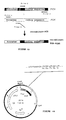
- Figure 2 shows a functional and restriction map of the plasmid pJR235.
- the coding sequence of the S. cerevisiae riboflavin synthetase gene can from the restriction fragment KpnI-PstI 2.2 Kb des Plasmids pJR235 can be isolated. This restriction fragment and the coding sequence was characterized by sequencing the nucleotides. Then the riboflavin synthetase activity coding DNA sequence shown together with a DNA part, which is the 3 'end of the coding region in the genome of S. cerevisiae flanked (SEQ ID NO 1). It will only be the sequence of the coding or "sense" strand of the double-stranded DNA molecule. This is entered from left to right in 5 ' ⁇ 3' direction.
- the coding sequences of riboflavin synthetase can be conventional Way or by using the phosphoramidite method synthesized from fully protected deoxyribonucleosides become. These synthetic methods are well known and can be followed the Beaucage et al. (1981, Tetrahedron Letters 22: 1859).
- the DNA sequence can be automated DNA synthesizers, e.g. from Applied Biosystems Model 380 A (Foster City, CA, USA).
- riboflavin synthetase In addition to the DNA coding sequences of riboflavin synthetase described above can genetic variants of the coding DNA sequence the riboflavin synthetase according to the invention occur.
- This genetic variants represent the genetic diversity of course occurring forms and could be an essential homology the sequence of the nucleotides and amino acid residues with the invention Show connections. These could be a similar one, if not identical activity, but in any one Way of the nucleotide sequence shown in the description differentiate.
- These genetic variants are equivalents of the compounds mentioned and due to the homology with the coding DNA sequences of the invention Riboflavin synthetase can be obtained.
- the present invention is based on the cloning of an intact and functional DNA sequence that is not just the amino acid sequence of the riboflavin synthetase, but also those for the Control of expression of riboflavin synthetase in S. cerevisiae required activation sequences of the transcription and Translation.
- the riboflavin synthetase gene according to the invention contains the sequences following the coding area, who are responsible for the termination of the transcription and provide the processing and polyadenylation signals of the DNA. These controls 5 'and 3' are an important aspect of the invention. Since the pJR235 gene contains ⁇ 0.20 kb of genomic DNA, those encoding the riboflavin synthetase genome of S. cerevisiae Preceded by DNA, the pJR235 plasmid necessarily contains the Activation sequence for the transcription and translation of the riboflavin synthetase gene by S. cerevisiae.
- the majority of the activation sequences of transcription and Translations are encoded before the DNA to be activated, although some Sequences encoding the ribosomal RNA by activation sequences activated that do not precede the coding area.
- the coding area "precedes" refers to this Relation to the DNA in the direction 5 'of the 5' end of the coding strand the DNA encoding riboflavin synthetase.
- the activation sequences the transcription and translation of S. cerevisiae, which are encoded in the pJR235 plasmid are on the right place to express the riboflavin synthetase to control coding DNA.
- the NdeI site encodes amino acids 18 and 19 of the riboflavin synthetase protein, so that the coding area of the amino terminal End of riboflavin synthetase also in this fragment PpnI-NdeI is included. Any restriction fragment that the contains the above-mentioned fragment of ⁇ 0.20 kb KpnI-NdeI inevitably also the activation sequence of the invention Transcription and translation.
- the DNA sequence of the activation sequence encoded in pJR235 Transcription and translation by S. cerevisiae is shown below specified. This sequence can be chemically synthesized from the pJR235 plasmid isolated or by polymerase chain reaction (PCR) from the pJR235 plasmid or the total genomic DNA from S. cerevisiae can be amplified.
- PCR polymerase chain reaction
- the activation sequence in the pJR235 plasmid becomes the restriction fragment represented as a single chain, overlapping DNA sequence, which is typical for the restriction enzyme KpnI and also includes a translation initiation codon.
- the activation sequence of transcription and translation can be found in any DNA sequence in S. cerevisiae or the like Organisms can be used to control expression.
- the Transcription promoter of the riboflavinsnethetase gene in S. cerevisiae can be fused to coding regions of different protein forms become.
- the before the initiation codon of transcription and Translation 5 'ATG lying 5' sequence can e.g. to creation a site suitable for the restriction, e.g. Ndel or Ncol, can be expanded and modified by polymerase chain reaction (PCR) for fusion of the S. cerevisiae promoter with the Coding area of the protein of interest.
- PCR polymerase chain reaction
- the coding region of the protein can be adapted in a similar manner that it contains two compatible ends, one coupling enable. Depending on the coding area of the proteins different strategies applied.
- the merger of the S. cerevisiae promoter with the coding area of interest Proteins can also be obtained by polymerase chain reaction (PCR) after the method set out in Example 3.
- PCR polymerase chain reaction
- Example 3 the fusion protocol of the coding region of riboflavin synthetase von S, cerevisiae with the transcription promoter and the activation sequence the translation of the PGK gene from S. cerevisiae.
- riboflavin synthetase The coding region of riboflavin synthetase can be determined by similar methods by S. cerevisiae with transcription promoters and Activation sequences of the translation of any organism be linked.
- the present invention is not limited to any particular activation sequence of transcription and translation in controlling the expression of the DNA encoding riboflavin synthetase activity.
- the invention comprises the use of any activation sequences of transcription and translation for the expression of the riboflavin synthetase activity in S. cerevisiae.
- Many activation sequences of transcription and translation in S. cerevisiae are known and can be used to control riboflavinsyn thetase activity in S. cerevisiae.
- These activation sequences of transcription and translation include, for example, but not exclusively, activation sequences of transcription and translation of PGK, TPI, ADC1, ENO1, GAL1 and GAP.
- autonomous replication sequences and activation sequences of transcription and translation of other organisms can be linked to the present DNA compounds coding for riboflavin synthetase activity to form expression vectors which express the expression of riboflavin synthetase activity Control host cells in which the autonomous replication sequence and the activation sequence can act.
- S. cerevisiae is a suitable host for the production of riboflavin synthetase for use in vitro
- expression vectors can also be used which control the expression of riboflavin synthetase activity in host cells other than S.
- Organisms should be increased.
- Some riboflavin producing organisms are used in the industry to produce vitamin B2.
- the capacity of the vitamin B2 production of these organisms can be increased and made more effective by increasing the concentration of the enzymes limiting the biosynthesis during the fermentation.
- the pJR235 plasmid also includes the 3 'regulatory sequences of the riboflavin synthetase gene from S. cerevisiae.
- the 3 'regulatory sequences of the riboflavin synthetase gene from S. cerevisiae.
- polyadenylation and processing of the sequences responsible for mRNA in the area ⁇ 500 bp encodes the stop codon of the coding region of a gene consequences. Therefore, the Scal-PstI fragment of ⁇ 1.4 kb contains which which encode the carboxy terminal end of riboflavin synthetase DNA includes the transcription termination signals, Polyadenylation and processing of the riboflavin synthetase gene mRNA by S. cerevisiae.
- the termination sequence of the transcription in pJR235 plasmids can be linked to other recombinant gene constructions to be added to the termination of the transcription to allow in these genetic constructions.
- Expression of a given DNA sequence in a recombinant DNA expression vector can be increased in that a termination signal of transcription, polyadenylation and RNAm processing at the 3 'end of the coding string of the coding area to be expressed is inserted.
- the present invention provides a termination signal of transcription, polyadenylation and mRNA processing that is used to increase expression in any genetic product of a recombinant DNA vector in S. cerevisiae and related host organisms are used can.
- the DNA connections described can be used to build up Expression vectors are used which express the expression of the Control riboflavin synthetase in any host cell which the expression vector is replicated or integrated and in which is the activation sequence of transcription and translation is used to express riboflavin synthetase activity.
- the DNA compounds of the invention can Coding of riboflavin synthetase activity by S. cerevisiae and to isolate homologous DNA compounds from strains other than S. cerevisiae are used, which are the genetic variants encode the riboflavin synthetase according to the invention.
- This invention also includes homologous riboflavin synthetase coding DNA compounds in plasmids pJR235 and pJR376 (which will be described below) what riboflavin synthetase activity encode.
- the DNA compounds coding for the riboflavin synthetase activity of S. cerevisiae can be used to construct expression vectors which control this expression.
- the pJR235 plasmid can be isolated from E. coli K12JM101 / pJR235 by the method described in Example 1.
- Very useful restriction fragments such as a 2.2 kb KpnI-PstI, which contains the entire RIB5 gene, or a 1.4 kb NdeI-StuI fragment, which contains the entire gene, with the exception of the amino terminal, can be obtained from this pJR235 plasmid In the end, contains.
- the pJR235 plasmid was used as the basis for the construction of a plasmid called pJR376, which controls the expression of riboflavin synthetase activity in S. cerevisiae on a large scale.
- the pJR376 plasmid was obtained by inserting a 2.2 kb synthetic DNA fragment consisting of the coding sequence of riboflavin synthetase, expressing the gene promoter of the glycolic enzyme, 3-phosphoglycerate kinase ( PGK ), by S. cerevisiae (Hitzeman et al., 1982 , Nucleic Acids Res.
- the PGK promoter can be manipulated to produce highly effective expression vectors of various eukaryotic proteins (Tuite et al., 1982, EMBO J. 1: 603; Derynck et al., 1983, Nucleic Acid Res. 11: 1819; Mellor et al., 1983, Gene 24: 1; Wood et al., 1985, Nature (London) 314: 446; Rothsteien et al., 1984, Nature (London) 308: 662 and Adams et al., 1987, Nature (London ) 329: 68).
- the pJR376 plasmid comprises the PGK promoter from position -580 to -1 of the base pairs, the numbering with the deoxyadenosyl nucleotide the initiation codon 5'-ATG-3 'of translation as Position 1 begins the expression of the coding sequence of the riboflavin synthetase gene controls the pJR235 plasmid.
- the construction genetic fusions using the chain polymerase reaction (PCR) is described by Yon et al. (Nucleic Acids Res. 17: 4895, 1989) described.
- a construction protocol of plasmid pJR376 is detailed described in Example 3.
- Riboflavin synthetase is used to a high degree in the SD-Ura medium by the cells of the strain S. cerevisiae carrying the plasmid pJR366 in the order of up to 2% of the total cell protein expressed.
- S. cerevisiae transforming cell extracts Strain AJ53 / pJ376 are able to transform from Catalyze 6,7-dimethyl-8-ribityl-lumazine in riboflavin, while the cell extracts of the strain S. cerevisiae AJ53 these Can’t catalyze transformation.
- the test method for this reaction is described in Example 4C.
- the plasmid pJR376 provides an effective mechanism for its preparation large amounts of riboflavin synthetase in S. cerevisiae To the extent of approximately 1% of the total Cellular protein. For this reason and because the cultivation of S. cerevisiae is less expensive than cultivating others Organisms that naturally produce riboflavin can S. cerevisiae / pJR376 Transformants more economical and effective than other non-recombinant or "natural" riboflavin synthetase producers used for the production of riboflavin synthetase become. Since the S.
- cerevisiae / pJR376 transformants according to the invention can produce riboflavin synthetase on such a large scale the riboflavin synthetase encoded by the S. cerevisiae genome be isolated in a substantially pure form.
- An exemplary one Purification protocol of riboflavin synthetase is in example 4C.
- the riboflavin synthetase according to the invention coding DNA connections for the construction of expression vectors be used.
- these riboflavin synthetase expression vectors transformed a host cell the riboflavin is catalyzed by a riboflavin synthetase Produces reaction, so the concentration of riboflavin synthetase increased inside the cell.
- riboflavin synthetase activity is the limiting factor in riboflavin biosynthesis in the untransformed host cell is the host cells that have these riboflavin synthetase expression vectors contain, produce more riboflavin, as untransformed cells.
- a vector that shows the concentration of riboflavin synthetase inside the cell of a host cell transformed by it must contain the following elements: 1) a DNA compound which the Encoded riboflavin synthetase activity; 2) an activation sequence of transcription and translation, not just in the too transforming cell can act, but also the right one Position and orientation has to the expression of the riboflavin synthetase control coding DNA; 3) Replication and Integration functions that maintain the vector in the host cell.
- the frequency of integration of a vector or DNA fragment often depends on the one encoded by the host cells Activity. However, it is often found that the presence certain DNA sequences (e.g. integration-promoting Phage and virus sequences as well as homologous sequences of the genomic DNA of the host cell) in a vector or a DNA fragment facilitate integration.
- a riboflavin synthetase expression vector can of course also contain a selectable element, which is a selection of the Allows host cells that contain this vector. These selectable However, items can be unnecessary or undesirable, if the vector or DNA fragment is in a chromosomal DNA the host cell is integrated.
- the riboflavin synthetase expression vectors are not limited to any particular selectable marker.
- selectable markers include auxotrophic selection genes, for example the LEU2 gene selectable in leu2 strains (Hinnen et al. 1978, Proc. Natl. Acad. Sci. USA 75: 1929), the HIS3 gene selectable in his2 strains (Struhl 1982, Nature 300: 284) and the TRP1 gene which can be selected in trpl strains (Hitzemann et al. 1980, J. Biol. Chem.
- the plasmid pJR235 contains the intact riboflavin synthetase gene of S. cerevisiae, so that the transformation of S. cerevisiae with plasmid pJR235 an increase in the number of copies of the Riboflavinsynthetasensens gene, causing an increase in Enzyme concentration inside the cell leads.
- the Riboflavin synthetase gene from S. cerevisiae works in Ashbya gossypii and Eremothecium ashbii. Therefore performs the transformation of A. gossypii and E. ashbyii the integration of plasmid pJR235 to increase the number of copies of the riboflavin synthetase gene, and thus to an increase the enzyme concentration inside the cell.
- the Riboflavin synthetase from S. cerevisiae coding sequence can however also under the control of activation sequences of the Transcription and translation are provided by Eremothecium and Ashbya derive to build a recombinant, specifically gene intended for these organisms.
- the expression vectors of S. cerevisiae are not on the specific vectors described here are limited.
- the invention encompasses any expression plasmid of S. cerevisiae or any vector that expresses riboflavin synthetase controls in S. cerevisiae. Therefore, this includes Invention Riboflavin Synthetase Expression Vectors Which use a functional replication unit in S. cerevisiae, such as. the replication origin of the plasmid 2 ⁇ and other autonomous replication sequences.
- the present invention is also not limited to the plasmid vectors, as it is Expression vectors or DNA compounds comprising the Express riboflavin synthetase activity and a viral Use replication or integration in the genome, as in Example 3 described to remain in the host cell.
- Recombinant microorganisms with an expression vector have been implemented, one for riboflavin synthetase activity containing coding DNA compound can be obtained are by inserting an expression vector according to the invention into suitable host cells and subsequent cultivation of these cells under conditions necessary for inclusion in the chromosomal DNA of the host cell or its replication in this cell are suitable, and selection of the transformants.
- suitable host cells are any riboflavin-producing or non-producing microorganism, e.g. Yeast, bacteria or mushrooms. These microorganisms are preferably among the Genera Saccharomyces, Escherichia, Candida, Eremothecium and Ashbya, although microorganisms of other genera also the expression vectors can be implemented.
- the transformants manufactured by E. coli JM101 / pJR235, available from NCIMB under the No. NCIMB 40480 have been deposited.
- Another important object of the invention is a method for the production of S. cerevisiae riboflavin synthetase activity.
- this process is a culture one transformed with an expression vector according to the invention Organism containing a riboflavin synthetase from S. cerevisiae contains coding DNA compound to create, this Culture is carried out under conditions necessary for the expression of the built-in Are suitable. These conditions depend on the type of the transformed microorganism and can in the range already mentioned.
- Riboflavin synthetase activity can be purified or without purification directly from the raw cell extract that contains this enzyme contains, are used (Example 4).
- this invention provides a coding sequence of the S. cerevisiae riboflavin synthetase gene, as well as a series of expression vectors which control the expression of this gene in S. cerevisiae.
- the production of riboflavin synthetase in S. cerevisiae enables high expression rates and simple isolation of the enzyme, so that it can be used to catalyze the in vitro condensation of new lumazine derivatives to produce new flavin compounds.
- the expression vectors according to the invention which control the expression of riboflavin synthetase in the host cell of interest leads to a higher riboflavin synthetase rate and thus to a higher vitamin content in the transformed cell.
- Riboflavin synthetase can be used to make riboflavin 6,7-dimethyl-8-ribityl-lumazine in a cell-free system, as in Example 4C can be used. Riboflavin is not just a useful vitamin, but also a raw material for that Manufacture of other important cofactors such as FMN and FAD. Another important area of application of riboflavin synthetase is the condensation of various 6,7-dimethyl-8-ribityl-lumazine compounds, those of the riboflavin synthetase according to the invention can be recognized for the production of new flavine derivatives.
- Another important subject of the invention is a method for the production of riboflavin from 6,6-dimethyl-8-ribityl-lumazine.
- This process essentially consists of a 6,6-dimethyl-8-ribityl-lumazine containing solution with the invention S. cerevisiae riboflavin synthetase.
- This Synthetase can be used both in purified form and, as mentioned, unpurified by using a raw cell extract, the contains this synthetase.
- the procedure can be in Solution or by immobilizing the enzyme or synthetase containing cells, carried out in a suitable carrier become.
- solid carriers to which the purified enzyme or the enzyme can be bound from a raw cell extract they come usual for this type of procedure, e.g. Carraghenan, Sepharose (SIGMA) or another suitable carrier.
- SIGMA Sepharose
- the riboflavin from 6,7-dimethyl-8-ribityl-lumazine in a cell-free system prepared (Example 4).
- Riboflavin synthetase can be in isolated pure form or in a crude cell extract can be used and this method can be used both in solution, as well as by immobilizing the pure enzyme or the Cells of a cell extract containing this enzyme, in a suitable one solid support, carried out in the form described above become.
- Cell extracts from riboflavin-producing organisms can be used for synthesis of non-natural (not made in nature) Flavins are used.
- the expression vectors according to the invention provide an effective and inexpensive process for the production of riboflavin synthetase in crude cell extracts, those for the in vitro condensation of non-naturally occurring Lumazines for the production of new flavins or flavine derivatives can be used.
- the search for non-natural lumazine derivatives, which are suitable as carriers of riboflavin synthetase can be completed by searching for riboflavin synthetase mutants, the non-natural lumazine derivatives as a substrate accept.
- the present invention provides the starting materials for the search for these riboflavin synthetase mutants.
- E. coli K12 JM101 / pJR235 lyophilisate that is available from NCIMB under the Number 40480 has been deposited, can be used as a vaccine culture below described methods are used.
- LB medium 10 g tryptone, 10 g NaCl and 5 g yeast extract per liter
- E. coli K12 JM101 / pJR235 inoculum was inoculated with an E. coli K12 JM101 / pJR235 inoculum and incubated with aeration at 37 ° C, up to an optical density at 590 mn (OD 590 ) of ⁇ 1.
- OD 590 optical density at 590 mn
- 150 mg of chloramphenicol was added to the culture and incubation continued for 16 hours. The addition of chloramphenicol prevents protein synthesis and thus later cell division, but does not hinder the replication of the plasmid.
- the lysed cells were in a dry ice-ethanol bath frozen and then thawed again.
- Cell waste was removed from the solution by centrifugation for 40 minutes at 25,000 rpm in an SW27 rotor (Beckman, 7360 Lincoln Ave., Lincolnwood, IL 60646) and by extraction with buffered Phenol removed.
- the plasmid cross disk was isolated again, saturated with salt Extracted isopropanol to remove the ethidium bromide and Diluted 1: 3 with TES buffer. Then 2 volumes of ethanol added to the solution and then incubated overnight at -20 ° C. The plasmid DNA was centrifuged for 15 minutes the solution in a rotor SS34 (DuPont Co., Biotechnology Systems, Wilmington, DE 19880-0024) at 10,000 rpm.
- the general procedure for making a DNA fragment that the functional RIB5 gene coding for riboflavin synthetase S. cerevisiae contains consists in the isolation of clones a genomic library of S. cerevisiae that is capable of are to functionally complement the recessive rib5-10 mutation.
- the rib5 mutations affect the RIB5 gene, which the Riboflavin synthetase encoded in S. cerevisiae and make that Strain that contains this mutation is unable in a riboflavin-free Medium to grow.
- the mutagen ethyl methanesulfonate (30 ⁇ l / ml) (EMS; Sigma) was used to increase the frequency of the rib5 mutations.
- the mutagenesis was carried out in cells of the SI502 strain of S. cerevisiae (MATa his-3- ⁇ 1 leu2-3 leu2-112 ura3-52) according to the customary methods (Lawrence, CW Guide to Yeast Genetics and Molecular Biology, Methods Enzymol. 194 : 273, 1991).
- the reaction mixture was turned into a complete Seeded synthetic medium in which neither riboflavin nor uracil contained was to make a double selection of the one contained in the vector YCp50 Markers URA3 and that contained in the plasmid of the genotheque and to perform isolated RIB5 markers.
- Out of a total of 13,000 estimated transformants (phenotype Ura +) were 3 clones obtained in a uracil and riboflavin free medium (phenotype Ura + Rib +) can grow.
- the plasmids, their carriers Three transformants were transformed into bacteria recovered and characterized with restriction enzymes (Strathern and Higgins, Guide to Yeast Genetics and Molecular Biology, Methods Enzymol., 194: 319, 1991).
- the three plasmids have identical ones Restriction patterns and one of them, pJR211, was used for further analyzes selected.
- the plasmid pJR211 resulting from the vector YCp50 and a built-in DNA fragment of ⁇ 13 kb, is able to install in trunk AJ10 in the same Efficiency to complete the rib5-10 and ura3-52 mutation.
- the plasmid pJR214 was first with Ncol digested the ends by treatment with the Klenow fragment of the Polymerase I smoothed, then with BamHI and the fragment BamHI-Ncol ⁇ 2kb digested, which is the 5 'end of the RIB5 gene flanked, cleaned in agarose gel, to the Bluescript KS + vector ligated (Stratagene, La Jolla, CA, USA), digested with BamHI and SmaI and transformed into E. coli JM101.
- a recombinant plasmid was selected and named pJR278.
- a recombinant plasmid was selected and named pJR297.
- the HindIII-HindIII fragment ⁇ 1.1 kb which contains the functional URA3 gene from S. cerevisiae (Botstein et al, Gene, 8:17, 1979), cloned into pJR297 to form the pJR298 plasmids.
- Digestion of pJR298 with KpnI exposes the fragment from ⁇ 1.9 free, consisting of the URA3 gene that is flanked of sequences flanking the 5 'and 3' end of the RIB5 gene. This fragment was purified and 7 ⁇ g DNA was used for the reaction of the S.
- the plasmids containing these constructions can be used to prepare of yeast strains used, the higher amounts of riboflavin to produce.
- Primer A is homologous (nucleotides 8 to 28) to the nucleotide sequence the coding chain of the PGK gene (nucleotides -580 to -620, numbered according to Hitzeman et al. Nucleic Acids Res. 10: 7791, 1982). This primer also has the sequence of the recognition bases at its 5 'end of the restriction enzyme Ncol (nucleotides 1 to 6) and BAmHI (nucleotides 5 to 10). Primer B is complementary to the nucleotide sequence the coding chain of the PGK gene (nucleotides -17 to +3).
- Primer C is homologous in its nukeotides 1 to 15 of the nucleotide sequence the coding chain of the PGK gene (nucleotides -12 to +3) and the nucleotide sequence of the coding chain of the RIB5 gene (nucleotides +1 to +15, numbered as indicated above).
- Primer D is complementary to the nucleotide sequence of the coding chain of the RIB5 gene (nucleotides +738 to +755).
- a 100 ul reaction mixture of 10mM Tris.HCl, pH 7.3; 50mM KCl, 2mM MgCl 2 , 80nM each deoxynucleotide triphosphate, 50 pmol each primer [A and B, C and D, or A and D), 50ng DNA form as described below and 0.5 units Taq polymerase.
- the reactions were carried out for 30 cycles in a DNA thermal cycler (Perkin-Elmer Cetus, Norwalk, CT, USA). Each cycle included a denaturation step by one minute of heat at 94 ° C, followed by reannealing of the primers to the DNA at 55 ° C for 2.5 minutes and a chain extension step by Taq polymerase at 2.5 ° C for 2.5 minutes at 72 ° C.
- a drop of mineral oil was added to the reaction mixtures, which had been extracted once with chloroform before the restriction enzyme reactions.
- the primers C and D and the DNA of the plasmid pJR235 containing reaction mixture the coding area of the RIB5 gene (nt +1 to +755) reproduced, which also on the nucleotide +1 corresponding end corresponding to the PGK gene Sequence (nt -12 to +3).
- This reaction product was purified in an agarose gel with BamHI digested and cloned in the YEp352 vector digested with BamHI and SmaI, whereby the plasmid pJR376 was formed ( Figure 4B).
- the vector pTrc99A was used, which carries the synthetic trc promoter (Amann et al Gene 69: 301, 1988. This vector can be obtained from Pharmacia LKB Biotechnology, Uppsala, Sweden).
- a restriction site Ncol around the initiation codon 5'-ATG-3 was previously mutagenized according to the method described by Kadowaki et al (Gene, 76: 161, 1989) 'created around the coding sequence of the RIB5 gene.
- oligonucleotides were used as primers: E to create the restriction site Ncol, and D, which corresponds to that previously described in Example 3A.
- E to create the restriction site Ncol
- D which corresponds to that previously described in Example 3A.
- oligonucleotides were made in an Applied Biosystems Model 380 A automatic DNA synthesizer (Foster City, CA, USA) and its sequences are as follows:
- PCR polymerase chain reaction
- the fragment was purified in agarose gel, digested with NcoI, ligated to the previously with NcoI-SmaI digested pTrc99A vector and transformed into E. coli JM101.
- a recombinant plasmid was selected and named pJR380.
- E. coli JM101 cells transformed with the plasmid pJR380 were grown for 16 hours in the NZY Amp100 medium (1% casein hydrolyzate, 0.5% NaCl, 0.5% Yeast extract, 0.2% MgSO 4 and 100 ⁇ g / ml ampicillin) and induced them with 1mM isopropyl- ⁇ -D-thiogalactopyranoside (IPTG) for 2 hours.
- the cells transformed with the expression plasmid pJR380 grew slower than those transformed with the pTrc99A vector.
- the cells were then harvested by centrifugation, in Lysis buffer resuspended, disrupted by ultrasound, the cell extracts into soluble and insoluble fractions by centrifuging for 15 minutes at 12,000 rpm and 4 ° C that of Sambrook et al. described methods (1989, Molecular cloning. A laboratory manual. Cold Spring Harbor, New York, Cold Spring Harbor Laboratory Press) separately.
- the insoluble Rib5 protein expressed in E. coli JM101 is excellent suitable to be used as an immunogen in the production of polyclonal Antibodies, as described below, used to become.
- a complete Freund's adjuvant Hoechst-Behring
- the antibodies were purified by affinity chromatography in a column containing the Rib5 protein expressed in E. coli JM101 bound to an Affi-Gel 10 matrix (BioRad, Richmond, CA) according to the manufacturer's instructions.
- Riboflavin synthetase catalyzes the formation of a riboflavin and a 5-amino-6-ribitylamino-2,4 (1H, 3H) pyrimidine dione molecule from two molecules 6,7-dimethyl-8-ribityl-lumazine.
- the Enzyme has been found in several microorganisms and plants and Preparations of Ashbya gossypii have already been partially cleaned, Escherichia coli and spinach made.
- Riboflavin synthetase Yeast has already been cleaned around 5000 times, although the cleaning process is very complex and tedious (Plaut, G.W.E. et al., Biochemistry 9: 771-785, 1970)
- the retained proteins were eluted in a continuous gradient from 0 to 0.5 M NaCl and the 1 ml fractions were analyzed by Western blotting with anti-Rib5 antibodies obtained according to the method from Example 4B.
- the anti-Rib5 antibodies reacted specifically with a polypeptide of approx. 24 kDa, which eluted in fraction 22, corresponding to a NaCl concentration of 250 mM.
- the molecular weight of this polypeptide matches the derived weight of the nucleotide sequence of the coding region of the cloned gene.
- the results show that the riboflavin synthetase activity Maximum in that eluted at a NaCl concentration of 250 mM Fraction 22 showed, which is the same fraction, which had been found in the polypeptide associated with the anti-Rib5 antibodies had reacted.
- the membrane was wetted with 20% ethanol, and the band corresponding to the Rib5 protein and made visible after fluoroscopy was cut out and in a protein sequencer from Applied Biosystems Model 470, gas phase sequencer, (Foster City, Ca, USA ) sequenced.
- the sequence of the first eight amino acid residues analyzed: NH 2 -Met-Phe-Thr-Gly-Ile-Val-Glu-Cys -...- COOH is identical to the amino acid sequence derived from the nucleotide sequence of the cloned gene, which indicates that the start codon proposed in the context of the invention (first ATG in the phase in the ORF) is the correct one, and that the Rib5 protein, the riboflavin synthetase, has no change at its amino terminal end.
- Rib5 protein (0.5 ⁇ g) purified according to Example 4C in a gel with a polyacrylamide gradient from 4% to 20% (Bio-Rad, Richmond, CA) for 12 h at 25 mA and 4 ° C in Tris-Glycine Buffer (25mM Tris, 150mM Glycine) together with native molecular weight markers from tiroglobulin (669 kDa), ferritin (440 kDa), Catalase (232 kDa), lactate dehydrogenase (140 kDa) and bovine serum albumin (67 kDa) analyzed.
- riboflavin synthetase was determined in a wild-type strain of S. cerevisiae and carrier strains of various modifications of the RIB5 gene which code for the riboflavin synthetase.
- Protein extracts from cultures in the stationary phase of the wild strains X2180-1A, carrier of a complete deletion of the RIB5 gene, AJ113, transformant AJ53, carrier of the multicopy plasmid pJR235 containing the RIB5 gene, and AJ112, transformant AJ53, carrier of the genetic fusion PGK Multicopy plasmids pJR376 containing -RIB5 were analyzed for their riboflavin synthetase activity according to the procedure according to Example 4C. The following results listed in Table I were obtained. tribe Specific riboflavin synthetase activity (nmol riboflavin / mg protein) X2180-1A 5.59 AJ53 ---- AJ113 71.6 AJ11
- E. coli JM101 / pJR235 transformants were released on March 17th 1992 at National Collections of Industrial and Marine Bacteria Limited (NCIMB in Aberdeen (Scotland, UK) under the NCIMB number 40480 stored.
Landscapes
- Chemical & Material Sciences (AREA)
- Life Sciences & Earth Sciences (AREA)
- Organic Chemistry (AREA)
- Zoology (AREA)
- Engineering & Computer Science (AREA)
- Wood Science & Technology (AREA)
- Health & Medical Sciences (AREA)
- Genetics & Genomics (AREA)
- Bioinformatics & Cheminformatics (AREA)
- Microbiology (AREA)
- Biotechnology (AREA)
- Biochemistry (AREA)
- General Engineering & Computer Science (AREA)
- General Health & Medical Sciences (AREA)
- Biomedical Technology (AREA)
- Molecular Biology (AREA)
- Medicinal Chemistry (AREA)
- Chemical Kinetics & Catalysis (AREA)
- General Chemical & Material Sciences (AREA)
- Preparation Of Compounds By Using Micro-Organisms (AREA)
- Micro-Organisms Or Cultivation Processes Thereof (AREA)
- Enzymes And Modification Thereof (AREA)
Claims (2)
- Utilisation du gène de riboflavine synthétase de Saccharomyces cerevisiae pour la préparation de vecteurs d'expression pour augmenter la synthèse de riboflavine dans des cellules hôtes ainsi transformées.
- Procédé pour la préparation recombinante de riboflavine par transformation d'une cellule hôte avec un vecteur d'expression qui est apte à l'expression de la riboflavine synthétase de S. cerevisiae, caractérisé par le fait qu'on clone dans le vecteur d'expression approprié(a) un composé d'ADN codant pour l'activité de riboflavine synthétase, ou(b) une séquence homologue pour le composé susdit, qui exprime cette activité et représente une variante génétique de celui-ci, ou(c) un fragment de celui-ci codant pour l'activité de riboflavine synthétase.
Applications Claiming Priority (2)
| Application Number | Priority Date | Filing Date | Title |
|---|---|---|---|
| ES9200971 | 1992-05-11 | ||
| ES9200971 | 1992-05-11 |
Publications (3)
| Publication Number | Publication Date |
|---|---|
| EP0569806A2 EP0569806A2 (fr) | 1993-11-18 |
| EP0569806A3 EP0569806A3 (fr) | 1994-04-20 |
| EP0569806B1 true EP0569806B1 (fr) | 2001-11-28 |
Family
ID=8276967
Family Applications (1)
| Application Number | Title | Priority Date | Filing Date |
|---|---|---|---|
| EP93107120A Revoked EP0569806B1 (fr) | 1992-05-11 | 1993-05-03 | Composés ADN et vecteurs d'expression contenant ADN recombinant codant pour l'activité de riboflavine synthétase |
Country Status (6)
| Country | Link |
|---|---|
| EP (1) | EP0569806B1 (fr) |
| JP (1) | JP3549551B2 (fr) |
| AT (1) | ATE209682T1 (fr) |
| DE (1) | DE59310239D1 (fr) |
| DK (1) | DK0569806T3 (fr) |
| ES (1) | ES2170058T3 (fr) |
Families Citing this family (3)
| Publication number | Priority date | Publication date | Assignee | Title |
|---|---|---|---|---|
| DE4238904A1 (de) * | 1992-11-19 | 1994-05-26 | Basf Ag | Riboflavin-Synthese in Hefen |
| DK0751995T3 (da) * | 1994-03-25 | 2004-03-08 | Basf Ag | Riboflavin-biosyntese i svampe |
| DE19823834A1 (de) * | 1998-05-28 | 1999-12-02 | Basf Ag | Genetisches Verfahren zur Herstellung von Riboflavin |
Family Cites Families (2)
| Publication number | Priority date | Publication date | Assignee | Title |
|---|---|---|---|---|
| CN1066486C (zh) * | 1989-06-22 | 2001-05-30 | 霍夫曼-拉罗奇有限公司 | 高产核黄素的细菌菌株 |
| DE4020181A1 (de) * | 1990-06-25 | 1992-01-02 | Basf Ag | Neue promotorregion |
-
1993
- 1993-05-03 DE DE59310239T patent/DE59310239D1/de not_active Revoked
- 1993-05-03 AT AT93107120T patent/ATE209682T1/de not_active IP Right Cessation
- 1993-05-03 DK DK93107120T patent/DK0569806T3/da active
- 1993-05-03 ES ES93107120T patent/ES2170058T3/es not_active Expired - Lifetime
- 1993-05-03 EP EP93107120A patent/EP0569806B1/fr not_active Revoked
- 1993-05-11 JP JP13245893A patent/JP3549551B2/ja not_active Expired - Fee Related
Also Published As
| Publication number | Publication date |
|---|---|
| EP0569806A3 (fr) | 1994-04-20 |
| DK0569806T3 (da) | 2001-12-31 |
| ATE209682T1 (de) | 2001-12-15 |
| ES2170058T3 (es) | 2002-08-01 |
| JPH0622765A (ja) | 1994-02-01 |
| DE59310239D1 (de) | 2002-01-10 |
| JP3549551B2 (ja) | 2004-08-04 |
| EP0569806A2 (fr) | 1993-11-18 |
Similar Documents
| Publication | Publication Date | Title |
|---|---|---|
| DE69532603T2 (de) | Hefestämme und modifizierte albumine | |
| DE69332893T2 (de) | Methode zur erhöhung der produktion von rekombinanten disulfidverknüpften-proteinen in (saccharomyces cerevisiae) | |
| DE68928545T2 (de) | Herstellung von glukoseoxidase in rekombinanten systemen | |
| DE69333112T2 (de) | Modifizierte pilzzellen und methode zur herstelllung rekombinanter produkte | |
| EP0751995B1 (fr) | Biosynthese de la riboflavine dans des champignons | |
| EP0282899B1 (fr) | La manganèse-superoxyde-dismutase humaine (hMn-SOD) | |
| DE69519856T2 (de) | Expression von albumin in hefe | |
| DE69637011T2 (de) | Herstellung enzymatisch aktiver, rekombinanter carboxypeptidase b | |
| DE69728878T2 (de) | Verfahren zur vermehrung der hemoproteinherstellung in filamentösen fungi | |
| DE69028884T2 (de) | Protein mit Urate-Oxidase-Aktivität, dafür kodierendes rekombinantes Gen, Expressionsvektor, Mikroorganismen und Transformanten | |
| EP0808903A2 (fr) | Lysophospholipase d'aspergillus produite par recombinaison | |
| DE69805627T2 (de) | Verbesserte stämme für die protein-expression | |
| DE69026921T2 (de) | Verfahren zur Herstellung von 7-Aminocephem-Verbindungen oder deren Salzen | |
| DE69333249T2 (de) | Neue Schimmel-Protease | |
| KR100218853B1 (ko) | 인체 혈청 알부민의 제조방법 | |
| DE68907166T2 (de) | Verfahren zur Herstellung von menschlichem Lysozym. | |
| EP0569806B1 (fr) | Composés ADN et vecteurs d'expression contenant ADN recombinant codant pour l'activité de riboflavine synthétase | |
| DE69732583T2 (de) | Verfahren zur Spaltung eines chimeren Proteins mittels eines 'processing'-Enzyms | |
| EP1177305B1 (fr) | Procedes de preparation d'une proteine recombinee | |
| WO1997003208A1 (fr) | Procede de production de riboflavine au moyen de micro-organismes a activite d'isocitratlyase modifiee | |
| DE69114583T2 (de) | Peptdidylhydroxylglycine N-C Lyase und DNS dafür kodierend. | |
| DE69033772T2 (de) | Verbesserte plasmidvektoren für zelluläre schleimpilze der gattung dictyostelium | |
| DE69329540T2 (de) | Verfahren zur Herstellung von Proteaseinhibitoren | |
| DE4420785A1 (de) | Riboflavin-Biosynthese in Pilzen | |
| DE69025081T2 (de) | DNS für Expression und Sekretion |
Legal Events
| Date | Code | Title | Description |
|---|---|---|---|
| PUAI | Public reference made under article 153(3) epc to a published international application that has entered the european phase |
Free format text: ORIGINAL CODE: 0009012 |
|
| AK | Designated contracting states |
Kind code of ref document: A2 Designated state(s): AT BE CH DE DK ES FR GB IT LI NL SE |
|
| PUAL | Search report despatched |
Free format text: ORIGINAL CODE: 0009013 |
|
| AK | Designated contracting states |
Kind code of ref document: A3 Designated state(s): AT BE CH DE DK ES FR GB IT LI NL SE |
|
| 17P | Request for examination filed |
Effective date: 19940325 |
|
| 17Q | First examination report despatched |
Effective date: 19990308 |
|
| GRAG | Despatch of communication of intention to grant |
Free format text: ORIGINAL CODE: EPIDOS AGRA |
|
| GRAG | Despatch of communication of intention to grant |
Free format text: ORIGINAL CODE: EPIDOS AGRA |
|
| GRAG | Despatch of communication of intention to grant |
Free format text: ORIGINAL CODE: EPIDOS AGRA |
|
| GRAH | Despatch of communication of intention to grant a patent |
Free format text: ORIGINAL CODE: EPIDOS IGRA |
|
| GRAH | Despatch of communication of intention to grant a patent |
Free format text: ORIGINAL CODE: EPIDOS IGRA |
|
| GRAA | (expected) grant |
Free format text: ORIGINAL CODE: 0009210 |
|
| RIN1 | Information on inventor provided before grant (corrected) |
Inventor name: REVUELTA DOVAL, JOSE LUIS Inventor name: GARCIA RAMIREZ, JOSE JAVIER Inventor name: DE LOS ANGELES SANTOS GARCIA, MARIA |
|
| AK | Designated contracting states |
Kind code of ref document: B1 Designated state(s): AT BE CH DE DK ES FR GB IT LI NL SE |
|
| REF | Corresponds to: |
Ref document number: 209682 Country of ref document: AT Date of ref document: 20011215 Kind code of ref document: T |
|
| REG | Reference to a national code |
Ref country code: CH Ref legal event code: NV Representative=s name: SCHMAUDER & PARTNER AG PATENTANWALTSBUERO Ref country code: CH Ref legal event code: EP |
|
| REG | Reference to a national code |
Ref country code: DK Ref legal event code: T3 |
|
| REG | Reference to a national code |
Ref country code: GB Ref legal event code: IF02 |
|
| REF | Corresponds to: |
Ref document number: 59310239 Country of ref document: DE Date of ref document: 20020110 |
|
| GBT | Gb: translation of ep patent filed (gb section 77(6)(a)/1977) |
Effective date: 20020122 |
|
| ET | Fr: translation filed | ||
| REG | Reference to a national code |
Ref country code: ES Ref legal event code: FG2A Ref document number: 2170058 Country of ref document: ES Kind code of ref document: T3 |
|
| PLBQ | Unpublished change to opponent data |
Free format text: ORIGINAL CODE: EPIDOS OPPO |
|
| PLBI | Opposition filed |
Free format text: ORIGINAL CODE: 0009260 |
|
| PLBF | Reply of patent proprietor to notice(s) of opposition |
Free format text: ORIGINAL CODE: EPIDOS OBSO |
|
| 26 | Opposition filed |
Opponent name: ROCHE VITAMINS AG Effective date: 20020828 |
|
| NLR1 | Nl: opposition has been filed with the epo |
Opponent name: ROCHE VITAMINS AG |
|
| PLBB | Reply of patent proprietor to notice(s) of opposition received |
Free format text: ORIGINAL CODE: EPIDOSNOBS3 |
|
| PLAB | Opposition data, opponent's data or that of the opponent's representative modified |
Free format text: ORIGINAL CODE: 0009299OPPO |
|
| R26 | Opposition filed (corrected) |
Opponent name: DSM NUTRITIONAL PRODUCTS AG Effective date: 20020828 |
|
| NLR1 | Nl: opposition has been filed with the epo |
Opponent name: DSM NUTRITIONAL PRODUCTS AG |
|
| RDAF | Communication despatched that patent is revoked |
Free format text: ORIGINAL CODE: EPIDOSNREV1 |
|
| APBP | Date of receipt of notice of appeal recorded |
Free format text: ORIGINAL CODE: EPIDOSNNOA2O |
|
| APAH | Appeal reference modified |
Free format text: ORIGINAL CODE: EPIDOSCREFNO |
|
| APBQ | Date of receipt of statement of grounds of appeal recorded |
Free format text: ORIGINAL CODE: EPIDOSNNOA3O |
|
| PGFP | Annual fee paid to national office [announced via postgrant information from national office to epo] |
Ref country code: DE Payment date: 20070426 Year of fee payment: 15 |
|
| PGFP | Annual fee paid to national office [announced via postgrant information from national office to epo] |
Ref country code: CH Payment date: 20070427 Year of fee payment: 15 |
|
| PGFP | Annual fee paid to national office [announced via postgrant information from national office to epo] |
Ref country code: NL Payment date: 20070503 Year of fee payment: 15 |
|
| PGFP | Annual fee paid to national office [announced via postgrant information from national office to epo] |
Ref country code: SE Payment date: 20070508 Year of fee payment: 15 |
|
| PGFP | Annual fee paid to national office [announced via postgrant information from national office to epo] |
Ref country code: AT Payment date: 20070511 Year of fee payment: 15 |
|
| PGFP | Annual fee paid to national office [announced via postgrant information from national office to epo] |
Ref country code: ES Payment date: 20070621 Year of fee payment: 15 |
|
| PGFP | Annual fee paid to national office [announced via postgrant information from national office to epo] |
Ref country code: GB Payment date: 20070502 Year of fee payment: 15 |
|
| PGFP | Annual fee paid to national office [announced via postgrant information from national office to epo] |
Ref country code: BE Payment date: 20070711 Year of fee payment: 15 |
|
| RAP2 | Party data changed (patent owner data changed or rights of a patent transferred) |
Owner name: BASF SE |
|
| APBU | Appeal procedure closed |
Free format text: ORIGINAL CODE: EPIDOSNNOA9O |
|
| RDAG | Patent revoked |
Free format text: ORIGINAL CODE: 0009271 |
|
| NLT2 | Nl: modifications (of names), taken from the european patent patent bulletin |
Owner name: BASF SE Effective date: 20080305 |
|
| 27W | Patent revoked |
Effective date: 20080122 |
|
| GBPR | Gb: patent revoked under art. 102 of the ep convention designating the uk as contracting state |
Effective date: 20080122 |
|
| REG | Reference to a national code |
Ref country code: CH Ref legal event code: PL |
|
| NLR2 | Nl: decision of opposition |
Effective date: 20080122 |
|
| PGFP | Annual fee paid to national office [announced via postgrant information from national office to epo] |
Ref country code: DK Payment date: 20080515 Year of fee payment: 16 |
|
| REG | Reference to a national code |
Ref country code: SE Ref legal event code: ECNC |
|
| PLAB | Opposition data, opponent's data or that of the opponent's representative modified |
Free format text: ORIGINAL CODE: 0009299OPPO |
|
| PGFP | Annual fee paid to national office [announced via postgrant information from national office to epo] |
Ref country code: IT Payment date: 20080528 Year of fee payment: 16 |
|
| PGFP | Annual fee paid to national office [announced via postgrant information from national office to epo] |
Ref country code: FR Payment date: 20080514 Year of fee payment: 16 |