EP0579834A1 - Insektizid für schädliche insekten - Google Patents
Insektizid für schädliche insekten Download PDFInfo
- Publication number
- EP0579834A1 EP0579834A1 EP19920921834 EP92921834A EP0579834A1 EP 0579834 A1 EP0579834 A1 EP 0579834A1 EP 19920921834 EP19920921834 EP 19920921834 EP 92921834 A EP92921834 A EP 92921834A EP 0579834 A1 EP0579834 A1 EP 0579834A1
- Authority
- EP
- European Patent Office
- Prior art keywords
- insecticide
- zeolite
- insect
- termites
- insects
- Prior art date
- Legal status (The legal status is an assumption and is not a legal conclusion. Google has not performed a legal analysis and makes no representation as to the accuracy of the status listed.)
- Withdrawn
Links
Images





Classifications
-
- A—HUMAN NECESSITIES
- A01—AGRICULTURE; FORESTRY; ANIMAL HUSBANDRY; HUNTING; TRAPPING; FISHING
- A01N—PRESERVATION OF BODIES OF HUMANS OR ANIMALS OR PLANTS OR PARTS THEREOF; BIOCIDES, e.g. AS DISINFECTANTS, AS PESTICIDES OR AS HERBICIDES; PEST REPELLANTS OR ATTRACTANTS; PLANT GROWTH REGULATORS
- A01N59/00—Biocides, pest repellants or attractants, or plant growth regulators containing elements or inorganic compounds
-
- A—HUMAN NECESSITIES
- A01—AGRICULTURE; FORESTRY; ANIMAL HUSBANDRY; HUNTING; TRAPPING; FISHING
- A01N—PRESERVATION OF BODIES OF HUMANS OR ANIMALS OR PLANTS OR PARTS THEREOF; BIOCIDES, e.g. AS DISINFECTANTS, AS PESTICIDES OR AS HERBICIDES; PEST REPELLANTS OR ATTRACTANTS; PLANT GROWTH REGULATORS
- A01N25/00—Biocides, pest repellants or attractants, or plant growth regulators, characterised by their forms, or by their non-active ingredients or by their methods of application, e.g. seed treatment or sequential application; Substances for reducing the noxious effect of the active ingredients to organisms other than pests
- A01N25/08—Biocides, pest repellants or attractants, or plant growth regulators, characterised by their forms, or by their non-active ingredients or by their methods of application, e.g. seed treatment or sequential application; Substances for reducing the noxious effect of the active ingredients to organisms other than pests containing solids as carriers or diluents
-
- A—HUMAN NECESSITIES
- A01—AGRICULTURE; FORESTRY; ANIMAL HUSBANDRY; HUNTING; TRAPPING; FISHING
- A01N—PRESERVATION OF BODIES OF HUMANS OR ANIMALS OR PLANTS OR PARTS THEREOF; BIOCIDES, e.g. AS DISINFECTANTS, AS PESTICIDES OR AS HERBICIDES; PEST REPELLANTS OR ATTRACTANTS; PLANT GROWTH REGULATORS
- A01N59/00—Biocides, pest repellants or attractants, or plant growth regulators containing elements or inorganic compounds
- A01N59/06—Aluminium; Calcium; Magnesium; Compounds thereof
-
- Y—GENERAL TAGGING OF NEW TECHNOLOGICAL DEVELOPMENTS; GENERAL TAGGING OF CROSS-SECTIONAL TECHNOLOGIES SPANNING OVER SEVERAL SECTIONS OF THE IPC; TECHNICAL SUBJECTS COVERED BY FORMER USPC CROSS-REFERENCE ART COLLECTIONS [XRACs] AND DIGESTS
- Y02—TECHNOLOGIES OR APPLICATIONS FOR MITIGATION OR ADAPTATION AGAINST CLIMATE CHANGE
- Y02A—TECHNOLOGIES FOR ADAPTATION TO CLIMATE CHANGE
- Y02A50/00—TECHNOLOGIES FOR ADAPTATION TO CLIMATE CHANGE in human health protection, e.g. against extreme weather
- Y02A50/30—Against vector-borne diseases, e.g. mosquito-borne, fly-borne, tick-borne or waterborne diseases whose impact is exacerbated by climate change
Definitions
- This invention relates to an insecticide.
- cheyletids cheyletidae
- chemical insecticides having a strong acute toxicity such as organic phosphorus compounds or pyrethroid compounds are widely employed.
- insects gradually acquire a resistance to chemical insecticides as a result of repeated exposure to them.
- a chemical insecticide which was initially effective may thus subsequently lose all of its activity.
- This invention was conceived to resolve the aforesaid problems. It aims to provide an insecticide which has little adverse effect on man or animals and presents little risk of environmental pollution, but which definitively eliminates harmful insects even when used over long periods of time without the insects acquiring resistance.
- the invention of claim 1 provides an insecticide containing powdered zeolite, characterized in that this powdered zeolite comprises particles having a diameter smaller than the distance between body hairs on the insects it is desired to eliminate.
- the zeolite has moisture regulating properties, and can therefore maintain dry conditions unsuitable for sustaining harmful insects in areas where the insecticide is used.
- zeolite contains some particles having a diameter smaller than the distance between insect body hairs, a fine powder of these particles adheres to the insect's body surface despite the presence of the hairs. This prevents release of carbon dioxide gas from the insect's skin, and causes the insect's death due to respiratory failure.
- the aforesaid fine zeolite powder adheres to the stomata. This prevents the insect from taking in oxygen, and causes the insect's death due to oxygen deficiency.
- the insect when foreign matter adheres to an insect's the body surface or hairs, the insect tries to brush it off. In this brushing off action, the insect scratches itself. The aforesaid fine powder then adheres to the scratches despite the presence of body hairs, and due to the moisture regulating properties of the zeolite, the zeolite absorbs the insect's body fluids which causes the insect's death by dehydration.
- This type of zeolite is not only less toxic than conventional insecticides, but is also effective as an insecticide due to the aforesaid mechanisms.
- the insecticide provided by the invention therefore has little adverse effect on man or animals and presents little risk of environmental pollution, but definitively eliminates harmful insects even when used over long periods of time without the insects acquiring resistance.
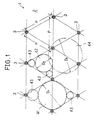
- Fig. 1 is a flat schematic representation of an insect's body. 1 is the insect, 2 is the skin of the insect's body surface, 3 are insect body hairs, and 41, 42, 43 and 44 are particles of an insecticide consisting of powdered zeolite.
- the insect 1 takes oxygen into its body through stomata or the skin 2, and expels carbon dioxide gas directly through the skin 2.
- the skin 2 through which the insect expels carbon dioxide has a pattern of numerous body hairs 3.
- These body hairs 3 are formed at predetermined positions according to the species of the insect 1.
- the arrangement of hairs 3 on the skin 2 of the insect 1 is represented schematically for various types of insect as shown in Fig. 1, and although in practice the distances between these hairs 3 may not all be identical, it will be assumed for the sake of convenience that the distance between hairs is a constant P.
- insecticide particles 41, 42, 43 and 44 will in practice be different. To simplify the following explanation of mechanisms, however, they are represented as circles of different diameter in the drawings.
- the diameter D1 of the particle 41 is slightly smaller but effectively the same as the distance P between the hairs 3.
- the particle 41 is therefore able to reach the skin 2 of the insect 1 through the spaces between the hairs 3.
- the particle 41 adheres to the skin 2 due to the presence of oil or moisture on the skin.
- the diameter D2 of the insecticide particle 42 is smaller than that of the particle 41, and the diameter D3 of the insecticide particle 43 is still smaller than that of the particle 42.
- the insecticide particles 42 and 43 which have a smaller diameter than that of the particle 41, can also reach the skin 2 of the insect 1 without being obstructed by the body hairs 3, and they adhere to the skin 2 in the same way as the particle 41 so as to prevent release of carbon dioxide gas.
- the case of the particle 44 is given as a comparative example.
- the diameter D4 of this particle 44 is greater than the distance P between the body hairs 3, and as can be seen from Fig. 1, some of the hairs 3 prevent the particle 44 from adhering to the skin 2. Consequently, it cannot prevent release of carbon dioxide gas from the skin 2 of the insect 1 in the same way as the aforesaid particles 41, 42 and 43.
- the decrease of respiratory function of the insect 1 approximately depends on the area which is covered by these particles. If this area exceeds a certain upper limit, the insect's respiration fails and the insect 1 finally dies.
- Fig. 2 is a schematic view in section of the stomata of the insect.
- 1 is the insect having stomata
- 2 is the skin of the insect's body
- 3 are the insect's hairs.
- an air tube 5 extending from the insect's body opens out on the skin 2 so as to form a stoma 6.
- These air tubes 5 and stomata 6 constitute the insect's respiratory system.
- the respiratory system 7 functions as a network of passages for taking oxygen into the insect's body.
- 81, 82, 83 and 84 are insecticide particles consisting of powdered zeolite.
- the shapes of the insecticide particles 81, 82, 83 and 84 will in practice be different, but to simplify the following explanation of mechanisms, they are represented as circles of different diameter in the drawings.
- the actions of the particles 81, 82, 83 and 84 in the vicinity of the stoma 6 of the insect 1 differ according to their diameters.
- the particles 81, 82 and 83 function as active components, the case of the particle 84 being given as a comparative example.
- the diameter D5 of the particle 81 is smaller than the distance P between the body hairs 3, and larger than the opening W of the stoma 6.
- the particle 81 reaches the skin 2 of the insect 1 through the hairs 3, and is deposited on the surface of the stoma 6. This particle 81 adheres to the skin 2 due to the presence of oil or water on the skin. The stoma 6 is therefore covered and blocked by the particle 81, and oxygen intake through the stoma 6 is prevented.
- the diameter D6 of the particle 82 is a little smaller the distance P between the hairs 3 and the opening W of the stoma 6.
- the particle 82 therefore reaches the skin 2 of the insect 1 in the same way as the particle 81, and it may also penetrate the air tube 5 through the stoma 6.
- the effective area of the air tube 5 is largely reduced.
- the insect's oxygen intake is therefore impaired, and as the particle 82 does not easily fall out of the air tube 5, the insect 1 will eventually die due to long-term oxygen deficiency.
- the hairs 3 offer practically no obstacle to the particle reaching the skin 2 of the insect 1, and as moreover the stoma 6 is considerably larger than the particle 83, there is a high probability that the particle 83 will penetrate the air tube 5.
- the particle 83 has a comparatively higher probability of penetrating the air tube 5 through the stoma 6. Whereas it would be difficult for a single particle such as the particle 82 to block the air tube 5, therefore, a plurality of the particles 83 can build up in the air tube 5 so as to reduce its effective cross-sectional area, and the insect 1 dies due to oxygen deficiency.
- the particle 84 is given as a comparative example in the case of the same insect 1, its diameter D7 being larger than the distance P between the hairs 3.
- the particle 84 cannot reach the skin 2 of the insect 1 due to obstruction by the hairs 3, hence it cannot be expected to block the stoma 6.
- this particle 84 may in some cases have an effect which is comparable to that of the particles 81 to 83.
- the insecticide particles 81, 82 and 83 therefore adhere to the respiratory system 7, prevent oxygen intake through the stomata 6, and cause the death of the insect 1 due to oxygen deficiency, thereby achieving the objective of eliminating it.
- This third mechanism is a physical mechanism of eliminating harmful insects using the moisture regulating property of zeolite.
- Zeolite exists as either natural zeolite or artificial zeolite. In general, both types have a large ion exchange capacity of the order of 50 meq/100 g, and have moisture regulating or absorption properties required for the third mechanism.
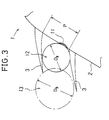
- an insecticide 12 consisting of the aforesaid zeolite is brought into contact with the scratch 11, the body fluids of the insect 1 are absorbed by the zeolite due to its moisture regulating or absorption properties, and the insect 1 therefore dies due to dehydration.
- the zeolite In order for this mechanism to be effective, the zeolite must reach the scratch 11 on the skin 2. As described hereintofore, however, there are usually hairs 3 on the skin 2 of the insect 1 which prevent the aforesaid insecticide 12 from coming into contact with it. It is therefore important to enable the insecticide 12 to avoid the obstruction presented by these hairs 3 so that it reaches the scratch 11 on the skin 2.
- the zeolite is used in powder form.
- the particle diameter D8 of the insecticide 12, which consists of powdered zeolite smaller than the distance P between the body hairs 3 of the insect 1, the probability that the insecticide 12 will come into contact with the scratch 11 is increased, and the death of the insect can be ensured.
- Fig. 3 also shows that in the case of an insecticide 13 having a particle diameter D9 larger than the distance P between the aforesaid body hairs 3, the insecticide is prevented from reaching the scratch 11 by the hairs 3.
- the particles of the insecticides 12 and 13 are represented simply as spheres, although in practice they will have many different shapes.
- the common advantage of the first, second and third mechanisms by which powdered zeolite acts is that unlike the case of conventional chemical insecticides, harmful insects can be eliminated from an area without spraying high concentrations of chemicals having high acute toxicity in the area.
- the adverse effects of chemical insecticides on man, animals and the environment can therefore be avoided, and as use is made of the physical properties of powdered solids, harmful insects can be eliminated even when the insecticides are used over long periods of time without the insects acquiring resistance.
- a filter paper was placed in the bottom of a Petri dish. A powdered insecticide was uniformly spread on this filter paper, 10 insects were placed in the dish, and the behavior of the insects was observed over a period of time.
- the Petri dishes used in this test had a diameter of 9 cm.
- the test was performed with 0.64 g of the aforesaid insecticide (corresponding to 100 g/m 2 ), the test insect being the worker of Formosan subterranean termite.
- the aforementioned distance P between the body hairs of the insect 1 is 63 am, and the opening W of the stomata is of the order of 30 u.m.
- the insecticides of the first and second examples were obtained by crushing zeolite rock, which is a naturally occurring aluminosilicate ore, to a fine powder.
- Example 1 The natural zeolite used in Example 1 was Izukalite (commercial name) manufactured by Izumo Chemicals Ltd., and that used in Example 2 was Zeofoil (commercial name) manufactured by Shin Tohoku Chemicals Ltd.
- Table 1 shows the chemical compositions (wt %) of these natural zeolites used in Examples 1 and 2. Table 1 also shows the chemical composition of the synthetic zeolite of Example 3.
- the ion exchange capacity of the insecticides of Examples 1 and 2 was measured according to the Zeolite Testing Method of the Japanese Soil Hardness Ordinances.
- Example 1 this capacity was 130 to 160 meq/100 g, and in Example 2, it was 150 to 170 meq/100 g.
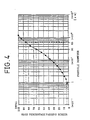
- Fig. 4 shows the particle size distribution of the insecticide of Example 1
- Fig. 5 shows the particle size distribution of the insecticide of Example 2, both of these insecticides consisting of powdered natural zeolite prepared as described hereintofore.
- the aforesaid insecticides consisting of powdered natural zeolite were found to be adhering to the skin and stomata of each insect. It may be conjectured that the aforesaid first, second and third mechanisms had combined to cause the death of the termites.
- Example 3 the insecticide consisted only of artificial zeolite. The results of a confirmatory test of the activity of this insecticide will now be described.
- the artificial zeolite used as an insecticide in Example 3 was coal ash zeolite manufactured by Nippon Steel Ltd., which was crushed to a powder.
- the ion exchange capacity of this insecticide was 200 - 350 meq/100 g. Table 1 shows its chemical composition.
- Fig. 6 shows the particle size distribution of the insecticide of Example 3. More than 95% of the material acts on the insects by the first, second and third mechanisms. Of this proportion, more than 85% acts by the second mechanism corresponding to the aforementioned particles 82, 83.
- the aforesaid first, second and third mechanisms combine together to act on the insects. It may further be conjectured that this insecticidal action is not limited to coal ash zeolite, but extends also to artificial zeolite manufactured from volcanic ash, artificial zeolite manufactured from blast furnace slag, and synthetic zeolite manufactured chemically.
- the aforesaid first, second and third mechanisms which were confirmed with powdered natural and artificial zeolite in the case of termites, are physical effects depending on the relation of the particle diameters of the zeolite insecticide to the distance P between the body hairs 3 and the opening W of the stoma 6 of the insect 1 which it is desired to eliminate.
- the insecticide may therefore be used on a variety of harmful insects.
- Insects which can be eliminated using the insecticide of the present invention include, for example, other types of termites or houseticks, house dust mites, acarid mites and cockroaches, as well as mosquitoes, flies, fleas, sucking lice, powderpost beetles, deathwatch and drugstore beetles, Indian meal moths, sawtoothed grain beetles, red flour beetles, maize weevils, azuki bean weevils, varied carpet beetles, black carpet beetles, casemaking clothes moths, midges, moth flies and sand flies, stink bugs, horse flies, mites, stable flies, Asiatic stem borers, planthoppers, green rice leafhoppers, soybean beetles, limabean pod borers, fruit borers, sacle insects, spider mites, aphids, diamondback moths, cabbage armyworms, vegetable weevils, Japanese
- houseticks such as dust mites and acarid mites possess no stomata and take in oxygen through the skin 2.
- the insecticide of the present invention therefore does not act by the aforesaid second mechanism.
- Natural zeolite adhering to the insect's skin however eliminates insects not only by preventing carbon dioxide release but also by obstructing oxygen intake according to the aforesaid first mechanism.
- the particle diameters of the active components of the insecticide are determined by the distance P between the body hairs and other features of the insect which it is desired to eliminate. If this insect is different from a termite, therefore, it is to be preferred that the particle size distribution of the insecticide used is suitably adjusted. In the case of an insecticide intended for a specific type of insect, moreover, it is effective to separate particles having a diameter smaller than the distance P between body hairs of the insect, and use only these particles as the insecticide.
- the distance between body hairs is approximately 30 am.
- Example 1 having the particle size distribution of Fig. 4
- more than about 65% by weight of the material functions as an active component which can reach the tick's skin.
- the proportion of the material which functions like the insecticide particles 82, 83 according to the aforesaid second mechanism is a little less than 5% by weight.
- the particle size distribution of the insecticide should be adjusted so that there are many fine particles. Further, if particles having a diameter larger than the distance P between the body hairs 3 of the insect, i.e. 30 am, are removed, there is a higher probability that the insecticide will adhere to the tick's skin, and the action of the insecticide will be enhanced.
- either natural zeolite or artificial zeolite may be used alone as in the aforesaid examples. It is however practical to use mixtures of these with suitable amounts of other solids such as fillers or enhancers which enhance insecticidal activity.
- Example 4 the insecticide was a mixture wherein talc, a clay mineral, was added to the aforesaid natural zeolite.
- the blending proportion by weight was zeolite 90%, talc 10%.
- Talc is a type of magnesium clay having the chemical formula:
- the talc used in the test was "3S Talc" (commercial name) manufactured by Maruo Calcium Ltd., and its particle size distribution is given in Fig 7. As is clear from Fig. 7, all of the talc consists of particle diameters which are active against termites.
- the inventors performed similar confirmatory tests on mixtures wherein clay minerals other than talc, i.e. clay, bentonite or sepiolite, were added in powder form to the aforesaid natural zeolite, but the details of these tests will be omitted here.
- clay minerals other than talc i.e. clay, bentonite or sepiolite
- Clay is an agglomeration of fine particles formed by the decomposition or breakdown of minerals in rock.
- Bentonite is a type of clay mineral of which the principal components are montmorillonite and beidellite, and which is also referred to as swelling soil.
- Sepiolite is a type of magnesium clay of which the chemical composition is represented by the formula:
- clays generally possess insecticidal activity in admixture with zeolite.
- Example 5 the insecticide was a mixture wherein diatomaceous earth was added to the aforesaid natural zeolite. The blending proportion by weight was zeolite 50%, diatomaceous earth 50%.
- Diatomaceous earth is a siliceous sedimentary rock formed for example by deposition of skeletal remains of diatoms on the seabed, and it also contains clay, volcanic ash and organic matter.
- the diatomaceous earth used in the test was "Radiolite #500" (commercial name) manufactured by Showa Chemicals Ltd., and its particle size distribution is given in Fig 8. As is clear from Fig. 8, more than approximately 80% of this diatomaceous earth consists of particle diameters which are active against termites.
- Example 5 After 5 hours, nine termites had died, and the remaining one was merely moving its legs and feelers occasionally. As it was clear that the insecticide of Example 5 had insecticidal activity, the test was terminated at this point.
- Example 6 the insecticide was a mixture wherein volcanic ash was added to the aforesaid natural zeolite. The blending proportion by weight was zeolite 90%, volcanic ash 10%.
- Volcanic ash is the general name for a pumice type of volcanic ash deposit.
- the volcanic ash used in the test was "S-20" (commercial name) manufactured by Ijichi Chemicals Ltd., and its particle size distribution is given in Fig 9. As is clear from Fig. 9, a little less than 70% of this volcanic ash consists of particle diameters which are active against termites.
- Example 6 When the dead termites from the test of Example 6 were observed under a microscope, powdered insecticide was found to be adhering to the skin of the insects including the stomata as in the case of Example 1. This confirms that the mechanism of the insecticide was the same as that of Example 1.
- Example 7 the insecticide was a mixture wherein calcium carbonate (CaC0 3 ) was added to the aforesaid natural zeolite.
- the blending proportion by weight was zeolite 50%, calcium carbonate 50%.
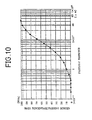
- This calcium carbonate was "Special Lice S” (commercial name) manufactured by Maruo Calcium Ltd., and its particle size distribution is given in Fig 10. As is clear from Fig. 10, all of the calcium carbonate consists of particle diameters which are active against termites.
- Example 7 When the dead termites from the test of Example 7 were observed under a microscope, powdered insecticide was found to be adhering to the skin of the insects including the stomata as in the case of Example 1. This confirms that the mechanism of the insecticide was the same as that of Example 1.
- the insecticide was a mixture wherein coal ash was added to the aforesaid natural zeolite.
- the blending proportion by weight was zeolite 50%, coal ash 50%.
- Coal ash is an ash recovered from flue gases such as are discharged by boilers which use powdered coal.
- the coal ash used in the test was "ONODA SUPER FLOW" (commercial name) manufactured by Onoda Cement Ltd., and its particle size distribution is given in Fig 11. As is clear from Fig. 11, all of the coal ash consists of particle diameters which are active against termites.
- Example 8 When the dead termites from the test of Example 8 were observed under a microscope, powdered insecticide was found to be adhering to the skin of the insects including the stomata as in the case of Example 1. This confirms that the mechanism of the insecticide was the same as that of Example 1.
- the insecticide was a mixture wherein silica gel was added to the aforesaid natural zeolite.
- the blending proportion by weight was zeolite 50%, silica gel 50%.
- the silica gel used in the test was "Fuji Home Gel G” (commercial name) manufactured Fuji Davison Chemicals Ltd., and its particle size distribution is given in Fig 12. As is clear from Fig. 12, more than approximately 35% of this silica gel consists of particle diameters which are active against termites by means of the aforesaid mechanisms, the remaining larger proportion having the function of maintaining dry conditions in the Petri dish.
- the insecticide was a mixture wherein silicic acid anhydride (Si0 2 ) was added to the aforesaid natural zeolite.
- the blending proportion by weight was zeolite 50%, silicic acid anhydride 50%.
- the silicic acid anhydride used in the test was "Raolosil QS-102" (commercial name) manufactured by Tokuyama Soda Ltd. Its particle size distribution lies approximately in the range 75 ma - 275 mu. , i.e. far smaller than the particle diameters which are active by means of the aforesaid first, second and third mechanisms.
- insecticides have been described wherein natural zeolite, artificial zeolite or synthetic zeolite were used alone or in admixture with suitable solids.
- This patent application is however not limited to these cases, and chemicals having weak insecticidal activity such as for example boric acid may also be added. Further, it will be understood that the blending proportion of such added solids may be suitably adjusted, and two or more solids may be used in conjunction as may be desired.
- the insecticide of the present invention employs zeolite with the addition of suitable solids or other weakly active chemicals. As it is not as strong as conventional insecticides, it is does not require as much care in handling as for example when the insecticide is sprayed, and it is moreover easy to use.
- the zeolite has moisture regulating properties, and can therefore maintain dry conditions unsuitable for sustaining harmful insects in areas where the insecticide is used.
- zeolite contains some particles having a diameter smaller than the distance between insect body hairs, a fine powder of these particles adheres to the insect's body surface despite the presence of the hairs. This prevents release of carbon dioxide gas from the insect's skin, and causes the insect's death due to respiratory failure.
- the aforesaid fine zeolite powder adheres to the stomata. This prevents the insect from taking in oxygen, and causes the insect's death due to oxygen deficiency.
- the insect when foreign matter adheres to an insect's the body surface or hairs, the insect tries to brush it off. In this brushing off action, the insect scratches itself. The aforesaid fine powder then adheres to the scratches despite the presence of body hairs, and due to the moisture regulating properties of the zeolite, the zeolite absorbs the insect's body fluids which causes the insect's death by dehydration.
- This type of zeolite is not only less toxic than conventional insecticides, but it also effective as an insecticide due to the aforesaid mechanisms.
- the insecticide provided by the invention therefore has little adverse effect on man or animals and presents little risk of environmental pollution, but definitively eliminates harmful insects even when used over long periods of time without the insects acquiring resistance.
Landscapes
- Life Sciences & Earth Sciences (AREA)
- General Health & Medical Sciences (AREA)
- Health & Medical Sciences (AREA)
- Dentistry (AREA)
- Pest Control & Pesticides (AREA)
- Plant Pathology (AREA)
- Engineering & Computer Science (AREA)
- Agronomy & Crop Science (AREA)
- Wood Science & Technology (AREA)
- Zoology (AREA)
- Environmental Sciences (AREA)
- Inorganic Chemistry (AREA)
- Chemical & Material Sciences (AREA)
- Toxicology (AREA)
- Agricultural Chemicals And Associated Chemicals (AREA)
Applications Claiming Priority (4)
| Application Number | Priority Date | Filing Date | Title |
|---|---|---|---|
| JP27231191 | 1991-10-21 | ||
| JP272311/91 | 1991-10-21 | ||
| JP237276/92 | 1992-09-04 | ||
| JP23727692A JP3259853B2 (ja) | 1991-10-21 | 1992-09-04 | 害虫駆除材 |
Publications (2)
| Publication Number | Publication Date |
|---|---|
| EP0579834A1 true EP0579834A1 (de) | 1994-01-26 |
| EP0579834A4 EP0579834A4 (en) | 1994-05-18 |
Family
ID=26533146
Family Applications (1)
| Application Number | Title | Priority Date | Filing Date |
|---|---|---|---|
| EP19920921834 Withdrawn EP0579834A4 (en) | 1991-10-21 | 1992-10-21 | Insecticide for noxious insect |
Country Status (6)
| Country | Link |
|---|---|
| US (1) | US5576007A (de) |
| EP (1) | EP0579834A4 (de) |
| JP (1) | JP3259853B2 (de) |
| AU (1) | AU665585B2 (de) |
| MY (1) | MY109332A (de) |
| WO (1) | WO1993007752A1 (de) |
Cited By (5)
| Publication number | Priority date | Publication date | Assignee | Title |
|---|---|---|---|---|
| WO1996036220A3 (en) * | 1995-05-11 | 1997-01-03 | Canada Agriculture | Insecticidal composition containing diatomaceous earth and silica |
| US5773017A (en) * | 1995-05-11 | 1998-06-30 | Hedley Pacific Ventures Ltd. | Diatomaceous earth insecticidal composition |
| WO2005027641A1 (de) * | 2003-09-19 | 2005-03-31 | Rosmarie Zirnbauer | Parasitenabwehrmittel |
| EP1938825A1 (de) * | 2006-12-22 | 2008-07-02 | Jakob Hraschan | Einsatz von Zeolith in der Therapie und Prophylaxe der Osteoporose |
| EP3020278A4 (de) * | 2013-07-12 | 2016-12-28 | Sumitomo Chemical Co | Festes agrochemisches präparat |
Families Citing this family (14)
| Publication number | Priority date | Publication date | Assignee | Title |
|---|---|---|---|---|
| JPH0773468B2 (ja) * | 1992-11-27 | 1995-08-09 | ジークライト株式会社 | 植物への害虫忌避方法 |
| GB2399501B (en) * | 2000-11-03 | 2005-05-11 | Second Nature Uk Ltd | Protection of fibres from attack by insects |
| US6689394B2 (en) * | 2001-06-11 | 2004-02-10 | Schering-Plough Healthcare Products, Inc. | Removal of ectoparasites |
| US6685969B2 (en) * | 2001-06-11 | 2004-02-03 | Schering-Plough Healthcare Products, Inc. | Treatment for ectoparasites |
| AU755845B1 (en) * | 2001-11-27 | 2002-12-19 | Gem Of The North Pty Ltd | An pesticide composition containing finely ground amorphous silica |
| FR2848780B1 (fr) * | 2002-12-19 | 2005-05-13 | Solvay | Utilisation d'une poudre acaricide |
| FR2883128B1 (fr) * | 2005-03-17 | 2008-02-15 | Solvay | Suspension aqueuse parasiticide |
| ES2333841B1 (es) * | 2009-08-28 | 2010-10-21 | Fmc Foret S.A. | Composicion fortificante reguladora de la transpiracion, protectora de hojas y frutos y utilizacion de la misma. |
| ITMI20101352A1 (it) * | 2010-07-22 | 2012-01-23 | Blu Line S R L | Uso di argille acide per il trattamento di colture contro l'attacco di insetti fitofagi |
| WO2016034704A1 (en) | 2014-09-04 | 2016-03-10 | Solvay Sa | Method for the prophylactic treatment of a food product silo |
| ES2895130T3 (es) | 2016-02-12 | 2022-02-17 | Imerys Filtration Minerals Inc | Método para matar artrópodos |
| EP3651582A4 (de) * | 2017-07-13 | 2021-04-28 | Imerys USA, Inc. | Pestizidzusammensetzungen und verfahren zu ihrer verwendung |
| WO2019149925A1 (en) | 2018-02-02 | 2019-08-08 | Solvay Sa | Method for the prophylactic treatment of a food product |
| RU2704443C1 (ru) * | 2019-04-05 | 2019-10-28 | Общество с ограниченной ответственностью "ГЕОАЛСЕР" | Инсектицидная композиция |
Family Cites Families (23)
| Publication number | Priority date | Publication date | Assignee | Title |
|---|---|---|---|---|
| US3124505A (en) * | 1964-03-10 | Aerosol concentrates containing a sta- | ||
| US3235451A (en) * | 1962-03-12 | 1966-02-15 | Fmc Corp | Silica powder insecticide with glycols to reduce dustiness |
| AU476508B2 (en) * | 1975-10-30 | 1976-09-23 | Clough, A. | Insecticidal composition and method of preparing the same |
| US4279895A (en) * | 1979-07-13 | 1981-07-21 | Arthur Carle | Insecticidal natural bait composition and method of using same |
| US4386071A (en) * | 1979-07-13 | 1983-05-31 | Arthur Carle | Insecticidal natural bait composition and method of using same |
| US4321258A (en) * | 1980-08-13 | 1982-03-23 | Dunlap Dorsey S | Non-toxic insecticide |
| GB2115282A (en) * | 1982-02-23 | 1983-09-07 | Shell Int Research | Pesticidal composition |
| CS240518B1 (sk) * | 1983-11-09 | 1986-02-13 | Jan Gardos | Insekticídny prostriedok na báze zeolitov |
| US4938958A (en) * | 1986-12-05 | 1990-07-03 | Shinagawa Fuel Co., Ltd. | Antibiotic zeolite |
| JP2671130B2 (ja) * | 1987-04-02 | 1997-10-29 | 武田薬品工業株式会社 | 株元防除用農薬粉剤 |
| JPS6425705A (en) * | 1987-04-07 | 1989-01-27 | Takeda Chemical Industries Ltd | Validamycin dust |
| JPS6419011A (en) * | 1987-07-13 | 1989-01-23 | Mitsuo Matsui | Vermin repellent |
| CA1313817C (en) * | 1987-07-24 | 1993-02-23 | Samuel Ralph Loschiavo | Device for controlling food product insects |
| JPH0688885B2 (ja) * | 1987-12-26 | 1994-11-09 | 品川燃料株式会社 | 抗菌性粉体を含有する分散体の製造方法 |
| JPH0699134B2 (ja) * | 1988-04-08 | 1994-12-07 | 富士デヴィソン化学株式会社 | 害虫防除用シリカゲルとそのシリカゲルによる害虫防除法 |
| US4984663A (en) * | 1989-03-07 | 1991-01-15 | Fuji Tekko Co., Ltd. | Transfer apparatus for 4-wheel driving |
| HU206484B (en) * | 1989-03-24 | 1992-11-30 | Orszagos Frederic Joliot Curie | Silicium-containing environment-protecting composition adsorbing radioactive metal-isotopes and toxic heavy metals and process for producing pharmaceutical compositions containing this active component |
| CA1286219C (en) * | 1989-06-08 | 1991-07-16 | John W. Tucker | Insecticidal bait composition and method for making same |
| JP2852947B2 (ja) * | 1989-11-28 | 1999-02-03 | 日本バイエルアグロケム株式会社 | 安定化された農薬組成物 |
| JP2875611B2 (ja) * | 1990-08-29 | 1999-03-31 | エーザイ株式会社 | ケイ酸カルシウム含有外用剤 |
| JPH0699258B2 (ja) * | 1991-03-22 | 1994-12-07 | 株式会社萩原技研 | 耐熱・耐候性抗菌性組成物 |
| US5180585A (en) * | 1991-08-09 | 1993-01-19 | E. I. Du Pont De Nemours And Company | Antimicrobial compositions, process for preparing the same and use |
| DE4131117A1 (de) * | 1991-09-11 | 1993-03-18 | Lothar Haering | Ungiftiges schaedlingsbekaempfungsmittel/insektizid |
-
1992
- 1992-09-04 JP JP23727692A patent/JP3259853B2/ja not_active Expired - Fee Related
- 1992-10-17 MY MYPI92001879A patent/MY109332A/en unknown
- 1992-10-21 WO PCT/JP1992/001364 patent/WO1993007752A1/ja not_active Ceased
- 1992-10-21 EP EP19920921834 patent/EP0579834A4/en not_active Withdrawn
- 1992-10-21 AU AU28630/92A patent/AU665585B2/en not_active Ceased
- 1992-10-21 US US08/078,169 patent/US5576007A/en not_active Expired - Fee Related
Cited By (9)
| Publication number | Priority date | Publication date | Assignee | Title |
|---|---|---|---|---|
| WO1996036220A3 (en) * | 1995-05-11 | 1997-01-03 | Canada Agriculture | Insecticidal composition containing diatomaceous earth and silica |
| US5773017A (en) * | 1995-05-11 | 1998-06-30 | Hedley Pacific Ventures Ltd. | Diatomaceous earth insecticidal composition |
| AU703981B2 (en) * | 1995-05-11 | 1999-04-01 | Hedley Technologies Inc | Diatomaceous earth insecticidal composition |
| CN1101651C (zh) * | 1995-05-11 | 2003-02-19 | 依仗加拿大权利的女皇陛下由农业部长代表 | 硅藻土杀虫组合物 |
| WO2005027641A1 (de) * | 2003-09-19 | 2005-03-31 | Rosmarie Zirnbauer | Parasitenabwehrmittel |
| EP1938825A1 (de) * | 2006-12-22 | 2008-07-02 | Jakob Hraschan | Einsatz von Zeolith in der Therapie und Prophylaxe der Osteoporose |
| WO2008077174A1 (de) * | 2006-12-22 | 2008-07-03 | Jakob Hraschan | Verwendung von natürlichem zeolith zur behandlung, vorbeugung oder verzögerung des beginns von knochenerkrankungen |
| EP3020278A4 (de) * | 2013-07-12 | 2016-12-28 | Sumitomo Chemical Co | Festes agrochemisches präparat |
| US9756853B2 (en) | 2013-07-12 | 2017-09-12 | Sumitomo Chemical Company, Limited | Solid pesticidal formulation |
Also Published As
| Publication number | Publication date |
|---|---|
| AU2863092A (en) | 1993-05-21 |
| EP0579834A4 (en) | 1994-05-18 |
| AU665585B2 (en) | 1996-01-11 |
| US5576007A (en) | 1996-11-19 |
| JP3259853B2 (ja) | 2002-02-25 |
| MY109332A (en) | 1997-01-31 |
| JPH05201818A (ja) | 1993-08-10 |
| WO1993007752A1 (fr) | 1993-04-29 |
Similar Documents
| Publication | Publication Date | Title |
|---|---|---|
| US5576007A (en) | Zeolite insecticide for termites | |
| KR100503578B1 (ko) | 절지류 피해로부터 표면을 보호하는 방법 | |
| US5122518A (en) | Insecticides | |
| US20170251655A2 (en) | Compositions and methods for capturing, killing or repelling bed bugs | |
| EP0969725B1 (de) | Verfahren zum schutz von oberflächen vor arthropoden | |
| WO2014028835A2 (en) | Compositions and methods for the attraction and repulsion of insects | |
| PT1322155E (pt) | Sistema de distribuição de pesticida | |
| US4996053A (en) | Bait for controlling darkling beetles, lesser metal worms and hide beetles | |
| Ebeling et al. | Inorganic insecticides and dusts | |
| US5721274A (en) | Repellents for ants | |
| CA2161511A1 (en) | Miticidal composition and method for controlling spider mite populations | |
| US6294577B1 (en) | Repellent for ants | |
| WO2018073472A1 (es) | Sustrato para el control de moscas y otros insectos, su proceso de fabricación y uso del sustrato como cama de animales | |
| Rajendran | Grain storage: Perspectives and problems | |
| US5192545A (en) | Silica gels for controlling insect pests | |
| CN114097791A (zh) | 一种对松材线虫病及其媒介昆虫具有引诱和防控效果的耐冲刷粉剂 | |
| Chandran et al. | Use of inert materials for the management of stored product insects | |
| JP4336806B2 (ja) | アリモドキゾウムシ誘引殺虫剤組成物 | |
| EP0337212A2 (de) | Silikagele zur Insektenbekämpfung | |
| Ramulu | Chemistry of Insecticides and Fungicides 3nd Edition | |
| US5135750A (en) | Silica gels for controlling insect pests | |
| RU2102060C1 (ru) | Инсектоакарицидная композиция, способ защиты пищевых продуктов от вредителей и паразитов, способ получения суспензии инсектоакарицидного порошка, способ получения инсектоакарицидного порошка | |
| CN1111007C (zh) | 煤基酸杀虫剂 | |
| RU2783683C1 (ru) | Дезинсекционный порошок на основе кварцевой муки (варианты) | |
| CN1216534C (zh) | 以氟氯氰菊酯为原料的一组农用杀虫剂及其配制方法 |
Legal Events
| Date | Code | Title | Description |
|---|---|---|---|
| PUAI | Public reference made under article 153(3) epc to a published international application that has entered the european phase |
Free format text: ORIGINAL CODE: 0009012 |
|
| 17P | Request for examination filed |
Effective date: 19930716 |
|
| AK | Designated contracting states |
Kind code of ref document: A1 Designated state(s): AT BE CH DE DK ES FR GB GR IT LI NL SE |
|
| RIN1 | Information on inventor provided before grant (corrected) |
Inventor name: YAMAMOTO, NAOAKI Inventor name: INOUE, YOSHIKI Inventor name: IKEDA, SATOSHI |
|
| A4 | Supplementary search report drawn up and despatched | ||
| AK | Designated contracting states |
Kind code of ref document: A4 Designated state(s): AT BE CH DE DK ES FR GB GR IT LI NL SE |
|
| 17Q | First examination report despatched |
Effective date: 19960128 |
|
| STAA | Information on the status of an ep patent application or granted ep patent |
Free format text: STATUS: THE APPLICATION IS DEEMED TO BE WITHDRAWN |
|
| 18D | Application deemed to be withdrawn |
Effective date: 19960806 |