EP0582811B1 - Polysiloxanes façonnés ayant des groupes sulphonate, procédé de préparation et leur application - Google Patents
Polysiloxanes façonnés ayant des groupes sulphonate, procédé de préparation et leur application Download PDFInfo
- Publication number
- EP0582811B1 EP0582811B1 EP93109931A EP93109931A EP0582811B1 EP 0582811 B1 EP0582811 B1 EP 0582811B1 EP 93109931 A EP93109931 A EP 93109931A EP 93109931 A EP93109931 A EP 93109931A EP 0582811 B1 EP0582811 B1 EP 0582811B1
- Authority
- EP
- European Patent Office
- Prior art keywords
- atoms
- sio
- sulphonate groups
- organopolysiloxanes containing
- water
- Prior art date
- Legal status (The legal status is an assumption and is not a legal conclusion. Google has not performed a legal analysis and makes no representation as to the accuracy of the status listed.)
- Expired - Lifetime
Links
- 229920001296 polysiloxane Polymers 0.000 title claims abstract description 41
- 125000001273 sulfonato group Chemical group [O-]S(*)(=O)=O 0.000 title claims abstract description 40
- 238000000034 method Methods 0.000 title claims abstract description 22
- 238000002360 preparation method Methods 0.000 title claims description 5
- -1 polysiloxanes Polymers 0.000 title description 11
- 239000003054 catalyst Substances 0.000 claims abstract description 11
- XUIMIQQOPSSXEZ-UHFFFAOYSA-N Silicon Chemical compound [Si] XUIMIQQOPSSXEZ-UHFFFAOYSA-N 0.000 claims abstract description 10
- 238000004132 cross linking Methods 0.000 claims abstract description 10
- 229910052710 silicon Inorganic materials 0.000 claims abstract description 9
- 239000011148 porous material Substances 0.000 claims abstract description 8
- 229910021645 metal ion Inorganic materials 0.000 claims abstract description 6
- 239000011973 solid acid Substances 0.000 claims abstract description 6
- 229910052739 hydrogen Inorganic materials 0.000 claims abstract description 5
- 239000010703 silicon Substances 0.000 claims abstract description 5
- AZDRQVAHHNSJOQ-UHFFFAOYSA-N alumane Chemical class [AlH3] AZDRQVAHHNSJOQ-UHFFFAOYSA-N 0.000 claims abstract description 4
- 239000012798 spherical particle Substances 0.000 claims abstract description 3
- 125000002947 alkylene group Chemical group 0.000 claims abstract 3
- 239000001257 hydrogen Substances 0.000 claims abstract 2
- 125000004430 oxygen atom Chemical group O* 0.000 claims abstract 2
- 229920006395 saturated elastomer Polymers 0.000 claims abstract 2
- 150000003961 organosilicon compounds Chemical class 0.000 claims description 17
- XLYOFNOQVPJJNP-UHFFFAOYSA-N water Substances O XLYOFNOQVPJJNP-UHFFFAOYSA-N 0.000 claims description 16
- 239000000203 mixture Substances 0.000 claims description 14
- 239000012071 phase Substances 0.000 claims description 14
- 239000002904 solvent Substances 0.000 claims description 14
- 239000007864 aqueous solution Substances 0.000 claims description 13
- 238000001879 gelation Methods 0.000 claims description 8
- 229910052751 metal Inorganic materials 0.000 claims description 8
- 239000002184 metal Substances 0.000 claims description 8
- 238000006243 chemical reaction Methods 0.000 claims description 7
- 238000005342 ion exchange Methods 0.000 claims description 7
- LFQSCWFLJHTTHZ-UHFFFAOYSA-N Ethanol Chemical compound CCO LFQSCWFLJHTTHZ-UHFFFAOYSA-N 0.000 claims description 6
- YXFVVABEGXRONW-UHFFFAOYSA-N Toluene Chemical compound CC1=CC=CC=C1 YXFVVABEGXRONW-UHFFFAOYSA-N 0.000 claims description 6
- KPUWHANPEXNPJT-UHFFFAOYSA-N disiloxane Chemical class [SiH3]O[SiH3] KPUWHANPEXNPJT-UHFFFAOYSA-N 0.000 claims description 6
- 150000001768 cations Chemical class 0.000 claims description 5
- 239000007791 liquid phase Substances 0.000 claims description 5
- 239000002245 particle Substances 0.000 claims description 5
- 238000003756 stirring Methods 0.000 claims description 5
- 238000009833 condensation Methods 0.000 claims description 4
- 230000005494 condensation Effects 0.000 claims description 4
- 238000001035 drying Methods 0.000 claims description 4
- 239000003960 organic solvent Substances 0.000 claims description 4
- 239000008346 aqueous phase Substances 0.000 claims description 3
- 239000003153 chemical reaction reagent Substances 0.000 claims description 3
- 239000007789 gas Substances 0.000 claims description 3
- 125000001997 phenyl group Chemical group [H]C1=C([H])C([H])=C(*)C([H])=C1[H] 0.000 claims description 3
- 238000005496 tempering Methods 0.000 claims description 3
- 239000007788 liquid Substances 0.000 claims description 2
- 150000007522 mineralic acids Chemical class 0.000 claims description 2
- 150000007524 organic acids Chemical class 0.000 claims description 2
- 239000011541 reaction mixture Substances 0.000 claims description 2
- 230000003068 static effect Effects 0.000 claims description 2
- 125000004432 carbon atom Chemical group C* 0.000 claims 9
- 229910006069 SO3H Inorganic materials 0.000 claims 8
- 229910020485 SiO4/2 Inorganic materials 0.000 claims 5
- VEXZGXHMUGYJMC-UHFFFAOYSA-N Hydrochloric acid Chemical compound Cl VEXZGXHMUGYJMC-UHFFFAOYSA-N 0.000 claims 2
- URLKBWYHVLBVBO-UHFFFAOYSA-N Para-Xylene Chemical group CC1=CC=C(C)C=C1 URLKBWYHVLBVBO-UHFFFAOYSA-N 0.000 claims 2
- 229910020447 SiO2/2 Inorganic materials 0.000 claims 2
- 125000000217 alkyl group Chemical group 0.000 claims 2
- 125000002993 cycloalkylene group Chemical group 0.000 claims 2
- 239000001301 oxygen Substances 0.000 claims 2
- 229910052760 oxygen Inorganic materials 0.000 claims 2
- 239000011343 solid material Substances 0.000 claims 2
- 239000004215 Carbon black (E152) Substances 0.000 claims 1
- UFHFLCQGNIYNRP-UHFFFAOYSA-N Hydrogen Chemical group [H][H] UFHFLCQGNIYNRP-UHFFFAOYSA-N 0.000 claims 1
- 229910020487 SiO3/2 Inorganic materials 0.000 claims 1
- 150000001450 anions Chemical class 0.000 claims 1
- 125000004122 cyclic group Chemical group 0.000 claims 1
- 238000010438 heat treatment Methods 0.000 claims 1
- 229930195733 hydrocarbon Natural products 0.000 claims 1
- 150000002430 hydrocarbons Chemical class 0.000 claims 1
- 230000001681 protective effect Effects 0.000 claims 1
- 230000035484 reaction time Effects 0.000 claims 1
- 238000004519 manufacturing process Methods 0.000 abstract description 5
- 239000004971 Cross linker Substances 0.000 abstract description 3
- 125000004435 hydrogen atom Chemical group [H]* 0.000 abstract 1
- 239000000047 product Substances 0.000 description 16
- 239000007787 solid Substances 0.000 description 10
- 229910004283 SiO 4 Inorganic materials 0.000 description 7
- 229920000642 polymer Polymers 0.000 description 6
- 238000010992 reflux Methods 0.000 description 6
- 239000000243 solution Substances 0.000 description 6
- 150000001875 compounds Chemical class 0.000 description 5
- 239000000499 gel Substances 0.000 description 5
- 239000011159 matrix material Substances 0.000 description 5
- 239000000126 substance Substances 0.000 description 5
- 238000011282 treatment Methods 0.000 description 5
- 229910004298 SiO 2 Inorganic materials 0.000 description 4
- 238000000921 elemental analysis Methods 0.000 description 4
- 150000002500 ions Chemical class 0.000 description 4
- 239000000463 material Substances 0.000 description 4
- 230000000704 physical effect Effects 0.000 description 4
- QTBSBXVTEAMEQO-UHFFFAOYSA-N Acetic acid Chemical compound CC(O)=O QTBSBXVTEAMEQO-UHFFFAOYSA-N 0.000 description 3
- OKKJLVBELUTLKV-UHFFFAOYSA-N Methanol Chemical compound OC OKKJLVBELUTLKV-UHFFFAOYSA-N 0.000 description 3
- CTQNGGLPUBDAKN-UHFFFAOYSA-N O-Xylene Chemical compound CC1=CC=CC=C1C CTQNGGLPUBDAKN-UHFFFAOYSA-N 0.000 description 3
- 239000002253 acid Substances 0.000 description 3
- 230000002378 acidificating effect Effects 0.000 description 3
- 230000003197 catalytic effect Effects 0.000 description 3
- 125000000524 functional group Chemical group 0.000 description 3
- 239000011521 glass Substances 0.000 description 3
- 238000006386 neutralization reaction Methods 0.000 description 3
- 239000000725 suspension Substances 0.000 description 3
- 239000008096 xylene Substances 0.000 description 3
- VQTUBCCKSQIDNK-UHFFFAOYSA-N Isobutene Chemical compound CC(C)=C VQTUBCCKSQIDNK-UHFFFAOYSA-N 0.000 description 2
- BZLVMXJERCGZMT-UHFFFAOYSA-N Methyl tert-butyl ether Chemical compound COC(C)(C)C BZLVMXJERCGZMT-UHFFFAOYSA-N 0.000 description 2
- 229910002808 Si–O–Si Inorganic materials 0.000 description 2
- 230000001476 alcoholic effect Effects 0.000 description 2
- 229910052782 aluminium Inorganic materials 0.000 description 2
- 238000004873 anchoring Methods 0.000 description 2
- 239000012736 aqueous medium Substances 0.000 description 2
- 230000015572 biosynthetic process Effects 0.000 description 2
- 230000000694 effects Effects 0.000 description 2
- 150000002148 esters Chemical class 0.000 description 2
- 239000010419 fine particle Substances 0.000 description 2
- 230000007062 hydrolysis Effects 0.000 description 2
- 238000006460 hydrolysis reaction Methods 0.000 description 2
- 229920000592 inorganic polymer Polymers 0.000 description 2
- 239000002609 medium Substances 0.000 description 2
- 239000000178 monomer Substances 0.000 description 2
- 230000000877 morphologic effect Effects 0.000 description 2
- 239000012299 nitrogen atmosphere Substances 0.000 description 2
- 239000012074 organic phase Substances 0.000 description 2
- 150000003839 salts Chemical class 0.000 description 2
- 238000007493 shaping process Methods 0.000 description 2
- 239000007858 starting material Substances 0.000 description 2
- 125000000542 sulfonic acid group Chemical group 0.000 description 2
- 238000003786 synthesis reaction Methods 0.000 description 2
- LSNNMFCWUKXFEE-UHFFFAOYSA-M Bisulfite Chemical compound OS([O-])=O LSNNMFCWUKXFEE-UHFFFAOYSA-M 0.000 description 1
- 229910021591 Copper(I) chloride Inorganic materials 0.000 description 1
- 239000004793 Polystyrene Substances 0.000 description 1
- VYPSYNLAJGMNEJ-UHFFFAOYSA-N Silicium dioxide Chemical compound O=[Si]=O VYPSYNLAJGMNEJ-UHFFFAOYSA-N 0.000 description 1
- DHXVGJBLRPWPCS-UHFFFAOYSA-N Tetrahydropyran Chemical compound C1CCOCC1 DHXVGJBLRPWPCS-UHFFFAOYSA-N 0.000 description 1
- RTAQQCXQSZGOHL-UHFFFAOYSA-N Titanium Chemical compound [Ti] RTAQQCXQSZGOHL-UHFFFAOYSA-N 0.000 description 1
- 238000007171 acid catalysis Methods 0.000 description 1
- 239000003377 acid catalyst Substances 0.000 description 1
- 239000000654 additive Substances 0.000 description 1
- 230000000996 additive effect Effects 0.000 description 1
- 230000032683 aging Effects 0.000 description 1
- 150000001298 alcohols Chemical class 0.000 description 1
- XAGFODPZIPBFFR-UHFFFAOYSA-N aluminium Chemical compound [Al] XAGFODPZIPBFFR-UHFFFAOYSA-N 0.000 description 1
- 150000001449 anionic compounds Chemical class 0.000 description 1
- 230000001580 bacterial effect Effects 0.000 description 1
- 239000011324 bead Substances 0.000 description 1
- 238000009835 boiling Methods 0.000 description 1
- 230000015556 catabolic process Effects 0.000 description 1
- 239000007795 chemical reaction product Substances 0.000 description 1
- 238000004140 cleaning Methods 0.000 description 1
- 239000011362 coarse particle Substances 0.000 description 1
- 230000001427 coherent effect Effects 0.000 description 1
- 238000006482 condensation reaction Methods 0.000 description 1
- 238000001816 cooling Methods 0.000 description 1
- OXBLHERUFWYNTN-UHFFFAOYSA-M copper(I) chloride Chemical compound [Cu]Cl OXBLHERUFWYNTN-UHFFFAOYSA-M 0.000 description 1
- 239000003431 cross linking reagent Substances 0.000 description 1
- 238000013016 damping Methods 0.000 description 1
- 238000005661 deetherification reaction Methods 0.000 description 1
- 238000006731 degradation reaction Methods 0.000 description 1
- 238000010612 desalination reaction Methods 0.000 description 1
- 238000011161 development Methods 0.000 description 1
- 230000018109 developmental process Effects 0.000 description 1
- 239000002270 dispersing agent Substances 0.000 description 1
- 239000006185 dispersion Substances 0.000 description 1
- 238000009826 distribution Methods 0.000 description 1
- 239000003651 drinking water Substances 0.000 description 1
- 235000020188 drinking water Nutrition 0.000 description 1
- 238000005516 engineering process Methods 0.000 description 1
- 238000005886 esterification reaction Methods 0.000 description 1
- 238000006266 etherification reaction Methods 0.000 description 1
- 238000000605 extraction Methods 0.000 description 1
- 230000002349 favourable effect Effects 0.000 description 1
- 238000001914 filtration Methods 0.000 description 1
- 230000002209 hydrophobic effect Effects 0.000 description 1
- 238000010348 incorporation Methods 0.000 description 1
- 238000006317 isomerization reaction Methods 0.000 description 1
- 229910000000 metal hydroxide Inorganic materials 0.000 description 1
- 150000004692 metal hydroxides Chemical class 0.000 description 1
- 229910044991 metal oxide Inorganic materials 0.000 description 1
- 150000004706 metal oxides Chemical class 0.000 description 1
- 150000002739 metals Chemical class 0.000 description 1
- 150000002891 organic anions Chemical class 0.000 description 1
- 229920002223 polystyrene Polymers 0.000 description 1
- 238000012545 processing Methods 0.000 description 1
- 125000004805 propylene group Chemical group [H]C([H])([H])C([H])([*:1])C([H])([H])[*:2] 0.000 description 1
- 230000000717 retained effect Effects 0.000 description 1
- 238000005204 segregation Methods 0.000 description 1
- 230000035945 sensitivity Effects 0.000 description 1
- 239000000741 silica gel Substances 0.000 description 1
- 229910002027 silica gel Inorganic materials 0.000 description 1
- RMAQACBXLXPBSY-UHFFFAOYSA-N silicic acid Chemical class O[Si](O)(O)O RMAQACBXLXPBSY-UHFFFAOYSA-N 0.000 description 1
- 125000006850 spacer group Chemical group 0.000 description 1
- 125000001424 substituent group Chemical group 0.000 description 1
- 238000000967 suction filtration Methods 0.000 description 1
- BDHFUVZGWQCTTF-UHFFFAOYSA-M sulfonate Chemical compound [O-]S(=O)=O BDHFUVZGWQCTTF-UHFFFAOYSA-M 0.000 description 1
- 239000006228 supernatant Substances 0.000 description 1
- 230000008961 swelling Effects 0.000 description 1
- 238000012360 testing method Methods 0.000 description 1
- 230000008719 thickening Effects 0.000 description 1
- 229910052719 titanium Inorganic materials 0.000 description 1
- 239000010936 titanium Substances 0.000 description 1
- 238000005809 transesterification reaction Methods 0.000 description 1
- 238000012546 transfer Methods 0.000 description 1
- 238000011144 upstream manufacturing Methods 0.000 description 1
- 238000005406 washing Methods 0.000 description 1
- 239000003799 water insoluble solvent Substances 0.000 description 1
- 238000010626 work up procedure Methods 0.000 description 1
Classifications
-
- B—PERFORMING OPERATIONS; TRANSPORTING
- B01—PHYSICAL OR CHEMICAL PROCESSES OR APPARATUS IN GENERAL
- B01J—CHEMICAL OR PHYSICAL PROCESSES, e.g. CATALYSIS OR COLLOID CHEMISTRY; THEIR RELEVANT APPARATUS
- B01J31/00—Catalysts comprising hydrides, coordination complexes or organic compounds
- B01J31/02—Catalysts comprising hydrides, coordination complexes or organic compounds containing organic compounds or metal hydrides
- B01J31/12—Catalysts comprising hydrides, coordination complexes or organic compounds containing organic compounds or metal hydrides containing organo-metallic compounds or metal hydrides
- B01J31/123—Organometallic polymers, e.g. comprising C-Si bonds in the main chain or in subunits grafted to the main chain
- B01J31/124—Silicones or siloxanes or comprising such units
-
- B—PERFORMING OPERATIONS; TRANSPORTING
- B01—PHYSICAL OR CHEMICAL PROCESSES OR APPARATUS IN GENERAL
- B01J—CHEMICAL OR PHYSICAL PROCESSES, e.g. CATALYSIS OR COLLOID CHEMISTRY; THEIR RELEVANT APPARATUS
- B01J31/00—Catalysts comprising hydrides, coordination complexes or organic compounds
- B01J31/02—Catalysts comprising hydrides, coordination complexes or organic compounds containing organic compounds or metal hydrides
- B01J31/0215—Sulfur-containing compounds
- B01J31/0225—Sulfur-containing compounds comprising sulfonic acid groups or the corresponding salts
-
- B—PERFORMING OPERATIONS; TRANSPORTING
- B01—PHYSICAL OR CHEMICAL PROCESSES OR APPARATUS IN GENERAL
- B01J—CHEMICAL OR PHYSICAL PROCESSES, e.g. CATALYSIS OR COLLOID CHEMISTRY; THEIR RELEVANT APPARATUS
- B01J31/00—Catalysts comprising hydrides, coordination complexes or organic compounds
- B01J31/02—Catalysts comprising hydrides, coordination complexes or organic compounds containing organic compounds or metal hydrides
- B01J31/06—Catalysts comprising hydrides, coordination complexes or organic compounds containing organic compounds or metal hydrides containing polymers
- B01J31/08—Ion-exchange resins
- B01J31/10—Ion-exchange resins sulfonated
-
- B—PERFORMING OPERATIONS; TRANSPORTING
- B01—PHYSICAL OR CHEMICAL PROCESSES OR APPARATUS IN GENERAL
- B01J—CHEMICAL OR PHYSICAL PROCESSES, e.g. CATALYSIS OR COLLOID CHEMISTRY; THEIR RELEVANT APPARATUS
- B01J35/00—Catalysts, in general, characterised by their form or physical properties
- B01J35/30—Catalysts, in general, characterised by their form or physical properties characterised by their physical properties
- B01J35/31—Density
-
- B—PERFORMING OPERATIONS; TRANSPORTING
- B01—PHYSICAL OR CHEMICAL PROCESSES OR APPARATUS IN GENERAL
- B01J—CHEMICAL OR PHYSICAL PROCESSES, e.g. CATALYSIS OR COLLOID CHEMISTRY; THEIR RELEVANT APPARATUS
- B01J35/00—Catalysts, in general, characterised by their form or physical properties
- B01J35/40—Catalysts, in general, characterised by their form or physical properties characterised by dimensions, e.g. grain size
-
- B—PERFORMING OPERATIONS; TRANSPORTING
- B01—PHYSICAL OR CHEMICAL PROCESSES OR APPARATUS IN GENERAL
- B01J—CHEMICAL OR PHYSICAL PROCESSES, e.g. CATALYSIS OR COLLOID CHEMISTRY; THEIR RELEVANT APPARATUS
- B01J37/00—Processes, in general, for preparing catalysts; Processes, in general, for activation of catalysts
- B01J37/0072—Preparation of particles, e.g. dispersion of droplets in an oil bath
-
- B—PERFORMING OPERATIONS; TRANSPORTING
- B01—PHYSICAL OR CHEMICAL PROCESSES OR APPARATUS IN GENERAL
- B01J—CHEMICAL OR PHYSICAL PROCESSES, e.g. CATALYSIS OR COLLOID CHEMISTRY; THEIR RELEVANT APPARATUS
- B01J39/00—Cation exchange; Use of material as cation exchangers; Treatment of material for improving the cation exchange properties
- B01J39/08—Use of material as cation exchangers; Treatment of material for improving the cation exchange properties
- B01J39/16—Organic material
- B01J39/18—Macromolecular compounds
- B01J39/19—Macromolecular compounds obtained otherwise than by reactions only involving unsaturated carbon-to-carbon bonds
-
- C—CHEMISTRY; METALLURGY
- C08—ORGANIC MACROMOLECULAR COMPOUNDS; THEIR PREPARATION OR CHEMICAL WORKING-UP; COMPOSITIONS BASED THEREON
- C08G—MACROMOLECULAR COMPOUNDS OBTAINED OTHERWISE THAN BY REACTIONS ONLY INVOLVING UNSATURATED CARBON-TO-CARBON BONDS
- C08G77/00—Macromolecular compounds obtained by reactions forming a linkage containing silicon with or without sulfur, nitrogen, oxygen or carbon in the main chain of the macromolecule
- C08G77/04—Polysiloxanes
- C08G77/22—Polysiloxanes containing silicon bound to organic groups containing atoms other than carbon, hydrogen and oxygen
- C08G77/28—Polysiloxanes containing silicon bound to organic groups containing atoms other than carbon, hydrogen and oxygen sulfur-containing groups
-
- C—CHEMISTRY; METALLURGY
- C08—ORGANIC MACROMOLECULAR COMPOUNDS; THEIR PREPARATION OR CHEMICAL WORKING-UP; COMPOSITIONS BASED THEREON
- C08G—MACROMOLECULAR COMPOUNDS OBTAINED OTHERWISE THAN BY REACTIONS ONLY INVOLVING UNSATURATED CARBON-TO-CARBON BONDS
- C08G77/00—Macromolecular compounds obtained by reactions forming a linkage containing silicon with or without sulfur, nitrogen, oxygen or carbon in the main chain of the macromolecule
- C08G77/48—Macromolecular compounds obtained by reactions forming a linkage containing silicon with or without sulfur, nitrogen, oxygen or carbon in the main chain of the macromolecule in which at least two but not all the silicon atoms are connected by linkages other than oxygen atoms
- C08G77/58—Metal-containing linkages
-
- C—CHEMISTRY; METALLURGY
- C08—ORGANIC MACROMOLECULAR COMPOUNDS; THEIR PREPARATION OR CHEMICAL WORKING-UP; COMPOSITIONS BASED THEREON
- C08J—WORKING-UP; GENERAL PROCESSES OF COMPOUNDING; AFTER-TREATMENT NOT COVERED BY SUBCLASSES C08B, C08C, C08F, C08G or C08H
- C08J3/00—Processes of treating or compounding macromolecular substances
- C08J3/12—Powdering or granulating
-
- B—PERFORMING OPERATIONS; TRANSPORTING
- B01—PHYSICAL OR CHEMICAL PROCESSES OR APPARATUS IN GENERAL
- B01J—CHEMICAL OR PHYSICAL PROCESSES, e.g. CATALYSIS OR COLLOID CHEMISTRY; THEIR RELEVANT APPARATUS
- B01J2231/00—Catalytic reactions performed with catalysts classified in B01J31/00
- B01J2231/40—Substitution reactions at carbon centres, e.g. C-C or C-X, i.e. carbon-hetero atom, cross-coupling, C-H activation or ring-opening reactions
- B01J2231/49—Esterification or transesterification
-
- B—PERFORMING OPERATIONS; TRANSPORTING
- B01—PHYSICAL OR CHEMICAL PROCESSES OR APPARATUS IN GENERAL
- B01J—CHEMICAL OR PHYSICAL PROCESSES, e.g. CATALYSIS OR COLLOID CHEMISTRY; THEIR RELEVANT APPARATUS
- B01J23/00—Catalysts comprising metals or metal oxides or hydroxides, not provided for in group B01J21/00
- B01J23/70—Catalysts comprising metals or metal oxides or hydroxides, not provided for in group B01J21/00 of the iron group metals or copper
- B01J23/72—Copper
-
- B—PERFORMING OPERATIONS; TRANSPORTING
- B01—PHYSICAL OR CHEMICAL PROCESSES OR APPARATUS IN GENERAL
- B01J—CHEMICAL OR PHYSICAL PROCESSES, e.g. CATALYSIS OR COLLOID CHEMISTRY; THEIR RELEVANT APPARATUS
- B01J35/00—Catalysts, in general, characterised by their form or physical properties
- B01J35/60—Catalysts, in general, characterised by their form or physical properties characterised by their surface properties or porosity
- B01J35/61—Surface area
- B01J35/615—100-500 m2/g
-
- B—PERFORMING OPERATIONS; TRANSPORTING
- B01—PHYSICAL OR CHEMICAL PROCESSES OR APPARATUS IN GENERAL
- B01J—CHEMICAL OR PHYSICAL PROCESSES, e.g. CATALYSIS OR COLLOID CHEMISTRY; THEIR RELEVANT APPARATUS
- B01J35/00—Catalysts, in general, characterised by their form or physical properties
- B01J35/60—Catalysts, in general, characterised by their form or physical properties characterised by their surface properties or porosity
- B01J35/61—Surface area
- B01J35/617—500-1000 m2/g
-
- B—PERFORMING OPERATIONS; TRANSPORTING
- B01—PHYSICAL OR CHEMICAL PROCESSES OR APPARATUS IN GENERAL
- B01J—CHEMICAL OR PHYSICAL PROCESSES, e.g. CATALYSIS OR COLLOID CHEMISTRY; THEIR RELEVANT APPARATUS
- B01J35/00—Catalysts, in general, characterised by their form or physical properties
- B01J35/60—Catalysts, in general, characterised by their form or physical properties characterised by their surface properties or porosity
- B01J35/63—Pore volume
- B01J35/638—Pore volume more than 1.0 ml/g
-
- B—PERFORMING OPERATIONS; TRANSPORTING
- B01—PHYSICAL OR CHEMICAL PROCESSES OR APPARATUS IN GENERAL
- B01J—CHEMICAL OR PHYSICAL PROCESSES, e.g. CATALYSIS OR COLLOID CHEMISTRY; THEIR RELEVANT APPARATUS
- B01J37/00—Processes, in general, for preparing catalysts; Processes, in general, for activation of catalysts
- B01J37/08—Heat treatment
- B01J37/10—Heat treatment in the presence of water, e.g. steam
-
- C—CHEMISTRY; METALLURGY
- C08—ORGANIC MACROMOLECULAR COMPOUNDS; THEIR PREPARATION OR CHEMICAL WORKING-UP; COMPOSITIONS BASED THEREON
- C08J—WORKING-UP; GENERAL PROCESSES OF COMPOUNDING; AFTER-TREATMENT NOT COVERED BY SUBCLASSES C08B, C08C, C08F, C08G or C08H
- C08J2383/00—Characterised by the use of macromolecular compounds obtained by reactions forming in the main chain of the macromolecule a linkage containing silicon with or without sulfur, nitrogen, oxygen, or carbon only; Derivatives of such polymers
- C08J2383/04—Polysiloxanes
- C08J2383/08—Polysiloxanes containing silicon bound to organic groups containing atoms other than carbon, hydrogen, and oxygen
Definitions
- the invention relates to shaped sulfonate group-containing organopolysiloxanes which, compared to organopolysiloxanes (DE 32 26 093) containing sulfonate groups, have the process and application advantages of a macroscopic spherical shape.
- organopolysiloxanes DE 32 26 093 containing sulfonate groups
- processes are described according to which these new products can be manufactured not only in the ideal ball size for the respective application, but also with suitable physical properties. Methods for using these shaped organopolysiloxanes are also described.
- Strongly acidic cation exchangers whose functional groups consist of sulfonic acid units, find z. B. Except in the desalination, cleaning, softening of water and aqueous solutions and in drinking water treatment, especially as a solid acid catalyst in chemical syntheses or as a carrier of metal catalysts (see Haag et al. DE-OS 18 00 371) use (see W. Neier, Chem. Ind. 33, (1981), p. 632).
- the physical and chemical properties of these cation exchangers are shaped by the organic nature of the polymer structure, which results in a number of application-related disadvantages, such as a relatively low temperature resistance from 100 to 130 ° C, a sometimes great sensitivity to chemical attacks and bacterial attack may end with complete degradation of the matrix, solubility in certain solvents under drastic conditions, strong swellability and dependency of the exchange volume on the surrounding medium, necessity of swelling in order to make the functional groups accessible and therefore not usable in certain organic solvents.
- German patent DE 32 26 093 describes organopolysiloxanes containing sulfonate groups, which can also be used as solid acid catalysts which have an organopolysiloxane skeleton which is resistant to being dissolved or dissolved in aqueous media and in which the sulfonate groups are anchored to the matrix via organic spacer groups .
- These systems have the advantages of an inorganic polymer backbone and have a relatively high capacity for sulfonate groups, the anchoring of which is guaranteed by a trivalent Si atom that is embedded in the matrix.
- the matrix of these polymers can be modified by incorporating non-functional silicon, titanium and aluminum units and adapted to the requirements.
- the object of the present invention is therefore to provide sulfonate group-containing organopolysiloxanes of the type described in principle in German patent DE 32 26 093 in a spherical form and with the desired physical properties in a reproducible manner.
- This object is achieved according to the invention by the development of shaped organopolysiloxanes containing sulfonate groups, as described in claims 1 to 9.
- crosslinker groups used have a specific material and / or application effect.
- the structural strength of the sulfonate group-containing organopolysiloxane can be increased when used in aggressive organic or aqueous media.
- the group R'SiO 3/2 or R ' 2nd SiO 2/2 have a hydrophobic and in the latter case also an elasticizing effect.
- the incorporation of aluminum-containing oxane blocks means further acidic centers in the matrix.
- organopolysiloxanes containing sulfonate groups in which, according to claims 3 to 8, R 1 represents a propylene group.
- R 1 represents a propylene group.
- the monomers used in the production of the shaped products according to the invention are common, known compounds with regard to the crosslinking bridge members.
- the monomer form of the sulfonate group-bearing unit is described in German patent application P 41 42 129.9.
- the invention also relates to processes for the preparation of the shaped organopolysiloxanes containing sulfonate groups according to the invention.
- the main method according to the invention is described in claim 10.
- a water-miscible solvent such as. B. the alcohols mentioned in claim 12, to the mixture to be gelled, consisting of the aqueous solution of the sulfonated organosilicon compound of the formula (XII) and crosslinking agent component of the formula (XIII), may prove to be necessary and useful if, because of large organic substituents R 'segregation occurs or if particularly fine-particle shaped product is desired.
- the temperature to be used in the hydrolysis or gelling phase is determined empirically in the individual case. Care is taken to ensure that a solid-free, liquid-permeable jelly-like mass is retained for the subsequent next process step, the so-called shaping phase.
- the shaping phase associated with the transfer of the coherent liquid-permeable gel-like mass, in which the condensation reaction continues, into separate spherical particles begins with the addition of a largely water-insoluble solvent to the gelling reaction mixture, which may have previously been diluted with water or a water-miscible solvent.
- This additive is associated with the formation of a 2-phase system, the aqueous phase which contains the siloxane component being dispersed in the largely water-insoluble organic solvent and cured to a spherical solid as time progresses and, if appropriate, increases in temperature.
- the amount of solvent used for the dispersion should be measured so that no lumps and caking occur.
- the spherical, moist product can be separated from the liquid dispersant by customary measures, such as decanting, filtering or centrifuging.
- a low-boiling alcohol is preferably preferably used to extract the spherical solid formed. This measure makes it easier to dry the solid, provided that this directly follows the production.
- the so-called tempering at temperatures of 150 to 230 ° C serves to harden and stabilize the shaped solid.
- the dried or tempered product can be classified into different grain size fractions in conventional devices. Of the processing measures extraction, drying, tempering and classification, depending on the circumstances, one or the other can be omitted. A classification can be carried out on liquid-moist, dried or tempered products.
- any solvent which is largely immiscible with water can be used as the organic phase in which the aqueous siloxane-containing phase is dispersed.
- the solvents used according to claim 5 are preferred from the point of view of technical usability and availability.
- a particularly important embodiment of the method according to the invention provides for the spherical material, which is still water-moist or partially containing solvent, to be subjected to a temperature treatment for 1 hour to a week at temperatures of 50 to 300 ° C., preferably 100 to 200 ° C., wherein if necessary, excess pressure is applied.
- an inorganic or organic acid can be added, which acts in addition to the sulfonic acid groups present as a condensation catalyst.
- This treatment under "damping" or digesting conditions serves primarily to improve the mechanical strength and the porosity of the molded material.
- Shaped sulfonate group-containing organopolysiloxanes in which M x + is H + are obtained by the procedures claimed in claims 10 to 17.
- This ion exchange can also take place in the form of a neutralization, as is also customary in the prior art for known organic ion exchangers.
- the cations of the shaped organopolysiloxanes carrying sulfonate groups can be exchanged in a moving suspension with the at least partially dissolved, dissociative reagent. This process can be repeated several times until the ion exchange has been carried out quantitatively. It is then washed and the ion exchanger which is now in the M x + form is optionally dried or used directly for further use. Water or an organic solvent can also be used as the liquid phase.
- the starting compound containing sulfonate groups is used as an exchange bed and is brought into contact with the solution of the at least partially dissolved reaction partner.
- after-treatments can be provided to the extent mentioned.
- the polymeric starting product must have a certain minimum grain size, which must also be determined depending on the column dimension, in order to ensure a sufficient flow. In general, laboratory columns with a minimum grain size of 0.2 mm will be sufficient. After the exchange has been completed, washing is also salt-free here and the further work-up can be carried out according to the usual scheme.
- a particularly important use is the use as a solid acid catalyst in chemical reactions.
- the main area of application is organic synthesis, e.g. B. etherification reactions, ether cleavage reactions, esterification reactions, transesterification reactions, isomerization reactions.
- the sulfonic acid polysiloxane can be used both in a stirred suspension and in a fixed bed.
- the new shaped sulfonate group-containing polysiloxanes are characterized in particular on the basis of the quantitative hydrolysis yields, the elemental analyzes and by determining the acid capacity.
- the spherically shaped sulfonate group-containing polysiloxanes have a particle diameter of 0.01 to 3.0 mm, preferably 0.05 to 2.0 mm, a specific surface area of 0.01 to 1200, preferably 10 to 800 m 2 / g, a specific pore volume of 0.01 to 6.0 ml / g and a bulk density of 50 to 1000 g / l, preferably 100 to 800 g / l.
- the chemical and thermal stability of the formed polysiloxanes containing sulfonate groups is in principle very good and comparable to that of corresponding monomeric compounds.
- 1,300 ml of technical xylene were added to the resulting gel at once.
- the 2-phase system, the siloxane-containing aqueous / alcoholic phase and the organic xylene phase were stirred for a further hour at about 40 ° C., after a short time the formation of small spheres from the aqueous / alcoholic phase was observed.
- the suspension was then heated to reflux temperature and stirred at this temperature for 1.5 h and then cooled. After the supernatant organic phase had been filtered off with suction, 500 ml of 1N HCl solution were added to the solid in the form of small beads and the mixture was stirred at 150 ° C. in an enamelled autoclave under autogenous pressure for 48 h.
Landscapes
- Chemical & Material Sciences (AREA)
- Organic Chemistry (AREA)
- Chemical Kinetics & Catalysis (AREA)
- Engineering & Computer Science (AREA)
- Materials Engineering (AREA)
- Medicinal Chemistry (AREA)
- Health & Medical Sciences (AREA)
- Polymers & Plastics (AREA)
- Dispersion Chemistry (AREA)
- Oil, Petroleum & Natural Gas (AREA)
- Silicon Polymers (AREA)
- Low-Molecular Organic Synthesis Reactions Using Catalysts (AREA)
- Catalysts (AREA)
- Organic Low-Molecular-Weight Compounds And Preparation Thereof (AREA)
Claims (18)
- Organopolysiloxanes façonnés sphériques contenant des groupes sulfonate, constitués par des unités de formule générale




- Organopolysiloxanes façonnés contenant des groupes sulfonate selon la revendication 1, caractérisés en ce que la formule générale (I) représente l'unité
O3/2Si-R1-SO3H (V)
et en ce que R1 a la même signification que dans la revendication 1. - Organopolysiloxanes façonnés contenant des groupes sulfonate selon la revendication 1 ou 2, caractérisés en ce que la formule générale (I) représente l'unité
O3/2Si-CH2CH2CH2-SO3H (VI).
- Organopolysiloxanes façonnés contenant des groupes sulfonate selon les revendications 1 à 3, présentant la composition
O3/2Si-CH2CH2CH2-SO3H. a SiO4/2 (VII)
dans laquelle a est un nombre compris entre 4 et 20. - Organopolysiloxanes façonnés contenant des groupes sulfonate selon les revendications 1 à 3, présentant la composition

- Organopolysiloxanes façonnés contenant des groupes sulfonate selon les revendications 1 à 3, présentant la composition

- Organopolysiloxanes façonnés contenant des groupes sulfonate selon les revendications 1 à 3, présentant la composition
O3/2Si-CH2CH2CH2-SO3H. a SiO4/2.d AlO3/2 (X)
dans laquelle a et d sont égaux ou supérieurs à 1 et la somme de a et d est un nombre de 4 à 20. - Organopolysiloxanes façonnés contenant des groupes sulfonate selon les revendications 1 à 3, présentant la composition

- Procédé pour la fabrication d'organopolysiloxanes façonnés contenant des groupes sulfonate selon les revendications 1 à 8, caractérisé en ce qu'on fait réagir sous agitation une solution aqueuse d'un composé organosilicique sulfoné de formule
(HO)3Si-R1-SO3H (XII)
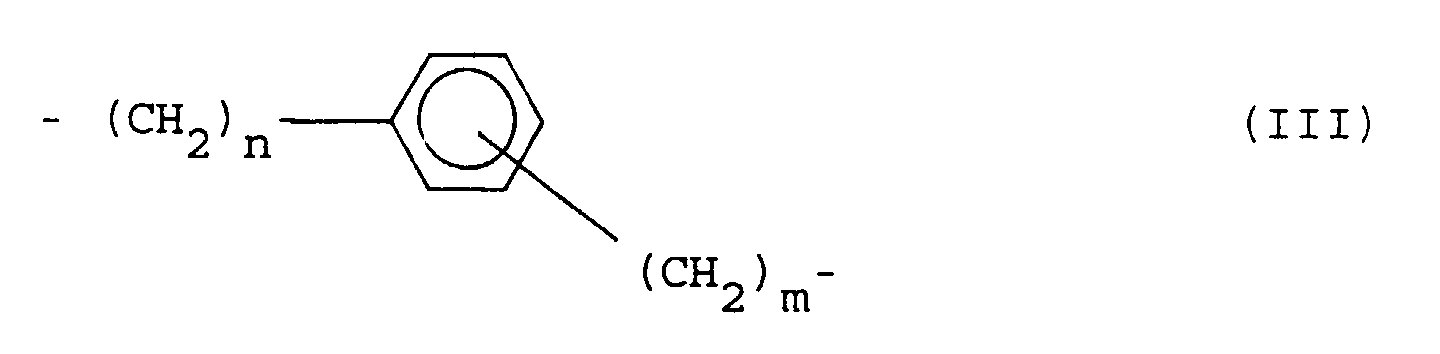
ou de dérivés de siloxane condensés via des ponts d'oxygène, R1 étant un groupe alkylène linéaire ou ramifié comportant 1 à 12 atomes de carbone, un groupe cycloalkylène comportant 5 à 8 atomes de carbone ou une unité de formule générale

- Procédé selon la revendication 9, caractérisé en ce que la solution aqueuse du composé organosilicique sulfoné de formule (XII) présente une teneur en H+ comprise entre 0,1 et 2,5 moles/l.
- Procédé selon la revendication 9 ou 10, caractérisé en ce que le solvant miscible à l'eau ajouté, le cas échéant, avant la gélification est un alcool linéaire ou ramifié comportant 1 à 5 atomes de carbone.
- Procédé selon les revendications 9 à 11, caractérisé en ce qu'on réalise la gélification entre la température ambiante et 80 °C, sous pression normale ou sous surpression qui correspond à la somme des pressions partielles des composants à la température utilisée.
- Procédé selon les revendications 9 à 12, caractérisé en ce qu'on ajoute au gel qui se forme au début de la gélification ou jusqu'à une heure après ce début, 5 à 300 % en poids, de préférence 5 à 50 % en poids, par rapport à la quantité totale de solution aqueuse du composé organosilicique sulfoné (XII) et du composant de réticulation (XIII), d'un alcool linéaire ou ramifié comportant 1 à 5 atomes de carbone ou de l'eau.
- Procédé selon les revendications 9 à 13, caractérisé en ce qu'en ce qui concerne le solvant largement insoluble dans l'eau, dans lequel on disperse la phase aqueuse contenant le siloxane, il s'agit de toluène, d'oxylène de m-xylène ou du p-xylène, d'un hydrocarbure cyclique ou à chaîne ouverte comportant 5 à 8 atomes de carbone ou d'un mélange correspondant de ces composés.
- Procédé pour le traitement ultérieur de l'organopolysiloxane façonné contenant des groupes sulfonate obtenu selon les revendications 9 à 14, mais non séché, caractérisé en ce que le solide obtenu sous forme de billes est soumis, en présence d'au moins le composant eau, dans la phase liquide, à un traitement thermique entre 50 et 300 °C pendant 1 heure à une semaine, une surpression étant utilisée en fonction des besoins.
- Procédé selon la revendication 15, caractérisé en ce que le traitement ultérieur est réalisé en présence d'un acide organique ou inorganique, de préférence en présence d'acide chlorhydrique, ou en présence de composants métalliques agissant comme catalyseur de condensation.
- Procédé pour la fabrication de l'organopolysiloxane façonné contenant des groupes sulfonate selon l'invention selon la revendication 1, dans lequel Mx+ représente un complexe monovalent à quadrivalent, le cas échéant complexe, caractérisé en ce qu'on fait réagir un organopolysiloxane contenant des groupes sulfonate fabriqué selon les revendications 9 à 16, dans lequel Mx+ est égal à H+, soit directement après sa fabrication soit après séchage et traitement thermique, dans de l'eau ou dans un solvant organique avec un réactif inorganique ou organique, qui peut le cas échéant être dissocié en un cation complexe et un anion, selon le principe d'échange d'ions statique ou dynamique par échange de H+ par Mx+, en ce qu'on le lave consécutivement et en ce qu'on le sépare, le cas échéant, de la phase liquide, en ce qu'on le sèche le cas échéant ou en ce qu'on le traite directement.
- Utilisation des organopolysiloxanes façonnés contenant des groupes sulfonate selon les revendications 1 à 8 avec Mx+ égal à H+ comme catalyseurs acides solides pour la réalisation de réactions chimiques.
Applications Claiming Priority (2)
| Application Number | Priority Date | Filing Date | Title |
|---|---|---|---|
| DE4223539 | 1992-07-17 | ||
| DE4223539A DE4223539C1 (de) | 1992-07-17 | 1992-07-17 | Geformte Sulfonatgruppen-haltige Organopolysiloxane, Verfahren zu ihrer Herstellung und Verwendung |
Publications (2)
| Publication Number | Publication Date |
|---|---|
| EP0582811A1 EP0582811A1 (fr) | 1994-02-16 |
| EP0582811B1 true EP0582811B1 (fr) | 1997-08-13 |
Family
ID=6463438
Family Applications (1)
| Application Number | Title | Priority Date | Filing Date |
|---|---|---|---|
| EP93109931A Expired - Lifetime EP0582811B1 (fr) | 1992-07-17 | 1993-06-22 | Polysiloxanes façonnés ayant des groupes sulphonate, procédé de préparation et leur application |
Country Status (8)
| Country | Link |
|---|---|
| US (1) | US5354831A (fr) |
| EP (1) | EP0582811B1 (fr) |
| JP (1) | JPH06207021A (fr) |
| AT (1) | ATE156847T1 (fr) |
| CA (1) | CA2100732C (fr) |
| DE (2) | DE4223539C1 (fr) |
| DK (1) | DK0582811T3 (fr) |
| ES (1) | ES2107589T3 (fr) |
Cited By (1)
| Publication number | Priority date | Publication date | Assignee | Title |
|---|---|---|---|---|
| EP2206708A1 (fr) | 2003-05-02 | 2010-07-14 | DSM IP Assets B.V. | Procédé de préparation d'acylates de tocyle et de tocopheryle |
Families Citing this family (19)
| Publication number | Priority date | Publication date | Assignee | Title |
|---|---|---|---|---|
| DE4324685A1 (de) * | 1993-07-22 | 1995-01-26 | Wacker Chemie Gmbh | Organosiloxangebundene Übergangsmetallkomplexe |
| DE4409140A1 (de) * | 1994-03-17 | 1995-09-21 | Degussa | Wäßrige Lösungen von Organopolysiloxan-Ammoniumverbindungen, ihre Herstellung und Verwendung |
| DE19536363A1 (de) * | 1995-09-29 | 1997-04-03 | Degussa | Sulfonat- und mercaptogruppenhaltige Organopolysiloxane, Verfahren zu ihrer Herstellung und Verwendung |
| DE19540497A1 (de) * | 1995-10-31 | 1997-05-07 | Degussa | Sulfonat- und mercaptogruppenhaltige anorganische Trägermaterialien, Verfahren zu ihrer Herstellung und Verwendung als Katalysatoren |
| CA2194638A1 (fr) * | 1996-03-06 | 1997-09-06 | Giorgio Agostini | Composes siloxy asymetriques |
| FR2747120B1 (fr) * | 1996-04-09 | 1998-05-15 | Inst Francais Du Petrole | Procede de production d'olefine(s) tertiaire(s) par decomposition de l'ether correspondant a l'aide d'un catalyseur particulier |
| DE19627265A1 (de) * | 1996-07-06 | 1998-01-08 | Degussa | Verfahren zur Herstellung primärer und/oder sekundärer Amine aus Oxoverbindungen |
| DE19635769A1 (de) * | 1996-09-04 | 1998-03-05 | Degussa | Verfahren zur Herstellung von Carbonsäureestern und dafür geeignete Katalysatoren |
| FR2760006B1 (fr) * | 1997-02-21 | 1999-04-16 | Inst Francais Du Petrole | Procede de production d'olefine tertiaire par decomposition d'ether alkylique tertiaire |
| FR2761683B1 (fr) * | 1997-04-02 | 1999-05-28 | Inst Francais Du Petrole | Procede de production d'ether et d'olefine a partir de coupe hydrocarbonee contenant au moins une olefine tertiaire par synthese puis decomposition d'ether comportant une premiere etape de purification d'olefine par fractionnement |
| FR2761682B1 (fr) * | 1997-04-02 | 1999-05-28 | Inst Francais Du Petrole | Procede de production d'ether et d'olefine a partir de coupe hydrocarbonee contenant au moins une olefine tertiaire par synthese puis decomposition d'ether comportant une premiere etape de purification d'olefine par lavage a l'eau |
| FR2782996B1 (fr) | 1998-09-09 | 2001-02-02 | Inst Francais Du Petrole | Procede de production d'un diene en trois etapes successives a partir d'un ether alkylique tertiaire |
| US6211408B1 (en) * | 1999-03-24 | 2001-04-03 | Celanese International Corporation | Method of removing iodides from non-aqueous organic media utilizing silver or mercury exchanged macroporous organofunctional polysiloxane resins |
| EP1441365A4 (fr) * | 2001-10-30 | 2010-02-24 | Sekisui Chemical Co Ltd | Membrane conductrice de protons, son procede de production et piles a combustible obtenues au moyen de cette membrane |
| US7291273B2 (en) * | 2005-12-12 | 2007-11-06 | General Electric Company | Methods for removing metals from plating operation |
| KR101193164B1 (ko) * | 2006-02-21 | 2012-10-19 | 삼성에스디아이 주식회사 | 술폰산기 함유 유기 고분자 실록산 화합물 및 이를포함하는 연료전지 |
| WO2009140773A1 (fr) * | 2008-05-23 | 2009-11-26 | University Of Ontario Institute Of Technology | Membranes électrolytes polymères de poly 2-(phényléthyle) siloxane sulfoné |
| GB201100531D0 (en) * | 2011-01-13 | 2011-03-02 | Phosphonics | Functionalised materials, processes for the production and uses thereof |
| GB201119824D0 (en) * | 2011-11-17 | 2011-12-28 | Dow Corning | Silicone resins comprising metallosiloxane |
Family Cites Families (33)
| Publication number | Priority date | Publication date | Assignee | Title |
|---|---|---|---|---|
| GB1238703A (fr) * | 1967-10-02 | 1971-07-07 | ||
| US3496126A (en) * | 1967-10-10 | 1970-02-17 | Owens Illinois Inc | Process for preparing organopolysiloxane beads |
| DE2357184A1 (de) * | 1973-11-16 | 1975-05-22 | Merck Patent Gmbh | Verfahren zur herstellung von organisch modifizierten siliciumdioxiden |
| DE2426306B2 (de) * | 1974-05-29 | 1977-06-23 | Sebestian, Imrich, Dipl.-Chem. Dr., 5160Düren | Verfahren zur chemischen modifizierung von festkoerperoberflaechen durch silane |
| DE2758415A1 (de) * | 1977-12-28 | 1979-07-12 | Fraunhofer Ges Forschung | Kieselsaeureheteropolykondensate, verfahren zu deren herstellung und deren verwendung als membranen und adsorbentien |
| ZA794221B (en) * | 1978-09-05 | 1981-03-25 | British Petroleum Co | Process for the preparation of a functionalised solid product |
| DE3047995C2 (de) * | 1980-12-19 | 1984-05-10 | Degussa Ag, 6000 Frankfurt | Verfahren zur Herstellung von (Jodorganyl)-alkoxysilanen |
| DE3120195C2 (de) * | 1981-05-21 | 1986-09-04 | Degussa Ag, 6000 Frankfurt | Polymere Ammoniumverbindungen mit kieselsäureartigem Grundgerüst, Verfahren zu ihrer Herstellung und Verwendung |
| DE3120214C2 (de) * | 1981-05-21 | 1984-09-27 | Degussa Ag, 6000 Frankfurt | Polymere tertiäre oder sekundäre Organosiloxanamine, Verfahren zu ihrer Herstellung und Verwendung |
| DE3131954C2 (de) * | 1981-08-13 | 1984-10-31 | Degussa Ag, 6000 Frankfurt | Metallkomplexe von polymeren, gegebenenfalls vernetzten Organosiloxanaminen, Verfahren zu ihrer Herstellung und Verwendung |
| DE3226093C2 (de) * | 1982-07-13 | 1987-01-02 | Degussa Ag, 6000 Frankfurt | Sulfonatgruppen-haltige Organopolysiloxane, Verfahren zu ihrer Herstellung und Verwendung |
| DE3226091C2 (de) * | 1982-07-13 | 1986-11-20 | Degussa Ag, 6000 Frankfurt | Polymere Di-, Tri- oder Tetrasulfide, Verfahren zu ihrer Herstellung und Verwendung |
| DE3404702A1 (de) * | 1984-02-10 | 1985-09-05 | Degussa Ag, 6000 Frankfurt | Platin- und/oder palladium-haltige organopolysiloxan-ammoniumverbindungen, verfahren zu ihrer herstellung und verwendung |
| US4665848A (en) * | 1984-02-13 | 1987-05-19 | Levi Strauss & Co. | Method and apparatus for automatically hemming garments |
| DE3428347C2 (de) * | 1984-08-01 | 1986-09-04 | Degussa Ag, 6000 Frankfurt | Zusatz für Reibbelagmischungen |
| DE3518878A1 (de) * | 1985-05-25 | 1986-11-27 | Degussa Ag, 6000 Frankfurt | Phenylengruppen-haltige organosilane, verfahren zu ihrer herstellung |
| DE3518881A1 (de) * | 1985-05-25 | 1986-11-27 | Degussa Ag, 6000 Frankfurt | Phenylensulfonatgruppen-haltige organopolysiloxane, verfahren zu ihrer herstellung und verwendung |
| DE3518880A1 (de) * | 1985-05-25 | 1986-11-27 | Degussa Ag, 6000 Frankfurt | Funktionalisierte phenylengruppen-haltige organopolysiloxane und verfahren zu ihrer herstellung |
| DE3525475C1 (de) * | 1985-07-17 | 1986-10-09 | Degussa Ag, 6000 Frankfurt | Verfahren zur Aufbereitung von Titandisulfid fuer den Einsatz in Batterien |
| DE3643894A1 (de) * | 1986-12-22 | 1988-06-23 | Degussa | Rhodium-haltige organopolysiloxan-ammoniumverbindungen, verfahren zu ihrer herstellung und verwendung |
| DE3706521A1 (de) * | 1987-02-28 | 1988-09-08 | Degussa | Benzoylthioharnstoffgruppen-haltige organosilane, verfahren zu ihrer herstellung |
| DE3800563C1 (fr) * | 1988-01-12 | 1989-03-16 | Degussa Ag, 6000 Frankfurt, De | |
| DE3800564C1 (fr) * | 1988-01-12 | 1989-03-16 | Degussa Ag, 6000 Frankfurt, De | |
| DE3837416A1 (de) * | 1988-11-04 | 1990-05-10 | Degussa | Organosiloxanamin-copolykondensate, verfahren zu ihrer herstellung und verwendung (ii) |
| DE3837415A1 (de) * | 1988-11-04 | 1990-05-10 | Degussa | Organopolysiloxan-harnstoff- und organopolysiloxan-thioharnstoff-derivate, verfahren zu ihrer herstellung und verwendung |
| DE3837418A1 (de) * | 1988-11-04 | 1990-05-10 | Degussa | Organosiloxanamin-copolykondensate, verfahren zu ihrer herstellung und verwendung (i) |
| DE3913250A1 (de) * | 1989-04-22 | 1990-10-25 | Degussa | Dentalmaterial (ii) |
| DE3925357C1 (fr) * | 1989-07-31 | 1991-04-25 | Degussa Ag, 6000 Frankfurt, De | |
| DE3925358A1 (de) * | 1989-07-31 | 1991-02-07 | Degussa | Aminoalkylsubstituierte organopolysiloxan-thioharnstoff-derivate, verfahren zu ihrer herstellung und verwendung |
| DE3925360C1 (fr) * | 1989-07-31 | 1991-02-07 | Degussa Ag, 6000 Frankfurt, De | |
| DE3926595A1 (de) * | 1989-08-11 | 1991-02-14 | Degussa | Verfahren zur hydrierung halogensubstituierter verbindungen |
| DE4035032C1 (fr) * | 1990-11-03 | 1992-04-30 | Degussa Ag, 6000 Frankfurt, De | |
| FR2670212A1 (fr) * | 1990-12-05 | 1992-06-12 | Centre Nat Rech Scient | Nouveaux electrolytes a base de polyorganosiloxanes sulfones, leur preparation et leur application comme conducteurs ioniques solides. |
-
1992
- 1992-07-17 DE DE4223539A patent/DE4223539C1/de not_active Expired - Fee Related
-
1993
- 1993-06-22 AT AT93109931T patent/ATE156847T1/de not_active IP Right Cessation
- 1993-06-22 DE DE59307109T patent/DE59307109D1/de not_active Expired - Fee Related
- 1993-06-22 EP EP93109931A patent/EP0582811B1/fr not_active Expired - Lifetime
- 1993-06-22 DK DK93109931.1T patent/DK0582811T3/da active
- 1993-06-22 ES ES93109931T patent/ES2107589T3/es not_active Expired - Lifetime
- 1993-07-06 US US08/085,960 patent/US5354831A/en not_active Expired - Fee Related
- 1993-07-16 CA CA002100732A patent/CA2100732C/fr not_active Expired - Fee Related
- 1993-07-16 JP JP5176600A patent/JPH06207021A/ja active Pending
Cited By (1)
| Publication number | Priority date | Publication date | Assignee | Title |
|---|---|---|---|---|
| EP2206708A1 (fr) | 2003-05-02 | 2010-07-14 | DSM IP Assets B.V. | Procédé de préparation d'acylates de tocyle et de tocopheryle |
Also Published As
| Publication number | Publication date |
|---|---|
| ATE156847T1 (de) | 1997-08-15 |
| CA2100732A1 (fr) | 1994-01-18 |
| DE59307109D1 (de) | 1997-09-18 |
| JPH06207021A (ja) | 1994-07-26 |
| US5354831A (en) | 1994-10-11 |
| ES2107589T3 (es) | 1997-12-01 |
| DE4223539C1 (de) | 1993-11-25 |
| EP0582811A1 (fr) | 1994-02-16 |
| DK0582811T3 (da) | 1998-02-23 |
| CA2100732C (fr) | 1999-11-09 |
Similar Documents
| Publication | Publication Date | Title |
|---|---|---|
| DE4223539C1 (de) | Geformte Sulfonatgruppen-haltige Organopolysiloxane, Verfahren zu ihrer Herstellung und Verwendung | |
| EP0098947B1 (fr) | Polymères ayant des groupements mono-, di-, tri- et tétrasulfides, procédé de préparation et leur emploi | |
| DE69716126T2 (de) | Anorganisches, poröses material und verfahren zu dessen herstellung | |
| DE69407295T2 (de) | Anorganisches, poröses material und verfahren zu dessen herstellung | |
| EP0582879B1 (fr) | Polycondensats d'organosiloxane granulaire, leur préparation et emploi | |
| EP0327795B1 (fr) | Polymères ayant une forme précise et à base de composés contenant du silicium et de l'azote tertiaire ou secondaire, procédé pour leur préparation et leur emploi | |
| DE69732758T2 (de) | Verfahren zur Herstellung eines Aerogels | |
| EP0416272A1 (fr) | Polymères ayant une forme précise et à base d'organosiloxane-amine-polycondensats, procédé pour leur préparation et leur emploi | |
| DE3226093C2 (de) | Sulfonatgruppen-haltige Organopolysiloxane, Verfahren zu ihrer Herstellung und Verwendung | |
| DE3120195A1 (de) | Polymere ammoniumverbindungen mit kieselsaeureartigem grundgeruest, verfahren zu ihrer herstellung und verwendung | |
| EP3288896B1 (fr) | Aérogels hydrophobes ayant une teneur réduite en motifs monofonctionnels | |
| WO1998023367A2 (fr) | Procede pour la fabrication d'aerogels durablement hydrophobes modifies organiquement | |
| EP0367105B1 (fr) | Copolycondensats organosiloxane-amine, procédé pour leur fabrication et leur emploi | |
| EP3858893A1 (fr) | Procédé de fabrication de produits d'hydrosilylation de haute pureté | |
| EP0367106A2 (fr) | Copolycondensats organosiloxane-amine, procédé pour leur fabrication et leur emploi | |
| EP0416271B1 (fr) | Produits dérivés d'organopolysiloxane-thiourée ayant des groupes aminoalkyles, leur préparation et leur emploi | |
| EP0837832B1 (fr) | Procede de production d'aerogels organiquement modifies et leur utilisation | |
| EP0367104A2 (fr) | Produits dérivés d'organopolysiloxane-thiourée, procédé pour leur fabrication et leur emploi | |
| EP0765897A2 (fr) | Organopolysiloxanes contenant des groups sulphonate et mercapto, procédé pour leur préparation et leur emploi. | |
| DE3518881C2 (fr) | ||
| EP0205889B1 (fr) | Organopolysiloxanes contenant des groupes phénylène fonctionnels et procédé de préparation | |
| DE19730125A1 (de) | Aluminiumoxid enthaltender Feststoff mit großer Oberfläche | |
| DE19854486A1 (de) | Verfahren zur Herstellugn eines Verbundwerkstoffes aus organischen und anorganischen Verbindungen | |
| EP0415079B1 (fr) | Polymères ayant une forme précise et à base d'organosiloxanamine-polycondensats, procédé pour leur préparation et leur emploi | |
| EP0205890B1 (fr) | Organopolysiloxanes contenant des groupes phénylène et procédé de préparation |
Legal Events
| Date | Code | Title | Description |
|---|---|---|---|
| PUAI | Public reference made under article 153(3) epc to a published international application that has entered the european phase |
Free format text: ORIGINAL CODE: 0009012 |
|
| 17P | Request for examination filed |
Effective date: 19930622 |
|
| AK | Designated contracting states |
Kind code of ref document: A1 Designated state(s): AT BE CH DE DK ES FR GB IE IT LI LU NL PT SE |
|
| 17Q | First examination report despatched |
Effective date: 19951229 |
|
| GRAG | Despatch of communication of intention to grant |
Free format text: ORIGINAL CODE: EPIDOS AGRA |
|
| GRAH | Despatch of communication of intention to grant a patent |
Free format text: ORIGINAL CODE: EPIDOS IGRA |
|
| GRAH | Despatch of communication of intention to grant a patent |
Free format text: ORIGINAL CODE: EPIDOS IGRA |
|
| GRAA | (expected) grant |
Free format text: ORIGINAL CODE: 0009210 |
|
| AK | Designated contracting states |
Kind code of ref document: B1 Designated state(s): AT BE CH DE DK ES FR GB IE IT LI LU NL PT SE |
|
| REF | Corresponds to: |
Ref document number: 156847 Country of ref document: AT Date of ref document: 19970815 Kind code of ref document: T |
|
| REG | Reference to a national code |
Ref country code: CH Ref legal event code: EP |
|
| REF | Corresponds to: |
Ref document number: 59307109 Country of ref document: DE Date of ref document: 19970918 |
|
| ITF | It: translation for a ep patent filed | ||
| REG | Reference to a national code |
Ref country code: CH Ref legal event code: NV Representative=s name: BOVARD AG PATENTANWAELTE |
|
| GBT | Gb: translation of ep patent filed (gb section 77(6)(a)/1977) |
Effective date: 19971030 |
|
| REG | Reference to a national code |
Ref country code: ES Ref legal event code: FG2A Ref document number: 2107589 Country of ref document: ES Kind code of ref document: T3 |
|
| ET | Fr: translation filed | ||
| REG | Reference to a national code |
Ref country code: PT Ref legal event code: SC4A Free format text: AVAILABILITY OF NATIONAL TRANSLATION Effective date: 19971006 |
|
| REG | Reference to a national code |
Ref country code: DK Ref legal event code: T3 |
|
| PGFP | Annual fee paid to national office [announced via postgrant information from national office to epo] |
Ref country code: SE Payment date: 19980525 Year of fee payment: 6 |
|
| PGFP | Annual fee paid to national office [announced via postgrant information from national office to epo] |
Ref country code: PT Payment date: 19980527 Year of fee payment: 6 |
|
| PLBE | No opposition filed within time limit |
Free format text: ORIGINAL CODE: 0009261 |
|
| STAA | Information on the status of an ep patent application or granted ep patent |
Free format text: STATUS: NO OPPOSITION FILED WITHIN TIME LIMIT |
|
| 26N | No opposition filed | ||
| PGFP | Annual fee paid to national office [announced via postgrant information from national office to epo] |
Ref country code: LU Payment date: 19980922 Year of fee payment: 6 |
|
| PG25 | Lapsed in a contracting state [announced via postgrant information from national office to epo] |
Ref country code: LU Free format text: LAPSE BECAUSE OF NON-PAYMENT OF DUE FEES Effective date: 19990622 |
|
| PG25 | Lapsed in a contracting state [announced via postgrant information from national office to epo] |
Ref country code: SE Free format text: THE PATENT HAS BEEN ANNULLED BY A DECISION OF A NATIONAL AUTHORITY Effective date: 19990629 |
|
| PG25 | Lapsed in a contracting state [announced via postgrant information from national office to epo] |
Ref country code: PT Free format text: LAPSE BECAUSE OF NON-PAYMENT OF DUE FEES Effective date: 19991231 |
|
| EUG | Se: european patent has lapsed |
Ref document number: 93109931.1 |
|
| REG | Reference to a national code |
Ref country code: PT Ref legal event code: MM4A Free format text: LAPSE DUE TO NON-PAYMENT OF FEES Effective date: 19991231 |
|
| PGFP | Annual fee paid to national office [announced via postgrant information from national office to epo] |
Ref country code: DK Payment date: 20000526 Year of fee payment: 8 |
|
| REG | Reference to a national code |
Ref country code: GB Ref legal event code: 732E |
|
| PG25 | Lapsed in a contracting state [announced via postgrant information from national office to epo] |
Ref country code: DK Free format text: LAPSE BECAUSE OF NON-PAYMENT OF DUE FEES Effective date: 20010622 |
|
| REG | Reference to a national code |
Ref country code: GB Ref legal event code: IF02 |
|
| REG | Reference to a national code |
Ref country code: DK Ref legal event code: EBP |
|
| PGFP | Annual fee paid to national office [announced via postgrant information from national office to epo] |
Ref country code: IE Payment date: 20020516 Year of fee payment: 10 |
|
| PGFP | Annual fee paid to national office [announced via postgrant information from national office to epo] |
Ref country code: CH Payment date: 20020517 Year of fee payment: 10 |
|
| PGFP | Annual fee paid to national office [announced via postgrant information from national office to epo] |
Ref country code: AT Payment date: 20020531 Year of fee payment: 10 |
|
| PGFP | Annual fee paid to national office [announced via postgrant information from national office to epo] |
Ref country code: FR Payment date: 20020611 Year of fee payment: 10 |
|
| PGFP | Annual fee paid to national office [announced via postgrant information from national office to epo] |
Ref country code: BE Payment date: 20020612 Year of fee payment: 10 |
|
| PGFP | Annual fee paid to national office [announced via postgrant information from national office to epo] |
Ref country code: ES Payment date: 20020613 Year of fee payment: 10 |
|
| REG | Reference to a national code |
Ref country code: GB Ref legal event code: 732E |
|
| PGFP | Annual fee paid to national office [announced via postgrant information from national office to epo] |
Ref country code: NL Payment date: 20030530 Year of fee payment: 11 Ref country code: GB Payment date: 20030530 Year of fee payment: 11 |
|
| PGFP | Annual fee paid to national office [announced via postgrant information from national office to epo] |
Ref country code: DE Payment date: 20030603 Year of fee payment: 11 |
|
| PG25 | Lapsed in a contracting state [announced via postgrant information from national office to epo] |
Ref country code: AT Free format text: LAPSE BECAUSE OF NON-PAYMENT OF DUE FEES Effective date: 20030622 |
|
| PG25 | Lapsed in a contracting state [announced via postgrant information from national office to epo] |
Ref country code: IE Free format text: LAPSE BECAUSE OF NON-PAYMENT OF DUE FEES Effective date: 20030623 Ref country code: ES Free format text: LAPSE BECAUSE OF NON-PAYMENT OF DUE FEES Effective date: 20030623 |
|
| PG25 | Lapsed in a contracting state [announced via postgrant information from national office to epo] |
Ref country code: LI Free format text: LAPSE BECAUSE OF NON-PAYMENT OF DUE FEES Effective date: 20030630 Ref country code: CH Free format text: LAPSE BECAUSE OF NON-PAYMENT OF DUE FEES Effective date: 20030630 Ref country code: BE Free format text: LAPSE BECAUSE OF NON-PAYMENT OF DUE FEES Effective date: 20030630 |
|
| NLS | Nl: assignments of ep-patents |
Owner name: DEGUSSA-HUELS AKTIENGESELLSCHAFT Owner name: DEGUSSA AG |
|
| BERE | Be: lapsed |
Owner name: *DEGUSSA A.G. Effective date: 20030630 |
|
| REG | Reference to a national code |
Ref country code: CH Ref legal event code: PL |
|
| PG25 | Lapsed in a contracting state [announced via postgrant information from national office to epo] |
Ref country code: FR Free format text: LAPSE BECAUSE OF NON-PAYMENT OF DUE FEES Effective date: 20040227 |
|
| REG | Reference to a national code |
Ref country code: FR Ref legal event code: ST |
|
| REG | Reference to a national code |
Ref country code: IE Ref legal event code: MM4A |
|
| PG25 | Lapsed in a contracting state [announced via postgrant information from national office to epo] |
Ref country code: GB Free format text: LAPSE BECAUSE OF NON-PAYMENT OF DUE FEES Effective date: 20040622 |
|
| REG | Reference to a national code |
Ref country code: ES Ref legal event code: FD2A Effective date: 20030623 |
|
| PG25 | Lapsed in a contracting state [announced via postgrant information from national office to epo] |
Ref country code: NL Free format text: LAPSE BECAUSE OF NON-PAYMENT OF DUE FEES Effective date: 20050101 Ref country code: DE Free format text: LAPSE BECAUSE OF NON-PAYMENT OF DUE FEES Effective date: 20050101 |
|
| GBPC | Gb: european patent ceased through non-payment of renewal fee |
Effective date: 20040622 |
|
| NLV4 | Nl: lapsed or anulled due to non-payment of the annual fee |
Effective date: 20050101 |
|
| PG25 | Lapsed in a contracting state [announced via postgrant information from national office to epo] |
Ref country code: IT Free format text: LAPSE BECAUSE OF NON-PAYMENT OF DUE FEES;WARNING: LAPSES OF ITALIAN PATENTS WITH EFFECTIVE DATE BEFORE 2007 MAY HAVE OCCURRED AT ANY TIME BEFORE 2007. THE CORRECT EFFECTIVE DATE MAY BE DIFFERENT FROM THE ONE RECORDED. Effective date: 20050622 |