EP0585053A1 - Procédé pour la préparation d'un alcool - Google Patents
Procédé pour la préparation d'un alcool Download PDFInfo
- Publication number
- EP0585053A1 EP0585053A1 EP93306562A EP93306562A EP0585053A1 EP 0585053 A1 EP0585053 A1 EP 0585053A1 EP 93306562 A EP93306562 A EP 93306562A EP 93306562 A EP93306562 A EP 93306562A EP 0585053 A1 EP0585053 A1 EP 0585053A1
- Authority
- EP
- European Patent Office
- Prior art keywords
- carboxylic acid
- alcohol
- catalyst
- zirconium
- preparing
- Prior art date
- Legal status (The legal status is an assumption and is not a legal conclusion. Google has not performed a legal analysis and makes no representation as to the accuracy of the status listed.)
- Ceased
Links
- 238000000034 method Methods 0.000 title claims abstract description 59
- LFQSCWFLJHTTHZ-UHFFFAOYSA-N Ethanol Chemical compound CCO LFQSCWFLJHTTHZ-UHFFFAOYSA-N 0.000 title claims abstract description 56
- 239000003054 catalyst Substances 0.000 claims abstract description 81
- 150000001732 carboxylic acid derivatives Chemical class 0.000 claims abstract description 48
- 238000006243 chemical reaction Methods 0.000 claims abstract description 42
- ZARVOZCHNMQIBL-UHFFFAOYSA-N oxygen(2-) titanium(4+) zirconium(4+) Chemical compound [O-2].[O-2].[O-2].[O-2].[Ti+4].[Zr+4] ZARVOZCHNMQIBL-UHFFFAOYSA-N 0.000 claims abstract description 23
- UFHFLCQGNIYNRP-UHFFFAOYSA-N Hydrogen Chemical compound [H][H] UFHFLCQGNIYNRP-UHFFFAOYSA-N 0.000 claims abstract description 19
- 239000001257 hydrogen Substances 0.000 claims abstract description 16
- 229910052739 hydrogen Inorganic materials 0.000 claims abstract description 16
- QCWXUUIWCKQGHC-UHFFFAOYSA-N Zirconium Chemical compound [Zr] QCWXUUIWCKQGHC-UHFFFAOYSA-N 0.000 claims abstract description 15
- 229910052726 zirconium Inorganic materials 0.000 claims abstract description 15
- 239000010936 titanium Substances 0.000 claims description 16
- RTAQQCXQSZGOHL-UHFFFAOYSA-N Titanium Chemical compound [Ti] RTAQQCXQSZGOHL-UHFFFAOYSA-N 0.000 claims description 13
- 229910052719 titanium Inorganic materials 0.000 claims description 13
- 239000000203 mixture Substances 0.000 claims description 10
- 150000003608 titanium Chemical class 0.000 claims description 10
- 150000003754 zirconium Chemical class 0.000 claims description 10
- WPYMKLBDIGXBTP-UHFFFAOYSA-N benzoic acid Chemical compound OC(=O)C1=CC=CC=C1 WPYMKLBDIGXBTP-UHFFFAOYSA-N 0.000 claims description 8
- XJDNKRIXUMDJCW-UHFFFAOYSA-J titanium tetrachloride Chemical group Cl[Ti](Cl)(Cl)Cl XJDNKRIXUMDJCW-UHFFFAOYSA-J 0.000 claims description 8
- 150000001735 carboxylic acids Chemical class 0.000 claims description 7
- 238000003746 solid phase reaction Methods 0.000 claims description 6
- 125000001931 aliphatic group Chemical group 0.000 claims description 5
- 150000001733 carboxylic acid esters Chemical class 0.000 claims description 5
- 238000010438 heat treatment Methods 0.000 claims description 5
- OERNJTNJEZOPIA-UHFFFAOYSA-N zirconium nitrate Chemical compound [Zr+4].[O-][N+]([O-])=O.[O-][N+]([O-])=O.[O-][N+]([O-])=O.[O-][N+]([O-])=O OERNJTNJEZOPIA-UHFFFAOYSA-N 0.000 claims description 4
- 150000007933 aliphatic carboxylic acids Chemical class 0.000 claims description 3
- 239000012670 alkaline solution Substances 0.000 claims description 3
- 125000004432 carbon atom Chemical group C* 0.000 claims description 3
- 229910052736 halogen Inorganic materials 0.000 claims description 3
- 150000002367 halogens Chemical group 0.000 claims description 3
- 150000002825 nitriles Chemical class 0.000 claims description 3
- QTBSBXVTEAMEQO-UHFFFAOYSA-M Acetate Chemical compound CC([O-])=O QTBSBXVTEAMEQO-UHFFFAOYSA-M 0.000 claims description 2
- VEXZGXHMUGYJMC-UHFFFAOYSA-M Chloride anion Chemical compound [Cl-] VEXZGXHMUGYJMC-UHFFFAOYSA-M 0.000 claims description 2
- 239000007864 aqueous solution Substances 0.000 claims description 2
- 229920006395 saturated elastomer Polymers 0.000 claims description 2
- DUNKXUFBGCUVQW-UHFFFAOYSA-J zirconium tetrachloride Chemical compound Cl[Zr](Cl)(Cl)Cl DUNKXUFBGCUVQW-UHFFFAOYSA-J 0.000 claims description 2
- 235000014113 dietary fatty acids Nutrition 0.000 abstract description 2
- 229930195729 fatty acid Natural products 0.000 abstract description 2
- 239000000194 fatty acid Substances 0.000 abstract description 2
- 150000004665 fatty acids Chemical class 0.000 abstract description 2
- 238000006722 reduction reaction Methods 0.000 abstract 2
- MWKFXSUHUHTGQN-UHFFFAOYSA-N decan-1-ol Chemical compound CCCCCCCCCCO MWKFXSUHUHTGQN-UHFFFAOYSA-N 0.000 description 18
- 238000002360 preparation method Methods 0.000 description 15
- KFZMGEQAYNKOFK-UHFFFAOYSA-N Isopropanol Chemical compound CC(C)O KFZMGEQAYNKOFK-UHFFFAOYSA-N 0.000 description 12
- GHVNFZFCNZKVNT-UHFFFAOYSA-N decanoic acid Chemical compound CCCCCCCCCC(O)=O GHVNFZFCNZKVNT-UHFFFAOYSA-N 0.000 description 11
- XLYOFNOQVPJJNP-UHFFFAOYSA-N water Chemical compound O XLYOFNOQVPJJNP-UHFFFAOYSA-N 0.000 description 11
- GYSCBCSGKXNZRH-UHFFFAOYSA-N 1-benzothiophene-2-carboxamide Chemical compound C1=CC=C2SC(C(=O)N)=CC2=C1 GYSCBCSGKXNZRH-UHFFFAOYSA-N 0.000 description 9
- 238000004817 gas chromatography Methods 0.000 description 9
- 239000000047 product Substances 0.000 description 8
- 239000000243 solution Substances 0.000 description 8
- HEMHJVSKTPXQMS-UHFFFAOYSA-M Sodium hydroxide Chemical compound [OH-].[Na+] HEMHJVSKTPXQMS-UHFFFAOYSA-M 0.000 description 6
- 150000008064 anhydrides Chemical class 0.000 description 6
- 239000012159 carrier gas Substances 0.000 description 6
- ACGYMLSVOJFRAP-UHFFFAOYSA-N octahydrate;hydrochloride Chemical compound O.O.O.O.O.O.O.O.Cl ACGYMLSVOJFRAP-UHFFFAOYSA-N 0.000 description 6
- RVTZCBVAJQQJTK-UHFFFAOYSA-N oxygen(2-);zirconium(4+) Chemical compound [O-2].[O-2].[Zr+4] RVTZCBVAJQQJTK-UHFFFAOYSA-N 0.000 description 6
- 229910001928 zirconium oxide Inorganic materials 0.000 description 6
- QGZKDVFQNNGYKY-UHFFFAOYSA-N ammonia Natural products N QGZKDVFQNNGYKY-UHFFFAOYSA-N 0.000 description 5
- WUAPFZMCVAUBPE-UHFFFAOYSA-N rhenium atom Chemical compound [Re] WUAPFZMCVAUBPE-UHFFFAOYSA-N 0.000 description 5
- FLIACVVOZYBSBS-UHFFFAOYSA-N Methyl palmitate Chemical compound CCCCCCCCCCCCCCCC(=O)OC FLIACVVOZYBSBS-UHFFFAOYSA-N 0.000 description 4
- XLOMVQKBTHCTTD-UHFFFAOYSA-N Zinc monoxide Chemical compound [Zn]=O XLOMVQKBTHCTTD-UHFFFAOYSA-N 0.000 description 4
- ZAZKJZBWRNNLDS-UHFFFAOYSA-N methyl tetradecanoate Chemical compound CCCCCCCCCCCCCC(=O)OC ZAZKJZBWRNNLDS-UHFFFAOYSA-N 0.000 description 4
- 229910052702 rhenium Inorganic materials 0.000 description 4
- FRPZMMHWLSIFAZ-UHFFFAOYSA-N 10-undecenoic acid Chemical compound OC(=O)CCCCCCCCC=C FRPZMMHWLSIFAZ-UHFFFAOYSA-N 0.000 description 3
- VHUUQVKOLVNVRT-UHFFFAOYSA-N Ammonium hydroxide Chemical compound [NH4+].[OH-] VHUUQVKOLVNVRT-UHFFFAOYSA-N 0.000 description 3
- IJGRMHOSHXDMSA-UHFFFAOYSA-N Atomic nitrogen Chemical compound N#N IJGRMHOSHXDMSA-UHFFFAOYSA-N 0.000 description 3
- WVDDGKGOMKODPV-UHFFFAOYSA-N Benzyl alcohol Chemical class OCC1=CC=CC=C1 WVDDGKGOMKODPV-UHFFFAOYSA-N 0.000 description 3
- KHAVLLBUVKBTBG-UHFFFAOYSA-N caproleic acid Natural products OC(=O)CCCCCCCC=C KHAVLLBUVKBTBG-UHFFFAOYSA-N 0.000 description 3
- 239000007795 chemical reaction product Substances 0.000 description 3
- 230000000052 comparative effect Effects 0.000 description 3
- 239000008367 deionised water Substances 0.000 description 3
- 229910021641 deionized water Inorganic materials 0.000 description 3
- 229960002703 undecylenic acid Drugs 0.000 description 3
- GIEMHYCMBGELGY-UHFFFAOYSA-N 10-undecen-1-ol Chemical compound OCCCCCCCCCC=C GIEMHYCMBGELGY-UHFFFAOYSA-N 0.000 description 2
- XDOFQFKRPWOURC-UHFFFAOYSA-N 16-methylheptadecanoic acid Chemical compound CC(C)CCCCCCCCCCCCCCC(O)=O XDOFQFKRPWOURC-UHFFFAOYSA-N 0.000 description 2
- OAOABCKPVCUNKO-UHFFFAOYSA-N 8-methyl Nonanoic acid Chemical compound CC(C)CCCCCCC(O)=O OAOABCKPVCUNKO-UHFFFAOYSA-N 0.000 description 2
- XKRFYHLGVUSROY-UHFFFAOYSA-N Argon Chemical compound [Ar] XKRFYHLGVUSROY-UHFFFAOYSA-N 0.000 description 2
- RYGMFSIKBFXOCR-UHFFFAOYSA-N Copper Chemical compound [Cu] RYGMFSIKBFXOCR-UHFFFAOYSA-N 0.000 description 2
- TWRXJAOTZQYOKJ-UHFFFAOYSA-L Magnesium chloride Chemical compound [Mg+2].[Cl-].[Cl-] TWRXJAOTZQYOKJ-UHFFFAOYSA-L 0.000 description 2
- HPEUJPJOZXNMSJ-UHFFFAOYSA-N Methyl stearate Chemical compound CCCCCCCCCCCCCCCCCC(=O)OC HPEUJPJOZXNMSJ-UHFFFAOYSA-N 0.000 description 2
- KDLHZDBZIXYQEI-UHFFFAOYSA-N Palladium Chemical compound [Pd] KDLHZDBZIXYQEI-UHFFFAOYSA-N 0.000 description 2
- ATJFFYVFTNAWJD-UHFFFAOYSA-N Tin Chemical compound [Sn] ATJFFYVFTNAWJD-UHFFFAOYSA-N 0.000 description 2
- 239000003513 alkali Substances 0.000 description 2
- 150000001408 amides Chemical class 0.000 description 2
- 229910052802 copper Inorganic materials 0.000 description 2
- 239000010949 copper Substances 0.000 description 2
- 230000000694 effects Effects 0.000 description 2
- 229910052732 germanium Inorganic materials 0.000 description 2
- GNPVGFCGXDBREM-UHFFFAOYSA-N germanium atom Chemical compound [Ge] GNPVGFCGXDBREM-UHFFFAOYSA-N 0.000 description 2
- 239000011521 glass Substances 0.000 description 2
- FUZZWVXGSFPDMH-UHFFFAOYSA-N hexanoic acid Chemical compound CCCCCC(O)=O FUZZWVXGSFPDMH-UHFFFAOYSA-N 0.000 description 2
- 239000007791 liquid phase Substances 0.000 description 2
- 125000002496 methyl group Chemical group [H]C([H])([H])* 0.000 description 2
- KISVAASFGZJBCY-UHFFFAOYSA-N methyl undecenate Chemical compound COC(=O)CCCCCCCCC=C KISVAASFGZJBCY-UHFFFAOYSA-N 0.000 description 2
- GLDOVTGHNKAZLK-UHFFFAOYSA-N octadecan-1-ol Chemical compound CCCCCCCCCCCCCCCCCCO GLDOVTGHNKAZLK-UHFFFAOYSA-N 0.000 description 2
- WQEPLUUGTLDZJY-UHFFFAOYSA-N pentadecanoic acid Chemical compound CCCCCCCCCCCCCCC(O)=O WQEPLUUGTLDZJY-UHFFFAOYSA-N 0.000 description 2
- 239000002904 solvent Substances 0.000 description 2
- 239000007858 starting material Substances 0.000 description 2
- 125000001424 substituent group Chemical group 0.000 description 2
- HLZKNKRTKFSKGZ-UHFFFAOYSA-N tetradecan-1-ol Chemical compound CCCCCCCCCCCCCCO HLZKNKRTKFSKGZ-UHFFFAOYSA-N 0.000 description 2
- SZKKNEOUHLFYNA-UHFFFAOYSA-N undecanenitrile Chemical compound CCCCCCCCCCC#N SZKKNEOUHLFYNA-UHFFFAOYSA-N 0.000 description 2
- NQPDZGIKBAWPEJ-UHFFFAOYSA-N valeric acid Chemical compound CCCCC(O)=O NQPDZGIKBAWPEJ-UHFFFAOYSA-N 0.000 description 2
- 239000011787 zinc oxide Substances 0.000 description 2
- ALSTYHKOOCGGFT-KTKRTIGZSA-N (9Z)-octadecen-1-ol Chemical compound CCCCCCCC\C=C/CCCCCCCCO ALSTYHKOOCGGFT-KTKRTIGZSA-N 0.000 description 1
- WRIDQFICGBMAFQ-UHFFFAOYSA-N (E)-8-Octadecenoic acid Natural products CCCCCCCCCC=CCCCCCCC(O)=O WRIDQFICGBMAFQ-UHFFFAOYSA-N 0.000 description 1
- RYHBNJHYFVUHQT-UHFFFAOYSA-N 1,4-Dioxane Chemical compound C1COCCO1 RYHBNJHYFVUHQT-UHFFFAOYSA-N 0.000 description 1
- XYHKNCXZYYTLRG-UHFFFAOYSA-N 1h-imidazole-2-carbaldehyde Chemical compound O=CC1=NC=CN1 XYHKNCXZYYTLRG-UHFFFAOYSA-N 0.000 description 1
- LQJBNNIYVWPHFW-UHFFFAOYSA-N 20:1omega9c fatty acid Natural products CCCCCCCCCCC=CCCCCCCCC(O)=O LQJBNNIYVWPHFW-UHFFFAOYSA-N 0.000 description 1
- GWYFCOCPABKNJV-UHFFFAOYSA-M 3-Methylbutanoic acid Natural products CC(C)CC([O-])=O GWYFCOCPABKNJV-UHFFFAOYSA-M 0.000 description 1
- QSBYPNXLFMSGKH-UHFFFAOYSA-N 9-Heptadecensaeure Natural products CCCCCCCC=CCCCCCCCC(O)=O QSBYPNXLFMSGKH-UHFFFAOYSA-N 0.000 description 1
- 239000005711 Benzoic acid Substances 0.000 description 1
- 239000004215 Carbon black (E152) Substances 0.000 description 1
- PXHVJJICTQNCMI-UHFFFAOYSA-N Nickel Chemical compound [Ni] PXHVJJICTQNCMI-UHFFFAOYSA-N 0.000 description 1
- 239000005642 Oleic acid Substances 0.000 description 1
- ZQPPMHVWECSIRJ-UHFFFAOYSA-N Oleic acid Natural products CCCCCCCCC=CCCCCCCCC(O)=O ZQPPMHVWECSIRJ-UHFFFAOYSA-N 0.000 description 1
- 150000001298 alcohols Chemical class 0.000 description 1
- 150000001299 aldehydes Chemical class 0.000 description 1
- 150000008044 alkali metal hydroxides Chemical class 0.000 description 1
- 229910021529 ammonia Inorganic materials 0.000 description 1
- 238000004458 analytical method Methods 0.000 description 1
- 229910052786 argon Inorganic materials 0.000 description 1
- 125000003118 aryl group Chemical group 0.000 description 1
- 235000010233 benzoic acid Nutrition 0.000 description 1
- 235000019445 benzyl alcohol Nutrition 0.000 description 1
- GWYFCOCPABKNJV-UHFFFAOYSA-N beta-methyl-butyric acid Natural products CC(C)CC(O)=O GWYFCOCPABKNJV-UHFFFAOYSA-N 0.000 description 1
- 238000009835 boiling Methods 0.000 description 1
- ALSTYHKOOCGGFT-UHFFFAOYSA-N cis-oleyl alcohol Natural products CCCCCCCCC=CCCCCCCCCO ALSTYHKOOCGGFT-UHFFFAOYSA-N 0.000 description 1
- 150000001875 compounds Chemical class 0.000 description 1
- JGDFBJMWFLXCLJ-UHFFFAOYSA-N copper chromite Chemical compound [Cu]=O.[Cu]=O.O=[Cr]O[Cr]=O JGDFBJMWFLXCLJ-UHFFFAOYSA-N 0.000 description 1
- VODBHXZOIQDDST-UHFFFAOYSA-N copper zinc oxygen(2-) Chemical compound [O--].[O--].[Cu++].[Zn++] VODBHXZOIQDDST-UHFFFAOYSA-N 0.000 description 1
- PVGRIQYJDHKRFC-UHFFFAOYSA-N copper;oxomolybdenum Chemical compound [Cu].[Mo]=O PVGRIQYJDHKRFC-UHFFFAOYSA-N 0.000 description 1
- ZECRJOBMSNYMJL-UHFFFAOYSA-N copper;oxygen(2-);zirconium(4+) Chemical compound [O-2].[O-2].[O-2].[Cu+2].[Zr+4] ZECRJOBMSNYMJL-UHFFFAOYSA-N 0.000 description 1
- XUDOZULIAWNMIU-UHFFFAOYSA-N delta-hexenoic acid Chemical compound OC(=O)CCCC=C XUDOZULIAWNMIU-UHFFFAOYSA-N 0.000 description 1
- 229910001873 dinitrogen Inorganic materials 0.000 description 1
- 238000005868 electrolysis reaction Methods 0.000 description 1
- 150000002148 esters Chemical class 0.000 description 1
- 238000001914 filtration Methods 0.000 description 1
- 238000004508 fractional distillation Methods 0.000 description 1
- 239000001307 helium Substances 0.000 description 1
- 229910052734 helium Inorganic materials 0.000 description 1
- SWQJXJOGLNCZEY-UHFFFAOYSA-N helium atom Chemical compound [He] SWQJXJOGLNCZEY-UHFFFAOYSA-N 0.000 description 1
- 239000002638 heterogeneous catalyst Substances 0.000 description 1
- BXWNKGSJHAJOGX-UHFFFAOYSA-N hexadecan-1-ol Chemical compound CCCCCCCCCCCCCCCCO BXWNKGSJHAJOGX-UHFFFAOYSA-N 0.000 description 1
- 239000002815 homogeneous catalyst Substances 0.000 description 1
- 229930195733 hydrocarbon Natural products 0.000 description 1
- 150000002430 hydrocarbons Chemical class 0.000 description 1
- 239000011261 inert gas Substances 0.000 description 1
- 239000012442 inert solvent Substances 0.000 description 1
- UQSXHKLRYXJYBZ-UHFFFAOYSA-N iron oxide Inorganic materials [Fe]=O UQSXHKLRYXJYBZ-UHFFFAOYSA-N 0.000 description 1
- QXJSBBXBKPUZAA-UHFFFAOYSA-N isooleic acid Natural products CCCCCCCC=CCCCCCCCCC(O)=O QXJSBBXBKPUZAA-UHFFFAOYSA-N 0.000 description 1
- 150000002576 ketones Chemical class 0.000 description 1
- 239000007788 liquid Substances 0.000 description 1
- 229910044991 metal oxide Inorganic materials 0.000 description 1
- 239000011259 mixed solution Substances 0.000 description 1
- 229910052757 nitrogen Inorganic materials 0.000 description 1
- 229910000510 noble metal Inorganic materials 0.000 description 1
- QIQXTHQIDYTFRH-UHFFFAOYSA-M octadecanoate Chemical compound CCCCCCCCCCCCCCCCCC([O-])=O QIQXTHQIDYTFRH-UHFFFAOYSA-M 0.000 description 1
- ZQPPMHVWECSIRJ-KTKRTIGZSA-N oleic acid Chemical compound CCCCCCCC\C=C/CCCCCCCC(O)=O ZQPPMHVWECSIRJ-KTKRTIGZSA-N 0.000 description 1
- 239000003960 organic solvent Substances 0.000 description 1
- NDLPOXTZKUMGOV-UHFFFAOYSA-N oxo(oxoferriooxy)iron hydrate Chemical compound O.O=[Fe]O[Fe]=O NDLPOXTZKUMGOV-UHFFFAOYSA-N 0.000 description 1
- 229910003445 palladium oxide Inorganic materials 0.000 description 1
- 239000002245 particle Substances 0.000 description 1
- IUGYQRQAERSCNH-UHFFFAOYSA-N pivalic acid Chemical compound CC(C)(C)C(O)=O IUGYQRQAERSCNH-UHFFFAOYSA-N 0.000 description 1
- 239000003507 refrigerant Substances 0.000 description 1
- 229910003449 rhenium oxide Inorganic materials 0.000 description 1
- 229910052703 rhodium Inorganic materials 0.000 description 1
- 239000010948 rhodium Substances 0.000 description 1
- MHOVAHRLVXNVSD-UHFFFAOYSA-N rhodium atom Chemical compound [Rh] MHOVAHRLVXNVSD-UHFFFAOYSA-N 0.000 description 1
- 150000003333 secondary alcohols Chemical class 0.000 description 1
- 239000007787 solid Substances 0.000 description 1
- 239000010421 standard material Substances 0.000 description 1
- 238000003756 stirring Methods 0.000 description 1
- PMTRSEDNJGMXLN-UHFFFAOYSA-N titanium zirconium Chemical compound [Ti].[Zr] PMTRSEDNJGMXLN-UHFFFAOYSA-N 0.000 description 1
- KJIOQYGWTQBHNH-UHFFFAOYSA-N undecanol Chemical compound CCCCCCCCCCCO KJIOQYGWTQBHNH-UHFFFAOYSA-N 0.000 description 1
Images
Classifications
-
- B—PERFORMING OPERATIONS; TRANSPORTING
- B01—PHYSICAL OR CHEMICAL PROCESSES OR APPARATUS IN GENERAL
- B01J—CHEMICAL OR PHYSICAL PROCESSES, e.g. CATALYSIS OR COLLOID CHEMISTRY; THEIR RELEVANT APPARATUS
- B01J21/00—Catalysts comprising the elements, oxides, or hydroxides of magnesium, boron, aluminium, carbon, silicon, titanium, zirconium, or hafnium
- B01J21/06—Silicon, titanium, zirconium or hafnium; Oxides or hydroxides thereof
- B01J21/066—Zirconium or hafnium; Oxides or hydroxides thereof
-
- B—PERFORMING OPERATIONS; TRANSPORTING
- B01—PHYSICAL OR CHEMICAL PROCESSES OR APPARATUS IN GENERAL
- B01J—CHEMICAL OR PHYSICAL PROCESSES, e.g. CATALYSIS OR COLLOID CHEMISTRY; THEIR RELEVANT APPARATUS
- B01J21/00—Catalysts comprising the elements, oxides, or hydroxides of magnesium, boron, aluminium, carbon, silicon, titanium, zirconium, or hafnium
- B01J21/06—Silicon, titanium, zirconium or hafnium; Oxides or hydroxides thereof
- B01J21/063—Titanium; Oxides or hydroxides thereof
-
- C—CHEMISTRY; METALLURGY
- C07—ORGANIC CHEMISTRY
- C07C—ACYCLIC OR CARBOCYCLIC COMPOUNDS
- C07C29/00—Preparation of compounds having hydroxy or O-metal groups bound to a carbon atom not belonging to a six-membered aromatic ring
- C07C29/132—Preparation of compounds having hydroxy or O-metal groups bound to a carbon atom not belonging to a six-membered aromatic ring by reduction of an oxygen containing functional group
- C07C29/136—Preparation of compounds having hydroxy or O-metal groups bound to a carbon atom not belonging to a six-membered aromatic ring by reduction of an oxygen containing functional group of >C=O containing groups, e.g. —COOH
- C07C29/147—Preparation of compounds having hydroxy or O-metal groups bound to a carbon atom not belonging to a six-membered aromatic ring by reduction of an oxygen containing functional group of >C=O containing groups, e.g. —COOH of carboxylic acids or derivatives thereof
-
- C—CHEMISTRY; METALLURGY
- C07—ORGANIC CHEMISTRY
- C07C—ACYCLIC OR CARBOCYCLIC COMPOUNDS
- C07C29/00—Preparation of compounds having hydroxy or O-metal groups bound to a carbon atom not belonging to a six-membered aromatic ring
- C07C29/132—Preparation of compounds having hydroxy or O-metal groups bound to a carbon atom not belonging to a six-membered aromatic ring by reduction of an oxygen containing functional group
- C07C29/136—Preparation of compounds having hydroxy or O-metal groups bound to a carbon atom not belonging to a six-membered aromatic ring by reduction of an oxygen containing functional group of >C=O containing groups, e.g. —COOH
- C07C29/147—Preparation of compounds having hydroxy or O-metal groups bound to a carbon atom not belonging to a six-membered aromatic ring by reduction of an oxygen containing functional group of >C=O containing groups, e.g. —COOH of carboxylic acids or derivatives thereof
- C07C29/149—Preparation of compounds having hydroxy or O-metal groups bound to a carbon atom not belonging to a six-membered aromatic ring by reduction of an oxygen containing functional group of >C=O containing groups, e.g. —COOH of carboxylic acids or derivatives thereof with hydrogen or hydrogen-containing gases
Definitions
- the present invention relates to a method of converting a carboxylic acid or a carboxylic acid derivative into the corresponding alcohol.
- a method of preparing a corresponding alcohol from a carboxylic acid is known in which the carboxylic acid is reduced by hydrogen using a rhenium catalyst system (Jpn. Pat. Appln. KOKAI Publication No. 57-32237).
- a rhenium catalyst system Jpn. Pat. Appln. KOKAI Publication No. 57-32237.
- the method using the rhenium catalyst system is not a general one since it requires high pressure in the range of 50 to 500 atm, and a special apparatus and, hence, involves a high cost.
- the rhenium catalyst which can be used in a method of preparing an alcohol from a carboxylic acid ester, there are besides the rhenium catalyst a copper-metal oxide catalyst systems such as copper chromite, copper-zinc oxide, copper-molybdenum oxide, copper ferric oxide, and copper-zirconium oxide (Jpn. Pat. Appln. KOKAI Publication Nos.63-141937, 2-36135, 3-220143, 54-32191, 52-156192 or 3-128334).
- a copper-metal oxide catalyst systems such as copper chromite, copper-zinc oxide, copper-molybdenum oxide, copper ferric oxide, and copper-zirconium oxide
- Catalysts other than the copper catalyst systems are proposed; Examples are a nickel catalyst which are incorporating tin, germanium, or lead (EP-A-172091), a rhodium catalyst which are incorporating tin, germanium, or lead (EP-A-95408 or Jpn. Pat. Appln. KOKAI Publication No. 58-216131), a catalyst consisting of rhenium and a group VIII noble metal (DE-A-3217429), and the like. Catalysts which are containing palladium and zinc oxide, or rhenium and zinc oxide on a carrier are also proposed (Jpn. Pat. Appln. KOKAI Publication No. 2-36136). Using the above-mentioned catalysts, the corresponding alcohol can be obtained from a carboxylic acid ester by the reduction with hydrogen gas.
- An object of the present invention is to provide a method of preparing alcohol from a carboxylic acid of a high molecular weight or a derivative thereof, safely and in a high yield.
- Another object of the present invention is to provide a catalyst for use in converting the carboxylic acid or the carboxylic acid derivative into the corresponding alcohol and a method thereof.
- a method of preparing an alcohol by converting a carboxylic acid or a carboxylic acid derivative into the corresponding alcohol using alcohol as a hydrogen source in the presence of a catalyst characterized in that the catalyst is a zirconium-titanium oxide catalyst having the atomic molar ratio of zirconium to titanium in the range of 1:0.3 to 1:1.0.
- a zirconium-titanium oxide catalyst for use in converting a carboxylic acid or a carboxylic acid derivative into the corresponding alcohol in which the atomic molar ratio of zirconium to titanium of the catalyst is in the range of 1:0.3 to 1:1.0.
- the method of the present invention can converted a higher fatty acid or a carboxylic acid derivative which has given a corresponding alcohol in a low yield in the presence of a zirconium catalyst alone into the corresponding alcohol in a high yield.
- the method of the present invention is advantageous in that the reaction can be performed easily and a product can be easily separated from the catalyst.
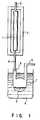
- Fig. 1 is a schematic view of an apparatus for explaining a gas-solid phase reaction which is one of the embodiments of the method of the present invention.
- the present invention is characterized in that a zirconium-titanium oxide catalyst is used.
- a zirconium-titanium oxide catalyst is used.
- the catalyst will be described in detail.
- the zirconium-titanium oxide catalyst for use in the present invention can be prepared from a mixture of a zirconium salt and a titanium salt.
- a solvent such as deionized water.
- aqueous ammonia and the like to convert it to alkaline solution, thereby to coprecipitate.
- coprecipitate is dried and heated to give the above-mentioned zirconium-titanium oxide catalyst.
- the zirconium-titanium oxide catalyst can be readily obtained in a low cost.
- zirconium-titanium oxide catalyst is heat-stable, white solid, and insoluble in water, alcohol and other organic solvents.
- the zirconium-titanium oxide catalyst can be used in a reduction using an alcohol as a hydrogen source.
- an alcohol as a hydrogen source.
- this catalyst could work as a highly active heterogeneous catalyst.
- the zirconium salt and the titanium salt for use in preparation of the above-mentioned zirconium-titanium oxide catalyst are not particularly restricted as long as they are soluble in water.
- a zirconium salt oxyzirconium chloride, oxyzirconium acetate, zirconium chloride, zirconium nitrate, and the like are preferably used.
- Titanium chloride, and the like are preferably used as a titanium salt.
- a mixed proportion of a zirconium salt to a titanium salt is preferably from 1:0.3 to 1:1.0 in terms of the atomic molar ratio of zirconium to titanium. In a proportion outside the above-mentioned range, the activity of the obtained catalyst is low. The activity of the zirconium-titanium oxide catalyst produced in a proportion outside the above-mentioned range is lower than that of hydrous zirconium oxide.
- alkali In order to obtain a coprecipitate from the solution of the mixture of the zirconium salt and the titanium salt, alkali can be used.
- An alkali for use in the present invention includes an alkali metal hydroxide such as sodium hydroxide, aqueous ammonia and the like.
- the pH value is adjusted to preferably 6.5 or more, more preferably 7.0 to 9.0 in the above-mentioned process.
- the heating temperature is 100 to 500°C, preferably 200 to 400°C.
- the heating time is preferably 1 to 8 hours, more preferably 3 to 6 hours.
- the atomic molar ratio of zirconium to titanium is equivalent to that of the zirconium salt to the titanium salt.
- a carboxylic acid or a carboxylic acid derivative is preferably used.
- the carboxylic acid or the carboxylic acid derivative is an aliphatic or an aromatic carboxylic acid or carboxylic acid derivative having 1 to 18 carbon atoms.
- the aliphatic carboxylic acid or carboxylic acid derivative may be saturated or unsaturated and a straight or a branched chain.
- the aliphatic group and the aromatic group of the aliphatic or the aromatic carboxylic acid or carboxylic acid derivative may have a substituent such as halogen.
- the carboxylic acid derivatives there are an aliphatic or an aromatic carboxylic acid ester, a nitrile, an amide, and the like.
- n-valeric acid n-hexanoic acid, n-decanoic acid, n-pentadecanoic acid, isovaleric acid, isodecanoic acid, isostearic acid, pivalic acid, 5-hexenoic acid, 10-undecenoic acid, oleic acid, benzoic acid, and the like, and an ester thereof, a nitrile thereof, and an amide thereof.
- These compound may have a substituent such as halogen.
- an alcohol is used as a hydrogen source.
- the alcohol is not particularly restricted as long as it is the primary or the secondary alcohol but a lower alcohol is preferable. From the aspects of a cost and efficiency, 2-propanol is preferable.
- a starting carboxylic acid or a derivative thereof mixed with an alcohol used as a hydrogen source to prepare a mixture solution.
- an inert solvent such as 1,4-dioxane may be added in an appropriate amount.
- the mixed proportion of the carboxylic acid or the derivative thereof to the alcohol used as a hydrogen source is in the range of 1:5 to 1:500 in terms of the molar ratio.
- the present invention can be carried out by a gas-solid phase reaction using an apparatus shown in the schematic view of Fig. 1.
- a reaction tube 1 uniformly filled with a zirconium-titanium oxide catalyst is placed in a heater 2 such as an electric furnace, and heated to 200 to 450°C, preferably 200 to 350°C.
- the above-prepared mixture solution consisting of the starting material and the alcohol is continuously fed into the reaction tube 1 with a carrier gas via an inlet 3 attached to the reaction tube 1 through a microfeeder (not shown).
- a carrier gas an inert gas such as nitrogen, argon, and helium as a carrier gas can be used.
- the carboxylic acid or the carboxylic acid derivative is converted into the corresponding alcohol by reduction in the presence of the zirconium-titanium oxide catalyst.
- the supply rate of the mixture solution is not restricted as long as a reaction is satisfactorily proceeded, but 5 to 10 ml/hour is preferable.
- reaction product 5 coming out from the reaction tube 1, and passing through a tube 4 is led into a container 7 which has been cooled by an appropriate refrigerant 6 such as water and ice, and condensed in container 7.
- an appropriate refrigerant 6 such as water and ice
- container 7 can be readily disconnected from the tube 4.
- a carrier gas goes out from a tube 9 which is attached to the other portion of the container 7.
- a obtained reaction product 5 is purified by use of an appropriate means such as fractional distillation, thereby to obtain a desired alcohol.
- the present invention can be carried out not only using the above-mentioned gas-solid phase reaction, but also using a heterogeneous liquid phase reaction.
- a reaction of a mixture of a carboxylic acid or a carboxylic acid derivative and an alcohol used as a hydrogen source in the presence of the zirconium-titanium oxide catalyst is performed in a pressure-applicable container such as an autoclave, thereby obtaining the corresponding alcohol.
- This liquid phase reaction is suited for the reaction in which a solvent such as hydrocarbon having a higher boiling point than the reaction temperature was employed.
- Catalyst B was prepared in substantially the same procedure as in the preparation of catalyst A except that 42.0g (0.130 mol) of oxyzirconium chloride (octahydrate) and 7.46g (0.0393 mol) of titanium tetra-chloride (anhydride) were used and the pH value was adjusted to 7.1.
- Catalyst C was prepared in substantially the same procedure as in the preparation of catalyst A except that 25.01g (0.0776 mol) of oxyzirconium chloride (octahydrate) and 7.361g (0.0388 mol) of titanium tetra-chloride (anhydride) were used and the pH value was adjusted to 7.4.
- Catalyst D was prepared in substantially the same procedure as in the preparation of catalyst A except that 32.2g (0.100 mol) of oxyzirconium chloride (octahydrate) and 13.3g (0.0701 mol) of titanium tetra-chloride (anhydride) were used and the pH value was adjusted to 7.0.
- Catalyst E was prepared in substantially the same procedure as in the preparation of catalyst A except that 25.01g (0.0776 mol) of oxyzirconium chloride (octahydrate) and 14.72g (0.0776 mol) of titanium tetra-chloride (anhydride) were used and the pH value was adjusted to 7.3.
- Catalyst F was prepared in substantially the same procedure as in the preparation of catalyst A except that sodium hydroxide was used in place of ammonia and the pH value was adjusted to 7.0.
- Catalyst G was prepared in substantially the same procedure as in the preparation of catalyst F except that 36.7g (0.1139 mol) of oxyzirconium chloride (octahydrate) and 10.8g (0.0569 mol) of titanium tetra-chloride (anhydride) were used and the pH value was adjusted to 8.6.
- Example Catalyst (atomic molar ratio; Zr:Ti) Carboxylic acid Conversion (%) Product Yield (%) 2
- B (1:0.3) decanoic acid 100 decanol 56 3 C (1:0.5) decanoic acid 100 decanol 81 4 D (1:0.7) decanoic acid 100 decanol 66
- Decanol was produced in substantially the same procedure as in Example 1 except that catalyst E was used and the temperature was changed to 300°C. A conversion rate of decanoic acid and a yield of decanol were measured by means of gas chromatography, which were 100% and 45%, respectively.
- Example 2 Example Catalyst (atomic molar ratio; Zr:Ti) Carboxylic acid Conversion (%) Product Yield (%) 6 F (1:0.5) decanoic acid 100 decanol 78 7 G (1:0.5) decanoic acid 100 decanol 90
- An alcohol was produced in substantially the same procedure as in Example 1 except that catalyst A (4g) and a solution of 10-undecenoic acid in 2-propanol (0.05 mol/l) were used, that a supply rate of the mixed solution was 10 ml/hour, and that the reaction temperature was changed to 250°C.
- a conversion rate of 10-undecenoic and a yield of 10-undecenol were measured by means of gas chromatography, which were 100% and 71%, respectively.
- a reaction was performed in substantially the same procedure as in Example 8 except that methyl 10-undecenoate was used.
- a conversion rate of methyl 10-undecenoate and a yield of 10-undecenol were measured by means of gas chromatography, which were 100% and 70%, respectively.
- a reaction was performed in substantially the same procedure as in Example 1 except that undecanenitrile was used and the reaction temperature was changed to 255°C.
- a conversion rate of undecanenitrile and a yield of undecanol were measured by means of gas chromatography, which were 73% and 55%, respectively.
- a reaction was performed in substantially the same procedure as in Example 8 except that methyl tetradecanoate was used.
- a conversion rate of methyl tetradecanoate and a yield of tetradecanol were measured by means of gas chromatography, which were 100% and 78%, respectively.
- a reaction was performed in substantially the same procedure as in Example 8 except that methyl hexadecanoate was used.
- a conversion rate of methyl hexadecanoate and a yield of hexadecanol were measured by means of gas chromatography, which were 100% and 72%, respectively.
- a reaction was performed in substantially the same procedure as in Example 8 except that methyl octadecanoate was used.
- a conversion rate of octadecanoate and a yield of octadecanol were measured by means of gas chromatography, which were 100% and 49%, respectively.
- a reaction was performed in substantially the same procedure as in Example 8 except that methyl 9-octadecanoate was used.
- a conversion rate of methyl 9-octadecanoate and a yield of 9-octadecen-1-ol were measured by means of gas chromatography, which were 100% and 58%, respectively.
- a reaction was performed in substantially the same procedure as in Example 8 except that a solution of 10-undecenoic acid in 2-propanol (0.1 mol/l) and a hydrous zirconium oxide catalyst (2g) were used, that a supply rate was 5 ml/hour, and that the reaction temperature was changed to 300°C.
- Table 3 Compative example Catalyst (atomic molar ratio; Zr:Ti) Carboxylic acid Conversion (%) Product Yield (%) 1 hydrous zirconium oxide (1 : 0) decanoic acid 100 decanol 34 2 hydrous zirconium oxide (1 : 0) 10-un-decenoic acid 95 10-un-decenol 10
Landscapes
- Chemical & Material Sciences (AREA)
- Organic Chemistry (AREA)
- Engineering & Computer Science (AREA)
- Materials Engineering (AREA)
- Chemical Kinetics & Catalysis (AREA)
- Organic Low-Molecular-Weight Compounds And Preparation Thereof (AREA)
- Low-Molecular Organic Synthesis Reactions Using Catalysts (AREA)
Applications Claiming Priority (2)
| Application Number | Priority Date | Filing Date | Title |
|---|---|---|---|
| JP244050/92 | 1992-08-21 | ||
| JP4244050A JPH0665127A (ja) | 1992-08-21 | 1992-08-21 | アルコールの製造方法 |
Publications (1)
| Publication Number | Publication Date |
|---|---|
| EP0585053A1 true EP0585053A1 (fr) | 1994-03-02 |
Family
ID=17112984
Family Applications (1)
| Application Number | Title | Priority Date | Filing Date |
|---|---|---|---|
| EP93306562A Ceased EP0585053A1 (fr) | 1992-08-21 | 1993-08-19 | Procédé pour la préparation d'un alcool |
Country Status (3)
| Country | Link |
|---|---|
| US (1) | US5576467A (fr) |
| EP (1) | EP0585053A1 (fr) |
| JP (1) | JPH0665127A (fr) |
Cited By (2)
| Publication number | Priority date | Publication date | Assignee | Title |
|---|---|---|---|---|
| EP0937698A1 (fr) * | 1998-02-20 | 1999-08-25 | Basf Aktiengesellschaft | Procédé pour la préparation d'alcools |
| EP1036767A1 (fr) * | 1999-03-15 | 2000-09-20 | Kabushiki Kaisha Toyota Chuo Kenkyusho | Poudre d'oxide de titanium et de zirconium, procédé pour sa preparation et materiau catalytique contenant la poudre |
Families Citing this family (1)
| Publication number | Priority date | Publication date | Assignee | Title |
|---|---|---|---|---|
| US6521765B1 (en) | 2002-04-18 | 2003-02-18 | Eastman Chemical Company | Process for the preparation of 3-methyltetrahydrofuran |
Citations (9)
| Publication number | Priority date | Publication date | Assignee | Title |
|---|---|---|---|---|
| JPS58143838A (ja) * | 1982-02-17 | 1983-08-26 | Nippon Shokubai Kagaku Kogyo Co Ltd | 窒素酸化物浄化用触媒 |
| JPS58151327A (ja) * | 1982-02-25 | 1983-09-08 | New Japan Chem Co Ltd | 固体酸組成物の製造法 |
| JPS61204143A (ja) * | 1986-09-10 | 1986-09-10 | Japan Tobacco Inc | アルデヒドまたはケトンのアルコールへの還元方法 |
| EP0239993A2 (fr) * | 1986-04-01 | 1987-10-07 | Japan Tobacco Inc. | Procédé de réduction d'aldéhydes et de cétones |
| EP0244301A1 (fr) * | 1986-04-30 | 1987-11-04 | Rhone-Poulenc Chimie | Procédé pour le traitement des gaz industriels contenant des composés du soufre |
| EP0271092A1 (fr) * | 1986-12-11 | 1988-06-15 | Japan Tobacco Inc. | Procédé de réduction de nitriles en alcools correspondants |
| EP0285786A2 (fr) * | 1987-03-03 | 1988-10-12 | Japan Tobacco Inc. | Procédé pour la fabrication d'alcools |
| JPH01218634A (ja) * | 1988-02-29 | 1989-08-31 | Nippon Shokubai Kagaku Kogyo Co Ltd | 耐水性担体、該担体を含有してなる水処理用触媒および該触媒を用いてなる水処理方法 |
| EP0370523A1 (fr) * | 1988-11-25 | 1990-05-30 | Nippon Shokubai Co., Ltd. | Support pour un catalyseur de traitement de gaz procédé pour sa fabrication et catalyseur de traitement de gaz contenant ledit support |
Family Cites Families (16)
| Publication number | Priority date | Publication date | Assignee | Title |
|---|---|---|---|---|
| GB356731A (en) * | 1930-03-01 | 1931-09-01 | Ig Farbenindustrie Ag | Improvements in the catalytic hydrogenation of esters of aliphatic carboxylic acids |
| GB800847A (en) * | 1955-07-08 | 1958-09-03 | Glanzstoff Ag | Process for the hydrogenation of aliphatic mono- and dicarboxylic acids |
| JPS52156192A (en) * | 1976-06-22 | 1977-12-26 | Kao Corp | Production of cu:fe catalyst |
| JPS5432191A (en) * | 1977-08-15 | 1979-03-09 | Nikki Chem Co Ltd | Copperrmolybdenum hydrogenation catalyst |
| JPS6052136B2 (ja) * | 1980-08-06 | 1985-11-18 | 住友化学工業株式会社 | アルコ−ルの製造法 |
| FR2505819A1 (fr) * | 1981-05-12 | 1982-11-19 | Inst Francais Du Petrole | Procede de fabrication d'alcools par hydrogenation catalytique d'esters d'acides organiques |
| US4394945A (en) * | 1981-08-06 | 1983-07-26 | Loctite Corporation | Valve having suck-back feature |
| JPS58117887A (ja) * | 1981-12-29 | 1983-07-13 | Otsuka Chem Co Ltd | パラ置換ベンジルアルコ−ルの製造法 |
| FR2527200A1 (fr) * | 1982-05-24 | 1983-11-25 | Inst Francais Du Petrole | Procede catalytique de production d'alcools par hydrogenolyse d'esters d'acides carboxyliques |
| US5171551A (en) * | 1986-04-30 | 1992-12-15 | Rhone-Poulenc Chimie | Zirconium dioxide gas desulfurization catalyst |
| JPS63141937A (ja) * | 1986-12-03 | 1988-06-14 | Kao Corp | 高級アルコ−ルの製造法 |
| JPH0236136A (ja) * | 1988-07-25 | 1990-02-06 | Kao Corp | アルコールの製造方法 |
| JP2716737B2 (ja) * | 1988-07-25 | 1998-02-18 | 花王株式会社 | アルコールの製造法 |
| US4880037A (en) * | 1988-11-30 | 1989-11-14 | 501 Bellwether, Inc. | Shuttle returner and improved body therefor |
| JPH03128334A (ja) * | 1989-07-04 | 1991-05-31 | Ube Ind Ltd | アルコールの製造方法 |
| JP2851667B2 (ja) * | 1990-01-22 | 1999-01-27 | 花王株式会社 | アルコールの製造法 |
-
1992
- 1992-08-21 JP JP4244050A patent/JPH0665127A/ja active Pending
-
1993
- 1993-08-19 EP EP93306562A patent/EP0585053A1/fr not_active Ceased
-
1995
- 1995-06-07 US US08/476,327 patent/US5576467A/en not_active Expired - Fee Related
Patent Citations (11)
| Publication number | Priority date | Publication date | Assignee | Title |
|---|---|---|---|---|
| JPS58143838A (ja) * | 1982-02-17 | 1983-08-26 | Nippon Shokubai Kagaku Kogyo Co Ltd | 窒素酸化物浄化用触媒 |
| JPS58151327A (ja) * | 1982-02-25 | 1983-09-08 | New Japan Chem Co Ltd | 固体酸組成物の製造法 |
| EP0239993A2 (fr) * | 1986-04-01 | 1987-10-07 | Japan Tobacco Inc. | Procédé de réduction d'aldéhydes et de cétones |
| EP0244301A1 (fr) * | 1986-04-30 | 1987-11-04 | Rhone-Poulenc Chimie | Procédé pour le traitement des gaz industriels contenant des composés du soufre |
| JPS61204143A (ja) * | 1986-09-10 | 1986-09-10 | Japan Tobacco Inc | アルデヒドまたはケトンのアルコールへの還元方法 |
| EP0281627A1 (fr) * | 1986-09-10 | 1988-09-14 | Japan Tobacco Inc. | Procede de reduction d'aldehydes ou de cetones |
| EP0271092A1 (fr) * | 1986-12-11 | 1988-06-15 | Japan Tobacco Inc. | Procédé de réduction de nitriles en alcools correspondants |
| EP0285786A2 (fr) * | 1987-03-03 | 1988-10-12 | Japan Tobacco Inc. | Procédé pour la fabrication d'alcools |
| JPS6415136A (en) * | 1987-03-03 | 1989-01-19 | Japan Tobacco Inc | Catalyst for reducing carboxylic acid or its ester to alcohol compound |
| JPH01218634A (ja) * | 1988-02-29 | 1989-08-31 | Nippon Shokubai Kagaku Kogyo Co Ltd | 耐水性担体、該担体を含有してなる水処理用触媒および該触媒を用いてなる水処理方法 |
| EP0370523A1 (fr) * | 1988-11-25 | 1990-05-30 | Nippon Shokubai Co., Ltd. | Support pour un catalyseur de traitement de gaz procédé pour sa fabrication et catalyseur de traitement de gaz contenant ledit support |
Non-Patent Citations (3)
| Title |
|---|
| DATABASE WPI Week 8340, Derwent World Patents Index; AN 83-779760 * |
| DATABASE WPI Week 8342, Derwent World Patents Index; AN 83-791324 * |
| DATABASE WPI Week 8941, Derwent World Patents Index; AN 89-296645 * |
Cited By (4)
| Publication number | Priority date | Publication date | Assignee | Title |
|---|---|---|---|---|
| EP0937698A1 (fr) * | 1998-02-20 | 1999-08-25 | Basf Aktiengesellschaft | Procédé pour la préparation d'alcools |
| US6140545A (en) * | 1998-02-20 | 2000-10-31 | Basf Aktiengesellschaft | Preparation of alcohols |
| EP1036767A1 (fr) * | 1999-03-15 | 2000-09-20 | Kabushiki Kaisha Toyota Chuo Kenkyusho | Poudre d'oxide de titanium et de zirconium, procédé pour sa preparation et materiau catalytique contenant la poudre |
| US6391276B1 (en) | 1999-03-15 | 2002-05-21 | Kabushiki Kaisha Toyota Chuo Kenkyusho | Titania-zirconia powder and process for producing the same |
Also Published As
| Publication number | Publication date |
|---|---|
| JPH0665127A (ja) | 1994-03-08 |
| US5576467A (en) | 1996-11-19 |
Similar Documents
| Publication | Publication Date | Title |
|---|---|---|
| EP0198681B1 (fr) | Production d'alcools par hydrogénation d'acides carboxyliques | |
| EP0285786B1 (fr) | Procédé pour la fabrication d'alcools | |
| US4398039A (en) | Hydrogenation of carboxylic acids | |
| US4443639A (en) | Hydrogenation of carboxylic acids | |
| US4929777A (en) | Catalyst compositions and the use thereof in the hydrogenation of carboxylic acid esters | |
| JPH06116182A (ja) | 有機カルボン酸及び/又は有機カルボン酸エステルの水素化方法 | |
| WO1991001964A1 (fr) | Production d'esters par hydrogenation d'acides carboxyliques et d'anhydrides | |
| EP0341907B1 (fr) | Production d'alcools et d'ethers par hydrogénation catalytique d'esters | |
| JPS61106528A (ja) | アルコ−ル及び/又はエステルの気相形成法 | |
| CA1318908C (fr) | Hydrogenation catalytique a basse pression de composes carbonyles, et catalyseurs a cette fin | |
| EP0701479A1 (fr) | Compositions de catalyseurs et leur utilisation dans l'hydrogenation d'esters d'acides carboxyliques | |
| EP0276012B1 (fr) | Procédé pour la préparation de butyrolactones et de butanediols | |
| EP0286280B1 (fr) | Procédé pour la préparation d'amines | |
| EP0585053A1 (fr) | Procédé pour la préparation d'un alcool | |
| EP0512656A2 (fr) | Procédé de préparation de dérivés vinyliques | |
| US4225727A (en) | Process for the production of unsaturated esters | |
| EP0271092A1 (fr) | Procédé de réduction de nitriles en alcools correspondants | |
| EP1153007B1 (fr) | Catalyseur d'iridium pour la carbonylation d'alcools aliphatiques inferieurs | |
| JPH05246915A (ja) | 有機カルボン酸及び/又はカルボン酸エステルの水素化方法 | |
| US5011806A (en) | Catalyst composition for the hydrogenation of carboxylic acid esters | |
| JPH0665126A (ja) | アルコールの製造法 | |
| EP0164922B1 (fr) | Procédé d'hydrogénation | |
| JP4219484B2 (ja) | 脂肪族ニトリルの製造方法 | |
| US4465847A (en) | Method for the production of butyrolactones | |
| JPS5883645A (ja) | β−フエニル・エチルアルコ−ルの製造法 |
Legal Events
| Date | Code | Title | Description |
|---|---|---|---|
| PUAI | Public reference made under article 153(3) epc to a published international application that has entered the european phase |
Free format text: ORIGINAL CODE: 0009012 |
|
| AK | Designated contracting states |
Kind code of ref document: A1 Designated state(s): DE FR GB |
|
| 17P | Request for examination filed |
Effective date: 19940831 |
|
| 17Q | First examination report despatched |
Effective date: 19960429 |
|
| GRAG | Despatch of communication of intention to grant |
Free format text: ORIGINAL CODE: EPIDOS AGRA |
|
| STAA | Information on the status of an ep patent application or granted ep patent |
Free format text: STATUS: THE APPLICATION HAS BEEN REFUSED |
|
| 18R | Application refused |
Effective date: 19970420 |