EP0598213A1 - Umhüllungswerkstoff für Lichtwellenleiter auf Basis Polyalkylenterephthalat/Polycarbonat - Google Patents
Umhüllungswerkstoff für Lichtwellenleiter auf Basis Polyalkylenterephthalat/Polycarbonat Download PDFInfo
- Publication number
- EP0598213A1 EP0598213A1 EP93116314A EP93116314A EP0598213A1 EP 0598213 A1 EP0598213 A1 EP 0598213A1 EP 93116314 A EP93116314 A EP 93116314A EP 93116314 A EP93116314 A EP 93116314A EP 0598213 A1 EP0598213 A1 EP 0598213A1
- Authority
- EP
- European Patent Office
- Prior art keywords
- optical waveguide
- aromatic
- polycarbonate
- weight
- atoms
- Prior art date
- Legal status (The legal status is an assumption and is not a legal conclusion. Google has not performed a legal analysis and makes no representation as to the accuracy of the status listed.)
- Granted
Links
- 239000004417 polycarbonate Substances 0.000 title claims abstract description 33
- 229920000515 polycarbonate Polymers 0.000 title claims abstract description 31
- 239000000203 mixture Substances 0.000 title claims abstract description 20
- 239000013307 optical fiber Substances 0.000 title claims description 6
- 150000001718 carbodiimides Chemical class 0.000 claims abstract description 23
- 229920001283 Polyalkylene terephthalate Polymers 0.000 claims abstract description 20
- 230000003287 optical effect Effects 0.000 claims abstract description 19
- 238000005253 cladding Methods 0.000 claims abstract description 10
- 125000003118 aryl group Chemical group 0.000 claims description 23
- -1 polybutylene terephthalate Polymers 0.000 claims description 18
- 125000004432 carbon atom Chemical group C* 0.000 claims description 17
- VPKDCDLSJZCGKE-UHFFFAOYSA-N carbodiimide group Chemical group N=C=N VPKDCDLSJZCGKE-UHFFFAOYSA-N 0.000 claims description 10
- 238000004519 manufacturing process Methods 0.000 claims description 10
- 229920001707 polybutylene terephthalate Polymers 0.000 claims description 10
- 229920002959 polymer blend Polymers 0.000 claims description 9
- 238000002844 melting Methods 0.000 claims description 8
- 230000008018 melting Effects 0.000 claims description 8
- 238000000034 method Methods 0.000 claims description 8
- 238000000576 coating method Methods 0.000 claims description 7
- 125000001424 substituent group Chemical group 0.000 claims description 7
- OKTJSMMVPCPJKN-UHFFFAOYSA-N Carbon Chemical compound [C] OKTJSMMVPCPJKN-UHFFFAOYSA-N 0.000 claims description 5
- 125000001931 aliphatic group Chemical group 0.000 claims description 5
- 229910052799 carbon Inorganic materials 0.000 claims description 5
- 230000006641 stabilisation Effects 0.000 claims description 4
- 238000011105 stabilization Methods 0.000 claims description 4
- IQPQWNKOIGAROB-UHFFFAOYSA-N isocyanate group Chemical group [N-]=C=O IQPQWNKOIGAROB-UHFFFAOYSA-N 0.000 claims description 3
- 238000000465 moulding Methods 0.000 claims description 3
- 238000012545 processing Methods 0.000 claims description 3
- 239000004215 Carbon black (E152) Substances 0.000 claims description 2
- 230000004927 fusion Effects 0.000 claims description 2
- 229930195733 hydrocarbon Natural products 0.000 claims description 2
- 239000000463 material Substances 0.000 abstract description 8
- IISBACLAFKSPIT-UHFFFAOYSA-N bisphenol A Chemical compound C=1C=C(O)C=CC=1C(C)(C)C1=CC=C(O)C=C1 IISBACLAFKSPIT-UHFFFAOYSA-N 0.000 description 11
- RFFLAFLAYFXFSW-UHFFFAOYSA-N 1,2-dichlorobenzene Chemical compound ClC1=CC=CC=C1Cl RFFLAFLAYFXFSW-UHFFFAOYSA-N 0.000 description 8
- ISWSIDIOOBJBQZ-UHFFFAOYSA-N Phenol Chemical compound OC1=CC=CC=C1 ISWSIDIOOBJBQZ-UHFFFAOYSA-N 0.000 description 8
- 238000012360 testing method Methods 0.000 description 8
- LYCAIKOWRPUZTN-UHFFFAOYSA-N Ethylene glycol Chemical compound OCCO LYCAIKOWRPUZTN-UHFFFAOYSA-N 0.000 description 7
- 239000010410 layer Substances 0.000 description 7
- 238000003860 storage Methods 0.000 description 7
- 230000007062 hydrolysis Effects 0.000 description 6
- 238000006460 hydrolysis reaction Methods 0.000 description 6
- 239000000654 additive Substances 0.000 description 5
- 150000001875 compounds Chemical class 0.000 description 5
- 239000008187 granular material Substances 0.000 description 5
- 229920002647 polyamide Polymers 0.000 description 5
- 125000002496 methyl group Chemical group [H]C([H])([H])* 0.000 description 4
- 229920000642 polymer Polymers 0.000 description 4
- KKEYFWRCBNTPAC-UHFFFAOYSA-N terephthalic acid group Chemical group C(C1=CC=C(C(=O)O)C=C1)(=O)O KKEYFWRCBNTPAC-UHFFFAOYSA-N 0.000 description 4
- 125000004169 (C1-C6) alkyl group Chemical group 0.000 description 3
- UMPGNGRIGSEMTC-UHFFFAOYSA-N 4-[1-(4-hydroxyphenyl)-3,3,5-trimethylcyclohexyl]phenol Chemical compound C1C(C)CC(C)(C)CC1(C=1C=CC(O)=CC=1)C1=CC=C(O)C=C1 UMPGNGRIGSEMTC-UHFFFAOYSA-N 0.000 description 3
- UFHFLCQGNIYNRP-UHFFFAOYSA-N Hydrogen Chemical compound [H][H] UFHFLCQGNIYNRP-UHFFFAOYSA-N 0.000 description 3
- 239000004952 Polyamide Substances 0.000 description 3
- WERYXYBDKMZEQL-UHFFFAOYSA-N butane-1,4-diol Chemical group OCCCCO WERYXYBDKMZEQL-UHFFFAOYSA-N 0.000 description 3
- 239000012141 concentrate Substances 0.000 description 3
- 150000002009 diols Chemical class 0.000 description 3
- 239000003365 glass fiber Substances 0.000 description 3
- 125000001449 isopropyl group Chemical group [H]C([H])([H])C([H])(*)C([H])([H])[H] 0.000 description 3
- 239000000320 mechanical mixture Substances 0.000 description 3
- 125000001997 phenyl group Chemical group [H]C1=C([H])C([H])=C(*)C([H])=C1[H] 0.000 description 3
- 229920000728 polyester Polymers 0.000 description 3
- 229920001228 polyisocyanate Polymers 0.000 description 3
- 239000005056 polyisocyanate Substances 0.000 description 3
- 239000003381 stabilizer Substances 0.000 description 3
- XLYOFNOQVPJJNP-UHFFFAOYSA-N water Substances O XLYOFNOQVPJJNP-UHFFFAOYSA-N 0.000 description 3
- BSWWXRFVMJHFBN-UHFFFAOYSA-N 2,4,6-tribromophenol Chemical compound OC1=C(Br)C=C(Br)C=C1Br BSWWXRFVMJHFBN-UHFFFAOYSA-N 0.000 description 2
- ODJUOZPKKHIEOZ-UHFFFAOYSA-N 4-[2-(4-hydroxy-3,5-dimethylphenyl)propan-2-yl]-2,6-dimethylphenol Chemical compound CC1=C(O)C(C)=CC(C(C)(C)C=2C=C(C)C(O)=C(C)C=2)=C1 ODJUOZPKKHIEOZ-UHFFFAOYSA-N 0.000 description 2
- 229930185605 Bisphenol Natural products 0.000 description 2
- WKBOTKDWSSQWDR-UHFFFAOYSA-N Bromine atom Chemical compound [Br] WKBOTKDWSSQWDR-UHFFFAOYSA-N 0.000 description 2
- ZAMOUSCENKQFHK-UHFFFAOYSA-N Chlorine atom Chemical compound [Cl] ZAMOUSCENKQFHK-UHFFFAOYSA-N 0.000 description 2
- 239000004743 Polypropylene Substances 0.000 description 2
- ATUOYWHBWRKTHZ-UHFFFAOYSA-N Propane Chemical compound CCC ATUOYWHBWRKTHZ-UHFFFAOYSA-N 0.000 description 2
- JUJWROOIHBZHMG-UHFFFAOYSA-N Pyridine Chemical compound C1=CC=NC=C1 JUJWROOIHBZHMG-UHFFFAOYSA-N 0.000 description 2
- 238000010521 absorption reaction Methods 0.000 description 2
- 230000000996 additive effect Effects 0.000 description 2
- 150000001298 alcohols Chemical class 0.000 description 2
- ADCOVFLJGNWWNZ-UHFFFAOYSA-N antimony trioxide Chemical compound O=[Sb]O[Sb]=O ADCOVFLJGNWWNZ-UHFFFAOYSA-N 0.000 description 2
- QMKYBPDZANOJGF-UHFFFAOYSA-N benzene-1,3,5-tricarboxylic acid Chemical compound OC(=O)C1=CC(C(O)=O)=CC(C(O)=O)=C1 QMKYBPDZANOJGF-UHFFFAOYSA-N 0.000 description 2
- 125000003178 carboxy group Chemical group [H]OC(*)=O 0.000 description 2
- 239000007795 chemical reaction product Substances 0.000 description 2
- 239000011248 coating agent Substances 0.000 description 2
- 229920001577 copolymer Polymers 0.000 description 2
- 150000004820 halides Chemical class 0.000 description 2
- 229910052739 hydrogen Inorganic materials 0.000 description 2
- 239000001257 hydrogen Substances 0.000 description 2
- 125000002887 hydroxy group Chemical group [H]O* 0.000 description 2
- 239000012948 isocyanate Substances 0.000 description 2
- 150000002513 isocyanates Chemical class 0.000 description 2
- QQVIHTHCMHWDBS-UHFFFAOYSA-N isophthalic acid Chemical compound OC(=O)C1=CC=CC(C(O)=O)=C1 QQVIHTHCMHWDBS-UHFFFAOYSA-N 0.000 description 2
- 150000002989 phenols Chemical class 0.000 description 2
- XNGIFLGASWRNHJ-UHFFFAOYSA-N phthalic acid Chemical compound OC(=O)C1=CC=CC=C1C(O)=O XNGIFLGASWRNHJ-UHFFFAOYSA-N 0.000 description 2
- 229920001155 polypropylene Polymers 0.000 description 2
- 239000001294 propane Substances 0.000 description 2
- 239000012744 reinforcing agent Substances 0.000 description 2
- 239000002356 single layer Substances 0.000 description 2
- 229920001169 thermoplastic Polymers 0.000 description 2
- ARCGXLSVLAOJQL-UHFFFAOYSA-N trimellitic acid Chemical compound OC(=O)C1=CC=C(C(O)=O)C(C(O)=O)=C1 ARCGXLSVLAOJQL-UHFFFAOYSA-N 0.000 description 2
- DNIAPMSPPWPWGF-VKHMYHEASA-N (+)-propylene glycol Chemical compound C[C@H](O)CO DNIAPMSPPWPWGF-VKHMYHEASA-N 0.000 description 1
- 125000006833 (C1-C5) alkylene group Chemical group 0.000 description 1
- 125000006755 (C2-C20) alkyl group Chemical group 0.000 description 1
- YPFDHNVEDLHUCE-UHFFFAOYSA-N 1,3-propanediol Substances OCCCO YPFDHNVEDLHUCE-UHFFFAOYSA-N 0.000 description 1
- FQXGHZNSUOHCLO-UHFFFAOYSA-N 2,2,4,4-tetramethyl-1,3-cyclobutanediol Chemical compound CC1(C)C(O)C(C)(C)C1O FQXGHZNSUOHCLO-UHFFFAOYSA-N 0.000 description 1
- JCTXKRPTIMZBJT-UHFFFAOYSA-N 2,2,4-trimethylpentane-1,3-diol Chemical compound CC(C)C(O)C(C)(C)CO JCTXKRPTIMZBJT-UHFFFAOYSA-N 0.000 description 1
- KAIRTVANLJFYQS-UHFFFAOYSA-N 2-(3,5-dimethylheptyl)phenol Chemical compound CCC(C)CC(C)CCC1=CC=CC=C1O KAIRTVANLJFYQS-UHFFFAOYSA-N 0.000 description 1
- RWLALWYNXFYRGW-UHFFFAOYSA-N 2-Ethyl-1,3-hexanediol Chemical compound CCCC(O)C(CC)CO RWLALWYNXFYRGW-UHFFFAOYSA-N 0.000 description 1
- YQPCHPBGAALCRT-UHFFFAOYSA-N 2-[1-(carboxymethyl)cyclohexyl]acetic acid Chemical compound OC(=O)CC1(CC(O)=O)CCCCC1 YQPCHPBGAALCRT-UHFFFAOYSA-N 0.000 description 1
- ICPXIRMAMWRMAD-UHFFFAOYSA-N 2-[3-[2-[3-(2-hydroxyethoxy)phenyl]propan-2-yl]phenoxy]ethanol Chemical compound C=1C=CC(OCCO)=CC=1C(C)(C)C1=CC=CC(OCCO)=C1 ICPXIRMAMWRMAD-UHFFFAOYSA-N 0.000 description 1
- WTPYFJNYAMXZJG-UHFFFAOYSA-N 2-[4-(2-hydroxyethoxy)phenoxy]ethanol Chemical compound OCCOC1=CC=C(OCCO)C=C1 WTPYFJNYAMXZJG-UHFFFAOYSA-N 0.000 description 1
- HYFFNAVAMIJUIP-UHFFFAOYSA-N 2-ethylpropane-1,3-diol Chemical compound CCC(CO)CO HYFFNAVAMIJUIP-UHFFFAOYSA-N 0.000 description 1
- ACOQOLIJGGKILA-UHFFFAOYSA-N 2-methylpentane-1,1-diol Chemical compound CCCC(C)C(O)O ACOQOLIJGGKILA-UHFFFAOYSA-N 0.000 description 1
- VEORPZCZECFIRK-UHFFFAOYSA-N 3,3',5,5'-tetrabromobisphenol A Chemical compound C=1C(Br)=C(O)C(Br)=CC=1C(C)(C)C1=CC(Br)=C(O)C(Br)=C1 VEORPZCZECFIRK-UHFFFAOYSA-N 0.000 description 1
- JHYNEQNPKGIOQF-UHFFFAOYSA-N 3,4-dihydro-2h-phosphole Chemical class C1CC=PC1 JHYNEQNPKGIOQF-UHFFFAOYSA-N 0.000 description 1
- ZDWSNKPLZUXBPE-UHFFFAOYSA-N 3,5-ditert-butylphenol Chemical compound CC(C)(C)C1=CC(O)=CC(C(C)(C)C)=C1 ZDWSNKPLZUXBPE-UHFFFAOYSA-N 0.000 description 1
- CPHURRLSZSRQFS-UHFFFAOYSA-N 3-[4-[2-[4-(3-hydroxypropoxy)phenyl]propan-2-yl]phenoxy]propan-1-ol Chemical compound C=1C=C(OCCCO)C=CC=1C(C)(C)C1=CC=C(OCCCO)C=C1 CPHURRLSZSRQFS-UHFFFAOYSA-N 0.000 description 1
- VPWNQTHUCYMVMZ-UHFFFAOYSA-N 4,4'-sulfonyldiphenol Chemical class C1=CC(O)=CC=C1S(=O)(=O)C1=CC=C(O)C=C1 VPWNQTHUCYMVMZ-UHFFFAOYSA-N 0.000 description 1
- VWGKEVWFBOUAND-UHFFFAOYSA-N 4,4'-thiodiphenol Chemical compound C1=CC(O)=CC=C1SC1=CC=C(O)C=C1 VWGKEVWFBOUAND-UHFFFAOYSA-N 0.000 description 1
- CUAUDSWILJWDOD-UHFFFAOYSA-N 4-(3,5-dimethylheptyl)phenol Chemical compound CCC(C)CC(C)CCC1=CC=C(O)C=C1 CUAUDSWILJWDOD-UHFFFAOYSA-N 0.000 description 1
- NEQFBGHQPUXOFH-UHFFFAOYSA-N 4-(4-carboxyphenyl)benzoic acid Chemical compound C1=CC(C(=O)O)=CC=C1C1=CC=C(C(O)=O)C=C1 NEQFBGHQPUXOFH-UHFFFAOYSA-N 0.000 description 1
- HVXRCAWUNAOCTA-UHFFFAOYSA-N 4-(6-methylheptyl)phenol Chemical compound CC(C)CCCCCC1=CC=C(O)C=C1 HVXRCAWUNAOCTA-UHFFFAOYSA-N 0.000 description 1
- KJWMCPYEODZESQ-UHFFFAOYSA-N 4-Dodecylphenol Chemical compound CCCCCCCCCCCCC1=CC=C(O)C=C1 KJWMCPYEODZESQ-UHFFFAOYSA-N 0.000 description 1
- AZZWZMUXHALBCQ-UHFFFAOYSA-N 4-[(4-hydroxy-3,5-dimethylphenyl)methyl]-2,6-dimethylphenol Chemical compound CC1=C(O)C(C)=CC(CC=2C=C(C)C(O)=C(C)C=2)=C1 AZZWZMUXHALBCQ-UHFFFAOYSA-N 0.000 description 1
- CDBAMNGURPMUTG-UHFFFAOYSA-N 4-[2-(4-hydroxycyclohexyl)propan-2-yl]cyclohexan-1-ol Chemical compound C1CC(O)CCC1C(C)(C)C1CCC(O)CC1 CDBAMNGURPMUTG-UHFFFAOYSA-N 0.000 description 1
- WXNZTHHGJRFXKQ-UHFFFAOYSA-N 4-chlorophenol Chemical compound OC1=CC=C(Cl)C=C1 WXNZTHHGJRFXKQ-UHFFFAOYSA-N 0.000 description 1
- ISAVYTVYFVQUDY-UHFFFAOYSA-N 4-tert-Octylphenol Chemical compound CC(C)(C)CC(C)(C)C1=CC=C(O)C=C1 ISAVYTVYFVQUDY-UHFFFAOYSA-N 0.000 description 1
- QHPQWRBYOIRBIT-UHFFFAOYSA-N 4-tert-butylphenol Chemical compound CC(C)(C)C1=CC=C(O)C=C1 QHPQWRBYOIRBIT-UHFFFAOYSA-N 0.000 description 1
- SDDLEVPIDBLVHC-UHFFFAOYSA-N Bisphenol Z Chemical compound C1=CC(O)=CC=C1C1(C=2C=CC(O)=CC=2)CCCCC1 SDDLEVPIDBLVHC-UHFFFAOYSA-N 0.000 description 1
- SNRUBQQJIBEYMU-UHFFFAOYSA-N Dodecane Natural products CCCCCCCCCCCC SNRUBQQJIBEYMU-UHFFFAOYSA-N 0.000 description 1
- 206010013710 Drug interaction Diseases 0.000 description 1
- 239000004593 Epoxy Substances 0.000 description 1
- OFOBLEOULBTSOW-UHFFFAOYSA-N Malonic acid Chemical compound OC(=O)CC(O)=O OFOBLEOULBTSOW-UHFFFAOYSA-N 0.000 description 1
- ALQSHHUCVQOPAS-UHFFFAOYSA-N Pentane-1,5-diol Chemical compound OCCCCCO ALQSHHUCVQOPAS-UHFFFAOYSA-N 0.000 description 1
- YGYAWVDWMABLBF-UHFFFAOYSA-N Phosgene Chemical compound ClC(Cl)=O YGYAWVDWMABLBF-UHFFFAOYSA-N 0.000 description 1
- 239000004698 Polyethylene Substances 0.000 description 1
- 239000004793 Polystyrene Substances 0.000 description 1
- VYPSYNLAJGMNEJ-UHFFFAOYSA-N Silicium dioxide Chemical compound O=[Si]=O VYPSYNLAJGMNEJ-UHFFFAOYSA-N 0.000 description 1
- KYPYTERUKNKOLP-UHFFFAOYSA-N Tetrachlorobisphenol A Chemical compound C=1C(Cl)=C(O)C(Cl)=CC=1C(C)(C)C1=CC(Cl)=C(O)C(Cl)=C1 KYPYTERUKNKOLP-UHFFFAOYSA-N 0.000 description 1
- YIMQCDZDWXUDCA-UHFFFAOYSA-N [4-(hydroxymethyl)cyclohexyl]methanol Chemical compound OCC1CCC(CO)CC1 YIMQCDZDWXUDCA-UHFFFAOYSA-N 0.000 description 1
- 239000002253 acid Substances 0.000 description 1
- 239000013543 active substance Substances 0.000 description 1
- 230000032683 aging Effects 0.000 description 1
- 229910000287 alkaline earth metal oxide Inorganic materials 0.000 description 1
- 125000000217 alkyl group Chemical group 0.000 description 1
- 125000001118 alkylidene group Chemical group 0.000 description 1
- 150000001412 amines Chemical class 0.000 description 1
- 150000008064 anhydrides Chemical class 0.000 description 1
- 239000003963 antioxidant agent Substances 0.000 description 1
- 239000002216 antistatic agent Substances 0.000 description 1
- 238000000149 argon plasma sintering Methods 0.000 description 1
- 125000004429 atom Chemical group 0.000 description 1
- 150000003819 basic metal compounds Chemical class 0.000 description 1
- 238000005452 bending Methods 0.000 description 1
- 125000001797 benzyl group Chemical group [H]C1=C([H])C([H])=C(C([H])=C1[H])C([H])([H])* 0.000 description 1
- 239000006085 branching agent Substances 0.000 description 1
- GDTBXPJZTBHREO-UHFFFAOYSA-N bromine Substances BrBr GDTBXPJZTBHREO-UHFFFAOYSA-N 0.000 description 1
- 229910052794 bromium Inorganic materials 0.000 description 1
- CDQSJQSWAWPGKG-UHFFFAOYSA-N butane-1,1-diol Chemical group CCCC(O)O CDQSJQSWAWPGKG-UHFFFAOYSA-N 0.000 description 1
- 125000000484 butyl group Chemical group [H]C([*])([H])C([H])([H])C([H])([H])C([H])([H])[H] 0.000 description 1
- 150000001732 carboxylic acid derivatives Chemical class 0.000 description 1
- 150000001735 carboxylic acids Chemical class 0.000 description 1
- 239000003054 catalyst Substances 0.000 description 1
- 230000003197 catalytic effect Effects 0.000 description 1
- 239000000460 chlorine Substances 0.000 description 1
- 229910052801 chlorine Inorganic materials 0.000 description 1
- 230000006835 compression Effects 0.000 description 1
- 238000007906 compression Methods 0.000 description 1
- 238000001816 cooling Methods 0.000 description 1
- 238000005336 cracking Methods 0.000 description 1
- 239000002178 crystalline material Substances 0.000 description 1
- 238000002425 crystallisation Methods 0.000 description 1
- 125000000753 cycloalkyl group Chemical group 0.000 description 1
- 125000000113 cyclohexyl group Chemical group [H]C1([H])C([H])([H])C([H])([H])C([H])(*)C([H])([H])C1([H])[H] 0.000 description 1
- 150000001991 dicarboxylic acids Chemical class 0.000 description 1
- 239000000539 dimer Substances 0.000 description 1
- 125000000118 dimethyl group Chemical group [H]C([H])([H])* 0.000 description 1
- ROORDVPLFPIABK-UHFFFAOYSA-N diphenyl carbonate Chemical compound C=1C=CC=CC=1OC(=O)OC1=CC=CC=C1 ROORDVPLFPIABK-UHFFFAOYSA-N 0.000 description 1
- 125000003438 dodecyl group Chemical group [H]C([H])([H])C([H])([H])C([H])([H])C([H])([H])C([H])([H])C([H])([H])C([H])([H])C([H])([H])C([H])([H])C([H])([H])C([H])([H])C([H])([H])* 0.000 description 1
- 239000000975 dye Substances 0.000 description 1
- 150000002148 esters Chemical class 0.000 description 1
- 125000001495 ethyl group Chemical group [H]C([H])([H])C([H])([H])* 0.000 description 1
- 238000001125 extrusion Methods 0.000 description 1
- 239000000945 filler Substances 0.000 description 1
- 238000011049 filling Methods 0.000 description 1
- 239000003063 flame retardant Substances 0.000 description 1
- 229920002313 fluoropolymer Polymers 0.000 description 1
- 239000004811 fluoropolymer Substances 0.000 description 1
- 230000009477 glass transition Effects 0.000 description 1
- XXMIOPMDWAUFGU-UHFFFAOYSA-N hexane-1,6-diol Chemical compound OCCCCCCO XXMIOPMDWAUFGU-UHFFFAOYSA-N 0.000 description 1
- 230000003993 interaction Effects 0.000 description 1
- 230000007774 longterm Effects 0.000 description 1
- 239000000314 lubricant Substances 0.000 description 1
- 238000005259 measurement Methods 0.000 description 1
- 229910052751 metal Inorganic materials 0.000 description 1
- 239000002184 metal Substances 0.000 description 1
- 238000002156 mixing Methods 0.000 description 1
- 239000006082 mold release agent Substances 0.000 description 1
- RXOHFPCZGPKIRD-UHFFFAOYSA-N naphthalene-2,6-dicarboxylic acid Chemical compound C1=C(C(O)=O)C=CC2=CC(C(=O)O)=CC=C21 RXOHFPCZGPKIRD-UHFFFAOYSA-N 0.000 description 1
- SLCVBVWXLSEKPL-UHFFFAOYSA-N neopentyl glycol Chemical compound OCC(C)(C)CO SLCVBVWXLSEKPL-UHFFFAOYSA-N 0.000 description 1
- 229940117969 neopentyl glycol Drugs 0.000 description 1
- BDJRBEYXGGNYIS-UHFFFAOYSA-N nonanedioic acid Chemical compound OC(=O)CCCCCCCC(O)=O BDJRBEYXGGNYIS-UHFFFAOYSA-N 0.000 description 1
- 239000002667 nucleating agent Substances 0.000 description 1
- 150000002902 organometallic compounds Chemical class 0.000 description 1
- WXZMFSXDPGVJKK-UHFFFAOYSA-N pentaerythritol Chemical compound OCC(CO)(CO)CO WXZMFSXDPGVJKK-UHFFFAOYSA-N 0.000 description 1
- GWLJTAJEHRYMCA-UHFFFAOYSA-N phospholane Chemical class C1CCPC1 GWLJTAJEHRYMCA-UHFFFAOYSA-N 0.000 description 1
- 229910052698 phosphorus Inorganic materials 0.000 description 1
- 239000011574 phosphorus Substances 0.000 description 1
- 239000000049 pigment Substances 0.000 description 1
- 239000004033 plastic Substances 0.000 description 1
- 229920003023 plastic Polymers 0.000 description 1
- 229920000573 polyethylene Polymers 0.000 description 1
- 229920000139 polyethylene terephthalate Polymers 0.000 description 1
- 239000005020 polyethylene terephthalate Substances 0.000 description 1
- 229920002223 polystyrene Polymers 0.000 description 1
- 229920000166 polytrimethylene carbonate Polymers 0.000 description 1
- 230000008092 positive effect Effects 0.000 description 1
- XRVCFZPJAHWYTB-UHFFFAOYSA-N prenderol Chemical compound CCC(CC)(CO)CO XRVCFZPJAHWYTB-UHFFFAOYSA-N 0.000 description 1
- 238000002360 preparation method Methods 0.000 description 1
- 239000000047 product Substances 0.000 description 1
- 125000001436 propyl group Chemical group [H]C([*])([H])C([H])([H])C([H])([H])[H] 0.000 description 1
- UMJSCPRVCHMLSP-UHFFFAOYSA-N pyridine Natural products COC1=CC=CN=C1 UMJSCPRVCHMLSP-UHFFFAOYSA-N 0.000 description 1
- 238000001953 recrystallisation Methods 0.000 description 1
- 230000000717 retained effect Effects 0.000 description 1
- 238000012552 review Methods 0.000 description 1
- 150000003839 salts Chemical class 0.000 description 1
- 238000000926 separation method Methods 0.000 description 1
- 238000007711 solidification Methods 0.000 description 1
- 230000008023 solidification Effects 0.000 description 1
- 230000035882 stress Effects 0.000 description 1
- 239000000126 substance Substances 0.000 description 1
- 238000009864 tensile test Methods 0.000 description 1
- 125000000999 tert-butyl group Chemical group [H]C([H])([H])C(*)(C([H])([H])[H])C([H])([H])[H] 0.000 description 1
- 150000003512 tertiary amines Chemical class 0.000 description 1
- 210000001550 testis Anatomy 0.000 description 1
- 230000008646 thermal stress Effects 0.000 description 1
- 239000004416 thermosoftening plastic Substances 0.000 description 1
- 150000003568 thioethers Chemical class 0.000 description 1
- 125000003944 tolyl group Chemical group 0.000 description 1
- 238000005809 transesterification reaction Methods 0.000 description 1
- QXJQHYBHAIHNGG-UHFFFAOYSA-N trimethylolethane Chemical compound OCC(C)(CO)CO QXJQHYBHAIHNGG-UHFFFAOYSA-N 0.000 description 1
- 238000004804 winding Methods 0.000 description 1
Classifications
-
- C—CHEMISTRY; METALLURGY
- C08—ORGANIC MACROMOLECULAR COMPOUNDS; THEIR PREPARATION OR CHEMICAL WORKING-UP; COMPOSITIONS BASED THEREON
- C08K—Use of inorganic or non-macromolecular organic substances as compounding ingredients
- C08K5/00—Use of organic ingredients
- C08K5/16—Nitrogen-containing compounds
- C08K5/29—Compounds containing one or more carbon-to-nitrogen double bonds
-
- C—CHEMISTRY; METALLURGY
- C08—ORGANIC MACROMOLECULAR COMPOUNDS; THEIR PREPARATION OR CHEMICAL WORKING-UP; COMPOSITIONS BASED THEREON
- C08L—COMPOSITIONS OF MACROMOLECULAR COMPOUNDS
- C08L67/00—Compositions of polyesters obtained by reactions forming a carboxylic ester link in the main chain; Compositions of derivatives of such polymers
- C08L67/02—Polyesters derived from dicarboxylic acids and dihydroxy compounds
-
- C—CHEMISTRY; METALLURGY
- C08—ORGANIC MACROMOLECULAR COMPOUNDS; THEIR PREPARATION OR CHEMICAL WORKING-UP; COMPOSITIONS BASED THEREON
- C08L—COMPOSITIONS OF MACROMOLECULAR COMPOUNDS
- C08L69/00—Compositions of polycarbonates; Compositions of derivatives of polycarbonates
Definitions
- the present invention relates to polyalkylene terephthalate / polycarbonate blends stabilized with carbodiimides as a coating material for optical waveguides.
- the essential task of the optical waveguide sheathing is to protect the glass fibers contained therein against external influences.
- a major problem here is to cover the inorganic glass fiber (quartz glass) as an isotropic, amorphous material with its extremely small linear temperature expansion coefficient with an organic thermoplastic and to protect it in use.
- DE-OS 2 513 722 (US Pat. No. 4,330,173) describes, for example, an envelope for optical waveguides, which is composed of two layers.
- the inner layer consists of polystyrene or a fluoropolymer and the outer layer of a polyamide, a polyterephthalate or of polypropylene or polyethylene.
- DE-OS 2 419 968 describes polybutylene terephthalate molding compositions which, inter alia, can also contain polycarbonate, to which carbodiimides are added to improve the resistance to heat separation and toughness.
- JP 04-175366 describes molding compositions made from polybutylene terephthalate, polycarbonate and epoxy compounds and / or polycarbodiimides for the production of plugs. Optical fiber claddings are not mentioned.
- DE-OS 2 355 853 (US-P 3 887 265) describes, for example, an optical cable whose sheath is made of polyester.
- JP 59-6251 describes polyester mixtures which contain antimony trioxide, alkaline earth metal oxides, carbodiimides and reinforcing agents.
- Polybutylene terephthalate which is widely used today for single-layer coating, does not completely meet the requirements, particularly in the following points: dimensional stability, hydrolysis resistance and temperature resistance (decrease in mechanical strength at the low glass transition temperature).
- the object of the present invention was to develop a polymer blend for optical waveguide coatings which combines the positive properties of amorphous and partially crystalline products without the negative properties being noticeable and moreover having good hydrolysis stability.
- carbodiimides bring about good stabilization in the described blends of polyalkylene terephthalate and polycarbonate. This is surprising insofar as carbodiimides are known as hydrolysis stabilizers in polyalkylene terephthalates, but it is also known that they are not suitable for use as hydrolysis stabilizers in polycarbonate.
- a high degree of stabilization is required for the suitability of polyalkylene terephthalate / polycarbonate blends as optical waveguide material, and this can be achieved according to the invention via carbodiimides.
- Stabilization of the polyester through a reduced carboxyl number as it is for the use of pure PBT as a wrapping material is known for optical fibers is not sufficient, especially since the carboxyl number increases significantly and not exactly controllable due to the thermal stress during processing.
- Polyalkylene terephthalates in the context of the invention are reaction products of aromatic dicarboxylic acids or their reactive derivatives (e.g. dimethyl esters or anhydrides) and aliphatic, cycloaliphatic or araliphatic diols and mixtures of these reaction products. They can be produced using known methods (Kunststoff-Handbuch, Vol. VIII, pp. 695 ff, Carl Hanser Verlag, Kunststoff, 1973).
- Preferred polyalkylene terephthalates contain at least 80, preferably at least 90 mol%, based on the dicarboxylic acid component, terephthalic acid residues and at least 80, preferably at least 90 mol%, based on the diol component, ethylene glycol and / or 1,4-butanediol residues.
- the preferred polyalkylene terephthalates can contain up to 20 mol% of residues of other aromatic or cycloaliphatic dicarboxylic acids with 8 to 14 C atoms or aliphatic dicarboxylic acids with 4 to 12 C atoms, such as residues of phthalic acid, isophthalic acid, naphthalene-2,6 -dicarboxylic acid, 4,4'-diphenyldicarboxylic acid, succinic, adipic, sebacic, azelaic, cyclohexanediacetic acid.
- the preferred polyalkylene terephthalates can contain up to 20 mol%, preferably up to 10 mol%, of other aliphatic diols with 3 to 12 carbon atoms or cycloaliphatic diols with 6 to 21 carbon atoms. Contain atoms, e.g.
- the polyalkylene terephthalates can be prepared by incorporating relatively small amounts of trihydric or tetravalent alcohols or trihydric or tetra-basic carboxylic acids, such as those e.g. are described in DE-OS 19 00 270 and US Pat. No. 3,692,744.
- preferred branching agents are trimesic acid, trimellitic acid, trimethylolethane and -propane and pentaerythritol.
- polyalkylene terephthalates which have been prepared solely from terephthalic acid or its reactive derivatives (for example its dialkyl esters) and ethylene glycol and / or 1,4-butanediol (polyethylene terephthalate, polybutylene terephthalate), and mixtures of these polyalkylene terephthalates.
- the polyalkylene terephthalates preferably used as component A generally have an intrinsic viscosity of 0.4 to 1.6 dl / g, preferably 0.6 to 1.5 dl / g, in particular 0.7 to 1.4 dl / g, each measured in phenol / o-dichlorobenzene (1: 1 parts by weight) at 25 ° C.
- Aromatic polycarbonates (component B) for the purposes of this invention are homopolycarbonates, copolycarbonates and mixtures of these polycarbonates.
- the diphenols preferred for the preparation of the aromatic polycarbonates A correspond to the formula HO - Z - OH (I), wherein Z is a divalent mono- or polynuclear aromatic C6-C30 radical, the two OH groups being bonded directly to one C atom of an aromatic system.
- diphenols 2,2-bis (4-hydroxyphenyl) propane, 1,1-bis (4-hydroxyphenyl) cyclohexane, 2,2-bis (3,5-dichloro-4-hydroxyphenyl) propane, 2,2-bis (3,5-dibromo-4-hydroxyphenyl) propane, 2,2-bis (3,5-dimethyl-4-hydroxyphenyl) propane, Bis- (3,5-dimethyl-4-hydroxyphenyl) methane, Bis (4-hydroxyphenyl) sulfide, 1,1-bis (4-hydroxyphenyl) -3,3,5-trimethylcyclohexane.
- the diphenols can be used both individually and in a mixture.
- aromatic polycarbonates are polycarbonates based on 2,2-bis (4-hydroxyphenyl) propane or one of the other diphenols mentioned as preferred. Those based on are very particularly preferred 2,2-bis (4-hydroxyphenyl) propane, 2,2-bis (3,5-dimethyl-4-hydroxyphenyl) propane or 1,1-bis (4-hydroxyphenyl) -3,3,5-trimethylcyclohexane or mixtures of 2,2-bis (4th -hydroxyphenyl) propane and 1,1-bis (4-hydroxyphenyl) -3,3,5-trimethylcyclohexane.
- the aromatic polycarbonates can be branched by using small amounts, preferably from 0.05 to 2.0 mol% (based on the diphenols used), of three or more than three-functional compounds, for example those with three or more than three phenolic hydroxyl groups .
- the aromatic polycarbonates generally have average molecular weights M ⁇ w from 10,000 to 200,000, preferably from 20,000 to 80,000, determined by light scattering.
- chain terminators such as phenols, halophenols or alkylphenols, can be used in the known amounts in a known manner.
- chain terminators are e.g. Phenol, p-chlorophenol, p-tert-butylphenol or 2,4,6-tribromophenol, but also long-chain alkylphenols, such as 4- (1,3-tetramethylbutyl) phenol according to DE-OS 2 842 005 or monoalkylphenols or dialkylphenols with a total of 8 to 20 carbon atoms in the alkyl substituents according to DE-OS 3 506 472, such as 3,5-di-tert-butylphenol, p-iso-octylphenol, p-tert-octylphenol, p-dodecylphenol, 2- (3,5-dimethylheptyl) phenol and 4- (3,5-dimethylheptyl) phenol.
- alkylphenols such as 4- (1,3-tetramethylbutyl) phenol according to DE-OS 2 842 005 or monoalkylphenols or dialky
- the amount of chain terminators to be used is generally between 0.5 and 10 mol%, based on the sum of the diphenols used in each case.
- the aromatic polycarbonates can be prepared by known methods, e.g. by melt transesterification of a corresponding bisphenol with diphenyl carbonate and in solution from bisphenols and phosgene.
- the solution can be homogeneous (pyridine method) or heterogeneous (two-phase interface method) (cf. H. Schnell, "Chemistry and Physics of Polycarbonates", Polymer Reviews, Vol. IX, p. 33 ff., Interscience Publ. 1964).
- carbodiimides of the formula (I) the aromatic radicals X and Y, for example phenyl, in both ortho positions and optionally in the para position to the carbodiimide group by (cyclo) aliphatic and / or aromatic radicals, for example C1-C6-alkyl or Are phenyl substituted, wherein one of these ortho substituents can be a methyl group.
- Compounds whose aromatic rings X and Y are substituted by (cyclo) aliphatic radicals in both neighboring positions to the carbodiimide group are particularly preferred, it being possible for one of these ortho-standing substituents to be a methyl group which contains at least 2 C atoms.
- Carbodiimides which are in the ortho position or ortho and para position to the carbodiimide group have 2 or 3 substituents, at least one of which is a branched aliphatic chain with at least 3 C atoms, or a cycloaliphate with 5 or 6 C atoms .
- p is preferably 0 to 40.
- the carbodiimides can be used as dimers, oligomeric or polymeric compounds or from mixtures thereof.
- Polymeric carbodiimides (p ⁇ 11) are preferably used.
- Suitable substituents on the aromatic ring adjacent to the carbodiimide group according to the invention are C2-C20-alkyl and / or cycloalkyl groups, such as ethyl, propyl, isopropyl, sec. Butyl, tert-butyl, cyclohexyl, dodecyl, or also aryl and aralkyl radicals with 6 to 15 carbon atoms, such as phenyl, tolyl, benzyl, naphthyl radicals, etc.
- Carbodiimides which are in the ortho positions to the carbodiimide group by isopropyl are particularly suitable are substituted, and which are optionally also substituted by iso-propyl in the para position to the carbodiimide group.
- the carbodiimides of the formula (I) can be prepared by processes known per se. A possible manufacturing process is described, for example, in DAS 25 37 685. According to the teaching of this patent, organic polyisocyanates are in the presence of a suitable Phosphorus compound partially reacted to the desired degree and the catalyst is then deactivated with a suitable halide, for example an acid halide.
- polycarbodiimides can also contain reactive NCO groups and complex-bound monomeric isocyanates.
- Polycarbodiimides can be prepared, for example, from French patent specification 1 180 307 from polyisocyanates with catalytic amounts of phospholines, phospholidines and their oxides and sulfides.
- polycarbodiimides can be prepared from aromatic di- and polyisocyanates which carry one or two aryl, alkyl or aralkyl substituents in the o-position to all NCO groups, at least one of the substituents being said to have at least two carbon atoms under the action of tertiary amines, basic metal compounds, carboxylic acid metal salts and non-basic organometallic compounds.
- NCO group-containing polycarbodiimides can be modified in such a way that the isocyanate groups still present are eliminated with reactive, hydrogen-containing compounds such as alcohols, phenols or amines (cf. DE-AS 1 156 401 and DE-OS 2 419 968).
- the polymer blends according to the invention can contain conventional additives, such as lubricants and mold release agents, nucleating agents, antistatic agents, stabilizers, fillers and reinforcing agents, flame retardants, and also dyes, pigments and antioxidants.
- additives such as lubricants and mold release agents, nucleating agents, antistatic agents, stabilizers, fillers and reinforcing agents, flame retardants, and also dyes, pigments and antioxidants.
- the polymer blends according to the invention can be produced by mixing the components at elevated temperature, preferably in the range from 200 to 330 ° C, e.g. can be melt-compounded or melt-extruded in conventional devices such as internal kneaders, extruders, twin-screw screws or Buss kneaders.
- the components can be introduced into the mixer at the same time or one after the other.
- the polymer blend described can be used as a) homogeneous granules, b) as a mechanical mixture of unstabilized polyalkylene terephthalate / PC blend with carbodiimide granulate concentrates, c) as a mechanical mixture of polyalkylene terephthalate, PC granules and carbodiimide granulate concentrates and d) can be used as a mechanical mixture of all individual components both in pure form and as a concentrate.
- the envelopes are produced using the generally known (extrusion) processes.
- the envelopes can have any (geometry) cross-sectional shape.
- the polymer blends according to the invention excellently meet the requirements with regard to long-term behavior (hydrolysis and hot air aging, resistance in the test with regard to storage in wire and core filling compound) for use as a sheathing material for optical fibers.
- the unstabilized PBT / PC blends show significantly worse behavior.
Landscapes
- Chemical & Material Sciences (AREA)
- Health & Medical Sciences (AREA)
- Chemical Kinetics & Catalysis (AREA)
- Medicinal Chemistry (AREA)
- Polymers & Plastics (AREA)
- Organic Chemistry (AREA)
- Compositions Of Macromolecular Compounds (AREA)
- Paints Or Removers (AREA)
Abstract
Description
- Die vorliegende Erfindung betrifft mit Carbodiimiden stabilisierte Polyalkylenterephthalat/Polycarbonat Blends als Umhüllungswerkstoff für Lichtwellenleiter.
- Die wesentliche Aufgabe der Lichtwellenleiter-Umhüllung besteht darin, die darin befindlichen Glasfasern gegen äußere Einflüsse zu schützen. Die Anforderungen an den Kunststoff, die Glasfasern vor Bruch, Biegung, Scherung, Torsion, Druck, Stauchung usw. zu schützen, um damit unzulässige Dämpfungserhöhung auszuschließen, sind hoch.
- Die Anforderungen an Umhüllungsmaterialien für Lichtwellenleiter umfassen beispielsweise:
- Aufnahme axialer und radialer Kräfte, d.h. hohe mechanische Festigkeit bis zu Temperaturen von 80°C,
- Dimensionsstabilität, d.h. geringe Nachschwindung durch z.B. Nachkristallisation; keine Wechselwirkung, z.B. Masseaufnahme von Ader- und Seelen-Füllmassen; geringer Wärmeausdehnungskoeffizient,
- Chemikalienbeständigkeit,
- Spannungsrißbeständigkeit,
- Hydrolysebeständigkeit, z.B. Bestehen des Bell Core Testes,
- Knickfestigkeit,
- Niedriger Reibungskoeffizient.
- Ein wesentliches Problem ist hierbei, die anorganische Glasfaser (Quarzglas) als isotropen, amorphen Werkstoff mit seinem äußerst kleinen linearen Temperaturausdehnungskoeffizienten mit einem organischen Thermoplast spannungsfrei zu umhüllen und im Einsatz zu schützen.
- DE-OS 2 513 722 (US-P 4 330 173) beschreibt beispielsweise eine Umhüllung für Lichtwellenleiter, die aus 2 Schichten aufgebaut ist. Die innere Schicht besteht aus Polystyrol oder einem Fluorpolymer und deren äußere Schicht aus einem Polyamid, einem Polyterephthalat oder aus Polypropylen oder Polyäthylen.
- DE-OS 2 419 968 beschreibt Polybutylenterephthalat-Formmassen, die u.a. auch Polycarbonat enthalten können, denen man zur Verbesserung der Wärmeabtrennungsbeständigkeit und Zähigkeit Carbodiimide zusetzt. JP 04-175366 beschreibt Formmassen aus Polybutylenterephthalat, Polycarbonat und Epoxyverbindungen und/oder Polycarbodiimiden zur Herstellung von Steckern. Lichtwellenleiterumhüllungen werden nicht erwähnt.
- DE-OS 2 355 853 (US-P 3 887 265) beschreibt beispielsweise ein optisches Kabel, dessen Umhüllung aus Polyester besteht.
- JP 59-6251 beschreibt Polyester-Mischungen, die Antimontrioxid, Erdalkalimetalloxide, Carbodiimide und Verstärkungsmittel enthalten.
- Es gibt prinzipiell zwei konstruktive bzw. verfahrenstechnische Möglichkeiten der Fertigung einer losen Umhüllung.
- 1. Die Fertigung von Hohladerröhrchen auf Teller als echtes Zweischicht-System mit einer amorphen inneren Schicht wie z.B. Polyamid oder Polycarbonat und zum Schutz eine teilkristalline Außenschicht aus Polybutylenterephthalat. Nachteile dieses Systems sind die unbefriedigende Wirtschaftlichkeit und die enorme Spannungsrißanfälligkeit der amorphen Werkstoffe (DE-OS 25 13 722).
- 2. Die Fertigung von Hohladerröhrchen auf Spule als Zweischicht- oder Einschicht mit teilkristallinen Werkstoffen wie z.B. Polybutylenterephthalat, 12 Polyamid oder Copolymere des Polypropylens. Bei dieser Fertigung ist die störende Nachkristallisation durch das feste Aufwickeln auf die Spule weitgehend verhindert. Der Nachteil dieses Verfahrens liegt darin, daß die Fertigungslängen begrenzt sind.
- Das heute in großem Maße für die Einschicht-Umhüllung eingesetzte Polybutylenterephthalat erfüllt die Anforderungen besonders in folgenden Punkten nicht vollständig: Dimensionsbeständigkeit, Hydrolysebeständigkeit und Temperaturbeständigkeit (Abfall der mechanischen Festigkeit bei der niedrigen Glasübergangstemperatur).
- Die Aufgabe der vorliegenden Erfindung bestand darin, ein Polymerblend für Lichtwellenleiterumhüllungen zu entwickeln, das die positiven Eigenschaften von amorphen und teilkristallinen Produkten verbindet, ohne daß sich die negativen Eigenschaften bemerkbar machen und überdies eine gute Hydrolysestabilität aufweist.
- Gegenstand der vorliegenden Erfindung sind Lichtwellenleiterumhüllungen aus
- A) 80 bis 40 Gew.-%, vorzugsweise 75 bis 45, insbesondere 70 bis 50 Gew.-% Polyalkylenterephthalat,
- B) 20 bis 60 Gew.-%, vorzugsweise 25 bis 55, insbesondere 30 bis 50 Gew.-% aromatisches Polycarbonat und
- c) 0,1 bis 6 Gew.-%, vorzugsweise 0,2 bis 3, insbesondere 0,3 bis 1,5 Gew.-% Carbodiimid der Formel (I)
(X)m-[-N=C=N-Y-]p-(N=C=N-X)m (I)
in der
X und Y aromatische oder araliphatische Kohlenwasserstoffreste mit 6 bis 20 C-Atomen bedeuten, die in mindestens einer Orthostellung zur Carbodiimidgruppe aromatische, aliphatische und/oder cycloaliphatische Substituenten mit mindestens 2 C-Atomen, bevorzugt verzweigte oder cyclische aliphatische Reste mit mindestens 3 C-Atomen tragen, und die Carbodiimidgruppe(n) an aromatischen Kohlenstoff gebunden ist (sind), p = 0 bis 50 (im Mittel) ist, und m 0 oder 1 ist, wobei X noch freie Isocyanat-Gruppen enthalten kann,
wobei die Summe aus A + B + C 100 ergibt. - Das Blend weist eine ausgeprägte 2-Phasigkeit auf und ist thermisch so stabil, daß diese Struktur in der Lichtwellenleiter-Umhüllung erhalten bleibt. Die 2-Phasigkeit ist dadurch gekennzeichnet, daß
- a) der Polycarbonat-Anteil das Verhalten des Schubmoduls noch deutlich in der Form mitbestimmt, daß neben der Polybutylentherephthalat- auch die Polycarbonat-Charakteristik erkennbar ist und
- b) die Verschiebung bzw. Erniedrigung des Schmelzpunktes und Abnahme der Schmelzenthalpie durch die Verarbeitung vorzugsweise folgende Werte nicht überschreitet sollte:
- Schmelzenthalpie: 50 %
- Erniedrigung des Schmelzpunktes 20°C
- Ferner wurde überraschend gefunden, daß Carbodiimide eine gute Stabilsiierung in den beschriebenen Blends aus Polyalylenterephthalat und Polycarbonat bewirken. Dies ist in sofern überraschend, als Carbodiimide zwar als Hydrolysestabilisatoren in Polyalkylenterephthalaten bekannt sind, jedoch ebenfalls bekannt ist, daß sie für den Einsatz als Hydrolysestabilisator in Polycarbonat nicht geeignet sind.
- Für die Eignung von Polyalkylenterephthalat/Polycarbonat-Blends als Lichtwellenleitermaterial ist eine hohe Stabilisierung erforderlich, die erfindungsgemäß über Carbodiimide erzielt werden kann. Eine Stabilisierung des Polyesters durch eine reduzierte Carboxylzahl wie sie für den Einsatz von reinem PBT als Umhüllungsmaterial für Lichtwellenleiter bekannt ist, ist nicht ausreichend, zumal sich die Carboxylzahl durch die thermische Beanspruchung bei der Verarbeitung deutlich und nicht exakt kontrollierbar erhöht.
- Polyalkylenterephthalate (Komponente A) im Sinne der Erfindung sind Reaktionsprodukte aus aromatischen Dicarbonsäuren oder ihren reaktionsfähigen Derivaten (z.B. Dimethylestern oder Anhydriden) und aliphatischen, cycloaliphatischen oder araliphatischen Diolen und Mischungen dieser Reaktionsprodukte. Sie lassen sich nach bekannten Methoden herstellen (Kunststoff-Handbuch, Bd. VIII, S. 695 ff, Carl Hanser Verlag, München, 1973).
- Bevorzugte Polyalkylenterephthalate enthalten mindestens 80, vorzugsweise mindestens 90 Mol-%, bezogen auf die Dicarbonsäurekomponente, Terephthalsäurereste und mindestens 80, vorzugsweise mindestens 90 Mol-%, bezogen auf die Diolkomponente, Ethylenglykol- und/oder Butandiol-1,4-reste.
- Die bevorzugten Polyalkylenterephthalate können neben Terephthalsäureresten bis zu 20 Mol-% Reste anderer aromatischer oder cycloaliphatischer Dicarbonsäuren mit 8 bis 14 C-Atomen oder aliphatischer Dicarbonsäuren mit 4 bis 12 C-Atomen enthalten, wie z.B. Reste von Phthalsäure, Isophthalsäure, Naphthalin-2,6-dicarbonsäure, 4,4'-Diphenyldicarbonsäure, Bernstein-, Adipin-, Sebacin-, Azelain-, Cyclohexandiessigsäure.
- Die bevorzugten Polyalkylenterephthalate können neben Ethylenglykol- bzw. Butandiol-1,4-resten bis zu 20 Mol-%, vorzugsweise bis zu 10 Mol-%, anderer aliphatischer Diole mit 3 bis 12 C-Atomen oder cycloaliphatischer Diole mit 6 bis 21 C-Atomen enthalten, z.B. Reste von Propandiol-1,3, 2-Ethylpropandiol-1,3, Neopentylglykol, Pentandiol-1,5, Hexandiol-1,6, Cyclohexan-dimethanol-1,4, 3-Ethylpentandiol-2,4, 2-Methylpentandiol-2,4, 2,2,4-Trimethylpentandiol-1,3 und -1,6, 2-Ethylhexandiol-1,3, 2,2-Diethylpropandiol-1,3, Hexandiol-2,5, 1,4-Di-(β-hydroxyethoxy)-benzol, 2,2-Bis-(4-hydroxycyclohexyl)-propan, 2,4-Dihydroxy-1,1,3,3-tetramethylcyclobutan, 2,2-Bis-(3-β-hydroxyethoxyphenyl)-propan und 2,2-Bis-(4-hydroxypropoxyphenyl)-propan (DE-OS 24 07 647, 24 07 776, 27 15 932).
- Die Polyalkylenterephthalate können durch Einbau relativ kleiner Mengen 3- oder 4-wertiger Alkohole oder 3-oder 4-basischer Carbonsäuren, wie sie z.B. in der DE-OS 19 00 270 und der US-PS 3 692 744 beschrieben sind, verzweigt werden. Beispiele bevorzugter Verzweigungsmittel sind Trimesinsäure, Trimellithsäure, Trimethylolethan und -propan und Pentaerythrit.
- Besonders bevorzugt sind Polyalkylenterephthalate, die allein aus Terephthalsäure oder deren reaktionsfähigen Derivaten (z.B. deren Dialkylestern) und Ethylenglykol und/oder Butandiol-1,4 hergestellt (Polyethylenterephthalat, Polybutylenterephthalat) worden sind, und Mischungen dieser Polyalkylenterephthalate.
- Die als Komponente A vorzugsweise verwendeten Polyalkylenterephthalate besitzen im allgemeinen eine Intrinsic-Viskosität von 0,4 bis 1,6 dl/g, vorzugsweise 0,6 bis 1,5 dl/g, insbesondere 0,7 bis 1,4 dl/g, jeweils gemessen in Phenol/o-Dichlorbenzol (1:1 Gewichtsteile) bei 25°C.
- Unter aromatischen Polycarbonaten (Komponente B) im Sinne dieser Erfindung werden Homopolycarbonate, Copolycarbonate und Mischungen dieser Polycarbonate verstanden.
- Im allgemeinen entsprechen die für die Herstellung der aromatischen Polycarbonate A bevorzugten Diphenole der Formel
HO - Z - OH (I),
worin Z einen zweiwertigen ein- oder mehrkernigen aromatischen C₆-C₃₀-Rest bedeutet, wobei die beiden OH-Gruppen direkt an je ein C-Atom eines aromatischen Systems gebunden sind. - Besonders bevorzugte Diphenole entsprechen der Formel

worin - A
- eine Einfachbindung, C₁-C₅-Alkylen, C₂-C₅-Alkyliden, C₅-C₆-Cycloalkylen oder -alkyliden, -O-, -S-,

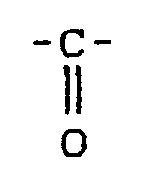
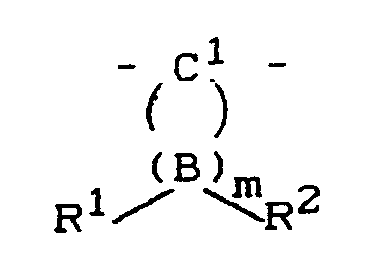
- Hal
- Chlor oder Brom,
- x
- Null, 1 oder 2 und
- n
- Null oder 1 bedeuten,
- R¹ und R²
- für jedes B individuell wählbar unabhängig voneinander Wasserstoff oder C₁-C₆-Alkyl, insbesondere Methyl,
- B
- Kohlenstoff und
- m
- eine ganze Zahl von 4 bis 7, bevorzugt 4 oder 5 bedeuten.
- Als Diphenole seien insbesondere erwähnt:
2,2-Bis-(4-hydroxyphenyl)-propan,
1,1-Bis-(4-hydroxyphenyl)-cyclohexan,
2,2-Bis-(3,5-dichlor-4-hydroxyphenyl)-propan,
2,2-Bis-(3,5-dibrom-4-hydroxyphenyl)-propan,
2,2-Bis-(3,5-dimethyl-4-hydroxyphenyl)-propan,
Bis-(3,5-dimethyl-4-hydroxyphenyl)-methan,
Bis-(4-hydroxyphenyl)-sulfid,
1,1-Bis-(4-hydroxyphenyl)-3,3,5-trimethylcyclohexan. - Die Diphenole können sowohl einzeln als auch im Gemisch eingesetzt werden.
- Besonders bevorzugte aromatische Polycarbonate sind Polycarbonate auf der Basis von 2,2-Bis-(4-hydroxyphenyl)-propan bzw. einem der anderen als bevorzugt genannten Diphenole. Ganz besonders bevorzugt sind solche auf Basis von
2,2-Bis-(4-hydroxyphenyl)-propan,
2,2-Bis-(3,5-dimethyl-4-hydroxyphenyl)-propan oder 1,1-Bis-(4-hydroxyphenyl)-3,3,5-trimethylcyclohexan oder Gemische aus 2,2-Bis-(4-hydroxyphenyl)-propan und 1,1-Bis-(4-hydroxyphenyl)-3,3,5-trimethylcyclohexan. - Die aromatischen Polycarbonate können durch den Einsatz geringer Mengen, vorzugsweise von 0,05 bis 2,0 Mol-% (bezogen auf eingesetzte Diphenole), drei- oder mehr als dreifunktioneller Verbindungen, beispielsweise solcher mit drei oder mehr als drei phenolischen Hydroxylgruppen, verzweigt sein.
- Die aromatischen Polycarbonate besitzen in der Regel mittlere Molekulargewichte

- Zur Einstellung des Molekulargewichts Mw der Polycarbonate können in bekannter Weise Kettenabbrecher, wie beispielsweise Phenole, Halogenphenole oder Alkylphenole, in den berechneten Mengen eingesetzt werden.
- Besonders bevorzugte Kettenabbrecher sind z.B. Phenol, p-Chlorphenol, p-tert.-Butylphenol oder 2,4,6-Tribromphenol, aber auch langkettige Alkylphenole, wie 4-(1,3-Tetramethylbutyl)-phenol gemäß DE-OS 2 842 005 oder Monoalkylphenole bzw. Dialkylphenole mit insgesamt 8 bis 20 C-Atomen in den Alkylsubstituenten gemäß DE-OS 3 506 472, wie 3,5-Di-tert.-butylphenol, p-iso-Octylphenol, p-tert.-Octylphenol, p-Dodecylphenol, 2-(3,5-Dimethylheptyl)-phenol und 4-(3,5-Dimethyl-heptyl)phenol.
- Die Menge an einzusetzenden Kettenabbrechern beträgt im allgemeinen zwischen 0,5 und 10 Mol-%, bezogen auf die Summe der jeweils eingesetzten Diphenole.
- Die aromatischen Polycarbonate können nach bekannten Verfahren hergestellt werden, z.B. durch Schmelzumesterung eines entsprechenden Bisphenols mit Diphenylcarbonat und in Lösung aus Bisphenolen und Phosgen. Die Lösung kann homogen sein (Pyridinverfahren) oder heterogen (Zweiphasengrenzflächenverfahren) (vgl. H. Schnell, "Chemistry and Physics of Polycarbonates", Polymer Reviews, Vol. IX, S. 33 ff., Interscience Publ. 1964).
- Bevorzugt sind Carbodiimide der Formel (I), deren aromatische Reste X und Y, beispielsweise Phenyl, in beiden Orthostellungen und gegebenenfalls in Parastellung zur Carbodiimidgruppe durch (cyclo-)aliphatische und/oder aromatische Reste, beispielsweise C₁-C₆-Alkyl oder Phenyl substituiert sind, wobei einer dieser orthoständigen Substituenten eine Methylgruppe sein kann. Besonders bevorzugt sind Verbindungen, deren aromatische Ringe X und Y in beiden Nachbarstellungen zur Carbodiimidgruppe durch (cyclo)aliphatische Reste substituiert sind, wobei einer dieser orthoständigen Substituenten eine Methylgruppe sein kann, der andere mindestens 2 C-Atome enthält.
- Ganz besonders bevorzugt sind Carbodiimide, die in Orthostellung bzw. Ortho- und Parastellung zur Carbodiimidgruppe 2 bzw. 3 Substituenten tragen, von denen mindestens einer eine verzweigte aliphatische Kette mit mindestens 3 C-Atomen, oder ein Cycloaliphat mit 5 oder 6 C-Atomen ist. p ist vorzugsweise 0 bis 40.
- Die Carbodiimide können als Dimere, oligomere oder polymere Verbindungen oder aus Gemischen daraus eingesetzt werden. Vorzugsweise werden polymere Carbodiimide ( p ≧11) eingesetzt.
- Erfindungsgemäß geeignete zur Carbodiimidgruppe benachbarte Substituenten am aromatischen Ring sind C₂-C₂₀-Alkyl- und/oder Cycloalkylgruppen, wie Ethyl-, Propyl-, Isopropyl-, sek. Butyl-, tert.-Butyl, Cyclohexyl-, Dodecyl-, oder auch Aryl- und Aralkylreste mit 6 bis 15 C-Atomen, wie Phenyl-, Tolyl-, Benzyl-, Naphthylreste usw.
- Besonders geeignet sind solche Carbodiimide, die in den Ortho-Stellungen zur Carbodiimidgruppe durch iso-Propyl substituiert sind, und die gegebenenfalls in der para-Stellung zur Carbodiimidgruppe ebenfalls durch iso-Propyl substituiert sind.
- Beispielhaft seien die folgenden Carbodiimide genannt:

Die Carbodiimide der Formel (I) können nach an sich bekannten Verfahren hergestellt werden. Ein mögliches Herstellungsverfahren ist z.B. in der DAS 25 37 685 beschrieben. Nach der Lehre dieser Patentschrift werden organische Polyisocyanate in Gegenwart einer geeigneten Phosphorverbindung bis zum gewünschten Grad teilweise umgesetzt und der Katalysator anschließend mit einem geeigneten Halogenid, z.B. einem Säurehalogenid, desaktiviert. - Polycarbodiimide können außerdem, wenn sie aus Isocyanaten hergestellt worden sind, noch reaktionsfähige NCO-Gruppen und komplex gebundene monomere Isocyanate enthalten. Polycarbodiimide lassen sich beispielsweise nach der französischen Patentschrift 1 180 307 aus Polyisocyanaten mit katalytischen Mengen an Phospholinen, Phospholidinen und deren Oxiden und Sulfiden herstellen. Weitere geeignete Polycarbodiimide lassen sich herstellen aus aromatischen Di- und Polyisocyanaten, die in o-Stellung zu allen NCO-Gruppen einen oder zwei Aryl-, Alkyl- bzw. Aralkylsubstituenten tragen, wobei wenigstens einer der Substituenten mindestens zwei Kohlenstoffatome aufweisen soll, unter Einwirkung von tertiären Aminen, basisch reagierenden Metallverbindungen, carbonsauren Metallsalzen und nicht basischen Organometallverbindungen. NCO-Gruppen-haltige Polycarbodiimide können in der Weise modifiziert werden, daß die noch vorhandenen Isocyanatgruppen mit reaktionsfähigen, Wasserstoff enthaltenden Verbindungen wie Alkoholen, Phenolen oder Aminen beseitigt werden (vgl. DE-AS 1 156 401 und DE-OS 2 419 968).
- Die erfindungsgemäßen Polymerblends können übliche Additive, wie Gleit- und Entformungsmittel, Nukleiermittel, Antistatika, Stabilisatoren, Füll- und Verstärkungsmittel, Flammschutzmittel sowie Farbstoffe, Pigmente und Antioxidantien enthalten.
- Die erfindungsgemäßen Polymerblends können durch Mischen der Komponenten bei erhöhter Temperatur, vorzugsweise im Bereich von 200 bis 330°C, hergestellt werden, also z.B. in üblichen Vorrichtungen wie Innenknetern, Extrudern, Doppelwellenschnecken oder Buss-Knetern, schmelzcompoundiert oder schmelzextrudiert werden. Die Komponenten können gleichzeitig oder nacheinander in das Mischgerät eingeführt werden. Zur Herstellung der Umhüllung des Lichtwellenleiters kann das beschriebene Polymerblend als a) homogenes Granulat, b) als mechanische Mischung von unstabilisiertem Polyalkylenterephthalat/PC-Blend mit Carbodiimid-Granulatkonzentraten, c) als mechanische Mischung von Polyalkylenterephthalat-, PC-Granulat und Carbodiimid-Granulatkonzentraten und d) als mechanische Mischung aller Einzelkomponenten sowohl in reiner Form als auch als Konzentrat eingesetzt werden.
- Die Fertigung der Umhüllungen erfolgt nach den allgemein bekannten (Extrusions-)Verfahren.
- Die Umhüllungen können jede beliebige (Geometrie) Querschnittsform aufweisen.
-
- A
- Polybutylenterephthalat (PBT)
Intrinsic Viskosität 1,4 dl/g,gemessen in Phenol/o-Dichlorbenzol (Gewichtsverhältnis 1:1) bei 25 °C - B
- Polycarbonat auf Basis Bisphenol A
Relative Lösungsviskosität (DIN 51 568, Teil 3): 1,335 - C
- Stabaxol® KE 8457 (Rhein Chemie Rheinau GmbH) Polymeres Carbodiimid (Stabaxol P 100) in thermoplastischem Polymer auf Basis Polybutylenterephthalat (Intrinsic Viskosität 1,25)dl/g, gemessen in Phenol/o-Dichlorbenzol (Gewichtsverhältnis 1:1) bei 25 °C
Wirkstoffgehalt: ca. 20 % -
Tabelle 2 Reißdehnung (in %) aus dem Zugversuch an Prüfkörpern F 3 x 0,7 (gespritzter 70%iger Proportionalstab) gemäß DIN 53455, Prüfgeschwindigkeit: 35 mm/min. Beispiel O-Wert Nach 35 Tagen Wasserlagerung bei 80°C Nach 35 Tagen Heißluftlagerung bei 130°C A 140 30 102 B 120 35 75 C 110 40 85 D (Vergleich) 70 2 5 Tabelle 3 Reißdehnung (in %) gemäß DIN 53455, an extrudierten Prüfkörpern (Zugstäbe aus Bändchen gestanzt nach DIN 53504, Typ S 2); Prüfgeschwindigkeit: 25 mm/min. Beispiel O-Wert Nach 35 Tagen Wasserlagerung bei 80°C Nach 35 Tagen Lager in Ader- und Seelenfüllmasse bei 80°C E 160 130 160 F (Vergleich) 130 nicht meßbar - Tabelle 4 Reißdehnung (in %) an Lichtwellenleiter-Umhüllungen (Röhrchen); Prüfgeschwindigkeit: 50 mm/min. Beispiel O-Wert Nach 28 Tagen Wasserlagerung bei 80°C Nach 28 Tagen Heißluftlagerung bei 100°C E 160 140 140 - Aus den Tabellen ergibt sich, daß die erfindungsgemäßen Polymerblends ausgezeichnet die Anforderungen in Bezug auf Langzeitverhalten (Hydrolyse- und Heißluftalterung, Beständigkeit im Test bezüglich Lagerung in Ader- und Seelenfüllmasse) für den Einsatz als Umhüllungswerkstoff für Lichtwellenleiter erfüllen. Im Gegensatz dazu zeigen die unstabilisierten PBT/PC-Blends deutlich schlechteres Verhalten.
Außerdem treten bei dynamischen DSC-Messungen sowohl an Granulat als auch an Fertigteilen (Umhüllungen) während beider Aufheizungen und der dazwischenliegenden Abkühlung deutliche Schmelzpeaks bzw. ein ausgeprägter Erstarrungspeak auf, die von der teilkristallinen Polyalkylenterephthalatphase stammen.
Das Mischen der Komponenten erfolgte auf einem Doppelwellenextruder ZSK 83, Bauart Werner und Pfleiderer.
| Zusammensetzung des Polymerblends | ||||
| Beispiel | PBT | PC | Carbodiimid | Additive* |
| A | 54,4 | 45 | 0,5 | 0,1 |
| B | 54,15 | 45 | 0,75 | 0,1 |
| C | 53,9 | 45 | 1,0 | 0,1 |
| D (Vergleich) | 54,9 | 45 | - | 0,1 |
| E | 54,24 | 45 | 0,75 | 0,01 |
| F (Vergleich) | 59,99 | 40 | - | 0,01 |
| *) übliche Additive |
Claims (8)
- Lichtwellenleiter-Umhüllung ausA) 80 bis 40 Gew.-% Polyalkylenterephthalat,B) 20 bis 60 Gew.-% aromatische Polycarbonat undC) 0,1 bis 6 Gew.-% Carbodiimid der Formel (I)
(X)m-[-N=C=N-Y-]p-(-N=C=N-X)m (I)
in der
X und Y aromatische oder araliphatische Kohlenwasserstoffreste mit 6 bis 20 C-Atomen bedeuten, die in mindestens einer Orthostellung zur Carbodiimidgruppe aromatische, aliphatische und/oder cycloaliphatische Substituenten mit mindestens 2 C-Atomen, bevorzugt verzweigte oder cyclische aliphatische Reste mit mindestens 3 C-Atomen tragen, und die Carbodiimidgruppe(n) an aromatischen Kohlenstoff gebunden ist (sind), p = 0 bis 50 (im Mittel) ist und m O oder 1 ist, wobei X noch freie Isocyanatgruppen tragen kann,
wobei die Summe aus A+B+C 100 ergibt. - Lichtwellenleiter-Umhüllung gemäß Anspruch 1, worinA) 75 bis 45 Gew.-% Polyalkylenterephthalat,B) 25 bis 55 Gew.-% aromatische Polycarbonat undC) 0,2 bis 3 Gew.-% Carbodiimid.
- Lichtwellenleiter-Umhüllung gemäß Anspruch 1, wobei das Polymerblend eine ausgeprägte 2-Phasigkeit aufweist.
- Lichtwellenleiter-Umhüllung gemäß Anspruch 3, wobei die 2-Phasigkeit dadurch gekennzeichnet ist, daßa) der Polycarbonat-Anteil das Verhalten des Schubmoduls noch deutlich in der Form mitbestimmt, daß neben der Polybutylentherephthalat- auch die Polycarbonat-Charakteristik erkennbar ist undb) die Verschiebung bzw. Erniedrigung des Schmelzpunktes und Abnahme der Schmelzenthalpie durch die Verarbeitung vorzugsweise folgende Werte nicht überschreitet sollte:- Schmelzenthalpie: 50 %- Erniedrigung des Schmelzpunktes: 20°C
- Lichtwellenleiter-Umhüllung gemäß Anspruch 1, wobei folgende Carbodiimide allein oder im Gemisch verwendet werden:

- Verwendung von Polymerblends gemäß Anspruch 1 zur Herstellung von Lichtwellenleiter-Umhüllungen.
- Verwendung von Carbodiimiden der Formel (I) gemäß Anspruch 1 zur Stabilisierung von Polyalkylenterephthalat/Polycarbonat-Formmassen, zur Herstellung von Lichtwellenleiterumhüllungen.
- Verfahren zur Herstellung von Lichtwellenleiterumhüllungen, dadurch gekennzeichnet, daß die Komponenten gemäß Anspruch 1 bei erhöhter Temperatur gemischt werden, schmelzcompoundiert und schmelzextrudiert werden.
Applications Claiming Priority (2)
| Application Number | Priority Date | Filing Date | Title |
|---|---|---|---|
| DE4235463 | 1992-10-21 | ||
| DE4235463 | 1992-10-21 |
Publications (2)
| Publication Number | Publication Date |
|---|---|
| EP0598213A1 true EP0598213A1 (de) | 1994-05-25 |
| EP0598213B1 EP0598213B1 (de) | 1997-07-30 |
Family
ID=6470967
Family Applications (1)
| Application Number | Title | Priority Date | Filing Date |
|---|---|---|---|
| EP93116314A Expired - Lifetime EP0598213B1 (de) | 1992-10-21 | 1993-10-08 | Umhüllungswerkstoff für Lichtwellenleiter auf Basis Polyalkylenterephthalat/Polycarbonat |
Country Status (7)
| Country | Link |
|---|---|
| US (1) | US5621031A (de) |
| EP (1) | EP0598213B1 (de) |
| JP (1) | JPH06220310A (de) |
| AU (1) | AU661794B2 (de) |
| CA (1) | CA2108672A1 (de) |
| DE (1) | DE59307008D1 (de) |
| ES (1) | ES2105035T3 (de) |
Cited By (3)
| Publication number | Priority date | Publication date | Assignee | Title |
|---|---|---|---|---|
| EP0802225A3 (de) * | 1996-04-16 | 1998-03-25 | Hüls Aktiengesellschaft | Formmasse |
| EP0962490A3 (de) * | 1998-06-03 | 2000-01-19 | Nisshinbo Industries, Inc. | Modifizierte Polycarbonatharz-Emulsion und Verfahren zu seiner Herstellung |
| WO2004081611A3 (en) * | 2003-03-06 | 2005-06-16 | Du Pont | Covered optical fiber |
Families Citing this family (33)
| Publication number | Priority date | Publication date | Assignee | Title |
|---|---|---|---|---|
| DE4442724A1 (de) * | 1994-12-01 | 1996-06-05 | Basf Ag | Stabilisierte Polyesterformmassen |
| JP3393752B2 (ja) * | 1996-04-26 | 2003-04-07 | 日清紡績株式会社 | エステル基を有する樹脂用の耐加水分解安定剤及び該安定剤によるエステル基を有する樹脂の耐加水分解安定化方法 |
| FR2753540B1 (fr) * | 1996-09-13 | 1998-11-13 | Alcatel Cable | Conducteur optique et son procede de fabrication |
| US6349161B1 (en) | 1999-05-28 | 2002-02-19 | Tycom (Us) Inc. | Undersea communications cable having centrally located, plastic buffer tube |
| US6496629B2 (en) | 1999-05-28 | 2002-12-17 | Tycom (Us) Inc. | Undersea telecommunications cable |
| DE10326380A1 (de) | 2003-06-12 | 2004-12-30 | Rhein-Chemie Rheingau Gmbh | Verträgliche Blends von thermoplastischen Formmassen |
| DE102004005652A1 (de) | 2004-02-04 | 2005-08-25 | Basf Ag | Fließfähige Polyesterformmassen |
| DE102004005657A1 (de) * | 2004-02-04 | 2005-08-25 | Basf Ag | Fließfähige Polyesterformmassen |
| MY139705A (en) * | 2004-07-19 | 2009-10-30 | Basf Ag | Mixtures of hyperbranched polyesters with polycarbonates as additive for polyester molding compositions |
| DE102004035357A1 (de) * | 2004-07-21 | 2006-03-16 | Basf Ag | Kontinuierliches Verfahren zur Herstellung von Polyalkylenarylaten mit hyperverzweigten Polyestern und/oder Polycarbonaten |
| DE102004038979A1 (de) * | 2004-08-10 | 2006-02-23 | Basf Ag | Schlagzähmodifizierte Polyester mit hyperverzweigten Polyestern |
| DE102004059243A1 (de) * | 2004-08-10 | 2006-02-23 | Basf Ag | Thermoplastische Formmassen mit verbesserten Fließ- und Entformungseigenschaften |
| DE102004038976A1 (de) * | 2004-08-10 | 2006-02-23 | Basf Ag | Fließfähige Polyesterformmassen mit ASA/ABS und SAN |
| DE102004049342A1 (de) * | 2004-10-08 | 2006-04-13 | Basf Ag | Fließfähige Thermoplaste mit halogenfreiem Flammschutz |
| DE102004050025A1 (de) * | 2004-10-13 | 2006-04-20 | Basf Ag | Fließfähige Thermoplaste mit Halogenflammschutz |
| DE102004051241A1 (de) * | 2004-10-20 | 2006-05-04 | Basf Ag | Fließfähige Polyamide mit hyperverzweigten Polyestern/Polycarbonaten |
| DE102005002044A1 (de) * | 2005-01-14 | 2006-07-20 | Basf Ag | Fließfähige Polyester mit Hydrolyseschutz |
| DE102005004856A1 (de) | 2005-02-01 | 2006-08-03 | Basf Ag | Fliessfähige Polyester mit Carbodilmid-Stabilisatoren |
| DE102005027549A1 (de) | 2005-06-14 | 2006-12-21 | Basf Ag | Mehrkomponentenformkörper mit Polyesterschichten |
| DE102005034980A1 (de) * | 2005-07-22 | 2007-01-25 | Basf Ag | Fasern und Flüssigkeitsbehälter aus PET |
| DE102005034999A1 (de) * | 2005-07-22 | 2007-01-25 | Basf Ag | Fließfähige Polyester mit Polyesterelastomeren |
| US9976192B2 (en) | 2006-03-10 | 2018-05-22 | Ldip, Llc | Waveguide-based detection system with scanning light source |
| US9423397B2 (en) | 2006-03-10 | 2016-08-23 | Indx Lifecare, Inc. | Waveguide-based detection system with scanning light source |
| US8288157B2 (en) | 2007-09-12 | 2012-10-16 | Plc Diagnostics, Inc. | Waveguide-based optical scanning systems |
| US9528939B2 (en) | 2006-03-10 | 2016-12-27 | Indx Lifecare, Inc. | Waveguide-based optical scanning systems |
| US8675199B2 (en) * | 2006-03-10 | 2014-03-18 | Plc Diagnostics, Inc. | Waveguide-based detection system with scanning light source |
| GB2461026B (en) * | 2008-06-16 | 2011-03-09 | Plc Diagnostics Inc | System and method for nucleic acids sequencing by phased synthesis |
| JP5604060B2 (ja) * | 2009-06-12 | 2014-10-08 | 帝人株式会社 | ポリエステルの製造方法 |
| JP5632167B2 (ja) * | 2010-02-02 | 2014-11-26 | 帝人株式会社 | ポリ乳酸樹脂組成物 |
| JP5563328B2 (ja) * | 2010-02-15 | 2014-07-30 | 帝人株式会社 | ポリ乳酸樹脂組成物およびそれよりなるフィルム |
| JP5607431B2 (ja) * | 2010-06-11 | 2014-10-15 | 帝人株式会社 | 再生ポリエステルの製造方法およびそれを用いた成形体 |
| US10018566B2 (en) | 2014-02-28 | 2018-07-10 | Ldip, Llc | Partially encapsulated waveguide based sensing chips, systems and methods of use |
| WO2016138427A1 (en) | 2015-02-27 | 2016-09-01 | Indx Lifecare, Inc. | Waveguide-based detection system with scanning light source |
Citations (5)
| Publication number | Priority date | Publication date | Assignee | Title |
|---|---|---|---|---|
| FR2268838A1 (de) * | 1974-04-25 | 1975-11-21 | Basf Ag | |
| FR2325061A1 (fr) * | 1975-09-19 | 1977-04-15 | Cables De Lyon Geoffroy Delore | Protection d'une fibre optique |
| CH621135A5 (en) * | 1976-05-05 | 1981-01-15 | Inventa Ag | Process for improving the hydrolysis stability of fibre- and film-forming polyesters |
| WO1991019760A1 (en) * | 1990-06-13 | 1991-12-26 | Raychem Corporation | Stabilized polymeric compositions |
| JPH04175366A (ja) * | 1990-08-07 | 1992-06-23 | Toray Ind Inc | ポリブチレンテレフタレート樹脂組成物 |
Family Cites Families (6)
| Publication number | Priority date | Publication date | Assignee | Title |
|---|---|---|---|---|
| GB1436319A (en) * | 1972-11-10 | 1976-05-19 | Bicc Ltd | Optical guides |
| US4061691A (en) * | 1973-04-26 | 1977-12-06 | Bayer Aktiengesellschaft | Flame-resistant polycarbonate molding compositions |
| GB1512516A (en) * | 1974-07-31 | 1978-06-01 | Ici Ltd | Polyester composition |
| DE2513722B2 (de) * | 1975-03-25 | 1979-09-06 | Siemens Ag, 1000 Berlin Und 8000 Muenchen | Optisches Kabel |
| US4188314A (en) * | 1976-12-14 | 1980-02-12 | General Electric Company | Shaped article obtained from a carbonate-polyester composition |
| US4745148A (en) * | 1984-04-13 | 1988-05-17 | Mobay Corporation | Thermoplastic polyester molding composition having an improved impact performance |
-
1993
- 1993-09-27 AU AU48645/93A patent/AU661794B2/en not_active Ceased
- 1993-10-08 DE DE59307008T patent/DE59307008D1/de not_active Expired - Fee Related
- 1993-10-08 EP EP93116314A patent/EP0598213B1/de not_active Expired - Lifetime
- 1993-10-08 ES ES93116314T patent/ES2105035T3/es not_active Expired - Lifetime
- 1993-10-15 JP JP5280720A patent/JPH06220310A/ja active Pending
- 1993-10-18 CA CA002108672A patent/CA2108672A1/en not_active Abandoned
-
1995
- 1995-07-10 US US08/500,035 patent/US5621031A/en not_active Expired - Fee Related
Patent Citations (6)
| Publication number | Priority date | Publication date | Assignee | Title |
|---|---|---|---|---|
| FR2268838A1 (de) * | 1974-04-25 | 1975-11-21 | Basf Ag | |
| DE2419968A1 (de) * | 1974-04-25 | 1975-12-18 | Basf Ag | Zaehe, waermealterungsbestaendige und verarbeitungsstabile polybutylenterephthalat-formmassen |
| FR2325061A1 (fr) * | 1975-09-19 | 1977-04-15 | Cables De Lyon Geoffroy Delore | Protection d'une fibre optique |
| CH621135A5 (en) * | 1976-05-05 | 1981-01-15 | Inventa Ag | Process for improving the hydrolysis stability of fibre- and film-forming polyesters |
| WO1991019760A1 (en) * | 1990-06-13 | 1991-12-26 | Raychem Corporation | Stabilized polymeric compositions |
| JPH04175366A (ja) * | 1990-08-07 | 1992-06-23 | Toray Ind Inc | ポリブチレンテレフタレート樹脂組成物 |
Non-Patent Citations (1)
| Title |
|---|
| PATENT ABSTRACTS OF JAPAN vol. 016, no. 485 (C - 0993) 8 October 1992 (1992-10-08) * |
Cited By (4)
| Publication number | Priority date | Publication date | Assignee | Title |
|---|---|---|---|---|
| EP0802225A3 (de) * | 1996-04-16 | 1998-03-25 | Hüls Aktiengesellschaft | Formmasse |
| EP0962490A3 (de) * | 1998-06-03 | 2000-01-19 | Nisshinbo Industries, Inc. | Modifizierte Polycarbonatharz-Emulsion und Verfahren zu seiner Herstellung |
| WO2004081611A3 (en) * | 2003-03-06 | 2005-06-16 | Du Pont | Covered optical fiber |
| CN100451711C (zh) * | 2003-03-06 | 2009-01-14 | 纳幕尔杜邦公司 | 包覆光学纤维 |
Also Published As
| Publication number | Publication date |
|---|---|
| US5621031A (en) | 1997-04-15 |
| EP0598213B1 (de) | 1997-07-30 |
| AU661794B2 (en) | 1995-08-03 |
| CA2108672A1 (en) | 1994-04-22 |
| AU4864593A (en) | 1994-05-05 |
| DE59307008D1 (de) | 1997-09-04 |
| JPH06220310A (ja) | 1994-08-09 |
| ES2105035T3 (es) | 1997-10-16 |
Similar Documents
| Publication | Publication Date | Title |
|---|---|---|
| EP0598213B1 (de) | Umhüllungswerkstoff für Lichtwellenleiter auf Basis Polyalkylenterephthalat/Polycarbonat | |
| DE10230983A1 (de) | Mehrschichtiges Erzeugnis enthaltend Polycarbonat | |
| EP1404750B1 (de) | Flammgeschützte polyesterformmassen mit zns | |
| EP0595123A1 (de) | Flammgeschützte, mineralgefüllte thermoplastische Formmassen mit hoher Kriechstromfestigkeit | |
| EP1147146B1 (de) | Polycarbonat-folie mit verbesserter flammhemmungs-leistung | |
| WO2003047856A1 (de) | Mehrschichtiges erzeugnis | |
| EP1290078B1 (de) | Transparente thermoplastische zusammensetzung | |
| EP1266931A1 (de) | Wärmeabsorbierende Polymer-Zusammensetzung | |
| WO2002034825A1 (de) | Zusammensetzung enthaltend thermoplastische kunststoffe | |
| DE69227337T2 (de) | Copolyestercarbonat-Zusammensetzung | |
| EP0223056B1 (de) | Mischungen aromatischer Polycarbonate und aromatischer Polyestercarbonate und ihre Verwendung zur Herstellung von Formkörpern, Folien, Fasern, Filamenten und Beschichtungen | |
| DE69227813T2 (de) | Polycarbonatharzmasse | |
| EP0220585B1 (de) | Verfahren zur Herstellung aromatischer Polyestercarbonate mit verbesserter Kerbschlagzähigkeit, danach hergestellte Polyestercarbonate und ihre Verwendung zur Herstellung von formkörpern, Folien und Beschichtungen | |
| DE69019123T2 (de) | Schlagfeste und hydrolysebeständige Mischungen von Polycarbonaten und Polyestern. | |
| DE19744693A1 (de) | Verfahren zur Herstellung von speziellen Copolycarbonaten durch Schmelzumesterung | |
| EP4288490A1 (de) | Polycarbonat-polyester zusammensetzung, formmasse und formkörper mit guter schlagzähigkeit und hoher thermischer belastbarkeit | |
| DE4208644C2 (de) | Antistatische Polycarbonat-Extrusionsfolien | |
| DE3039066A1 (de) | Thermoplastische carbonat-carboxylat-copolyester und verfahren zu ihrer herstellung | |
| EP0120394B1 (de) | Polycarbonat-Hohlkammerplatten mit verbessertem Brandverhalten | |
| WO2001094486A1 (de) | Zusammensetzungen enthaltend polycarbonat | |
| EP0649724A1 (de) | Verfahren zur Herstellung von mehrschichtigen Kunststofftafeln | |
| DE60318578T2 (de) | Thermoplastische polycarbonatzusammensetzungen mit hoher zähigkeit | |
| EP4077520B1 (de) | Polycarbonat-zusammensetzungen enthaltend füllstoffe und epoxy-gruppen enthaltendes triacylglycerol | |
| DE19857965A1 (de) | Flammgeschützte Extrudate und mittels Preßverfahren hergestellte flammgeschützte Formkörper | |
| EP1332175B1 (de) | Zusammensetzung enthaltend thermoplastische kunststoffe |
Legal Events
| Date | Code | Title | Description |
|---|---|---|---|
| PUAI | Public reference made under article 153(3) epc to a published international application that has entered the european phase |
Free format text: ORIGINAL CODE: 0009012 |
|
| AK | Designated contracting states |
Kind code of ref document: A1 Designated state(s): BE DE ES FR GB IT NL |
|
| RIN1 | Information on inventor provided before grant (corrected) |
Inventor name: PFANDL, WALTER, DR. Inventor name: LANGE, GERHARD, DIPL.-CHEM. Inventor name: KAMPS, RAINER, DR. Inventor name: PAUL, FRIEDEMANN DIPL.-ING. Inventor name: LEIMANN, GERHARD, DIPL.-ING. |
|
| 17P | Request for examination filed |
Effective date: 19941017 |
|
| 17Q | First examination report despatched |
Effective date: 19951219 |
|
| GRAG | Despatch of communication of intention to grant |
Free format text: ORIGINAL CODE: EPIDOS AGRA |
|
| GRAH | Despatch of communication of intention to grant a patent |
Free format text: ORIGINAL CODE: EPIDOS IGRA |
|
| GRAH | Despatch of communication of intention to grant a patent |
Free format text: ORIGINAL CODE: EPIDOS IGRA |
|
| GRAA | (expected) grant |
Free format text: ORIGINAL CODE: 0009210 |
|
| AK | Designated contracting states |
Kind code of ref document: B1 Designated state(s): BE DE ES FR GB IT NL |
|
| GBT | Gb: translation of ep patent filed (gb section 77(6)(a)/1977) |
Effective date: 19970731 |
|
| REF | Corresponds to: |
Ref document number: 59307008 Country of ref document: DE Date of ref document: 19970904 |
|
| ITF | It: translation for a ep patent filed | ||
| REG | Reference to a national code |
Ref country code: ES Ref legal event code: FG2A Ref document number: 2105035 Country of ref document: ES Kind code of ref document: T3 |
|
| ET | Fr: translation filed | ||
| PLBE | No opposition filed within time limit |
Free format text: ORIGINAL CODE: 0009261 |
|
| STAA | Information on the status of an ep patent application or granted ep patent |
Free format text: STATUS: NO OPPOSITION FILED WITHIN TIME LIMIT |
|
| 26N | No opposition filed | ||
| PGFP | Annual fee paid to national office [announced via postgrant information from national office to epo] |
Ref country code: FR Payment date: 20000919 Year of fee payment: 8 |
|
| PGFP | Annual fee paid to national office [announced via postgrant information from national office to epo] |
Ref country code: DE Payment date: 20000920 Year of fee payment: 8 |
|
| PGFP | Annual fee paid to national office [announced via postgrant information from national office to epo] |
Ref country code: GB Payment date: 20000921 Year of fee payment: 8 |
|
| PGFP | Annual fee paid to national office [announced via postgrant information from national office to epo] |
Ref country code: NL Payment date: 20000925 Year of fee payment: 8 |
|
| PGFP | Annual fee paid to national office [announced via postgrant information from national office to epo] |
Ref country code: BE Payment date: 20001017 Year of fee payment: 8 |
|
| PGFP | Annual fee paid to national office [announced via postgrant information from national office to epo] |
Ref country code: ES Payment date: 20001107 Year of fee payment: 8 |
|
| PG25 | Lapsed in a contracting state [announced via postgrant information from national office to epo] |
Ref country code: GB Free format text: LAPSE BECAUSE OF NON-PAYMENT OF DUE FEES Effective date: 20011008 |
|
| PG25 | Lapsed in a contracting state [announced via postgrant information from national office to epo] |
Ref country code: ES Free format text: LAPSE BECAUSE OF NON-PAYMENT OF DUE FEES Effective date: 20011009 |
|
| PG25 | Lapsed in a contracting state [announced via postgrant information from national office to epo] |
Ref country code: BE Free format text: LAPSE BECAUSE OF NON-PAYMENT OF DUE FEES Effective date: 20011031 |
|
| REG | Reference to a national code |
Ref country code: GB Ref legal event code: IF02 |
|
| BERE | Be: lapsed |
Owner name: SIEMENS A.G. Effective date: 20011031 Owner name: BAYER A.G. Effective date: 20011031 |
|
| PG25 | Lapsed in a contracting state [announced via postgrant information from national office to epo] |
Ref country code: NL Free format text: LAPSE BECAUSE OF NON-PAYMENT OF DUE FEES Effective date: 20020501 |
|
| GBPC | Gb: european patent ceased through non-payment of renewal fee |
Effective date: 20011008 |
|
| PG25 | Lapsed in a contracting state [announced via postgrant information from national office to epo] |
Ref country code: FR Free format text: LAPSE BECAUSE OF NON-PAYMENT OF DUE FEES Effective date: 20020628 |
|
| NLV4 | Nl: lapsed or anulled due to non-payment of the annual fee |
Effective date: 20020501 |
|
| PG25 | Lapsed in a contracting state [announced via postgrant information from national office to epo] |
Ref country code: DE Free format text: LAPSE BECAUSE OF NON-PAYMENT OF DUE FEES Effective date: 20020702 |
|
| REG | Reference to a national code |
Ref country code: FR Ref legal event code: ST |
|
| REG | Reference to a national code |
Ref country code: ES Ref legal event code: FD2A Effective date: 20021113 |
|
| PG25 | Lapsed in a contracting state [announced via postgrant information from national office to epo] |
Ref country code: IT Free format text: LAPSE BECAUSE OF NON-PAYMENT OF DUE FEES;WARNING: LAPSES OF ITALIAN PATENTS WITH EFFECTIVE DATE BEFORE 2007 MAY HAVE OCCURRED AT ANY TIME BEFORE 2007. THE CORRECT EFFECTIVE DATE MAY BE DIFFERENT FROM THE ONE RECORDED. Effective date: 20051008 |