EP0599773B1 - Brique en oxyde de magnésium-carbone contenant un graphite nouveau - Google Patents
Brique en oxyde de magnésium-carbone contenant un graphite nouveau Download PDFInfo
- Publication number
- EP0599773B1 EP0599773B1 EP93630090A EP93630090A EP0599773B1 EP 0599773 B1 EP0599773 B1 EP 0599773B1 EP 93630090 A EP93630090 A EP 93630090A EP 93630090 A EP93630090 A EP 93630090A EP 0599773 B1 EP0599773 B1 EP 0599773B1
- Authority
- EP
- European Patent Office
- Prior art keywords
- magnesite
- graphite
- brick
- mixtures
- carbon
- Prior art date
- Legal status (The legal status is an assumption and is not a legal conclusion. Google has not performed a legal analysis and makes no representation as to the accuracy of the status listed.)
- Revoked
Links
Images
Classifications
-
- C—CHEMISTRY; METALLURGY
- C04—CEMENTS; CONCRETE; ARTIFICIAL STONE; CERAMICS; REFRACTORIES
- C04B—LIME, MAGNESIA; SLAG; CEMENTS; COMPOSITIONS THEREOF, e.g. MORTARS, CONCRETE OR LIKE BUILDING MATERIALS; ARTIFICIAL STONE; CERAMICS; REFRACTORIES; TREATMENT OF NATURAL STONE
- C04B35/00—Shaped ceramic products characterised by their composition; Ceramics compositions; Processing powders of inorganic compounds preparatory to the manufacturing of ceramic products
- C04B35/01—Shaped ceramic products characterised by their composition; Ceramics compositions; Processing powders of inorganic compounds preparatory to the manufacturing of ceramic products based on oxide ceramics
- C04B35/013—Shaped ceramic products characterised by their composition; Ceramics compositions; Processing powders of inorganic compounds preparatory to the manufacturing of ceramic products based on oxide ceramics containing carbon
-
- C—CHEMISTRY; METALLURGY
- C21—METALLURGY OF IRON
- C21B—MANUFACTURE OF IRON OR STEEL
- C21B7/00—Blast furnaces
- C21B7/04—Blast furnaces with special refractories
- C21B7/06—Linings for furnaces
-
- C—CHEMISTRY; METALLURGY
- C21—METALLURGY OF IRON
- C21B—MANUFACTURE OF IRON OR STEEL
- C21B7/00—Blast furnaces
- C21B7/14—Discharging devices, e.g. for slag
-
- C—CHEMISTRY; METALLURGY
- C21—METALLURGY OF IRON
- C21C—PROCESSING OF PIG-IRON, e.g. REFINING, MANUFACTURE OF WROUGHT-IRON OR STEEL; TREATMENT IN MOLTEN STATE OF FERROUS ALLOYS
- C21C5/00—Manufacture of carbon-steel, e.g. plain mild steel, medium carbon steel or cast steel or stainless steel
- C21C5/28—Manufacture of steel in the converter
- C21C5/42—Constructional features of converters
- C21C5/44—Refractory linings
Definitions
- This invention relates to carbon-containing refractories and in particular magnesite-carbon refractory brick suitable for use in metal processing equipment, especially basic oxygen furnaces (BOF), slaglines in ladles, electric arc furnaces, and ladle metallurgical furnaces.
- BOF basic oxygen furnaces
- slaglines in ladles especially electric arc furnaces, and ladle metallurgical furnaces.
- the essential requirements for prolonged service are high hot strength and high slag resistance.
- Hot strength is perceived to be a very important parameter governing life of a refractory in demanding applications like the BOF. Refractories in such applications are under considerable mechanical and thermal stress. Simple fracture or spalling can often occur when the stresses become greater than the strength of the refractory lining.
- hot strength is defined as the strength of the refractory when crushed at 1538°C (2800°F).
- the improvements in hot strength are obtained in a novel way by utilizing a low cost, less pure flake graphite which has a comparatively high lime/silica ratio in its ash.
- Such improvements in hot strength were only previously possible by using very high purity expensive raw materials (99% pure) or by adding relatively high levels of metal (from 1 to 5%).
- This invention offers a cost effective means of improving the high temperature strength of magnesite-carbon brick.
- this invention comprises a mix for forming a magnesite-carbon refractory shape comprising from 70 to 97 wt.% deadburned magnesite and, correspondingly, 3 to 30 wt.% flake graphite and for each 100 wt.% of said magnesite and graphite from about 1 to 6 wt.% of a carbonaceous bonding agent, said magnesite containing at least 95% MgO, and said graphite having a lime/silica ratio in its ash greater than 0.2 and said graphite having a carbon content ranging from 90 to 99 wt.% as measured by the loss-on-ignition test.
- the invention also comprises the resultant refractory shapes and particularly brick and liners for metallurgical vessels having an increased life using said brick as hereinafter set forth.
- Brick made according to this invention have improved 1538°C (2800°F) crushing strength which reflects an improved high temperature stability between the phases comprising the refractory.
- the essential element of the instant invention is the use of a flake graphite which has a comparatively high lime/silica ratio in its ash.
- the flake graphite must have a lime/silica ratio in its ash greater than 0.2 and a carbon content ranging from 90 to 99 wt.% as measured by the loss-on-ignition test.
- Table I-b shows that some of the Canadian flake graphite sources, such as Mazarin and Amalgamet are like the other world sources in that their ash chemistries have similar lime/silica ratios of 0.1 or less.
- flake graphite deposits are associated with metamorphosed coal seams which have silica, iron and alumina impurities or are associated with acidic rocks such as granites, or gneisses which predominantly contain acidic compounds like alumina and silica.
- the graphites shown in Table I-b have carbon contents of 93 to 96%, therefore, the remainder which consists chiefly of ash ranges from 4 to 7 wt.%.
- Chemical analysis of flake graphite is typically done by several methods as shown in the tables. One method involves a determination of the total carbon of the samples as measured by a Leco carbon analyzer. This method may give an inaccurate determination of the amount of flake graphite, because it measures all forms of carbon such as organic carbon, carbonate carbon and graphite carbon.
- Loss on ignition is a simpler test which involves determining the weight change of the sample after exposure to 1093°C (2000°F).
- the flake graphite sample is exposed to 1093°C (2000°F) until complete combustion of the graphite occurs.
- Measurement by a Leco carbon analyzer is generally considered a more meaningful test because of the higher combustion temperatures of the Leco furnace.
- a more meaningful determination of the flake graphite content is a measurement called graphitic carbon.
- the sample is first treated either with nitric acid or heat treated in argon to 800°C (1470°F) which removes organic carbon and carbonate carbon from the sample, and then the sample is analyzed for carbon by the Leco method.
- flake graphite with a lime/silica ratio in its ash greater than 0.2 provides an increase in hot strength in magnesite-carbon brick. It is suspected that these flake graphites at elevated temperatures are more resistant to insitu oxidation. That is, flake graphite is prone to oxidation, because carbon reacts with the accessory silicates and undergoes the reaction C + Si0 2 ⁇ SiO (g) CO (g) . In flake graphites with high lime/silica ratios the silica is tied up with lime forming a stable calcium silicate which is not readily reduced by carbon. Hence, the refractory containing such graphites are stronger at high temperatures.
- Table 4 lists the chemistry of the flake graphites used in making the bricks set forth in Table 3.
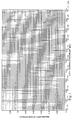
- Figure 1 depicts the relationship between the lime/silica ratio in the flake graphite versus the hot crushing strength of the brick made with the flake graphites set forth in Table 4.
- the magnesite it is necessary that it contain at least 95% MgO.
- a carbonaceous bonding agent that yields high levels of carbon on pyrolysis; i.e., over about 25% by weight carbon.
- Examples are any novolak or resol resin, tar pitch or mixtures thereof, and the like conventionally used for bonding brick. At the temperatures at which these brick are used, these materials are decomposed and the carbon derived acts to bind the brick.
- the amounts thereof are not critical, and any amount sufficient to bond the mix can be utilized, but it is desired to avoid high binder levels in order to avoid difficulties in brick formation during processing. Ordinarily 1 to 6% by weight of such bonding agent is added for each 100% by weight of the mix.
- metal additives of aluminum and/or magnesium or a mixture thereof acts to increase the hot strength of the refractory.
- 0.1 to 10 wt.% (-28 mesh) -0.64 mm metal additive is included in the mix to give the desired hot strength without the undesirable effects associated with such metals.
- boron carbide, boron nitride, silicon nitride powder or mixtures thereof are added to the mix for increased hot strength, increased oxidation resistance and corrosion resistance.
- silicon powder is added to the mix to prevent aluminum or magnesium carbides from reacting with water.
- the method of forming the brick is not critical in that the components noted above can be simply admixed, pressed into shape in the usual brick-making presses, and then baked at the conventional temperatures, i.e, 121-288°C (250 to 550°F) to form the unburned brick which are then used as noted above, particularly as linings for basic oxygen furnaces. In use, the brick become heat treated at high temperatures in such furnaces to form carbon-bonded brick of high hot strength and improved slag resistance.
- the brick of the present invention are particularly suitable as linings for basic oxygen furnaces where their increased hot strength, slag resistance, and stability at high temperatures results in longer times between furnace relines.
- the brick of the present invention are made to the size and shape required to form the entire lining or a portion of lining of any metallurgical vessel.
- the linings are formed in the conventional manner by forming courses, or rings, of the proper size brick about the interior of the vessel. Other construction techniques are also commonly used and, of course, in areas where brick cannot be used, refractory ramming mixes are utilized.
- the present inventive mix provides a means of using relatively impure flake graphites with 2 to 10 wt.% ash while maintaining high crushing strength at 1538°C (2800°F) of at least 15.85 MPa (2300 psi) and often with strengths above 20.68 MPa (3000 psi).
- prior art taught that flake graphites with less than 2% ash were required to achieve these strengths.
- Refractory liners made from said shapes provide a method of increasing the life of various metallurgical vessels. These shapes have improved high temperature stability because their flake graphite contains a more stable phase assemblage at elevated temperatures than graphites of prior usage. This improved stability is reflected in higher 1538°C (2800°F) crushing strengths.
Landscapes
- Engineering & Computer Science (AREA)
- Chemical & Material Sciences (AREA)
- Manufacturing & Machinery (AREA)
- Materials Engineering (AREA)
- Organic Chemistry (AREA)
- Metallurgy (AREA)
- Ceramic Engineering (AREA)
- Structural Engineering (AREA)
- Compositions Of Oxide Ceramics (AREA)
- Ceramic Products (AREA)
- Carbon And Carbon Compounds (AREA)
Claims (12)
- Un mélange pour fabriquer une forme réfractaire de magnésite-carbone comprenant 70 à 97% de magnésite frittée et, de manière correspondante 3 à 30% en poids de graphite en flocons et pour chaque 100 parties en poids de cette magnésite et graphite de 1 à 6 parties en poids d'un agent liant carbonaceux choisi parmi la résine novolak, une résine résol, un goudron, une poix, ou des mélanges de ceux-ci, cette magnésite contenant au moins 95% en poids MgO, et ce graphite ayant un rapport chaux/silice dans sa cendre supérieure à 0,2 et ce graphite ayant une teneur en carbone se situant entre 90 et 99% en poids telle que mesurée par le test de perte après calcination.
- Le mélange de la revendication 1 qui contient également 0,1 à 10% en poids d'additifs de métaux choisis parmi aluminium, magnésium, ou des mélanges de ceux-ci.
- Le mélange de la revendication 2 qui contient également 0,1 à 10% en poids de poudre de silicium et 0,1 à 10% en poids de poudre de carbure de bore, nitrure de bore, nitrure de silicium ou des mélanges de ceux-ci.
- Une forme réfractaire de magnésite-carbone non brûlée consistante en un mélange cuit comprenant de 70 à 97% en poids de magnésite frittée et, de manière correspondante 3 à 30% en poids de graphite en flocons et pour ces 100% en poids de cette magnésite et graphite de 1 à 6% d'agent liant carbonaceux choisi parmi une résine novolak, une résine résol, un goudron, une poix, ou des mélanges de ceux-ci, cette magnésite contenant au moins 95% MgO, et ce graphite ayant un rapport chaux/silice dans sa cendre supérieure à 0,2 et ce graphite ayant une teneur en carbone se situant entre 90 et 99% en poids telle que mesurée par le test de perte après calcination.
- La forme réfractaire de la revendication 4 qui contient également 0,1 à 10% en poids d'additifs de métal choisis parmi aluminium, magnésium, ou des mélanges de ceux-ci.
- La forme réfractaire de la revendication 4 qui contient également 0,1 à 10% en poids de poudre de silicium et 0,1 à 10% en poids de poudre d'une matière choisie parmi le carbure de bore, nitrure de bore, et nitrure de silicium ou des mélanges de ceux-ci.
- Un revêtement en brique réfractaire pour des fours métallurgiques dans lequel le mode principal d'usure de revêtement se fait par craquage provoqué par des contraintes ou par la turbulence du métal en fusion et du laitier, ce revêtement comprenant une pluralité de briques de magnésite-carbone non brûlé, ces briques consistant essentiellement en 70 à 97% en poids de magnésite frittée et, de façon correspondante 3 à 30% en poids de graphite en flocons et 1 à 6% en poids d'agent liant carbonaceux choisi parmi une résine novolak, une résine résol, un goudron, une poix, ou des mélanges de ceux-ci, cette magnésite contenant au moins 95% MgO, et ce graphite ayant un rapport chaux/silice dans sa cendre supérieure à 0,2 et ce graphite ayant une teneur en carbone se situant entre 90 et 99% en poids telle que mesurée par le test de perte après calcination.
- Revêtement de brique réfractaire de la revendication 7 qui contient également 0,1 à 10% en poids d'additifs de métal choisis parmi aluminium, magnésium, ou des mélanges de ceux-ci.
- Le revêtement de brique réfractaire de la revendication 8 qui contient également 0,1 à 10% en poids de poudre de silicium et 0,1 à 10% en poids d'une matière choisie parmi une poudre de carbure de bore, de nitrure de bore, de nitrure de silicium ou des mélanges de ceux-ci.
- Le procédé pour augmenter la durée de vie des revêtements pour les fours métallurgiques dans lequel le mode principal d'usure du revêtement se fait par craquage provoqué par des contraintes élevées ou par la turbulence du métal en fusion et du laitier, la méthode consistant à la formation d'un revêtement pour ces fours comprenant une pluralité de briques de magnésite-carbone non brûlé, et ensuite chauffer ultérieurement ces briques; cette brique non-brûlée consistant essentiellement en un mélange cuit comprenant de 70 à 97% en poids de magnésite frittée et, de manière correspondante 3 à 30% en poids de graphite en flocons et pour chaque 100% en poids de cette magnésite et graphite de 1 à 6% en poids d'agent liant carbonaceux choisi parmi une résine novolak, une résine de résol, un goudron, une poix, ou des mélanges de ceux-ci; cette magnésite contenant au moins 95% MgO, et ce graphite ayant un rapport chaux/silice dans sa cendre supérieure à 0,2 et ce graphite ayant une teneur en carbone se situant entre 90 et 99% en poids telle que mesurée par le test de perte après calcination.
- Procédé selon la revendication 10 dans lequel ce revêtement contient également 0,1 à 10% en poids d'additifs de métal choisis parmi aluminium, magnésium, ou des mélanges de ceux-ci.
- Procédé selon la revendication 10 dans lequel ce revêtement contient également 0,1 à 10% en poids de poudre de silicium et 0,1 à 10% en poids de matière choisie parmi une poudre de carbure de bore, nitrure de bore, de nitrure de silicium ou des mélanges de ceux-ci.
Applications Claiming Priority (2)
| Application Number | Priority Date | Filing Date | Title |
|---|---|---|---|
| US981704 | 1992-11-25 | ||
| US07/981,704 US5262367A (en) | 1992-11-25 | 1992-11-25 | MgO-C brick containing a novel graphite |
Publications (3)
| Publication Number | Publication Date |
|---|---|
| EP0599773A2 EP0599773A2 (fr) | 1994-06-01 |
| EP0599773A3 EP0599773A3 (fr) | 1994-12-07 |
| EP0599773B1 true EP0599773B1 (fr) | 1997-03-26 |
Family
ID=25528590
Family Applications (1)
| Application Number | Title | Priority Date | Filing Date |
|---|---|---|---|
| EP93630090A Revoked EP0599773B1 (fr) | 1992-11-25 | 1993-11-11 | Brique en oxyde de magnésium-carbone contenant un graphite nouveau |
Country Status (8)
| Country | Link |
|---|---|
| US (1) | US5262367A (fr) |
| EP (1) | EP0599773B1 (fr) |
| AT (1) | ATE150741T1 (fr) |
| BR (1) | BR9303265A (fr) |
| CA (1) | CA2101132C (fr) |
| DE (2) | DE69309228T2 (fr) |
| ES (1) | ES2056759T3 (fr) |
| MX (1) | MX9306997A (fr) |
Families Citing this family (17)
| Publication number | Priority date | Publication date | Assignee | Title |
|---|---|---|---|---|
| US5460635A (en) * | 1993-07-30 | 1995-10-24 | Western Atlas Inc. | Magnesium oxychloride cement containing graphite |
| DE4336269C2 (de) * | 1993-10-23 | 1995-09-21 | Veitsch Radex Ag | Verwendung einer feuerfesten keramischen Masse |
| EP0669293A1 (fr) * | 1994-02-25 | 1995-08-30 | North American Refractories Company | Matériau composite en céramique-charbon-métal à liants résineux contenant une source de bore et au moins deux métaux en combinaison |
| DE19524662A1 (de) * | 1995-07-06 | 1997-01-09 | Kempten Elektroschmelz Gmbh | Antioxidantien für feuerfeste Massen und Verfahren zu ihrer Herstellung |
| DE69622529T2 (de) * | 1995-09-28 | 2002-11-07 | Kawasaki Steel Corp., Kobe | Chromerzschmelzreduktionsverfahren |
| US5741349A (en) * | 1995-10-19 | 1998-04-21 | Steel Technology Corporation | Refractory lining system for high wear area of high temperature reaction vessel |
| RU2129535C1 (ru) * | 1998-04-22 | 1999-04-27 | "Б.М.Б.-С.Д.Трейдинг Корпорейшн Лимитед" | Магнезиально-углеродистый огнеупор |
| DE19828511C5 (de) * | 1998-06-26 | 2004-12-02 | Didier-Werke Ag | Basischer, feuerfester keramischer Hohlkörper |
| RU2147565C1 (ru) * | 1998-10-02 | 2000-04-20 | ОАО "Боровичский комбинат огнеупоров" | Способ изготовления антиоксиданта |
| RU2151124C1 (ru) * | 1998-10-02 | 2000-06-20 | ОАО "Боровичский комбинат огнеупоров" | Углеродсодержащий огнеупор |
| DE202007018373U1 (de) * | 2007-03-07 | 2008-08-21 | Refratechnik Holding Gmbh | Feuerfester kohlenstoffgebundener Magnesiastein |
| US20120138253A1 (en) * | 2009-07-30 | 2012-06-07 | Paolo Appolonia | Advanced technology for iron-chrome alloys production and related plant |
| EP3002265B1 (fr) * | 2014-10-01 | 2017-09-27 | Refractory Intellectual Property GmbH & Co. KG | Déport destiné à la fabrication d'un produit en carbone à la magnésie ou un produit en carbone - magnésie -aluminate, procédé de fabrication d'un tel produit, un tel produit et son utilisation |
| DE102014019347A1 (de) * | 2014-12-22 | 2016-06-23 | Refratechnik Holding Gmbh | Feuerfeste Erzeugnisse und ihre Verwendung |
| DE102014019351A1 (de) | 2014-12-22 | 2016-06-23 | Refratechnik Holding Gmbh | Feuerfeste Erzeugnisse und ihre Verwendung |
| CN110724780B (zh) * | 2019-10-14 | 2022-03-04 | 包头市安德窑炉科技有限公司 | 高导热碳质复合压入料的压入方法 |
| CN117362007B (zh) * | 2023-10-09 | 2025-11-21 | 武汉科技大学 | 低碳MgO-C耐火材料的制备方法 |
Family Cites Families (14)
| Publication number | Priority date | Publication date | Assignee | Title |
|---|---|---|---|---|
| US3442669A (en) * | 1966-08-16 | 1969-05-06 | Bethlehem Steel Corp | Graphite bearing high mgo mortar |
| GB1391909A (en) * | 1971-08-12 | 1975-04-23 | Steetley Mfg Ltd | Refractory composition |
| JPS5430212A (en) * | 1977-08-12 | 1979-03-06 | Kurosaki Refractories Co | Method of making magnesia carbon brick |
| JPS5823351B2 (ja) * | 1979-02-02 | 1983-05-14 | 品川白煉瓦株式会社 | 不定形耐火物 |
| JPS55107749A (en) * | 1979-02-09 | 1980-08-19 | Kyushu Refract Co Ltd | Carbon-containing fire brick |
| US4454239A (en) * | 1982-04-12 | 1984-06-12 | Kaiser Aluminum & Chemical Corporation | Carbonaceous refractory composition for pressing brick shapes |
| US4431745A (en) * | 1982-05-17 | 1984-02-14 | Kyushu Refractories Co., Ltd. | Carbon-bonded magnesia carbon bricks |
| US4431744A (en) * | 1982-06-02 | 1984-02-14 | Dresser Industries, Inc. | Carbon bonded refractory brick |
| US4540675A (en) * | 1983-05-02 | 1985-09-10 | Vesuvius Crucible Company | Carbon-containing refractories with superior erosion and oxidation resistance |
| US4521357A (en) * | 1983-05-02 | 1985-06-04 | Dresser Industries, Inc. | Carbon bonded refractories |
| NL8302955A (nl) * | 1983-08-24 | 1985-03-18 | Hoogovens Groep Bv | Werkwijze voor het vervaardigen van een magnesia-koolstofsteen, magnesia-koolstofsteen vervaardigd met de werkwijze en converter voorzien van een slijtvoering, die althans gedeeltelijk bestaat uit magnesia-koolstofstenen vervaardigd met de werkwijze. |
| US4912068A (en) * | 1988-11-21 | 1990-03-27 | Dresser Industries, Inc. | Magnesite-carbon refractories |
| US4957887A (en) * | 1988-11-21 | 1990-09-18 | Dresser Industries, Inc. | Magnesite-carbon refractories |
| US5002908A (en) * | 1989-10-30 | 1991-03-26 | National Refractories & Minerals Corporation | Resin bonded refractory shape and method of making |
-
1992
- 1992-11-25 US US07/981,704 patent/US5262367A/en not_active Expired - Fee Related
-
1993
- 1993-07-22 CA CA002101132A patent/CA2101132C/fr not_active Expired - Fee Related
- 1993-08-02 BR BR9303265A patent/BR9303265A/pt not_active Application Discontinuation
- 1993-11-09 MX MX9306997A patent/MX9306997A/es not_active IP Right Cessation
- 1993-11-11 AT AT93630090T patent/ATE150741T1/de not_active IP Right Cessation
- 1993-11-11 ES ES93630090T patent/ES2056759T3/es not_active Expired - Lifetime
- 1993-11-11 DE DE69309228T patent/DE69309228T2/de not_active Revoked
- 1993-11-11 DE DE0599773T patent/DE599773T1/de active Pending
- 1993-11-11 EP EP93630090A patent/EP0599773B1/fr not_active Revoked
Also Published As
| Publication number | Publication date |
|---|---|
| EP0599773A3 (fr) | 1994-12-07 |
| BR9303265A (pt) | 1994-08-16 |
| EP0599773A2 (fr) | 1994-06-01 |
| CA2101132A1 (fr) | 1994-05-25 |
| MX9306997A (es) | 1995-01-31 |
| US5262367A (en) | 1993-11-16 |
| CA2101132C (fr) | 1997-02-04 |
| DE69309228D1 (de) | 1997-04-30 |
| DE69309228T2 (de) | 1997-07-24 |
| ES2056759T3 (es) | 1997-06-16 |
| ES2056759T1 (es) | 1994-10-16 |
| DE599773T1 (de) | 1995-04-06 |
| ATE150741T1 (de) | 1997-04-15 |
Similar Documents
| Publication | Publication Date | Title |
|---|---|---|
| EP0599773A2 (fr) | Brique en oxyde de magnésium-carbone contenant un graphite nouveau | |
| US4306030A (en) | Carbon-containing refractory | |
| US4957887A (en) | Magnesite-carbon refractories | |
| EP0370677B2 (fr) | Matériau réfractaire à base de magnésie et de carbone | |
| Chan et al. | Influence of additives on slag resistance of Al2O3‐SiO2‐SiC‐C refractory bond phases under reducing atmosphere | |
| JPH0665624B2 (ja) | アルミナ含有量の高い新規な耐火物と、その製造方法 | |
| Thethwayo et al. | A review of carbon-based refractory materials and their applications | |
| US5318933A (en) | Carbon-containing carbon bonded refractories with improved physical properties | |
| EP0198925A1 (fr) | Composition capable de convertir dans en materials refractaire compose de l'oxyde de nitrure d'aluminium | |
| JPH0196070A (ja) | 溶融金属樋用流し込み施工耐火物 | |
| Ertuğ | Classification and characteristics of predominant refractories used in metallurgy | |
| JPH09278540A (ja) | 耐食性、耐酸化性不定形耐火物 | |
| JP2556416B2 (ja) | 高炉樋用流し込み材 | |
| FI85366C (fi) | Anvaendning av en formbar, eldfast, sintermagnesitbaserad massa som en tixotropisk, sjaelvhaerdande vibrationsmassa. | |
| RU2148049C1 (ru) | Шпинельно-периклазоуглеродистый огнеупор | |
| Engel | Magnesia-carbon brick: a retrospective | |
| JP4397839B2 (ja) | 窒化珪素鉄粉末及び耐火物 | |
| JPH0127124B2 (fr) | ||
| WO2025146742A1 (fr) | Réfractaire façonné, procédé de production de réfractaire façonné, procédé de construction de réfractaire façonné et structure de revêtement pour four électrique | |
| JPH03205348A (ja) | マグネシアカーボンれんが | |
| JPH0421625B2 (fr) | ||
| JPH03205346A (ja) | マグネシアカーボンれんが | |
| Dasgupta et al. | Alumina-silicon carbide-carbon bonded bricks for hot metal pretreatment process (torpedo ladle) and steel ladle applications | |
| Mula | Synthesis of Graphite/SiC Micro-composites and their influence on MgO-C Refractories | |
| JP2001139366A (ja) | マグネシア−炭素質不焼成れんが |
Legal Events
| Date | Code | Title | Description |
|---|---|---|---|
| PUAI | Public reference made under article 153(3) epc to a published international application that has entered the european phase |
Free format text: ORIGINAL CODE: 0009012 |
|
| AK | Designated contracting states |
Kind code of ref document: A2 Designated state(s): AT DE ES FR GB |
|
| EL | Fr: translation of claims filed | ||
| PUAL | Search report despatched |
Free format text: ORIGINAL CODE: 0009013 |
|
| TCAT | At: translation of patent claims filed | ||
| REG | Reference to a national code |
Ref country code: ES Ref legal event code: BA2A Ref document number: 2056759 Country of ref document: ES Kind code of ref document: T1 |
|
| AK | Designated contracting states |
Kind code of ref document: A3 Designated state(s): AT DE ES FR GB |
|
| DET | De: translation of patent claims | ||
| 17P | Request for examination filed |
Effective date: 19950415 |
|
| 17Q | First examination report despatched |
Effective date: 19951116 |
|
| GRAG | Despatch of communication of intention to grant |
Free format text: ORIGINAL CODE: EPIDOS AGRA |
|
| GRAH | Despatch of communication of intention to grant a patent |
Free format text: ORIGINAL CODE: EPIDOS IGRA |
|
| GRAH | Despatch of communication of intention to grant a patent |
Free format text: ORIGINAL CODE: EPIDOS IGRA |
|
| RAP1 | Party data changed (applicant data changed or rights of an application transferred) |
Owner name: HARBISON-WALKER REFRACTORIES COMPANY |
|
| GRAA | (expected) grant |
Free format text: ORIGINAL CODE: 0009210 |
|
| AK | Designated contracting states |
Kind code of ref document: B1 Designated state(s): AT DE ES FR GB |
|
| REF | Corresponds to: |
Ref document number: 150741 Country of ref document: AT Date of ref document: 19970415 Kind code of ref document: T |
|
| ET | Fr: translation filed | ||
| REF | Corresponds to: |
Ref document number: 69309228 Country of ref document: DE Date of ref document: 19970430 |
|
| REG | Reference to a national code |
Ref country code: ES Ref legal event code: FG2A Ref document number: 2056759 Country of ref document: ES Kind code of ref document: T3 |
|
| PGFP | Annual fee paid to national office [announced via postgrant information from national office to epo] |
Ref country code: FR Payment date: 19970917 Year of fee payment: 5 |
|
| PGFP | Annual fee paid to national office [announced via postgrant information from national office to epo] |
Ref country code: GB Payment date: 19970925 Year of fee payment: 5 |
|
| PGFP | Annual fee paid to national office [announced via postgrant information from national office to epo] |
Ref country code: AT Payment date: 19971006 Year of fee payment: 5 |
|
| PGFP | Annual fee paid to national office [announced via postgrant information from national office to epo] |
Ref country code: ES Payment date: 19971110 Year of fee payment: 5 |
|
| PGFP | Annual fee paid to national office [announced via postgrant information from national office to epo] |
Ref country code: DE Payment date: 19971231 Year of fee payment: 5 |
|
| PLBQ | Unpublished change to opponent data |
Free format text: ORIGINAL CODE: EPIDOS OPPO |
|
| PLBI | Opposition filed |
Free format text: ORIGINAL CODE: 0009260 |
|
| PLBF | Reply of patent proprietor to notice(s) of opposition |
Free format text: ORIGINAL CODE: EPIDOS OBSO |
|
| 26 | Opposition filed |
Opponent name: DIDIER-WERKE AG Effective date: 19971220 |
|
| PLBF | Reply of patent proprietor to notice(s) of opposition |
Free format text: ORIGINAL CODE: EPIDOS OBSO |
|
| RDAH | Patent revoked |
Free format text: ORIGINAL CODE: EPIDOS REVO |
|
| RDAG | Patent revoked |
Free format text: ORIGINAL CODE: 0009271 |
|
| STAA | Information on the status of an ep patent application or granted ep patent |
Free format text: STATUS: PATENT REVOKED |
|
| 27W | Patent revoked |
Effective date: 19980416 |
|
| GBPR | Gb: patent revoked under art. 102 of the ep convention designating the uk as contracting state |
Free format text: 980416 |