EP0602765A2 - Dispositif anti-vol pour véhicules avec protection contre le détournement pendant l'utilisation - Google Patents
Dispositif anti-vol pour véhicules avec protection contre le détournement pendant l'utilisation Download PDFInfo
- Publication number
- EP0602765A2 EP0602765A2 EP93302741A EP93302741A EP0602765A2 EP 0602765 A2 EP0602765 A2 EP 0602765A2 EP 93302741 A EP93302741 A EP 93302741A EP 93302741 A EP93302741 A EP 93302741A EP 0602765 A2 EP0602765 A2 EP 0602765A2
- Authority
- EP
- European Patent Office
- Prior art keywords
- vehicle
- engine
- carjacking
- theft
- signal
- Prior art date
- Legal status (The legal status is an assumption and is not a legal conclusion. Google has not performed a legal analysis and makes no representation as to the accuracy of the status listed.)
- Withdrawn
Links
Images


Classifications
-
- B—PERFORMING OPERATIONS; TRANSPORTING
- B60—VEHICLES IN GENERAL
- B60R—VEHICLES, VEHICLE FITTINGS, OR VEHICLE PARTS, NOT OTHERWISE PROVIDED FOR
- B60R25/00—Fittings or systems for preventing or indicating unauthorised use or theft of vehicles
- B60R25/20—Means to switch the anti-theft system on or off
- B60R25/21—Means to switch the anti-theft system on or off using hidden switches
-
- B—PERFORMING OPERATIONS; TRANSPORTING
- B60—VEHICLES IN GENERAL
- B60R—VEHICLES, VEHICLE FITTINGS, OR VEHICLE PARTS, NOT OTHERWISE PROVIDED FOR
- B60R25/00—Fittings or systems for preventing or indicating unauthorised use or theft of vehicles
- B60R25/01—Fittings or systems for preventing or indicating unauthorised use or theft of vehicles operating on vehicle systems or fittings, e.g. on doors, seats or windscreens
- B60R25/04—Fittings or systems for preventing or indicating unauthorised use or theft of vehicles operating on vehicle systems or fittings, e.g. on doors, seats or windscreens operating on the propulsion system, e.g. engine or drive motor
-
- B—PERFORMING OPERATIONS; TRANSPORTING
- B60—VEHICLES IN GENERAL
- B60R—VEHICLES, VEHICLE FITTINGS, OR VEHICLE PARTS, NOT OTHERWISE PROVIDED FOR
- B60R25/00—Fittings or systems for preventing or indicating unauthorised use or theft of vehicles
- B60R25/10—Fittings or systems for preventing or indicating unauthorised use or theft of vehicles actuating a signalling device
-
- B—PERFORMING OPERATIONS; TRANSPORTING
- B60—VEHICLES IN GENERAL
- B60R—VEHICLES, VEHICLE FITTINGS, OR VEHICLE PARTS, NOT OTHERWISE PROVIDED FOR
- B60R25/00—Fittings or systems for preventing or indicating unauthorised use or theft of vehicles
- B60R25/10—Fittings or systems for preventing or indicating unauthorised use or theft of vehicles actuating a signalling device
- B60R25/1003—Alarm systems characterised by arm or disarm features
-
- B—PERFORMING OPERATIONS; TRANSPORTING
- B60—VEHICLES IN GENERAL
- B60R—VEHICLES, VEHICLE FITTINGS, OR VEHICLE PARTS, NOT OTHERWISE PROVIDED FOR
- B60R25/00—Fittings or systems for preventing or indicating unauthorised use or theft of vehicles
- B60R25/10—Fittings or systems for preventing or indicating unauthorised use or theft of vehicles actuating a signalling device
- B60R2025/1013—Alarm systems characterised by the type of warning signal, e.g. visual, audible
-
- B—PERFORMING OPERATIONS; TRANSPORTING
- B60—VEHICLES IN GENERAL
- B60R—VEHICLES, VEHICLE FITTINGS, OR VEHICLE PARTS, NOT OTHERWISE PROVIDED FOR
- B60R25/00—Fittings or systems for preventing or indicating unauthorised use or theft of vehicles
- B60R25/10—Fittings or systems for preventing or indicating unauthorised use or theft of vehicles actuating a signalling device
- B60R25/1004—Alarm systems characterised by the type of sensor, e.g. current sensing means
Definitions
- the present invention relates in general to vehicle security systems. More specifically, the invention relates to an electronic and mechanical system for protecting a vehicle from theft, regardless whether the vehicle's engine is running.
- Carjackings most frequently occur while the owner is driving the vehicle and is temporarily stopped, e.g,. at a traffic light.
- carjackings can take other forms.
- One such form has been to forcefully confront the car owner before the owner enters the car. Once the thief gets the owner's keys, the car is easily taken. This scenario frequently occurs in gas stations and parking lots.
- Other forms employ a technique of "bumping" an intended vehicle or alerting the driver to a possible vehicle deficiency, causing the driver to pull over thereby facilitating the taking of the vehicle.
- Carjacking has become a very popular crime among thieves because of the lack of expertise required to successfully perform a carjacking. Stealing a parked automobile typically requires some form of "hotwiring" experience, while carjacking only requires some sort of coercion, such as with a gun or other weapon, and a propensity to place innocent persons in danger. In 1991, a total of 19,012 carjackings were reported in the United States. Of these carjackings, 6,800 were performed in Los Angeles alone.
- a first group of security systems attempt to solve the theft problem by including a device for disabling the engine of a car, preventing its unauthorized use. After disablement, some systems prevent subsequent starting unless the proper passcode or switch has been pressed. Other systems permit engine starting as normal, but will disable the vehicle after a period of time, if a proper switch is not pressed. However, none of these systems provide protection against carjackings.
- U.S. Patent No. 4,064,547 to Zagwyn incorporates a series of operator controlled switches directly connected into the electrical system. Each switch must be correctly set for enabling the vehicle's engine to start.
- a second group of security systems attempt to solve only the carjacking portion of the theft problem.
- many of these device have disadvantages, in addition to not providing theft protection to the vehicle while unattended.
- U.S. Patent Nos. 3,735,346 to Fox and 3,781,789 to Caleskie et al. each disclose disabling a vehicle's engine upon opening a car door. Fox delays disablement by 15 minutes to minimize danger to the driver, but once disabled the vehicle can be restarted by closure of a single switch.
- a disadvantage of this resetting method is that a carjacker can restart the engine and drive away upon finding the switch. According to Caleskie et al. a vehicle engine cannot be restarted until a non-reversible timer has completed its cycle.
- U.S. Patent No. 3,665,386 to Dosch prevents a vehicle hijacking by monitoring the route of the vehicle, comparing it to an expected route, and disabling the engine if any deviation from the expected route exceeds a predetermined amount.
- this arrangement has many disadvantages. It is not feasible for use in any situation except for vehicles which repeatedly travel the same predetermined route, i.e. trucks from a warehouse to regular suppliers or purchasers. Additionally, such a system forces a driver to take a specific route to the destination without possible deviations for traffic conditions. Such a monitoring system would also be prohibitively costly for most vehicle owners.
- U.S. Patent 4,892,167 to Tejeda discloses a vehicle security system having hijack and theft protection.
- the system includes a vehicle door switch and a door override switch. If the door override switch is "off,” and a carjacker forces the owner to open the door of vehicle while it is running, the owner may freely leave the vehicle, but the electronically controlled fuel supply system shuts off and in several seconds the motor will stop and the hijacker will not be able to restart the motor. However, if the door override switch is "on,” the Tejeda system provides no protection against carjacking.
- Tejeda security system automatically engages when the engine is turned off unless the entire security system is turned off by pressing a second override switch. A carjacking attempt will be successful if the second override switch is pressed because the security system's carjacking protection system is inhibited, permitting the engine to start and the carjacker to drive away.
- U.S. Patent No. 4,884,055 to Memmola discloses a vehicle security system having a remote control device which helps to provide hijack and theft protection by selectively arming and disarming the system.
- a major disadvantage of this system is that a carjacker will most likely close the door before the carjacked victim is capable of finding and operating the remote control device, thus not producing an alarm condition.
- this carjacking prevention device fails to initiate a disablement sequence upon opening a door while the engine is running. Thus, many carjacking attempts will be successful in situations where the owner cannot use the remote control device, i.e., taken by the carjacker.
- the present invention contemplates a new and improved vehicle security system which overcomes these problems by providing an effective anti-theft system along with an unparalleled anti-carjacking system.
- the present invention enables a user of a vehicle to protect against all of the aforementioned theft techniques without any of the associated drawbacks of presently available security systems. Further, the present invention minimizes the possibility of injury to the owner in a carjacking attempt.
- Another object of the invention is to provide a vehicle security system having different engine disablement sequences such that a first disablement sequence is designed for theft protection and a second disablement sequence is designed for carjacking protection.
- a still further object of the invention is to provide a vehicle security which protects the vehicle before and after disablement, as well as including a device to compel a carjacker from the vehicle immediately after disablement.
- An additional object of the invention is to provide a safe, quick, easy, and reliable system which permits an authorized operator to enable the vehicle's engine after it has been disabled, while making it almost impossible for a thief or carjacker to enable the vehicle's engine.
- a vehicle security system having a disablement system for disabling a vehicle's engine and an enablement system for enabling the engine after it has been disabled.
- the enablement system includes a first input device mounted inside the passenger compartment of the vehicle for sending a first signal and a portable second input device for sending a second signal.
- the enablement system enables the engine only upon activation of at both the first and second input devices.
- the invention provides an anti-carjacking system which includes a signal producing device for producing a signal in response to a theft condition, a disablement device for disabling an engine a first predetermined time period after the production of the signal by the signal producing device, and a warning device for providing an indication that said signal has been produced a second predetermined time period after said signal has been produced.
- the relationship between the first and second time periods being such that the second predetermined time period is less than said first predetermined time period, to provide a warning before the engine is disabled.
- the invention provides a vehicle security system including a theft prevention system and a carjacking prevention system.
- the theft prevention system prevents the unauthorized starting of the vehicle engine by including a disabling device for disabling an engine while the engine is off.
- the carjacking prevention system includes a disabling device for disabling the engine while the engine is running.
- the invention provides a vehicle anti-carjacking system including a determination device, a visual indication device, an audible indication device, and a disablement device.
- the determination device determines whether a theft condition has occurred.
- the visual and aural indication devices provide visual and aural indications, respectively, after the determination that a theft condition has occurred.
- the disablement device disables the engine after the determination that the theft condition has occurred.
- the present invention is a carjacking and theft prevention system for automobiles, trucks, and other similar vehicles.
- Figure 2 shows a vehicle 100 embodying such a carjacking and theft prevention system according to the present invention.
- Figure 1 shows the system of the present invention including a control module 1, a remote control transmitter 3, a door sensor 5, an ignition sensor 7, a valet or door override button 9 (hereinafter valet button), a concealed switch 11, and interior and exterior sirens 13 and 15.
- the system interacts with various components of the vehicle 100. It interacts with disablement device 17 which disables and enables the vehicle's engine (not shown), as well as hazard lights 19, and power door locks 21, if the vehicle is so equipped. Although the system utilizes the vehicle's hazard lights 19, it could be designed to use other vehicle lights, e.g., brake lights, or any other light mounted to the inside or outside of vehicle 100.
- Disablement device 17 is connected to either the vehicle's fuel pump (not shown) or ignition wire (not shown) for disabling the engine. For simplicity, it is preferred that disablement device 17 disables the engine by interrupting electrical power supplied to the ignition coil. However, disablement device 17 can just as effectively be connected to the fuel pump motor, to a valve inserted in the fuel line, or to any device whose operation is critical to engine operation.
- control module 1 includes logic control circuitry 23 and receiver 25. Receiver 25 receives signals transmitted from remote control transmitter 3. Details of receiver 25 and logic control circuitry 23 will be explained hereinafter.
- Control module 1 is powered by the vehicle's battery 27. Control module 1 may receive power from an alternate source of power, such as a backup battery (not shown). Control module 1 is mounted to vehicle 100 in a location that is very difficult for a thief to locate, yet is easily accessible for maintenance purposes.
- Figure 2 shows control module 1 mounted behind rear seat 29 of vehicle 100. Alternative mounting locations include underneath the dashboard, beneath the driver's or passenger's seat, and under the rear deck.
- Remote control transmitter 3 is a small handheld battery powered unit and includes two command buttons 31. When either command button 31 is actuated an encoded signal specific to the security system is transmitted having a maximum range of 150 feet. The transmitted signal is encoded so that several different security systems can be operated in the same local area without false triggering.
- Receiver 25 of control module 1 receives and decodes signals transmitted by transmitter 3. Upon receipt of a valid signal, receiver 25 outputs an appropriate signal to logic control circuitry 23 for initiating a disablement sequence. Numerous different encoding and transmission schemes well-known in the art may be used to accomplish the foregoing task. It is also well understood that remote control transmitter 3 may be designed to send signals in excess of 150 feet. Actuating either command button 31 transmits the same valid encoded signal.
- command buttons 31 may confuse a thief who might gain control of transmitter 3, as a thief would be unaware of the existence of concealed switch 11, and spend added time pressing both command buttons in various sequences in an attempt to defeat the security system.
- a second identical command button 31 creates an additional level of theft protection.
- such protection can also be provided by including any number of command buttons 31 in excess of one.
- remote control transmitter 3 can include only one command button 31, which would permit the system to function without benefitting from the additional level of theft protection.
- Door sensor 5 is attached to the inside of driver's door 33 for sensing the opening of door 33.
- door sensor 5 When door 31 opens, door sensor 5 outputs an opened door signal to logic control circuitry 23.
- door sensor 5 Since most vehicles already include a pin switch for completing a circuit to illuminate a dome light, door sensor 5 preferably is a wire connected to the vehicle's existing pin switch for sensing the state of door 33. However, sensors including tape switches, reed switches, or other switches known in the art, may be used separately from the pin switch for sensing door 33. Under certain conditions discussed below, when door 33 is opened, a disablement sequence will start for disabling vehicle 100.
- Valet button 9 is mounted within interior passenger compartment 35 of vehicle 100, and is preferably a toggle switch which is selectably movable between a normal position ("off") and an override position ("on"). In the normal position, valet button 9 has no effect upon the operation of logic control circuitry 23. When valet button 9 is in the override position, logic control circuitry 23 ignores an opened door signal from door sensor 5 and a disablement sequence is not performed. When valet button 9 is in the override position, door 33 may be opened while the engine is running without initiating a disablement sequence. This permits vehicle 100 to be valet parked or permits the engine of vehicle 100 to be left running so that the windshield can be cleaned or the vehicle engine can be warmed.
- valet button 9 has no effect on the ability to initiate a disablement sequence by remote control transmitter 3.
- Valet button 9 is preferably placed in a concealed location which is known to an authorized user and within reach when driving. Ideal positions for mounting valet button 9 include inside the glove compartment, under the driver's seat, or under the driver's side of the dashboard.
- Concealed switch 11 is a normally-open contact switch.
- Concealed switch 11 provides logic control circuitry 23 with an input upon actuation thereof as part of an enablement device for enabling the engine after it has been disabled.
- Concealed switch 11 is preferably a membrane switch located under the vehicle's carpeting or other padded covering, on door 33, or on dashboard to appear invisible. However, placement of switch 11 need not be concealed from view, but is preferably inconspicuous to a would-be thief. Concealed switch 11 may even be disguised on the dashboard or radio to appear as a screw, a function button, or even an ornamental feature.
- the security system includes an ignition sensor 7 which determines when ignition is on as an additional input to logic control circuitry 23.
- Ignition sensor 7 is preferably a wire connected on the ignition side of the vehicle's fuse box (not shown) for providing a first voltage when the ignition is on and for providing no voltage when the ignition is off.
- other sensing devices for determining whether the ignition is on would be realized by one of ordinary skill in the art as providing the same purpose.
- Logic control circuitry 23 receives inputs from receiver 25, concealed switch 11, valet button 9, door sensor 5, ignition sensor 7, as well as a determination of a connection to battery 27. Logic control circuitry 23 processes these inputs and, if necessary, controls system devices 13, 15, 17, 19 and 21 by controlling corresponding relays 37, 39, 41 and 43 located inside control module 1. Logic control circuitry 23 preferably includes well-known sequential or combination logic circuitry, however, a microprocessor or programmable logic array can also be used. Although Figure 2 designates relays 37, 39, 41 and 43 as being internal to control module 1, one of ordinary skill in the art would recognize that any or all of relays 37, 39, 41 and 43 could be located outside control module 1 without affecting the function of the security system.
- disablement device 17 While disablement device 17, hazard lights 19, and power door lock 21, each have their own respective controlling relay 39, 41 and 43, interior siren 13 and exterior siren 15 share a common controlling relay 37. Thus, sirens 13 and 15 are always controlled together.
- Figure 1 shows disablement device 17 as a separate device from its relay 39, it is understood that disablement device 17 can simply be its relay 39 located in series with the vehicle's ignition circuit, if the design of vehicle 100 permits such a configuration. However, disablement device 17 could be a device which is controlled by relay 39 without changing the function of the system.
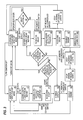
- Relays 37, 39, 41 and 43 are normally open and their operation are described below in conjunction with the operational flow chart shown in Figure 3.
- other well-known signal conditioning circuitry can be used between logic 23 and the system devices 13, 15, 17, 19 and 21 including, but not limited to triacs and power transistors.
- Appropriate isolation circuitry such as capacitive filters, optoisolation or isolation transformers, can isolate control logic 23 from noise, voltage surges and spikes.
- Logic control circuitry 23 is designed to operate the security system, as shown by the flow chart of Figure 3, to provide selectively operable theft protection and automatically operable carjacking protection.
- a vehicle operator desiring theft protection when the vehicle ignition is off and the alarm system is in a theft standby mode at 45 is merely required to press either command button 31 on remote control transmitter 3.
- Transmitter 3 transmits an encoded signal to receiver 25 and logic control circuitry 23.
- Logic control circuitry 23 performs an anti-theft disablement sequence at 49, 51 and 53 selectively initiated by the operator.
- logic control circuitry 23 Before the initiation of the anti-theft disablement sequence at 49, 51 and 53, logic control circuitry 23 causes hazard light relay 41 to close for an instant and flash hazard lights 19 for an instant at 47 for providing visual confirmation that the encoded signal has been received and that the anti-theft disablement sequence at 49, 51 and 53 has been initiated. Logic control circuitry 23 then causes door lock relay 43 to close and automatically lock power door lock 21 at 49, if the vehicle is so equipped. A first delay at 51, internal to logic control circuitry 23, is started. First delay at 51 is preferably 90 seconds in duration, however, this delay may be designed for longer or shorter than 90 seconds. At the expiration of the first delay at 51, logic control circuitry 23 controls disablement relay 39 at 53 to close and disable the engine by way of disablement device 17.
- the engine can only be enabled, once disabled, at 55 by a simultaneous combination of operator actions.
- This combination of actions includes pressing of either command button 31 on remote control transmitter 3 and simultaneous pressing of concealed switch 11.
- logic control circuitry 23 controls disablement relay 39 to open at 55 and disablement device 17 to enable the engine, and returning to the theft standby mode at 45.
- logic control circuitry 23 be designed such that the combination of the operator actions be done simultaneously for enabling the engine at 55, a predetermined actuation sequence of either command button 31 and concealed switch 11 may be required for restarting the engine.
- the alarm system is returned to the theft standby mode at 45, without disabling the engine at 53.
- carjacking disablement sequence at 61, 63, 65, 67 and 69 can be initiated by pressing either command button 31 on transmitter 3, or the opening of door 33, as sensed by door sensor 5, while the valet button 9 is in the normal position at 59. This dual method of initiation provides protection against carjackings which can occur under various scenarios.
- logic control circuitry 23 starts a second delay at 61, which is preferably about 75 seconds.
- logic control circuitry 23 controls hazard light relay 41 to continuously open and close so that hazard lights flash at 63. Along with flashing of hazard lights at 63, a third delay at 65 of approximately 15 seconds in started. When the third delay at 65 has terminated, logic control circuitry 23 controls disablement relay 39, disabling the engine at 67 by disablement device 17.
- interior and exterior sirens 13 and 15 are also included for use in the anti-carjacking disablement sequence.
- logic control circuitry 23 controls siren relay 37 to close, thus sounding both sirens at 69.
- both sirens 13 and 15 preferably produce a piercing sound level, they are designed as such for different purposes.
- Interior siren 13 operates at a high decibel level, and sweeps through the frequencies of 2800-3000 Hz, the range of human pain, compelling the carjacker to immediately leave vehicle 100.
- a siren which can achieve the desired result is model number PS-590L manufactured by Japan Electronic Manufacturers Agency Inc., which operates at 115 decibels and sweeps between 1500 and 3500 Hz.
- siren 15 Operating at a high decibel level at varying frequencies, exterior siren 15 is piercing to draw attention to vehicle 100 so that bystanders might witness the fleeing carjacker and possibly notify police of the situation.
- a siren performing this function well is model number PS-386A manufactured by Japan Electronic Manufacturers Agency Inc., which operates at 120 decibels and cycles between 6 different frequencies within the range of 1500-3500 Hz.
- Logic control circuitry 23 includes a timing device for controlling both sirens 13 and 15 so that they sound for a maximum time period and then automatically shut off. Many governmental noise ordinances impose time limitations on sirens, so it is believed that a preferred 5 minute maximum would be sufficient for complying with even the most stringent ordinances. Both sirens 13 and 15 are preferably mounted in any concealed location. For example, interior siren 13 can be mounted inside a speaker cover, while exterior siren 15 can be mounted underneath vehicle 100.
- logic control circuitry 23 controls hazard light relay 41 to close for an instant, and flash hazard lights 19 for an instant at 71, providing visual confirmation that the signal has been received and that the anti-theft disablement sequence at 49, 51 and 53 has been initiated.
- the engine can only be enabled at 55 by the same simultaneous combination of operator actions described for the anti-theft system.
- the simultaneous operator actions also causes hazard light relay 41 to stop flashing hazard lights 19 at 73 and siren relay 37 to stop sounding the sirens at 75, if, of course, sirens 13 and 15 have not yet been terminated by expiration of the appropriate time period. Further, the simultaneous action returns the system to the carjacking standby mode at 45.
- the net effect of the second and third delays at 61 and 65 is to permit the carjacker to drive vehicle 100 a distance away from the owner for the owner's safety before disablement.
- An immediate disablement would keep the carjacker close to the owner and permit the carjacker to possibly inflict pain and/or additional distress to the owner.
- limiting the time to a minute and a half makes it unlikely for vehicle 100 to be driven to a chop- shop for dismantling and resale of individual parts.
- second delay period at 61 and third delay period at 65 are preferably 75 and 15 seconds, respectively, these time periods could be chosen to be different and still achieve the desired results of the invention. Further, use of a first delay at 51, equivalent to the combination of second and third delays at 61 and 65 requires one less timer for logic control circuitry 23, as it is well known to arrange timers to operate sequentially.
- a temporary mode at 79 and 81 which is entered from the anti-theft disablement sequence, upon starting of the engine during the first delay period at 51.
- this temporary mode simultaneous pressing of a command button 31 and concealed switch 11 at 79 before the expiration of the 90 second delay at 51 results in the alarm system being configured in the carjacking standby mode at 57.
- the pressing of a command button 31 alone at 81 before the expiration of the 90 second delay at 51 provides confirmation of the command by flashing hazard lights 19 for an instant at 71 and subsequently transfers the system into the beginning of the anti-hijacking disablement sequence at 61. If a command button 31 on remote control transmitter 3 is not pressed at 81 prior to the expiration of the 90 second delay at 51, the engine is disabled by the disablement device 17 at 53 in the anti-theft disablement sequence.
- a method of disarming prior art alarm systems is to disconnect and reconnect a connection to the vehicle's battery.
- logic control circuitry 23 is designed so that disconnection and reconnection of power does not defeat the system. Breaking the connection between battery 27 and logic control circuitry 23 disables the engine and defaults the system to engine the disablement state at 53. If the engine has been disabled by either disablement sequence at 55 or 67, or by disconnecting battery 27 from unit 1, normally open disablement relay 39 would necessarily be open. Disablement relay 39 requires an affirmative control signal from circuitry 23 to close. It cannot be closed upon the reconnection of power alone. Only by simultaneous pressing of concealed switch 11 and remote control 3 is disablement relay 39 closed. Thus, any attempt to thwart the security system by disconnecting the battery will be ineffective.
- the theft prevention feature be selectively initiated.
- Prior art devices which automatically initiate an anti-theft device would make it impossible for a rightful owner to get a safe distance away from a carjacker when the ignition of the car is temporarily turned off, e.g., at a gas station, because the engine could not be stared. It would therefore place the rightful owner in a position of danger.
- the selectively initiated theft prevention feature of the present invention permits the rightful owner to be a safe distance away from the thief before the engine is disabled.
- the carjacking prevention feature is automatically initiated because selectively initiated systems do not protect the owner in the event the owner fails to arm the system. Whereas the automatically initiated carjacking prevention feature of the present invention protects a forgetful owner from successful carjackings because it is not necessary to arm the feature.
- a command button 31 can be actuated for initiating the anti-carjacking disablement sequence, which includes internal and external sirens 13 and 15.
- the operator is stopped waiting for a traffic light to change when a carjacker appearing at the window points a gun at the operator and demanding the vehicle.
- the operator merely complies with the carjacker's demands knowing that the vehicle will not get more than 90 seconds away.
- the opening of door 33 with the engine running initiates the anti-carjacking disablement sequence at 61 in Figure 3.
- the operator uses remote control transmitter 3, previously hidden in, for example, a pocket, to actuate a command button 31.
- Hazard lights 19 will flash for an instant notifying the operator that the carjacking attempt will be foiled.
- the carjacker notices the flashing hazard lights at 63. Fifteen seconds later at 65, vehicle 100 will stop as the engine is disabled at 67. The carjacker will then decide to abandon the carjacking, compelled by the painful sound of the interior siren at 69. It is likely that the carjacker will be observed as vehicle 100 is abandoned because the sound of exterior siren at 69 draws the attention of onlookers.
- an operator is approaching their car in a parking lot or pumping gas at a gas station, when a carjacker demands the car threatening the operator with a knife.
- the operator wisely turns over the keys and lets the carjacker start the engine and drive away.
- the operator retrieves remote control transmitter 3 from a pocket, for example, and actuates a command button 31.
- hazard lights 19 flash for an instant at 71 notifying the operator the backing attempt will be foiled in the same manner described above.
- a driver is struck in the rear bumper by a following car.
- the driver pulls over to exchange license numbers and other relevant information.
- the driver of the following car pulls out a handgun and demands the keys to the target car.
- the operator can prudently turn over the keys and foil the carjacking attempt by activating remote control transmitter 3 when the vehicle is a safe distance away, in the manner discussed in the previous scenario.
Landscapes
- Engineering & Computer Science (AREA)
- Mechanical Engineering (AREA)
- Burglar Alarm Systems (AREA)
- Lock And Its Accessories (AREA)
Applications Claiming Priority (2)
| Application Number | Priority Date | Filing Date | Title |
|---|---|---|---|
| US992931 | 1992-12-18 | ||
| US07/992,931 US5307048A (en) | 1992-12-18 | 1992-12-18 | Vehicle security system including an anti-carjacking system |
Publications (2)
| Publication Number | Publication Date |
|---|---|
| EP0602765A2 true EP0602765A2 (fr) | 1994-06-22 |
| EP0602765A3 EP0602765A3 (fr) | 1994-10-12 |
Family
ID=25538900
Family Applications (1)
| Application Number | Title | Priority Date | Filing Date |
|---|---|---|---|
| EP19930302741 Withdrawn EP0602765A3 (fr) | 1992-12-18 | 1993-04-07 | Dispositif anti-vol pour véhicules avec protection contre le détournement pendant l'utilisation. |
Country Status (5)
| Country | Link |
|---|---|
| US (1) | US5307048A (fr) |
| EP (1) | EP0602765A3 (fr) |
| JP (1) | JPH06211110A (fr) |
| CA (1) | CA2092101A1 (fr) |
| MX (1) | MX9302401A (fr) |
Cited By (3)
| Publication number | Priority date | Publication date | Assignee | Title |
|---|---|---|---|---|
| EP1508149A4 (fr) * | 2002-05-21 | 2005-08-10 | Payment Protection Sys Inc | Detecteur de tentative de fraude et unite d'invalidation de systeme |
| US9802571B2 (en) | 2014-10-01 | 2017-10-31 | Conduent Business Services, Llc | Method and system for vandalism and/or loitering detection using video |
| US10384642B2 (en) | 2013-07-17 | 2019-08-20 | Conduent Business Services, Llc | Methods and systems for vehicle theft detection and prevention using a smartphone and video-based parking technology |
Families Citing this family (94)
| Publication number | Priority date | Publication date | Assignee | Title |
|---|---|---|---|---|
| SE500633C2 (sv) * | 1992-03-02 | 1994-08-01 | Scarinus Dev Ab | Förfarande jämte anordning för att fjärrstyra en eller flera av ett fordons funktioner |
| US5412370A (en) * | 1992-10-23 | 1995-05-02 | Berman; Leonard C. | Car theft prevention device |
| WO1994018803A1 (fr) | 1993-02-11 | 1994-08-18 | National Digital Electronics, Inc. | Systeme de telemesure et de commande |
| US5686765A (en) * | 1993-03-19 | 1997-11-11 | Driver Id Llc | Vehicle security system including fingerprint and eyeball part identification |
| US5382948A (en) * | 1993-06-03 | 1995-01-17 | Richmond; Henry | Vehicular security system with remote signalling for auto carjacking functions |
| US5453730A (en) * | 1993-10-13 | 1995-09-26 | De-Grinis; Reinhard H. | Auto anti-theft system |
| US5463372A (en) * | 1993-10-27 | 1995-10-31 | Mawyer, Sr.; Ralph A. | Self-set vehicle anti-theft/anti-hijacking system with partial disablement followed by complete shutdown |
| US5532521A (en) * | 1993-12-03 | 1996-07-02 | Leininger; Robert L. | Security control system for the storage area of a delivery truck |
| US5515285A (en) * | 1993-12-16 | 1996-05-07 | Car Trace, Incorporated | System for monitoring vehicles during a crisis situation |
| US5519255A (en) * | 1994-03-24 | 1996-05-21 | Burtch; Timothy A. | Vehicle anti-hijacking and anti-theft device |
| US5493268A (en) * | 1994-04-29 | 1996-02-20 | Lewis, Sr.; Robert J. | Anti-carjacking system |
| US5608272A (en) * | 1994-07-07 | 1997-03-04 | Otoprotec, Inc. | Vehicle anti-theft device |
| DE4424735C2 (de) * | 1994-07-13 | 1996-05-30 | Siemens Ag | Diebstahlschutzsystem |
| JPH0865753A (ja) * | 1994-08-19 | 1996-03-08 | Sumitomo Wiring Syst Ltd | スイッチの電流制限回路 |
| JPH0884374A (ja) * | 1994-09-14 | 1996-03-26 | Alpine Electron Inc | セキュリティ装置 |
| US5494130A (en) * | 1994-11-02 | 1996-02-27 | Foster; Peter J. | Anti-theft and anti-hijacking system for motor vehicles |
| US5568120A (en) * | 1994-12-06 | 1996-10-22 | Ford Motor Company | Anti-theft system with remote controlled verification of arming |
| DE9419521U1 (de) * | 1994-12-06 | 1995-02-02 | Papp Electronic GmbH & Co., 72379 Hechingen | Elektronische Wegfahrsperre zum Einbau in Kraftfahrzeugen |
| DE19503592A1 (de) * | 1995-02-03 | 1996-08-08 | Bayerische Motoren Werke Ag | Sicherheitseinrichtung für Kraftfahrzeuge |
| US5574425A (en) * | 1995-02-03 | 1996-11-12 | Aaa Plus International, Inc. | Anti-hijacking safety system for a vehicle and its driver |
| GB2299427A (en) * | 1995-03-25 | 1996-10-02 | Alison Mary Beagrie | Security apparatus |
| US5652564A (en) * | 1995-07-26 | 1997-07-29 | Winbush; Solomon Lanair | Bold thief security system |
| US5623245A (en) * | 1995-07-31 | 1997-04-22 | Gilmore; Jack R. | Remotely activated vehicle anti-theft and anti-carjacking device |
| DE19530719A1 (de) * | 1995-08-18 | 1997-02-20 | Kiekert Ag | Verfahren zum Betrieb einer elektrischen Steuerungsanlage für ein Kraftfahrzeug mit einer Werkstattbetriebsweise |
| US5677664A (en) * | 1995-10-10 | 1997-10-14 | Jon Snyder, Inc. | Controlling automobile alarm systems |
| US5656866A (en) * | 1995-11-22 | 1997-08-12 | Conrow; Tom | Vehicle ignition-disabling anti-car jacking device |
| US5793306A (en) * | 1995-12-29 | 1998-08-11 | Vershinin; Michael | Identification systems employing frequency-based coded information |
| US5751072A (en) * | 1996-01-02 | 1998-05-12 | Hwang; Shih Ming | Vehicle security system using an existing switch device, ignition key manipulation, and remote control transmitter to disarm the system and program security codes |
| US6049269A (en) * | 1996-04-03 | 2000-04-11 | Telectronics, Inc. | Wide area wireless system for access into vehicles and fleets for control, security, messaging, reporting and tracking |
| US5745030A (en) * | 1996-05-14 | 1998-04-28 | Aaron; Albert | Automatic occupant sensing anti-carjacking system |
| SE9602796L (sv) * | 1996-07-17 | 1998-01-18 | Volvo Ab | Fjärrkontroll |
| LT4364B (lt) | 1996-08-05 | 1998-07-27 | Uab "Taksometrai" | Automobilio apsaugos sistema ir jos veikimo būdas |
| US5835868A (en) * | 1996-08-30 | 1998-11-10 | Mcelroy; Alejandro S. | Automated system for immobilizing a vehicle and method |
| US6000489A (en) * | 1996-09-16 | 1999-12-14 | Rick; Frank G. | Anti-theft steering lock |
| US6501370B1 (en) | 1996-09-16 | 2002-12-31 | Frank G. Rick | Vehicle anti-theft lock apparatus and method |
| JPH1089217A (ja) * | 1996-09-17 | 1998-04-07 | Honda Motor Co Ltd | 車両用盗難防止装置 |
| DE19643335B4 (de) * | 1996-10-21 | 2005-12-15 | Bayerische Motoren Werke Ag | Sicherungsvorrichtung für den Betrieb eines Fahrzeugs |
| GB9707121D0 (en) * | 1997-04-08 | 1997-05-28 | Foxguard Limited | Personal security system |
| US5969433A (en) * | 1997-04-23 | 1999-10-19 | Maggiora; David Raymond | Theft preventing and deterring system and method using a remote station |
| DE19725669C1 (de) * | 1997-06-18 | 1998-10-22 | Daimler Benz Ag | Verfahren zur Stilllegung eines Fahrzeugs |
| US5828297A (en) * | 1997-06-25 | 1998-10-27 | Cummins Engine Company, Inc. | Vehicle anti-theft system |
| US6029102A (en) * | 1997-07-01 | 2000-02-22 | Elsman; James L. | Driver control display system for a vehicle |
| DE19752339C2 (de) * | 1997-11-26 | 2000-05-18 | Ims Morat Soehne Gmbh | Motorische Verstellvorrichtung |
| US6664888B1 (en) | 1997-12-16 | 2003-12-16 | Vetronix Telematics Llc | Method and apparatus for enabling and disabling certain functions of an automobile |
| US6052646A (en) * | 1998-04-15 | 2000-04-18 | Magellan Dis, Inc. | Vehicle navigation system with improved powerup performance |
| US6018291A (en) * | 1998-06-04 | 2000-01-25 | Marble; Alan Dale | Motor vehicle anti-theft system by random problem simulation |
| EP1028041A3 (fr) * | 1999-02-10 | 2001-10-24 | Michael Martin Machala | Procédé et dispositif pour retarder ou arrêter électroniquement des véhicules |
| US8502641B2 (en) | 2000-03-09 | 2013-08-06 | Intelpro Llc | Rate-of-change switches and controllable apparatus |
| US6377173B1 (en) * | 1999-10-01 | 2002-04-23 | Siemens Automotive Corporation | Garage door opener signal incorporated into vehicle key/fob combination |
| TW494073B (en) * | 2000-01-20 | 2002-07-11 | Lite On Automotive Corp | Vehicular anti-theft system and its control method |
| JP4191361B2 (ja) * | 2000-03-31 | 2008-12-03 | 本田技研工業株式会社 | リモコン式トランクを備えた鞍乗型車両 |
| JP2002364505A (ja) * | 2001-06-06 | 2002-12-18 | Toyota Industries Corp | 車両用エンジン保護装置 |
| JP4587618B2 (ja) * | 2001-08-30 | 2010-11-24 | 富士通テン株式会社 | 車両用盗難防止装置 |
| TW530798U (en) * | 2001-11-14 | 2003-05-01 | Wintecronics Ltd | Anti-theft system for vehicle |
| US6701231B1 (en) * | 2001-11-19 | 2004-03-02 | Volvo Trucks North America, Inc. | Vehicle security and maintenance |
| US7065152B2 (en) * | 2001-12-27 | 2006-06-20 | Caterpillar Inc. | Controller area network using transformers |
| US6970703B2 (en) * | 2002-01-23 | 2005-11-29 | Motorola, Inc. | Integrated personal communications system and method |
| US6833785B2 (en) * | 2002-03-07 | 2004-12-21 | International Business Machines Corporation | Vehicle security system |
| US20030227377A1 (en) * | 2002-06-10 | 2003-12-11 | Cardenas Zaid Roberto C. | Wireless security notification and control system |
| US9082237B2 (en) | 2002-06-11 | 2015-07-14 | Intelligent Technologies International, Inc. | Vehicle access and security based on biometrics |
| US6975204B1 (en) * | 2002-07-11 | 2005-12-13 | Raytheon Company | Method and apparatus for preventing unauthorized use of equipment |
| US6581712B1 (en) * | 2002-09-14 | 2003-06-24 | Robert L. Nathans | Radio-less self contained apparatus for rapidly thwarting theft of large trucks by terrorists or hijackers |
| US7061137B2 (en) * | 2002-10-16 | 2006-06-13 | Omega Patents, L.L.C. | Vehicle data communications bus disrupter and associated methods |
| US20040107028A1 (en) * | 2002-12-03 | 2004-06-03 | Catalano Anthony B. | Override protocol system for affording vehicle safety and for preventing hijacking |
| US20040135680A1 (en) * | 2003-01-13 | 2004-07-15 | Jacobs Ruby L. Handler | Vehicle anti-carjacking and theft prevention device incorporating a sensor deactivating system |
| US20050024188A1 (en) * | 2003-07-29 | 2005-02-03 | Dale Sider | Thermosafe life alert system |
| US7068152B2 (en) * | 2004-04-05 | 2006-06-27 | Michael Hager | Remote de-activation system for a vehicle |
| US7126457B1 (en) * | 2005-01-13 | 2006-10-24 | Van Schalkwyk Fourie Willem Be | Method for preventing theft of a motor vehicle |
| US7616977B1 (en) * | 2005-01-28 | 2009-11-10 | Scott David Nortman | Method and apparatus for motorized control of an automobile radio cover |
| JP4479573B2 (ja) * | 2005-04-13 | 2010-06-09 | トヨタ自動車株式会社 | 車両盗難防止装置 |
| US20060238299A1 (en) * | 2005-04-22 | 2006-10-26 | Downey Richard T | Electrical enabling device |
| CN100398365C (zh) * | 2005-08-30 | 2008-07-02 | 蔡进元 | 车辆电门锁防盗结构 |
| US8055441B2 (en) * | 2007-07-27 | 2011-11-08 | Mitac International Corporation | Supplemental powered information receiver |
| US20090066500A1 (en) * | 2007-09-09 | 2009-03-12 | Pin-Ying Yu | Calling-help warning device of a third brake light of an automobile |
| US8436721B1 (en) | 2010-03-19 | 2013-05-07 | Shongkawh LLC | Automobile theft protection and disablement system |
| BR112014000816A2 (pt) * | 2011-07-14 | 2017-04-18 | Macmillan Stephen | sistema de segurança para veículos |
| CN103935322A (zh) * | 2013-01-23 | 2014-07-23 | 长春易控汽车电子有限公司 | 汽车的密码防盗方法 |
| ITGE20130026A1 (it) * | 2013-02-28 | 2014-08-29 | Salvatore Guarneri | Dispositivo di allarme per veicoli |
| EP2842864B1 (fr) * | 2013-09-03 | 2019-04-03 | Tobias Fieback | Dispositif de télécommande pour un dispositif flottant doté d'un entraînement à jet d'eau |
| US9744903B2 (en) * | 2014-08-26 | 2017-08-29 | Ford Global Technologies, Llc | Urgent vehicle warning indicator using vehicle illumination |
| US9573573B1 (en) * | 2015-12-18 | 2017-02-21 | Michael Hickling | Errant vehicle interdiction device |
| US10328896B2 (en) | 2017-05-18 | 2019-06-25 | Ford Global Technologies, Llc | Vehicle theft avoidance systems and associated methods |
| US10002535B1 (en) * | 2017-07-11 | 2018-06-19 | Ford Global Technologies, Llc | Dual-stage car finder |
| US11447101B2 (en) * | 2019-08-07 | 2022-09-20 | Keep Technologies, Inc. | Point-of-interest-based anti-vehicle theft systems and processes for using the same |
| WO2021163383A1 (fr) | 2020-02-11 | 2021-08-19 | Tamagni Richard Blake | Système et procédé de dissuasion du vol d'un convertisseur catalytique |
| USD917373S1 (en) | 2020-03-19 | 2021-04-27 | Richard Blake Tamagni | Catalytic converter cover |
| USD917374S1 (en) | 2020-03-19 | 2021-04-27 | Richard Blake Tamagni | Catalytic converter cover |
| US11820324B2 (en) | 2021-02-24 | 2023-11-21 | William D. Yates | Vehicle equipped with safety system and method of responding to an unauthorized possession of a vehicle |
| US12208770B2 (en) | 2021-04-05 | 2025-01-28 | William D. Yates | Vehicle equipped with safety system and method of responding to an unauthorized possession of a vehicle |
| FR3124450B1 (fr) * | 2021-06-25 | 2023-05-12 | Continental Automotive Gmbh | Procede de detection d’ouverture des ouvrants d’un vehicule automobile et dispositif de detection associe |
| US20230382347A1 (en) * | 2022-05-25 | 2023-11-30 | Avo Demirjian | Vehicle anti-theft device |
| US20250232302A1 (en) * | 2024-01-11 | 2025-07-17 | Motorola Mobility Llc | Mobile device access protection |
| US12330590B1 (en) | 2024-03-28 | 2025-06-17 | Light Wave Technology Inc. | Vehicle anti-theft system |
| US12221062B1 (en) | 2024-07-29 | 2025-02-11 | Shongkawh LLC | Motor vehicle theft protection and disablement system |
Family Cites Families (42)
| Publication number | Priority date | Publication date | Assignee | Title |
|---|---|---|---|---|
| US3639897A (en) * | 1969-06-11 | 1972-02-01 | Babaco Research Inc | Vehicle holdup and theft alarm |
| US3646515A (en) * | 1970-03-02 | 1972-02-29 | Frank Vodehnal | Vehicular safety and remote control system |
| US3735346A (en) * | 1970-09-23 | 1973-05-22 | R Fox | Security system for a vehicle |
| US3665386A (en) * | 1970-12-18 | 1972-05-23 | Dynamics Corp America | Anti-hijack system for vehicles |
| US3781789A (en) * | 1972-07-07 | 1973-12-25 | Protection Devices Inc | Anti-hijacking and theft control systems for motor vehicles |
| US3858175A (en) * | 1972-09-08 | 1974-12-31 | Chrysler Corp | Motor vehicle electronic security alarm system using sequence control arming |
| DE2614640A1 (de) * | 1976-04-05 | 1977-10-13 | Waltraud Baumgartl | Automatische funktionspruefvorrichtung fuer ultraschallanlagen zur sicherung insbesondere von kraftfahrzeugen |
| US4064547A (en) * | 1976-06-04 | 1977-12-20 | Zagwyn Conrad J | Vehicle antitheft device |
| US4159466A (en) * | 1976-08-03 | 1979-06-26 | Troyonics, Inc. | Burglar alarm system |
| US4133410A (en) * | 1977-11-02 | 1979-01-09 | Krusoe John A | Anti-theft device for vehicles |
| US4354189A (en) * | 1977-11-09 | 1982-10-12 | Lemelson Jerome H | Switch and lock activating system and method |
| US4143368A (en) * | 1977-12-05 | 1979-03-06 | General Motors Corporation | Vehicle operator security system |
| US4383242A (en) * | 1979-06-04 | 1983-05-10 | Tmx Systems Limited | Automobile anti-theft system |
| US4302747A (en) * | 1979-07-27 | 1981-11-24 | Nationwide Ultraseal Inc. | Anti-theft device for engine propelled vehicles |
| DE3003887A1 (de) * | 1980-02-02 | 1981-08-13 | Robert Bosch Gmbh, 7000 Stuttgart | Ueberwachungseinrichtung mit ultraschall |
| US4438426A (en) * | 1981-10-22 | 1984-03-20 | Darrell E. Issa | Electronic key anti-theft system |
| JPS58139840A (ja) * | 1982-02-15 | 1983-08-19 | Nissan Motor Co Ltd | 車両用キ−レス負荷作動装置 |
| US4452197A (en) * | 1982-08-11 | 1984-06-05 | Weber Harold J | Vehicle anti-theft ignition foiling device |
| US4485887A (en) * | 1983-10-31 | 1984-12-04 | Morano Michael W | Vehicular anti-theft device |
| US4958084A (en) * | 1983-12-23 | 1990-09-18 | Mr. Gasket Co. | Self-contained anti-theft device for motor vehicles |
| US4575706A (en) * | 1984-02-17 | 1986-03-11 | Heidman Jr William A | Combined magnetic and thermal relay and circuits for timed alarms and lamps of vehicles |
| US4754255A (en) * | 1984-03-12 | 1988-06-28 | Sanders Rudy T | User identifying vehicle control and security device |
| GB2170633A (en) * | 1984-12-14 | 1986-08-06 | Christopher Raymond Biddle | Vehicle theft alarm |
| JPS62101768A (ja) * | 1985-10-28 | 1987-05-12 | 国産金属工業株式会社 | 車輌の電波錠システム |
| US4804856A (en) * | 1986-01-09 | 1989-02-14 | Cy Vi Co | Automotive anti-theft device |
| US4691801A (en) * | 1986-03-03 | 1987-09-08 | Yale Mann | Vehicle protection device |
| IT1201858B (it) * | 1986-12-03 | 1989-02-02 | Delta Elettronica Spa | Impianto antifurto |
| US4745897A (en) * | 1986-12-22 | 1988-05-24 | Tejeda Jose O V | Automatic electronic and mechanical system to avoid vehicle theft |
| FR2609086B1 (fr) * | 1986-12-31 | 1992-12-11 | Peugeot | Dispositif a code modifiable de protection contre le vol pour vehicules automobiles |
| US4794368A (en) * | 1987-01-21 | 1988-12-27 | Electronic Security Products Of California | Programmable automobile alarm system having vocal alarm and reporting features |
| US4838377A (en) * | 1987-03-02 | 1989-06-13 | Clarion, Co., Ltd. | Car electronic device having antitheft mechanism |
| US4887064A (en) * | 1987-12-28 | 1989-12-12 | Clifford Electronics, Inc. | Multi-featured security system with self-diagnostic capability |
| US4901054A (en) * | 1987-10-16 | 1990-02-13 | Serville Waterman | Alarm system for an automobile |
| US4922224A (en) * | 1987-12-28 | 1990-05-01 | Clifford Electronics, Inc. | Electronic vehicle security system |
| US4892167A (en) * | 1988-04-28 | 1990-01-09 | Tejeda Jose O V | Automatic electronic and mechanical system to avoid vehicle theft |
| US4990890A (en) * | 1988-05-02 | 1991-02-05 | Newby Lionel L | Vehicle security system |
| US5055851A (en) * | 1988-05-16 | 1991-10-08 | Trackmobile, Inc. | Vehicle location system |
| GB2220778B (en) * | 1988-07-11 | 1992-03-25 | Automated Security | Vehicle security |
| US5049867A (en) * | 1988-11-30 | 1991-09-17 | Code-Alarm, Inc. | Vehicle security apparatus |
| JPH02204153A (ja) * | 1989-02-03 | 1990-08-14 | Motohiro Gotanda | 自動車の盗難防止装置 |
| US5132660A (en) * | 1991-01-09 | 1992-07-21 | Nutek Corporation | Vehicle security system |
| US5172094A (en) * | 1991-12-02 | 1992-12-15 | Stadler David M | Automatically armed vehicle anti-theft system |
-
1992
- 1992-12-18 US US07/992,931 patent/US5307048A/en not_active Expired - Fee Related
-
1993
- 1993-03-22 CA CA002092101A patent/CA2092101A1/fr not_active Abandoned
- 1993-04-07 EP EP19930302741 patent/EP0602765A3/fr not_active Withdrawn
- 1993-04-23 MX MX9302401A patent/MX9302401A/es unknown
- 1993-06-29 JP JP15873793A patent/JPH06211110A/ja active Pending
Cited By (3)
| Publication number | Priority date | Publication date | Assignee | Title |
|---|---|---|---|---|
| EP1508149A4 (fr) * | 2002-05-21 | 2005-08-10 | Payment Protection Sys Inc | Detecteur de tentative de fraude et unite d'invalidation de systeme |
| US10384642B2 (en) | 2013-07-17 | 2019-08-20 | Conduent Business Services, Llc | Methods and systems for vehicle theft detection and prevention using a smartphone and video-based parking technology |
| US9802571B2 (en) | 2014-10-01 | 2017-10-31 | Conduent Business Services, Llc | Method and system for vandalism and/or loitering detection using video |
Also Published As
| Publication number | Publication date |
|---|---|
| CA2092101A1 (fr) | 1994-06-19 |
| JPH06211110A (ja) | 1994-08-02 |
| MX9302401A (es) | 1994-06-30 |
| US5307048A (en) | 1994-04-26 |
| EP0602765A3 (fr) | 1994-10-12 |
Similar Documents
| Publication | Publication Date | Title |
|---|---|---|
| US5307048A (en) | Vehicle security system including an anti-carjacking system | |
| US5559491A (en) | Automatically armed vehicle anti-theft system | |
| US5635901A (en) | Anti-theft automobile security system | |
| US5394135A (en) | Automatically armed vehicle anti-theft system | |
| US5745030A (en) | Automatic occupant sensing anti-carjacking system | |
| US5811886A (en) | Anti-carjacking apparatus | |
| US5623245A (en) | Remotely activated vehicle anti-theft and anti-carjacking device | |
| US5513244A (en) | Remote-controlled anti-theft, theft reporting, or vehicle recovery system and method for motor vehicles | |
| US5449957A (en) | Self-contained anti-theft device for motor vehicles | |
| US5453730A (en) | Auto anti-theft system | |
| US5608272A (en) | Vehicle anti-theft device | |
| US5315286A (en) | Vehicle security system | |
| US5412370A (en) | Car theft prevention device | |
| US7109852B2 (en) | Vehicle occupancy intruder security system | |
| CA2174482A1 (fr) | Demarreur a distance pour vehicules moteur, avec accessoires de reglage et de securite | |
| US5539377A (en) | Vehicle security system | |
| US5335748A (en) | Anti-theft apparatus | |
| JP2004209999A (ja) | 車両用盗難防止装置及び車両の制御方法 | |
| US5850173A (en) | Vehicle alarm system | |
| US11046287B1 (en) | System and method for vehicle theft prevention | |
| WO2005091882A2 (fr) | Systeme pour arreter un vehicule | |
| WO1994029148A1 (fr) | Dispositif d'immobilisation de vehicule | |
| US5360997A (en) | Automobile anti-theft switch | |
| US6323762B1 (en) | Car jacking prevention system | |
| US5061915A (en) | Anti-theft device for motorized vehicles |
Legal Events
| Date | Code | Title | Description |
|---|---|---|---|
| PUAI | Public reference made under article 153(3) epc to a published international application that has entered the european phase |
Free format text: ORIGINAL CODE: 0009012 |
|
| AK | Designated contracting states |
Kind code of ref document: A2 Designated state(s): AT BE CH DE DK ES FR GB GR IE IT LI LU MC NL PT SE |
|
| PUAL | Search report despatched |
Free format text: ORIGINAL CODE: 0009013 |
|
| AK | Designated contracting states |
Kind code of ref document: A3 Designated state(s): AT BE CH DE DK ES FR GB GR IE IT LI LU MC NL PT SE |
|
| STAA | Information on the status of an ep patent application or granted ep patent |
Free format text: STATUS: THE APPLICATION IS DEEMED TO BE WITHDRAWN |
|
| 18D | Application deemed to be withdrawn |
Effective date: 19950413 |