EP0604656A1 - Verfahren zur herstellung von epoxiden - Google Patents
Verfahren zur herstellung von epoxiden Download PDFInfo
- Publication number
- EP0604656A1 EP0604656A1 EP93910351A EP93910351A EP0604656A1 EP 0604656 A1 EP0604656 A1 EP 0604656A1 EP 93910351 A EP93910351 A EP 93910351A EP 93910351 A EP93910351 A EP 93910351A EP 0604656 A1 EP0604656 A1 EP 0604656A1
- Authority
- EP
- European Patent Office
- Prior art keywords
- group
- olefin
- epoxide
- reaction
- sterically hindered
- Prior art date
- Legal status (The legal status is an assumption and is not a legal conclusion. Google has not performed a legal analysis and makes no representation as to the accuracy of the status listed.)
- Ceased
Links
- 238000000034 method Methods 0.000 title claims abstract description 59
- 150000002118 epoxides Chemical class 0.000 title claims abstract 7
- 150000001336 alkenes Chemical class 0.000 claims abstract description 79
- 150000001875 compounds Chemical class 0.000 claims abstract description 62
- JRZJOMJEPLMPRA-UHFFFAOYSA-N olefin Natural products CCCCCCCC=C JRZJOMJEPLMPRA-UHFFFAOYSA-N 0.000 claims abstract description 58
- 125000000466 oxiranyl group Chemical group 0.000 claims abstract description 42
- ZCYVEMRRCGMTRW-UHFFFAOYSA-N 7553-56-2 Chemical compound [I] ZCYVEMRRCGMTRW-UHFFFAOYSA-N 0.000 claims abstract description 24
- 239000011630 iodine Substances 0.000 claims abstract description 24
- 229910052740 iodine Inorganic materials 0.000 claims abstract description 24
- 125000002252 acyl group Chemical group 0.000 claims abstract description 8
- 125000000217 alkyl group Chemical group 0.000 claims abstract description 8
- 125000003118 aryl group Chemical group 0.000 claims abstract description 8
- 125000003342 alkenyl group Chemical group 0.000 claims abstract description 5
- 125000003545 alkoxy group Chemical group 0.000 claims abstract description 5
- 125000004453 alkoxycarbonyl group Chemical group 0.000 claims abstract description 5
- 125000005161 aryl oxy carbonyl group Chemical group 0.000 claims abstract description 5
- 125000004104 aryloxy group Chemical group 0.000 claims abstract description 5
- 125000004435 hydrogen atom Chemical class [H]* 0.000 claims abstract description 5
- 125000004469 siloxy group Chemical group [SiH3]O* 0.000 claims abstract description 5
- 125000003808 silyl group Chemical group [H][Si]([H])([H])[*] 0.000 claims abstract description 5
- 238000006243 chemical reaction Methods 0.000 claims description 50
- -1 acyloxy ion Chemical class 0.000 claims description 29
- LPADRPJZOJHCDL-HCWXCVPCSA-N (1s,4s,5r)-6,8-dioxabicyclo[3.2.1]oct-2-en-4-ol Chemical compound O1[C@@]2([H])OC[C@]1([H])C=C[C@@H]2O LPADRPJZOJHCDL-HCWXCVPCSA-N 0.000 claims description 19
- 239000007858 starting material Substances 0.000 claims description 13
- 230000008030 elimination Effects 0.000 claims description 7
- 238000003379 elimination reaction Methods 0.000 claims description 7
- XMBWDFGMSWQBCA-UHFFFAOYSA-M iodide Chemical compound [I-] XMBWDFGMSWQBCA-UHFFFAOYSA-M 0.000 claims description 7
- 229940006461 iodide ion Drugs 0.000 claims description 7
- 239000011541 reaction mixture Substances 0.000 claims description 6
- 230000003301 hydrolyzing effect Effects 0.000 claims 1
- 125000003710 aryl alkyl group Chemical group 0.000 abstract description 4
- 125000004122 cyclic group Chemical group 0.000 abstract description 3
- 239000001257 hydrogen Substances 0.000 abstract description 2
- 229910052739 hydrogen Inorganic materials 0.000 abstract description 2
- 239000007795 chemical reaction product Substances 0.000 abstract 1
- 150000002924 oxiranes Chemical class 0.000 description 62
- 150000001732 carboxylic acid derivatives Chemical class 0.000 description 37
- 150000007942 carboxylates Chemical class 0.000 description 27
- VLKZOEOYAKHREP-UHFFFAOYSA-N n-Hexane Chemical compound CCCCCC VLKZOEOYAKHREP-UHFFFAOYSA-N 0.000 description 27
- QTBSBXVTEAMEQO-UHFFFAOYSA-N Acetic acid Chemical compound CC(O)=O QTBSBXVTEAMEQO-UHFFFAOYSA-N 0.000 description 24
- 229910052751 metal Inorganic materials 0.000 description 23
- 239000002184 metal Substances 0.000 description 23
- 239000000243 solution Substances 0.000 description 23
- OKKJLVBELUTLKV-UHFFFAOYSA-N Methanol Chemical compound OC OKKJLVBELUTLKV-UHFFFAOYSA-N 0.000 description 21
- 239000000543 intermediate Substances 0.000 description 17
- 239000002585 base Substances 0.000 description 16
- 239000002904 solvent Substances 0.000 description 16
- RTZKZFJDLAIYFH-UHFFFAOYSA-N Diethyl ether Chemical compound CCOCC RTZKZFJDLAIYFH-UHFFFAOYSA-N 0.000 description 15
- MGFYSGNNHQQTJW-UHFFFAOYSA-N iodonium Chemical compound [IH2+] MGFYSGNNHQQTJW-UHFFFAOYSA-N 0.000 description 15
- 125000002887 hydroxy group Chemical group [H]O* 0.000 description 14
- WEVYAHXRMPXWCK-UHFFFAOYSA-N Acetonitrile Chemical compound CC#N WEVYAHXRMPXWCK-UHFFFAOYSA-N 0.000 description 12
- 230000015572 biosynthetic process Effects 0.000 description 12
- 239000000047 product Substances 0.000 description 12
- 238000003786 synthesis reaction Methods 0.000 description 12
- XLYOFNOQVPJJNP-UHFFFAOYSA-N water Chemical group O XLYOFNOQVPJJNP-UHFFFAOYSA-N 0.000 description 10
- GRWFGVWFFZKLTI-IUCAKERBSA-N (-)-α-pinene Chemical compound CC1=CC[C@@H]2C(C)(C)[C@H]1C2 GRWFGVWFFZKLTI-IUCAKERBSA-N 0.000 description 9
- XEKOWRVHYACXOJ-UHFFFAOYSA-N Ethyl acetate Chemical compound CCOC(C)=O XEKOWRVHYACXOJ-UHFFFAOYSA-N 0.000 description 9
- 230000007062 hydrolysis Effects 0.000 description 9
- 238000006460 hydrolysis reaction Methods 0.000 description 9
- HEDRZPFGACZZDS-MICDWDOJSA-N Trichloro(2H)methane Chemical compound [2H]C(Cl)(Cl)Cl HEDRZPFGACZZDS-MICDWDOJSA-N 0.000 description 8
- 235000011054 acetic acid Nutrition 0.000 description 8
- 230000002829 reductive effect Effects 0.000 description 8
- LFQSCWFLJHTTHZ-UHFFFAOYSA-N Ethanol Chemical compound CCO LFQSCWFLJHTTHZ-UHFFFAOYSA-N 0.000 description 7
- 125000004423 acyloxy group Chemical group 0.000 description 7
- 238000013459 approach Methods 0.000 description 7
- 239000003637 basic solution Substances 0.000 description 7
- 239000000126 substance Substances 0.000 description 7
- RYBPGUMSFWGGLP-UHFFFAOYSA-N 3,3a,6,6a-tetrahydrocyclopenta[b]furan-2-one Chemical compound C1=CCC2OC(=O)CC21 RYBPGUMSFWGGLP-UHFFFAOYSA-N 0.000 description 6
- KWYUFKZDYYNOTN-UHFFFAOYSA-M Potassium hydroxide Chemical compound [OH-].[K+] KWYUFKZDYYNOTN-UHFFFAOYSA-M 0.000 description 6
- HEMHJVSKTPXQMS-UHFFFAOYSA-M Sodium hydroxide Chemical compound [OH-].[Na+] HEMHJVSKTPXQMS-UHFFFAOYSA-M 0.000 description 6
- XXROGKLTLUQVRX-UHFFFAOYSA-N allyl alcohol Chemical compound OCC=C XXROGKLTLUQVRX-UHFFFAOYSA-N 0.000 description 6
- 238000007796 conventional method Methods 0.000 description 6
- 238000010534 nucleophilic substitution reaction Methods 0.000 description 6
- 238000007254 oxidation reaction Methods 0.000 description 6
- 150000002978 peroxides Chemical class 0.000 description 6
- 230000002194 synthesizing effect Effects 0.000 description 6
- VHUUQVKOLVNVRT-UHFFFAOYSA-N Ammonium hydroxide Chemical compound [NH4+].[OH-] VHUUQVKOLVNVRT-UHFFFAOYSA-N 0.000 description 5
- 235000011114 ammonium hydroxide Nutrition 0.000 description 5
- 238000001816 cooling Methods 0.000 description 5
- 239000000706 filtrate Substances 0.000 description 5
- 239000001301 oxygen Substances 0.000 description 5
- 229910052760 oxygen Inorganic materials 0.000 description 5
- 238000003756 stirring Methods 0.000 description 5
- FERIUCNNQQJTOY-UHFFFAOYSA-N Butyric acid Chemical compound CCCC(O)=O FERIUCNNQQJTOY-UHFFFAOYSA-N 0.000 description 4
- WQDUMFSSJAZKTM-UHFFFAOYSA-N Sodium methoxide Chemical compound [Na+].[O-]C WQDUMFSSJAZKTM-UHFFFAOYSA-N 0.000 description 4
- 150000001298 alcohols Chemical class 0.000 description 4
- 239000003054 catalyst Substances 0.000 description 4
- 239000003638 chemical reducing agent Substances 0.000 description 4
- XBDQKXXYIPTUBI-UHFFFAOYSA-N dimethylselenoniopropionate Natural products CCC(O)=O XBDQKXXYIPTUBI-UHFFFAOYSA-N 0.000 description 4
- PNDPGZBMCMUPRI-UHFFFAOYSA-N iodine Chemical compound II PNDPGZBMCMUPRI-UHFFFAOYSA-N 0.000 description 4
- HITOXZPZGPXYHY-UJURSFKZSA-N levoglucosenone Chemical compound O=C1C=C[C@H]2CO[C@@H]1O2 HITOXZPZGPXYHY-UJURSFKZSA-N 0.000 description 4
- 239000000463 material Substances 0.000 description 4
- 239000012299 nitrogen atmosphere Substances 0.000 description 4
- 238000010898 silica gel chromatography Methods 0.000 description 4
- MVNCAPSFBDBCGF-UHFFFAOYSA-N alpha-pinene Natural products CC1=CCC23C1CC2C3(C)C MVNCAPSFBDBCGF-UHFFFAOYSA-N 0.000 description 3
- 229910052799 carbon Inorganic materials 0.000 description 3
- 125000004432 carbon atom Chemical group C* 0.000 description 3
- 150000001923 cyclic compounds Chemical class 0.000 description 3
- 229960004132 diethyl ether Drugs 0.000 description 3
- 150000002009 diols Chemical class 0.000 description 3
- 239000003814 drug Substances 0.000 description 3
- HITOXZPZGPXYHY-UHFFFAOYSA-N levoglucosenone Natural products O=C1C=CC2COC1O2 HITOXZPZGPXYHY-UHFFFAOYSA-N 0.000 description 3
- 238000002844 melting Methods 0.000 description 3
- 230000008018 melting Effects 0.000 description 3
- 239000007800 oxidant agent Substances 0.000 description 3
- 230000003647 oxidation Effects 0.000 description 3
- 238000002360 preparation method Methods 0.000 description 3
- GRWFGVWFFZKLTI-UHFFFAOYSA-N rac-alpha-Pinene Natural products CC1=CCC2C(C)(C)C1C2 GRWFGVWFFZKLTI-UHFFFAOYSA-N 0.000 description 3
- CQLFBEKRDQMJLZ-UHFFFAOYSA-M silver acetate Chemical compound [Ag+].CC([O-])=O CQLFBEKRDQMJLZ-UHFFFAOYSA-M 0.000 description 3
- 229940071536 silver acetate Drugs 0.000 description 3
- LKEUABCSWZLASW-AXTSPUMRSA-N (1r,3s,4s,5r)-3,4,6,6-tetramethylbicyclo[3.1.1]heptane Chemical compound C[C@H]1[C@@H](C)C[C@H]2C(C)(C)[C@@H]1C2 LKEUABCSWZLASW-AXTSPUMRSA-N 0.000 description 2
- PCTMTFRHKVHKIS-BMFZQQSSSA-N (1s,3r,4e,6e,8e,10e,12e,14e,16e,18s,19r,20r,21s,25r,27r,30r,31r,33s,35r,37s,38r)-3-[(2r,3s,4s,5s,6r)-4-amino-3,5-dihydroxy-6-methyloxan-2-yl]oxy-19,25,27,30,31,33,35,37-octahydroxy-18,20,21-trimethyl-23-oxo-22,39-dioxabicyclo[33.3.1]nonatriaconta-4,6,8,10 Chemical compound C1C=C2C[C@@H](OS(O)(=O)=O)CC[C@]2(C)[C@@H]2[C@@H]1[C@@H]1CC[C@H]([C@H](C)CCCC(C)C)[C@@]1(C)CC2.O[C@H]1[C@@H](N)[C@H](O)[C@@H](C)O[C@H]1O[C@H]1/C=C/C=C/C=C/C=C/C=C/C=C/C=C/[C@H](C)[C@@H](O)[C@@H](C)[C@H](C)OC(=O)C[C@H](O)C[C@H](O)CC[C@@H](O)[C@H](O)C[C@H](O)C[C@](O)(C[C@H](O)[C@H]2C(O)=O)O[C@H]2C1 PCTMTFRHKVHKIS-BMFZQQSSSA-N 0.000 description 2
- 238000005160 1H NMR spectroscopy Methods 0.000 description 2
- HEDRZPFGACZZDS-UHFFFAOYSA-N Chloroform Chemical compound ClC(Cl)Cl HEDRZPFGACZZDS-UHFFFAOYSA-N 0.000 description 2
- KFSLWBXXFJQRDL-UHFFFAOYSA-N Peracetic acid Chemical compound CC(=O)OO KFSLWBXXFJQRDL-UHFFFAOYSA-N 0.000 description 2
- 241000238675 Periplaneta americana Species 0.000 description 2
- 241000202427 Phytelephas aequatorialis Species 0.000 description 2
- 235000012541 Phytelephas macrocarpa Nutrition 0.000 description 2
- 239000000877 Sex Attractant Substances 0.000 description 2
- CDBYLPFSWZWCQE-UHFFFAOYSA-L Sodium Carbonate Chemical compound [Na+].[Na+].[O-]C([O-])=O CDBYLPFSWZWCQE-UHFFFAOYSA-L 0.000 description 2
- UIIMBOGNXHQVGW-UHFFFAOYSA-M Sodium bicarbonate Chemical compound [Na+].OC([O-])=O UIIMBOGNXHQVGW-UHFFFAOYSA-M 0.000 description 2
- ZVQOOHYFBIDMTQ-UHFFFAOYSA-N [methyl(oxido){1-[6-(trifluoromethyl)pyridin-3-yl]ethyl}-lambda(6)-sulfanylidene]cyanamide Chemical compound N#CN=S(C)(=O)C(C)C1=CC=C(C(F)(F)F)N=C1 ZVQOOHYFBIDMTQ-UHFFFAOYSA-N 0.000 description 2
- 150000008044 alkali metal hydroxides Chemical class 0.000 description 2
- 150000004703 alkoxides Chemical class 0.000 description 2
- QGZKDVFQNNGYKY-UHFFFAOYSA-N ammonia Natural products N QGZKDVFQNNGYKY-UHFFFAOYSA-N 0.000 description 2
- 229940088623 biologically active substance Drugs 0.000 description 2
- 229910052792 caesium Inorganic materials 0.000 description 2
- ZOAIGCHJWKDIPJ-UHFFFAOYSA-M caesium acetate Chemical compound [Cs+].CC([O-])=O ZOAIGCHJWKDIPJ-UHFFFAOYSA-M 0.000 description 2
- 238000001460 carbon-13 nuclear magnetic resonance spectrum Methods 0.000 description 2
- 125000002915 carbonyl group Chemical group [*:2]C([*:1])=O 0.000 description 2
- 239000003795 chemical substances by application Substances 0.000 description 2
- 238000010586 diagram Methods 0.000 description 2
- ZKQFHRVKCYFVCN-UHFFFAOYSA-N ethoxyethane;hexane Chemical compound CCOCC.CCCCCC ZKQFHRVKCYFVCN-UHFFFAOYSA-N 0.000 description 2
- 239000007788 liquid Substances 0.000 description 2
- 239000012280 lithium aluminium hydride Substances 0.000 description 2
- BDAGIHXWWSANSR-UHFFFAOYSA-N methanoic acid Natural products OC=O BDAGIHXWWSANSR-UHFFFAOYSA-N 0.000 description 2
- 239000012046 mixed solvent Substances 0.000 description 2
- 125000000962 organic group Chemical group 0.000 description 2
- 150000004965 peroxy acids Chemical class 0.000 description 2
- 239000000575 pesticide Substances 0.000 description 2
- 229910052700 potassium Inorganic materials 0.000 description 2
- 239000011591 potassium Substances 0.000 description 2
- BWHMMNNQKKPAPP-UHFFFAOYSA-L potassium carbonate Chemical compound [K+].[K+].[O-]C([O-])=O BWHMMNNQKKPAPP-UHFFFAOYSA-L 0.000 description 2
- CUQOHAYJWVTKDE-UHFFFAOYSA-N potassium;butan-1-olate Chemical compound [K+].CCCC[O-] CUQOHAYJWVTKDE-UHFFFAOYSA-N 0.000 description 2
- 235000019260 propionic acid Nutrition 0.000 description 2
- IUVKMZGDUIUOCP-BTNSXGMBSA-N quinbolone Chemical compound O([C@H]1CC[C@H]2[C@H]3[C@@H]([C@]4(C=CC(=O)C=C4CC3)C)CC[C@@]21C)C1=CCCC1 IUVKMZGDUIUOCP-BTNSXGMBSA-N 0.000 description 2
- 230000035484 reaction time Effects 0.000 description 2
- 229910052709 silver Inorganic materials 0.000 description 2
- 239000004332 silver Substances 0.000 description 2
- 235000000346 sugar Nutrition 0.000 description 2
- 238000001149 thermolysis Methods 0.000 description 2
- WTARULDDTDQWMU-RKDXNWHRSA-N (+)-β-pinene Chemical compound C1[C@H]2C(C)(C)[C@@H]1CCC2=C WTARULDDTDQWMU-RKDXNWHRSA-N 0.000 description 1
- WTARULDDTDQWMU-IUCAKERBSA-N (-)-Nopinene Natural products C1[C@@H]2C(C)(C)[C@H]1CCC2=C WTARULDDTDQWMU-IUCAKERBSA-N 0.000 description 1
- PXGPLTODNUVGFL-BRIYLRKRSA-N (E,Z)-(1R,2R,3R,5S)-7-(3,5-Dihydroxy-2-((3S)-(3-hydroxy-1-octenyl))cyclopentyl)-5-heptenoic acid Chemical compound CCCCC[C@H](O)C=C[C@H]1[C@H](O)C[C@H](O)[C@@H]1CC=CCCCC(O)=O PXGPLTODNUVGFL-BRIYLRKRSA-N 0.000 description 1
- DYLIWHYUXAJDOJ-OWOJBTEDSA-N (e)-4-(6-aminopurin-9-yl)but-2-en-1-ol Chemical compound NC1=NC=NC2=C1N=CN2C\C=C\CO DYLIWHYUXAJDOJ-OWOJBTEDSA-N 0.000 description 1
- 238000001644 13C nuclear magnetic resonance spectroscopy Methods 0.000 description 1
- 125000003903 2-propenyl group Chemical group [H]C([*])([H])C([H])=C([H])[H] 0.000 description 1
- YNJSNEKCXVFDKW-UHFFFAOYSA-N 3-(5-amino-1h-indol-3-yl)-2-azaniumylpropanoate Chemical compound C1=C(N)C=C2C(CC(N)C(O)=O)=CNC2=C1 YNJSNEKCXVFDKW-UHFFFAOYSA-N 0.000 description 1
- NHQDETIJWKXCTC-UHFFFAOYSA-N 3-chloroperbenzoic acid Chemical compound OOC(=O)C1=CC=CC(Cl)=C1 NHQDETIJWKXCTC-UHFFFAOYSA-N 0.000 description 1
- OSWFIVFLDKOXQC-UHFFFAOYSA-N 4-(3-methoxyphenyl)aniline Chemical compound COC1=CC=CC(C=2C=CC(N)=CC=2)=C1 OSWFIVFLDKOXQC-UHFFFAOYSA-N 0.000 description 1
- 241001674044 Blattodea Species 0.000 description 1
- ULGZDMOVFRHVEP-RWJQBGPGSA-N Erythromycin Chemical class O([C@@H]1[C@@H](C)C(=O)O[C@@H]([C@@]([C@H](O)[C@@H](C)C(=O)[C@H](C)C[C@@](C)(O)[C@H](O[C@H]2[C@@H]([C@H](C[C@@H](C)O2)N(C)C)O)[C@H]1C)(C)O)CC)[C@H]1C[C@@](C)(OC)[C@@H](O)[C@H](C)O1 ULGZDMOVFRHVEP-RWJQBGPGSA-N 0.000 description 1
- IAYPIBMASNFSPL-UHFFFAOYSA-N Ethylene oxide Chemical compound C1CO1 IAYPIBMASNFSPL-UHFFFAOYSA-N 0.000 description 1
- SHZGCJCMOBCMKK-JFNONXLTSA-N L-rhamnopyranose Chemical class C[C@@H]1OC(O)[C@H](O)[C@H](O)[C@H]1O SHZGCJCMOBCMKK-JFNONXLTSA-N 0.000 description 1
- ZOKXTWBITQBERF-UHFFFAOYSA-N Molybdenum Chemical compound [Mo] ZOKXTWBITQBERF-UHFFFAOYSA-N 0.000 description 1
- 238000010477 Prilezhaev reaction Methods 0.000 description 1
- WTARULDDTDQWMU-UHFFFAOYSA-N Pseudopinene Natural products C1C2C(C)(C)C1CCC2=C WTARULDDTDQWMU-UHFFFAOYSA-N 0.000 description 1
- BQCADISMDOOEFD-UHFFFAOYSA-N Silver Chemical compound [Ag] BQCADISMDOOEFD-UHFFFAOYSA-N 0.000 description 1
- RTAQQCXQSZGOHL-UHFFFAOYSA-N Titanium Chemical compound [Ti] RTAQQCXQSZGOHL-UHFFFAOYSA-N 0.000 description 1
- 229910052783 alkali metal Inorganic materials 0.000 description 1
- 229910000288 alkali metal carbonate Inorganic materials 0.000 description 1
- 150000008041 alkali metal carbonates Chemical class 0.000 description 1
- XCPQUQHBVVXMRQ-UHFFFAOYSA-N alpha-Fenchene Natural products C1CC2C(=C)CC1C2(C)C XCPQUQHBVVXMRQ-UHFFFAOYSA-N 0.000 description 1
- 150000001450 anions Chemical class 0.000 description 1
- 239000003242 anti bacterial agent Substances 0.000 description 1
- 239000002260 anti-inflammatory agent Substances 0.000 description 1
- 229940121363 anti-inflammatory agent Drugs 0.000 description 1
- 229940088710 antibiotic agent Drugs 0.000 description 1
- 239000012298 atmosphere Substances 0.000 description 1
- 229930006722 beta-pinene Natural products 0.000 description 1
- TVFDJXOCXUVLDH-UHFFFAOYSA-N caesium atom Chemical compound [Cs] TVFDJXOCXUVLDH-UHFFFAOYSA-N 0.000 description 1
- 150000001720 carbohydrates Chemical class 0.000 description 1
- 150000004696 coordination complex Chemical class 0.000 description 1
- 230000007547 defect Effects 0.000 description 1
- 150000008266 deoxy sugars Chemical class 0.000 description 1
- 201000010099 disease Diseases 0.000 description 1
- 208000037265 diseases, disorders, signs and symptoms Diseases 0.000 description 1
- 239000012847 fine chemical Substances 0.000 description 1
- 235000019253 formic acid Nutrition 0.000 description 1
- 125000000524 functional group Chemical group 0.000 description 1
- LCWMKIHBLJLORW-UHFFFAOYSA-N gamma-carene Natural products C1CC(=C)CC2C(C)(C)C21 LCWMKIHBLJLORW-UHFFFAOYSA-N 0.000 description 1
- 230000003278 mimic effect Effects 0.000 description 1
- 239000000203 mixture Substances 0.000 description 1
- 229910052750 molybdenum Inorganic materials 0.000 description 1
- 239000011733 molybdenum Substances 0.000 description 1
- 230000000269 nucleophilic effect Effects 0.000 description 1
- 238000006464 oxidative addition reaction Methods 0.000 description 1
- XOKSLPVRUOBDEW-UHFFFAOYSA-N pinane group Chemical group C12C(CCC(C1(C)C)C2)C XOKSLPVRUOBDEW-UHFFFAOYSA-N 0.000 description 1
- 229910000027 potassium carbonate Inorganic materials 0.000 description 1
- 125000006239 protecting group Chemical group 0.000 description 1
- 238000000425 proton nuclear magnetic resonance spectrum Methods 0.000 description 1
- 238000006722 reduction reaction Methods 0.000 description 1
- 238000006894 reductive elimination reaction Methods 0.000 description 1
- SQVRNKJHWKZAKO-OQPLDHBCSA-N sialic acid Chemical class CC(=O)N[C@@H]1[C@@H](O)C[C@@](O)(C(O)=O)OC1[C@H](O)[C@H](O)CO SQVRNKJHWKZAKO-OQPLDHBCSA-N 0.000 description 1
- RAGFPHFDFVNLCG-INYQBOQCSA-N sibiromycin Chemical compound O[C@@H]1[C@@](O)(C)[C@@H](NC)[C@H](C)O[C@H]1OC(C(=C1O)C)=CC(C2=O)=C1N[C@H](O)[C@H]1N2C=C(\C=C\C)C1 RAGFPHFDFVNLCG-INYQBOQCSA-N 0.000 description 1
- RAGFPHFDFVNLCG-UHFFFAOYSA-N sibiromycin Natural products OC1C(O)(C)C(NC)C(C)OC1OC(C(=C1O)C)=CC(C2=O)=C1NC(O)C1N2C=C(C=CC)C1 RAGFPHFDFVNLCG-UHFFFAOYSA-N 0.000 description 1
- CLDWGXZGFUNWKB-UHFFFAOYSA-M silver;benzoate Chemical compound [Ag+].[O-]C(=O)C1=CC=CC=C1 CLDWGXZGFUNWKB-UHFFFAOYSA-M 0.000 description 1
- 229910052708 sodium Inorganic materials 0.000 description 1
- 239000011734 sodium Substances 0.000 description 1
- 229910000030 sodium bicarbonate Inorganic materials 0.000 description 1
- 235000017557 sodium bicarbonate Nutrition 0.000 description 1
- 239000012279 sodium borohydride Substances 0.000 description 1
- 229910000033 sodium borohydride Inorganic materials 0.000 description 1
- 229910000029 sodium carbonate Inorganic materials 0.000 description 1
- 238000006467 substitution reaction Methods 0.000 description 1
- 239000000725 suspension Substances 0.000 description 1
- 150000003505 terpenes Chemical class 0.000 description 1
- 235000007586 terpenes Nutrition 0.000 description 1
- 239000010936 titanium Substances 0.000 description 1
- 229910052719 titanium Inorganic materials 0.000 description 1
- 230000017105 transposition Effects 0.000 description 1
- 229910052720 vanadium Inorganic materials 0.000 description 1
- GPPXJZIENCGNKB-UHFFFAOYSA-N vanadium Chemical compound [V]#[V] GPPXJZIENCGNKB-UHFFFAOYSA-N 0.000 description 1
- 238000012982 x-ray structure analysis Methods 0.000 description 1
Images

Classifications
-
- C—CHEMISTRY; METALLURGY
- C07—ORGANIC CHEMISTRY
- C07D—HETEROCYCLIC COMPOUNDS
- C07D301/00—Preparation of oxiranes
- C07D301/02—Synthesis of the oxirane ring
- C07D301/03—Synthesis of the oxirane ring by oxidation of unsaturated compounds, or of mixtures of unsaturated and saturated compounds
- C07D301/14—Synthesis of the oxirane ring by oxidation of unsaturated compounds, or of mixtures of unsaturated and saturated compounds with organic peracids, or salts, anhydrides or esters thereof
-
- C—CHEMISTRY; METALLURGY
- C07—ORGANIC CHEMISTRY
- C07D—HETEROCYCLIC COMPOUNDS
- C07D301/00—Preparation of oxiranes
- C07D301/02—Synthesis of the oxirane ring
-
- C—CHEMISTRY; METALLURGY
- C07—ORGANIC CHEMISTRY
- C07D—HETEROCYCLIC COMPOUNDS
- C07D301/00—Preparation of oxiranes
- C07D301/02—Synthesis of the oxirane ring
- C07D301/24—Synthesis of the oxirane ring by splitting off HAL—Y from compounds containing the radical HAL—C—C—OY
-
- C—CHEMISTRY; METALLURGY
- C07—ORGANIC CHEMISTRY
- C07D—HETEROCYCLIC COMPOUNDS
- C07D303/00—Compounds containing three-membered rings having one oxygen atom as the only ring hetero atom
- C07D303/02—Compounds containing oxirane rings
- C07D303/04—Compounds containing oxirane rings containing only hydrogen and carbon atoms in addition to the ring oxygen atoms
-
- C—CHEMISTRY; METALLURGY
- C07—ORGANIC CHEMISTRY
- C07D—HETEROCYCLIC COMPOUNDS
- C07D493/00—Heterocyclic compounds containing oxygen atoms as the only ring hetero atoms in the condensed system
- C07D493/02—Heterocyclic compounds containing oxygen atoms as the only ring hetero atoms in the condensed system in which the condensed system contains two hetero rings
- C07D493/04—Ortho-condensed systems
-
- C—CHEMISTRY; METALLURGY
- C07—ORGANIC CHEMISTRY
- C07D—HETEROCYCLIC COMPOUNDS
- C07D493/00—Heterocyclic compounds containing oxygen atoms as the only ring hetero atoms in the condensed system
- C07D493/02—Heterocyclic compounds containing oxygen atoms as the only ring hetero atoms in the condensed system in which the condensed system contains two hetero rings
- C07D493/08—Bridged systems
-
- C—CHEMISTRY; METALLURGY
- C07—ORGANIC CHEMISTRY
- C07H—SUGARS; DERIVATIVES THEREOF; NUCLEOSIDES; NUCLEOTIDES; NUCLEIC ACIDS
- C07H3/00—Compounds containing only hydrogen atoms and saccharide radicals having only carbon, hydrogen, and oxygen atoms
- C07H3/10—Anhydrosugars, e.g. epoxides
Definitions
- the present invention relates to a method of preparing an epoxide (1a) or (1b) shown below: where R1, R2, R3, and R4 represent a hydrogen atom, an alkyl group, an alkenyl group, an aryl group, an alkoxy group, an aryloxy group, an acyl group, an alkyloxycarbonyl group, an aryloxycarbonyl group, aralkyl group, a silyl group, and a silyloxy group; the groups may be bonded with each other to form rings in the case where these groups can be bivalent; these groups may be the same or different, may have substituting groups, or may be branched; and each form (isomer) has a structure in which one side of the plane constituted by double bonds, R1, R2, R3 and R4, is more sterically hindered in comparison with the other side.
- the present invention relates to a method of preparing an epoxide, characterized in that the oxirane ring of said epoxide is formed on the more sterically hindered side.
- the present invention relates to a method of preparing 1,6:3,4-dianhydro- ⁇ -D-talopyranose (1c), as shown below.
- the compounds having oxirane ring are important targets in organic synthesis, since many of them themselves have biologically active.
- the oxirane ring in epoxide can be easily substituted by other functional groups, and therefore the epoxides are useful substances which can be employed as starting materials or intermediates for organic synthesis.
- Synthesis of such epoxides is carried out through the reaction for formation of oxirane rings.
- the method for formation of an oxirane ring can contain, for example, the following reactions:
- reaction (i) is the oxidative addition reaction (prileschajew reaction) by using peracids such as perbenzoic acid, m-chloroperbenzoic acid, and peracetic acid, as shown in equation 1 below, and another example is Scharpless oxidation in which an allyl alcohol is reacted with an appropriate oxidizing agent in the presence of metal catalyst to stereoselectively give an epoxide, as shown in equation 2 below.
- peracids such as perbenzoic acid, m-chloroperbenzoic acid, and peracetic acid
- Scharpless oxidation in which an allyl alcohol is reacted with an appropriate oxidizing agent in the presence of metal catalyst to stereoselectively give an epoxide, as shown in equation 2 below.
- R6, R7, R8, and R9 represent a hydrogen atom, an alkyl group, an alkenyl group, an aryl group, an alkoxy group, an aryloxy group, an acyl group, an alkyloxycarbonyl group, an aryloxycarbonyl group, an aralkyl group, a silyl group, and a silyloxy group; the groups may be bonded with each other to form rings in the case where these groups can be bivalent; and these groups may be the same or different, may contain substituting groups, or may be branched.
- R represents an alkyl group, an aryl group or an acyl group.
- Cat. represents a metal complex catalyst containing a metal such as vanadium, molybdenum, or titanium.
- reaction (ii) is that as shown in the following equation 3. More specifically, a diol is introduced to the double bond of olefin to form a trans-isomer. Then, a leaving group is introduced to one of the two hydroxyl groups, and then the other hydroxyl group is subjected to the intramolecular nucleophilic substitution reaction, thereby forming a oxirane.
- R6, R7, R8, and R9 are the same as defined as above; and R10 is a protecting group for a hydroxyl group, which can be released as R10O-, for example, a acyl group.
- the stereochemistry of the oxirane ring introduced to the double bond is important.
- a chain (open ring) type olefin the conversion of the double bond of the olefin to oxirane ring can be formed an epoxide which can produce two possible diols of threo or erythro isomers after the epoxide is hydrolyzed, depending on the direction of approach of an oxidizing agent such as peracids to double bond plane.
- an oxidizing agent such as peracids to double bond plane.
- two possible isomers can be obtained. These isomers can be formed depending on the direction of approach of an oxidizing agent to the ring plane.
- the stereoselectivity between these isomers, and the control of the selectivity are of the great importance. Particular, it is difficult, with the conventional technique, to form an oxirane ring selectively on the more sterically hindered side of the double bond.
- the selectivity is higher than that of the reaction (i), and therefore one of the isomers of the epoxide, which produce the diol compound of the threo-isomer after hydrolysis, is preferentially obtained.
- a peroxide or metal catalyst cannot approach to the compound from the side where the hydroxyl group is present.
- this method has such a problem that the selectivity is lowered, the reaction does not proceed, or the starting material is decomposed. Further, this method suffers from the defect that it can be applied only to allyl alcohol.
- the two hydroxyl groups must be arranged at the trans-position, and therefore the two hydroxyl groups must be stereoselectively introduced to the double bond of olefin in a trans form. Further, in some cases, it is necessary to introduce a leaving group regioselectively to one of the two hydroxyl groups and the control of the regioselectivity is difficult.
- 1,6:3,4-dianhydro- ⁇ -D-talopyranose (1c) is used as a synthetic intermediate for a sugar compound or sugar-containing compound which is focused as a useful biologically active substance in the field of fine chemicals such as medicine and pesticides, and the utility of the compound as a starting material is expected in the future.
- the compound (1c) is of a great importance as a synthetic intermediate of a useful antibiotics, sibiromycin (M. Georges and D. MacKay, Carbohydr. Res., 130, 115 (1984)).
- the compound (1c) can be converted into an endogenous feeding promoter substance, 3-DPA-lactone, through oxidization of the hydroxyl group, reductive cleavage of the oxirane ring, and Baeyer-Villigar oxidation. Furthermore, the compound can be easily converted into various types of deoxy sugars such as deoxymannose derivative and deoxyaminomannose derivative, and further into the constitutional unit of various useful saccharides, and sialic acid derivatives.
- the compound (1c) is a type containing an oxirane ring on the more sterically hindered side of the ring, and the synthesis of the compound has been difficult as mentioned above. Therefore, the development of the method of synthesizing the compound (1c) useful as a synthetic intermediate at a high efficiency is not only important in synthetic chemistry, but also significant in development of medicine and pesticides.
- the conventional method involves five steps, and the yield of the product is as low as 5%; therefore is not fully satisfactory in the number of steps, and the yield.
- the first object of the present invention is to provide a method of preparing an epoxide at a high yield, by forming an oxirane ring stereoselectively on the more sterically hindered side of the double bond of olefin at a high yield.
- the second object of the present invention is to provide a method of preparing an epoxide, characterized in that, in the case where said olefin is a cyclic compound, the oxirane ring is formed stereoselectively on the more sterically hindered side of the ring at a high yield.
- the third object of the present invention is to provide a method of preparing 1,6:3,4-dianhydro- ⁇ -D-talopyranose (1c) simply and selectively from widely-available materials at a high yield.
- olefin (2a) being more sterically hindered on this side (i.e. the upper side of the page) of the imaginary plane defined by the double bond and the substituting groups (R1, R2, R3, and R4) of the olefin
- olefin (2b) being more sterically hindered on the other side (i.e. the lower side of the page) of the imaginary plane.
- R1, R2, R3, and R4 are the same as defined above.
- the epoxide having a configuration represented by the following formula (1a) is selectively obtained from the olefin (2a), and the epoxide having a configuration represented by the following formula (1b) is selectively obtained from the olefin (2b).
- R1, R2, R3, and R4 are the same as defined above.
- the present invention can be explained with either of the two types of olefin, since the reaction for obtaining the epoxides (1a) and (1b) from olefins (2a) and (2b) respectively proceeds by a same mechanism.
- the olefin represented by general formula (2) is the olefin (2a), and the reactions and the stereochemistry of the invention will be described according to the above assumption unless otherwise noted.
- a "treatment with a base” is meant to be a hydrolysis by use of a base, more specifically, an alkalimetal hydroxide such as sodium hydroxide or potassium hydroxide; an alkalimetal carbonate such as sodium carbonate or potassium carbonate; a metal alkoxide such as sodium methoxide or potassium butoxide; or aqueous ammonia.
- an alkalimetal hydroxide such as sodium hydroxide or potassium hydroxide
- an alkalimetal carbonate such as sodium carbonate or potassium carbonate
- a metal alkoxide such as sodium methoxide or potassium butoxide
- aqueous ammonia a hydrolysis by use of a base, more specifically, an alkalimetal hydroxide such as sodium hydroxide or potassium hydroxide; an alkalimetal carbonate such as sodium carbonate or potassium carbonate; a metal alkoxide such as sodium methoxide or potassium butoxide; or aqueous ammonia.
- the first object of the present invention can be achieved by a method of preparing an epoxide described below.
- the olefin represented by the formula (2a) is reacted with iodine and a compound containing an acyloxy ion, and treated in the presence of a base, thereby obtaining an epoxide having an oxirane ring on the more sterically himdered side of the olefin.
- R1, R2, R3, and R4 are the same as defined above, and R5 represents an aryl group or alkyl group.
- the method of preparing the above epoxide involves two steps shown below.
- R1, R2, R3, R4, and R5 are the same as defined above.
- R1, R2, R3, R4, and R5 are the same as defined above.
- the second object of the present invention is achieved by applying the above method of preparing the epoxide to a cyclic compound which is sterically hindered on one side of a ring.
- the third object of the present invention is achieved by applying the above method of preparing the epoxide to 1,6-anhydro-3,4-dideoxy- ⁇ -D-threo-hex-3-enopyranose (2c), represented by the below formula, as a starting material. More specifically, the object can be achieved by the following steps.
- R5 is the same as defined above.
- R5 is the same as defined above.
- an oxirane ring can be formed on the more sterically hindered side of the double bond of olefin.
- the olefin (2a) is widely available, for example, those prepared industrially or by the known method. Olefins of general types can be used without particular limitations.
- the substituting groups R1, R2, R3 and R4 of the olefin (2a) are not particularly limited, when these groups are hydrogen atoms, and general organic groups. Examples of the general organic groups are an alkyl group, alkenyl group, aryl group, alkoxy group, aryloxy group, acyl group, alkyloxycarbonyl group, aryloxycarbonyl group, aralkyl group, silyl group, and silyloxy group. Furthermore, in the case where the groups can be bivalent, the groups may be bonded with each other to form rings.
- the groups may be the same or different; each may have a substituting group; or may be branched.
- the compound (2a) has a more sterically hindered structure on this side (i.e. the upper side of the page) of the imaginary plane defined by the double bond and the substituting groups (R1, R2, R3, and R4) of the olefin, as compared to the other side (i.e. the lower side of the page) of the imaginary plane.
- olefin (2a) examples include ⁇ -pinene, ⁇ -pinene, 2-oxabicyclo[3,3,0]oct-6-en-3-one, 1,6-anhydro-3,4-dideoxy- ⁇ -D-threo-hex-3-enopyranose, etc.
- the olefin (2a) is not limited to them.
- the olefin (2a) is reacted with iodine in the presence of a carboxylic acid (5) or a metal carboxylate (6) represented by the formulas below, and the resultant is then treated by a base.
- R5 is the same as defined above, and M represents a metal such as silver or cesium.
- reaction between the olefin (2a) and iodine carried out by stirring the olefine (2a), one or more equivalent of iodine, and one or more equivalent of the carboxylic acid (5) or the metal carboxylate (6) for the double bond of the olefin (2a) in an appropriate solution.
- the solvent used in the reaction may be arbitrary, and is not restricted particularly, except for water, alcohols, or those which release water or alcohols by hydrolysis.
- the solvent are carboxylic acid, hexane, and acetonitrile. It is most preferable that the carboxylic acid (5) itself be used as the solvent.
- carboxylic acid (5) any type of carboxylic acid can be used as long as the carboxylic acid is in a liquid state under the reaction condition, but acetic acid, formic acid, propionic acid, and butyric acid are preferable, with acetic acid being most preferable.
- the metal carboxylate (6) is preferably used, since it helps iodine to generate an iodonium ion, and the reaction is promoted.
- the type of the metal carboxylate (6) is not particularly limited, and examples thereof are silver carboxylate, and cesium carboxylate. More specifically, silver acetate, silver benzoate, and cesium acetate can be used.
- the metal carboxylate (6) is not essential to the reaction when a carboxylic acid is added to the reaction (including the case a carboxylic acid is used as the solvent), but if the metal carboxylate is added, the yield of product can be improved.
- the reaction temperature and time period should be appropriately set, and in general, the temperature may be from room temperature to about 50°C, and the time may be from about 5 hours to about 10 days.
- the target epoxide (1a) can be obtained.
- the base used in the reaction is not particularly restricted as long as a general acyloxy group can be hydrolyzed thereby.
- Examples of the base are alkalimetal hydroxides such as sodium hydroxide and potassium hydroxide; alkalimetal carboxylates such as sodium carboxylate and potassium carboxylate; metal alkoxides such as sodium methoxide and potassium butoxide; and aqueous ammonia.
- the solvent used in the reaction is not particularly restricted as long as it is generally used in hydrolysis.
- methanol, ethanol, and water are preferably used.
- reaction temperature and time period should be appropriately set, and in general, the temperature may be from about 0°C to room temperature, and the time may be from about 5 hours to about 24 hours.
- Step (a) is a process for obtaining 1,2-adduct (3a) by addition of iodine and an acyloxy group to the olefin (2a).
- R1, R2, R3, R4, and R5 are the same as defined before.
- the carboxylic acid (5) or the metal carboxylate (6) is used as a compound generating an acyloxy ion as mentioned above, and the olefin (2a) is reacted with iodine in the presence of them.
- the olefin (2a) is reacted with iodine in the presence of the carboxylic acid (5) and the metal carboxylate (6) to form an iodonium ion intermediate (4a) as shwon in [eq. 4].
- iodine approaches to the olefin from the less sterically hindered side.
- an acyloxy ion attacks the iodonium ion intermediate from the side opposite to the iodonium ion, thereby forming a 1,2-trans addact (3a). Therefore, the 1,2-trans addact (3a) prepared in this step has a configuration as shown in [eq. 4].
- R1, R2, R3, R4, and R5 are the same as defined above.
- the solvent used in the reaction, the compound generating an acyloxy ion, the reaction temperature, and the reaction time are the same as above.
- the 1,2-trans addact (3a) obtained in this step can be used in the next step without being isolated.
- Step (b) is a process for treatment of the compound (3a) obtained in the step (a), with a base.
- R1, R2, R3, R4, and R5 are the same as defined above.
- the compound (3a) is treated with a base to hydrolyze the acyloxy group.
- An anion generated by the hydrolysis causes an intramolecular nucleophilic substitution reaction with the elimination of an iodide ion, thereby forming an oxirane ring.
- the oxirane ring is formed with the configuration such as the epoxide (1a) shown in [eq. 5]. where R1, R2, R3, R4, and R5 are the same as defined above, and S represents a base.
- the base and the solvent used in the reaction, the reaction temperature, and the reaction time are the same as above.
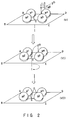
- the substituting groups R1, R2, R3, and R4 may be not arranged flat on the plane ABCD, but projecting from either face ⁇ or face ⁇ .
- the molecule as a whole may be sterically hindered either on ⁇ face side or on ⁇ face side (hereinafter, the substituting groups R1, R2, R3, and R4 represent an imaginary sphere, and the ⁇ face side is more sterically hindered) (Fig. 1 (II)).
- an iodonium ion approaches to olefin from the less sterically hindered side, i.e. ⁇ face side, so as to form an iodonium ion intermediate (Fig. 1 (III)). Since the ⁇ face side of the intermediate is blocked by the iodonium ion, an acyloxy ion attacks from the ⁇ face side, thereby forming a 1,2-addact (Fig. 1 (IV)).
- an oxygen anion produced by the hydrolysis Fig.
- the epoxide (1a) is high-selectively obtained from the olefin (2a).
- the reaction proceeds by a similar mechanism to that of the above case, as expressed by [eq. 6] below.
- the second object of the invention is to provide a method of preparing an epoxide characterized in that an oxirane ring is formed stereoselectively on the more sterically hindered side of a cyclic olefin at a high yield.
- the epoxide preparing method of the invention should be applied to the cyclic olefin which is more sterically hindered on one side of a ring.
- the epoxide preparing method can be also applied to the preparation of 1,6:3,4-dianhydro- ⁇ -D-talopyranose (1c), which is the third object of the present invention.
- the description of such an application will be provided later.
- the epoxide preparing method of the invention is applied to the compound (7) which is more sterically hindered on one side of a ring to give a compound (8) having an oxirane ring on the more sterically hindered side.
- one or more equivalent of iodine, and one or more equivalent of the carboxylic acid (5) or the metal carboxylate (6) for the double bond of the compound (7) are stirred in an appropriate solvent such as a carboxylic acid, hexane, or acetonitrile.
- the reaction mixture is hydrolyzed in the presence of a base, thereby forming an oxirane ring on the more sterically hindered side of the compound (7).
- the compound (8) thus obtained can be transformed into prostaglandin F 2 ⁇ , for example, after several steps.
- the compound (10) thus obtained is, for example, a mimic of sex pheromone of American cockroach, and can be converted into (+)-cis-pinocarveol (11) or (+)-neoisopinocampheol (12), useful as a trapping agent for the cockroach.
- the target compounds (8) and (10) can be easily obtained as compared to the conventional methods [1) E. J. Corey and R. Noyori, Tetrahedron Lett., 311 (1970); 2) C. Nishino and H. Takayanagi, Agric. Biol. Chem., 43, 2399 (1979)], and therefore these preparing methods can be simple synthesizing methods of preparing intermediates useful for biologically active substance.
- easily synthesized can be an epoxide having an oxirane ring on the more sterically hindered side in the molecule, which is difficult to obtain with the conventional synthesizing methods.
- the third object of the present invention a method of preparing 1,6:3,4-dianhydro- ⁇ -D-talopyranose (1c), will now be described.
- the method of preparing 1,6:3,4-dianhydro- ⁇ -D-talopyranose (1c) according to the present invention includes two steps, (a') and (b'), and is characterized by use of the compound (2c) as a starting material.
- the compound (1c) can be obtained by applying the steps (a) and (b) to the compound (2c).
- R5 is the same as defined above.
- R5 is the same as defined above.
- 1,6-anhydro-3,4-dideoxy- ⁇ -D-threo-hex-3-enopyranose (2c), which serves as a starting material, can be prepared by the methods disclosed in Japanese Patent Applications Nos. 2-272186, 3-77380, and 3-162604.
- levoglucosenone (13) is reduced by a reducing agent, and the carbonyl group at the second position is reduced to an hydroxyl group having ⁇ orientation.
- the reducing agent used in the reduction reaction is not particularly restricated, if a carbonyl group can be reduced to an alcohol thereby.
- general reducing agents such as lithium aluminum hydride and sodium borohydride are preferably used.
- the solvent used for the reaction should be selected in accordance with the reducing agent actually used, and ether etc is a preferable example.
- the reaction condition is not particularly restricted, but generally, the reaction is carried out in a range of 0°C and room temperature, and for a time period of 1 hour to 24 hours.
- the step of obtaining 1,2-adduct (3c) by addition of iodine and an acyloxy group to the compound (2c) can be conducted in a similar manner to the step (a) by the reaction of compound (2c) with iodine in the presence of the carboxylic acid (5) and the metal carboxylate (6). More specifically, one or more equivalent of iodine, and one or more equivalent of the carboxylic acid (5) or the metal carboxylate (6) for the double bond of the compound (2c) are mixed with the compound (2c) and stirred in an appropriate solvent.
- the solvent of this reaction may be arbitrary
- the solvent actually used in the step (a) can be used. It is preferable also in this reaction, that the carboxylic acid (5) itself be used as a solvent. In the case of using carboxylic acid (5), the carboxylic acid may be of arbitrary type as long as it is in a liquid state under the reaction condition, but acetic acid, propionic acid, and butyric acid are preferable, with acetic acid being most preferable.
- the metal carboxylate (6) used in this reaction is not restricted, if it is the compound which can assiste to generate an iodonium ion from iodine.
- the metal carboxylate (6) is not essential to the reaction when a carboxylic acid is added to the reaction (including the case a carboxylic acid is used as the solvent), but if the metal carboxylate is added, the yield of product can be improved.
- the reaction temperature and time period should be appropriately set, and in general, the temperature may be from room temperature to 50°C, and the time may be from 5 hours to 10 days.
- the 1,2-trans addact (3c) obtained in this step can be used in the next step without being isolated.
- the step (b') involves a reaction in which the acyloxy group of the 1,2-trans addact (3c) obtained in the step (a') is treated in the presence of a base, and the generated oxygen anion causes an intramolecular nucleophilic attack to the carbon atom at the fourth position with elimination of the iodide ion from the adduct, thereby forming an oxirane ring.
- the base which can be used in this reaction is not restricted as long as a general acyloxy group can be hydrolyzed thereby.
- the same base as listed in connection with the step (b) can be used.
- the solvent which can be used in this reaction is not particularly restricted as long as it is generally used in hydrolysis.
- methanol, ethanol, and water, which are preferably used in the step (b), are preferable.
- reaction temperature and time period should be appropriately set, and in general, the temperature may be from 0°C to room temperature, and the time may be from 1 hour to 24 hours.
- the C1-O-C6 bond and OH at C2 position are located on the same side (upper side) of the plane of the 6-membered ring, and only one side (upper side) of the plane of the 6-membered ring is sterically hindered.
- the compound (2c) is reacted with iodine in the presence of the carboxylic acid (5) or the metal carboxylate (6) to form an iodonium ion intermediate (4c).
- an iodonium ion approaches from the less hindered side of the 6-membered ring, i.e. the lower side of the ring.
- the iodonium ion as shown in compound (4c) is formed on the lower side of the ring. Since the lower side of the 6-membered ring is blocked by the iodonium ion in the intermediate (4c), an acyloxy ion attacks the carbon atom at the 3-position from the more hindered side (upper side) of the ring, thereby forming a 1,2-trans addact (3c). In this manner, iodine is introduced to the 4-position of the lower side of the ring which has less steric hindrance, whereas an acyloxy group is introduced to the 3-position of the upper side of the ring which has much steric hindrance.
- the oxygen anion generated by the hydrolysis causes an intramolecular nucleophilic substitution reaction to form an oxirane ring. Since the oxygen anion is located on the upper side of the 6-membered ring, the oxirane ring is formed on the upper side of the ring, i.e. the more sterically hindered side as illustrated by [eq. 10] below. where R5 is the same as defined above.
- the target compound (1c) can be easily obtained from a widely available material (2c) at a high yield.
- the method of the present invention can be applied to not only general olefins, but also cyclic olefins without any drawbacks.
- the obtained product was confirmed to have the stereochenistry of the compound (1c) by x-ray structure analysis. Further, the values of the melting point, the angle of rotation, 1H-NMR spectrum, and 13C-NMR spectrum are identical to those listed in the literatures (A.E. Knauf, R.M. Hann and C.S. Hudson, J. Am. Chem. soc., 64, 925 (1942), T. Trnka, and M. Cerny, Carbohydr. Res., 76, 39 (1979)).
- the material (1c) which is useful starting material for synthesis, can be obtained from levoglucosenone (13) at a overall yield of 66%.
- the compound (1c) is obtained by thermolysis of an endosperm of an ivory palm through a D-mannosane derivative in 5 steps, at yield of about 5%.
- the method of the present invention the compound (1c) can be obtained easily from a widely available material at a high yield, and therefore the method is believed to be more advantageous than the conventional ones.
- the drawback of the conventional method can be solved, and more specifically, it is possible to form an oxirane ring stereoselectively on the more sterically hindered side of an olefin at a high yield.
- the epoxide preparing method of the present invention it is possible to form an oxirane ring stereoselectively on the more sterically hindered side of an olefin at a high yield. Further, the preparing method involves a fewer reaction steps, and is easily operable, and therefore the method can be applied to the large scale synthesis of the target product.
- the method of the present invention can be applied to 2-oxabicyclo[3.3.0]oct-6-en-3-one as a starting materials to give an epoxide having a desired configuration (cis-syn-cis).
- the method of the present invention can be applied also to a synthesizing method of terpenes having a pinane skeleton.
- ⁇ -pinene can be more easily transformed into (+)-cis-pinocarveol (11) or (+)-neoisopinocampheol (12), which is useful as a sex pheromone trapping agent of American cockroach, than with the conventional methods.
- (+)-cis-pinocarveol (11) or (+)-neoisopinocampheol (12) which is useful as a sex pheromone trapping agent of American cockroach, than with the conventional methods.
- there are many synthesizing methods in connection with epoxides which can be improved by the method of the present invention.
Landscapes
- Chemical & Material Sciences (AREA)
- Organic Chemistry (AREA)
- Health & Medical Sciences (AREA)
- Life Sciences & Earth Sciences (AREA)
- Engineering & Computer Science (AREA)
- Biochemistry (AREA)
- Biotechnology (AREA)
- General Health & Medical Sciences (AREA)
- Genetics & Genomics (AREA)
- Molecular Biology (AREA)
- Epoxy Compounds (AREA)
Applications Claiming Priority (5)
| Application Number | Priority Date | Filing Date | Title |
|---|---|---|---|
| JP15113992 | 1992-05-20 | ||
| JP151139/92 | 1992-05-20 | ||
| JP15113892 | 1992-05-20 | ||
| JP151138/92 | 1992-05-20 | ||
| PCT/JP1993/000648 WO1993023387A1 (fr) | 1992-05-20 | 1993-05-18 | Procede pour la production d'epoxyde |
Publications (2)
| Publication Number | Publication Date |
|---|---|
| EP0604656A1 true EP0604656A1 (de) | 1994-07-06 |
| EP0604656A4 EP0604656A4 (de) | 1995-03-22 |
Family
ID=26480487
Family Applications (1)
| Application Number | Title | Priority Date | Filing Date |
|---|---|---|---|
| EP93910351A Ceased EP0604656A4 (de) | 1992-05-20 | 1993-05-18 | Verfahren zur herstellung von epoxiden. |
Country Status (3)
| Country | Link |
|---|---|
| US (1) | US5451689A (de) |
| EP (1) | EP0604656A4 (de) |
| WO (1) | WO1993023387A1 (de) |
Cited By (1)
| Publication number | Priority date | Publication date | Assignee | Title |
|---|---|---|---|---|
| RU2157805C2 (ru) * | 1998-12-15 | 2000-10-20 | Пермский филиал российского научного центра "Прикладная химия" | Способ получения перфторированных эпоксидов |
Families Citing this family (3)
| Publication number | Priority date | Publication date | Assignee | Title |
|---|---|---|---|---|
| US7842727B2 (en) | 2001-03-27 | 2010-11-30 | Errant Gene Therapeutics, Llc | Histone deacetylase inhibitors |
| EP1511477A4 (de) * | 2002-05-22 | 2008-04-09 | Errant Gene Therapeutics Llc | Histondeacetylase-hemmer auf basis von alpha-ketoepoxid-verbindungen |
| GB201210235D0 (en) | 2012-06-11 | 2012-07-25 | Univ Bristol | Compound and method |
Family Cites Families (1)
| Publication number | Priority date | Publication date | Assignee | Title |
|---|---|---|---|---|
| JPH0641107A (ja) * | 1992-07-23 | 1994-02-15 | Japan Tobacco Inc | (3r,4r)−3−ヒドロキシ−4−ヒドロキシメチル−4−ブタノリドの製造方法 |
-
1993
- 1993-05-18 EP EP93910351A patent/EP0604656A4/de not_active Ceased
- 1993-05-18 US US08/170,191 patent/US5451689A/en not_active Expired - Fee Related
- 1993-05-18 WO PCT/JP1993/000648 patent/WO1993023387A1/ja not_active Ceased
Cited By (1)
| Publication number | Priority date | Publication date | Assignee | Title |
|---|---|---|---|---|
| RU2157805C2 (ru) * | 1998-12-15 | 2000-10-20 | Пермский филиал российского научного центра "Прикладная химия" | Способ получения перфторированных эпоксидов |
Also Published As
| Publication number | Publication date |
|---|---|
| EP0604656A4 (de) | 1995-03-22 |
| WO1993023387A1 (fr) | 1993-11-25 |
| US5451689A (en) | 1995-09-19 |
Similar Documents
| Publication | Publication Date | Title |
|---|---|---|
| Danishefsky et al. | On the scope, mechanism and stereochemistry of the Lewis acid catalyzed cyclocondensation of activated dienes with aldehydes: an application to the erythronolide problem | |
| US5451689A (en) | Method of preparing epoxide | |
| KR950011596B1 (ko) | 스테로이드 유도체 및 그의 제조방법 | |
| BE1000407A4 (fr) | Anthracycline glycosides a activite antitumorale, leur preparation, les composes intermediaires de cette preparation, et compositions et utilisation de ces substances. | |
| Paruch et al. | Synthesis of spirolactones from the limonene system | |
| EP0585104B1 (de) | Verfahren zum Herstellen einer gesättigten monocyclischen Kohlenwasserstoffverbindung und ein Zwischenprodukt für dieses | |
| JPWO1993023387A1 (ja) | エポキシドの製造方法 | |
| Gagnieu et al. | A new procedure for olefin oxiranation by peroxybenzimidic acid; synthesis of some carbohydrate-precursor oxirans and other epoxides | |
| Achmatowicz et al. | Iterative syn-1, 3, 5-triol synthesis utilizing the reaction of β-(trimethylsily) dalkyl phenyl sulphones with oxiranes | |
| JP3169425B2 (ja) | アジドペンタンサイクリトール | |
| JPH0662617B2 (ja) | (+/−)14,15−ジヒドロ−(3β,14α,16α)−20,21−ジノルエブルナメニン−14−オ−ルの調製方法 | |
| JP3563135B2 (ja) | (e)−ヒドロインダン−4−イリデンエタノール誘導体の製造方法 | |
| JPS6140230B2 (de) | ||
| EP0583979B1 (de) | Cyclohexen und Cyclohexenonderivate und Verfahren zum Herstellen von Cyclohexenderivaten | |
| JPH0267250A (ja) | 2,2‐ジフルオロ‐3‐ヒドロキシカルボン酸誘導体の製造法 | |
| JPH0539261A (ja) | 活性型ビタミンd誘導体 | |
| US5157131A (en) | Epoxides and a process for their preparation | |
| JPH0597833A (ja) | 光学活性アルケニルエチレングリコール類およびその製造方法 | |
| EP0003221A2 (de) | Verfahren zur Herstellung von 3,4-Dihydrobenzopyranverbindungen und Ausgangsstoffe für dieses Verfahren | |
| JPS637170B2 (de) | ||
| JPH05286956A (ja) | ドコサペンタエン酸モノエポキシ体、及びその製造法 | |
| JPH0684348B2 (ja) | コレカルシフエロール誘導体 | |
| JP3883263B2 (ja) | マクロカルパル類の不斉合成方法 | |
| JPH0625193B2 (ja) | α,β―不飽和ケトンのエポキシ化反応 | |
| JP3266701B2 (ja) | 2,3−ジヒドロポリプレノールの製造法 |
Legal Events
| Date | Code | Title | Description |
|---|---|---|---|
| PUAI | Public reference made under article 153(3) epc to a published international application that has entered the european phase |
Free format text: ORIGINAL CODE: 0009012 |
|
| 17P | Request for examination filed |
Effective date: 19930929 |
|
| AK | Designated contracting states |
Kind code of ref document: A1 Designated state(s): DE FR GB |
|
| A4 | Supplementary search report drawn up and despatched | ||
| AK | Designated contracting states |
Kind code of ref document: A4 Designated state(s): DE FR GB |
|
| GRAG | Despatch of communication of intention to grant |
Free format text: ORIGINAL CODE: EPIDOS AGRA |
|
| 17Q | First examination report despatched |
Effective date: 19990519 |
|
| STAA | Information on the status of an ep patent application or granted ep patent |
Free format text: STATUS: THE APPLICATION HAS BEEN REFUSED |
|
| 18R | Application refused |
Effective date: 19991106 |