EP0610937A1 - Bioluminessenz Massystem - Google Patents
Bioluminessenz Massystem Download PDFInfo
- Publication number
- EP0610937A1 EP0610937A1 EP94102080A EP94102080A EP0610937A1 EP 0610937 A1 EP0610937 A1 EP 0610937A1 EP 94102080 A EP94102080 A EP 94102080A EP 94102080 A EP94102080 A EP 94102080A EP 0610937 A1 EP0610937 A1 EP 0610937A1
- Authority
- EP
- European Patent Office
- Prior art keywords
- luciferase
- luciferin
- dithiothreitol
- acid
- adenosine
- Prior art date
- Legal status (The legal status is an assumption and is not a legal conclusion. Google has not performed a legal analysis and makes no representation as to the accuracy of the status listed.)
- Granted
Links
- 238000005259 measurement Methods 0.000 title description 5
- 238000005415 bioluminescence Methods 0.000 title description 4
- 230000029918 bioluminescence Effects 0.000 title description 4
- 108060001084 Luciferase Proteins 0.000 claims abstract description 89
- 239000005089 Luciferase Substances 0.000 claims abstract description 80
- 238000000034 method Methods 0.000 claims abstract description 41
- 239000012472 biological sample Substances 0.000 claims abstract description 17
- 239000000203 mixture Substances 0.000 claims abstract description 17
- MUBZPKHOEPUJKR-UHFFFAOYSA-N Oxalic acid Chemical compound OC(=O)C(O)=O MUBZPKHOEPUJKR-UHFFFAOYSA-N 0.000 claims description 69
- UDMBCSSLTHHNCD-KQYNXXCUSA-N adenosine 5'-monophosphate Chemical compound C1=NC=2C(N)=NC=NC=2N1[C@@H]1O[C@H](COP(O)(O)=O)[C@@H](O)[C@H]1O UDMBCSSLTHHNCD-KQYNXXCUSA-N 0.000 claims description 54
- UDMBCSSLTHHNCD-UHFFFAOYSA-N Coenzym Q(11) Natural products C1=NC=2C(N)=NC=NC=2N1C1OC(COP(O)(O)=O)C(O)C1O UDMBCSSLTHHNCD-UHFFFAOYSA-N 0.000 claims description 49
- LNQVTSROQXJCDD-UHFFFAOYSA-N adenosine monophosphate Natural products C1=NC=2C(N)=NC=NC=2N1C1OC(CO)C(OP(O)(O)=O)C1O LNQVTSROQXJCDD-UHFFFAOYSA-N 0.000 claims description 49
- VHJLVAABSRFDPM-QWWZWVQMSA-N dithiothreitol Chemical group SC[C@@H](O)[C@H](O)CS VHJLVAABSRFDPM-QWWZWVQMSA-N 0.000 claims description 49
- IGXWBGJHJZYPQS-SSDOTTSWSA-N D-Luciferin Chemical compound OC(=O)[C@H]1CSC(C=2SC3=CC=C(O)C=C3N=2)=N1 IGXWBGJHJZYPQS-SSDOTTSWSA-N 0.000 claims description 47
- CYCGRDQQIOGCKX-UHFFFAOYSA-N Dehydro-luciferin Natural products OC(=O)C1=CSC(C=2SC3=CC(O)=CC=C3N=2)=N1 CYCGRDQQIOGCKX-UHFFFAOYSA-N 0.000 claims description 46
- BJGNCJDXODQBOB-UHFFFAOYSA-N Fivefly Luciferin Natural products OC(=O)C1CSC(C=2SC3=CC(O)=CC=C3N=2)=N1 BJGNCJDXODQBOB-UHFFFAOYSA-N 0.000 claims description 46
- DDWFXDSYGUXRAY-UHFFFAOYSA-N Luciferin Natural products CCc1c(C)c(CC2NC(=O)C(=C2C=C)C)[nH]c1Cc3[nH]c4C(=C5/NC(CC(=O)O)C(C)C5CC(=O)O)CC(=O)c4c3C DDWFXDSYGUXRAY-UHFFFAOYSA-N 0.000 claims description 46
- ZKHQWZAMYRWXGA-KQYNXXCUSA-J ATP(4-) Chemical compound C1=NC=2C(N)=NC=NC=2N1[C@@H]1O[C@H](COP([O-])(=O)OP([O-])(=O)OP([O-])([O-])=O)[C@@H](O)[C@H]1O ZKHQWZAMYRWXGA-KQYNXXCUSA-J 0.000 claims description 42
- ZKHQWZAMYRWXGA-UHFFFAOYSA-N Adenosine triphosphate Natural products C1=NC=2C(N)=NC=NC=2N1C1OC(COP(O)(=O)OP(O)(=O)OP(O)(O)=O)C(O)C1O ZKHQWZAMYRWXGA-UHFFFAOYSA-N 0.000 claims description 42
- KCXVZYZYPLLWCC-UHFFFAOYSA-N EDTA Chemical group OC(=O)CN(CC(O)=O)CCN(CC(O)=O)CC(O)=O KCXVZYZYPLLWCC-UHFFFAOYSA-N 0.000 claims description 27
- 235000006408 oxalic acid Nutrition 0.000 claims description 23
- WLJVXDMOQOGPHL-PPJXEINESA-N 2-phenylacetic acid Chemical compound O[14C](=O)CC1=CC=CC=C1 WLJVXDMOQOGPHL-PPJXEINESA-N 0.000 claims description 17
- WLJVXDMOQOGPHL-UHFFFAOYSA-N phenylacetic acid Chemical group OC(=O)CC1=CC=CC=C1 WLJVXDMOQOGPHL-UHFFFAOYSA-N 0.000 claims description 14
- 239000003599 detergent Substances 0.000 claims description 12
- 238000004020 luminiscence type Methods 0.000 claims description 12
- GPRLSGONYQIRFK-MNYXATJNSA-N triton Chemical group [3H+] GPRLSGONYQIRFK-MNYXATJNSA-N 0.000 claims description 11
- 239000002738 chelating agent Substances 0.000 claims description 10
- 230000003197 catalytic effect Effects 0.000 claims description 9
- 239000011541 reaction mixture Substances 0.000 claims description 8
- 229960003424 phenylacetic acid Drugs 0.000 claims description 7
- 239000003279 phenylacetic acid Substances 0.000 claims description 7
- 239000002516 radical scavenger Substances 0.000 claims description 7
- 239000000523 sample Substances 0.000 claims description 7
- 239000000137 peptide hydrolase inhibitor Substances 0.000 claims description 6
- 239000002253 acid Substances 0.000 claims description 2
- 229940123457 Free radical scavenger Drugs 0.000 claims 3
- 229940124158 Protease/peptidase inhibitor Drugs 0.000 claims 2
- OIRDTQYFTABQOQ-KQYNXXCUSA-N adenosine Chemical compound C1=NC=2C(N)=NC=NC=2N1[C@@H]1O[C@H](CO)[C@@H](O)[C@H]1O OIRDTQYFTABQOQ-KQYNXXCUSA-N 0.000 claims 2
- 239000002126 C01EB10 - Adenosine Substances 0.000 claims 1
- 229960005305 adenosine Drugs 0.000 claims 1
- 238000006243 chemical reaction Methods 0.000 abstract description 41
- 210000004027 cell Anatomy 0.000 description 45
- 108091006104 gene-regulatory proteins Proteins 0.000 description 34
- 102000034356 gene-regulatory proteins Human genes 0.000 description 34
- 238000004519 manufacturing process Methods 0.000 description 29
- 108700008625 Reporter Genes Proteins 0.000 description 21
- 230000000694 effects Effects 0.000 description 15
- JKMHFZQWWAIEOD-UHFFFAOYSA-N 2-[4-(2-hydroxyethyl)piperazin-1-yl]ethanesulfonic acid Chemical compound OCC[NH+]1CCN(CCS([O-])(=O)=O)CC1 JKMHFZQWWAIEOD-UHFFFAOYSA-N 0.000 description 14
- 239000000243 solution Substances 0.000 description 14
- 238000003556 assay Methods 0.000 description 13
- 150000001875 compounds Chemical class 0.000 description 12
- 239000003112 inhibitor Substances 0.000 description 10
- 239000007995 HEPES buffer Substances 0.000 description 9
- 239000012911 assay medium Substances 0.000 description 9
- 239000003153 chemical reaction reagent Substances 0.000 description 9
- LOKCTEFSRHRXRJ-UHFFFAOYSA-I dipotassium trisodium dihydrogen phosphate hydrogen phosphate dichloride Chemical compound P(=O)(O)(O)[O-].[K+].P(=O)(O)([O-])[O-].[Na+].[Na+].[Cl-].[K+].[Cl-].[Na+] LOKCTEFSRHRXRJ-UHFFFAOYSA-I 0.000 description 8
- 239000002609 medium Substances 0.000 description 8
- 239000002953 phosphate buffered saline Substances 0.000 description 8
- 108020004414 DNA Proteins 0.000 description 7
- 230000001413 cellular effect Effects 0.000 description 7
- 238000010790 dilution Methods 0.000 description 7
- 239000012895 dilution Substances 0.000 description 7
- 230000005764 inhibitory process Effects 0.000 description 6
- 230000007423 decrease Effects 0.000 description 5
- 108091033319 polynucleotide Proteins 0.000 description 5
- 102000040430 polynucleotide Human genes 0.000 description 5
- 239000002157 polynucleotide Substances 0.000 description 5
- 239000000126 substance Substances 0.000 description 5
- 229920002307 Dextran Polymers 0.000 description 4
- 101710150344 Protein Rev Proteins 0.000 description 4
- 239000012980 RPMI-1640 medium Substances 0.000 description 4
- 150000001768 cations Chemical class 0.000 description 4
- 239000006285 cell suspension Substances 0.000 description 4
- 229940042399 direct acting antivirals protease inhibitors Drugs 0.000 description 4
- LIYGYAHYXQDGEP-UHFFFAOYSA-N firefly oxyluciferin Natural products Oc1csc(n1)-c1nc2ccc(O)cc2s1 LIYGYAHYXQDGEP-UHFFFAOYSA-N 0.000 description 4
- -1 leupeptine Chemical compound 0.000 description 4
- JJVOROULKOMTKG-UHFFFAOYSA-N oxidized Photinus luciferin Chemical compound S1C2=CC(O)=CC=C2N=C1C1=NC(=O)CS1 JJVOROULKOMTKG-UHFFFAOYSA-N 0.000 description 4
- 108090000623 proteins and genes Proteins 0.000 description 4
- 238000003571 reporter gene assay Methods 0.000 description 4
- UCSJYZPVAKXKNQ-HZYVHMACSA-N streptomycin Chemical compound CN[C@H]1[C@H](O)[C@@H](O)[C@H](CO)O[C@H]1O[C@@H]1[C@](C=O)(O)[C@H](C)O[C@H]1O[C@@H]1[C@@H](NC(N)=N)[C@H](O)[C@@H](NC(N)=N)[C@H](O)[C@H]1O UCSJYZPVAKXKNQ-HZYVHMACSA-N 0.000 description 4
- 231100000419 toxicity Toxicity 0.000 description 4
- 230000001988 toxicity Effects 0.000 description 4
- 238000001890 transfection Methods 0.000 description 4
- 108010035563 Chloramphenicol O-acetyltransferase Proteins 0.000 description 3
- RGJOEKWQDUBAIZ-IBOSZNHHSA-N CoASH Chemical compound O[C@@H]1[C@H](OP(O)(O)=O)[C@@H](COP(O)(=O)OP(O)(=O)OCC(C)(C)[C@@H](O)C(=O)NCCC(=O)NCCS)O[C@H]1N1C2=NC=NC(N)=C2N=C1 RGJOEKWQDUBAIZ-IBOSZNHHSA-N 0.000 description 3
- 229940126062 Compound A Drugs 0.000 description 3
- NLDMNSXOCDLTTB-UHFFFAOYSA-N Heterophylliin A Natural products O1C2COC(=O)C3=CC(O)=C(O)C(O)=C3C3=C(O)C(O)=C(O)C=C3C(=O)OC2C(OC(=O)C=2C=C(O)C(O)=C(O)C=2)C(O)C1OC(=O)C1=CC(O)=C(O)C(O)=C1 NLDMNSXOCDLTTB-UHFFFAOYSA-N 0.000 description 3
- HEMHJVSKTPXQMS-UHFFFAOYSA-M Sodium hydroxide Chemical compound [OH-].[Na+] HEMHJVSKTPXQMS-UHFFFAOYSA-M 0.000 description 3
- 210000001744 T-lymphocyte Anatomy 0.000 description 3
- RGJOEKWQDUBAIZ-UHFFFAOYSA-N coenzime A Natural products OC1C(OP(O)(O)=O)C(COP(O)(=O)OP(O)(=O)OCC(C)(C)C(O)C(=O)NCCC(=O)NCCS)OC1N1C2=NC=NC(N)=C2N=C1 RGJOEKWQDUBAIZ-UHFFFAOYSA-N 0.000 description 3
- 239000005516 coenzyme A Substances 0.000 description 3
- 229940093530 coenzyme a Drugs 0.000 description 3
- KDTSHFARGAKYJN-UHFFFAOYSA-N dephosphocoenzyme A Natural products OC1C(O)C(COP(O)(=O)OP(O)(=O)OCC(C)(C)C(O)C(=O)NCCC(=O)NCCS)OC1N1C2=NC=NC(N)=C2N=C1 KDTSHFARGAKYJN-UHFFFAOYSA-N 0.000 description 3
- 238000001514 detection method Methods 0.000 description 3
- XPPKVPWEQAFLFU-UHFFFAOYSA-J diphosphate(4-) Chemical compound [O-]P([O-])(=O)OP([O-])([O-])=O XPPKVPWEQAFLFU-UHFFFAOYSA-J 0.000 description 3
- 235000011180 diphosphates Nutrition 0.000 description 3
- 239000013604 expression vector Substances 0.000 description 3
- 230000002779 inactivation Effects 0.000 description 3
- 230000007246 mechanism Effects 0.000 description 3
- 108020004999 messenger RNA Proteins 0.000 description 3
- 238000002360 preparation method Methods 0.000 description 3
- 238000012216 screening Methods 0.000 description 3
- 230000006641 stabilisation Effects 0.000 description 3
- 238000011105 stabilization Methods 0.000 description 3
- 238000002723 toxicity assay Methods 0.000 description 3
- HBZBAMXERPYTFS-SECBINFHSA-N (4S)-2-(6,7-dihydro-5H-pyrrolo[3,2-f][1,3]benzothiazol-2-yl)-4,5-dihydro-1,3-thiazole-4-carboxylic acid Chemical compound OC(=O)[C@H]1CSC(=N1)c1nc2cc3CCNc3cc2s1 HBZBAMXERPYTFS-SECBINFHSA-N 0.000 description 2
- HZAXFHJVJLSVMW-UHFFFAOYSA-N 2-Aminoethan-1-ol Chemical compound NCCO HZAXFHJVJLSVMW-UHFFFAOYSA-N 0.000 description 2
- 241000186361 Actinobacteria <class> Species 0.000 description 2
- NLXLAEXVIDQMFP-UHFFFAOYSA-N Ammonia chloride Chemical compound [NH4+].[Cl-] NLXLAEXVIDQMFP-UHFFFAOYSA-N 0.000 description 2
- 241000894006 Bacteria Species 0.000 description 2
- 102000004190 Enzymes Human genes 0.000 description 2
- 108090000790 Enzymes Proteins 0.000 description 2
- 241000233866 Fungi Species 0.000 description 2
- 229930182566 Gentamicin Natural products 0.000 description 2
- CEAZRRDELHUEMR-URQXQFDESA-N Gentamicin Chemical compound O1[C@H](C(C)NC)CC[C@@H](N)[C@H]1O[C@H]1[C@H](O)[C@@H](O[C@@H]2[C@@H]([C@@H](NC)[C@@](C)(O)CO2)O)[C@H](N)C[C@@H]1N CEAZRRDELHUEMR-URQXQFDESA-N 0.000 description 2
- 229930182555 Penicillin Natural products 0.000 description 2
- JGSARLDLIJGVTE-MBNYWOFBSA-N Penicillin G Chemical compound N([C@H]1[C@H]2SC([C@@H](N2C1=O)C(O)=O)(C)C)C(=O)CC1=CC=CC=C1 JGSARLDLIJGVTE-MBNYWOFBSA-N 0.000 description 2
- 102000035195 Peptidases Human genes 0.000 description 2
- 108091005804 Peptidases Proteins 0.000 description 2
- BELBBZDIHDAJOR-UHFFFAOYSA-N Phenolsulfonephthalein Chemical compound C1=CC(O)=CC=C1C1(C=2C=CC(O)=CC=2)C2=CC=CC=C2S(=O)(=O)O1 BELBBZDIHDAJOR-UHFFFAOYSA-N 0.000 description 2
- 239000004365 Protease Substances 0.000 description 2
- 230000009471 action Effects 0.000 description 2
- 239000000654 additive Substances 0.000 description 2
- 239000000853 adhesive Substances 0.000 description 2
- 230000001070 adhesive effect Effects 0.000 description 2
- QVGXLLKOCUKJST-UHFFFAOYSA-N atomic oxygen Chemical compound [O] QVGXLLKOCUKJST-UHFFFAOYSA-N 0.000 description 2
- IOJUPLGTWVMSFF-UHFFFAOYSA-N benzothiazole Chemical compound C1=CC=C2SC=NC2=C1 IOJUPLGTWVMSFF-UHFFFAOYSA-N 0.000 description 2
- 102000005936 beta-Galactosidase Human genes 0.000 description 2
- 108010005774 beta-Galactosidase Proteins 0.000 description 2
- 230000015572 biosynthetic process Effects 0.000 description 2
- 239000000872 buffer Substances 0.000 description 2
- 230000003139 buffering effect Effects 0.000 description 2
- AIYUHDOJVYHVIT-UHFFFAOYSA-M caesium chloride Chemical compound [Cl-].[Cs+] AIYUHDOJVYHVIT-UHFFFAOYSA-M 0.000 description 2
- 239000013592 cell lysate Substances 0.000 description 2
- 239000002299 complementary DNA Substances 0.000 description 2
- IAZDPXIOMUYVGZ-UHFFFAOYSA-N dimethyl sulfoxide Natural products CS(C)=O IAZDPXIOMUYVGZ-UHFFFAOYSA-N 0.000 description 2
- 230000002255 enzymatic effect Effects 0.000 description 2
- 229960002518 gentamicin Drugs 0.000 description 2
- RWSXRVCMGQZWBV-WDSKDSINSA-N glutathione Chemical compound OC(=O)[C@@H](N)CCC(=O)N[C@@H](CS)C(=O)NCC(O)=O RWSXRVCMGQZWBV-WDSKDSINSA-N 0.000 description 2
- 230000005283 ground state Effects 0.000 description 2
- 230000003647 oxidation Effects 0.000 description 2
- 238000007254 oxidation reaction Methods 0.000 description 2
- 229910052760 oxygen Inorganic materials 0.000 description 2
- 239000001301 oxygen Substances 0.000 description 2
- 229940049954 penicillin Drugs 0.000 description 2
- 229960003531 phenolsulfonphthalein Drugs 0.000 description 2
- 229960005322 streptomycin Drugs 0.000 description 2
- 238000012360 testing method Methods 0.000 description 2
- 231100000331 toxic Toxicity 0.000 description 2
- 230000002588 toxic effect Effects 0.000 description 2
- 238000013519 translation Methods 0.000 description 2
- 230000032258 transport Effects 0.000 description 2
- 239000013598 vector Substances 0.000 description 2
- WHTVZRBIWZFKQO-AWEZNQCLSA-N (S)-chloroquine Chemical compound ClC1=CC=C2C(N[C@@H](C)CCCN(CC)CC)=CC=NC2=C1 WHTVZRBIWZFKQO-AWEZNQCLSA-N 0.000 description 1
- MVVGSPCXHRFDDR-UHFFFAOYSA-N 2-(1,3-benzothiazol-2-yl)phenol Chemical compound OC1=CC=CC=C1C1=NC2=CC=CC=C2S1 MVVGSPCXHRFDDR-UHFFFAOYSA-N 0.000 description 1
- GXVUZYLYWKWJIM-UHFFFAOYSA-N 2-(2-aminoethoxy)ethanamine Chemical compound NCCOCCN GXVUZYLYWKWJIM-UHFFFAOYSA-N 0.000 description 1
- BFSVOASYOCHEOV-UHFFFAOYSA-N 2-diethylaminoethanol Chemical compound CCN(CC)CCO BFSVOASYOCHEOV-UHFFFAOYSA-N 0.000 description 1
- XBHOUXSGHYZCNH-UHFFFAOYSA-N 2-phenyl-1,3-benzothiazole Chemical compound C1=CC=CC=C1C1=NC2=CC=CC=C2S1 XBHOUXSGHYZCNH-UHFFFAOYSA-N 0.000 description 1
- 108010039627 Aprotinin Proteins 0.000 description 1
- YCAGGFXSFQFVQL-UHFFFAOYSA-N Endothion Chemical compound COC1=COC(CSP(=O)(OC)OC)=CC1=O YCAGGFXSFQFVQL-UHFFFAOYSA-N 0.000 description 1
- VGGSQFUCUMXWEO-UHFFFAOYSA-N Ethene Chemical compound C=C VGGSQFUCUMXWEO-UHFFFAOYSA-N 0.000 description 1
- 239000005977 Ethylene Substances 0.000 description 1
- 108010024636 Glutathione Proteins 0.000 description 1
- 241000713772 Human immunodeficiency virus 1 Species 0.000 description 1
- 241000254158 Lampyridae Species 0.000 description 1
- KWYHDKDOAIKMQN-UHFFFAOYSA-N N,N,N',N'-tetramethylethylenediamine Chemical compound CN(C)CCN(C)C KWYHDKDOAIKMQN-UHFFFAOYSA-N 0.000 description 1
- CBQJSKKFNMDLON-JTQLQIEISA-N N-acetyl-L-phenylalanine Chemical compound CC(=O)N[C@H](C(O)=O)CC1=CC=CC=C1 CBQJSKKFNMDLON-JTQLQIEISA-N 0.000 description 1
- 229920002274 Nalgene Polymers 0.000 description 1
- 102000005877 Peptide Initiation Factors Human genes 0.000 description 1
- 108010044843 Peptide Initiation Factors Proteins 0.000 description 1
- 241000242583 Scyphozoa Species 0.000 description 1
- 108091023040 Transcription factor Proteins 0.000 description 1
- 102000040945 Transcription factor Human genes 0.000 description 1
- 230000004913 activation Effects 0.000 description 1
- 235000019270 ammonium chloride Nutrition 0.000 description 1
- 230000003698 anagen phase Effects 0.000 description 1
- 230000000692 anti-sense effect Effects 0.000 description 1
- 229960004405 aprotinin Drugs 0.000 description 1
- 238000003149 assay kit Methods 0.000 description 1
- 239000012298 atmosphere Substances 0.000 description 1
- 230000015556 catabolic process Effects 0.000 description 1
- 238000006555 catalytic reaction Methods 0.000 description 1
- 230000004640 cellular pathway Effects 0.000 description 1
- 238000005119 centrifugation Methods 0.000 description 1
- 239000003638 chemical reducing agent Substances 0.000 description 1
- 229960005091 chloramphenicol Drugs 0.000 description 1
- WIIZWVCIJKGZOK-RKDXNWHRSA-N chloramphenicol Chemical compound ClC(Cl)C(=O)N[C@H](CO)[C@H](O)C1=CC=C([N+]([O-])=O)C=C1 WIIZWVCIJKGZOK-RKDXNWHRSA-N 0.000 description 1
- 229960003677 chloroquine Drugs 0.000 description 1
- WHTVZRBIWZFKQO-UHFFFAOYSA-N chloroquine Natural products ClC1=CC=C2C(NC(C)CCCN(CC)CC)=CC=NC2=C1 WHTVZRBIWZFKQO-UHFFFAOYSA-N 0.000 description 1
- 238000012136 culture method Methods 0.000 description 1
- 238000012258 culturing Methods 0.000 description 1
- UHDGCWIWMRVCDJ-ZAKLUEHWSA-N cytidine Chemical class O=C1N=C(N)C=CN1[C@H]1[C@H](O)[C@@H](O)[C@H](CO)O1 UHDGCWIWMRVCDJ-ZAKLUEHWSA-N 0.000 description 1
- 230000009089 cytolysis Effects 0.000 description 1
- 210000000805 cytoplasm Anatomy 0.000 description 1
- 230000002354 daily effect Effects 0.000 description 1
- 238000000354 decomposition reaction Methods 0.000 description 1
- 238000006731 degradation reaction Methods 0.000 description 1
- VHJLVAABSRFDPM-ZXZARUISSA-N dithioerythritol Chemical compound SC[C@H](O)[C@H](O)CS VHJLVAABSRFDPM-ZXZARUISSA-N 0.000 description 1
- DEFVIWRASFVYLL-UHFFFAOYSA-N ethylene glycol bis(2-aminoethyl)tetraacetic acid Chemical compound OC(=O)CN(CC(O)=O)CCOCCOCCN(CC(O)=O)CC(O)=O DEFVIWRASFVYLL-UHFFFAOYSA-N 0.000 description 1
- 230000003203 everyday effect Effects 0.000 description 1
- 230000005281 excited state Effects 0.000 description 1
- 238000002474 experimental method Methods 0.000 description 1
- 150000008195 galaktosides Chemical class 0.000 description 1
- 229960003180 glutathione Drugs 0.000 description 1
- 230000012010 growth Effects 0.000 description 1
- 230000007062 hydrolysis Effects 0.000 description 1
- 238000006460 hydrolysis reaction Methods 0.000 description 1
- 238000011534 incubation Methods 0.000 description 1
- 230000002401 inhibitory effect Effects 0.000 description 1
- ZPNFWUPYTFPOJU-LPYSRVMUSA-N iniprol Chemical compound C([C@H]1C(=O)NCC(=O)NCC(=O)N[C@H]2CSSC[C@H]3C(=O)N[C@@H](CCCCN)C(=O)N[C@@H](C)C(=O)N[C@@H](CCCNC(N)=N)C(=O)N[C@H](C(N[C@H](C(=O)N[C@@H](CCCNC(N)=N)C(=O)N[C@@H](CC=4C=CC(O)=CC=4)C(=O)N[C@@H](CC=4C=CC=CC=4)C(=O)N[C@@H](CC=4C=CC(O)=CC=4)C(=O)N[C@@H](CC(N)=O)C(=O)N[C@@H](C)C(=O)N[C@@H](CCCCN)C(=O)N[C@@H](C)C(=O)NCC(=O)N[C@@H](CC(C)C)C(=O)N[C@@H](CSSC[C@H](NC(=O)[C@H](CC(O)=O)NC(=O)[C@H](CCC(O)=O)NC(=O)[C@H](C)NC(=O)[C@H](CO)NC(=O)[C@H](CCCCN)NC(=O)[C@H](CC=4C=CC=CC=4)NC(=O)[C@H](CC(N)=O)NC(=O)[C@H](CC(N)=O)NC(=O)[C@H](CCCNC(N)=N)NC(=O)[C@H](CCCCN)NC(=O)[C@H](C)NC(=O)[C@H](CCCNC(N)=N)NC2=O)C(=O)N[C@@H](CCSC)C(=O)N[C@@H](CCCNC(N)=N)C(=O)N[C@@H]([C@@H](C)O)C(=O)N[C@@H](CSSC[C@H](NC(=O)[C@H](CC=2C=CC=CC=2)NC(=O)[C@H](CC(O)=O)NC(=O)[C@H]2N(CCC2)C(=O)[C@@H](N)CCCNC(N)=N)C(=O)N[C@@H](CC(C)C)C(=O)N[C@@H](CCC(O)=O)C(=O)N2[C@@H](CCC2)C(=O)N2[C@@H](CCC2)C(=O)N[C@@H](CC=2C=CC(O)=CC=2)C(=O)N[C@@H]([C@@H](C)O)C(=O)NCC(=O)N2[C@@H](CCC2)C(=O)N3)C(=O)NCC(=O)NCC(=O)N[C@@H](C)C(O)=O)C(=O)N[C@@H](CCC(N)=O)C(=O)N[C@H](C(=O)N[C@@H](CC=2C=CC=CC=2)C(=O)N[C@H](C(=O)N1)C(C)C)[C@@H](C)O)[C@@H](C)CC)=O)[C@@H](C)CC)C1=CC=C(O)C=C1 ZPNFWUPYTFPOJU-LPYSRVMUSA-N 0.000 description 1
- 230000000977 initiatory effect Effects 0.000 description 1
- 230000000670 limiting effect Effects 0.000 description 1
- 238000003468 luciferase reporter gene assay Methods 0.000 description 1
- 238000000691 measurement method Methods 0.000 description 1
- 239000012528 membrane Substances 0.000 description 1
- 229910021645 metal ion Inorganic materials 0.000 description 1
- GAOZTHIDHYLHMS-KEOBGNEYSA-N monensin A Chemical compound C([C@@](O1)(C)[C@H]2CC[C@@](O2)(CC)[C@H]2[C@H](C[C@@H](O2)[C@@H]2[C@H](C[C@@H](C)[C@](O)(CO)O2)C)C)C[C@@]21C[C@H](O)[C@@H](C)[C@@H]([C@@H](C)[C@@H](OC)[C@H](C)C(O)=O)O2 GAOZTHIDHYLHMS-KEOBGNEYSA-N 0.000 description 1
- 239000013642 negative control Substances 0.000 description 1
- 230000001590 oxidative effect Effects 0.000 description 1
- 239000013612 plasmid Substances 0.000 description 1
- 239000013600 plasmid vector Substances 0.000 description 1
- 230000008569 process Effects 0.000 description 1
- 230000002829 reductive effect Effects 0.000 description 1
- 108700004030 rev Genes Proteins 0.000 description 1
- 101150098213 rev gene Proteins 0.000 description 1
- 230000002441 reversible effect Effects 0.000 description 1
- 230000035945 sensitivity Effects 0.000 description 1
- 230000000638 stimulation Effects 0.000 description 1
- 238000006467 substitution reaction Methods 0.000 description 1
- 238000004114 suspension culture Methods 0.000 description 1
- 230000002110 toxicologic effect Effects 0.000 description 1
- 231100000027 toxicology Toxicity 0.000 description 1
- 238000013518 transcription Methods 0.000 description 1
- 230000035897 transcription Effects 0.000 description 1
- 230000009466 transformation Effects 0.000 description 1
- 230000001131 transforming effect Effects 0.000 description 1
- 238000003146 transient transfection Methods 0.000 description 1
- 230000014621 translational initiation Effects 0.000 description 1
- 238000007039 two-step reaction Methods 0.000 description 1
- 238000010200 validation analysis Methods 0.000 description 1
- 239000012130 whole-cell lysate Substances 0.000 description 1
Images



Classifications
-
- C—CHEMISTRY; METALLURGY
- C12—BIOCHEMISTRY; BEER; SPIRITS; WINE; VINEGAR; MICROBIOLOGY; ENZYMOLOGY; MUTATION OR GENETIC ENGINEERING
- C12Q—MEASURING OR TESTING PROCESSES INVOLVING ENZYMES, NUCLEIC ACIDS OR MICROORGANISMS; COMPOSITIONS OR TEST PAPERS THEREFOR; PROCESSES OF PREPARING SUCH COMPOSITIONS; CONDITION-RESPONSIVE CONTROL IN MICROBIOLOGICAL OR ENZYMOLOGICAL PROCESSES
- C12Q1/00—Measuring or testing processes involving enzymes, nucleic acids or microorganisms; Compositions therefor; Processes of preparing such compositions
- C12Q1/66—Measuring or testing processes involving enzymes, nucleic acids or microorganisms; Compositions therefor; Processes of preparing such compositions involving luciferase
-
- Y—GENERAL TAGGING OF NEW TECHNOLOGICAL DEVELOPMENTS; GENERAL TAGGING OF CROSS-SECTIONAL TECHNOLOGIES SPANNING OVER SEVERAL SECTIONS OF THE IPC; TECHNICAL SUBJECTS COVERED BY FORMER USPC CROSS-REFERENCE ART COLLECTIONS [XRACs] AND DIGESTS
- Y10—TECHNICAL SUBJECTS COVERED BY FORMER USPC
- Y10S—TECHNICAL SUBJECTS COVERED BY FORMER USPC CROSS-REFERENCE ART COLLECTIONS [XRACs] AND DIGESTS
- Y10S435/00—Chemistry: molecular biology and microbiology
- Y10S435/968—High energy substrates, e.g. fluorescent, chemiluminescent, radioactive
-
- Y—GENERAL TAGGING OF NEW TECHNOLOGICAL DEVELOPMENTS; GENERAL TAGGING OF CROSS-SECTIONAL TECHNOLOGIES SPANNING OVER SEVERAL SECTIONS OF THE IPC; TECHNICAL SUBJECTS COVERED BY FORMER USPC CROSS-REFERENCE ART COLLECTIONS [XRACs] AND DIGESTS
- Y10—TECHNICAL SUBJECTS COVERED BY FORMER USPC
- Y10S—TECHNICAL SUBJECTS COVERED BY FORMER USPC CROSS-REFERENCE ART COLLECTIONS [XRACs] AND DIGESTS
- Y10S530/00—Chemistry: natural resins or derivatives; peptides or proteins; lignins or reaction products thereof
- Y10S530/802—Chromogenic or luminescent peptides
Definitions
- This invention relates generally to the stabilization of luciferase catalyzed luminescence.
- the invention relates as well to compositions and methods for improving the lifetimes of the luminescence reaction.
- This invention also includes assay kits for detection of an expressed luciferase gene used in reporter-gene techniques.
- Luciferases are found in a wide variety of organisms including fireflies, photobacteria, jellyfish and many others. Luciferases are enzymes which catalyze the production of light by oxidizing luciferin to oxyluciferin in a process known generally as bioluminescence.
- luciferase catalyzes the formation of luciferyl adenylate from luciferin and ATP.
- ATP adenosine triphosphate
- luciferase catalyzes the formation of luciferyl adenylate from luciferin and ATP.
- pyrophosphate is released and a Mg+2 cofactor or another divalent cation is required for proper luciferase function.
- luciferyl adenylate remains within the active site of luciferase.
- luciferase oxidizes luciferyl adenylate to an electronically excited oxyluciferin with the consumption of oxygen.
- Light production occurs when the electronically excited oxyluciferin decays to the ground state oxyluciferin.
- the decay from the excited state to the ground state occurs with the concomitant emission of a photon.
- the color of the light produced differs with the source of the luciferase and appears to be determined by differences in the structure of the various luciferases.
- Luciferases have recently become useful in reporter-gene technology.
- a reporter gene such as a luciferase encoding polynucleotide is used as an indicator for the transcription and translation of a gene in a cellular expression system.
- the reporter gene is operatively linked to a promoter that is recognized by the cellular expression system.
- Other commonly used reporter genes include ⁇ -galactosidase, and chloramphenicol acetyltransferase (CAT).
- CAT chloramphenicol acetyltransferase
- a DNA vector containing the reporter gene is transfected into a cell capable of expressing the reporter gene.
- the cellular membrane is disrupted to release the expressed gene product.
- the reagents necessary for the catalytic reaction of the reporter gene are then added to the reaction solution and the enzymatic activity of the reporter gene is determined.
- the cell can be disrupted in the presence of all reagents necessary for the determination of the enzymatic activity of the reporter gene. If a ⁇ -galactosidase encoding polynucleotide is used as the reporter gene, the hydrolysis of a galactoside is determined.
- a chloramphenicol acetyltransferase encoding polynucleotide is used as the reporter gene, the production of an acetylated chloramphenicol is determined.
- luciferase is used as the reporter gene the photons produced from the luciferase-luciferin reaction is measured.
- a major problem in determining expression of a luciferase gene as a reporter gene is the short duration of photon production.
- luciferase catalyzed photon production ceases within a few seconds.
- Means for extending the period of photon production have been eagerly sought.
- a commercially available kit from the Promega Corporation can extend the half-life of luciferase catalyzed photon production to roughly five minutes. Nevertheless, for the measurement of large numbers of samples, luciferase catalyzed photon production with a half-life of only five minutes is not a viable alternative.
- half-life is the time it takes for photon production to decrease by one half.
- the present invention provides methods and compositions for increasing the duration of detectable photon emission of a luciferase-luciferin reaction.
- the present invention provides a method for increasing the duration of detectable photon emission of a luciferase-luciferin reaction.
- a reaction mixture containing luciferase, luciferin, ATP, and cofactors required for luciferase catalytic activity is mixed with a composition containing adenosine monophosphate, a radical scavenger and a chelating agent to form an admixture.
- the photons produced by the luciferase-luciferin reaction is then detected by measuring the luminescence of the admixture.
- the luciferase catalyzed photon production can be detected for more than five minutes.
- 100 ml of the admixture contains about 2.8 mg luciferin, about 110 mg adenosine triphosphate (ATP) , cofactors necessary for luciferase catalytic activity, about 2.2 mg adenosine monophosphate (AMP) , about 385 mg dithiothreitol (DTT) , and about 20 mg ethylenediaminetetraacetic and (EDTA) .
- ATP adenosine triphosphate
- AMP adenosine monophosphate
- DTT dithiothreitol
- EDTA ethylenediaminetetraacetic and
- the amount of one of the components of the admixture can be varied while the amounts of all other components remain unchanged.
- the amount of luciferin can be varied between about 0.2 to about 30 mg while maintaining the amount of ATP at about 110mg, AMP at about 2.2 mg, DTT at about 385 mg and EDTA at about 20 mg.
- components can be varied individually as follows: for 100 ml of the admixture, the amount of luciferin can be varied from about 0.2 to about 30 mg; the amount of ATP can be varied from about 10 to about 300 mg; the amount of AMP can be varied from about 0.2 to about 30 mg; the amount DTT can be varied from about 200 to about 2000 mg; and the amount EDTA can be varied from between about 10 to about 50 mg.
- the present invention contemplates a method for detecting the presence of luciferase in a biological sample.
- the biological sample suspected of containing luciferase is mixed with a reaction mixture which contains luciferin, adenosine triphosphate, cofactors required for luciferase catalytic activity, adenosine monophosphate, dithiothreitol, ethylenediaminetetraacetic acid, phenylacetic acid, oxalic acid, and a detergent to form an admixture.
- the photons produced by the luciferase-luciferin reaction are then detected by measuring the luminescence of the admixture.
- the present invention contemplates an admixture for detecting the presence of a luciferase in a biological sample.
- One hundred ml of the admixture contains about 2.8 mg luciferin, about 110 mg adenosine triphosphate, about 2.2 mg adenosine monophosphate, about 385 mg dithiothreitol, about 20 mg ethylenediaminetetraacetic acid, about 4.5 mg phenylacetic acid, and about 0.85 mg oxalic acid.
- the amount of one of the components of the admixture can be varied while the amounts of all other components remain unchanged.
- the amount of luciferin can be varied between about 0.2 to about 30 mg while maintaining the amount of ATP at about 110mg, AMP at about 2.2 mg, DTT at about 385 mg, EDTA at about 20 mg, phenylacetic acid at about 4.5 mg, and oxalic acid at about 0.85 mg.
- components can be varied individually as follows: for 100 ml of the admixture, the amount of luciferin can be varied from about 0.2 to about 30 mg; the amount of ATP can be varied from about 10 to about 300 mg; the amount of AMP can be varied from about 0.2 to about 30 mg; the amount DTT can be varied from about 200 to about 2000 mg; the amount of EDTA can be varied from about 10 to about 50 mg; the amount of phenylacetic acid can be varied from about 1 to about 10 mg; and the amount of oxalic acid can be varied from about 0.2 to about 5 mg.
- the present invention contemplates a composition used in detecting the presence of luciferase in biological samples by detecting a emitted photon from a luciferase-luciferin reaction.
- a composition used in detecting the presence of luciferase in biological samples by detecting a emitted photon from a luciferase-luciferin reaction.
- One hundred ml of this composition contains about 2.8 mg luciferin, about 110 mg adenosine triphosphate, about 2.2 mg adenosine monophosphate, about 385 mg dithiothreitol, about 20 mg ethylenediaminetetraacetic acid, about 4.5 mg phenylacetic acid, about 0.85 mg oxalic acid, and about 4 g triton .
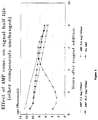
- Figure 1 shows the effect of varying the AMP concentration on luciferase-luciferin light production.
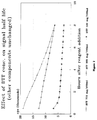
- Figure 2 shows the effect of varying DTT concentration on luciferase-luciferin light production.
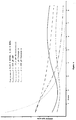
- Figure 3 shows the effect of varying both DTT and AMP concentration on luciferase-luciferin light production.
- Figure 4 shows the effect of various reagents to the luciferase-luciferin reaction.
- Figure 5 shows the light production of a reporter-gene assay using a cloned luciferase.
- Figure 6 shows that Compound A is either an unspecific inhibitor of the HIV-rev regulatory protein or is toxic to the cells.
- Figure 7 shows that Compound B is a specific inhibitor of the HIV-rev regulatory protein.
- Luciferases catalyze the oxidation of luciferin with the concomitant emission of photons.
- the present invention provides compositions and methods for increasing the duration of detectable photon emission of a luciferase-luciferin reaction.
- the present invention provides a luciferase-luciferin reaction in which light production can be detected for more than five minutes.
- the photon emission of a luciferase-luciferin reaction can be detected for up to and including eight hours.
- detectable photon emission from a luciferase-luciferin reaction is linear for up to eight hours (see Figures 1-5).
- a reaction mixture containing luciferase, luciferin, ATP, and cofactors required for luciferase catalytic activity is mixed with a composition containing adenosine monophosphate, a radical scavenger and a chelating agent to form an admixture.
- the photons produced by the luciferase-luciferin reaction are then detected by measuring the luminescence of the admixture.
- Luciferase catalyzed photon emission as disclosed by the methods and compositions of the present invention can be detected for more than five minutes.
- photon emission can be detected for more than thirty minutes and for up to eight hours.
- photon emission decays linearly for up to eight hours as shown in Figures 1-3.
- the present invention provides a luciferase-luciferin reaction admixture.
- One hundred ml of the admixture contains about 2.8 mg luciferin, about 110 mg adenosine triphosphate, about 2.2 mg adenosine monophosphate, about 385 mg dithiothreitol, and about 20 mg ethylenediaminetetraacetic acid.
- the amount of one of the components of the admixture can be varied while the amounts of all other components remain unchanged.
- the amount of luciferin can be varied between about 0.2 to about 30 mg while maintaining the amount of ATP at about 110mg, AMP at about 2.2 mg, DTT at about 385 mg and EDTA at about 20 mg.
- components can be varied individually as follows: for 100 ml of the admixture, the amount of luciferin can he varied from about 0.2 to about 30 mg; the amount of ATP can be varied from about 10 to about 300 mg; the amount of AMP can be varied from about 0.2 to about 30 mg; the amount DTT can be varied from about 200 to about 2000 mg; and the amount of EDTA can be varied from between about 10 to about 50 mg.
- the present invention contemplates an admixture of the following composition: 100 ml of the admixture contains about 2.8 mg luciferin, about 110 mg adenosine triphosphate, between about 0.2 to about 35 mg adenosine monophosphate, about 385 mg dithiothreitol, and about 20 mg ethylenediaminetetraacetic acid.
- 100 ml of the admixture contains about 2.8 mg luciferin, about 110 mg adenosine triphosphate, between about 0.2 to about 35 mg adenosine monophosphate, about 385 mg dithiothreitol, and about 20 mg ethylenediaminetetraacetic acid.
- Other admixtures in which only one component is varied in accordance with the limitations disclosed above are contemplated.
- the present invention contemplates a method for detecting the presence of luciferase in a biological sample.
- the biological sample suspected of containing luciferase is mixed with a reaction mixture which contains luciferin, adenosine triphosphate, cofactors required for luciferase catalytic activity, adenosine monophosphate, dithiothreitol, ethylenediaminetetraacetic acid, phenylacetic acid, oxalic acid, and a detergent to form an admixture.
- the photons produced by the luciferase-luciferin reaction is then detected by measuring the luminescence of the admixture.
- a preferred biological sample is a cell that produces luciferase.
- An exemplary detergent is triton N101.
- the present invention provides methods and compositions in which the presence of luciferase in the biological sample can be detected for more than five minutes by detection of the emitted photon.
- photon emission can be detected for more than thirty minutes and for up to eight hours.
- photon emission decays linearly for up to eight hours as shown in Figures 1-3.
- the present invention contemplates an admixture for detecting the presence of luciferase in a biological sample.
- One hundred ml of the admixture contains about 2.8 mg luciferin, about 110 mg adenosine triphosphate, about 2.2 mg adenosine monophosphate, about 385 mg dithiothreitol, about 20 mg ethylenediaminetetraacetic acid, about 4.5 mg phenylacetic acid, about 0.85 mg oxalic acid, and a detergent.
- the amount of one of the components of the admixture can be varied while the amounts of all other components remain unchanged.
- the amount of luciferin can be varied between about 0.2 to about 30 mg while maintaining the amount of ATP at about 110mg, AMP at about 2.2 mg, DTT at about 385 mg, EDTA at about 20 mg, phenylacetic acid at about 4.5 mg, and oxalic acid at about 0.85 mg.
- components can be varied individually as follows: for 100 ml of the admixture, the amount of luciferin can be varied from about 0.2 to about 30 mg; the amount of ATP can be varied from about 10 to about 300 mg; the amount of AMP can be varied from about 0.2 to about 30 mg; the amount DTT and be varied from about 200 to about 2000 mg; the amount of EDTA can be varied from about 10 to about 50 mg; the amount of phenylacetic acid can be varied from about 1 to about 10 mg; and the amount of oxalic acid can be varied from about 0.2 to about 5 mg.
- the present invention contemplates a composition used in detecting the presence of luciferase in biological samples by detecting emitted photons from a luciferase-luciferin reaction.
- a composition used in detecting the presence of luciferase in biological samples by detecting emitted photons from a luciferase-luciferin reaction.
- One hundred ml of this composition contains about 2.8 mg luciferin, about 110 mg adenosine triphosphate, about 2.2 mg adenosine monophosphate, about 385 mg dithiothreitol, about 20 mg ethylenediaminetetraacetic acid, about 4.5 mg phenylacetic acid, and about 0.85 mg oxalic acid.
- the present invention contemplates a reaction mixture for detecting the presence of a luciferase in a biological sample, 100 ml of which contains about 2.8 mg luciferin, about 110 mg adenosine triphosphate, about 2.2 mg adenosine monophosphate, about 385 mg dithiothreitol, about 20 mg ethylenediaminetetraacetic acid, about 4.5 mg phenylacetic acid, about 0.85 mg oxalic acid, and a detergent.
- the present invention contemplates an admixture of the following composition: 100 ml of the admixture contains about 2.8 mg luciferin, about 110 mg adenosine triphosphate, about 2.2 mg adenosine monophosphate, between about 200 to 2000 mg dithiothreitol, about 20 mg ethylenediaminetetraacetic acid, about 4.5 mg phenylacetic acid, and about 0.85 mg oxalic acid.
- Other admixtures in which only one component is varied as discussed above are contemplated.
- Luciferase is an enzyme which catalyzes the oxidation of luciferin with the concomitant emission of a photon. Luciferases can be isolated from biological specimens which produce luciferase or from a cell which has been transformed or transfected with a polynucleotide encoding for a luciferase. It is within the skill of one of ordinary skill in the art to isolate a luciferase from a biological specimen that produces luciferase. Similarly, means of transforming or transfecting a cell with a polynucleotide that encodes for a luciferase are well known in the art.
- One aspect of the invention provides a method for increasing the duration of detectable photon emission of a luciferase-luciferin reaction for more than thirty minutes by the addition of certain reagents.
- a large number of substances which influence the luciferin-luciferase reaction including dithiothreitol, cytidine nucleotides, AMP, pyrophosphate, coenzyme A, EDTA, protease inhibitors, and luciferase inhibitors including luciferin anologs have been reported.
- Decomposition and activation of luciferase decreases the lifetime of the luciferase-luciferin reaction by inactivation of luciferase.
- the inactivation of luciferase by endogenous proteases present in the cell lysate is a particular problem.
- protease inhibitors such as phenylacetic acid (PAA), oxalic acid, monensine, acetyl phenylalanine, leupeptine, ammonium chloride, aprotinin and others prevent the degradation of luciferase by endogenous proteases present in the biological sample.
- luciferase catalyzed light production is lengthened.
- the above list is illustrative only and many other protease inhibitors are well known in the art. The use of other protease inhibitors is contemplated by the present invention.
- luciferin analogs and other inhibitors of luciferase increase the lifetime of light production by inhibiting luciferase. Care must be taken to ensure that the inhibitor binds to luciferase reversibly.
- Analogs that bind irreversibly permanently inhibit luciferase Exemplary reversible inhibitors of luciferase include phenylbenzothiazol, 2-aminoethanol, benzothiazole, 2-hydroxyphenylbenzothiazole and pyrophosphate.
- Adenosine monophosphate is a catalytic product of the luciferase-luciferin reaction.
- the addition of AMP promotes the initial phase of the luciferase luciferin reaction.
- Figure 1 shows the effect of varying the AMP concentration on luciferase-luciferin light production.
- 100 ml of the admixture contained 110 mg adenosine triphosphate, 385 mg dithiothreitol, 2.8 mg luciferin, 20 mg ethylenediaminetetraacetic acid, 4 ml of a 10% triton N101 solution in H2O, 4.5 mg phenylacetic acid, and 0.85 mg oxalic acid in 50 mM N-[2-hydroxyethyl] piperazine-N'-[2-ethanesulfonic acid] (HEPES), pH, 7.8.
- the amount of AMP added to 100 ml of the assay solution was varied from about 0 to about 35.2 mg. With the addition of about 8.8 mg and about 35.2 mg of AMP, detectable photon emission was linear between one and eight hours. The addition of 2.2 mg of AMP resulted in photon emission which was linear for up to eight hours.
- Thiol compounds such as dithiothreitol (DTT), dithioerythritol, glutathione and other well known reducing agents are radical scavengers and increase the duration of detectable photon emission of a luciferase-luciferin reaction. While the mechanism of thiol compound stabilization of the luciferase-luciferin reaction is not well understood, these compounds probably function by limiting the availability of oxygen necessary in the second step of the luciferase-luciferin reaction. At higher concentrations, DTT increases emission of photons through an unknown mechanism.
- Figure 2 shows the effect of varying DTT concentration on luciferase-luciferin light production.
- 100 ml of the assay solution contained 2.2 mg adenosine monophosphate, 110 mg adenosine triphosphate, 2.8 mg luciferin, 20 mg ethylenediaminetetraacetic acid, 4 ml of a 10% triton N101 solution in H2O, 4.5 mg phenylacetic acid, and 0.85 mg oxalic acid in 50 mM N-[2-hydroxyethyl] piperazine-N'-[2-ethanesulfonic acid] (HEPES), pH 7.8.
- the amount of DTT in the admixture varied from 193 to 770 mg.
- the addition of 385 and 770 mg of DTT resulted in detectable photon emission which was linear for up than eight hours. When 193 mg of DTT is added, light production was reduced and was linear between two and eight hours.
- Figure 3 shows the effect of varying both DTT and AMP concentration on the duration of detectable photon emission from a luciferase-luciferin reaction.
- 100 ml of the admixture contained 110 mg adenosine triphosphate, 2.8 mg luciferin, 20 mg ethylenediaminetetraacetic acid, 4 ml of a 10% triton N101 solution in H2O, 4.5 mg phenylacetic acid, and 0.85 mg oxalic acid, in 50 mM N-[2-hydroxyethyl] piperazine-N'-[2-ethanesulfonic acid] (HEPES), pH, 7.8.
- HEPES N-[2-hydroxyethyl] piperazine-N'-[2-ethanesulfonic acid]
- Chelating agents which bind metal ions can increase the duration of photon emission from a luciferase-luciferin reaction by binding Mg+2 and other divalent cations including Ca+2, Fe+2, Mn+2, Co+2, and Zn+2.
- concentrations of divalent cations cannot be rigorously controlled because whole cell lysates are used. Lysis of cells expressing a luciferase encoding gene release all of the endogenous divalent cations including Mg+2 and Ca+2 into the luciferase-luciferin reaction admixture. The addition of chelating agents effectively removes the released Mg2+ and Ca+2.
- Exemplary chelating agents include ethylenediaminetetraacetic acid (EDTA), and ethylene glycol- bis ( ⁇ -aminoethyl ether) N,N,N',N',-tetracetic acid (EGTA).
- EDTA ethylenediaminetetraacetic acid
- EGTA ethylene glycol- bis ( ⁇ -aminoethyl ether) N,N,N',N',-tetracetic acid
- detergents to lyse cells suspected of expressing luciferase are well known in the art.
- exemplary anionic detergents include the series of triton detergents including triton N-101.
- substitution of other detergents, including both ionic and anionic detergents is within the skill of an ordinary artisan.
- reagents to maintain the pH of the luciferase-luciferin reaction solution is well known in the art.
- An exemplary buffering reagent is N-[2-hydroxyethyl] piperazine-N'-[2-ethanesulfonic acid] (HEPES).
- HEPES N-[2-hydroxyethyl] piperazine-N'-[2-ethanesulfonic acid]
- Many other buffering reagents are well known and are commercially available.
- the present invention provides a combination of reagents which increase the duration of detectable photon emission from a luciferase-luciferin reaction.
- Figure 4 shows the effect on the lifetime of the luciferase-luciferin reaction in an admixture consisting of luciferase, luciferin, ATP, cofactors required for luciferase catalytic activity and EDTA (20 mg/100 ml) in 50 mM HEPES and AMP, DTT or coenzyme A.
- the detectable photon emission from a luciferase-luciferin reaction lasts for at least for eight hours with the exception of a solution containing EDTA and 250 ⁇ M coenzyme A in which photons can be detected for 7 hours.
- the linearity in the decrease of photon emission during the life of a luciferase-luciferin reaction is an important aspect of the present invention. Because photon emission is linear during the life of the luciferase-luciferin reaction, initial luminescence can be calculated easily from the luminescence detected at ay time during the life of the luciferase-luciferin reaction. From the calculated initial luminescence, the concentration of the luciferase in the measured sample can be determined. For example, in the reporter gene technique, samples suspected of expressing luciferase can be measured over a period of many hours and the initial concentration of luciferase in the samples can be determined.
- the present invention allows for the measurement of large numbers of samples.
- instrumentation for measuring photon emission from 96 well microtiter plates became available ( “TopCount Microplate Scintillation and Luminescence Counter” from the Packard Instrument Company, Inc. of Downers Grove, Illinois).
- the light output from each 96 well plate takes roughly ten minutes to measure.
- forty eight 96-well plates can be easily measured. This results in the measurement of photon emission from 4608 individual samples.
- the reporter gene technique using a clone luciferase was used to demonstrate the increased duration of the luciferase-luciferin reaction.
- the production of light from transiently transformed human T-cells was measured for eight hours.
- Jurkat cells in the logarithmic phase of growth were transformed by the DEAE-dextran technique and incubated in a humidified incubator for 48 hours under assay conditions.
- the plasmid vector contained a luciferase gene under the control of the EF promoter.
- 100 ⁇ l of the cell suspension was mixed with 100 ⁇ l of PBS and 100 ⁇ l a 100 ml solution containing 2.2 mg adenosine monophosphate, 110 mg adenosine triphosphate, 385 mg dithiothreitol, 2.8 mg luciferin, 20 mg ethylenediaminetetraacetic acid, 4 ml of a 10% triton N101 solution in H2O, 4.5 mg phenylacetic acid, 0.85 mg oxalic acid and 50 mM N-[2-hydroxyethyl] piperazine-N'-[2-ethanesulfonic acid] (HEPES), pH 7.8. The production of light was then measured for up to eight hours.
- HEPBS N-[2-hydroxyethyl] piperazine-N'-[2-ethanesulfonic acid]
- the "high activity” curve (solid line) represents light production from the transformation of Jurkat cells with 2 ⁇ g of the luciferase containing vector at a concentration of 1 X 10⁶ cells/ml.
- the "low activity” curve represents light production from the same experiment but with a cellular concentration of 50,000 cells/ml.
- the half life of the "high activity” sample was found to be roughly 3.5 hours and the half life of the "low activity” curve was found to be roughly 5 hours.
- a transient transfection assay using the DEAE-dextran technique for T-cell lines was established to screen for inhibitors of the HIV-rev regulatory protein (RRE) .
- RRE HIV-rev regulatory protein
- Two expression vectors, one for the HIV-1 gene (pEF-cRev) and the other for a luciferase reporter gene (pCMV-Luc/RRE) are cotransfected in the Jurkat cell line (lymphoblastoid cells).
- RRE is expressed together with Luciferase if a certain level of functional rev protein has been accumulated within a cell.
- the assay mimics the natural action of rev. Rev transports unspliced or singly spliced RRE-containing mRNA out of the nucleus to the translation machinery in the cytoplasm.
- rev If a certain threshold level of rev protein accumulates in the nucleus, rev binds to RRE containing mRNA, multimerizes and mediates transport of this mRNA into a cellular pathway bypassing the cellular splicing machinery. This is accomplished by binding of the Rev/RRE complex to a cellular factor, translation initiation factor elF-5a, of the preribosomes formed within the nucleoli. Inhibitors of any of these steps in the mode of action of rev is detectable in this reporter gene assay.
- the assay conditions have been optimized to obtain a stimulation of luciferase expression by rev to approx. 20-100 fold over background within 20 hours of transfection.
- the basal luciferase expression as determined in control transfections with an identical expression vector carrying the rev gene in antisense orientation to the promoter (pEF-AScRev) is usually below 5% of the rev-induced expression.
- the toxicity of candidate compounds is determined by a parallel transfection assay.
- a rev-independent luciferase construct pCMV-LUC
- This toxicity assay also identifies compounds which are inhibitors of the luciferase enzyme or to transcription factors binding to the CMV-promoter. Therefore, the toxicity assay is also capable of acting as a specificity control.
- the assay has been adapted to microplate technology and can be automated. While detectors to measure multiple samples have been known for some time, modern single photon measurement techniques with an extraordinarily high sensitivity for detection of bioluminescence signals from microplates came to the market recently. The stabilization of the bioluminescence signal from a half-life of a few minutes to more than 4 hours allows for the automation of the assay by using the newly available microplate single photon counters.
- a cDNA encoding for a luciferase is therefore an ideal reporter gene.
- the use of a luciferase is applicable to many other mechanism-based cellular test systems for pharmaceutical, toxicological and other screening systems.
- Jurkat T-cell suspension cultures stock 1722 are split daily with a dilution of at least 1:2. Final cell density should not exceed 6x10⁵ cells/ml to keep the cells in the logarithmic growth phase. Cells can be seeded at a density 0.5x10⁵/ml or lower for maintaining stock cultures. Culturing in roller bottles (approx. 10 rpm) is the preferred culture method.
- A1 plate control medium only no cells A3 to A10 'high' control pCM V-L uc/RRE + pEF-cREV A11, A12 plate control medium only, no cells
- Figures 6 and 7 show the results of a large scale compound screening test for compounds which inhibit HIV-rev regulatory protein (RRE).
- Jurkat cells are co-transfected with two plasmids, pEF-cRev and either pCMV-Luc/RRE or pCMV-Luc.
- the closed square represents cells which have been transfected with pEF-cREV and pCMV-Luc/RRE.
- the open square represents cells which have been transfected with pEF-cREV and pCMV-Luc.
- cells transfected with pEF-cREV ad pCMV-Luc/RRE should show a decrease in light production from the luciferase-luciferin reaction compared to cells transfected with pEF-cREV and pCMV-Luc. If a candidate compound does not inhibit RRE, then light production from the luciferase-luciferin reaction should remain unchanged whether cells are transfected with pCMV-Luc/RRE or pCMV-Luc.
- Figure 6 shows the effect of Compound A on RRE.
- the inhibition curves obtained from cells co-transfected with pEF-cRev and either pCMV-Luc/RRE (closed square) or with pCMV-Luc (open square) is not dramatically different. Compound 6 therefore does not appear to be an inhibitor of RRE.
- the toxicity of Compound A may prematurly kill the transfected cells before meaningful data can be obtained.
- Figure 7 shows the effect of Compound B on RRE.
- the inhibition curves obtained from cells co-transfected with pEF-cRev and either pCMV-Luc/RRE (closed square) or with pCMV-Luc (open square) is dramatically different.
- In cells transfected with pCMV-Luc/RRE about 0.1 ⁇ M Compound B results in 50% inhibition.
- Compound B In cells transfected with pCMV-Luc, Compound B must be present in concentrations greater than 10 ⁇ M to obtain 50% inhibition (data not shown).
Landscapes
- Chemical & Material Sciences (AREA)
- Organic Chemistry (AREA)
- Life Sciences & Earth Sciences (AREA)
- Zoology (AREA)
- Wood Science & Technology (AREA)
- Proteomics, Peptides & Aminoacids (AREA)
- Health & Medical Sciences (AREA)
- Engineering & Computer Science (AREA)
- Microbiology (AREA)
- Immunology (AREA)
- Physics & Mathematics (AREA)
- Molecular Biology (AREA)
- Biotechnology (AREA)
- Biophysics (AREA)
- Analytical Chemistry (AREA)
- Biochemistry (AREA)
- Bioinformatics & Cheminformatics (AREA)
- General Engineering & Computer Science (AREA)
- General Health & Medical Sciences (AREA)
- Genetics & Genomics (AREA)
- Measuring Or Testing Involving Enzymes Or Micro-Organisms (AREA)
Applications Claiming Priority (3)
| Application Number | Priority Date | Filing Date | Title |
|---|---|---|---|
| AT243/93 | 1993-02-10 | ||
| AT24393 | 1993-02-10 | ||
| AT0024393A AT401526B (de) | 1993-02-10 | 1993-02-10 | Reagenzlösung zur stabilisierung der lumineszenz bei der luciferasemessung |
Publications (2)
| Publication Number | Publication Date |
|---|---|
| EP0610937A1 true EP0610937A1 (de) | 1994-08-17 |
| EP0610937B1 EP0610937B1 (de) | 2000-04-26 |
Family
ID=3485361
Family Applications (1)
| Application Number | Title | Priority Date | Filing Date |
|---|---|---|---|
| EP94102080A Revoked EP0610937B1 (de) | 1993-02-10 | 1994-02-10 | Verfahren zum Nachweisen von Luciferase |
Country Status (4)
| Country | Link |
|---|---|
| US (2) | US5618682A (de) |
| EP (1) | EP0610937B1 (de) |
| AT (1) | AT401526B (de) |
| DE (1) | DE69424076T2 (de) |
Cited By (8)
| Publication number | Priority date | Publication date | Assignee | Title |
|---|---|---|---|---|
| US5744320A (en) * | 1995-06-07 | 1998-04-28 | Promega Corporation | Quenching reagents and assays for enzyme-mediated luminescence |
| WO1999038999A1 (en) * | 1998-01-29 | 1999-08-05 | Packard Instrument Company, Inc. | Method and compositions for detecting luciferase in biological samples |
| DE19915310A1 (de) * | 1999-04-03 | 2000-10-05 | Bayer Ag | Diffusionskontrollierende Sensorschicht |
| WO2003044223A3 (en) * | 2001-11-16 | 2003-08-07 | Pierce Biotechnology Inc | Phosphine-containing formulations for chemiluminescent luciferase assays |
| EP1400595A1 (de) * | 2002-09-03 | 2004-03-24 | Toyo B-Net Co., Ltd | Kits zur Luziferase Detektion und Methoden zur Luziferase Detektion mit Hilfe besagter Kits |
| EP1266037A4 (de) * | 2000-03-13 | 2005-03-16 | Merck & Co Inc | High throughput screening durch messen der intrazellulären kalziumspiegel |
| US7078181B2 (en) | 2000-06-09 | 2006-07-18 | Promega Corporation | Kits for increasing luminescence assay sensitivity |
| EP2325328A1 (de) * | 2002-12-23 | 2011-05-25 | Promega Corporation | Verbesserte luciferase-assays |
Families Citing this family (82)
| Publication number | Priority date | Publication date | Assignee | Title |
|---|---|---|---|---|
| AT401526B (de) * | 1993-02-10 | 1996-09-25 | Scheirer Winfried | Reagenzlösung zur stabilisierung der lumineszenz bei der luciferasemessung |
| US6242187B1 (en) * | 1996-01-29 | 2001-06-05 | Virologic, Inc. | Compositions and methods for determining anti-viral drug susceptibility and resistance and anti-viral drug screening |
| US6232124B1 (en) | 1996-05-06 | 2001-05-15 | Verification Technologies, Inc. | Automated fingerprint methods and chemistry for product authentication and monitoring |
| US6060261A (en) * | 1997-09-01 | 2000-05-09 | Toyo Ink Mfg. Co., Ltd. | Luminescence method for luciferin/luciferase system and luminescent reagent |
| US6602677B1 (en) * | 1997-09-19 | 2003-08-05 | Promega Corporation | Thermostable luciferases and methods of production |
| US6306600B1 (en) * | 1998-04-17 | 2001-10-23 | Clontech Laboratories, Inc. | Rapidly degrading GFP-fusion proteins and methods of use |
| AU752675B2 (en) * | 1998-09-03 | 2002-09-26 | Loma Linda University | Method for studying protein interactions (in vivo) |
| US6183978B1 (en) * | 1998-09-04 | 2001-02-06 | Tropix, Inc. | Luciferase assay, compositions and kits for use in connection therewith |
| NL1010224C2 (nl) * | 1998-09-30 | 2000-03-31 | Packard Biosciene B V | Werkwijze voor het detecteren van ATP. |
| US6490030B1 (en) | 1999-01-18 | 2002-12-03 | Verification Technologies, Inc. | Portable product authentication device |
| US7079230B1 (en) | 1999-07-16 | 2006-07-18 | Sun Chemical B.V. | Portable authentication device and method of authenticating products or product packaging |
| US6512580B1 (en) | 1999-10-27 | 2003-01-28 | Verification Technologies, Inc. | Method and apparatus for portable product authentication |
| US20040000787A1 (en) * | 2000-04-24 | 2004-01-01 | Rakesh Vig | Authentication mark for a product or product package |
| US20030112423A1 (en) * | 2000-04-24 | 2003-06-19 | Rakesh Vig | On-line verification of an authentication mark applied to products or product packaging |
| US7124944B2 (en) * | 2000-06-30 | 2006-10-24 | Verification Technologies, Inc. | Product packaging including digital data |
| US6638593B2 (en) | 2000-06-30 | 2003-10-28 | Verification Technologies, Inc. | Copy-protected optical media and method of manufacture thereof |
| WO2002002301A1 (en) | 2000-06-30 | 2002-01-10 | Verification Technologies Inc. | Copy-protected optical media and method of manufacture thereof |
| US7486790B1 (en) | 2000-06-30 | 2009-02-03 | Verification Technologies, Inc. | Method and apparatus for controlling access to storage media |
| AU2001271614B2 (en) * | 2000-07-03 | 2007-05-31 | Catalent Pharma Solutions, Llc | Host cells containing multiple integrating vectors |
| US20030224415A1 (en) * | 2001-06-29 | 2003-12-04 | Gala Design, Inc. | Selection free growth of host cells containing multiple integrating vectors |
| KR100545945B1 (ko) * | 2000-07-03 | 2006-01-25 | 갈라 디자인, 인크. | 발현 벡터 |
| US7660415B2 (en) * | 2000-08-03 | 2010-02-09 | Selinfreund Richard H | Method and apparatus for controlling access to storage media |
| US7879540B1 (en) * | 2000-08-24 | 2011-02-01 | Promega Corporation | Synthetic nucleic acid molecule compositions and methods of preparation |
| US20030157643A1 (en) * | 2000-08-24 | 2003-08-21 | Almond Brian D | Synthetic nucleic acids from aquatic species |
| US7125660B2 (en) * | 2000-09-13 | 2006-10-24 | Archemix Corp. | Nucleic acid sensor molecules and methods of using same |
| US7060442B2 (en) * | 2000-10-30 | 2006-06-13 | Regents Of The University Of Michigan | Modulators on Nod2 signaling |
| US6902933B2 (en) * | 2000-11-03 | 2005-06-07 | Regents Of The University Of Michigan | Surface transfection and expression procedure |
| US6897067B2 (en) * | 2000-11-03 | 2005-05-24 | Regents Of The University Of Michigan | Surface transfection and expression procedure |
| EP1330516B1 (de) * | 2000-11-03 | 2007-01-17 | The Regents Of The University Of Michigan | Oberflächentransfektion und expressionsverfahren |
| US6660489B2 (en) | 2000-12-01 | 2003-12-09 | Becton, Dickinson And Company | ATP extraction method |
| US20020073441A1 (en) | 2000-12-13 | 2002-06-13 | Ross Brian D. | Compositions and methods for detecting proteolytic activity |
| US7083911B2 (en) * | 2001-02-16 | 2006-08-01 | Promega Corporation | Method for detection of ATP |
| EP1404809B1 (de) * | 2001-03-02 | 2013-12-11 | Stratatech Corporation | Verbesserte hautersatzstoffe und verwendungen davon |
| GB0124577D0 (en) * | 2001-10-12 | 2001-12-05 | Novartis Forschungsstiftung | Novel methods |
| US7255986B2 (en) * | 2002-01-31 | 2007-08-14 | The Board Of Trustees Operating Michigan State University | Compositions for the diagnosis and treatment of epizootic catarrhal enteritis in ferrets |
| US20050084645A1 (en) * | 2002-02-07 | 2005-04-21 | Selinfreund Richard H. | Method and system for optical disc copy-protection |
| CN1665934B (zh) | 2002-03-19 | 2010-05-26 | 国际植物研究所 | GNTIII(UDP-N乙酰葡萄糖胺:β-D-甘露糖苷β(1,4)-N-乙酰葡萄糖胺基-转移酶III)在植物中的表达 |
| US20040038304A1 (en) * | 2002-03-28 | 2004-02-26 | Gala Design, Inc. | Antibody libraries |
| US7384738B2 (en) * | 2002-03-28 | 2008-06-10 | Bremel Robert D | Retrovirus-based genomic screening |
| US20070105096A1 (en) * | 2002-04-16 | 2007-05-10 | Katsutoshi Sasaki | Endocrine cell lines and methods of using same |
| US20030211478A1 (en) * | 2002-05-08 | 2003-11-13 | Gentel Corporation | Transcription factor profiling on a solid surface |
| US20040009516A1 (en) * | 2002-05-08 | 2004-01-15 | Nelson Bryce P. | Arrayed SPR prism |
| US6878523B2 (en) * | 2002-05-08 | 2005-04-12 | Gentel Bio Surfaces, Inc. | Molecular interaction assays on a solid surface |
| US20040023397A1 (en) * | 2002-08-05 | 2004-02-05 | Rakesh Vig | Tamper-resistant authentication mark for use in product or product packaging authentication |
| AU2003268489B2 (en) | 2002-09-06 | 2008-01-24 | Promega Corporation | Method for detecting transferase enzymatic activity |
| MXPA05003218A (es) * | 2002-09-26 | 2005-09-12 | Verification Technologies Inc | Autentificacion de items que utilizan materiales de cambio transitorio de estado optico. |
| US6863731B2 (en) * | 2002-10-18 | 2005-03-08 | Controls Corporation Of America | System for deposition of inert barrier coating to increase corrosion resistance |
| US20060203700A1 (en) * | 2003-02-06 | 2006-09-14 | Verification Technologies, Inc. | Method and system for optical disk copy-protection |
| AU2004210982B2 (en) * | 2003-02-12 | 2008-12-18 | Promega Corporation | Methods and kits for dual enzymatic assays whereby light is quenched from luminescent reactions |
| US7390670B2 (en) | 2003-02-20 | 2008-06-24 | Lumigen, Inc. | Signalling compounds and methods for detecting hydrogen peroxide |
| US7494781B1 (en) * | 2003-05-12 | 2009-02-24 | Charm Sciences, Inc. | Sensitive method for detecting low levels of ATP |
| US7132249B1 (en) | 2003-05-12 | 2006-11-07 | Charm Sciences, Inc. | Method of determining allergenic food on surfaces |
| US20050014932A1 (en) | 2003-05-15 | 2005-01-20 | Iogenetics, Llc | Targeted biocides |
| JP4991291B2 (ja) * | 2003-06-20 | 2012-08-01 | ディスカバーエクス コーポレイション | タンパク質結合を検出するための検定法およびキット |
| CA2534349C (en) | 2003-08-01 | 2012-04-10 | Stratatech Corporation | Human skin equivalents expressing exogenous polypeptides |
| US20050221429A1 (en) * | 2004-01-16 | 2005-10-06 | Cardinal Health Pts, Llc | Host cells containing multiple integrating vectors comprising an amplifiable marker |
| US7432057B2 (en) * | 2004-01-30 | 2008-10-07 | Michigan State University | Genetic test for PSE-susceptible turkeys |
| US7422868B2 (en) * | 2004-07-02 | 2008-09-09 | Promega Corporation | Microbial ATP extraction and detection system |
| US20060040391A1 (en) * | 2004-08-20 | 2006-02-23 | Promega Corporation | RNA interference vectors |
| US7728118B2 (en) | 2004-09-17 | 2010-06-01 | Promega Corporation | Synthetic nucleic acid molecule compositions and methods of preparation |
| DE102004046618A1 (de) * | 2004-09-25 | 2006-03-30 | Robert Bosch Gmbh | Schaltungsanordnung zum Analog/Digital-Wandeln |
| US7786310B2 (en) * | 2004-11-05 | 2010-08-31 | The Regents Of The University Of Michigan | Small molecule transcriptional activation domains |
| JP4993752B2 (ja) | 2005-03-01 | 2012-08-08 | ストラタテック コーポレーション | 外因性ポリペプチドを発現するヒト皮膚同等物 |
| JP2008532550A (ja) | 2005-03-17 | 2008-08-21 | ストラタテック コーポレーション | 純度が改良された代用皮膚 |
| US20060234323A1 (en) * | 2005-04-18 | 2006-10-19 | Cali James J | Luminescent ATP detection with extended linearity |
| US7794951B2 (en) * | 2005-10-18 | 2010-09-14 | University Of Massachusetts Medical School | SREBP2gc transcription factors and uses thereof |
| EP1955077B1 (de) | 2005-12-02 | 2012-06-13 | Sirtris Pharmaceuticals, Inc. | Massen-spektronomie-tests für die acetyltransferase-deacetylase-aktivität |
| US20090311664A1 (en) * | 2005-12-22 | 2009-12-17 | Yuman Fong | Method for Detection of Cancer Cells Using Virus |
| US7977535B2 (en) | 2006-07-12 | 2011-07-12 | Board Of Trustees Of Michigan State University | DNA encoding ring zinc-finger protein and the use of the DNA in vectors and bacteria and in plants |
| JP2010505442A (ja) | 2006-10-10 | 2010-02-25 | ビロメッド カンパニー, リミテッド | 安全性の改善された発現ベクター |
| WO2008045121A1 (en) * | 2006-10-13 | 2008-04-17 | Charm Sciences, Inc. | Method and apparatus for reducing luminescent test result interferences |
| US20080248511A1 (en) * | 2007-03-26 | 2008-10-09 | Promega Corporation | Methods to quench light from optical reactions |
| US9023798B2 (en) | 2009-07-24 | 2015-05-05 | The Regents Of The University Of Michigan | Cystinosin replacement factor |
| US20110262954A1 (en) | 2010-03-18 | 2011-10-27 | Universitat Regensburg | Shuttle vector based transformation system for pyrococcus furiosus |
| US10227569B2 (en) | 2011-04-12 | 2019-03-12 | Emory University | Respiratory syncytial virus expression vectors |
| CA2898184A1 (en) | 2013-01-16 | 2014-07-24 | Emory University | Cas9-nucleic acid complexes and uses related thereto |
| US9783817B2 (en) | 2013-03-04 | 2017-10-10 | Arkansas State University | Methods of expressing and detecting activity of expansin in plant cells |
| EP3798310A1 (de) | 2013-03-14 | 2021-03-31 | Emory University | Rekombinante rsv mit stillen mutationen, impfstoffe und zugehörige verfahren |
| US9714429B2 (en) | 2014-01-28 | 2017-07-25 | Arkansas State University | Regulatory sequence of cupin family gene |
| MX2018005462A (es) | 2015-10-29 | 2018-08-01 | Univ Emory | Composiciones inmunogénicas de rsv quimérico y métodos de uso. |
| CN111089859A (zh) * | 2018-10-23 | 2020-05-01 | 北京中医药大学 | 新型三磷酸腺苷生物发光测定方法及其用途 |
| EP3923983A4 (de) | 2019-02-11 | 2023-02-22 | Emory University | Chimäre rsv- und hmpv-f-proteine, immunogene zusammensetzungen und verwendungsverfahren |
Citations (4)
| Publication number | Priority date | Publication date | Assignee | Title |
|---|---|---|---|---|
| EP0015437A1 (de) * | 1979-03-02 | 1980-09-17 | Roche Diagnostics GmbH | Verfahren und Reagenz zur Bestimmung der Creatinkinase |
| EP0022757A1 (de) * | 1979-07-12 | 1981-01-21 | LKB-Produkter AB | Verfahren zur Bestimmung der Creatinkinase in ATP enthaltenden Proben |
| EP0299601A1 (de) * | 1987-05-21 | 1989-01-18 | A/S Foss Electric Holding | Verfahren zur Bestimmung von Bakterienkonzentrationen mit einer Abtrennung von nichtmikrobiellen Zellen sowie ein Apparat und Reagenzmittel hierfür |
| EP0516443A1 (de) * | 1991-05-31 | 1992-12-02 | Eli Lilly And Company | Vektoren und Verfahren um die Regulation von Apolipoprotein-AI-Synthese zu Testen |
Family Cites Families (6)
| Publication number | Priority date | Publication date | Assignee | Title |
|---|---|---|---|---|
| AT24393B (de) | 1904-11-19 | 1906-05-25 | Josef Berger | Schutzvorrichtung an Straßenbahnwagen. |
| SE428379B (sv) * | 1978-05-31 | 1983-06-27 | Lkb Produkter Ab | Bioluminiscens bestemning av atp och reagens herfor |
| DE2828658C3 (de) * | 1978-06-29 | 1981-10-22 | Lkb-Produkter Ab, Stockholm | Verfahren zur photometrischen Bestimmung der Untereinheit B der Creatinkinase und Reagens hierfür |
| US4665022A (en) * | 1984-02-17 | 1987-05-12 | The Regents Of The University Of California | Bioluminescent assay reagent and method |
| US5283179A (en) * | 1990-09-10 | 1994-02-01 | Promega Corporation | Luciferase assay method |
| AT401526B (de) * | 1993-02-10 | 1996-09-25 | Scheirer Winfried | Reagenzlösung zur stabilisierung der lumineszenz bei der luciferasemessung |
-
1993
- 1993-02-10 AT AT0024393A patent/AT401526B/de not_active IP Right Cessation
-
1994
- 1994-02-08 US US08/193,679 patent/US5618682A/en not_active Expired - Lifetime
- 1994-02-10 EP EP94102080A patent/EP0610937B1/de not_active Revoked
- 1994-02-10 DE DE69424076T patent/DE69424076T2/de not_active Revoked
-
1996
- 1996-10-16 US US08/731,600 patent/US5866348A/en not_active Expired - Lifetime
Patent Citations (4)
| Publication number | Priority date | Publication date | Assignee | Title |
|---|---|---|---|---|
| EP0015437A1 (de) * | 1979-03-02 | 1980-09-17 | Roche Diagnostics GmbH | Verfahren und Reagenz zur Bestimmung der Creatinkinase |
| EP0022757A1 (de) * | 1979-07-12 | 1981-01-21 | LKB-Produkter AB | Verfahren zur Bestimmung der Creatinkinase in ATP enthaltenden Proben |
| EP0299601A1 (de) * | 1987-05-21 | 1989-01-18 | A/S Foss Electric Holding | Verfahren zur Bestimmung von Bakterienkonzentrationen mit einer Abtrennung von nichtmikrobiellen Zellen sowie ein Apparat und Reagenzmittel hierfür |
| EP0516443A1 (de) * | 1991-05-31 | 1992-12-02 | Eli Lilly And Company | Vektoren und Verfahren um die Regulation von Apolipoprotein-AI-Synthese zu Testen |
Non-Patent Citations (1)
| Title |
|---|
| I.BJÖRKHEM ET AL.: "A Simple, Fully Enzymic Bioluminescent Assay for Triglycerides in Serum", CLINICAL CHEMISTRY, vol. 28, no. 8, August 1982 (1982-08-01), pages 1742 - 1744, XP002988519 * |
Cited By (17)
| Publication number | Priority date | Publication date | Assignee | Title |
|---|---|---|---|---|
| US5744320A (en) * | 1995-06-07 | 1998-04-28 | Promega Corporation | Quenching reagents and assays for enzyme-mediated luminescence |
| WO1999038999A1 (en) * | 1998-01-29 | 1999-08-05 | Packard Instrument Company, Inc. | Method and compositions for detecting luciferase in biological samples |
| US6171809B1 (en) * | 1998-01-29 | 2001-01-09 | Packard Instrument Company | Method and compositions for detecting luciferase biological samples |
| DE19915310A1 (de) * | 1999-04-03 | 2000-10-05 | Bayer Ag | Diffusionskontrollierende Sensorschicht |
| EP1266037A4 (de) * | 2000-03-13 | 2005-03-16 | Merck & Co Inc | High throughput screening durch messen der intrazellulären kalziumspiegel |
| US7078181B2 (en) | 2000-06-09 | 2006-07-18 | Promega Corporation | Kits for increasing luminescence assay sensitivity |
| US7118878B1 (en) | 2000-06-09 | 2006-10-10 | Promega Corporation | Method for increasing luminescence assay sensitivity |
| US7108996B2 (en) | 2000-06-09 | 2006-09-19 | Promega Corporation | Method for increasing luminescence assay sensitivity |
| WO2003044223A3 (en) * | 2001-11-16 | 2003-08-07 | Pierce Biotechnology Inc | Phosphine-containing formulations for chemiluminescent luciferase assays |
| US6852499B2 (en) | 2002-09-03 | 2005-02-08 | Toyo Ink Mfg. Co., Ltd. | Luciferase detection reagent kits and luciferase detection method using the kit |
| EP1400595A1 (de) * | 2002-09-03 | 2004-03-24 | Toyo B-Net Co., Ltd | Kits zur Luziferase Detektion und Methoden zur Luziferase Detektion mit Hilfe besagter Kits |
| EP2325328A1 (de) * | 2002-12-23 | 2011-05-25 | Promega Corporation | Verbesserte luciferase-assays |
| EP2325329A1 (de) * | 2002-12-23 | 2011-05-25 | Promega Corporation | Verbesserte Luciferase-Assays |
| US8361739B2 (en) | 2002-12-23 | 2013-01-29 | Promega Corporation | Luciferase-based assays |
| US8603767B2 (en) | 2002-12-23 | 2013-12-10 | Promega Corporation | Luciferase-based assays |
| US8859220B2 (en) | 2002-12-23 | 2014-10-14 | Promega Corporation | Luciferase-based assays |
| US9631225B2 (en) | 2002-12-23 | 2017-04-25 | Promega Corporation | Luciferase-based assays |
Also Published As
| Publication number | Publication date |
|---|---|
| EP0610937B1 (de) | 2000-04-26 |
| AT401526B (de) | 1996-09-25 |
| DE69424076T2 (de) | 2000-09-14 |
| ATA24393A (de) | 1996-02-15 |
| US5618682A (en) | 1997-04-08 |
| DE69424076D1 (de) | 2000-05-31 |
| US5866348A (en) | 1999-02-02 |
Similar Documents
| Publication | Publication Date | Title |
|---|---|---|
| EP0610937B1 (de) | Verfahren zum Nachweisen von Luciferase | |
| Berger et al. | Different mechanisms of energy coupling for the shock-sensitive and shock-resistant amino acid permeases of Escherichia coli | |
| Lundin | Use of firefly luciferase in ATP-related assays of biomass, enzymes, and metabolites | |
| US6861230B1 (en) | Antibiotic sensitivity testing | |
| US6171809B1 (en) | Method and compositions for detecting luciferase biological samples | |
| EP0714450B1 (de) | Verfahren und testsatz zum nachweis von bakteriophagen | |
| AU2001275325B2 (en) | Method for increasing luminescence assay sensitivity | |
| US4892817A (en) | Stable phosphatase substrate composition | |
| EP1117825B1 (de) | Methode zum nachweis von atp | |
| EP2694687B1 (de) | In-vitro-verfahren zum screening genotoxischer mittel in eukaryotischen zellen mit hohem durchsatz | |
| Suzuki et al. | Isolation, genetic mapping, and characterization of Escherichia coli K-12 mutants lacking gamma-glutamyltranspeptidase | |
| EP0788553B1 (de) | Mikrobiologisches testverfahren und reagenzien | |
| KR20080025061A (ko) | 루시페라제 검출을 개선시키기 위한 암모늄 및 포스페이트이온의 용도 | |
| Alexander et al. | Evaluation of an adenosine 5'-triphosphate assay as a screening method to detect significant bacteriuria | |
| Brock et al. | Effect of novobiocin on permeability of Escherichia coli | |
| EP0639641A2 (de) | Streptococcus thermophilus Stämme und deren Verwendung | |
| Essenberg et al. | Energy coupling in the uptake of hexose phosphates by Escherichia coli. | |
| JPH09503131A (ja) | 蛋白質および/またはmRNAの生合成の阻害物質を検出するためのインビトロアッセイ法 | |
| SK279176B6 (sk) | Spôsob enzymatického stanovenia antibiotík s beta- | |
| EP1086241B1 (de) | Nicht-lebensfähiges zellpräparat und testreagens | |
| EP3218510B1 (de) | Kit mit atp-diphosphohydrolase zum nachweis von bakteriellem atp in einer probe | |
| US20050070006A1 (en) | Method for detecting mutagenic substances | |
| US5413916A (en) | Colorimetric toxicity test | |
| KR100592693B1 (ko) | 항생제 민감성 시험방법 및 시험 키트 | |
| WO2003044223A2 (en) | Phosphine-containing formulations for chemiluminescent luciferase assays |
Legal Events
| Date | Code | Title | Description |
|---|---|---|---|
| PUAI | Public reference made under article 153(3) epc to a published international application that has entered the european phase |
Free format text: ORIGINAL CODE: 0009012 |
|
| AK | Designated contracting states |
Kind code of ref document: A1 Designated state(s): DE FR GB IT NL SE |
|
| 17P | Request for examination filed |
Effective date: 19950207 |
|
| 17Q | First examination report despatched |
Effective date: 19971013 |
|
| GRAG | Despatch of communication of intention to grant |
Free format text: ORIGINAL CODE: EPIDOS AGRA |
|
| GRAG | Despatch of communication of intention to grant |
Free format text: ORIGINAL CODE: EPIDOS AGRA |
|
| GRAG | Despatch of communication of intention to grant |
Free format text: ORIGINAL CODE: EPIDOS AGRA |
|
| GRAH | Despatch of communication of intention to grant a patent |
Free format text: ORIGINAL CODE: EPIDOS IGRA |
|
| RTI1 | Title (correction) |
Free format text: PROCESS FOR DETECTING LUCIFERASE |
|
| GRAH | Despatch of communication of intention to grant a patent |
Free format text: ORIGINAL CODE: EPIDOS IGRA |
|
| GRAA | (expected) grant |
Free format text: ORIGINAL CODE: 0009210 |
|
| AK | Designated contracting states |
Kind code of ref document: B1 Designated state(s): DE FR GB IT NL SE |
|
| REF | Corresponds to: |
Ref document number: 69424076 Country of ref document: DE Date of ref document: 20000531 |
|
| ET | Fr: translation filed | ||
| ITF | It: translation for a ep patent filed | ||
| PG25 | Lapsed in a contracting state [announced via postgrant information from national office to epo] |
Ref country code: SE Free format text: LAPSE BECAUSE OF FAILURE TO SUBMIT A TRANSLATION OF THE DESCRIPTION OR TO PAY THE FEE WITHIN THE PRESCRIBED TIME-LIMIT Effective date: 20000726 |
|
| PLBQ | Unpublished change to opponent data |
Free format text: ORIGINAL CODE: EPIDOS OPPO |
|
| PLBI | Opposition filed |
Free format text: ORIGINAL CODE: 0009260 |
|
| PLBF | Reply of patent proprietor to notice(s) of opposition |
Free format text: ORIGINAL CODE: EPIDOS OBSO |
|
| 26 | Opposition filed |
Opponent name: PROMEGA CORPORATION Effective date: 20010126 |
|
| NLR1 | Nl: opposition has been filed with the epo |
Opponent name: PROMEGA CORPORATION |
|
| PLBF | Reply of patent proprietor to notice(s) of opposition |
Free format text: ORIGINAL CODE: EPIDOS OBSO |
|
| PLBF | Reply of patent proprietor to notice(s) of opposition |
Free format text: ORIGINAL CODE: EPIDOS OBSO |
|
| PLBF | Reply of patent proprietor to notice(s) of opposition |
Free format text: ORIGINAL CODE: EPIDOS OBSO |
|
| REG | Reference to a national code |
Ref country code: GB Ref legal event code: IF02 |
|
| PLBF | Reply of patent proprietor to notice(s) of opposition |
Free format text: ORIGINAL CODE: EPIDOS OBSO |
|
| PLBQ | Unpublished change to opponent data |
Free format text: ORIGINAL CODE: EPIDOS OPPO |
|
| PLAB | Opposition data, opponent's data or that of the opponent's representative modified |
Free format text: ORIGINAL CODE: 0009299OPPO |
|
| R26 | Opposition filed (corrected) |
Opponent name: PROMEGA CORPORATION Effective date: 20010126 |
|
| NLR1 | Nl: opposition has been filed with the epo |
Opponent name: PROMEGA CORPORATION |
|
| PLBQ | Unpublished change to opponent data |
Free format text: ORIGINAL CODE: EPIDOS OPPO |
|
| PLAB | Opposition data, opponent's data or that of the opponent's representative modified |
Free format text: ORIGINAL CODE: 0009299OPPO |
|
| R26 | Opposition filed (corrected) |
Opponent name: PROMEGA CORPORATION Effective date: 20010126 |
|
| NLR1 | Nl: opposition has been filed with the epo |
Opponent name: PROMEGA CORPORATION |
|
| PLBQ | Unpublished change to opponent data |
Free format text: ORIGINAL CODE: EPIDOS OPPO |
|
| PLAB | Opposition data, opponent's data or that of the opponent's representative modified |
Free format text: ORIGINAL CODE: 0009299OPPO |
|
| R26 | Opposition filed (corrected) |
Opponent name: PROMEGA CORPORATION Effective date: 20010126 |
|
| NLR1 | Nl: opposition has been filed with the epo |
Opponent name: PROMEGA CORPORATION |
|
| PG25 | Lapsed in a contracting state [announced via postgrant information from national office to epo] |
Ref country code: IT Free format text: LAPSE BECAUSE OF NON-PAYMENT OF DUE FEES;WARNING: LAPSES OF ITALIAN PATENTS WITH EFFECTIVE DATE BEFORE 2007 MAY HAVE OCCURRED AT ANY TIME BEFORE 2007. THE CORRECT EFFECTIVE DATE MAY BE DIFFERENT FROM THE ONE RECORDED. Effective date: 20050210 |
|
| RDAF | Communication despatched that patent is revoked |
Free format text: ORIGINAL CODE: EPIDOSNREV1 |
|
| APBP | Date of receipt of notice of appeal recorded |
Free format text: ORIGINAL CODE: EPIDOSNNOA2O |
|
| APAH | Appeal reference modified |
Free format text: ORIGINAL CODE: EPIDOSCREFNO |
|
| APAY | Date of receipt of notice of appeal deleted |
Free format text: ORIGINAL CODE: EPIDOSDNOA2O |
|
| APBP | Date of receipt of notice of appeal recorded |
Free format text: ORIGINAL CODE: EPIDOSNNOA2O |
|
| APAH | Appeal reference modified |
Free format text: ORIGINAL CODE: EPIDOSCREFNO |
|
| APBQ | Date of receipt of statement of grounds of appeal recorded |
Free format text: ORIGINAL CODE: EPIDOSNNOA3O |
|
| APBU | Appeal procedure closed |
Free format text: ORIGINAL CODE: EPIDOSNNOA9O |
|
| RAP2 | Party data changed (patent owner data changed or rights of a patent transferred) |
Owner name: PERKINELMER LAS, INC. |
|
| PLAY | Examination report in opposition despatched + time limit |
Free format text: ORIGINAL CODE: EPIDOSNORE2 |
|
| NLT2 | Nl: modifications (of names), taken from the european patent patent bulletin |
Owner name: PERKINELMER LAS, INC. Effective date: 20071226 |
|
| PGRI | Patent reinstated in contracting state [announced from national office to epo] |
Ref country code: IT Effective date: 20080301 |
|
| PLAH | Information related to despatch of examination report in opposition + time limit modified |
Free format text: ORIGINAL CODE: EPIDOSCORE2 |
|
| PLBC | Reply to examination report in opposition received |
Free format text: ORIGINAL CODE: EPIDOSNORE3 |
|
| RDAE | Information deleted related to despatch of communication that patent is revoked |
Free format text: ORIGINAL CODE: EPIDOSDREV1 |
|
| RDAF | Communication despatched that patent is revoked |
Free format text: ORIGINAL CODE: EPIDOSNREV1 |
|
| PGFP | Annual fee paid to national office [announced via postgrant information from national office to epo] |
Ref country code: NL Payment date: 20090224 Year of fee payment: 16 |
|
| RDAG | Patent revoked |
Free format text: ORIGINAL CODE: 0009271 |
|
| STAA | Information on the status of an ep patent application or granted ep patent |
Free format text: STATUS: PATENT REVOKED |
|
| PGFP | Annual fee paid to national office [announced via postgrant information from national office to epo] |
Ref country code: GB Payment date: 20090227 Year of fee payment: 16 |
|
| 27W | Patent revoked |
Effective date: 20090313 |
|
| GBPR | Gb: patent revoked under art. 102 of the ep convention designating the uk as contracting state |
Effective date: 20090313 |
|
| PGFP | Annual fee paid to national office [announced via postgrant information from national office to epo] |
Ref country code: DE Payment date: 20090331 Year of fee payment: 16 |
|
| NLR2 | Nl: decision of opposition |
Effective date: 20090313 |
|
| PGFP | Annual fee paid to national office [announced via postgrant information from national office to epo] |
Ref country code: FR Payment date: 20090217 Year of fee payment: 16 |
|
| PGFP | Annual fee paid to national office [announced via postgrant information from national office to epo] |
Ref country code: IT Payment date: 20120224 Year of fee payment: 19 |