EP0619952A1 - Nahrungsmittelzusatz und dessen verwendung - Google Patents
Nahrungsmittelzusatz und dessen verwendung Download PDFInfo
- Publication number
- EP0619952A1 EP0619952A1 EP92921004A EP92921004A EP0619952A1 EP 0619952 A1 EP0619952 A1 EP 0619952A1 EP 92921004 A EP92921004 A EP 92921004A EP 92921004 A EP92921004 A EP 92921004A EP 0619952 A1 EP0619952 A1 EP 0619952A1
- Authority
- EP
- European Patent Office
- Prior art keywords
- cholesterol
- egg yolk
- food
- extract
- chl
- Prior art date
- Legal status (The legal status is an assumption and is not a legal conclusion. Google has not performed a legal analysis and makes no representation as to the accuracy of the status listed.)
- Withdrawn
Links
Images






Classifications
-
- A—HUMAN NECESSITIES
- A61—MEDICAL OR VETERINARY SCIENCE; HYGIENE
- A61K—PREPARATIONS FOR MEDICAL, DENTAL OR TOILETRY PURPOSES
- A61K31/00—Medicinal preparations containing organic active ingredients
- A61K31/56—Compounds containing cyclopenta[a]hydrophenanthrene ring systems; Derivatives thereof, e.g. steroids
- A61K31/575—Compounds containing cyclopenta[a]hydrophenanthrene ring systems; Derivatives thereof, e.g. steroids substituted in position 17 beta by a chain of three or more carbon atoms, e.g. cholane, cholestane, ergosterol, sitosterol
-
- A—HUMAN NECESSITIES
- A23—FOODS OR FOODSTUFFS; TREATMENT THEREOF, NOT COVERED BY OTHER CLASSES
- A23L—FOODS, FOODSTUFFS OR NON-ALCOHOLIC BEVERAGES, NOT OTHERWISE PROVIDED FOR; PREPARATION OR TREATMENT THEREOF
- A23L27/00—Spices; Flavouring agents or condiments; Artificial sweetening agents; Table salts; Dietetic salt substitutes; Preparation or treatment thereof
- A23L27/60—Salad dressings; Mayonnaise; Ketchup
-
- A—HUMAN NECESSITIES
- A23—FOODS OR FOODSTUFFS; TREATMENT THEREOF, NOT COVERED BY OTHER CLASSES
- A23L—FOODS, FOODSTUFFS OR NON-ALCOHOLIC BEVERAGES, NOT OTHERWISE PROVIDED FOR; PREPARATION OR TREATMENT THEREOF
- A23L33/00—Modifying nutritive qualities of foods; Dietetic products; Preparation or treatment thereof
- A23L33/20—Reducing nutritive value; Dietetic products with reduced nutritive value
- A23L33/21—Addition of substantially indigestible substances, e.g. dietary fibres
- A23L33/22—Comminuted fibrous parts of plants, e.g. bagasse or pulp
-
- A—HUMAN NECESSITIES
- A23—FOODS OR FOODSTUFFS; TREATMENT THEREOF, NOT COVERED BY OTHER CLASSES
- A23L—FOODS, FOODSTUFFS OR NON-ALCOHOLIC BEVERAGES, NOT OTHERWISE PROVIDED FOR; PREPARATION OR TREATMENT THEREOF
- A23L5/00—Preparation or treatment of foods or foodstuffs, in general; Food or foodstuffs obtained thereby; Materials therefor
- A23L5/20—Removal of unwanted matter, e.g. deodorisation or detoxification
- A23L5/27—Removal of unwanted matter, e.g. deodorisation or detoxification by chemical treatment, by adsorption or by absorption
-
- A—HUMAN NECESSITIES
- A23—FOODS OR FOODSTUFFS; TREATMENT THEREOF, NOT COVERED BY OTHER CLASSES
- A23L—FOODS, FOODSTUFFS OR NON-ALCOHOLIC BEVERAGES, NOT OTHERWISE PROVIDED FOR; PREPARATION OR TREATMENT THEREOF
- A23L5/00—Preparation or treatment of foods or foodstuffs, in general; Food or foodstuffs obtained thereby; Materials therefor
- A23L5/20—Removal of unwanted matter, e.g. deodorisation or detoxification
- A23L5/27—Removal of unwanted matter, e.g. deodorisation or detoxification by chemical treatment, by adsorption or by absorption
- A23L5/273—Removal of unwanted matter, e.g. deodorisation or detoxification by chemical treatment, by adsorption or by absorption using adsorption or absorption agents, resins, synthetic polymers, or ion exchangers
-
- A—HUMAN NECESSITIES
- A23—FOODS OR FOODSTUFFS; TREATMENT THEREOF, NOT COVERED BY OTHER CLASSES
- A23L—FOODS, FOODSTUFFS OR NON-ALCOHOLIC BEVERAGES, NOT OTHERWISE PROVIDED FOR; PREPARATION OR TREATMENT THEREOF
- A23L7/00—Cereal-derived products; Malt products; Preparation or treatment thereof
- A23L7/10—Cereal-derived products
- A23L7/115—Cereal fibre products, e.g. bran, husk
-
- A—HUMAN NECESSITIES
- A61—MEDICAL OR VETERINARY SCIENCE; HYGIENE
- A61P—SPECIFIC THERAPEUTIC ACTIVITY OF CHEMICAL COMPOUNDS OR MEDICINAL PREPARATIONS
- A61P3/00—Drugs for disorders of the metabolism
- A61P3/06—Antihyperlipidemics
Definitions
- This invention relates to an additive for a cholesterol-containing food which comprises rice bran components and/or derivatives thereof as an active component, use of the same and a food obtained by this method.
- a food additive which comprises a rice bran component extract (hereinafter referred to simply as the extract), ferulates of various alcohols obtained by purifying the extract, ⁇ -oryzanol (hereinafter referred to simply as ⁇ -OZ), i.e., a mixture of these esters, and/or derivatives of the rice bran components capable of forming a cholesterol complex; use of the same; and a food which has been prepared by this method which forms a cholesterol complex.
- ⁇ -OZ ⁇ -oryzanol
- Rice bran contains a number of components.
- ⁇ -OZ which is prepared by purifying these components, is a mixture of ferulates of various vegetable sterols and triterpene alcohol.
- ⁇ -OZ consists of 14% of campesterol ferulate, 1% of stigmasterol ferulate, 4% of ⁇ -sitosterol ferulate, 2% of cycloartanol ferulate, 35% of cycloartanol ferulate and 44% of 24-methylene cycloartanol ferulate.
- ⁇ -OZ As examples of the application of ⁇ -OZ to medical purposes, there has been reported that it has pharmacological effects of promoting growth, controlling diencephalic function, lowering serum cholesterol level, increasing amine-like compounds in amygdaloid nucleus and stimulating gonad, and clinical effects of treating menopausal disorders and autonomic imbalance.
- ⁇ -OZ has been employed as an antioxidant.
- ⁇ -OZ exhibits only a very weak antioxidant effect, it is scarcely used alone but mixed with tocopherol so as to enhance its effect.
- mayonnaise is a seasoning which is essentially needed in our westernized eating habits in Japan.
- mayonnaises are produced by adding edible oils, vinegar, seasonings etc. to egg white and yolk to form an oil-in-water emulsion.
- JP-A-50-64466 has proposed an egg yolk-free mayonnaise produced by using starch paste and egg white
- JP-A-63-275 has proposed a mayonnaise produced by using soybean flour
- JP-A-60-43347 has proposed a process for producing a mayonnaise having a function of lowering blood cholesterol level or suppressing an increase of the blood cholesterol level, in which monolinolein is added to an edible oil to be used.
- egg yolk largely contribute to the flavor of mayonnaise.
- egg yolk plays an important role in the shape retention when mayonnaise is used in dressing salad or placed on salad.
- the conventional mayonnaises being free from egg yolk or containing egg yolk in a reduced amount have no or only deteriorated body taste of egg yolk. Further, they are not satisfactory in shape retention properties as a mayonnaise to be used as a seasoning.
- rice bran components and/or derivatives thereof have an ability to form a complex with cholesterol and that the complex formed by adding the rice bran components and/or derivatives thereof to a food is not absorbed by a living body, thus suppressing an increase in serum cholesterol level.
- a mayonnaise capable of remarkably suppressing an increase in blood cholesterol level can be produced by using a fat and oil containing rice bran components and/or derivatives thereof in the production of a mayonnaise having an oil-in-water emulsion structure comprising fats and oils, souring agents, whole egg and/or egg yolk, etc. containing cholesterol, and other seasonings and additives required.
- the present invention provides a method for relieving the effects of cholesterol contained in various foods on a living body by converting the cholesterol into another form which is not absorbed by a living body or eliminating the cholesterol from the foods after converting it into another form which is not absorbed.
- the present invention further provides a method for producing a mayonnaise which can suppress an increase in the blood cholesterol level, i.e., the absorption of cholesterol, though egg yolk is used in the production of the mayonnaise.
- the absorption of cholesterol by a living body can be prevented and thus an increase in the blood cholesterol level can be prevented by adding an additive, which comprises rice bran components and/or derivatives thereof as an active component and which has an ability to form a cholesterol complex, to a food and thus forming a cholesterol complex together with cholesterol contained in the food, or removing the thus formed cholesterol complex after the addition.
- an additive which comprises rice bran components and/or derivatives thereof as an active component and which has an ability to form a cholesterol complex
- a cholesterol complex means a state where cholesterol has bound to the rice bran component and/or a derivative thereof added to the food, its solubility is largely lowered, and thus the absorption of cholesterol by a living body is prevented. Since such a complex is hardly soluble in solvents, it can be removed as a precipitate from the food by a conventional means. Thus, a food of a reduced cholesterol content can be obtained.
- the rice bran components and/or derivatives thereof to be used in the additive of the present invention also include an extract prepared by extracting the components of rice bran from rice bran by a conventional means.
- an extract can be obtained by, for example, extracting oily components from rice bran with a solvent, degumming, dewaxing and alkali-hydrolyzing these oily components, neutralizing the hydrolyzate, subjecting it to solid/liquid separation and distilling the residue, followed by solvent-extraction and column treatment.
- the following extraction process may be exemplified.
- any materials such as an extract which is obtained in each intermediate step of the above method and contains various rice bran components may be used in the present invention, so long as it can form a complex with cholesterol.
- extracts obtained by any methods other than the above-mentioned one may be used and the degree of purification of the extract may be at an arbitrary level, so long as they can form a cholesterol complex.
- ⁇ -OZ obtained by further purifying the above-mentioned extract as well as its single component thereof obtained by furthermore purifying the same for example, cycloartol ferulate (hereinafter referred to simply as CAFE) or 24-methylene cycloartanol ferulate (hereinafter referred to simply as 24-MFE) are also regarded as the rice bran components.
- CAFE cycloartol ferulate
- 24-MFE 24-methylene cycloartanol ferulate
- esters of triterpene alcohols with ⁇ -alkyl(C1 to C4)-cinnamic acid having one or two substituents binding to the benzene ring and esters of triterpene alcohols with cinnamic acid or benzoic acid having two substituents selected from combinations of a C1-C4 alkoxy group with a nitro group, a C1-C4 alkoxy group and an amino group and a C1-C4 alkoxy group with a C2-C5 acylamino group binding to the benzene ring may be cited.
- cycloartanol examples include cycloartanol, cyclobranol and 24-methylene cycloartanol.
- the extract, ⁇ -OZ and CAFE can be preferably used as the rice bran component, while an ester of cycloartol with 3-methoxy-4-hydroxy- ⁇ -methylcinnamic acid, i.e., cycloartol- ⁇ -methylferulate (hereinafter referred to simply as CAMFE) can be preferably used as a rice bran component derivative.
- CAMFE cycloartol- ⁇ -methylferulate
- each of the above-mentioned extract, ⁇ -OZ, various components of rice bran and the rice bran component derivatives can be used singly or a mixture of two or more of them can be used.
- the food to be used as the subject of the present invention those containing cholesterol at a higher level compared with other foods and those containing a large amount of cholesterol being condensed in the processing step, though the cholesterol content of the starting material is not relatively high, may be exemplified.
- the present invention is applicable to any foods.
- meats, eggs and fishes may be cited.
- meats include pork, beef, chicken and their internals.
- eggs include chicken egg, salmon roe, cod roe and herring roe.
- fishes include squid, corbicula, eel and shishamo smelt.
- primary and secondary processed products of these foods for example, egg yolk powder, mayonnaise, hamburger and cake, are included.
- dairy products such as butter, cheese, cream and milk powder may be cited. The cholesterol content in these final products can be lowered by treating the starting material thereof, for example, cow's milk with the food additive of the present invention.
- the term "mayonnaise” to be used herein means a so-called mayonnaise or dressing, and the mayonnaise includes everything produced by conventional methods. That is to say, the mayonnaise means a seasoning which has an acidic pH value and an oil-in-water emulsion structure formed by using egg white and yolk as an emulsifier.
- a dressing means a seasoning other than mayonnaises which has an oil-in-water emulsion structure containing egg yolk.
- the fats and oils to be used in the production of the mayonnaise various edible oils containing, either inherently or artificially, the rice bran components and/or derivatives thereof can be used.
- an edible oil inherently containing rice bran components and/or derivatives thereof originating in the starting material rice oil (unpolished rice germ oil) obtained from rice bran and the like may be exemplified.
- Rice oil can be prepared from rice bran, for example, in the following manner.
- the feedstock rice bran is sieved and ground rice grains are separated. After a pre-extraction treatment, cold extraction and miscella distillation are effected.
- the crude rice bran oil thus obtained is then centrifuged, degummed, dewaxed, deacidified, decolored and winterized. Thus, a refined rice oil can be obtained.
- fats and oils obtained by adding the rice bran components and/or derivatives thereof to various edible oils may be used.
- the edible oil to which the rice bran components and/or derivatives thereof are to be added, may be arbitrarily selected, so long as it is usable in the production of mayonnaise.
- corn oil, soybean oil, sunflower oil, rapeseed oil and cottonseed oil may be exemplified.
- the rice bran components and/or derivatives thereof may be preferably used at a ratio of from 0.01 to 10%.
- whole egg and/or egg yolk which have been treated with the rice bran components and/or derivatives thereof can be used as the whole egg and/or egg yolk component.
- Either the whole fresh egg or the yolk alone may be used and a dry egg yolk can be used as the egg yolk.
- an egg yolk powder prepared by treating egg yolk with the rice bran components and/or derivatives thereof followed by freeze-drying may be used.
- the addition method varies depending on the form of the food to which the rice bran components and/or derivatives thereof are to be added. Namely, the rice bran components and/or derivatives thereof may be added in the form of a powder or, alternately, in the form of a liquid prepared by using an appropriate medium which has been commonly employed in the production of foods. In order to achieve the direct contact with cholesterol contained in the food, it is preferable to add the rice bran components and/or derivatives thereof in the form of a liquid.
- the rice bran components and/or derivatives thereof are preferably added in a step during the course of processing the food. After adding the rice bran components and/or derivatives thereof, the food is stirred by an appropriate means. It is enough to stir the food until the formation of the complex is completed. In general, 10 minutes to 24 hours are needed therefor.
- drying step To facilitate the contact of a liquid food with the rice bran components and/or derivatives thereof, it is effective to add a step of drying.
- drying means for example, heat drying or freeze-drying may be employed. Freeze-drying is a preferable method from the viewpoint of maintenance of the qualities of the food.
- the rice bran components and/or derivatives thereof are added at a ratio of from 1 to 10 parts by weight, preferably from 2 to 6 parts by weight, per part by weight of cholesterol contained in the food. Although this addition level varies depending on the purity of the additive, it is generally recommended to add the rice bran components and/or derivatives thereof in an amount required for the formation of the complex with cholesterol which is to be eliminated in order to control the cholesterol content in the food to the desired level. Cholesterol and the active component usually undergo the reaction of forming the cholesterol complex at a molar ratio of 1 : 1.
- the rice bran components and/or derivatives thereof capable of forming a cholesterol complex thus added form the cholesterol complex in the food to thereby lower the absorption ratio of cholesterol in a living body. Therefore, it is unnecessary to remove the cholesterol complex.
- the cholesterol complex can be removed from the food by an appropriate method by taking advantage of a difference in solubility between cholesterol and the cholesterol complex.
- a rice bran extract is preferably used as a food additive from the viewpoint of safety, since it is a natural material which can remain in a food.
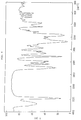
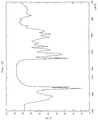
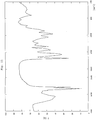
- Fig. 1 shows the infrared absorption spectrum of CHL.
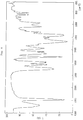
- Fig. 2 shows the infrared absorption spectrum of CAFE.
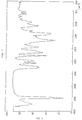
- Fig. 3 shows the infrared absorption spectrum of CAFE + CHL.
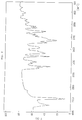
- Fig. 4 shows the infrared absorption spectrum of 24-MFE.
- Fig. 5 shows the infrared absorption spectrum of 24-MFE + CHL.
- Fig. 6 shows the infrared absorption spectrum of the extract.
- Fig. 7 shows the infrared absorption spectrum of the extract + CHL.
- Fig. 8 shows the infrared absorption spectrum of CAMFE.
- Fig. 9 shows the infrared absorption spectrum of CAMFE + CHL.
- Fig. 10 shows the infrared absorption spectrum of egg yolk.
- Fig. 11 shows the infrared absorption spectrum of CAFE + egg yolk.
- Fig. 12 shows the infrared absorption spectrum of CAMFE + egg yolk.
- Fig. 13 shows the differential infrared absorption spectrum of CAFE + egg yolk and egg yolk alone.
- Fig. 14 shows the differential infrared absorption spectrum of CAMFE + egg yolk and egg yolk alone.
- Fig. 15 is a graph showing the serum cholesterol level within a period of 2 to 72 hours after the administration of various mayonnaises, wherein - ⁇ - stands for the data of a mayonnaise produced by using extract-treated, freeze-dried egg yolk/extract-containing salad oil; - ⁇ -stands for the data of a mayonnaise produced by using extract-treated, freeze-dried egg yolk/ salad oil; - ⁇ - stands for the data of a mayonnaise produced by using freeze-dried egg yolk/extract-containing salad oil; and -x- stands for the data of a mayonnaise produced by using freeze-dried egg yolk/salad oil.
- Fig. 16 is a graph showing cholesterol absorption ratio within a period of 2 to 96 hours after the administration of various mayonnaises, wherein the bars respectively stand for, from left to right, the data of a mayonnaise produced by using freeze-dried egg yolk/salad oil, a mayonnaise produced by using extract-treated, freeze-dried egg yolk/ salad oil, a mayonnaise produced by using freeze-dried egg yolk/extract-containing salad oil and a mayonnaise produced by using extract-treated, freeze-dried egg yolk/extract-containing salad oil.
- the extract, ⁇ -OZ, CAFE, 24-MFE and CAMFE employed in Test Examples 1 to 4 and Examples 1 to 9 were prepared each in the following manner.
- the extract was prepared by subjecting rice bran to extracting with hexane; degumming, dewaxing and deacidifying the oily components thus obtained to thereby separate an edible oil; neutralizing the foots thus obtained, followed by distillation of the insoluble matters, washing with a solvent and treatment with an alumina column.
- ⁇ -OZ a commercially available product was used as the ⁇ -OZ.
- CAFE and 24-MFE were prepared by repeatedly recrystallizing ⁇ -OZ from acetone/methanol, acetone and ethyl acetate by reference to the method of Endo, Misu and Inaba et al. [Yukagaku (Oil Chemistry), 18 , 63 - 67 (1969)].
- CAMFE was prepared in accordance with the method described in JP-A-61-243099.
- the extract, CAFE, 24-MFE and CAMFE were used as test samples.
- 0.33 mmol (201 mg) of CAFE and 0.33 mmol (129 mg) of cholesterol were dissolved in 100 ml of tetrahydrofuran. After adding 100 ml of water, the mixture was evaporated to dryness under reduced pressure. The dry product thus obtained was suspended in 100 ml of water, filtered and dried under reduced pressure (85°C, 2 hours) and the infrared absorption spectrum was measured. Other test samples were similarly treated and the infrared absorption spectra were measured. Table 1 shows the results.
- the ability to form cholesterol complex was evaluated based on the results of the infrared absorption spectrometry.
- o means that a very strong ability to form cholesterol complex was observed
- ⁇ means that a somewhat weaker ability to form cholesterol complex was observed.
- the egg yolk layer was extracted with chloroform (20 ml x 1, 10 ml x 2) and the extract was dried over magnesium sulfate (2 g) and then concentrated.
- the concentrate was dissolved in chloroform to give a volume of 10 ml. A 5 ⁇ l portion thereof was analyzed by HPLC to thereby determine the CAMFE content.
- Table 3 shows the results wherein a content of CAMFE is expressed in a chart area ( ⁇ g ⁇ sec).
- CAMFE became liable to migrate into the egg yolk layer. Namely, it is considered that CAMFE would come in contact with oily components in the egg yolk with a decrease of water, thus being absorbed by the egg yolk.
- the migration ratio at a water loss of 40% or above was particularly high.
- each sample was ground and sieved (22-mesh) to thereby give a dry egg yolk powder. Then water was added in an amount corresponding to the loss due to the freeze-drying (about 5 g in each case). The obtained mixture was stirred at 200 rpm with a mechanical stirrer for 1 hour. After adding about 8 g of water, it was further stirred at 500 rpm for 2 hours. A portion (9 g) of this mixture was centrifuged at 10,000 rpm for 30 minutes.
- the precipitate layer was separated from the egg yolk layer by decantation and the egg yolk layer and the precipitate layer were extracted with chloroform (20 ml x 1, 10 ml x 2) and each extract was dried over magnesium sulfate (2 g) and then concentrated. Each concentrate was dissolved in chloroform to give a volume of 10 ml. A 5 ⁇ l portion thereof was analyzed by HPLC to thereby determine each additive. Table 4 shows the results wherein a content of an additive is expressed in a chart area ( ⁇ g ⁇ sec).
- CAMFE has a weak affinity for the cow's milk layer in comparison with CAFE.
- CAFE and CAMFE were used as samples.
- CAFE and CAMFE form a complex with cholesterol contained in egg yolk.
- the absorption of the CAFE complex was involved in the absorption of the background (1710 cm ⁇ 1), since the background could not be completely eliminated due to the inhomogeneities of the carrier, i.e., egg yolk.
- the peak assignable to the pure CAFE (1675 cm ⁇ 1) was not observed and thus it was judged that CAFE is able to form a cholesterol complex.
- the freeze-dried egg yolk thus obtained was ground and sieved (22-mesh) to give a dry egg yolk powder.
- water was added in an amount corresponding to the loss due to the freeze-drying (about 5 g) and the resulting mixture was further stirred at 200 rpm with a mechanical stirrer for 2 hours. After adding about 3 or 8 g of water, it was stirred at 500 rpm for additional 30 minutes or 2 hours. A 6.5 g or 9 g portion of this water-reconstituted egg yolk was centrifuged.
- Table 7 shows the results of the enzymatic determination of cholesterol contained in the egg yolk layer and the precipitate layer prepared by stirring for 1 hour, adding 8 g of water and centrifuging 9 g of the water-reconstituted egg yolk.
- Table 7 Sample Cholesterol conc. (mg/dl) untreated yolk (yolk layer) 171.23 (100%) (precipitate layer) 23.15 Ext.-treated (yolk layer) 145.35 (84.9%) (precipitate layer) 47.11 CAFE-treated (yolk layer) 113.64 (66.4%) (precipitate layer) 77.36 CAMFE-treated (yolk layer) 102.76 (60.0%) (precipitate layer) 86.39
- cow's milk layer was separated from the precipitate layer by decantation and freeze-dried.
- 10.5 to 11.8 g (87.5 to 98.3%) of a low-cholesterol cow's milk powder was obtained.
- the extract As test samples, the extract, ⁇ -OZ, CAFE, 24-MFE and CAMFE were employed.
- Slc SD rat (SPF). Sex: Male. Age at purchase: 7 weeks.
- CAFE/CHL (1 : 1) As described above, increases in the total cholesterol level in the serum were significantly suppressed in the groups of CAFE/CHL (1 : 1), CAFE/CHL (2 : 1), 24-MFE/CHL (1 : 1), 24-MFE/CHL (2 : 1), extract/CHL (1 : 1), extract/CHL (2 : 1), ⁇ -OZ/CHL (1 : 1), ⁇ -OZ/CHL (2 : 1) and CAMFE/CHL (1 : 1). None of these additives caused any significant change in body weight or food intake. Thus, it can be concluded that they are applicable to foods without any problem.
- Slc SD rat (SPF). Sex: Male. Age at purchase: 7 weeks.
- Tables 13 to 15 show the body weight gain, food intake, total cholesterol level in the serum and cholesterol level in the liver of the rats. (4) Body weight and food intake are expressed by the mean ⁇ standard deviation (g). Table 13 No.
- Liver weight (g) and the total cholesterol level in the liver are expressed by the mean ⁇ standard deviation (mg/g, mg/total).
- Slc SD rat (SPF). Sex: Male. Age at purchase: 7 weeks.
- Table 16 No. Group Day 0 Day 3 1 Normal 265.4 ⁇ 8.1 277.6 ⁇ 7.4 2 Control 264.3 ⁇ 13.1 275.5 ⁇ 13.1 3 Extract 263.5 ⁇ 11.8 276.2 ⁇ 12.8 4 ⁇ -OZ 265.2 ⁇ 13.3 271.5 ⁇ 16.6 5 CAFE 266.5 ⁇ 13.0 279.4 ⁇ 14.2 6 CAMFE 262.3 ⁇ 10.2 271.7 ⁇ 14.2 (3) The total cholesterol level in the serum is expressed by the mean + standard deviation (mg/dl). Table 17 No.
- Liver weight (g) and the total cholesterol level in the liver are expressed by the mean + standard deviation (mg/g, mg/total).
- CAFE the extract and CAMFE were employed.
- Slc SD rat (SPF). Sex: Male. Age at purchase: 7 weeks.
- the concentration of CHL was adjusted to 20 mg/ml.
- (4) Administration method The 3H-CHL liquid preparation, extract/3H-CHL liquid preparation, CAFE/3H-CHL liquid preparation or CAMFE/3H-CHL liquid preparation was orally administered to normal and diabetic rats in a dose of 5 ml/kg by using a sound. The administration radioactivity was adjusted to 3.7 MBq/kg. The animals were fasted for about 18 hours before the administration and, immediately after the administration, allowed to take food. (5) Measurement of serum level Two, four, and six hours after the administration, the blood of each rat was collected from the tail vein. Twenty-four hours after the administration, the blood was collected from the abdominal aorta.
- the serum CHL level was suppressed by administering the complexes of CHL with the test samples in Example 9 .
- CAMFE showed a remarkable effect.
- CAFE employed in the following Examples 10 to 19 was prepared by repeatedly recrystallizing, similar to the procedure as in Example 1.
- an extract obtained by degumming and dewaxing oily components extracted from rice bran with a solvent, followed by treatment with an alkali, neutralization and solid/liquid separation, and distilling the residue followed by solvent-extraction and column treatment was employed.
- Example 14 The procedure of Example 14 was repeated but varying Example 14 ⁇ Test method ⁇ (2) and (3) as follows.
- Example 15 was repeated but varying Example 15 ⁇ Test method ⁇ (3) as follows.
- Example 16 The procedure of Example 16 was repeated but varying Example 16 ⁇ Test method ⁇ (2) as follows.
- Example 15 was repeated but varying Example 15 ⁇ Test method ⁇ (3) as follows.
- Table 21 shows the results of the measurement of the total cholesterol level in the serum in Examples 14, 16 and 18.
- the total cholesterol level in the serum is expressed by the mean ⁇ standard deviation (mg/dl).
- the data obtained 8 hours after the final administration as given in Table 21 indicate that in the mayonnaise produced by adding the extract-containing salad oil to egg yolk (corresponding to the mayonnaise described in Example 10) and the mayonnaise produced by adding the extract to egg yolk and then adding salad oil thereto [corresponding to the mayonnaise described in Example 11 (2)], the total cholesterol level in the serum of the extract-treated egg yolk/salad oil was obviously lowered compared with the control case with the use of egg yolk/salad oil.
- Table 22 shows the area under curve of the serum total cholesterol level curves (0 - 96 hours) of Examples 15, 17 and 19 expressed in the mean ⁇ standard deviation ( ⁇ g ⁇ hr ⁇ ml ⁇ 1).
- Table 22 Group No. of rats Content (%) Dose (g/kg) Area Under Curve (0-96 hrs) CHL Ext. calcd. ( ⁇ g ⁇ hr ⁇ ml ⁇ 1) ratio (%) Control 3 0.26 - 10 1472.3 ⁇ 207.0 100 Ex. 15 3 0.26 1.04 10 1274.3 ⁇ 234.0 86.6 Ex. 17 3 0.26 1.80 10 1261.8 ⁇ 212.6 85.7 Ex. 19 3 0.26 2.84 10 729.3 ⁇ 117.7** 49.5 **: P ⁇ 0.01.
- Fig. 15 shows the serum cholesterol level within a period of 2 to 72 hours after the administration
- Fig. 16 shows the cholesterol absorption within a period of 2 to 96 hours after the administration.
- Figs. 15 and 16 indicate that the serum cholesterol level and cholesterol absorption ratio after 24 hours from the administration were in the following order.
- the case with the use of the extract-treated, freeze-dried egg yolk/extract-containing salad oil showed extremely low values.
- the animals were fed for 10 days by giving 20 g of the cake produced by adding 2% (based on the egg yolk weight) of the extract and 4 pellets (about 10 g) of the solid food CE-2. On the days 5 and 10, the blood of each animal was collected from the tail vein and the total CHL in the serum was measured.
- the total cholesterol level in the serum is expressed by the mean + standard deviation (mg/dl).
- cholesterol contained in a food can be reduced and the absorption thereof by a living body can be prevented.
- a food additive and a food which are useful in inhibiting the accumulation of cholesterol in the living body and in preventing arteriosclerosis, can be obtained.
- mayonnaises having an effect of lowering blood cholesterol level or suppressing an increase of blood cholesterol level can be obtained.
Landscapes
- Health & Medical Sciences (AREA)
- Life Sciences & Earth Sciences (AREA)
- Chemical & Material Sciences (AREA)
- Engineering & Computer Science (AREA)
- Food Science & Technology (AREA)
- Nutrition Science (AREA)
- Polymers & Plastics (AREA)
- Veterinary Medicine (AREA)
- Public Health (AREA)
- Medicinal Chemistry (AREA)
- General Health & Medical Sciences (AREA)
- Animal Behavior & Ethology (AREA)
- Pharmacology & Pharmacy (AREA)
- Chemical Kinetics & Catalysis (AREA)
- Botany (AREA)
- Nuclear Medicine, Radiotherapy & Molecular Imaging (AREA)
- General Chemical & Material Sciences (AREA)
- Obesity (AREA)
- Hematology (AREA)
- Diabetes (AREA)
- Bioinformatics & Cheminformatics (AREA)
- Epidemiology (AREA)
- Organic Chemistry (AREA)
- Mycology (AREA)
- Coloring Foods And Improving Nutritive Qualities (AREA)
- Medicines Containing Plant Substances (AREA)
- Cereal-Derived Products (AREA)
- General Preparation And Processing Of Foods (AREA)
- Pharmaceuticals Containing Other Organic And Inorganic Compounds (AREA)
- Steroid Compounds (AREA)
- Seasonings (AREA)
Applications Claiming Priority (2)
| Application Number | Priority Date | Filing Date | Title |
|---|---|---|---|
| JP30050790 | 1990-11-05 | ||
| PCT/JP1992/001299 WO1994007378A1 (fr) | 1990-11-05 | 1992-10-06 | Additif alimentaire et utilisation |
Publications (2)
| Publication Number | Publication Date |
|---|---|
| EP0619952A1 true EP0619952A1 (de) | 1994-10-19 |
| EP0619952A4 EP0619952A4 (de) | 1995-04-19 |
Family
ID=26433485
Family Applications (1)
| Application Number | Title | Priority Date | Filing Date |
|---|---|---|---|
| EP92921004A Withdrawn EP0619952A4 (de) | 1990-11-05 | 1992-10-06 | Nahrungsmittelzusatz und dessen verwendung. |
Country Status (3)
| Country | Link |
|---|---|
| EP (1) | EP0619952A4 (de) |
| JP (1) | JP2662530B2 (de) |
| WO (1) | WO1994007378A1 (de) |
Cited By (4)
| Publication number | Priority date | Publication date | Assignee | Title |
|---|---|---|---|---|
| WO1996038047A1 (en) * | 1995-06-01 | 1996-12-05 | Unilever N.V. | Fat based food products |
| WO1997042830A1 (en) * | 1996-05-10 | 1997-11-20 | Unilever N.V. | Liquid fatty component containing composition |
| WO2004000041A1 (en) * | 2002-06-24 | 2003-12-31 | Unilever N.V. | Stable oil in water emulsion |
| WO2005027659A1 (en) * | 2003-09-19 | 2005-03-31 | Somano, Rita | Mayonnaise made with rice |
Families Citing this family (2)
| Publication number | Priority date | Publication date | Assignee | Title |
|---|---|---|---|---|
| JP4865955B2 (ja) * | 2001-04-18 | 2012-02-01 | 株式会社リアル | α−グルコシダーゼ阻害剤及び食品又は飼料の製造方法並びに添加剤の製造方法 |
| JP6460402B2 (ja) * | 2014-05-16 | 2019-01-30 | 国立研究開発法人産業技術総合研究所 | コレステロール排出促進用医薬組成物又は食品組成物 |
Family Cites Families (7)
| Publication number | Priority date | Publication date | Assignee | Title |
|---|---|---|---|---|
| JPS54135740A (en) * | 1978-04-13 | 1979-10-22 | Otsuka Nobuhiro | Method of dissolving oryznol to greases or their products |
| JPS5841818B2 (ja) * | 1981-07-24 | 1983-09-14 | 江崎グリコ栄食株式会社 | 食品の製造方法 |
| JPS5911153A (ja) * | 1982-07-08 | 1984-01-20 | Nippon Shokuhin Kako Kk | 揚げ物用衣材 |
| JPS60172257A (ja) * | 1984-02-20 | 1985-09-05 | Hohnen Oil Co Ltd | 栄養補助食品 |
| JP2547573B2 (ja) * | 1987-05-08 | 1996-10-23 | 日本食品化工株式会社 | 飲食品の製造方法 |
| JP2544634B2 (ja) * | 1987-09-03 | 1996-10-16 | 日本食品化工株式会社 | ヘミセルロ―スの抽出方法 |
| ATE134484T1 (de) * | 1989-01-25 | 1996-03-15 | Pfizer | Kalorienarmer fettersatz |
-
1991
- 1991-10-30 JP JP3314102A patent/JP2662530B2/ja not_active Expired - Fee Related
-
1992
- 1992-10-06 EP EP92921004A patent/EP0619952A4/de not_active Withdrawn
- 1992-10-06 WO PCT/JP1992/001299 patent/WO1994007378A1/ja not_active Ceased
Cited By (7)
| Publication number | Priority date | Publication date | Assignee | Title |
|---|---|---|---|---|
| WO1996038047A1 (en) * | 1995-06-01 | 1996-12-05 | Unilever N.V. | Fat based food products |
| EP0960567A3 (de) * | 1995-06-01 | 2000-01-19 | Unilever N.V. | Fettenthaltende Nahrungsmittelprodukte |
| EP0962150A3 (de) * | 1995-06-01 | 2000-01-19 | Unilever N.V. | Fettenthaltende Nahrungsmittelprodukte |
| WO1997042830A1 (en) * | 1996-05-10 | 1997-11-20 | Unilever N.V. | Liquid fatty component containing composition |
| US6846507B1 (en) | 1996-05-10 | 2005-01-25 | Lipton, Division Of Conopco, Inc. | Liquid fatty component containing composition |
| WO2004000041A1 (en) * | 2002-06-24 | 2003-12-31 | Unilever N.V. | Stable oil in water emulsion |
| WO2005027659A1 (en) * | 2003-09-19 | 2005-03-31 | Somano, Rita | Mayonnaise made with rice |
Also Published As
| Publication number | Publication date |
|---|---|
| JP2662530B2 (ja) | 1997-10-15 |
| JPH0515316A (ja) | 1993-01-26 |
| WO1994007378A1 (fr) | 1994-04-14 |
| EP0619952A4 (de) | 1995-04-19 |
Similar Documents
| Publication | Publication Date | Title |
|---|---|---|
| US5514398A (en) | Food additive and use thereof | |
| CA2172855C (en) | Cholesterol or neutral fat level reducer | |
| JP3095605B2 (ja) | 抗酸化物質を含有する健康飲食品および抗酸化物質の製造法 | |
| JP3001589B2 (ja) | リグナン類含有飲食物 | |
| US5211953A (en) | Liver function improver | |
| EP0488513B1 (de) | Verwendung von Dioxabicyclo [3.3.0]octane Derivaten zur Herstellung eines Arzneimittels zur Hemmung des Cholesterinmetabolismus. | |
| JP6042800B2 (ja) | トマトシドaの抽出方法 | |
| CN102281888A (zh) | Gip升高抑制剂 | |
| EP0619952A1 (de) | Nahrungsmittelzusatz und dessen verwendung | |
| JP3977889B2 (ja) | 蕎麦殻抽出物を有効成分とする薬剤 | |
| CN100450497C (zh) | 植物种子提取物及其制备方法 | |
| JP2022169385A (ja) | タモギタケ又はその処理物を有効成分として含む、脂質代謝改善剤 | |
| JP4018769B2 (ja) | 膵リパーゼ活性阻害剤、機能性食品及び食品添加物 | |
| JP2001278804A (ja) | 脂質代謝改善剤及びそれを含有する食品 | |
| JP2004161644A (ja) | 膵リパーゼ阻害剤及び該阻害剤を含有する食品 | |
| JP2009203209A (ja) | アカシア属樹皮由来物を含有する血糖降下及び/又は抗肥満組成物 | |
| JP2001097880A (ja) | 脱脂糠由来のリパーゼ阻害物質 | |
| EP0901755B1 (de) | Adsorption von Cholesterinoxid in Lebensmitteln | |
| KR102040405B1 (ko) | 번행초 추출물을 함유하는 항비만성 식품 조성물 및 그 제조방법 | |
| WO2008018139A1 (fr) | Composition contre l'obésité contenant un composant issu de l'écorce d'un arbre appartenant au genre acacia | |
| JPH0912466A (ja) | 脂質の吸収阻害・排出促進剤および高脂肪食品 | |
| JPS5953421A (ja) | コレステロ−ル低下または上昇抑制剤 | |
| Sharmin et al. | Effect of ethanol extract of glycine max (soy bean) On serum lipid profile of fat-fed hyperlipidemic rats | |
| JP3509370B2 (ja) | 食品、飼料及び医薬組成物 | |
| JPH0670715A (ja) | マヨネーズ類の製造法 |
Legal Events
| Date | Code | Title | Description |
|---|---|---|---|
| PUAI | Public reference made under article 153(3) epc to a published international application that has entered the european phase |
Free format text: ORIGINAL CODE: 0009012 |
|
| 17P | Request for examination filed |
Effective date: 19940601 |
|
| AK | Designated contracting states |
Kind code of ref document: A1 Designated state(s): DE FR GB IT |
|
| A4 | Supplementary search report drawn up and despatched | ||
| AK | Designated contracting states |
Kind code of ref document: A4 Designated state(s): DE FR GB IT |
|
| 17Q | First examination report despatched |
Effective date: 19950802 |
|
| STAA | Information on the status of an ep patent application or granted ep patent |
Free format text: STATUS: THE APPLICATION IS DEEMED TO BE WITHDRAWN |
|
| 18D | Application deemed to be withdrawn |
Effective date: 19981202 |