EP0626366B1 - Verfahren zur Herstellung von Nitrophenolen - Google Patents
Verfahren zur Herstellung von Nitrophenolen Download PDFInfo
- Publication number
- EP0626366B1 EP0626366B1 EP94401124A EP94401124A EP0626366B1 EP 0626366 B1 EP0626366 B1 EP 0626366B1 EP 94401124 A EP94401124 A EP 94401124A EP 94401124 A EP94401124 A EP 94401124A EP 0626366 B1 EP0626366 B1 EP 0626366B1
- Authority
- EP
- European Patent Office
- Prior art keywords
- process according
- phenol
- nitric acid
- nitrophenol
- nitrosation
- Prior art date
- Legal status (The legal status is an assumption and is not a legal conclusion. Google has not performed a legal analysis and makes no representation as to the accuracy of the status listed.)
- Expired - Lifetime
Links
- 238000000034 method Methods 0.000 title claims description 35
- 238000002360 preparation method Methods 0.000 title claims description 9
- RBXVOQPAMPBADW-UHFFFAOYSA-N nitrous acid;phenol Chemical class ON=O.OC1=CC=CC=C1 RBXVOQPAMPBADW-UHFFFAOYSA-N 0.000 title description 2
- QAOWNCQODCNURD-UHFFFAOYSA-N Sulfuric acid Chemical compound OS(O)(=O)=O QAOWNCQODCNURD-UHFFFAOYSA-N 0.000 claims description 66
- ISWSIDIOOBJBQZ-UHFFFAOYSA-N Phenol Chemical compound OC1=CC=CC=C1 ISWSIDIOOBJBQZ-UHFFFAOYSA-N 0.000 claims description 44
- BTJIUGUIPKRLHP-UHFFFAOYSA-N 4-nitrophenol Chemical compound OC1=CC=C([N+]([O-])=O)C=C1 BTJIUGUIPKRLHP-UHFFFAOYSA-N 0.000 claims description 39
- GRYLNZFGIOXLOG-UHFFFAOYSA-N Nitric acid Chemical compound O[N+]([O-])=O GRYLNZFGIOXLOG-UHFFFAOYSA-N 0.000 claims description 30
- 229910017604 nitric acid Inorganic materials 0.000 claims description 30
- 239000000243 solution Substances 0.000 claims description 22
- JSTCPNFNKICNNO-UHFFFAOYSA-N 4-nitrosophenol Chemical compound OC1=CC=C(N=O)C=C1 JSTCPNFNKICNNO-UHFFFAOYSA-N 0.000 claims description 18
- 238000007034 nitrosation reaction Methods 0.000 claims description 18
- 230000009935 nitrosation Effects 0.000 claims description 17
- 238000007254 oxidation reaction Methods 0.000 claims description 15
- 239000003795 chemical substances by application Substances 0.000 claims description 13
- 239000007864 aqueous solution Substances 0.000 claims description 12
- 239000012429 reaction media Substances 0.000 claims description 12
- MWUXSHHQAYIFBG-UHFFFAOYSA-N Nitric oxide Chemical compound O=[N] MWUXSHHQAYIFBG-UHFFFAOYSA-N 0.000 claims description 11
- 230000003647 oxidation Effects 0.000 claims description 11
- -1 alkoxy radical Chemical class 0.000 claims description 7
- OMBRFUXPXNIUCZ-UHFFFAOYSA-N dioxidonitrogen(1+) Chemical compound O=[N+]=O OMBRFUXPXNIUCZ-UHFFFAOYSA-N 0.000 claims description 7
- JCXJVPUVTGWSNB-UHFFFAOYSA-N nitrogen dioxide Inorganic materials O=[N]=O JCXJVPUVTGWSNB-UHFFFAOYSA-N 0.000 claims description 5
- 150000002989 phenols Chemical class 0.000 claims description 5
- PLIKAWJENQZMHA-UHFFFAOYSA-N 4-aminophenol Chemical compound NC1=CC=C(O)C=C1 PLIKAWJENQZMHA-UHFFFAOYSA-N 0.000 claims description 4
- 125000000217 alkyl group Chemical group 0.000 claims description 4
- 125000004432 carbon atom Chemical group C* 0.000 claims description 4
- MGWGWNFMUOTEHG-UHFFFAOYSA-N 4-(3,5-dimethylphenyl)-1,3-thiazol-2-amine Chemical compound CC1=CC(C)=CC(C=2N=C(N)SC=2)=C1 MGWGWNFMUOTEHG-UHFFFAOYSA-N 0.000 claims description 3
- WKBOTKDWSSQWDR-UHFFFAOYSA-N Bromine atom Chemical compound [Br] WKBOTKDWSSQWDR-UHFFFAOYSA-N 0.000 claims description 3
- ZAMOUSCENKQFHK-UHFFFAOYSA-N Chlorine atom Chemical compound [Cl] ZAMOUSCENKQFHK-UHFFFAOYSA-N 0.000 claims description 3
- PXGOKWXKJXAPGV-UHFFFAOYSA-N Fluorine Chemical compound FF PXGOKWXKJXAPGV-UHFFFAOYSA-N 0.000 claims description 3
- IOVCWXUNBOPUCH-UHFFFAOYSA-N Nitrous acid Chemical compound ON=O IOVCWXUNBOPUCH-UHFFFAOYSA-N 0.000 claims description 3
- 230000021736 acetylation Effects 0.000 claims description 3
- 238000006640 acetylation reaction Methods 0.000 claims description 3
- 125000005843 halogen group Chemical group 0.000 claims description 3
- 125000004435 hydrogen atom Chemical group [H]* 0.000 claims description 3
- VQTGUFBGYOIUFS-UHFFFAOYSA-N nitrosylsulfuric acid Chemical compound OS(=O)(=O)ON=O VQTGUFBGYOIUFS-UHFFFAOYSA-N 0.000 claims description 3
- 239000002243 precursor Substances 0.000 claims description 3
- RZVAJINKPMORJF-UHFFFAOYSA-N Acetaminophen Chemical compound CC(=O)NC1=CC=C(O)C=C1 RZVAJINKPMORJF-UHFFFAOYSA-N 0.000 claims description 2
- DGAQECJNVWCQMB-PUAWFVPOSA-M Ilexoside XXIX Chemical compound C[C@@H]1CC[C@@]2(CC[C@@]3(C(=CC[C@H]4[C@]3(CC[C@@H]5[C@@]4(CC[C@@H](C5(C)C)OS(=O)(=O)[O-])C)C)[C@@H]2[C@]1(C)O)C)C(=O)O[C@H]6[C@@H]([C@H]([C@@H]([C@H](O6)CO)O)O)O.[Na+] DGAQECJNVWCQMB-PUAWFVPOSA-M 0.000 claims description 2
- 229910052783 alkali metal Inorganic materials 0.000 claims description 2
- GDTBXPJZTBHREO-UHFFFAOYSA-N bromine Substances BrBr GDTBXPJZTBHREO-UHFFFAOYSA-N 0.000 claims description 2
- 229910052794 bromium Inorganic materials 0.000 claims description 2
- 239000000460 chlorine Substances 0.000 claims description 2
- 229910052801 chlorine Inorganic materials 0.000 claims description 2
- 125000001495 ethyl group Chemical group [H]C([H])([H])C([H])([H])* 0.000 claims description 2
- 229910052731 fluorine Inorganic materials 0.000 claims description 2
- 239000011737 fluorine Substances 0.000 claims description 2
- 238000011065 in-situ storage Methods 0.000 claims description 2
- 125000002496 methyl group Chemical group [H]C([H])([H])* 0.000 claims description 2
- GQPLMRYTRLFLPF-UHFFFAOYSA-N nitrous oxide Inorganic materials [O-][N+]#N GQPLMRYTRLFLPF-UHFFFAOYSA-N 0.000 claims description 2
- 239000007800 oxidant agent Substances 0.000 claims description 2
- 150000003839 salts Chemical class 0.000 claims description 2
- 229910052708 sodium Inorganic materials 0.000 claims description 2
- 239000011734 sodium Substances 0.000 claims description 2
- 239000000758 substrate Substances 0.000 claims description 2
- 235000011149 sulphuric acid Nutrition 0.000 claims 8
- 239000001117 sulphuric acid Substances 0.000 claims 8
- LZDSILRDTDCIQT-UHFFFAOYSA-N dinitrogen trioxide Chemical compound [O-][N+](=O)N=O LZDSILRDTDCIQT-UHFFFAOYSA-N 0.000 claims 3
- WFPZPJSADLPSON-UHFFFAOYSA-N dinitrogen tetraoxide Chemical compound [O-][N+](=O)[N+]([O-])=O WFPZPJSADLPSON-UHFFFAOYSA-N 0.000 claims 2
- 239000013049 sediment Substances 0.000 claims 1
- IQUPABOKLQSFBK-UHFFFAOYSA-N 2-nitrophenol Chemical compound OC1=CC=CC=C1[N+]([O-])=O IQUPABOKLQSFBK-UHFFFAOYSA-N 0.000 description 19
- 239000011541 reaction mixture Substances 0.000 description 18
- MHKBMNACOMRIAW-UHFFFAOYSA-N 2,3-dinitrophenol Chemical class OC1=CC=CC([N+]([O-])=O)=C1[N+]([O-])=O MHKBMNACOMRIAW-UHFFFAOYSA-N 0.000 description 17
- XLYOFNOQVPJJNP-UHFFFAOYSA-N water Substances O XLYOFNOQVPJJNP-UHFFFAOYSA-N 0.000 description 13
- 239000002253 acid Substances 0.000 description 9
- 238000006243 chemical reaction Methods 0.000 description 8
- 239000002244 precipitate Substances 0.000 description 6
- LPXPTNMVRIOKMN-UHFFFAOYSA-M sodium nitrite Chemical compound [Na+].[O-]N=O LPXPTNMVRIOKMN-UHFFFAOYSA-M 0.000 description 6
- IJGRMHOSHXDMSA-UHFFFAOYSA-N Atomic nitrogen Chemical compound N#N IJGRMHOSHXDMSA-UHFFFAOYSA-N 0.000 description 5
- 239000007787 solid Substances 0.000 description 5
- 239000007788 liquid Substances 0.000 description 4
- 239000000203 mixture Substances 0.000 description 4
- WFDIJRYMOXRFFG-UHFFFAOYSA-N Acetic anhydride Chemical compound CC(=O)OC(C)=O WFDIJRYMOXRFFG-UHFFFAOYSA-N 0.000 description 3
- 238000013019 agitation Methods 0.000 description 3
- 150000001491 aromatic compounds Chemical class 0.000 description 3
- 238000004128 high performance liquid chromatography Methods 0.000 description 3
- 238000010907 mechanical stirring Methods 0.000 description 3
- 229910052757 nitrogen Inorganic materials 0.000 description 3
- 235000010288 sodium nitrite Nutrition 0.000 description 3
- XKRFYHLGVUSROY-UHFFFAOYSA-N Argon Chemical compound [Ar] XKRFYHLGVUSROY-UHFFFAOYSA-N 0.000 description 2
- OKTJSMMVPCPJKN-UHFFFAOYSA-N Carbon Chemical compound [C] OKTJSMMVPCPJKN-UHFFFAOYSA-N 0.000 description 2
- KDLHZDBZIXYQEI-UHFFFAOYSA-N Palladium Chemical compound [Pd] KDLHZDBZIXYQEI-UHFFFAOYSA-N 0.000 description 2
- VYPSYNLAJGMNEJ-UHFFFAOYSA-N Silicium dioxide Chemical compound O=[Si]=O VYPSYNLAJGMNEJ-UHFFFAOYSA-N 0.000 description 2
- QAOWNCQODCNURD-UHFFFAOYSA-L Sulfate Chemical compound [O-]S([O-])(=O)=O QAOWNCQODCNURD-UHFFFAOYSA-L 0.000 description 2
- 125000004429 atom Chemical group 0.000 description 2
- QVGXLLKOCUKJST-UHFFFAOYSA-N atomic oxygen Chemical compound [O] QVGXLLKOCUKJST-UHFFFAOYSA-N 0.000 description 2
- 150000001875 compounds Chemical class 0.000 description 2
- 239000000706 filtrate Substances 0.000 description 2
- 239000007789 gas Substances 0.000 description 2
- 239000012535 impurity Substances 0.000 description 2
- 239000001301 oxygen Substances 0.000 description 2
- 229910052760 oxygen Inorganic materials 0.000 description 2
- BASFCYQUMIYNBI-UHFFFAOYSA-N platinum Chemical compound [Pt] BASFCYQUMIYNBI-UHFFFAOYSA-N 0.000 description 2
- 239000000047 product Substances 0.000 description 2
- 150000003254 radicals Chemical class 0.000 description 2
- 238000000926 separation method Methods 0.000 description 2
- 238000005406 washing Methods 0.000 description 2
- 238000010268 HPLC based assay Methods 0.000 description 1
- NINIDFKCEFEMDL-UHFFFAOYSA-N Sulfur Chemical compound [S] NINIDFKCEFEMDL-UHFFFAOYSA-N 0.000 description 1
- 239000006230 acetylene black Substances 0.000 description 1
- 125000003545 alkoxy group Chemical group 0.000 description 1
- PNEYBMLMFCGWSK-UHFFFAOYSA-N aluminium oxide Inorganic materials [O-2].[O-2].[O-2].[Al+3].[Al+3] PNEYBMLMFCGWSK-UHFFFAOYSA-N 0.000 description 1
- 239000011260 aqueous acid Substances 0.000 description 1
- 229910052786 argon Inorganic materials 0.000 description 1
- 125000003118 aryl group Chemical group 0.000 description 1
- 150000001555 benzenes Chemical class 0.000 description 1
- 229910052799 carbon Inorganic materials 0.000 description 1
- 238000005266 casting Methods 0.000 description 1
- 239000003054 catalyst Substances 0.000 description 1
- 239000003153 chemical reaction reagent Substances 0.000 description 1
- 239000000470 constituent Substances 0.000 description 1
- 238000004320 controlled atmosphere Methods 0.000 description 1
- 238000007796 conventional method Methods 0.000 description 1
- 238000005516 engineering process Methods 0.000 description 1
- 238000004880 explosion Methods 0.000 description 1
- 238000001914 filtration Methods 0.000 description 1
- 125000000524 functional group Chemical group 0.000 description 1
- 125000005842 heteroatom Chemical group 0.000 description 1
- 239000001257 hydrogen Substances 0.000 description 1
- 229910052739 hydrogen Inorganic materials 0.000 description 1
- 238000005984 hydrogenation reaction Methods 0.000 description 1
- 125000002887 hydroxy group Chemical group [H]O* 0.000 description 1
- 239000011261 inert gas Substances 0.000 description 1
- 239000013067 intermediate product Substances 0.000 description 1
- 238000011068 loading method Methods 0.000 description 1
- QSHDDOUJBYECFT-UHFFFAOYSA-N mercury Chemical compound [Hg] QSHDDOUJBYECFT-UHFFFAOYSA-N 0.000 description 1
- 229910052753 mercury Inorganic materials 0.000 description 1
- 229910052751 metal Inorganic materials 0.000 description 1
- 239000002184 metal Substances 0.000 description 1
- 229910000510 noble metal Inorganic materials 0.000 description 1
- 229910052763 palladium Inorganic materials 0.000 description 1
- 229910052697 platinum Inorganic materials 0.000 description 1
- 238000001556 precipitation Methods 0.000 description 1
- 230000001105 regulatory effect Effects 0.000 description 1
- 239000000523 sample Substances 0.000 description 1
- 239000000377 silicon dioxide Substances 0.000 description 1
- 239000012265 solid product Substances 0.000 description 1
- 238000003756 stirring Methods 0.000 description 1
- 239000000126 substance Substances 0.000 description 1
- 125000001424 substituent group Chemical group 0.000 description 1
- 239000011593 sulfur Substances 0.000 description 1
- 229910052717 sulfur Inorganic materials 0.000 description 1
- 229910021653 sulphate ion Inorganic materials 0.000 description 1
- 239000003643 water by type Substances 0.000 description 1
Classifications
-
- C—CHEMISTRY; METALLURGY
- C07—ORGANIC CHEMISTRY
- C07C—ACYCLIC OR CARBOCYCLIC COMPOUNDS
- C07C201/00—Preparation of esters of nitric or nitrous acid or of compounds containing nitro or nitroso groups bound to a carbon skeleton
-
- C—CHEMISTRY; METALLURGY
- C07—ORGANIC CHEMISTRY
- C07C—ACYCLIC OR CARBOCYCLIC COMPOUNDS
- C07C201/00—Preparation of esters of nitric or nitrous acid or of compounds containing nitro or nitroso groups bound to a carbon skeleton
- C07C201/06—Preparation of nitro compounds
- C07C201/08—Preparation of nitro compounds by substitution of hydrogen atoms by nitro groups
Definitions
- the present invention relates to a process for the preparation of nitrophenols. More particularly, the invention relates to the preparation of p-nitrophenol.
- the present invention proposes to carry out the preparation of p-nitrophenol according to a method which avoids this security problem.
- the subject of the present invention is a method of preparation of a p-nitrophenol by nitrosation of a phenolic compound in the presence of acid sulfuric, then oxidation of p-nitrosophenol by nitric acid, characterized by the fact that in the first stage of nitrosation, the acid concentration sulfuric is at least equal to 60% and in the second stage, at the end of oxidation reaction, the sulfuric acid concentration is at most equal to 80% which makes it possible to precipitate p-nitrophenol which is then separated.
- the invention applies very particularly to phenol but also to any aromatic compound, carrying an OH group whose para position of the group OH is free.
- the present invention does not exclude the presence of other substituents on the aromatic cycle insofar as they do not interfere with the reactions of the method of the invention.
- phenol generically. It will denote both phenol and all hydroxylated aromatic compounds called phenolic compounds, in especially those corresponding to formula (I).
- a first step is carried out step, the nitrosation of phenol, in the presence of sulfuric acid.
- the amount of sulfuric acid put in work is particularly critical.
- the sulfuric acid concentration in the reaction medium is at least equal to 60% by weight.
- the sulfuric acid concentration is between 60% and 90%. It is preferably chosen between 70% and 80%.
- the nitrosating agent is any source of NO + .
- nitrogen dioxide NO 2 nitrogen anhydride N 2 O 3 , nitrogen peroxide N 2 O 4 , nitrogen oxide NO associated with an oxidizing agent such as, for example, for example, nitric acid, nitrogen dioxide or oxygen.
- an oxidizing agent such as, for example, for example, nitric acid, nitrogen dioxide or oxygen.
- the nitrosating agent is gaseous under the reaction conditions, it is bubbled in the medium.
- Nitrous acid nitrosyl sulfate or nitrose or to a nitrous salt, preferably an alkali metal salt, and even more preferably sodium.
- the amount of nitrosating agent used can vary widely. When it is expressed by the phenol / nitrosating agent molar ratio defined as NO + , it is at least equal to the stoichiometric amount but it is preferable that it be used in an excess which can reach 500% of the stoichiometric amount , and preferably between 150% and 300%.
- the concentration of the phenolic substrate in the medium reaction it is preferably between 2% and 20% by weight.
- Phenol is generally introduced in liquid form. It can therefore be either introduced in the molten state, or mixed with water. In this last case, mixtures comprising from 60% to 90% of phenol are very suitable. There occurs to ensure that the water content in the reaction medium must be such that the sulfuric acid concentration is respected.
- nitric acid such as for example nitrogen peroxide
- the amount of nitric acid expressed by the phenol / acid molar ratio nitric generally varies between 0.9 and 1.2, preferably between 0.95 and 1.05.
- the amount of sulfuric acid put in work must be particularly checked in this step.
- the sulfuric acid concentration is less than or equal to 80%.
- the lower limit is not critical. It is advantageously between 50% and 80%, and preferably between 65% and 75%.
- the process of the invention is advantageously carried out at a temperature between 0 and 40 ° C, preferably between 10 ° C and 30 ° C.
- the process of the invention is generally carried out under pressure atmospheric but can also be at slightly reduced pressure between, for example, between 500 and 760 mm of mercury [66500 and 101080 Pa] or under overpressure conditions of up to, for example, 5 bars.
- the step of nitrosation under a controlled atmosphere of inert gases we can establish a atmosphere of rare gases, preferably argon but it is more economical to use nitrogen.
- the method of the invention is easy to implement work because it does not require the use of specific equipment.
- the various constituents of the reaction mixture are loaded into the chosen equipment.
- a first variant consists in first loading the acid solution sulfuric then add in parallel the phenol and the nitrosating agent.
- the sulfuric acid solution is introduced and the nitrosating agent then the phenol is added, preferably in portions or continuously by casting.
- Another variant lies in the fact of introducing in parallel, on a foot tank, phenol on one side and sulfuric acid and the nitrosating agent of the other.
- reaction mixture After use of the reagents, the reaction mixture is maintained in the aforementioned temperature zone. It may be advisable to cool the reaction mixture.
- nitric acid is then introduced into the reaction medium comprising p-nitrosophenol.
- the reaction medium comprising p-nitrosophenol.
- the temperature of the reaction mixture is maintained in the zone of aforementioned temperature.
- nitric acid in situ from nitrogen peroxide which serves both as a nitrosation in the first stage and nitric acid precursor in the second step.
- nitrogen peroxide is introduced from the start and in the second step, is heated to a temperature between 20 ° C and 40 ° C.
- the precipitate obtained is separated according to conventional techniques of solid / liquid separation, preferably by filtration.
- the precipitate obtained is washed, preferably with an acid solution sulfuric having the same concentration as that defined in the oxidation step.
- the mother liquors collected after each separation can be recycled. They are rich in nitrosating agent because it is regenerated at during oxidation.
- the process of the invention makes it possible essentially to obtain p-nitrophenol because the amount of o-nitrophenol is generally less than 5%.
- p-nitrophenol precipitates preferentially compared to o-nitrophenol and dinitrophenols obtained in as impurities.
- the process of the invention makes it possible to obtain a p-nitrophenolic compound and more particularly p-nitrophenol which can be used as an intermediate product for the preparation of N-acetyl p-aminophenol which is obtained by reduction of p-nitrophenol then acetylation of the p-aminophenol obtained.
- the reduction of p-nitrophenol is carried out in a conventional manner by contacting with hydrogen, in the presence of a hydrogenation catalyst, preferably a noble metal platinum or palladium.
- a hydrogenation catalyst preferably a noble metal platinum or palladium.
- Said metal can be deposited on support: carbon, acetylene black, silica, alumina etc ...
- Acetylation carried out in a known manner is preferably carried out with acetic anhydride.
- TT number of moles of phenol transformed number of moles of phenol introduced %
- RT number of moles of nitrophenol formed number of moles of phenol transformed %
- aqueous sulfuric acid solution 500 ml of an 80% by weight aqueous sulfuric acid solution are charged into a 1 liter reactor fitted with a double jacket, mechanical stirring and a temperature probe. 97.4 g of a 42.5% aqueous NaNO 2 solution (i.e. 0.6 mol of NaNO 2 ).
- reaction mixture is cooled to 10 ° C. and it is then poured in 40 min and maintaining the temperature at 10 ° C, 33.7 g of an aqueous solution of phenol at 80% (i.e. 0.286 mol of phenol).
- reaction mixture is then kept for 5 min at 10 ° C., then poured into 10 min, 30.1 g of an aqueous solution of nitric acid at 67% by weight (0.32 mol), while maintaining the temperature at 10 ° C.
- the reaction mixture becomes heterogeneous.
- the reaction mixture is maintained at 10 ° C, then filtered.
- the cake is washed twice, 50 g of an aqueous solution of sulfuric acid at 70%, then with water and dried under vacuum of the water pump.
- the reaction medium is brought to 10 ° C.
- the reaction medium becomes heterogeneous.
- reaction medium is kept for 5 min at 10 ° C. and filtered cold.
- the cake is washed twice, 30 ml of an aqueous acid solution sulfuric at 70%, then three times with water (30 ml) then dried under vacuum.
- the filtrates and washing waters are combined and dosed.
- reaction conditions are exactly the same as the reaction conditions.
- Example 2 with the exception of the temperature which is maintained at 26 ° C throughout along the test.
- reaction mixture is then kept at 25 ° C for 5 min and then 5.44 g of a 67% aqueous nitric acid solution flows in 15 minutes (0.058 mol).
- the mixture is kept for 5 min at 25 ° C.
- the medium is heterogeneous solid / liquid.
- Example 4 The conditions are identical to those of Example 4 except for the temperature which is 10 ° C.
- the nitric acid charge is carried out in 2 steps.
- nitric acid 0.0074 mol
- nitric acid 0.0595 mol
- the final reaction medium is heterogeneous.
- the medium is filtered after dosing the phases.
- This reaction mixture is brought to 10 ° C., then 35.2 g of a 80% aqueous phenol solution in 40 minutes, while maintaining the temperature at 10 ° C, then the reaction medium is maintained, 5 min at 10 ° C and then poured 28.2 g (0.3 mol) of a 68% aqueous nitric acid solution in 15 min in the reaction medium and the mixture is maintained for 5 min at 10 ° C.
- reaction medium is then filtered.
- the reaction mixture is cooled to 10 ° C. and 17.7 g of a solution are poured in. 80% aqueous phenol (0.15 mol) on the reaction mixture in 40 min, all maintaining the temperature at 10 ° C.
- reaction mixture is then kept for 5 min at 10 ° C. and poured then 13.9 g of a 68% (0.15 mol) aqueous nitric acid solution on the reaction mixture in 15 min, while maintaining the temperature at 10 ° C.
- reaction mixture is then filtered, the cake is washed with 2 x 30 ml an aqueous solution of sulfuric acid at 70%, then with 3 times 30 ml of water, and the product is dried under vacuum. 18 g of light yellow precipitate, consisting of mainly p-nitrophenol.
- the cake is washed with 2 times 30 ml of an aqueous solution of sulfuric acid at 70%, then with 3 times 30 ml of water.
Landscapes
- Chemical & Material Sciences (AREA)
- Organic Chemistry (AREA)
- Organic Low-Molecular-Weight Compounds And Preparation Thereof (AREA)
- Orthopedics, Nursing, And Contraception (AREA)
Claims (17)
- Verfahren zur Herstellung eines p-Nitrophenols mittels Nitrosierung einer Phenolverbindung in Gegenwart von Schwefelsäure, anschließender Oxidation des p-Nitrosophenols mit Salpetersäure, dadurch gekennzeichnet, daß in dem ersten Verfahrensschritt der Nitrosierung die Konzentration an Schwefelsäure mindestens 60 % beträgt und in dem zweiten Verfahrensschritt, am Ende der Oxidationsreaktion, die Konzentration an Schwefelsäure höchstens 80 % beträgt, was die Ausfällung des p-Nitrophenols ermöglicht, das anschließend abgetrennt wird.
- Verfahren nach Anspruch 1, dadurch gekennzeichnet, daß die Phenolverbindung der allgemeinen Formel (I)entspricht, wobei in der Formel (I):
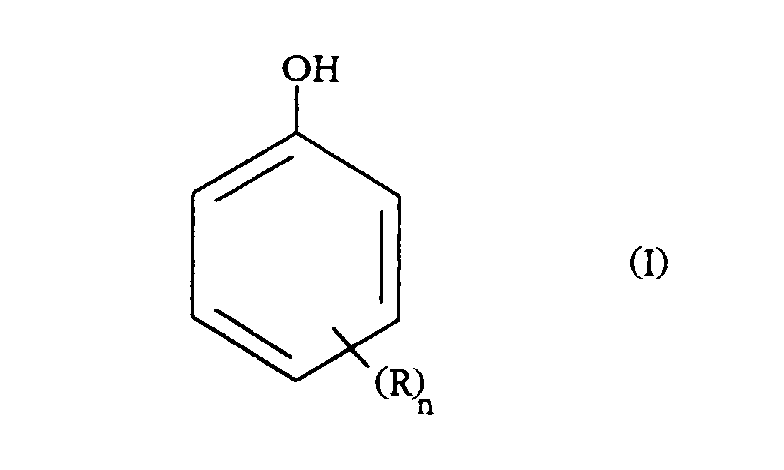 R ein Wasserstoffatom, einen Alkyl- oder Alkoxyrest mit 1 bis 4 Kohlenstoffatomen, vorzugsweise Methyl oder Ethyl; einen perfluorierten Alkylrest mit 1 bis 4 Kohlenstoffatomen; ein Halogenatom, vorzugsweise Chlor, Brom oder Fluor, darstellt;n eine Zahl von 0, 1 oder 2 ist.
 - Verfahren nach Anspruch 1 oder 2, dadurch gekennzeichnet, daß die Phenolverbindung Phenol ist.
- Verfahren nach einem der Ansprüche 1 bis 3, dadurch gekennzeichnet, daß die Konzentration an Schwefelsäure in dem Nitrosierungsschritt 60 % bis 90 %, vorzugsweise 70 % bis 80 %, beträgt.
- Verfahren nach einem der Ansprüche 1 bis 4, dadurch gekennzeichnet, daß das Nitrosierungsreagenz jede beliebige NO+-Quelle ist, vorzugsweise Stickstoffmonoxid NO in Verbindung mit einem Oxidationsmittel, Stickstoffdioxid NO2, Distickstofftrioxid N2O3, Distickstofftetroxid (Stickstoffperoxid) N2O4, salpetrige Säure, Nitrosylsulfat oder ein Salz des zweiwertigen Stickstoffs, vorzugsweise ein Alkalimetallsalz, insbesondere ein Natriumsalz.
- Verfahren nach einem der Ansprüche 1 bis 5, dadurch gekennzeichnet, daß die verwendete Menge an Nitrosierungsreagenz mindestens der stöchiometrischen Menge entspricht, jedoch vorzugsweise in einem Überschuß vorliegt, der 500 % der stöchiometrischen Menge erreichen kann, vorzugsweise 150 % bis 300 %.
- Verfahren nach einem der Ansprüche 1 bis 6, dadurch gekennzeichnet, daß die Konzentration des Phenolsubstrats in dem Reaktionsmilieu zwischen 2 Gew.-% und 20 Gew.-% liegt.
- Verfahren nach einem der Ansprüche 1 bis 7, dadurch gekennzeichnet, daß die Konzentration an Schwefelsäure in dem Oxidationsverfahrensschritt zwischen 50 % und 80 %, vorzugsweise zwischen 65 % und 75 %, liegt.
- Verfahren nach einem der Ansprüche 1 bis 8, dadurch gekennzeichnet, daß man eine wäßrige Lösung von Salpetersäure oder eines Vorläufers der Salpetersäure verwendet, vorzugsweise Stickstoffperoxid (Distickstofftetroxid).
- Verfahren nach einem der Ansprüche 1 bis 9, dadurch gekennzeichnet, daß die Konzentration der wäßrigen Salpetersäurelösung zwischen 30 Gew.-% und 100 Gew.-%, vorzugsweise zwischen 60 Gew.-% und 100 Gew.-%, liegt.
- Verfahren nach einem der Ansprüche 1 bis 10, dadurch gekennzeichnet, daß die Menge an Salpetersäure, berechnet als Molverhältnis Phenol/Salpetersäure, zwischen 0,9 und 1,2 variiert, vorzugsweise zwischen 0,95 und 1,05.
- Verfahren nach einem der Ansprüche 1 bis 11, dadurch gekennzeichnet, daß die Temperatur zwischen 0 °C und 40 °C, vorzugsweise zwischen 10 °C und 30 °C, liegt.
- Verfahren nach einem der Ansprüche 1 bis 12, dadurch gekennzeichnet, daß man bei dem Verfahrensschritt der Nitrosierung des Phenols zunächst die Schwefelsäure vorlegt, anschließend gleichzeitig das Phenol und das Nitrosierungsreagenz hinzugibt; oder auch daß man die Schwefelsäurelösung und das Nitrosierungsreagenz hinzugibt, anschließend das Phenol zusetzt; oder auch daß man gleichzeitig am Fuß des Behältnisses das Phenol einerseits und die Schwefelsäure und das Nitrosierungsreagenz andererseits zugibt.
- Verfahren nach einem der Ansprüche 1 bis 13, dadurch gekennzeichnet, daß man bei dem folgenden Oxidationsverfahrensschritt die Salpetersäure entweder in einer einzigen Zugabe oder portionsweise oder kontinuierlich durch Eintropfen in das Reaktionsmilieu einbringt, das das p-Nitrosophenol enthält.
- Verfahren nach einem der Ansprüche 1 bis 14, dadurch gekennzeichnet, daß man die Salpetersäure vom Beginn an zusetzt, vorzugsweise zusammen mit der Zugabe des Phenols.
- Verfahren nach einem der Ansprüche 1 bis 15, dadurch gekennzeichnet, daß man die Salpetersäure in situ ausgehend von Stickstoffperoxid (Distickstofftetroxid) herstellt, das auf eine Temperatur von 20 °C bis 40 °C erhitzt wird.
- Verfahren zur Herstellung von N-Acetyl-p-aminophenol, dadurch gekennzeichnet, daß man in einem ersten Verfahrensschritt das Nitrophenol gemäß einem Verfahren nach den Ansprüchen 1 bis 16 herstellt und daß man in dem folgenden Verfahrensschritt das p-Nitrophenol reduziert, anschließend das erhaltene p-Aminophenol acetyliert.
Applications Claiming Priority (2)
| Application Number | Priority Date | Filing Date | Title |
|---|---|---|---|
| FR9306325 | 1993-05-26 | ||
| FR9306325A FR2705672B1 (fr) | 1993-05-26 | 1993-05-26 | Procédé de préparation de nitrophénols. |
Publications (2)
| Publication Number | Publication Date |
|---|---|
| EP0626366A1 EP0626366A1 (de) | 1994-11-30 |
| EP0626366B1 true EP0626366B1 (de) | 1998-01-14 |
Family
ID=9447485
Family Applications (1)
| Application Number | Title | Priority Date | Filing Date |
|---|---|---|---|
| EP94401124A Expired - Lifetime EP0626366B1 (de) | 1993-05-26 | 1994-05-20 | Verfahren zur Herstellung von Nitrophenolen |
Country Status (8)
| Country | Link |
|---|---|
| US (1) | US5414148A (de) |
| EP (1) | EP0626366B1 (de) |
| JP (1) | JP3297198B2 (de) |
| CN (1) | CN1067373C (de) |
| DE (1) | DE69407865T2 (de) |
| FR (1) | FR2705672B1 (de) |
| RU (1) | RU2105754C1 (de) |
| UA (1) | UA39923C2 (de) |
Families Citing this family (5)
| Publication number | Priority date | Publication date | Assignee | Title |
|---|---|---|---|---|
| FR2750986B1 (fr) * | 1996-07-12 | 1998-10-16 | Rhone Poulenc Chimie | Procede de nitration d'un compose phenolique substitue par un groupement electro-attracteur |
| JP2951600B2 (ja) * | 1996-08-23 | 1999-09-20 | 純正化學株式会社 | フェノール誘導体の選択的ニトロ化方法 |
| JP4724197B2 (ja) | 2008-03-27 | 2011-07-13 | 富士通株式会社 | 電子機器 |
| CN105541785B (zh) * | 2016-03-09 | 2017-12-22 | 西安近代化学研究所 | 2,2‑二甲基‑5‑硝基‑5‑亚硝基‑1,3‑二氧环己烷的后处理方法 |
| FR3109580B1 (fr) | 2020-04-27 | 2023-03-10 | Ipsomedic | Procédé de synthèse du paracétamol en continu |
Family Cites Families (10)
| Publication number | Priority date | Publication date | Assignee | Title |
|---|---|---|---|---|
| US1502849A (en) * | 1922-03-11 | 1924-07-29 | Verona Chemical Co | Process for the production of nitroso-meta-cresol and its application to the separation of meta-cresol and para-cresol |
| US3320324A (en) * | 1964-01-08 | 1967-05-16 | Hercules Inc | Process for the manufacture of p-nitrosophenol |
| US3517075A (en) * | 1965-11-24 | 1970-06-23 | American Cyanamid Co | Nitration of phenol using recycle acid |
| US3519693A (en) * | 1965-11-24 | 1970-07-07 | American Cyanamid Co | Nitration process for phenolic compounds |
| US3510527A (en) * | 1967-05-18 | 1970-05-05 | Hercules Inc | Preparation of p-nitrophenols |
| GB1165637A (en) * | 1967-07-19 | 1969-10-01 | Coalite Chem Prod Ltd | Production of Nitrophenols. |
| FR1602746A (de) * | 1968-12-31 | 1971-01-18 | ||
| RO60143A3 (de) * | 1972-03-31 | 1976-05-15 | ||
| RO60020A2 (de) * | 1972-03-31 | 1976-06-15 | ||
| SE7712088L (sv) * | 1977-10-27 | 1979-04-28 | Bofors Ab | Metod for framstellning av nitrofenoler |
-
1993
- 1993-05-26 FR FR9306325A patent/FR2705672B1/fr not_active Expired - Fee Related
-
1994
- 1994-04-18 UA UA94005186A patent/UA39923C2/uk unknown
- 1994-05-20 DE DE69407865T patent/DE69407865T2/de not_active Expired - Fee Related
- 1994-05-20 EP EP94401124A patent/EP0626366B1/de not_active Expired - Lifetime
- 1994-05-20 CN CN94105840A patent/CN1067373C/zh not_active Expired - Lifetime
- 1994-05-25 RU RU94018520/04A patent/RU2105754C1/ru not_active IP Right Cessation
- 1994-05-26 US US08/249,200 patent/US5414148A/en not_active Expired - Fee Related
- 1994-05-26 JP JP11308994A patent/JP3297198B2/ja not_active Expired - Fee Related
Also Published As
| Publication number | Publication date |
|---|---|
| US5414148A (en) | 1995-05-09 |
| CN1118776A (zh) | 1996-03-20 |
| FR2705672A1 (fr) | 1994-12-02 |
| EP0626366A1 (de) | 1994-11-30 |
| FR2705672B1 (fr) | 1995-07-21 |
| CN1067373C (zh) | 2001-06-20 |
| DE69407865T2 (de) | 1998-07-30 |
| DE69407865D1 (de) | 1998-02-19 |
| JPH06336464A (ja) | 1994-12-06 |
| RU2105754C1 (ru) | 1998-02-27 |
| UA39923C2 (uk) | 2001-07-16 |
| JP3297198B2 (ja) | 2002-07-02 |
Similar Documents
| Publication | Publication Date | Title |
|---|---|---|
| CA2387724C (fr) | Procede de preparation d'un compose de type benzofurane ou benzothiophene | |
| EP0055951B1 (de) | Verfahren zur Herstellung von Anthrachinon und dessen substituierten Derivaten | |
| EP0626366B1 (de) | Verfahren zur Herstellung von Nitrophenolen | |
| EP1222159A2 (de) | Zwischenprodukte für die herstellung von 5- nitro- benzofuran oder benzothiophenderivaten und ihre verwendungen | |
| EP0266281B1 (de) | Verfahren zur Herstellung von Trifluoromethyliodid | |
| EP0008548A1 (de) | Verfahren zur Herstellung von Benzothiazol-Disulfid | |
| FR2750986A1 (fr) | Procede de nitration d'un compose phenolique substitue par un groupement electro-attracteur | |
| FR2842194A1 (fr) | Procede de preparation d'un nitrophenol | |
| CA2253768C (fr) | Generation de trifluorure de bore et d'acide sulfurique a partir d'hydrate de trifluorure de bore | |
| EP0700894B1 (de) | Verfahren zur Herstellung von Pikrinsaüre | |
| EP1317423B1 (de) | Verfahren zur herstellung von alkansulfonylchloriden | |
| EP0211775B1 (de) | Verfahren zur Nitrierung von Phenolverbindungen | |
| CA1283420C (fr) | Procede de synthese du n-amino aza-3 bicyclo ¬3,3,0|octane | |
| WO2001027076A1 (fr) | Preparation de chlorure d'alcoylsulfonyle perfluore en alpha du soufre | |
| EP0278822B1 (de) | Verfahren zur Herstellung von Perhalogenalkansulfin- und -sulfonsäureabkömmlingen | |
| EP0368770B1 (de) | Verfahren zur Herstellung von Nitrophenolen | |
| FR2537557A1 (fr) | Procede catalytique de production de peroxyde d'hydrogene en phase liquide | |
| FR2661409A1 (fr) | Procede de purification des trifluoromethanesulfinate et sulfonate de sodium. | |
| FR2809397A1 (fr) | Procede de preparation d'un compose de type benzofuranne ou benzothiophene | |
| EP0292362A1 (de) | Verfahren zur Herstellung von halogenierten Imiden | |
| EP1259521B1 (de) | Verfahren zur herstellung von wismuth tris-trifluormethansulfonat | |
| EP0654463A1 (de) | Entfernung von Nitrocresol Verbindungen aus einer nitroaromatischen Verbindung enthaltenden Mischung | |
| EP0247954A1 (de) | Verfahren zur Herstellung von Methylnitroimidazol | |
| FR2787787A1 (fr) | Procede de preparation de thioethers aromatiques de type diphenyle | |
| BE826156A (fr) | Procede de preparation de 5-nitro-1,4-naphtoquinone et de 6-nitro-1,4 naphtoquinone |
Legal Events
| Date | Code | Title | Description |
|---|---|---|---|
| PUAI | Public reference made under article 153(3) epc to a published international application that has entered the european phase |
Free format text: ORIGINAL CODE: 0009012 |
|
| 17P | Request for examination filed |
Effective date: 19940527 |
|
| AK | Designated contracting states |
Kind code of ref document: A1 Designated state(s): CH DE ES FR GB IT LI SE |
|
| 17Q | First examination report despatched |
Effective date: 19960206 |
|
| GRAG | Despatch of communication of intention to grant |
Free format text: ORIGINAL CODE: EPIDOS AGRA |
|
| GRAG | Despatch of communication of intention to grant |
Free format text: ORIGINAL CODE: EPIDOS AGRA |
|
| GRAH | Despatch of communication of intention to grant a patent |
Free format text: ORIGINAL CODE: EPIDOS IGRA |
|
| ITF | It: translation for a ep patent filed | ||
| GRAH | Despatch of communication of intention to grant a patent |
Free format text: ORIGINAL CODE: EPIDOS IGRA |
|
| GRAA | (expected) grant |
Free format text: ORIGINAL CODE: 0009210 |
|
| AK | Designated contracting states |
Kind code of ref document: B1 Designated state(s): CH DE ES FR GB IT LI SE |
|
| PG25 | Lapsed in a contracting state [announced via postgrant information from national office to epo] |
Ref country code: ES Free format text: THE PATENT HAS BEEN ANNULLED BY A DECISION OF A NATIONAL AUTHORITY Effective date: 19980114 |
|
| REG | Reference to a national code |
Ref country code: CH Ref legal event code: EP |
|
| REG | Reference to a national code |
Ref country code: CH Ref legal event code: NV Representative=s name: KIRKER & CIE SA |
|
| REF | Corresponds to: |
Ref document number: 69407865 Country of ref document: DE Date of ref document: 19980219 |
|
| GBT | Gb: translation of ep patent filed (gb section 77(6)(a)/1977) |
Effective date: 19980220 |
|
| RAP2 | Party data changed (patent owner data changed or rights of a patent transferred) |
Owner name: RHODIA CHIMIE |
|
| PG25 | Lapsed in a contracting state [announced via postgrant information from national office to epo] |
Ref country code: SE Free format text: LAPSE BECAUSE OF NON-PAYMENT OF DUE FEES Effective date: 19980521 |
|
| PLBE | No opposition filed within time limit |
Free format text: ORIGINAL CODE: 0009261 |
|
| STAA | Information on the status of an ep patent application or granted ep patent |
Free format text: STATUS: NO OPPOSITION FILED WITHIN TIME LIMIT |
|
| 26N | No opposition filed | ||
| EUG | Se: european patent has lapsed |
Ref document number: 94401124.6 |
|
| REG | Reference to a national code |
Ref country code: GB Ref legal event code: IF02 |
|
| PGFP | Annual fee paid to national office [announced via postgrant information from national office to epo] |
Ref country code: FR Payment date: 20040510 Year of fee payment: 11 |
|
| PGFP | Annual fee paid to national office [announced via postgrant information from national office to epo] |
Ref country code: GB Payment date: 20040519 Year of fee payment: 11 |
|
| PGFP | Annual fee paid to national office [announced via postgrant information from national office to epo] |
Ref country code: DE Payment date: 20040527 Year of fee payment: 11 Ref country code: CH Payment date: 20040527 Year of fee payment: 11 |
|
| PG25 | Lapsed in a contracting state [announced via postgrant information from national office to epo] |
Ref country code: IT Free format text: LAPSE BECAUSE OF NON-PAYMENT OF DUE FEES;WARNING: LAPSES OF ITALIAN PATENTS WITH EFFECTIVE DATE BEFORE 2007 MAY HAVE OCCURRED AT ANY TIME BEFORE 2007. THE CORRECT EFFECTIVE DATE MAY BE DIFFERENT FROM THE ONE RECORDED. Effective date: 20050520 Ref country code: GB Free format text: LAPSE BECAUSE OF NON-PAYMENT OF DUE FEES Effective date: 20050520 |
|
| PG25 | Lapsed in a contracting state [announced via postgrant information from national office to epo] |
Ref country code: LI Free format text: LAPSE BECAUSE OF NON-PAYMENT OF DUE FEES Effective date: 20050531 Ref country code: CH Free format text: LAPSE BECAUSE OF NON-PAYMENT OF DUE FEES Effective date: 20050531 |
|
| PG25 | Lapsed in a contracting state [announced via postgrant information from national office to epo] |
Ref country code: DE Free format text: LAPSE BECAUSE OF NON-PAYMENT OF DUE FEES Effective date: 20051201 |
|
| REG | Reference to a national code |
Ref country code: CH Ref legal event code: PL |
|
| GBPC | Gb: european patent ceased through non-payment of renewal fee |
Effective date: 20050520 |
|
| PG25 | Lapsed in a contracting state [announced via postgrant information from national office to epo] |
Ref country code: FR Free format text: LAPSE BECAUSE OF NON-PAYMENT OF DUE FEES Effective date: 20060131 |
|
| REG | Reference to a national code |
Ref country code: FR Ref legal event code: ST Effective date: 20060131 |