EP0627701A2 - Bildverarbeitungsverfahren und Vorrichtung dazu - Google Patents
Bildverarbeitungsverfahren und Vorrichtung dazu Download PDFInfo
- Publication number
- EP0627701A2 EP0627701A2 EP94303891A EP94303891A EP0627701A2 EP 0627701 A2 EP0627701 A2 EP 0627701A2 EP 94303891 A EP94303891 A EP 94303891A EP 94303891 A EP94303891 A EP 94303891A EP 0627701 A2 EP0627701 A2 EP 0627701A2
- Authority
- EP
- European Patent Office
- Prior art keywords
- image
- image block
- appointed
- area
- determining
- Prior art date
- Legal status (The legal status is an assumption and is not a legal conclusion. Google has not performed a legal analysis and makes no representation as to the accuracy of the status listed.)
- Granted
Links
Images











Classifications
-
- G—PHYSICS
- G06—COMPUTING OR CALCULATING; COUNTING
- G06T—IMAGE DATA PROCESSING OR GENERATION, IN GENERAL
- G06T11/00—Two-dimensional [2D] image generation
- G06T11/60—Creating or editing images; Combining images with text
Definitions
- the present invention relates to an image processing method and an image processing apparatus for appointing an area in a supplied image.
- appoint a partial area of an image formed by a conventional image processing apparatus of the foregoing type
- the method comprises the steps of displaying an image on a display, and acquiring coordinates of the diagonals of an area in the image to be appointed by using a pointing device, such as a mouse.
- the foregoing method comprises the step of sequentially appointing vertexes of an appointed polygon.
- an area in the form of a further complicated shape can be appointed.
- a character image 2101 which is a portion of a document
- a table image 2102 an image 2103 of a graph and its title
- a portion 2104 of a half tone image such as a photograph.
- the appointment of an image can be considered as a selection of pixels, there are many cases that the minimum unit of an appointed area does not need to be the pixel unit.
- one character image unit is the minimum unit of the character image 2101
- the line and the array or cell unit is the same as the table image 2102
- the graph portion and the title portion are the same as the image 2103 of the graph and its title.
- the conventional image processing apparatus enables only the appointment in a pixel unit to be performed, and accordingly the foregoing problems arise.
- the present invention is directed to overcoming the problems experienced with the foregoing conventional technology, and therefore a concern of the present invention is to provide an image processing method and an apparatus which are capable of easily appointing a portion of a supplied image with a decreased number of operations or by easily making a subject image visible.
- an image processing method capable of receiving an image and appointing a position of an arbitrary pixel in the image, the image processing method comprising: an image block taking process for taking an image block from the received image; a start position acquiring process for acquiring a start position of an appointed area; an end position acquiring process for acquiring an end position of the appointed area; and an appointed image block determining process for determining an appointed image block in the taken image block in accordance with the start position of the appointed area and the end position of the appointed area.
- the area appointment of a portion of an image can be performed in image block units, and therefore the area appointment operation can easily be performed.
- an image processing method having a plurality of image area appointing processes, the image processing method comprising: a switching process of switching the image area appointing process.
- the area appointment operation can easily be performed.
- an image processing apparatus capable of receiving an image and appointing a position of an arbitrary pixel in the image
- the image processing apparatus comprising: image block taking means for taking an image block from the received image; start position acquiring means for acquiring a start position of an appointed area; end position acquiring means for acquiring an end position of the appointed area; and appointed image block determining means for determining an appointed image block in the taken image block in accordance with the start position of the appointed area and the end position of the appointed area.
- the area appointment of a portion of an image can be performed in image block units, and therefore the area appointment operation can easily be performed.
- an image processing apparatus having a plurality of image area appointing means, the image processing apparatus comprising: switch means for switching the image area appointing means.
- the area appointment operation can easily be performed.
- an image processing method further comprises: a connection process for connecting the image block taken in the image block taking process to one image block array; a start image block determining process for determining an appointment area start image block in accordance with the start position of the appointed area; an end image block determining process for determining an appointed area end image block in accordance with the end position of the appointed area; and an appointed image block determining process for determining image blocks in the image block array existing from the appointed area start image block to the appointed area end image block as the appointed image blocks.
- an image processing method further comprises: a connection process for connecting an image block taken in the image block taking process to one unit of an image block matrix; a start image block determining process for determining the start image block in the appointed area in accordance with the start position of the appointed area; an end image block determining process for determining the end image block in the appointed area in accordance with the end position of the appointed area; and an appointed image block determining process for determining, as the appointed image blocks, image blocks in the image block matrix existing from a line on which the appointed area start image block exists to a line on which the appointed area end image block exists and from a column on which the appointed area start image block exists to a column on which the appointed area end image block exists.
- an image processing method further comprises: an image block display process for displaying an image block taken prior to performing an area appointment of the image when the image block is taken prior to performing the area appointment of the image.
- an image processing method further comprises: a start position and end position display process for displaying the start position and the end position of the appointed area respectively acquired in the start position acquiring process and the end position acquiring process.
- an image processing method further comprises: an appointed area image block display process for displaying the image block set to the appointed area in a manner different from a method of displaying residual image blocks.
- an image processing method further comprises: an appointment dismissing process for dismissing appointment of the image block set to the appointed area.
- an image processing method further comprises: an appointed image block adding process for adding, as the appointed image block, an image block, the area of which has not been appointed.
- an image processing method further comprises: a discrimination process for discriminating whether or not the start position of the appointed area and the end position of the appointed area exist in the same region on a divided image which can be divided into one to several regions; and an appointed image block determining process for determining appointed image blocks in the image blocks in the same region.
- an image processing apparatus further comprises: connection means for connecting the image block taken by the image block taking means to one image block array; start image block determining means for determining an appointment area start image block in accordance with the start position of the appointed area; end image block determining means for determining an appointed area end image block in accordance with the end position of the appointed area; and appointed image block determining means for determining image blocks in the image block array existing from the appointed area start image block to the appointed area end image block as the appointed image blocks.
- an image processing apparatus further comprises: connection means for connecting an image block taken by the image block taking means to one unit of image block matrix; start image block determining means for determining the start image block in the appointed area in accordance with the start position of the appointed area; end image block determining means for determining the end image block in the appointed area in accordance with the end position of the appointed area; and appointed image block determining means for determining, as the appointed image blocks, image blocks in the image block matrix existing from a line on which the appointed area start image block exists to a line on which the appointed area end image block exists and from a column on which the appointed area start image block exists to a column on which the appointed area end image block exists.
- an image processing apparatus further comprises: image block display means for displaying an image block taken prior to performing an area appointment of the image when the image block is taken prior to performing the area appointment of the image.
- an image processing apparatus further comprises: start position and end position display means for displaying the start position and the end position of the appointed area respectively acquired by the start position acquiring means and the end position acquiring means.
- an image processing apparatus further comprises: appointed area image block display means for displaying the image block set to the appointed area in a manner different from a method of displaying residual image blocks.
- an image processing apparatus further comprises: appointment dismissing means for dismissing appointment of the image block set to the appointed area.
- an image processing apparatus further comprises: appointed image block adding means for adding, as the appointed image block, an image block, the area of which has not been appointed.
- an image processing apparatus further comprises: discrimination means for discriminating whether or not the start position of the appointed area and the end position of the appointed area exist in the same region on a divided image which can be divided into one to several regions; and appointed image block determining means for determining appointed image blocks in the image blocks in the same region.
- the area appointment when an area of a portion of an image is appointed, the area appointment is performed in image block units. Therefore, the area appointment operation can easily be performed, the operation of appointing the area can efficiently be performed, the area appointment can accurately be completed, and therefore an effect can be obtained in that an efficient appointed area can be obtained.
- an image, an area of which has been appointed is subjected to another process, the spaces between lines and between characters are not included in the appointed areas in, for example, an optical character reader (an OCR). Therefore, effects can be obtained in that the time taken to complete transfer can be shortened when an image is transferred and that the capacity required to store an image can be saved when the image is stored in a memory or the like.
- FIG. 1 is a block diagram which illustrates the structure of an image processing apparatus according to the first embodiment of the present invention.
- a CPU Central Processing Unit
- the following units are connected to CPU 1 through control lines: a keyboard (a character image input means) 2, a pointing device 3, the ROM 4, a RAM (Random Access Memory) 5, an I/F (interface) 6, a display 7, such as a CRT or a liquid crystal display, and an external storage unit 8.
- the keyboard 2 has a plurality of keys and is used to input/modify a character image.
- the pointing device 3 comprises a mouse or the like having a depression button 3a which is operated when an image, or an area in the image displayed on the display 7 is appointed.
- the ROM 4 stores a program or the like for controlling the processes to be performed by the image processing apparatus, for example, processes shown in a flow chart to be described later, and to be performed by CPU 1.
- An image scanner 9 for reading images is connected to the I/F 6.
- the display 7 displays a supplied image or the like.
- the external storage unit 8 comprises a magnetic disk or the like to record various data items.
- FIG. 2 is a flow chart which illustrates a procedure of controlling the image area appointing operation.
- Figs. 7A-7C illustrate states of the display 7 on which the process for appointing an area of the image is being performed.
- step S2-1 shown in Fig. 2 image information is read by the image scanner 9 or images previously stored in the external storage unit 8 are read.
- a state of the display 7 at this time is shown in Fig. 7A.
- CPU 1 divides the supplied image into image blocks.
- a state of the display 7 at this time is shown in Fig. 7B.
- reference numeral 701 represents one image block. Although the divided image blocks are displayed on the display 7 in this embodiment, the display may be omitted.
- the display of the image block in step S2-1 may be omitted but the image block may be displayed on the display 7 when the process in step S2-2 is completed.
- step S2-3 a point on the image at which the depression button 3a of the pointing device 3 is depressed is set to a start point of the area appointment.
- the CPU 1 acquires the coordinates of the start point. Then, in a state where the depression button 3a of the pointing device 3 is being depressed, the pointing device 3 is moved to an end point of the appointment. When the depression of the depression button 3a is released, the operation of appointing the area is completed.
- step S2-4 CPU 1 acquires the position of the pointing device 3.
- step S2-5 CPU 1 selects an appointed image block from image blocks, the appointed image block including the appointment end position which is the position of the pointing device 3 acquired in step S2-4.
- FIG. 7C A state of the display 7, on which the area is being appointed, is shown in Fig. 7C.
- reference numeral 702 represents a rectangular appoint range having, at its diagonal positions, the area appointment start position and the area appointment completion position.
- Reference numeral 703 represents one appointed image block which is inversely displayed.
- step S2-5 After CPU 1 selects, in step S2-5, an appointed image block from image blocks, the appointed image block including the appointment end position which is the position of the pointing device 3 acquired in step S2-4, CPU 1, in step S2-6, discriminates whether or not the appointment operation has been completed. If the depression of the depression button 3a of the pointing device 3 has been released, CPU 1 discriminates that the appointment operation has been completed. Thus, the finally acquired position is set to the final appointed end position and the processing operation in this embodiment is completed. If the depression of the depression button 3a has not been released, a discrimination is made that the appointment operation has not been completed, and the flow returns to step S2-4.
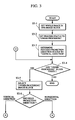
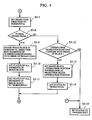
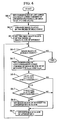
- step S2-2 An example of the process to be executed in step S2-2 shown in Fig. 2, that is, a process of dividing an image into image block will now be described with reference to a flow chart shown in Figs. 3 to 5.
- An image to be processed in step S3-1 shown in Fig. 3 is treated as one image block.
- the image block has, as information, "process status”, "pervious projection direction status” and the position of the image block, with each state being allowed to have states “under processing", “end of the process", "vertical direction” and "horizontal direction”.
- step S3-2 CPU 1 initializes the "process status" of the set image block to "under processing", and initializes the "previous projection direction status" to the "horizontal direction” in step S3-3. It should be noted that the "previous projection direction status" may be initialized to the "horizontal direction”. The necessity lies in the initialization.
- step S3-4 CPU 1 searches an image block, the "process status" of which is the "under processing” (discriminates whether or not any image block which is "under processing” exists). If no image block of the foregoing type exists, this processing operation is ended. If the image block is present, the flow proceeds to step S3-5. In step S3-5 CPU 1 selects one image block, the "process status" of which is the "under processing”. In step S3-6 CPU 1 discriminates whether or not the "previous projection direction status" is the "vertical direction" or the "horizontal direction”. If it is in the "vertical direction”, the flow proceeds to step S3-7 shown in Fig. 4. If it is in the "horizontal direction", the flow proceeds to step S3-16 shown in Fig. 5.
- step S3-7 CPU 1 sets the projection direction to horizontal.
- step S3-8 CPU 1 discriminates whether or not plural projections exist. If plural projections exist, CPU 1, in step S3-9, divides the image blocks in a horizontal direction into the number of the projections. At this time, the position information of each image block is set in such a way that the upper and lower positions of the projection are used as the upper and lower coordinates and that the right and left positions of the image block, which has not been divided, are used as the right and left coordinates.
- step S3-10 sets all "process status” to "under processing”
- step S3-11 CPU 1 sets all "previous projection direction status” of the image blocks, which have been divided in step S3-11, to "horizontal direction”. Then, the flow returns to step S3-4 shown in Fig. 3.
- step S3-8 CPU 1 discriminates in step S3-12 whether or not the upper and lower positions of the projection and the upper and lower positions of the image block coincide with one another. If they coincide with one another, the flow proceeds to step S3-15 so that CPU 1 sets the "process status" to the "end of the process". If a discrimination has been made in step S3-12 that the upper and lower positions of the projection and the upper and lower positions of the image block do not coincide with one another, CPU 1 changes the upper and lower position information of the image block to the upper and lower positions of the projection. In step S3-14 CPU 1 sets the "previous projection direction status" to the "horizontal direction", and then the flow returns to step S3-4 shown in Fig. 3.
- step S3-16 CPU 1 acquires the-projection in the vertical direction.
- step S3-17 CPU 1 discriminates whether or not plural projections exist. If plural projections exist, CPU 1 divides the image block in the vertical direction into the number of the projections. At this time, the position information of each image block is set in such a way that the upper and lower positions of the projection are used as the upper and lower coordinates and that the right and left positions of the image block, which has not been divided, are used as the right and left coordinates. Then, in step S3-19 CPU 1 sets all "process status" of the divided image block to "under processing". In step S3-20 CPU 1 sets all "previous projection direction status" of the image block, which has been divided, to the "vertical direction”. Then, the flow returns to step S3-4 shown in Fig. 3.
- step S3-17 CPU 1 discriminates, in step S3-21, whether or not the right and left positions of the projection and the right and left positions of the image block coincide with one another. If they coincide with one another, the flow proceeds to step S3-15 shown in Fig. 4 so that CPU 1 sets the "process status" to the "completion of the process". If a discrimination has been made in step S3-21 that the right and left positions of the projection and the right and left positions of the image block do not coincide with one another, CPU 1 changes right and left position information items of the image block to the right and left positions of the projection in step S3-22. In step S3-23 CPU 1 set the "previous projection direction status" to the "vertical direction”. Then, the flow returns to step S3-4 shown in Fig. 3.
- Fig. 8A illustrates the display 7 in a state where the process has not yet started, the foregoing state being set as a first image block.
- one projection can be acquired in the horizontal direction so that an image block 801 is obtained as shown in Fig. 8B.
- a vertical projection of the image block 801 is acquired so that the image block 801 is divided into two image blocks 802 and 803 as shown in Fig. 8C.
- an image block 804 can be obtained as shown in Fig. 8D. Since the right and left positions of the vertical projection of the image block 804 coincides with the right and left positions of the projection, the status is set to "completion of the process".
- the residual image block 803 is subjected to a similar process to which the image block 802 has been subjected. As a result, a multiplicity of image blocks as shown in Fig. 8E can be obtained.
- step S2-5 shown in Fig. 2 that is, an example of a process for selecting an appointed image block will now be described with reference to a flow chart shown in Fig. 6.
- the axis of coordinates are arranged in such a way that the left upper position is set to the origin, the x-coordinate is set toward the right and y-coordinate is set toward the bottom.
- the left upper coordinates of a rectangular region appointed in step S6-1 are set to (X1, Y1) and the right lower coordinates of the same are set to (X2, Y2).
- step S6-2 the image blocks are obtained in step S6-2, and are arranged in the order of processing, and the leading image block is set to an image block of interest in step S6-3. Then, the following process is performed starting from the foregoing image block.
- step S6-4 a determination is made as to whether or not an image block of interest to be processed exists. If it does not exist, this process is ended. If it exists, the flow proceeds to step S6-5.
- step S6-5 the left upper coordinates of the image block of interest are set to (x1, y1) and the right lower coordinates of the same are set to (x2, y2). If the left upper point (x1, y1) of the image block of interest is, in next step S6-6, present at a right lower position with respect to the left upper point (X1, Y1) of the appointed rectangular region or if the right lower point (x2, y2) of the image block of interest is, in step S6-7, present at a left upper point with respect to the right lower point (X2, Y2), the image block of interest is set to the appointed image block in step S6-8. Then, the order of the image block of interest is advanced by one in step S6-9, and the flow returns to step S6-4. As a result of the foregoing process, an appointed image block can be selected from a plurality of image blocks.
- step S6-6 If the left upper point (x1, y1) of the image block of interest is not, in step S6-6, present at a right lower position with respect to the left upper point (X1, Y1) of the appointed rectangular region or if the right lower point (x2, y2) of the image block of interest is not, in step S6-7, present at a left upper point with respect to the right lower point (X2, Y2), step S6-8 is not executed, and the flow proceeds to step S6-9.
- the image block in the form of a circumscribed rectangle can be obtained by cutting and therefore only required image blocks can easily be selected.
- this embodiment has a structure in which the appointed image block can be set only in a case where the overall portion of the image block is set to the appointed area, another structure may be employed in which an appointed image block can be set if a portion of the image block is set to the appointed area.
- FIG. 9 A second embodiment of the present invention will now be described with reference to Figs. 9, 10A and 10B.
- the foregoing image block dividing method according to the first embodiment is able to process, with a simple procedure and a light load required, an image, such as a document image having image blocks arranged vertically or horizontally, it sometimes encounters an impossibility of sufficiently finely dividing image blocks that are arranged in a complicated manner.
- This embodiment is arranged to be capable of finely dividing image blocks even if they are arranged in a complicated manner.
- Fig. 9 is a flow chart which illustrates a procedure of performing control of a process of dividing an image block in an image processing apparatus according to this embodiment.
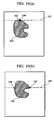
- Figs. 10A and 10B illustrate states of a display which are performed in the image block dividing process.
- step S9-1 shown in Fig. 9 in order to start processing at the first line of an image, the first line is selected as a line of interest.
- step S9-2 whether or not the line has been completed is discriminated. If it has been completed, this process is ended, and if it has not been completed the flow proceeds to step S9-3.
- step S9-3 a left pixel to the line of interest to be processed is set as a pixel of interest, and observation is made from the left portion to the right portion.
- step S9-4 whether or not the pixel is finished (whether or not the pixel of interest exists) is discriminated. If the pixel is finished, the next line is set to a line of interest in step S9-10, and then the flow returns to step S9-2 in which the next line is processed. If the pixel is not finished, the flow proceeds to step S9-5.
- step S9-5 whether or not the pixel of interest is a black pixel is discriminated. If the pixel of interest is not a black pixel but the same is a white pixel, the pixel of interest is shifted to the right by one pixel in step S9-9. Then, the flow returns to step S9-4. If the pixel is a black pixel, a discrimination is, in step S9-6, made whether or not the boundary line of the pixel has been traced. If the pixel is not the traced pixel, the boundary is, in step S9-7, traced so that an image block is obtained. In step S9-8, the image block is skipped over so that the pixel of interest is shifted, and the flow returns to step S9-4.
- step S9-6 If a discrimination has been made in step S9-6 that the pixel is the traced pixel, step S9-7 is not executed, and the flow proceeds to step S9-8.
- reference numeral 101 represents a present line of interest, and illustrates a state where a black pixel 102 has been found. Since the black pixel 102 is in a state where its boundary has not been traced, a boundary line 103 is obtained. When the boundary line 103 has been returned to the original black pixel 102, tracing is dismissed and it is set to an image block. In order to return to a process for searching a black pixel, the pixel of interest is shifted to the right. In this state, attention is paid to a fact that the point is not a point on the obtained boundary line 103 at the time of determining a next pixel 104.
- image blocks can be obtained in units of boundary lines.
- the black pixel is, in this embodiment, searched from the upper line to the lower line and from the left portion toward the right portion, the searching method is not limited to this.
- a pre-treatment such as an image thinning process, may be performed before the black pixel is searched.
- FIG. 11 is a flow chart which illustrates a procedure of controlling a process to be performed by the image processing apparatus according to this embodiment.
- Fig. 12 illustrates a state of the display which is performing the process.
- step S11-1 shown in Fig. 11 image information is read by the image scanner 9 or images previously stored in the external storage unit 8 are read.
- a state of the display 7 at this time is similar to that realized in the first embodiment shown in Fig. 7.
- step S11-2 a point on the image, at which the depression button 3a of the pointing device 3 is depressed, is set to the start point of the area appointment.
- CPU 1 acquires the coordinates of the start point
- step S11-3 a point on the image, at which the depression button 3a of the pointing device 3 is again depressed, is set to the final point of the area appointment.
- CPU 1 then acquires the coordinates of the start point.
- Fig. 12 is a diagram which illustrates the state of the display 7 on which an appointment start position 121 and an appointment completion position 122 are displayed.
- step S11-4 an image block is taken from an image included in a rectangular appointed area, the diagonal positions of which are set to the appointment start position and the appointment completion position.
- the taken image block is, as an appointed image block, selected in step S11-5. Then, the image block is appointed, dismissed or completed in step S11-6.
- the pointing device 3 When the image block is dismissed, the pointing device 3 is brought to the image block already appointed in step S11-7 and then the depression button 3a of the pointing device 3 is depressed so that the appointment is dismissed. After the appointment has been dismissed, the flow returns to step S11-6.
- the pointing device 3 When an image block is appointed, the pointing device 3 is brought to a position adjacent to the image block dismissed from the appointment in step S11-8 and the depression button 3a of the pointing device 3 is depressed to again appoint the image block.
- the process is ended.
- the process for dividing the image into image blocks is performed in a portion of the image in place of the overall portion of the image. Therefore, the time taken to complete the process can be shortened. Since appointment and dismissal for each image block can be enabled, appointment can be finely performed.
- FIG. 13 to 18 A fourth embodiment of the present invention will now be described with reference to Figs. 13 to 18.
- This embodiment is arranged to appoint an area as a sentence from a first character of the appointment to the final character of the appointment.
- Fig. 13 is a flow chart which illustrates the procedure of controlling a process of dividing an image block to be performed by an image processing apparatus according to this embodiment.
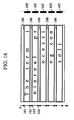
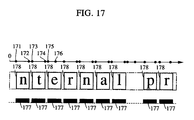
- Figs. 16 to 18 are explanatory views which illustrate the image block dividing process and the process of an image block to be performed by the apparatus according to this embodiment. Also in this embodiment, an assumption is made that the document direction of the document image has been detected prior to performing the process according to this embodiment.
- step S13-1 shown in Fig. 13 a projection is acquired in the direction of lines of the document.
- a projection 165 shown in Fig. 16 is obtained.
- step S13-2 lines are extracted so that a linear rectangle 166 is obtained.
- step S13-3 the obtained start and end coordinates of the line are stored.
- reference numeral 161 represents line start coordinates of a first line
- 162 represents line end coordinates of the first line
- 163 represents line start coordinates of a second line
- 164 represents line end coordinates of the second line.
- step S13-4 a projection for each line is acquired in a direction (a vertical direction) perpendicular to the direction of the line so that a projection 177 shown in Fig. 17 is obtained.
- step S13-5 an image block (a character block) 178 shown in Fig. 17 is obtained.
- step S13-6 the start coordinates and end coordinates of the image block are stored.
- reference numeral 171 represents an image block start coordinates of a first character of a line
- 172 represents image block end coordinate of the first character of the line
- 173 represents image block start coordinates of a second character of the line
- 174 represents image block end coordinates of the second character of the line.
- the thus-obtained image blocks are arranged in an array starting from the first line in step S13-7, and the process is ended.
- Fig. 14 is a flow chart which illustrates the procedure of controlling a process for searching an appointment area start image block.
- step S14-1 shown in Fig. 14 a last line of lines of a type having line start coordinates which are smaller than the appointment start position is determined as the appointment start line.
- step S14-2 the earliest one of the image blocks which are within an appoint start line and whose image block end coordinate is greater than that of appoint start position is determined as the appointment area start image block. Then, this process is completed.
- Fig. 15 is a flow chart which illustrates the procedure of controlling a process for searching the appointment area completion image block.
- step S15-1 shown in Fig. 15 a last line of lines having a line start coordinate smaller than the appointment end position is determined to be the appointment end line.
- step S15-2 a last image block of those of the appointment end line and whose image block start coordinate is smaller than the appointment end position is determined to be the appointment area end image block. Then, this process is completed.
- appointment area start image block and the appointment area end image block are obtained, they are searched from the image block array obtained in step S13-7 shown in Fig. 13 so that all image blocks present between the appointment area start image block and the appointment area end image block are determined to be appointed image blocks.
- the display of the appointed image blocks may be performed variously, for example, the inverse display of the image blocks employed in the foregoing embodiments and display for changing the color.
- a display shown in Fig. 18 may be employed in which the overall body of a rectangular form 181 between the appointment area start image block and the appointment area end image block is inversely displayed.
- a portion of a document image can be appointed without collapse of the sentences.
- the rule for selecting the image blocks is not limited to the method according to this embodiment.
- FIG. 19 A fifth embodiment of the present invention will now be described with reference to Figs. 19 and 20.
- a cell of the table is appointed by the image area appointment method arranged as shown in the flow chart shown in Fig. 2 according to the first embodiment, there sometimes arises a case where one cell is intended to be formed in one image block.
- This embodiment is arranged to process the one cell into one image block.
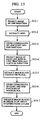
- Fig. 19 is a flow chart which illustrates the procedure of a process to be performed by the image processing apparatus according to this embodiment.
- step S19-1 shown in Fig. 19 histograms of an image are acquired in the horizontal and vertical directions.
- reference numeral 201 represents the histogram in the horizontal direction
- 202 represents the histogram in the vertical direction. Since many black pixels exist in the portions of the table in which ruled lines are present, the peak of the histogram can be considered as the positions of the ruled lines. Therefore, in step S19-2, coordinates of the peaks of the histograms are obtained. Referring to Fig.
- reference numeral 203 represents the coordinate (the point) of the peak of the histogram in the horizontal direction
- 204 represents the coordinate (the point) of the peak of the histogram in the vertical direction.
- a table image can be appointed in a cell unit. Since the image blocks are disposed in a matrix, only a specific line or array can be appointed.
- the method of selecting the appointed image block in this embodiment be an appointment image block method if an image block, that is, a portion of the cell of a table overlaps the rectangular appointed area described in the first embodiment.
- the image read in step S2-1 according to the first embodiment shown in Fig. 2 has an arrangement in which a table, a graph and a photograph and the like are disposed in a variety of layouts. Therefore, a means for dividing the input image into regions is provided, an operation of appointing an area with respect to each region is performed, a discrimination is made whether or not the appointment area start position and the end position of the appointment area exist in the same region, the area appointment is performed similarly to the foregoing embodiments if the two positions exist in the same region.
- the structure is arranged in such a manner that one of a plurality of the area appointing methods according to the foregoing embodiments and the conventional examples can be selected by switching and the area appointing method is switched in each region.
- an area of a multistage document image can be appointed without collapse of sentences if the area is divided for each stage. Further, undesirable appointment of a character image existing in another stage can be prevented.
- the arrangement enabling the area appointment method to be changed over permits use of the method according to the fourth embodiment when an area of a character image region is appointed and permits use of the conventional method when an area of a photograph region is appointed.
Landscapes
- Physics & Mathematics (AREA)
- General Physics & Mathematics (AREA)
- Engineering & Computer Science (AREA)
- Theoretical Computer Science (AREA)
- Processing Or Creating Images (AREA)
- Character Input (AREA)
- Image Processing (AREA)
- Document Processing Apparatus (AREA)
Applications Claiming Priority (3)
| Application Number | Priority Date | Filing Date | Title |
|---|---|---|---|
| JP15624493 | 1993-06-02 | ||
| JP156244/93 | 1993-06-02 | ||
| JP5156244A JPH06348800A (ja) | 1993-06-02 | 1993-06-02 | 画像処理方法及び装置 |
Publications (3)
| Publication Number | Publication Date |
|---|---|
| EP0627701A2 true EP0627701A2 (de) | 1994-12-07 |
| EP0627701A3 EP0627701A3 (de) | 1995-07-05 |
| EP0627701B1 EP0627701B1 (de) | 2002-11-27 |
Family
ID=15623533
Family Applications (1)
| Application Number | Title | Priority Date | Filing Date |
|---|---|---|---|
| EP94303891A Expired - Lifetime EP0627701B1 (de) | 1993-06-02 | 1994-05-31 | Bildverarbeitungsverfahren und Vorrichtung zur Dokumentenanalyse |
Country Status (4)
| Country | Link |
|---|---|
| US (1) | US6212294B1 (de) |
| EP (1) | EP0627701B1 (de) |
| JP (1) | JPH06348800A (de) |
| DE (1) | DE69431775T2 (de) |
Cited By (1)
| Publication number | Priority date | Publication date | Assignee | Title |
|---|---|---|---|---|
| EP0780797A3 (de) * | 1995-12-21 | 1997-09-17 | Adobe Systems Inc | Verfahren und Vorrichtung zur Bestimmung von Gegenständen |
Families Citing this family (3)
| Publication number | Priority date | Publication date | Assignee | Title |
|---|---|---|---|---|
| US20090046953A1 (en) * | 2004-04-29 | 2009-02-19 | Koninklijke Philips Electronics N V | Image Processing Apparatus And Method |
| JP4671885B2 (ja) * | 2005-06-01 | 2011-04-20 | 株式会社リコー | 画像処理装置、プログラムおよび画像処理方法 |
| JP2015032050A (ja) * | 2013-07-31 | 2015-02-16 | 株式会社東芝 | 表示制御装置、表示制御方法およびプログラム |
Family Cites Families (16)
| Publication number | Priority date | Publication date | Assignee | Title |
|---|---|---|---|---|
| GB2103449B (en) * | 1981-06-29 | 1985-05-30 | Nippon Telegraph & Telephone | Method and apparatus for gray level signal processing |
| EP0120334B1 (de) * | 1983-03-01 | 1989-12-06 | Nec Corporation | System zum Bestimmen des Zeichenabstandes |
| JPS6115205A (ja) * | 1984-06-30 | 1986-01-23 | Fanuc Ltd | 数値制御装置用グラフイツクデイスプレイの描画方法 |
| US4641351A (en) * | 1984-07-25 | 1987-02-03 | Preston Jr Kendall | Logical transform image processor |
| EP0195161B1 (de) * | 1985-03-14 | 1993-09-15 | Nikon Corporation | Gerät und Verfahren zum selbsttätigen Inspizieren von Objekten und zum Identifizieren oder Erkennen bekannter und unbekannter Teile davon, einschliesslich Fehler und dergleichen |
| US4760463A (en) * | 1985-12-07 | 1988-07-26 | Kabushiki Kaisha Toshiba | Image scanner apparatus with scanning function |
| DE3716787A1 (de) * | 1986-05-19 | 1987-11-26 | Ricoh Kk | Zeichenerkennungsverfahren |
| DE3681030D1 (de) * | 1986-06-16 | 1991-09-26 | Ibm | Bilddatenanzeigesystem. |
| US4932065A (en) * | 1988-11-16 | 1990-06-05 | Ncr Corporation | Universal character segmentation scheme for multifont OCR images |
| JPH02201588A (ja) * | 1989-01-31 | 1990-08-09 | Toshiba Corp | 文字読取装置 |
| JP2812982B2 (ja) * | 1989-04-05 | 1998-10-22 | 株式会社リコー | 表認識方法 |
| JPH03202967A (ja) * | 1989-12-28 | 1991-09-04 | Toshiba Corp | 電子ファイリング装置 |
| US5167016A (en) * | 1989-12-29 | 1992-11-24 | Xerox Corporation | Changing characters in an image |
| JPH04248687A (ja) * | 1991-01-23 | 1992-09-04 | Internatl Business Mach Corp <Ibm> | 文書画像のレイアウト解析方法及びシステム |
| DE69333096T2 (de) * | 1992-04-15 | 2004-02-12 | Xerox Corp. | Vorrichtungen und Verfahren zum graphischen Zeichnen und Ausgabe |
| US5438657A (en) * | 1992-04-24 | 1995-08-01 | Casio Computer Co., Ltd. | Document processing apparatus for extracting a format from one document and using the extracted format to automatically edit another document |
-
1993
- 1993-06-02 JP JP5156244A patent/JPH06348800A/ja active Pending
-
1994
- 1994-05-31 EP EP94303891A patent/EP0627701B1/de not_active Expired - Lifetime
- 1994-05-31 DE DE69431775T patent/DE69431775T2/de not_active Expired - Lifetime
-
1997
- 1997-02-28 US US08/807,032 patent/US6212294B1/en not_active Expired - Lifetime
Cited By (2)
| Publication number | Priority date | Publication date | Assignee | Title |
|---|---|---|---|---|
| EP0780797A3 (de) * | 1995-12-21 | 1997-09-17 | Adobe Systems Inc | Verfahren und Vorrichtung zur Bestimmung von Gegenständen |
| US5930813A (en) * | 1995-12-21 | 1999-07-27 | Adobe Systems Incorporated | Method and system for designating objects |
Also Published As
| Publication number | Publication date |
|---|---|
| JPH06348800A (ja) | 1994-12-22 |
| EP0627701B1 (de) | 2002-11-27 |
| DE69431775D1 (de) | 2003-01-09 |
| EP0627701A3 (de) | 1995-07-05 |
| DE69431775T2 (de) | 2003-07-03 |
| US6212294B1 (en) | 2001-04-03 |
Similar Documents
| Publication | Publication Date | Title |
|---|---|---|
| US6714689B1 (en) | Image synthesizing method | |
| US20120229501A1 (en) | Method and a Computer System for Displaying and Selecting Images | |
| JP2001203876A (ja) | 文書修飾装置及び画像処理装置 | |
| WO2026031311A1 (zh) | 一种序列图像拼接的处理方法及系统 | |
| EP0627701A2 (de) | Bildverarbeitungsverfahren und Vorrichtung dazu | |
| JPH10513284A (ja) | 二進イメージに対する空白ページ及び文字枠の自動決定 | |
| US5357601A (en) | Apparatus for processing superimposed image information by designating sizes of superimposed and superimposing images | |
| JP2817423B2 (ja) | 画像表示装置 | |
| JPH11123289A (ja) | 刺繍データ処理装置及び刺繍ミシン並びに記録媒体 | |
| KR102853798B1 (ko) | 디지털 문서에서의 컴포넌트 자동 조정 및 정렬 시스템 및 방법과 이를 수행하는 프로그램 | |
| JPS62212879A (ja) | イメ−ジデ−タ検索方式 | |
| JP3426005B2 (ja) | 線図形入力装置 | |
| JP3508182B2 (ja) | 画像表示装置及び画像表示方法 | |
| JPH11175519A (ja) | 文書解析方法および文書解析装置 | |
| EP1018694B1 (de) | System und Verfahren zur automatischen Graphensyntaxanalyse | |
| JP2634905B2 (ja) | 図形ぬりつぶし方法 | |
| JPH07160811A (ja) | 文字認識装置 | |
| JPH06152876A (ja) | 画像入力装置 | |
| JPH05128225A (ja) | 色指定/抽出装置および色指定/抽出方法 | |
| JP4545847B2 (ja) | 画像検索装置およびその方法 | |
| JP2578965B2 (ja) | 図形処理装置 | |
| JPH09130574A (ja) | デジタルカメラ | |
| JPS63311868A (ja) | 画像処理装置 | |
| JPS59186065A (ja) | 画像情報の抽出装置及び抽出方法 | |
| JPH04280161A (ja) | マスク図形作成方法 |
Legal Events
| Date | Code | Title | Description |
|---|---|---|---|
| PUAI | Public reference made under article 153(3) epc to a published international application that has entered the european phase |
Free format text: ORIGINAL CODE: 0009012 |
|
| AK | Designated contracting states |
Kind code of ref document: A2 Designated state(s): DE FR GB |
|
| PUAL | Search report despatched |
Free format text: ORIGINAL CODE: 0009013 |
|
| AK | Designated contracting states |
Kind code of ref document: A3 Designated state(s): DE FR GB |
|
| 17P | Request for examination filed |
Effective date: 19951116 |
|
| 17Q | First examination report despatched |
Effective date: 19990809 |
|
| RIC1 | Information provided on ipc code assigned before grant |
Free format text: 7G 06T 11/60 A |
|
| RIC1 | Information provided on ipc code assigned before grant |
Free format text: 7G 06T 11/60 A |
|
| RTI1 | Title (correction) |
Free format text: IMAGE PROCESSING METHOD AND APPARATUS FOR DOCUMENT ANALYSIS |
|
| GRAG | Despatch of communication of intention to grant |
Free format text: ORIGINAL CODE: EPIDOS AGRA |
|
| GRAG | Despatch of communication of intention to grant |
Free format text: ORIGINAL CODE: EPIDOS AGRA |
|
| GRAH | Despatch of communication of intention to grant a patent |
Free format text: ORIGINAL CODE: EPIDOS IGRA |
|
| GRAH | Despatch of communication of intention to grant a patent |
Free format text: ORIGINAL CODE: EPIDOS IGRA |
|
| GRAA | (expected) grant |
Free format text: ORIGINAL CODE: 0009210 |
|
| AK | Designated contracting states |
Kind code of ref document: B1 Designated state(s): DE FR GB |
|
| REG | Reference to a national code |
Ref country code: GB Ref legal event code: FG4D |
|
| REF | Corresponds to: |
Ref document number: 69431775 Country of ref document: DE Date of ref document: 20030109 |
|
| ET | Fr: translation filed | ||
| PLBE | No opposition filed within time limit |
Free format text: ORIGINAL CODE: 0009261 |
|
| STAA | Information on the status of an ep patent application or granted ep patent |
Free format text: STATUS: NO OPPOSITION FILED WITHIN TIME LIMIT |
|
| 26N | No opposition filed |
Effective date: 20030828 |
|
| PGFP | Annual fee paid to national office [announced via postgrant information from national office to epo] |
Ref country code: FR Payment date: 20090520 Year of fee payment: 16 |
|
| REG | Reference to a national code |
Ref country code: FR Ref legal event code: ST Effective date: 20110131 |
|
| PG25 | Lapsed in a contracting state [announced via postgrant information from national office to epo] |
Ref country code: FR Free format text: LAPSE BECAUSE OF NON-PAYMENT OF DUE FEES Effective date: 20100531 |
|
| PGFP | Annual fee paid to national office [announced via postgrant information from national office to epo] |
Ref country code: DE Payment date: 20120531 Year of fee payment: 19 |
|
| PGFP | Annual fee paid to national office [announced via postgrant information from national office to epo] |
Ref country code: GB Payment date: 20120517 Year of fee payment: 19 |
|
| GBPC | Gb: european patent ceased through non-payment of renewal fee |
Effective date: 20130531 |
|
| PG25 | Lapsed in a contracting state [announced via postgrant information from national office to epo] |
Ref country code: DE Free format text: LAPSE BECAUSE OF NON-PAYMENT OF DUE FEES Effective date: 20131203 |
|
| REG | Reference to a national code |
Ref country code: DE Ref legal event code: R119 Ref document number: 69431775 Country of ref document: DE Effective date: 20131203 |
|
| PG25 | Lapsed in a contracting state [announced via postgrant information from national office to epo] |
Ref country code: GB Free format text: LAPSE BECAUSE OF NON-PAYMENT OF DUE FEES Effective date: 20130531 |