EP0631457A2 - Signalisierungsprotokoll für Datenübertragungen - Google Patents
Signalisierungsprotokoll für Datenübertragungen Download PDFInfo
- Publication number
- EP0631457A2 EP0631457A2 EP94304330A EP94304330A EP0631457A2 EP 0631457 A2 EP0631457 A2 EP 0631457A2 EP 94304330 A EP94304330 A EP 94304330A EP 94304330 A EP94304330 A EP 94304330A EP 0631457 A2 EP0631457 A2 EP 0631457A2
- Authority
- EP
- European Patent Office
- Prior art keywords
- call
- server
- connection
- channel
- service
- Prior art date
- Legal status (The legal status is an assumption and is not a legal conclusion. Google has not performed a legal analysis and makes no representation as to the accuracy of the status listed.)
- Withdrawn
Links
- 238000004891 communication Methods 0.000 title claims abstract description 54
- 230000011664 signaling Effects 0.000 title claims abstract description 26
- 238000012545 processing Methods 0.000 claims abstract description 21
- 230000006870 function Effects 0.000 claims description 45
- 238000013519 translation Methods 0.000 claims description 6
- 238000012423 maintenance Methods 0.000 claims description 3
- 238000005259 measurement Methods 0.000 claims description 2
- 238000000034 method Methods 0.000 description 41
- 230000008569 process Effects 0.000 description 31
- 238000013507 mapping Methods 0.000 description 7
- 230000004044 response Effects 0.000 description 7
- 230000006855 networking Effects 0.000 description 4
- 230000007704 transition Effects 0.000 description 4
- 230000008859 change Effects 0.000 description 3
- 230000006978 adaptation Effects 0.000 description 2
- 238000013459 approach Methods 0.000 description 2
- 238000006243 chemical reaction Methods 0.000 description 2
- 238000011161 development Methods 0.000 description 2
- 238000010586 diagram Methods 0.000 description 2
- 238000012986 modification Methods 0.000 description 2
- 230000004048 modification Effects 0.000 description 2
- 230000009131 signaling function Effects 0.000 description 2
- 238000012546 transfer Methods 0.000 description 2
- 230000003466 anti-cipated effect Effects 0.000 description 1
- 101150069022 dss-1 gene Proteins 0.000 description 1
- 239000004744 fabric Substances 0.000 description 1
- 230000000977 initiatory effect Effects 0.000 description 1
- 238000002372 labelling Methods 0.000 description 1
- 230000007246 mechanism Effects 0.000 description 1
- 238000000926 separation method Methods 0.000 description 1
Images



Classifications
-
- H—ELECTRICITY
- H04—ELECTRIC COMMUNICATION TECHNIQUE
- H04Q—SELECTING
- H04Q11/00—Selecting arrangements for multiplex systems
- H04Q11/04—Selecting arrangements for multiplex systems for time-division multiplexing
- H04Q11/0428—Integrated services digital network, i.e. systems for transmission of different types of digitised signals, e.g. speech, data, telecentral, television signals
- H04Q11/0478—Provisions for broadband connections
-
- H—ELECTRICITY
- H04—ELECTRIC COMMUNICATION TECHNIQUE
- H04Q—SELECTING
- H04Q11/00—Selecting arrangements for multiplex systems
- H04Q11/04—Selecting arrangements for multiplex systems for time-division multiplexing
- H04Q11/0428—Integrated services digital network, i.e. systems for transmission of different types of digitised signals, e.g. speech, data, telecentral, television signals
- H04Q11/0435—Details
- H04Q11/0457—Connection protocols
-
- H—ELECTRICITY
- H04—ELECTRIC COMMUNICATION TECHNIQUE
- H04L—TRANSMISSION OF DIGITAL INFORMATION, e.g. TELEGRAPHIC COMMUNICATION
- H04L12/00—Data switching networks
- H04L12/54—Store-and-forward switching systems
- H04L12/56—Packet switching systems
- H04L12/5601—Transfer mode dependent, e.g. ATM
- H04L2012/5629—Admission control
- H04L2012/563—Signalling, e.g. protocols, reference model
-
- H—ELECTRICITY
- H04—ELECTRIC COMMUNICATION TECHNIQUE
- H04Q—SELECTING
- H04Q2213/00—Indexing scheme relating to selecting arrangements in general and for multiplex systems
- H04Q2213/05—Software aspects
-
- H—ELECTRICITY
- H04—ELECTRIC COMMUNICATION TECHNIQUE
- H04Q—SELECTING
- H04Q2213/00—Indexing scheme relating to selecting arrangements in general and for multiplex systems
- H04Q2213/056—Software routines, e.g. finite state machines
-
- H—ELECTRICITY
- H04—ELECTRIC COMMUNICATION TECHNIQUE
- H04Q—SELECTING
- H04Q2213/00—Indexing scheme relating to selecting arrangements in general and for multiplex systems
- H04Q2213/29—ATM
-
- H—ELECTRICITY
- H04—ELECTRIC COMMUNICATION TECHNIQUE
- H04Q—SELECTING
- H04Q2213/00—Indexing scheme relating to selecting arrangements in general and for multiplex systems
- H04Q2213/345—Intelligent network
-
- H—ELECTRICITY
- H04—ELECTRIC COMMUNICATION TECHNIQUE
- H04Q—SELECTING
- H04Q2213/00—Indexing scheme relating to selecting arrangements in general and for multiplex systems
- H04Q2213/38—Interexchange connections, e.g. connections of different kinds of networks
Definitions
- This invention relates to communication systems. More specifically, this invention relates to signaling protocols for communications networks.
- NNI Network Node Interfaces
- PBX Private Branch Exchanges
- DSS1 Digital Subscriber Signaling System No. 1
- N-ISDN Narrowband Integrated Services Digital Network
- OSI Open Systems Interconnection
- UNI and NNI were adapted to conform to these new standards.
- NNI protocols were further extended to standardize communications procedures between switches and service-specific database systems that provide, for example, call related information look-up functions for services, such as Freephone, known in the United States as 800 Service.
- the subset of the NNI protocol suite related to communications between switching nodes and service-specific processors in a network is known as Transactions Capability Application Part or TCAP for short.
- TCAP Transactions Capability Application Part
- B-ISDN Broadband Integrated Services Digital Network
- ATM Asynchronous Transfer Mode
- Those drawbacks include a) perpetuating the distinction between user-network interfaces and network-to-node interfaces, which is likely to be dysfunctional in an environment where the roles of, and the relationship between, switches, customer premises equipment and other processors in a network can be redefined for a particular service; b) perpetuating the bundling of certain functions, such as call control, connection control, and channel control in the NNI and UNI protocol suites; and c) difficulty in managing connections, in general, and meeting quality-of-service parameter checking requirements for certain connections, in particular.
- One example of the present invention is directed to a modular suite of peer-to-peer protocols that are a) independent of communications network architecture, and the type of switching systems (for example, ATM or circuit-switched systems) used in the architecture b) comprised of client-server-oriented signaling messages that are restricted to include information and parameters associated with only one particular of traditional call processing.
- the type of switching systems for example, ATM or circuit-switched systems
- object-oriented analytical tools are used to define a set of application processes or functions associated with traditional call processing.
- the set of application processes or functions may include, for example, call control, connection control, channel control, and service control.
- ASE Application Service Element
- ASE defines the operations (and related parameters) needed to be performed for an application process to communicate with another application processes.
- a suite of protocols conforming to the principles of the invention may coexist with other protocols, such as ISUP.
- the suite of protocols of the invention may be implemented for NNI interfaces only or for broadband communications exclusively, while DSS 1 signaling messages are used for UNI interfaces and DSS1/SS7 protocols are used for narrowband communications.
- FIG. 1 is a block diagram of an exemplary distributed processing architecture for a broadband communications network.
- FIG. 2 is a representation of part of an Object Communications Model designed to illustrate the nature and type of inter-entity communications supported by the protocols of the invention.
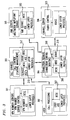
- FIG. 3 shows the structure of the protocol stacks for servers implementing particular call processing functions in a broadband communications network environment.
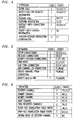
- FIG. 4, 5, and 6 are tables that list the type of operations that need to be supported in a broadband communications network environment.
- FIG. 7 is a networking arrangement that illustrates the potential coexistence of the signaling protocols of the invention with existing protocols.
- FIG. 1 is a block diagram of an exemplary distributed processing architecture for a broadband communications network.
- broadband communications services such as the need to support a) multiple connections in a call, b) common path/diverse path routing in a connection, c) modification of active connections, and d) end-to-end quality of service determination
- certain call processing functions have been extended to manage communications over a broadband network. Those functions include call control, route control, connection control, and channel control. The identification of these functions is predicated on a formal analysis technique called Object Oriented Analysis (OOA) described in further detail below.
- OOA Object Oriented Analysis
- the call control function is shown as the call control application process 103 in call server 102.
- the call server is responsible for a) service coordination and invocation when multiple services are requested in a call, b) user-to-user and user-to-server negotiation of resources, c) recognition of needs for special resources, such as protocol converters and muldmedia bridges, d) maintenance of call state and configuration information and e) management of ownership and permissions.
- connection control application process 105 is implemented in connection server 104. The latter is responsible primarily for establishing, releasing and modifying connections within a call, and for computing end-to-end Quality-of-Service (QOS) measurements.
- channel control application processes 107 and 112 that are associated with Switching Offices (SO) 108 and 110, respectively, are executed in channel servers 106 and 111, respectively.
- Switching offices 108 and 110 house ATM switches arranged to cross-connect, multiplex and switch voice, data and video traffic.
- Channel servers 106 and 111 allocate resources on a link-by-link basis, and maintain Virtual Channel Identifier translation table entries (described below) to interconnect channels that are part of a connection.
- FIG. 1 Also shown in FIG. 1 are service-specific servers 118, 120, 122, and 124 that provide particular broadband-based services for a call associating users such as Customer Premises Equipment CPE 101, 113 and 114 and those servers. Further details regarding the distributed architecture of FIG. 1 can be found in the commonly assigned co-pending United States patent application, Serial No. 08/082,654.
- FIG. 2 shows illustrative entities of a broadband communications network and the type of signaling messages needed to establish communications between these entities.
- FIG. 2 is derived from the use of a four model structure advocated in a methodology called "Object Oriented Analysis” (OOA).
- OOA is used in this example to identify the signaling requirements of a broadband communications network.
- the four types of models in the OOA methodology are: Information Model (IM), State Models (SM), Object Communication Model (OCM), and Process Models (PM).
- IM Information Model
- SM State Models
- OCM Object Communication Model
- PM Process Models
- the IM identifies networking entities and the characteristics of, and the relationship between, those entities that are called "objects”.
- An object identifies all the data associated with the application domain of each entity being analyzed
- Objects shown in FIG. 2 include: user object 201, call object 202, server object 203, connection object object 204, call connection mapping object 205, route object 206, channel object 207 and Virtual Channel Identifier (VCI) Translation Table Entry 208.
- VCI Virtual Channel Identifier
- the call object 202 defines an association between the user object 201 and the server 203. It is identified in a broadband network by a call reference value. Other attributes associated with a call object are the user objects and the server objects in the call. These attributes may be referenced by identifiers.
- the route object 206 is a path through the network that connects multiple end-points (users and/or servers) through switches. The route object 206 may terminate on users or servers, and may be point-to-point or multipoint. The route object 206 is referenced by a route number and entity identifiers (user, server,switches) for communications with other objects. Associated with the route object 206 are: a) performance attributes, bandwidth, and switches identifiers in the route. In the broadband model of FIG.
- connection object 204 is a virtual channel connection (VCC). It is a communication path between users and servers through switches.
- the connection object 104 may identify a point-to-point or multipoint connection that extends between points where the ATM adaptation layer (AAL) is terminated. Attributes of connection object 104 are performance metrics, adaptation layer attributes, directionality, symmetry, virtual channel connection identifiers (VCCI), end user identifiers, and switches in the connection.
- VCC virtual channel connection
- AAL ATM adaptation layer
- Attributes of connection object 104 are performance metrics, adaptation layer attributes, directionality, symmetry, virtual channel connection identifiers (VCCI), end user identifiers, and switches in the connection.
- VCCI virtual channel connection identifiers
- call-connection mapping object 205 is defined to map connections into calls. It is an associative object which is indicative of the many-many relationship between a call object and a communication object.
- the channel object 207 defines an Asynchronous Transfer Mode (ATM) virtual channel link. It is a link in an ATM interface.
- the channel object 207 connects either two switches or a switch and a user/server.
- the channel object 207 is referenced by its Virtual Path Connection Identifier (VPCI), VCI, end entity identifiers and port numbers.
- VCI translation table entry 208 is an associative object that defines interconnection between channels that are part of a connection.
- SM one per object identified in the IM
- different states of an object instance are shown.
- an object instance When an object instance enters a state, it performs certain actions. As part of these actions, it generates events. Events generated in the state model of an object may cause state transitions in another object or cause transitions in its own state model. Data may be associated with an event.
- the OCM shows only those events generated in an object that cause transitions in another object's state model. Those events are called in the art "cross-object events". They are represented in FIG. 2 by the labels C1 to C18, CC1 to CC8, L1 to L5, N1 to N12, P1 to P10, S1 to S6, U1 to U14, and V1 to V2.
- a partial list of these events with their associated data are shown in the appendix.
- the letter “C” is used for events generated in the call object 202 and two other related objects user-call-interaction and server-call-interaction objects (not shown).
- the letters “CC” denote events associated with the call-connection-mapping object 205.
- the letter “L” is used for events generated by channel object 207
- the letter “N” is used for events generated by the connection object 204
- the “P” is used for events generated by the route (path) object 206.
- the letter “S” is used for server events and the letter "U” points to user events generated by user 201.
- the event U1 (Setup-call), is generated by the user object 201 in response to that user initiating a call requesting service provided by server 203. That event causes a state transition in the call object 202.
- events C1 (Invoke-server) are generated by the call object 202 which communicates events C1 to the server object instances involved in the call.
- the server object 203 may generate, for example, event S1 (Perform-negotiation), if needed. This causes event C2, Negotiation-with-user, to be generated from the call object 202 to the user object.
- the user object replies with event U2, Reply-to-negotiation-request.
- the call object 202 sends this response back to the requesting server object via event C3 (Return-negotiation-information-to-server).
- the server object 203 is then assumed, in this example, to generate event S2 (Server-request-or-response), to the call object 202.
- This object instance then generates event C6, (Setup-connections), to the call-connection mapping object 205.
- communications between the call-connection mapping object 205, the route object 206 and the connection object 204 are not discussed in this example.
- connection object 204 Assuming a predetermined route instance already exists, the connection object 204 generates events N5 (Commit-channel), and N6, (Setup-VCI-translation-table-entry) to the instances of channel object 207 and and the VCI translation table entry object 208, respectively. Assuming success, i.e., events L2 (Channel-committed), and V1, (VCI-translation-setup), are received by the connection object 204, the call-connection mapping object 205 generates event CC4 (Mandatory-connections-in-call-established) that is communicated to the call object 202.
- events L2 Channel-committed
- V1 VCI-translation-setup
- the latter then generates events, C4 (Notify-user-call-success) to user object instances in the call and events C9 (Notify-server-connection-success) and C5 (Notify-user-server-call-status-information) to server object instances in the call.
- the multiserver-based communications network architecture of FIG. 1 is derived.
- the architecture is characterized by a functional separation of the operations to be performed by the servers.
- existing call processing functions may be allocated to individual servers as follows: fabric control functionality in channel servers 106 and 111, connection control functions in connection server 104, call control functions in the call server 202 and service control functions in the service-specific servers 118, 120, 122 and 124.
- Assignment of particular tasks or operations to a particular server reflects the close relationship between objects related to particular functions, as indicated by the number of cross-object events associated with those tasks or operations.
- the call-connection mapping object 205, the connection object 204 and the route object 206 are managed in the connection server 104 of FIG. 1.
- FIG. 3 shows the structure of the protocol stacks for servers implementing particular call processing functions in a broadband communications network environment.
- user 302 and servers comprising the Virtual Private Network (VPN) Server 301, the Call Server 303, the Connection Server 304, the VMR Server 305, and the Channel Server 306.
- VPN Virtual Private Network
- the Call Server 303 has an application process 308 to perform Call Control.
- the Application Process 323 performs channel control functions for the channel server 306.
- ASEs Application Service Elements
- BCSE Broadband Call Service Element
- BCSE Broadband Call Service Element
- BBSE Broadband Bearer Service Element
- BCHSE Broadband Channel Service Element
- BCHSE Broadband Channel Service Element
- the BCSE represents the communication functions (operations and parameters) needed to communicate with the call control application process, BBSE, the communication functions needed to reach the connection control application process, and BCHSE, the communication functions needed to reach the channel control application process.
- the user 302 wishes to establish a call, it will send a request to the Call Server 303 using its BCSE 309. This request is received by the BCSE 310 in the Call Server 303, and the operation(s) and related data are forwarded to the application process performing Call Control 308 in the Call Server.
- the Call Server will use its Service ASEs 311 to communicate with the service-specific servers.
- the Call Server may send a request to the VPN Server 301 via its VPN ASE (a specific ASE in the set of Service ASEs 311, or it may send a request to the VMR Server 305 through the VMR service ASE (one of the 311 ASEs).
- the applications running in these servers 321, 322 receive the requests and process them. If the Call Server requests a connection(s), it uses the BBSE 317 to access the Connection Control application 324 resident in the Connection Server 304 via its BBSE 318. Likewise, if the Connection Server Application 324 must communicate with the Channel Server Application 323 resident in the Channel Server 306, it uses its BCHSE 319 to invoke operations via the BCHSE 320 in the channel server 306.
- each server of FIG. 3 is depicted the lower layer protocols that are used for communications between servers.
- the nature of these protocols depends on the configuration of the servers in a networking environment. For example, servers may be colocated with switches, or may be connected with switches via signaling links. Thus, inter-server communication schemes may vary from shared memory writes to wide area protocols. Based on the network architecture, different means of involving and transporting remote operations can be used. If call control, connection control, channel control, and service control functions are implemented as different UNIX processes, standard IPC (InterProcess Communication) mechanisms can be used to support remote operation invocations.
- IPC InterProcess Communication
- ROSE Remote Operations Service Element
- CSL Component Sub-Layer
- FIGs. 4, 5 and 6 provide for each ASE defined in FIG. 3, the names of operations, the classes and the corresponding cross-object events.
- an operation is confirmed (class C)
- a reply is expected from the other entities receiving the message.
- Unconfirmed (class U) operations no reply is expected from the entity receiving the message.
- FIG. 4 shows the list of operations needed for BCSE 310, 314, 315 and 340 in FIG. 3 to support the communication needs of the call control server in FIG. 3.
- the first three operations in FIG. 4 correspond to events U1, U3 and U4, generated by the instance of the user object 201 in FIG. 2. These operations are invoked to reach the call control functions of establishing modifying, and releasing calls, respectively. Since Setup-call, Modify-call-or-request-information, and Release-call operations are of type Class C, events C4, (Notify-user-call-success), C15 (Notify-user-call-failure) and C12, (Call-released), indicate that success and failure responses are expected from the entity setting up the call.
- Period-negotiation corresponds to the user-to-user and user-to-server negotiation, compatibility and status checking functions of the call control application process.
- the call server (where the call control application resides) also performs its function of recognizing the need for specialized servers, such as converters.
- This operation corresponds to event S1 (Perform-negotiation) and event C3, (Return-negotiation-information-to-server) indicative of the fact that a response is required.
- the next operation, Interact-with-connection-control corresponds to event S2, Server-request-or-response.
- Events C9, Notify-server-connection-success, and C14, Notify-server-connection-failure correspond to success and failure responses, respectively.
- call control One of the functions of call control is to act as a liaison between users and servers.
- the Convey-user-server-information operation in the the BCSE ASE provides the communication needs of this function.
- the Perform-service-invocation operation may be invoked by another call server if it needs to reach servers that are connected to the remote call server.
- the call control application process 324 in the call server 303 uses the operations of the BBSE 317 and 318 in the call server and connection server, respectively.
- FIG. 5 lists these operations and associated events.
- the operation Setup-connections is used to reach the function of connection control related to establishing connections. Operation success is reported in event CC4, (Mandatory-connection-in-call-established) and failure in event CC2 (Mandatory-connections-unavailable). Operation Release-connections is an operation whose invocation corresponds to event C8, while event CC7, (Connection-in-call-dropped) reports success.
- the operation Modify-existing-connections is invoked to change one ore more connections by either adding a party, dropping a party or changing QoS or bandwidth of a connection.
- the operations, Find-path, and Cut-thru-connections are used to support communication between peer connection control processes distributed among several connection servers.
- one connection server (per one or more connections in a call) may need to first accumulate QoS characteristics that can be offered for different parts of a connection, before it decides whether or not to cut-through the connections.
- the operation Find-path is first invoked and reports of success or failure, events P1 and P2, collected.
- the connection server performs the end-to-end QoS computation and then invokes Cut-thru-connection in connection servers responsible for different segments of the connection if end-to-end QoS can be met.
- FIG. 6 Operations to support the communication needs of channel control BCHSE 320 are shown in FIG. 6.
- the Reserve-channel operation corresponds to event P3 with the same name. If a route object instance corresponding to the needs of a connection setup request does not exist, then channel object instances are first reserved.
- the connection control function determines whether the attributes of the requested connection can be met before committing these channels with invocations of the Commit-channel operation. If a predetermined route exists, the connection control function directly invokes the Commit-channel operation of channel control applications. Operations, Modify-channel and Drop-channel, are invoked to reach the channel control application process to change characteristics of a channel and to drop a channel, respectively.
- Free-reserved-channels is invoked to release a channel that was reserved but could not be committed due to some reason. This may happen, for example, if no predetermined route can be used for the requested connection and the connection server has to poll several channel servers to find a path. As part of this procedure, it first reserves channels by involving the Reserve-channel operations in different channel servers and then computes end-to-end QoS. Then, if a route cannot be found, the connection server must invoke the Free-reserved-channels operation in these channel servers to free the reserved but uncommitted channels.
- the two operations Setup-VCI-translation-table-entry and Drop-VCI-translation-table-entry, are used to establish and release paths through switches. Since the VCI Translation Table Entry object instances are maintained in the channel servers, these operations are offered as part of the BCHSE.
- Inform-node-of-receive-channel is needed because channels are unidirectional. It is used to notify channel control that a given channel object instance will be receiving information as part of a connection.
- FIG. 7 is a networking arrangement that illustrates the potential coexistence of the signaling protocols of the invention with existing UNI and NNI protocols.
- a switch 700 capable of handling multiple communications signaling protocol stacks including more than one network-to-network stacks and one user-to-network stack. Because of its versatility, switch 700 is able to handle traditional, N-ISDN, and B-ISDN calls. B-ISDN communications signaling messages are received and processed in B-ISDN 703.
- the latter is a processor that executes the application processes shown as, call control 710, connection control 711, channel control 712 and service control 713, described above.
- Switches 700 communicates with other ATM switches such as, ATM switch 705 through B-ISDN call processing 703 using communications signaling messages conforming to the protocols described above.
- the application processes of switches 700 and 705 use the common signaling protocols defined in the invention to communicate.
- N-ISDN communications signaling messages are received and processed by the N-ISDN call processing 701.
- Switch 700 communicates with circuit switches, such as switch 706 via the protocols in 701 and 708.
- B-ISDN call processing 707 communicates with B-ISDN call processing 703.
- the latter forwards the data from the received signaling messages to interworking process 702.
- the latter performs certain operations on the received data and sends ISDN-related data to N-ISDN call processing 701. Examples of operations performed by interworking process 702 include protocol conversion, stripping of B-ISDN-related parameters.
- N-ISDN call processing 701 then generates ISUP messages which are sent to N-ISDN call processing 708.
Landscapes
- Engineering & Computer Science (AREA)
- Computer Networks & Wireless Communication (AREA)
- Data Exchanges In Wide-Area Networks (AREA)
- Telephonic Communication Services (AREA)
Applications Claiming Priority (2)
| Application Number | Priority Date | Filing Date | Title |
|---|---|---|---|
| US08/082,654 US5509010A (en) | 1993-06-25 | 1993-06-25 | Communications signaling protocols |
| US82654 | 1998-05-21 |
Publications (2)
| Publication Number | Publication Date |
|---|---|
| EP0631457A2 true EP0631457A2 (de) | 1994-12-28 |
| EP0631457A3 EP0631457A3 (de) | 1996-07-17 |
Family
ID=22172536
Family Applications (1)
| Application Number | Title | Priority Date | Filing Date |
|---|---|---|---|
| EP94304330A Withdrawn EP0631457A3 (de) | 1993-06-25 | 1994-06-15 | Signalisierungsprotokoll für Datenübertragungen. |
Country Status (4)
| Country | Link |
|---|---|
| US (1) | US5509010A (de) |
| EP (1) | EP0631457A3 (de) |
| JP (1) | JPH07147580A (de) |
| CA (1) | CA2124378A1 (de) |
Cited By (6)
| Publication number | Priority date | Publication date | Assignee | Title |
|---|---|---|---|---|
| GB2287611A (en) * | 1994-03-18 | 1995-09-20 | Fujitsu Ltd | Multimedia communications systems |
| WO1997024851A1 (en) * | 1995-12-29 | 1997-07-10 | Mci Communications Corporation | Generic operator services session layer protocol |
| EP0801513A1 (de) * | 1996-04-10 | 1997-10-15 | Lucent Technologies Inc. | Zellulare Systemarchitekturen zur Unterstützung von Datendiensten |
| US6016307A (en) * | 1996-10-31 | 2000-01-18 | Connect One, Inc. | Multi-protocol telecommunications routing optimization |
| EP0926920A3 (de) * | 1997-12-16 | 2004-11-10 | Nortel Networks Limited | Architektur eines Kommunikationssystems sowie entsprechendes Betriebsprotokoll |
| SG107146A1 (en) * | 2002-07-19 | 2004-11-29 | Ntt Docomo Inc | Service control apparatus, forwarding switching equipment, service control system, and service control method |
Families Citing this family (109)
| Publication number | Priority date | Publication date | Assignee | Title |
|---|---|---|---|---|
| US6510465B1 (en) | 1994-04-19 | 2003-01-21 | Ibm | Dual communication services interface for distributed transaction processing |
| US6031840A (en) * | 1995-12-07 | 2000-02-29 | Sprint Communications Co. L.P. | Telecommunications system |
| US5926482A (en) | 1994-05-05 | 1999-07-20 | Sprint Communications Co. L.P. | Telecommunications apparatus, system, and method with an enhanced signal transfer point |
| US6633561B2 (en) * | 1994-05-05 | 2003-10-14 | Sprint Communications Company, L.P. | Method, system and apparatus for telecommunications control |
| US6430195B1 (en) * | 1994-05-05 | 2002-08-06 | Sprint Communications Company L.P. | Broadband telecommunications system interface |
| US6314103B1 (en) | 1994-05-05 | 2001-11-06 | Sprint Communications Company, L.P. | System and method for allocating bandwidth for a call |
| US5920562A (en) | 1996-11-22 | 1999-07-06 | Sprint Communications Co. L.P. | Systems and methods for providing enhanced services for telecommunication call |
| US6631133B1 (en) | 1994-05-05 | 2003-10-07 | Sprint Communications Company L.P. | Broadband telecommunications system |
| US6181703B1 (en) | 1995-09-08 | 2001-01-30 | Sprint Communications Company L. P. | System for managing telecommunications |
| US6023474A (en) | 1996-11-22 | 2000-02-08 | Sprint Communications C.O.L.P. | Broadband telecommunications system interface |
| US5991301A (en) | 1994-05-05 | 1999-11-23 | Sprint Communications Co. L.P. | Broadband telecommunications system |
| CA2189253C (en) * | 1994-05-05 | 2002-12-31 | Joseph Michael Christie | Method, system and apparatus for telecommunications control |
| US6172977B1 (en) | 1994-05-05 | 2001-01-09 | Sprint Communications Company, L. P. | ATM direct access line system |
| DE4430051A1 (de) * | 1994-08-24 | 1996-02-29 | Siemens Ag | Verfahren und Schaltungsanordnung zur Steuerung eines Verbindungsaufbaus für interaktive Dienste |
| US5973724A (en) * | 1995-02-24 | 1999-10-26 | Apple Computer, Inc. | Merging multiple teleconferences |
| US5854898A (en) * | 1995-02-24 | 1998-12-29 | Apple Computer, Inc. | System for automatically adding additional data stream to existing media connection between two end points upon exchange of notifying and confirmation messages therebetween |
| SE504050C2 (sv) * | 1995-02-28 | 1996-10-28 | Ericsson Telefon Ab L M | Nätanordning och förfarande för att i ett kommunikationssystem koppla upp en förbindelse mellan två punkter genom utnyttjande av ett antal förbindelseobjekt |
| US7058067B1 (en) | 1995-03-13 | 2006-06-06 | Cisco Technology, Inc. | Distributed interactive multimedia system architecture |
| US5838683A (en) | 1995-03-13 | 1998-11-17 | Selsius Systems Inc. | Distributed interactive multimedia system architecture |
| JP3051972B2 (ja) * | 1995-08-24 | 2000-06-12 | 日本アイ・ビー・エム株式会社 | 並列計算機のプロセッサ間通信方法 |
| US6081529A (en) * | 1995-11-22 | 2000-06-27 | Sprint Communications Company, L. P. | ATM transport system |
| WO1997028622A1 (en) * | 1996-02-02 | 1997-08-07 | Sprint Communications Company, L.P. | Atm gateway system |
| US5870550A (en) * | 1996-02-26 | 1999-02-09 | Network Engineering Software | Web server employing multi-homed, moldular framework |
| US5826014A (en) * | 1996-02-06 | 1998-10-20 | Network Engineering Software | Firewall system for protecting network elements connected to a public network |
| US5898830A (en) * | 1996-10-17 | 1999-04-27 | Network Engineering Software | Firewall providing enhanced network security and user transparency |
| US8117298B1 (en) | 1996-02-26 | 2012-02-14 | Graphon Corporation | Multi-homed web server |
| US5940393A (en) * | 1996-05-28 | 1999-08-17 | Sprint Communications Co. L.P. | Telecommunications system with a connection processing system |
| US5878225A (en) * | 1996-06-03 | 1999-03-02 | International Business Machines Corporation | Dual communication services interface for distributed transaction processing |
| US8547849B2 (en) * | 1996-07-05 | 2013-10-01 | Rockstar Consortium Us Lp | ATM telecommunications systems and method for routing narrow band traffic |
| GB9615029D0 (en) * | 1996-07-17 | 1996-09-04 | British Telecomm | Internet call centre |
| US6031837A (en) * | 1996-10-17 | 2000-02-29 | Fujitsu Limited | Method for forming multiple bidirectional connections for use in asynchronous transfer mode switching device |
| US6473404B1 (en) | 1998-11-24 | 2002-10-29 | Connect One, Inc. | Multi-protocol telecommunications routing optimization |
| US6002689A (en) | 1996-11-22 | 1999-12-14 | Sprint Communications Co. L.P. | System and method for interfacing a local communication device |
| US6667982B2 (en) * | 1996-11-22 | 2003-12-23 | Sprint Communications Company, L.P. | Broadband telecommunications system interface |
| US6014378A (en) * | 1996-11-22 | 2000-01-11 | Sprint Communications Company, L.P. | Telecommunications tandem system for circuit-based traffic |
| US6115380A (en) * | 1996-11-22 | 2000-09-05 | Sprint Communications Co., L.P. | Broadband telecommunications system |
| BR9713283A (pt) | 1996-11-22 | 1999-10-26 | Sprint Communications Co | Sistema e método para o transporte de uma chamada em uma rede de telecomunicações |
| US6067299A (en) | 1997-04-16 | 2000-05-23 | Sprint Communications Company, L.P. | Communications system for providing ATM connections and echo cancellation |
| US6137800A (en) | 1997-05-09 | 2000-10-24 | Sprint Communications Company, L. P. | System and method for connecting a call |
| US6704327B1 (en) | 1997-05-09 | 2004-03-09 | Sprint Communications Company, L.P. | System and method for connecting a call |
| US6178170B1 (en) | 1997-05-13 | 2001-01-23 | Sprint Communications Company, L. P. | System and method for transporting a call |
| US6324183B1 (en) | 1998-12-04 | 2001-11-27 | Tekelec | Systems and methods for communicating messages among signaling system 7 (SS7) signaling points (SPs) and internet protocol (IP) nodes using signal transfer points (STPS) |
| US6944184B1 (en) * | 1998-12-04 | 2005-09-13 | Tekelec | Methods and systems for providing database node access control functionality in a communications network routing node |
| US7050456B1 (en) | 1998-12-04 | 2006-05-23 | Tekelec | Methods and systems for communicating signaling system 7 (SS7) user part messages among SS7 signaling points (SPs) and internet protocol (IP) nodes using signal transfer points (STPs) |
| JPH1168782A (ja) * | 1997-08-26 | 1999-03-09 | Fujitsu Ltd | シグナリング処理装置およびその方法 |
| GB2330034A (en) * | 1997-10-01 | 1999-04-07 | Northern Telecom Ltd | A narrowband to broadband interface for a communications system |
| JPH11112578A (ja) * | 1997-10-08 | 1999-04-23 | Fujitsu Ltd | 優先情報の引き渡し可能な交換機および優先接続方式 |
| US6922409B1 (en) | 1998-02-20 | 2005-07-26 | Sprint Communications Company L.P. | System and method for allocating bandwidth for a call |
| US6563918B1 (en) | 1998-02-20 | 2003-05-13 | Sprint Communications Company, LP | Telecommunications system architecture for connecting a call |
| US6888820B1 (en) * | 1998-02-20 | 2005-05-03 | Sprint Communications Company L.P. | System and method for treating a call for call processing |
| US6574222B1 (en) | 1998-02-20 | 2003-06-03 | Sprint Communications Company, L.P. | System and method for allocating bandwidth for a call |
| US7079534B1 (en) | 1998-02-20 | 2006-07-18 | Sprint Communications Company L.P. | System and method for allocating bandwidth for a call |
| US6470019B1 (en) | 1998-02-20 | 2002-10-22 | Sprint Communications Company L.P. | System and method for treating a call for call processing |
| US6483837B1 (en) | 1998-02-20 | 2002-11-19 | Sprint Communications Company L.P. | System and method for connecting a call with an interworking system |
| JPH11313177A (ja) * | 1998-02-24 | 1999-11-09 | Toshiba Corp | マルチメディア情報通信システム |
| US6330617B1 (en) | 1998-02-27 | 2001-12-11 | Sabre Inc | System, method and computer program product for data conversion in a computer network |
| US6546022B1 (en) | 1998-04-03 | 2003-04-08 | Sprint Communications Company, L.P. | Method, system and apparatus for processing information in a telecommunications system |
| US6160871A (en) | 1998-04-10 | 2000-12-12 | Sprint Communications Company, L.P. | Communications test system |
| US6633569B2 (en) * | 1998-04-16 | 2003-10-14 | Samsung Electronics Co., Ltd. | System and method for routing data cells through an ATM architecture using quality of service data in a service control point |
| JP3211880B2 (ja) * | 1998-05-18 | 2001-09-25 | 日本電気株式会社 | 帯域制御方式 |
| US6658022B1 (en) * | 1998-09-30 | 2003-12-02 | Cisco Technology, Inc. | Signaling protocol for controlling voice calls in a packet switching network |
| US6987781B1 (en) | 1998-12-04 | 2006-01-17 | Tekelec | Methods and systems for routing signaling messages in a communications network using circuit identification code (CIC) information |
| US7002988B1 (en) * | 1998-12-04 | 2006-02-21 | Tekelec | Methods and systems for communicating SS7 messages over packet-based network using transport adapter layer interface |
| US6714217B2 (en) * | 1998-12-18 | 2004-03-30 | Sprint Communication Company, L.P. | System and method for providing a graphical user interface to, for building, and/or for monitoring a telecommunication network |
| US6785282B1 (en) * | 1998-12-22 | 2004-08-31 | Sprint Communications Company L.P. | System and method for connecting a call with a gateway system |
| US6724765B1 (en) | 1998-12-22 | 2004-04-20 | Sprint Communications Company, L.P. | Telecommunication call processing and connection system architecture |
| US6982950B1 (en) | 1998-12-22 | 2006-01-03 | Sprint Communications Company L.P. | System and method for connecting a call in a tandem architecture |
| US6597701B1 (en) | 1998-12-22 | 2003-07-22 | Sprint Communications Company L.P. | System and method for configuring a local service control point with a call processor in an architecture |
| US6496512B1 (en) * | 1998-12-22 | 2002-12-17 | Sprint Communications Company L.P. | System and method for connecting calls with a time division multiplex matrix |
| US6888833B1 (en) | 1998-12-22 | 2005-05-03 | Sprint Communications Company L.P. | System and method for processing call signaling |
| US7079530B1 (en) | 1999-02-25 | 2006-07-18 | Sprint Communications Company L.P. | System and method for caching toll free number information |
| US6560226B1 (en) | 1999-02-25 | 2003-05-06 | Sprint Communications Company, L.P. | System and method for caching ported number information |
| US6954526B1 (en) | 1999-04-05 | 2005-10-11 | Tekelec | Methods and systems for routing calling name service query messages in a communication network |
| US7103068B1 (en) * | 1999-05-04 | 2006-09-05 | Sprint Communication Company L.P. | System and method for configuring bandwidth transmission rates for call connections |
| US6895088B1 (en) | 1999-05-21 | 2005-05-17 | Sprint Communications Company L.P. | System and method for controlling a call processing system |
| US7457280B2 (en) * | 1999-07-14 | 2008-11-25 | Telefonaktiebolaget L M Ericsson (Publ) | Combining narrowband applications with broadband transport |
| AU6515399A (en) * | 1999-10-12 | 2001-04-23 | Mindarrow Systems, Inc. | Internal outbound routing based on private peer availability |
| US6816497B1 (en) | 1999-11-05 | 2004-11-09 | Sprint Communications Company, L.P. | System and method for processing a call |
| US6535599B1 (en) * | 1999-11-08 | 2003-03-18 | Sprint Communications Company, L.P. | System and method for processing ported calls |
| US6704314B1 (en) * | 1999-12-15 | 2004-03-09 | Sprint Communications Company, L.P. | Method and apparatus to control cell substitution |
| US6707820B1 (en) * | 1999-12-16 | 2004-03-16 | Intervoice Limited Partnership | Virtual circuit network dynamic channel management |
| JP3522619B2 (ja) * | 2000-01-05 | 2004-04-26 | 株式会社エヌ・ティ・ティ・ドコモ | マルチキャリアcdma伝送システムにおける送信機 |
| US6785377B1 (en) * | 2000-01-19 | 2004-08-31 | Sprint Communications Company L.P. | Data calls using both constant bit rate and variable bit rate connections |
| WO2001082635A1 (en) | 2000-04-21 | 2001-11-01 | Tekelec | Methods and systems for providing dynamic routing key registration |
| US7324635B2 (en) | 2000-05-04 | 2008-01-29 | Telemaze Llc | Branch calling and caller ID based call routing telephone features |
| US7318091B2 (en) * | 2000-06-01 | 2008-01-08 | Tekelec | Methods and systems for providing converged network management functionality in a gateway routing node to communicate operating status information associated with a signaling system 7 (SS7) node to a data network node |
| US6967956B1 (en) | 2000-07-18 | 2005-11-22 | Tekelec | Methods and systems for providing message translation, accounting and routing service in a multi-protocol communications network environment |
| US6990089B2 (en) * | 2000-12-12 | 2006-01-24 | Telelec | Methods and systems for routing messages in a radio access network |
| US6965592B2 (en) * | 2001-01-24 | 2005-11-15 | Tekelec | Distributed signaling system 7 (SS7) message routing gateway |
| US7050718B2 (en) * | 2001-07-26 | 2006-05-23 | Victor John Rychlicki | Method of establishing communications in an all optical wavelength division multiplexed network |
| US7257620B2 (en) * | 2001-09-24 | 2007-08-14 | Siemens Energy & Automation, Inc. | Method for providing engineering tool services |
| US6742646B2 (en) * | 2001-09-28 | 2004-06-01 | Mcneil-Ppc, Inc. | Systems, methods and apparatuses for manufacturing dosage forms |
| US7155532B2 (en) * | 2002-01-04 | 2006-12-26 | Scientific-Atlanta, Inc. | Transmitting streams over asynchronous networks |
| US7406074B2 (en) * | 2002-07-12 | 2008-07-29 | Lucent Technologies Inc. | Bundling messages in communication networks |
| US7945035B2 (en) * | 2003-02-28 | 2011-05-17 | Siemens Enterprise Communications, Inc. | Dynamic presence proxy for call sessions |
| US7409451B1 (en) | 2003-05-30 | 2008-08-05 | Aol Llc, A Delaware Limited Liability Company | Switching between connectivity types to maintain connectivity |
| US20050018652A1 (en) * | 2003-07-21 | 2005-01-27 | Siemens Information And Communication Networks, Inc. | System and method for proxy gatekeeper in H.323 based IP telephony systems |
| US7496648B2 (en) * | 2003-10-23 | 2009-02-24 | Microsoft Corporation | Managed peer name resolution protocol (PNRP) interfaces for peer to peer networking |
| US7804789B2 (en) | 2004-03-18 | 2010-09-28 | Tekelec | Methods, systems, and computer program products for organizing, managing, and selectively distributing routing information in a signaling message routing node |
| US7532647B2 (en) * | 2004-07-14 | 2009-05-12 | Tekelec | Methods and systems for auto-correlating message transfer part (MTP) priority and internet protocol (IP) type of service in converged networks |
| DE112005002804B4 (de) * | 2004-11-19 | 2014-07-31 | Richard Bergner Verbindungstechnik Gmbh & Co. Kg | Hydraulikaggregat sowie Verfahren zur Bereitstellung einer unter Druck stehenden Hydraulikflüssigkeit |
| FR2884997A1 (fr) * | 2005-04-25 | 2006-10-27 | Thomson Licensing Sa | Procede d'etablissement d'un acces multi-liens entre un reseau local et un reseau distant et appareils implementant le procede |
| US9043451B2 (en) * | 2007-07-31 | 2015-05-26 | Tekelec, Inc. | Methods, systems, and computer readable media for managing the flow of signaling traffic entering a signaling system 7 (SS7) based network |
| WO2010083509A2 (en) | 2009-01-16 | 2010-07-22 | Tekelec | Methods, systems, and computer readable media for centralized routing and call instance code management for bearer independent call control (bicc) signaling messages |
| US9253218B2 (en) * | 2009-04-23 | 2016-02-02 | International Business Machines Corporation | Interface for connecting a network element to a session initiation protocol application server |
| WO2011100606A2 (en) * | 2010-02-12 | 2011-08-18 | Tekelec | Methods, systems, and computer readable media for providing origin routing at a diameter node |
| JP6128580B2 (ja) * | 2012-09-28 | 2017-05-17 | 日本電気通信システム株式会社 | 通信装置、通信制御方法およびプログラム |
| US20140101337A1 (en) * | 2012-10-10 | 2014-04-10 | Honeywell Intl. Inc./Patent Services M/S Ab/2B | Systems and methods for a dialog service interface switch |
| WO2016078086A1 (zh) * | 2014-11-21 | 2016-05-26 | 华为技术有限公司 | 一种执行紧急呼叫的方法及设备 |
Family Cites Families (5)
| Publication number | Priority date | Publication date | Assignee | Title |
|---|---|---|---|---|
| US4512016A (en) * | 1983-02-04 | 1985-04-16 | At&T Information Systems Inc. | Digital communication station signaling control |
| US4853955A (en) * | 1988-04-27 | 1989-08-01 | Network Access Corporation | Apparatus and method for providing existing telephone switching equipment with the capability of using the SS7 protocol |
| JP3169221B2 (ja) * | 1990-11-09 | 2001-05-21 | 株式会社リコー | Isdn端末装置の伝送制御方法 |
| EP0486204B1 (de) * | 1990-11-15 | 1996-03-20 | AT&T Corp. | Vorrichtung und Verfahren zur Gültigkeitserklärung für Kreditkarten in einen ISDN-Netz |
| US5184345A (en) * | 1991-01-02 | 1993-02-02 | At&T Bell Laboratories | Enhanced isdn 800 service |
-
1993
- 1993-06-25 US US08/082,654 patent/US5509010A/en not_active Expired - Lifetime
-
1994
- 1994-05-26 CA CA002124378A patent/CA2124378A1/en not_active Abandoned
- 1994-06-15 EP EP94304330A patent/EP0631457A3/de not_active Withdrawn
- 1994-06-24 JP JP16492294A patent/JPH07147580A/ja active Pending
Non-Patent Citations (4)
| Title |
|---|
| ICC'93 IEEE INTERNATIONAL CONFERENCE ON COMMUNICATIONS '93 , vol. 1, 23 May 1993, GENEVA, CH, pages 197-201, XP000371092 L. Y. OUG ET AL.: "Centralized and Distributed Control for Multimedia Conferencing" * |
| IEEE GLOBECOM '92, vol. 2, 6 December 1992, ORLANDO,US, pages 1161-1165, XP000357734 V. FRANTZEN ET AL.: "Evolutionary steps from ISDN Signalling towards B-ISDN Signalling" * |
| IEEE GLOBECOM '92, vol. 3, 6 December 1992, pages 1388-1394, XP000390436 P. HELLEMANS ET AL.: "A signaling protocol supporting multi-media and supplementary services " * |
| IEICE TRANSACTIONS ON COMMUNICATIONS, vol. E75-B, October 1992, TOKYO JP, pages 1043-1050, XP000324952 M. FUJINAGA ET AL.: "An Implementation Method of IN Functional Entities on Top of Distributed Operating System and its Performance Evaluation Using Experimental System" * |
Cited By (10)
| Publication number | Priority date | Publication date | Assignee | Title |
|---|---|---|---|---|
| GB2287611A (en) * | 1994-03-18 | 1995-09-20 | Fujitsu Ltd | Multimedia communications systems |
| US5717859A (en) * | 1994-03-18 | 1998-02-10 | Fujitsu Limited | Multimedia communications system for controlling plurality of calls by integrating the call objects through an integral object |
| GB2287611B (en) * | 1994-03-18 | 1999-01-13 | Fujitsu Ltd | Multimedia communications systems |
| WO1997024851A1 (en) * | 1995-12-29 | 1997-07-10 | Mci Communications Corporation | Generic operator services session layer protocol |
| EP0801513A1 (de) * | 1996-04-10 | 1997-10-15 | Lucent Technologies Inc. | Zellulare Systemarchitekturen zur Unterstützung von Datendiensten |
| US6016307A (en) * | 1996-10-31 | 2000-01-18 | Connect One, Inc. | Multi-protocol telecommunications routing optimization |
| US9806988B2 (en) | 1996-10-31 | 2017-10-31 | Patentmarks Communications, Llc | Multi-protocol telecommunications routing optimization |
| EP0926920A3 (de) * | 1997-12-16 | 2004-11-10 | Nortel Networks Limited | Architektur eines Kommunikationssystems sowie entsprechendes Betriebsprotokoll |
| SG107146A1 (en) * | 2002-07-19 | 2004-11-29 | Ntt Docomo Inc | Service control apparatus, forwarding switching equipment, service control system, and service control method |
| US7062027B2 (en) | 2002-07-19 | 2006-06-13 | Ntt Docomo, Inc. | Service control apparatus, forwarding switching equipment, service control system, and service control method |
Also Published As
| Publication number | Publication date |
|---|---|
| US5509010A (en) | 1996-04-16 |
| EP0631457A3 (de) | 1996-07-17 |
| JPH07147580A (ja) | 1995-06-06 |
| CA2124378A1 (en) | 1994-12-26 |
Similar Documents
| Publication | Publication Date | Title |
|---|---|---|
| US5509010A (en) | Communications signaling protocols | |
| EP0631456B1 (de) | Verteilte Datenverarbeitungsarchitektur zum Steuern von Breitband- und Schmalband Netzwerken | |
| Kawarasaki et al. | B-ISDN architecture and protocol | |
| CA2271947C (en) | System and method for interfacing a local communication device | |
| HU223897B1 (hu) | Távközlési rendszer, jelzésfeldolgozó rendszer és eljárás aszinkron rendszer és ISDN rendszer közötti jelátvitelhez | |
| EP0852890B1 (de) | Anbieten von diensten in einem telekommunikationsnetz | |
| US6061363A (en) | Communications system with load sharing communications interface | |
| Veeraraghavan et al. | An alternative approach to call/connection control in broadband switching systems | |
| US7706290B2 (en) | Object-based operation and maintenance (OAM) systems and related methods and computer program products | |
| Ishii et al. | B-ISDN signalling protocol capabilities | |
| Veeraraghavan et al. | Object‐oriented analysis of signalling and control in broadband networks | |
| La Porta et al. | Description of a functional signaling architecture for broadband networks | |
| US6819674B2 (en) | Modification of signalling resources in a communications system | |
| McGoogan et al. | Evolution of switching architecture to support voice telephony over ATM | |
| KR20010055480A (ko) | 범용 스위치 제어 프로토콜을 이용한 지능망 시스템 및 그서비스 제공 방법 | |
| La Porta et al. | Design and implementation of a distributed call processing architecture | |
| Hou et al. | A methodological approach to BISDN signalling performance | |
| KR100194627B1 (ko) | 착신측 사용자-망 접면에서 사용자-사용자 교환 가상 경로 연결의 제공 방법 | |
| Biocca et al. | Signalling for B‐ISDN communications | |
| Raatikainen et al. | An interworking call control solution for a multidiscipline switch | |
| Venieris et al. | ATM traffic transfer via queued-arbitrated DQDB | |
| Duque-Antón et al. | Open switching for ATM networks | |
| Tohmé et al. | Signaling Evolution for B-ISDN | |
| WO1998002992A1 (en) | A secure signalling protocol emulator system | |
| Kramer et al. | Distributed resource management and connection control for a multi‐access interface to a broadband ISDN (BISDN) |
Legal Events
| Date | Code | Title | Description |
|---|---|---|---|
| PUAI | Public reference made under article 153(3) epc to a published international application that has entered the european phase |
Free format text: ORIGINAL CODE: 0009012 |
|
| AK | Designated contracting states |
Kind code of ref document: A2 Designated state(s): DE FR GB NL |
|
| PUAL | Search report despatched |
Free format text: ORIGINAL CODE: 0009013 |
|
| AK | Designated contracting states |
Kind code of ref document: A3 Designated state(s): DE FR GB NL |
|
| 17P | Request for examination filed |
Effective date: 19961218 |
|
| 17Q | First examination report despatched |
Effective date: 19970620 |
|
| STAA | Information on the status of an ep patent application or granted ep patent |
Free format text: STATUS: THE APPLICATION HAS BEEN WITHDRAWN |
|
| 18W | Application withdrawn |
Withdrawal date: 19971206 |