EP0632507A2 - UV/IR zurückstrahlende Abdeckung für Sonnenzellen - Google Patents
UV/IR zurückstrahlende Abdeckung für Sonnenzellen Download PDFInfo
- Publication number
- EP0632507A2 EP0632507A2 EP94303431A EP94303431A EP0632507A2 EP 0632507 A2 EP0632507 A2 EP 0632507A2 EP 94303431 A EP94303431 A EP 94303431A EP 94303431 A EP94303431 A EP 94303431A EP 0632507 A2 EP0632507 A2 EP 0632507A2
- Authority
- EP
- European Patent Office
- Prior art keywords
- cover
- solar
- substrate
- reflector
- ultraviolet
- Prior art date
- Legal status (The legal status is an assumption and is not a legal conclusion. Google has not performed a legal analysis and makes no representation as to the accuracy of the status listed.)
- Ceased
Links
Images





Classifications
-
- C—CHEMISTRY; METALLURGY
- C03—GLASS; MINERAL OR SLAG WOOL
- C03C—CHEMICAL COMPOSITION OF GLASSES, GLAZES OR VITREOUS ENAMELS; SURFACE TREATMENT OF GLASS; SURFACE TREATMENT OF FIBRES OR FILAMENTS MADE FROM GLASS, MINERALS OR SLAGS; JOINING GLASS TO GLASS OR OTHER MATERIALS
- C03C17/00—Surface treatment of glass, not in the form of fibres or filaments, by coating
- C03C17/34—Surface treatment of glass, not in the form of fibres or filaments, by coating with at least two coatings having different compositions
- C03C17/3411—Surface treatment of glass, not in the form of fibres or filaments, by coating with at least two coatings having different compositions with at least two coatings of inorganic materials
- C03C17/3417—Surface treatment of glass, not in the form of fibres or filaments, by coating with at least two coatings having different compositions with at least two coatings of inorganic materials all coatings being oxide coatings
-
- C—CHEMISTRY; METALLURGY
- C03—GLASS; MINERAL OR SLAG WOOL
- C03C—CHEMICAL COMPOSITION OF GLASSES, GLAZES OR VITREOUS ENAMELS; SURFACE TREATMENT OF GLASS; SURFACE TREATMENT OF FIBRES OR FILAMENTS MADE FROM GLASS, MINERALS OR SLAGS; JOINING GLASS TO GLASS OR OTHER MATERIALS
- C03C17/00—Surface treatment of glass, not in the form of fibres or filaments, by coating
- C03C17/34—Surface treatment of glass, not in the form of fibres or filaments, by coating with at least two coatings having different compositions
- C03C17/36—Surface treatment of glass, not in the form of fibres or filaments, by coating with at least two coatings having different compositions at least one coating being a metal
- C03C17/3602—Surface treatment of glass, not in the form of fibres or filaments, by coating with at least two coatings having different compositions at least one coating being a metal the metal being present as a layer
- C03C17/3657—Surface treatment of glass, not in the form of fibres or filaments, by coating with at least two coatings having different compositions at least one coating being a metal the metal being present as a layer the multilayer coating having optical properties
- C03C17/366—Low-emissivity or solar control coatings
-
- C—CHEMISTRY; METALLURGY
- C03—GLASS; MINERAL OR SLAG WOOL
- C03C—CHEMICAL COMPOSITION OF GLASSES, GLAZES OR VITREOUS ENAMELS; SURFACE TREATMENT OF GLASS; SURFACE TREATMENT OF FIBRES OR FILAMENTS MADE FROM GLASS, MINERALS OR SLAGS; JOINING GLASS TO GLASS OR OTHER MATERIALS
- C03C4/00—Compositions for glass with special properties
- C03C4/0085—Compositions for glass with special properties for UV-transmitting glass
-
- C—CHEMISTRY; METALLURGY
- C03—GLASS; MINERAL OR SLAG WOOL
- C03C—CHEMICAL COMPOSITION OF GLASSES, GLAZES OR VITREOUS ENAMELS; SURFACE TREATMENT OF GLASS; SURFACE TREATMENT OF FIBRES OR FILAMENTS MADE FROM GLASS, MINERALS OR SLAGS; JOINING GLASS TO GLASS OR OTHER MATERIALS
- C03C4/00—Compositions for glass with special properties
- C03C4/08—Compositions for glass with special properties for glass selectively absorbing radiation of specified wave lengths
- C03C4/085—Compositions for glass with special properties for glass selectively absorbing radiation of specified wave lengths for ultraviolet absorbing glass
-
- C—CHEMISTRY; METALLURGY
- C03—GLASS; MINERAL OR SLAG WOOL
- C03C—CHEMICAL COMPOSITION OF GLASSES, GLAZES OR VITREOUS ENAMELS; SURFACE TREATMENT OF GLASS; SURFACE TREATMENT OF FIBRES OR FILAMENTS MADE FROM GLASS, MINERALS OR SLAGS; JOINING GLASS TO GLASS OR OTHER MATERIALS
- C03C4/00—Compositions for glass with special properties
- C03C4/10—Compositions for glass with special properties for infrared transmitting glass
-
- G—PHYSICS
- G02—OPTICS
- G02B—OPTICAL ELEMENTS, SYSTEMS OR APPARATUS
- G02B5/00—Optical elements other than lenses
- G02B5/20—Filters
- G02B5/28—Interference filters
- G02B5/281—Interference filters designed for the infrared light
- G02B5/282—Interference filters designed for the infrared light reflecting for infrared and transparent for visible light, e.g. heat reflectors, laser protection
-
- G—PHYSICS
- G02—OPTICS
- G02B—OPTICAL ELEMENTS, SYSTEMS OR APPARATUS
- G02B5/00—Optical elements other than lenses
- G02B5/20—Filters
- G02B5/28—Interference filters
- G02B5/283—Interference filters designed for the ultraviolet
-
- H—ELECTRICITY
- H10—SEMICONDUCTOR DEVICES; ELECTRIC SOLID-STATE DEVICES NOT OTHERWISE PROVIDED FOR
- H10F—INORGANIC SEMICONDUCTOR DEVICES SENSITIVE TO INFRARED RADIATION, LIGHT, ELECTROMAGNETIC RADIATION OF SHORTER WAVELENGTH OR CORPUSCULAR RADIATION
- H10F19/00—Integrated devices, or assemblies of multiple devices, comprising at least one photovoltaic cell covered by group H10F10/00, e.g. photovoltaic modules
- H10F19/80—Encapsulations or containers for integrated devices, or assemblies of multiple devices, having photovoltaic cells
-
- H—ELECTRICITY
- H10—SEMICONDUCTOR DEVICES; ELECTRIC SOLID-STATE DEVICES NOT OTHERWISE PROVIDED FOR
- H10F—INORGANIC SEMICONDUCTOR DEVICES SENSITIVE TO INFRARED RADIATION, LIGHT, ELECTROMAGNETIC RADIATION OF SHORTER WAVELENGTH OR CORPUSCULAR RADIATION
- H10F77/00—Constructional details of devices covered by this subclass
- H10F77/30—Coatings
- H10F77/306—Coatings for devices having potential barriers
- H10F77/311—Coatings for devices having potential barriers for photovoltaic cells
- H10F77/315—Coatings for devices having potential barriers for photovoltaic cells the coatings being antireflective or having enhancing optical properties
-
- C—CHEMISTRY; METALLURGY
- C03—GLASS; MINERAL OR SLAG WOOL
- C03C—CHEMICAL COMPOSITION OF GLASSES, GLAZES OR VITREOUS ENAMELS; SURFACE TREATMENT OF GLASS; SURFACE TREATMENT OF FIBRES OR FILAMENTS MADE FROM GLASS, MINERALS OR SLAGS; JOINING GLASS TO GLASS OR OTHER MATERIALS
- C03C2217/00—Coatings on glass
- C03C2217/70—Properties of coatings
- C03C2217/73—Anti-reflective coatings with specific characteristics
- C03C2217/734—Anti-reflective coatings with specific characteristics comprising an alternation of high and low refractive indexes
-
- C—CHEMISTRY; METALLURGY
- C03—GLASS; MINERAL OR SLAG WOOL
- C03C—CHEMICAL COMPOSITION OF GLASSES, GLAZES OR VITREOUS ENAMELS; SURFACE TREATMENT OF GLASS; SURFACE TREATMENT OF FIBRES OR FILAMENTS MADE FROM GLASS, MINERALS OR SLAGS; JOINING GLASS TO GLASS OR OTHER MATERIALS
- C03C2217/00—Coatings on glass
- C03C2217/70—Properties of coatings
- C03C2217/74—UV-absorbing coatings
-
- C—CHEMISTRY; METALLURGY
- C03—GLASS; MINERAL OR SLAG WOOL
- C03C—CHEMICAL COMPOSITION OF GLASSES, GLAZES OR VITREOUS ENAMELS; SURFACE TREATMENT OF GLASS; SURFACE TREATMENT OF FIBRES OR FILAMENTS MADE FROM GLASS, MINERALS OR SLAGS; JOINING GLASS TO GLASS OR OTHER MATERIALS
- C03C2218/00—Methods for coating glass
- C03C2218/30—Aspects of methods for coating glass not covered above
- C03C2218/365—Coating different sides of a glass substrate
-
- Y—GENERAL TAGGING OF NEW TECHNOLOGICAL DEVELOPMENTS; GENERAL TAGGING OF CROSS-SECTIONAL TECHNOLOGIES SPANNING OVER SEVERAL SECTIONS OF THE IPC; TECHNICAL SUBJECTS COVERED BY FORMER USPC CROSS-REFERENCE ART COLLECTIONS [XRACs] AND DIGESTS
- Y02—TECHNOLOGIES OR APPLICATIONS FOR MITIGATION OR ADAPTATION AGAINST CLIMATE CHANGE
- Y02E—REDUCTION OF GREENHOUSE GAS [GHG] EMISSIONS, RELATED TO ENERGY GENERATION, TRANSMISSION OR DISTRIBUTION
- Y02E10/00—Energy generation through renewable energy sources
- Y02E10/50—Photovoltaic [PV] energy
- Y02E10/52—PV systems with concentrators
-
- Y—GENERAL TAGGING OF NEW TECHNOLOGICAL DEVELOPMENTS; GENERAL TAGGING OF CROSS-SECTIONAL TECHNOLOGIES SPANNING OVER SEVERAL SECTIONS OF THE IPC; TECHNICAL SUBJECTS COVERED BY FORMER USPC CROSS-REFERENCE ART COLLECTIONS [XRACs] AND DIGESTS
- Y02—TECHNOLOGIES OR APPLICATIONS FOR MITIGATION OR ADAPTATION AGAINST CLIMATE CHANGE
- Y02E—REDUCTION OF GREENHOUSE GAS [GHG] EMISSIONS, RELATED TO ENERGY GENERATION, TRANSMISSION OR DISTRIBUTION
- Y02E10/00—Energy generation through renewable energy sources
- Y02E10/50—Photovoltaic [PV] energy
- Y02E10/544—Solar cells from Group III-V materials
Definitions
- the present invention relates to solar cells and, in particular, to covers for solar cells, and to methods of manufacturing such devices.
- Photovoltaic solar cells which convert a portion of the incident solar radiation into electrical energy, are an important, even critical, source of electrical power in space craft.
- the efficiency of the conversion process is reduced at elevated temperatures and is permanently degraded by ionizing radiation.
- solar cells on space craft are cooled by radiation from transparent glass or glass-like covers, which also may shield the cells from ionizing radiation.
- Weight is a primary concern in space craft. For example, one rule of thumb is that the cost of launching a payload such as a satellite or other space craft into orbit is up to about one million dollars per pound. Quite obviously, then, maintaining high conversion efficiency, and thus reducing the payload weight of the solar cells to a minimum, is very important. Techniques which increase the efficiency by as much as one to three percent are very desirable.
- Many solar cells are formed of silicon, which has a spectral response between 350 nanometers (nm) and 1100 nm. That is, only incident radiation with wavelengths between 350 and 1100 nm is converted to electrical current in the silicon cell.
- Another solar cell material gallium arsenide (GaAs)
- GaAs gallium arsenide
- An exemplary spectral response curve for GaAs is shown in FIG. 1 and is identified there by reference numeral 10.
- UV radiation of wavelengths in the 300-350 nm region, especially the region between 300 and 320 nm.
- solar cell covers are or include material which is opaque to radiation in this region.
- the opacity of solar cell covers may be provided by absorption in the glass or glass-like substrate or by the addition of a coating to the surface of the cover.
- cerium-doped glasses such as Pilkington's CMX glass or Corning's 0213 glass, absorb wavelengths shorter than about 350 nm and may be used for such covers.
- commonly assigned U.S. Patent 4,293,732 issued to Rancourt and Seddon describes an ultraviolet reflecting (UVR) solar cell cover coating which is opaque for wavelengths shorter than about 350 nm.
- UVR ultraviolet reflecting
- optical coatings may be used to reflect spectral portions of the incident solar radiation which the cell does not convert to electricity. Without optical coatings, solar radiation outside the spectral response region (radiation with wavelengths longer or shorter than that of the spectral response region) may be absorbed by the cover or the cell causing the temperature of the cell to rise and the conversion efficiency to decrease.
- Multilayer optical coatings are commonly used on covers for silicon solar cells to reflect the ultraviolet wavelengths between 300 and 350 nm.
- the above-referenced Rancourt and Seddon '732 patent describes a multilayer, UVR solar cell cover coating which reflects most solar radiation with wavelengths shorter than about 350 nm.
- the Rancourt and Seddon UVR coating which contains only ultraviolet transparent layers may be placed on the first surface of cerium-doped cover glass.
- the first surface of a solar cell cover is the surface onto which the solar radiation is first incident, that is, the side facing the sunlight.
- the second surface of the cover is adjacent to the cement which bonds the cover to the cell.
- the cerium-doped substrate glass completely absorbs any portion of the solar radiation shorter than about 350 nm which is not reflected by the UVR coating and thus assures that the bonding cement is completely protected from damaging ultraviolet radiation.
- Another form of the UVR coating contains one or two titanium oxide layers in addition to ultraviolet transparent layers and may be placed on the first or the second surface of ultraviolet transparent covers glasses such as fused silica or quartz. The titanium oxide layers in the UVR stack insure complete absorption of solar radiation with wavelengths shorter than about 350 nm and thus protect the bonding cement.
- the Thelen coatings reflect an ultraviolet band with wavelengths shorter than about 400 nm and an infrared band with wavelengths longer than about 1100 nm.
- the short-and long-wavelengths limits of the transmission band, i.e. 400 and 1100 nm, are fixed by the indices of the thin film materials used in Thelen's design.
- silicon solar cells responded only to radiation between these two bands.
- Silicon is transparent for wavelengths longer than the response region, i.e., longer than about 1100 nm.
- the metal electrode on the back surface of the silicon solar cell reflects a portion of the transmitted infrared radiation. However, there is a need to reflect a greater portion of the infrared radiation, especially the most solar-intense radiation with wavelengths immediately adjacent to the long wavelength limit of the response region.
- Gallium arsenide (GaAs) solar cells are made from thin film GaAs crystals grown epitaxially on the surface of a single crystal host material, typically germanium (Ge).
- GaAs like silicon, is transparent for wavelengths longer than the response region (the response region is shown in FIG. 1).
- germanium absorbs radiation with wavelengths shorter than about 1800 nm. Therefore, a GaAs cell composed of GaAs grown on germanium will absorb a portion of the radiation between about 900 and 1800 nm. There is a need to reflect this infrared radiation in order to maintain the cell temperature and, thereby, the cell conversion efficiency.
- our invention is embodied in an infrared (IR) reflector which incorporates order suppressing matching layers such that no short/low orders are present that would degrade optical transmission through the reflector and any associated cover.
- IR infrared
- the infrared reflector is optically completely independent of the ultraviolet reflector.
- our invention is embodied in a solar-cell cover which reflects infrared and blue or ultraviolet radiation, or infrared radiation.
- the new cover provides increased electrical output, presently of several percent compared to previous cover and cell combinations, by reducing the cell operating temperature.
- the new cover reflects portions of solar radiation with wavelengths that are shorter than and longer than the wavelengths which are effectively converted to electrical energy by state-of-the-art solar cells.
- our invention is embodied in an L (low index of refraction) and H (high index of refraction) stack design for a blue red reflector which is implemented using one or two coatings (that is, combined or separate UV and IR reflector coatings).
- the order suppression is provided in the L and H layer stack design by the use of principal (thick) layers separated by thin layers which provide admittance or impedance matching to the thick layers in the wavelength region of high transmission and therefore eliminates reflection between the layers.
- Specific embodiments of our design include blue red reflector covers for solar cells in which the multilayer UV and IR coatings are formed on opposite sides of an associated substrate; alternatively, covers in which the UV and IR coatings are combined into an integral multilayer coating formed on one side of the associated substrate; and IR-only reflector covers (no UV coating).
- a blue red reflector cover in accordance with our invention comprises a substrate of material transparent over the spectral response range of the associated solar cell and having a first major surface on the solar incident side of the solar cell and a second major surface on the side thereof optically opposite the solar incident side; and a multilayer thin film composite comprising alternating layers of low and high index of refraction materials.
- the composite includes an ultraviolet reflector comprising a first group of layers selected for reflecting ultraviolet radiation adjacent and below the smaller wavelength end of the response range, and an optically independent infrared reflector comprising a second group of layers selected for reflecting infrared radiation adjacent and above the larger wavelength end of the spectral response range.
- the ultraviolet reflector is formed on the solar incident side with respect to the infrared reflector; the ultraviolet reflector is formed on the solar incident side of the substrate; both the ultraviolet reflector and the infrared reflector are formed on the solar incident side of the substrate; and both the ultraviolet reflector and the infrared reflector are formed on the second major surface of the substrate.
- our invention is embodied in an infrared reflector cover for a solar cell or panel which comprises a substrate of material transparent over the spectral response range of the solar cell; and a multilayer thin film composite formed on the substrate of alternating layers of low and high index of refraction materials and comprising a first group of layers selected for reflecting incident infrared radiation adjacent and above the larger wavelength end of the response range of the solar cell, and an anti-reflection component comprising a second group of layers selected for decreasing the reflection of incident radiation across the spectral response range.
- suitable low index materials include silicon oxide and suitable high index materials include tantalum oxide.
- suitable substrate materials include cerium-doped glass and fused silica.
- the ultraviolet and infrared reflectors are designed for a gallium arsenide solar panel having a spectral response range of approximately 350-900 nm. In another preferred embodiment, the ultraviolet and infrared reflectors are designed for a silicon solar panel having a spectral response range of approximately 350-1100 nm.
- Our invention also extends to the combination of a solar panel comprising a solar radiation responsive member, and a cover as described above.
- Suitable solar radiation responsive members include gallium arsenide, silicon, and materials which are responsive and are stable in the applicable environment.
- FIG. 1 depicts the spectral response of a gallium arsenide photovoltaic solar cell.
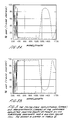
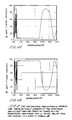
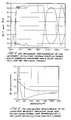
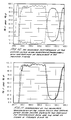
- FIGS. 2 - 12 depict the spectral performance of certain designs according to our invention, including those of TABLES I - V.
- FIG. 13 is a cross-section, in schematic form, of a solar cell cover comprising an infrared reflector in accordance with our invention.
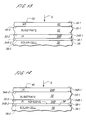
- FIGS. 14 - 16 are schematicized cross-sections of solar cell covers comprising UV and IR reflectors in accordance with our invention.
- our new cover is a multilayer coated onto a suitable substrate such as fused silica or cerium-doped glass that reflects infrared bands or ultraviolet and infrared bands (also called blue and red bands) that lie immediately adjacent to the solar cell spectral response region.
- the multilayer may comprise two, three, or more, thin-film materials.
- the ultraviolet and infrared reflection bands may be spectrally located independently of each other, i.e. without regard for the position of the other reflection band.
- our infrared reflector includes order suppression means such that no short/low orders are present that would degrade optical transmission through the reflector and any associated cover.
- the order suppression means used in our infrared reflector results in the spectral locations of the two reflection bands in our new cover not being interconnected and not requiring thin film materials with prescribed values of refractive index.
- FIGS. 13 - 16 depict exemplary embodiments of reflector covers which advantageously incorporate our order suppression, independent ultraviolet and infrared reflector design.
- FIG. 13 depicts a solar cell 30 in accordance with our invention which comprises a substrate (SS) 32, an anti-reflection coating 42 formed on the solar-incident side 32-1 of the substrate, and a multilayer IR coating 34B which is formed on the back or opposite side 32-2 of the substrate.
- the IR reflector coating reflects IR bands lying immediately adjacent and above the solar cell spectral response region.
- the IR reflector coating preferably incorporates order suppression means in accordance with our invention.
- the AR/SS/IR cover 30 includes or has adhered to its back side a cement coating 38 which mechanically and optically joins the cover to the associated solar cell 39.
- the illustrated multilayer solar cell cover 40 comprises a substrate 32 and a multilayer coating 34 comprising a reflector coating 34A which reflects UV bands lying immediately adjacent and below the spectral response region of the associated solar cell 39, and IR reflector coating 34B.
- the cover 40 includes or has adhered to the back side of the substrate 32 a cement coating 38 which mechanically and optically joins the cover to the associated solar cell 39.
- suitable substrate materials include in addition to the preferred cerium-doped glass and fused silica, other materials such as aluminum oxide or magnesium fluoride which are substantially transparent over the cell response range and are stable.
- first or front sides 34A-1, 32-1, 34B-1 and 39-1, etc. are also called the “solar incident” sides of the UV coating, the substrate, the IR coating and the solar cell, respectively, and the second or back sides 34A-2, 32-2, 34B-2 and 39-2 are also called the "opposite" sides.
- the UV and IR components 34A and 34B typically are readily designed to reflect the UV and IR bands immediately adjacent 350 nm and 900 nm, for application to GaAs solar cells, and the bands immediately adjacent 350 and 1100 nm, in the case of silicon solar cells.
- FIG. 15 depicts a solar cell cover embodiment 50 in which the UV and IR coatings 34A and 34B are a continuous coating 34.
- the UV coating 34A is formed on the solar incidence side 34B-1 of the IR coating 34B, and the IR coating is between the UV coating and the solar-incident surface 32-1 of the substrate.
- the UV and IR coatings 34A and 34B are again combined into a continuous coating 34, in this case one on the back surface 32-2 of the substrate 32.
- the UV coating 34A is between the substrate 32 and the IR coating 34B.
- the multilayer 34 is composed of 20-50 layers of low index of refraction (L) and high index of refraction (H) materials such as silicon dioxide (SiO2) and tantalum pentoxide (tantala, Ta2O5) respectively.
- L low index of refraction
- H high index of refraction
- SiO2 silicon dioxide
- Ta2O5 tantalum pentoxide
- These space-qualified materials are transparent throughout the ultraviolet, visible, and infrared portions of the solar radiation spectrum.
- suitable high-index materials include, but are not limited to, cerium oxide (CeO2), titania (TiO2), zirconia (ZrO2), niobia (Nb2O5) and hafnia (HfO2).
- Suitable low-index materials include, but are not limited to, aluminum oxide (Al2O3) and magnesium fluoride (MgF2).
- the two thin film materials which are responsible for the ultraviolet reflection may be different from the two thin film materials which are responsible for the infrared reflection.
- the simplest form of the new cover comprises two thin film materials, three or four thin film materials may be used.
- the multilayer coating 34 may be on one surface of the cover glass or may be divided between both surfaces. In either form, each portion of the multilayer transmits the wavelengths of solar radiation for which the cell is responsive. If it is on one surface or divided between the two surfaces, one portion of the multilayer is primarily responsible for reflecting the ultraviolet wavelengths and another portion is responsible for reflecting the infrared wavelengths.
- the preferred three elements of the new cover--the substrate 32, the UV reflector 34A, and the IR reflector 34B-- may be arranged in several ways.
- the incident solar radiation flows through the elements of the cover in a different order or sequence in each arrangement. Of the possible arrangements, only a few are preferred in providing the required function. In selecting an arrangement, one considers the spectral range of transparency and the contribution of each element to overall reflectance, solar transmission and emissivity of the cover.
- the general rule for heat reduction is that the ultraviolet reflecting component 34A of the multilayer coating 34 be on the side of solar incidence with respect to any ultraviolet-absorbing component.
- the ultraviolet reflecting coating 34A is located on the solar-incident surface 32-1 of the substrate, to face the incoming solar radiation.
- emissivity considerations lead to placing the infrared reflector 34B behind the ultraviolet reflector 34A, i.e. either between the IR reflector and the substrate, or, preferably, on the second surface 32-1 of the substrate.
- our preferred coating design for the divided or the undivided case contains two materials, there may be some benefit to three material designs in which the high index material in the infrared-reflecting portion of the designs is an ultraviolet-absorbing material such as titanium oxide.
- titanium oxide In the infrared wavelength region, titanium oxide has a higher refractive index than tantalum oxide.
- An infrared-reflecting stack made with titanium oxide would have a slightly wider reflection band compared to a stack containing tantalum oxide with an equal number of layers. It would also help to block the UV from penetrating through a W-transparent substrate into a UV-sensitive cement. If an ultraviolet-absorbing material is used in the infrared-reflecting portion 34B of the solar cell cover coating, the ultraviolet-reflecting portion 34A of the coating design should be on the side of solar incidence.
- the multilayer coating 34 should include at least one, preferably several, layers of ultraviolet absorbing material such as titanium oxide to protect the cement. These ultraviolet absorbing layers may be near the second surface 34A-2 of the ultraviolet-reflecting portion of the design (as described by Rancourt and Seddon in the '732 patent), or in the infrared-reflecting portion 34B of the design.
- the design of an undivided, ultraviolet-reflecting and infrared-reflecting multilayer coating for the first surface 32-1 of the cover glass typically differs slightly from the design for the second surface 32-2.
- Each design would be tailored to insure maximum transmission of the cover for light with wavelengths which are converted by the cell.
- the flow of light would be from air or vacuum through the coating 34 and into the cover glass 32.
- the second surface design the flow of light would be from the cover glass 32 through the coating 34 and into the cement 38 and the cell 39.
- the different refractive indices of the surrounding media in the two cases may suggest difference in the sequences and thickness of the layers that will be readily implemented by those of usual skill in the art.
- the new cover with both divided and undivided coatings for use with silicon and GaAs solar cells are described.
- the multilayer coatings in these examples comprise silicon oxide and tantalum oxide. Spectral measurements of several of the examples are also provided.
- TABLE I is a 16 layer design for the UVR coating for the first surface of a cerium-doped glass substrate. (The highest numbered layer in this and the other tables is adjacent the substrate.) The calculated reflectance of the coating is shown in FIG. 2. This design reflects a band of wavelengths shorter than about 350 nm and transmits longer wavelengths. This coating is composed of ultraviolet transparent thin film materials and does not, by itself, provide adequate ultraviolet shielding for most solar cell cements. If this coating is used for an ultraviolet-transparent substrate such as fused silica, layers of materials containing titanium oxide may be added to the UVR design or the infrared reflecting coating on the second surface of the substrate to shield the cement.
- the UVR design is essentially as described by Rancourt and Seddon in their commonly assigned U.S. patent 4,293,732.
- the long-wavelength edge of the reflection band is determined by the thicknesses of the layers in the design.
- the edge may be adjusted to longer or shorter wavelengths as needed.
- the ultraviolet reflecting coating may contain more or less layers of the same or different ultraviolet transparent thin film materials than listed in the table. With the same thin film materials, a design with more or less layers may reflect a greater or lesser portion of the solar ultraviolet radiation with wavelengths below the cut-on wavelength of 350 nm. Similar designs that incorporate different ultraviolet transparent thin film materials may be used.
- TABLE II is the design of a 37-layer short-wave pass (SWP) infrared-reflecting coating for silicon solar cells.
- the design is listed in order from the layer furthest from the substrate to the layer adjacent to the substrate.
- the refractive index of layer number 37 which is adjacent to the substrate, is similar to the substrate. That layer may be deleted without affecting the performance of the design. We have left this layer in the table to preserve the historical origins of the new cover. In our example coatings, low-index layers adjacent to the substrate were omitted.
- FIG. 3 shows the calculated spectral performance for light incident normally on this design on a nonabsorbing fused silica substrate.
- the design reflects a band of infrared wavelengths between 1100 and 1600 nm and transmits nearly perfectly the shorter wavelengths extending to 350 nm for which the silicon cell is responsive.
- the calculation is for a substrate coated on one side with no coating on the second side.
- FIG. 4 is similar to FIG. 3 except the infrared reflection band is located at shorter wavelengths.
- the design reflects a band of infrared wavelengths between 900 and 1300 nm and transmits nearly perfectly the shorter wavelengths extending to 300 nm. As indicated in the caption, this design is tailored for the spectral response of the GaAs solar cell. The design is listed in TABLE III.
- the refractive indices of the same thin film materials in TABLES II and III are slightly different.
- the values provided in the tables are representative of the different thin film deposition processes for which the two designs were prepared.
- the real differences between the designs in these tables are in the thicknesses of the layers and not the subtle differences in the indices of the materials.
- FIG. 5 is the measured spectral performance of the GaAs - SWP design on fused silica substrate; the reflectance and transmittance curves are superposed on the same graph.
- the measured curves are similar to the calculations shown in FIG. 4 except in the wavelength region below about 300 nm where the high-index material, tantalum oxide, is partially absorbing. This coating is on fused silica substrate in order to demonstrate the agreement between the calculated and measured results.
- This infrared-reflecting SWP coating designs in TABLES II and III are unique in part in that they include means for order suppression in accordance with our invention.
- the designs include a series of thick layers, identified in the tables by the suffix "T” and by shaded thickness values, which are separated by thin layers.
- the thin layers match the thick layer materials in the wavelength region of high transmission.
- the term "match” refers to admittance matching or impedance matching and effectively eliminates reflection between the materials.
- Evidence for the matching function is provided in FIG. 6.
- the upper curve in FIG. 6 is the calculated spectral reflection between semi-infinite media composed of silicon dioxide (SiO2) and tantalum pentoxide (Ta205) media.
- the refractive indices of the two materials for several wavelengths are listed in TABLE IV. For intermediate wavelengths, the indices are interpolated from values in the table. A more sophisticated interpolation will yield a smooth curve rather than the segmented shape of the upper curve.
- the lower curve in FIG. 6 is the calculated spectral reflection between the two media separated by a pair of thin layers.
- the thin layers are the same as layers 8 and 9 in TABLE III; also the same as most of the other two-layer pairs in this design.
- the central wavelength of the infrared-reflecting band of the SWP design (TABLE III and FIG. 4) is about 1150 nm.
- higher-order reflection bands would appear near the wavelengths of 575nm and 382 nm.
- the effect of the matching layers is to eliminate these higher order bands. The number of high order bands eliminated depends upon the breadth of the wavelength region over which the principal (thick) layers are matched.
- the infrared reflecting SWP coating may contain more or fewer layers of the same or different thin film materials than are listed in TABLES II or III. With the same thin film materials, a design with more or fewer layers may reflect a greater or lesser portion of the solar infrared radiation with wavelengths greater than the long wavelength limit of the solar cell spectral response. Similar designs that incorporate different film materials may be used. Please note, in the various design techniques, the suppression of orders allows the independence or decoupling of the UV reflectance and IR reflectance bands.
- FIGS. 7 and 8 are the calculated and measured performance of the ultraviolet-reflecting, infrared-reflecting coating for GaAs. This is a divided coating in which the UV-reflecting coating and the IR-reflecting coating are on opposite sides of the substrate. The single UV and IR-reflecting coating is discussed below. The curves verify that the solar cell cover transmits the useful wavelength region between 350 and 900 nm and reflects adjacent ultraviolet and infrared bands. The designs for the calculation (FIG. 7) and the experiment (FIG. 8) are in TABLES I and III. As mentioned above, these coatings and the fused silica substrate transmit ultraviolet radiation which may degrade a solar cell cover cement. If used with an ultraviolet sensitive cement, one of the coatings or the substrate should absorb ultraviolet radiation with wavelengths shorter than about 350 nm.
- FIGS. 9 and 10 are the calculated and measured performance of the same designs applied to cerium-doped glass. These figures are nearly identical to the previous two figures because the transmission of the substrates differs only in the ultraviolet region. FIG. 11 compares the two measured transmission curves.
- TABLE V is a 43-layer design for a combination UV-and IR-reflecting coating for the first surface of an ultraviolet absorbing glass substrate for use with GaAs solar cells.
- the layers are listed in order from the side of incidence.
- the first portion of the design including layers 2-9, is primarily responsible for reflecting a band of ultraviolet wavelengths shorter than about 350 nm.
- the second portion of the design especially layers 13-40, is primarily responsible for reflecting a band of infrared wavelengths longer than about 900 nm. Means for layer matching order suppression is provided.
- the thicker layers in this portion of the design are identified with shading and the suffix "T," as in TABLES II and III. Other layers which surround the two indicated portions of the design serve to minimize undesired reflection of light with wavelengths that lie between the two reflection bands.
- the UV and IR reflecting multilayer coating for the new solar cell cover whether the UV and IR reflectors are separated or combined, has the following distinguishing features:
Landscapes
- Chemical & Material Sciences (AREA)
- Materials Engineering (AREA)
- Engineering & Computer Science (AREA)
- Chemical Kinetics & Catalysis (AREA)
- General Chemical & Material Sciences (AREA)
- Geochemistry & Mineralogy (AREA)
- Life Sciences & Earth Sciences (AREA)
- Organic Chemistry (AREA)
- Physics & Mathematics (AREA)
- General Physics & Mathematics (AREA)
- Optics & Photonics (AREA)
- Photovoltaic Devices (AREA)
- Optical Filters (AREA)
Applications Claiming Priority (2)
| Application Number | Priority Date | Filing Date | Title |
|---|---|---|---|
| US61379 | 1979-07-27 | ||
| US6137993A | 1993-05-12 | 1993-05-12 |
Publications (2)
| Publication Number | Publication Date |
|---|---|
| EP0632507A2 true EP0632507A2 (de) | 1995-01-04 |
| EP0632507A3 EP0632507A3 (de) | 1995-11-22 |
Family
ID=22035414
Family Applications (1)
| Application Number | Title | Priority Date | Filing Date |
|---|---|---|---|
| EP94303431A Ceased EP0632507A3 (de) | 1993-05-12 | 1994-05-12 | UV/IR zurückstrahlende Abdeckung für Sonnenzellen. |
Country Status (3)
| Country | Link |
|---|---|
| US (1) | US5449413A (de) |
| EP (1) | EP0632507A3 (de) |
| JP (1) | JPH0758355A (de) |
Cited By (16)
| Publication number | Priority date | Publication date | Assignee | Title |
|---|---|---|---|---|
| WO2004061490A1 (en) * | 2002-12-19 | 2004-07-22 | Thales Uk Plc | An optical filter |
| EP1720206A1 (de) * | 2005-05-02 | 2006-11-08 | Japan Aerospace Exploration Agency | Dünner optischer Film für Solarzellen und sein Herstellungsverfahren |
| ITPD20080259A1 (it) * | 2008-09-10 | 2010-03-11 | Dichroic Cell Srl | Dispositivo fotovoltaico con ricoprimento superficiale dicroico integrato |
| DE102009028393A1 (de) | 2009-08-10 | 2011-02-17 | Robert Bosch Gmbh | Solarzelle |
| WO2011062836A1 (en) * | 2009-11-18 | 2011-05-26 | 3M Innovative Properties Company | Multi-layer optical films |
| FR2958453A1 (fr) * | 2010-04-02 | 2011-10-07 | Commissariat Energie Atomique | Dispositif de generation de courant a base d'energie solaire a rendement optimise. |
| WO2012118528A1 (en) * | 2011-02-28 | 2012-09-07 | University Of Florida Research Foundation, Inc. | Infrared pass visible blocker for upconversion devices |
| DE19782312B3 (de) * | 1996-12-05 | 2013-03-28 | Texas Instruments Inc. | Lichtundurchlässige Öffnungsbeschichtung auf Glas mit niedrigem Reflexionsvermögen |
| DE102013206864A1 (de) * | 2013-04-16 | 2014-10-16 | Fraunhofer-Gesellschaft zur Förderung der angewandten Forschung e.V. | Vorrichtung und Verfahren zur Reduzierung des Strahlungsaustausches von photovoltaischen Modulen |
| WO2015101692A1 (es) * | 2013-12-31 | 2015-07-09 | Abengoa Solar New Technologies, S.A. | Sistema híbrido de cilindro paramétrico termosolar y receptor fotovoltaico |
| WO2017058887A1 (en) * | 2015-09-28 | 2017-04-06 | Tru Vue, Inc. | Near infrared reflective coatings |
| US10513459B2 (en) | 2017-05-04 | 2019-12-24 | Apogee Enterprises, Inc. | Low emissivity coatings, glass surfaces including the same, and methods for making the same |
| US10578782B2 (en) | 2016-04-19 | 2020-03-03 | Apogee Enterprises, Inc. | Coated glass surfaces and method for coating a glass substrate |
| WO2021246891A1 (en) | 2020-06-03 | 2021-12-09 | Institut Za Nuklearne Nauke Vinca, Institut Od Nacionalnog Znacaja Za Republiku Srbiju, Univerzitet U Beogradu | Optical system for cooling, light concentration and photovoltaic response improvement of commercial solar panels |
| US12158288B2 (en) * | 2021-11-05 | 2024-12-03 | Xi'an Thermal Power Research Institute Co., Ltd | Light-splitting reflection high-concentration photovoltaic photothermal integrated cavity receiver |
| WO2025153429A1 (en) | 2024-01-19 | 2025-07-24 | Swiss Pv Ag | Composition and method for manufacturing a glazing unit using the same |
Families Citing this family (99)
| Publication number | Priority date | Publication date | Assignee | Title |
|---|---|---|---|---|
| US6559903B2 (en) | 1991-11-27 | 2003-05-06 | Reveo, Inc. | Non-absorptive electro-optical glazing structure employing composite infrared reflective polarizing filter |
| JPH08254611A (ja) * | 1995-03-16 | 1996-10-01 | Fujitsu Ltd | ビーム・スプリッタ |
| US5961852A (en) * | 1997-09-09 | 1999-10-05 | Optical Coating Laboratory, Inc. | Laser scribe and break process |
| US6107564A (en) * | 1997-11-18 | 2000-08-22 | Deposition Sciences, Inc. | Solar cell cover and coating |
| EP1078393A4 (de) * | 1998-04-13 | 2005-04-13 | Emcore Corp | Modulare glasbeschichte solarzellenanordnung |
| US6156967A (en) | 1998-06-04 | 2000-12-05 | Tecstar Power Systems, Inc. | Modular glass covered solar cell array |
| US6278054B1 (en) | 1998-05-28 | 2001-08-21 | Tecstar Power Systems, Inc. | Solar cell having an integral monolithically grown bypass diode |
| US6034319A (en) * | 1998-07-30 | 2000-03-07 | Falbel; Gerald | Immersed photovoltaic solar power system |
| CA2341629A1 (en) * | 1998-08-26 | 2000-03-09 | Hodaka Norimatsu | Photovoltaic device |
| DE19931954A1 (de) * | 1999-07-10 | 2001-01-11 | Leica Microsystems | Beleuchtungseinrichtung für ein DUV-Mikroskop |
| JP2001036103A (ja) * | 1999-07-15 | 2001-02-09 | Kanegafuchi Chem Ind Co Ltd | アモルファスシリコン系薄膜光電変換装置 |
| WO2001046718A2 (de) * | 1999-12-22 | 2001-06-28 | Schott Glas | Uv-reflektierendes interferenzschichtsystem |
| JP4009893B2 (ja) * | 2001-05-02 | 2007-11-21 | 独立行政法人科学技術振興機構 | 太陽電池を用いた電磁波吸収方法 |
| US6538191B1 (en) * | 2001-09-26 | 2003-03-25 | Biomed Solutions, Llc | Photocell with fluorescent conversion layer |
| WO2004047153A2 (en) * | 2002-11-20 | 2004-06-03 | Berkshire Laboratories, Inc. | High efficiency solar cells |
| US20050103374A1 (en) * | 2003-11-14 | 2005-05-19 | The Boeing Company | Solar power collection with near infrared wideband reflector coating |
| KR100682928B1 (ko) * | 2005-02-03 | 2007-02-15 | 삼성전자주식회사 | 양자점 화합물을 포함하는 에너지 변환막 및 양자점 박막 |
| US7906722B2 (en) | 2005-04-19 | 2011-03-15 | Palo Alto Research Center Incorporated | Concentrating solar collector with solid optical element |
| JP2006309238A (ja) * | 2005-04-27 | 2006-11-09 | Samsung Electronics Co Ltd | 光ルミネセンス液晶ディスプレイ |
| US7799371B2 (en) | 2005-11-17 | 2010-09-21 | Palo Alto Research Center Incorporated | Extruding/dispensing multiple materials to form high-aspect ratio extruded structures |
| US20070107773A1 (en) * | 2005-11-17 | 2007-05-17 | Palo Alto Research Center Incorporated | Bifacial cell with extruded gridline metallization |
| US7765949B2 (en) * | 2005-11-17 | 2010-08-03 | Palo Alto Research Center Incorporated | Extrusion/dispensing systems and methods |
| FR2894387B1 (fr) * | 2005-12-02 | 2008-02-29 | Alcatel Sa | Dispositif de conversion photovoltaique a transmittance limitee pour forte irriadance spectrale |
| US8637759B2 (en) * | 2005-12-16 | 2014-01-28 | The Boeing Company | Notch filter for triple junction solar cells |
| JPWO2007094445A1 (ja) * | 2006-02-17 | 2009-07-09 | 三井・デュポンポリケミカル株式会社 | 太陽電池封止材 |
| US20080302418A1 (en) * | 2006-03-18 | 2008-12-11 | Benyamin Buller | Elongated Photovoltaic Devices in Casings |
| US20070215195A1 (en) * | 2006-03-18 | 2007-09-20 | Benyamin Buller | Elongated photovoltaic cells in tubular casings |
| US7851693B2 (en) | 2006-05-05 | 2010-12-14 | Palo Alto Research Center Incorporated | Passively cooled solar concentrating photovoltaic device |
| US7773300B2 (en) * | 2006-05-12 | 2010-08-10 | Semrock, Inc. | Multiphoton fluorescence filters |
| US7541537B2 (en) * | 2006-07-03 | 2009-06-02 | Joe Madigan | Photovoltaic cell cover |
| US20080041440A1 (en) * | 2006-08-16 | 2008-02-21 | O'connell Daniel G | Solar panel condenser |
| US7780812B2 (en) | 2006-11-01 | 2010-08-24 | Palo Alto Research Center Incorporated | Extrusion head with planarized edge surface |
| US8322025B2 (en) | 2006-11-01 | 2012-12-04 | Solarworld Innovations Gmbh | Apparatus for forming a plurality of high-aspect ratio gridline structures |
| US7922471B2 (en) | 2006-11-01 | 2011-04-12 | Palo Alto Research Center Incorporated | Extruded structure with equilibrium shape |
| US8226391B2 (en) | 2006-11-01 | 2012-07-24 | Solarworld Innovations Gmbh | Micro-extrusion printhead nozzle with tapered cross-section |
| US7638438B2 (en) * | 2006-12-12 | 2009-12-29 | Palo Alto Research Center Incorporated | Solar cell fabrication using extrusion mask |
| US7928015B2 (en) * | 2006-12-12 | 2011-04-19 | Palo Alto Research Center Incorporated | Solar cell fabrication using extruded dopant-bearing materials |
| US20080185039A1 (en) * | 2007-02-02 | 2008-08-07 | Hing Wah Chan | Conductor fabrication for optical element |
| US7954449B2 (en) | 2007-05-08 | 2011-06-07 | Palo Alto Research Center Incorporated | Wiring-free, plumbing-free, cooled, vacuum chuck |
| US8958156B1 (en) | 2007-05-30 | 2015-02-17 | Semrock, Inc. | Interference filter for non-zero angle of incidence spectroscopy |
| WO2009006110A2 (en) * | 2007-06-28 | 2009-01-08 | Jacobs Gregory F | Photovoltaic devices including cover elements, and photovoltaic systems, arrays, roofs and methods using them |
| US20090032098A1 (en) * | 2007-08-03 | 2009-02-05 | Guardian Industries Corp. | Photovoltaic device having multilayer antireflective layer supported by front substrate |
| US9354370B1 (en) * | 2007-09-25 | 2016-05-31 | Semrock, Inc. | Optical thin-film notch filter with very wide pass band regions |
| US8893711B2 (en) * | 2007-10-18 | 2014-11-25 | Alliance For Sustainable Energy, Llc | High temperature solar selective coatings |
| JP5289913B2 (ja) * | 2007-12-07 | 2013-09-11 | シャープ株式会社 | 太陽電池用表面保護シートおよび太陽電池モジュール |
| US20090283133A1 (en) * | 2008-05-14 | 2009-11-19 | 3M Innovative Properties Company | Solar concentrating mirror |
| US20090283144A1 (en) * | 2008-05-14 | 2009-11-19 | 3M Innovative Properties Company | Solar concentrating mirror |
| WO2009144944A1 (ja) * | 2008-05-30 | 2009-12-03 | 三菱電機株式会社 | 光電変換装置 |
| KR101244027B1 (ko) * | 2008-07-08 | 2013-03-14 | 시너스 테크놀리지, 인코포레이티드 | 플렉서블 태양전지 제조방법 |
| JP5229075B2 (ja) * | 2008-07-28 | 2013-07-03 | 日本電気硝子株式会社 | 広帯域反射鏡 |
| US7999175B2 (en) * | 2008-09-09 | 2011-08-16 | Palo Alto Research Center Incorporated | Interdigitated back contact silicon solar cells with laser ablated grooves |
| US20100117254A1 (en) * | 2008-11-07 | 2010-05-13 | Palo Alto Research Center Incorporated | Micro-Extrusion System With Airjet Assisted Bead Deflection |
| US8117983B2 (en) * | 2008-11-07 | 2012-02-21 | Solarworld Innovations Gmbh | Directional extruded bead control |
| US9150966B2 (en) * | 2008-11-14 | 2015-10-06 | Palo Alto Research Center Incorporated | Solar cell metallization using inline electroless plating |
| US8080729B2 (en) | 2008-11-24 | 2011-12-20 | Palo Alto Research Center Incorporated | Melt planarization of solar cell bus bars |
| US8960120B2 (en) * | 2008-12-09 | 2015-02-24 | Palo Alto Research Center Incorporated | Micro-extrusion printhead with nozzle valves |
| US9523516B2 (en) | 2008-12-30 | 2016-12-20 | 3M Innovative Properties Company | Broadband reflectors, concentrated solar power systems, and methods of using the same |
| US8110297B2 (en) * | 2009-02-18 | 2012-02-07 | Guardian Industries Corp. | Coated article supporting photocatalytic layer and UV-reflecting underlayer, and/or method of making the same |
| US20100231386A1 (en) * | 2009-03-13 | 2010-09-16 | Lumen International, Inc. | Solar-powered sensing |
| US8879150B1 (en) | 2009-03-20 | 2014-11-04 | Semrock, Inc. | Optical thin-film polarizing bandpass filter |
| JP5424091B2 (ja) * | 2009-03-31 | 2014-02-26 | コニカミノルタ株式会社 | 紫外反射膜を有するフィルムミラー |
| KR101149308B1 (ko) * | 2009-04-02 | 2012-05-24 | 삼성코닝정밀소재 주식회사 | 태양전지용 다층박막 구조 |
| JP2010258144A (ja) * | 2009-04-23 | 2010-11-11 | Konica Minolta Holdings Inc | 太陽電池ユニットおよびその製造方法 |
| US20110100423A1 (en) * | 2009-10-30 | 2011-05-05 | The Research Foundation Of State University Of New York | Light Scattering and Transport for Photosensitive Devices |
| US10319870B2 (en) * | 2009-11-02 | 2019-06-11 | International Business Machines Corporation | Photovoltaic module with a controllable infrared protection layer |
| US8617641B2 (en) * | 2009-11-12 | 2013-12-31 | Guardian Industries Corp. | Coated article comprising colloidal silica inclusive anti-reflective coating, and method of making the same |
| US20110132455A1 (en) * | 2009-12-03 | 2011-06-09 | Du Pont Apollo Limited | Solar cell with luminescent member |
| US8441710B2 (en) * | 2010-01-08 | 2013-05-14 | Semrock, Inc. | Tunable thin-film filter |
| US20110216401A1 (en) * | 2010-03-03 | 2011-09-08 | Palo Alto Research Center Incorporated | Scanning System With Orbiting Objective |
| WO2012047422A1 (en) | 2010-10-06 | 2012-04-12 | 3M Innovative Properties Company | Anti-reflective articles with nanosilica-based coatings |
| BR112013006753A2 (pt) | 2010-10-06 | 2016-06-21 | 3M Innovative Properties Co | artigos antirreflexivos com revestimentos à base de nanossílica e camada de barreira |
| CN102650709A (zh) * | 2011-02-24 | 2012-08-29 | 上海空间电源研究所 | 空间用硅太阳电池的带通滤波器 |
| US8962424B2 (en) | 2011-03-03 | 2015-02-24 | Palo Alto Research Center Incorporated | N-type silicon solar cell with contact/protection structures |
| WO2012128109A1 (ja) * | 2011-03-18 | 2012-09-27 | コニカミノルタホールディングス株式会社 | 熱線反射フィルム、その製造方法、及び熱線反射体 |
| CN102323630B (zh) * | 2011-08-23 | 2013-07-31 | 杭州科汀光学技术有限公司 | 一种宽带反热多层膜 |
| EP2774156A1 (de) * | 2011-11-04 | 2014-09-10 | Cambrios Technologies Corporation | Verfahren zur reduzierung der diffusen reflexion nanostrukturierter durchsichtiger leitender filme und daraus hergestellter berührungstafeln |
| US9304237B1 (en) | 2012-12-10 | 2016-04-05 | Semrock, Inc. | Tunable band-pass filter |
| US20160268464A1 (en) * | 2013-11-13 | 2016-09-15 | The Board Of Trustees Of The Leland Stanford Junior University | Illumination and radiative cooling |
| US9291746B2 (en) * | 2014-02-25 | 2016-03-22 | iCoat Company, LLC | Visible spectrum anti-reflective coatings with reduced reflections in ultraviolet and infrared spectral bands |
| US9823287B2 (en) | 2014-06-27 | 2017-11-21 | Elwha Llc | Systems and methods for rating solar cells |
| CN104362203A (zh) * | 2014-10-28 | 2015-02-18 | 朱家元 | 一种高效太阳能光伏板 |
| CN104600142B (zh) * | 2014-12-24 | 2017-06-30 | 英利集团有限公司 | 光伏组件 |
| WO2017090056A1 (en) * | 2015-11-24 | 2017-06-01 | Indian Institute Of Technology Bombay | Solar module with selective colored coating |
| US9749044B1 (en) * | 2016-04-05 | 2017-08-29 | Facebook, Inc. | Luminescent detector for free-space optical communication |
| JP6600670B2 (ja) * | 2017-09-15 | 2019-10-30 | 株式会社東芝 | 光電変換素子、その製造方法、およびその製造装置 |
| CN108333660B (zh) * | 2017-12-27 | 2021-06-25 | 中国电子科技集团公司第十八研究所 | 一种空间用太阳电池红外梯度衰减滤光片的制备方法 |
| JP6748150B2 (ja) * | 2018-06-14 | 2020-08-26 | ファナック株式会社 | ガルバノミラー及びレーザ加工装置 |
| US12147008B2 (en) | 2019-04-25 | 2024-11-19 | Quantum Innovations, Inc. | Thin film optical lens and method for coating a lens |
| JP2021015939A (ja) * | 2019-07-16 | 2021-02-12 | Agc株式会社 | 太陽電池モジュール |
| CN112216748B (zh) * | 2020-10-10 | 2021-09-24 | 哈尔滨工业大学 | 一种卫星太阳能帆板主动热控方法 |
| US20240162357A1 (en) * | 2021-03-30 | 2024-05-16 | Idemitsu Kosan Co.,Ltd. | Photoelectric conversion element and method for manufacturing photoelectric conversion element |
| US20240178338A1 (en) * | 2021-03-30 | 2024-05-30 | Idemitsu Kosan Co.,Ltd. | Photoelectric conversion element and method for manufacturing photoelectric conversion element |
| CN114171610B (zh) * | 2021-07-07 | 2024-07-19 | 哈尔滨工业大学(威海) | 一种高红外光谱反射纳米复合膜层及其制备方法与应用 |
| USD1083918S1 (en) | 2022-09-27 | 2025-07-15 | Banner Engineering Corp. | Removable cover for data processing equipment |
| US12095411B2 (en) * | 2022-11-23 | 2024-09-17 | International Business Machines Corporation | Variable solar panel assembly |
| US12500544B2 (en) | 2023-05-09 | 2025-12-16 | International Business Machines Corporation | Data-analysis-based control of floating solar array location |
| CN121153358A (zh) * | 2023-05-12 | 2025-12-16 | 3M创新有限公司 | 波长选择性多层制品和包括该制品的太阳能阵列 |
| US12506337B2 (en) | 2023-08-10 | 2025-12-23 | International Business Machines Corporation | Location optimization for an autonomous power generation unit |
| CN118695625B (zh) * | 2024-08-26 | 2024-11-05 | 港华能源创科(深圳)有限公司 | 光伏电池及制备方法 |
Family Cites Families (10)
| Publication number | Priority date | Publication date | Assignee | Title |
|---|---|---|---|---|
| US3076861A (en) * | 1959-06-30 | 1963-02-05 | Space Technology Lab Inc | Electromagnetic radiation converter |
| US3247392A (en) * | 1961-05-17 | 1966-04-19 | Optical Coating Laboratory Inc | Optical coating and assembly used as a band pass interference filter reflecting in the ultraviolet and infrared |
| US4293732A (en) * | 1977-08-11 | 1981-10-06 | Optical Coating Laboratory, Inc. | Silicon solar cell and 350 nanometer cut-on filter for use therein |
| US4229066A (en) * | 1978-09-20 | 1980-10-21 | Optical Coating Laboratory, Inc. | Visible transmitting and infrared reflecting filter |
| US4783373A (en) * | 1986-04-18 | 1988-11-08 | Optical Coating Laboratory, Inc. | Article with thin film coating having an enhanced emissivity and reduced absorption of radiant energy |
| CA2017471C (en) * | 1989-07-19 | 2000-10-24 | Matthew Eric Krisl | Optical interference coatings and lamps using same |
| US5103337A (en) * | 1990-07-24 | 1992-04-07 | The Dow Chemical Company | Infrared reflective optical interference film |
| JPH04133004A (ja) * | 1990-09-25 | 1992-05-07 | Matsushita Electric Works Ltd | 紫外赤外線カットフィルタ |
| JPH04177204A (ja) * | 1990-11-13 | 1992-06-24 | Nissan Motor Co Ltd | 紫外線および赤外線カットフィルター |
| US5233465A (en) * | 1992-05-27 | 1993-08-03 | The Dow Chemical Company | Visibly transparent infrared reflecting film with color masking |
-
1994
- 1994-05-12 EP EP94303431A patent/EP0632507A3/de not_active Ceased
- 1994-05-12 JP JP6098768A patent/JPH0758355A/ja active Pending
- 1994-05-16 US US08/243,429 patent/US5449413A/en not_active Expired - Lifetime
Cited By (25)
| Publication number | Priority date | Publication date | Assignee | Title |
|---|---|---|---|---|
| DE19782312B3 (de) * | 1996-12-05 | 2013-03-28 | Texas Instruments Inc. | Lichtundurchlässige Öffnungsbeschichtung auf Glas mit niedrigem Reflexionsvermögen |
| WO2004061490A1 (en) * | 2002-12-19 | 2004-07-22 | Thales Uk Plc | An optical filter |
| US8018652B2 (en) | 2002-12-19 | 2011-09-13 | Denny Wernham | Optical filter |
| US7999177B2 (en) | 2005-05-02 | 2011-08-16 | Japan Aerospace Exploration Agency | Optical thin film for solar cells and method of forming the same |
| EP1720206A1 (de) * | 2005-05-02 | 2006-11-08 | Japan Aerospace Exploration Agency | Dünner optischer Film für Solarzellen und sein Herstellungsverfahren |
| ITPD20080259A1 (it) * | 2008-09-10 | 2010-03-11 | Dichroic Cell Srl | Dispositivo fotovoltaico con ricoprimento superficiale dicroico integrato |
| DE102009028393A1 (de) | 2009-08-10 | 2011-02-17 | Robert Bosch Gmbh | Solarzelle |
| WO2011018390A1 (de) | 2009-08-10 | 2011-02-17 | Robert Bosch Gmbh | Solarzelle |
| WO2011062836A1 (en) * | 2009-11-18 | 2011-05-26 | 3M Innovative Properties Company | Multi-layer optical films |
| US10514482B2 (en) | 2009-11-18 | 2019-12-24 | 3M Innovative Properties Company | Multi-layer optical films |
| CN102754000A (zh) * | 2009-11-18 | 2012-10-24 | 3M创新有限公司 | 多层光学膜 |
| US9459386B2 (en) | 2009-11-18 | 2016-10-04 | 3M Innovative Properties Company | Multi-layer optical films |
| FR2958453A1 (fr) * | 2010-04-02 | 2011-10-07 | Commissariat Energie Atomique | Dispositif de generation de courant a base d'energie solaire a rendement optimise. |
| US8598573B1 (en) | 2011-02-28 | 2013-12-03 | University Of Florida Research Foundation, Inc. | Infrared pass visible blocker for upconversion devices |
| WO2012118528A1 (en) * | 2011-02-28 | 2012-09-07 | University Of Florida Research Foundation, Inc. | Infrared pass visible blocker for upconversion devices |
| DE102013206864A1 (de) * | 2013-04-16 | 2014-10-16 | Fraunhofer-Gesellschaft zur Förderung der angewandten Forschung e.V. | Vorrichtung und Verfahren zur Reduzierung des Strahlungsaustausches von photovoltaischen Modulen |
| WO2015101692A1 (es) * | 2013-12-31 | 2015-07-09 | Abengoa Solar New Technologies, S.A. | Sistema híbrido de cilindro paramétrico termosolar y receptor fotovoltaico |
| WO2017058887A1 (en) * | 2015-09-28 | 2017-04-06 | Tru Vue, Inc. | Near infrared reflective coatings |
| US10816703B2 (en) | 2015-09-28 | 2020-10-27 | Tru Vue, Inc. | Near infrared reflective coatings |
| US10578782B2 (en) | 2016-04-19 | 2020-03-03 | Apogee Enterprises, Inc. | Coated glass surfaces and method for coating a glass substrate |
| US10513459B2 (en) | 2017-05-04 | 2019-12-24 | Apogee Enterprises, Inc. | Low emissivity coatings, glass surfaces including the same, and methods for making the same |
| US10752539B2 (en) | 2017-05-04 | 2020-08-25 | Apogee Enterprises, Inc. | Low emissivity coatings, glass surfaces including the same, and methods for making the same |
| WO2021246891A1 (en) | 2020-06-03 | 2021-12-09 | Institut Za Nuklearne Nauke Vinca, Institut Od Nacionalnog Znacaja Za Republiku Srbiju, Univerzitet U Beogradu | Optical system for cooling, light concentration and photovoltaic response improvement of commercial solar panels |
| US12158288B2 (en) * | 2021-11-05 | 2024-12-03 | Xi'an Thermal Power Research Institute Co., Ltd | Light-splitting reflection high-concentration photovoltaic photothermal integrated cavity receiver |
| WO2025153429A1 (en) | 2024-01-19 | 2025-07-24 | Swiss Pv Ag | Composition and method for manufacturing a glazing unit using the same |
Also Published As
| Publication number | Publication date |
|---|---|
| JPH0758355A (ja) | 1995-03-03 |
| US5449413A (en) | 1995-09-12 |
| EP0632507A3 (de) | 1995-11-22 |
Similar Documents
| Publication | Publication Date | Title |
|---|---|---|
| US5449413A (en) | UV/IR reflecting solar cell cover | |
| US20230204955A1 (en) | Head up display system | |
| US3247392A (en) | Optical coating and assembly used as a band pass interference filter reflecting in the ultraviolet and infrared | |
| AU2019362215B2 (en) | Transparent covering having anti-reflective coatings | |
| US6107564A (en) | Solar cell cover and coating | |
| US6863397B2 (en) | Optical element and eyeglass lens | |
| EP0317264B1 (de) | Dicke, stossresistente Antireflexbeschichtungen für IR-durchlässige optische Elemente | |
| US5140457A (en) | Reflector for display lighting | |
| US20220373723A1 (en) | Optical element having a protective coating, method for the production thereof and optical arrangement | |
| JPH0238924B2 (de) | ||
| EP1009949A4 (de) | Optischer interferenzüberung für extreme temperaturverhältnisse | |
| US20250100250A1 (en) | Transparent substrate provided with a functional stack of thin layers | |
| JP2002286909A (ja) | 紫外線反射防止コーティング | |
| JP2025537470A (ja) | 車窓ガラスとその製造方法、並びに車両 | |
| JP4171362B2 (ja) | 反射防止膜付き透明基板 | |
| JP2002523267A (ja) | 被覆された紫外線吸収ガラス | |
| FR2800174B1 (fr) | Verre composite de protection de la vue | |
| CN210506093U (zh) | 一种减反射膜和减反射玻璃 | |
| DeSandre et al. | Thin-film multilayer filter designs for hybrid solar energy conversion systems | |
| JPS6356602A (ja) | 高放出体 | |
| JP2008252077A (ja) | 集光型太陽電池モジュールに用いる反射鏡 | |
| US5179469A (en) | Broad band light absorbing film | |
| WO2010125667A1 (ja) | 眼鏡用レンズ | |
| US5048942A (en) | Optical element with reduced reflectance | |
| JP2000347002A (ja) | 反射防止膜 |
Legal Events
| Date | Code | Title | Description |
|---|---|---|---|
| PUAI | Public reference made under article 153(3) epc to a published international application that has entered the european phase |
Free format text: ORIGINAL CODE: 0009012 |
|
| AK | Designated contracting states |
Kind code of ref document: A2 Designated state(s): DE FR GB IT |
|
| PUAL | Search report despatched |
Free format text: ORIGINAL CODE: 0009013 |
|
| AK | Designated contracting states |
Kind code of ref document: A3 Designated state(s): DE FR GB IT |
|
| 17P | Request for examination filed |
Effective date: 19960503 |
|
| 17Q | First examination report despatched |
Effective date: 19960604 |
|
| GRAG | Despatch of communication of intention to grant |
Free format text: ORIGINAL CODE: EPIDOS AGRA |
|
| STAA | Information on the status of an ep patent application or granted ep patent |
Free format text: STATUS: THE APPLICATION HAS BEEN REFUSED |
|
| 18R | Application refused |
Effective date: 20011216 |