EP0633255A1 - Epoxydation du propylène - Google Patents
Epoxydation du propylène Download PDFInfo
- Publication number
- EP0633255A1 EP0633255A1 EP94304946A EP94304946A EP0633255A1 EP 0633255 A1 EP0633255 A1 EP 0633255A1 EP 94304946 A EP94304946 A EP 94304946A EP 94304946 A EP94304946 A EP 94304946A EP 0633255 A1 EP0633255 A1 EP 0633255A1
- Authority
- EP
- European Patent Office
- Prior art keywords
- tertiary butyl
- segment
- propylene
- reaction
- butyl alcohol
- Prior art date
- Legal status (The legal status is an assumption and is not a legal conclusion. Google has not performed a legal analysis and makes no representation as to the accuracy of the status listed.)
- Granted
Links
Images

Classifications
-
- C—CHEMISTRY; METALLURGY
- C07—ORGANIC CHEMISTRY
- C07D—HETEROCYCLIC COMPOUNDS
- C07D301/00—Preparation of oxiranes
- C07D301/02—Synthesis of the oxirane ring
- C07D301/03—Synthesis of the oxirane ring by oxidation of unsaturated compounds, or of mixtures of unsaturated and saturated compounds
- C07D301/19—Synthesis of the oxirane ring by oxidation of unsaturated compounds, or of mixtures of unsaturated and saturated compounds with organic hydroperoxides
-
- Y—GENERAL TAGGING OF NEW TECHNOLOGICAL DEVELOPMENTS; GENERAL TAGGING OF CROSS-SECTIONAL TECHNOLOGIES SPANNING OVER SEVERAL SECTIONS OF THE IPC; TECHNICAL SUBJECTS COVERED BY FORMER USPC CROSS-REFERENCE ART COLLECTIONS [XRACs] AND DIGESTS
- Y02—TECHNOLOGIES OR APPLICATIONS FOR MITIGATION OR ADAPTATION AGAINST CLIMATE CHANGE
- Y02P—CLIMATE CHANGE MITIGATION TECHNOLOGIES IN THE PRODUCTION OR PROCESSING OF GOODS
- Y02P20/00—Technologies relating to chemical industry
- Y02P20/50—Improvements relating to the production of bulk chemicals
- Y02P20/52—Improvements relating to the production of bulk chemicals using catalysts, e.g. selective catalysts
-
- Y—GENERAL TAGGING OF NEW TECHNOLOGICAL DEVELOPMENTS; GENERAL TAGGING OF CROSS-SECTIONAL TECHNOLOGIES SPANNING OVER SEVERAL SECTIONS OF THE IPC; TECHNICAL SUBJECTS COVERED BY FORMER USPC CROSS-REFERENCE ART COLLECTIONS [XRACs] AND DIGESTS
- Y02—TECHNOLOGIES OR APPLICATIONS FOR MITIGATION OR ADAPTATION AGAINST CLIMATE CHANGE
- Y02P—CLIMATE CHANGE MITIGATION TECHNOLOGIES IN THE PRODUCTION OR PROCESSING OF GOODS
- Y02P20/00—Technologies relating to chemical industry
- Y02P20/50—Improvements relating to the production of bulk chemicals
- Y02P20/582—Recycling of unreacted starting or intermediate materials
Definitions
- This invention relates to the epoxidation of propylene. More particularly, this invention relates to a process for the reaction of propylene with tertiary butyl hydroperoxide in solution in tertiary butyl alcohol in the presence of a peroxidation catalyst to provide propylene oxide and additional tertiary butyl alcohol.
- this invention relates to a process for preparing propylene oxide and tertiary butyl alcohol by reacting tertiary butyl hydroperoxide in solution in tertiary butyl alcohol with propylene in the presence of a soluble molybdenum catalyst, wherein the reaction is conducted in stages involving a reactor system comprising a first isothermal segment and a second adiabatic segment, wherein a feed mixture comprising a recycle stream, propylene, and a tertiary butyl alcohol solution of tertiary butyl hydroperoxide and a molybdenum catalyst are charged to the isothermal segment under reaction conditions sufficient to provide for a conversion of 60 to 80 wt.% of the tertiary butyl hydroperoxide to thereby provide an intermediate reaction mixture, wherein a recycle stream constituting 25 to 100 wt.% of the combined weight of the propylene and tertiary butyl alcohol solution is removed as the recycle stream and wherein
- Marquis et al. in U. S. Patent No. 4,891,437 disclose an improvement on the Kollar process in the reaction of propylene with tertiary butyl hydroperoxide is concerned wherein the reaction is conducted in a medium composed of 60 wt.% or more of polar components which is formed by utilizing a molar ratio of propylene to tertiary butyl hydroperoxide of about 0.5 to 2 moles of charged propylene per mole of charged hydroperoxide, the reaction being conducted in solution in tertiary butyl alcohol in the presence of a molybdenum catalyst.
- Variations in the Marquis et al. process and in the preparation of catalysts useful therefore are disclosed in Marquis et al. U. S. Patent No. 4,845,251 and U. S. Patent No. 5,107,067.
- British Patent No. 1,298,253 discloses a process for the staged reaction of propylene with tertiary butyl hydroperoxide in the presence of tertiary butyl alcohol and a soluble molybdenum catalyst wherein the reaction product from the first stage is fractionated to provide a lighter fraction which is recycled to the beginning of the first stage and a heavier fraction which is charged to the second stage of the epoxidation process.
- Russell U. S. Patent No. 3,418,340 discloses a process for the production of propylene oxide by the reaction of propylene with tertiary butyl hydroperoxide involving a recycle of the propylene wherein the propylene is further fractionated to remove oxygen prior to recycle.
- U. S. Patent No. 4,002,687 discloses a process for the hydroperoxidation of a hydrocarbon such as isopentane or isobutane with oxygen using a plurality of stages with water washing between stages.
- Tertiary butyl hydroperoxide is a comparatively stable hydroperoxide. Nevertheless, it is a peroxide and subject to explosive autoxidation under improper conditions.
- the reaction of tertiary butyl hydroperoxide with propylene is a highly exothermic reaction, liberating about 60,000 calories of heat per gram mole of epoxide formed by the primary reaction. It is therefore of prime importance to maintain positive and accurate control of the reaction temperature during the epoxidation process in order to prevent a run away reaction.
- Another problem that is encountered in the reaction of propylene with tertiary butyl hydroperoxide relates to selectivity.
- the primary reaction of the tertiary butyl hydroperoxide with propylene will result in the formation of propylene oxide and tertiary butyl alcohol
- other oxygenated by-products can be and are formed in various amounts, including aldehydes, organic acids, esters, ketones, etc.
- the propylene oxide that is formed can react with oxygenated by-products present in the reaction medium to further decrease the yield of propylene oxide.
- the foregoing and other problems are ameliorated through the provision of a process wherein propylene is reacted with tertiary butyl hydroperoxide in a staged process in a reactor system comprising a first isothermal segment and a second adiabatic segment, wherein the isothermal segment is charged with propylene, with a tertiary butyl alcohol solution of tertiary butyl hydroperoxide and molybdenum catalyst and a recycle stream, wherein the reaction conditions in the isothermal segment are established so as to convert 60 to 80 wt.% of the tertiary butyl hydroperoxide to an intermediate reaction mixture, wherein a portion of the intermediate reaction mixture, constituting 25 to 100 wt.% of the combined weight of the initial propylene and tertiary butyl alcohol solution, is removed from the intermediate reaction mixture as the recycle stream, wherein the remainder of the intermediate reaction stream is charged to the adiabatic segment of the reactor system in order to
- the process is carried out continuously in a reaction zone comprising a first isothermal segment and a second adiabatic segment, and wherein:
- the epoxidation reaction conditions utilized in the isothermal epoxidation segment may suitably include a temperature of 50° to 180°C. and a reaction time of 0.3 to 3 hours. More preferably, the reaction will be conducted at a pressure of 2.8 to 5.6 MPa (400 to 800 psig), a reaction temperature of 80° to 140°C. and a reaction time of 0.5 to 2 hours.
- Reaction conditions are preferably adjusted in the isothermal segment to provide for a 65 to 75% conversion of the tertiary butyl hydroperoxide and for the recycle of a recycle stream comprising 25 to 100 wt.% of the combined weight of the propylene charge stream and the tertiary butyl alcohol solution.
- a problem involved in the recycle of the total reactor effluent from the isothermal segment arises in that the recycle stream is at a temperature of 100° to 140°C and contains tertiary butyl hydroperoxide and possibly other hydroperoxide reaction products which may be less thermally stable than the tertiary butyl hydroperoxide. Therefore, when a pump is utilized to provide the motive force for recycling the recycle stream, care must be taken to avoid a potential source of ignition, such as a spark generated by the equipment. Failure of a mechanical pump can also lead to a runaway reaction, especially if olefin impurities such as butylenes and/or pentalenes are present.
- a mechanical pump may provide an ignition source in the event of the failure of a bearing, a rotor or some other part which permits the creation of a local hot spot. Also, it is not uncommon for a mechanical pump to experience deterioration of the seals which can lead to the release of environmentally noxious or hazardous materials.
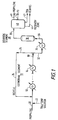
- Fig. 1 is a schematic flow sheet illustrating the general reaction sequence of the present invention.
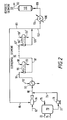
- Fig. 2 is a schematic flow sheet illustrating the embodiment of the present invention wherein an eductor is utilized to transport the recycle stream.
- Fig. 3 is a plan view, partially in section, of an eductor of the type that may be used in the process of the present invention.
- FIG. 1 there is shown a schematic flow sheet illustrating a preferred method of practicing the process of the present invention.
- conventional parts such as valves, pumps, temperature sensors, pressure sensors, heaters, coolers, flow control regulation apparatus, have been omitted.
- a reactor system comprising an isothermal segment designated generally by the numeral 10 and an adiabatic segment designated generally by the numeral 20.
- the isothermal segment 10 will comprise a plurality of reactors 12-14, each provided with appropriate indirect heat exchange control means.
- propylene is charged to the initial reactor 12 by way of a charge line 21 together with a tertiary butyl alcohol solution of tertiary butyl hydroperoxide containing a molybdenum catalyst which is charged by a line 22 and with a recycle stream 24.
- the resultant reaction mixture is passed through the series of reactors 12-14 in the isothermal segment under conditions of temperature, pressure and time sufficient to convert from 60 to 80 wt.% of the charged tertiary butyl hydroperoxide.
- the reaction conditions to be utilized in the isothermal segment may include a pressure sufficient to maintain the reactants in liquid phase, such as a pressure of 2.8 to 5.6 MPa (400 to 800 psig), a reaction temperature of 50° to 180°C., such as a temperature of 100° to 130°C., and a reaction time of 0.3 to 3 hours, and more preferably from 0.5 to 2 hours.
- a pressure sufficient to maintain the reactants in liquid phase such as a pressure of 2.8 to 5.6 MPa (400 to 800 psig)
- a reaction temperature of 50° to 180°C. such as a temperature of 100° to 130°C.
- a reaction time of 0.3 to 3 hours, and more preferably from 0.5 to 2 hours.
- the reactor effluent from the last of the isothermal reactors 14 is discharged by a line 30 which is provided with a branch line 24 from which the recycle stream is removed and with a second line 32 leading to an appropriate heat exchange means 34 for adjusting the temperature, if necessary, of the resultant remainder of the intermediate reaction mixture after which it is charged by a line 36 to an adiabatic reactor 38 in the adiabatic reaction segment 20 to convert an additional 15 to 20 wt.% of the tertiary butyl hydroperoxide therein.
- the products of the reaction are discharged in the adiabatic reaction segment 38 by a line 39 leading to a recovery zone 40 wherein the products of the reaction may be separated by conventional distillation means, such as those described in Marquis et al. U. S. Patent No. 4,992,556 or Marquis et al. U. S. Patent No. 5,093,506.
- the recovery zone 40 may comprise a plurality of serially connected distillation columns wherein the products of the reaction are separated into a propylene fraction 41 that can be recycled by any suitable means (not shown) as part of the propylene charge 20, a propylene oxide fraction 42, a tertiary butyl alcohol fraction 43 comprising charged tertiary butyl alcohol and tertiary butyl alcohol formed during the process, and a heavier fraction 44 comprising reaction byproducts and catalyst residue.
- 450 kg (1000 lb) per hour of propylene may be charged to the isothermal segment by the line 20 together with 1100 kg (2430 lb) per hour of a solution of tertiary butyl hydroperoxide in tertiary butyl alcohol which is charged by the line 22.
- the solution will contain 55 wt.% of tertiary butyl hydroperoxide.
- a recycle stream charged by the line 24 may comprise, for example, about 166 kg (370 lb) per hour of propylene, about 162 kg (3601b) per hour of propylene oxide, about 504kg (11201b) per hour of tertiary butyl alcohol and about 108kg (2401b) per hour of tertiary butyl hydroperoxide.
- the feed mixture is passed through the isothermal reactor segment reactors 12-14 under reaction conditions including a temperature of 80° to 140°C., a pressure of 2.8 to 5.6 MPa (400 to 800 psig) and a total reaction time within the isothermal segment of 0.3 to about 2
- the effuent of about 2470kg (5490 lb) per hour discharged by the line 30 is separated into 927kg (20601b) per hour of recycle and 1543kg (3430 lb) per hour of feed to the adiabatic reaction segment 38 by way of the lines 32 and 36.
- FIG. 2 there is shown a preferred embodiment of the present invention wherein an eductor is utilized to transport the recycle stream from the isothermal reactor effluent to the beginning of the process.
- a reaction system comprising an isothermal reactor segment 50 and an adiabatic reactor segment 60.
- a feedstock preparation tank designated generally by the number 70 to which tertiary butyl hydroperoxide is charged by a line 72 and where it is maintained at a temperature of not more than 60°C.
- a catalyst solution such as a molybdenum/ethylene glycol complex in solution in ethylene glycol is also charged to the preparation tank 70 by a line 74, the reactants being suitably charged in proportions such that the feed in the tank 70 contains about 35 to about 60 wt.% of tertiary butyl hydroperoxide, correspondingly about 65 to about 40 wt.% of tertiary butyl alcohol and 100 to 1,000 ppm of the molybdenum catalyst solution.
- the feed mixture may be discharged from the feed tank 70 by a discharge line 77 leading to a pump 78 of any conventional construction for charging the tertiary butyl alcohol solution by a feed line 79 to a charge line 80 leading to the isothermal segment 50.
- Propylene is charged to the process by a propylene charge line 82 passing through an eductor 84 of any conventional construction wherein the eductor orifice size, differential pressure and flow rate of the propylene are adjusted so as to educt a desired amount of a recycle stream into the eductor by way of a line 86.
- the quantity of material educted into the line 86 will constitute from 25 to 100 wt.% of the combined weight of the propylene feed in the line 82 and the tertiary butyl alcohol feed in the line 79 and, still more preferably, from 50 to 80 wt.%.
- Line 80 may suitably lead to a preheater 90 of any conventional construction wherein the feed mixture is brought to a desired reaction temperature by a heat exchange medium passed through the heat exchange preheater 90 by way of a line 92.
- the heated material is then passed by a line 94 to a first isothermal reactor 96 which may, for example, be a jacketed reactor wherein the reactants are immersed in a heat exchange fluid such as water which is passed through the reactor 96 by way of a heat exchange charge line 98 which discharges from the reactor by a heat exchange discharge line 99.
- reaction conditions can be established in the isothermal segment including a pressure sufficient to maintain the reactants in liquid phase, such as a pressure of about 400 to about 800 psig, a reaction temperature of about 50° to about 180°C., and more preferably from about 80° to about 140°C., and a reaction time of about 0.3 to about 3 hours, such as a reaction time of about 0.5 to about 2 hours.
- the isothermal segment will comprise a plurality of the heat exchange reactors 96, the last reactor in the series being a reactor 96' through which a heat exchange medium is passed by way of heat exchange charge line 98' and discharged by way of heat exchange discharge line 99', the reactor effluent from the first of the isothermal segment reactors 96 is discharged by a line 97 leading to the next succeeding reactor and hence in sequence until the final charge mixture is charged by a line 97' to the heat exchange reactor 96'.
- the final reactor effluent is discharged from the reactor 96' by a line 100 provided with a branch line 86 from which the desired quantity of reactor effluent is educted for recycle through the eductor 84.
- the amount of educted material will constitute about 25 to about 100 wt.% of the combined weight of the propylene and tertiary butyl alcohol solution and, more preferably, from about 50 to about 80 wt.%.
- the remainder of the intermediate reaction mixture discharged by the line 100 will be charged by way of a line 102 leading to a heat exchanger 104 provided with an indirect heat exchange means such as a flow line 106 for adjusting the temperature of the intermediate reaction mixture, after which it is charged by way of a line 108 to the adiabatic segment reactor 110 where an additional 20 to 40% of the tertiary butyl hydroperoxide is converted.
- the reactor effluent is discharged from the reactor segment 110 by a line 112 leading to a distillation zone (not shown) wherein the reaction effluent may be fractionated into suitable fractions such as a propylene fraction which can be recycled by suitable means (not shown) as part of the propylene charge 82, a propylene oxide product fraction, a tertiary butyl alcohol fraction comprising charged tertiary butyl alcohol and tertiary butyl alcohol formed during the process, and a heavier fraction comprising the reaction by-products and catalyst residue.
- suitable fractions such as a propylene fraction which can be recycled by suitable means (not shown) as part of the propylene charge 82, a propylene oxide product fraction, a tertiary butyl alcohol fraction comprising charged tertiary butyl alcohol and tertiary butyl alcohol formed during the process, and a heavier fraction comprising the reaction by-products and catalyst residue.
- FIG. 3 there is shown the design of an eductor of the type that can be used in the process of the present invention.
- eductor shown in Fig. 3 is given by way of example and that eductors of a different design are commercially available and can be used in the process of the present invention such as a Fisher spike nozzle model 12TC or a Fisher standard model 12TC.
- the eductor or jet pump comprises a housing 201 defining a chamber 202 having an inlet opening 204 through which liquid may be educted into the chamber 202.
- a flange or any other suitable means 206 is provided for securing an inlet pipe to the opening 204.
- a charge line 210 is provided entering from the rear of the housing 200 and terminating inside the chamber 202 in an eduction nozzle segment 212.
- Suitable means such as a tap 214 is provided for securing the housing 200 to a support mechanism through which the charge line 210 may be passed.
- the eductor 200 is also provided with a discharge barrel 230 having an outwardly flaring discharge channel 232 into which the charged liquid from the charge line 210 and the liquid from the chamber 202 are mixed and discharged.
- Suitable fastening means such as a flange 234 may be provided for securing the barrel to a discharge pipe (not shown).
Landscapes
- Chemical & Material Sciences (AREA)
- Organic Chemistry (AREA)
- Epoxy Compounds (AREA)
- Organic Low-Molecular-Weight Compounds And Preparation Thereof (AREA)
- Low-Molecular Organic Synthesis Reactions Using Catalysts (AREA)
Applications Claiming Priority (2)
| Application Number | Priority Date | Filing Date | Title |
|---|---|---|---|
| US85805 | 1993-07-06 | ||
| US08/085,805 US5349072A (en) | 1993-07-06 | 1993-07-06 | Staged epoxidation of propylene with recycle |
Publications (2)
| Publication Number | Publication Date |
|---|---|
| EP0633255A1 true EP0633255A1 (fr) | 1995-01-11 |
| EP0633255B1 EP0633255B1 (fr) | 1999-03-24 |
Family
ID=22194068
Family Applications (1)
| Application Number | Title | Priority Date | Filing Date |
|---|---|---|---|
| EP94304946A Expired - Lifetime EP0633255B1 (fr) | 1993-07-06 | 1994-07-05 | Epoxydation du propylène |
Country Status (5)
| Country | Link |
|---|---|
| US (1) | US5349072A (fr) |
| EP (1) | EP0633255B1 (fr) |
| JP (1) | JP3709212B2 (fr) |
| CA (1) | CA2127415A1 (fr) |
| DE (1) | DE69417298T2 (fr) |
Cited By (1)
| Publication number | Priority date | Publication date | Assignee | Title |
|---|---|---|---|---|
| EP0657445A1 (fr) * | 1993-11-08 | 1995-06-14 | Texaco Development Corporation | Oxydation contrôlée de propylène |
Families Citing this family (10)
| Publication number | Priority date | Publication date | Assignee | Title |
|---|---|---|---|---|
| US5981818A (en) * | 1995-03-21 | 1999-11-09 | Stone & Webster Engineering Corp. | Integrated cracking and olefins derivative process utilizing dilute olefins |
| DE19835907A1 (de) * | 1998-08-07 | 2000-02-17 | Basf Ag | Verfahren zur Umsetzung einer organischen Verbindung mit einem Hydroperoxid |
| DE10015246A1 (de) * | 2000-03-28 | 2001-10-04 | Basf Ag | Verfahren zur Umsetzung einer organischen Verbindung mit einem Hydroperoxid |
| US6593506B1 (en) | 2000-10-12 | 2003-07-15 | Exxonmobil Chemical Patents Inc. | Olefin recovery in a polyolefin production process |
| US6495609B1 (en) | 2000-11-03 | 2002-12-17 | Exxonmobil Chemical Patents Inc. | Carbon dioxide recovery in an ethylene to ethylene oxide production process |
| AU2002366573A1 (en) * | 2001-12-05 | 2003-06-23 | Dow Global Technologies Inc. | Process of preparing an olefin oxide from olefin and organic hydroperoxide |
| DE10234448A1 (de) * | 2002-07-29 | 2004-02-12 | Basf Ag | Verfahren zur Herstellung von Propylenoxid unter Verwendung eines Nachreaktors mit mehreren Einspeise- und/oder Ablaufstellen |
| JP2007533608A (ja) * | 2003-08-19 | 2007-11-22 | シエル・インターナシヨナル・リサーチ・マートスハツペイ・ベー・ヴエー | アルキレンオキシドの調製方法 |
| CN103121981B (zh) * | 2011-11-18 | 2015-08-12 | 中国石油化工股份有限公司 | 丙烯液相氧化制环氧丙烷的方法 |
| CN112409296B (zh) * | 2020-11-27 | 2022-07-29 | 信汇科技有限公司 | 一种环氧丙烷的制备方法 |
Citations (3)
| Publication number | Priority date | Publication date | Assignee | Title |
|---|---|---|---|---|
| GB1298253A (en) * | 1969-10-31 | 1972-11-29 | Atlantic Richfield Co | Method for the epoxidation of propylene |
| EP0188912A2 (fr) * | 1984-12-31 | 1986-07-30 | Texaco Development Corporation | Procédé d'époxidation de propylène |
| US5286884A (en) * | 1992-07-24 | 1994-02-15 | Texaco Chemical Company | Thermosyphonic reaction of propylene with tertiary butyl hydroperoxide and reactor |
Family Cites Families (11)
| Publication number | Priority date | Publication date | Assignee | Title |
|---|---|---|---|---|
| US3434975A (en) * | 1965-12-27 | 1969-03-25 | Atlantic Richfield Co | Molybdenum-containing catalyst and method for the preparation thereof |
| US3427229A (en) * | 1967-05-22 | 1969-02-11 | Halcon International Inc | Recovery of tertiary-butyl hydroperoxide by fractionation in the presence of a refluxing agent |
| US3928393A (en) * | 1969-04-09 | 1975-12-23 | Halcon International Inc | Process for the preparation of oxirane compounds |
| US3849451A (en) * | 1970-06-30 | 1974-11-19 | Halcon International Inc | Epoxidation process |
| US4626596A (en) * | 1984-12-31 | 1986-12-02 | Texaco Inc. | Synthesis of molybdenum/alkylene glycol complexes useful as epoxidation catalysts |
| US4891437A (en) * | 1984-12-31 | 1990-01-02 | Texaco Inc. | Olefin epoxidation of olefins in a polar medium |
| US5107067A (en) * | 1986-05-08 | 1992-04-21 | Texaco Inc. | Catalytic reaction of propyelne with tertiary butyl hydroperoxide |
| US4845251A (en) * | 1986-10-06 | 1989-07-04 | Texaco Inc. | Epoxidation in the presence of molybdenum/alkali metal/ethylene glycol complexes [useful as epoxidation catalysts] |
| US4977285A (en) * | 1989-12-08 | 1990-12-11 | Texaco Chemical Company | Recovery of tertiary butyl hydroperoxide and tertiary butyl alcohol |
| US5216182A (en) * | 1992-08-24 | 1993-06-01 | Texaco Chemical Company | Preparation of mono epoxides and tertiary butyl alcohol using regenerated catalyst |
| US5274138A (en) * | 1993-01-21 | 1993-12-28 | Texaco Chemical Company | Epoxidation process for manufacture of olefin oxide and alcohol |
-
1993
- 1993-07-06 US US08/085,805 patent/US5349072A/en not_active Expired - Lifetime
-
1994
- 1994-07-05 EP EP94304946A patent/EP0633255B1/fr not_active Expired - Lifetime
- 1994-07-05 CA CA002127415A patent/CA2127415A1/fr not_active Abandoned
- 1994-07-05 DE DE69417298T patent/DE69417298T2/de not_active Expired - Lifetime
- 1994-07-06 JP JP15452594A patent/JP3709212B2/ja not_active Expired - Lifetime
Patent Citations (3)
| Publication number | Priority date | Publication date | Assignee | Title |
|---|---|---|---|---|
| GB1298253A (en) * | 1969-10-31 | 1972-11-29 | Atlantic Richfield Co | Method for the epoxidation of propylene |
| EP0188912A2 (fr) * | 1984-12-31 | 1986-07-30 | Texaco Development Corporation | Procédé d'époxidation de propylène |
| US5286884A (en) * | 1992-07-24 | 1994-02-15 | Texaco Chemical Company | Thermosyphonic reaction of propylene with tertiary butyl hydroperoxide and reactor |
Cited By (1)
| Publication number | Priority date | Publication date | Assignee | Title |
|---|---|---|---|---|
| EP0657445A1 (fr) * | 1993-11-08 | 1995-06-14 | Texaco Development Corporation | Oxydation contrôlée de propylène |
Also Published As
| Publication number | Publication date |
|---|---|
| JP3709212B2 (ja) | 2005-10-26 |
| DE69417298T2 (de) | 1999-07-15 |
| CA2127415A1 (fr) | 1995-01-07 |
| EP0633255B1 (fr) | 1999-03-24 |
| JPH07252244A (ja) | 1995-10-03 |
| DE69417298D1 (de) | 1999-04-29 |
| US5349072A (en) | 1994-09-20 |
Similar Documents
| Publication | Publication Date | Title |
|---|---|---|
| US6265592B1 (en) | Method for the continuous production of 1,3-dioxolan-2-ones | |
| EP0633255B1 (fr) | Epoxydation du propylène | |
| CA1071656A (fr) | Preparation de l'hydroperoxyde d'ethylbenzene | |
| EP2217550B1 (fr) | Procede de polymerisation ou d'oligomerisation d'un hydrocarbure | |
| JP4121154B2 (ja) | エネルギー回収をともなったエポキシ化のための方法および反応器 | |
| US2644837A (en) | Oxidation of olefinic compounds | |
| JP3315234B2 (ja) | オレフィンオキシドとアルコールを製造するエポキシ化方法 | |
| CA2083459A1 (fr) | Procede d'oxydation sur lit fluidise de l'ethane en acide en acetique | |
| US5410077A (en) | Controlled epoxidation of propylene | |
| EP0557117B1 (fr) | Oxydation d'isobutane en hydropéroxyde de butyle tertiaire | |
| EP0415572B1 (fr) | Elimination des impuretés acides de hydroperoxyde tertiobutylique | |
| JPH04210933A (ja) | tert−ブチルアルコールの製造方法 | |
| CA2261269A1 (fr) | Procedes de production de methylmercaptopropanal | |
| JP2019508450A (ja) | ヒドロホルミル化プロセス | |
| KR20040089629A (ko) | 프로필렌 옥시드의 정제 방법 | |
| US4810809A (en) | Ditertiary butyl peroxide recovery | |
| US4168274A (en) | Production of a peracid and an oxirane | |
| GB1584355A (en) | Epoxidation | |
| US3523956A (en) | Process for preparing oxirane compound | |
| EP0698599B1 (fr) | Réaction de l'isobutane avec l'oxygène | |
| US3350420A (en) | Production and recovery of oxygenated hydrocarbons by plural distillation | |
| JPS6130540A (ja) | ジアルキルカ−ボネ−トあるいはジアルキルオキサレ−トとtert−ブタノ−ルとを併産する方法 | |
| EP0696562B1 (fr) | Production d'alcool tertio-butylique | |
| EP0732317A2 (fr) | Procédé pour augmenter le rendement de l'alcool tertiobutylique dans un procédé de récupération de l'alcool tertiobutylique | |
| EP0673907A1 (fr) | Oxidation de l'isobutane |
Legal Events
| Date | Code | Title | Description |
|---|---|---|---|
| PUAI | Public reference made under article 153(3) epc to a published international application that has entered the european phase |
Free format text: ORIGINAL CODE: 0009012 |
|
| AK | Designated contracting states |
Kind code of ref document: A1 Designated state(s): DE FR GB |
|
| RAP1 | Party data changed (applicant data changed or rights of an application transferred) |
Owner name: TEXACO CHEMICAL, INC. |
|
| K1C1 | Correction of patent application (title page) published |
Effective date: 19950111 |
|
| 17P | Request for examination filed |
Effective date: 19950607 |
|
| RAP1 | Party data changed (applicant data changed or rights of an application transferred) |
Owner name: HUNTSMAN SPECIALTY CHEMICALS CORPORATION |
|
| 17Q | First examination report despatched |
Effective date: 19971029 |
|
| GRAG | Despatch of communication of intention to grant |
Free format text: ORIGINAL CODE: EPIDOS AGRA |
|
| GRAG | Despatch of communication of intention to grant |
Free format text: ORIGINAL CODE: EPIDOS AGRA |
|
| GRAH | Despatch of communication of intention to grant a patent |
Free format text: ORIGINAL CODE: EPIDOS IGRA |
|
| GRAH | Despatch of communication of intention to grant a patent |
Free format text: ORIGINAL CODE: EPIDOS IGRA |
|
| GRAH | Despatch of communication of intention to grant a patent |
Free format text: ORIGINAL CODE: EPIDOS IGRA |
|
| GRAH | Despatch of communication of intention to grant a patent |
Free format text: ORIGINAL CODE: EPIDOS IGRA |
|
| GRAA | (expected) grant |
Free format text: ORIGINAL CODE: 0009210 |
|
| AK | Designated contracting states |
Kind code of ref document: B1 Designated state(s): DE FR GB |
|
| ET | Fr: translation filed | ||
| REF | Corresponds to: |
Ref document number: 69417298 Country of ref document: DE Date of ref document: 19990429 |
|
| PLBE | No opposition filed within time limit |
Free format text: ORIGINAL CODE: 0009261 |
|
| STAA | Information on the status of an ep patent application or granted ep patent |
Free format text: STATUS: NO OPPOSITION FILED WITHIN TIME LIMIT |
|
| 26N | No opposition filed | ||
| REG | Reference to a national code |
Ref country code: GB Ref legal event code: IF02 |
|
| PGFP | Annual fee paid to national office [announced via postgrant information from national office to epo] |
Ref country code: GB Payment date: 20130624 Year of fee payment: 20 |
|
| PGFP | Annual fee paid to national office [announced via postgrant information from national office to epo] |
Ref country code: DE Payment date: 20130731 Year of fee payment: 20 |
|
| PGFP | Annual fee paid to national office [announced via postgrant information from national office to epo] |
Ref country code: FR Payment date: 20130712 Year of fee payment: 20 |
|
| REG | Reference to a national code |
Ref country code: DE Ref legal event code: R071 Ref document number: 69417298 Country of ref document: DE |
|
| REG | Reference to a national code |
Ref country code: GB Ref legal event code: PE20 Expiry date: 20140704 |
|
| PG25 | Lapsed in a contracting state [announced via postgrant information from national office to epo] |
Ref country code: DE Free format text: LAPSE BECAUSE OF EXPIRATION OF PROTECTION Effective date: 20140708 |
|
| PG25 | Lapsed in a contracting state [announced via postgrant information from national office to epo] |
Ref country code: GB Free format text: LAPSE BECAUSE OF EXPIRATION OF PROTECTION Effective date: 20140704 |