EP0635218A1 - Procede de modification du gout et procede d'attenuation de l'amertume - Google Patents
Procede de modification du gout et procede d'attenuation de l'amertume Download PDFInfo
- Publication number
- EP0635218A1 EP0635218A1 EP94905856A EP94905856A EP0635218A1 EP 0635218 A1 EP0635218 A1 EP 0635218A1 EP 94905856 A EP94905856 A EP 94905856A EP 94905856 A EP94905856 A EP 94905856A EP 0635218 A1 EP0635218 A1 EP 0635218A1
- Authority
- EP
- European Patent Office
- Prior art keywords
- protein
- lipid
- bitterness
- cosmetic
- taste
- Prior art date
- Legal status (The legal status is an assumption and is not a legal conclusion. Google has not performed a legal analysis and makes no representation as to the accuracy of the status listed.)
- Granted
Links
Images




Classifications
-
- A—HUMAN NECESSITIES
- A23—FOODS OR FOODSTUFFS; TREATMENT THEREOF, NOT COVERED BY OTHER CLASSES
- A23L—FOODS, FOODSTUFFS OR NON-ALCOHOLIC BEVERAGES, NOT OTHERWISE PROVIDED FOR; PREPARATION OR TREATMENT THEREOF
- A23L27/00—Spices; Flavouring agents or condiments; Artificial sweetening agents; Table salts; Dietetic salt substitutes; Preparation or treatment thereof
- A23L27/20—Synthetic spices, flavouring agents or condiments
- A23L27/21—Synthetic spices, flavouring agents or condiments containing amino acids
-
- A—HUMAN NECESSITIES
- A23—FOODS OR FOODSTUFFS; TREATMENT THEREOF, NOT COVERED BY OTHER CLASSES
- A23F—COFFEE; TEA; THEIR SUBSTITUTES; MANUFACTURE, PREPARATION, OR INFUSION THEREOF
- A23F5/00—Coffee; Coffee substitutes; Preparations thereof
- A23F5/10—Treating roasted coffee; Preparations produced thereby
- A23F5/14—Treating roasted coffee; Preparations produced thereby using additives, e.g. milk or sugar; Coating
-
- A—HUMAN NECESSITIES
- A23—FOODS OR FOODSTUFFS; TREATMENT THEREOF, NOT COVERED BY OTHER CLASSES
- A23J—PROTEIN COMPOSITIONS FOR FOODSTUFFS; WORKING-UP PROTEINS FOR FOODSTUFFS; PHOSPHATIDE COMPOSITIONS FOR FOODSTUFFS
- A23J3/00—Working-up of proteins for foodstuffs
- A23J3/04—Animal proteins
-
- A—HUMAN NECESSITIES
- A23—FOODS OR FOODSTUFFS; TREATMENT THEREOF, NOT COVERED BY OTHER CLASSES
- A23J—PROTEIN COMPOSITIONS FOR FOODSTUFFS; WORKING-UP PROTEINS FOR FOODSTUFFS; PHOSPHATIDE COMPOSITIONS FOR FOODSTUFFS
- A23J3/00—Working-up of proteins for foodstuffs
- A23J3/04—Animal proteins
- A23J3/06—Gelatine
-
- A—HUMAN NECESSITIES
- A23—FOODS OR FOODSTUFFS; TREATMENT THEREOF, NOT COVERED BY OTHER CLASSES
- A23J—PROTEIN COMPOSITIONS FOR FOODSTUFFS; WORKING-UP PROTEINS FOR FOODSTUFFS; PHOSPHATIDE COMPOSITIONS FOR FOODSTUFFS
- A23J3/00—Working-up of proteins for foodstuffs
- A23J3/04—Animal proteins
- A23J3/08—Dairy proteins
-
- A—HUMAN NECESSITIES
- A23—FOODS OR FOODSTUFFS; TREATMENT THEREOF, NOT COVERED BY OTHER CLASSES
- A23J—PROTEIN COMPOSITIONS FOR FOODSTUFFS; WORKING-UP PROTEINS FOR FOODSTUFFS; PHOSPHATIDE COMPOSITIONS FOR FOODSTUFFS
- A23J3/00—Working-up of proteins for foodstuffs
- A23J3/14—Vegetable proteins
- A23J3/16—Vegetable proteins from soybean
-
- A—HUMAN NECESSITIES
- A23—FOODS OR FOODSTUFFS; TREATMENT THEREOF, NOT COVERED BY OTHER CLASSES
- A23J—PROTEIN COMPOSITIONS FOR FOODSTUFFS; WORKING-UP PROTEINS FOR FOODSTUFFS; PHOSPHATIDE COMPOSITIONS FOR FOODSTUFFS
- A23J7/00—Phosphatide compositions for foodstuffs, e.g. lecithin
-
- A—HUMAN NECESSITIES
- A23—FOODS OR FOODSTUFFS; TREATMENT THEREOF, NOT COVERED BY OTHER CLASSES
- A23L—FOODS, FOODSTUFFS OR NON-ALCOHOLIC BEVERAGES, NOT OTHERWISE PROVIDED FOR; PREPARATION OR TREATMENT THEREOF
- A23L27/00—Spices; Flavouring agents or condiments; Artificial sweetening agents; Table salts; Dietetic salt substitutes; Preparation or treatment thereof
- A23L27/20—Synthetic spices, flavouring agents or condiments
-
- A—HUMAN NECESSITIES
- A61—MEDICAL OR VETERINARY SCIENCE; HYGIENE
- A61K—PREPARATIONS FOR MEDICAL, DENTAL OR TOILETRY PURPOSES
- A61K47/00—Medicinal preparations characterised by the non-active ingredients used, e.g. carriers or inert additives; Targeting or modifying agents chemically bound to the active ingredient
- A61K47/06—Organic compounds, e.g. natural or synthetic hydrocarbons, polyolefins, mineral oil, petrolatum or ozokerite
- A61K47/24—Organic compounds, e.g. natural or synthetic hydrocarbons, polyolefins, mineral oil, petrolatum or ozokerite containing atoms other than carbon, hydrogen, oxygen, halogen, nitrogen or sulfur, e.g. cyclomethicone or phospholipids
-
- A—HUMAN NECESSITIES
- A61—MEDICAL OR VETERINARY SCIENCE; HYGIENE
- A61K—PREPARATIONS FOR MEDICAL, DENTAL OR TOILETRY PURPOSES
- A61K47/00—Medicinal preparations characterised by the non-active ingredients used, e.g. carriers or inert additives; Targeting or modifying agents chemically bound to the active ingredient
- A61K47/30—Macromolecular organic or inorganic compounds, e.g. inorganic polyphosphates
- A61K47/42—Proteins; Polypeptides; Degradation products thereof; Derivatives thereof, e.g. albumin, gelatin or zein
-
- A—HUMAN NECESSITIES
- A61—MEDICAL OR VETERINARY SCIENCE; HYGIENE
- A61K—PREPARATIONS FOR MEDICAL, DENTAL OR TOILETRY PURPOSES
- A61K47/00—Medicinal preparations characterised by the non-active ingredients used, e.g. carriers or inert additives; Targeting or modifying agents chemically bound to the active ingredient
- A61K47/50—Medicinal preparations characterised by the non-active ingredients used, e.g. carriers or inert additives; Targeting or modifying agents chemically bound to the active ingredient the non-active ingredient being chemically bound to the active ingredient, e.g. polymer-drug conjugates
- A61K47/51—Medicinal preparations characterised by the non-active ingredients used, e.g. carriers or inert additives; Targeting or modifying agents chemically bound to the active ingredient the non-active ingredient being chemically bound to the active ingredient, e.g. polymer-drug conjugates the non-active ingredient being a modifying agent
- A61K47/54—Medicinal preparations characterised by the non-active ingredients used, e.g. carriers or inert additives; Targeting or modifying agents chemically bound to the active ingredient the non-active ingredient being chemically bound to the active ingredient, e.g. polymer-drug conjugates the non-active ingredient being a modifying agent the modifying agent being an organic compound
- A61K47/543—Lipids, e.g. triglycerides; Polyamines, e.g. spermine or spermidine
- A61K47/544—Phospholipids
-
- A—HUMAN NECESSITIES
- A61—MEDICAL OR VETERINARY SCIENCE; HYGIENE
- A61K—PREPARATIONS FOR MEDICAL, DENTAL OR TOILETRY PURPOSES
- A61K8/00—Cosmetics or similar toiletry preparations
- A61K8/18—Cosmetics or similar toiletry preparations characterised by the composition
- A61K8/30—Cosmetics or similar toiletry preparations characterised by the composition containing organic compounds
- A61K8/64—Proteins; Peptides; Derivatives or degradation products thereof
-
- A—HUMAN NECESSITIES
- A61—MEDICAL OR VETERINARY SCIENCE; HYGIENE
- A61K—PREPARATIONS FOR MEDICAL, DENTAL OR TOILETRY PURPOSES
- A61K9/00—Medicinal preparations characterised by special physical form
- A61K9/0012—Galenical forms characterised by the site of application
- A61K9/0014—Skin, i.e. galenical aspects of topical compositions
-
- A—HUMAN NECESSITIES
- A61—MEDICAL OR VETERINARY SCIENCE; HYGIENE
- A61K—PREPARATIONS FOR MEDICAL, DENTAL OR TOILETRY PURPOSES
- A61K9/00—Medicinal preparations characterised by special physical form
- A61K9/0087—Galenical forms not covered by A61K9/02 - A61K9/7023
- A61K9/0095—Drinks; Beverages; Syrups; Compositions for reconstitution thereof, e.g. powders or tablets to be dispersed in a glass of water; Veterinary drenches
-
- A—HUMAN NECESSITIES
- A61—MEDICAL OR VETERINARY SCIENCE; HYGIENE
- A61K—PREPARATIONS FOR MEDICAL, DENTAL OR TOILETRY PURPOSES
- A61K9/00—Medicinal preparations characterised by special physical form
- A61K9/14—Particulate form, e.g. powders, Processes for size reducing of pure drugs or the resulting products, Pure drug nanoparticles
- A61K9/141—Intimate drug-carrier mixtures characterised by the carrier, e.g. ordered mixtures, adsorbates, solid solutions, eutectica, co-dried, co-solubilised, co-kneaded, co-milled, co-ground products, co-precipitates, co-evaporates, co-extrudates, co-melts; Drug nanoparticles with adsorbed surface modifiers
- A61K9/145—Intimate drug-carrier mixtures characterised by the carrier, e.g. ordered mixtures, adsorbates, solid solutions, eutectica, co-dried, co-solubilised, co-kneaded, co-milled, co-ground products, co-precipitates, co-evaporates, co-extrudates, co-melts; Drug nanoparticles with adsorbed surface modifiers with organic compounds
-
- A—HUMAN NECESSITIES
- A61—MEDICAL OR VETERINARY SCIENCE; HYGIENE
- A61K—PREPARATIONS FOR MEDICAL, DENTAL OR TOILETRY PURPOSES
- A61K9/00—Medicinal preparations characterised by special physical form
- A61K9/14—Particulate form, e.g. powders, Processes for size reducing of pure drugs or the resulting products, Pure drug nanoparticles
- A61K9/141—Intimate drug-carrier mixtures characterised by the carrier, e.g. ordered mixtures, adsorbates, solid solutions, eutectica, co-dried, co-solubilised, co-kneaded, co-milled, co-ground products, co-precipitates, co-evaporates, co-extrudates, co-melts; Drug nanoparticles with adsorbed surface modifiers
- A61K9/146—Intimate drug-carrier mixtures characterised by the carrier, e.g. ordered mixtures, adsorbates, solid solutions, eutectica, co-dried, co-solubilised, co-kneaded, co-milled, co-ground products, co-precipitates, co-evaporates, co-extrudates, co-melts; Drug nanoparticles with adsorbed surface modifiers with organic macromolecular compounds
-
- A—HUMAN NECESSITIES
- A61—MEDICAL OR VETERINARY SCIENCE; HYGIENE
- A61Q—SPECIFIC USE OF COSMETICS OR SIMILAR TOILETRY PREPARATIONS
- A61Q11/00—Preparations for care of the teeth, of the oral cavity or of dentures; Dentifrices, e.g. toothpastes; Mouth rinses
-
- A—HUMAN NECESSITIES
- A61—MEDICAL OR VETERINARY SCIENCE; HYGIENE
- A61Q—SPECIFIC USE OF COSMETICS OR SIMILAR TOILETRY PREPARATIONS
- A61Q19/00—Preparations for care of the skin
Definitions
- the present invention relates to a taste-modifying agent which removes uncomfortableness such as bitterness from a substance which is orally ingensted, such as foods and pharmaceuticals, to impart a good savor to the substance when the agent is used by adding it to the substance, and a method for modifying the taste of food, pharmaceutical or the like with the taste-modifying agent.
- the present invention relates to a bitterness-decreasing agent which can decrease the uncomfortableness such as bitterness given in the oral ingestion of a food, a pharmaceutical, a cosmetic or the like having a bitter taste by adding the agent thereto, and a method for decreasing bitterness with the bitterness-decreasing agent.
- Bitter-tasting substances are generally repellent substances and are often substances which a health person should not take in his body.
- a human being has a biophylactic mechanism for sensing and excluding bitterness in his mouth which is the entrance of the body. And a bitter-tasting substance can be sensed even when it is present in an extremely small amount as compared with other testing substances such as sweet-, salty- and sour-tasting substances.
- bitterness is one of cultures and human beings enjoy the bitterness of various foods, for example, luxury goods such as coffee, tobacco and tea or fermented foods such as beer and cheese.
- luxury goods such as coffee, tobacco and tea
- fermented foods such as beer and cheese.
- bitterness is an important factor for imparting plenty and satisfaction to the table, but the existence thereof is causative of rating a food, a pharmaceutical, a cosmetic or the like low in quality or for inflicting mental pain on human beings.
- the presence of an unpleasant bitter taste is serious to food industry.
- the bitterness of amino acids or peptides present in the products of proteolysis and that of a bitter-tasting substance present in fruit juice lowers the qualitative evaluation of foods.
- the method of removing a bitter-tasting substance from a food includes a method using an adsorbent, a method using a clathrate compound and a method of adding a sweetening agent.
- these methods described above have many problems that bitterness cannot completely be depressed, that the quality of taste of food is changed, and so forth.
- bitterness is significantly problematic also in the medicinal industry. More precisely, nearly all of the pharmaceuticals used as medicines has a bitter taste and decreasing of the bitter taste has become a pharmaceutically significant issue. In particular, the decreasing of the bitter taste is important in preparations for babies and little children. It is difficult for a baby or a little child to take a solid or powdery preparation orally, so that a liquid preparation such as syrup is generally prepared therefor. However, it is very difficult to decrease the bitterness of a liquid preparation. It has been a practice in the prior art to add a sweetening agent and a flavor or an organic acid such as citric acid to decrease the bitterness of a liquid preparation.
- Cosmetics for the face and the oral cavity as well as foods and pharmaceuticals have a bitter taste.
- skin lotions used for the face, mouthwashs for the oral cavity, dentrifrices and the like be free from any bitter taste.
- surfactants and flavors as components used therein have a bitter taste, so that the kind and amount of usable compounds are often limited.
- Substances modifying the taste-receptive tissue have been reported as a seasoning agent or a masking agent.
- a seasoning agent for example, it has been known that gymnetic acid contained in the leaf of some asclepiadaceous plants and zizyphine contained in the leaf of a jujube, both of which are triterpene glycosides, have a depression effect upon bitterness.
- miraculin obtained from a miracle fruit which is a fruit of a sapotaceous plant and curculin contained in a hypoxidaceous plant exhibit the effect of making a person taste sweet when the person holds it in his or her mouth and thereafter drinks a sour or tastless water
- Khagaku to Seibutsu (Chemistry and Biology), Vol. 27, No. 6, p.p. 350-352, published on June 25, 1989, edited by the Agricultural Chemical Society of Japan are problematic in quantity to be supplied, separation and purification, chemical stability, cost and so forth, being less utilized industrially.
- an object of the present invention is to provide, at a low cost, a substance (a taste-modifying agent or a bitterness-decreasing agent) which modifies the taste of foods, pharmaceuticals used as medicines and cosmetics, particularly one which decreases the bitterness thereof and which is safe even when ingested orally.
- a substance a taste-modifying agent or a bitterness-decreasing agent
- the present invention provides a method for modifying the taste of foods, pharmaceuticals and cosmetics with the above taste-modifying agent easily, particularly, a method for decreasing the bitterness of foods, pharmaceuticals and cosmetics therewith easily.
- the present inventors have directed their attention to the taste reception mechanism occurring in the gustatory organ present on the tongue in the oral cavity and the interaction between a substance having a taste and the taste-receiving membrane and have made extensive studies on modification of taste and decreasing of bitterness.
- the protein-lipid complex according to the present invention adheres to the neighborhood of the bitterness-receptive site in the taste-receiving membrane present on the taste cell of the tongue to exhibit the inhibitory function of the reception of a bitter taste, and that simultaneously with this phenomenon or independently thereof, the complex adsorbs a bitter-tasting substance which is a hydrophobic molecule to lower the concentration of this substance in the system (in the mouth).
- the present invention has been accomplished on the basis of these findings.
- the present invention provides a protein-lipid complex which is an aggregate of a protein with a lipid and which is useful as a taste-modifying agent, a bitterness-masking agent and a bitterness-decreasing agent.
- the protein-lipid complex of the present invention can easily be mass-produced, can be provided at a low cost, is safe even when orally ingested, and exhibits both the function of decreasing bitterness and the function of increasing sweetness and umami.
- the present invention provides a method for decreasing bitterness which is characterized by holding the above protein-lipid complex in the oral cavity before and/or simultaneously with the oral ingestion of a bitter-tasting food, pharmaceutical or cosmetic to thereby mask the bitterness-receptive sites present in the oral cavity, a method for decreasing a bitterness of a food, pharmaceutical or cosmetic which comprises adding the above protein-lipid complex to a bitter-tasting food, pharmaceutical or cosmetic, and a method for modifying a taste of a food, pharmaceutical or cosmetic which comprises adding the above protein-lipid complex to a food, pharmaceutical or cosmetic.
- the present invention provides an use of the above protein-lipid complex in decreasing a bitterness of a bitter-tasting food, pharmaceutical or cosmetic, and an use of the above protein-lipid complex in modifying a taste of a food, pharmaceutical or cosmetic.
- the present invention provides a process for the preparation of a food composition, a medicinal composition or a cosmetic having a decreased bitterness which comprises adding the above protein-lipid complex to a bitter-tasting food, pharmaceutical or cosmetic, and a process for the preparation of a food composition, a medicinal composition or a cosmetic having a modified taste which comprises adding the above protein-lipid complex to a food, pharmaceutical or cosmetic.
- the present invention provides a food composition comprising a food and the above protein-lipid complex, a cosmetic comprising a cosmetic component and the above protein-lipid complex, and a medicinal composition comprising a pharmaceutical and the above protein-lipid complex.
- the reception of tastes on the tongue is effected through their mechanisms respectively corresponding to substances each having a taste. More precisely, it is presumed that sweetness and amino-acidic tastes are received through their respective receptor proteins, and ion channels participate in the reception of salty and sour tates. While it is known that bitterness is received by the lipid layer of the taste-receiving membrane.
- a bitter-tasting substance has a hydrophobic group to exhibit a high affinity for a lipid membrane. This property has been ascertained by the use of an artificial lipid membrane. That is, when a bitter-tasting substance is added to a lipid membrane containing a fluorescent dyestuff, the fluorescent dyestuff is released. More fluoresent dyestuff is released by the addition of a bitter-tasting substance having a stronger bitter taste. When other tasting substance is added, no fluoresent dyestuff is released. Accordingly, it is believed that the fluorescent dyestuff is released in place of the bitter-tasting substance adsorbed by the lipid membrane. Thus, the bitter-tasting substance has the property of being easily adsorbable by a lipid membrane. Accordingly, it is reasonable to utilize a lipid membrane in order to decrease bitterness.
- lipid is practically difficult.
- a neutral lipid such as a triglyceride, a phospholipid or the like
- the emulsification and dispersion step is necessary for preparing a food, a pharmaceutical or the like having a decreased bitter taste, which is not useful in working.
- the protein-lipid complex of the present invention can take the form of powder, fine particle or paste, so that it can be mixed to use as such with a food, a pharmaceutical, a cosmetic or the like having a bitter taste, being unproblematic in working.
- a protein is bonded to a lipid in the protein-lipid complex of the present invention, the lipid is improved in the dispersibility in water. Accordingly, when the food, pharmaceutical, cosmetic or the like having a bitter taste is liquid, the complex can also be suspended therein.
- the protein-lipid complex of the present invention when added to a food, pharmaceutical or cosmetic containing a bitter-tasting component, the bitterness is decreased by the following two effects:
- sweetness and umami can be sensed at an enhanced intensity by the taste receptor, which is presumably a reason why the taste of food or the like can be modified by the use of the protein-lipid complex according to the present invention.
- the protein-lipid complex according to the present invention will be described in detail, hereinafter.
- the protein to be used in preparing the protein-lipid complex according to the present invention includes animal proteins and/or plant proteins. Specific examples thereof include milk protein, soybean protein, egg protein and wheat protein.
- animal proteins and/or plant proteins include milk protein, soybean protein, egg protein and wheat protein.
- a water-soluble protein particularly one member selected from among ⁇ -lactoglobulin, ⁇ -lactoalbumin, casein, serum albumin, ovalbumin, glycinin, actin and myosin, or a mixture of two or more members selected from among them. It is most desirable to use a protein (mixture) comprising at least 30% by weight of ⁇ -lactoglobulin.
- the lipid to be used in preparing the protein-lipid complex according to the present invention includes monoglycerides, diglycerides, triglycerides, phospholipids, lysophospholipids, glycolipids, sterol lipids, fatty acid esters of polyols, and fatty acids. Among them, phospholipids and lysophospholipids are preferable, and phospholipids are particularly preferable.
- phospholipids include phosphatidylcholine, phosphatidylethanolamine, phosphatidylinositol, phosphatidic acid, phosphatidylserine, phosphatidylglycerol, cardiolipin and sphingomyelin, while those of lysophospholipids include lysophosphatidylcholine and lysophosphatidic acid.
- processed lecithins prepared by subjecting lecithin and/or lecithin analogues originating in animals and/or plants to enzymatic treatment and/or enzymolysis can be used.
- phospholipid and lysophospholipid not only those extracted from natural matters, but also those prepared by chemical or enzymatic synthesis can be used.
- Specific examples of such phospholipid and lysophospholipid include reaction products prepared by a synthesis method such as esterification of a diglyceride with phosphoric acid, that of a monoglyceride with phosphoric acid and that of glycerophosphoric acid with a fatty acid.
- Such reaction products include monoacyl glyceromonophosphates, monoacyl glycerodiphosphates, diacyl glyceromonophosphates, bisphosphatidic acid and so forth.
- examples of the synthetic phospholipid and lysophospholipid include hydrogenated phospholipids and hydrogenated lysophospholipids.
- negatively charged acidic phospholipid is particularly preferable. More specifically, preferable examples thereof include phosphatidylinositol, phosphatidic acid, phosphatidylserine, phosphatidylglycerol and cardiolipin.
- the protein-lipid complex of the present invention can be prepared as a powdery, fine-particular (granular) or pasty composition by homogeneously dispersing a protein, a lipid and, if necessary, other components in water by mechanical means and/or sonication and then effecting dehydration.
- the ratio between the protein incorporated and the lipid incorporated in the preparation of the protein-lipid complex is preferably one that the lipid is from 0.01 to 100 parts (weight ratio) based on 1 part of the protein, and is still more preferably one that the lipid is from 1 to 10 parts (weight ratio) based on 1 part of the protein.
- the pretein-lipid complex of the present invention is prepared by using water in an amount of preferably from 0.01 to 100 parts (weight ratio), still more preferably from 1 to 10 parts (weight ratio), based on 1 part of the total amount of the protein and the lipid which have been blended at the ratio described above, mixing them, dispersing and emulsifying by mechanical means and/or sonication, and dehydrating the obtained emulsion composition.
- the ratio between the protein incorporated and the lipid incorporated in the preparation of the protein-lipid complex is preferably one that the lipid is from 0.05 to 50 parts (weight ratio) based on 1 part of the protein, and is still more preferably one that the lipid is from 0.4 to 3 parts (weight ratio) based on 1 part of the protein.
- water in an amount of from 0.5 to 100 parts (weight ratio), still more preferably from 1 to 10 parts (weight ratio) based on 1 part of the total amount of the protein and the lipid.
- the emulsification step for preparing the protein-lipid complex according to the present invention can be conducted by the method which comprises premixing a protein with a lipid and dispersing and emulsifying the obtained mixture in a predetermined amount of water, the method which comprises preparing a homogeneous aqueous solution of a protein and dispersing and emulsifying a lipid in the solution or other methods. Any of these methods may be employed. In the dispersion and emulsification, a homogenizer or an emulsifier, an ultrasonic apparatus and the like can be used.
- oil-in-water type O/W type
- water-in-oil type W/O type
- multiphase emulsion types such as oil-in-water-in-oil type (O/W/O type)
- O/W/O type oil-in-water type
- the emulsifying condition is not particularly limited in practice. It is preferable that the particle size of the dispersed phase of the emulsion composition be 0.1 to 100 ⁇ m, particularly preferably 0.5 to 10 ⁇ m.
- the temperature at which the blending of a protein with a lipid or the dispersion of a protein and a lipid in water is conduted is not limited, the employment of high temperature causes the degradation of the lipid or the like and the generation of a bad smell in some cases. Accordingly, it is preferable that the temperature be 60°C or below to prevent such adverse effects.
- the method of the dehydration is not particularly limited, and known methods can be employed. Examples of the method of the dehydration include means such as vacuum drying, spray drying and freeze drying. It is desirable in the present invention to employ a method which permits rapid dehydration without causing the degradation of the lipid and protein and the contamination with microorganisms.
- the form of the protein-lipid complex depends upon the water content and the lipid content.
- the complex generally contains water in an amount of 20% by weight or below, preferably 12% by weight or below, still more preferably 10% by weight or below.
- the pharmaceutical or the like having a bitter- tasting component is in the form of a liquid or an aqueous solution
- the above protein-lipid complex is added to the liquid (or the aqueous solution) in a final concentration of 0.01 to 99% (weight ratio), preferably 0.1 to 20% (weight ratio) and thereafter the obtained mixture is sufficiently agitated to disperse the complex in the liquid.
- a homogenizer, an emulsifier and an ultrasonic apparatus may be used.
- the obtained stirred dispersion may be converted into a solid such as powder by subjecting it to dehydration.
- the protein-lipid complex is added to the paste or the solid in an amount of at least 0.1 part (weight ratio), preferably 10 to 500 parts (weight ratio) base on 1 part of the paste or the solid, and the obtained mixture is homogenized.
- the protein-lipid complex of the present invention When used for modifying the taste of food or the like, it is preferable to use the complex in an amount of 0.05 to 10% by weight, still more preferably 0.1 to 3.0% by weight based on the total amount (1, i.e., 100% by weight) of the food or the like containing the complex.
- the complex when used for decreasing the bitterness of a cosmetic, it is preferable to incorporate the complex in a concentration in the cosmetic of 0.05 to 10% by weight, particularly 0.1 to 5% by weight. Further, it is preferable to use the complex in an amount of 1 to 1000 times, particularly 5 to 200 times the weight of the bitter-tasting cosmetic component.
- the complex of the present invention is used for the purpose of decreasing the bitterness of a food, pharmaceutical or cosmetic containing a bitter-tasting component which is difficulty soluble in water, an organic solvent, e.g., an alcohol such as ethanol or a hydrocarbon such as hexane is used, the food or the like is dissolved therein, and then the protein-lipid complex is added thereto.
- an organic solvent e.g., an alcohol such as ethanol or a hydrocarbon such as hexane
- Foods to which the taste-modifying agent, taste-modifying method, bitterness-decreasing agent and bitterness-decreasing method according to the present invention can be applied, include grapefruit, orange, lemon and the like and juices thereof; tomato, green peper, celery, gourd, carrot, potato, asparagus and the like and juices thereof; seasonings such as sauce, soy and miso; soybean foods such as tofu and soybean milk; emulsion foods such as cream, dressing, mayonnaise and margarine; processed marine products such as fish meat, ground fish and fish egg; legumes such as peanut; luxury goods such as beer, coffee, green tea, fermented teas, e.g., black tea, and cocoa; bread; pickles; chewing gum; confectionery for snack; cheese; peppermint; soft drinks; soups such as powdered soup; dairy goods; powdered dairy drinks and noodles.
- grapefruit orange, lemon and the like and juices thereof
- the complex of the present invention can be used for decreasing the bitternesses of bitter-tasting amino acids such as leucine, isoleucine and phenylalanine, peptides and oligosaccharides which are originating from food.
- amino acids such as leucine, isoleucine and phenylalanine, peptides and oligosaccharides which are originating from food.
- the complex of the present invention can also be used for decreasing the bitternesses of potassium chloride, magnesium chloride and the like which are used as substitutes for common salt.
- the protein-lipid complex of the present invention can decrease the disagreeable tastes such as bitter-tasting components in foods to thereby modify the taste thereof.
- bitter-tasting drugs used as medicines include bitter-tasting drugs used as medicines.
- the complex of the present invention is preferable used for decreasing the bitterness of an acid-addition salt of a basic pharmaceutical.
- specific examples thereof include mineral acid salts, such as hydrochloride, nitrate and sulfate, of basic pharmaceuticals; and, further, organic acid salts, such as acetate, citrate, tartrate, maleate, lactate, carbonate, hydrogen-carbonate and borate, of basic pharmaceuticals.
- bitter-tasting pharmaceuticals themselves or the preparations containing the pharmaceuticals include hydrolyzate (aqueous solution), suspension, emulsion and solid.
- additives may further be added to the pharmaceutical preparation, i.e., a medicinal composition, which contains the bitterness-decreasing agent according to the present invention.
- a pharmaceutical preparation i.e., a medicinal composition, which contains the bitterness-decreasing agent according to the present invention.
- additives include a filler, a binder, a disintegrator, a lubricant, a fluidizing agent, a coating agent, a corrigent, a masking agent, a flavor and an antioxidant, and one member or two or more members among them may be used.
- the granulator used in the preparation step of the pharmaceutical preparation includes planetary mixer, agitation granulator, high-speed mixing granulator, extruding granulator, fluidized-bed granulator, centrifugal tumbling granulator, roller compactor and so forth.
- the final dosage form of such pharmaceutical preparation includes a capsule, a granule, a pill, a suspension, an emulsion, a powder, a tablet, an infusion, decoction, troche and so forth. Further, the final dosage form also includes liquid forms such as a liquid preparation, an extract, an elixir, a spirit, a syrup, an aromatic water, a limonade and a liquid extract.
- Cosmetics to which the taste-modifying agent, taste-modifying method, bitterness-decreasing agent and bitterness-decreasing method according to the present invention can be applied, include those used for the face and those used for the oral cavity.
- Specific examples of the cosmetics for the face include a skin lotion, a milky lotion, a cream, a face pack, a lip stick, a foundation, a shaving preparation, an after-shave lotion, a cleansing foam and a cleansing gel.
- the cosmetics for the oral cavity include a dentifrice, a mouthwash, a mouthrinse and so forth.
- the bitter-tasting components used as the raw material of these cosmetics include surfactants such as sodium alkyl sulfate and sodium monoalkyl phosphate; fragrances such as menthol, linalool, phenylethyl alcohol, ethyl propionate, geraniol, linalyl acetate and benzyl acetate; antimicrobials such as methyl paraben, propyl paraben and butyl paraben; humectants such as lactic acid and sodium lactate; alcohol-denaturating agents such as sucrose octaacetate and brucine; and astringents such as aluminum lactate.
- surfactants such as sodium alkyl sulfate and sodium monoalkyl phosphate
- fragrances such as menthol, linalool, phenylethyl alcohol, ethyl propionate, geraniol, linalyl acetate and benzyl acetate
- These cosmetic components are generally contained in a cosmetic in an amount of 0.00001 to 5% by weight.
- the protein-lipid complex of the present invention can be used in a state mixed with a food, pharmaceutical or cosmetic, in other words, as a component of a food composition, medicinal composition or cosmetic composition.
- the complex may also be used in a manner which comprises holding the protein-lipid complex in the mouth or holding the complex in the mouth and then chewing it, and thereafter holding a food, pharmaceutical or cosmetic containing a bitter-tasting component in the mouth.
- the bitterness-decreasing mechanism is one wherein the protein-lipid complex masks the bitterness-receptive sites present in the oral cavity.
- the protein-lipid complex to be held in the oral cavity in this case may be any of a solid and an aqueous dispersion.
- the protein-lipid complex is formulated into a powder form such as granule and fine granule; this preparation is added to water or the like in a predetermined amount to suspend or dissolve; and then the suspension or solution thus obtained is held in the oral cavity to thereby mask the bitterness-respective sites.
- the subsequent oral ingestion of a bitter-tasting pharmaceutical is not accompanied with bitterness.
- the dosage form of the complex to be used by suspending or dissolving it in water or the like includes those such as a tablet, a effervescent powder and a capsule, in addition to a granule and a fine granule.
- a liquid preparation such as a syrup and an emulsion, a spray or the like, which is prepared by suspending or dissolving the protein-lipid complex in water or the like, is prepared, and the liquid preparation or the like is held in the oral cavity prior to the oral ingestion of a bitter-tasting food, pharmaceutical or cosmetic.
- bitterness-receptive sites can be masked also by preparing a pharmaceutical, food or drink, which contains the protein-lipid complex of the present invention, such as troche, sweet and chewing gum and holding the pharmaceutical, food or drink in the oral cavity before and/or simultaneously with the oral ingestion of a bitter-tasting food, pharmaceutical or cosmetic.
- a pharmaceutical, food or drink which contains the protein-lipid complex of the present invention, such as troche, sweet and chewing gum and holding the pharmaceutical, food or drink in the oral cavity before and/or simultaneously with the oral ingestion of a bitter-tasting food, pharmaceutical or cosmetic.
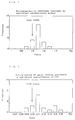
- Fig. 1 is a bar graph showing the sweetness-increasing effect of one protein-lipid complex of the present invention.
- Fig. 2 is a bar graph showing the umami-increasing effect of one protein-lipid complex of the present invention.
- Fig. 3 is a bar graph showing the bitterness-depressing effect of one protein-lipid complex of the present invention.
- Fig. 4 is a bar graph showing the influence of one protein-lipid complex of the present invention upon sourness.
- Fig. 5 is a bar graph showing the influence of one protein-lipid complex of the present invention upon saltiness.
- Fig. 6 is a bar graph showing the appearance of the influence of the protein-lipid complex of the present invention on the change in membrane potential caused by quinine sulfate.
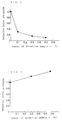
- Fig. 7 is a graph showing the relationship between the amount of one protein-lipid complex of the present invention added and the response of the chorda tympani nerve system of a rat to stimulation when the complex is added to quinine sulfate.
- Fig. 8 is a graph showing the relationship between the amount of one protein-lipid complex of the present invention added and the response of the chorda tympani nerve system of a rat to stimulation when the complex is added to sucrose.
- Fig. 9 is a bar graph showing the depression effects of one protein-lipid complex of the present invention upon the bitternesses of quinine, strychnine and papaverine.
- Fig. 10 is a bar graph showing the depression effects of one protein-lipid complex of the present invention upon the bitternesses of caffeine and L-leucine.
- Fig. 11 is a bar graph showing the depression effects of one protein-lipid complex of the present invention upon the bitternesses of caffeine and quinine.
- a powdery concentrate of whey protein (trade name: SANRAKUTO N-2, a product of Taiyo Kagaku Co., Ltd.) was kneaded with 40 g of soybean lecithin (trade name: Nissin DX, a product of The Nissin Oil Mills, Ltd.) and the obtained kneaded mixture was dispersed in 1 l of water. Then, the obtained dispersion was agitated by the use of a TK homomixer mfd. by Tokushu Kika Kogyo Co., Ltd. at 9000 rpm for 15 minutes to conduct homogenization.
- a TK homomixer mfd by Tokushu Kika Kogyo Co., Ltd. at 9000 rpm for 15 minutes to conduct homogenization.
- the obtained emulsion was vacuum-dehydrated at 40°C at 0.1 Torr to reduce the water content of the solid to 9.8%.
- the obtained massive composition was pulverized and passed through a 20-mesh sieve to give 136 g of a protein-lipid complex powder (Invention sample a).
- a powdery concentrate of whey protein (trade name: SANRAKUTO N-5, a product of Taiyo Kagaku Co., Ltd.) was dissolved in 1 l of distilled water.
- 20 g of soybean lecithin (a product of Ajinomoto Co., Ltd.) was added to the obtained aqueous solution in portions under agitating the aqueous solution with a TK homomixer mfd. by Tokushu Kika Kogyo Co., Ltd. at 9000 rpm to emulsify the soybean lecithin at room temperature.
- the obtained dispersion was freeze-dried to reduce the water content of the solid to 6.5%, giving 108 g of a solid product.
- This solid product was pulverized with a metal spatula to give a protein-lipid complex powder (Invention sample c).
- soybean lecithin (trade name: Epikuron 200, a product of Lucas Meyer) was dispersed in 1 l of distilled water by sonication. 100 g of a powdery concentrate of milk whey (trade name: Milpro H, a product of San-Ei Kagaku) was added to the obtained dispersion, followed by aditation. The obtained emulsion was freeze-dried to reduce the water content of the solid to 6.8%. The resulting solid product was passed through a 20-mesh sieve to give 167 g of a protein-lipid complex powder (Invention sample d).
- soybean lecithin (trade name: Epikuron 200, a product of Lucas Meyer) was dispersed in 1 l of distilled water by sonication.
- the obtained emulsion was freeze-dried until the water content of the solid was reduced to 6.8%.
- the resulting solid product was passed through a 20-mesh sieve to give 170 g of a protein-lipid complex powder (Invention sample e).
- soybean licithin (trade name: Epikuron 200, a product of Lucas Meyer) was dispersed in 1 l of distilled water by sonication. 100 g of a skimmilk powder (a product of Snow Brani Milk Products Co., Ltd.) was added to the obtained dispersion, followed by agitation. The obtained emulsion was freeze-dried to reduce the water content of the solid to 6.5%. The resulting solid product was passed through a 20-mesh sieve to give 165 g of a protein-lipid complex powder (Invention sample f).
- Invention sample a was tested for its taste-modification effects upon five basic tastes by the equivalent concentration method.
- the "equivalent concentration method” refers to a method which comprises comparing the intensity of taste of a test solution with those of several standard solutions to determine which standard solution was equivalent to the test solution in the intensity of taste. Solutions each containing a tasting substance in a concentration specified in Table 1 were prepared and Invention sample a was added thereto in a final concentration of 0.1 %. The results are given in Figs. 1 to 5. As shown in Figs. 1 and 2, the complex of the present invention exhibited an increasing effect upon sweetness and umami, while as shown in Fig. 3, it exhibited a depression effect upon bitterness. Further, as shown in Figs.
- Invention sample b was added to each test solution specified in the Table 1 in a final concentration of 0.3%. The obtained solutions were tested by the equivalent concentration method to examine the influences of the Invention sample b upon each taste. The results are given in Table 2. As is apparent from table 2, the complex of the present invention increased sweetness and umami, depressed bitterness, and had no influence upon sourness and saltiness. Table 2 Kind of taste Concn. recognized as to test soln. containing Invention sample b (%) True concn. of test soln. (%) sweetness 1.15 1.0 umami 0.13 0.10 bitterness 0.00060 0.00070 sourness 0.0101 0.01075 saltiness 0.51 0.51
- Invention sample a was added to aqueous solutions of sucrose having various concentrations ranging from 0 to 0.6% in a final concentration of 0.3% and the effect of Invention sample a upon sweetness was evaluated by determining the stimulus threshold.
- Each examinee held the aqueous solutions of sucrose having various concentration at random and selected the solutions in which he or she sensed sweetness. The one having the minimum concentration among them which was selected by the examinee was regarded as the threshold.
- the results are given in Table 3. As is understood from the results in Table 3, lowered thresholds were observed with respect to the systems containing Invention sample a, which reveals that the addition of the complex according to the present invention makes a person more sensitive to sweetness.
- Invention sample b was added to a commercially available milk containing 1.875% of sucrose in a final concentration of 0.1%.
- the equivalent concentration method was effected with the use of milk containing sucrose in various concentrations as the standard solution.
- the recognized sucrose concentration was 2.25%, which means that the complex of the present invention exhibited the effect in milk.
- Invention sample c was added to a 1.0% aqueous solution of sucrose and a 0.00070% aqueous solution of quinine sulfate each in a final concentration of 0.1%.
- the resulting solutions were tested by the equivalent concentration method. As the result, the recognized concentrations were 1.25% and 0.00058%, respectively.
- Invention sample c was examined for taste-modifying effect by the use of a bitterness-responsive system using a model biomembrane.
- a single-lamellar liposome of azolectin was prepared according to the conventional process and the adsorption of quinine sulfate onto the liposome was determined. More precisely, the change in the intensity of fluorescence of a dyestuff sensitive to membrane potential, i.e., diS-C3 (5) (a product of Japanese Research Institute for Photosensitizing Dyes Corporation) was determined by the method of Kumazawa et al. (Biochemistry, Vol. 27, p.1239, 1988) as an indication of the change in membrane potential due to the adsorption of quinine sulfate onto the membrane. The results are given in Fig. 6. It is presumed that the complex of the present invention acted on the membrane to depress bitterness.
- Invention sample c of adsorbing hydrophobic substances was determined by partitioning the Invnetion sample c in an organic solvent-water binary system (Yukagaku (Oil Chemistry), Vol. 30, No. 11, p.942) More precisely, the experimentation was effected as follows: Invention sample c was added to 30 ml of a 0.02 M pottasium phosphate buffer (pH : 7.0) in a concentration of 3%. 10 ml of a 0.1% solution in n-heptane of n-octanol, n-decanol, n-dodecanol, ⁇ -decalactone or ⁇ -dodecalactone was superposed on the mixture thus obtained.
- the aqueous phase was mildly stirred with a magnetic stirrer and after 6 hours, the concentration of n-octanol, n-decanol, n-dodecanol, ⁇ -decalactone or ⁇ -dodecalactone in the n-heptane phase was determined by gas chromatography.
- the one wherein no sample was added to the aqueous phase was prepared as a control and the same procedure as described above was repeated to determine the concentrations.
- the amount of n-octanol or the like adsorbed onto the Invention sample c is represented by the difference between the amounts thereof partitioned to the aqueous phases, i.e., (W s - W n ) ⁇ 100 (%) .
- Table 4 Adsorbate Adsorbed amount n-octanol 19.7 n-decanol 19.0 n-dodecanol 15.6 ⁇ -decalactone 15.0 ⁇ -dodecalactone 16.2
- the gustatory responses of Invention sample c upon sweetness and bitterness were determined based on the response of the chorda tympani nerve system of a rat to stimulation.
- the lower jaw of a rat was cut to expose the funicular nerve. After a silver electric lump had been brought into contact with the funicular nerve, the electrical pulse generated by gustatory stimulation was conducted to an amplifier and recorded.
- 0.5 mM aqueous solutions of quinine sulfate or 1 M aqueous solutions of sucrose containing Invention sample c in concentrations ranging from 0 to 0.5% were each circulated in the oral cavity of the rat to record the response potential.
- the results are given in Figs. 7 and 8, respectively. It can be understood from the Fig.
- the protein-lipid complex of the present invention acts at the taste receiving level.
- a whipped cream and other whipped cream not containing Invention sample d were prepared and compared with each other in creamy flavor.
- An oil phase and an aqueous phase were each prepared by dissolving or dispersing the raw materials in each other.
- a creamy fat-and-oil composition was prepared with the oil phase and the aqueous phase thus obtained through preliminary emulsification, high-pressure homogenization and sterilization.
- 80 g of granulated sugar was added to 1 l of the composition and the obtained mixture was whipped to give a whipped cream.
- the whipped cream containing Invention sample d was organoleptically examined for creamy flavor by taking, as a control, a whipped cream not containing Invention sample d.
- the results are given in Table 5.
- the figures in the Table 5 indicate each an average of the points graded by twenty expert panelists, in which a case wherein the control is superior to the sample is ranked as "-1"; a case wherein the control is slightly superior to the sample is ranked as "-0.5”; a case wherein the sample is equivalent to the control as "0”; a case wherein the sample is slightly superior to the control as "+0.5” and a case wherein the sample is superior to the control as "+1".
- the product containing the complex of the present invention was such a cream that it exhibited a stronger milky flavor and a better body and was free from the disagreeable tastes such as bitterness and astringent taste, as compared with the product not containing the complex.
- Example 6 The same procedure as that of Example 9 was repeated except that Invention sample e was used instead of Invention sample d.
- the results are given in Table 6.
- Table 6 Evaluation item whole milkiness body sweetness disagreeable taste Point 0.6 0.5 0.5 0.4 -0.4
- Invention samples d and e were each treated with SDS (sodium dodecyl sulfate) and mercaptan, and then were each subjected to SDS-polyacrylamide gel electrophoresis. The result of the electrophoresis was analyzed with a densitometer to determine the amounts of proteins. The results are given in Table 7. It is preferable for preparing a product excellent in flavor that the ⁇ -lactoglobulin content be 30% or above. Table 7 Protein Sample Invention sample d Invention sample e ⁇ -lactoglobulin 80% 32 ⁇ -lactalbumin 16% 9 ⁇ -casein 0% 43 serum albumin 2% 5 others 2% 11
- a dentifrice comprising the following components was prepared in the conventional manner: ⁇ calcium secondary phosphate dihydrate 45.0% ⁇ silicic acid anhydride 2.0% ⁇ sorbitol 15.0% ⁇ carboxymethylcellulose 1.5% ⁇ sodium monolauryl phosphate 2.0% ⁇ flavoring material a proper amount ⁇ protein-lipid complex (Invention sample a) 3.0% ⁇ water the balance
- a mouthwash having the following composition was prepared in the conventional manner: ⁇ ethanol 15.0% ⁇ sorbitol 10.0% ⁇ saccharin sodium 0.15% ⁇ L-menthol 0.10% ⁇ sodium lauryl sulfate 0.10% ⁇ protein-lipid complex (Invention sample b) 1.0% ⁇ water the balance
- This mouthwash was one decreased in the bitterness due to L-menthol and sodium lauryl sulfate.
- a skin lotion having the following composition was prepared in the conventional manner: ⁇ glycerol 5.0% ⁇ 1,3-butanediol 5.0% ⁇ denatured ethanol (containing 0.1% of sucrose octaacetate) 10.0% ⁇ polyoxyethylene (20) octyl dodecyl ether 1.0% ⁇ fragrance a proper amount ⁇ protein-lipid complex (Invention sample c) 0.5% ⁇ methyl paraben 0.1% ⁇ water the balance
- This skin lotion was one decreased in the bitterness due to sucrose octaacetate, so that the user was not displeased at the presence of the lotion remaining around the mouth after the application thereof.
- a milky lotion having the following composition was prepared in the conventional manner: ⁇ cyclic silicone (pentamer) 20.0% ⁇ squalane 5.0% ⁇ polyoxyethylene-modified silicone 5.0% ⁇ sodium lactate 4.0% ⁇ methyl paraben 0.1% ⁇ fragrance a proper amount ⁇ protein-lipid complex (Invention sample d) 2.0% ⁇ water the balance
- This milky lotion was one decreased in the bitterness due to sodium lactate, so that the user was not displeased at the bitterness even when the milky lotion was applied to the circumference of the mouth.
- a face cleansing preparation having the following composition was prepared: ⁇ triethanolamine monolauryl phosphate 20.0% ⁇ laurylbetaine 5.0% ⁇ glycerol 5.0% ⁇ polyoxyethylene (100) oleyl ether 2.0% ⁇ protein-lipid complex (Invention sample e) 5.0% ⁇ water the balance
- This face cleansing preparation exhibited little bitterness even when it accidentally enters the mouth in washing the face.
- a mouth freshener having the following composition was prepared: ⁇ ethanol 35.0% ⁇ glycerol 10.0% ⁇ polyoxyethylene hardened castor oil 1.0% ⁇ L-menthol 0.5% ⁇ chlorohexidine gluconate 0.02% ⁇ protein-lipid complex (Invention sample f) 1.0% ⁇ water the balance
- the bitterness-decreasing effect can quantitatively be evaluated by determining the response of the glossopharyngeal nerve of a frog to the stimulation of the lingual surface thereof.
- the response of the gustatory organ of a frog to bitterness has a characteristic in that the bitterness threshold highly correlates with the results of human organoleptic test. Accordingly, the response of the gustatory organ of a frog to bitterness is usable as a system for the quantitative evaluation of the bitterness-decreasing effect.
- the outside of the lower jaw of a frog was cut under urethane anesthesia to expose the glossopharyngeal nerve.
- the glossopharyngeal nerve was cut on its center side and brought into contact with a silver-silver chloride electrode on its periphery side.
- the electrical pulse (nerve impulse) caused by the stimulation by bitterness was amplified and integrated and thereafter recorded on a pen recorder.
- the height of the response observed just after the stimulation was taken as the response intensity to bitterness.
- the stimulation of the lingual surface was conducted by using the test liquids which will be described below each in a total amount of 10 ml at a flow rate of 1.5 ml/sec.
- the complex of the present invention was examined for bitterness-decreasing effects on quinine hydrochloride, strychynine nitrate and papaverine as bitter-testing pharmaceuticals.
- the Invention sample 2 was evaluated for the bitterness-decreasing effects on caffeine and L-leucine as bitter-tasting substances in pharmaceuticals by determining the response of the glossopharyngeal nerve of a frog.
- Invention sample 2 was added to a 1 mM aqueous solution of strychnine nitrate in a final concentration of 0.5% by weight. The obtained mixture was stirred to give a suspension.
- This suspension and a 1 mM aqueous solution of strychnine nitrate as a control were organoleptically evaluated for bitterness by twenty panelists for gustatory evaluation according to the following criteria: very strongly bitter 5 strongly bitter 4 bitter 3 slightly bitter 2 not bitter 1
- 0.1 g of crude caffeine powder was dissolved in 50 ml of deionized water, followed by the addition of 10 g of ⁇ -lactoglobulin and 8 g of phosphatidylcholine and stirring. The obtained mixture was homogenized with a homogenizer. The obtained emulsion was dehydrated by the use of a freeze dryer to give 16 g of a caffeine powder containing the bitterness-masking agent of the present invention, i.e., the protein-lipid complex. This caffeine powder little tasted bitter.
- ovalbumin originating in egg white 100 g was kneaded with 40 g of a lecithin prepared by enzymolysis and containing phosphatidylinositol and phosphatidic acid. 1000 ml of water was added to the obtained kneaded mixture. The obtained mixture was emulsified with a homomixer until being homogeneous. The obtained emulsion was dehydrated under the condition of 0.1 Torr one whole day and night to give 125 g of an ovalbumin-lecithin (prepared by enzymolysis) complex (Invention sample 3).
- Invention sample 3 was added to grapefruit juice in final concentrations of 0.1 and 0.3% (weight ratio) to determine whether Invention sample 3 has the bitterness-decreasing effect to the grapefruit juice or not.
- the grapefruit juices containing Invention sample 3 and one not containing it were examined for the intensity of the bitterness according to the five criteria as will be described below.
- Ten person of both sexes aged from 20 to 46 and having a nomal sensitivity for taste were selected as panelists.
- Table 10 The results are given in Table 10.
- the figures in Table 10 are the average values of the grades evaluated.
- Table 10 Test sample Concn. of Invention sample 3 added Average value of intensity of bitterness (1) grapefruit juice - 4.2 (2) one obtained by adding Invention sample 3 to (1) 0.1% 1.4 (3) one obtained by adding Invention sample 3 to (1) 0.3% 1.0
- Invention sample 4 was added to coffee in final concentrations of 0.1 and 0.3%.
- the intensity of the bitterness was evaluated according to the same five criteria as those of the Example 24. The results are given in Table 11.
- Table 11 Test sample Concn. of Invention sample 4 added Average value of intensity of bitterness (1) coffee - 4.1 (2) one obtained by adding Invention sample 4 to (1) 0.1% 2.4 (3) one obtained by adding Invention sample 4 to (1) 0.3% 1.6
- a whipped cream was prepared according to the same formulation and preparation process as those of Example 9 except that Invention sample 5 was used instead of Invention sample d, and the whipped cream containing Invnention sample 5 was examined for creamy flavor in the same manner as that of Example 9.
- soybean protein-phosphatidic acid complex 10 g was mixed with 5 g of phosphatidic acid, and 100 ml of water was added to the resulting mixture. The obtained mixture was dispersed and homogenized with a homogenizer. The obtained emulsion was spray-dried to give 14 g of a soybean protein-phosphatidic acid complex (Invention sample 6).
- Invention sample 6 By adding Invention sample 6 to a powdered soup, the soup became free from disagreeable tastes, increased in body and improved in savor, and an excellent product was obtained.
- Invention sample 7 was added to an aqueous solution (5 mM) of promethazine hydrochloride used as the raw material of pharmaceuticals to evaluate whether Invention sample 7 exhibits a bitterness-decreasing effect on it or not. More precisely, the intensity of the bitterness was evaluated according to the equivalent concentration method (see Example 1). For comparison, those containing, instead of Invention sample 7, sucrose, sorbitol and ⁇ -lactoglobulin, respectively which were used for the purpose of decreasing the bitterness in liquid preparations, were also evaluated in a similar manner to that described above. The results are given in Table 13.
- liquid preparations containing Invention sample 7 and one of pharmaceuticals A to G which will be described below were prepared in the same manner as that described above except that pharmaceuticals A to G were each used instead of the promethazine hydrochloride.
- the obtained liquid preparations were examined for taste. They were freed from the disagreeable bitterness inherent in pharmaceuticals and were easy to take orally.
- Example 28 10 g of Invention sample 7 obtained in Example 28 was mixed with 0.5 g of promazine in a mortar to give a powder. This powder tasted less bitter than crude promazine powder.
- Invention sample 7 obtained in Example 28 was added to deionized water in a final concentration of 3.0%. Then, the obtained mixture was stirred to disperse Invention sample 7. The dispersion of ⁇ -lactoglobulin-phosphatidic acid complex thus obtained (Invention sample 9) was held in the mouth for about 10 seconds and then rinsed the oral cavity to fully spread the dispersion in the oral cavity. Thereafter, Invention sample 9 was spit out and a pharmaceutical having a bitter taste was held in the mouth to evaluate the bitter taste. For comparison, the intensity of the bitterness of the pharmaceutical was evaluated in the same manner as described above was repeated except that water or a 10% aqueous solution of sucrose was used instead of Invention sample 9. The evaluation of the intensity of the bitterness was conducted by ten healthy persons of both sexes in their twenties to forties according to the criteria which will be described below.
- Invention sample 9 which comprises an aqueous dispersion of Invention sample 7 exhibited a stronger bitterness-decreasing effect than that of an aqueous solution of sucrose which has hitherto been used as a bitterness-decreasing agent for pharmaceuticals.
- ovalbumin and 40 g of phosphatidic acid were dispersed in 1000 ml of water and then the obtained dispersion was homogenized with a homogenizer.
- the obtained emulsion was dehydrated under the conditions of 20°C and 0.1 Torr one whole day and night to give 130 g of an ovalbumin-phosphatidic acid complex (Invention simple 10).
- 50 g of Invention sample 10, 40 g of mannitol and 40 g of synthetic aluminum silicate were weighed and added to 500 ml of water. The obtained mixture was stirred and spray-dried to give 90 g of Invention sample 11 in the form of powder.
Landscapes
- Health & Medical Sciences (AREA)
- Life Sciences & Earth Sciences (AREA)
- Chemical & Material Sciences (AREA)
- Engineering & Computer Science (AREA)
- Veterinary Medicine (AREA)
- Public Health (AREA)
- General Health & Medical Sciences (AREA)
- Animal Behavior & Ethology (AREA)
- Epidemiology (AREA)
- Polymers & Plastics (AREA)
- Food Science & Technology (AREA)
- Medicinal Chemistry (AREA)
- Pharmacology & Pharmacy (AREA)
- Nutrition Science (AREA)
- Bioinformatics & Cheminformatics (AREA)
- Biochemistry (AREA)
- Zoology (AREA)
- Molecular Biology (AREA)
- Biophysics (AREA)
- Dermatology (AREA)
- Proteomics, Peptides & Aminoacids (AREA)
- Oral & Maxillofacial Surgery (AREA)
- Inorganic Chemistry (AREA)
- Chemical Kinetics & Catalysis (AREA)
- General Chemical & Material Sciences (AREA)
- Oil, Petroleum & Natural Gas (AREA)
- Birds (AREA)
- General Preparation And Processing Of Foods (AREA)
- Medicinal Preparation (AREA)
- Cosmetics (AREA)
- Seasonings (AREA)
Applications Claiming Priority (7)
| Application Number | Priority Date | Filing Date | Title |
|---|---|---|---|
| JP1900093 | 1993-02-05 | ||
| JP1900093 | 1993-02-05 | ||
| JP19000/93 | 1993-02-05 | ||
| JP2128593 | 1993-02-09 | ||
| JP21285/93 | 1993-02-09 | ||
| JP2128593 | 1993-02-09 | ||
| PCT/JP1994/000176 WO1994017675A1 (fr) | 1993-02-05 | 1994-02-04 | Procede de modification du gout et procede d'attenuation de l'amertume |
Publications (3)
| Publication Number | Publication Date |
|---|---|
| EP0635218A1 true EP0635218A1 (fr) | 1995-01-25 |
| EP0635218A4 EP0635218A4 (fr) | 1997-05-07 |
| EP0635218B1 EP0635218B1 (fr) | 2000-10-25 |
Family
ID=26355788
Family Applications (1)
| Application Number | Title | Priority Date | Filing Date |
|---|---|---|---|
| EP94905856A Expired - Lifetime EP0635218B1 (fr) | 1993-02-05 | 1994-02-04 | Procede de modification du gout et procede d'attenuation de l'amertume |
Country Status (4)
| Country | Link |
|---|---|
| EP (1) | EP0635218B1 (fr) |
| CN (1) | CN1065415C (fr) |
| DE (1) | DE69426176T2 (fr) |
| WO (1) | WO1994017675A1 (fr) |
Cited By (8)
| Publication number | Priority date | Publication date | Assignee | Title |
|---|---|---|---|---|
| US5766622A (en) * | 1996-08-14 | 1998-06-16 | The Procter & Gamble Company | Inhibiting undesirable taste in oral compositions |
| WO2000033817A1 (fr) * | 1998-12-08 | 2000-06-15 | Phares Pharmaceutical Research N.V. | Compositions de phospholipides |
| US6231838B1 (en) * | 1999-12-15 | 2001-05-15 | American Home Products Corporation | Taste masking with silicon dioxide |
| EP1886662A1 (fr) | 2006-06-14 | 2008-02-13 | Symrise GmbH & Co. KG | Compositions actives anti-microbiennes destinées au traitement de la mauvaise haleine |
| EP1972203A1 (fr) | 2007-03-13 | 2008-09-24 | Symrise GmbH & Co. KG | Utilisation de dérivés de 4-hydroxychalcone pour masquer un goût désagréable |
| EP2075321A1 (fr) | 2007-12-17 | 2009-07-01 | Symrise GmbH & Co. KG | Procédé destiné à la fabrication d'un concentré d'arômes et concentré d'arômes |
| US8685436B2 (en) | 2001-05-11 | 2014-04-01 | Symrise Ag | Use of hydroxyflavanones for masking bitter taste |
| WO2020035147A1 (fr) | 2018-08-17 | 2020-02-20 | Symrise Ag | Obtention d'une fraction volatile à partir de jus ou de boissons alcoolisées |
Families Citing this family (8)
| Publication number | Priority date | Publication date | Assignee | Title |
|---|---|---|---|---|
| CN1875795B (zh) * | 2006-07-03 | 2010-04-14 | 红云烟草(集团)有限责任公司 | 卷烟用海藻复合添加剂及其制备方法 |
| CA2887672A1 (fr) * | 2012-10-31 | 2014-05-08 | Nestec S.A. | Produit de confiserie congele |
| US20140194736A1 (en) * | 2013-01-04 | 2014-07-10 | The General Hospital Corporation | Method, apparatus and computer accessible medium for providing signal and contrast enhancement(s) in optical imaging methods |
| NO2723977T3 (fr) * | 2014-03-19 | 2018-03-10 | ||
| CN103892281B (zh) * | 2014-04-11 | 2016-04-06 | 内蒙古伊利实业集团股份有限公司 | 含磷脂酰丝氨酸的营养组合物及其制备方法与应用 |
| CN104623679A (zh) * | 2015-03-05 | 2015-05-20 | 济南康众医药科技开发有限公司 | 一种壁虎的冻干方法 |
| CN106727272A (zh) * | 2016-12-08 | 2017-05-31 | 星康桥医药科技(南京)有限公司 | 一种漱口制剂及漱口方法 |
| CN116355048B (zh) * | 2023-03-30 | 2024-09-24 | 上海市第六人民医院 | 一种靶向治疗角膜新生血管的多肽纳米材料及其制备方法和应用 |
Family Cites Families (7)
| Publication number | Priority date | Publication date | Assignee | Title |
|---|---|---|---|---|
| JPS6258960A (ja) * | 1985-09-09 | 1987-03-14 | Yoko Shiga | 油揚物用添加剤 |
| JPH0618626B2 (ja) * | 1987-05-16 | 1994-03-16 | 株式会社中埜酢店 | レシチン−蛋白質複合体からなる乳化剤 |
| JPH0479843A (ja) * | 1990-07-20 | 1992-03-13 | Mitsuo Nakajima | 飲食品改良剤 |
| JP2508547B2 (ja) * | 1991-01-08 | 1996-06-19 | 株式会社紀文食品 | 苦味低減方法及び苦味低減化組成物 |
| JPH04327526A (ja) * | 1991-04-26 | 1992-11-17 | Lion Corp | 経口用固形製剤 |
| US5120528A (en) * | 1991-06-12 | 1992-06-09 | Block Drug Company, Inc. | Taste preserving, mild oral hygiene compositions |
| JP3113042B2 (ja) * | 1992-03-02 | 2000-11-27 | 花王株式会社 | 水中油型乳化物の製造法 |
-
1994
- 1994-02-04 DE DE69426176T patent/DE69426176T2/de not_active Expired - Lifetime
- 1994-02-04 WO PCT/JP1994/000176 patent/WO1994017675A1/fr not_active Ceased
- 1994-02-04 EP EP94905856A patent/EP0635218B1/fr not_active Expired - Lifetime
- 1994-02-04 CN CN94190099A patent/CN1065415C/zh not_active Expired - Fee Related
Cited By (11)
| Publication number | Priority date | Publication date | Assignee | Title |
|---|---|---|---|---|
| US5766622A (en) * | 1996-08-14 | 1998-06-16 | The Procter & Gamble Company | Inhibiting undesirable taste in oral compositions |
| WO2000033817A1 (fr) * | 1998-12-08 | 2000-06-15 | Phares Pharmaceutical Research N.V. | Compositions de phospholipides |
| US6231838B1 (en) * | 1999-12-15 | 2001-05-15 | American Home Products Corporation | Taste masking with silicon dioxide |
| US8685436B2 (en) | 2001-05-11 | 2014-04-01 | Symrise Ag | Use of hydroxyflavanones for masking bitter taste |
| EP1886662A1 (fr) | 2006-06-14 | 2008-02-13 | Symrise GmbH & Co. KG | Compositions actives anti-microbiennes destinées au traitement de la mauvaise haleine |
| EP1972203A1 (fr) | 2007-03-13 | 2008-09-24 | Symrise GmbH & Co. KG | Utilisation de dérivés de 4-hydroxychalcone pour masquer un goût désagréable |
| US8778987B2 (en) | 2007-03-13 | 2014-07-15 | Symrise Ag | Use of 4-hydroxychalcone derivatives for masking an unpleasant taste |
| EP2075321A1 (fr) | 2007-12-17 | 2009-07-01 | Symrise GmbH & Co. KG | Procédé destiné à la fabrication d'un concentré d'arômes et concentré d'arômes |
| EP2385098A1 (fr) | 2007-12-17 | 2011-11-09 | Symrise AG | Procédé destiné à la fabrication d'un concentré d'arômes et concentré d'arômes |
| WO2020035147A1 (fr) | 2018-08-17 | 2020-02-20 | Symrise Ag | Obtention d'une fraction volatile à partir de jus ou de boissons alcoolisées |
| EP4699452A2 (fr) | 2018-08-17 | 2026-02-25 | Symrise AG | Obtention d'une fraction volatile à partir de jus ou de boissons alcoolisées |
Also Published As
| Publication number | Publication date |
|---|---|
| EP0635218A4 (fr) | 1997-05-07 |
| EP0635218B1 (fr) | 2000-10-25 |
| DE69426176D1 (de) | 2000-11-30 |
| CN1065415C (zh) | 2001-05-09 |
| WO1994017675A1 (fr) | 1994-08-18 |
| DE69426176T2 (de) | 2001-04-05 |
| CN1103234A (zh) | 1995-05-31 |
Similar Documents
| Publication | Publication Date | Title |
|---|---|---|
| US5785984A (en) | Taste-modifying method and bitterness-decreasing method | |
| EP0635218B1 (fr) | Procede de modification du gout et procede d'attenuation de l'amertume | |
| ES2556800T3 (es) | Composiciones aromatizantes de Maillard y procedimientos de fabricación de las mismas | |
| US5407921A (en) | Method for suppressing bitter taste | |
| EP0750849B1 (fr) | Modificateur du goût | |
| US20100331349A1 (en) | Use of gamma-aminobutyric acid to mask or reduce an unpleasant flavour impression and preparations containing gamma-aminobutyric | |
| US20140205688A1 (en) | Stimulating agent and stimulating composition | |
| US8105637B2 (en) | Composition comprising nanoparticle Ginkgo biloba extract with the effect of brain function activation | |
| KR100539495B1 (ko) | 글리코실-엘-아스코르브산의아실화유도체 | |
| US20030185876A1 (en) | Nutrient formulations | |
| JP2717509B2 (ja) | 苦味低減化剤及び苦味低減化法 | |
| JPH10262560A (ja) | 乳化組成物及びその製造法 | |
| WO2016021573A1 (fr) | Agent permettant de favoriser la production de céramide lié de manière covalente à une cellule cornée | |
| JP2717511B2 (ja) | 苦味含有物質の被覆組成物 | |
| JP3386549B2 (ja) | 味覚改質剤 | |
| JP2012223161A (ja) | 植物由来成分及び乳脂肪球皮膜を含む組成物 | |
| JP3325116B2 (ja) | 苦味低減化剤、その製造法、苦味低減化法、そして苦味低減化組成物 | |
| JP3485955B2 (ja) | 薬物の苦味マスキング剤 | |
| US20040265426A1 (en) | Process for producing miso | |
| JPH1028540A (ja) | 不快臭低減化剤および不快臭低減化法 | |
| JP2991626B2 (ja) | 辛味抑制剤及び辛味が抑制された食品 | |
| KR102908865B1 (ko) | 식용곤충을 이용한 천연 향료 조성물의 제조방법 및 이에 따라 제조된 천연 향료 조성물 | |
| JP2005073588A (ja) | サポニン含有経口製品およびサポニンの不快味低減方法 | |
| JPH0769932A (ja) | 化粧料 | |
| HK1237278A1 (en) | Agent for promoting production of ceramide covalently bonded to horny cell |
Legal Events
| Date | Code | Title | Description |
|---|---|---|---|
| PUAI | Public reference made under article 153(3) epc to a published international application that has entered the european phase |
Free format text: ORIGINAL CODE: 0009012 |
|
| 17P | Request for examination filed |
Effective date: 19941024 |
|
| AK | Designated contracting states |
Kind code of ref document: A1 Designated state(s): CH DE FR GB LI |
|
| A4 | Supplementary search report drawn up and despatched | ||
| AK | Designated contracting states |
Kind code of ref document: A4 Designated state(s): CH DE FR GB LI |
|
| GRAG | Despatch of communication of intention to grant |
Free format text: ORIGINAL CODE: EPIDOS AGRA |
|
| 17Q | First examination report despatched |
Effective date: 19990823 |
|
| GRAG | Despatch of communication of intention to grant |
Free format text: ORIGINAL CODE: EPIDOS AGRA |
|
| GRAH | Despatch of communication of intention to grant a patent |
Free format text: ORIGINAL CODE: EPIDOS IGRA |
|
| GRAH | Despatch of communication of intention to grant a patent |
Free format text: ORIGINAL CODE: EPIDOS IGRA |
|
| GRAA | (expected) grant |
Free format text: ORIGINAL CODE: 0009210 |
|
| AK | Designated contracting states |
Kind code of ref document: B1 Designated state(s): CH DE FR GB LI |
|
| REG | Reference to a national code |
Ref country code: CH Ref legal event code: EP |
|
| REG | Reference to a national code |
Ref country code: CH Ref legal event code: NV Representative=s name: KELLER & PARTNER PATENTANWAELTE AG |
|
| REF | Corresponds to: |
Ref document number: 69426176 Country of ref document: DE Date of ref document: 20001130 |
|
| ET | Fr: translation filed | ||
| PLBE | No opposition filed within time limit |
Free format text: ORIGINAL CODE: 0009261 |
|
| STAA | Information on the status of an ep patent application or granted ep patent |
Free format text: STATUS: NO OPPOSITION FILED WITHIN TIME LIMIT |
|
| 26N | No opposition filed | ||
| REG | Reference to a national code |
Ref country code: GB Ref legal event code: IF02 |
|
| PGFP | Annual fee paid to national office [announced via postgrant information from national office to epo] |
Ref country code: GB Payment date: 20070131 Year of fee payment: 14 |
|
| GBPC | Gb: european patent ceased through non-payment of renewal fee |
Effective date: 20080204 |
|
| PG25 | Lapsed in a contracting state [announced via postgrant information from national office to epo] |
Ref country code: GB Free format text: LAPSE BECAUSE OF NON-PAYMENT OF DUE FEES Effective date: 20080204 |
|
| PGFP | Annual fee paid to national office [announced via postgrant information from national office to epo] |
Ref country code: CH Payment date: 20100215 Year of fee payment: 17 |
|
| PGFP | Annual fee paid to national office [announced via postgrant information from national office to epo] |
Ref country code: FR Payment date: 20100223 Year of fee payment: 17 |
|
| PGFP | Annual fee paid to national office [announced via postgrant information from national office to epo] |
Ref country code: DE Payment date: 20100211 Year of fee payment: 17 |
|
| REG | Reference to a national code |
Ref country code: CH Ref legal event code: PL |
|
| PG25 | Lapsed in a contracting state [announced via postgrant information from national office to epo] |
Ref country code: CH Free format text: LAPSE BECAUSE OF NON-PAYMENT OF DUE FEES Effective date: 20110228 Ref country code: LI Free format text: LAPSE BECAUSE OF NON-PAYMENT OF DUE FEES Effective date: 20110228 |
|
| REG | Reference to a national code |
Ref country code: FR Ref legal event code: ST Effective date: 20111102 |
|
| REG | Reference to a national code |
Ref country code: DE Ref legal event code: R119 Ref document number: 69426176 Country of ref document: DE Effective date: 20110901 |
|
| PG25 | Lapsed in a contracting state [announced via postgrant information from national office to epo] |
Ref country code: FR Free format text: LAPSE BECAUSE OF NON-PAYMENT OF DUE FEES Effective date: 20110228 |
|
| PG25 | Lapsed in a contracting state [announced via postgrant information from national office to epo] |
Ref country code: DE Free format text: LAPSE BECAUSE OF NON-PAYMENT OF DUE FEES Effective date: 20110901 |