EP0637334B1 - Peptides ayant une activite de facteur d'echange du gdp, sequences d'acides nucleiques codant pour ces peptides, preparation et utilisation - Google Patents
Peptides ayant une activite de facteur d'echange du gdp, sequences d'acides nucleiques codant pour ces peptides, preparation et utilisation Download PDFInfo
- Publication number
- EP0637334B1 EP0637334B1 EP93911529A EP93911529A EP0637334B1 EP 0637334 B1 EP0637334 B1 EP 0637334B1 EP 93911529 A EP93911529 A EP 93911529A EP 93911529 A EP93911529 A EP 93911529A EP 0637334 B1 EP0637334 B1 EP 0637334B1
- Authority
- EP
- European Patent Office
- Prior art keywords
- gdp
- peptide
- seq
- sequences
- peptides
- Prior art date
- Legal status (The legal status is an assumption and is not a legal conclusion. Google has not performed a legal analysis and makes no representation as to the accuracy of the status listed.)
- Expired - Lifetime
Links
- 108090000765 processed proteins & peptides Proteins 0.000 title claims abstract description 81
- 102000004196 processed proteins & peptides Human genes 0.000 title claims abstract description 48
- 150000007523 nucleic acids Chemical group 0.000 title abstract description 14
- 238000002360 preparation method Methods 0.000 title abstract description 5
- 230000000694 effects Effects 0.000 title description 15
- 239000008194 pharmaceutical composition Substances 0.000 claims abstract description 12
- 239000002773 nucleotide Substances 0.000 claims description 22
- 125000003729 nucleotide group Chemical group 0.000 claims description 22
- 238000000034 method Methods 0.000 claims description 21
- 230000014509 gene expression Effects 0.000 claims description 19
- 102000008394 Immunoglobulin Fragments Human genes 0.000 claims description 13
- 108010021625 Immunoglobulin Fragments Proteins 0.000 claims description 13
- 206010028980 Neoplasm Diseases 0.000 claims description 11
- 238000000338 in vitro Methods 0.000 claims description 11
- 230000004913 activation Effects 0.000 claims description 10
- 230000002068 genetic effect Effects 0.000 claims description 9
- 230000002401 inhibitory effect Effects 0.000 claims description 8
- 238000004519 manufacturing process Methods 0.000 claims description 8
- 230000000692 anti-sense effect Effects 0.000 claims description 7
- 238000001514 detection method Methods 0.000 claims description 7
- 230000035772 mutation Effects 0.000 claims description 6
- 230000000295 complement effect Effects 0.000 claims description 5
- 230000002018 overexpression Effects 0.000 claims description 5
- 239000012472 biological sample Substances 0.000 claims description 4
- 238000011282 treatment Methods 0.000 claims description 3
- 230000005856 abnormality Effects 0.000 claims description 2
- 239000012634 fragment Substances 0.000 description 51
- 102000001534 GDP dissociation inhibitor Human genes 0.000 description 30
- 108010092964 Guanine Nucleotide Dissociation Inhibitors Proteins 0.000 description 30
- 108090000623 proteins and genes Proteins 0.000 description 26
- 239000002299 complementary DNA Substances 0.000 description 23
- 239000000523 sample Substances 0.000 description 18
- 102000004169 proteins and genes Human genes 0.000 description 17
- 102000016914 ras Proteins Human genes 0.000 description 16
- 108010014186 ras Proteins Proteins 0.000 description 16
- 239000013598 vector Substances 0.000 description 15
- 108091028043 Nucleic acid sequence Proteins 0.000 description 14
- 210000004027 cell Anatomy 0.000 description 14
- 108020004705 Codon Proteins 0.000 description 13
- 108020004414 DNA Proteins 0.000 description 13
- 240000004808 Saccharomyces cerevisiae Species 0.000 description 12
- 150000001413 amino acids Chemical group 0.000 description 11
- 108700042226 ras Genes Proteins 0.000 description 10
- 102100029974 GTPase HRas Human genes 0.000 description 9
- 101000584633 Homo sapiens GTPase HRas Proteins 0.000 description 9
- 108091034117 Oligonucleotide Proteins 0.000 description 9
- 235000014680 Saccharomyces cerevisiae Nutrition 0.000 description 8
- 230000001413 cellular effect Effects 0.000 description 8
- 108020004707 nucleic acids Proteins 0.000 description 8
- 102000039446 nucleic acids Human genes 0.000 description 8
- 239000000047 product Substances 0.000 description 8
- 230000023603 positive regulation of transcription initiation, DNA-dependent Effects 0.000 description 7
- 108091026890 Coding region Proteins 0.000 description 6
- 108091092724 Noncoding DNA Proteins 0.000 description 6
- 101150040459 RAS gene Proteins 0.000 description 6
- JLCPHMBAVCMARE-UHFFFAOYSA-N [3-[[3-[[3-[[3-[[3-[[3-[[3-[[3-[[3-[[3-[[3-[[5-(2-amino-6-oxo-1H-purin-9-yl)-3-[[3-[[3-[[3-[[3-[[3-[[5-(2-amino-6-oxo-1H-purin-9-yl)-3-[[5-(2-amino-6-oxo-1H-purin-9-yl)-3-hydroxyoxolan-2-yl]methoxy-hydroxyphosphoryl]oxyoxolan-2-yl]methoxy-hydroxyphosphoryl]oxy-5-(5-methyl-2,4-dioxopyrimidin-1-yl)oxolan-2-yl]methoxy-hydroxyphosphoryl]oxy-5-(6-aminopurin-9-yl)oxolan-2-yl]methoxy-hydroxyphosphoryl]oxy-5-(6-aminopurin-9-yl)oxolan-2-yl]methoxy-hydroxyphosphoryl]oxy-5-(6-aminopurin-9-yl)oxolan-2-yl]methoxy-hydroxyphosphoryl]oxy-5-(6-aminopurin-9-yl)oxolan-2-yl]methoxy-hydroxyphosphoryl]oxyoxolan-2-yl]methoxy-hydroxyphosphoryl]oxy-5-(5-methyl-2,4-dioxopyrimidin-1-yl)oxolan-2-yl]methoxy-hydroxyphosphoryl]oxy-5-(4-amino-2-oxopyrimidin-1-yl)oxolan-2-yl]methoxy-hydroxyphosphoryl]oxy-5-(5-methyl-2,4-dioxopyrimidin-1-yl)oxolan-2-yl]methoxy-hydroxyphosphoryl]oxy-5-(5-methyl-2,4-dioxopyrimidin-1-yl)oxolan-2-yl]methoxy-hydroxyphosphoryl]oxy-5-(6-aminopurin-9-yl)oxolan-2-yl]methoxy-hydroxyphosphoryl]oxy-5-(6-aminopurin-9-yl)oxolan-2-yl]methoxy-hydroxyphosphoryl]oxy-5-(4-amino-2-oxopyrimidin-1-yl)oxolan-2-yl]methoxy-hydroxyphosphoryl]oxy-5-(4-amino-2-oxopyrimidin-1-yl)oxolan-2-yl]methoxy-hydroxyphosphoryl]oxy-5-(4-amino-2-oxopyrimidin-1-yl)oxolan-2-yl]methoxy-hydroxyphosphoryl]oxy-5-(6-aminopurin-9-yl)oxolan-2-yl]methoxy-hydroxyphosphoryl]oxy-5-(4-amino-2-oxopyrimidin-1-yl)oxolan-2-yl]methyl [5-(6-aminopurin-9-yl)-2-(hydroxymethyl)oxolan-3-yl] hydrogen phosphate Polymers Cc1cn(C2CC(OP(O)(=O)OCC3OC(CC3OP(O)(=O)OCC3OC(CC3O)n3cnc4c3nc(N)[nH]c4=O)n3cnc4c3nc(N)[nH]c4=O)C(COP(O)(=O)OC3CC(OC3COP(O)(=O)OC3CC(OC3COP(O)(=O)OC3CC(OC3COP(O)(=O)OC3CC(OC3COP(O)(=O)OC3CC(OC3COP(O)(=O)OC3CC(OC3COP(O)(=O)OC3CC(OC3COP(O)(=O)OC3CC(OC3COP(O)(=O)OC3CC(OC3COP(O)(=O)OC3CC(OC3COP(O)(=O)OC3CC(OC3COP(O)(=O)OC3CC(OC3COP(O)(=O)OC3CC(OC3COP(O)(=O)OC3CC(OC3COP(O)(=O)OC3CC(OC3COP(O)(=O)OC3CC(OC3COP(O)(=O)OC3CC(OC3CO)n3cnc4c(N)ncnc34)n3ccc(N)nc3=O)n3cnc4c(N)ncnc34)n3ccc(N)nc3=O)n3ccc(N)nc3=O)n3ccc(N)nc3=O)n3cnc4c(N)ncnc34)n3cnc4c(N)ncnc34)n3cc(C)c(=O)[nH]c3=O)n3cc(C)c(=O)[nH]c3=O)n3ccc(N)nc3=O)n3cc(C)c(=O)[nH]c3=O)n3cnc4c3nc(N)[nH]c4=O)n3cnc4c(N)ncnc34)n3cnc4c(N)ncnc34)n3cnc4c(N)ncnc34)n3cnc4c(N)ncnc34)O2)c(=O)[nH]c1=O JLCPHMBAVCMARE-UHFFFAOYSA-N 0.000 description 6
- 101150069072 cdc25 gene Proteins 0.000 description 6
- 238000009396 hybridization Methods 0.000 description 6
- 238000012216 screening Methods 0.000 description 6
- 241000588724 Escherichia coli Species 0.000 description 5
- 210000004978 chinese hamster ovary cell Anatomy 0.000 description 5
- 238000012411 cloning technique Methods 0.000 description 5
- 230000003993 interaction Effects 0.000 description 5
- 108020004999 messenger RNA Proteins 0.000 description 5
- 231100000590 oncogenic Toxicity 0.000 description 5
- 230000002246 oncogenic effect Effects 0.000 description 5
- 210000002826 placenta Anatomy 0.000 description 5
- 229920001184 polypeptide Polymers 0.000 description 5
- LFQSCWFLJHTTHZ-UHFFFAOYSA-N Ethanol Chemical compound CCO LFQSCWFLJHTTHZ-UHFFFAOYSA-N 0.000 description 4
- 108700020796 Oncogene Proteins 0.000 description 4
- 101150034822 SDC25 gene Proteins 0.000 description 4
- 239000004480 active ingredient Substances 0.000 description 4
- 210000004556 brain Anatomy 0.000 description 4
- 238000001727 in vivo Methods 0.000 description 4
- 238000002955 isolation Methods 0.000 description 4
- 239000002609 medium Substances 0.000 description 4
- 230000004048 modification Effects 0.000 description 4
- 238000012986 modification Methods 0.000 description 4
- 239000000126 substance Substances 0.000 description 4
- 238000012360 testing method Methods 0.000 description 4
- 108020004635 Complementary DNA Proteins 0.000 description 3
- 102000005720 Glutathione transferase Human genes 0.000 description 3
- 108010070675 Glutathione transferase Proteins 0.000 description 3
- ISWSIDIOOBJBQZ-UHFFFAOYSA-N Phenol Chemical compound OC1=CC=CC=C1 ISWSIDIOOBJBQZ-UHFFFAOYSA-N 0.000 description 3
- 230000004071 biological effect Effects 0.000 description 3
- 238000012512 characterization method Methods 0.000 description 3
- 238000006243 chemical reaction Methods 0.000 description 3
- 238000003776 cleavage reaction Methods 0.000 description 3
- 238000003745 diagnosis Methods 0.000 description 3
- 230000002255 enzymatic effect Effects 0.000 description 3
- 230000006870 function Effects 0.000 description 3
- 239000000499 gel Substances 0.000 description 3
- 239000013612 plasmid Substances 0.000 description 3
- 230000001737 promoting effect Effects 0.000 description 3
- 230000007017 scission Effects 0.000 description 3
- 230000004936 stimulating effect Effects 0.000 description 3
- 230000001225 therapeutic effect Effects 0.000 description 3
- 230000009466 transformation Effects 0.000 description 3
- QKNYBSVHEMOAJP-UHFFFAOYSA-N 2-amino-2-(hydroxymethyl)propane-1,3-diol;hydron;chloride Chemical compound Cl.OCC(N)(CO)CO QKNYBSVHEMOAJP-UHFFFAOYSA-N 0.000 description 2
- FWMNVWWHGCHHJJ-SKKKGAJSSA-N 4-amino-1-[(2r)-6-amino-2-[[(2r)-2-[[(2r)-2-[[(2r)-2-amino-3-phenylpropanoyl]amino]-3-phenylpropanoyl]amino]-4-methylpentanoyl]amino]hexanoyl]piperidine-4-carboxylic acid Chemical compound C([C@H](C(=O)N[C@H](CC(C)C)C(=O)N[C@H](CCCCN)C(=O)N1CCC(N)(CC1)C(O)=O)NC(=O)[C@H](N)CC=1C=CC=CC=1)C1=CC=CC=C1 FWMNVWWHGCHHJJ-SKKKGAJSSA-N 0.000 description 2
- HRPVXLWXLXDGHG-UHFFFAOYSA-N Acrylamide Chemical compound NC(=O)C=C HRPVXLWXLXDGHG-UHFFFAOYSA-N 0.000 description 2
- 229920000936 Agarose Polymers 0.000 description 2
- 101100217475 Arabidopsis thaliana ACA1 gene Proteins 0.000 description 2
- 241000283690 Bos taurus Species 0.000 description 2
- HEDRZPFGACZZDS-UHFFFAOYSA-N Chloroform Chemical compound ClC(Cl)Cl HEDRZPFGACZZDS-UHFFFAOYSA-N 0.000 description 2
- 102000004594 DNA Polymerase I Human genes 0.000 description 2
- 108010017826 DNA Polymerase I Proteins 0.000 description 2
- 108700022174 Drosophila Son of Sevenless Proteins 0.000 description 2
- 101100457919 Drosophila melanogaster stg gene Proteins 0.000 description 2
- 241000233866 Fungi Species 0.000 description 2
- 108010067218 Guanine Nucleotide Exchange Factors Proteins 0.000 description 2
- 102000016285 Guanine Nucleotide Exchange Factors Human genes 0.000 description 2
- 101000624643 Homo sapiens M-phase inducer phosphatase 3 Proteins 0.000 description 2
- 101000580039 Homo sapiens Ras-specific guanine nucleotide-releasing factor 1 Proteins 0.000 description 2
- KFZMGEQAYNKOFK-UHFFFAOYSA-N Isopropanol Chemical compound CC(C)O KFZMGEQAYNKOFK-UHFFFAOYSA-N 0.000 description 2
- 102000003960 Ligases Human genes 0.000 description 2
- 108090000364 Ligases Proteins 0.000 description 2
- 102100023330 M-phase inducer phosphatase 3 Human genes 0.000 description 2
- 101710163270 Nuclease Proteins 0.000 description 2
- 102000043276 Oncogene Human genes 0.000 description 2
- 241000235648 Pichia Species 0.000 description 2
- 101100533932 Saccharomyces cerevisiae (strain ATCC 204508 / S288c) SPA2 gene Proteins 0.000 description 2
- 108020004440 Thymidine kinase Proteins 0.000 description 2
- 238000007792 addition Methods 0.000 description 2
- 210000004102 animal cell Anatomy 0.000 description 2
- 239000000872 buffer Substances 0.000 description 2
- 201000011510 cancer Diseases 0.000 description 2
- 101150055766 cat gene Proteins 0.000 description 2
- 238000010367 cloning Methods 0.000 description 2
- 230000006378 damage Effects 0.000 description 2
- 238000001962 electrophoresis Methods 0.000 description 2
- 239000003623 enhancer Substances 0.000 description 2
- 238000002474 experimental method Methods 0.000 description 2
- 238000000605 extraction Methods 0.000 description 2
- 108020001507 fusion proteins Proteins 0.000 description 2
- 102000037865 fusion proteins Human genes 0.000 description 2
- 238000001415 gene therapy Methods 0.000 description 2
- RWSXRVCMGQZWBV-WDSKDSINSA-N glutathione Chemical compound OC(=O)[C@@H](N)CCC(=O)N[C@@H](CS)C(=O)NCC(O)=O RWSXRVCMGQZWBV-WDSKDSINSA-N 0.000 description 2
- 229960003180 glutathione Drugs 0.000 description 2
- 230000003053 immunization Effects 0.000 description 2
- 210000004962 mammalian cell Anatomy 0.000 description 2
- 238000010369 molecular cloning Methods 0.000 description 2
- NBIIXXVUZAFLBC-UHFFFAOYSA-K phosphate Chemical compound [O-]P([O-])([O-])=O NBIIXXVUZAFLBC-UHFFFAOYSA-K 0.000 description 2
- 238000000746 purification Methods 0.000 description 2
- 230000003362 replicative effect Effects 0.000 description 2
- 230000019491 signal transduction Effects 0.000 description 2
- 238000006467 substitution reaction Methods 0.000 description 2
- 238000003786 synthesis reaction Methods 0.000 description 2
- 238000003146 transient transfection Methods 0.000 description 2
- 108091032973 (ribonucleotides)n+m Proteins 0.000 description 1
- NIXOWILDQLNWCW-UHFFFAOYSA-N Acrylic acid Chemical compound OC(=O)C=C NIXOWILDQLNWCW-UHFFFAOYSA-N 0.000 description 1
- 206010052747 Adenocarcinoma pancreas Diseases 0.000 description 1
- 108020000948 Antisense Oligonucleotides Proteins 0.000 description 1
- 241000228212 Aspergillus Species 0.000 description 1
- 241000193830 Bacillus <bacterium> Species 0.000 description 1
- 108010077805 Bacterial Proteins Proteins 0.000 description 1
- 208000005623 Carcinogenesis Diseases 0.000 description 1
- 108010035563 Chloramphenicol O-acetyltransferase Proteins 0.000 description 1
- 108091033380 Coding strand Proteins 0.000 description 1
- 102000016928 DNA-directed DNA polymerase Human genes 0.000 description 1
- 108010014303 DNA-directed DNA polymerase Proteins 0.000 description 1
- 101100247319 Drosophila melanogaster Ras64B gene Proteins 0.000 description 1
- 238000002965 ELISA Methods 0.000 description 1
- 102000004190 Enzymes Human genes 0.000 description 1
- 108090000790 Enzymes Proteins 0.000 description 1
- 241001524679 Escherichia virus M13 Species 0.000 description 1
- 108091006027 G proteins Proteins 0.000 description 1
- 102000030782 GTP binding Human genes 0.000 description 1
- 108091000058 GTP-Binding Proteins 0.000 description 1
- 241000282412 Homo Species 0.000 description 1
- 241000235649 Kluyveromyces Species 0.000 description 1
- 206010058467 Lung neoplasm malignant Diseases 0.000 description 1
- 241000721267 Macara Species 0.000 description 1
- 241000124008 Mammalia Species 0.000 description 1
- 241001465754 Metazoa Species 0.000 description 1
- 241001529936 Murinae Species 0.000 description 1
- 241000699670 Mus sp. Species 0.000 description 1
- 241000283973 Oryctolagus cuniculus Species 0.000 description 1
- 102000035195 Peptidases Human genes 0.000 description 1
- 108091005804 Peptidases Proteins 0.000 description 1
- 239000004365 Protease Substances 0.000 description 1
- 101150076031 RAS1 gene Proteins 0.000 description 1
- 101150019218 RAS2 gene Proteins 0.000 description 1
- 101150045048 Ras85D gene Proteins 0.000 description 1
- 108700008625 Reporter Genes Proteins 0.000 description 1
- 101710202172 Rho GDP-dissociation inhibitor Proteins 0.000 description 1
- 102100027609 Rho-related GTP-binding protein RhoD Human genes 0.000 description 1
- 241000235070 Saccharomyces Species 0.000 description 1
- 241000311088 Schwanniomyces Species 0.000 description 1
- FAPWRFPIFSIZLT-UHFFFAOYSA-M Sodium chloride Chemical compound [Na+].[Cl-] FAPWRFPIFSIZLT-UHFFFAOYSA-M 0.000 description 1
- 241000187747 Streptomyces Species 0.000 description 1
- 230000006044 T cell activation Effects 0.000 description 1
- 102000006601 Thymidine Kinase Human genes 0.000 description 1
- 208000024770 Thyroid neoplasm Diseases 0.000 description 1
- 241000223259 Trichoderma Species 0.000 description 1
- 230000009471 action Effects 0.000 description 1
- -1 acétyl Chemical group 0.000 description 1
- 102000030621 adenylate cyclase Human genes 0.000 description 1
- 108060000200 adenylate cyclase Proteins 0.000 description 1
- 235000001513 akia Nutrition 0.000 description 1
- 230000003321 amplification Effects 0.000 description 1
- 230000003042 antagnostic effect Effects 0.000 description 1
- 238000011394 anticancer treatment Methods 0.000 description 1
- 239000000427 antigen Substances 0.000 description 1
- 108091007433 antigens Proteins 0.000 description 1
- 102000036639 antigens Human genes 0.000 description 1
- 239000000074 antisense oligonucleotide Substances 0.000 description 1
- 238000012230 antisense oligonucleotides Methods 0.000 description 1
- 238000013459 approach Methods 0.000 description 1
- 238000003556 assay Methods 0.000 description 1
- 230000001580 bacterial effect Effects 0.000 description 1
- 230000006420 basal activation Effects 0.000 description 1
- 235000015278 beef Nutrition 0.000 description 1
- 230000008901 benefit Effects 0.000 description 1
- 239000008280 blood Substances 0.000 description 1
- 210000004369 blood Anatomy 0.000 description 1
- 210000004899 c-terminal region Anatomy 0.000 description 1
- AIYUHDOJVYHVIT-UHFFFAOYSA-M caesium chloride Chemical compound [Cl-].[Cs+] AIYUHDOJVYHVIT-UHFFFAOYSA-M 0.000 description 1
- 230000036952 cancer formation Effects 0.000 description 1
- 231100000504 carcinogenesis Toxicity 0.000 description 1
- 230000032823 cell division Effects 0.000 description 1
- 230000004663 cell proliferation Effects 0.000 description 1
- 230000030570 cellular localization Effects 0.000 description 1
- 238000005119 centrifugation Methods 0.000 description 1
- YTRQFSDWAXHJCC-UHFFFAOYSA-N chloroform;phenol Chemical compound ClC(Cl)Cl.OC1=CC=CC=C1 YTRQFSDWAXHJCC-UHFFFAOYSA-N 0.000 description 1
- 230000014107 chromosome localization Effects 0.000 description 1
- 208000029742 colonic neoplasm Diseases 0.000 description 1
- 150000001875 compounds Chemical class 0.000 description 1
- 238000012217 deletion Methods 0.000 description 1
- 230000037430 deletion Effects 0.000 description 1
- 230000001419 dependent effect Effects 0.000 description 1
- 238000011161 development Methods 0.000 description 1
- 230000029087 digestion Effects 0.000 description 1
- 229940082150 encore Drugs 0.000 description 1
- 230000009144 enzymatic modification Effects 0.000 description 1
- 238000011156 evaluation Methods 0.000 description 1
- 230000001747 exhibiting effect Effects 0.000 description 1
- 239000013604 expression vector Substances 0.000 description 1
- 210000002950 fibroblast Anatomy 0.000 description 1
- 238000011049 filling Methods 0.000 description 1
- 238000013467 fragmentation Methods 0.000 description 1
- 238000006062 fragmentation reaction Methods 0.000 description 1
- 230000009643 growth defect Effects 0.000 description 1
- 239000003102 growth factor Substances 0.000 description 1
- 239000001963 growth medium Substances 0.000 description 1
- 102000009543 guanyl-nucleotide exchange factor activity proteins Human genes 0.000 description 1
- 108040001860 guanyl-nucleotide exchange factor activity proteins Proteins 0.000 description 1
- 230000006801 homologous recombination Effects 0.000 description 1
- 238000002744 homologous recombination Methods 0.000 description 1
- 210000004408 hybridoma Anatomy 0.000 description 1
- 238000004845 hydriding Methods 0.000 description 1
- 238000002649 immunization Methods 0.000 description 1
- 238000001114 immunoprecipitation Methods 0.000 description 1
- 230000005764 inhibitory process Effects 0.000 description 1
- 230000010354 integration Effects 0.000 description 1
- BPHPUYQFMNQIOC-NXRLNHOXSA-N isopropyl beta-D-thiogalactopyranoside Chemical compound CC(C)S[C@@H]1O[C@H](CO)[C@H](O)[C@H](O)[C@H]1O BPHPUYQFMNQIOC-NXRLNHOXSA-N 0.000 description 1
- 238000002372 labelling Methods 0.000 description 1
- 230000000670 limiting effect Effects 0.000 description 1
- 238000011068 loading method Methods 0.000 description 1
- 201000005296 lung carcinoma Diseases 0.000 description 1
- 239000006166 lysate Substances 0.000 description 1
- 239000012139 lysis buffer Substances 0.000 description 1
- 239000000203 mixture Substances 0.000 description 1
- 238000001823 molecular biology technique Methods 0.000 description 1
- 238000002703 mutagenesis Methods 0.000 description 1
- 231100000350 mutagenesis Toxicity 0.000 description 1
- 208000025113 myeloid leukemia Diseases 0.000 description 1
- 238000003199 nucleic acid amplification method Methods 0.000 description 1
- 229940046166 oligodeoxynucleotide Drugs 0.000 description 1
- 201000002094 pancreatic adenocarcinoma Diseases 0.000 description 1
- 230000036961 partial effect Effects 0.000 description 1
- 230000037361 pathway Effects 0.000 description 1
- 239000008177 pharmaceutical agent Substances 0.000 description 1
- 150000008300 phosphoramidites Chemical class 0.000 description 1
- 238000011533 pre-incubation Methods 0.000 description 1
- 238000001556 precipitation Methods 0.000 description 1
- 239000002243 precursor Substances 0.000 description 1
- 230000037452 priming Effects 0.000 description 1
- 230000008569 process Effects 0.000 description 1
- 230000035755 proliferation Effects 0.000 description 1
- 230000004952 protein activity Effects 0.000 description 1
- 108010046566 rab3A GTP Binding Protein Proteins 0.000 description 1
- 230000010076 replication Effects 0.000 description 1
- 238000011160 research Methods 0.000 description 1
- 108091008146 restriction endonucleases Proteins 0.000 description 1
- 230000002441 reversible effect Effects 0.000 description 1
- 230000028327 secretion Effects 0.000 description 1
- 239000013605 shuttle vector Substances 0.000 description 1
- 239000011780 sodium chloride Substances 0.000 description 1
- 230000000638 stimulation Effects 0.000 description 1
- 239000006228 supernatant Substances 0.000 description 1
- 239000000725 suspension Substances 0.000 description 1
- 230000002463 transducing effect Effects 0.000 description 1
- 238000001890 transfection Methods 0.000 description 1
- 238000012546 transfer Methods 0.000 description 1
- 230000007704 transition Effects 0.000 description 1
- 238000013519 translation Methods 0.000 description 1
- 238000011144 upstream manufacturing Methods 0.000 description 1
- 238000012795 verification Methods 0.000 description 1
- 230000003612 virological effect Effects 0.000 description 1
- 238000005406 washing Methods 0.000 description 1
Images


Classifications
-
- C—CHEMISTRY; METALLURGY
- C07—ORGANIC CHEMISTRY
- C07K—PEPTIDES
- C07K14/00—Peptides having more than 20 amino acids; Gastrins; Somatostatins; Melanotropins; Derivatives thereof
- C07K14/435—Peptides having more than 20 amino acids; Gastrins; Somatostatins; Melanotropins; Derivatives thereof from animals; from humans
- C07K14/46—Peptides having more than 20 amino acids; Gastrins; Somatostatins; Melanotropins; Derivatives thereof from animals; from humans from vertebrates
- C07K14/47—Peptides having more than 20 amino acids; Gastrins; Somatostatins; Melanotropins; Derivatives thereof from animals; from humans from vertebrates from mammals
- C07K14/4701—Peptides having more than 20 amino acids; Gastrins; Somatostatins; Melanotropins; Derivatives thereof from animals; from humans from vertebrates from mammals not used
- C07K14/4702—Regulators; Modulating activity
-
- A—HUMAN NECESSITIES
- A61—MEDICAL OR VETERINARY SCIENCE; HYGIENE
- A61P—SPECIFIC THERAPEUTIC ACTIVITY OF CHEMICAL COMPOUNDS OR MEDICINAL PREPARATIONS
- A61P35/00—Antineoplastic agents
-
- A—HUMAN NECESSITIES
- A61—MEDICAL OR VETERINARY SCIENCE; HYGIENE
- A61K—PREPARATIONS FOR MEDICAL, DENTAL OR TOILETRY PURPOSES
- A61K38/00—Medicinal preparations containing peptides
Definitions
- the present invention relates to novel peptide and nucleotide sequences, and their pharmaceutical use. More particularly, the invention relates to peptides capable of modulating the exchange levels of the GDP on p21-GDP complexes.
- p21 proteins The ras gene products, commonly referred to as p21 proteins, play a key role in controlling cell division in all eukaryotic organisms where they were searched. Certain specific modifications of these proteins make them lose their normal control and lead them to become oncogenic. Thus, a large number of human tumors have been associated with the presence of modified ras genes. Similarly, overexpression of these p21 proteins can lead to disruption of cell proliferation. Understanding the exact role of these p21 proteins in cells, their mode of operation and their characteristics is therefore a major challenge for the understanding and therapeutic approach of carcinogenesis.
- the increase in the proportion of p21-GTP can be explained at least in part by the action of a protein playing a role analogous to that of a receptor for transducing G proteins.
- certain proteins capable of promoting the exchange of GDP on p21 proteins have been identified from beef brain [West et al., FEBS Lett. 259 (1990) 245] and rat [Wolfman and Macara, Science 248 (1990) 67].
- GEF Guanidic Nucleotide Exchange Factor
- the GRF activity has been attributed to the product of the CDC25 gene [Camonis et al., EMBO J. 5 (1986) 375], and studies have been carried out to understand the signaling pathway involving the produces CDC25, RAS1 and RAS2 genes on the one hand and adenylate cyclase on the other hand in the yeast Saccharomyces cerevisiae.
- many studies have focused on the characterization of the product of the CDC25 gene which was the least known element of this chain.
- the product of the CDC25 gene constitutes the most upstream element of the cascade of reactions leading to the activation of p21 in yeast.
- SDC25 S. cerevisiae yeast gene , structurally very close to CDC25, was isolated and characterized.
- the active domain of SDC25 appears to be an exchange factor capable of acting in vitro and in vivo on ras proteins. This domain is the first described molecular component endowed with this activity.
- the present invention results precisely from the applicant's demonstration of the existence of a human GDP exchange factor.
- the present invention results more particularly from the identification, isolation and characterization of peptides and nucleotide sequences of human origin, designated hGRF and hSOS, capable of modulating the activation state of the p21 proteins.
- a first aspect of the invention therefore consists of pharmaceutically usable peptides. More particularly, an object of the invention resides in peptides capable of modulating the exchange levels of the GDP on p21-GDP complexes. It is understood that p21 denotes any expression product of a normal or oncogenic ras gene.
- the peptides of the invention are chosen from all or part of the sequences SEQ ID No. 2, 3, 4, 6 or 8 or a derivative thereof.
- the term "derivative” denotes any molecule obtained by modifying the genetic and / or chemical nature of these sequences and preserving the desired activity.
- modification of genetic and / or chemical nature is meant any mutation, substitution, deletion, addition and / or modification of one or more residues.
- Such derivatives can be generated for different purposes, such as in particular that of increasing the affinity of the peptide for its interaction site, that of improving its production levels, that of increasing its resistance to proteases, that of to increase its therapeutic efficacy or to reduce its side effects, or to confer new pharmacokinetic and / or biological properties.
- the peptides of the invention are peptides capable of stimulating the exchange of GDP on the p21-GDP complex.
- the peptides of the invention are peptides capable of slowing down or inhibiting the exchange of GDP on the p21-GDP complex.
- Such peptides are preferably peptides capable of antagonizing the interaction of the GDP exchange factor with the p21-GDP complex. It can therefore be fragments of the sequences indicated above or derivatives thereof. Such fragments can be generated in different ways. In particular, they can be synthesized chemically, on the basis of the sequences given in the present application, using the peptide synthesizers known to those skilled in the art. They can also be synthesized genetically, by expression in a cellular host of a nucleotide sequence coding for the desired peptide.
- the nucleotide sequence can be prepared chemically using an oligonucleotide synthesizer, based on the peptide sequence given in the present application and the genetic code.
- the nucleotide sequence can also be prepared from the sequences given in the present application (SEQ ID No. 1, 5 and 7), by enzymatic cleavage, ligation, cloning, etc., according to the techniques known to those skilled in the art, or by screening DNA libraries with probes made from these sequences.
- the peptides of the invention capable of slowing down or inhibiting the exchange of GDP on the p21-GDP complex may also be peptides having a sequence corresponding to the interaction site of the exchange factor on the p21 complex. -GDP.
- Another subject of the invention resides in polyclonal or monoclonal antibodies or antibody fragments directed against a peptide as defined above.
- Such antibodies can be generated by methods known to those skilled in the art, taking into account the teachings given in the present application.
- these antibodies can be prepared by immunizing an animal against a peptide of the invention, taking blood, and isolating the antibodies.
- These antibodies can also be generated by preparing hybridomas according to the techniques known to those skilled in the art.
- the antibodies or antibody fragments of the invention have the capacity to at least partially inhibit the interaction of the exchange factor with the p21-GDP complex. They can thus be used to regulate the state of activation of the ras gene product.
- these antibodies can also be used for detecting and / or assaying the human GDP exchange factor in biological samples, and thereby to provide information on the activation state of the ras gene product.
- the present invention thus makes it possible to generate peptides derived from sequences SEQ ID Nos. 2-4, 6 and 8, as well as antibodies directed against these peptides, exhibiting interesting biological properties for pharmaceutical use.
- the biological activity of the various peptides and antibodies of the invention on the exchange of the GDP can be evaluated in different ways as illustrated in the examples.
- the invention also provides non-peptide or non-exclusively peptide compounds that can be used pharmaceutically. It is indeed possible, from the active protein motifs described in the present application, to make inhibitory molecules of the signaling pathway dependent on ras proteins which are not exclusively peptidic and compatible with a pharmaceutical use.
- the invention relates to the use of a polypeptide of the invention as described above for the preparation of non-peptide, or non-exclusively peptidic, pharmacologically active molecules on the exchange levels of the GDP, by determining the structural elements of this polypeptide which are important for its activity and reproduction of these elements by non-peptide or non-exclusively peptide structures.
- the invention also relates to pharmaceutical compositions comprising one or more molecules thus prepared.
- the different nucleotide sequences of the invention may be of artificial origin or not. It can be genomic sequences, cDNA, RNA, hybrid sequences or synthetic or semi-synthetic sequences. These sequences can be obtained for example by screening of DNA libraries (cDNA library, genomic DNA library) using probes prepared on the basis of the sequences SEQ ID No. 1, 5 or 7. Such banks can be prepared from cells of different origins by conventional molecular biology techniques known to those skilled in the art.
- the nucleotide sequences of the invention may also be prepared by chemical synthesis, in particular according to the phosphoramidite method, or by mixed methods including the chemical or enzymatic modification of sequences obtained by screening libraries.
- nucleotide sequences according to the invention can be used in the pharmaceutical field, either for the in vitro production of the peptides of the invention, or for the production of antisense sequences or for the production of the peptides of the invention as part of a gene therapy, or for the detection and diagnosis, by hybridization experiments, of the expression or overexpression of an amplified, mutated or rearranged GDP exchange factor in biological samples or for the isolation of homologous sequences from other cellular sources.
- nucleic sequences defined above are generally placed under the control of signals allowing their expression in a cellular host.
- the choice of these signals may vary depending on the cellular host used.
- these nucleotide sequences of the invention part of a vector, which may be autonomous or integrative replication. More particularly, autonomously replicating vectors can be prepared using autonomously replicating sequences in the chosen host.
- integrative vectors these can be prepared for example by using sequences homologous to certain regions of the host genome, allowing, by homologous recombination, the integration of the vector.
- Cellular hosts useful for the production of the peptides of the invention are both eukaryotic and prokaryotic hosts.
- Suitable eukaryotic hosts include animal cells, yeasts, or fungi.
- yeasts mention may be made of the yeasts of the genus Saccharomyces, Kluyveromyces, Pichia, Schwanniomyces, or Hansenula.
- animal cells mention may be made of COS, CHO and C127 cells, and the like.
- the fungi more particularly Aspergillus ssp. or Trichoderma ssp.
- prokaryotic hosts it is preferred to use the following bacteria E. coli, Bacillus, or Streptomyces.
- the nucleic acid sequences according to the invention can also be used for producing antisense oligonucleotides or genetic antisense that can be used as pharmaceutical agents. Inhibition of the expression of certain oncogenes by antisense sequences has proved to be a useful strategy in understanding the role of these oncogenes and a particularly promising pathway in carrying out anticancer treatment.
- the antisense sequences are small oligonucleotides, complementary to the coding strand of a given gene, and therefore capable of specifically hybridizing with the transcribed mRNA, inhibiting its translation into protein.
- the invention thus relates to antisense sequences capable of at least partially inhibiting the production of peptides stimulating the exchange of GDP on p21-GDP complexes.
- sequences may consist of all or part of the nucleic sequences defined above. These are generally sequences or fragments of sequences complementary to sequences encoding peptides stimulating the exchange of GDP.
- oligonucleotides can be obtained from sequences SEQ ID No. 1, 5 or 7, by fragmentation, etc., or by chemical synthesis.
- sequences can be used in the context of gene therapies, for the transfer and in vivo expression of antisense sequences or peptides capable of modulating the exchange levels of GDP on ras proteins.
- the sequences can be incorporated into vectors, in particular of viral origin.
- the invention also relates, as nucleotide sequences, nucleotide probes, synthetic or not, capable of hydriding with the nucleotide sequences defined above which encode a peptide of the invention, or with the corresponding mRNA.
- probes can be used in vitro as a diagnostic tool, for the detection of the expression of the exchange factor of GDP, or for the detection of genetic abnormalities (bad splicing, polymorphism, point mutations, etc.) .
- Such probes must be previously marked, and for this various techniques are known to those skilled in the art.
- Hybridization conditions in which these probes can be used are the normal stringency conditions (see in particular the general cloning techniques below as well as the examples).
- These probes can also be used for the detection and isolation of homologous nucleic acid sequences encoding a peptide of the invention from other cellular sources as illustrated in the examples.
- the invention also relates to any pharmaceutical composition comprising as active ingredient at least one peptide as defined above.
- composition comprising as active ingredient at least one antibody and / or an antibody fragment as defined above, as well as any pharmaceutical composition comprising as active ingredient at least one nucleotide sequence as defined above. before.
- compositions in which the peptides, antibodies and nucleotide sequence defined above are associated with one another or with other active ingredients.
- compositions according to the invention can be used to modulate the activation of the p21 proteins and thereby to modulate the proliferation of certain cell types. More particularly, these pharmaceutical compositions are intended for the treatment of cancers. Many cancers have in fact been associated with the presence of oncogenic ras proteins. Among the cancers most often containing mutated ras genes, mention may in particular be made of pancreatic adenocarcinomas, 90% of which have a Ki-ras oncogene mutated on the twelfth codon [Almoguera et al., Cell 53 (1988) 549], colon adenocarcinomas and thyroid cancers (50%), or lung carcinomas and myeloid leukaemias [30%. Bos, JL Cancer Res. 49 (1989) 4682].
- the subject of the invention is also the use of the molecules described above for modulating the activity of the p21 proteins.
- the invention relates to the use of these molecules to at least partially inhibit the activation of p21 proteins.
- the invention also provides a method for detecting the expression and / or overexpression of a ras gene in a biological sample.
- a method for detecting the expression and / or overexpression of a ras gene in a biological sample comprises, for example, bringing said sample into contact with an antibody or antibody fragment according to the invention, revealing the antigen-antibody complexes, and comparing the results obtained with a standard sample.
- the antibody may be in suspension or previously immobilized on a support.
- This method may also comprise contacting the sample with a nucleotide probe according to the invention, the demonstration of the hybrids obtained, and the comparison with those obtained in the case of a standard sample.
- the present invention may be used in the therapeutic field: the peptides, antibodies and nucleotide sequences of the invention being capable of modulating the activity of ras genes, they make it possible to intervene in the process of cancer development.
- the nucleotide sequences of the invention make it possible in particular to express peptides capable of complementing the thermosensitivity of yeasts carrying a cdc25 mutation. They also make it possible to express peptides capable of suppressing a dominant RAS2ts mutation, demonstrating a competition with the normal expression product of the CDC25 gene for the interaction with the p21 proteins.
- the invention can also be used in the field of diagnosis and typing of cancers: the antibodies and nucleotide probes of the invention in fact allow the identification of cancers in which a ras gene is involved as well as the diagnosis of cancers related to overexpression of a normal or oncogenic ras gene.
- Plasmids of the pBR322, pUC, ⁇ gt11, pGEX 2T and phage M13 series are of commercial origin.
- the DNA fragments are separated according to their size by electrophoresis in agarose or acrylamide gels, extracted with phenol or with a phenol / chloroform mixture, precipitated with ethanol and then incubated in the presence of DNA.
- T4 phage ligase Biolabs
- the filling of the prominent 5 'ends is carried out by the Klenow fragment of E. coli DNA polymerase I. coli (Biolabs) according to the supplier's specifications.
- the destruction of the prominent 3 'ends is carried out in the presence of T4 phage DNA polymerase (Biolabs) used according to the manufacturer's recommendations.
- the destruction of prominent 5 'ends is accomplished by treatment with S1 nuclease.
- PCR Polymerase-catalyzed P C Chain Reaction, Saiki RK et al, Science 230 (1985) 1350-1354. Mullis KB and Faloona FA, Meth. Enzym. 155 (1987) 335-350] is carried out using a "DNA thermal cycler" (Perkin Elmer Cetus) according to the manufacturer's specifications.
- hybridization 3 x SCC in the presence of 5 x Denhart's at 65 ° C; washing: 0.5 x SSC at 65 ° C.
- the probe used for the screening of this library is a 32 P-labeled 137 base pair human cDNA fragment.
- This probe was prepared by PCR on the total DNA of the abovementioned library using as primers the following degenerate oligonucleotides. : for the oligonucleotide of the 3 'end of the fragment (SEQ ID No. 11), and for the oligonucleotide of the 5 'end of the fragment (SEQ ID No. 12).
- the probe was labeled with 32 P by "random priming" method of Feinberg and Vogelstein technique [Anal. Biochem. 137 (1984) 266], and the PCR reaction was conducted at about 40 ° C under the conditions described in the general cloning techniques.
- This ⁇ gt11 clone contains a 3 kb cDNA which has been introduced, in the form of an EcoRI fragment, into the corresponding site of an M13mp18 vector.
- This cDNA was then sequenced with the aid of the "reverse” and "-20" commercial primers and with the aid of specific oligonucleotides according to the Sanger technique (Cf general cloning techniques).
- nucleotide sequence of the gene for the human factor of exchange of GDP carried by the fragment thus obtained is presented on the sequence SEQ ID No. 1, as well as the deduced peptide sequences (SEQ ID No. 2, 3 and 4).
- the 3 'non-coding region carried by these fragments is incidental and that it can be eliminated either by digestion by means of a nuclease or by cleavage with an enzyme having a site close to the stop codon, such as especially SmaI, whose site is located about 30 bp after the stop codon.
- fragments may be prepared, such as in particular fragments not containing the coding region for the entire C-terminal part, as well as derivatives of these fragments, obtained by mutation, substitution, addition, or modification. of a chemical and / or genetic nature.
- DNA sequences coding for peptides of the invention can be placed under the control of the SV40 early promoter in the vector pCym1 described by Camonis et al. [Gene 86 (1990) 263].
- sequences of the invention are expressed in the strain of E. coli TG1 in the form of fusion proteins with glutathione S-transferase (GST) according to the technique described by Smith and Johnson [Gene 67 (1988) 31] .
- GST glutathione S-transferase
- the different DNA fragments described in 3.1. above were cloned, as SmaI-EcoRI fragments, into the vector pGEX 2T (Pharmacia), 3 'and in phase of a cDNA encoding GST.
- the SmaI-EcoRI fragments are obtained by adding an adapter using a ligase.
- the vectors thus obtained are then used to transform the E. coli strain TG1.
- Cells thus transformed were precultured overnight at 37 ° C, diluted 1: 10 in LB medium, IPTG added to induce expression (2 hours, 25 ° C), and then cultured for approximately 21 hours at 25 ° C. .
- the cells are then lysed, and the fusion proteins produced are purified by affinity on the Agarose-GSH column.
- the bacterial lysate is incubated in the presence of the gel (prepared and equilibrated with the lysis buffer) for 15 minutes at 4 ° C. After 3 washes with a Tris-HCl buffer pH 7.4, the proteins are eluted in the presence of a Tris-HCl buffer pH 7.7 containing an excess of GSH. The supernatant is harvested and centrifuged.
- sequences homologous to the sequence SEQ ID No. 1. These sequences can be easily isolated and characterized. They constitute nucleic sequences within the meaning of the present invention, when they encode (or their fragments or derivatives) for peptides capable of modulating the exchange levels of the GDP on p21-GDP complexes.
- An anti h-GRF antibody was prepared in the rabbit by immunization with an antigen corresponding to the 280 amino acid fragment located between residues 211 and 489 of the h-GRF factor shown in SEQ ID NO: 4.
- This antibody has been used to detect, by ELISA, in human cortex and precursor cells of the brain, 30, 55, 75, 95 and 140 kDa apparent molecular weight proteins.
- the diversity of molecular weights suggests the presence of multiple cDNAs.
- Preincubation of the anti h-GRF antibody with h-GRF suppresses the detection of the identified proteins, demonstrating the specificity of the signal.
Landscapes
- Health & Medical Sciences (AREA)
- Chemical & Material Sciences (AREA)
- Life Sciences & Earth Sciences (AREA)
- Organic Chemistry (AREA)
- General Health & Medical Sciences (AREA)
- Medicinal Chemistry (AREA)
- Proteomics, Peptides & Aminoacids (AREA)
- Biophysics (AREA)
- Biochemistry (AREA)
- Genetics & Genomics (AREA)
- Gastroenterology & Hepatology (AREA)
- Molecular Biology (AREA)
- Zoology (AREA)
- Toxicology (AREA)
- Pharmacology & Pharmacy (AREA)
- General Chemical & Material Sciences (AREA)
- Nuclear Medicine, Radiotherapy & Molecular Imaging (AREA)
- Chemical Kinetics & Catalysis (AREA)
- Animal Behavior & Ethology (AREA)
- Public Health (AREA)
- Veterinary Medicine (AREA)
- Peptides Or Proteins (AREA)
- Preparation Of Compounds By Using Micro-Organisms (AREA)
- Medicines That Contain Protein Lipid Enzymes And Other Medicines (AREA)
- Saccharide Compounds (AREA)
- Medicines Containing Antibodies Or Antigens For Use As Internal Diagnostic Agents (AREA)
- Micro-Organisms Or Cultivation Processes Thereof (AREA)
Description
- La présente invention concerne de nouvelles séquences peptidiques et nucléotidiques, et leur utilisation pharmaceutique. Plus particulièrement, l'invention concerne des peptides capables de moduler les niveaux d'échange du GDP sur des complexes p21-GDP.
- Les produits des gènes ras, généralement désignés protéines p21, jouent un rôle clé dans le contrôle de la division cellulaire chez tous les organismes eucaryotes où ils ont été recherchés. Certaines modifications spécifiques de ces protéines leur font perdre leur contrôle normal et les conduisent à devenir oncogéniques. Ainsi, un grand nombre de tumeurs humaines ont été associées à la présence de gènes ras modifiés. De même, une surexpression de ces protéines p21 peut conduire à un dérèglement de la prolifération cellulaire. La compréhension du rôle exact de ces protéines p21 dans les cellules, de leur mode de fonctionnement et de leurs caractéristiques constitue donc un enjeu majeur pour la compréhension et l'approche thérapeutique de la cancérogénèse.
- In vivo, on ne connait pas encore la nature exacte des événements responsables de l'activation des protéines p21. On sait qu'elles exercent leurs fonctions en oscillant entre deux états conformationnels : une forme inactive liée au GDP et une forme active liée au GTP, mais les facteurs agissant sur la transition entre ces deux formes ne sont pas clairement identifiés. Des travaux récents rapportent des situations physiologiques au cours desquelles la proportion de protéines ras liées au GTP augmente dans la cellule. Il s'agit de l'activation des lymphocytes T et de la stimulation des fibroblastes 3T3 par des facteurs de croissance dont l'EGF et le PDGF (Downward et al., Nature 346 (1990) 719 ; Gibbs et al., J. Biol. Chem. 265 (1990) 20437). L'augmentation de la proportion de p21-GTP peut s'expliquer au moins en partie par l'action d'une protéine jouant un rôle analogue à celui d'un récepteur pour les protéines G de transduction. A cet égard, certaines protéines capables de promouvoir l'échange du GDP sur les protéines p21 ont été identifiées, à partir de cerveau de boeuf [West et coll., FEBS Lett. 259 (1990) 245] et de rat [Wolfman et Macara, Science 248 (1990) 67]. La localisation cellulaire distincte de ces facteurs et les conditions expérimentales très différentes dans lesquelles ils ont été obtenus laissent supposer qu'il s'agit de protéines différentes. Elles sont aussi actives sur les protéines ras normales que sur celles qui sont oncogéniques. Ces activités sont regroupées sous le terme de GEF : Facteur d'Echange des nucléotides Guanidiques, ou GRF.
- Chez la levure Saccharomyces cerevisiae, l'activité GRF a été attribuée au produit du gène CDC25 [Camonis et al., EMBO J. 5 (1986) 375], et des études ont été réalisées afin de comprendre la voie de signalisation faisant intervenir le produit des gènes CDC25, RAS1 et RAS2 d'une part et l'adénylate cyclase d'autre part chez la levure Saccharomyces cerevisiae. En particulier, de nombreux travaux ont été focalisés sur la caractérisation du produit du gène CDC25 qui était l'élément le plus mal connu de cette chaîne. Le produit du gène CDC25 constitue l'élément le plus en amont de la cascade de réactions conduisant à l'activation de la p21 chez la levure. Les travaux réalisés dans ce domaine ont contribué à démontrer que le produit de ce gène devait agir comme facteur d'échange GDP -> GTP pour activer les protéines ras. Un second gène de la levure S. cerevisiae, SDC25, structurellement très voisin de CDC25, a été isolé et caractérisé. Le domaine actif de SDC25 semble être un facteur d'échange capable d'agir in vitro et in vivo sur les protéines ras. Ce domaine constitue le premier constituant moléculaire décrit doué de cette activité.
- Très récemment, une protéine de type GRF a été également mise en évidence chez la souris [Vanoni et Martegani, J. Cell. Bioch. Suppl.16B (1992) 220]. La purification d'une protéine d'origine bovine, appelée rho GDI (GDP Dissociation Inhibitor), qui régule l'échange GDP-GTP de la protéine rho a été décrite (Fukumoto et al. Oncogene (1990), 5, pp. 1321), ainsi que que le clonage d'une protéine d'origine bovine, appelée smg p25A GDI (GDP Dissociation Inhibitor), qui régule l'échange GDP-GTP de la protéine smg p25A (Matsui et al. Molecular and Cellular Biology (Aug. 1990) p. 4116-4122)
- Toutefois, jusqu'à aujourd'hui, aucune activité GRF n'a été isolée et caractérisée chez l'homme. La présente invention résulte précisément de la démonstration par la demanderesse de l'existence d'un facteur humain d'échange du GDP. La présente invention résulte plus particulièrement de l'identification, de l'isolement et de la caractérisation de peptides et de séquences nucléotidiques d'origine humaine, désignés hGRF et hSOS, capables de moduler l'état d'activation des protéines p21.
- Un premier aspect de l'invention consiste donc en des peptides utilisables pharmaceutiquement. Plus particulièrement, un objet de l'invention réside dans des peptides capables de moduler les niveaux d'échange du GDP sur des complexes p21-GDP. Il est entendu que p21 désigne tout produit d'expression d'un gène ras normal ou oncogénique.
- Plus particulièrement, les peptides de l'invention sont choisis parmi tout ou partie des séquences SEQ ID n° 2, 3, 4, 6 ou 8 ou d'un dérivé de celles-ci.
- Au sens de la présente invention, le terme dérivé désigne toute molécule obtenue par modification de nature génétique et/ou chimique de ces séquences et conservant l'activité recherchée. Par modification de nature génétique et/ou chimique, on doit entendre toute mutation, substitution, délétion, addition et/ou modification d'un ou plusieurs résidus. De tels dérivés peuvent être générés dans des buts différents, tels que notamment celui d'augmenter l'affinité du peptide pour son site d'interaction, celui d'améliorer ses niveaux de production, celui d'augmenter sa résistance à des protéases, celui d'augmenter son efficacité thérapeutique ou de réduire ses effets secondaires, ou celui de lui conférer de nouvelles propriétés pharmacocinétiques et/ou biologiques.
- Dans un mode particulier de l'invention, les peptides de l'invention sont des peptides capables de stimuler l'échange du GDP sur le complexe p21-GDP.
- Dans un autre mode particulier de l'invention, les peptides de l'invention sont des peptides capables de ralentir ou d'inhiber l'échange du GDP sur le complexe p21-GDP. De tels peptides sont préférentiellement des peptides capables d'antagoniser l'interaction du facteur d'échange du GDP avec le complexe p21-GDP. Il peut donc s'agir de fragments des séquences indiquées ci-dessus ou de dérivés de celles-ci. De tels fragments peuvent être générés de différentes façons. En particulier, ils peuvent être synthétisés par voie chimique, sur la base des séquences données dans la présente demande, en utilisant les synthétiseurs peptidiques connus de l'homme du métier. Ils peuvent également être synthétisés par voie génétique, par expression dans un hôte cellulaire d'une séquence nucléotidique codant pour le peptide recherché. Dans ce cas, la séquence nucléotidique peut être préparée chimiquement en utilisant un synthétiseur d'oligonucléotides, sur la base de la séquence peptidique donnée dans la présente demande et du code génétique. La séquence nucléotidique peut également être préparée à partir des séquences données dans la présente demande (SEQ ID n° 1, 5 et 7), par coupures enzymatiques, ligature, clonage, etc, selon les techniques connues de l'homme du métier, ou par criblage de banques d'ADN avec des sondes élaborées à partir de ces séquences. Par ailleurs, les peptides de l'invention capables de ralentir ou d'inhiber l'échange du GDP sur le complexe p21-GDP peuvent également être des peptides ayant une séquence correspondant au site d'interaction du facteur d'échange sur le complexe p21-GDP.
- Un autre objet de l'invention réside dans des anticorps ou fragments d'anticorps polyclonaux ou monoclonaux dirigés contre un peptide tel que défini ci-avant. De tels anticorps peuvent être générés par des méthodes connues de l'homme du métier, compte tenu des enseignements donnés dans la présente demande. En particulier, ces anticorps peuvent être préparés par immunisation d'un animal contre un peptide de l'invention, prélèvement du sang, et isolement des anticorps. Ces anticorps peuvent également être générés par préparation d'hybridomes selon les techniques connues de l'homme de l'art.
- Plus préférentiellement, les anticorps ou fragments d'anticorps de l'invention présentent la capacité d'inhiber au moins partiellement l'interaction du facteur d'échange avec le complexe p21-GDP. Ils peuvent ainsi être utilisés pour réguler l'etat d'activation du produit des gènes ras.
- Par ailleurs, ces anticorps peuvent également être utilisés pour détecter et/ou doser le facteur d'échange du GDP humain dans des échantillons biologiques, et de ce fait, pour renseigner sur l'état d'activation du produit des gènes ras.
- La présente invention permet donc de générer des peptides dérivés des séquences SEQ ID n° 2-4, 6 et 8, ainsi que des anticorps dirigés contre ces peptides, présentant des propriétés biologiques interessantes en vue d'une utilisation pharmaceutique. L'activité biologique des différents peptides et anticorps de l'invention sur l'échange du GDP peut être évaluée de différentes façon ainsi qu'illustré dans les exemples.
- L'invention fournit également des composés non peptidiques ou non exclusivement peptidiques utilisables pharmaceutiquement. Il est en effet possible, à partir des motifs protéiques actifs décrits dans la présente demande, de réaliser des molécules inhibitrices de la voie de signalisation dépendante des protéines ras non exclusivement peptidiques et compatibles avec une utilisation pharmaceutique. A cet égard, l'invention concerne l'utilisation d'un polypeptide de l'invention tel que décrit ci-avant pour la préparation de molécules non-peptidiques, ou non exclusivement peptidiques, actives pharmacologiquement sur les niveaux d'échange du GDP, par détermination des éléments structuraux de ce polypeptide qui sont importants pour son activité et reproduction de ces éléments par des structures non-peptidiques ou non exclusivement peptidiques. L'invention a aussi pour objet des compositions pharmaceutiques comprenant une ou plusieurs molécules ainsi préparées.
- La présente invention a également pour objet toute séquence d'acide nucléique codant pour un polypeptide tel que défini ci-dessus. Plus préférentiellement, il s'agit d'une séquence choisie parmi :
- (a) tout ou partie des séquences SEQ ID n° 1, 5 ou 7 ou de leur brin complémentaire,
- (b) toute séquence hybridant avec une séquence (a) et codant pour un polypeptide selon l'invention, et
- (c) les séquences dérivées des séquences (a) et (b) en raison de la dégénérescence du code génétique.
- Les différentes séquences nucléotidiques de l'invention peuvent être d'origine artificielle ou non. Il peut s'agir de séquences génomiques, d'ADNc, d'ARN, de séquences hybrides ou de séquences synthétiques ou semi-synthétiques. Ces séquences peuvent être obtenues par exemple par criblage de banques d'ADN (banque d'ADNc, banque d'ADN génomique) au moyen de sondes élaborées sur la base des séquences SEQ ID n° 1, 5 ou 7. De telles banques peuvent être préparées à partir de cellules de différentes origines par des techniques classiques de biologie moléculaires connues de l'homme du métier. Les séquences nucléotidiques de l'invention peuvent également être préparées par synthèse chimique, notamment selon la méthode des phosphoramidites, ou encore par des méthodes mixtes incluant la modification chimique ou enzymatique de séquences obtenues par criblage de banques.
- Ces séquences nucléotidiques selon l'invention sont utilisables dans le domaine pharmaceutique, soit pour la production in vitro des peptides de l'invention, soit pour la réalisation de séquences antisens ou pour la production des peptides de l'invention dans le cadre d'une thérapie génique, soit encore pour la détection et le diagnostic, par des expériences d'hybri-dation, de l'expression ou d'une surexpression d'un facteur d'échange du GDP amplifié, muté ou réarrangé dans des échantillons biologiques ou pour l'isolement de séquences homologues à partir d'autres sources cellulaires.
- Pour la production des peptides de l'invention, les séquences nucléiques définies ci-dessus sont généralement placées sous le contrôle de signaux permettant leur expression dans un hôte cellulaire. Le choix de ces signaux (promoteurs, terminateurs, séquence "leader" de sécrétion, etc) peut varier en fonction de l'hôte cellulaire utilisé. Préférentiellement, ces séquences nucléotidiques de l'invention font partie d'un vecteur, qui peut être à réplication autonome ou intégratif. Plus particulièrement, des vecteurs à réplication autonome peuvent être préparés en utilisant des séquences à réplication autonome chez l'hôte choisi. S'agissant des vecteurs intégratifs, ceux-ci peuvent être préparés par exemple en utilisant des séquences homologues à certaines régions du génome de l'hôte, permettant, par recombinaison homologue, l'intégration du vecteur.
- Les hôtes cellulaires utilisables pour la production des peptides de l'invention sont aussi bien des hôtes eucaryotes que procaryotes. Parmi les hôtes eucaryotes qui conviennent, on peut citer les cellules animales, les levures, ou les champignons. En particulier, s'agissant de levures, on peut citer les levures du genre Saccharomyces, Kluyveromyces, Pichia, Schwanniomyces, ou Hansenula. S'agissant de cellules animales, on peut citer les cellules COS, CHO, C127, etc. Parmi les champignons, on peut citer plus particulièrement Aspergillus ssp. ou Trichoderma ssp. Comme hôtes procaryotes, on préfère utiliser les bactéries suivantes E.coli, Bacillus, ou Streptomyces.
- Les séquences d'acides nucléiques selon l'invention peuvent également servir à la réalisation d'oligonucléotides antisens ou d'antisens génétiques utilisables comme agents pharmaceutiques. L'inhibition de l'expression de certains oncogènes par des séquences antisens s'est avérée être une stratégie utile dans la compréhension du rôle de ces oncogènes et une voie particulièrement prometteuse dans la réalisation d'un traitement anticancéreux. Les séquences antisens sont des oliogonucléotides de petite taille, complémentaire du brin codant d'un gène donné, et de ce fait capables d'hybrider spécifiquement avec l'ARNm transcrit, inhibant sa traduction en protéine. L'invention a ainsi pour objet les séquences antisens capables d'inhiber au moins partiellement la production de peptides stimulant l'échange du GDP sur des complexes p21-GDP. De telles séquences peuvent être constituées par tout ou partie des séquences nucléiques définies ci-avant. Il s'agit généralement de séquences ou de fragments de séquences complémentaires de séquences codant pour des peptides stimulant l'échange du GDP. De tels oligonucléotides peuvent être obtenus à partir des séquences SEQ ID n° 1, 5 ou 7, par fragmentation, etc, ou par synthèse chimique. De telles séquences peuvent être utilisées dans le cadre de thérapies géniques, pour le transfert et l'expression in vivo de séquences antisens ou de peptides capables de moduler les niveaux d'échanges du GDP sur les protéines ras. A cet égard, les séquences peuvent être incorporées dans des vecteurs, notamment d'origine virale.
- L'invention concerne également, comme séquences nucléotidiques, les sondes nucléotidiques, synthétiques ou non, capables de s'hydrider avec les séquences nucléotidiques définies ci-avant qui codent pour un peptide de l'invention, ou avec l'ARNm correspondant. De telles sondes peuvent être utilisées in vitro comme outil de diagnostic, pour la détection de l'expression du facteur d'échange du GDP, ou encore pour la mise en évidence d'anomalies génétiques (mauvais épissage, polymorphisme, mutations ponctuelles, etc). De telles sondes doivent être préalablement marquées, et pour cela différentes techniques sont connues de l'homme du métier. Les conditions d'hybridation dans lesquelles ces sondes peuvent être utilisées sont les conditions normales de stringence (voir notamment les techniques générales de clonage ci-après ainsi que les exemples). Ces sondes peuvent également être utilisées pour la mise en évidence et l'isolement de séquences d'acides nucléiques homologues codant pour un peptide de l'invention, à partir d'autres sources cellulaires, ainsi qu'illustré dans les exemples.
- L'invention a encore pour objet toute composition pharmaceutique comprenant comme principe actif au moins un peptide tel que défini ci-avant.
- Elle a aussi pour objet toute composition pharmaceutique comprenant comme principe actif au moins un anticorps et/ou un fragment d'anticorps tel que défini ci-avant, ainsi que toute composition pharmaceutique comprenant comme principe actif au moins une séquence nucléotidique telle que définie ci-avant.
- Par ailleurs, elle a aussi pour objet les compositions pharmaceutiques dans lesquelles les peptides, anticorps et séquence nucléotidique définis ci-avant sont associés entre-eux ou avec d'autres principes actifs.
- Les compositions pharmaceutiques selon l'invention peuvent être utilisées pour moduler l'activation des protéines p21 et de ce fait pour moduler la prolifération de certains types cellulaires. Plus particulièrement, ces compositions pharmaceutiques sont destinées au traitement de cancers. De nombreux cancers ont en effet été associés à la présence de protéines ras oncogéniques. Parmi les cancers renfermant le plus souvent des gènes ras mutés, on peut citer notamment les adénocarcinomes du pancréas, dont 90 % ont un oncogène Ki-ras muté sur le douzième codon [Almoguera et coll., Cell 53 (1988) 549], les adénocarcinomes du colon et les cancers de la thyroïde (50 %), ou les carcinomes du poumon et les leucémies myéloïdes [30 %. Bos, J.L. Cancer Res. 49 (1989) 4682].
- L'invention a encore pour objet l'utilisation des molécules décrites ci-avant pour moduler l'activité des protéines p21. En particulier, l'invention concerne l'utilisation de ces molécules pour inhiber au moins partiellement l'activation des protéines p21.
- L'invention fournit également un procédé de détection de l'expression et/ou d'une surexpression d'un gène ras dans un échantillon biologique. Un tel procédé comprend par exemple la mise en contact d'un tel échantillon avec un anticorps ou fragment d'anticorps selon l'invention, la révélation des complexes antigène-anticorps, et la comparaison des résultats obtenus avec un échantillon standard. Dans un tel procédé, l'anticorps peut être en suspension ou préalablement immobilisé sur un support. Ce procédé peut également comprendre la mise en contact de l'échantillon avec une sonde nucléotidique selon l'invention, la mise en évidence des hybrides obtenus, et la comparaison avec ceux obtenus dans le cas d'un échantillon standard.
- La présente invention peut être utilisée dans le domaine thérapeutique : les peptides, anticorps et séquences nucléotidiques de l'invention étant capables de moduler l'activité des gènes ras, ils permettent en effet d'intervenir dans le processus de développement des cancers. Ainsi qu'illustré dans les exemples, les séquences nucléotidiques de l'invention permettent notamment d'exprimer des peptides capables de complémenter la thermosensibilité de levures portant une mutation cdc25. Elles permettent également d'exprimer des peptides capables de supprimer une mutation dominante RAS2ts, démontrant une compétition avec le produit normal d'expression du gène CDC25 pour l'interaction avec les protéines p21. L'invention peut également être utilisée dans le domaine du diagnostic et du typage de cancers : les anticorps et sondes nucléotidiques de l'invention permettent en effet l'identification des cancers dans lesquels un gène ras est impliqué ainsi que le diagnostic de cancers liés à la surexpression d'un gène ras normal ou oncogénique.
- D'autres avantages de la présente invention apparaîtront à la lecture des exemples qui suivent, qui doivent être considérés comme illustratifs et non limitatifs.
-
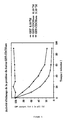
- Figure 1 : Test de transactivation : Cette figure présente en ordonnée les niveaux d'activité CAT (% par rapport au bruit de fond) des souches CHO recombinantes, en fonction de la séquence d'ADNc utilisée pour la transformation.
- Figure 2 : Test d'activité d'échange du GTP : Cette figure présente en ordonnée le rapport des formes p21-GDP/p21-GTP des souches CHO recombinantes, en fonction de la séquence d'ADNc utilisée pour la transformation.
- Figure 3 : Test d'activité d'échange du GDP in vitro : Cette figure montre, en fonction du temps et pour 2 concentrations d'un peptide de l'invention, la diminution de la proportion de GDP rstant lié à la protéine p21.
- Les méthodes classiquement utilisées en biologie moléculaire telles que les extractions préparatives d'ADN plasmidique, la centrifugation d'ADN plasmidique en gradient de chlorure de césium, l'électrophorèse sur gels d'agarose ou d'acrylamide, la purification de fragments d'ADN par électroélution, les extractions de protéines au phénol ou au phénol-chloroforme, la précipitation d'ADN en milieu salin par de l'éthanol ou de l'isopropanol, la transformation dans Escherichia coli, etc, sont bien connues de l'homme de métier et sont abondament décrites dans la littérature [Maniatis T. et al., "Molecular Cloning, a Laboratory Manual", Cold Spring Harbor Laboratory, Cold Spring Harbor, N.Y., 1982; Ausubel F.M. et al. (eds), "Current Protocols in Molecular Biology", John Wiley & Sons, New York, 1987].
- Les enzymes de restriction ont été fournies par New England Biolabs (Biolabs), Bethesda Research Laboratories (BRL) ou Amersham et sont utilisées selon les recommandations des fournisseurs.
- Les plasmides de type pBR322, pUC, λgt11, pGEX 2T et les phages de la série M13 sont d'origine commerciale.
- Pour les ligatures, les fragments d'ADN sont séparés selon leur taille par électrophorèse en gels d'agarose ou d'acrylamide, extraits au phénol ou par un mélange phénol/chloroforme, précipités à l'éthanol puis incubés en présence de l'ADN ligase du phage T4 (Biolabs) selon les recommandations du fournisseur.
- Le remplissage des extrémités 5' proéminentes est effectué par le fragment de Klenow de l'ADN Polymérase I d'E. coli (Biolabs) selon les spécifications du fournisseur. La destruction des extrémités 3' proéminentes est effectuée en présence de l'ADN Polymérase du phage T4 (Biolabs) utilisée selon les recommandations du fabricant. La destruction des extrémités 5' proéminentes est effectuée par un traitement ménagé par la nucléase S1.
- La mutagénèse dirigée in vitro par oligodéoxynucléotides synthétiques est effectuée selon la méthode développée par Taylor et al. [Nucleic Acids Res. 13 (1985) 8749-8764] en utilisant le kit distribué par Amersham.
- L'amplification enzymatique de fragments d'ADN par la technique dite de PCR [Polymérase-catalyzed Chain Reaction, Saiki R.K. et al., Science 230 (1985) 1350-1354 ; Mullis K.B. et Faloona F.A., Meth. Enzym. 155 (1987) 335-350] est effectuée en utilisant un "DNA thermal cycler" (Perkin Elmer Cetus) selon les spécifications du fabricant.
- La vérification des séquences nucléotidiques est effectuée par la méthode développée par Sanger et al. [Proc. Natl. Acad. Sci. USA, 74 (1977) 5463-5467] en utilisant le kit distribué par Amersham.
- Pour les expériences d'hybridation, les conditions de stringence normales sont généralement les suivantes : hybridation : 3 x SCC en présence de 5 x Denhart's à 65°C ; lavage: 0,5 x SSC à 65°C.
- 5.105 phages d'une banque de cerveau humain construite dans le vecteur λgt11 [Skolnik et al., Cell 65 (1991) 83] ont été criblés selon les techniques décrites par Sambrook, Fritsch et Maniatis (Molecular cloning ; Cold Spring Harbor Laboratory Press ; 1989).
- La sonde utilisée pour le criblage de cette banque est un fragment d'ADNc humain de 137 paires de bases marqué au 32P. Cette sonde a été préparée par PCR sur l'ADN total de la banque précitée en utilisant comme amorces les oligonucléotides dégénérés suivants :pour l'oligonucléotide de l'extrémité 3' du fragment (SEQ ID n° 11), et
 pour l'oligonucléotide de l'extrémité 5' du fragment (SEQ ID n° 12).
- La sonde a été marquée au 32P par "random priming" selon la technique de Feinberg et Vogelstein [Anal. Biochem. 137 (1984) 266], et la réaction de PCR a été menée à 40°C environ dans les conditions décrites dans les techniques générales de clonage.
- Parmi les différents clones positifs obtenus par hybridation avec cette sonde, un comprend la totalité d'une phase ouverte qui porte l'activité d'échange vis-à-vis de Ha-Ras.
- Ce clone de λgt11 contient un ADNc de 3 kb qui a été introduit, sous forme d'un fragment EcoRI, au site correspondant d'un vecteur M13mp18. Cet ADNc a ensuite été séquencé à l'aide des amorces commerciales "reverse" et "-20" ainsi qu'à l'aide d'oligonucléotides spécifiques selon la technique de Sanger (Cf techniques générales de clonage).
- La séquence nucléotidique du gène du facteur humain d'échange du GDP porté par le fragment ainsi obtenu est présentée sur la séquence SEQ ID n° 1, ainsi que les séquences peptidiques déduites (SEQ ID n°2, 3 et 4).
- Différents dérivés ou fragments du gène ainsi obtenu peuvent être préparés et utilisés, notamment pour l'expression de peptides de l'invention. En particulier, les fragments suivants ont été préparés par coupure enzymatique, et séparés par électroélution :
- un fragment PstI-EcoRI comprenant une partie de la région codante du facteur d'échange (du nucléotide 936 jusqu'au codon stop) ainsi que la région 3' non codante du fragment,
- un fragment EcoNI-EcoRI comprenant une partie de la région codante du facteur d'échange (du nucléotide 910 jusqu'au codon stop) ainsi que la région 3' non codante du fragment,
- un fragment EagI-EcoRI comprenant une partie de la région codante du facteur d'échange (du nucléotide 638 jusqu'au codon stop) ainsi que la région 3' non codante du fragment,
- un fragment BaII-EcoRI comprenant une partie de la région codante du facteur d'échange (du nucléotide 88 jusqu'au codon stop) ainsi que la région 3' non codante du fragment, et,
- un fragment NaeI-EcoRI comprenant une partie de la région codante du facteur d'échange (du nucléotide 196 jusqu'au codon stop) ainsi que la région 3' non codante du fragment,
- Il est entendu que la région 3' non codante portée par ces fragments est accessoire et qu'elle peut être éliminée, soit par digestion au moyen d'une nucléase, soit par coupure avec une enzyme ayant un site proche du codon stop, telle que notamment SmaI, dont le site est localisé environ 30 pb après le codon stop.
- Il est entendu également que d'autres fragments peuvent être préparés, tels que notamment des fragments ne contenant pas la région codant pour la partie C-terminale entière, ainsi que des dérivés de ces fragments, obtenus par mutation, substitution, addition, ou modification de nature chimique et/ou génétique.
- Les fonctionnalités des peptides selon l'invention ont été testées :
- dans des cellules mammifères,
- dans la levure Saccharomyces cerevisiae, ou encore
- in vitro sur la protéine Ha-Ras recombinante.
- 3.1. Pour l'évaluation fonctionnelle dans les cellules mammifères, les séquences d'ADN codant pour des peptides de l'invention, tels que par exemple ceux décrits dans l'exemple 2, peuvent être placées sous contrôle du promoteur précoce de SV40 dans le vecteur pCym1 décrit par Camonis et al. [Gene 86 (1990) 263].
- Dans cet exemple, les fragments PstI-EcoRI et EcoNI-EcoRI décrit dans l'exemple 2 ont été insérés dans ce vecteur.
- Les vecteurs ainsi obtenus ont été testés par transfection transitoire dans des cellules CHO selon le protocole décrit par Rey et al. [Oncogene 6 (1991) 347].
- Deux critères de fonctionnalité ont ainsi été étudiés :
- la capacité des vecteurs à transactiver un promoteur gouvernant l'expression d'un gène reporteur qui est ici le gène bactérien codant pour la chloramphénicol acétyl transférase (gène CAT),
- leur capacité à promouvoir la charge en GTP des protéines Ras des cellules CHO transfectées.
- a) Pour les tests de transactivation, des cellules CHO à 50 % de confluence ont été transfectées (voir par exemple le protocole décrit par Schweighoffer et al. Science, In Press) d'une part avec 0,5 µg d'un vecteur portant le gène CAT sous contrôle d'un promoteur synthétique composé du promoteur murin du gène de la thymidine kinase et de 4 éléments PEA1 répétés dérivés de l'enhancer du polyôme [Wasylyk et al., EMBO J. 7 (1988) 2475], et d'autre part avec 4,5 µg d'un vecteur d'expression portant, sous contrôle du promoteur précoce de SV40, aucun ADNc codant (piste 1), l'ADNc de Ha-Ras normal (piste 2), l'ADNc de Ha-Ras activé en 12 (Val 12) (piste 3), l'extrémité 3' du cDNA de SDC25 décrite par Rey et al. précitée (piste 4), et l'ADNc codant pour un peptide selon l'invention décrit ci-dessus (piste 5).
Les résultats sont présentés sur la figure 1. La piste 1 correspondant à l'activation basale, la piste 3 (obtenue pour le fragment PstI-EcoRI : CDC hum.) montre que l'expression d'un peptide de l'invention permet la transactivation du promoteur synthétique utilisé.
Le même résultat qualitatif a été obtenu pour les autres fragments étudiés. - b) De façon à vérifier que cette transactivation implique bien une charge nucléotidique des protéines ras des cellules CHO, les mêmes transfections transitoires ont été réalisées, le milieu de culture étant additionné d'orthophosphate marqué au 32P.
- a) Pour les tests de transactivation, des cellules CHO à 50 % de confluence ont été transfectées (voir par exemple le protocole décrit par Schweighoffer et al. Science, In Press) d'une part avec 0,5 µg d'un vecteur portant le gène CAT sous contrôle d'un promoteur synthétique composé du promoteur murin du gène de la thymidine kinase et de 4 éléments PEA1 répétés dérivés de l'enhancer du polyôme [Wasylyk et al., EMBO J. 7 (1988) 2475], et d'autre part avec 4,5 µg d'un vecteur d'expression portant, sous contrôle du promoteur précoce de SV40, aucun ADNc codant (piste 1), l'ADNc de Ha-Ras normal (piste 2), l'ADNc de Ha-Ras activé en 12 (Val 12) (piste 3), l'extrémité 3' du cDNA de SDC25 décrite par Rey et al. précitée (piste 4), et l'ADNc codant pour un peptide selon l'invention décrit ci-dessus (piste 5).
- Ce protocole de marquage ainsi que celui de l'immunoprécipitation des protéines ras cellulaires est décrit par Rey et al. précitée. Les résultats obtenus sont présentés sur la figure 2. Ils montrent que les peptides de l'invention sont capables de moduler les niveaux d'échange du GDP sur les protéines ras puisque certains d'entre-eux (peptide CDC Hum. exprimé par le fragment PstI-EcoRI décrit ci-avant) sont capables de promouvoir la charge en GTP des protéines ras de cellules CHO immunoprécipitées par l'anticorps Y 13-259.
- 3.2. Les peptides de l'invention ont également été testés fonctionnellement dans la levure S.cerevisiae cdc25-. Pour cela, les vecteurs décrits précédemment (3.1.), qui sont des vecteurs navettes, ont été introduits dans la souche de levure OL97-1-11B [Camonis et Jacquet, Mol. Cell. Biol. 8 (1988) 2980]. Les résultats obtenus montrent que les fragments d'ADNc selon l'invention codent pour des peptides qui sont capables de complémenter le défaut de croissance de cette souche à 36°C. Ces résultats montrent ainsi que ces fragments codent pour des peptides fonctionnels in vivo dans S.cerevisiae.
- 3.3. La capacité des séquences d'ADN de l'invention à coder pour des peptides capables de promouvoir l'échange du GDP sur des protéines Ha-Ras purifiées a également été démontrée in vitro selon le protocole décrit par Rey et al. Mol. Cell. Biol. 9 (1989) 3904].
- Pour cela les séquences de l'invention sont exprimées dans la souche d'E.coli TG1 sous forme de protéines de fusion avec la glutathion S-transférase (GST) selon la technique décrite par Smith et Johnson [Gene 67 (1988) 31]. Pour cela, les différents fragments d'ADN décrits en 3.1. ci-dessus ont été clonés, sous forme de fragments SmaI-EcoRI, dans le vecteur pGEX 2T (Pharmacia), en 3' et en phase d'un ADNc codant pour la GST. Les fragments SmaI-EcoRI sont obtenus par ajout d'un adaptateur au moyen d'une ligase. Les vecteurs ainsi obtenus sont ensuite utilisés pour transformer la souche E.coli TG1. Les cellules ainsi transformées sont précultivées une nuit à 37°C, diluées au 1/10e dans du milieu LB, ajoutées d'IPTG pour induire l'expression (2 heures, 25°C), puis cultivées 21 heures environ à 25°C. Les cellules sont ensuite lysées, et les protéines de fusions produites sont purifiées par affinité sur colonne Agarose-GSH. Pour cela, le lysat bactérien est incubé en présence du gel (préparé et équilibré avec le tampon de lyse) pendant 15 minutes à 4°C. Après 3 lavages avec un tampon Tris-HCl pH 7,4, les protéines sont éluées en présence d'un tampon Tris-HCl pH 7,7 contenant un excès de GSH. Le surnageant est récolté et centrifugé.
- L'activité d'échange du GDP des peptides de l'invention sur des protéines Ha-Ras purifiées a ensuite été démontrée in vitro selon le protocole décrit par Rey et al. (Mol. Cell. Biol. précitée). Les résultats obtenus sont présentés sur la figure 3. Ils montrent notamment que le peptide de l'invention correspondant à la séquence CDC hum exprimée pae le fragment PstI-EcoRI décrit ci-avant stimule l'échange du GDP.
- Des séquences d'acides nucléiques homologues à celle présentée sur la figure 1 ont été mises en évidence par deux stratégies différentes :
- par PCR, dans les conditions décrites dans les techniques générales de clonage, sur des ADNc néosynthétisés à partir d'ARNm de placenta, en utilisant comme amorces des oligonucléotides dégénérés choisis pour recouvrir des séquences conservées entre la séquence SEQ ID n°1 et la séquence de la protéine SOS [Bonfini et al., Science 255 (1992) 603].
- Par criblage d'une banque d'ADNc de placenta à l'aide d'une sonde constituée par la totalité de la séquence SEQ ID n°1 marquée au 32P. Ce criblage a été réalisé dans des conditions de faible stringence : hybridation à 50°C en milieu 5 x SSC, 5 x Denhart's; puis lavage à 50°C en milieu 2 x SSC.
- Ces deux stratégies ont permis de révéler des séquences homologues à la séquence SEQ ID n°1. Ces séquences peuvent être aisément isolées et caractérisées. Elles constituent des séquences nucléiques au sens de la présente invention, lorsqu'elles codent (ou leurs fragments ou dérivés) pour des peptides capables de moduler les niveaux d'échanges du GDP sur des complexes p21-GDP.
- En particulier, cette stratégie a permis l'identification, à partir d'ARNm de placenta et en utilisant les oligonucléotides oligo 2449 (SEQ ID n° 9) et oligo 2451 (SEQ ID n° 10), de 2 ADNc codant pour des facteurs désignés hSOS1 et hSOS2, dont les séquences partielles sont représentées sur les SEQ ID n° 5 et SEQ ID n° 7 respectivement. Les ARNm correspondant à ces facteurs sont présents dans tous les tissus dans lesquels ils ont été recherchés, contrairement au facteur décrit dans l'exemple 1 qui semble localisé uniquement dans le cerveau. La localisation chromosomique de ces gènes a été effectuée et a donné les résultats suivants :
- h-GRF : 15q2.4.
- h-SOS1 : 4q2.1.
- h-SOS2 : 14q2.2.
- Un anticorps anti h-GRF a été préparé chez le lapin, par immunisation avec un antigène correspondant au fragment de 280 acides aminés localisé entre les résidus 211 et 489 du facteur h-GRF présenté sur la SEQ ID n° 4.
- Cet anticorps a permis la détection, par ELISA, dans du cortex humain et des cellules précurseur du cerveau, de protéines de poids moléculaires apparents 30, 55, 75, 95 et 140 kDa. La diversité des poids moléculaires suggère la présence d'ADNc multiples. La préincubation de l'anticorps anti h-GRF avec le h-GRF supprime la détection des protéines identifiées, ce qui démontre la spécificité du signal.
-
- (1) INFORMATION GENERALE:
- (i) DEPOSANT:
- (A) NOM: RHONE-POULENC RORER S.A.
- (B) RUE: 20, avenue Raymond ARON
- (C) VILLE: ANTONY
- (E) PAYS: FRANCE
- (F) CODE POSTAL: 92165
- (ii) TITRE DE L' INVENTION: PEPTIDES INHIBANT L'ACTIVITE DES PROTEINES RAS, PREPARATION ET UTILISATION
- (iii) NOMBRE DE SEQUENCES: 12
- (iv) FORME LISIBLE PAR ORDINATEUR:
- (A) TYPE DE SUPPORT: Tape
- (B) ORDINATEUR: IBM PC compatible
- (C) SYSTEME D' EXPLOITATION: PC-DOS/MS-DOS
- (D) LOGICIEL: PatentIn Release #1.0, Version #1.25 (OEB)
- (i) DEPOSANT:
- (2) INFORMATION POUR LA SEQ ID NO: 1:
- (i) CARACTERISTIQUES DE LA SEQUENCE:
- (A) LONGUEUR: 2652 paires de bases
- (B) TYPE: acide nucléque
- (C) NOMBRE DE BRINS: double
- (D) CONFIGURATION: linéire
- (ii) TYPE DE MOLECULE: ADNc
- (iii) HYPOTHETIQUE: NON
- (iii) ANTI-SENS: NON
- (ix) CARACTERISTIQUE ADDITIONELLE:
- (A) NOM/CLE: CDS
- (B) EMPLACEMENT: 1..2445
- (ix) CARACTERISTIQUE ADDITIONELLE:
- (A) NOM/CLE: CDS
- (B) EMPLACEMENT: 445..2445 (SEQ ID NO 3)
- (ix) CARACTERISTIQUE ADDITIONELLE:
- (A) NOM/CLE: CDS
- (B) EMPLACEMENT: 976..2445 (SEQ ID NO 4)
- (xi) DESCRIPTION DE LA SEQUENCE: SEQ ID NO: 1 :


- (i) CARACTERISTIQUES DE LA SEQUENCE:
- (2) INFORMATION POUR LA SEQ ID NO: 2:
- (i) CARACTERISTIQUES DE LA SEQUENCE:
- (A) LONGUEUR: 814 acides aminé
- (B) TYPE: acide aminé
- (D) CONFIGURATION: linéire
- (ii) TYPE DE MOLECULE: proténe
- (xi) DESCRIPTION DE LA SEQUENCE: SEQ ID NO: 2:


- (i) CARACTERISTIQUES DE LA SEQUENCE:
- (2) INFORMATION POUR LA SEQ ID NO: 3:
- (i) CARACTERISTIQUES DE LA SEQUENCE:
- (A) LONGUEUR: 666 acides aminé
- (B) TYPE: acide aminé
- (D) CONFIGURATION: linéire
- (ii) TYPE DE MOLECULE: proténe
- (xi) DESCRIPTION DE LA SEQUENCE: SEQ ID NO: 3:


- (i) CARACTERISTIQUES DE LA SEQUENCE:
- (2) INFORMATION POUR LA SEQ ID NO: 4:
- (i) CARACTERISTIQUES DE LA SEQUENCE:
- (A) LONGUEUR: 489 acides aminé
- (B) TYPE: acide aminé
- (D) CONFIGURATION: linéire
- (ii) TYPE DE MOLECULE: proténe
- (xi) DESCRIPTION DE LA SEQUENCE: SEQ ID NO: 4:


- (i) CARACTERISTIQUES DE LA SEQUENCE:
- (2) INFORMATION POUR LA SEQ ID NO: 5:
- (i) CARACTERISTIQUES DE LA SEQUENCE:
- (A) LONGUEUR: 1092 paires de bases
- (B) TYPE: acide nucléque
- (C) NOMBRE DE BRINS: double
- (D) CONFIGURATION: linéire
- (ii) TYPE DE MOLECULE: ADNc
- (iii) HYPOTHETIQUE: NON
- (iii) ANTI-SENS: NON
- (ix) CARACTERISTIQUE ADDITIONELLE:
- (A) NOM/CLE: CDS
- (B) EMPLACEMENT: 1..1092
- (xi) DESCRIPTION DE LA SEQUENCE: SEQ ID NO: 5:


- (i) CARACTERISTIQUES DE LA SEQUENCE:
- (2) INFORMATION POUR LA SEQ ID NO: 6:
- (i) CARACTERISTIQUES DE LA SEQUENCE:
- (A) LONGUEUR: 364 acides aminés
- (B) TYPE: acide aminé
- (D) CONFIGURATION: linéaire
- (ii) TYPE DE MOLECULE: protéine
- (xi) DESCRIPTION DE LA SEQUENCE: SEQ ID NO: 6:
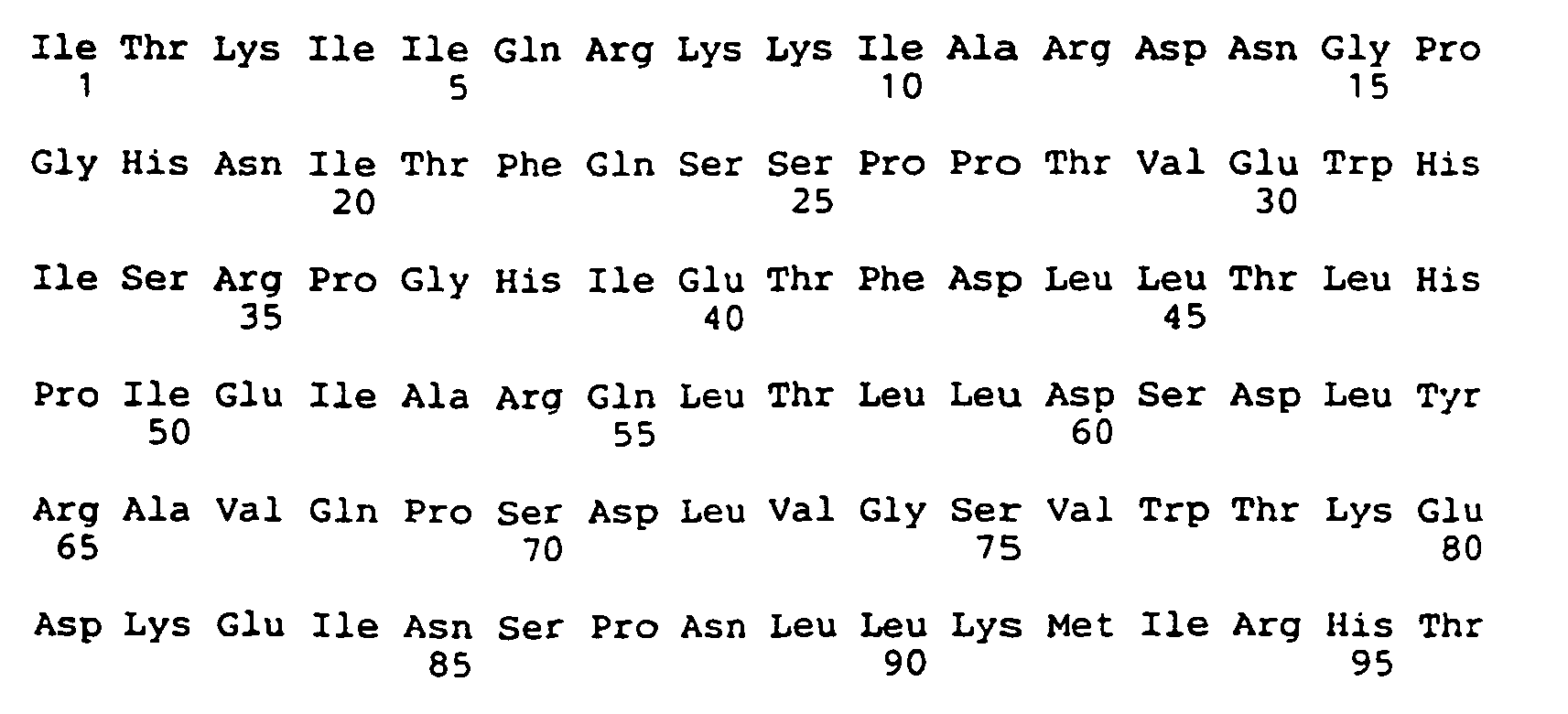

- (i) CARACTERISTIQUES DE LA SEQUENCE:
- (2) INFORMATION POUR LA SEQ ID NO: 7:
- (i) CARACTERISTIQUES DE LA SEQUENCE:
- (A) LONGUEUR: 1956 paires de bases
- (B) TYPE: acide nucléique
- (C) NOMBRE DE BRINS: double
- (D) CONFIGURATION: linéaire
- (ii) TYPE DE MOLECULE: ADNc
- (iii) HYPOTHETIQUE: NON
- (iii) ANTI-SENS: NON
- (ix) CARACTERISTIQUE ADDITIONELLE:
- (A) NOM/CLE: CDS
- (B) EMPLACEMENT: 1..1956
- (xi) DESCRIPTION DE LA SEQUENCE: SEQ ID NO: 7:


- (i) CARACTERISTIQUES DE LA SEQUENCE:
- (2) INFORMATION POUR LA SEQ ID NO: 8:
- (i) CARACTERISTIQUES DE LA SEQUENCE:
- (A) LONGUEUR: 652 acides aminés
- (B) TYPE: acide aminé
- (D) CONFIGURATION: linéaire
- (ii) TYPE DE MOLECULE: protéine
- (xi) DESCRIPTION DE LA SEQUENCE: SEQ ID NO: 8:



- (i) CARACTERISTIQUES DE LA SEQUENCE:
- (2) INFORMATION POUR LA SEQ ID NO: 9:
- (i) CARACTERISTIQUES DE LA SEQUENCE:
- (A) LONGUEUR: 41 bases
- (B) TYPE: acide nucléique
- (C) NOMBRE DE BRINS: simple
- (D) CONFIGURATION: linéaire
- (ii) TYPE DE MOLECULE: ADNc
- (iii) HYPOTHETIQUE: NON
- (iii) ANTI-SENS: NON
- (xi) DESCRIPTION DE LA SEQUENCE: SEQ ID NO: 9:
GATATCGAAT TCCGIGTIYT IAAYGTIYTI MGICAYTGGG T 41
- (i) CARACTERISTIQUES DE LA SEQUENCE:
- (2) INFORMATION POUR LA SEQ ID NO: 10:
- (i) CARACTERISTIQUES DE LA SEQUENCE:
- (A) LONGUEUR: 34 bases
- (B) TYPE: acide nucléique
- (C) NOMBRE DE BRINS: simple
- (D) CONFIGURATION: linéaire
- (ii) TYPE DE MOLECULE: ADNc
- (iii) HYPOTHETIQUE: NON
- (iii) ANTI-SENS: NON
- (xi) DESCRIPTION DE LA SEQUENCE: SEQ ID NO: 10:
AAGCTTGAAT TCCKIMKYTT ISWRAARTTI AKIA 34
- (i) CARACTERISTIQUES DE LA SEQUENCE:
- (2) INFORMATION POUR LA SEQ ID NO: 11:
- (i) CARACTERISTIQUES DE LA SEQUENCE:
- (A) LONGUEUR: 33 bases
- (B) TYPE: acide nucléique
- (C) NOMBRE DE BRINS: simple
- (D) CONFIGURATION: linéaire
- (ii) TYPE DE MOLECULE: ADNc
- (iii) HYPOTHETIQUE: NON
- (iii) ANTI-SENS: NON
- (xi) DESCRIPTION DE LA SEQUENCE: SEQ ID NO: 11:
ATCHGTNAGG TACATNCCHA GGTAKGGNAC ACA 33
- (i) CARACTERISTIQUES DE LA SEQUENCE:
- (2) INFORMATION POUR LA SEQ ID NO: 12:
- (i) CARACTERISTIQUES DE LA SEQUENCE:
- (A) LONGUEUR: 27 bases
- (B) TYPE: acide nucléique
- (C) NOMBRE DE BRINS: simple
- (D) CONFIGURATION: linéaire
- (ii) TYPE DE MOLECULE: ADNc
- (xi) DESCRIPTION DE LA SEQUENCE: SEQ ID NO: 12 :
GCNATHTTYC GNCTNAARAA RACNTGG 27
- (i) CARACTERISTIQUES DE LA SEQUENCE:
Claims (17)
- Peptide capable de moduler les niveaux d'échange du GDP sur des complexes p21-GDP comprenant les séquences SEQ ID n° 2, 3, 4, 6 ou 8.
- Peptide selon la revendication 1 caractérisé en ce qu'il ralentit ou inhibe l'échange du GDP sur le complexe p21-GDP.
- Peptide de séquence SEQ ID n° 2, 3, 4, 6 ou 8.
- Anticorps ou fragment d'anticorps dirigé contre un peptide selon l'une quelconque des revendications 1 à 3.
- Anticorps ou fragment d'anticorps selon la revendication 4 caractérisé en ce qu'il est dirigé contre la séquence peptidique SEQ ID n° 1.
- Anticorps ou fragment d'anticorps selon la revendication 5 caractérisé en ce qu'il possède la capacité d'inhiber au moins partiellement l'échange du GDP sur le complexe p21-GDP.
- Séquence nucléotidique codant pour un peptide tel que défini dans l'une quelconque des revendications 1 à 3.
- Séquence nucléotidique selon la revendication 7 caractérisée en ce qu'elle est choisie parmi :(a) les séquences SEQ ID n° 1, 5 ou 7 et code pour un peptide capable de moduler les niveaux d'échange du GDP sur des complexes p21-GDP,(b) le brin complémentaire des séquences (a),(c) les séquences dérivées des séquences (a) et (b) en raison de la dégénérescence du code génétique.
- Séquence antisens capable d'inhiber la production de peptides selon la revendication 3 et dérivés des séquences SEQ ID N°1, SEQ ID N°5 ou SEQ ID N°7 ou de leur brin complémentaire.
- Utilisation d'une séquence selon la revendication 8(b) pour la détection in vitro de l'expression du facteur d'échange du GDP ou pour la mise en évidence d'anomalies génétiques (mauvais épissage, polymorphisme, mutations ponctuelles).
- Composition pharmaceutique comprenant comme principe actif au moins un peptide selon l'une des revendications 1 à 3 ou un anticorps ou fragment d'anticorps selon l'une des revendications 4 à 6 ou une séquence nucléotidique selon la revendication 8.
- Composition pharmaceutique selon la revendication 11 destinée à moduler l'activation des protéines p21.
- Composition pharmaceutique selon la revendication 12 destinée à inhiber au moins partiellement l'activation des protéines p21.
- Composition pharmaceutique selon la revendication 11 destinée au traitement des cancers.
- Utilisation d'un anticorps ou fragment d'anticorps selon l'une des revendications 4 à 6 et/ou d'une séquence nucléotidique selon la revendication 8(b) pour la détection de l'expression et/ou d'une surexpression d'un facteur d'échange du GDP amplifié, muté ou réarrangé dans un échantillon biologique.
- Utilisation d'un anticorps ou fragment d'anticorps selon l'une des revendications 4 à 6 et/ou d'une séquence nucléotidique selon la revendication 8(b) pour le typage de cancers in vitro.
- Procédé de préparation d'un peptide selon l'une quelconque des revendications 1 à 3 caractérisé en ce que l'on cultive une cellule contenant une séquence nucléotidique selon la revendication 7 dans des conditions d'expression de ladite séquence et on récupère le peptide produit.
Applications Claiming Priority (3)
| Application Number | Priority Date | Filing Date | Title |
|---|---|---|---|
| FR9204827A FR2690162B1 (fr) | 1992-04-21 | 1992-04-21 | Peptides ayant une activite de facteur d'echange du gdp, sequences d'acides nucleiques codant pour ces peptides, preparation et utilisation. |
| FR9204827 | 1992-04-21 | ||
| PCT/FR1993/000382 WO1993021314A1 (fr) | 1992-04-21 | 1993-04-19 | Peptides ayant une activite de facteur d'echange du gdp, sequences d'acides nucleiques codant pour ces peptides, preparation et utilisation |
Publications (2)
| Publication Number | Publication Date |
|---|---|
| EP0637334A1 EP0637334A1 (fr) | 1995-02-08 |
| EP0637334B1 true EP0637334B1 (fr) | 2007-06-06 |
Family
ID=9429043
Family Applications (1)
| Application Number | Title | Priority Date | Filing Date |
|---|---|---|---|
| EP93911529A Expired - Lifetime EP0637334B1 (fr) | 1992-04-21 | 1993-04-19 | Peptides ayant une activite de facteur d'echange du gdp, sequences d'acides nucleiques codant pour ces peptides, preparation et utilisation |
Country Status (11)
| Country | Link |
|---|---|
| US (1) | US5656595A (fr) |
| EP (1) | EP0637334B1 (fr) |
| JP (1) | JP3681384B2 (fr) |
| AT (1) | ATE364079T1 (fr) |
| CA (1) | CA2131166A1 (fr) |
| DE (1) | DE69334146T2 (fr) |
| DK (1) | DK0637334T3 (fr) |
| ES (1) | ES2287927T3 (fr) |
| FR (1) | FR2690162B1 (fr) |
| PT (1) | PT637334E (fr) |
| WO (1) | WO1993021314A1 (fr) |
Families Citing this family (19)
| Publication number | Priority date | Publication date | Assignee | Title |
|---|---|---|---|---|
| US5910478A (en) * | 1995-09-21 | 1999-06-08 | Innapharma, Inc. | Peptidomimetics inhibiting the oncogenic action of p21 ras |
| US5840683A (en) * | 1995-09-21 | 1998-11-24 | Innapharma, Inc. | Peptides inhibiting the oncogenic action of p21 ras |
| US6340575B1 (en) * | 1997-06-17 | 2002-01-22 | Onyx Pharmaceuticals, Inc. | Methods and compositions for treating abnormal cell growth related to unwanted guanine nucleotide exchange factor activity |
| IT1293491B1 (it) * | 1997-07-08 | 1999-03-01 | Dompe Spa | Mutanti di proteine gef e plasmidi idonei per la loro sintesi |
| US6177545B1 (en) * | 1997-09-02 | 2001-01-23 | Insight Strategy & Marketing Ltd. | Heparanase specific molecular probes and their use in research and medical applications |
| US6699672B1 (en) * | 1997-09-02 | 2004-03-02 | Insight Biopharmaceuticals Ltd. | Heparanase specific molecular probes and their use research and medical applications |
| US20020088019A1 (en) * | 1997-09-02 | 2002-07-04 | Oron Yacoby-Zeevi | Methods of and pharmaceutical compositions for improving implantation of embryos |
| US20040213789A1 (en) * | 1997-09-02 | 2004-10-28 | Oron Yacoby-Zeevi | Heparanase activity neutralizing anti-heparanase monoclonal antibody and other anti-heparanase antibodies |
| US20010006630A1 (en) * | 1997-09-02 | 2001-07-05 | Oron Yacoby-Zeevi | Introducing a biological material into a patient |
| US20030217375A1 (en) * | 1998-08-31 | 2003-11-20 | Eyal Zcharia | Transgenic animals expressing heparanase and uses thereof |
| IT1306190B1 (it) * | 1999-01-04 | 2001-05-30 | Dipartimento Di Biotecnologie | Mutanti di proteine e plasmidi idonei per la loro sintesi. |
| AU2878600A (en) * | 1999-03-01 | 2000-09-21 | Hadasit Medical Research Services & Development Company Ltd | Polynucleotide encoding a polypeptide having heparanase activity and expression of same in genetically modified cells |
| CA2407937A1 (fr) * | 2000-05-05 | 2001-11-15 | Merck Patent Gesellschaft Mit Beschraenkter Haftung | Nouveau facteur 1 d'echange de nucleotides de la guanine pour ras (nrg1) |
| FR2812945B1 (fr) * | 2000-08-10 | 2002-10-04 | Aventis Pharma Sa | Utilisation de la proteine grf1 et cellules exprimant la proteine grf1 pour le criblage de molecules |
| WO2002055704A2 (fr) | 2001-01-09 | 2002-07-18 | Curagen Corp | Proteines, polynucleotides codant pour elles et procedes d'utilisation correspondants |
| US6671189B2 (en) * | 2001-11-09 | 2003-12-30 | Minebea Co., Ltd. | Power converter having primary and secondary side switches |
| AU2003256323A1 (en) * | 2002-06-26 | 2004-01-19 | Chiron Corporation | Sos1 inhibitors |
| WO2004064479A2 (fr) * | 2003-01-17 | 2004-08-05 | Children's Medical Center Corporation | Agents therapeutiques neuroprotecteurs et leurs methodes d'identification |
| US20060269552A1 (en) * | 2003-06-09 | 2006-11-30 | Oron Yacoby-Zeevi | Heparanase activity neutralizing anti-heparanase monclonal antibody and other anti-heparanase antibodies |
Family Cites Families (1)
| Publication number | Priority date | Publication date | Assignee | Title |
|---|---|---|---|---|
| ATE181332T1 (de) * | 1989-08-21 | 1999-07-15 | Chiron Corp | Vom gtpase-aktivierenden protein (gap) abgeleitete peptide sowie deren diagnostische und therapeutische verwendung |
-
1992
- 1992-04-21 FR FR9204827A patent/FR2690162B1/fr not_active Expired - Fee Related
-
1993
- 1993-04-19 CA CA002131166A patent/CA2131166A1/fr not_active Abandoned
- 1993-04-19 US US08/318,831 patent/US5656595A/en not_active Expired - Lifetime
- 1993-04-19 DK DK93911529T patent/DK0637334T3/da active
- 1993-04-19 JP JP51806593A patent/JP3681384B2/ja not_active Expired - Fee Related
- 1993-04-19 ES ES93911529T patent/ES2287927T3/es not_active Expired - Lifetime
- 1993-04-19 AT AT93911529T patent/ATE364079T1/de not_active IP Right Cessation
- 1993-04-19 DE DE69334146T patent/DE69334146T2/de not_active Expired - Fee Related
- 1993-04-19 EP EP93911529A patent/EP0637334B1/fr not_active Expired - Lifetime
- 1993-04-19 PT PT93911529T patent/PT637334E/pt unknown
- 1993-04-19 WO PCT/FR1993/000382 patent/WO1993021314A1/fr not_active Ceased
Non-Patent Citations (1)
| Title |
|---|
| DATABASE PUBMED [online] NCBI; 1994, CHARDIN; MATTEI, Database accession no. PMID: 8275713 * |
Also Published As
| Publication number | Publication date |
|---|---|
| ATE364079T1 (de) | 2007-06-15 |
| FR2690162B1 (fr) | 1995-08-04 |
| JP3681384B2 (ja) | 2005-08-10 |
| DE69334146T2 (de) | 2008-01-31 |
| WO1993021314A1 (fr) | 1993-10-28 |
| DK0637334T3 (da) | 2007-10-08 |
| CA2131166A1 (fr) | 1993-10-28 |
| US5656595A (en) | 1997-08-12 |
| DE69334146D1 (de) | 2007-07-19 |
| FR2690162A1 (fr) | 1993-10-22 |
| JPH07505774A (ja) | 1995-06-29 |
| PT637334E (pt) | 2007-09-07 |
| ES2287927T3 (es) | 2007-12-16 |
| EP0637334A1 (fr) | 1995-02-08 |
Similar Documents
| Publication | Publication Date | Title |
|---|---|---|
| EP0637334B1 (fr) | Peptides ayant une activite de facteur d'echange du gdp, sequences d'acides nucleiques codant pour ces peptides, preparation et utilisation | |
| AU743490B2 (en) | NTN-2 member of TNF ligand family | |
| JPH07508025A (ja) | インスリン様増殖因子(igf−1)類似体 | |
| FR2694296A1 (fr) | Peptides inhibant l'activité des protéines ras, préparation et utilisation. | |
| WO1993025679A1 (fr) | Nouveaux polypeptides ayant une activite de recepteur nmda, acides nucleiques codant pour ces polypeptides et utilisations | |
| EP0793721B1 (fr) | Peptides capables de se lier au domaine sh3 de la proteine gap, sequences nucleotidiques codant pour ces peptides, leur preparation et utilisation | |
| JP2007506422A (ja) | NEMOオリゴマー化を妨害するように設計されたペプチドによるNF−κB活性化の選択的阻害 | |
| EP0745122B1 (fr) | Recepteur galanine, acides nucleiques, cellules transformees et utilisations | |
| WO1994009130A1 (fr) | Polypeptides ayant une activite de recepteur serotoninergique (5ht2c) et utilisations | |
| EP0877758A2 (fr) | PROTEINE PURIFIEE SR-p70 | |
| JP2002526099A (ja) | Nlk1−相互作用タンパク質 | |
| EP0874049B1 (fr) | Séquences d'acide nucléique de genes CIITA | |
| EP0804574B1 (fr) | Recepteur opioide kappa humain, acides nucleiques et utilisations | |
| EP1259606B1 (fr) | Compositions utilisables pour reguler l'activite de la parkine | |
| WO1994011500A1 (fr) | Nouveaux polypeptides ayant une activite de recepteur opioide, acides nucleiques codant pour ces polypeptides et utilisations | |
| US20030007956A1 (en) | Proteins that interact with betaTrCP | |
| AU775722B2 (en) | Effector proteins of rapamycin | |
| FR2782084A1 (fr) | Sequences nucleiques codant pour tout ou partie d'une proteine interagissant avec le recepteur at2 et leurs applications | |
| WO1994018319A1 (fr) | Nouveaux polypeptides ayant une activite de recepteur serotoninergique, acides nucleiques codant pour ces polypeptides et utilisations | |
| FR2805266A1 (fr) | Compositions utilisables pour reguler l'activite de la parkine | |
| FR2727116A1 (fr) | Peptides capables de se lier au domaine sh3 de la proteine gap, sequences nucleotidiques codant pour ces peptides, leur preparation et utilisation | |
| Zhuang et al. | VASP activation of SRE-dependent transcription occurs downstream of RhoA and inhibited by cGMP-dependent protein kinase phosphorylation | |
| FR2734266A1 (fr) | Peptides capables de se lier au domaine sh3 de la proteine gap sequences nucleotidiques codant pour ces peptides, leur preparation et utilisation | |
| JPWO1999057143A1 (ja) | 転写調節因子 | |
| WO2015175868A1 (fr) | Méthodes pour moduler l'interaction entre la diguanylate cyclase et une protéine effectrice ou phosphodiestérase apparentée |
Legal Events
| Date | Code | Title | Description |
|---|---|---|---|
| PUAI | Public reference made under article 153(3) epc to a published international application that has entered the european phase |
Free format text: ORIGINAL CODE: 0009012 |
|
| 17P | Request for examination filed |
Effective date: 19940930 |
|
| AK | Designated contracting states |
Kind code of ref document: A1 Designated state(s): AT BE CH DE DK ES FR GB GR IE IT LI LU NL PT SE |
|
| RIN1 | Information on inventor provided before grant (corrected) |
Inventor name: TOCQUE, BRUNO Inventor name: SCHWEIGHOFFER, FABIEN |
|
| 17Q | First examination report despatched |
Effective date: 20030605 |
|
| RIC1 | Information provided on ipc code assigned before grant |
Ipc: C12Q 1/68 20060101ALI20060206BHEP Ipc: G01N 33/577 20060101ALI20060206BHEP Ipc: A61K 39/395 20060101ALI20060206BHEP Ipc: C12P 21/08 20060101ALI20060206BHEP Ipc: C12N 15/12 20060101AFI20060206BHEP |
|
| GRAP | Despatch of communication of intention to grant a patent |
Free format text: ORIGINAL CODE: EPIDOSNIGR1 |
|
| GRAS | Grant fee paid |
Free format text: ORIGINAL CODE: EPIDOSNIGR3 |
|
| GRAA | (expected) grant |
Free format text: ORIGINAL CODE: 0009210 |
|
| AK | Designated contracting states |
Kind code of ref document: B1 Designated state(s): AT BE CH DE DK ES FR GB GR IE IT LI LU NL PT SE |
|
| REG | Reference to a national code |
Ref country code: GB Ref legal event code: FG4D Free format text: NOT ENGLISH |
|
| REG | Reference to a national code |
Ref country code: CH Ref legal event code: EP |
|
| REG | Reference to a national code |
Ref country code: IE Ref legal event code: FG4D Free format text: LANGUAGE OF EP DOCUMENT: FRENCH |
|
| REF | Corresponds to: |
Ref document number: 69334146 Country of ref document: DE Date of ref document: 20070719 Kind code of ref document: P |
|
| REG | Reference to a national code |
Ref country code: PT Ref legal event code: SC4A Free format text: AVAILABILITY OF NATIONAL TRANSLATION Effective date: 20070827 |
|
| GBT | Gb: translation of ep patent filed (gb section 77(6)(a)/1977) |
Effective date: 20070831 |
|
| REG | Reference to a national code |
Ref country code: SE Ref legal event code: TRGR Ref country code: GR Ref legal event code: EP Ref document number: 20070402593 Country of ref document: GR |
|
| REG | Reference to a national code |
Ref country code: DK Ref legal event code: T3 |
|
| REG | Reference to a national code |
Ref country code: ES Ref legal event code: FG2A Ref document number: 2287927 Country of ref document: ES Kind code of ref document: T3 |
|
| PLBE | No opposition filed within time limit |
Free format text: ORIGINAL CODE: 0009261 |
|
| STAA | Information on the status of an ep patent application or granted ep patent |
Free format text: STATUS: NO OPPOSITION FILED WITHIN TIME LIMIT |
|
| 26N | No opposition filed |
Effective date: 20080307 |
|
| PGFP | Annual fee paid to national office [announced via postgrant information from national office to epo] |
Ref country code: GR Payment date: 20090316 Year of fee payment: 17 |
|
| PGFP | Annual fee paid to national office [announced via postgrant information from national office to epo] |
Ref country code: IE Payment date: 20090420 Year of fee payment: 17 Ref country code: ES Payment date: 20090508 Year of fee payment: 17 Ref country code: DK Payment date: 20090415 Year of fee payment: 17 |
|
| PGFP | Annual fee paid to national office [announced via postgrant information from national office to epo] |
Ref country code: SE Payment date: 20090407 Year of fee payment: 17 Ref country code: PT Payment date: 20090417 Year of fee payment: 17 Ref country code: NL Payment date: 20090405 Year of fee payment: 17 Ref country code: LU Payment date: 20090522 Year of fee payment: 17 Ref country code: IT Payment date: 20090422 Year of fee payment: 17 Ref country code: FR Payment date: 20090417 Year of fee payment: 17 Ref country code: DE Payment date: 20090420 Year of fee payment: 17 Ref country code: AT Payment date: 20090415 Year of fee payment: 17 |
|
| PGFP | Annual fee paid to national office [announced via postgrant information from national office to epo] |
Ref country code: BE Payment date: 20090428 Year of fee payment: 17 |
|
| PGFP | Annual fee paid to national office [announced via postgrant information from national office to epo] |
Ref country code: CH Payment date: 20090416 Year of fee payment: 17 |
|
| PGFP | Annual fee paid to national office [announced via postgrant information from national office to epo] |
Ref country code: GB Payment date: 20090415 Year of fee payment: 17 |
|
| BERE | Be: lapsed |
Owner name: AVENTIS PHARMA S.A. Effective date: 20100430 |
|
| REG | Reference to a national code |
Ref country code: NL Ref legal event code: V1 Effective date: 20101101 |
|
| EUG | Se: european patent has lapsed | ||
| REG | Reference to a national code |
Ref country code: CH Ref legal event code: PL |
|
| REG | Reference to a national code |
Ref country code: DK Ref legal event code: EBP |
|
| GBPC | Gb: european patent ceased through non-payment of renewal fee |
Effective date: 20100419 |
|
| REG | Reference to a national code |
Ref country code: FR Ref legal event code: ST Effective date: 20101230 |
|
| PG25 | Lapsed in a contracting state [announced via postgrant information from national office to epo] |
Ref country code: NL Free format text: LAPSE BECAUSE OF NON-PAYMENT OF DUE FEES Effective date: 20101101 Ref country code: IE Free format text: LAPSE BECAUSE OF NON-PAYMENT OF DUE FEES Effective date: 20100419 Ref country code: AT Free format text: LAPSE BECAUSE OF NON-PAYMENT OF DUE FEES Effective date: 20100419 |
|
| PG25 | Lapsed in a contracting state [announced via postgrant information from national office to epo] |
Ref country code: PT Free format text: LAPSE BECAUSE OF NON-PAYMENT OF DUE FEES Effective date: 20101019 Ref country code: LI Free format text: LAPSE BECAUSE OF NON-PAYMENT OF DUE FEES Effective date: 20100430 Ref country code: DE Free format text: LAPSE BECAUSE OF NON-PAYMENT OF DUE FEES Effective date: 20101103 Ref country code: CH Free format text: LAPSE BECAUSE OF NON-PAYMENT OF DUE FEES Effective date: 20100430 |
|
| PG25 | Lapsed in a contracting state [announced via postgrant information from national office to epo] |
Ref country code: BE Free format text: LAPSE BECAUSE OF NON-PAYMENT OF DUE FEES Effective date: 20100430 Ref country code: IT Free format text: LAPSE BECAUSE OF NON-PAYMENT OF DUE FEES Effective date: 20100419 Ref country code: GB Free format text: LAPSE BECAUSE OF NON-PAYMENT OF DUE FEES Effective date: 20100419 Ref country code: GR Free format text: LAPSE BECAUSE OF NON-PAYMENT OF DUE FEES Effective date: 20101103 |
|
| PG25 | Lapsed in a contracting state [announced via postgrant information from national office to epo] |
Ref country code: DK Free format text: LAPSE BECAUSE OF NON-PAYMENT OF DUE FEES Effective date: 20100503 |
|
| REG | Reference to a national code |
Ref country code: ES Ref legal event code: FD2A Effective date: 20110715 |
|
| PG25 | Lapsed in a contracting state [announced via postgrant information from national office to epo] |
Ref country code: ES Free format text: LAPSE BECAUSE OF NON-PAYMENT OF DUE FEES Effective date: 20110705 |
|
| PG25 | Lapsed in a contracting state [announced via postgrant information from national office to epo] |
Ref country code: ES Free format text: LAPSE BECAUSE OF NON-PAYMENT OF DUE FEES Effective date: 20100420 |
|
| PG25 | Lapsed in a contracting state [announced via postgrant information from national office to epo] |
Ref country code: FR Free format text: LAPSE BECAUSE OF NON-PAYMENT OF DUE FEES Effective date: 20100430 |
|
| PG25 | Lapsed in a contracting state [announced via postgrant information from national office to epo] |
Ref country code: LU Free format text: LAPSE BECAUSE OF NON-PAYMENT OF DUE FEES Effective date: 20100419 Ref country code: SE Free format text: LAPSE BECAUSE OF NON-PAYMENT OF DUE FEES Effective date: 20100420 |