EP0642286A2 - Mobiles Kommunikationsgerät mit Aufnahme-/Wiedergabefunktion - Google Patents
Mobiles Kommunikationsgerät mit Aufnahme-/Wiedergabefunktion Download PDFInfo
- Publication number
- EP0642286A2 EP0642286A2 EP94113967A EP94113967A EP0642286A2 EP 0642286 A2 EP0642286 A2 EP 0642286A2 EP 94113967 A EP94113967 A EP 94113967A EP 94113967 A EP94113967 A EP 94113967A EP 0642286 A2 EP0642286 A2 EP 0642286A2
- Authority
- EP
- European Patent Office
- Prior art keywords
- speech
- digital speech
- signal processing
- processing means
- signals
- Prior art date
- Legal status (The legal status is an assumption and is not a legal conclusion. Google has not performed a legal analysis and makes no representation as to the accuracy of the status listed.)
- Withdrawn
Links
Images







Classifications
-
- H—ELECTRICITY
- H04—ELECTRIC COMMUNICATION TECHNIQUE
- H04M—TELEPHONIC COMMUNICATION
- H04M1/00—Substation equipment, e.g. for use by subscribers
- H04M1/64—Automatic arrangements for answering calls; Automatic arrangements for recording messages for absent subscribers; Arrangements for recording conversations
- H04M1/65—Recording arrangements for recording a message from the calling party
- H04M1/6505—Recording arrangements for recording a message from the calling party storing speech in digital form
-
- H—ELECTRICITY
- H04—ELECTRIC COMMUNICATION TECHNIQUE
- H04M—TELEPHONIC COMMUNICATION
- H04M1/00—Substation equipment, e.g. for use by subscribers
- H04M1/64—Automatic arrangements for answering calls; Automatic arrangements for recording messages for absent subscribers; Arrangements for recording conversations
- H04M1/65—Recording arrangements for recording a message from the calling party
- H04M1/656—Recording arrangements for recording a message from the calling party for recording conversations
-
- H—ELECTRICITY
- H04—ELECTRIC COMMUNICATION TECHNIQUE
- H04M—TELEPHONIC COMMUNICATION
- H04M1/00—Substation equipment, e.g. for use by subscribers
- H04M1/72—Mobile telephones; Cordless telephones, i.e. devices for establishing wireless links to base stations without route selection
- H04M1/724—User interfaces specially adapted for cordless or mobile telephones
Definitions
- the present invention relates to a mobile communication apparatus capable of recording or reproduction.
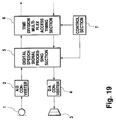
- Fig. 19 is a block diagram showing a conventional mobile communication apparatus using digital speech signals for communication, for example, a digital portable telephone.
- reference numeral 1 denotes a microphone which supplies speech signals to the mobile communication apparatus; 2 denotes an A/D converter for converting analog speech signals into digital speech signals; 3 is a loudspeaker for performing speech output for the mobile communication apparatus; 4 is a D/A converter for converting digital speech signals into analog speech signals; and 5 denotes a digital speech signal processing section for compressing the digital speech signals derived from the A/D converter 2 and for expanding the received compressed digital speech data, which can be, for example, a speech codec.
- Reference numeral 6 designates a time division multiplex timing control section for timing adjustment which is time division multiplex accessed.
- Reference numeral 7 signifies a control section for controlling the digital speech signal processing section 5 and the time division multiplex access timing control section 6.
- analog speech signals which have been input in the form of speech through the Microphone 1 are converted into digital speech signals by the A/D converter 2.
- the thus obtained digital signals are supplied to the digital speech signal processing section 5 for signal processing.
- the digital speech signals are compressed to obtain a lower bit rate.
- the compressed digital speech data are then output with error correction codes attached thereto.
- the North American digital mobile phone employs as a digital speech signal processing section 5 a speech codec which compresses the digital speech signals to a coding rate in the order of 8 kbps (actually a coding rate is 7,95 kbps and total coding rate is 13 kbps when an error correcting code is added).
- a speech codec which compresses the digital speech signals to a coding rate in the order of 8 kbps (actually a coding rate is 7,95 kbps and total coding rate is 13 kbps when an error correcting code is added).
- the digital speech signals compressed in the digital speech signal processing section 5 under the control of the control section 7 are subjected to the adjustment of timing and supplied with control signals for the formation of multiplexing signals.
- the multiplexing signals are radio transmitted to a base station. From the base station, speech data is transmitted to the other party in communication by way of a communication network such as a public telephone network.
- the base station When receiving the speech data, it is transmitted from the other party in communication through the communication network to the base station which performs processing such as signal compression to form speech signal data (multiplexing signals).
- processing such as signal compression to form speech signal data (multiplexing signals).
- compressed digital speech data are taken out of control signals involved in the multiplexing signals, and then input into the digital speech signal processing section 5.
- signal error correction processing is carried out based on the error correction codes imparted to the compressed digital speech data, and the compressed digital speech data are expanded.
- the digital speech signals derived from the digital speech signal processing section 5 are converted into analog speech signals, and output as speech through the loudspeaker 3.
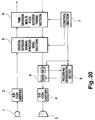
- reference numeral 8 denotes a recording/reproducing section for recording speech signals and for reproducing the thus recorded speech signals, which may comprise a recording element such as a RAM.
- Reference numeral 9 denotes a switching section to be connected with the recording/reproducing section 8.
- the received speech data are subjected to expansion processing in the speech signal processing section 5.
- SW1 and SW2 of the switching section 9 are both OFF so that the digital speech signals are output intact to the loudspeaker 3 by way of the D/A converter 4.
- the control section 7 issues a control signal to the switching section 9.
- the SW1 of the switching section 9 is turned ON to allow the digital speech signals from the speech signal processing section 5 to be output to the D/A converter 4 and to the section 8.
- the recording/reproducing section 9 receives a control signal for starting recording from the control section 7, to initiate the recording of the digital speech signals derived from the digital speech signal processing section 5.
- the control section 7 issues a control signal for ending the recording to the recording/reproducing section 8 in order to stop the recording and turn the switch SW1 of the switching section 9 to OFF.
- the control section 7 issues a control signal to the switching section 9 to turn the switch SW2 of the switching section 9 to ON.
- the recording/reproducing section 8 receives a control signal for initiating the reproduction from the control section 7 to output the recorded digital speech signals to the switching section 9.
- the digital speech signals supplied to the switching section 9 are converted into analog speech signals by the D/A converter 4 and are output through the loudspeaker 3 in the form of a voice.
- the control section 7 issues a control signal for ending reproducing to the switching section in order to turn the switch SW2 of the switching section 9 to OFF to complete the reproduction.
- the present invention was conceived in order to overcome the above problems. It is therefore the object of the present invention to ensure an increased recording of voice by recording a voice with a lower memory capacity, and to reproduce the recorded signals into an original voice.
- a mobile communication apparatus having a recording/reproducing function, comprising A/D conversion means for converting analog speech signals into digital speech signals; digital speech signal processing means for compressing the digital speech signals derived from the A/D conversion means and for expanding compressed digital speech data received from a base station; D/A conversion means for converting the digital speech signals expanded by the speech signal processing means into analog speech signals; recording/reproducing means connected to the digital speech signal processing means, and intended to record the digital speech signals compressed by the digital speech signal processing means or compressed digital speech data received from the base station and to reproduce the thus recorded compressed digital speech data; and control means connected to the digital speech signal processing means and the means, and intended to control the recording or the reproduction by the means.
- a mobile communication apparatus having a function, comprising A/D conversion means for converting analog speech signals into digital speech signals; digital speech signal processing means including a speech coding section for compressing digital speech signals derived from the A/D conversion means, an error correction coding section for conferring error correction codes on the digital speech data compressed by the speech coding section, an error correction decoding section for performing an error correction processing for the compressed digital speech data based on the error codes imparted to the compressed digital speech data received from the base station, and a speech decoding section for expanding the compressed digital speech data derived from the error correction decoding section; D/A conversion means for converting the digital speech signals derived from the speech decoding section into analog speech signals; means connected between the voice coding section and the error correction section and between the error correction decoding section and the speech decoding section, and intended to record compressed digital speech signals derived from the speech coding section and the error correction decoding section, and to supply thus recorded compressed digital speech data to the speech decoding section or the error correction
- a mobile communication apparatus having a reproducing function, comprising A/D conversion means for converting analog speech signals into digital speech signals; digital speech signal processing means for compressing the digital speech signals derived from the A/D conversion means and for expanding compressed digital speech data received from a base station; D/A conversion means for converting the digital speech signals expanded by the speech signal processing means into analog speech signals; reproducing means connected to the digital speech signal processing means, and intended to reproduce compressed digital speech signals having a pattern corresponding to input predetermined signal data, and to output them to the digital speech signal processing means or the base station; and control means connected to the digital speech signal processing means and the reproducing means, and intended to control the reproduction by the reproducing means.
- a mobile communication apparatus having a reproducing function, comprising A/D conversion means for converting analog speech signals into digital speech signals; digital speech signals processing means including a speech coding section for compressing digital speech data derived from the A/D conversion means, an error correction coding section for conferring error correction codes on the digital speech data compressed by the speech coding section, an error correction decoding section for performing error correction processing for the compressed digital speech data based on the error codes imparted to the compressed speech signals received from the base station, and a speech decoding section for expanding the compressed digital speech data derived from the error correction decoding section; D/A conversion means for converting the digital speech signals derived from the speech decoding section into analog speech signals; reproducing means connected between the speech coding section and the error correction section and between the error correction decoding section and the speech decoding section, and intended to reproduce compressed digital speech signals having a pattern corresponding to input predetermined signal data and to output them to the error correction coding section or the speech decoding section; and control means connected
- a mobile communication apparatus having a reproducing function, comprising: A/D conversion means for converting analog speech signals into digital speech signals; digital speech signal processing means for compressing the digital speech signals derived from the A/D conversion means and for expanding compressed digital speech data received from a base station; D/A conversion means for converting the digital speech signals expanded by the speech signal processing means into analog speech signals; and reproducing means connected to the digital speech signal processing means, and intended to reproduce compressed digital speech signals having a pattern corresponding to predetermined signal data received from a base station, and to output them to the digital speech signal processing means or the base station;
- a mobile communication apparatus having a reproducing function, comprising A/D conversion means for converting analog speech signals into digital speech signals; digital speech signal processing means including a speech coding section for compressing digital speech signals derived from the A/D conversion means, an error correction coding section for conferring error correction codes on the digital speech data compressed by the speech coding section, an error correction decoding section for performing error correction processing for the compressed digital speech data based on the error codes imparted to the compressed speech signals received from the base station, and a speech decoding section for expanding the compressed digital speech data derived from the error correction decoding section; D/A conversion means for converting the digital speech signals derived from the speech decoding section into analog speech signals; and reproducing means connected between the speech coding section and the error correction section and between the error correction decoding section and the speech decoding section, and intended to reproduce compressed digital speech signals having a pattern corresponding to predetermined signal data received from a base station and to output them to the error correction coding section or the speech decoding
- the apparatus records or reproduces compressed digital speech data to thereby reduce the memory capacity required for recording.
- the mobile communication apparatus having a recording/reproducing function in accordance with the present invention is applicable to a mobile communication apparatus capable of transmitting and receiving both analog signals and digital signals.
- FIG. 1 there is shown a mobile communication apparatus which is a first embodiment of the present invention.
- Reference numeral 10 denotes a recording/reproducing section for recording compressed digital speech signals and outputting them, which comprises a memory element including a RAM.
- Reference numeral 11 is a control section for controlling the communicating action of the entire apparatus and controlling the recording/reproducing section 10. It is to be noted that since the other constituent elements ments are the same as the conventional ones shown in Figs. 19 and 20, they are marked by the same reference numerals and a description thereof will be omitted.
- control section 11 supplies a control signal for starting a recording to the recording/reproducing section 10.
- the recording/reproducing section 10 Upon receiving the control signal, the recording/reproducing section 10 takes in and records a compressed digital speech signal associated with the local central office which is issued from a time division multiplex access timing control section 6. Afterwards, when terminating the recording, the control section 11 confers a control signal for ending a recording on the recording/reproducing section 10 which in turn stops recording the speech signal in accordance with the control signal. Through the above procedures an ordinary calling state is restored.
- control section 11 similarly supplies a control signal for starting recording to the recording/reproducing section 10.
- the recording/reproducing section 10 takes in digital speech data which is compressed by a digital speech signal processing section 5, and records it. Thereafter, when terminating the recording, the control section 11 confers a control signal for ending a recording to the recording/reproducing section 10 to bring the recording to a stop.
- the voice In recording a voice from the other party, the voice can be recorded whether it is in or out of communication with the local central office.
- Signal compression or expansion processing performed by the digital speech signal processing section 5 is available at the time of communication. Therefore, in particular, when recording, a speech signal from the other party in a non-communication state, the control section 11 controls the digital speech signal processing section 5 to execute compression processing for digital speech signals from start to finish off recording in the recording/reproducing section 10.
- the control section 11 supplies a control signal for starting reproduction to the recording/reproducing section 10.
- the recording/reproducing section 10 After receiving the control signal, the recording/reproducing section 10 outputs the recorded compressed digital speech signal to the digital speech signal processing section 5.
- the digital speech signal processing section 5 expands the compressed digital speech signal into its original digital speech signal, and then supplies it through a D/A converter 4 to a loudspeaker 3.
- the voice can be reproduced on the side of the other party whether in a communication state or a non-communication state.
- the control section 11 controls the digital speech signal processing section 5 to execute expansion processing for digital speech signals during the time that the latter outputs the speech signal recorded by the recording/reproducing section 10, in the same manner as above.
- the recorded compressed digital speech signal is supplied to the time division multiplex access timing control section 6, and is then further transmitted to a base station.
- the thus transmitted compressed digital speech signal is expanded in a digital speech signal processing section which is also typically provided in the base station, so that the voice can be reproduced on the side of the local central office by way of a communication network.
- the voice signal to be recorded in the recording/reproducing section 10 is a compressed digital speech signal.
- the North American digital automobile telephones employ as the digital speech signal processing section 5 a speech coder-decoder or codec capable of compressing the bit rate of a digital speech signal into a lower bit rate of 8 kbps (actually a coding rate is 7,95 kbps and total coding rate is 13 kbps when an error correcting code is added).
- the recording of the digital speech signal compressed to have a lower bit rate ensures a low bit speech recording, and therefore reduction in the memory amount required for recording. Accordingly, the use of a recording element having the same capacity as in the prior art would allow a larger amount of speech to be recorded.
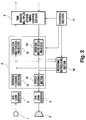
- a digital speech signal processing section 5 is configured as shown in Fig. 2.
- Reference numeral 12 denotes a speech coding section which inputs a digital speech signal from an A/D converter 2 and compresses its bit rate into a lower one.
- 13 denotes an error correction coding section which inputs the digital speech signal compressed in the speech coding section 12 and confers an error correcting code on it.
- the error correction coding section 13 further transmits the compressed digital speech signal with the error correcting code to the base station.
- Reference numeral 14 denotes an error correction decoding section which inputs the compressed digital speech data with the error correcting code transmitted from the base station at the time of reception, and corrects, based on the error correcting code, bit errors within the digital speech data which may occur in a wireless transmission path when transmitting the speech data.
- Reference numeral 15 is a speech decoding section which inputs only the compressed digital speech data which have been subjected to the error correction processing in the error correction decoding section 14, and expands their bit rates into original ones.
- the recording/reproducing section 10 in the first embodiment may be so constructed as to record and reproduce only the compressed digital speech signals as shown in Fig. 2.
- the recording/reproducing section 10 When recording speech from the local central office, the recording/reproducing section 10 records the compressed digital speech data subjected to the error correction processing in the error correction decoding section 13. When recording speech on the side of the other party, there are recorded compressed digital speech data derived from the speech coding section 12.
- the compressed digital speech data output from the recording/reproducing section 10 are supplied into the speech decoding section 15.
- the compressed digital speech data issued in the same manner are input into the error correction coding section 13, and are then marked with an error correcting code for the transmission to the base station.
- the thus processed speech signals are transmitted to the local central office for reproduction of speech.
- the control section 11 controls the digital speech signal processing section 5 to allow the speech decoding section 15 to execute expansion processing for the signals.
- the number of bits for recording may be decreased further than in the case where the speech signals to be input or output with respect to the digital speech signal processing section 5 are recorded in the recording/reproducing section 10 as shown in the first embodiment.
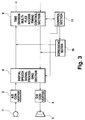
- FIG. 3 there is shown a third embodiment of the present invention.
- reference numeral 3 denotes a reproducing section which inputs predetermined signals and outputs compressed digital data signals corresponding thereto, and which comprises a memory element including a ROM.
- the other constituent elements are the same as the conventional ones shown in Figs. 19 and 2O, and hence are designated by the same reference numerals, of which description will be omitted (the same applies to other embodiments described hereinafter).
- Certain digital speech signals are previously recorded in the reproducing section 16 in the form of digital speech signals compressed by the same coding rates as those for the digital speech signals compressed in the digital speech processing section 5 at the time of calling.
- the control section 11 supplies predetermined signal data to the reproducing section 16 which in turn outputs digital speech signals corresponding to the signal data.
- the compressed digital speech signals derived from the reproducing section 16 are input into the digital speech signal processing section 5 and expanded.
- the thus expanded digital speech signals are converted in a D/A converter 4 into analog speech signals and output to the loudspeaker 3 for the reproduction of the voice.
- a function key on the apparatus associated with the local central office is operated to output certain data from the loudspeaker associated with the local central office.
- a typing operation whereby a moment of time is indicated by a voice through the operation of the function key.
- the control section 11 When depressing the function key signals are supplied to the control section 11 which in turn outputs data signals indicating the current time to the reproducing section 16 in response to the signals.
- the reproducing section 16 stores in advance compressed digital speech signals indicating the current time corresponding to the signal data to be input, and outputs the compressed digital speech data by receiving the signal data from the control section 11. Then, the loudspeaker associated with the local central office informs the user of the current time through a voice.
- the compressed digital speech signals to be output from the reproducing section 16 may be transmitted to the base station, and reproduced on the side of the other party in communication.
- call-in signals are first transmitted from the other party and are supplied to the control section 11.
- the control section 11 transmits the signal data on a message transmission to the reproducing section 16 after sending out a plurality of calls to the local central office.
- the reproducing section 16 records speech signals for the message corresponding to the signal data in the form of compressed digital speech signals, and transmits them to the base station.
- the base station executes processing for expanding the compressed digital speech data, and then sends out speech to the other party in communication.
- the other party reproduces the speech such as, for example, "We are away now" represented by the compressed digital speech signals.
- the compressed digital speech signals previously stored within the reproducing section 16 are expanded for reproduction with the aid of the digital speech signal processing section 5 so that a smaller memory amount of speech signals are to be recorded.
- the reproducing section for outputting compressed digital speech data corresponding to the predetermined signal data.
- the predetermined signals may be transmitted from the calling party, and directly supplied into the reproducing section provided on the side of the called party so as to allow the compressed digital speech data corresponding to the signal data to be output.
- Fig. 4 illustrates its configuration.
- reference numeral 17 is a reproducing section which reproduces compressed digital speech signals corresponding to the predetermined signal data transmitted by the calling party by way of the base station.
- the base station first receives signal data representing the answering message from the other part.
- the base station imparts its signal data to multiplexing signals to be formed, and transmits them to the local central office which in turn takes out the thus transmitted signal data from the multiplexing signals in the time division multiplex access timing control section 6 and supplies them to the reproducing section 17.
- the reproducing section 17 stores in advance speech signals (or an answering message) corresponding to the signal data in the form of compressed digital speech data.
- the reproducing section 17 supplies the compressed digital speech signals corresponding to the thus received signal data into the digital speech signal processing section 5.
- the answering message can be reproduced through the loudspeaker 3 by way of the D/A converter 4.
- the compressed digital speech signals derived from the reproducing section 16 are either input into the digital speech signal processing section 5, or transmitted to the other party in communication.
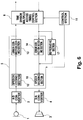
- the reproducing section 16 in the third embodiment may be configured as shown in Fig. 5 in the case where the digital speech signal processing section 5 includes the speech coding section 12, the error correction coding section 13, the error correction decoding section 14, and the speech decoding section 15 as described in the second embodiment.
- the compressed digital speech data derived from the reproducing section 16 are input into the speech decoding section 15 in which the compressed digital speech signals are subjected to the expansion processing and supplied to the loudspeaker 3 by way of the D/A converter 4.
- the compressed digital speech data issued from the reproducing section 16 are supplied to the error correction coding section 13 in which the compressed digital speech data are marked with error correction codes for the transmission to the base station.
- the reproducing section 17 of the fourth embodiment may be provided.
- Fig. 6 illustrates its configuration.
- the reproducing section 17 outputs compressed digital speech data corresponding to signal data representing an answering message transmitted from the other party in communication by way of the base station.
- output compressed digital speech data are directly input into the speech decoding section 15 within the digital speech signal processing section 5, and are reproduced on the side of the local central office.
- Fig. 7 depicts a mobile communication apparatus capable of both digital communication and analog communication in a radio communication zone between the local central office and the base station.
- Reference numeral 18 denotes an analog speech signal processing section which performs signal processing for an ordinary analog speech including voice band filtering, and speech compression/expansion in the mobile communication apparatus for analog communication.
- Reference numeral 19 denotes a switching control section which selects either a digital communication mode or an analog communication mode.
- the control section 11 determines which mode is to be utilized out of the digital communication or the analog communication. Based on the decision, the control section 11 switchably inputs or outputs the speech signals in such a manner that, if in the digital communication mode, then the digital speech signal processing section 5 performs the speech signal processing, whereas, if in the analog communication mode, then the analog speech signal processing section 18 executes the speech signal processing.
- the illustrated recording/reproducing section 10 when loading a recording/reproducing function thereinto, records the compressed digital speech data to be input or output with respect to the digital speech signals processing section 5, and outputs the thus recorded signals.
- the recording/reproducing section 10 is the same as in the first embodiment, which records speech of the other party in communication or speech on the side of the local central office in the form of compressed digital speech data, and reproduces the thus recorded compressed digital speech data on the side of the other party or of the local central office.
- the control section 11 if it determines the digital communication mode, issues control signals for selecting the digital communication mode to the switching control section 19.
- the switching control section 19 transmits the analog speech signals derived from the microphone 1 to the A/D converter 2 based on the control signals from the control section 11, and the resultant digital speech signals to be output are subject to the compression processing for the speech signals in the digital speech signal processing section 5.
- the thus compressed digital speech signals are transmitted to the base station by way of the time division multiplex access timing control section 6.
- the compressed digital speech data which have been processed in the time division multiplex timing control section 6 based on the decision of the digital communication mode are supplied to the digital speech signals processing section 5 for expansion processing. Thereafter, the thus expanded digital speech signals are supplied to the loudspeaker 3 by way of the D/A converter 4 and the switching control section 19. During the digital communication mode, the analog speech signal processing section 18 is not available.
- the recording/reproducing section 10 When selecting this digital communication mode, the recording/reproducing section 10 records the speech of the other party in communication or the speech on the side of the local central office in the form of compressed digital speech signals.
- the operation for reproducing the compressed digital speech signals being thus recorded on the side of the other party or of the local central office will be the same as the recording/reproducing operation in the first embodiment.
- the control section 11 determines the analog communication mode and sends out a control signal for selecting the analog communication mode to the switching control section 19. Based on the control signal received from the control section 11, the switching control section 19, when transmitting speech data, transmits the analog speech signals derived from the microphone 1 to the analog speech signal processing section 18 to execute ordinary analog speech signal processing.
- the thus signal-processed analog speech signals are supplied to the time division multiplex access timing control section 6 for transmission to the base station.
- the analog speech signals which have been processed in the time division multiplex access timing control section 6 based on the analog communication mode determined by the control section 11 are input into the analog speech signal processing section 18 for the execution of ordinary analog speech signal processing.
- the analog speech signals subjected to the signal processing are input into the switching control section 19, and supplied directly to the loudspeaker 3.
- the digital speech signal processing section 5 is not available.
- the control section 11 When recording the speech signals of the local central office during the selection of the analog communication mode, the control section 11 transmits a control signal for starting recording to the recording/reproducing section 10, and sends out a control signal to the digital speech signal processing section 5. Based on the control signal, the switching control section 19 supplies the analog speech signals to the A/D converter 2 for the conversion into the digital speech signals, and inputs them into the digital speech signal processing section 5.
- the digital speech signal processing section 5 performs compression processing for the input digital speech signals, based on the control signal derived from the control section 11.
- the compressed digital speech data to be output are recorded in the recording/reproducing section 10.
- the control section issues a control signal to the recording/reproducing section 10, the switching control section 19, and the digital speech signal processing section 5.
- the recording/reproducing section 10 stops recording, and the switching control section 19 and the digital speech signal processing section 5 are restored to the pre-recording state.
- the control section 11 issues a control signal for starting recording to the recording/reproducing section 10, and sends out a control signal to the switching control section 19 and the digital speech signal processing section 5.
- the switching control section 19 supplies the analog speech signals subjected to the signal processing in the analog speech signal processing section 18 based on the control signal to the loudspeaker 3 as well as the A/D converter 2.
- the speech signals digitized by the A/D converter 2 are transmitted to the digital speech signal processing section 5.
- the digital speech signal processing section 5 which has been hitherto out of operation performs compression processing for the digital speech signals, and the recording/reproducing section 10 records the digital speech data compressed in the digital speech signal processing section 5.
- the control section 11 sends out a control signal to the recording/reproducing section 10, the switching control section 19, and the digital speech signal processing section 5.
- the recording/reproducing section 10 stops the recording operation, and the switching control section 19 and the digital speech signal processing section 5 is recovered to the state prior to recording.
- the control section 11 issues a control signal for starting reproducing to the recording/reproducing section 10, and issues a control signal to the switching control section 19 and the digital speech signal processing section 5.
- the compressed digital speech signals being recorded in the recording/reproducing section 10 are supplied to the digital speech signal processing section 5.
- the digital speech signal processing section 5 initiates expansion processing for the input compressed digital speech data.
- the thus expanded digital speech signals are converted into analog speech signals by the D/A converter 4, and supplied to the switching control section 19.
- the switching control section 19, in response to the control signal from the control section 11, sends out the input analog speech signals to the analog speech signal processing section 18.
- the analog speech signals subjected to the signal processing are transmitted through the time division multiplex access timing section 6 to the base station, and further transmitted to the other party in communication for reproduction.
- the control section 11 issues a control signal to the switching control section 19 and the digital speech signal processing section 5 which are restored to their pre-reproducing states.
- the control section issues a control signal for starting reproducing to the recording/reproducing section 10, and issues a control signal to the switching control section 19 and the digital speech signal processing section 5.
- the compressed digital speech data being stored in the recording/reproducing section 10 are transmitted to the digital speech signal processing section 5 for expansion processing.
- the thus expanded digital speech signals are converted into analog speech signals by the D/A converter 4, and supplied to the switching control section 19.
- the switching control section 19 supplies the analog speech signals to the loudspeaker 3.
- the control section 11 issues a control signal to the switching control section 19 and the digital speech signal processing section 5 which are in turn recovered to their pre-reproduction state.
- the memory amount required for the recording can be reduced by utilizing the digital speech signal processing section 5 to record the compressed digital speech signals.
- the reproducing section 16 shown in the third embodiment.
- Fig. 8 depicts its configuration.
- the reproducing section 16 supplies compressed digital speech data corresponding to the predetermined signal data to the digital speech signal processing section 5 for the reproduction on the side of the local central office, or alternatively, to the time division multiplex access timing control section 6 for the reproduction on the side of the other party through the base station.
- the reproducing section 17 instead of the recording/reproducing section 10 loaded into the mobile communication apparatus for both the digital and the analog communications as shown in the sixth embodiment, there may be employed the reproducing section 17 as shown in the fourth embodiment.
- Fig. 9 depicts its configuration.
- the reproducing section 17 supplies the compressed digital speech data corresponding to the predetermined signal data to the digital speech signal processing section 5 for the reproduction on the side of the local central office.
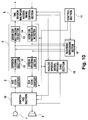
- the input and output of the compressed digital speech signals into and from the recording/reproducing section 10 may be configured in such a manner as shown in Fig. 10, as in the second embodiment. More specifically, the compressed digital speech data derived from the speech coding section 12 are recorded and the speech on the side of the local central office is recorded. Alternatively, there may be recorded the compressed digital speech data derived from the error correction decoding section 14, as well as the speech on the side of the other party in communication. The compressed digital speech data thus recorded are supplied to the error correction coding section 13 for reproduction on the side of the other party in communication, or alternatively, to the speech decoding section 15 for the reproduction on the side of the local central office.
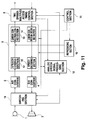
- the recording/reproducing section in the eighth embodiment may be substituted by the reproducing section 16 of the fifth embodiment.
- Fig. 11 depicts its configuration.
- the compressed digital speech data corresponding to the predetermined signal data arising from the reproducing section 16 are supplied to the error correction coding section 13 for reproduction on the side of the other party in communication, or alternatively, to the speech decoding section 15 for reproduction on the side of the local central office.
- the reproducing section 17 of the fifth embodiment which reproduces the compressed digital speech data corresponding to the predetermined signal data transmitted from the other party in communication.
- Fig. 12 depicts its configuration.
- the compressed digital speech data to be reproduced are supplied to the voice decoding section 15.
- Fig. 13 depicts a tenth embodiment of the present invention, which includes a recording/reproducing section in the mobile communication apparatus capable of both digital and analog communications.
- Reference numeral 20 denotes a digital speech signal processing section which performs a speech signal processing in both cases of the digital communication mode and the analog communication mode.
- Reference numeral 21 denotes an A/D conversion signal processing section which processes digital speech signals derived from the A/D converter 2 in the analog communication mode, and which is provided within the digital speech signal processing section 20.
- Reference numeral 22 denotes a D/A converter which converts into analog speech signals the digital speech signals subjected to the signal processing in the A/D conversion signal processing section 21 in the analog communication mode.
- Reference numeral 23 denotes an A/D converter which converts into digital speech signals the analog speech signals received from the time division multiplex access timing control section 6 in the analog communication mode.
- the digital speech signal processing section 20 further comprises the A/D conversion signal processing section 21 besides the digital speech signal processing section 5 shown in the above embodiment.
- an ordinary digital speech signal processing is carried out within the digital speech signal processing section 20 so that the resultant digital speech signals are transmitted and received by way of the time division multiplex access timing control section 6.
- the digital speech signals derived from the A/D converter 2 are supplied to the A/D conversion signal processing section 21 within the digital speech signal processing section 20, and are subjected to signal processing.
- This signal processing includes that the digital signals are subject to an analog speech signal processing which is commonly carried out through, for example, a voice belt filtering upon the analog communication.
- the thus processed digital speech signals are converted into analog speech signals by the D/A converter 22.
- the thus converted analog speech signals are the same as the ones to be subjected to the analog speech signal processing upon an ordinary transmission, and the resultant analog speech signals are transmitted.
- the analog speech signals are converted into digital speech signals by the A/D converter 23, which is further provided in the A/D conversion signal processing section 21 for signal processing.
- the thus processed digital speech signals are converted into analog speech signals by the D/A converter 4.
- the converted analog speech signals are the same as the ones subjected to the analog speech signal processing when ordinarily outputting the voice on the side of the local central office, which is supplied to the loudspeaker 3 for voice output.
- the control section 11 determines which mode is to be selected of the digital or analog communication, and based on the result, controls the digital speech signal processing section 20 to perform signal processing required in the digital communication mode and the analog communication mode, respectively.
- the speech signals to be recorded in and output from the recording/reproducing section 10 are the compressed digital speech data processed in the digital communication mode.
- the digital speech signal processing section 20 is permitted to perform compression/expansion processing which is originally to be carried out in the digital communication mode.
- the digital speech signals thus subjected to the compression processing may be recorded, or alternatively, the compressed digital speech data to be output may be expanded.
- the operation of recording and reproducing is the same as in the sixth embodiment.
- the recording/reproducing section 10 may be replaced with the reproducing section 16 of the third embodiment.
- Fig. 14 depicts its configuration. Further, there may be provided the reproducing section 17 of the fourth embodiment.
- Fig. 15 depicts its configuration.
- the digital speech signal processing section 20 in the eleventh embodiment including, as shown in Fig. 16, the speech coding section 12, the error correction coding section 13, the error correction decoding section 14, the speech decoding section 15, and the analog speech signal processing section 21, there may be configured the recording/reproducing section 10 as shown.
- the recording/reproducing section 10 there are recorded the compressed digital speech data derived from the speech coding section 12 and the compressed digital speech data derived from the error correction decoding section 14.
- the thus recorded compressed digital speech data are supplied to the error correction coding section 13 for the reproduction on the side of the other party in communication, or alternatively, to the speech decoding section 15 for the reproduction on the side of the local central office.
- the recording/reproducing section 10 may be substituted by the reproducing section 16 of the fifth embodiment.
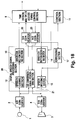
- Fig. 17 depicts its configuration. Further, there may be provided the reproducing section 17 of the fifth embodiment.
- Fig. 18 depicts its configuration.
Landscapes
- Engineering & Computer Science (AREA)
- Signal Processing (AREA)
- Mobile Radio Communication Systems (AREA)
- Telephonic Communication Services (AREA)
- Transmission Systems Not Characterized By The Medium Used For Transmission (AREA)
- Telephone Function (AREA)
Applications Claiming Priority (2)
| Application Number | Priority Date | Filing Date | Title |
|---|---|---|---|
| JP5221105A JPH0779204A (ja) | 1993-09-06 | 1993-09-06 | 移動体通信機器 |
| JP221105/93 | 1993-09-06 |
Publications (2)
| Publication Number | Publication Date |
|---|---|
| EP0642286A2 true EP0642286A2 (de) | 1995-03-08 |
| EP0642286A3 EP0642286A3 (de) | 1995-10-04 |
Family
ID=16761570
Family Applications (1)
| Application Number | Title | Priority Date | Filing Date |
|---|---|---|---|
| EP94113967A Withdrawn EP0642286A3 (de) | 1993-09-06 | 1994-09-06 | Mobiles Kommunikationsgerät mit Aufnahme-/Wiedergabefunktion. |
Country Status (3)
| Country | Link |
|---|---|
| US (1) | US5632001A (de) |
| EP (1) | EP0642286A3 (de) |
| JP (1) | JPH0779204A (de) |
Cited By (10)
| Publication number | Priority date | Publication date | Assignee | Title |
|---|---|---|---|---|
| DE19528038A1 (de) * | 1995-07-31 | 1997-02-06 | Grundig Emv | Diktiergerät mit drahtloser Datenübertragung |
| EP0762711A3 (de) * | 1995-09-12 | 1999-04-07 | Nokia Mobile Phones Ltd. | Sprachspeicherung in einem tragbaren zellularen Telefon |
| EP0810762A3 (de) * | 1996-05-28 | 1999-08-18 | Matsushita Electric Industrial Co., Ltd. | Telefongerät mit einer Aufzeichnungsfunktion |
| DE19820162A1 (de) * | 1998-05-05 | 1999-11-11 | Klaus Ertmer | Funktelekommunikationssystem und Verfahren zur Informationsspeicherung in einem Telekommunikationssystem |
| WO2000011853A1 (de) * | 1998-08-19 | 2000-03-02 | Infineon Technologies Ag | Schaltung und verfahren zur aufzeichnung und wiedergabe von sprache und anderen tönen in digitalen mobilfunkgeräten |
| EP0873030A3 (de) * | 1997-04-14 | 2000-06-21 | AT&T Corp. | Funkrufempfänger mit Sprachantwort |
| EP0849924A3 (de) * | 1996-12-20 | 2003-06-04 | Nokia Corporation | Verfahren und Gerät für Anrufregistrierung in einem Speicher |
| CN1112819C (zh) * | 2000-08-02 | 2003-06-25 | 深圳市中兴通讯股份有限公司 | 一种手机多功能语音录放的装置和方法 |
| US6718337B1 (en) | 1998-01-15 | 2004-04-06 | Symbol Technologies, Inc. | Apparatus with extended markup language date capture capability |
| GB2399674A (en) * | 2003-03-20 | 2004-09-22 | Marlon Greenidge | Voice recording device |
Families Citing this family (7)
| Publication number | Priority date | Publication date | Assignee | Title |
|---|---|---|---|---|
| US6002719A (en) * | 1995-12-22 | 1999-12-14 | Sony Corporation | Two way messaging system with non-real time voice compression and decompression |
| KR100287366B1 (ko) * | 1997-11-24 | 2001-04-16 | 윤순조 | 엠피이지 방식을 이용한 휴대용 음향 재생장치 및 방법 |
| JP2000032093A (ja) * | 1998-07-14 | 2000-01-28 | Matsushita Electric Ind Co Ltd | 携帯電話装置 |
| JP4315558B2 (ja) * | 2000-01-13 | 2009-08-19 | オリンパス株式会社 | システム |
| KR20010091699A (ko) * | 2000-03-17 | 2001-10-23 | 윤종용 | 통신 단말기의 녹음 장치 및 방법 |
| US20020184002A1 (en) * | 2001-05-30 | 2002-12-05 | International Business Machines Corporation | Method and apparatus for tailoring voice prompts of an interactive voice response system |
| JP2003060408A (ja) | 2001-06-05 | 2003-02-28 | Murata Mfg Co Ltd | フィルタ部品および通信機装置 |
Family Cites Families (11)
| Publication number | Priority date | Publication date | Assignee | Title |
|---|---|---|---|---|
| US4124773A (en) * | 1976-11-26 | 1978-11-07 | Robin Elkins | Audio storage and distribution system |
| US5012411A (en) * | 1985-07-23 | 1991-04-30 | Charles J. Policastro | Apparatus for monitoring, storing and transmitting detected physiological information |
| US4772873A (en) * | 1985-08-30 | 1988-09-20 | Digital Recorders, Inc. | Digital electronic recorder/player |
| EP0235127B2 (de) * | 1985-09-03 | 1993-05-05 | Motorola, Inc. | Radiotelephon mit freisprechbetrieb |
| US4856066A (en) * | 1986-11-06 | 1989-08-08 | Lemelson Jerome H | Speech communication system and method |
| US4905003A (en) * | 1987-07-24 | 1990-02-27 | Richard J. Helferich | Analog/digital data storage system |
| US5025486A (en) * | 1988-12-09 | 1991-06-18 | Dallas Semiconductor Corporation | Wireless communication system with parallel polling |
| GB2232024B (en) * | 1989-05-22 | 1994-01-12 | Seikosha Kk | Method and apparatus for recording and/or producing sound |
| JP2749456B2 (ja) * | 1991-03-06 | 1998-05-13 | 三菱電機株式会社 | 無線通信機 |
| FI911165L (fi) * | 1991-03-08 | 1992-09-09 | Nokia Mobile Phones Ltd | Telefonsvarare foer en mobiltelefon |
| US5402518A (en) * | 1992-07-22 | 1995-03-28 | Pcvoice, Inc. | Sound storage and sound retrieval system having peripheral with hand operable switches |
-
1993
- 1993-09-06 JP JP5221105A patent/JPH0779204A/ja active Pending
-
1994
- 1994-04-11 US US08/226,090 patent/US5632001A/en not_active Expired - Fee Related
- 1994-09-06 EP EP94113967A patent/EP0642286A3/de not_active Withdrawn
Cited By (15)
| Publication number | Priority date | Publication date | Assignee | Title |
|---|---|---|---|---|
| DE19528038A1 (de) * | 1995-07-31 | 1997-02-06 | Grundig Emv | Diktiergerät mit drahtloser Datenübertragung |
| EP0757469A3 (de) * | 1995-07-31 | 1997-02-19 | Grundig E.M.V. Elektro-Mechanische Versuchsanstalt Max Grundig GmbH & Co. KG | Diktiergerät mit drahtloser Datenübertragung |
| DE19528038C2 (de) * | 1995-07-31 | 2002-02-21 | Grundig Ag | Diktiergerät mit drahtloser Datenübertragung |
| EP0762711A3 (de) * | 1995-09-12 | 1999-04-07 | Nokia Mobile Phones Ltd. | Sprachspeicherung in einem tragbaren zellularen Telefon |
| US6058165A (en) * | 1996-05-28 | 2000-05-02 | Matsushita Electric Industrial Co., Ltd. | Telephone apparatus with recording function |
| EP0810762A3 (de) * | 1996-05-28 | 1999-08-18 | Matsushita Electric Industrial Co., Ltd. | Telefongerät mit einer Aufzeichnungsfunktion |
| EP0849924A3 (de) * | 1996-12-20 | 2003-06-04 | Nokia Corporation | Verfahren und Gerät für Anrufregistrierung in einem Speicher |
| EP0873030A3 (de) * | 1997-04-14 | 2000-06-21 | AT&T Corp. | Funkrufempfänger mit Sprachantwort |
| US6370375B1 (en) | 1997-04-14 | 2002-04-09 | At&T Corp. | Voice-response paging device and method |
| US6718337B1 (en) | 1998-01-15 | 2004-04-06 | Symbol Technologies, Inc. | Apparatus with extended markup language date capture capability |
| DE19820162A1 (de) * | 1998-05-05 | 1999-11-11 | Klaus Ertmer | Funktelekommunikationssystem und Verfahren zur Informationsspeicherung in einem Telekommunikationssystem |
| WO2000011853A1 (de) * | 1998-08-19 | 2000-03-02 | Infineon Technologies Ag | Schaltung und verfahren zur aufzeichnung und wiedergabe von sprache und anderen tönen in digitalen mobilfunkgeräten |
| US6580903B2 (en) | 1998-08-19 | 2003-06-17 | Infineon Technologies Ag | Circuit and method for recording and playing back voice and other sounds in digital mobile radio devices |
| CN1112819C (zh) * | 2000-08-02 | 2003-06-25 | 深圳市中兴通讯股份有限公司 | 一种手机多功能语音录放的装置和方法 |
| GB2399674A (en) * | 2003-03-20 | 2004-09-22 | Marlon Greenidge | Voice recording device |
Also Published As
| Publication number | Publication date |
|---|---|
| US5632001A (en) | 1997-05-20 |
| EP0642286A3 (de) | 1995-10-04 |
| JPH0779204A (ja) | 1995-03-20 |
Similar Documents
| Publication | Publication Date | Title |
|---|---|---|
| US5632001A (en) | Mobile communication apparatus having recording/reproducing function | |
| JP3890108B2 (ja) | 音声メッセージ送信装置、音声メッセージ受信装置及び携帯無線音声メッセージ通信装置 | |
| KR100476732B1 (ko) | 아날로그 통신 장비용 디지털 무선 전화 시스템 인터페이스 | |
| US5790957A (en) | Speech recall in cellular telephone | |
| RU2207740C2 (ru) | Мобильный телефон с возможностью непрерывной записи | |
| EP1149502B1 (de) | Beseitigung von tonerkennung | |
| JP3890605B2 (ja) | 送受信装置 | |
| JPH1094051A (ja) | 遠隔的にプログラム可能な移動端末 | |
| JPH08130775A (ja) | ディジタルコードレス電話システム | |
| KR0138059B1 (ko) | 녹음기능부착 통신장치 | |
| EP0584666B1 (de) | Digitales Funktelefon mit Sprachsynthese | |
| US5384807A (en) | ADPCM transcoder with integral tone generation and method therefor | |
| US5633862A (en) | DTMF signal transmission method in single frequency simultaneous transmitting and receiving system and single frequency simultaneous transmitting and receiving system transceiver capable of transmitting DTMF signal | |
| JP2002503421A (ja) | 一体化された伝言機能を有する電話装置 | |
| WO1998026525A1 (en) | Portable radio telephone equipment and control thereof | |
| US20010018352A1 (en) | Circuit and method for recording and playing back voice and other sounds in digital mobile radio devices | |
| JP3058064B2 (ja) | ディジタル無線電話装置 | |
| JP2896187B2 (ja) | 電話装置及び電話装置における通話レベル調整方法 | |
| JP3293457B2 (ja) | 移動無線電話機 | |
| US20050272407A1 (en) | Mobile telephone | |
| KR100293925B1 (ko) | 휴대통신단말기의사용자착신음녹음방법 | |
| JPH07183970A (ja) | 携帯電話システム | |
| JP3354350B2 (ja) | 携帯電話機 | |
| JPH07235977A (ja) | 録音機能付き通信装置 | |
| JP2001077885A (ja) | 電話機 |
Legal Events
| Date | Code | Title | Description |
|---|---|---|---|
| PUAI | Public reference made under article 153(3) epc to a published international application that has entered the european phase |
Free format text: ORIGINAL CODE: 0009012 |
|
| AK | Designated contracting states |
Kind code of ref document: A2 Designated state(s): DE FR GB |
|
| PUAL | Search report despatched |
Free format text: ORIGINAL CODE: 0009013 |
|
| AK | Designated contracting states |
Kind code of ref document: A3 Designated state(s): DE FR GB |
|
| 17P | Request for examination filed |
Effective date: 19950929 |
|
| 17Q | First examination report despatched |
Effective date: 20000418 |
|
| STAA | Information on the status of an ep patent application or granted ep patent |
Free format text: STATUS: THE APPLICATION HAS BEEN WITHDRAWN |
|
| 18W | Application withdrawn |
Effective date: 20030725 |