EP0643329B2 - Composition liquide durcissable par rayonnement, en particulier pour la stéréolithographie - Google Patents
Composition liquide durcissable par rayonnement, en particulier pour la stéréolithographie Download PDFInfo
- Publication number
- EP0643329B2 EP0643329B2 EP94810474A EP94810474A EP0643329B2 EP 0643329 B2 EP0643329 B2 EP 0643329B2 EP 94810474 A EP94810474 A EP 94810474A EP 94810474 A EP94810474 A EP 94810474A EP 0643329 B2 EP0643329 B2 EP 0643329B2
- Authority
- EP
- European Patent Office
- Prior art keywords
- group
- formula
- integer
- alk
- methyl
- Prior art date
- Legal status (The legal status is an assumption and is not a legal conclusion. Google has not performed a legal analysis and makes no representation as to the accuracy of the status listed.)
- Expired - Lifetime
Links
- 0 *C(C*N)CO Chemical compound *C(C*N)CO 0.000 description 3
Classifications
-
- G—PHYSICS
- G03—PHOTOGRAPHY; CINEMATOGRAPHY; ANALOGOUS TECHNIQUES USING WAVES OTHER THAN OPTICAL WAVES; ELECTROGRAPHY; HOLOGRAPHY
- G03F—PHOTOMECHANICAL PRODUCTION OF TEXTURED OR PATTERNED SURFACES, e.g. FOR PRINTING, FOR PROCESSING OF SEMICONDUCTOR DEVICES; MATERIALS THEREFOR; ORIGINALS THEREFOR; APPARATUS SPECIALLY ADAPTED THEREFOR
- G03F7/00—Photomechanical, e.g. photolithographic, production of textured or patterned surfaces, e.g. printing surfaces; Materials therefor, e.g. comprising photoresists; Apparatus specially adapted therefor
- G03F7/004—Photosensitive materials
- G03F7/075—Silicon-containing compounds
- G03F7/0757—Macromolecular compounds containing Si-O, Si-C or Si-N bonds
-
- B—PERFORMING OPERATIONS; TRANSPORTING
- B33—ADDITIVE MANUFACTURING TECHNOLOGY
- B33Y—ADDITIVE MANUFACTURING, i.e. MANUFACTURING OF THREE-DIMENSIONAL [3D] OBJECTS BY ADDITIVE DEPOSITION, ADDITIVE AGGLOMERATION OR ADDITIVE LAYERING, e.g. BY 3D PRINTING, STEREOLITHOGRAPHY OR SELECTIVE LASER SINTERING
- B33Y70/00—Materials specially adapted for additive manufacturing
-
- G—PHYSICS
- G03—PHOTOGRAPHY; CINEMATOGRAPHY; ANALOGOUS TECHNIQUES USING WAVES OTHER THAN OPTICAL WAVES; ELECTROGRAPHY; HOLOGRAPHY
- G03F—PHOTOMECHANICAL PRODUCTION OF TEXTURED OR PATTERNED SURFACES, e.g. FOR PRINTING, FOR PROCESSING OF SEMICONDUCTOR DEVICES; MATERIALS THEREFOR; ORIGINALS THEREFOR; APPARATUS SPECIALLY ADAPTED THEREFOR
- G03F7/00—Photomechanical, e.g. photolithographic, production of textured or patterned surfaces, e.g. printing surfaces; Materials therefor, e.g. comprising photoresists; Apparatus specially adapted therefor
- G03F7/0037—Production of three-dimensional images
Definitions
- the present invention relates to a liquid radiation-curable composition, in particular for stereolithography, based on at least one compound which has free-radically polymerizable groups, and at least one photoinitiator suitable for the polymerization of said compounds, to certain new polyoxyalkylene-polysiloxane block copolymers. which, along with other known block copolymers, this Are suitable as a very advantageous formulation component for such compositions, as well as on Processes for processing these compositions.
- z. B. from US Patent 4,575,330 are three-dimensional Shaped bodies built up in layers from liquid radiation-curable compositions in this way. that each one has a thin layer of the composition with the help of actinic radiation in a defined manner pre-cured so that the layer has the desired cross-sectional shape of the molded body at this point, and at the same time it is polymerized onto the layer of the shaped body which has been hardened in the step.
- the one on this Moldings obtained in this way are optionally post-cured, which, for. B. can be done thermally.
- liquid compositions with radiation-curable components are for stereolithography as well as photoinitiators. If you want to receive moldings that can really be used in practice, you have to generally complicated coordinated and formulated compositions are used. Have proven themselves in particular systems based on compounds with free-radically polymerizable groups, in particular based of polyacrylates and / or methacrylates, as are known for example from EP-A-0 378 144. These described mixtures, the difunctional and polyfunctional acrylates and / or methacrylates and certain monomers with contain a single carbon double bond and suitable photoinitiators for the components mentioned, result in moldings which have a high glass transition temperature and also mechanical and processing technology Have properties that are suitable for many areas of application. However, the material is pretty brittle. Therefore, a sometimes desirable post-processing of the stereolithographically produced Molded body difficult.
- stereolithography resin formulations some of which Polyurethane acrylates and / or methacrylates are added.
- Such mixtures are e.g. B. described in EP-A-0 425 441,
- their use has the disadvantage that the glass transition temperature of the hardened material decreases and the viscosity of the stereolithography mixtures can also increase very sharply.
- the symbols c and m indicate the number of carbon atoms that are average for an alkylene unit calculated in the corresponding polyoxyalkylene group.
- the symbols mentioned do not necessarily have to be integers be, since the polyoxyalkylene block is also a copolymer of monomers with different Can act number of carbon atoms, which can also be used in different ratios. Examples of conventional monomers are ethylene oxide, propylene oxide or tetrahydrofuran.
- [D] is preferably selected from alkylene groups with 2 to 8 carbon atoms and divalent radicals with at most 30, in particular with at most 20 carbon atoms, the latter radicals containing at least one six-membered carbon ring which is unsubstituted or one or more straight-chain or branched C 1 -C 4 alkyl substituents.
- [Alk] is preferably a - (CH 2 ) 3 group.
- [Alk] is preferably a - (CH 2 ) 3 group.
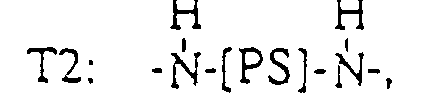
- Copolymers of the formula (I) in which [T] has the meaning T1 or T2 can be obtained, for example, by reacting the desired hydrogen-terminated polysiloxane with the desired polyoxyalkylene diol or diamine according to the following scheme: where A represents either an oxygen atom or an NH group.
- A represents either an oxygen atom or an NH group.
- the reaction of ⁇ , ⁇ -dichloropolysiloxanes with the appropriately terminated polyethers according to US Pat. No. 5,032,662 is also suitable.
- An overview of preparation methods for block copolymers of this type can be found e.g. B. Allen Noshay, James E. McGrath, "Block Copolymers"; Academic Press New York 1977, pp. 401 ff.
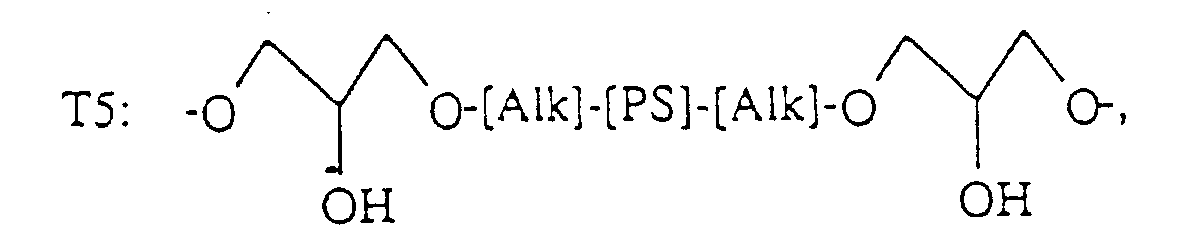
- copolymers of the formula (I) in which [T] is T5 and [Alk] is - (CH 2 ) 3 - can also be carried out in a particularly simple manner from the reaction product of a hydrogen-terminated polysiloxane of the formula H- [ PS] -H with allyl glycidyl ether, a commercially available substance (Alcolac, Inc., Rhone-Poulenc, CPS Chemical Co., Inc). A corresponding regulation can be found e.g. B. In Comprehensive Handbook of Hydrosilylation, Pergamon Press, Oxford 1991.
- polysiloxanes of the formula HO- [Alk] - [PS] - [Alk] -OH are first extended with dicarboxylic acids of the HOOC- [Alk 1 ] -COOH type.
- the reaction with the desired diisocyanate of the composition OCN- [D] -NCO or the corresponding dithioisocyanate is still required.
- either the diisocyanate or diisothiocyanate can be reacted simultaneously with the polysiloxane and the polyoxyalkylene diol or the corresponding diamine, or a reaction of the polysiloxane or polyether diol with the diisocyanate or dithioisocyanate can take place in a separate step, to which the reaction with the remaining component of the block copolymer connects.
- a polysiloxane is a reaction product of HO- [Alk] - [PS] - [Alk] -OH with a polyoxyalkylene diol of the formula HO- (C m H 2m O) n -H or a reaction product of HO- [Alk] - [PS] - [Alk] -OH with suitable monomers, such as ethylene oxide, propylene oxide or tetrahydrofuran or mixtures of two or more such components, is used.
- Block copolymers of the formula (II) can be prepared starting from the desired polyoxyalkylene diols and from polysiloxanes of the formula respectively.
- the last mentioned polysiloxanes are e.g. B. by reacting hydrogen-terminated polysiloxanes with succinic acid derivatives of the formula can be produced, where a corresponds to an integer from 0 to 7, and are also commercially available.
- the particularly preferred copolymers of formula (II) in which [Alk] - (CH 2 ) 3 - means, the required allylsuccinic acid can be very elegant, for. B. from propene and maleic anhydride according to DD Phillips, TB Hill, J. Am. Chem. Soc. 1958, 80, p. 3663.
- Block copolymers of the formula (III) which can be used according to the invention are, for. B. use as a component of cosmetics. They are commercially available, e.g. B. under the designation DOW CORNING® 190 and 193 or Silwet® L 7500, L-7600, L-7607 and L 77 (UNION CARBIDE).
- the polysiloxane-polyoxyalkylene block copolymers are generally in an amount of 5 to 50 percent by weight contained in the compositions according to the invention, in particular in an amount of 10 to 35 percent by weight.
- Mixtures which each have at least one representative of the above are very well suited for stereolithography components (i), (ii) and (iii) mentioned.
- Suitable for component (i) are, for example, the diacrylate and dimethacrylate esters of aliphatic or cycloaliphatic diols, such as 1,3-butylene glycol, 1,4-butanediol, neopentyl glycol, 1,6-hexanediol, diethylene glycol, Triethylene glycol, tetraethylene glycol, polyethylene glycol-400, polyethylene glycol-600, tripropylene glycol, ethoxylated or propoxylated neopentyl glycol, 1,4-dihydroxymethylcyclohexane, 2,2-bis (4-hydroxycyclohexyl) propane or bis (4-hydroxycyclohexyl) methane, which are optionally alkoxylated, in particular ethoxylated or propoxylated, or else can be glycidylated.
- diacrylate and dimethacrylate esters of aliphatic or cycloaliphatic diols
- Some of these monomeric or oligomeric di (meth) acrylates are also commercially available, for example under the product name SR-348 for ethoxylated bisphenol A dimethacrylate and under the Product designation SR-349 for ethoxylated bisphenol A diacrylate from SARTOMER Company.
- the connections preferably have a molecular weight of 200 to 1000.
- component (ii) of the mixture mentioned above 1,1,1-trimethylolpropane triacrylate or methacrylate, ethoxylated 1,1,1-trimethylolpropane triacrylate or methacrylate, pentaerythritol tetraacrylate, pentaerythritol monohydroxytriacrylate or methacrylate, dipentaerythritol monohydroxypentaacrylate or methacrylate.
- Such compounds are known and some are commercially available, for example from SARTOMER Company under the product names SR-295, SR-350, SR-351, SR-367, SR-399, SR-444 and SR-454.
- the compounds of this type preferably have a molecular weight between approximately 200 and 500.
- photoinitiators can be used in the compositions according to the invention form free radicals with the appropriate radiation.
- Typical compounds of known photoinitiators are Benzoin, such as benzoin or benzoin ether, e.g. B. benzoin methyl ether, benzoin ethyl ether and benzoin isopropyl ether, Benzoin phenyl ether and benzoin acetate, acetophenones such as acetophenone, 2,2-dimethoxyacetophenone, and 1,1-dichloroacetophenone, Benzil, benzil ketals such as benzil dimethyl ketal and benzil diethyl ketal, anthraquinones such as 2-methyl anthraquinone, 2-ethylanthraquinone, 2-tert-butylanthraquinone, 1-chloroanthraquinone and 2-amylanthraquinone, triphenylphosphin
- photoinitiators commonly used with argon ion lasers are the benzil ketals, such as benzil dimethyl ketal.
- benzil dimethyl ketal an ⁇ -hydroxyphenyl ketone is used as the photoinitiator, Benzyl dimethyl ketal or 2,4,6-trimethylbenzoyldiphenylphosphine oxide.
- ionic dye counterion compounds ionic dye-counter ion compounds
- ionic dye-counter ion compounds ionic dye counterion compounds
- Ionic dye counterion compounds and their mode of action are known, for example from EP-A-0 223 587 and US Patents 4,751,102; 4,772,530 and 4,772,541.
- ionic dye-counterion compounds examples include the anionic dye-iodonium ion complexes, the anionic dye-pyryllium ion complexes and in particular the cationic dye-borate anion compounds of the formula wherein X + stands for a cationic dye and R ', R ", R"' and R “” each independently represent an alkyl, aryl, alkaryl, allyl, aralkyl, alkenyl, alkynyl, an alicyclic or saturated or unsaturated heterocyclic group.
- the photoinitiators are added in effective amounts, that is, in amounts of about 0.1 to about 10 Weight percent, based on the total amount of the mixture. If the mixtures according to the invention for stereolithographic Methods are used, usually using laser beams, it is essential that the absorption capacity of the mixtures is matched by the type and concentration of the photoinitiator the depth of hardening at normal laser speed is approximately 0.1 to 2.5 mm.
- the mixtures according to the invention can also contain various photoinitiators, which are opposite Rays from emission lines of different wavelengths are differently sensitive to radiation. You get there thereby, for example, better utilization of a UV / VIS light source, which emission lines are different Emits wavelength. It is advantageous if the different photoinitiators are selected in this way and in one such concentration that the same optical absorption is used in the emission lines used is produced.
- the usual additives can be added to the mixtures according to the invention, for example Stabilizers, such as UV stabilizers, polymerization inhibitors, release agents, wetting agents, leveling agents, Sensitizers, anti-settling agents, surfactants, dyes, pigments or fillers.
- Stabilizers such as UV stabilizers, polymerization inhibitors, release agents, wetting agents, leveling agents, Sensitizers, anti-settling agents, surfactants, dyes, pigments or fillers.
- compositions according to the invention should be preferred at a temperature between 20 and 30 ° C. have a viscosity between 200 and 5000 mPa ⁇ s, in particular between 500 and 3500 mPa ⁇ s.
- They can be produced in a known manner, for example by premixing individual components and subsequent mixing of these premixes or by mixing all components using conventional devices, such as stirred tanks, in the absence of light and possibly at a slightly elevated temperature.
- compositions according to the invention can be irradiated with actinic light, for example using electron or X-rays, UV or VIS light. this means. with rays in the wavelength range of 280-650 nm are polymerized. Laser beams from HeCd are particularly suitable. Argon or nitrogen as well Metal vapor and NdYAG laser with multiplied frequency. It is known to the person skilled in the art. that for each chosen The suitable photoinitiator must be selected and, if necessary, sensitized. It was recognized that the penetration depth of the rays into the composition to be polymerized and the working speed in are directly related to the absorption coefficient and the concentration of the photoinitiator. In the Stereolithography is preferably used those photoinitiators which have the highest number of free radicals and the greatest depth of radiation penetration into the compositions to be polymerized enable.
- another subject of the invention is a method for producing three-dimensional objects from the liquid mixtures according to the invention by means of stereolithographic processes, comprising a Step in which the surface of a layer of the liquid mixture according to the invention is applied over the entire surface or is irradiated in a predetermined pattern with a UV / VIS light source so that it is in the irradiated areas a layer is solidified in a desired layer thickness, then a new layer of the mixtures according to the invention is formed on the solidified layer, which is also over the entire surface or in a predetermined pattern is irradiated, and by repeated coating and irradiation three-dimensional objects from several adhering, solidified layers can be obtained.
- a laser beam which is preferably computer-controlled, is preferably used as the radiation source is.
- the mixtures according to the invention are used to produce photopolymerized Layers, in the form of three-dimensional objects, which consist of several adherent, solidified layers are built up.
- Example 1 Preparation of a polyoxyalkylene-potydimethylsiloxane block copolymer from polyethylene glycol monomethyl ether and a polysiloxane of the formula
- stirring is continued at 130 ° C. until the epoxy content has disappeared (16 h).
- the clear, slightly yellowish solution is dried under high vacuum (1.3 ⁇ 10 -4 bar, 60 ° C, 2 h). Yield: 200 g of slightly yellowish oil, which crystallizes on standing.
- Example 2 Preparation of a polyoxyalkylene-polydimethylsiloxane block copolymer from polyethylene glycol monomethyl ether and a polysiloxane of the formula
- Example 3 Preparation of a block copolymer from tolylene-2,4-diisocyanate, polyethylene glycol monomethyl ether and a polysiloxane of the formula
- Example 4 Preparation of a block copolymer from tolylene-2,4-diisocyanate, polyethylene glycol monomethyl ether and a polysiloxane of the formula
- a liquid radiation sensitive mixture of the composition 48.85 parts by weight Bisphenol A diglycidyldiacrylat 25 parts by weight ethoxylated bisphenol A dimethacrylate (SR 348 ) 12 parts by weight trimethacrylate 5 parts by weight 2-phenoxyethyl 5 parts by weight 1-vinyl-2-pyrrolidone 4 parts by weight 1-hydroxycyclohexylphenylmethanone (Irgacure®184) 0.15 parts by weight 4-methoxyphenol be commercial with 10 grams Polyoxyalkylene-polysiloxane block copolymer (IM®22; commercial product from Wacker-Chemie GmbH, Kunststoff) is mixed and enough 1-hydroxycyclohexylphenylmethanone (Irgacure®184) is added so that the concentration of this photoinitiator in the total mixture is 4 percent by weight.
- the composition with the block copolymer has a viscosity of 1500 mPa ⁇ s at 30 ° C.
- the mechanical properties of the object hardened by laser beams (green strength) and the the object obtained by post-curing is measured on the Lloyd® 500 tensile testing machine from Lloyd, the shaped bodies typically having a dimension of 50 millimeters in length and a cross section of 1.2 ⁇ 0.3 Have millimeters.
- the green compacts are irradiated for 30 minutes (min) in the post-curing cabinet (PCA from 3D Systems, Inc.) with the maximum radiation dose.
- the glass transition temperature (TMA; 10 ° C / min; 0.5 N; determined with Mettler TA 4000) of the material is 92 ° C.
- composition 6A a composition is prepared from 70 grams of the radiation-sensitive mixture mentioned above and 30 grams of the block copolymer from Example 1 (composition 6B).
- composition 7A a composition is prepared from 70 grams of the above radiation sensitive mixture and 30 grams of the block copolymer from Example 3 (Composition 7B).
- composition 8A 90 grams of a liquid radiation-sensitive mixture from Example 5 are mixed with 10 grams of the polyoxyalkylene-polysiloxane block copolymer from Example 4 and enough Irgacure® 184 is added again that the concentration of this photoinitiator in the total mixture is again 4 percent by weight (composition 8A) , In the same way, a composition is prepared from 70 grams of the above radiation sensitive mixture and 30 grams of the block copolymer from Example 4 (Composition 8B).
Landscapes
- Physics & Mathematics (AREA)
- General Physics & Mathematics (AREA)
- Chemical & Material Sciences (AREA)
- Engineering & Computer Science (AREA)
- Manufacturing & Machinery (AREA)
- Materials Engineering (AREA)
- Spectroscopy & Molecular Physics (AREA)
- Silicon Polymers (AREA)
- Polymerisation Methods In General (AREA)
- Graft Or Block Polymers (AREA)
- Addition Polymer Or Copolymer, Post-Treatments, Or Chemical Modifications (AREA)
- Macromonomer-Based Addition Polymer (AREA)
Claims (9)
- Composition durcissable par irradiation, pour la stéréolithographie, à base d'au moins un composé, qui présente des groupes polymérisables par voie radicalaire, et au moins un photoamorceur approprié pour cette polymérisation, caractérisée en ce que ce qu'elle contient de plus un copolymère séquencé polyoxyalkylène-polysiloxane en une quantité de 5 à 50 % en poids de la composition, qui est choisi parmi les copolymères de formules chimiques :et
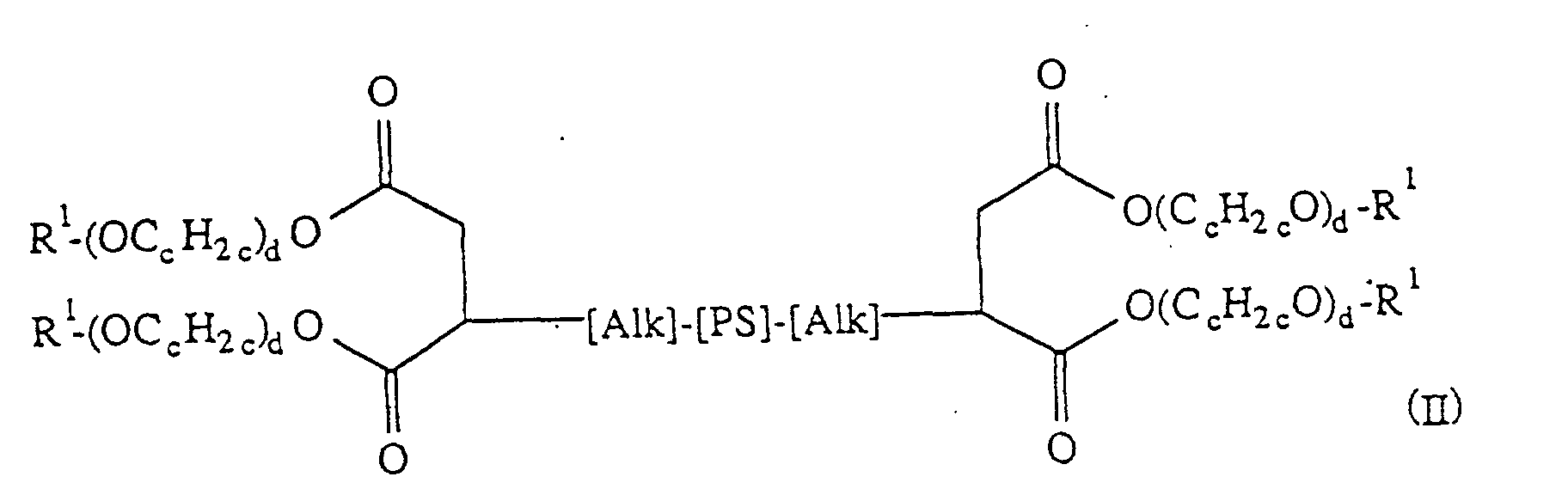 où les différents symboles ont à chaque fois la signification suivante :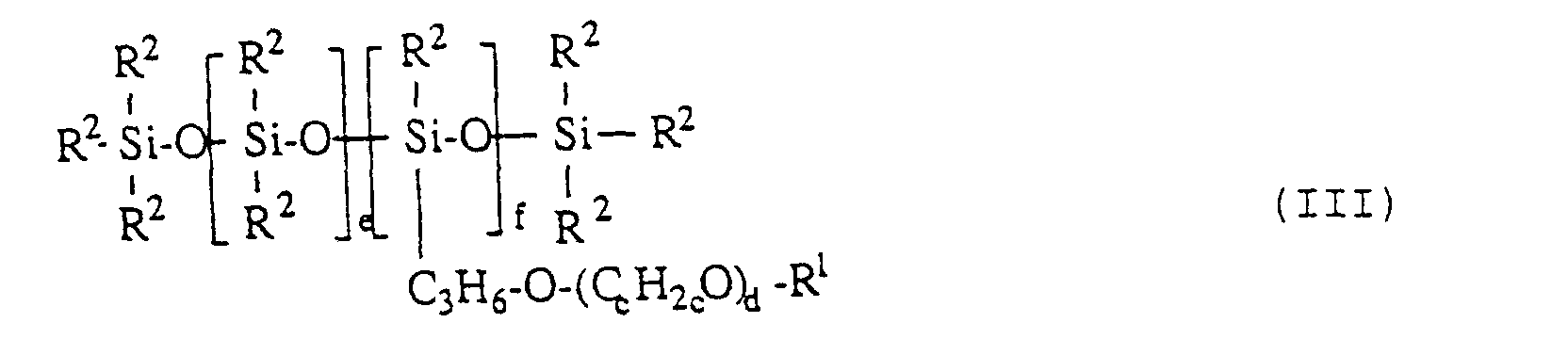
- R1
- un reste choisi parmi un atome d'hydrogène et un groupe alkyle en C1-C8 ;
- c
- un nombre de 1 à 8, correspondant au nombre moyen d'atomes de carbone d'une unité alkylène dans un groupe polyalkylène (CcH2cO)d ;
- d
- un nombre entier de 1 à 100 ;
- g
- un nombre entier de 1 à 4 ;
- [T]
- un groupe choisi parmi les groupes de formules T1
à T12 :





- [PS]
- un groupe polysiloxane de formule

- R2
- un groupe choisi parmi les groupes méthyle et phényle ;
- b
- un nombre entier de 1 à 100 ;
- [Alk]
- un groupe alkylène avec de 3 à 10 atomes de carbone ;
- [Alk1]
- un groupe alkylène avec de 1 à 20 atomes de carbone ;
- m
- un nombre de 1 à 8, correspondant au nombre moyen d'atomes de carbone d'une unité alkylène dans un groupe polyoxyalkylène (CmH2mO)n ;
- n
- un nombre entier de 1 à 50 ;
- [G]
- un groupe de formule
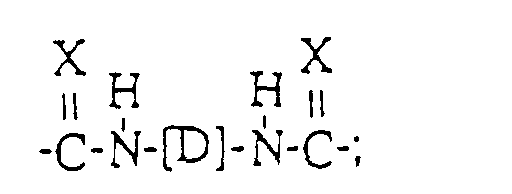
- X
- un atome choisi parmi un atome d'oxygène et un atome de soufre ;
- [D]
- un reste organique bivalent avec au moins deux atomes de carbone ;
- e
- un nombre entier de 1 à 100 ; et
- f
- un nombre entier de 1 à 50.
- Composition selon la revendication 1, caractérisée en ce que l'on choisit [D] de préférence parmi les groupes alkylène avec de 2 à 8 atomes de carbone et des restes bivalents avec au maximum 30, en particulier avec au maximum 20 atomes de carbone, où ces restes bivalents comportent au moins un cycle carboné à 6 chaínons et sont non substitués ou présentent un ou plusieurs substituants alkyle en C1-C4 à chaíne linéaire ou ramifiée.
- Composition selon la revendication 2, caractérisée en ce que :
- R1
- est un reste choisi parmi un atome d'hydrogène et un groupe alkyle en C1-C4 ;
- R2
- représente un groupe méthyle ;
- [Alk]
- représente un groupe en -(CH2)3-;
- [Alk1]
- représente un groupe alkylène avec de 2 à 10,
- X
- représente un atome d'oxygène ;
- [D]
- un reste organique bivalent choisi parmi les
restes de formules suivantes :
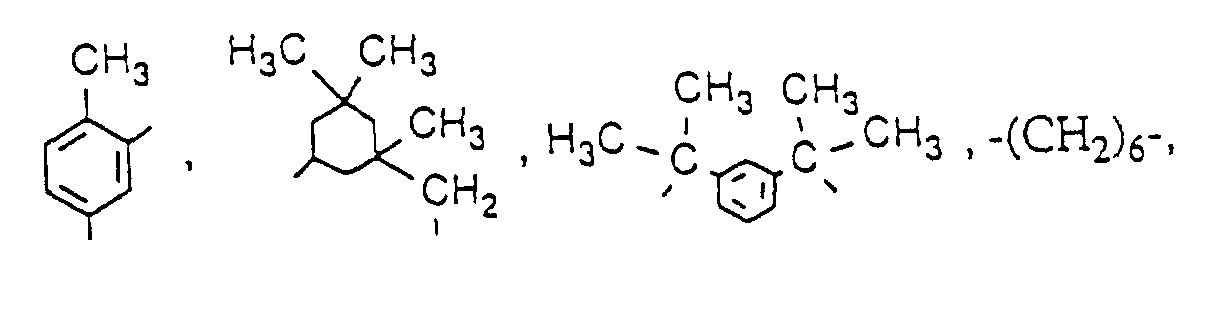

- c
- représente un nombre de 2 à 4 ;
- d
- un nombre entier de 5 à 50 ;
- b
- un nombre entier de 10 à 50 ;
- m
- un nombre de 2 à 4 ;
- n
- un nombre entier de 5 à 20 ;
- e
- un nombre entier de 1 à 50 ; et
- f
- un nombre entier de 1 à 25.
- Composition selon la revendication 3, caractérisée en ce que :
- R1
- représente un groupe méthyle ;
- [Alk] et [Alk1]
- représentent à chaque fois un groupe (CH2)3 ;
- c
- vaut 2 ;
- d
- représente dans le cas d'un composé de formule (I) ou (II) un nombre entier de 7 à 25, et dans le cas d'un composé de formule (III) un nombre entier de 2 à 20 ;
- g
- représente 1 ;
- m
- vaut 2 ; et
- n
- représente un nombre entier de 7 à 20.
- Composition selon l'une des revendications 1 à 4, caractérisée en ce que les composés qui représentent des groupes polymérisables par voie radicalaire, représentent un mélange qui contient les composants suivants :(i) un acrylate ou méthacrylate bifonctionnel monomère ou polymère;(ii) un acrylate ou méthacrylate tri- ou polyfonctionnels;(iii) un composé monomère insaturé de formule :où
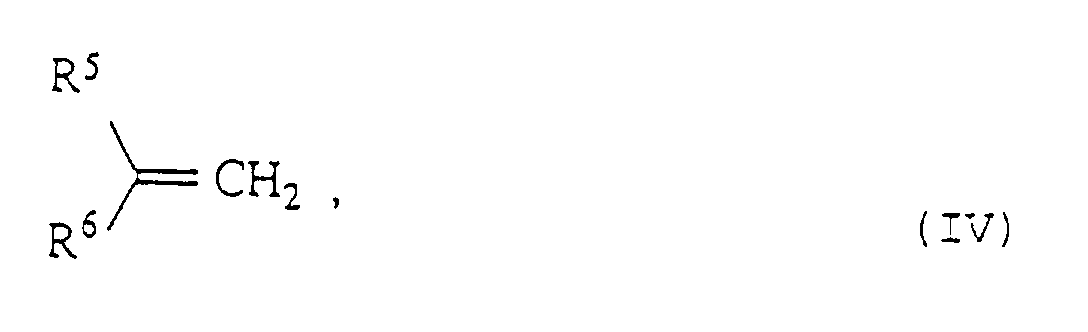
- R5
- est un reste choisi parmi un atome d'hydrogène et un groupe méthyle et
- R6
- un reste de formule :

- R7
- étant un reste choisi parmi les restes tétrahydrofurfuryle, cyclohexyle, 2-phénoxyéthyle, benzyle, isobornyle, glycidyle, dicyclopentyle, morpholinoéthyle, diméthylaminoéthyle, ainsi qu'un alkyle en C1-C20 à chaíne linéaire ou ramifiée, et dans le cas où R5 représente un atome d'hydrogène, R6 est de plus des restes précités, également choisi un reste parmi les restes pyrrolidon-2-yle, imidazonyle, carbazolyle, anthracényle, phényle, cycloalkyle en C5-C8, naphtényle, norbornyle-2, pyridyle, N-caprolactamyle, formamidyle, acétamidyle et toluyle.
- Composition selon la revendication 5, caractérisée en ce qu'elle contient en tant que composant (i) au moins un composé de formule :où

- P
- vaur 0 ou 1,
- t
- vaut 0 ou 1, ou lorsque p vaut 0, un nombre entier de 1 à 3 ;
- [Z]
- représente -O-, -S-, -SO2- ou -C(R10)(R11)-,
- R10
- de même que
- R11
- représentent chacun indépendamment l'un de l'autre, un reste choisi parmi un atome d'hydrogène, CF3 et un groupe méthyle,
- R14
- lorsque p vaut 0, il un atome d'hydrogène ou un groupe méthyle, et lorsque p vaut 1, un atome d'hydrogène,
- R8
- lorsque p vaut 0, représente un atome d'hydrogène, et lorsque p vaut 1, un groupe hydroxyle, et
- R9
- représente un atome d'hydrogène ou un groupe méthyle, et
- R12
- représente un groupe méthyle ou un reste de
formule :

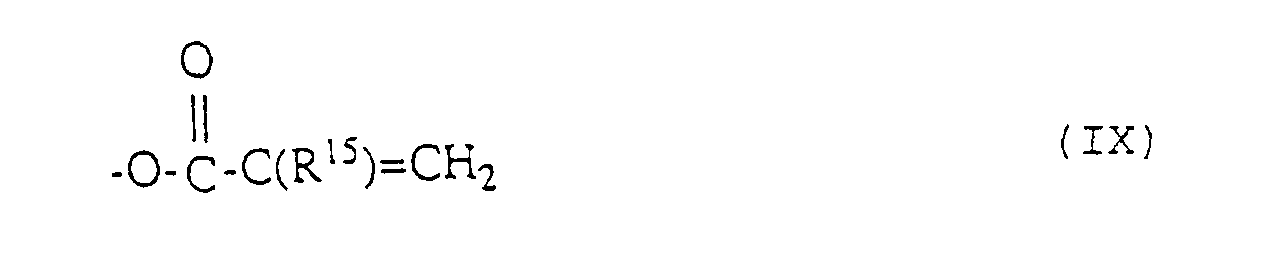
- R15
- représente chacun, indépendamment l'un de l'autre, un atome d'hydrogène ou un groupe méthyle, et
- R13
- représente un reste de formule
- Composition selon la revendication 6, caractérisé en ce que le composant (i) contient au moins deux composés différents de formule (VI) où
- [Z]
- représente dans les deux composés un groupe -C(CH3)2-, et
- p
- dans la formule d'un des deux composéx vaut 0, dans l'autre composé vaut 1,
- Copolymère séquencé polyoxyalkylène-polysiloxane répondant à une formule choisie parmi les formules ci-dessous :où les différents symboles ont à chaque fois la signification suivante :

- R1
- représente un reste choisi parmi un atome d'hydrogène et un groupe alkyle en C1-C8 ;
- c
- est un nombre de 1 à 4 correspondant au nombre moyen d'atomes de carbone d'une unité alkylène dans un groupe polyoxyalkylène (CcH2cO)d ;
- d
- est un nombre entier de 7 à 25 ;
- g
- vaut 1 ;
- [T]
- représente un groupe de formule :

- [PS]
- représente un groupe polysiloxane de formule
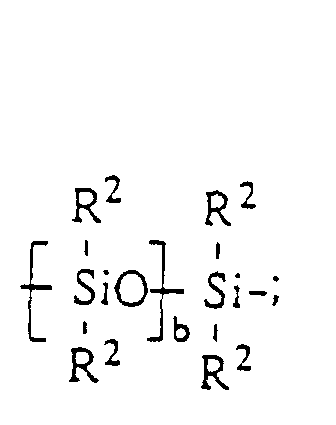
- R2
- représente un méthyle ;
- b
- est un nombre de 5 à 50 ;
- [Alk]
- représente un groupe alkylène avec de 3 à 10 atomes de carbone.
- Procédé pour la préparation d'objets à trois dimensions à partir d'une composition selon l'une des revendications 1 à 7 au moyen de stéréolithographie, comprenant une étape, au cours de laquelle on irradie une couche de la composition sur la totalité de la surface, ou delon un modèle prédéterminé, avec une source de lumière UV/VIS, de façon telle sorte qu'une couche avec une épaisseur voulue se consolide dans les domaines irradiés, ensuite on forme une nouvelle couche de la composition sur la couche consolidée, que l'on irradie également sur la totalité de la surface ou selon un modèle prédéterminé, en obtenant par revêtement et irradiation répétés des objets tridimensionnels constitués de plusieurs couches consolidées adhérentes les unes aux autres.
Applications Claiming Priority (4)
| Application Number | Priority Date | Filing Date | Title |
|---|---|---|---|
| CH254193 | 1993-08-26 | ||
| CH2541/93 | 1993-08-26 | ||
| CH254193 | 1993-08-26 | ||
| US08/292,654 US5461088A (en) | 1993-08-26 | 1994-08-18 | Liquid radiation-curable formulation, in particular for use in stereolithography |
Publications (4)
| Publication Number | Publication Date |
|---|---|
| EP0643329A2 EP0643329A2 (fr) | 1995-03-15 |
| EP0643329A3 EP0643329A3 (fr) | 1995-11-02 |
| EP0643329B1 EP0643329B1 (fr) | 1998-12-23 |
| EP0643329B2 true EP0643329B2 (fr) | 2002-02-06 |
Family
ID=25690718
Family Applications (1)
| Application Number | Title | Priority Date | Filing Date |
|---|---|---|---|
| EP94810474A Expired - Lifetime EP0643329B2 (fr) | 1993-08-26 | 1994-08-17 | Composition liquide durcissable par rayonnement, en particulier pour la stéréolithographie |
Country Status (8)
| Country | Link |
|---|---|
| US (2) | US5461088A (fr) |
| EP (1) | EP0643329B2 (fr) |
| JP (1) | JP3581936B2 (fr) |
| AT (1) | ATE175034T1 (fr) |
| AU (1) | AU674247B2 (fr) |
| CA (1) | CA2117572C (fr) |
| DE (1) | DE59407524D1 (fr) |
| ES (1) | ES2127365T5 (fr) |
Families Citing this family (59)
| Publication number | Priority date | Publication date | Assignee | Title |
|---|---|---|---|---|
| DE69725380T2 (de) * | 1996-05-16 | 2004-08-26 | Teijin Seiki Co. Ltd. | Lichthärtbare Zusammensetzung, Verfahren zur Herstellung eines lichtgehärteten geformten Gegenstands, Form und Verfahren zum Vakuumdruckgiessen und Urethanacrylat |
| US7332537B2 (en) | 1996-09-04 | 2008-02-19 | Z Corporation | Three dimensional printing material system and method |
| GB9814272D0 (en) * | 1998-07-01 | 1998-09-02 | Johnson & Son Inc S C | Silicone compounds and process for making them |
| DE19836260A1 (de) | 1998-08-11 | 2000-02-24 | Wacker Chemie Gmbh | Lineare Polyether-Polysiloxan-Copolymere, deren Herstellung und Verwendung |
| TR200200570T2 (tr) * | 1999-09-10 | 2002-06-21 | Nargacard S.A. | Veri tabanları için mesaj iletim prosesi ve sistemi |
| JP4624626B2 (ja) | 1999-11-05 | 2011-02-02 | ズィー コーポレイション | 材料システム及び3次元印刷法 |
| US7300619B2 (en) | 2000-03-13 | 2007-11-27 | Objet Geometries Ltd. | Compositions and methods for use in three dimensional model printing |
| US20030207959A1 (en) * | 2000-03-13 | 2003-11-06 | Eduardo Napadensky | Compositions and methods for use in three dimensional model printing |
| US8481241B2 (en) | 2000-03-13 | 2013-07-09 | Stratasys Ltd. | Compositions and methods for use in three dimensional model printing |
| US6569373B2 (en) | 2000-03-13 | 2003-05-27 | Object Geometries Ltd. | Compositions and methods for use in three dimensional model printing |
| US20010050031A1 (en) | 2000-04-14 | 2001-12-13 | Z Corporation | Compositions for three-dimensional printing of solid objects |
| DE10152878B4 (de) * | 2001-10-26 | 2007-08-02 | Fraunhofer-Gesellschaft zur Förderung der angewandten Forschung e.V. | Verfahren zum Erzeugen dreidimensionaler Formkörper oder Oberflächen aus organopolysiloxanhaltigen Ausgangsmaterialien durch Laser-Bestrahlung und deren Verwendung |
| US20030198824A1 (en) * | 2002-04-19 | 2003-10-23 | Fong John W. | Photocurable compositions containing reactive polysiloxane particles |
| GB0212977D0 (en) * | 2002-06-06 | 2002-07-17 | Vantico Ag | Actinic radiation curable compositions and their use |
| US20040087687A1 (en) * | 2002-10-30 | 2004-05-06 | Vantico A&T Us Inc. | Photocurable compositions with phosphite viscosity stabilizers |
| KR101120156B1 (ko) | 2003-05-21 | 2012-02-22 | 제트 코포레이션 | 3d 인쇄 시스템으로부터의 외관 모형용 열가소성 분말물질 시스템 |
| JP4414188B2 (ja) * | 2003-09-30 | 2010-02-10 | 大日本印刷株式会社 | ハードコート層の滑り性を改善した積層体 |
| US7232850B2 (en) | 2003-10-03 | 2007-06-19 | Huntsman Advanced Materials Americas Inc. | Photocurable compositions for articles having stable tensile properties |
| JP2006092693A (ja) * | 2004-09-27 | 2006-04-06 | Fuji Photo Film Co Ltd | 磁気記録媒体 |
| US7715922B1 (en) | 2005-11-16 | 2010-05-11 | Pacesetter, Inc. | Polyethylene oxide and polyisobutylene copolymers and their usage on medical devices |
| US7553546B1 (en) * | 2005-11-16 | 2009-06-30 | Pacesetter, Inc. | Polyethylene oxide and silicone copolymers and their usage on medical devices |
| US7708774B1 (en) | 2005-11-16 | 2010-05-04 | Pacesetter, Inc. | Polyethylene oxide and silicone copolymers and their usage on medical devices |
| US7759435B2 (en) * | 2006-09-26 | 2010-07-20 | Loctite (R&D) Limited | Adducts and curable compositions using same |
| US7905951B2 (en) | 2006-12-08 | 2011-03-15 | Z Corporation | Three dimensional printing material system and method using peroxide cure |
| WO2008086033A1 (fr) | 2007-01-10 | 2008-07-17 | Z Corporation | Système de matériau d'impression tridimensionnel avec une couleur, une performance de l'article et une facilité d'utilisation améliorées |
| US7968626B2 (en) | 2007-02-22 | 2011-06-28 | Z Corporation | Three dimensional printing material system and method using plasticizer-assisted sintering |
| JP4549382B2 (ja) | 2007-12-14 | 2010-09-22 | 信越化学工業株式会社 | 新規シルフェニレン化合物およびその製造方法 |
| ES2659081T3 (es) * | 2008-06-20 | 2018-03-13 | Coloplast A/S | Un biomaterial |
| US8500821B2 (en) * | 2008-06-20 | 2013-08-06 | Vysera Biomedical Limited | Esophageal valve device for placing in the cardia |
| EP3360916A1 (fr) * | 2009-12-18 | 2018-08-15 | Coloplast A/S | Biomatériau |
| WO2011073968A1 (fr) * | 2009-12-18 | 2011-06-23 | Vysera Biomedical Limited | Système d'administration de médicament |
| JP5653173B2 (ja) * | 2010-10-29 | 2015-01-14 | 三洋化成工業株式会社 | 感光性樹脂組成物 |
| US8703385B2 (en) | 2012-02-10 | 2014-04-22 | 3M Innovative Properties Company | Photoresist composition |
| BR112016029766A2 (pt) | 2014-06-23 | 2017-08-22 | Carbon Inc | métodos de produção de objetos tridimensionais de poliuretano a partir de materiais tendo múltiplos mecanismos de endurecimento |
| AU2016215409B2 (en) | 2015-02-05 | 2020-10-01 | Carbon, Inc. | Method of additive manufacturing by intermittent exposure |
| WO2016140886A1 (fr) | 2015-03-05 | 2016-09-09 | Carbon3D, Inc. | Fabrication d'objets tridimensionnels à l'aide de multiples modes de fonctionnement |
| JP7069006B2 (ja) | 2015-09-04 | 2022-05-17 | カーボン,インコーポレイテッド | 積層造形用シアネートエステル二重硬化樹脂 |
| EP3347399B1 (fr) | 2015-09-09 | 2020-12-09 | Carbon, Inc. | Résines époxydes à polymérisation duale pour une fabrication additive |
| FI129702B (en) | 2015-10-09 | 2022-07-15 | Inkron Ltd | Three dimensional printing materials and method for making a 3D printed article |
| US10647873B2 (en) | 2015-10-30 | 2020-05-12 | Carbon, Inc. | Dual cure article of manufacture with portions of differing solubility |
| WO2017079502A1 (fr) | 2015-11-05 | 2017-05-11 | Carbon, Inc. | Résines de silicone à polymérisation duale pour fabrication additive |
| US10501572B2 (en) | 2015-12-22 | 2019-12-10 | Carbon, Inc. | Cyclic ester dual cure resins for additive manufacturing |
| US10343331B2 (en) | 2015-12-22 | 2019-07-09 | Carbon, Inc. | Wash liquids for use in additive manufacturing with dual cure resins |
| US10787583B2 (en) | 2015-12-22 | 2020-09-29 | Carbon, Inc. | Method of forming a three-dimensional object comprised of a silicone polymer or co-polymer |
| CN108475008B (zh) | 2015-12-22 | 2020-11-06 | 卡本有限公司 | 一种形成三维物体的方法 |
| US10538031B2 (en) | 2015-12-22 | 2020-01-21 | Carbon, Inc. | Dual cure additive manufacturing of rigid intermediates that generate semi-rigid, flexible, or elastic final products |
| JP7189015B2 (ja) | 2015-12-22 | 2022-12-13 | カーボン,インコーポレイテッド | 二重硬化樹脂を用いた積層造形のための二重前駆体樹脂システム |
| WO2017112483A2 (fr) | 2015-12-22 | 2017-06-29 | Carbon, Inc. | Accélérateurs pour fabrication d'additif avec des résines à double polymérisation |
| US10500786B2 (en) | 2016-06-22 | 2019-12-10 | Carbon, Inc. | Dual cure resins containing microwave absorbing materials and methods of using the same |
| WO2018058135A1 (fr) * | 2016-09-26 | 2018-03-29 | University Of Washington | Résine de pdms pour impression 3d par stéréolithographie de pdms |
| WO2018094131A1 (fr) | 2016-11-21 | 2018-05-24 | Carbon, Inc. | Procédé de fabrication d'un objet tridimensionnel par distribution d'un constituant réactif pour un durcissement ultérieur |
| US11535686B2 (en) | 2017-03-09 | 2022-12-27 | Carbon, Inc. | Tough, high temperature polymers produced by stereolithography |
| CN107936146A (zh) * | 2017-06-05 | 2018-04-20 | 宁波七诺新材料科技有限公司 | 用于3d打印技术的由可见光引发的光引发剂组合物及应用 |
| JP6894015B2 (ja) | 2017-06-21 | 2021-06-23 | カーボン,インコーポレイテッド | 積層造形の方法 |
| EP3784718B1 (fr) | 2018-04-25 | 2024-06-26 | Henkel AG & Co. KGaA | Procédé de préparation de copolymères séquencés de polyéthers et de polysiloxanes fonctionnalisés par hydroxyles |
| US11504903B2 (en) | 2018-08-28 | 2022-11-22 | Carbon, Inc. | 1K alcohol dual cure resins for additive manufacturing |
| MY204839A (en) * | 2020-11-27 | 2024-09-18 | Petroliam Nasional Berhad Petronas | Demulsifier |
| EP4574427A1 (fr) * | 2023-12-18 | 2025-06-25 | Arkema France | Compositions durcissables par voie actinique et leurs procédés d'utilisation pour fabriquer un produit thermoformé |
| WO2026070772A1 (fr) * | 2024-09-27 | 2026-04-02 | 三井化学株式会社 | Composition de résine photodurcissable, produit moulé optique et dispositif optique |
Citations (4)
| Publication number | Priority date | Publication date | Assignee | Title |
|---|---|---|---|---|
| US4443581A (en) † | 1981-08-27 | 1984-04-17 | Union Carbide Corporation | Impact modified polyarylate blends |
| EP0425441A2 (fr) † | 1989-10-27 | 1991-05-02 | Ciba-Geigy Ag | Mélange photosensible |
| JPH04100835A (ja) † | 1990-08-16 | 1992-04-02 | Japan Synthetic Rubber Co Ltd | 光学的立体造形用樹脂組成物 |
| WO1993014443A1 (fr) † | 1992-01-06 | 1993-07-22 | Ppg Industries, Inc. | Composition d'agent photoresistant, photosensible et pouvant etre deposee par electrolyse utilise pour produire des films non collants |
Family Cites Families (20)
| Publication number | Priority date | Publication date | Assignee | Title |
|---|---|---|---|---|
| DE425441C (de) * | 1924-03-19 | 1926-02-20 | Eugen Berchtold | Selbsttaetige Schaltvorrichtung fuer elektrische Buegeleisen |
| US3471588A (en) * | 1964-12-29 | 1969-10-07 | Union Carbide Corp | Silicone ether-olefin graft copolymers and process for their production |
| US4582885A (en) * | 1978-07-20 | 1986-04-15 | Minnesota Mining And Manufacturing Company | Shaped plastic articles having replicated microstructure surfaces |
| US4477529A (en) * | 1983-12-29 | 1984-10-16 | General Electric Company | Photocurable polyfunctional acrylic coating and decorative articles coated therewith |
| US4575330A (en) * | 1984-08-08 | 1986-03-11 | Uvp, Inc. | Apparatus for production of three-dimensional objects by stereolithography |
| US4605712A (en) * | 1984-09-24 | 1986-08-12 | Ciba-Geigy Corporation | Unsaturated polysiloxanes and polymers thereof |
| US4833218A (en) * | 1984-12-18 | 1989-05-23 | Dow Corning Corporation | Hydrophilic silicone-organic copolymer elastomers containing bioactine agent |
| DE3517612A1 (de) * | 1985-05-15 | 1987-01-02 | Titmus Eurocon Kontaktlinsen | Modifizierter siliconkautschuk und seine verwendung als material fuer eine optische linse sowie optische linse aus diesem material |
| US4772541A (en) * | 1985-11-20 | 1988-09-20 | The Mead Corporation | Photohardenable compositions containing a dye borate complex and photosensitive materials employing the same |
| EP0389067B1 (fr) * | 1985-11-20 | 1994-10-19 | The Mead Corporation | Colorants ioniques |
| US4772530A (en) * | 1986-05-06 | 1988-09-20 | The Mead Corporation | Photosensitive materials containing ionic dye compounds as initiators |
| US4902724A (en) * | 1986-12-22 | 1990-02-20 | General Electric Company | Photocurable acrylic coating composition |
| US4751102A (en) * | 1987-07-27 | 1988-06-14 | The Mead Corporation | Radiation-curable ink and coating compositions containing ionic dye compounds as initiators |
| US5070169A (en) * | 1988-02-26 | 1991-12-03 | Ciba-Geigy Corporation | Wettable, flexible, oxygen permeable contact lens containing block copolymer polysiloxane-polyoxyalkylene backbone units and use thereof |
| US4942001A (en) * | 1988-03-02 | 1990-07-17 | Inc. DeSoto | Method of forming a three-dimensional object by stereolithography and composition therefore |
| DE3807247C1 (fr) * | 1988-03-05 | 1989-05-24 | Th. Goldschmidt Ag, 4300 Essen, De | |
| JPH01301708A (ja) * | 1988-05-30 | 1989-12-05 | Shin Etsu Chem Co Ltd | 光硬化性オルガノポリシロキサン組成物 |
| EP0378144B1 (fr) * | 1989-01-10 | 1995-03-08 | Ciba-Geigy Ag | Compositions durcissables par radiation |
| JPH0586149A (ja) * | 1991-09-30 | 1993-04-06 | I C I Japan Kk | 光立体成形用樹脂組成物並びに立体成形体の形成方法 |
| DE69332875T2 (de) * | 1992-07-28 | 2003-12-04 | Mitsubishi Chem Corp | Haarkosmetische Zusammensetzung |
-
1994
- 1994-08-17 DE DE59407524T patent/DE59407524D1/de not_active Expired - Fee Related
- 1994-08-17 AT AT94810474T patent/ATE175034T1/de not_active IP Right Cessation
- 1994-08-17 ES ES94810474T patent/ES2127365T5/es not_active Expired - Lifetime
- 1994-08-17 EP EP94810474A patent/EP0643329B2/fr not_active Expired - Lifetime
- 1994-08-18 US US08/292,654 patent/US5461088A/en not_active Expired - Lifetime
- 1994-08-24 CA CA002117572A patent/CA2117572C/fr not_active Expired - Fee Related
- 1994-08-25 AU AU71490/94A patent/AU674247B2/en not_active Ceased
- 1994-08-25 JP JP22412894A patent/JP3581936B2/ja not_active Expired - Lifetime
-
1995
- 1995-05-24 US US08/449,172 patent/US5629133A/en not_active Expired - Lifetime
Patent Citations (4)
| Publication number | Priority date | Publication date | Assignee | Title |
|---|---|---|---|---|
| US4443581A (en) † | 1981-08-27 | 1984-04-17 | Union Carbide Corporation | Impact modified polyarylate blends |
| EP0425441A2 (fr) † | 1989-10-27 | 1991-05-02 | Ciba-Geigy Ag | Mélange photosensible |
| JPH04100835A (ja) † | 1990-08-16 | 1992-04-02 | Japan Synthetic Rubber Co Ltd | 光学的立体造形用樹脂組成物 |
| WO1993014443A1 (fr) † | 1992-01-06 | 1993-07-22 | Ppg Industries, Inc. | Composition d'agent photoresistant, photosensible et pouvant etre deposee par electrolyse utilise pour produire des films non collants |
Also Published As
| Publication number | Publication date |
|---|---|
| AU7149094A (en) | 1995-03-09 |
| JP3581936B2 (ja) | 2004-10-27 |
| AU674247B2 (en) | 1996-12-12 |
| ES2127365T5 (es) | 2002-08-16 |
| CA2117572C (fr) | 1998-10-13 |
| JPH0797403A (ja) | 1995-04-11 |
| EP0643329B1 (fr) | 1998-12-23 |
| EP0643329A3 (fr) | 1995-11-02 |
| CA2117572A1 (fr) | 1995-02-27 |
| DE59407524D1 (de) | 1999-02-04 |
| US5461088A (en) | 1995-10-24 |
| ATE175034T1 (de) | 1999-01-15 |
| US5629133A (en) | 1997-05-13 |
| ES2127365T3 (es) | 1999-04-16 |
| EP0643329A2 (fr) | 1995-03-15 |
Similar Documents
| Publication | Publication Date | Title |
|---|---|---|
| EP0643329B1 (fr) | Composition liquide durcissable par rayonnement, en particulier pour la stéréolithographie | |
| EP0638547B1 (fr) | (Méth)acrylates contenant d'uréthanes | |
| DE69604909T2 (de) | Flüssige photohärtbare zusammensetzungen | |
| EP0646580B1 (fr) | Composés de vinyléther avec des groupes fonctionnels additionnels différents de vinyléther et leur utilisation dans la formulation de compositions durcissables | |
| EP1802700B1 (fr) | Formulation peu visqueuse durcissable par rayonnement pour la production d'embouts d'aides auditives | |
| EP0425441B1 (fr) | Mélange photosensible | |
| EP0604364A2 (fr) | Composés époxy (cyclo)aliphatiques nouveaux | |
| EP0614122B1 (fr) | Mélanges polymerisables contenant des tétra-acrylates | |
| EP0822445B2 (fr) | Compositions liquides, durcissables par irradiation, en particulier pour la stéréolithographie | |
| EP0054700B1 (fr) | Composition polymérisable par irradiation et matériau d'enregistrement sensible à l'irradiation produit à partir de ladite composition | |
| US5476749A (en) | Photosensitive compositions based on acrylates | |
| EP0554215A2 (fr) | Diacrylates et diméthacrylates | |
| DE19956531A1 (de) | Vernetzer für ein Photoresist und diesen enthaltende Photoresistzusammensetzung | |
| DE69738250T2 (de) | Durch Photostereographie hergestelltes, dreidimensionales Objekt und die Harzzusammensetzung zu seiner Herstellung | |
| DE69017477T2 (de) | Photohärtbare Zusammensetzungen. | |
| DE3604402C2 (de) | Lichtempfindliche Harzmasse und deren Verwendung zur Herstellung einer Photopolymer-Druckplatte | |
| DE19956532A1 (de) | Vernetzer für ein Photoresist und diesen enthaltende Photoresistzusammensetzung | |
| EP1636651B1 (fr) | Formulation a faible viscosite durcissable par rayonnement destinee notamment a la production stereolithographique d'ecouteurs | |
| DE3249708C3 (de) | Lichtempfindliches Element aus einem Träger und einer lichtempfindlichen Schicht | |
| DE602005004712T2 (de) | Positiv arbeitende Resistzusammensetzung und Verfahren zur Herstellung von Mustern unter Verwendung dieser Zusammensetzung. | |
| EP0517657B1 (fr) | Composition photosensibles | |
| DE3887414T2 (de) | Strahlenhärtbare Harzzusammensetzung, enthaltend ein Pfropfcopolymer auf einer Pfropfgrundlage mit Dicyclopentadienylgruppe. | |
| EP0054151B1 (fr) | Matériau d'enregistrement photopolymérisable et procédé pour la production de formes en relief au moyen de ce matériau d'enregistrement | |
| DE69811491T2 (de) | Flüssige photoempfindliche zusammensetzung | |
| KR100310329B1 (ko) | 스테레오리소그래피에사용되는액체방사선-경화성배합물 |
Legal Events
| Date | Code | Title | Description |
|---|---|---|---|
| PUAI | Public reference made under article 153(3) epc to a published international application that has entered the european phase |
Free format text: ORIGINAL CODE: 0009012 |
|
| AK | Designated contracting states |
Kind code of ref document: A2 Designated state(s): AT BE CH DE ES FR GB IT LI NL SE |
|
| PUAL | Search report despatched |
Free format text: ORIGINAL CODE: 0009013 |
|
| RHK1 | Main classification (correction) |
Ipc: G03F 7/032 |
|
| AK | Designated contracting states |
Kind code of ref document: A3 Designated state(s): AT BE CH DE ES FR GB IT LI NL SE |
|
| 17P | Request for examination filed |
Effective date: 19960207 |
|
| RAP1 | Party data changed (applicant data changed or rights of an application transferred) |
Owner name: CIBA SC HOLDING AG |
|
| RAP3 | Party data changed (applicant data changed or rights of an application transferred) |
Owner name: CIBA SPECIALTY CHEMICALS HOLDING INC. |
|
| GRAG | Despatch of communication of intention to grant |
Free format text: ORIGINAL CODE: EPIDOS AGRA |
|
| 17Q | First examination report despatched |
Effective date: 19971105 |
|
| GRAG | Despatch of communication of intention to grant |
Free format text: ORIGINAL CODE: EPIDOS AGRA |
|
| GRAH | Despatch of communication of intention to grant a patent |
Free format text: ORIGINAL CODE: EPIDOS IGRA |
|
| GRAH | Despatch of communication of intention to grant a patent |
Free format text: ORIGINAL CODE: EPIDOS IGRA |
|
| GRAA | (expected) grant |
Free format text: ORIGINAL CODE: 0009210 |
|
| AK | Designated contracting states |
Kind code of ref document: B1 Designated state(s): AT BE CH DE ES FR GB IT LI NL SE |
|
| REF | Corresponds to: |
Ref document number: 175034 Country of ref document: AT Date of ref document: 19990115 Kind code of ref document: T |
|
| REG | Reference to a national code |
Ref country code: CH Ref legal event code: EP |
|
| REF | Corresponds to: |
Ref document number: 59407524 Country of ref document: DE Date of ref document: 19990204 |
|
| GBT | Gb: translation of ep patent filed (gb section 77(6)(a)/1977) |
Effective date: 19990202 |
|
| ET | Fr: translation filed | ||
| REG | Reference to a national code |
Ref country code: ES Ref legal event code: FG2A Ref document number: 2127365 Country of ref document: ES Kind code of ref document: T3 |
|
| PLBQ | Unpublished change to opponent data |
Free format text: ORIGINAL CODE: EPIDOS OPPO |
|
| PLBI | Opposition filed |
Free format text: ORIGINAL CODE: 0009260 |
|
| PLBF | Reply of patent proprietor to notice(s) of opposition |
Free format text: ORIGINAL CODE: EPIDOS OBSO |
|
| 26 | Opposition filed |
Opponent name: DSM N.V Effective date: 19990923 |
|
| NLR1 | Nl: opposition has been filed with the epo |
Opponent name: DSM N.V |
|
| PLBF | Reply of patent proprietor to notice(s) of opposition |
Free format text: ORIGINAL CODE: EPIDOS OBSO |
|
| REG | Reference to a national code |
Ref country code: CH Ref legal event code: PUE Owner name: CIBA SPECIALTY CHEMICALS HOLDING INC. TRANSFER- VA |
|
| REG | Reference to a national code |
Ref country code: GB Ref legal event code: 732E |
|
| NLS | Nl: assignments of ep-patents |
Owner name: VANTICO AG |
|
| PLAW | Interlocutory decision in opposition |
Free format text: ORIGINAL CODE: EPIDOS IDOP |
|
| PGFP | Annual fee paid to national office [announced via postgrant information from national office to epo] |
Ref country code: ES Payment date: 20010801 Year of fee payment: 8 |
|
| PLAW | Interlocutory decision in opposition |
Free format text: ORIGINAL CODE: EPIDOS IDOP |
|
| RAP2 | Party data changed (patent owner data changed or rights of a patent transferred) |
Owner name: VANTICO AG |
|
| PUAH | Patent maintained in amended form |
Free format text: ORIGINAL CODE: 0009272 |
|
| STAA | Information on the status of an ep patent application or granted ep patent |
Free format text: STATUS: PATENT MAINTAINED AS AMENDED |
|
| REG | Reference to a national code |
Ref country code: GB Ref legal event code: IF02 |
|
| NLT2 | Nl: modifications (of names), taken from the european patent patent bulletin |
Owner name: VANTICO AG |
|
| 27A | Patent maintained in amended form |
Effective date: 20020206 |
|
| AK | Designated contracting states |
Kind code of ref document: B2 Designated state(s): AT BE CH DE ES FR GB IT LI NL SE |
|
| REG | Reference to a national code |
Ref country code: CH Ref legal event code: AEN Free format text: AUFRECHTERHALTUNG DES PATENTES IN GEAENDERTER FORM |
|
| GBTA | Gb: translation of amended ep patent filed (gb section 77(6)(b)/1977) | ||
| NLR2 | Nl: decision of opposition | ||
| NLR3 | Nl: receipt of modified translations in the netherlands language after an opposition procedure | ||
| ET3 | Fr: translation filed ** decision concerning opposition | ||
| PGFP | Annual fee paid to national office [announced via postgrant information from national office to epo] |
Ref country code: SE Payment date: 20020806 Year of fee payment: 9 |
|
| PGFP | Annual fee paid to national office [announced via postgrant information from national office to epo] |
Ref country code: AT Payment date: 20020813 Year of fee payment: 9 |
|
| REG | Reference to a national code |
Ref country code: ES Ref legal event code: DC2A Kind code of ref document: T5 Effective date: 20020401 |
|
| PGFP | Annual fee paid to national office [announced via postgrant information from national office to epo] |
Ref country code: NL Payment date: 20020829 Year of fee payment: 9 |
|
| PGFP | Annual fee paid to national office [announced via postgrant information from national office to epo] |
Ref country code: BE Payment date: 20021017 Year of fee payment: 9 |
|
| REG | Reference to a national code |
Ref country code: FR Ref legal event code: TP |
|
| REG | Reference to a national code |
Ref country code: GB Ref legal event code: 746 Effective date: 20030116 |
|
| PGFP | Annual fee paid to national office [announced via postgrant information from national office to epo] |
Ref country code: FR Payment date: 20030808 Year of fee payment: 10 |
|
| PGFP | Annual fee paid to national office [announced via postgrant information from national office to epo] |
Ref country code: GB Payment date: 20030813 Year of fee payment: 10 |
|
| PG25 | Lapsed in a contracting state [announced via postgrant information from national office to epo] |
Ref country code: AT Free format text: LAPSE BECAUSE OF NON-PAYMENT OF DUE FEES Effective date: 20030817 |
|
| PG25 | Lapsed in a contracting state [announced via postgrant information from national office to epo] |
Ref country code: SE Free format text: LAPSE BECAUSE OF NON-PAYMENT OF DUE FEES Effective date: 20030818 Ref country code: ES Free format text: LAPSE BECAUSE OF NON-PAYMENT OF DUE FEES Effective date: 20030818 |
|
| PGFP | Annual fee paid to national office [announced via postgrant information from national office to epo] |
Ref country code: CH Payment date: 20030818 Year of fee payment: 10 |
|
| PGFP | Annual fee paid to national office [announced via postgrant information from national office to epo] |
Ref country code: DE Payment date: 20030828 Year of fee payment: 10 |
|
| PG25 | Lapsed in a contracting state [announced via postgrant information from national office to epo] |
Ref country code: BE Free format text: LAPSE BECAUSE OF NON-PAYMENT OF DUE FEES Effective date: 20030831 |
|
| BERE | Be: lapsed |
Owner name: *VANTICO A.G. Effective date: 20030831 |
|
| PG25 | Lapsed in a contracting state [announced via postgrant information from national office to epo] |
Ref country code: NL Free format text: LAPSE BECAUSE OF NON-PAYMENT OF DUE FEES Effective date: 20040301 |
|
| EUG | Se: european patent has lapsed | ||
| NLV4 | Nl: lapsed or anulled due to non-payment of the annual fee |
Effective date: 20040301 |
|
| PG25 | Lapsed in a contracting state [announced via postgrant information from national office to epo] |
Ref country code: GB Free format text: LAPSE BECAUSE OF NON-PAYMENT OF DUE FEES Effective date: 20040817 |
|
| PG25 | Lapsed in a contracting state [announced via postgrant information from national office to epo] |
Ref country code: LI Free format text: LAPSE BECAUSE OF NON-PAYMENT OF DUE FEES Effective date: 20040831 Ref country code: CH Free format text: LAPSE BECAUSE OF NON-PAYMENT OF DUE FEES Effective date: 20040831 |
|
| REG | Reference to a national code |
Ref country code: ES Ref legal event code: FD2A Effective date: 20030818 |
|
| PG25 | Lapsed in a contracting state [announced via postgrant information from national office to epo] |
Ref country code: DE Free format text: LAPSE BECAUSE OF NON-PAYMENT OF DUE FEES Effective date: 20050301 |
|
| GBPC | Gb: european patent ceased through non-payment of renewal fee |
Effective date: 20040817 |
|
| REG | Reference to a national code |
Ref country code: CH Ref legal event code: PL |
|
| PG25 | Lapsed in a contracting state [announced via postgrant information from national office to epo] |
Ref country code: FR Free format text: LAPSE BECAUSE OF NON-PAYMENT OF DUE FEES Effective date: 20050429 |
|
| REG | Reference to a national code |
Ref country code: FR Ref legal event code: ST |
|
| PG25 | Lapsed in a contracting state [announced via postgrant information from national office to epo] |
Ref country code: IT Free format text: LAPSE BECAUSE OF NON-PAYMENT OF DUE FEES;WARNING: LAPSES OF ITALIAN PATENTS WITH EFFECTIVE DATE BEFORE 2007 MAY HAVE OCCURRED AT ANY TIME BEFORE 2007. THE CORRECT EFFECTIVE DATE MAY BE DIFFERENT FROM THE ONE RECORDED. Effective date: 20050817 |