EP0647451A1 - Inclusion-Komplex von Beta-Cyclodextrin mit Diclofenac - Google Patents
Inclusion-Komplex von Beta-Cyclodextrin mit Diclofenac Download PDFInfo
- Publication number
- EP0647451A1 EP0647451A1 EP94307380A EP94307380A EP0647451A1 EP 0647451 A1 EP0647451 A1 EP 0647451A1 EP 94307380 A EP94307380 A EP 94307380A EP 94307380 A EP94307380 A EP 94307380A EP 0647451 A1 EP0647451 A1 EP 0647451A1
- Authority
- EP
- European Patent Office
- Prior art keywords
- diclofenac
- cyclodextrin
- inclusion complex
- beta
- complex
- Prior art date
- Legal status (The legal status is an assumption and is not a legal conclusion. Google has not performed a legal analysis and makes no representation as to the accuracy of the status listed.)
- Granted
Links
- 0 C*C(C)CC(**)([C@]12)C1(*)[C@]1C2[C@@](*)CCC1 Chemical compound C*C(C)CC(**)([C@]12)C1(*)[C@]1C2[C@@](*)CCC1 0.000 description 1
Images



Classifications
-
- A—HUMAN NECESSITIES
- A61—MEDICAL OR VETERINARY SCIENCE; HYGIENE
- A61K—PREPARATIONS FOR MEDICAL, DENTAL OR TOILETRY PURPOSES
- A61K31/00—Medicinal preparations containing organic active ingredients
- A61K31/185—Acids; Anhydrides, halides or salts thereof, e.g. sulfur acids, imidic, hydrazonic or hydroximic acids
- A61K31/19—Carboxylic acids, e.g. valproic acid
- A61K31/195—Carboxylic acids, e.g. valproic acid having an amino group
- A61K31/196—Carboxylic acids, e.g. valproic acid having an amino group the amino group being directly attached to a ring, e.g. anthranilic acid, mefenamic acid, diclofenac, chlorambucil
-
- B—PERFORMING OPERATIONS; TRANSPORTING
- B82—NANOTECHNOLOGY
- B82Y—SPECIFIC USES OR APPLICATIONS OF NANOSTRUCTURES; MEASUREMENT OR ANALYSIS OF NANOSTRUCTURES; MANUFACTURE OR TREATMENT OF NANOSTRUCTURES
- B82Y5/00—Nanobiotechnology or nanomedicine, e.g. protein engineering or drug delivery
-
- A—HUMAN NECESSITIES
- A61—MEDICAL OR VETERINARY SCIENCE; HYGIENE
- A61K—PREPARATIONS FOR MEDICAL, DENTAL OR TOILETRY PURPOSES
- A61K31/00—Medicinal preparations containing organic active ingredients
- A61K31/185—Acids; Anhydrides, halides or salts thereof, e.g. sulfur acids, imidic, hydrazonic or hydroximic acids
- A61K31/19—Carboxylic acids, e.g. valproic acid
- A61K31/195—Carboxylic acids, e.g. valproic acid having an amino group
-
- A—HUMAN NECESSITIES
- A61—MEDICAL OR VETERINARY SCIENCE; HYGIENE
- A61K—PREPARATIONS FOR MEDICAL, DENTAL OR TOILETRY PURPOSES
- A61K47/00—Medicinal preparations characterised by the non-active ingredients used, e.g. carriers or inert additives; Targeting or modifying agents chemically bound to the active ingredient
- A61K47/50—Medicinal preparations characterised by the non-active ingredients used, e.g. carriers or inert additives; Targeting or modifying agents chemically bound to the active ingredient the non-active ingredient being chemically bound to the active ingredient, e.g. polymer-drug conjugates
- A61K47/69—Medicinal preparations characterised by the non-active ingredients used, e.g. carriers or inert additives; Targeting or modifying agents chemically bound to the active ingredient the non-active ingredient being chemically bound to the active ingredient, e.g. polymer-drug conjugates the conjugate being characterised by physical or galenical forms, e.g. emulsion, particle, inclusion complex, stent or kit
- A61K47/6949—Medicinal preparations characterised by the non-active ingredients used, e.g. carriers or inert additives; Targeting or modifying agents chemically bound to the active ingredient the non-active ingredient being chemically bound to the active ingredient, e.g. polymer-drug conjugates the conjugate being characterised by physical or galenical forms, e.g. emulsion, particle, inclusion complex, stent or kit inclusion complexes, e.g. clathrates, cavitates or fullerenes
- A61K47/6951—Medicinal preparations characterised by the non-active ingredients used, e.g. carriers or inert additives; Targeting or modifying agents chemically bound to the active ingredient the non-active ingredient being chemically bound to the active ingredient, e.g. polymer-drug conjugates the conjugate being characterised by physical or galenical forms, e.g. emulsion, particle, inclusion complex, stent or kit inclusion complexes, e.g. clathrates, cavitates or fullerenes using cyclodextrin
-
- A—HUMAN NECESSITIES
- A61—MEDICAL OR VETERINARY SCIENCE; HYGIENE
- A61P—SPECIFIC THERAPEUTIC ACTIVITY OF CHEMICAL COMPOUNDS OR MEDICINAL PREPARATIONS
- A61P29/00—Non-central analgesic, antipyretic or antiinflammatory agents, e.g. antirheumatic agents; Non-steroidal antiinflammatory drugs [NSAID]
Definitions
- This invention relates to an inclusion compound or complex of diclofenac or a pharmaceutically acceptable salt thereof and a ⁇ -cyclodextrin.
- Diclofenac also known as 2-[(2,6-dichlorophenyl)amino]benzeneacetic acid or ([o-2,6-dichloroanilino)phenyl] acetic acid, and its salts are well known antiinflammatory agents.
- ⁇ -cyclodextrin is a cyclic compound consisting of seven units of ⁇ -(1 ⁇ 4) linked D-gluco-pyranose units, and is used as a complexing agent.
- cyclodextrins are commercially available cyclic oligosaccharides composed of 6, 7 or 8 glucopyranose units (alpha-, beta- and gamma-cyclodextrin respectively) characterized by a cone-like molecular shape.
- the cavity of the cone is hydrophobic whilst the exterior is hydrophilic.
- the hydrophobic nature of the cavity endows the molecule with the ability to form inclusion complexes with hydrophobic guest molecules of suitable size to fit into the cavity of the host.
- the inclusion complex may be stabilized by a number of forces including van der Waals attractive forces and hydrogen bonding.
- Polar (ionized) groups are less readily included than less-polar (unionized) groups.
- Cyclodextrin inclusion complexes may be prepared on the basis of liquid state, solid state or semi-solid state reaction between the components.
- the former is accomplished by dissolving the cyclodextrin and guest in a suitable solvent or mixture of solvents and subsequently isolating the solid state complex by crystallization, evaporation, spray drying or freeze drying.
- the two components may be screened to uniform particle size and thoroughly mixed whereafter they are ground in a high energy mill with optional heating, screened and homogenized.
- the semi-solid state the two components are kneaded in the presence of small amounts of a suitable solvent, and the complex so-formed, is oven dried, screened and homogenized.
- the liquid state reaction generally provides optimum conditions for completeness of reaction.
- Cyclodextrin inclusion complexation of a suitable guest results in a number of physicochemical changes in the properties of the guest. Firstly, the melting characteristics of the guest are absent in the cyclodextrin inclusion complex, which generally begins to decompose without melting between 250 - 300 °C. Secondly, the infrared spectrum and X-ray powder diffraction pattern of the complex are distinct relative to the pure guest or simple (non-complexed) mixtures of host and guest. Thirdly, a water insoluble guest may be rendered water soluble by cyclodextrin inclusion complexation. In many cases chemically unstable guests are stabilized by inclusion complexation. The foregoing changes in the physicochemical properties of the guest on inclusion complexation with a cyclodextrin provide evidence that the cyclodextrin inclusion complex represents an unique solid state form of the guest molecule.
- cyclodextrin-drug inclusion complexes Depending on solvent conditions, the dissolved inclusion complex exists in equilibrium between uncomplexed host and guest and complexed host/guest. Orally administered cyclodextrin-drug inclusion complexes generally result in rapid absorption of the drug, facilitated by the cyclodextrin, whereas the cyclodextrin is not absorbed to any significant extent. Additionally cyclodextrin inclusion complexes of certain drugs have been shown to reduce gastrointestinal side effects [see Frömming, K-H & Szejtli, J. Cyclodextrins in Pharmacy (1988), Kluwer Academic Publishers]. Cyclodextrins therefore possess ideal properties as true drug carriers. Cyclodextrins and their inclusion complexes possess favourable flow, binding and compaction properties facilitating tablet compression.
- CDs cyclodextrins
- South African Patent No 84/8156 to Chiesi Farmaceutici SpA teaches compounds obtained by complexation of piroxicam with ⁇ -, ⁇ -, or ⁇ - type cyclodextrins, in ratios comprising between 1:1 and 1:10 of piroxicam and cyclodextrin respectively. These compounds may be used in pharmaceutical compositions, particularly suitable for oral administration.
- South African Patent No 91/2282 to Chiesi Farmaceutici SpA teaches a novel process for the production of piroxicam-cyclodextrin complexes wherein the piroxicam and the cyclodextrin, both in powder form, are mixed together in the solid state and optionally degassed, the mixture obtained is co-ground in a high energy mill with the grinding chamber saturated with steam, and the product obtained is dried under vacuum and screened to eliminate any aggregates.
- an inclusion complex of diclofenac or a pharmaceutically acceptable salt thereof and an unsubstituted beta-cyclodextrin which has a molar ratio of diclofenac or a pharmaceutically acceptable salt thereof to the unsubstituted beta-cyclodextrin of 1:1.
- the inclusion complex preferably includes water and has a molar ratio of diclofenac or a pharmaceutically acceptable salt thereof to the unsubstituted beta-cyclodextrin to water of about 1:1:5 to 1:1:11.
- the inclusion complex has a solubility in deionised water of greater than 10 mg of diclofenac or the pharmaceutically acceptable salt thereof per millilitre at 20°C.
- the diclofenac is present in the complex as diclofenac sodium.
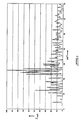
- an inclusion complex of diclofenac sodium and an unsubstituted beta-cyclodextrin which has a molar ratio of diclofenac sodium to the unsubstituted beta-cyclodextrin of 1:1 and which has substantially the X-ray powder diffraction pattern of Figure 3.
- the representative X-ray powder diffraction pattern of Figure 3 was generated from the unit cell data, space group data, fractional atomic co-ordinates and thermal parameters of the atoms determined from a single crystal X-ray structure analysis as described in Example 1.
- the inclusion complex of diclofenac sodium and the unsubstituted beta-cyclodextrin preferably has the formula (diclofenac sodium).(beta-cyclodextrin).11H2O.
- This inclusion complex preferably crystallises in layers of plane group p6 parallel to the (001) plane, complex molecules in each successive layer being rotated by 60° about the c-axis from the complex molecules in the layer above.
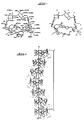
- this complex has the structure substantially as illustrated in Figure 1.
- the diclofenac may also be present in the complex as diclofenac potassium.
- a process for preparing an inclusion complex of diclofenac or a pharmaceutically acceptable salt thereof and an unsubstituted beta-cyclodextrin which includes the steps of:
- the temperature in step (e) is preferably around 70°C.
- the period of time for evaporation in step (f) is preferably from 1 hour.
- a pharmaceutical composition which comprises as the active ingredient an inclusion complex of diclofenac or a pharmaceutically acceptable salt thereof and an unsubstituted beta-cyclodextrin as defined above.
- the pharmaceutical composition may be formulated for oral administration.
- the crux of the invention is that there is formed an inclusion compound or complex of diclofenac and an unsubstituted beta-cyclodextrin, with certain specific characteristics.
- a first way of forming the inclusion compound or complex involves the formation of a paste.
- a second way of forming the inclusion compound or complex involves the formation of a slurry.
- the product may be screened.
- This third process includes the steps of:
- the inclusion complex of the invention is an inclusion complex of diclofenac or a pharmaceutically acceptable salt thereof and an unsubstituted betacyclodextrin, with a molar ratio of diclofenac or a pharmaceutically acceptable salt thereof, calculated as diclofenac free acid, to unsubstituted beta-cyclodextrin, of 1:1, and preferably has solubility in deionised water of greater than 10mg diclofenac per millilitre at 20°C and pH5-7.
- the inclusion complex preferably has a molecular composition of one molecule diclofenac as a pharmaceutically acceptable salt, e.g. diclofenac sodium or diclofenac potassium, one molecule of unsubstituted beta-cyclodextrin and from 5 to 11 water molecules inclusive.
- diclofenac as a pharmaceutically acceptable salt
- diclofenac sodium or diclofenac potassium one molecule of unsubstituted beta-cyclodextrin and from 5 to 11 water molecules inclusive.
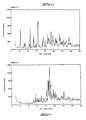
- the complex has substantially the X-ray diffraction pattern of Figure 3 or Sample 1 of Figure 4.
- the inclusion complex may be formulated in a pharmaceutical composition, for example a pharmaceutical composition suitable for oral administration.
- a pharmaceutical composition suitable for oral administration may be presented in the form of a tablet, a capsule, or a powder, suitable for oral administration.
- the complex is prepared by mixing 56mg of diclofenac sodium and 200mg of ⁇ -cyclodextrin in 2ml distilled water at 70°C until dissolved completely. The solution is then cooled slowly to room temperature over approximately 12 hours and left to stand for a number of weeks whereupon the complex crystallises as fine colourless needles with an hexagonal cross-section. It is important to note that the ⁇ -cyclodextrin was not dried prior to use and from thermogravimetric analysis contained approximately 10,75 water molecules per ⁇ -cyclodextrin molecule. The ratio of diclofenac sodium to ⁇ -cyclodextrin used is therefore 1:0,85 and weights may require adjustment depending on water content of raw materials.
- More rapid precipitation of the complex can be achieved if the concentration is increased approximately four times. However, this may require a smaller ratio of ⁇ -cyclodextrin to diclofenac sodium to avoid precipitation of ⁇ -cyclodextrin hydrate.
- the fine needles of the complex can easily be distinguished microscopically from crystals of ⁇ -cyclodextrin or diclofenac sodium which crystallise from water as colourless prisms and thin sheets (fast crystallisation) respectively.
- Figure 1 shows details of the host-guest interactions which include both hydrogen bonding and hydrophobic interactions between the phenylacetate residue of the drug anion and ⁇ -CD.
- the phenyl ring is fully inserted in the ⁇ -CD cavity while one carboxylate oxygen atom, O(18), is hydrogen bonded to a primary hydroxy group of the same ⁇ -CD molecule [O(18)...O(6G6) 2.729(6) ⁇ ]. Consequently, this primary hydroxy adopts the + gauche form with the C(6)-O(6) bond directed towards the host cavity in contrast to the six remaining primary hydroxy groups which adopt the -gauche conformation, as usually observed.
- the orientation of the carboxylate group is determined by an intramolecular hydrogen bond N(3)-H(3)...O(19)[N...O] 2.829(7) ⁇ ] which also occurs in the crystal structure of sodium diclofenac tetrahydrate.
- the bulky dichlorophenyl moiety whose minimum dimension is close to the maximum effective diameter of the apolar host cavity (7.8 ⁇ ), protrudes from the primary face of the host and is sandwiched between the ⁇ -CD molecule shown in Figure 1 and one directly above, related by a crystallographic screw hexad.
- the Na+...O distances are in the range 2.269(6)-2.611(6) ⁇ .
- the complex units stack in a regular head-to-tail mode via a 61-axis which passes through the ⁇ -CD cavity and is nearly normal to the plane of the ⁇ -CD molecule. As shown in Figure 2, this results in an endless helical host channel with a pitch of 51 ⁇ .
- the conformation of the ⁇ -CD molecule in this complex is distorted to a greater extent than is usually observed.
- the heptagon composed of O(4) atoms is irregular with side lengths in the range 4.238(7)-4.496(5) ⁇ and the angles subtended at the O(4) atoms are in the range 120.1-131.6°. This distortion is partly due to the dichlorophenyl residue which rests on the secondary face of the host.
- the tilt angles for glucose residues G1-G7 are 5.5, 4.2, 13.5, 28.7, 7.0, 11.8 and 31.7°.
- thermogravimetry TG
- DSC differential scanning calorimetry
- Thermogravimetric analysis shows a 12.02 weight percent loss between 25°C and 150°C, which corresponds to 11 water molecules of crystallisation.
- the water molecules were exceptionally well-behaved at the low temperature of the X-ray analysis, yielding final U eq values in the range 0.03-0.08 ⁇ 2 and showing no signs of disorder.
- the TG trace indicated that dehydration occurs in at least four steps, each of which is accompanied by a corresponding endotherm in the DSC trace. It is possible to rationalise these observations on the basis of the different environments of the water molecules in the crystal, those involved in weak hydrogen bonds being released first and those coordinated to Na+ or engaging in multiple hydrogen bonds desorbing during the later phases of mass loss.
- TG, DSC and thermomicroscopy indicate that on further heating, the complex does not melt but begins to decompose at approximately 473 K.
- Diclofenac sodium (6,6 g) and beta-cyclodextrin (23,4g) are screened (30 mesh) and tumble mixed. The mixture is transferred to a mortar. Deionised water (10-15 ml) is gradually added with vigorous mixing to produce a uniform paste. Vigorous mixing is continued for 0,5 hours ensuring a uniform paste-like consistency throughout the operation. The mixture is oven dried at 40°C. The dried mass is crushed and passed through 30 mesh screen. The powder is homogenised in a powder mixer for 10 minutes. The product contains 21 % m/m diclofenac sodium as determined by HPLC. The water content of the product is between 9 and 11 % m/m as determined by Karl Fisher titration.
- the molecular composition of the product thus corresponds to 1 molecule diclofenac sodium, 1 molecule beta cyclodextrin and between 7 and 10 water molecules.
- the particle size of the product corresponds to 90% less than 30 microns as measured under a light microscope.
- the morphology of the complex resembles very fine fractured crystalline particles.
- Diclofenac sodium (841 g), beta cyclodextrin (3000 g) and microcrystalline cellulose (580g) are blended in a tumble mixer for 10 minutes and transferred to a mixing vessel.
- Purified deionised water (10,5 litres) is added and the mixture is vigorously stirred for 0,5 hr to produce a uniform slurry.
- the slurry is treated with a colloid mill and immediately spray dried under the following conditions using rotating disc atomization: inlet temperature 150°C; outlet temperature 60°C; feed rate 5 litres per hour.
- the product (3927 g) is obtained in 89 % yield and contains 20 % m/m diclofenac sodium as determined by HPLC.
- the water content of the product is between 7 and 11 % m/m as determined by Karl Fisher titration.
- the molecular composition of the product thus corresponds to 1 molecule diclofenac sodium, 1 molecule beta cyclodextrin and between 5 and 10 water molecules in addition to microcrystalline cellulose.
- the particle size of the product corresponds to 90% less than 50 microns as measured under a light microscope.
- the morphology of the complex resembles very fine spheroidal amorphous particles.
- the complex (500 mg) prepared according to Example 2 is added to 2ml deionised water at room temperature in a screw cap vial.
- the vial is sealed and placed in a laboratory shaker.
- the mixture is allowed to shake for 5 minutes and then equilibrated for 24 hours.
- the supernatant is filtered through a 0,22 micron filter and analyzed for diclofenac concentration by HPLC.
- the equilibrium water solubility of the complex corresponds to 38 mg/ml diclofenac sodium.
- the equilibrium solubility of diclofenac sodium in the absence of beta cyclodextrin under identical conditions is 5 mg/ml.
- Example 1 A sample (Sample 1) of the inclusion complex obtained in Example 2 is analyzed by X-ray powder diffraction.
- a stoichiometric physical mixture is prepared by tumble mixing 0,66g diclofenac sodium with 2,34g beta-cyclodextrin.
- a sample of the physical mixture (Sample 2) is analyzed by X-ray powder diffraction under identical conditions to Sample 1.
- the peak positions in Sample 2 correspond with the sum of individual diffraction patterns for diclofenac sodium and beta-cyclodextrin.
- Sample 1 shows entirely different peak positions when compared with Sample 2 and bears significant resemblance to the pattern shown in Figure 3.
- the X-ray powder diffraction pattern of Sample 1 is therefore characteristic of a crystalline form distinct from either diclofenac sodium or beta-cyclodextrin and may be taken as direct evidence of inclusion complexation.
- the X-ray powder diffraction patterns of Sample 1 and Sample 2 are shown in Figures 4A and 4B.
- a stoichiometric physical mixture is prepared by tumble mixing 0,66g diclofenac sodium with 2,34g beta-cyclodextrin.
- a sample of the mixture (3mg) is triturated with 300mg potassium bromide (KBr) in an agate mortar.
- a sample of the complex obtained from Example 2 (3mg) is triturated with 300mg potassium bromide (KBr) in an agate mortar.
- the sample cup of a diffuse reflectance infrared accessory is filled with KBr and the sample analyzed as background by fourier transform infrared spectrometry on a Perkin-Elmer Paragon 1000 instrument using 16 scans with a resolution of 4 cm ⁇ 1.
- the KBr/ physical mixture and KBr/complex samples are run under identical conditions with subtraction of the background and are shown in Figure 5.
- the complex shows similar absorption intensity for bands associated with the cyclodextrin (for example stretch frequencies of glycosidic C-O groups and C - C groups at 1155 cm ⁇ 1 and 1031 cm ⁇ 1 respectively [Spectroscopic studies on ⁇ -Cyclodextrin, Egyed, O. Vibrational Spectroscopy 1990, 1 ,225-2271)].
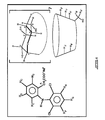
- Characteristic reduction in infrared absorption of diclofenac is observed in the complex relative to the physical mixture, particularly in the regions corresponding to intense carboxylate stretch frequencies (1550 - 1600 cm ⁇ 1) and aromatic stretch frequencies (1400 - 1550 and 680 - 800 cm ⁇ 1) as shown in Figure 1.
- the reduction in intensity of the diclofenac bands at 1574, 1556, 1453, 1410, 765 and 747 is between 40 and 60 %.
- the reduced intensity is due to vibrational restrictions imposed on the guest molecule in the cyclodextrin cavity and may be taken as direct evidence of inclusion complexation.
- diclofenac sodium and beta-cyclodextrin in water may be demonstrated by proton nuclear magnetic resonance (NMR) spectrometry.
- NMR proton nuclear magnetic resonance
- Proton magnetic resonance experiments were performed on a Bruker AMX R 500 spectrometer with probe temperature at 303K.
- Solutions of diclofenac sodium (DIC) and beta-cyclodextrin (BCD) were prepared in D2O and mixed in varying proportions to obtain continuous variation plots (Job plots) from which complex stoichiometry may be interpolated.
- beta-cyclodextrin-diclofenac sodium obtained according to the invention may be formulated into tablets with the following unit composition: Diclofenac sodium-beta cyclodextrin complex (equivalent to 50 mg diclofenac sodium) 220mg Starch 100mg Ac-di-sol 20mg Magnesium stearate 4mg 344mg ⁇
- the Ac-di-sol, microcrystalline cellulose and starch are premixed in a blender.
- the diclofenac sodium-beta cyclodextrin complex is added to the mixture and blended.
- the magnesium stearate is screened in and blended. The mixture is compressed into tablets.
Landscapes
- Health & Medical Sciences (AREA)
- Chemical & Material Sciences (AREA)
- Engineering & Computer Science (AREA)
- General Health & Medical Sciences (AREA)
- Medicinal Chemistry (AREA)
- Pharmacology & Pharmacy (AREA)
- Life Sciences & Earth Sciences (AREA)
- Animal Behavior & Ethology (AREA)
- Public Health (AREA)
- Veterinary Medicine (AREA)
- Nanotechnology (AREA)
- Epidemiology (AREA)
- Bioinformatics & Cheminformatics (AREA)
- Medical Informatics (AREA)
- Crystallography & Structural Chemistry (AREA)
- Molecular Biology (AREA)
- General Engineering & Computer Science (AREA)
- Biotechnology (AREA)
- Biophysics (AREA)
- Chemical Kinetics & Catalysis (AREA)
- General Chemical & Material Sciences (AREA)
- Rheumatology (AREA)
- Organic Chemistry (AREA)
- Nuclear Medicine, Radiotherapy & Molecular Imaging (AREA)
- Pain & Pain Management (AREA)
- Medicinal Preparation (AREA)
- Acyclic And Carbocyclic Compounds In Medicinal Compositions (AREA)
- Polysaccharides And Polysaccharide Derivatives (AREA)
- Organic Low-Molecular-Weight Compounds And Preparation Thereof (AREA)
Applications Claiming Priority (2)
| Application Number | Priority Date | Filing Date | Title |
|---|---|---|---|
| ZA937480 | 1993-10-08 | ||
| ZA937480 | 1993-10-08 |
Publications (2)
| Publication Number | Publication Date |
|---|---|
| EP0647451A1 true EP0647451A1 (de) | 1995-04-12 |
| EP0647451B1 EP0647451B1 (de) | 2005-05-04 |
Family
ID=66767030
Family Applications (1)
| Application Number | Title | Priority Date | Filing Date |
|---|---|---|---|
| EP94307380A Expired - Lifetime EP0647451B1 (de) | 1993-10-08 | 1994-10-07 | Inclusion-Komplex von Beta-Cyclodextrin mit Diclofenac |
Country Status (12)
| Country | Link |
|---|---|
| US (1) | US5674854A (de) |
| EP (1) | EP0647451B1 (de) |
| JP (1) | JPH07196484A (de) |
| KR (1) | KR950010910A (de) |
| CN (1) | CN1161115C (de) |
| AT (1) | ATE294593T1 (de) |
| AU (1) | AU682887B2 (de) |
| CA (1) | CA2133885C (de) |
| DE (1) | DE69434356T2 (de) |
| ES (1) | ES2240960T3 (de) |
| IL (1) | IL111184A (de) |
| ZA (1) | ZA948078B (de) |
Cited By (6)
| Publication number | Priority date | Publication date | Assignee | Title |
|---|---|---|---|---|
| US6071964A (en) * | 1996-03-27 | 2000-06-06 | Hexal Ag | Diclofenac/gamma-cyclodextrin inclusion compounds |
| WO2003072140A1 (fr) * | 2002-02-27 | 2003-09-04 | Eisai Co., Ltd. | Preparations moulees par compression presentant des proprietes de desintegration rapide |
| FR2912061A1 (fr) * | 2007-02-01 | 2008-08-08 | Aliscience Soc Par Actions Sim | Complexes d'inclusion de cysteine, leur presparation et les compositions les contenant |
| EP2003970A4 (de) * | 2006-03-28 | 2012-07-11 | Javelin Pharmaceuticals Inc | Formulierungen aus niedrigdosierten nicht-steroiden entzündungshemmern und beta-cyclodextrin |
| EP2522344A1 (de) * | 2006-03-28 | 2012-11-14 | Javelin Pharmaceuticals, Inc. | Formulierungen aus niedrigdosiertem Diclofenac und Beta-Cyclodextrin |
| EP2734212A4 (de) * | 2011-07-20 | 2014-12-24 | Hospira Inc | Verfahren zur behandlung von schmerz |
Families Citing this family (14)
| Publication number | Priority date | Publication date | Assignee | Title |
|---|---|---|---|---|
| FR2735136B1 (fr) * | 1995-06-08 | 1997-08-14 | Roquette Freres | Composition pulverulente d'hydroxypropyl-betacyclodextrine et son procede de preparation. |
| CA2341984A1 (en) * | 1999-07-01 | 2001-01-11 | Italfarmaco S.P.A. | Complexes of paroxetine, with cyclodextrines or cyclodextrin derivatives |
| US7049146B2 (en) | 2000-11-14 | 2006-05-23 | Facet Analytical Services And Technology, Llc | Calibration standards, methods, and kits for water determination |
| US7122376B2 (en) * | 2001-11-01 | 2006-10-17 | Facet Analytical Services And Technology, Llc | Calibration standards, methods, and kits for water determination |
| KR100473716B1 (ko) * | 2002-03-27 | 2005-03-08 | 주식회사 참 존 | 7-디하이드로콜레스테롤 및 사이클로덱스트린의 포접복합체, 이를 포함하는 화장료 조성물 및7-디하이드로콜레스테롤의 안정화방법 |
| AU2003270727A1 (en) * | 2002-09-17 | 2004-04-08 | Luna Innovations, Inc. | Remote temperature sensing of small volume and related apparatus thereof |
| FR2850040B1 (fr) * | 2003-01-20 | 2005-03-11 | Centre Nat Rech Scient | Systemes pour microencapsulation et leurs applications |
| PT1574221E (pt) * | 2004-03-10 | 2007-07-09 | Shimoda Biotech Pty Ltd | Composições de diclofenac injectáveis estáveis |
| PL2708225T3 (pl) * | 2004-04-23 | 2019-07-31 | Cydex Pharmaceuticals, Inc. | Formulacja DPI zawierająca eter sulfoalkilowy cyklodekstryny |
| US7629331B2 (en) | 2005-10-26 | 2009-12-08 | Cydex Pharmaceuticals, Inc. | Sulfoalkyl ether cyclodextrin compositions and methods of preparation thereof |
| EP2581078B1 (de) | 2005-10-26 | 2014-12-10 | Cydex Pharmaceuticals, Inc. | Sulfoalkylethercyclodextrin- Zusammensetzungen und deren Herstellungsverfahren |
| US20070267033A1 (en) * | 2006-02-09 | 2007-11-22 | Philip Morris Usa Inc. | Gamma cyclodextrin flavoring-release additives |
| JP7758353B2 (ja) | 2020-03-23 | 2025-10-22 | クザップ リサーチ アンド デベロップメント エルエルシー | 経口テルペンシクロデキストリン包接体ビヒクル |
| GB202105833D0 (en) * | 2021-04-23 | 2021-06-09 | Nacamed As | Silicon particles for drug delivery |
Citations (1)
| Publication number | Priority date | Publication date | Assignee | Title |
|---|---|---|---|---|
| JPH0616547A (ja) * | 1992-07-01 | 1994-01-25 | Wakamoto Pharmaceut Co Ltd | 消炎点眼剤 |
Family Cites Families (8)
| Publication number | Priority date | Publication date | Assignee | Title |
|---|---|---|---|---|
| JPS5984821A (ja) * | 1982-11-04 | 1984-05-16 | Teikoku Chem Ind Corp Ltd | 徐溶化組成物 |
| IT1196033B (it) * | 1984-02-22 | 1988-11-10 | Chiesi Farma Spa | Composto ad attivita' antiinfiammatoria ottenuto per complessazione con beta-ciclodestrina e relative formulazioni farmaceutiche |
| US4845188A (en) * | 1988-08-19 | 1989-07-04 | Eastman Kodak Company | Condensation polymers containing methine ultraviolet radiation-absorbing residues and shaped articles produced therefrom |
| MY106598A (en) * | 1988-08-31 | 1995-06-30 | Australian Commercial Res & Development Ltd | Compositions and methods for drug delivery and chromatography. |
| IT1241088B (it) * | 1990-03-27 | 1993-12-29 | Chiesi Farma Spa | Procedimento per la preparazione di complessi piroxicam/ciclodestrina,prodotti ottenuti e loro composizioni farmaceutiche |
| IT1243342B (it) * | 1990-07-13 | 1994-06-10 | Farcon Ag | Composizioni farmaceutiche orali liquide ad attivita' antiinfiammatoria |
| EP1004318A3 (de) * | 1991-06-21 | 2002-08-07 | Takeda Chemical Industries, Ltd. | Zyklodextrin-zusammensetzung |
| DE4200792A1 (de) * | 1992-01-15 | 1993-07-22 | Solvay Fluor & Derivate | Aufarbeitung der fluorwasserstoff-phase aus reaktionsgemischen |
-
1994
- 1994-10-06 IL IL11118494A patent/IL111184A/xx not_active IP Right Cessation
- 1994-10-07 AT AT94307380T patent/ATE294593T1/de not_active IP Right Cessation
- 1994-10-07 DE DE69434356T patent/DE69434356T2/de not_active Expired - Lifetime
- 1994-10-07 ES ES94307380T patent/ES2240960T3/es not_active Expired - Lifetime
- 1994-10-07 EP EP94307380A patent/EP0647451B1/de not_active Expired - Lifetime
- 1994-10-07 CA CA002133885A patent/CA2133885C/en not_active Expired - Fee Related
- 1994-10-07 KR KR1019940025644A patent/KR950010910A/ko not_active Ceased
- 1994-10-07 US US08/319,548 patent/US5674854A/en not_active Expired - Lifetime
- 1994-10-07 AU AU74486/94A patent/AU682887B2/en not_active Ceased
- 1994-10-08 CN CNB941186768A patent/CN1161115C/zh not_active Expired - Fee Related
- 1994-10-11 JP JP6271715A patent/JPH07196484A/ja active Pending
- 1994-10-14 ZA ZA948078A patent/ZA948078B/xx unknown
Patent Citations (1)
| Publication number | Priority date | Publication date | Assignee | Title |
|---|---|---|---|---|
| JPH0616547A (ja) * | 1992-07-01 | 1994-01-25 | Wakamoto Pharmaceut Co Ltd | 消炎点眼剤 |
Non-Patent Citations (8)
| Title |
|---|
| BACKENSFELD T ET AL: "Interaction of NSA with cyclodextrins and hydroxypropyl cyclodextrin derivatives", INT. J. PHARM., 1991, VOL. 74, NO. 2-3, PAGE(S) 85-93 * |
| DATABASE CHEMABS CHEMICAL ABSTRACTS SERVICE, COLUMBUS, OHIO, US; * |
| DATABASE WPI Section Ch Week 9408, Derwent World Patents Index; Class B04, AN 94-061985 * |
| IKEDA K ET AL: "Inclusion complexes of.beta.-cyclodextrin with antiinflammatory drugs fenamates in aqueous solution", CHEM. PHARM. BULL., 1975, VOL. 23, NO. 1, PAGE(S) 201-8, JAPAN * |
| ORIENTI I ET AL: "Availability of NSAIDH.beta.-cyclodextrin inclusion complexes", ARCH. PHARM. (WEINHEIM, DE), 1989, VOL. 322, NO. 4, PAGE(S) 207-11 * |
| ORIENTI I ET AL: "Inclusion complexes between non steroidal antiinflammatory drugs and .beta.-cyclodextrin", EUR. J. PHARM. BIOPHARM., 1991, VOL. 37, NO. 2, PAGE(S) 110-12 * |
| OTAGIRI M ET AL: "Comparative study on inclusion complexation of.beta.-cyclodextrin and tri-O-methyl-.beta.-cyclodextrin with several drugs in aqueous solution", ACTA PHARM. SUEC., 1984, VOL. 21, NO. 6, PAGE(S) 357-66 * |
| PATENT ABSTRACTS OF JAPAN vol. 18, no. 222 (C - 1193) 21 April 1994 (1994-04-21) * |
Cited By (11)
| Publication number | Priority date | Publication date | Assignee | Title |
|---|---|---|---|---|
| US6071964A (en) * | 1996-03-27 | 2000-06-06 | Hexal Ag | Diclofenac/gamma-cyclodextrin inclusion compounds |
| WO2003072140A1 (fr) * | 2002-02-27 | 2003-09-04 | Eisai Co., Ltd. | Preparations moulees par compression presentant des proprietes de desintegration rapide |
| EP2003970A4 (de) * | 2006-03-28 | 2012-07-11 | Javelin Pharmaceuticals Inc | Formulierungen aus niedrigdosierten nicht-steroiden entzündungshemmern und beta-cyclodextrin |
| EP2522344A1 (de) * | 2006-03-28 | 2012-11-14 | Javelin Pharmaceuticals, Inc. | Formulierungen aus niedrigdosiertem Diclofenac und Beta-Cyclodextrin |
| EP2522343A1 (de) * | 2006-03-28 | 2012-11-14 | Javelin Pharmaceuticals, Inc. | Formulierungen aus niedrigdosiertem Diclofenac und Beta-Cyclodextrin |
| US8580954B2 (en) | 2006-03-28 | 2013-11-12 | Hospira, Inc. | Formulations of low dose diclofenac and beta-cyclodextrin |
| US8946292B2 (en) | 2006-03-28 | 2015-02-03 | Javelin Pharmaceuticals, Inc. | Formulations of low dose diclofenac and beta-cyclodextrin |
| FR2912061A1 (fr) * | 2007-02-01 | 2008-08-08 | Aliscience Soc Par Actions Sim | Complexes d'inclusion de cysteine, leur presparation et les compositions les contenant |
| WO2008107569A3 (fr) * | 2007-02-01 | 2008-11-06 | Aliscience | Complexes d'inclusion de cysteine, leur preparation et les compositions les contenant |
| EP2734212A4 (de) * | 2011-07-20 | 2014-12-24 | Hospira Inc | Verfahren zur behandlung von schmerz |
| EP3257505A1 (de) * | 2011-07-20 | 2017-12-20 | Hospira, Inc. | Zusammensetzungen enthaltend diclofenac zur behandlung von postoperativen schmerzen |
Also Published As
| Publication number | Publication date |
|---|---|
| IL111184A0 (en) | 1994-12-29 |
| EP0647451B1 (de) | 2005-05-04 |
| KR950010910A (ko) | 1995-05-15 |
| AU682887B2 (en) | 1997-10-23 |
| CN1161115C (zh) | 2004-08-11 |
| DE69434356T2 (de) | 2006-05-04 |
| IL111184A (en) | 2000-08-13 |
| CA2133885C (en) | 2008-12-16 |
| ZA948078B (en) | 1995-06-05 |
| CN1107042A (zh) | 1995-08-23 |
| ATE294593T1 (de) | 2005-05-15 |
| DE69434356D1 (de) | 2005-06-09 |
| AU7448694A (en) | 1995-04-27 |
| CA2133885A1 (en) | 1995-04-09 |
| JPH07196484A (ja) | 1995-08-01 |
| US5674854A (en) | 1997-10-07 |
| ES2240960T3 (es) | 2005-10-16 |
Similar Documents
| Publication | Publication Date | Title |
|---|---|---|
| EP0647451B1 (de) | Inclusion-Komplex von Beta-Cyclodextrin mit Diclofenac | |
| Xu et al. | Inclusion complex of nateglinide with sulfobutyl ether β-cyclodextrin: preparation, characterization and water solubility | |
| US5679660A (en) | Pharmaceutical composition comprising diclofenac and cyclodextrin | |
| EA022693B1 (ru) | КЛАТРАТНЫЕ КОМПЛЕКСЫ β-ЦИКЛОДЕКСТРИНА С 1-{[6-БРОМ-1-МЕТИЛ-5-МЕТОКСИ-2-ФЕНИЛТИОМЕТИЛ-1-Н-ИНДОЛ-3-ИЛ]КАРБОНИЛ}-4-БЕНЗИЛПИПЕРАЗИНОМ, ОБЛАДАЮЩИЕ ПРОТИВОВИРУСНОЙ АКТИВНОСТЬЮ, ИХ ПОЛУЧЕНИЕ И ПРИМЕНЕНИЕ | |
| US7700579B2 (en) | Process for the preparation of piroxicam: b-cyclodextrin inclusion compounds | |
| Higashi et al. | Salicylic acid/γ-cydodextrin 2: 1 and 4: 1 complex formation by sealed-heating method | |
| Nakai | Molecular behavior of medicinals in ground mixtures with microcrystalline cellulose and cyclodextrins | |
| AU1981000A (en) | Clathrates of dehydroepiandrosterone and corresponding pharmaceutical compositions | |
| Badawy et al. | A study of the complexation between danazol and hydrophilic cyclodextrin derivatives | |
| EP2529742B1 (de) | Pharmazeutische Zusammensetzung mit Dapagliflozin und Cyclodextrin | |
| EP1272531B1 (de) | Kristalline mischungen aus teilmethylestern des beta-cyclodextrins und verwandten verbindungen | |
| Sagiraju et al. | NMR spectroscopic study of cyclodextrin inclusion complexes with A-007 prodrugs | |
| CA2835232C (en) | A complex of amorphous tomoxiprole and cyclodextrin with fast dissolution rate and process for the preparation thereof | |
| Nakai et al. | Study of the interaction of clobazam with cyclodextrins in solution and in the solid state | |
| JP6887195B1 (ja) | 新規有機ゲルマニウム化合物 | |
| EA024643B1 (ru) | КЛАТРАТНЫЕ КОМПЛЕКСЫ β-ЦИКЛОДЕКСТРИНА С ПРОИЗВОДНЫМ 5-ГИДРОКСИ-4-АМИНОМЕТИЛ-1-ЦИКЛОГЕКСИЛ( ИЛИ ЦИКЛОГЕПТИЛ)-3-АЛКОКСИКАРБОНИЛИНДОЛА, ОБЛАДАЮЩИЕ ПРОТИВОВИРУСНЫМ ДЕЙСТВИЕМ, И СПОСОБЫ ИХ ПОЛУЧЕНИЯ | |
| US20040127462A1 (en) | Anilide and cyclodextrin complexes, their preparation and their use as medicine in particular for treating dyslipidemiae | |
| Reddy et al. | Development and optimization of atorvastatin calcium-cyclodextrin inclusion complexed orally-disintegrating tablets with enhanced pharmacokinetic and pharmaco-dynamic profile | |
| CN120795050A (zh) | 一种黄体酮共晶物及其制备方法和应用 | |
| Braga et al. | Solid State inclusion complex of S-Ibuprofen in β-cyclodextrin: Structure and Characterization | |
| Brown | The physicochemical characterisation of cyclodextrin inclusion compounds with non-steroidal anti-inflammatory drugs | |
| Dodds | Physicochemical study of inclusion of drug molecules in cyclodextrins | |
| 李英鵬 | Study of Intermolecular Interaction of Hydroxypropyl-β-cyclodextrin Complexes through Phase Diagrams of the Fusion Entropy and Phase-solubility Profiles: Contrast between Nifedipine and Nicardipine Hydrochloride | |
| Dodds | DRUG MoLECULEs N cvcLooExTRNs |
Legal Events
| Date | Code | Title | Description |
|---|---|---|---|
| PUAI | Public reference made under article 153(3) epc to a published international application that has entered the european phase |
Free format text: ORIGINAL CODE: 0009012 |
|
| AK | Designated contracting states |
Kind code of ref document: A1 Designated state(s): AT BE CH DE DK ES FR GB GR IE IT LI LU MC NL PT SE |
|
| RAX | Requested extension states of the european patent have changed |
Free format text: LT PAYMENT 941027;SI PAYMENT 941027 |
|
| 17P | Request for examination filed |
Effective date: 19950313 |
|
| 17Q | First examination report despatched |
Effective date: 19960524 |
|
| RAP1 | Party data changed (applicant data changed or rights of an application transferred) |
Owner name: FARMARC NEDERLAND BV |
|
| GRAP | Despatch of communication of intention to grant a patent |
Free format text: ORIGINAL CODE: EPIDOSNIGR1 |
|
| RIC1 | Information provided on ipc code assigned before grant |
Ipc: 7A 61K 31/195 - Ipc: 7A 61K 47/48 A |
|
| GRAS | Grant fee paid |
Free format text: ORIGINAL CODE: EPIDOSNIGR3 |
|
| RAP1 | Party data changed (applicant data changed or rights of an application transferred) |
Owner name: SHIMODA BIOTECH (PTY) LTD |
|
| GRAA | (expected) grant |
Free format text: ORIGINAL CODE: 0009210 |
|
| AK | Designated contracting states |
Kind code of ref document: B1 Designated state(s): AT BE CH DE DK ES FR GB GR IE IT LI LU MC NL PT SE |
|
| AX | Request for extension of the european patent |
Extension state: LT SI |
|
| PG25 | Lapsed in a contracting state [announced via postgrant information from national office to epo] |
Ref country code: BE Free format text: LAPSE BECAUSE OF FAILURE TO SUBMIT A TRANSLATION OF THE DESCRIPTION OR TO PAY THE FEE WITHIN THE PRESCRIBED TIME-LIMIT Effective date: 20050504 Ref country code: AT Free format text: LAPSE BECAUSE OF FAILURE TO SUBMIT A TRANSLATION OF THE DESCRIPTION OR TO PAY THE FEE WITHIN THE PRESCRIBED TIME-LIMIT Effective date: 20050504 |
|
| REG | Reference to a national code |
Ref country code: GB Ref legal event code: FG4D |
|
| REG | Reference to a national code |
Ref country code: CH Ref legal event code: EP |
|
| REG | Reference to a national code |
Ref country code: IE Ref legal event code: FG4D |
|
| REF | Corresponds to: |
Ref document number: 69434356 Country of ref document: DE Date of ref document: 20050609 Kind code of ref document: P |
|
| PG25 | Lapsed in a contracting state [announced via postgrant information from national office to epo] |
Ref country code: GR Free format text: LAPSE BECAUSE OF FAILURE TO SUBMIT A TRANSLATION OF THE DESCRIPTION OR TO PAY THE FEE WITHIN THE PRESCRIBED TIME-LIMIT Effective date: 20050804 Ref country code: DK Free format text: LAPSE BECAUSE OF FAILURE TO SUBMIT A TRANSLATION OF THE DESCRIPTION OR TO PAY THE FEE WITHIN THE PRESCRIBED TIME-LIMIT Effective date: 20050804 |
|
| REG | Reference to a national code |
Ref country code: SE Ref legal event code: TRGR |
|
| REG | Reference to a national code |
Ref country code: CH Ref legal event code: NV Representative=s name: BOVARD AG PATENTANWAELTE |
|
| PG25 | Lapsed in a contracting state [announced via postgrant information from national office to epo] |
Ref country code: IE Free format text: LAPSE BECAUSE OF NON-PAYMENT OF DUE FEES Effective date: 20051007 |
|
| REG | Reference to a national code |
Ref country code: ES Ref legal event code: FG2A Ref document number: 2240960 Country of ref document: ES Kind code of ref document: T3 |
|
| PG25 | Lapsed in a contracting state [announced via postgrant information from national office to epo] |
Ref country code: PT Free format text: LAPSE BECAUSE OF FAILURE TO SUBMIT A TRANSLATION OF THE DESCRIPTION OR TO PAY THE FEE WITHIN THE PRESCRIBED TIME-LIMIT Effective date: 20051017 |
|
| LTIE | Lt: invalidation of european patent or patent extension |
Effective date: 20050504 |
|
| PG25 | Lapsed in a contracting state [announced via postgrant information from national office to epo] |
Ref country code: MC Free format text: LAPSE BECAUSE OF NON-PAYMENT OF DUE FEES Effective date: 20051031 Ref country code: LU Free format text: LAPSE BECAUSE OF NON-PAYMENT OF DUE FEES Effective date: 20051031 |
|
| PLBE | No opposition filed within time limit |
Free format text: ORIGINAL CODE: 0009261 |
|
| STAA | Information on the status of an ep patent application or granted ep patent |
Free format text: STATUS: NO OPPOSITION FILED WITHIN TIME LIMIT |
|
| ET | Fr: translation filed | ||
| 26N | No opposition filed |
Effective date: 20060207 |
|
| REG | Reference to a national code |
Ref country code: IE Ref legal event code: MM4A |
|
| PGFP | Annual fee paid to national office [announced via postgrant information from national office to epo] |
Ref country code: CH Payment date: 20081016 Year of fee payment: 15 |
|
| REG | Reference to a national code |
Ref country code: CH Ref legal event code: PL |
|
| PG25 | Lapsed in a contracting state [announced via postgrant information from national office to epo] |
Ref country code: LI Free format text: LAPSE BECAUSE OF NON-PAYMENT OF DUE FEES Effective date: 20091031 Ref country code: CH Free format text: LAPSE BECAUSE OF NON-PAYMENT OF DUE FEES Effective date: 20091031 |
|
| PGFP | Annual fee paid to national office [announced via postgrant information from national office to epo] |
Ref country code: DE Payment date: 20100929 Year of fee payment: 17 |
|
| PGFP | Annual fee paid to national office [announced via postgrant information from national office to epo] |
Ref country code: IT Payment date: 20101018 Year of fee payment: 17 Ref country code: GB Payment date: 20101006 Year of fee payment: 17 |
|
| PGFP | Annual fee paid to national office [announced via postgrant information from national office to epo] |
Ref country code: NL Payment date: 20111021 Year of fee payment: 18 Ref country code: ES Payment date: 20111115 Year of fee payment: 18 Ref country code: FR Payment date: 20111103 Year of fee payment: 18 Ref country code: SE Payment date: 20111011 Year of fee payment: 18 |
|
| REG | Reference to a national code |
Ref country code: NL Ref legal event code: V1 Effective date: 20130501 |
|
| GBPC | Gb: european patent ceased through non-payment of renewal fee |
Effective date: 20121007 |
|
| REG | Reference to a national code |
Ref country code: FR Ref legal event code: ST Effective date: 20130628 |
|
| PG25 | Lapsed in a contracting state [announced via postgrant information from national office to epo] |
Ref country code: SE Free format text: LAPSE BECAUSE OF NON-PAYMENT OF DUE FEES Effective date: 20121008 Ref country code: DE Free format text: LAPSE BECAUSE OF NON-PAYMENT OF DUE FEES Effective date: 20130501 Ref country code: GB Free format text: LAPSE BECAUSE OF NON-PAYMENT OF DUE FEES Effective date: 20121007 |
|
| REG | Reference to a national code |
Ref country code: DE Ref legal event code: R119 Ref document number: 69434356 Country of ref document: DE Effective date: 20130501 |
|
| PG25 | Lapsed in a contracting state [announced via postgrant information from national office to epo] |
Ref country code: IT Free format text: LAPSE BECAUSE OF NON-PAYMENT OF DUE FEES Effective date: 20121007 Ref country code: FR Free format text: LAPSE BECAUSE OF NON-PAYMENT OF DUE FEES Effective date: 20121031 Ref country code: NL Free format text: LAPSE BECAUSE OF NON-PAYMENT OF DUE FEES Effective date: 20130501 |
|
| REG | Reference to a national code |
Ref country code: ES Ref legal event code: FD2A Effective date: 20140116 |
|
| PG25 | Lapsed in a contracting state [announced via postgrant information from national office to epo] |
Ref country code: ES Free format text: LAPSE BECAUSE OF NON-PAYMENT OF DUE FEES Effective date: 20121008 |