EP0647655A1 - Synthetischen peptiden und impfstoffen gegen parvovirus - Google Patents
Synthetischen peptiden und impfstoffen gegen parvovirus Download PDFInfo
- Publication number
- EP0647655A1 EP0647655A1 EP94905108A EP94905108A EP0647655A1 EP 0647655 A1 EP0647655 A1 EP 0647655A1 EP 94905108 A EP94905108 A EP 94905108A EP 94905108 A EP94905108 A EP 94905108A EP 0647655 A1 EP0647655 A1 EP 0647655A1
- Authority
- EP
- European Patent Office
- Prior art keywords
- peptides
- peptide
- amino acids
- cpv
- parvovirus
- Prior art date
- Legal status (The legal status is an assumption and is not a legal conclusion. Google has not performed a legal analysis and makes no representation as to the accuracy of the status listed.)
- Granted
Links
- 108090000765 processed proteins & peptides Proteins 0.000 title claims abstract description 166
- 102000004196 processed proteins & peptides Human genes 0.000 title claims abstract description 125
- 229960005486 vaccine Drugs 0.000 title claims abstract description 40
- 241000125945 Protoparvovirus Species 0.000 title claims abstract description 29
- 230000002163 immunogen Effects 0.000 claims abstract description 35
- 150000001413 amino acids Chemical class 0.000 claims abstract description 28
- 208000015181 infectious disease Diseases 0.000 claims abstract description 27
- 239000000203 mixture Substances 0.000 claims abstract description 26
- 241001465754 Metazoa Species 0.000 claims abstract description 24
- 125000002924 primary amino group Chemical group [H]N([H])* 0.000 claims abstract description 21
- 108010078791 Carrier Proteins Proteins 0.000 claims abstract description 10
- 102000014914 Carrier Proteins Human genes 0.000 claims abstract description 10
- 241000282472 Canis lupus familiaris Species 0.000 claims description 76
- 241000701931 Canine parvovirus Species 0.000 claims description 70
- 241000702619 Porcine parvovirus Species 0.000 claims description 62
- 108090000623 proteins and genes Proteins 0.000 claims description 33
- 102000004169 proteins and genes Human genes 0.000 claims description 32
- 241000282339 Mustela Species 0.000 claims description 20
- 241000701915 Feline panleukopenia virus Species 0.000 claims description 19
- 241000282887 Suidae Species 0.000 claims description 16
- 229940126577 synthetic vaccine Drugs 0.000 claims description 14
- 239000002671 adjuvant Substances 0.000 claims description 13
- 241000282326 Felis catus Species 0.000 claims description 8
- 241000701922 Bovine parvovirus Species 0.000 claims description 6
- 241000772415 Neovison vison Species 0.000 claims description 6
- 238000012217 deletion Methods 0.000 claims description 6
- 230000037430 deletion Effects 0.000 claims description 6
- 238000003780 insertion Methods 0.000 claims description 6
- 230000037431 insertion Effects 0.000 claims description 6
- 238000006467 substitution reaction Methods 0.000 claims description 6
- 241000282414 Homo sapiens Species 0.000 claims description 4
- 239000003085 diluting agent Substances 0.000 claims description 4
- 239000012634 fragment Substances 0.000 claims description 4
- 125000000539 amino acid group Chemical group 0.000 claims description 3
- 208000004232 Enteritis Diseases 0.000 claims description 2
- 208000008071 Parvoviridae Infections Diseases 0.000 claims description 2
- 206010057343 Parvovirus infection Diseases 0.000 claims description 2
- 239000000568 immunological adjuvant Substances 0.000 claims description 2
- 244000005700 microbiome Species 0.000 claims description 2
- 238000004132 cross linking Methods 0.000 claims 1
- 238000010353 genetic engineering Methods 0.000 claims 1
- 230000003472 neutralizing effect Effects 0.000 abstract description 40
- 241000700605 Viruses Species 0.000 abstract description 37
- 230000001939 inductive effect Effects 0.000 abstract description 26
- 230000000890 antigenic effect Effects 0.000 abstract description 11
- 238000009472 formulation Methods 0.000 abstract description 3
- 235000018102 proteins Nutrition 0.000 description 31
- 230000003053 immunization Effects 0.000 description 29
- 241000702625 Mink enteritis virus Species 0.000 description 27
- 241000283973 Oryctolagus cuniculus Species 0.000 description 27
- 238000002649 immunization Methods 0.000 description 27
- 210000002966 serum Anatomy 0.000 description 27
- 101710132601 Capsid protein Proteins 0.000 description 20
- 101710197658 Capsid protein VP1 Proteins 0.000 description 20
- 101710118046 RNA-directed RNA polymerase Proteins 0.000 description 20
- 101710108545 Viral protein 1 Proteins 0.000 description 20
- 235000001014 amino acid Nutrition 0.000 description 15
- 210000000234 capsid Anatomy 0.000 description 15
- 238000006386 neutralization reaction Methods 0.000 description 14
- 238000002965 ELISA Methods 0.000 description 12
- 210000004027 cell Anatomy 0.000 description 12
- 239000002953 phosphate buffered saline Substances 0.000 description 12
- 210000003608 fece Anatomy 0.000 description 11
- 238000012360 testing method Methods 0.000 description 11
- OKKJLVBELUTLKV-UHFFFAOYSA-N Methanol Chemical compound OC OKKJLVBELUTLKV-UHFFFAOYSA-N 0.000 description 9
- 239000000872 buffer Substances 0.000 description 9
- 238000010790 dilution Methods 0.000 description 9
- 239000012895 dilution Substances 0.000 description 9
- 238000000034 method Methods 0.000 description 9
- 230000003612 virological effect Effects 0.000 description 9
- 230000002788 anti-peptide Effects 0.000 description 8
- 238000000338 in vitro Methods 0.000 description 8
- 102000013415 peroxidase activity proteins Human genes 0.000 description 8
- 108040007629 peroxidase activity proteins Proteins 0.000 description 8
- 238000002255 vaccination Methods 0.000 description 8
- FAPWRFPIFSIZLT-UHFFFAOYSA-M Sodium chloride Chemical compound [Na+].[Cl-] FAPWRFPIFSIZLT-UHFFFAOYSA-M 0.000 description 7
- 238000010168 coupling process Methods 0.000 description 7
- 238000011534 incubation Methods 0.000 description 7
- 238000001262 western blot Methods 0.000 description 7
- 241000282898 Sus scrofa Species 0.000 description 6
- 238000006243 chemical reaction Methods 0.000 description 6
- 230000008878 coupling Effects 0.000 description 6
- 238000005859 coupling reaction Methods 0.000 description 6
- 201000010099 disease Diseases 0.000 description 6
- 208000037265 diseases, disorders, signs and symptoms Diseases 0.000 description 6
- 125000003088 (fluoren-9-ylmethoxy)carbonyl group Chemical group 0.000 description 5
- 108700026244 Open Reading Frames Proteins 0.000 description 5
- 238000003556 assay Methods 0.000 description 5
- 230000005847 immunogenicity Effects 0.000 description 5
- 230000009257 reactivity Effects 0.000 description 5
- 239000000243 solution Substances 0.000 description 5
- 238000003786 synthesis reaction Methods 0.000 description 5
- GEYOCULIXLDCMW-UHFFFAOYSA-N 1,2-phenylenediamine Chemical compound NC1=CC=CC=C1N GEYOCULIXLDCMW-UHFFFAOYSA-N 0.000 description 4
- 241001517118 Goose parvovirus Species 0.000 description 4
- 101710172711 Structural protein Proteins 0.000 description 4
- 238000002835 absorbance Methods 0.000 description 4
- 210000004369 blood Anatomy 0.000 description 4
- 239000008280 blood Substances 0.000 description 4
- 244000309715 mini pig Species 0.000 description 4
- 239000011347 resin Substances 0.000 description 4
- 229920005989 resin Polymers 0.000 description 4
- 239000002356 single layer Substances 0.000 description 4
- 239000011780 sodium chloride Substances 0.000 description 4
- WEVYAHXRMPXWCK-UHFFFAOYSA-N Acetonitrile Chemical compound CC#N WEVYAHXRMPXWCK-UHFFFAOYSA-N 0.000 description 3
- 108020004414 DNA Proteins 0.000 description 3
- 238000012286 ELISA Assay Methods 0.000 description 3
- WSFSSNUMVMOOMR-UHFFFAOYSA-N Formaldehyde Chemical compound O=C WSFSSNUMVMOOMR-UHFFFAOYSA-N 0.000 description 3
- 241001644525 Nastus productus Species 0.000 description 3
- 239000004793 Polystyrene Substances 0.000 description 3
- 230000002155 anti-virotic effect Effects 0.000 description 3
- 230000015572 biosynthetic process Effects 0.000 description 3
- 210000004899 c-terminal region Anatomy 0.000 description 3
- 230000000694 effects Effects 0.000 description 3
- 239000000499 gel Substances 0.000 description 3
- 238000001727 in vivo Methods 0.000 description 3
- 230000001717 pathogenic effect Effects 0.000 description 3
- 229920002223 polystyrene Polymers 0.000 description 3
- 241000701447 unidentified baculovirus Species 0.000 description 3
- YBJHBAHKTGYVGT-ZKWXMUAHSA-N (+)-Biotin Chemical compound N1C(=O)N[C@@H]2[C@H](CCCCC(=O)O)SC[C@@H]21 YBJHBAHKTGYVGT-ZKWXMUAHSA-N 0.000 description 2
- YRNWIFYIFSBPAU-UHFFFAOYSA-N 4-[4-(dimethylamino)phenyl]-n,n-dimethylaniline Chemical compound C1=CC(N(C)C)=CC=C1C1=CC=C(N(C)C)C=C1 YRNWIFYIFSBPAU-UHFFFAOYSA-N 0.000 description 2
- 229920000936 Agarose Polymers 0.000 description 2
- HEDRZPFGACZZDS-UHFFFAOYSA-N Chloroform Chemical compound ClC(Cl)Cl HEDRZPFGACZZDS-UHFFFAOYSA-N 0.000 description 2
- 102000053602 DNA Human genes 0.000 description 2
- 206010012735 Diarrhoea Diseases 0.000 description 2
- 241000588724 Escherichia coli Species 0.000 description 2
- LFQSCWFLJHTTHZ-UHFFFAOYSA-N Ethanol Chemical compound CCO LFQSCWFLJHTTHZ-UHFFFAOYSA-N 0.000 description 2
- 108010008281 Recombinant Fusion Proteins Proteins 0.000 description 2
- 102000007056 Recombinant Fusion Proteins Human genes 0.000 description 2
- CDBYLPFSWZWCQE-UHFFFAOYSA-L Sodium Carbonate Chemical compound [Na+].[Na+].[O-]C([O-])=O CDBYLPFSWZWCQE-UHFFFAOYSA-L 0.000 description 2
- QAOWNCQODCNURD-UHFFFAOYSA-N Sulfuric acid Chemical compound OS(O)(=O)=O QAOWNCQODCNURD-UHFFFAOYSA-N 0.000 description 2
- 108010008038 Synthetic Vaccines Proteins 0.000 description 2
- PNEYBMLMFCGWSK-UHFFFAOYSA-N aluminium oxide Inorganic materials [O-2].[O-2].[O-2].[Al+3].[Al+3] PNEYBMLMFCGWSK-UHFFFAOYSA-N 0.000 description 2
- 238000004458 analytical method Methods 0.000 description 2
- 230000005875 antibody response Effects 0.000 description 2
- 239000000427 antigen Substances 0.000 description 2
- 102000036639 antigens Human genes 0.000 description 2
- 108091007433 antigens Proteins 0.000 description 2
- 230000008901 benefit Effects 0.000 description 2
- 239000003795 chemical substances by application Substances 0.000 description 2
- 230000021615 conjugation Effects 0.000 description 2
- 229940028617 conventional vaccine Drugs 0.000 description 2
- 235000018417 cysteine Nutrition 0.000 description 2
- XUJNEKJLAYXESH-UHFFFAOYSA-N cysteine Natural products SCC(N)C(O)=O XUJNEKJLAYXESH-UHFFFAOYSA-N 0.000 description 2
- 125000000151 cysteine group Chemical group N[C@@H](CS)C(=O)* 0.000 description 2
- 230000002708 enhancing effect Effects 0.000 description 2
- 230000002550 fecal effect Effects 0.000 description 2
- 230000008570 general process Effects 0.000 description 2
- 238000004128 high performance liquid chromatography Methods 0.000 description 2
- 238000003119 immunoblot Methods 0.000 description 2
- 210000003292 kidney cell Anatomy 0.000 description 2
- 239000011159 matrix material Substances 0.000 description 2
- 239000007758 minimum essential medium Substances 0.000 description 2
- 238000011587 new zealand white rabbit Methods 0.000 description 2
- -1 p-toluenesulphonyl Chemical group 0.000 description 2
- 231100000255 pathogenic effect Toxicity 0.000 description 2
- 235000010482 polyoxyethylene sorbitan monooleate Nutrition 0.000 description 2
- 229920000053 polysorbate 80 Polymers 0.000 description 2
- 230000008569 process Effects 0.000 description 2
- 229940124551 recombinant vaccine Drugs 0.000 description 2
- 230000001850 reproductive effect Effects 0.000 description 2
- 239000001488 sodium phosphate Substances 0.000 description 2
- 229910000162 sodium phosphate Inorganic materials 0.000 description 2
- 239000007790 solid phase Substances 0.000 description 2
- 239000000758 substrate Substances 0.000 description 2
- 235000011149 sulphuric acid Nutrition 0.000 description 2
- 230000002194 synthesizing effect Effects 0.000 description 2
- WROMPOXWARCANT-UHFFFAOYSA-N tfa trifluoroacetic acid Chemical compound OC(=O)C(F)(F)F.OC(=O)C(F)(F)F WROMPOXWARCANT-UHFFFAOYSA-N 0.000 description 2
- 210000001519 tissue Anatomy 0.000 description 2
- RYFMWSXOAZQYPI-UHFFFAOYSA-K trisodium phosphate Chemical compound [Na+].[Na+].[Na+].[O-]P([O-])([O-])=O RYFMWSXOAZQYPI-UHFFFAOYSA-K 0.000 description 2
- 239000013598 vector Substances 0.000 description 2
- 230000009385 viral infection Effects 0.000 description 2
- 210000002845 virion Anatomy 0.000 description 2
- XLYOFNOQVPJJNP-UHFFFAOYSA-N water Substances O XLYOFNOQVPJJNP-UHFFFAOYSA-N 0.000 description 2
- HWTAKVLMACWHLD-UHFFFAOYSA-N 2-(9h-carbazol-1-yl)ethanamine Chemical compound C12=CC=CC=C2NC2=C1C=CC=C2CCN HWTAKVLMACWHLD-UHFFFAOYSA-N 0.000 description 1
- 235000020926 24-h fasting Nutrition 0.000 description 1
- JRBJSXQPQWSCCF-UHFFFAOYSA-N 3,3'-Dimethoxybenzidine Chemical compound C1=C(N)C(OC)=CC(C=2C=C(OC)C(N)=CC=2)=C1 JRBJSXQPQWSCCF-UHFFFAOYSA-N 0.000 description 1
- 108010088751 Albumins Proteins 0.000 description 1
- 102000009027 Albumins Human genes 0.000 description 1
- 241001135972 Aleutian mink disease virus Species 0.000 description 1
- 241000272517 Anseriformes Species 0.000 description 1
- 241000283690 Bos taurus Species 0.000 description 1
- 108091003079 Bovine Serum Albumin Proteins 0.000 description 1
- 241000282465 Canis Species 0.000 description 1
- 241000283707 Capra Species 0.000 description 1
- 108090000565 Capsid Proteins Proteins 0.000 description 1
- BVKZGUZCCUSVTD-UHFFFAOYSA-L Carbonate Chemical compound [O-]C([O-])=O BVKZGUZCCUSVTD-UHFFFAOYSA-L 0.000 description 1
- 102100023321 Ceruloplasmin Human genes 0.000 description 1
- 241000699800 Cricetinae Species 0.000 description 1
- 241000450599 DNA viruses Species 0.000 description 1
- 239000006145 Eagle's minimal essential medium Substances 0.000 description 1
- 241000701925 Feline parvovirus Species 0.000 description 1
- 241000282324 Felis Species 0.000 description 1
- 241000282412 Homo Species 0.000 description 1
- 101710175243 Major antigen Proteins 0.000 description 1
- 101100042676 Mus musculus Skap2 gene Proteins 0.000 description 1
- 208000009525 Myocarditis Diseases 0.000 description 1
- 101800000512 Non-structural protein 1 Proteins 0.000 description 1
- 108091028043 Nucleic acid sequence Proteins 0.000 description 1
- 229910019142 PO4 Inorganic materials 0.000 description 1
- 239000002033 PVDF binder Substances 0.000 description 1
- 229920001213 Polysorbate 20 Polymers 0.000 description 1
- 241000702434 Raccoon parvovirus Species 0.000 description 1
- 241000611265 Sathuvachari virus Species 0.000 description 1
- 108020004682 Single-Stranded DNA Proteins 0.000 description 1
- VMHLLURERBWHNL-UHFFFAOYSA-M Sodium acetate Chemical compound [Na+].CC([O-])=O VMHLLURERBWHNL-UHFFFAOYSA-M 0.000 description 1
- DBMJMQXJHONAFJ-UHFFFAOYSA-M Sodium laurylsulphate Chemical compound [Na+].CCCCCCCCCCCCOS([O-])(=O)=O DBMJMQXJHONAFJ-UHFFFAOYSA-M 0.000 description 1
- 108010090804 Streptavidin Proteins 0.000 description 1
- 239000007983 Tris buffer Substances 0.000 description 1
- 108020005202 Viral DNA Proteins 0.000 description 1
- 206010000210 abortion Diseases 0.000 description 1
- 231100000176 abortion Toxicity 0.000 description 1
- 230000001154 acute effect Effects 0.000 description 1
- 125000003275 alpha amino acid group Chemical group 0.000 description 1
- 125000003277 amino group Chemical group 0.000 description 1
- 230000036528 appetite Effects 0.000 description 1
- 235000019789 appetite Nutrition 0.000 description 1
- 230000002238 attenuated effect Effects 0.000 description 1
- 230000001580 bacterial effect Effects 0.000 description 1
- 230000009286 beneficial effect Effects 0.000 description 1
- 229960002685 biotin Drugs 0.000 description 1
- 235000020958 biotin Nutrition 0.000 description 1
- 239000011616 biotin Substances 0.000 description 1
- 230000000903 blocking effect Effects 0.000 description 1
- 239000007975 buffered saline Substances 0.000 description 1
- 244000309466 calf Species 0.000 description 1
- 239000005018 casein Substances 0.000 description 1
- BECPQYXYKAMYBN-UHFFFAOYSA-N casein, tech. Chemical compound NCCCCC(C(O)=O)N=C(O)C(CC(O)=O)N=C(O)C(CCC(O)=N)N=C(O)C(CC(C)C)N=C(O)C(CCC(O)=O)N=C(O)C(CC(O)=O)N=C(O)C(CCC(O)=O)N=C(O)C(C(C)O)N=C(O)C(CCC(O)=N)N=C(O)C(CCC(O)=N)N=C(O)C(CCC(O)=N)N=C(O)C(CCC(O)=O)N=C(O)C(CCC(O)=O)N=C(O)C(COP(O)(O)=O)N=C(O)C(CCC(O)=N)N=C(O)C(N)CC1=CC=CC=C1 BECPQYXYKAMYBN-UHFFFAOYSA-N 0.000 description 1
- 235000021240 caseins Nutrition 0.000 description 1
- 238000012832 cell culture technique Methods 0.000 description 1
- 210000001638 cerebellum Anatomy 0.000 description 1
- 239000013043 chemical agent Substances 0.000 description 1
- 238000012790 confirmation Methods 0.000 description 1
- 230000001268 conjugating effect Effects 0.000 description 1
- 239000007822 coupling agent Substances 0.000 description 1
- 239000013078 crystal Substances 0.000 description 1
- 238000013461 design Methods 0.000 description 1
- 238000011161 development Methods 0.000 description 1
- 238000000502 dialysis Methods 0.000 description 1
- 238000009792 diffusion process Methods 0.000 description 1
- 230000029087 digestion Effects 0.000 description 1
- LOKCTEFSRHRXRJ-UHFFFAOYSA-I dipotassium trisodium dihydrogen phosphate hydrogen phosphate dichloride Chemical compound P(=O)(O)(O)[O-].[K+].P(=O)(O)([O-])[O-].[Na+].[Na+].[Cl-].[K+].[Cl-].[Na+] LOKCTEFSRHRXRJ-UHFFFAOYSA-I 0.000 description 1
- 230000002255 enzymatic effect Effects 0.000 description 1
- 239000012894 fetal calf serum Substances 0.000 description 1
- 230000001605 fetal effect Effects 0.000 description 1
- 239000012737 fresh medium Substances 0.000 description 1
- 230000002068 genetic effect Effects 0.000 description 1
- 239000011521 glass Substances 0.000 description 1
- 108010023958 glycyl-threonyl-alanyl-methionyl-arginyl-isoleucyl-leucyl-glycyl-glycyl-valyl-isoleucine Proteins 0.000 description 1
- 239000001963 growth medium Substances 0.000 description 1
- 230000035931 haemagglutination Effects 0.000 description 1
- 208000035861 hematochezia Diseases 0.000 description 1
- 230000001900 immune effect Effects 0.000 description 1
- 230000028993 immune response Effects 0.000 description 1
- 238000003018 immunoassay Methods 0.000 description 1
- 230000002779 inactivation Effects 0.000 description 1
- 230000006698 induction Effects 0.000 description 1
- 239000012678 infectious agent Substances 0.000 description 1
- 230000001524 infective effect Effects 0.000 description 1
- 230000005764 inhibitory process Effects 0.000 description 1
- 238000002347 injection Methods 0.000 description 1
- 239000007924 injection Substances 0.000 description 1
- 230000000968 intestinal effect Effects 0.000 description 1
- 210000004347 intestinal mucosa Anatomy 0.000 description 1
- 108010045069 keyhole-limpet hemocyanin Proteins 0.000 description 1
- 239000010410 layer Substances 0.000 description 1
- 125000005647 linker group Chemical group 0.000 description 1
- 210000003563 lymphoid tissue Anatomy 0.000 description 1
- 238000004519 manufacturing process Methods 0.000 description 1
- 239000000463 material Substances 0.000 description 1
- 230000008774 maternal effect Effects 0.000 description 1
- 230000007246 mechanism Effects 0.000 description 1
- 230000001404 mediated effect Effects 0.000 description 1
- 239000002609 medium Substances 0.000 description 1
- 108020004999 messenger RNA Proteins 0.000 description 1
- 238000000386 microscopy Methods 0.000 description 1
- 238000012986 modification Methods 0.000 description 1
- 230000004048 modification Effects 0.000 description 1
- 230000004719 natural immunity Effects 0.000 description 1
- 239000002773 nucleotide Substances 0.000 description 1
- 125000003729 nucleotide group Chemical group 0.000 description 1
- 230000003287 optical effect Effects 0.000 description 1
- 239000002245 particle Substances 0.000 description 1
- 244000052769 pathogen Species 0.000 description 1
- 229940023041 peptide vaccine Drugs 0.000 description 1
- NBIIXXVUZAFLBC-UHFFFAOYSA-K phosphate Chemical compound [O-]P([O-])([O-])=O NBIIXXVUZAFLBC-UHFFFAOYSA-K 0.000 description 1
- 239000010452 phosphate Substances 0.000 description 1
- 235000010486 polyoxyethylene sorbitan monolaurate Nutrition 0.000 description 1
- 239000000256 polyoxyethylene sorbitan monolaurate Substances 0.000 description 1
- 229920002981 polyvinylidene fluoride Polymers 0.000 description 1
- 238000002360 preparation method Methods 0.000 description 1
- 230000002062 proliferating effect Effects 0.000 description 1
- 230000001012 protector Effects 0.000 description 1
- 230000002797 proteolythic effect Effects 0.000 description 1
- 230000004044 response Effects 0.000 description 1
- 238000012770 revaccination Methods 0.000 description 1
- 238000003118 sandwich ELISA Methods 0.000 description 1
- 238000012216 screening Methods 0.000 description 1
- 230000000405 serological effect Effects 0.000 description 1
- 235000020183 skimmed milk Nutrition 0.000 description 1
- 239000001632 sodium acetate Substances 0.000 description 1
- 235000017281 sodium acetate Nutrition 0.000 description 1
- 229910000029 sodium carbonate Inorganic materials 0.000 description 1
- 235000019333 sodium laurylsulphate Nutrition 0.000 description 1
- 239000007787 solid Substances 0.000 description 1
- 238000007920 subcutaneous administration Methods 0.000 description 1
- 229940031626 subunit vaccine Drugs 0.000 description 1
- 229960002317 succinimide Drugs 0.000 description 1
- 239000000725 suspension Substances 0.000 description 1
- 208000024891 symptom Diseases 0.000 description 1
- 238000013519 translation Methods 0.000 description 1
- 125000002221 trityl group Chemical group [H]C1=C([H])C([H])=C([H])C([H])=C1C([*])(C1=C(C(=C(C(=C1[H])[H])[H])[H])[H])C1=C([H])C([H])=C([H])C([H])=C1[H] 0.000 description 1
- 230000029812 viral genome replication Effects 0.000 description 1
- 230000000007 visual effect Effects 0.000 description 1
- 239000003643 water by type Substances 0.000 description 1
Images


Classifications
-
- C—CHEMISTRY; METALLURGY
- C07—ORGANIC CHEMISTRY
- C07K—PEPTIDES
- C07K14/00—Peptides having more than 20 amino acids; Gastrins; Somatostatins; Melanotropins; Derivatives thereof
- C07K14/005—Peptides having more than 20 amino acids; Gastrins; Somatostatins; Melanotropins; Derivatives thereof from viruses
-
- A—HUMAN NECESSITIES
- A61—MEDICAL OR VETERINARY SCIENCE; HYGIENE
- A61K—PREPARATIONS FOR MEDICAL, DENTAL OR TOILETRY PURPOSES
- A61K39/00—Medicinal preparations containing antigens or antibodies
-
- C—CHEMISTRY; METALLURGY
- C12—BIOCHEMISTRY; BEER; SPIRITS; WINE; VINEGAR; MICROBIOLOGY; ENZYMOLOGY; MUTATION OR GENETIC ENGINEERING
- C12N—MICROORGANISMS OR ENZYMES; COMPOSITIONS THEREOF; PROPAGATING, PRESERVING, OR MAINTAINING MICROORGANISMS; MUTATION OR GENETIC ENGINEERING; CULTURE MEDIA
- C12N2750/00—MICROORGANISMS OR ENZYMES; COMPOSITIONS THEREOF; PROPAGATING, PRESERVING, OR MAINTAINING MICROORGANISMS; MUTATION OR GENETIC ENGINEERING; CULTURE MEDIA ssDNA viruses
- C12N2750/00011—Details
- C12N2750/14011—Parvoviridae
- C12N2750/14311—Parvovirus, e.g. minute virus of mice
- C12N2750/14322—New viral proteins or individual genes, new structural or functional aspects of known viral proteins or genes
Definitions
- the present invention relates to chemically synthesized viral peptides related to the major antigen (VP2) of the autonomous parvovirus capsid and to assays and vaccines using the said peptides.
- the said peptides can, for instance, induce antibodies neutralizing for Canine Parvovirus (CPV), mink enteritis virus (MEV) and Porcine Parvovirus (PPV), whence they can be formulated in vaccines and respectively confer total protection against CPV, MEV and PPV in dogs, minks and pigs.
- CPV Canine Parvovirus
- MEV mink enteritis virus
- PPV Porcine Parvovirus
- Parvoviruses form a viral family having certain common features (Cotmore et al., Adv. Virus Res. 33 :91-174 (1987)). They are the smallest known DNA viruses. Their genome is formed by a single stranded linear DNA molecule having a length of some 5.0 kb enclosed within a proteic capsid, being icosahedral in shape and having a size of approximately 25 nm. Two large open reading frames (ORF) are detected in the viral genome. The left ORF codes for non-structural proteins involved in viral replication whereas the right ORF codes for structural proteins forming the viral capsid, which is constituted by VP1, VP2 and VP3 proteins.
- the mRNA of both ORFs is polyadenylated and 3'-coterminal.
- VP2 there are approximately 60 copies of VP2 in the viral capsid and approximately 10 copies of VP1 (Wobble et al., Biochemistry 23 , 6565-6569, 1984) which may be arranged as either homo- or heterodimers (Paradiso, J. Virol., 46 , 94-102, 1983).
- the VP2 protein contains all the antigenic determinants involved in neutralizing the virus (López de Turiso et al., J. Gen. Virol., 72 , 2445-2456 (1991); Langeveld et al., J. Virol., Vol. 67, No. 2, 765-772 (1993); López de
- Autonomous parvoviruses are responsible for a large number of diseases affecting human beings and animals of interest alike and may indeed be fatal because of the tendency of autonomous parvoviruses to replicate in proliferating cerebellum, lymphoid tissue, intestinal epithelium or foetal tissue cells.
- autonomous parvoviruses include CPV, MEV, PPV, bovine parvovirus (BPV), goose parvovirus (GPV), feline panleukopenia virus (FPLV) and B19 parvovirus which affects human beings.
- CPV is a member of the feline parvovirus subgroup.
- the other members of this subgroup, very related each other, are feline panleukopenia virus (FPLV) and MEV.
- FPLV feline panleukopenia virus
- MEV feline panleukopenia virus
- CPV causes severe enteritis in dogs of all ages and myocarditis in puppies less than 12 weeks old.
- CPV was first isolated in 1978 (Burtonboy, G. et al., Arch. Virol. 61 :1-11 (1979); Appel et al., Vet. Rec. 105. 156-179, (1979)) and it is believed to have arisen as a natural variant of FPLV or MEV.
- the CPV capsid contains two proteins with broadly overlapping amino acid sequences, VP1 (82-84 KDa) and VP2 (67-70 KDa) (Paradiso et al., J. Gen. Virol. 39 , 800-807, (1982); Surleraux et al., Arch Virol., 82 , 233-240 (1984); J. Gen. Virol. 62 , 113-125, (1982)).
- VP2 in full capsids is preferentially broken down by proteolytic digestion into 63-67 KDa VP3 (Paradiso et al., Gen. Virol. 39 , 800-807 (1982); Surleaux et al. Arch. Virol., 82 , 233-240 (1984)) after capsid assembly (Paradiso, J. Virol., 39 , 800-807 (1981)).
- the three-dimensional structure of the CPV capsid is currently known (Tsao et al., Science 251: 1456-1464 (1991)).
- VP2 The role of the amino terminal end of VP2 in parvovirus is the subject of speculation. This domain is important because (a) "in vitro" viral neutralization has been observed when a monoclonal antibody specific to this site is used (López de Turiso et al., J. Gen. Virol., 72:2445-2456 (1991)), (b) it is immunogenic in various animal species (Langeveld et al., J. Virol., Vol. 67, No. 2, 765-772 (1993)) and (c) it is involved in the attachment of the virus to the cell.
- the peptidic vaccines described herein are directed against part of this site.
- the knowledge of antigenic sites in VP2 led to a collection of synthetic peptides of potential interest in vaccine formulation being designed.
- CPV vaccines based upon live or inactivated virus and recombinant vaccines are currently available but there are no synthetic vaccines capable of inducing antibodies neutralizing CPV and effectively protecting dogs from CPV infection. These vaccines would provide manifold advantages, being not only economic but operative. Vaccines based on synthetic peptides are safe, because they eliminate the risks stemming from the handling and diffusion of the infectious agents inherent in conventional vaccines, are easy to produce, are highly reproducible and are very stable. In the case of CPV, another significant advantage of a synthetic vaccine is its potential to prevent vaccinal problems arising from the natural immunity in young puppies. Conventional CPV vaccines do not ensure complete protection in puppies less than 10 weeks old, for such have maternal antibodies which eliminate the vaccine.
- an object of the present invention lies in new chemically synthesized peptides which include all or part of the terminal amino end of VP2 in CPV capable of inducing antibodies and neutralizing CPV.
- PPV causes reproductive failures in pigs, leading to death and foetal mummification, abortions and other reproductive failures in pregnant pigs (Joo & Johnson, Veterinary Bulletin 46, 653-660 (1976); Mengeling, J. Am. Vet. Med. Assoc. 172, 1291-1294 (1978)).
- PPV contains a single-stranded DNA molecule with approximately 5000 nucleotides (Mollitor et al., Virology 137, 241-254 (1984)). The full sequence of the PPV genome has been described by our group (Ranz et al., J. Gen. Virol. 70, 2541-2553 (1989)).
- VP1, VP2 and VP3 proteins forming the capsid (VP1, VP2 and VP3 with respective molecular weights of 83000, 64000 and 60000 dalton) and a non-structural protein NS1.
- VP2 protein in PPV just as VP2 in CPV, contains probably all the antigenic determinants involved in PPV neutralization.
- a further object of this invention lies in new synthetic peptides stemming from the amino terminal end of VP2 in PPV, capable of inducing antibodies neutralizing PPV, which may be used in the obtention of immunogenic compositions and in formulating new synthetic vaccines capable of protecting pigs from PPV infection.
- the invention provides new peptides useful in preparing suitable synthetic vaccines for protecting animals from infections caused by autonomous parvoviruses, such as CPV, MEV, FPLV and PPV.
- the new vaccines contain at least a chemically synthesized peptide originating in the amino terminal region of the VP2 protein in CPV or the VP2 protein in PPV.
- terminal amino region should be construed as the region comprising at least the first twenty-five amino acids of the VP2 protein.
- the peptides capable of inducing antibodies neutralizing CPV, provided by this invention, are contained within Identified Sequence No. 1 (ID. SEQ. No. 1) [see the section regarding the Sequence List].
- This invention includes all the peptides comprised within ID. SEQ. No. 1 or resulting from the substitution of some of the amino acids shown in ID. SEQ. No. 1 with other functionally equivalent amino acids, or from the deletion or insertion of some such amino acids provided the resultant peptides are capable of inducing antibodies neutralizing CPV. Synthetic peptides with a length of between 6 and 20 amino acids are preferred for practical reasons.
- the peptides of the invention shall preferably be soluble in order that they may be coupled to suitable carrier proteins enhancing their immunogenic character, such as the KLH protein or any other protein used habitually in this field.
- Example 1 twenty-one pentadecapeptides were synthesized using Fmoc chemistry (Fields C. G. et al., Peptide Res., 4 :95-10] (1991)) which briefly comprises:
- the twenty-one synthesized peptides were coupled (Example 3), where possible, to the carrier KLH protein and used to immunize rabbits (Example 4). With immunization over it was found that the 1L15, 2L15, 3L15, 4L15, 5L15, 6L15, 7L15, 8L15 and 9L15 peptides were capable of inducing antibodies neutralizing CPV.
- SEQ. No. 1 are capable of inducing antibodies "in vivo" neutralizing MEV and can therefore be used in formulating vaccines capable of protecting minks from MEV infection. Indeed, it has been found that minks vaccinated with a mixture of the 1L15 and 7L15 peptides were protected from later infection with virulent virus (Example 6). It can be assumed from this test confirmation with MEV that the peptides included within ID. SEQ. No. 1 can induce FPLV protection in cats due to the structural homology between CPV, MEV and FPLV, which all belong to the same parvovirus subgroup.
- This invention also provides new peptides useful in the production of suitable synthetic vaccines for protecting pigs from PPV infection.
- These chemically synthesized peptides originate in the terminal amino region of the VP2 protein in PPV.
- the immunogenicity of the VP2 in PPV was first investigated using a strategy similar to that followed in the case of the VP2 in CPV. The sequence was analyzed by PEPSCAN and a collection of peptides located at the identified antigenic regions was synthesized.
- This invention includes all peptides comprised within ID. SEQ. No. 2 or resulting from the substitution of some of the amino acids shown in ID. SEQ. No. 2 with other functionally equivalent amino acids or the deletion or insertion of some such amino acids, provided that the resultant peptides are capable of inducing antibodies neutralizing PPV. Synthetic peptides with a length of between 6 and 20 amino acids are preferred for practical reasons.
- the peptides of the invention shall preferably be soluble in order that they may be coupled to suitable carrier proteins enhancing their immunogenic character, such as the KLH protein.
- Example 2 seventeen solid phase peptides were synthesized using Fmoc chemistry, as mentioned before in relation to synthetic CPV peptides.
- the seventeen peptides synthesized were coupled to the carrier KLH protein (Example 3) and were used to immunize rabbits (Example 7). With immunization over it was found that the peptides designated 1L15, 5L16, 6L15, 8L15, 10L16 and 13L16 were capable of inducing antibodies neutralizing PPV (Table 5). Based upon these results it can be stated that such peptides can be used in formulating new synthetic vaccines in order to protect animals from PPV infection.
- Immunogenic compositions can be prepared taking the peptides provided by this invention which contain the said peptides in immunogenic form, whence they can be used to formulate vaccines capable of protecting dogs, cats and minks respectively from CPV, FPLV and MEV infection (to which end peptides comprised within ID. SEQ. No. 1 will be used) and to formulate vaccines capable of protecting pigs from PPV infection (to which end peptides comprised within ID. SEQ. No. 2 will be used).
- the said immunogenic compositions can be prepared by coupling at least one of the peptides of this invention to a suitable carrier protein or multimeric structure.
- PCT Patent application published with number WO 90/11298 contains several references relating to coupling methods and carrier proteins which may be used.
- compositions which comprise an immunogenic conjugate of a protein (KLH) and a peptide of this invention.
- compositions can contain an immunogenic complex obtained by crossing the peptide or an immunogenic recombinant protein containing one of the peptides of this invention.
- This invention also provides vaccines that are characterized by comprising one of the aforesaid immunogenic compositions combined with at least an immunological adjuvant.
- Such vaccines can be prepared suspending at least one of the peptides of the invention coupled to a suitable carrier protein or multimeric structure, in an immunologically acceptable diluent plus an adjuvant.
- a vaccine can contain a mixture of the peptides of this invention as immunogenic agents.
- Acceptable immunological diluents used are saline solutions with phosphate, tris or other like saline solutions.
- the adjuvant used can be alumina gel suspensions alone or combined with other adjuvants used habitually in the formulation of vaccines such as QuilA or the like having a similar power.
- the length of the peptides was of 15 amino acid residues, not including the N-terminal cysteine which was used for coupling. Sixteen peptides were sufficiently soluble to allow their conjugation to KLH whereas the other six displayed only a limited solubility (less than 10%). The synthesis of these peptides was carried out using Fmoc chemistry (Saxon Biochemical, Germany), pursuant to the general process mentioned above, on RinkTM resins (Saxon).
- Synthesis was carried out either manually in glass vessels or in an Applied Biosystems 430A synthesizer. The sequences are acetylated at the N-terminal end and amidated at the C-terminal.
- the peptides were purified using high performance liquid chromatography (HPLC). Quality was analyzed in a Delta PaK 5 ⁇ C18-100A (0.39 x 15 cm) column, with a 680 gradient controller and a 991 diode array detector. An acetonitrile gradient of 0 to 80% (1%/min) in water, and 0.1% trifluoroacetic acid (TFA) at 30°C and a flow of 1 ml/min were used. Before being coupled to KLH, the peptides were purified on a 2 x 25 cm C18 Bischoff Prap 2025 column in Hewlett Packard 1082B HPLC equipment and with a reading at 225 nm.
- HPLC high performance liquid chromatography
- Coupling of the purified peptides to the carrier KLH protein was carried out in accordance with standard processes using m-maleimidobenzoyl-N-succinimide ester (MBS) as coupling agent (Lerner et al. (1981) Proc. Natl. Acad. Sci. USA 78, 3403-3407).
- MFS m-maleimidobenzoyl-N-succinimide ester
- the dialysis steps were carried out at 4°C and the other incubations at room temperature.
- One mg of peptide was added to every mg of KLH after attachment of a linker to the protein and this was incubated overnight at room temperature.
- the conjugates were then stored either directly (conjugates not dialyzed) or dialyzed, with three changes of 0.1M, pH:5.0 sodium phosphate overnight against phosphate buffered saline solution (PBS).
- PBS phosphate buffered saline solution
- the conjugates were divided into aliquot parts containing 1 mg of KLH and were stored at -20°C.
- the ratios of ⁇ g of peptide per mg of KLH varied between 82 and 304, depending upon the peptide used.
- New Zealand White rabbits were used for immunizations using peptides with a view to inducing neutralizing antibodies.
- the peptide-KLH conjugates (not dialyzed) corresponding to 1 mg of peptide in 1 ml of buffer (PBS) were mixed with an equal volume of Freund complete adjuvant (FCA) and were intramuscularly and subcutaneously injected into rabbits. After 65 days the animals received a second immunization with the same immunogen mixed with Freund incomplete adjuvant (FIA).
- FCA Freund complete adjuvant
- the presence of specific anti-CPV antibodies in the serum of the immunized animals was established with an indirect ELISA assay.
- the antigen used was purified virus.
- polystyrene plates were coated with 0.5 ⁇ g of virus in 100 ⁇ l of carbonate buffer (0.05 M, pH 9.6) at 4° overnight.
- the plates were washed with PBS (0.15M NaCl in 0.1 M sodium phosphate pH 7.4) containing 0.5% Tween-20 and were incubated with the antiserum for 2h at 37°C, washed again and incubated with anti-rabbit goat IgG labelled with biotin for 1 h at room temperature. They were subsequently incubated with streptavidin labelled with peroxidase for 30 min at room temperature.
- the plates were washed again and the reaction was developed with o-phenylenediamine (OPD) as a substrate for peroxidase, for 10 min in darkness and read at 450 nm in a multichannel spectrophotometer.
- OPD o-phenylenediamine
- the plates were then incubated with anti-rabbit IgG-peroxidase conjugates diluted 1/100 in the incubation buffer, and the plates were washed as before. Finally, the coloured reaction was formed adding the substrate tetramethylbenzidine (Aldrich) in 0.1M sodium acetate pH 5.5 and 0.035% H2O2 (v/v) for 20 min at room temperature. The reaction was stopped adding 50 ⁇ l of 1.5M H2SO4. The absorbance was measured at 450 nm.
- CPV 100 units of HA
- ATCC CCL 94 susceptible CRFK cells
- the monolayers were coated with 1 ml of 1% agarose in fresh medium. Five days after infection the cells were fixed with 10% formaldehyde in PBS for 20 min, the agarose was removed and the remaining cells were stained with 1% crystal violet in 50% ethanol for 20 min. The level of protection was assessed by visual screening of the infected mono layers.
- Anti-virus ELISA ⁇ 102; +:102-103; ++:103-104; +++: ⁇ 104. **: Measured by PEPSCAN (elsewhere by anti-peptide ELISA) at a serum dilution of 1/100, ⁇ : ⁇ 0.300; +:0.3-1.0 and ++: ⁇ 1.0 absorbance units (optical density)
- test animals used were three SPF (specific pathogen free) Beagle dogs. Two of the dogs (identified as 3029 and 3030) were immunized with a mixture in equal parts of the 1L15 and 7L15 peptides separately conjugated to KLH.
- the immunization mixture or cocktail contained 1 mg of each of the peptides coupled to KLH adsorbed on alumina gels and with QuilA adjuvant (25 ⁇ g/dog).
- the vaccination schedule was as follows: the first dose was given on day 0, and 4 weeks later they were given a record dose. Ten weeks later the virulent virus challenge test was made, lying under observation for a further 2 weeks.
- the dog used as negative sentry (identified as 3025) received a mixture of buffer (PBS)/adjuvant without conjugate. The dogs were bled on days 0, 15, 29, 36, 43, 50, 57, 64, 71 and every three days after the challenge until the test was over.
- the faeces of a dog that had died as a consequence of a parvovirus infection and which contained virulent virus were used for the challenge.
- the faeces were homogenized in sterile culture medium and the virus was extracted with chloroform. This material was applied in oral-nasal swabs on the dogs at the time of infection. The presence of CPV in these faeces had been checked using hemagglutination and cell culture techniques.
- the anti-CPV antibody titre in the serum of the dogs was assessed by:
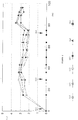
- Example 4.2 The protocol described in Example 4.2 was followed but the CPV was incubated with antiserum of the dogs (3025, 3029 and 3030) at different dilutions. After inoculating the samples on monolayers of CRFK cells and continuing the aforesaid protocol the results shown in figure 3 were obtained, from which it follows that the immunized dogs (3029 and 3030 ) produced neutralizing antibodies at levels similar to those obtained using complete virus as immunogen (approximately 1:1000). The sentry dog (3025 ) however never produced any neutralizing antibodies before the challenge.
- Group 1 (nos. 1-6) were vaccinated with 0.5 mg of the 1L15 peptide coupled to 0.5 mg of KLH plus 0.5 mg of the 7L15 peptide coupled to 0.5 mg of KLH, using 50 ⁇ g of ISCOM matrix as adjuvant, all in a final volume of 1 ml of PBS (pH: 7.2).
- Group 2 (nos. 7-12) only received 1 ml of PBS (pH: 7.2).
- Group 3 (nos. 13.18) received a conventional vaccine (BIOVACTM, United, DK) based upon inactivated virus which was administered following the manufacturer's recommendations.
- the minks all received a single subcutaneous vaccinal dose and were bled just before vaccination.
- the virus secreted by the sentry group was extracted from the positive fecal samples and underwent immunoelectron microscopy, and the presence of a large number of MEV particles was confirmed.
- the sera of the minks were all checked for their neutralizing activity on MEV cultivated in CRFK cells.
- the non-neutralized virus was detected by means of the immunoperoxidase technique using microtitre plates containing CRFK cells infected with 100 DICT50 (50% tissue culture infective dose) of MEV, infected for 4 days and fixed (M. Holm-Jensen, Acta Vet. Scand., 22 :85-98 (1981)). Incubation at 37°C for 1 h with an antibody linked to peroxidase and development followed. The titres obtained are shown in Table 4. The titre at the final point was stated as the highest inverse serum dilution neutralizing the virus infection on the monolayer of cells.
- New Zealand White rabbits were used for immunizations with peptides with a view to inducing neutralizing antibodies.
- the peptide-KLH conjugates corresponding to 1 mg of peptide in 1 ml of buffer (PBS) were mixed with an equal volume of Freund complete adjuvant (FCA) and intramuscularly and subcutaneously injected into rabbits.
- FCA Freund complete adjuvant
- the plates were stained using a monolayer immunoperoxidase assay, using a porcine anti-PPV serum, anti pig rabbit immunoglobin attached to peroxidase and blotting with amino-ethyl-carbazole, following conventional protocols (Holm-Jensen cited supra). The final point titre was stated as the highest inverse serum dilution neutralizing the virus infection on the mono layer of cells.
- Three PPV seronegative Göttingen mini-pigs were vaccinated with 1 mg of 5L16 peptide coupled to 1 mg of KLH each.
- the adjuvant used was ISCOM Matrix (500 ⁇ g) and the sample was taken to 2 ml with PBS.
- the pigs were vaccinated twice with an interval of three weeks.
- the serum samples were taken on days 0, 25 and 36.
- PPV virions were adsorbed to flat bottom polystyrene plates (Nunc). Seriated dilutions (2 factor) of the pig serum were then added to the plates and incubated at 37°C for 1 h. The plates were washed and pig anti rabbit-IgG serum conjugated to peroxidase was added. Incubation for 30 min at 37°C and OPD blotting followed.
- a Western Blot analysis was made to analyze reactivity and specificity, against the various protometers of the virus, of the sera originating in the three immunized mini-pigs.
- the procedure followed to check reactivity by Western Blot was similar to that used in Example 7.1, with slight modifications.
- the blocking buffer contained 1% casein instead of fetal calf serum and albumin.
- the conjugate used was pig anti-IgG rabbit serum labelled with peroxidase (Dako P164).
- Vaccines capable of protecting dogs, cats, minks and pigs respectively from CPV, FPLV, MEV and PPV infection containing one or more of the corresponding peptides provided by this invention coupled to a carrier protein or multimeric structure, or in the form of an immunogenic complex, or in the form of a recombinant immunogenic protein, with an immunologically acceptable diluent such as a physiological pH buffered saline solution, plus an adjuvant such as Alhydrogel in combination with QuilA (25 ⁇ g/animal) can be prepared.
- an immunologically acceptable diluent such as a physiological pH buffered saline solution
- an adjuvant such as Alhydrogel in combination with QuilA (25 ⁇ g/animal)
- a single injection can be sufficient to confer animals with protection from the disease though, in some cases, depending upon the assessment of the antibody titre, it could be useful to use a second booster dose.
Landscapes
- Chemical & Material Sciences (AREA)
- Organic Chemistry (AREA)
- Health & Medical Sciences (AREA)
- Life Sciences & Earth Sciences (AREA)
- Biophysics (AREA)
- Biochemistry (AREA)
- Gastroenterology & Hepatology (AREA)
- General Health & Medical Sciences (AREA)
- Genetics & Genomics (AREA)
- Medicinal Chemistry (AREA)
- Molecular Biology (AREA)
- Proteomics, Peptides & Aminoacids (AREA)
- Virology (AREA)
- Peptides Or Proteins (AREA)
- Medicines Containing Antibodies Or Antigens For Use As Internal Diagnostic Agents (AREA)
Applications Claiming Priority (5)
| Application Number | Priority Date | Filing Date | Title |
|---|---|---|---|
| ES9300117 | 1993-01-23 | ||
| ES9300117A ES2065254B1 (es) | 1993-01-23 | 1993-01-23 | Peptidos y vacunas sinteticas contra parvovirus canino y otros virus relacionados. |
| ES9400111 | 1994-01-20 | ||
| ES9400111A ES2089966B1 (es) | 1994-01-20 | 1994-01-20 | Peptidos y vacunas sinteticas contra parvovirus. |
| PCT/ES1994/000006 WO1994017098A1 (es) | 1993-01-23 | 1994-01-21 | Peptidos y vacunas sinteticos contra parvovirus |
Publications (2)
| Publication Number | Publication Date |
|---|---|
| EP0647655A1 true EP0647655A1 (de) | 1995-04-12 |
| EP0647655B1 EP0647655B1 (de) | 1998-12-23 |
Family
ID=26154691
Family Applications (1)
| Application Number | Title | Priority Date | Filing Date |
|---|---|---|---|
| EP94905108A Expired - Lifetime EP0647655B1 (de) | 1993-01-23 | 1994-01-21 | Synthetischen peptiden und impfstoffe gegen parvovirus |
Country Status (10)
| Country | Link |
|---|---|
| US (1) | US5785974A (de) |
| EP (1) | EP0647655B1 (de) |
| AT (1) | ATE174929T1 (de) |
| AU (1) | AU680264B2 (de) |
| CA (1) | CA2132742C (de) |
| DE (1) | DE69415462T2 (de) |
| DK (1) | DK0647655T3 (de) |
| GR (1) | GR3029727T3 (de) |
| NZ (1) | NZ259882A (de) |
| WO (1) | WO1994017098A1 (de) |
Cited By (3)
| Publication number | Priority date | Publication date | Assignee | Title |
|---|---|---|---|---|
| WO1997040163A1 (en) * | 1996-04-19 | 1997-10-30 | Metin Colpan | Nucleic acid vaccination for parvoviral infections |
| EP0554414B1 (de) * | 1991-03-26 | 1998-01-07 | Inmunologia Y Genetica Aplicada, S.A. | Verfahren zur herstellung von untereinheitsimpfstoff gegen hundeparvovirus und verwandten viren |
| US6238860B1 (en) | 1998-11-05 | 2001-05-29 | Dyax Corp. | Binding moieties for human parvovirus B19 |
Families Citing this family (10)
| Publication number | Priority date | Publication date | Assignee | Title |
|---|---|---|---|---|
| ES2109189B1 (es) * | 1996-03-14 | 1998-05-16 | Iberica Cyanamid | Vectores basados en genomas virales defectivos recombinantes y su empleo en la formulacion de vacunas. |
| DE69739233D1 (de) * | 1996-06-25 | 2009-03-12 | Pepscan Systems Bv | Ein durch labile bindung an einen träger gebundenes antigen enthaltender impstoff |
| US6914131B1 (en) * | 1998-10-09 | 2005-07-05 | Chiron S.R.L. | Neisserial antigens |
| GB9911683D0 (en) * | 1999-05-19 | 1999-07-21 | Chiron Spa | Antigenic peptides |
| PT2270030E (pt) * | 2000-02-28 | 2012-07-24 | Novartis Vaccines & Diagnostic | Expressão heteróloga de proteínas de neisseria |
| US6730306B1 (en) * | 2000-03-08 | 2004-05-04 | Large Scale Biology Corporation | Parvovirus vaccine as viral coat protein fusions |
| JPWO2017217460A1 (ja) * | 2016-06-15 | 2019-04-04 | 出光興産株式会社 | ペプチドリンカーで連結された2以上のタンパク質を含む融合タンパク質 |
| CN107827958B (zh) * | 2017-11-11 | 2020-08-25 | 中牧实业股份有限公司 | 犬细小病毒合成肽疫苗及其制备方法和应用 |
| CN116102660B (zh) * | 2022-09-19 | 2023-11-21 | 扬州优邦生物药品有限公司 | 一种猪细小病毒基因工程表位疫苗及其制备方法 |
| CN116334006B (zh) * | 2023-03-22 | 2025-08-22 | 山东农业大学 | 一种稳定分泌抗水貂阿留申病病毒单克隆抗体的杂交瘤细胞株及其应用 |
Family Cites Families (7)
| Publication number | Priority date | Publication date | Assignee | Title |
|---|---|---|---|---|
| EP0117767A1 (de) * | 1983-01-07 | 1984-09-05 | Mgi Pharma, Inc. | Herstellung von Untereinheiten von Parvovirus-Vakzinen |
| IL70704A0 (en) * | 1983-01-19 | 1984-04-30 | Amgen | Methods and materials for development of parvovirus vaccines |
| DE3939470A1 (de) * | 1989-11-29 | 1991-06-06 | Biochrom Beteiligungs Gmbh & C | Peptide und antikoerper gegen peptide, welche zur diagnose und zur verhuetung der b19-infektion verwendbar sind |
| DE4003826C2 (de) * | 1990-02-08 | 1995-11-23 | Mikrogen Molekularbiol Entw | Peptide der Kapsidproteine VP1 oder VP2 des Parvovirus B19 |
| ES2026826A6 (es) * | 1991-03-26 | 1992-05-01 | Ercros Sa | Procedimiento para la produccion de una vacuna subunidad contra el parvovirus canino y otros virus relacionados. |
| ES2026827A6 (es) * | 1991-03-26 | 1992-05-01 | Ercros Sa | Procedimiento para la produccion de una vacuna subunidad contra el parvovirus porcino. |
| WO1993001284A1 (en) * | 1991-07-09 | 1993-01-21 | Cornell Research Foundation, Inc. | Recombinant viral vaccine |
-
1994
- 1994-01-21 CA CA002132742A patent/CA2132742C/en not_active Expired - Lifetime
- 1994-01-21 US US08/307,724 patent/US5785974A/en not_active Expired - Lifetime
- 1994-01-21 DE DE69415462T patent/DE69415462T2/de not_active Expired - Lifetime
- 1994-01-21 NZ NZ259882A patent/NZ259882A/en not_active IP Right Cessation
- 1994-01-21 WO PCT/ES1994/000006 patent/WO1994017098A1/es not_active Ceased
- 1994-01-21 AU AU70048/94A patent/AU680264B2/en not_active Expired
- 1994-01-21 EP EP94905108A patent/EP0647655B1/de not_active Expired - Lifetime
- 1994-01-21 DK DK94905108T patent/DK0647655T3/da active
- 1994-01-21 AT AT94905108T patent/ATE174929T1/de active
-
1999
- 1999-03-18 GR GR990400812T patent/GR3029727T3/el unknown
Non-Patent Citations (1)
| Title |
|---|
| See references of WO9417098A1 * |
Cited By (7)
| Publication number | Priority date | Publication date | Assignee | Title |
|---|---|---|---|---|
| EP0554414B1 (de) * | 1991-03-26 | 1998-01-07 | Inmunologia Y Genetica Aplicada, S.A. | Verfahren zur herstellung von untereinheitsimpfstoff gegen hundeparvovirus und verwandten viren |
| WO1997040163A1 (en) * | 1996-04-19 | 1997-10-30 | Metin Colpan | Nucleic acid vaccination for parvoviral infections |
| AU726059B2 (en) * | 1996-04-19 | 2000-10-26 | Auburn University | Nucleic acid vaccination for parvoviral infections |
| US6465438B1 (en) | 1996-04-19 | 2002-10-15 | Metin Colpan | Nucleic acid vaccination for parvoviral infections |
| US6238860B1 (en) | 1998-11-05 | 2001-05-29 | Dyax Corp. | Binding moieties for human parvovirus B19 |
| US6291197B1 (en) | 1998-11-05 | 2001-09-18 | Dyax Corp. | Binding moieties for human parvovirus B19 |
| US6479641B2 (en) | 1998-11-05 | 2002-11-12 | Dyax Corp. | Binding moieties for human parvovirus B19 |
Also Published As
| Publication number | Publication date |
|---|---|
| ATE174929T1 (de) | 1999-01-15 |
| US5785974A (en) | 1998-07-28 |
| AU7004894A (en) | 1994-08-15 |
| NZ259882A (en) | 1997-03-24 |
| DE69415462T2 (de) | 1999-07-15 |
| AU680264B2 (en) | 1997-07-24 |
| WO1994017098A1 (es) | 1994-08-04 |
| DK0647655T3 (da) | 1999-08-23 |
| GR3029727T3 (en) | 1999-06-30 |
| DE69415462D1 (de) | 1999-02-04 |
| EP0647655B1 (de) | 1998-12-23 |
| CA2132742A1 (en) | 1994-07-24 |
| CA2132742C (en) | 2000-04-18 |
Similar Documents
| Publication | Publication Date | Title |
|---|---|---|
| US5882652A (en) | Empty canine parvovirus capsids having CPV recombinant VP2 and vaccines having such capsids | |
| CN116143938B (zh) | 一种covid-19亚单位疫苗及其制备方法与应用 | |
| US5605827A (en) | Infectious bursal disease virus VP2 fusion protein expressed by baculovirus | |
| EP2271663B1 (de) | Neues aviäres astrovirus | |
| US5597721A (en) | Preparation of antigens of and of vaccines for the virus of mystery disease, antigens and vaccines obtained for the prevention of this disease | |
| Langeveld et al. | Full protection in mink against mink enteritis virus with new generation canine parvovirus vaccines based on synthetic peptide or recombinant protein | |
| US5419907A (en) | Pathogenic porcine respiratory coronavirus | |
| EP0647655B1 (de) | Synthetischen peptiden und impfstoffe gegen parvovirus | |
| KR102336158B1 (ko) | 돼지유행성설사병바이러스 및 돼지로타바이러스에 대한 백신 조성물 | |
| US5352449A (en) | Vaccine comprising recombinant feline leukemia antigen and saponin adjuvant | |
| JPH03502687A (ja) | レスピラトリイ・シンシチアル・ウイルス:ワクチンおよび診断法 | |
| EP0551449A1 (de) | Verfahren zur herstellung von untereinheisimpfstoff gegen schweinparvovirus | |
| CN107337718A (zh) | 一种编码猪圆环病毒2型Cap蛋白的基因及其应用 | |
| WO2020238458A1 (zh) | 用于表达e2蛋白的细胞株及其应用,e2蛋白及其应用 | |
| Thouless et al. | Isolation of two lapine rotaviruses: characterization of their subgroup, serotype and RNA electropherotypes | |
| CN1264425A (zh) | 用于诊断和治疗的呼吸道合胞病毒表位和含有它们的抗体 | |
| CN110893234A (zh) | 一种犬瘟热、犬细小病毒病、狂犬病三联亚单位疫苗 | |
| CN121293299B (zh) | 猪瘟猪细小病毒二联亚单位疫苗及其制备方法 | |
| JPH05292976A (ja) | マレック病ウイルスワクチン | |
| EP0704528B1 (de) | Hämorrhagie-Virus aus Kaninchen (RHDV), rekombinante Hullen und dessen Proteine, Diagnosesätze und Impfstoffe die sie enthalten | |
| KR0179993B1 (ko) | 돼지 콜레라 비루스 백신 및 그의 진단방법 | |
| WO1984002847A1 (en) | Methods and materials for development of parvovirus vaccine | |
| AU2020103776A4 (en) | Koi herpesvirus (khv) orf-149-based carbon nanotube supported nucleic acid vaccine and application thereof | |
| Rao et al. | Antibody response to 146S particle, 12S protein subunit and isolated VP1 polypeptide of foot-and-mouth disease virus type Asia-1 | |
| Jackwood et al. | Enzyme-linked immunosorbent assay-based detection of antibodies to antigenic subtypes of infectious bursal disease viruses of chickens |
Legal Events
| Date | Code | Title | Description |
|---|---|---|---|
| PUAI | Public reference made under article 153(3) epc to a published international application that has entered the european phase |
Free format text: ORIGINAL CODE: 0009012 |
|
| 17P | Request for examination filed |
Effective date: 19950201 |
|
| AK | Designated contracting states |
Kind code of ref document: A1 Designated state(s): AT BE CH DE DK FR GB GR IE IT LI NL PT SE |
|
| 17Q | First examination report despatched |
Effective date: 19961204 |
|
| GRAG | Despatch of communication of intention to grant |
Free format text: ORIGINAL CODE: EPIDOS AGRA |
|
| GRAG | Despatch of communication of intention to grant |
Free format text: ORIGINAL CODE: EPIDOS AGRA |
|
| GRAH | Despatch of communication of intention to grant a patent |
Free format text: ORIGINAL CODE: EPIDOS IGRA |
|
| GRAH | Despatch of communication of intention to grant a patent |
Free format text: ORIGINAL CODE: EPIDOS IGRA |
|
| GRAA | (expected) grant |
Free format text: ORIGINAL CODE: 0009210 |
|
| AK | Designated contracting states |
Kind code of ref document: B1 Designated state(s): AT BE CH DE DK FR GB GR IE IT LI NL PT SE |
|
| REF | Corresponds to: |
Ref document number: 174929 Country of ref document: AT Date of ref document: 19990115 Kind code of ref document: T |
|
| REG | Reference to a national code |
Ref country code: CH Ref legal event code: EP |
|
| REF | Corresponds to: |
Ref document number: 69415462 Country of ref document: DE Date of ref document: 19990204 |
|
| REG | Reference to a national code |
Ref country code: IE Ref legal event code: FG4D |
|
| ITF | It: translation for a ep patent filed | ||
| ET | Fr: translation filed | ||
| REG | Reference to a national code |
Ref country code: CH Ref legal event code: NV Representative=s name: ISLER & PEDRAZZINI AG |
|
| REG | Reference to a national code |
Ref country code: PT Ref legal event code: SC4A Free format text: AVAILABILITY OF NATIONAL TRANSLATION Effective date: 19990319 |
|
| REG | Reference to a national code |
Ref country code: DK Ref legal event code: T3 |
|
| PLBE | No opposition filed within time limit |
Free format text: ORIGINAL CODE: 0009261 |
|
| STAA | Information on the status of an ep patent application or granted ep patent |
Free format text: STATUS: NO OPPOSITION FILED WITHIN TIME LIMIT |
|
| 26N | No opposition filed | ||
| REG | Reference to a national code |
Ref country code: GB Ref legal event code: IF02 |
|
| PG25 | Lapsed in a contracting state [announced via postgrant information from national office to epo] |
Ref country code: IT Free format text: LAPSE BECAUSE OF NON-PAYMENT OF DUE FEES;WARNING: LAPSES OF ITALIAN PATENTS WITH EFFECTIVE DATE BEFORE 2007 MAY HAVE OCCURRED AT ANY TIME BEFORE 2007. THE CORRECT EFFECTIVE DATE MAY BE DIFFERENT FROM THE ONE RECORDED. Effective date: 20050121 |
|
| REG | Reference to a national code |
Ref country code: CH Ref legal event code: PCAR Free format text: ISLER & PEDRAZZINI AG;POSTFACH 1772;8027 ZUERICH (CH) |
|
| PGRI | Patent reinstated in contracting state [announced from national office to epo] |
Ref country code: IT Effective date: 20080301 |
|
| PGFP | Annual fee paid to national office [announced via postgrant information from national office to epo] |
Ref country code: GR Payment date: 20100128 Year of fee payment: 17 |
|
| PG25 | Lapsed in a contracting state [announced via postgrant information from national office to epo] |
Ref country code: IT Free format text: LAPSE BECAUSE OF NON-PAYMENT OF DUE FEES Effective date: 20100121 |
|
| PGRI | Patent reinstated in contracting state [announced from national office to epo] |
Ref country code: IT Effective date: 20110616 |
|
| PG25 | Lapsed in a contracting state [announced via postgrant information from national office to epo] |
Ref country code: GR Free format text: LAPSE BECAUSE OF NON-PAYMENT OF DUE FEES Effective date: 20110802 |
|
| PGFP | Annual fee paid to national office [announced via postgrant information from national office to epo] |
Ref country code: IT Payment date: 20111104 Year of fee payment: 19 |
|
| PGFP | Annual fee paid to national office [announced via postgrant information from national office to epo] |
Ref country code: IE Payment date: 20121108 Year of fee payment: 20 |
|
| PGFP | Annual fee paid to national office [announced via postgrant information from national office to epo] |
Ref country code: BE Payment date: 20121128 Year of fee payment: 20 Ref country code: PT Payment date: 20121107 Year of fee payment: 20 |
|
| PGFP | Annual fee paid to national office [announced via postgrant information from national office to epo] |
Ref country code: FR Payment date: 20130213 Year of fee payment: 20 Ref country code: SE Payment date: 20130114 Year of fee payment: 20 Ref country code: DK Payment date: 20130124 Year of fee payment: 20 Ref country code: GB Payment date: 20130130 Year of fee payment: 20 Ref country code: CH Payment date: 20130114 Year of fee payment: 20 |
|
| PGFP | Annual fee paid to national office [announced via postgrant information from national office to epo] |
Ref country code: NL Payment date: 20130125 Year of fee payment: 20 |
|
| PGFP | Annual fee paid to national office [announced via postgrant information from national office to epo] |
Ref country code: AT Payment date: 20130124 Year of fee payment: 20 |
|
| PGFP | Annual fee paid to national office [announced via postgrant information from national office to epo] |
Ref country code: DE Payment date: 20130327 Year of fee payment: 20 |
|
| REG | Reference to a national code |
Ref country code: DE Ref legal event code: R071 Ref document number: 69415462 Country of ref document: DE |
|
| REG | Reference to a national code |
Ref country code: DE Ref legal event code: R071 Ref document number: 69415462 Country of ref document: DE |
|
| REG | Reference to a national code |
Ref country code: DK Ref legal event code: EUP Effective date: 20140121 |
|
| REG | Reference to a national code |
Ref country code: NL Ref legal event code: V4 Effective date: 20140121 Ref country code: PT Ref legal event code: MM4A Free format text: MAXIMUM VALIDITY LIMIT REACHED Effective date: 20140121 |
|
| BE20 | Be: patent expired |
Owner name: S.A. *INMUNOLOGIA Y GENETICA APLICADA Effective date: 20140121 |
|
| REG | Reference to a national code |
Ref country code: CH Ref legal event code: PL |
|
| REG | Reference to a national code |
Ref country code: NL Ref legal event code: V4 Effective date: 20140121 |
|
| REG | Reference to a national code |
Ref country code: GB Ref legal event code: PE20 Expiry date: 20140120 |
|
| REG | Reference to a national code |
Ref country code: IE Ref legal event code: MK9A |
|
| REG | Reference to a national code |
Ref country code: SE Ref legal event code: EUG |
|
| REG | Reference to a national code |
Ref country code: AT Ref legal event code: MK07 Ref document number: 174929 Country of ref document: AT Kind code of ref document: T Effective date: 20140121 |
|
| PG25 | Lapsed in a contracting state [announced via postgrant information from national office to epo] |
Ref country code: DE Free format text: LAPSE BECAUSE OF EXPIRATION OF PROTECTION Effective date: 20140122 Ref country code: IE Free format text: LAPSE BECAUSE OF EXPIRATION OF PROTECTION Effective date: 20140121 Ref country code: GB Free format text: LAPSE BECAUSE OF EXPIRATION OF PROTECTION Effective date: 20140120 |
|
| PG25 | Lapsed in a contracting state [announced via postgrant information from national office to epo] |
Ref country code: PT Free format text: LAPSE BECAUSE OF EXPIRATION OF PROTECTION Effective date: 20140129 |