EP0650044A2 - Verfahren zur Chemilumineszenzanalyse - Google Patents
Verfahren zur Chemilumineszenzanalyse Download PDFInfo
- Publication number
- EP0650044A2 EP0650044A2 EP93116471A EP93116471A EP0650044A2 EP 0650044 A2 EP0650044 A2 EP 0650044A2 EP 93116471 A EP93116471 A EP 93116471A EP 93116471 A EP93116471 A EP 93116471A EP 0650044 A2 EP0650044 A2 EP 0650044A2
- Authority
- EP
- European Patent Office
- Prior art keywords
- target
- skim milk
- aqueous solvent
- solution
- hydrogen peroxide
- Prior art date
- Legal status (The legal status is an assumption and is not a legal conclusion. Google has not performed a legal analysis and makes no representation as to the accuracy of the status listed.)
- Withdrawn
Links
Images


Classifications
-
- C—CHEMISTRY; METALLURGY
- C12—BIOCHEMISTRY; BEER; SPIRITS; WINE; VINEGAR; MICROBIOLOGY; ENZYMOLOGY; MUTATION OR GENETIC ENGINEERING
- C12Q—MEASURING OR TESTING PROCESSES INVOLVING ENZYMES, NUCLEIC ACIDS OR MICROORGANISMS; COMPOSITIONS OR TEST PAPERS THEREFOR; PROCESSES OF PREPARING SUCH COMPOSITIONS; CONDITION-RESPONSIVE CONTROL IN MICROBIOLOGICAL OR ENZYMOLOGICAL PROCESSES
- C12Q1/00—Measuring or testing processes involving enzymes, nucleic acids or microorganisms; Compositions therefor; Processes of preparing such compositions
- C12Q1/26—Measuring or testing processes involving enzymes, nucleic acids or microorganisms; Compositions therefor; Processes of preparing such compositions involving oxidoreductase
- C12Q1/28—Measuring or testing processes involving enzymes, nucleic acids or microorganisms; Compositions therefor; Processes of preparing such compositions involving oxidoreductase involving peroxidase
-
- G—PHYSICS
- G01—MEASURING; TESTING
- G01N—INVESTIGATING OR ANALYSING MATERIALS BY DETERMINING THEIR CHEMICAL OR PHYSICAL PROPERTIES
- G01N33/00—Investigating or analysing materials by specific methods not covered by groups G01N1/00 - G01N31/00
- G01N33/48—Biological material, e.g. blood, urine; Haemocytometers
- G01N33/50—Chemical analysis of biological material, e.g. blood, urine; Testing involving biospecific ligand binding methods; Immunological testing
- G01N33/58—Chemical analysis of biological material, e.g. blood, urine; Testing involving biospecific ligand binding methods; Immunological testing involving labelled substances
- G01N33/581—Chemical analysis of biological material, e.g. blood, urine; Testing involving biospecific ligand binding methods; Immunological testing involving labelled substances with enzyme label (including co-enzymes, co-factors, enzyme inhibitors or substrates)
-
- Y—GENERAL TAGGING OF NEW TECHNOLOGICAL DEVELOPMENTS; GENERAL TAGGING OF CROSS-SECTIONAL TECHNOLOGIES SPANNING OVER SEVERAL SECTIONS OF THE IPC; TECHNICAL SUBJECTS COVERED BY FORMER USPC CROSS-REFERENCE ART COLLECTIONS [XRACs] AND DIGESTS
- Y10—TECHNICAL SUBJECTS COVERED BY FORMER USPC
- Y10S—TECHNICAL SUBJECTS COVERED BY FORMER USPC CROSS-REFERENCE ART COLLECTIONS [XRACs] AND DIGESTS
- Y10S435/00—Chemistry: molecular biology and microbiology
- Y10S435/962—Prevention or removal of interfering materials or reactants or other treatment to enhance results, e.g. determining or preventing nonspecific binding
-
- Y—GENERAL TAGGING OF NEW TECHNOLOGICAL DEVELOPMENTS; GENERAL TAGGING OF CROSS-SECTIONAL TECHNOLOGIES SPANNING OVER SEVERAL SECTIONS OF THE IPC; TECHNICAL SUBJECTS COVERED BY FORMER USPC CROSS-REFERENCE ART COLLECTIONS [XRACs] AND DIGESTS
- Y10—TECHNICAL SUBJECTS COVERED BY FORMER USPC
- Y10S—TECHNICAL SUBJECTS COVERED BY FORMER USPC CROSS-REFERENCE ART COLLECTIONS [XRACs] AND DIGESTS
- Y10S436/00—Chemistry: analytical and immunological testing
- Y10S436/825—Pretreatment for removal of interfering factors from sample
-
- Y—GENERAL TAGGING OF NEW TECHNOLOGICAL DEVELOPMENTS; GENERAL TAGGING OF CROSS-SECTIONAL TECHNOLOGIES SPANNING OVER SEVERAL SECTIONS OF THE IPC; TECHNICAL SUBJECTS COVERED BY FORMER USPC CROSS-REFERENCE ART COLLECTIONS [XRACs] AND DIGESTS
- Y10—TECHNICAL SUBJECTS COVERED BY FORMER USPC
- Y10S—TECHNICAL SUBJECTS COVERED BY FORMER USPC CROSS-REFERENCE ART COLLECTIONS [XRACs] AND DIGESTS
- Y10S436/00—Chemistry: analytical and immunological testing
- Y10S436/826—Additives, e.g. buffers, diluents, preservatives
Definitions
- This invention relates to a chemiluminescent analytical method, and more specifically to a method for improving the performance of chemiluminescent analysis in which a peroxidase is used as a labelling substance.
- a target to be analyzed e.g., a substance to be measured
- a target specific binding reagent such as an antibody capable of specifically bonding to the substance - said binding reagent being often labelled in advance with an enzyme such as a peroxidase - with a test sample and then to detect and measure signals produced by the catalytic action of the enzyme, e.g., a peroxidase as a labelling substance.
- This method is generally called "enzyme immunoassay”.
- This enzyme immunoassay is known to include a variety of improved or modified techniques, such as the single antibody technique, the double antibody technique, the sandwich technique, the homogeneous technique and the heterogeneous technique.
- chemiluminescence of luminol/hydrogen peroxide catalyzed by the peroxidase is measured.
- a compound which can enhance the chemiluminescent reaction is frequently used as an enhancer (Method in Enzymology, 133 , 331-353 (1986); U.S. Patent No. 5,106,732).
- the target of the analysis is an ultratrace substance or the like in a living body, it is still desired to develop a method having still higher sensitivity.
- An object of the present invention is therefore to provide a high-sensitivity chemiluminescent analytical method.
- chemiluminescent analysis in which a target labelled with a peroxidase via a target specific binding reagent is reacted with luminol, hydrogen peroxide and an enhancer in an aqueous solvent and the luminescence is detected and measured, the present inventors have proceeded with an investigation in various ways to develop a method for lowering a non-specific chemiluminescent reaction, namely, the reagent blank [which hereinafter may also be called “noise (N)”] and/or to enhance a specific chemiluminescent reaction [which hereinafter may also be called “signal (S)”] so that the S/N ratio (the ration of signal to noise) can be improved.
- the reagent blank which hereinafter may also be called “noise (N)”
- S signal
- inclusion of at least one protein selected from skim milk and egg albumin in the aqueous solvent can substantially improve the S/N ratio and this effect can be synergistically or additionally enhanced by additional inclusion of a non-ionic surfactant and/or a sugar alcohol in combination of such a protein, leading to the completion of the present invention.
- a chemiluminescent analytical method of a target comprises bonding a peroxidase as a labelling substance to the target by using a target specific binding reagent, isolating the target so labelled, reacting the labelled target with luminol, hydrogen peroxide and an enhancer in an aqueous solvent, and detecting and measuring the luminescence.
- the aqueous solvent comprises at least one protein selected from the group consisting of skim milk and egg albumin.
- the aqueous solvent further comprises a non-ionic surfactant such as a polyoxyethylene ether and/or a sugar alcohol such as mannitol.
- a non-ionic surfactant such as a polyoxyethylene ether and/or a sugar alcohol such as mannitol.
- the aqueous solvent can preferably contain the protein at a concentration sufficient to provide an improved S/N ratio, for example, at a concentration of 0.01 wt.% to 1.0 wt.%.
- the use of the peroxidase as a labelling substance in chemiluminescent analysis has made it possible to reduce non-specific luminescent reactions, that is, the reagent blank (noise) and to enhance a specific chemiluminescent reaction, that is, the signal, so that the S/N ratio (the ratio of the signal to the noise) has been increased. Further, the storage stability of the solution has also been improved. Accordingly, the reliability of measurement data has been improved.
- the present invention can be applied to any chemiluminescent analytical method without any particular limitation as long as a peroxidase is bound as a labelling substance to a target by using a target specific binding reagent, the peroxidase-bound target is isolated and reacted with luminol, hydrogen peroxide and an enhancer in an aqueous solvent and the luminescence is then detected and measured.
- target specific binding reagent means a substance which can specifically bond to a target to be analyzed (for example, a physiologically active peptide, a hormone, a nucleic acid or the like).
- a target to be analyzed is capable of acting as an antigen
- an antibody polyclonal antibody, monoclonal antibody, an antibody fragment or the like
- the target to be analyzed is a nucleic acid
- its complementary (single-strand) nucleic acid or nucleic acid fragment can be a target specific binding reagent.
- These analytical techniques are generally classified further under the names of single-antibody immunoassay, double-antibody immunoassay, sandwich technique, western technique, DNA probe technique, etc.
- the present invention can be applied most preferably to the sandwich technique which uses a solid-phase carrier.
- the skim milk usable in the present invention is milk from which the fat has been eliminated. It is also called “skimmed powder milk”, “skim milk” or “non-fat milk”, Commercial skim milk products can be used in general. Commercial skim milk products include, for example, "MILK DILUENT/BLOCKING SOLUTION” (product of KPL Corp.; Code No.: 50-92-01), "Block Ace” (trade mark, product of Dainippon Pharmaceutical Co., Ltd.; Code No.: UK-B25), and "Block Ace Power” (trade mark, product of Dainippon Pharmaceutical Co., Ltd.; Code No. UK-B80).
- Egg albumin usable in this invention is a protein which has been isolated from egg white and has a molecular weight of 45,000 and an isoelectric point of 4.6.
- Commercial products can also be used ordinarily.
- Illustrative commercial products include "Albumin, egg white, 5-fold crystallization product” (product of Seikagaku Kogyo Co., Ltd., Code Number: 250440), “Ovalbumin” (product of Taiyo Kagaku Co., Ltd., Code Number: 300-00711), “Albumin, produced from eggs” (product of Wako Pure Chemical Industries, Ltd.) and “Albumin chicken egg” (product of Sigma Chemical Co., Code Number: A7641).
- Such skim milk or egg albumin is used at least at such a concentration that can improve the S/N ratio.
- their concentrations are both 0.01-0.5 wt.%, preferably 0.02-0.2 wt.% in terms of their final concentrations in the reaction mixture. Concentrations lower than 0.01 wt.% are too low to effectively improve the S/N ratio while concentrations higher than 0.5 wt.% suppress the specific luminescent reaction. Concentrations outside the above range are therefore not preferred.
- non-ionic surfactants usable in the present invention include acylsorbitan, polyoxyethylene ethers, and polyoxyethylene sorbitan esters.
- Usable commercial products include, for example, "Span 20" (sorbitan monolaurate), “Span 40” (sorbitan monopalmitate), “Span 60” (sorbitan monostearate), “Span 80” (sorbitan monooleate), “Span 85” (sorbitan trioleate), “Tween 20” (polyoxyethylene sorbitan monolaurate), “Tween 40” (polyoxyethylene sorbitan monopalmitate), “Tween 60” (polyoxyethylene sorbitan monostearate), “Tween 80” (polyoxyethylene sorbitan monooleate), “Tween 85” (polyoxyethylene sorbitan trioleate), “Brij 35” (polyoxyethylene lauryl ether) and “Brij 58" (polyoxyethylene cetyl ether), all products of Atlas Powder
- the non-ionic surfactant is added at least at such a concentration that can improve the S/N ratio.
- its concentration is in a range of 0.001-2.0%, more preferably in a range of 0.01-0.5% in terms of its final concentration in the reaction mixture. Neither concentrations lower than 0.001% nor those greater than 2% are significantly effective in improving the S/N ratio.
- sugar alcohols usable in the present invention include sugar alcohols containing 6 to 3 carbon atoms, such as mannitol, sorbitol, galactitol, ribitol, arabitol, erythritol and glycerin. They are added at least at such a concentration that can improve the S/N ratio. In general, their concentration is in a range of 0.01-10%, preferably in a range of 0.25-2.0% in terms of their final concentration in the reaction mixture. Concentrations lower than 0.01% are too low to significantly improve the S/N ratio, while concentrations greater than 10% suppress the specific luminescent reaction. Concentrations outside the above range are therefore not preferred.
- the aqueous solvent employed as a medium for the fluorescent reaction is generally water or a buffer.
- Illustrative buffers include various buffers commonly employed in biochemical experiments, such as phosphate buffer, borate buffer and Good's buffer. These buffers generally have a pH in a range of 5-12, preferably in a range of 7-11. pH values lower than 5 are outside the optimal pH range for the peroxidase, so that the luminescence becomes lower. pH values higher than 12, on the other hand, result in stronger luminescence which does not rely upon the activity of the peroxidase (i.e., noise).
- the peroxidase used as a labelling substance is preferably a basic isozyme of horseradish.
- Known basic isozymes of horseradish include Forms B, C, D and E. Of these, Form C is particularly preferred.
- the target specific binding reagent is directly bonded together by the maleimide-hinge technique, the succinimide technique or the like where the target specific binding reagent is an antibody.
- the target specific binding reagent is provided with a chemical group such as a biotinyl group or the like, followed by the reaction with a peroxidase containing a chemical group reactive with the former chemical group, such as an avidin residue so that the target specific binding reagent is indirectly labelled.
- a reagent-grade commercial product which is readily available is used after repeating recrystallization and purifying it, because such a commercial product often contains hydrazine and sulfide ions employed as raw materials.
- any enhancer can be used insofar as it can facilitate electron transfer from hydrogen peroxide to luminol and can exhibit enhancing action.
- enhancers include 4-iodophenol, 4-bromophenol, 4-chlorophenol, 4-phenylphenol, 2-chloro-4-phenylphenol, 4-(2'-thienyl)phenol, 6-hydroxybenzothiazole, 4-[4'-(2'-methyl)thiazolyl]phenol, 4-[2'-(4'-methyl)thiazolyl]phenol, 4-(2'-benzothiazolyl)phenyl, and 3-(10-phenothiazyl)-n-propylsulfonates.
- the enhancer forms enhancer radicals. These radicals then react with luminol so that light is emitted.
- skim milk has the characteristic feature that it is effective in substantially reducing the noise level.
- Egg albumin has the characteristic feature that it does not substantially affect the signal level but it is effective in reducing the noise level, stably maintaining the resulting luminescence and also enhancing the storage stability of a luminescent substrate sample solution.
- the non-ionic surfactant has the characteristic feature that it does not substantially affect the noise level but is effective in increasing the signal level.
- the sugar alcohol does not substantially affect the signal level but is effective in reducing the noise level.
- the borate buffer 50 mM sodium borate buffer of pH 10.0 (hereinafter simply called “the borate buffer") and 100 ⁇ l portions of the borate buffer, said buffer portions containing skim milk, egg albumin, the proteolysate, the sugar alcohols and the non-ionic surfactants at the corresponding final concentrations shown in Table 1, were placed respectively.
- Each well was added with 8 ⁇ l of a 2 mM solution of 4-[4'-(2'-methyl)thiazolyl]phenol in dimethyl sulfoxide, 50 ⁇ l of a 4 mM solution of hydrogen peroxide in the borate buffer and 50 ⁇ l of a 20 mM luminol solution, followed by stirring and mixing.
- the chemiluminescence (unit: lumicount) of each well was periodically measured for 20 minutes by a chemiluminescence meter ("MLR-100", trade name; manufactured by Corona Electric Co., Ltd.)
- a 100 ⁇ l portion of the borate buffer containing 0.10% (final concentration: 0.05%) or 0.2% (final concentration: 0.1%) of skim milk, egg albumin or the proteolysate shown in Table 3.
- Each well was added with 8 ⁇ l of a 2 mM solution of 4-[4'-(2'-methyl)thiazolyl]phenol in dimethyl sulfoxide, 50 ⁇ l of a 4 mM solution of hydrogen peroxide in the borate buffer, said 4 mM solution containing 1.0% of mannitol, and 50 ⁇ l of a 20 mM luminol solution.
- both skim milk and egg albumin also lowered the reagent blank further.
- Table 5 presents the reagent blanks (noise levels), signal levels and S/N ratios measured upon an elapsed reaction time of 10 minutes.
- FIG. 1 diagrammatically illustrates the time-dependent variations in signal level when the respective non-ionic surfactants were contained (at the final concentration of 0.05%) and were not contained (controls). Incidentally, each reagent blank remained substantially constant during the reaction for 20 minutes.
- Table 6 presents the reagent blanks (noise levels), signal levels and S/N ratios measured upon an elapsed reaction time of 10 minutes. Further, FIG. 2 diagrammatically illustrates the time-dependent variations in signal level at that time. Incidentally, each reagent blank remained substantially constant during the reaction for 20 minutes.
- the egg-albumin-containing hydrogen peroxide solution was prepared by diluting mannitol, egg albumin, Tween 20 and hydrogen peroxide with the borate buffer as needed so that they were contained at concentrations 1%, 0.15%, 0.1% and 4 mM, respectively.
- the skim-milk-containing hydrogen peroxide sample solution was prepared by diluting mannitol, skim milk, Tween 20 and hydrogen peroxide with the borate buffer as needed so that they were contained at concentrations of 1%, 0.075%, 0.1% and 4 mM, respectively.
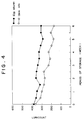
- Both the hydrogen peroxide solutions were stored at 37°C. Predetermined amounts were periodically sampled out from them. Those samples were each subjected to chemiluminescent reaction, whereby its luminescence was measured.
- the chemiluminescent reaction of each of the hydrogen peroxide sample solutions was conducted by diluting 100,000-fold the antiendothelin-1 monoclonal antibody, which had been labelled with the horseradish peroxidase, with the borate, said borate containing 0.075% of egg albumin (product of Seikagaku Kogyo Co., Ltd.), placing a 100 ⁇ l portion of the resulting solution in each well of a black-colored module-typed microtiter plate (manufactured by Dynatec, Inc.), adding 8 ⁇ l of a 2 mM solution of 4-[4'-(2'-methyl)thiazolyl]phenol in dimethyl sulfoxide, 50 ⁇ l of the hydrogen peroxide sample solution and 50 ⁇ l of a 20 mM luminol solution successively in this order, and then mixing the contents.
- FIG. 4 Using a chemiluminescence meter, luminescence was measured and the luminescence measured upon an elapsed time of 9 minutes was recorded as a measurement value (FIG. 4). It is understood from FIG. 4 that egg albumin is more effective for the storage stability of a hydrogen peroxide solution than skim milk.
- Endothelin-1 (hereinafter abbreviated as "ET-1". product of Peptide Institute, Inc.; code number: 4198-s) was diluted as a standard with the calcium-free Dulbecco's phosphate-buffered physiological saline containing 0.1% of Tween 20 and 0.1% of skim milk (hereinafter called “the diluting buffer”), whereby standard endothelin-1 solutions whose concentrations were 2, 5, 10, 20 and 40 pg/ml, respectively, were prepared.
- the diluting buffer calcium-free Dulbecco's phosphate-buffered physiological saline containing 0.1% of Tween 20 and 0.1% of skim milk
- An antiendothelin antibody (product of Immunobiological Laboratories Co., Ltd.; antiendothelin15 ⁇ 21 specific antibody; code number: 16155) was diluted beforehand to a concentration of 5 ⁇ g/ml with a 50 mM sodium phosphate buffer (pH 7.0). The solution so diluted was poured in 200 ⁇ l portions in the individual wells of a black-colored, module-typed microtiter plate (manufactured by Nunc, Inc.; code number: 475515). The diluted solution was allowed to stand overnight at 4°C so that the antibody was adsorbed on the walls of the individual wells of the plate.
- washing buffer calcium-free Dulbecco's phosphate-buffered physiological saline containing 0.1% of Tween 20
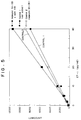
- each well was added with 100 ⁇ l of a 50 mM (pH 10) sodium borate buffer, which contained a 2 mM hydrogen peroxide containing 0.1% of Adekatol SO-135 and 0.1% of skim milk and will hereinafter called “the luminescent substrate solution A", and then with 100 ⁇ l of a 1:1 (by volume) liquid mixture of a 20 mM luminol solution and a 50 mM (pH 10) sodium borate buffer which contained a 0.32 mM 4-[4'-(2'-methyl)thiazolyl]phenol solution and will hereinafter called "the luminescent substrate solution B".
- FIG. 5 also shows calibration curves obtained in a similar manner by using, as the luminescent substrate solution A, a 50 mM (pH 10) sodium borate buffer containing a 2 mM hydrogen peroxide solution which contained neither Adekatol SO-135 nor skim milk (Control 1) and a 50 mM (pH 10) sodium borate buffer containing a 2 mM hydrogen peroxide solution which contained 0.1% of Adekatol SO-135 (Control 2), respectively.
- a 50 mM (pH 10) sodium borate buffer containing a 2 mM hydrogen peroxide solution which contained neither Adekatol SO-135 nor skim milk Control 1
- a 50 mM (pH 10) sodium borate buffer containing a 2 mM hydrogen peroxide solution which contained 0.1% of Adekatol SO-135
- Endothelin-1 (product of Peptide Institute, Inc.; code number: 4198-s) as a standard was diluted with plasma which was free of endothelin-1, thereby preparing standard endothelin-1 solutions whose concentrations were 2, 5, 10, 20 and 40 pg/ml, respectively.
Landscapes
- Life Sciences & Earth Sciences (AREA)
- Chemical & Material Sciences (AREA)
- Health & Medical Sciences (AREA)
- Engineering & Computer Science (AREA)
- Organic Chemistry (AREA)
- Molecular Biology (AREA)
- Immunology (AREA)
- Zoology (AREA)
- General Health & Medical Sciences (AREA)
- Proteomics, Peptides & Aminoacids (AREA)
- Microbiology (AREA)
- Urology & Nephrology (AREA)
- Analytical Chemistry (AREA)
- Wood Science & Technology (AREA)
- Physics & Mathematics (AREA)
- Biochemistry (AREA)
- Hematology (AREA)
- Biomedical Technology (AREA)
- Biotechnology (AREA)
- Genetics & Genomics (AREA)
- General Engineering & Computer Science (AREA)
- Cell Biology (AREA)
- Bioinformatics & Cheminformatics (AREA)
- Biophysics (AREA)
- Food Science & Technology (AREA)
- Medicinal Chemistry (AREA)
- General Physics & Mathematics (AREA)
- Pathology (AREA)
- Investigating Or Analysing Materials By The Use Of Chemical Reactions (AREA)
Applications Claiming Priority (2)
| Application Number | Priority Date | Filing Date | Title |
|---|---|---|---|
| JP7605493A JPH0622795A (ja) | 1992-04-14 | 1993-04-02 | 標識物としてパーオキシダーゼを用いる化学発光分析の性能を改善する方法 |
| JP76054/93 | 1993-04-02 |
Publications (2)
| Publication Number | Publication Date |
|---|---|
| EP0650044A2 true EP0650044A2 (de) | 1995-04-26 |
| EP0650044A3 EP0650044A3 (de) | 1996-06-19 |
Family
ID=13594071
Family Applications (1)
| Application Number | Title | Priority Date | Filing Date |
|---|---|---|---|
| EP93116471A Withdrawn EP0650044A3 (de) | 1993-04-02 | 1993-10-12 | Verfahren zur Chemilumineszenzanalyse. |
Country Status (2)
| Country | Link |
|---|---|
| US (1) | US5679536A (de) |
| EP (1) | EP0650044A3 (de) |
Cited By (3)
| Publication number | Priority date | Publication date | Assignee | Title |
|---|---|---|---|---|
| EP0745684A1 (de) * | 1995-05-31 | 1996-12-04 | Kyowa Medex Co., Ltd. | Verfahren zur quantitativen Bestimmung von Peroxide, ein peroxidations-aktiver Wirkstoff oder ein pyrazolopyridopyridazine Derivat |
| WO2000005580A3 (en) * | 1998-07-24 | 2000-08-24 | Akzo Nobel Nv | Method of determining the carry-over of an analyte |
| CN101395464B (zh) * | 2006-01-06 | 2011-08-24 | 株式会社乐美加 | 残留洗涤剂的检测方法及残留洗涤剂检测用具 |
Families Citing this family (9)
| Publication number | Priority date | Publication date | Assignee | Title |
|---|---|---|---|---|
| US6083581A (en) * | 1997-11-12 | 2000-07-04 | Viskase Corporation | Cellulase resistant cellulose casing and process |
| US6740497B2 (en) * | 1998-03-06 | 2004-05-25 | The Regents Of The University Of California | Method and apparatus for detecting cancerous cells using molecules that change electrophoretic mobility |
| US6156576A (en) * | 1998-03-06 | 2000-12-05 | The Regents Of The University Of California | Fast controllable laser lysis of cells for analysis |
| US6335201B1 (en) * | 1998-03-06 | 2002-01-01 | The Regents Of The University Of California | Method and apparatus for detecting enzymatic activity using molecules that change electrophoretic mobility |
| RU2217465C1 (ru) * | 2002-09-26 | 2003-11-27 | Диашев Алексей Николаевич | Хемилюминесцентная композиция |
| WO2007064030A1 (en) * | 2005-12-01 | 2007-06-07 | Canon Kabushiki Kaisha | Method and device for detecting target substance using probe carrier |
| IT1392250B1 (it) * | 2008-12-02 | 2012-02-22 | Univ Degli Studi Torino | Procedimento e kit per la rivelazione di sangue umano o animale su una superficie. |
| CN111089859A (zh) * | 2018-10-23 | 2020-05-01 | 北京中医药大学 | 新型三磷酸腺苷生物发光测定方法及其用途 |
| CN112326636A (zh) * | 2020-10-26 | 2021-02-05 | 通山县金瑞生物科技研发中心 | 一种高灵敏度的ecl试剂盒及其制备方法 |
Family Cites Families (12)
| Publication number | Priority date | Publication date | Assignee | Title |
|---|---|---|---|---|
| SE7811630L (sv) * | 1977-11-17 | 1979-05-18 | Welsh Nat School Med | Metod for uppteckt eller mengdbestemning av substanser med anvendning av merkningsteknik |
| US4713324A (en) * | 1983-09-01 | 1987-12-15 | Technicon Instruments Corporation | Inverted latency specific binding assay |
| JPH0731904B2 (ja) * | 1986-08-21 | 1995-04-10 | 株式会社東芝 | デイスク記録再生装置 |
| US4810630A (en) * | 1987-03-30 | 1989-03-07 | E. I. Du Pont De Nemours And Company | Use of polyoxyethylene ethers to improve the performance of immunoassays employing peroxidase conjugates |
| DE3726634A1 (de) * | 1987-08-11 | 1989-02-23 | Biotest Ag | Stabilisiertes peroxidasepraeparat |
| DE68916822T2 (de) * | 1988-02-26 | 1994-11-10 | Snow Brand Milk Prod Co Ltd | Agens zur Hemmung von nichtspezifischer Adsorption, Verfahren zu seiner Herstellung und Verfahren zur Hemmung von nichtspezifischer Adsorption. |
| JPH01289495A (ja) * | 1988-05-13 | 1989-11-21 | Konica Corp | アルコール分析素子 |
| DE68911633T2 (de) * | 1988-09-30 | 1994-04-07 | Fujirebio Kk | Verfahren zur Bestimmung von Peroxidase-Aktivität unter Verwendung von Chemilumineszenz. |
| CA2009925C (en) * | 1989-02-14 | 2002-10-01 | Koichi Kondo | Method for enhancement of chemiluminescence |
| GB2233451B (en) * | 1989-06-27 | 1993-09-15 | Tropix Inc | Chemiluminescence enhancement |
| CA2077906A1 (en) * | 1991-01-10 | 1992-07-11 | Kimihiko Matsuzawa | Method for measurement of tissue factor in high sensitivity and measurement kit therefor |
| US5248595A (en) * | 1991-10-08 | 1993-09-28 | Eastman Kodak Company | Wash composition, test kit and method for determination of microorganisms associated with periodontal diseases |
-
1993
- 1993-10-12 EP EP93116471A patent/EP0650044A3/de not_active Withdrawn
-
1995
- 1995-07-19 US US08/504,036 patent/US5679536A/en not_active Expired - Fee Related
Cited By (4)
| Publication number | Priority date | Publication date | Assignee | Title |
|---|---|---|---|---|
| EP0745684A1 (de) * | 1995-05-31 | 1996-12-04 | Kyowa Medex Co., Ltd. | Verfahren zur quantitativen Bestimmung von Peroxide, ein peroxidations-aktiver Wirkstoff oder ein pyrazolopyridopyridazine Derivat |
| US5801008A (en) * | 1995-05-31 | 1998-09-01 | Kyowa Medex Co., Ltd. | Method of quantitative determination of peroxide, a peroxidation-active substance or a pyrazolopyridopyridazine derivative |
| WO2000005580A3 (en) * | 1998-07-24 | 2000-08-24 | Akzo Nobel Nv | Method of determining the carry-over of an analyte |
| CN101395464B (zh) * | 2006-01-06 | 2011-08-24 | 株式会社乐美加 | 残留洗涤剂的检测方法及残留洗涤剂检测用具 |
Also Published As
| Publication number | Publication date |
|---|---|
| EP0650044A3 (de) | 1996-06-19 |
| US5679536A (en) | 1997-10-21 |
Similar Documents
| Publication | Publication Date | Title |
|---|---|---|
| US5679536A (en) | Chemiluminescent analytical method | |
| EP0892927B1 (de) | Ein-schritt trockenreagenz-immunoasssay | |
| US5171668A (en) | Method of the chemiluminescence assay of the activity of peroxidase | |
| EP0505198B1 (de) | Verfahren zum Steigern einer Lumineszenzreaktion, Luminometrischer Test und Testsätze zur Verwendung in demselben | |
| US5043266A (en) | Ortho- and para-imidazolyl and benzimidazolyl substituted phenol as enhancers for diagnostic chemiluminescent assays | |
| CA1201369A (en) | Catalyzed colorimetric and fluorometric substrates for peroxidase enzyme determinations | |
| CN110618263B (zh) | 一种c反应蛋白全程检测的方法以及相应的试剂盒 | |
| WO1980000455A1 (en) | Colorimetric immunoassay employing a chromoprotein label | |
| Iwata et al. | Stable and general-purpose chemiluminescent detection system for horseradish peroxidase employing a thiazole compound enhancer and some additives | |
| JPH066074B2 (ja) | ルミノ−ルまたは7−ジアルキルアミノナフタリン−1,2−ジカルボン酸−ヒドラジドの酸化の際の量子収率を高める方法及びペルオキシダ−ゼ測定用試薬 | |
| EP0754761B1 (de) | Verfahren zur Chemilumineszenzanalyse | |
| Waldrop III et al. | Chemiluminescent determination of hydrogen peroxide with 9‐acridinecarbonylimidazole and use in measurement of glucose oxidase and alkaline phosphatase activity | |
| JPH07198721A (ja) | 免疫測定用緩衝液 | |
| JP3315775B2 (ja) | 標識物としてパーオキシダーゼを用いる化学発光分析方法 | |
| EP0157629B1 (de) | Chemilumineszierende Verfahren und Satz | |
| JP2002323495A (ja) | 標識物としてパーオキシダーゼを用いる化学発光分析方法 | |
| US4778755A (en) | Immunoassay method | |
| US4629693A (en) | Sensitivity in fluorescence assays in icteric samples | |
| US4245038A (en) | Detection of Neisseria bacteria by immunoassay | |
| JPH0622795A (ja) | 標識物としてパーオキシダーゼを用いる化学発光分析の性能を改善する方法 | |
| JP2585723B2 (ja) | 検出系の反応停止方法 | |
| EP0195320B1 (de) | Diagnostische Probe, die Mikroperoxidase verwendet | |
| JP3593384B2 (ja) | 化学発光分析試薬の安定化 | |
| US6114136A (en) | Compositions used as a pathological control in a method for the detection of resistance to activated protein C, method for the preparation of these compositions and use in said detection method | |
| Janda et al. | A comparison of four immunometric assays for myeloperoxidase using luminescent and colorimetric signal detection |
Legal Events
| Date | Code | Title | Description |
|---|---|---|---|
| PUAI | Public reference made under article 153(3) epc to a published international application that has entered the european phase |
Free format text: ORIGINAL CODE: 0009012 |
|
| AK | Designated contracting states |
Kind code of ref document: A2 Designated state(s): DE FR GB IT |
|
| PUAL | Search report despatched |
Free format text: ORIGINAL CODE: 0009013 |
|
| AK | Designated contracting states |
Kind code of ref document: A3 Designated state(s): DE FR GB IT |
|
| 17P | Request for examination filed |
Effective date: 19961123 |
|
| 17Q | First examination report despatched |
Effective date: 20020718 |
|
| GRAH | Despatch of communication of intention to grant a patent |
Free format text: ORIGINAL CODE: EPIDOS IGRA |
|
| STAA | Information on the status of an ep patent application or granted ep patent |
Free format text: STATUS: THE APPLICATION IS DEEMED TO BE WITHDRAWN |
|
| 18D | Application deemed to be withdrawn |
Effective date: 20030826 |