EP0654893B1 - Circuit de commande pour un moteur pas-à-pas - Google Patents
Circuit de commande pour un moteur pas-à-pas Download PDFInfo
- Publication number
- EP0654893B1 EP0654893B1 EP94118221A EP94118221A EP0654893B1 EP 0654893 B1 EP0654893 B1 EP 0654893B1 EP 94118221 A EP94118221 A EP 94118221A EP 94118221 A EP94118221 A EP 94118221A EP 0654893 B1 EP0654893 B1 EP 0654893B1
- Authority
- EP
- European Patent Office
- Prior art keywords
- circuit
- driver
- current
- driver circuit
- motor
- Prior art date
- Legal status (The legal status is an assumption and is not a legal conclusion. Google has not performed a legal analysis and makes no representation as to the accuracy of the status listed.)
- Expired - Lifetime
Links
- 238000004804 winding Methods 0.000 claims description 114
- 239000003990 capacitor Substances 0.000 claims description 15
- 230000001105 regulatory effect Effects 0.000 claims description 7
- 101100286980 Daucus carota INV2 gene Proteins 0.000 claims description 6
- 101100397045 Xenopus laevis invs-b gene Proteins 0.000 claims description 6
- 238000000034 method Methods 0.000 claims description 2
- 230000005855 radiation Effects 0.000 description 14
- 230000008859 change Effects 0.000 description 9
- 230000009467 reduction Effects 0.000 description 8
- 230000000903 blocking effect Effects 0.000 description 7
- 238000005259 measurement Methods 0.000 description 5
- 101150070189 CIN3 gene Proteins 0.000 description 4
- 101150110971 CIN7 gene Proteins 0.000 description 4
- 101100508840 Daucus carota INV3 gene Proteins 0.000 description 4
- 101150110298 INV1 gene Proteins 0.000 description 4
- 101100397044 Xenopus laevis invs-a gene Proteins 0.000 description 4
- 230000001276 controlling effect Effects 0.000 description 2
- 238000011161 development Methods 0.000 description 2
- 230000018109 developmental process Effects 0.000 description 2
- 230000005670 electromagnetic radiation Effects 0.000 description 2
- 230000010363 phase shift Effects 0.000 description 2
- 230000007704 transition Effects 0.000 description 2
- 230000004913 activation Effects 0.000 description 1
- 230000006399 behavior Effects 0.000 description 1
- 238000010586 diagram Methods 0.000 description 1
- 230000000694 effects Effects 0.000 description 1
- 238000005516 engineering process Methods 0.000 description 1
- 230000006870 function Effects 0.000 description 1
- 238000009499 grossing Methods 0.000 description 1
- 230000001939 inductive effect Effects 0.000 description 1
- 230000005055 memory storage Effects 0.000 description 1
- 230000002787 reinforcement Effects 0.000 description 1
Images


Classifications
-
- H—ELECTRICITY
- H02—GENERATION; CONVERSION OR DISTRIBUTION OF ELECTRIC POWER
- H02P—CONTROL OR REGULATION OF ELECTRIC MOTORS, ELECTRIC GENERATORS OR DYNAMO-ELECTRIC CONVERTERS; CONTROLLING TRANSFORMERS, REACTORS OR CHOKE COILS
- H02P8/00—Arrangements for controlling dynamo-electric motors rotating step by step
- H02P8/12—Control or stabilisation of current
-
- H—ELECTRICITY
- H02—GENERATION; CONVERSION OR DISTRIBUTION OF ELECTRIC POWER
- H02P—CONTROL OR REGULATION OF ELECTRIC MOTORS, ELECTRIC GENERATORS OR DYNAMO-ELECTRIC CONVERTERS; CONTROLLING TRANSFORMERS, REACTORS OR CHOKE COILS
- H02P8/00—Arrangements for controlling dynamo-electric motors rotating step by step
- H02P8/36—Protection against faults, e.g. against overheating or step-out; Indicating faults
Definitions
- the invention relates to a driver circuit according to the preamble of Such a driver circuit is known from EP 0 394 941 A2 known.
- One embodiment of the invention relates to a driver circuit for a two-phase stepper motor with two motor windings, one of which each is powered by a full bridge circuit, each full bridge circuit one between the two poles of a power supply switched parallel connection with two connected in series controllable driver elements and the associated motor winding between the connection point between the two driver elements the one series connection and the connection point of the two Driver elements of the other series circuit is connected, and with a control logic circuit, the output side with control inputs of the individual controllable driver elements is coupled and these for delivery of winding current pulses for a half-step operation of the Stepper motor controls such that only one motor winding alternately, only the other motor winding or both motor windings are energized or the control inputs of the individual controllable driver elements for delivering bipolar winding current pulses for controls full step operation of the stepper motor.
- Such a driver circuit can also be controlled for full step operation will.
- a stepper motor is powered by alternately energizing its windings controlled.
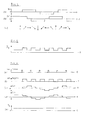
- FIG. 2 a typical control sequence for the preferred one due to its smooth running Half-step operation for a two-phase stepper motor with two Windings.
- 2 (a) is the bipolar current pulse train IL1 for the shown a winding.
- Fig. 2 (b) shows the bipolar current pulse train IL2 for the other winding.
- the from this control sequence for half step operation resulting anchor position of the stepper motor is in Fig. 2nd (c) indicated.
- the driver circuit known from EP 0 394 941 A2 performs one Current regulation even during the maximum current flow. This leads to a corresponding voltage drop across a control transistor. The result is high power loss.
- the driver circuit known from DE 29 44 335 A1 operates in Principle used as the driver circuit according to EP 0 394 941 A2 however, a clocked regulation with pulse width modulation. This diminishes although the losses increase the interference radiation.
- stepper motors there are so-called chopping or clocked stepper motor drivers e.g. according to DE 29 44 335 A1, which the windings of the stepper motor during each energization phase apply a series of impulses, and not chopped Stepper motor drivers (e.g. according to EP 0 394 941 A2), which the individual windings during each energization phase with a single Apply current pulse.
- chopping or clocked stepper motor drivers e.g. according to DE 29 44 335 A1
- Stepper motor drivers e.g. according to EP 0 394 941 A2
- a typical integrated stepper motor driver with chopping current control is the PBL 3717 from SGS-Thomson, shown in the associated Data sheet.
- a current setting is carried out for non-chopping stepper motor drivers about the ohmic resistance of each motor winding.
- the in Connection with the chopping stepper motor driver mentioned Chopper interference due to the high switching frequencies is eliminated non-chopping stepper motor drivers.
- the current pulses as in the Figures 2 (a) and 2 (b) are shown but cause steeper in the case Pulse edges still disturbing radiation.
- the radiation over the leads from the stepper motor driver to the motor windings, as already mentioned, can be greatly reduced by the fact that the Lines from the stepper motor driver to the motor windings are very short are kept so that these leads are no longer as antennas Act.
- the total current Ig contains the system Stepper motor and stepper motor driver via supply voltage lines still takes one from the supply voltage source large AC component with four times the frequency of the Control sequence. This is shown in FIG. 3. At the times, too where both motor windings are energized is the current consumption of the Systems twice as high as when only one Motor winding is energized. This acts as if the low one Current consumption value impulses are superimposed. this leads to Interference radiation via the supply voltage lines.
- An example of this technology is the integrated stepper motor driver MC 33192 from Motorola, shown in the corresponding data sheet.
- the invention has for its object a stepper motor driver to make available the high frequency components on the Avoids supply voltage lines.
- the solution according to the invention consists in that in the driver circuit specified in each Series connection of one of the two driver elements as controllable Switch and the other driver element as controllable Amplifier element is operated that a current sensor device is provided, which the by the respectively energized (n) Motor winding (s) flowing total winding current detects that a Storage device is provided, which each during the Powering only one of the two motor windings from the Current sensor device stores recorded winding current value, and that a control circuit is provided which during the energization each of the two motor windings by the two Full bridge circuits flow over the total bridge current controllable amplifier elements to the value of the at each previous energization of only one of the two motor windings stored winding current value controls.
- phase shift of 90 ° there are one symmetrically wound motor and smooth running of the motor provided.
- non-circular running and / or asymmetrically wound Motor can deviate from 90 ° phase shifts be.
- the slope reduction in the case of full step operation can already generated in the control logic circuit and the stepper motor driver be forced on. Alternatively, the Slope reduction only in the stepper motor driver be performed.
- full step operation stands out through the direct transition of the full bridges from conductive to first Direction too conductive in an opposite second direction or from conductive in the second direction to conductive in the first direction out. In half-step mode, the transition takes place for each reversed full bridge from non-conductive to conductive.
- each bridge branch i.e. in each driver element series connection Bridge circuit of one of the two driver elements as controllable Switch and the other driver element as a controllable amplifier element to operate is already known from the already mentioned two publications EP 0 394 941 A2 and DE 29 44 355 A1.
- a stepper motor control is known from EP 0 083 841 A1, by means of which is a stepper motor either in step mode or in linear mode can be operated.
- Each of two motor windings is one Full bridge circuit assigned with two bridge branches, each two Have switching transistors connected in series. Every winding is one Current sensor resistance assigned, the voltage value by means of a Voltage divider depending on the read value of a read-only memory each to one of several possible partial voltages can be divided down. This is shown in a comparator with a Compared reference voltage, which comes from a triangle generator.
- phase driver circuits By means of phase driver circuits, on the one hand an output value of the Read-only memory and on the other hand the output signal of the comparator can be supplied, the switching transistors of the full bridge circuit in the conductance of winding currents of different current step heights being controlled.
- this should graded control of the switching transistors to a constant Lead the total current through the two motor windings. Because here No regulation is involved, however, there is no guarantee that a constant Total current actually under all operating conditions is achieved.
- FIG. 1 shows a driver circuit according to the invention with two Full bridges I and II that pass the current through one of two Control motor windings L1 or L2 of a two-phase stepper motor.
- Each full bridge has four transistors in a known manner embodiment shown in the form of N-channel MOS transistors M1 to M8.
- Each of the two full bridges I and II is through the Parallel connection of two series connections with one each Power supply line Vs facing transistor M1, M2, M5 or M6 and with a transistor M3, M4, M7 pointing to ground or M8 built.
- the top and lower transistors of each series connection are each in one Connection point V1, V2, V3 or V4 connected to each other.
- the Motor winding L1 is between the two connection points V1 and V2 of the full bridge I switched.
- the motor winding L2 is between the Connection points V3 and V4 of the full bridge II switched. All four Series connections are common to the one Power supply line Vs connected and other end over a sensor resistor R with ground.
- the gates of the upper transistors M1, M2, M5 and M6 are connected to the Outputs of inverters INV1, INV2, INV3 and INV4 connected.
- the gates of the lower transistors M3, M4, M7 and M8 are connected to the Outputs from operational amplifiers acting as differential amplifiers OP1, OP2, OP3 or OP4 connected.
- Inverting inputs of the Operational amplifiers OP1 to OP4 are in a connection point V5 joined together.
- the non-inverting input of each of the OP1, OP2, OP3 and OP4 are in one each associated connection point V6, V7, V8 or V9 with the input the respective one of the inverters INV1, INV2, INV3 or INV4 connected.
- belonging means that an operational amplifier and an inverter of the same series circuit made of an upper transistor and are assigned to a lower transistor.
- a control logic circuit SL has four outputs at which the Driver circuit in the desired half-step mode or Logic signals A, B, C and D controlling full-step operation are available.
- Logic signal A is routed to connection point V6 and controls the Series connection M1, M3 of the full bridge circuit I.
- the logic signal B is led to the connection point V7 and controls the Series connection M2, M4 of the full bridge circuit I.
- the logic signals C and D are led to the connection points V9 and V8, respectively control the series circuit M6, M8 and the series circuit M5, M7 the full bridge circuit II.
- Capacitors C1, C2, C3 and C4 for the purpose of Slope reduction switched.
- the sensor resistor R is a series connection of one Switching transistor M9 and another capacitor C5 in parallel switched.
- C5 serves as a storage capacitor and M9 forms one Memory switch.
- a connection point V10 in which the Sensor resistance R with all lower transistors M3, M4, M7, M8 is connected to a non-inverting input as Additional operational amplifier OP5 operating differential amplifier connected. Its inverting input is with a Connection point V11 between the switching transistor M9 and the Storage capacitor C5 connected.
- the exit of the Operational amplifier OP5 is a series circuit of two further switching transistors M10 and M11 connected to ground.
- a Connection point V12 between the two switching transistors M10 and M11 is connected to connection point V5.
- the Control logic circuit SL has two further control outputs E and F. Control output E is connected to the gate of switching transistor M9. Control output F is directly connected to the gate of switching transistor M11 and with the gate of the switching transistor M10 via a further inverter INV5 connected.
- All upper transistors M1, M2, M5 and M6 are used as switches operated by the control logic circuit SL via the inverter INV1, INV2, INV3 or INV4 can be switched.
- All lower transistors M3, M4, M7 and M8 are operated as controlled components, the control via the operational amplifiers OP1, OP2, OP3 or OP4 influenced by the control logic circuit SL and, depending on Switching state of the switching transistors M10 and M11, by the Output signal of the operational amplifier OP5 takes place.
- the switching transistors M9 and M11 are normally conductive and the Switching transistor M10 is normally blocked. Are the Switching transistors M9 and M11 conductive, the storage capacitor C5 is charged to the voltage drop across the sensor resistor R. and are the inverting inputs of the operational amplifiers OP1 to OP4 practically on via the switched switching transistor M11 Dimensions. The output signal of the operational amplifier OP5 is there blocked via M10.
- the output signal is on from OP5 to the inverting inputs from OP1 to OP4. Is M9 blocked at the same time, OP5 compares that across the sensor resistor R existing voltage drop as actual value with the in Storage capacitor C5 stored voltage value as setpoint. The Potentials are connected to the inverting inputs from OP1 to OP4 from the output signal of OP5 and thus from this comparison between Setpoint and actual value from. While M10 conducts, the operating state of the lower transistors M3, M4, M7 and M8 not only from the Logic signals A to D determined, but also from the result of the with OP5 setpoint-actual value comparison.
- the operational amplifiers OP1 to OP4 preferably have a small one Reinforcement, e.g. from about 3 to harmful offset errors too avoid. It is also advantageous to use the OP1 operational amplifier to OP4 and transistors M1 to M8 in full bridges I and II to be selected in pairs with behavior that is as identical as possible.
- Full-bridge driver circuits of a conventional type that are not compatible with the Control circuit OP1 to OP5, R, C5 are known to work such that during the time during which a winding L1 and / or L2 should be energized in the associated full bridge Diagonal current is generated in that an upper transistor on the one side and a lower transistor on the other side of the affected motor winding simultaneously and the other two Transistors are switched to be blocking. For example, if Motor winding L1 are energized, depending on the desired Current direction either the transistors M1 and M4 or the Transistors M2 and M3 turned on simultaneously. To this All four transistors are conventionally used as one Full bridge operated as a pure switch, which is either in Locked state or in the fully conductive state.
- the driver circuit according to the invention the lower transistors M3, M4, M7 and M8 as analog controllable elements, here amplifier elements called, operated, each via the operational amplifier OP1 to OP4 after the switching status of M10 and M11 either in one Amplifier operation or in a switch operation can be controlled.
- This current control remains active as long as both motor windings L1 and L2 are energized.
- the output of OP5 is generated a correspondingly lower potential. This has one accordingly higher differential voltage and a correspondingly higher Output voltage of the operational amplifiers OP1 to OP4 result.
- the lower transistors M3, M4, M7 and M8 become corresponding more controlled. The total current through the driver circuit and accordingly the voltage drop across the sensor resistor R therefore increase until the actual value corresponds to the setpoint.
- the driver circuit according to the invention generates current pulses on the one hand in the motor windings L1 and L2, which at the times of Polarity changes are reduced. On the other hand, they are Current pulses through the two motor windings L1 and L2 90 ° out of phase with each other. Both are shown in Figures 5 (a) and (b) the currents IL1 and IL2 through L1 and L2 demonstrate.
- phase relationship between the two winding currents IL1 and IL2 is by the logic signals A to D of the control logic circuit SL given.
- the slope reduction can either already be present on the logic signals A to D or by the slew-reducing capacitors C1 to C4 will. Both measures are also possible in combination.
- Fig. 5 (c) shows the total current consumption Iga of the driver circuit without Control with the operational amplifiers OP1 to OP5.
- the total current has twice the value of the current through each of the two motor windings L1 and L2.
- temporary V-shaped drop in total power consumption During each a change in polarity with reduced flanks occurs temporary V-shaped drop in total power consumption. A such a total current curve would result in a corresponding ripple on the power supply lines and thus to one Radiate interference via the power supply lines.
- the control occurs in full step mode in that the Total current through both motor windings L1 and L2 during of those phases is measured during which both Motor winding lugs L1 and L2 are fully or maximally energized.
- To the Start of a subsequent reduced steepness Polarity change in one of the two motor windings L1, L2 is the previously measured total current value saved.
- the total current through the driver circuit is then used as the actual value compared to the previously saved measured value as the setpoint. The result This comparison is used to regulate the dips compensating cross currents used.
- M9 is during at least part of the respective phase duration during which both motor windings L1, L2 are fully energized, switched on, by the voltage drop corresponding to the total current above the Show sensor resistance R in the storage capacitor C5. While the entire duration of the phase of the respective full energization of both Motor windings L1 and L2 are M10 blocking and M11 conductive switched so that no regulation can take place. Once in one of the Motor windings L1 and L2 a slope reducing Polarity change begins, M9 and M11 become blocking and becomes M10 switched on. This activates the control with which now in C5 saved previous measured value as setpoint and the now occurring across the sensor resistance R, depending on the Voltage drop changing polarity flank as actual value.
- the inventive method for controlling the ripple Total current consumption is also suitable for larger electric motors Number of windings, such as electronically commutated AC motors.
- the measurement of the data to be saved Current values always made during those phases in which a total current value is identical or essentially identical repeated.
- the regulation is made during such phases performed during which the total current from that Total current deviates, which occurs during the measuring phases.
Landscapes
- Engineering & Computer Science (AREA)
- Power Engineering (AREA)
- Control Of Stepping Motors (AREA)
Claims (14)
- Circuit de commande de moteur commuté électroniquement, notamment d'un moteur pas à pas, ayant n bobinages (L1, L2), dont chacun est alimenté par l'un de n circuits en pont complet (I, II), chacun des circuits en pont complet (I, II) comprenant un circuit parallèle à deux éléments de pilotage commandés connectés en série entre les deux pôles (Vs, Masse) d'une source de courant d'alimentation, et le bobinage correspondant (L1, L2) du moteur étant connecté entre le point de connexion (V1, V3) entre les deux éléments de pilotage (M1, M3, M5, M7) de l'un des circuits série et le point de connexion (V2, V4) entre les deux éléments de pilotage (M2, M4, M6, M8) de l'autre circuit série,
et comprenant un circuit logique de commande (SL) qui, du côté de la sortie, est couplé à des entrées de commande des éléments de pilotage commandés individuels (M1, M8) et commande ceux ci afin de délivrer des impulsions de courant de bobine, de manière que le courant consommé globalement par le circuit de commande tende vers une composante alternative,
caractérisé en ce que :dans chaque circuit série, l'un des deux éléments de pilotage est utilisé en tant que commutateur commandé (M1, M2, M5, M6) et l'autre élément de pilotage est utilisé en tant qu'élément d'amplification commandé (M3, M4, M7, MB) ;un dispositif capteur de courant (R) est prévu pour mesurer le courant d'ensemble parcourant le circuit de commande ;un dispositif de mémorisation (M9, C5) est prévu pour mémoriser la valeur du courant d'ensemble circulant dans le circuit de commande, laquelle valeur est établie pendant les phases dans lesquelles le courant d'ensemble se répète pratiquement à l'identique ; etun circuit de régulation (OP1-OP5) qui est actif pendant des phases où le courant d'ensemble circulant dans le circuit de commande présente une tendance à la baisse par rapport à la valeur précédemment mesurée et mémorisée, et qui, pendant les phases de la régulation, agit sur les rapports de courant dans les circuits en pont complet (I, II) individuels par l'intermédiaire des éléments d'amplification commandés (M3, M4, M7, M8), de manière que le courant d'ensemble circulant dans le circuit de commande soit régulé sur la valeur de mesure mémorisée. - Circuit de commande selon la revendication 1 pour un moteur pas à pas bipolaire comportant deux bobinages de moteur (L1, L2) dont chacun est alimenté par un circuit en pont complet (I, II), les éléments de pilotage (M1-M8) étant commandés par le circuit logique de commande (SL) afin de fournir des impulsions de courant de bobinage pour un fonctionnement en demi-pas du moteur pas à pas, de manière que soient alimentés, à tour de rôle, seul l'un des bobinages (L1), seul l'autre bobinage (L2), et les deux bobinages (L1, L2),
caractérisé en ce que le dispositif de mémorisation (C5, M9) mémorise le courant d'ensemble mesuré par le dispositif capteur de courant (R) pendant l'alimentation d'un seul des deux bobinages (L1, L2) et en ce que le circuit de régulation (OP1-OP5) est actif seulement lors de l'alimentation des deux bobinages (L1, L2) et règle alors, par l'intermédiaire des éléments d'amplification commandés (M3, M4, M7, M8), le courant d'ensemble circulant dans le circuit de commande sur la valeur du courant d'ensemble mémorisé lors de l'alimentation précédente d'un seul des deux bobinages (L1, L2). - Circuit de commande selon la revendication 1 ou 2, caractérisé par un circuit de réduction de pente de front (C1-C4) pour réduire la pente des fronts des impulsions de courant fournies aux bobinages (L1, L2) à une pente prédéterminée.
- Circuit de commande selon la revendication 1 pour un moteur pas à pas bipolaire comportant deux bobinages (L1, L2) dont chacun est alimenté par un circuit en pont complet (I, II), les éléments de pilotage (M1-M8) étant commandés par le circuit logique de commande (SL) afin de délivrer des impulsions de courant de bobinage pour un fonctionnement en pas complets du moteur pas à pas, caractérisé en ce que :un circuit de réduction de pente de front (C1-C4) est prévu pour réduire les pentes des fronts des impulsions de courant fournies aux bobinages (L1, L2) à une pente prédéterminée ;le circuit logique (SL) commande les entrées de commande des éléments de pilotage individuels (M1-M8), de manière que les changements de polarité des impulsions de courant (INV1) de l'un des bobinages (L1) par rapport aux changements de polarité des impulsions de courant (INV2) de l'autre bobinage soient déphasés de 90° ;le dispositif de mémorisation (C5, M9) mémorise la valeur de courant mesurée par le dispositif capteur de courant (R) pendant l'alimentation maximale des deux bobinages (L1, L2), etle circuit de régulation (DP1-CP5) est actif seulement pendant la durée de chaque front incliné de l'une des deux impulsions de courant de bobinage (INV1-INV2) et règle alors, par l'intermédiaire des éléments d'amplification commandés (M3, M4, M7, M8), le courant d'ensemble circulant dans le circuit de commande sur la valeur du courant d'ensemble mémorisée lors de l'alimentation maximale précédente des deux bobinages (L1, L2).
- Circuit de commande selon l'une quelconque des revendications 1 à 4, caractérisé en ce que le dispositif capteur de courant est constitué d'une résistance captrice de courant (R) dont une première borne est reliée à l'un (Masse) des deux pôles de la source de courant d'alimentation et dont l'autre borne est reliée à un point de connexion (V10) du côté de ce pôle (Masse) et commun aux circuits parallèles (M1, M3 ; M2, M4 ; M5, M7 ; M6, M8) des deux circuits en pont complet (I, II).
- Circuit de commande selon l'une quelconque des revendications 1 à 5, caractérisé en ce que :le dispositif de mémorisation (M9, C5) comporte un circuit de mémorisation série pouvant être alimenté par la valeur de mesure du dispositif capteur de courant (R), comprenant un commutateur de mémorisation commandé (M9) et un condensateur de mémorisation (C5),la valeur de courant mesurée par le dispositif capteur de courant (R) est mémorisée par le condensateur de mémorisation (C5) lorsque le commutateur de mémorisation (M9) est commandé pour être conducteur, etle commutateur de mémorisation (M9) n'est pas conducteur pendant la procédure de régulation opérée par le circuit de régulation (DP1-CP5) et isole donc le condensateur de mémorisation (C5) du dispositif capteur de courant (5).
- Dispositif de commande selon la revendication 6, caractérisé en ce que le circuit série de mémorisation (M9-C5) est connecté en parallèle sur la résistance de mesure de courant (R).
- Circuit de commande selon l'une quelconque des revendication 1 à 7 caractérisé en ce que le circuit de régulation (DP1-CP5) comporte un premier circuit différentiel (CP5) dont l'une des entrées reçoit la valeur de mesure acquise par le circuit capteur de courant (R) en tant que valeur instantanée, dont l'autre entrée reçoit la valeur mémorisée dans le dispositif de mémorisation (M9, C5) en tant que valeur de consigne, et dont la sortie commande les éléments d'amplification (M3, M4, M7, M8) de manière que le courant d'ensemble circulant dans le circuit de commande soit régulé sur la valeur souhaitée.
- Circuit de commande selon la revendication 8, caractérisé en ce qu'au moins un des circuits série (M1, M3 ; M2, M4 ; M5, M7 ; M6, M8) des deux circuits en pont complet (I, II) est parcouru par un courant transverse de manière que le courant d'ensemble circulant dans le circuit de commande soit régulé sur la valeur souhaitée.
- Circuit de commande selon la revendication 8 ou 9, caractérisé en ce que :un circuit série est connecté entre la sortie du circuit différentiel (CP5) et celui des pôles (Masse) de la source de courant d'alimentation vers lequel sont tournées les bornes reliées aux éléments d'amplification commandés (M3, M4, M7, M8) des deux circuits en pont complet (I, II), le circuit série comportant un premier commutateur de régulation (M10) relié à la sortie du circuit différentiel (CP5) et un deuxième commutateur de régulation (M11) relié audit pôle (Masse) de la source de courant d'alimentation,le circuit de régulation comporte des deuxième à cinquième circuits différentiels (OP1-OP4),dans chacun des deuxième à cinquième circuits différentiels (OP1-OP4), une première entrée (+) est couplée à une sortie de signal de commande correspondante (A-D) du circuit logique de commande (SL), une deuxième entrée (-) est couplée à un point de connexion (V12) entre le premier (M10) et le deuxième (M11) commutateur de régulation, et une sortie est reliée à une entrée de commande de l'un des éléments d'amplification commandés (M3, M4, M7, M8), etles deux commutateurs de régulation (M10, M11) sont commandés pour conduire et se bloquer en opposition de phase au moyen d'un signal de commande fourni par le circuit logique de commande (SL), de manière que le deuxième commutateur de régulation (M11) soit commuté en phase avec le commutateur de mémorisation (M9) et le premier commutateur de régulation (M10) soit commuté en opposition de phase avec le commutateur de mémorisation (M9).
- Circuit de commande selon la revendication 10, caractérisé en ce que la borne de commande de chacun des commutateurs commandés (M1, M2, M5, M6) des deux circuits en pont complet (I, II) est couplée par un circuit inverseur respectif (INV1-INV4) à celle des sorties de commande du circuit logique de commande (SL) qui est couplée à la première entrée (+) de celui des circuits différentiels (OP1-OP4) qui commande l'élément d'amplification commandé (M3, M4, M7, M8) se trouvant dans le circuit série correspondant au commutateur commandé (M1, M2, M5, M6).
- Circuit de commande selon la revendication 11, caractérisé en ce que les circuits inverseurs (INV1-INV4) sont munis d'un condensateur (C1-C4) de diminution de pente de front.
- Circuit de commande selon l'une quelconque des revendications 1 à 11, caractérisé en ce que l'ensemble des commutateurs commandés (M1, M2, M5, M6, M9-M11) et l'ensemble des éléments d'amplification commandés (M3, M4, M7, M8) sont constitués de transistors MOS.
- Circuit de commande selon l'un quelconque des revendications 7 à 12, caractérisé en ce que les circuits différentiels sont des amplificateurs différentiels sous la forme d'amplificateurs opérationnels (OP1-OP5).
Applications Claiming Priority (2)
| Application Number | Priority Date | Filing Date | Title |
|---|---|---|---|
| DE4339553 | 1993-11-19 | ||
| DE4339553A DE4339553C1 (de) | 1993-11-19 | 1993-11-19 | Treiberschaltung für einen Schrittmotor |
Publications (2)
| Publication Number | Publication Date |
|---|---|
| EP0654893A1 EP0654893A1 (fr) | 1995-05-24 |
| EP0654893B1 true EP0654893B1 (fr) | 1998-02-25 |
Family
ID=6503006
Family Applications (1)
| Application Number | Title | Priority Date | Filing Date |
|---|---|---|---|
| EP94118221A Expired - Lifetime EP0654893B1 (fr) | 1993-11-19 | 1994-11-18 | Circuit de commande pour un moteur pas-à-pas |
Country Status (5)
| Country | Link |
|---|---|
| US (1) | US5656910A (fr) |
| EP (1) | EP0654893B1 (fr) |
| JP (1) | JP3197278B2 (fr) |
| DE (1) | DE4339553C1 (fr) |
| WO (1) | WO1995014327A1 (fr) |
Families Citing this family (15)
| Publication number | Priority date | Publication date | Assignee | Title |
|---|---|---|---|---|
| US6232731B1 (en) * | 1997-06-26 | 2001-05-15 | Electric Boat Corporation | Multi-channel motor winding configuration and pulse width modulated controller |
| DE69721757T2 (de) * | 1997-08-08 | 2003-11-13 | Stmicroelectronics S.R.L., Agrate Brianza | Stromsteuerung für einen bürstenlosen Gleichstrommotor mit unabhängigen Wicklungen |
| US5977734A (en) * | 1998-09-09 | 1999-11-02 | Stmicroelectronics, Inc. | Circuit and method for determining optimal phase combination for startup of a polyphase DC motor |
| EP0989656B1 (fr) * | 1998-09-24 | 2009-03-11 | Levitronix LLC | Entraînement de rotation à excitation par aimants permanents |
| US20020138842A1 (en) * | 1999-12-17 | 2002-09-26 | Chong James I. | Interactive multimedia video distribution system |
| DE50015680D1 (de) | 2000-02-07 | 2009-08-13 | Ebm Papst St Georgen Gmbh & Co | Anordnung zur speisung eines verbrauchers mit nicht kontinuierliche stromaufnahme, insbesondere eines gleichstrommotors, aus einem gleichstromnetz |
| EP1282222A3 (fr) | 2001-08-04 | 2005-01-12 | NexPress Solutions LLC | Dispositif pour produire ou contrôler alternatif dans au moins une charge inductive |
| US7071821B2 (en) * | 2003-05-14 | 2006-07-04 | Bellsouth Intellectual Property Corporation | Method and system for alerting a person to a situation |
| JP4257603B2 (ja) * | 2004-07-09 | 2009-04-22 | サンケン電気株式会社 | ステッピングモータ駆動装置の断線検出装置 |
| US7109742B2 (en) | 2004-07-12 | 2006-09-19 | Motorola, Inc. | Current sensing in a two-phase motor |
| DE102009022314B4 (de) | 2009-05-22 | 2019-05-23 | Ctc Analytics Ag | Verfahren und Schaltungsanordnung zur Messung des Stroms durch eine induktive Last |
| DE102010055157A1 (de) | 2010-12-18 | 2012-06-21 | Bizerba Gmbh & Co. Kg | Etikettiervorrichtung |
| JP6456210B2 (ja) * | 2015-03-27 | 2019-01-23 | 旭化成エレクトロニクス株式会社 | 制御装置及び駆動装置 |
| US10594238B2 (en) * | 2017-06-05 | 2020-03-17 | Rohm Co., Ltd. | Driving circuit for stepping motor |
| US11368112B2 (en) | 2019-09-27 | 2022-06-21 | Texas Instruments Incorporated | Current sensing and regulation for stepper motor driver |
Family Cites Families (29)
| Publication number | Priority date | Publication date | Assignee | Title |
|---|---|---|---|---|
| DE2658321C2 (de) * | 1976-12-22 | 1978-12-07 | Siemens Ag, 1000 Berlin Und 8000 Muenchen | Regelanordnung für einen kollektorlosen Gleichstrommotor |
| FR2440642A1 (fr) * | 1978-11-02 | 1980-05-30 | Gilson Med Electr | Moteur pas a pas actionne par sous-multiple du pas |
| CH644989GA3 (fr) * | 1981-03-18 | 1984-09-14 | ||
| JPS5899299A (ja) * | 1981-12-04 | 1983-06-13 | Fuji Xerox Co Ltd | ステツプモ−タ励磁方式 |
| CH657960GA3 (fr) * | 1984-03-23 | 1986-10-15 | ||
| US4562387A (en) * | 1984-11-26 | 1985-12-31 | General Motors Corporation | Vehicle power window control |
| US4675590A (en) * | 1985-05-23 | 1987-06-23 | Sigma Instruments, Inc. | Stepping motor driver with mid-frequency stability control |
| US4682092A (en) * | 1985-06-06 | 1987-07-21 | John Pellegrino | Synchronous motor drive with chopper regulator |
| DE3610253A1 (de) * | 1986-03-26 | 1987-10-08 | Sgs Halbleiterbauelemente Gmbh | Steuerschaltung fuer einen kommutatorlosen gleichstrommotor |
| US4780651A (en) * | 1986-05-14 | 1988-10-25 | Matsushita Electric Industrial Co., Ltd. | Speed control apparatus for a motor |
| US4710686A (en) * | 1986-08-04 | 1987-12-01 | Guzik Technical Enterprises | Method and apparatus for control of current in a motor winding |
| JPS63117698A (ja) * | 1986-10-31 | 1988-05-21 | Nec Corp | ステツプモータ駆動回路 |
| JPS63202263A (ja) * | 1987-02-14 | 1988-08-22 | Matsushita Electric Works Ltd | 電源変換装置 |
| JPS63234898A (ja) * | 1987-03-18 | 1988-09-30 | Fuji Electric Co Ltd | ステツピングモ−タの逆相制動制御装置 |
| US4818924A (en) * | 1987-07-31 | 1989-04-04 | A.R.A. Manufacturing Co. | Electric actuator for automotive air conditioning systems |
| JPH0197199A (ja) * | 1987-10-08 | 1989-04-14 | Oki Electric Ind Co Ltd | パルスモータ制御装置 |
| US5237254A (en) * | 1988-02-12 | 1993-08-17 | Eta Sa Fabriques D'ebauches | Control circuit for a stepping motor |
| US4985666A (en) * | 1988-08-30 | 1991-01-15 | Sony Corporation | Safety device for video cassette recorder |
| FI85062C (fi) * | 1988-11-14 | 1992-02-25 | Kone Oy | Foerfarande och anordning foer maetning av stroemmar vid en frekvensomformare. |
| JPH02285999A (ja) * | 1989-04-26 | 1990-11-26 | Citizen Watch Co Ltd | ステッピングモータの駆動回路 |
| DE3914287A1 (de) * | 1989-04-29 | 1990-11-08 | Blaupunkt Werke Gmbh | Gleichspannungswandler |
| FR2648289B1 (fr) * | 1989-06-07 | 1991-09-06 | Valeo | Procede et dispositif de controle d'un moteur pas-a-pas |
| US5032780A (en) * | 1989-09-29 | 1991-07-16 | Sgs-Thomson Microelectronics, Inc. | Programmable stepper motor controller |
| JPH0797900B2 (ja) * | 1990-05-17 | 1995-10-18 | エルコー株式会社 | 昇圧チョッパ回路 |
| AU630820B2 (en) * | 1990-07-04 | 1992-11-05 | Matsushita Electric Industrial Co., Ltd. | Brushless dc motor |
| US5182499A (en) * | 1990-10-25 | 1993-01-26 | Matsushita Electric Industrial Co., Ltd. | Sensorless brushless motor |
| GB2264405B (en) * | 1992-02-12 | 1996-06-12 | Mars Inc | Stepper motor drive circuit |
| US5319291A (en) * | 1993-02-17 | 1994-06-07 | Pitney Bowes Inc. | Brushless motor utilizing FET drivers |
| JP6318440B2 (ja) | 2016-10-07 | 2018-05-09 | インテル・コーポレーション | 無制限トランザクショナルメモリ(utm)システムの最適化 |
-
1993
- 1993-11-19 DE DE4339553A patent/DE4339553C1/de not_active Expired - Fee Related
-
1994
- 1994-11-18 JP JP51422795A patent/JP3197278B2/ja not_active Expired - Fee Related
- 1994-11-18 WO PCT/EP1994/003822 patent/WO1995014327A1/fr not_active Ceased
- 1994-11-18 EP EP94118221A patent/EP0654893B1/fr not_active Expired - Lifetime
- 1994-11-18 US US08/491,925 patent/US5656910A/en not_active Expired - Lifetime
Also Published As
| Publication number | Publication date |
|---|---|
| JPH08510633A (ja) | 1996-11-05 |
| JP3197278B2 (ja) | 2001-08-13 |
| US5656910A (en) | 1997-08-12 |
| DE4339553C1 (de) | 1995-06-22 |
| WO1995014327A1 (fr) | 1995-05-26 |
| EP0654893A1 (fr) | 1995-05-24 |
Similar Documents
| Publication | Publication Date | Title |
|---|---|---|
| EP0654893B1 (fr) | Circuit de commande pour un moteur pas-à-pas | |
| EP0739084B1 (fr) | Procédé de commande ou réglage d'un moteur électrique et dispositif pour mettre en oeuvre ce procédé | |
| EP3158639B1 (fr) | Procédé et circuit pour commander un moteur pas à pas | |
| EP2474089B1 (fr) | Procédé et circuiterie pour détecter la charge d'un moteur, sans capteur, et pour réguler l'intensité en fonction de la valeur de la charge dans des moteurs pas-à-pas | |
| EP2502342B1 (fr) | Procédé et circuit de régulation de courant pour des moteurs | |
| DE4304517C2 (de) | Stromversorgung für vorwiegend induktive Lasten | |
| DE19962523A1 (de) | Gleichspannungswandler und Verfahren zum Betreiben eines Gleichspannungswandlers | |
| DE10310361A1 (de) | Ansteuerschaltung für Schaltnetzteil | |
| DE3819062C3 (de) | Verfahren zur Steuerung von bürstenlosen Elektromotoren sowie Steuerschaltung hierfür | |
| DE69114424T2 (de) | Vorrichtung zum antrieb eines variablen reluktanzmotors. | |
| DE3819064C3 (de) | Verfahren zur Steuerung von bürstenlosen Elektromotoren sowie Steuerschaltung hierfür | |
| DE3608082C2 (fr) | ||
| DE3841147A1 (de) | Verfahren zum ansteuern eines wechselstrom-motors sowie nach diesem verfahren ansteuerbarer wechselstrom-motor | |
| DE3438034A1 (de) | Schaltnetzteil fuer die speisung einer induktivitaet | |
| DE2722848A1 (de) | Motor-antriebssteuerung | |
| EP0212462A2 (fr) | Circuit d'amplificateur pour électro-aimants de valves proportionnelles ou de servo-valves | |
| EP0583724A2 (fr) | Procédé et circuit pour commander un moteur | |
| DE2731501C3 (de) | Regelanordnung für einen mit Reihenschluß-Nebenschluß-Umschaltung betriebenen Gleichstrommotor | |
| WO1997011529A1 (fr) | Circuit destine a l'utilisation multiple d'un noyau de transformateur | |
| DE3146383C2 (fr) | ||
| DE20305771U1 (de) | Schaltungsanordnung zum Betreiben von Schrittmotoren | |
| EP0190240B1 (fr) | Moteur a courant continu depourvu de collecteur | |
| DE1538321B2 (de) | Einrichtung zum regeln der ausgangsspannung eines mit stark wechselnden drehzahlen antreibbaren mehrphasengenerators | |
| DE102010036473A1 (de) | Verfahren und Schaltungsanordnung zur Stromregelung bei 3-Phasen-Motoren | |
| DE19651062C2 (de) | System zur Regelung der Position eines Motors gegen eine Rückstellkraft |
Legal Events
| Date | Code | Title | Description |
|---|---|---|---|
| PUAI | Public reference made under article 153(3) epc to a published international application that has entered the european phase |
Free format text: ORIGINAL CODE: 0009012 |
|
| AK | Designated contracting states |
Kind code of ref document: A1 Designated state(s): FR GB IT |
|
| 17P | Request for examination filed |
Effective date: 19951113 |
|
| GRAG | Despatch of communication of intention to grant |
Free format text: ORIGINAL CODE: EPIDOS AGRA |
|
| 17Q | First examination report despatched |
Effective date: 19970409 |
|
| GRAG | Despatch of communication of intention to grant |
Free format text: ORIGINAL CODE: EPIDOS AGRA |
|
| GRAH | Despatch of communication of intention to grant a patent |
Free format text: ORIGINAL CODE: EPIDOS IGRA |
|
| GRAH | Despatch of communication of intention to grant a patent |
Free format text: ORIGINAL CODE: EPIDOS IGRA |
|
| GRAA | (expected) grant |
Free format text: ORIGINAL CODE: 0009210 |
|
| AK | Designated contracting states |
Kind code of ref document: B1 Designated state(s): FR GB IT |
|
| GBT | Gb: translation of ep patent filed (gb section 77(6)(a)/1977) |
Effective date: 19980226 |
|
| ITF | It: translation for a ep patent filed | ||
| ET | Fr: translation filed | ||
| PLBE | No opposition filed within time limit |
Free format text: ORIGINAL CODE: 0009261 |
|
| STAA | Information on the status of an ep patent application or granted ep patent |
Free format text: STATUS: NO OPPOSITION FILED WITHIN TIME LIMIT |
|
| 26N | No opposition filed | ||
| REG | Reference to a national code |
Ref country code: GB Ref legal event code: IF02 |
|
| PGFP | Annual fee paid to national office [announced via postgrant information from national office to epo] |
Ref country code: FR Payment date: 20051108 Year of fee payment: 12 |
|
| PGFP | Annual fee paid to national office [announced via postgrant information from national office to epo] |
Ref country code: GB Payment date: 20051116 Year of fee payment: 12 |
|
| PG25 | Lapsed in a contracting state [announced via postgrant information from national office to epo] |
Ref country code: IT Free format text: LAPSE BECAUSE OF NON-PAYMENT OF DUE FEES;WARNING: LAPSES OF ITALIAN PATENTS WITH EFFECTIVE DATE BEFORE 2007 MAY HAVE OCCURRED AT ANY TIME BEFORE 2007. THE CORRECT EFFECTIVE DATE MAY BE DIFFERENT FROM THE ONE RECORDED. Effective date: 20051118 |
|
| GBPC | Gb: european patent ceased through non-payment of renewal fee |
Effective date: 20061118 |
|
| REG | Reference to a national code |
Ref country code: FR Ref legal event code: ST Effective date: 20070731 |
|
| PG25 | Lapsed in a contracting state [announced via postgrant information from national office to epo] |
Ref country code: GB Free format text: LAPSE BECAUSE OF NON-PAYMENT OF DUE FEES Effective date: 20061118 |
|
| PG25 | Lapsed in a contracting state [announced via postgrant information from national office to epo] |
Ref country code: FR Free format text: LAPSE BECAUSE OF NON-PAYMENT OF DUE FEES Effective date: 20061130 |