EP0657535A2 - Gène codant pour une lipase de pseudomonas - Google Patents
Gène codant pour une lipase de pseudomonas Download PDFInfo
- Publication number
- EP0657535A2 EP0657535A2 EP94117847A EP94117847A EP0657535A2 EP 0657535 A2 EP0657535 A2 EP 0657535A2 EP 94117847 A EP94117847 A EP 94117847A EP 94117847 A EP94117847 A EP 94117847A EP 0657535 A2 EP0657535 A2 EP 0657535A2
- Authority
- EP
- European Patent Office
- Prior art keywords
- lipase
- sequence
- dna
- gene
- pseudomonas
- Prior art date
- Legal status (The legal status is an assumption and is not a legal conclusion. Google has not performed a legal analysis and makes no representation as to the accuracy of the status listed.)
- Withdrawn
Links
Images


Classifications
-
- C—CHEMISTRY; METALLURGY
- C12—BIOCHEMISTRY; BEER; SPIRITS; WINE; VINEGAR; MICROBIOLOGY; ENZYMOLOGY; MUTATION OR GENETIC ENGINEERING
- C12N—MICROORGANISMS OR ENZYMES; COMPOSITIONS THEREOF; PROPAGATING, PRESERVING, OR MAINTAINING MICROORGANISMS; MUTATION OR GENETIC ENGINEERING; CULTURE MEDIA
- C12N9/00—Enzymes; Proenzymes; Compositions thereof; Processes for preparing, activating, inhibiting, separating or purifying enzymes
- C12N9/14—Hydrolases (3)
- C12N9/16—Hydrolases (3) acting on ester bonds (3.1)
- C12N9/18—Carboxylic ester hydrolases (3.1.1)
- C12N9/20—Triglyceride splitting, e.g. by means of lipase
Definitions
- This invention relates to a DNA sequence of a gene coding a lipase originated from Pseudomonas bacteria, a recombinant DNA containing the DNA sequence, and a process for cultivating a host species bacterium transformed by the recombinant DNA and secretorily producing a lipase into the cultured filtrate.
- Lipase has been used as an enzyme for hydrolyzing lipids, for oil and fat processing, clinical dignostic, detergent, digestant, etc., and besides, in recent years, it is an important enzyme for catalyzing ester hydrolysis, ester synthesis, or ester interchange, as a process for producing chemical products, particularly optically active compounds.
- Pseudomonas genus bacteria have been known to produce a lipase useful as a catalyst for ester hydrolysis, ester synthesis or ester interchange (see Japanese patent application laid-open No. Sho 62-166898). Further, these lipases have been utilized industrially in a large quantity. Thus, lipases for industrial enzymes have been desired to be supplied in a cheap cost, besides heat stability and characteristic substrate-specificity.
- Escherichia coli advantageous to produce recombinant proteins has been used as a host species bacterium because various factors for producing the lipases have been known and a number of expression Proteins therefor, etc. have been developed.
- Such conventional processes have been characterized in that recombinant lipases have been produced by crushing Escherichia coli by means of supersonic wave treatment, etc.; hence such processes are disadvantageous in the aspect of commercial production. Accordingly, it has been required to develop a host species bacterium having DNA characterized by secretorily produce a lipase into the cultured filtrate, which is advantageous in the aspect of commercial production.
- the present inventors have aimed to derive a lipase originated from Pseudomonas genus bacterium into a product having a higher utility value in the aspect of heat stability, substrate-specificity, etc. to thereby utilize it commercially in a large quantity, and thereby firstly develop a host species bacterium having a DNA characterized by producing a lipase in the cultured filtrate which is advantageous in the aspect of commercial production, in a good efficiency and in a large quantity.
- the present inventors have carried out cloning of a lipase gene of Pseudomonas cepacia IFO 14595 strain and determination of its DNA sequence, and have constructed a system of a host species bacterium-a recombinant DNA for producing a lipase, characterized by producing a lipase in the cultured filtrate, using the host genus bacterium having introduced therein the recombinant DNA containing the above DNA sequence, and have completed the present invention.
- the object of the present invention is to derive a lipase which is commercially highly useful, and to provide an advantageous productivity thereof.
- the present invention has the following constitutions (1) to (7):
- Fig. 1 shows an example of a restriction enzyme map of pCPC-inserted Eco RI 13.5 kb DNA fragment, and results of a defect experiment employing as an indication, the presence or absence of clear zone formation at the time of subcloning into a plasmid pUC 119. "+" refers to clear zone formation.
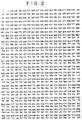
- Fig. 2 shows the amino acid sequence of the gene of the present invention.
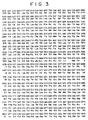
- Fig. 3 shows the amino acid sequence succeeding to that of Fig. 2.
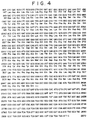
- Fig. 4 shows the amino acid sequence succeeding to that of Fig. 3.
- Fig. 5 shows plasmid of lipase-secretory-production for Escherichia coli , pTV-CPC mut N.
- Pseudomonas cepacia IFO 14595 strain chromosome DNA can be prepared for example according to a method of Smith et al. (Smith, M.G., Methods in Enzymology, Academic press, New York, 12, part A, p. 545 (1967)).
- the cloning of the lipase gene can be carried out according to Saiki et al.'s Polymerase Chain Reaction (PCR) process (Saiki, R.K. et al., Science, 230, 1350-1354, (1985)).
- the primer used for cloning the lipase gene should be selected from a well-preserved site or a site where it can be expected to have been well-preserved, by comparing and examining the amino acid sequences of known lipases. Further, when a DNA fragment containing a portion of the lipase gene obtained according to PCR method is used as a probe for cloning, it is possible to obtain a recombinant DNA containing a lipase gene from the chromosome DNA library of Pseudomonas cepacia IFO 14595 strain.
- the region necessary for expressing the lipase gene can be determined by subcloning a recombinant DNA containing a lipase gene, obtained by screening, using various kinds of restriction enzymes, and observing the clear zone formability of the resulting transformed strain on a tributyrin-agar medium.
- the lipase gene and the DNA sequence of the region necessary for its expression can be determined according to a known method such as dideoxy method (Sanger. F. et al., Proc. Natl. Acad. Sci. U.S.A., 74, p. 5463 (1977)).
- a plasmid vector developed for producing a heterogeneous gene replicative inside Escherichia coli or Pseudomonas genus bacterium it is possible to construct a recombinant DNA for lipase expression.
- a plasmid vector pTV118N (made by Takara Shuzo Co., Ltd.), pKK 223-3 plasmid (made by Pharmacia Co., Ltd.), etc. for Escherichia coli expression, and pMMB66EH (Furste, J.P. et al., Gene, 48, p. 119-131 (1986)), etc. for Pseudomonas genus bacterium expression, are exemplified.
- the secretory production of lipase into a cultured filtrate is achieved by constructing a system of a recombinant DNA and a host species bacterium, having various factors participating in the secretory production based upon these vectors, taken into consideration.
- a recombinant DNA plasmid pTV-CPC mut N shown in Fig. 5
- a signal peptide of lipase and a gene adjusting lipase activity expression is mentioned.
- Pseudomonas cepacia IFO 14595 strain was cultivated in an LB medium (1% bactotripton, 0.5% yeast extract and 0.5% NaCl) (200 ml) at 30°C overnight. The bacterial cells were harvested, followed by washing and suspending in a solution of 50 mM tris-HCl buffer (pH 8.0) (12 ml) and EDTA (10 mM).
- Lysozyme (1 mg) was added to the resulting suspension, followed by allowing the mixture to stand for one hour, adding to the resulting solution, protenase K (made by Merck Co., Ltd.) so as to give a concentration of 100 ⁇ g/ml, in the presence of 0.5% SDS, slowly shaking the mixture at 55°C for 3 hours for bacteriolysis of the bacterial cells, extracting the resulting sample with phenol, and precipitating with ethanol, to prepare a chromosome DNA.
- protenase K made by Merck Co., Ltd.
- Pseudomonas fragi IFO 12049 strain lipase gene As to the primer used in the lipase gene cloning according to PCR method, Pseudomonas fragi IFO 12049 strain lipase gene (Aoyama S. et al., FEBS Lett., 242, p. 36 (1988)), Pseudomonas sp. KWI-56 strain lipase gene (Iizumi T. et al., Agric. Biol. Chem., 55, p. 2349, (1991), Pseudomonas cepacia DSM 3959 strain lipase gene (J ⁇ rgensen S. et al., J. Bacteriol., 173, p. 559, (1991), etc. were compared and investigated, and DNA sequences corresponding to the following amino acids were selected:
- PCR method was carried out using a reagent kit solely used for PCR method (made by Takara Shuzo Co., Ltd.) and under the following conditions: Reaction solution Pseudomonas cepacia IFO14595 chromosome DNA 1 ⁇ g AON-2 primer 100 pmol AOR-4 primer 100 pmol dNTP solution each, 1.0 mM 10X reaction buffer 10 ⁇ l TaqDNA polymerase 2.5 Unit Total 100 ⁇ l ⁇ Reaction conditions Thermal modification 94°C, one min. Annealing 62°C, 1.5 min. DNA synthesis 72°C, 1.5 min. Cycle number 30 times
- the thus amplified DNA fragment was recovered, followed by subcloning it into pUC 13 vector, and determining the DNA sequence according to dideoxy method, whereby it was confirmed that a part of the lipase gene was coded.
- Pseudomonas cepacia IFO 14595 strain chromosome DNA was digested with restriction enzyme Eco RI, followed by subjecting the resulting substance to electrophoresis in agarose gel, to recover its 13.5 kb fragment.
- This recovered DNA fragment was introduced into Eco RI site of Charomid 9-42 (made by Nippon Gene Co.,Ltd.) with a DNA ligase.
- the resulting DNA was infected with Escherichia coli VCS 257 strain, as a phage particle, using ⁇ DNA in-vitro packaging kit Gigapack II PLUS (made by STRATAGEN Co., Ltd.).
- This transformed strain was plated on an LB medium containing ampicillin (50 ⁇ g/ml). About 20,000 transformed strains obtained by cultivation at 37°C overnight were hybridized with the labeled probe obtained according to the above PCR method, followed by screening according to colony hybridization method .
- pCPC was digested with various kinds of restriction enzymes, followed by subcloning the respective DNA fragments in pUC 119 (made by Takara Shuzo Co., Ltd.), to transform Escherichia coli JM83 strain, and thereby investigate the presence or absence of clear zone formation on an LB medium containing tributyrin.
- Fig. 1 shows the results of a defect experiment, wherein a restriction enzyme map of pCPC and clear zone formation were employed as indications. It has been suggested that a lipase-coding gene and a region necessary for expressing the gene are present in StuI-EcoRI 2.8 kb DNA fragment. This plasmid having the StuI-EcoRI 2.8 kb DNA fragment was named pCPC-SE.
- the nucleotide sequence of pCPC-SE-inserted DNA fragment was determined according to dideoxy method. As a result, an open reading frame coding the lipase gene of sequence No. 1 and an open reading frame coding factor necessary for expressing the lipase activity of sequence No. 2, downstream of the above frame, were confirmed to be present. Further, it was found that a signal peptide was present in the open reading frame of sequence No. 1, from comparison with amino acids of lipase of Japanese patent application laid-open Nos. Hei 3-87187 and Hei 3-47079. The DNA sequence of the insert DNA fragment and the amino acid sequences of the corresponding lipase and the gene adjusting the expression of activity of lipase are shown in Figs. 2, 3 and 4 (Note: one gene as a whole).
- pCPC-SE mut N was introduced into the initiation codon part of the lipase gene in the pCPC-SE, to prepare pCPC-SE mut N.
- the introduction of the variant was carried out according to a procedure method of Mutan-K made by Takara Shuzo Co., Ltd.
- NcoI-EcoRI 2.5 kb DNA fragment of pCPC-SE mut N was introduced into NcoI-EcoRI site of pTV118N (made by Takarashuzo Co., Ltd.), to construct pTV118-CPC mut N of lipase expression (see Fig. 5).
- This pTV118-CPC mut N was introduced into Escherichia coli JM 109 strain.
- This Escherichia coli JM 109 (pTV118-CPC mut N) strain was cultivated on LB medium at 37°C overnight, followed by planting its 200 ⁇ l on a new LB medium.
- IPTG Isopropyl ⁇ -D-thiogalactopyranoside
- the value of Escherichia coli JM 109 strain measured under the same conditions was lower than the lower limit of measurement sensitivity (50 BALB unit).
- the measurement method and the calculation method of measurement unit were carried out according to lipase kit S method.
- a gene coding a lipase is provided, and when a transformed strain having the gene incorporated therein is cultivated, it is possible to carry out secretory production of lipase into the cultured filtrate.
- the thus produced lipase can be used in the field of commercial mass production for cheap supply, etc.
Landscapes
- Life Sciences & Earth Sciences (AREA)
- Chemical & Material Sciences (AREA)
- Health & Medical Sciences (AREA)
- Genetics & Genomics (AREA)
- Organic Chemistry (AREA)
- Engineering & Computer Science (AREA)
- Bioinformatics & Cheminformatics (AREA)
- Zoology (AREA)
- Wood Science & Technology (AREA)
- Molecular Biology (AREA)
- Microbiology (AREA)
- Biotechnology (AREA)
- Biomedical Technology (AREA)
- Biochemistry (AREA)
- General Engineering & Computer Science (AREA)
- General Health & Medical Sciences (AREA)
- Medicinal Chemistry (AREA)
- Enzymes And Modification Thereof (AREA)
- Micro-Organisms Or Cultivation Processes Thereof (AREA)
Applications Claiming Priority (2)
| Application Number | Priority Date | Filing Date | Title |
|---|---|---|---|
| JP5314314A JPH07135980A (ja) | 1993-11-19 | 1993-11-19 | シュードモナス菌リパーゼ遺伝子 |
| JP314314/93 | 1993-11-19 |
Publications (2)
| Publication Number | Publication Date |
|---|---|
| EP0657535A2 true EP0657535A2 (fr) | 1995-06-14 |
| EP0657535A3 EP0657535A3 (fr) | 1996-07-31 |
Family
ID=18051863
Family Applications (1)
| Application Number | Title | Priority Date | Filing Date |
|---|---|---|---|
| EP94117847A Withdrawn EP0657535A3 (fr) | 1993-11-19 | 1994-11-11 | Gène codant pour une lipase de pseudomonas. |
Country Status (2)
| Country | Link |
|---|---|
| EP (1) | EP0657535A3 (fr) |
| JP (1) | JPH07135980A (fr) |
Cited By (3)
| Publication number | Priority date | Publication date | Assignee | Title |
|---|---|---|---|---|
| EP0845534A3 (fr) * | 1996-11-28 | 1999-11-10 | Sumitomo Chemical Company, Limited | Gène d'esterase et son utilisation |
| US6184008B1 (en) | 1997-03-03 | 2001-02-06 | Sumitomo Chemical Company Ltd. | Production of optically active sphingoid compound |
| US6472189B1 (en) | 1996-11-28 | 2002-10-29 | Sumitomo Chemical Company, Limited | Esterase gene and its use |
Family Cites Families (7)
| Publication number | Priority date | Publication date | Assignee | Title |
|---|---|---|---|---|
| EP0318775B1 (fr) * | 1987-12-03 | 1994-02-02 | Chisso Corporation | Gène codant pour une lipase |
| JP3079276B2 (ja) * | 1988-02-28 | 2000-08-21 | 天野製薬株式会社 | 組換え体dna、それを含むシュードモナス属菌及びそれを用いたリパーゼの製造法 |
| DK336889D0 (da) * | 1989-07-07 | 1989-07-07 | Novo Nordisk As | Polypeptider |
| JPH0659222B2 (ja) * | 1989-07-14 | 1994-08-10 | 栗田工業株式会社 | 耐熱性リパーゼ遺伝子、該遺伝子を有するベクターおよび耐熱性リパーゼの生産方法 |
| JPH074256B2 (ja) * | 1990-10-31 | 1995-01-25 | 栗田工業株式会社 | リパーゼの活性発現を調節する遺伝子、ベクターおよびリパーゼの生産方法 |
| JPH0576372A (ja) * | 1991-03-01 | 1993-03-30 | Sapporo Breweries Ltd | 新規リパーゼb遺伝子 |
| DE69223434T2 (de) * | 1991-03-29 | 1998-07-30 | Kenji Sobue | Calmodulin bindendes Protein |
-
1993
- 1993-11-19 JP JP5314314A patent/JPH07135980A/ja active Pending
-
1994
- 1994-11-11 EP EP94117847A patent/EP0657535A3/fr not_active Withdrawn
Cited By (5)
| Publication number | Priority date | Publication date | Assignee | Title |
|---|---|---|---|---|
| EP0845534A3 (fr) * | 1996-11-28 | 1999-11-10 | Sumitomo Chemical Company, Limited | Gène d'esterase et son utilisation |
| US6087145A (en) * | 1996-11-28 | 2000-07-11 | Sumitomo Chemical Company, Limited | Esterase gene and its use |
| US6472189B1 (en) | 1996-11-28 | 2002-10-29 | Sumitomo Chemical Company, Limited | Esterase gene and its use |
| US6960460B2 (en) | 1996-11-28 | 2005-11-01 | Sumitomo Chemical Company, Limited | Esterase gene and its use |
| US6184008B1 (en) | 1997-03-03 | 2001-02-06 | Sumitomo Chemical Company Ltd. | Production of optically active sphingoid compound |
Also Published As
| Publication number | Publication date |
|---|---|
| JPH07135980A (ja) | 1995-05-30 |
| EP0657535A3 (fr) | 1996-07-31 |
Similar Documents
| Publication | Publication Date | Title |
|---|---|---|
| Szankasi et al. | A DNA exonuclease induced during meiosis of Schizosaccharomyces pombe. | |
| Wilson | Mammalian base excision repair and DNA polymerase beta | |
| Croteau et al. | An oxidative damage-specific endonuclease from rat liver mitochondria | |
| Lu et al. | Characterization of the recombinant MutY homolog, an adenine DNA glycosylase, from yeast Schizosaccharomyces pombe | |
| Carlson et al. | Characterization of the gene encoding glutamine synthetase I (glnA) from Bradyrhizobium japonicum | |
| Hall et al. | Regulation of newly evolved enzymes. III Evolution of the ebg repressor during selection for enhanced lactase activity | |
| JPH11155570A (ja) | 酵素の基質特異性の改変法 | |
| JP2729628B2 (ja) | 巨大菌からのグルコース・デヒドロゲナーゼの調製方法 | |
| Schmidt et al. | Transfer ribonucleic acid biosynthesis. Substrate specificity of ribonuclease P. | |
| Omori et al. | Analysis of the mutant proBA operon from a proline-producing strain of Serratia marcescens | |
| US8183023B2 (en) | Thermus egertssonii DNA polymerases | |
| US20060040279A1 (en) | DNA chips used for bioprocess control | |
| Johansson et al. | Transcription of the glnB and glnA genes in the photosynthetic bacterium Rhodospirillum rubrum | |
| Tabata et al. | Mapping of 61 genes on the refined physical map of the chromosome of Thermus thermophilus HB27 and comparison of genome organization with that of T. thermophilus HB8 | |
| JPH04320700A (ja) | アポリポプロテインe遺伝子タイプの検査方法及びその検査に好適なプライマー及びプローブ | |
| US5250415A (en) | Process for the preparation of glucose dehydrogenase from Bacillus megaterium | |
| JP2591713B2 (ja) | アシネトバクター・カルコアセチカスからの酵素ムタロターゼの製造のためのdna配列、組換えdna分子および方法 | |
| JPS63287484A (ja) | クレアチンアミジノヒドラーゼ、新規プラスミド及び微生物、酵素の製法及びクレアチニン含量の測定法 | |
| JP2898640B2 (ja) | ムタロターゼの発現 | |
| JPH05192147A (ja) | Dna塩基配列の特定方法 | |
| Keniry et al. | Cloning and expression studies during vegetative growth and sexual development of Psp2, a serine protease gene from Pyrenopeziza brassicae | |
| JPH07135980A (ja) | シュードモナス菌リパーゼ遺伝子 | |
| JPH0667318B2 (ja) | クラスii−制限酵素、その作成法及び、相補的二本鎖dna−配列の認識及び切断法 | |
| Krivonogov | The recF-dependent endonuclease from Escherichia coli K12. Formation and resolution of pBR322 DNA multimers | |
| Inagaki et al. | Restriction endonuclease Aor13HI from Acidiphilium organovorum 13H, a new isoschizomer of BspMII: purification and characterization |
Legal Events
| Date | Code | Title | Description |
|---|---|---|---|
| PUAI | Public reference made under article 153(3) epc to a published international application that has entered the european phase |
Free format text: ORIGINAL CODE: 0009012 |
|
| AK | Designated contracting states |
Kind code of ref document: A2 Designated state(s): DE DK GB |
|
| PUAL | Search report despatched |
Free format text: ORIGINAL CODE: 0009013 |
|
| AK | Designated contracting states |
Kind code of ref document: A3 Designated state(s): DE DK GB |
|
| 17P | Request for examination filed |
Effective date: 19960916 |
|
| 17Q | First examination report despatched |
Effective date: 19990528 |
|
| STAA | Information on the status of an ep patent application or granted ep patent |
Free format text: STATUS: THE APPLICATION IS DEEMED TO BE WITHDRAWN |
|
| 18D | Application deemed to be withdrawn |
Effective date: 19991008 |