EP0672989A2 - Maschinelles Übersetzungssystem - Google Patents
Maschinelles Übersetzungssystem Download PDFInfo
- Publication number
- EP0672989A2 EP0672989A2 EP95301677A EP95301677A EP0672989A2 EP 0672989 A2 EP0672989 A2 EP 0672989A2 EP 95301677 A EP95301677 A EP 95301677A EP 95301677 A EP95301677 A EP 95301677A EP 0672989 A2 EP0672989 A2 EP 0672989A2
- Authority
- EP
- European Patent Office
- Prior art keywords
- parts
- character string
- language
- translation
- english
- Prior art date
- Legal status (The legal status is an assumption and is not a legal conclusion. Google has not performed a legal analysis and makes no representation as to the accuracy of the status listed.)
- Withdrawn
Links
Images











Classifications
-
- G—PHYSICS
- G06—COMPUTING OR CALCULATING; COUNTING
- G06F—ELECTRIC DIGITAL DATA PROCESSING
- G06F40/00—Handling natural language data
- G06F40/40—Processing or translation of natural language
- G06F40/42—Data-driven translation
- G06F40/45—Example-based machine translation; Alignment
-
- G—PHYSICS
- G06—COMPUTING OR CALCULATING; COUNTING
- G06F—ELECTRIC DIGITAL DATA PROCESSING
- G06F40/00—Handling natural language data
- G06F40/20—Natural language analysis
- G06F40/205—Parsing
- G06F40/211—Syntactic parsing, e.g. based on context-free grammar [CFG] or unification grammars
-
- G—PHYSICS
- G06—COMPUTING OR CALCULATING; COUNTING
- G06F—ELECTRIC DIGITAL DATA PROCESSING
- G06F40/00—Handling natural language data
- G06F40/20—Natural language analysis
- G06F40/268—Morphological analysis
-
- G—PHYSICS
- G06—COMPUTING OR CALCULATING; COUNTING
- G06F—ELECTRIC DIGITAL DATA PROCESSING
- G06F40/00—Handling natural language data
- G06F40/40—Processing or translation of natural language
- G06F40/55—Rule-based translation
Definitions
- the present invention relates to a machine translation system for translating character strings written in a first language into character strings written in a second language and, more particularly, to a machine translation system which can improve its translation ability by learning translation examples.
- the sentence structure obtained by this analysis is converted into another language (e.g., Japanese), and morphemes are generated, thereby generating a Japanese sentence " ⁇ KEISANKIKAGAKU TO GENGOGAKU NO HATTEN WA KIKAIHONYAKU NI TAISHITE MICHIWO AKETA>".
- Japanese e.g., Japanese
- morphemes are generated, thereby generating a Japanese sentence " ⁇ KEISANKIKAGAKU TO GENGOGAKU NO HATTEN WA KIKAIHONYAKU NI TAISHITE MICHIWO AKETA>”.
- sentence-structure analysis (NP, VP, and the like) of an original sentence is performed on the basis of a past translation example, and sentence-structure conversion is performed on the basis of this sentence-structure analysis result, thereby generating a translation of the original sentence.
- a method of generating a Japanese sentence on the basis of sentence-structure analysis in this manner is disclosed in, for example, chapter 4 of "Example-Based Machine Translation,” published as a doctorial thesis by Satoshi Sato (Kyoto University) in September 1991.
- a machine translation system comprising: first input means for inputting a first character string written in a first language; second input means for inputting a second character string written in a second language; display means for simultaneously displaying the first and second character strings input from the first and second input means; linking means which has first designating means for designating a third character string included in the first character string displayed by the display means, and second designating means for designating a fourth character string included in the second character string displayed by the display means, and links the third and fourth character strings with each other; recording means for recording the third and fourth character strings linked by the linking means as a pair; and means for detecting a character string which is most similar to an original character string written in the first language from a plurality of recorded third character strings, and translating the original character string into a character string written in the second language by using a fourth character string linked with the detected character string.
- the operator can flexibly set linking processing of bilingual correspondences to be added/recorded on a storage section such as a database on the basis of bilingual correspondence examples input from the input section and displayed on the display section such as a display.
- a storage section such as a database
- bilingual correspondence examples input from the input section and displayed on the display section such as a display.
- linking between English and Japanese sentences is to be designated, they need not be linked in one-to-one correspondence, and linking may be designated such that two Japanese sentences are linked with one English sentence.
- a machine translation system comprising: input means for inputting a first character string written in a first language, and a second character string obtained by translating the first character string into a second language; generating means for generating parts link information indicating linking between first parts included in the first character string input by the input means and second parts included in the second character string input by the input means; recording means for recording the parts link information generated by the generating means as dictionary information, together with the first and second parts; and translation means for translating an original character string written in the first language into a character string written in the second language by using the dictionary information.
- a machine translation system comprising: input means for inputting a first character string written in a first language, and a second character string obtained by translating the first character string into a second language; parts analysis storage means for storing first parts constituting a character string written in the first language, and second parts corresponding to the first parts and written in the second language; generating means for generating parts link information indicating linking between third parts constituting the first character string input by the input means and fourth parts constituting the second character string input by the input means on the basis of the first and second parts stored in the parts analysis storage means; recording means for recording the parts link information generated by the generating means, and adding/recording parts of the third and fourth parts, which are not recorded on the parts analysis storage means, on the parts analysis storage means; and translation means for translating an original character string written in the first language into a character string written in the second language by using the parts link information.
- a machine translation system comprising: input means for inputting a first character string written in a first language, and a second character string obtained by translating the first character string into a second language; parts analysis storage means for storing first parts constituting a character string written in the first language, and second parts corresponding to the first parts and written in the second language; word storage means for storing a plurality of pairs of words, each pair being constituted by a word written in the first language and a word obtained by translating the word written in the first language into the second language; generating means for generating parts link information indicating linking between third and fourth parts by using the first and second parts with respect to parts, of the third and fourth parts respectively constituting the first and second character strings input by the input means, which are stored in the parts analysis storage means, and using words stored in the word storage means with respect to parts, of the third and fourth parts, which are not recorded on the parts analysis storage means; recording means for recording the parts link information generated by the generating means, and adding/recording
- parts link information indicating linking between parts constituting the first character string (sentence) written in the first language and parts constituting the second character string (sentence) written in the second language is generated, and learning can be performed in units of parts. Therefore, the machine translation system need not learn an original sentence and a translated sentence of the original sentence, which is obtained in advance, by performing sentence-structure analysis, and can directly learn the original sentence and the translated sentence in one-to-one correspondence.
- a machine translation system comprising: storage means for storing a plurality of first character strings written in a first language, and a plurality of second character strings obtained by translating the plurality of first character strings into a second language; detecting means for detecting the third character string which is most similar to an original character string written in the first language from the plurality of first character strings stored in the storage means; and translation means for determining whether each part constituting the original character string coincides with each part constituting the third character string, generating parts written in the second language with respect to the parts which coincide with each other by using a character string included in the plurality of second character strings and corresponding to the third character string, and translating the original character string into a character string of the second language by using the generated parts.
- translation processing can be performed in units of parts.
- a natural translated sentence based on past translation examples can be output as compared with the case wherein sentence-structure analysis is performed, and translation processing is performed on the basis of sentence-structure rules.
- this machine translation system can obtain the same effect as that obtained by a system designed to output a translated sentence corresponding to a sentence held in advance only when the held sentence perfectly coincides with an original sentence.
- a machine translation system comprising: transmission means for transmitting information; and a plurality of terminals, each of the plurality of terminals including storage means for storing bilingual correspondence information including a plurality of first character strings written in a first language and a plurality of second character strings obtained by translating the first character strings into a second language, means for detecting a third character string which is most similar to an original character string written in the first language from the plurality of first character strings, and translating the original character string into a character string written in the second language by using a character string corresponding to the detected third character string and included in the plurality of second character strings, and transmission and reception means for transmitting/receiving bilingual correspondence information stored in the storage means to/from another terminal via the transmission means.
- data such as parts link information stored upon learning processing can be transmitted/received via a communication system such as an Ethernet.
- a communication system such as an Ethernet.
- the translation ability can be improved in accordance with commands from the operator. That is, translation examples can be learned by performing bilingual correspondence data recording and bilingual correspondence learning (generation of parts link information). Therefore, by making the machine translation system learn desired translation examples, the user can improve the translation ability of the system. Especially, the degree of freedom of commands from the operator is high, and the machine translation system can flexibly cope with commands for idiomatic expressions and the like. In addition, since learning/recording processing can be automatically performed on the basis of past learning results (bilingual correspondence parts), the load of work on the operator in learning/recording processing can be reduced.
- FIG. 3 shows the arrangement of a machine translation system according to an embodiment of the present invention.
- the machine translation system of this embodiment is based on an EBMT (Example-Based Machine Translation) scheme of performing translation on the basis of translation examples.
- EBMT Example-Based Machine Translation
- sentence-structure analysis as in the conventional EBMT scheme need not be performed.
- a machine translation system 1 comprises a mainframe 2 constituted by processors, memories, and the like, an input section 3 such as a keyboard or an OCR (optical character reader), a display section 4 constituted by an LCD (liquid crystal display), a CRT (cathode ray tube), and the like, a dictionary database section 5, document files 6, and a printer section 7.
- the mainframe 2 comprises a bilingual correspondence data record subsystem 21, a translation subsystem 22, dictionary management utilities 23, and a database management section 24.
- the bilingual correspondence data record subsystem 21 performs learning, recording, and etc. of translation examples and comprises a bilingual correspondence data recording section 211, a bilingual correspondence learning section 212, a record testing section 213, and a learning testing section 214.
- the translation subsystem 22 executes translation from Japanese to English or from English to Japanese in accordance with predetermined processing (to be described later) and comprises an English-to-Japanese translation section 221, a Japanese-to-English translation section 222, an English-to-Japanese translation printing section 223, and a Japanese-to-English translation printing section 224.
- the dictionary management utilities 23 perform dictionary management and database transmission/reception processing and comprise an English-to-Japanese dictionary management section 231, a Japanese-to-English dictionary management section 232, an English morphological analysis dictionary management section 233, a Japanese morphological analysis dictionary management section 234, a bilingual correspondence parts analysis dictionary management section 235, and a dictionary database transmission and reception section 236.
- the database management section 24 performs various types of management processing of information held in the dictionary database section 5. Note that the database management section 24 operates when data is to be retrieved from the dictionary database section 5 in recording processing of bilingual correspondence data, bilingual correspondence data learning processing, and translation processing which are performed by the bilingual correspondence data record subsystem 21 and the translation subsystem 22.
- the dictionary database section 5 holds various information to be referred to in translation processing and comprises an English-to-Japanese dictionary 51, a Japanese-to-English dictionary 52, an English morphological analysis dictionary 53, a Japanese morphological analysis dictionary 54, a bilingual correspondence parts analysis dictionary 55, and a bilingual correspondence database 56.
- the document files 6 hold various types of English and Japanese sentences.
- Japanese and English sentences are written in pairs in a document file 61, and the English sentences and the Japanese sentences are respectively held in document files 62 and 63.
- This machine translation system 1 may be constituted by a plurality of work stations.
- the work stations are connected on-line to each other via a communication system 8 such as an Ethernet so that data from the dictionary database section 5 such as dictionary data (to be described later) can be transmitted and received among the work stations.
- FIG. 4 shows a state wherein the respective work stations are connected. Note that three work stations 1A to 1C are connected to each other in the case shown in FIG. 4.
- FIG. 5 shows the functions of the machine translation system 1 shown in FIG. 3.
- the machine translation system 1 has functions realized by a translation section 11, a bilingual correspondence database section 12, a transmission and reception section 13, a recording section 14, a linking section 15, a display section 16, a first language character string input section 17, a second language character string input section 18, and parts link information generating section 19.
- the translation section 11 performs translation processing of an original character string as a translation target, which is input in accordance with a command from the operator, in units of parts by using bilingual correspondence examples, parts link information, and the like held in the bilingual correspondence database section 12.
- the bilingual correspondence database section 12 holds and manages bilingual correspondence examples, parts link information, and the like.
- the transmission and reception section 13 transmits various information held in the bilingual correspondence database section 12 to another machine translation system via a predetermined communication system, and receives various information transmitted via the communication system.
- the recording section 14 records a bilingual correspondence linked by the linking section 15 or parts link information generated by the parts link information generating section 19 on the above bilingual correspondence database.
- the first and second language character string input sections 17 and 18 respectively input first and second language character strings.
- the input first and second language character strings are displayed by the display section 16.
- the linking section 15 performs linking processing of the displayed first and second language character strings in accordance with a command from the operator, and sends the result to the recording section 14.
- the parts link information generating section 19 generates parts link information on the basis of the bilingual correspondences recorded on the bilingual correspondence database section 12 by the recording section 14.
- each of the English and Japanese sentences of recorded bilingual correspondences is decomposed into elements having sizes allowing linking processing on the word, phrase, or sentence level.
- Each decomposed element is called a bilingual correspondence part (part).
- the machine translation system infers English and Japanese bilingual correspondence parts which correspond to each other from past learning results and parts analysis results, thereby automatically performing linking processing. This operation will be referred to as automatic parts linking.
- the mainframe 2 is constituted by the bilingual correspondence data record subsystem 21, the translation subsystem 22, the dictionary management utilities 23, and the database management section 24.
- the bilingual correspondence data record subsystem 21 is a subsystem for recording and learning translation examples (actual translations), and includes the following constituent elements.
- the bilingual correspondence data recording section 211 links and records English and Japanese sentences in the document files 6 as translation examples (bilingual correspondence data recording). By linking and recording English and Japanese sentences in this manner, the same Japanese sentence can be output with respect to the same English sentence in later translation processing.
- the following two bilingual correspondence data recording methods are available.
- first method Japanese and English sentences in the same file are recorded.
- second method Japanese and English sentences stored in different files are recorded.
- Japanese and English sentences are written in pairs in the Japanese/English document file 61.
- the mainframe 2 reads out a pair of Japanese and English sentences from the Japanese/English document file 61.
- the readout Japanese and English sentences are displayed on the display section 4, as shown in FIG. 6.
- the bilingual correspondence data recording section 211 performs bilingual correspondence data recording of the English sentence 100 and the Japanese sentence 101 on the basis of the English morphological analysis dictionary 53 and the Japanese morphological analysis dictionary 54 on which word information and parts-of-speech information (results obtained by decomposing English and Japanese sentences into parts of speech and parts-of-speech information) are recorded. That is, if the English sentence 100 to be subjected to bilingual correspondence recording includes a word which is not recorded on the English morphological analysis dictionary 53, the word is displayed on a non-recorded English word display column 103.
- the Japanese sentence 101 to be subjected to bilingual correspondence recording includes a word which is not recorded on the Japanese morphological analysis dictionary 54
- the word is displayed on a non-recorded Japanese word display column 104.
- non-recorded words are displayed on these non-recorded word display columns 103 and 104
- bilingual correspondence recording cannot be performed.
- the system can be made to perform the bilingual correspondence recording when non-recorded words are displayed. In this system, these non-recorded words are displayed. In this system, these non-recorded words are regarded as nouns.
- the non-recorded word display columns 103 and 104 become blank columns, and bilingual correspondence recording can be performed.
- the second recording method is a method of performing bilingual correspondence recording of English and Japanese sentences stored in different files.
- English sentences are stored in the English document file 62, and Japanese sentences are stored in the Japanese document file 63. If English and Japanese sentences are stored in different files in this manner, linking between English and Japanese sentences is unknown. Therefore, the following processing must be performed.
- the mainframe 2 reads out English and Japanese sentences from the English and Japanese files 62 and 63, and displays these English and Japanese sentences on the same screen of the display section 4, as shown in FIG. 7.
- the operator inputs a command 108 to designate English and Japanese sentences to be recorded as bilingual correspondence data. Assume that a Japanese sentence 107 corresponding to an English sentence 106 is designated.
- the bilingual correspondence data recording section 211 records bilingual correspondence data consisting of the English and Japanese sentences 106 and 107 on the bilingual correspondence database 56. At this time, a corresponding bilingual correspondence sentence number and key data are also recorded on the bilingual correspondence database 56.
- bilingual correspondence recording need not be performed in units of sentences and may be performed in units of words or sentences. Alternatively, bilingual correspondence recording may be performed with an entire sentence being linked with one word.
- the bilingual correspondence learning section 212 performs bilingual correspondence learning processing of bilingual correspondence data recorded by the bilingual correspondence data recording section 211.
- bilingual correspondence learning processing the English and Japanese sentences recorded as bilingual correspondence data are decomposed into parts, and the English and Japanese parts are linked with each other.
- Such bilingual correspondence learning processing allows retrieval of the English sentence which is most similar to an English sentence as a translation target from the English sentences having undergone bilingual correspondence recording, thereby realizing a natural Japanese translation.
- the Japanese sentence which is most similar to a Japanese sentence as a translation target is retrieved from Japanese sentences having undergone bilingual correspondence recording, thereby realizing a natural English translation.
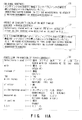
- FIGS. 8A and 8B show a display screen in bilingual correspondence learning processing.
- This display screen is set when bilingual correspondence learning of English and Japanese sentences 111 and 112 with bilingual correspondence sentence number 3646 is to be performed.
- the bilingual correspondence learning section 212 decomposes the English sentence 111 into words and phrases called parts to generate English parts information 116.
- the bilingual correspondence learning section 212 generates Japanese parts information 117 from the Japanese sentence 112.
- Each numerical value before [:] in the English parts information 116 and the Japanese parts information 117 represents the original number of a corresponding part in the English and Japanese sentences 111 and 112.
- the bilingual correspondence learning section 212 performs inference on the basis of the English parts information 116, the Japanese parts information 117, and past learning results to automatically link the English and Japanese sentences 111 and 112 in units of parts (parts linking). Assume that the part [Selectively plated] is linked with the part [ ⁇ BUBUNMEKKI GA HODOKOSARETEIRUKOTO>] in the past bilingual correspondence learning processing. That is, the two parts are recorded, as a bilingual correspondence, on the bilingual correspondence parts analysis dictionary 55.
- the bilingual correspondence learning section 212 can automatically link the parts [1: Selectively 2: plates] with the parts [18: ⁇ BUBUN> 19: ⁇ MEKKIGA> 20: ⁇ HODOKOSA> 21: ⁇ RETE> 22: ⁇ IRU> 23: ⁇ KOTO>].
- the bilingual correspondence learning section 212 can automatically link the part [minimum of] in the English sentence 111 with the Japanese part [ ⁇ SAITEI>] in the Japanese sentence 112.
- the parts link information 113 representing the linking between the respective parts of the English and Japanese sentences 111 and 112 is generated.
- the parts link information 113 is recorded on the bilingual correspondence database 56 while being linked with the English and Japanese sentences 111 and 112. This parts link information 113 is used in translation processing (to be described later).
- the part [In the beginning] includes the preposition [In]. For this reason, [In the beginning] is linked with the adverbial part [ ⁇ HAJIMENI>] including the postposition [ ⁇ NI>] corresponding to [In]. Since [God] is used as a nominative case in the sentence, it is linked with [ ⁇ RAMIWA>] on the basis of word link information 123. [Created] is linked with [ ⁇ SOUZOUSARETA>], which is in the passive verb form. In addition, since the part [the heavens and the earth] is a noun but is not a nominative case ([God] is the nominative case), it is linked with [ ⁇ TENCHIWO>] which is an object.
- the above grammatical analysis results are recorded on the bilingual correspondence database 56, together with parts link information 126.
- a translated sentence is generated on the basis of these pieces of information. That is, the part indicating the nominative case is placed at the position of the nominative case of the translated sentence, and the part indicating an action is placed at the position of the predicate of the translated sentence.
- the record testing section 213 serves to perform maintenance of the bilingual correspondence data recorded on the bilingual correspondence database 56. That is, the record testing section 213 has functions of performing display, deletion, addition, retrieval, and the like of bilingual correspondence data recorded on the bilingual correspondence database 56.
- the learning testing section 214 performs management processing such as display, deletion, addition, and retrieval of parts link information and the like recorded on the bilingual correspondence database 56.
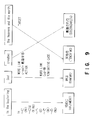
- FIG. 10 shows a display screen in a learning testing operation. On this display screen, English morphemes 121, Japanese morphemes 122, word link information 123, English parts information 124, Japanese parts information 125, and parts link information 126 are displayed. These pieces of information 121 to 126 are associated with the English sentence "In the beginning God created the heavens and the earth" and the Japanese sentence " ⁇ HAJIMENI KAMIWA TENCHIWO SOUZOUSARETA>".
- the English morphemes 121 and the Japanese morphemes 122 are constituted by information such as words and parts of speech.
- the English sentence "In the beginning God created the heavens and the earth" shown in FIG. 9 can be decomposed into English morphemes as pairs of words and parts of speech like [In: preposition], [the: article], [beginning: noun], [God: noun], [created: transitive verb], [the: article], [heavens: noun], [and: conjunction], [the: article], and [earth: noun].
- Japanese sentence " ⁇ KAMIWA HAJIMENI TENCHIWO SOUZOUSARETA>” can be decomposed into Japanese morphemes as pairs of words and parts of speech like [ ⁇ HAJIME>: noun], [ ⁇ NI>], [' ], [ ⁇ KAMI>: noun], [ ⁇ WA>], [ ⁇ TENCHI>: noun], [ ⁇ WO>], [ ⁇ SOUZOUSA>: noun + SA], [ ⁇ RE>], [ ⁇ TA>].
- the word link information 123 indicates the same words and phrases in the English morphemes 121 and the Japanese morphemes 122 as those recorded on the English-to-Japanese 51 and the Japanese-to-English dictionary 52. That is, the words and phrases indicated by the word link information 123 indicate that linking can be performed by only using the dictionaries 51 and 52 without using any past learning results. If, however, parts identical to these words and phrases have been recorded on the bilingual correspondence parts analysis dictionary 55, linking is performed in bilingual correspondence learning of the words and phrases on the basis of the parts link information 126.
- the English parts information 124, the Japanese parts information 125, and the parts link information 126 are the same as those described above. That is, the English parts information 124 and the Japanese parts information 125 indicate words and phrases decomposed on the basis of past learning results and the like.
- the parts link information 126 indicates the linking among decomposed words and phrases.
- the translation subsystem 22 comprises the English-to-Japanese translation section 221 for performing translation from English to Japanese, the Japanese-to-English translation section 222 for performing translation from Japanese to English, the English-to-Japanese translation printing section 223 for printing out an English-to-Japanese translation result, and the Japanese-to-English translation printing section 224 for printing out a Japanese-to-English translation result.
- the English-to-Japanese translation section 221 translates an English sentence into a Japanese sentence on the basis of the parts link information, key data, and the like recorded on the bilingual correspondence database 56.
- the Japanese-to-English translation section 222 translates a Japanese sentence into an English sentence.
- FIGS. 11A and 11B show an outline of Japanese-to-English translation processing.
- an original sentence 131 is supplied to the Japanese-to-English translation section 222.
- the Japanese-to-English translation section 222 retrieves a Japanese sentence (bilingual correspondence sentence number 3646) 133 which is most similar to the original sentence 131 from the bilingual correspondence data recorded on the bilingual correspondence database 56.
- a bilingual correspondence (English translation) of the Japanese sentence 133 retrieved in this manner has been recorded as an English sentence 132.
- the Japanese-to-English translation section 222 reads out parts link information 134 of the bilingual correspondence sentence number 3646 from the bilingual correspondence database 56, and compares each part of the Japanese sentence in the parts link information 134 with each part in the original sentence 131.
- a list 135 exemplifies the comparison result.
- Each display ⁇ ****> in the list 135 indicates that there is no coincidence. Since the parts "150”, “ ⁇ KEISOKUHOUHOUNIYORI>”, “ ⁇ KOUNO>”, and " ⁇ 6. 3. 1 NO>" in the parts link information 134 do not coincide with any parts of the original sentence 131, ⁇ ****> is attached to these parts. In this case, the parts having ⁇ ****> attached thereto are not required and hence deleted, and the numerals are replaced. The resultant sentence is output as a translation result.
- the character string (having the highest similarity) which is most similar to an original sentence is retrieved by the following procedure. Assume that an original sentence [ ⁇ SINPOGAICHIJIRUSHI>] is given. The independent words in this original sentence are [ ⁇ SINPO>] and [ ⁇ ICHIJIRUSHI>]. Therefore, character strings including the independent words [ ⁇ SINPO>] and [ ⁇ ICHIJIRUSHI>] are retrieved from the bilingual correspondence database 56. Assume that the following three character strings are retrieved:
- character strings 1, 2, and 3 respectively belong to sets I, II, and III. Therefore, character string I has the highest similarity with respect to the original sentence. If a plurality of character strings belong to the same set, the respective similarities are determined by the following method.
- a character string consecutively including a plurality of constituent words of an original sentence without any other words inserted therein is defined as a character string having the highest similarity.
- a character string in which the ratio of the number of constituent words of the original sentence to the number of independent words of the character string is high is defined as a character string having the second highest similarity.
- a character string including more constituent words of the original sentence is defined as a character string having the third highest similarity.
- the English-to-Japanese translation printing section 223 and the Japanese-to-English translation printing section 224 respectively output the text data of Japanese and English translated sentences in predetermined forms to the printer section 7.
- the printer section 7 performs printing operation on the basis of the received data.
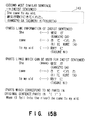
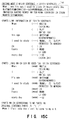
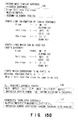
- FIG. 12 shows sentences printed by the English-to-Japanese translation printing section 223.
- FIG. 13 shows sentences printed by the Japanese-to-English translation printing section 224. Referring to FIGS. 12 and 13, the sentences on the left column are the original sentences, and those on the right column are the translated sentences. If the translation subsystem 22 determines that a translation result is not satisfactory, a mark " " is displayed at the head of the translated sentence.
- the dictionary management utilities 23 comprise the English-to-Japanese dictionary management section 231, the Japanese-to-English dictionary management section 232, the English morphological analysis dictionary management section 233, the Japanese morphological analysis dictionary management section 234, the bilingual correspondence parts analysis dictionary management section 235, and the dictionary database transmission and reception section 236.
- the English-to-Japanese dictionary management section 231 and the Japanese-to-English dictionary management section 232 respectively manage the English-to-Japanese dictionary 51 and the Japanese-to-English dictionary 52. That is, recording, deletion, and etc., of words with respect to the English-to-Japanese dictionary 51 and the Japanese-to-English dictionary 52 are performed by the English-to-Japanese dictionary management section 231 and the Japanese-to-English dictionary management section 232.
- the English morphological analysis dictionary management section 233 and the Japanese morphological analysis dictionary management section 234 respectively perform management (recording, display, and deletion) of the English morphological analysis dictionary 53 and the Japanese morphological analysis dictionary 54.
- the bilingual correspondence parts analysis dictionary management section 235 performs management (recording, display, and deletion) of the bilingual correspondence parts analysis dictionary 55 on which bilingual correspondence parts having undergone learning processing are recorded.
- the dictionary database transmission and reception section 236 transmits/receives various information held in the dictionary database section 5 to/from another work station via the communication system 8.
- FIG. 14 shows the concept of dictionary database transmission/reception processing.
- Information to be transmitted/received is various information held in the database recording section 5, i.e., the English-to-Japanese dictionary 51, the Japanese-to-English dictionary 52, the English morphological analysis dictionary 53, the Japanese morphological analysis dictionary 54, the bilingual correspondence parts analysis dictionary 55, and the bilingual correspondence database 56.
- various dictionaries and bilingual correspondence databases transmitted from a work station 1a to a work station 1b are added to a dictionary database 5b on the work station 1b side.
- the received information only information which is not recorded on the dictionary database 5b is written in the dictionary database 5b. With this operation, a write operation with respect to the dictionary database 5b can be performed within a short period of time.
- dictionaries and bilingual correspondence databases can also be transmitted from the work station 1b to the work station 1a, or can be transmitted/received between other work stations (not shown).
- the dictionary database section 5 can be shared among a plurality of work stations, and the efficiency of bilingual correspondence learning and the like can be improved.
- the database management section 24 performs access control for data held in the dictionary database section 5. For example, the database management section 24 performs access control for various data held in the bilingual correspondence database 56. Therefore, all accesses to data in the bilingual correspondence database 56 in a bilingual correspondence data recording operation, a bilingual correspondence learning operation, and a translating operation are performed through the database management section 24. Note that access to data in the bilingual correspondence database 56 in the above database transmission/ reception processing is performed by the dictionary database transmission and reception section 236.
- the dictionary database section 5 will be described next.
- the dictionary database section 5 comprises the English-to-Japanese dictionary 51, the Japanese-to-English dictionary 52, the English morphological analysis dictionary 53, the Japanese morphological analysis dictionary 54, the bilingual correspondence parts analysis dictionary 55, and the bilingual correspondence database 56.
- the bilingual correspondence parts analysis dictionary 55 serves to store bilingual correspondence parts having undergone learning processing.
- the bilingual correspondence database 56 serves to store bilingual correspondence data, English morphological information, Japanese morphological information, parts link information indicating the linking between the bilingual correspondence parts, and key data used for retrieval in translation processing.
- the English morphological information and the Japanese morphological information respectively indicate results obtained by decomposing character strings into parts of speech and the parts-of-speech information.
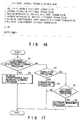
- FIG. 17 is a main flow chart showing the operation of the machine translation system according to this embodiment.
- the operator can select desired processing from a menu screen displayed on the display section 4.
- the bilingual correspondence data record subsystem 21 executes the recording/learning processing of bilingual correspondence data (step S2).
- the mainframe 2 checks whether translation processing is selected (step S3). If the translation processing is selected (YES in step S3), the translation subsystem 22 executes the translation processing (step S4). If the translation processing is not selected (NO in step S3), the mainframe 2 checks whether dictionary management processing is selected (step S5). If the dictionary management processing is selected (YES in step S5), the dictionary management utilities 23 execute the dictionary management processing (step S6). If the dictionary management processing is not selected (NO in step S5), the processing of the main flow chart is terminated.
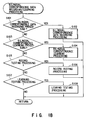
- FIG. 18 is a flow chart showing the recording/learning processing of bilingual correspondence data (step S2) in FIG. 17.
- the operator can select any one of bilingual correspondence data recording processing, bilingual correspondence learning processing, record testing processing, and learning testing processing while watching a predetermined menu displayed on the display section 4.
- the bilingual correspondence data recording processing is selected by the operator (YES in step S101)
- the bilingual correspondence data recording section 211 performs bilingual correspondence data recording by using English and Japanese translated sentences (step S102).
- the bilingual correspondence data generated by this processing is stored in the bilingual correspondence database 56. If the same sentence (words and phrases) as the bilingual correspondence data is present in a sentence as a translation target in the subsequent translation processing, the same translated sentence as the bilingual correspondence data is output.
- the mainframe 2 checks whether the bilingual correspondence learning processing is selected (step S103). If the bilingual correspondence learning processing is selected (YES in step S103), the bilingual correspondence learning section 212 executes the bilingual correspondence learning processing (step S104). That is, the bilingual correspondence learning section 212 decomposes the bilingual correspondence data into parts, and links the parts of the English sentence with the parts of the Japanese sentence. With this operation, natural translation of a sentence which is similar to the bilingual correspondence data can be performed in the subsequent translation processing.
- the mainframe 2 checks whether the record testing processing is selected (step S105). If the record testing processing is selected (YES in step S105), the record testing section 213 executes the record testing processing (step S106). That is, the record testing section 213 performs management (maintenance) processing such as display, deletion, addition, and retrieval of the recorded bilingual correspondence data.
- step S105 the mainframe 2 checks whether the learning testing processing is selected (step S107). If the learning testing processing is selected (YES in step S107), the learning testing section 214 executes the learning testing processing (step S108). That is, the learning testing section 214 performs management processing such as display, deletion, addition, and retrieval of the recorded parts link information. When the above processing is completed, the flow returns to the main flow chart in FIG. 17.
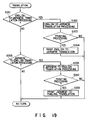
- FIG. 19 is a flow chart showing the translation processing (step S4) in FIG. 17.
- the operator can select either English-to-Japanese translation processing or Japanese-to-English translation processing while watching a menu displayed on the display section 4. If the English-to-Japanese translation processing is selected by the operator (YES in step S201), the English-to-Japanese translation section 221 performs English-to-Japanese translation processing on the basis of bilingual correspondence data and parts link information (step S202). When the translation is completed, the operator can designate printing of the translation result.
- the mainframe 2 receives a command from the operator via the input section 3, and checks this command (step S203).
- step S203 If a command for printing the translation result is received (YES in step S203), the English-to-Japanese translation printing section 223 outputs the translation result to the printer section 7. As a result, printing is performed by the printer section 7 according to a form like the one shown in FIG. 12. If a command for not printing the translation result is received (NO in step S203), the flow returns to the main flow chart in FIG. 17 without performing a printing operation.
- the mainframe 2 checks whether the Japanese-to-English translation processing is selected (step S205). If the Japanese-to-English translation processing is selected (YES in step S205), the Japanese-to-English translation section 222 performs Japanese-to-English translation on the basis of bilingual correspondence data and parts link information (step S206). When the translation is completed, the mainframe 2 checks whether the command from the operator is a command for printing the translation result (step S207). If the command for printing the translation result is received (YES in step S207), the Japanese-to-English translation printing section 224 outputs the translation result to the printer section 7. As a result, printing is performed according to a form like the one shown in FIG. 13. If a command for not printing the translation result is received (NO in step S207), the flow returns to the main flow chart in FIG. 17 without performing a printing operation.
- FIG. 20 is a flow chart showing the dictionary management processing (step S6) in FIG. 17.
- the operator can select any of English-to-Japanese dictionary management processing, Japanese-to-English dictionary management processing, English morphological analysis dictionary management processing, Japanese morphological analysis dictionary management processing, bilingual correspondence parts analysis dictionary management processing, and dictionary database transmission/reception processing while watching a menu displayed on the display section 4. If the English-to-Japanese dictionary management processing is selected by the operator (YES in step S301), the English-to-Japanese dictionary management section 231 performs recording, display, deletion, retrieval, and the like with respect to the English-to-Japanese dictionary 51 (step S302).
- the mainframe 2 checks whether the Japanese-to-English dictionary management processing is selected (step S303). If the Japanese-to-English dictionary management processing is selected (YES in step S303), the Japanese-to-English dictionary management section 232 performs recording, display, deletion, retrieval, and the like with respect to the Japanese-to-English dictionary 52 (step S304).
- the mainframe 2 checks whether the English morphological analysis dictionary management processing is selected (step S305). If the English morphological analysis dictionary management processing is selected (YES in step S305), the English morphological analysis dictionary management section 233 performs recording, display, deletion, retrieval, and the like with respect to the English morphological analysis dictionary 53 (step S306). Similarly, if the Japanese morphological analysis dictionary management processing is selected (YES in step S307), the Japanese morphological analysis dictionary management section 234 performs recording, display, deletion, retrieval, and the like with respect to the Japanese morphological analysis dictionary 54 (step S308). If the bilingual correspondence parts analysis dictionary management processing is selected (YES in step S309), the bilingual correspondence parts analysis dictionary management section 235 performs recording, display, deletion, retrieval, and the like with respect to the bilingual correspondence parts analysis dictionary 55 (step S310).
- the dictionary database transmission and reception section 236 performs transmission/reception processing of various dictionaries and bilingual correspondence databases (step S312). That is, the dictionary database transmission and reception section 236 transmits various information in the English-to-Japanese dictionary 51, the Japanese-to-English dictionary 52, the English morphological analysis dictionary 53, the Japanese morphological analysis dictionary 54, the bilingual correspondence parts analysis dictionary 55, and the bilingual correspondence database 56 to another machine translation system (work station), as shown in FIG. 14. With this processing, the dictionary databases of the respective work stations connected to each other can be shared among them.
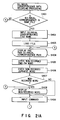
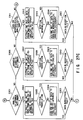
- FIGS. 21A to 21D are flow charts showing the bilingual correspondence data recording processing (step S102 in FIG. 18) in detail.
- the mainframe 2 receives a command from the operator, i.e., the name of a Japanese/English document file having the English and Japanese sentences, via the input section 3 (step S402).
- the mainframe 2 loads the Japanese/English document file 61 on the basis of the input file name (step S403), and displays the pair of English and Japanese sentences on the display section 4, as shown in FIG. 6 (step S404).
- the bilingual correspondence data recording section 211 checks whether the displayed English sentence includes a word which is not recorded on the English morphological analysis dictionary 53 (step S405).
- the bilingual correspondence data recording section 211 checks whether the displayed Japanese sentence includes a word which is not recorded on the Japanese morphological analysis dictionary 54 (step S406). If there are non-recorded words (YES in step S407), the bilingual correspondence data recording section 211 displays the non-recorded words on the non-recorded English word display column 103 and the non-recorded Japanese word display column 104 (FIG. 6), respectively (step S408). With this operation, the operator can easily recognize the non-recorded words.
- the bilingual correspondence data recording section 211 responds to a predetermined command input (step S409), and checks whether bilingual correspondence data recording of other English and Japanese sentences is performed (step S410). If bilingual correspondence data recording of other English and Japanese sentences is to be performed (YES in step S410), the bilingual correspondence data recording section 211 selects new English and Japanese sentences (step S422), and executes the processing in step S404 and the subsequent steps. If the displayed English and Japanese sentences need not be replaced with other English and Japanese sentences (NO in step S410), the bilingual correspondence data recording section 211 receives a command from the operator, and checks whether this command is a command for recording the displayed English and Japanese sentences as bilingual correspondence data (step S411).
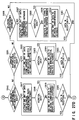
- step S411 If bilingual correspondence data recording is to be performed (YES in step S411), the bilingual correspondence data recording section 211 executes the processing in step S412 and the subsequent steps. If bilingual correspondence data recording is not performed, the bilingual correspondence data recording section 211 executes the processing in step S417 and the subsequent steps.
- step S412 If it is determined in step S412 that the English and Japanese sentences include non-recorded words (YES in step S412), the flow returns to step S408 in which the bilingual correspondence data recording section 211 displays the non-recorded words. If the English and Japanese sentence include no non-recorded words (NO in step S412), the bilingual correspondence data recording section 211 generates a bilingual correspondence number unique to the English and Japanese sentences, and adds the bilingual correspondence number to the bilingual correspondence data of the English and Japanese sentences (step S413). The bilingual correspondence data recording section 211 generates key data for retrieving the bilingual correspondence data of the English and Japanese sentences (step S414), and records the English and Japanese sentences as the bilingual correspondence data on the bilingual correspondence database 56, together with this key data (step S415).
- the bilingual correspondence data recording section 211 prepares other English and Japanese sentences from the Japanese/English document file 61 (step S416) and displays them on the display section 4 (step S404). Subsequently, the processing in step S405 and the subsequent steps is repeated.
- step S411 the bilingual correspondence data recording section 211 checks whether the command from the operator is a command for recording the non-recorded English word displayed on the non-recorded English word display column 103 (step S417). If the non-recorded English word is to be recorded (YES in step S417), the bilingual correspondence data recording section 211 records the non-recorded English word on the English morphological analysis dictionary 53 (step S418), and the flow returns to step S404. If the non-recorded English word is not recorded (NO in step S417), it is checked whether the command from the operator is a command for recording the non-recorded Japanese word (step S419).
- step S419 If the non-recorded Japanese word is to be recorded (YES in step S419), the bilingual correspondence data recording section 211 records the non-recorded Japanese word on the Japanese morphological analysis dictionary 54 (step S420), and the flow returns to step S404. If the non-recorded Japanese word is not recorded (NO in step S419), it is checked whether the command from the operator is a command for terminating the bilingual correspondence data recording processing (step S421). If the input command is a command for not terminating the bilingual correspondence data recording processing (NO in step S421), the bilingual correspondence data recording section 211 executes the processing in step S404 and the subsequent steps. If the bilingual correspondence data recording processing is to be terminated (YES in step S421), all the bilingual correspondence data recording processing is terminated.
- step S431 and the subsequent steps is executed if English and Japanese sentences to be subjected to bilingual correspondence data recording processing are present in different files (NO in step S401).
- the mainframe 2 receives an English file name and a Japanese file name from the operator via the input section 3 (steps S431 and S432).
- the mainframe 2 reads out the English and Japanese files 62 and 63 from the document files 6 on the basis of the designated file names (steps S433 and S434).
- the English and Japanese sentences in the readout English and Japanese files 62 and 63 are displayed on the display section 4 (step S435).
- the English sentence 106 "Selectively plated with minimum of 150 micro inches of silver on the bonding area, measured as in section 6. 3. 1.” and the Japanese sentence 107 " ⁇ 6. 3. 1 NO KOU NO KEISANHOUHOU NIYORI, BONDYENGU SARERU BUBUNNI GINMEKKIGA SAITEI 150 MAIKUROINCHI NO ATSUSADE BUBUNMEKKIGA HODOKOSARETEIRUKOTO>" are displayed in pair. If it is determined that the command from the operator is a command for recording the pair of English and Japanese sentences 106 and 107 as bilingual correspondence data without any modification (YES in step S436), the bilingual correspondence data recording section 211 executes the processing in step S437 and the subsequent steps. If it is determined that the command from the operator is a command for not recording the pair of English and Japanese sentences (NO in step S436), the bilingual correspondence data recording section 211 executes the processing in step S445 and the subsequent steps.
- step S437 the bilingual correspondence data recording section 211 checks whether the English sentence 106 includes a word which is not recorded on the English morphological analysis dictionary 53. Similarly, the bilingual correspondence data recording section 211 checks whether the Japanese sentence 107 includes a word which is not recorded on the Japanese morphological analysis dictionary 54 (step S438). If the English and Japanese sentences 106 and 107 include non-recorded words (YES in step S439), the bilingual correspondence data recording section 211 displays the non-recorded words on the display section 4 (step S440). Thereafter, the bilingual correspondence data recording section 211 receives a command from the operator, and checks whether this command is a command for recording the non-recorded English word (step S411).
- the bilingual correspondence data recording section 211 records the non-recorded English word on the English morphological analysis dictionary 53 (step S442), and the flow returns to step S435. If it is determined that the non-recorded English word is not recorded (NO in step S441), the bilingual correspondence data recording section 211 receives a command from the operator, and checks whether the command is a command for recording the non-recorded Japanese word (step S443).
- step S443 If the command from the operator is a command for recording the non-recorded Japanese word (YES in step S443), the bilingual correspondence data recording section 211 records the non-recorded Japanese word on the Japanese morphological analysis dictionary 54 (step S444), and the flow returns to step S435. If the command from the operator is a command for not recording the non-recorded Japanese word (No in step S443), the non-recorded word is not recorded, and the flow returns to step S435.
- step S457 determines in step S439 that there are no non-recorded words. That is, the bilingual correspondence data recording section 211 generates a bilingual correspondence sentence number unique to the English and Japanese sentences, and adds it to the bilingual correspondence data of the English and Japanese sentence (step S457).
- the bilingual correspondence data recording section 211 generates key data for retrieving the bilingual correspondence data of the English and Japanese sentences (step S458), and records the English and Japanese sentences as bilingual correspondence data on the bilingual correspondence database 56, together with this key data (step S459). Thereafter, the operator can select other displayed English and Japanese sentences.
- the bilingual correspondence data recording section 211 executes the processing in step S435 and the subsequent steps in accordance with a command from the operator (step S460).
- step S436 If it is determined in step S436 that the command from the operator is a command for not recording the displayed bilingual correspondence of the English and Japanese sentences (NO in step S436), another English sentence is selected upon input of the command 108 (steps S445 and S446). Similarly, another Japanese sentence is selected upon input of the above command (steps S447 and S448). If the command is a command for designating that the English and Japanese sentences are not replaced (NO in steps S445 and S447), the bilingual correspondence data recording section 211 executes the processing in step S449 and the subsequent steps.
- step S449 the bilingual correspondence data recording section 211 checks whether an English sentence 106 is to be connected to another English sentence in accordance with a command from the operator (step S449). If the English sentence 106 is to be connected to another English sentence (YES in step S449), the bilingual correspondence data recording section 211 connects the English sentence 106 to an English sentence 109 following the English sentence 106 (step S450), and executes the processing in step S435 and the subsequent steps. If the English sentence 106 is to be divided (YES in step S451), the bilingual correspondence data recording section 211 divides the English sentence 106 at a designated position (step S452), and executes the processing in step S435 and the subsequent steps.
- the bilingual correspondence data recording section 211 performs the same processing as described above with respect to the Japanese sentence in accordance with a command from the operator. If the command of the operator is a command for connecting the Japanese sentence 107 to a Japanese sentence 110 following the Japanese sentence 107 (YES in step S435), the bilingual correspondence data recording section 211 connects the Japanese sentence 107 to the Japanese sentence 110 (step S454), and executes the processing in step S435 and the subsequent steps. If the command is an instruction for dividing the Japanese sentence 107 at a predetermined position (YES in step S455), the bilingual correspondence data recording section 211 divides the Japanese sentence 107 at the predetermined position (step S456), and executes the processing in step S435 and the subsequent steps.
- desired portions of the English and Japanese sentences 106 and 107 can be recorded as bilingual correspondence data, or a plurality of English sentences and a plurality of Japanese sentences can be connected to each other to be recorded as bilingual correspondence data. If the command from the operator is a command for not connecting/dividing the English and Japanese sentences 106 and 107 (NO in steps S449, S451, S453, and S455), the bilingual correspondence data recording processing is terminated.
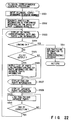
- FIG. 22 is a flow chart showing the bilingual correspondence learning processing (step S104 in FIG. 18) in detail.
- the mainframe 2 receives a bilingual correspondence sentence number from the operator via the input section 3 (step S501).
- This bilingual correspondence sentence number is a unique number attached to sentences recorded as bilingual correspondence data. If, for example, bilingual correspondence sentence number 3646 is input, as shown in FIG. 8, the mainframe 2 displays the English and Japanese sentences 111 and 112 on the display section 4.
- the bilingual correspondence learning section 212 performs parts linking of the English and Japanese sentences 111 and 112 on the basis of past learning results (bilingual correspondence parts analysis dictionary 55). That is, the bilingual correspondence learning section 212 automatically links the English and Japanese sentences 111 and 112 in units of parts to generate the parts link information 113. In this case, if the same parts as bilingual correspondence parts recorded on the bilingual correspondence parts analysis dictionary 55 are present in the English and Japanese sentences 111 and 112, the parts link information 113 is generated on the basis of the recorded bilingual correspondence parts.
- the bilingual correspondence learning section 212 If the English and Japanese sentences 111 and 112 include parts which are not recorded on the bilingual correspondence parts analysis dictionary 55, the bilingual correspondence learning section 212 generates the parts link information 113 by using words recorded on the English-to-Japanese dictionary 51 and the Japanese-to-English dictionary 52 (step S502).
- the generated parts link information 113 is displayed on the display section 4 (step S503). By referring to this display, the operator can check whether the parts link information is correct. If "y" is input on a display column 114, the bilingual correspondence learning section 212 determines that the parts link information 113 is properly generated (YES in step S504). With this processing, the bilingual correspondence learning section 212 automatically adds/records the parts link information 113 on the bilingual correspondence database 56 (step S511). If a new part (non-recorded part) is designated, this part is added/recorded on the bilingual correspondence parts analysis dictionary, and the bilingual correspondence learning processing is terminated.
- step S505 if "y" is input on a display column 115, the bilingual correspondence learning section 212 determines that the command from the operator is a command for displaying a parts link list (YES in step S505). As a result, a list of parts link information, English parts information, and Japanese parts information is output from the printer section 7.
- the English and Japanese sentences 111 and 112 include parts which have not been linked in past learning processing
- information like ⁇ 3: with ****>> is displayed in the parts link information 113. By seeing this display, the operator can recognize the parts which have not been linked.
- the English parts information 116 and the Japanese parts information 117 are displayed on the display section 4 (steps S507 and S508).
- the operator recognizes items to be corrected while watching this display or a printed-out list, and can designate how to link English and Japanese parts with each other.
- the bilingual correspondence learning section 212 receives the parts linking command from the operator, and performs linking processing in accordance with the command (step S509).
- step S509 is repeatedly executed until correction of the parts link information 113 is completed (YES in step S510). After correction of the displayed parts link information 113 is completed, the processing in step S503 and the subsequent steps is repeated, thereby executing processing such as display and recording of the parts link information after correction.
- FIG. 23 is a flow chart showing the English-to-Japanese processing (step S202 in FIG. 19) in detail.
- the mainframe 2 receives a file name designated by the operator, i.e., an English file name to be subjected to translation processing, via the input section 3 (step S601).
- the mainframe 2 loads an English file corresponding to this English file name into the work area of the internal memory (step S602), and displays the loaded English file on the display section 4 (step S603).
- the operator can designate either sentence-by-sentence translation or batch translation by referring to a screen displayed on the display section 4.
- the mainframe 2 receives a command from the operator (step S604), and determines in accordance with this input whether to perform sentence-by-sentence translation or batch translation. If original sentences are to be translated sentence by sentence (YES in step S605), one sentence is translated by the processing in step S606, and the processing in step S604 and the subsequent steps is repeated.
- the English-to-Japanese translation section 221 receives a sentence number at which translation is started (translation start sentence number) and a sentence number at which translation is ended (translation end sentence number) designated by the operator (step S608). First of all, the English-to-Japanese translation section 221 translates one sentence at the translation start sentence number into Japanese (step S609). The English-to-Japanese translation section 221 then checks whether translation of an English sentence at the translation end sentence number is completed (step S610). If the translation is completed (YES in step S610), the English-to-Japanese translation section 221 repeatedly executes the processing in step S604 and the subsequent steps.
- the English-to-Japanese translation section 221 displays the second English sentence (step S611), and repeatedly executes the processing in step S609 and the subsequent steps. In this manner, a plurality of English sentences from the translation start sentence number to the translation end sentence number can be translated into Japanese sentences altogether.
- step S607 If it is determined in step S607 that the command is a command for not performing batch translation (NO in step S607), it is checked whether the command is a command for printing the translation result (step S612). If the translation result is to be printed (YES in step S612), the English-to-Japanese translation printing section 223 receives a printing start sentence number and a printing end sentence number from the operator. The English-to-Japanese translation printing section 223 outputs the first translation result (English and translated Japanese sentences) at the printing start sentence number to the printer section 7. The printer section 7 prints the first translated result in a predetermined form (step S614).
- the English-to-Japanese translation printing section 223 continues to print translation results until printing of the translation result at the printing end sentence number is completed (YES in step S615).
- the processing in step S604 and the subsequent steps is executed.
- step S612 If it is determined in step S612 that the command is not a printing command (NO in step S612), it is checked whether the command is a command for outputting the translated sentence to a file (step S617). If the translated sentence is to be output to the file (YES in step S617), the mainframe 2 outputs the translated sentence to the file, and the flow returns to the flow chart shown in FIG. 19.
- FIG. 24 is a flow chart showing the sentence-to-sentence translation in steps S606 and S609.
- the English-to-Japanese translation section 221 generates key data for an original sentence supplied as a translation target (step S651).
- the key data is data for retrieval from the bilingual correspondence database 56.
- the English-to-Japanese translation section 221 retrieves bilingual correspondence data including an English sentence which is most similar to the original sentence from the bilingual correspondence data in the bilingual correspondence database 56 in accordance with the key data (step S652), and loads this bilingual correspondence data into a predetermined work memory (step S653).
- the English-to-Japanese translation section 221 retrieves the English sentence which is most similar to an original sentence 141 from the bilingual correspondence database 56, and detects bilingual correspondence data 142. That is, the bilingual correspondence data 142 having an English sentence [When it came to voting, he abstained] is retrieved.
- the English-to-Japanese translation section 221 checks parts of the bilingual correspondence data 142 which coincide with parts of the original sentence 141. That is, the English-to-Japanese translation section 221 checks whether the bilingual correspondence data 142 includes parts which can be used for translation of the original sentence 141 (step S654). If it is determined that parts which can be used for translation are present in the bilingual correspondence data 142 (YES in step S654), these parts are loaded into the work area of the internal memory (step S655). Of the parts of the bilingual correspondence data 142, the two parts [When] and [he] can be used for translation.
- the English-to-Japanese translation section 221 checks whether all the parts in the original sentence 141 are prepared (step S657). In this case, of the parts of the original sentence 141, the parts [I fell into the river] and [came to may aid] are not prepared (not translated) (NO in step S657). Therefore, the English-to-Japanese translation section 221 reads out bilingual correspondence data 143 having the English sentence which is the second most similar to the original sentence 141 from the bilingual correspondence database 56 (step S658). Of the parts link information of the bilingual correspondence data 143, the two parts [came] and [to my aid] coincide with parts of the original sentence 141 (step S654).
- the English-to-Japanese translation section 221 loads these two parts into the work area (step S655), and checks whether all the parts of the original sentence 141 are prepared (step S657). In this case, since the part [I fell into the river] of the parts of the original sentence 141 is not prepared (NO in step S657), the English-to-Japanese translation section 221 loads bilingual correspondence data 144 having the English sentence which is the third most similar to the original sentence 141 (step S658).
- the English-to-Japanese translation section 221 loads bilingual correspondence data 145 having the English sentence which is fourth most similar to the original sentence 141, and searches for a part which can be used. As a result, all the parts of the original sentence 141 are prepared, and Japanese parts 146 corresponding to the respective English parts of the original sentence 141 are generated.
- the English-to-Japanese translation section 221 rearranges the Japanese parts 146 to generate and display a translated sentence 147 (steps S659 and S660).
- step S654 If it is determined in step S654 that the parts link information of the loaded bilingual correspondence data includes no parts which can be used (NO in step S654), and there is no bilingual correspondence data having an English sentence which is similar to the original sentence 141 (YES in step S656), English-to-Japanese translation is performed on the basis of the English-to-Japanese dictionary 51 (step S661). That is, the English-to-Japanese translation section 221 loads Japanese translations of parts (in units of words in this case), for which no bilingual correspondences have been retrieved, of the parts of the original sentence 141 from the English-to-Japanese dictionary 51, thereby completing a translated sentence of the original sentence 141.
- the flow returns to the flow chart in FIG. 23.
- FIG. 25 is a flow chart showing the Japanese-to-English translation processing (step S206 in FIG. 19) in detail.
- the Japanese-to-English translation processing shown in this flow chart is similar to the flow chart in FIG. 23.
- the mainframe 2 receives a file name designated by the operator, i.e., a Japanese file name to be subjected to translation processing, via the input section 3 (step S701).
- the mainframe 2 loads a Japanese file corresponding to this Japanese file name into the work area of the internal memory (step S702), and displays the loaded Japanese file on the display section 4 (step S703).
- the operator can designate either sentence-by-sentence translation or batch translation by referring to a screen displayed on the display section 4.
- the mainframe 2 receives a command from the operator (step S704), and determines in accordance with this input whether to perform sentence-by-sentence translation or batch translation. If original sentences are to be translated sentence by sentence (YES in step S705), one sentence is translated by the processing in step S706, and the processing in step S704 and the subsequent steps is repeated.
- the Japanese-to-English translation section 222 receives a sentence number at which translation is started (translation start sentence number) and a sentence number at which translation is ended (translation end sentence number) designated by the operator (step S708). First of all, the Japanese-to-English translation section 222 translates one sentence at the translation start sentence number into Japanese (step S709). The Japanese-to-English translation section 222 then checks whether translation of a Japanese sentence at the translation end sentence number is completed (step S710). If the translation is completed (YES in step S710), the Japanese-to-English translation section 222 repeatedly executes the processing in step S704 and the subsequent steps.
- the Japanese-to-English translation section 222 displays the second Japanese sentence (step S711), and repeatedly executes the processing in step S709 and the subsequent steps. In this manner, a plurality of Japanese sentences from the translation start sentence number to the translation end sentence number can be translated into English sentences altogether.
- step S707 If it is determined in step S707 that the command is a command for not performing batch translation (NO in step S707), it is checked whether the command is a command for printing the translation result (step S712). If the translation result is to be printed (YES in step S712), the Japanese-to-English translation printing section 224 receives a printing start sentence number and a printing end sentence number from the operator. The Japanese-to-English translation printing section 224 outputs the first translation result (Japanese and translated English sentences) at the printing start sentence number to the printer section 7. The printer section 7 prints the first translation result in a predetermined form (step S714).
- the Japanese-to-English translation printing section 224 continues to print translation results until printing of the translation result at the printing end sentence number is completed (YES in step S715).
- the processing in step S704 and the subsequent steps is executed.
- step S712 If it is determined in step S712 that the command is not a printing command (NO in step S712), it is checked whether the command is a command for outputting the translated sentence to a file (step S717). If the translated sentence is to be output to the file (YES in step S717), the mainframe 2 outputs the translated sentence to the file, and the flow returns to the flow chart shown in FIG. 19.
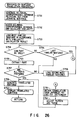
- FIG. 26 is a flow chart showing sentence-by-sentence translation processing in steps S706 and S709 described above. This processing is the same as that described above and shown in FIG. 24.
- the Japanese-to-English translation section 222 generates key data for-an original sentence supplied as a translation target (step S751).
- the Japanese-to-English translation section 222 retrieves bilingual correspondence data having a Japanese sentence which is most similar to the original sentence from the bilingual correspondence data in the bilingual correspondence database 56 in accordance with this key data (step S752), and reads out this bilingual correspondence data (step S753).
- the Japanese-to-English translation section 222 retrieves a Japanese sentence which is most similar to the original sentence 131 from the bilingual correspondence database 56, and detects bilingual correspondence data 133.
- the Japanese-to-English translation section 222 checks parts of the bilingual correspondence data 133 which coincide with parts of the original sentence 131. That is, it is checked whether the bilingual correspondence data 133 includes parts which can be used for translation of the original sentence 131 (step S754).
- the bilingual correspondence data 133 includes parts which can be used (YES in step S754), the parts are loaded into the work area of the internal memory (step S755).
- the mark ⁇ ****> is internally attached to each of the parts which cannot be used, i.e., [ ⁇ 150>], [ ⁇ KEISOKUHOUHOUNIYORI>], [ ⁇ KOUNO>], and [ ⁇ 6. 3. 1 NO>].
- the Japanese-to-English translation section 222 reads out bilingual correspondence data having a Japanese sentence which is second most similar to the original sentence 131 from the bilingual correspondence database 56 (step S758).
- the Japanese-to-English translation section 222 repeatedly executes the processing in step S754 and the subsequent steps to search for parts which can be used in the bilingual correspondence data.
- step S756 Japanese-to-English translation is performed on the basis of the Japanese-to-English dictionary 52 (step S761).
- the person, tense, and the like of the words retrieved from the Japanese-to-English dictionary 52 are matched with the original sentence 131 (step S762).
- the parts (words) retrieved in this manner are arranged in a predetermined order to complete a translated sentence 136 of the original sentence 131.
- the completed translated sentence 136 is displayed on the display section 4 (step S760).
- FIGS. 27A to 27D are flow charts showing the transmission/reception processing with respect to the dictionary database section 5 (step S312 in FIG. 20) in detail.
- the operator can select either dictionary database transmission processing or reception processing by referring to a menu displayed on the display section 4. If the transmission processing is selected (YES in step S801), the dictionary database transmission and reception section 236 executes the processing in step S803 and the subsequent steps. If the reception processing is selected (YES in step S802), the dictionary database transmission and reception section 236 executes the processing in step S901 (FIG. 27C) and the subsequent steps.
- the dictionary database transmission and reception section 236 extracts one unit of English-to-Japanese dictionary data from the English-to-Japanese dictionary 51 (step S804). Note that one unit of data in this case includes one word held in the English-to-Japanese dictionary 51 and all associated information such as the parts-of-speech information and the like of the word.
- the dictionary database transmission and reception section 236 writes the extracted data in a transmission file set in a predetermined memory area in advance (step S805).
- steps S804 and S805 is repeatedly executed until all the dictionary data are loaded from the English-to-Japanese dictionary 51 (NO in step S806).
- the dictionary database transmission and reception section 236 transmits the dictionary data in the transmission file to another work station via the communication system 8.
- the English-to-Japanese dictionary data transmission processing is completed, and the flow returns to the flow chart shown in FIG. 20.
- the dictionary database transmission and reception section 236 extracts one unit of Japanese-to-English dictionary data from the Japanese-to-English dictionary 52 (step S811).
- the dictionary database transmission and reception section 236 writes the extracted data in the transmission file (step S812).
- the processing in steps S811 and S812 is repeatedly executed until all the dictionary data are loaded from the Japanese-to-English dictionary 52 (NO in step S813).
- the dictionary database transmission and reception section 236 transmits the dictionary data in the transmission file to another work station via the communication system 8. With the above processing, the Japanese-to-English dictionary data transmission processing is completed, and the flow returns to the flow chart shown in FIG. 20.
- the dictionary database transmission and reception section 236 extracts data from the English morphological analysis dictionary 53 and writes it in the transmission file (steps S822 to S824).
- the dictionary database transmission and reception section 236 then transmits the dictionary data in the transmission file to another work station.
- the English morphological analysis dictionary transmission processing is completed, and the flow returns to the flow chart shown in FIG. 20. Subsequently, transmission processing of the Japanese morphological analysis dictionary 54, the bilingual correspondence parts analysis dictionary 55, and the bilingual correspondence database 56 is executed in the same manner as described above.
- the dictionary database transmission and reception section 236 executes the processing in steps S826 to S830.
- the dictionary database transmission and reception section 236 executes the processing in steps S831 to S835.
- the dictionary database transmission and reception section 236 executes the processing in steps S836 to S840.
- the operator can select desired processing from a predetermined dictionary database reception main menu.
- the dictionary database transmission and reception section 236 extracts one unit of dictionary data from an English-to-Japanese dictionary reception file (step S902), and checks whether the same data as the extracted dictionary data is present in the English-to-Japanese dictionary 51 held by the self-system (step S903).
- dictionary data transmitted from another work station via the communication system 8 is stored in an English-to-Japanese dictionary file set in a predetermined memory area in advance.
- received dictionary data is not reflected in the dictionary database section 5 used by the operator unless the dictionary database reception processing is selected by the operator. If the same dictionary data as the extracted dictionary data is not present in the English-to-Japanese dictionary 51 (NO in step S903), the dictionary database transmission and reception section 236 adds/records this dictionary data on the English-to-Japanese dictionary 51. If the same dictionary data as the extracted dictionary data is present in the English-to-Japanese dictionary 51 (YES in step S903), the dictionary database transmission and reception section 236 executes the processing in step S905 without adding the dictionary data (step S904).
- step S905 the dictionary database transmission and reception section 236 checks whether any dictionary data which has not undergone the determination processing in step S903 is left in the English-to-Japanese dictionary reception file. If dictionary data is left (YES in step S905), the dictionary database transmission and reception section 236 repeats the processing in steps S902 to S904. If all the dictionary data in the English-to-Japanese dictionary reception file have undergone the determination processing in step S903 (NO in step S905), the flow returns to the flow chart shown in FIG. 20 via the flow chart shown in FIG. 27A.
- reception processing of the Japanese-to-English dictionary 52, the English morphological analysis dictionary 53, the Japanese morphological analysis dictionary 54, and the bilingual correspondence parts analysis dictionary 55 is executed in the same manner as described above.
- reception processing of the Japanese-to-English dictionary 52 is to be performed, the processing in steps S906 to S910 is executed.
- reception processing of the English morphological analysis dictionary 53 is to be performed, the processing in steps S911 to S915 is executed.
- reception processing of the bilingual correspondence parts analysis dictionary 55 is to be performed, the processing in steps S916 to S920 is executed.
- reception processing of the Japanese morphological analysis dictionary 54 is to be performed, the processing in steps S921 to S925 is executed.
- step S926 When bilingual correspondence database reception processing is to be performed (YES in step S926), the processing in steps S927 to S931 is executed.
- the dictionary database transmission and reception section 236 extracts one unit of data from the bilingual correspondence database reception file (step S927), and checks whether the same data as the extracted data is present in the bilingual correspondence database 56 (step S928). If the same data is not present in the bilingual correspondence database 56 (NO in step S928), the dictionary database transmission and reception section 236 generates a bilingual correspondence sentence number of this data (step S929). The dictionary database transmission and reception section 236 then adds/records the received data on the bilingual correspondence database 56, together with the bilingual correspondence sentence number (step S930).
- step S931 the dictionary database transmission and reception section 236 executes the processing in step S931 without adding the data (steps S929 and S930).
- step S931 the dictionary database transmission and reception section 236 checks whether any data which has not undergone the determination processing in step S928 is left in the bilingual correspondence database reception file. If such data is left (YES in step S931), the dictionary database transmission and reception section 236 repeats the processing in steps S927 to S930. If all the data in the bilingual correspondence database reception file have undergone the determination processing in step S928 (NO in step S931), the flow returns to the flow chart shown in FIG. 20 via the flow chart shown in FIG. 27A.
- dictionary databases can be shared among a plurality of work stations (machine translation systems).
- a parallel processing type processor or the like may be used to retrieve data from a bilingual correspondence database.
- retrieval can be performed within a short period of time, and the translation speed can be greatly increased.
- OCR optical character reader
- the translation ability can be improved in accordance with commands from the operator. That is, the machine translation system can be made to learn translation examples by performing bilingual correspondence data recording and bilingual correspondence learning (generation of parts link information). Therefore, by making the machine translation system learn desired translation examples, the user can improve the translation ability of the machine translation system. Especially, since the degree of freedom of commands from the operator is high, the machine translation system can flexibly cope with a command for an idiomatic expression or the like. Furthermore, since learning/recording processing can be automatically performed on the basis of past learning results (bilingual correspondence parts), the load of work on the operator in learning/recording processing can be reduced.
- the translation quality can be improved without adding grammatical rules. Therefore, a deterioration in translation quality caused by interference between added grammatical rules can be prevented.
- natural translation can be realized.
- a natural translation can be output with respect to an idiomatic expression or the like which is inconsistent with grammatical rules.
- the system of the present invention translates each part of an original sentence while comparing each part of the original sentence with each part of a translation example similar to the original sentence. With this operation, each part of the original sentence can be translated flexibly instead of strictly complying with grammatical rules. Therefore, a more natural translation can be output.
Landscapes
- Engineering & Computer Science (AREA)
- Theoretical Computer Science (AREA)
- Health & Medical Sciences (AREA)
- Artificial Intelligence (AREA)
- Audiology, Speech & Language Pathology (AREA)
- Computational Linguistics (AREA)
- General Health & Medical Sciences (AREA)
- Physics & Mathematics (AREA)
- General Engineering & Computer Science (AREA)
- General Physics & Mathematics (AREA)
- Machine Translation (AREA)
Applications Claiming Priority (8)
| Application Number | Priority Date | Filing Date | Title |
|---|---|---|---|
| JP6070137A JPH07253983A (ja) | 1994-03-15 | 1994-03-15 | 機械翻訳システム |
| JP70135/94 | 1994-03-15 | ||
| JP6070138A JPH07253984A (ja) | 1994-03-15 | 1994-03-15 | 機械翻訳システム |
| JP6070136A JPH07253982A (ja) | 1994-03-15 | 1994-03-15 | 機械翻訳システム |
| JP70138/94 | 1994-03-15 | ||
| JP70136/94 | 1994-03-15 | ||
| JP70137/94 | 1994-03-15 | ||
| JP6070135A JPH07253981A (ja) | 1994-03-15 | 1994-03-15 | 機械翻訳システム |
Publications (2)
| Publication Number | Publication Date |
|---|---|
| EP0672989A2 true EP0672989A2 (de) | 1995-09-20 |
| EP0672989A3 EP0672989A3 (de) | 1998-10-28 |
Family
ID=27465214
Family Applications (1)
| Application Number | Title | Priority Date | Filing Date |
|---|---|---|---|
| EP95301677A Withdrawn EP0672989A3 (de) | 1994-03-15 | 1995-03-14 | Maschinelles Übersetzungssystem |
Country Status (2)
| Country | Link |
|---|---|
| US (1) | US5659765A (de) |
| EP (1) | EP0672989A3 (de) |
Cited By (8)
| Publication number | Priority date | Publication date | Assignee | Title |
|---|---|---|---|---|
| GR1002453B (el) * | 1995-10-20 | 1996-10-15 | Εξυπνη συσκευη για ανακτηση πολυγλωσσων κειμενων. | |
| WO1998019254A1 (en) * | 1996-10-31 | 1998-05-07 | Wordstream Inc. | Method and apparatus for automated language translation |
| EP0834139A4 (de) * | 1995-06-07 | 1998-08-05 | Int Language Engineering Corp | Maschinenunterstützte übersetzungswerkzeuge |
| EP0805403A3 (de) * | 1996-05-02 | 1999-04-07 | Sony Corporation | Uebersetzungsgerät und Uebersetzungsmethode |
| US6301554B1 (en) | 1999-09-23 | 2001-10-09 | Wordstream, Inc. | Language translation using a constrained grammar in the form of structured sentences formed according to pre-defined grammar templates |
| WO2002054280A1 (en) | 2000-12-28 | 2002-07-11 | D'agostini Organizzazione Srl | Automatic or semiautomatic translation system and method with post-editing for the correction of errors |
| ES2277693A1 (es) * | 2003-03-31 | 2007-07-16 | Gines Sanchez Gomez | Procdedimiento y sistema de traduccion de idiomas por frases homologas. |
| CN111008534A (zh) * | 2019-12-09 | 2020-04-14 | 郑州航空工业管理学院 | 一种英语翻译测试系统 |
Families Citing this family (67)
| Publication number | Priority date | Publication date | Assignee | Title |
|---|---|---|---|---|
| JP3385146B2 (ja) * | 1995-06-13 | 2003-03-10 | シャープ株式会社 | 会話文翻訳装置 |
| JPH09259128A (ja) * | 1996-03-22 | 1997-10-03 | Sharp Corp | データ処理装置 |
| US6473728B1 (en) * | 1996-05-23 | 2002-10-29 | Sun Microsystems, Inc. | On-demand, multi-language business card printer |
| US5848386A (en) * | 1996-05-28 | 1998-12-08 | Ricoh Company, Ltd. | Method and system for translating documents using different translation resources for different portions of the documents |
| JPH1074204A (ja) * | 1996-06-28 | 1998-03-17 | Toshiba Corp | 機械翻訳方法及び原文・訳文表示方法 |
| WO1998044433A1 (fr) * | 1997-03-31 | 1998-10-08 | Sanyo Electric Co., Ltd. | Methode d'elaboration de document et appareillage pour traduction machine |
| US6233546B1 (en) * | 1998-11-19 | 2001-05-15 | William E. Datig | Method and system for machine translation using epistemic moments and stored dictionary entries |
| US6233545B1 (en) * | 1997-05-01 | 2001-05-15 | William E. Datig | Universal machine translator of arbitrary languages utilizing epistemic moments |
| JPH11175527A (ja) * | 1997-12-15 | 1999-07-02 | Fujitsu Ltd | 出力制御装置及び出力制御方法 |
| JP3181548B2 (ja) * | 1998-02-03 | 2001-07-03 | 富士通株式会社 | 情報検索装置及び情報検索方法 |
| US6721715B2 (en) | 1998-03-30 | 2004-04-13 | Martin A. Nemzow | Method and apparatus for localizing currency valuation independent of the original and objective currencies |
| US7191393B1 (en) * | 1998-09-25 | 2007-03-13 | International Business Machines Corporation | Interface for providing different-language versions of markup-language resources |
| US6535842B1 (en) * | 1998-12-10 | 2003-03-18 | Global Information Research And Technologies, Llc | Automatic bilingual translation memory system |
| JP3879321B2 (ja) * | 1998-12-17 | 2007-02-14 | 富士ゼロックス株式会社 | 文書要約装置、文書要約方法及び文書要約プログラムを記録した記録媒体 |
| JP3695191B2 (ja) * | 1998-12-25 | 2005-09-14 | 日本電気株式会社 | 翻訳支援装置及びその方法並びにコンピュータ可読記録媒体 |
| US6243669B1 (en) | 1999-01-29 | 2001-06-05 | Sony Corporation | Method and apparatus for providing syntactic analysis and data structure for translation knowledge in example-based language translation |
| US6278968B1 (en) | 1999-01-29 | 2001-08-21 | Sony Corporation | Method and apparatus for adaptive speech recognition hypothesis construction and selection in a spoken language translation system |
| US6282507B1 (en) | 1999-01-29 | 2001-08-28 | Sony Corporation | Method and apparatus for interactive source language expression recognition and alternative hypothesis presentation and selection |
| US6356865B1 (en) * | 1999-01-29 | 2002-03-12 | Sony Corporation | Method and apparatus for performing spoken language translation |
| US6266642B1 (en) | 1999-01-29 | 2001-07-24 | Sony Corporation | Method and portable apparatus for performing spoken language translation |
| US6442524B1 (en) | 1999-01-29 | 2002-08-27 | Sony Corporation | Analyzing inflectional morphology in a spoken language translation system |
| US6374224B1 (en) | 1999-03-10 | 2002-04-16 | Sony Corporation | Method and apparatus for style control in natural language generation |
| US6721697B1 (en) | 1999-10-18 | 2004-04-13 | Sony Corporation | Method and system for reducing lexical ambiguity |
| US6778949B2 (en) * | 1999-10-18 | 2004-08-17 | Sony Corporation | Method and system to analyze, transfer and generate language expressions using compiled instructions to manipulate linguistic structures |
| US6529865B1 (en) | 1999-10-18 | 2003-03-04 | Sony Corporation | System and method to compile instructions to manipulate linguistic structures into separate functions |
| US6330530B1 (en) * | 1999-10-18 | 2001-12-11 | Sony Corporation | Method and system for transforming a source language linguistic structure into a target language linguistic structure based on example linguistic feature structures |
| US6928448B1 (en) | 1999-10-18 | 2005-08-09 | Sony Corporation | System and method to match linguistic structures using thesaurus information |
| US6535886B1 (en) | 1999-10-18 | 2003-03-18 | Sony Corporation | Method to compress linguistic structures |
| US6484136B1 (en) * | 1999-10-21 | 2002-11-19 | International Business Machines Corporation | Language model adaptation via network of similar users |
| US6473729B1 (en) * | 1999-12-20 | 2002-10-29 | Xerox Corporation | Word phrase translation using a phrase index |
| AU2001249777A1 (en) * | 2000-03-31 | 2001-10-15 | Amikai, Inc. | Method and apparatus for providing multilingual translation over a network |
| US8874431B2 (en) * | 2001-03-16 | 2014-10-28 | Meaningful Machines Llc | Knowledge system method and apparatus |
| US20030135357A1 (en) * | 2001-03-16 | 2003-07-17 | Eli Abir | Multilingual database creation system and method |
| US20030093261A1 (en) * | 2001-03-16 | 2003-05-15 | Eli Abir | Multilingual database creation system and method |
| US7483828B2 (en) * | 2001-03-16 | 2009-01-27 | Meaningful Machines, L.L.C. | Multilingual database creation system and method |
| US7711547B2 (en) * | 2001-03-16 | 2010-05-04 | Meaningful Machines, L.L.C. | Word association method and apparatus |
| US20030083860A1 (en) * | 2001-03-16 | 2003-05-01 | Eli Abir | Content conversion method and apparatus |
| US8744835B2 (en) * | 2001-03-16 | 2014-06-03 | Meaningful Machines Llc | Content conversion method and apparatus |
| US7860706B2 (en) | 2001-03-16 | 2010-12-28 | Eli Abir | Knowledge system method and appparatus |
| JP4574047B2 (ja) * | 2001-03-30 | 2010-11-04 | 富士通株式会社 | 訳例辞書を用いて翻訳を行う機械翻訳装置およびプログラム |
| WO2003021391A2 (en) * | 2001-08-30 | 2003-03-13 | Umpleby Stuart A | Method and apparatus for translating between two species of one generic language |
| EP1306775A1 (de) * | 2001-10-29 | 2003-05-02 | BRITISH TELECOMMUNICATIONS public limited company | Maschinelle Übersetzung |
| US20030110023A1 (en) * | 2001-12-07 | 2003-06-12 | Srinivas Bangalore | Systems and methods for translating languages |
| US7361881B2 (en) * | 2002-03-13 | 2008-04-22 | Oy Ajat Ltd | Ganged detector pixel, photon/pulse counting radiation imaging device |
| EP1349079A1 (de) * | 2002-03-28 | 2003-10-01 | BRITISH TELECOMMUNICATIONS public limited company | Maschinenübersetzung |
| US7353165B2 (en) * | 2002-06-28 | 2008-04-01 | Microsoft Corporation | Example based machine translation system |
| CN100380373C (zh) * | 2002-10-29 | 2008-04-09 | 埃里·阿博 | 知识系统方法和装置 |
| US7536293B2 (en) * | 2003-02-24 | 2009-05-19 | Microsoft Corporation | Methods and systems for language translation |
| US7195409B2 (en) * | 2003-08-27 | 2007-03-27 | King Jim Co., Ltd. | Apparatus, method and program for producing small prints |
| WO2005036303A2 (en) * | 2003-09-11 | 2005-04-21 | Eli Abir | Knowledge system method and apparatus |
| US20050216253A1 (en) * | 2004-03-25 | 2005-09-29 | Microsoft Corporation | System and method for reverse transliteration using statistical alignment |
| GB2415518A (en) * | 2004-06-24 | 2005-12-28 | Sharp Kk | Method and apparatus for translation based on a repository of existing translations |
| JP4058057B2 (ja) * | 2005-04-26 | 2008-03-05 | 株式会社東芝 | 日中機械翻訳装置、日中機械翻訳方法および日中機械翻訳プログラム |
| JP2007220045A (ja) * | 2006-02-20 | 2007-08-30 | Toshiba Corp | コミュニケーション支援装置、コミュニケーション支援方法およびコミュニケーション支援プログラム |
| US8549492B2 (en) * | 2006-04-21 | 2013-10-01 | Microsoft Corporation | Machine declarative language for formatted data processing |
| US8171462B2 (en) * | 2006-04-21 | 2012-05-01 | Microsoft Corporation | User declarative language for formatted data processing |
| GB2444084A (en) * | 2006-11-23 | 2008-05-28 | Sharp Kk | Selecting examples in an example based machine translation system |
| US8700998B2 (en) * | 2006-11-30 | 2014-04-15 | Red Hat, Inc. | Foreign language translation tool |
| US8326598B1 (en) | 2007-03-26 | 2012-12-04 | Google Inc. | Consensus translations from multiple machine translation systems |
| JP2008305167A (ja) * | 2007-06-07 | 2008-12-18 | Toshiba Corp | 原言語文を目的言語文に機械翻訳する装置、方法およびプログラム |
| US8706477B1 (en) | 2008-04-25 | 2014-04-22 | Softwin Srl Romania | Systems and methods for lexical correspondence linguistic knowledge base creation comprising dependency trees with procedural nodes denoting execute code |
| JP5277750B2 (ja) * | 2008-06-25 | 2013-08-28 | 富士ゼロックス株式会社 | 画像処理プログラム、画像処理装置及び画像処理システム |
| US8762130B1 (en) | 2009-06-17 | 2014-06-24 | Softwin Srl Romania | Systems and methods for natural language processing including morphological analysis, lemmatizing, spell checking and grammar checking |
| US8762131B1 (en) | 2009-06-17 | 2014-06-24 | Softwin Srl Romania | Systems and methods for managing a complex lexicon comprising multiword expressions and multiword inflection templates |
| US9471565B2 (en) * | 2011-07-29 | 2016-10-18 | At&T Intellectual Property I, L.P. | System and method for locating bilingual web sites |
| KR20130014106A (ko) * | 2011-07-29 | 2013-02-07 | 한국전자통신연구원 | 다중 번역 엔진을 사용한 번역 장치 및 방법 |
| CN103593340B (zh) * | 2013-10-28 | 2017-08-29 | 余自立 | 自然表达信息处理方法、处理及回应方法、设备及系统 |
Family Cites Families (5)
| Publication number | Priority date | Publication date | Assignee | Title |
|---|---|---|---|---|
| JPS62203273A (ja) * | 1986-03-04 | 1987-09-07 | Toshiba Corp | 機械翻訳システム |
| US5140522A (en) * | 1988-10-28 | 1992-08-18 | Kabushiki Kaisha Toshiba | Method and apparatus for machine translation utilizing previously translated documents |
| JPH05151260A (ja) * | 1991-11-29 | 1993-06-18 | Hitachi Ltd | 翻訳テンプレート学習方法および翻訳テンプレート学習システム |
| JP3189186B2 (ja) * | 1992-03-23 | 2001-07-16 | インターナショナル・ビジネス・マシーンズ・コーポレ−ション | パターンに基づく翻訳装置 |
| US5373442A (en) * | 1992-05-29 | 1994-12-13 | Sharp Kabushiki Kaisha | Electronic translating apparatus having pre-editing learning capability |
-
1995
- 1995-03-14 US US08/403,958 patent/US5659765A/en not_active Expired - Fee Related
- 1995-03-14 EP EP95301677A patent/EP0672989A3/de not_active Withdrawn
Cited By (13)
| Publication number | Priority date | Publication date | Assignee | Title |
|---|---|---|---|---|
| US6131082A (en) * | 1995-06-07 | 2000-10-10 | Int'l.Com, Inc. | Machine assisted translation tools utilizing an inverted index and list of letter n-grams |
| EP0834139A4 (de) * | 1995-06-07 | 1998-08-05 | Int Language Engineering Corp | Maschinenunterstützte übersetzungswerkzeuge |
| GR1002453B (el) * | 1995-10-20 | 1996-10-15 | Εξυπνη συσκευη για ανακτηση πολυγλωσσων κειμενων. | |
| US6161083A (en) * | 1996-05-02 | 2000-12-12 | Sony Corporation | Example-based translation method and system which calculates word similarity degrees, a priori probability, and transformation probability to determine the best example for translation |
| EP0805403A3 (de) * | 1996-05-02 | 1999-04-07 | Sony Corporation | Uebersetzungsgerät und Uebersetzungsmethode |
| US5884247A (en) * | 1996-10-31 | 1999-03-16 | Dialect Corporation | Method and apparatus for automated language translation |
| WO1998019254A1 (en) * | 1996-10-31 | 1998-05-07 | Wordstream Inc. | Method and apparatus for automated language translation |
| US6301554B1 (en) | 1999-09-23 | 2001-10-09 | Wordstream, Inc. | Language translation using a constrained grammar in the form of structured sentences formed according to pre-defined grammar templates |
| WO2002054280A1 (en) | 2000-12-28 | 2002-07-11 | D'agostini Organizzazione Srl | Automatic or semiautomatic translation system and method with post-editing for the correction of errors |
| US7580828B2 (en) | 2000-12-28 | 2009-08-25 | D Agostini Giovanni | Automatic or semiautomatic translation system and method with post-editing for the correction of errors |
| ES2277693A1 (es) * | 2003-03-31 | 2007-07-16 | Gines Sanchez Gomez | Procdedimiento y sistema de traduccion de idiomas por frases homologas. |
| ES2277693B1 (es) * | 2003-03-31 | 2008-06-16 | Gines Sanchez Gomez | Procedimiento y sistema de traduccion de idiomas por frases homologas . |
| CN111008534A (zh) * | 2019-12-09 | 2020-04-14 | 郑州航空工业管理学院 | 一种英语翻译测试系统 |
Also Published As
| Publication number | Publication date |
|---|---|
| US5659765A (en) | 1997-08-19 |
| EP0672989A3 (de) | 1998-10-28 |
Similar Documents
| Publication | Publication Date | Title |
|---|---|---|
| US5659765A (en) | Machine translation system | |
| US5850561A (en) | Glossary construction tool | |
| JP4404211B2 (ja) | マルチリンガル翻訳メモリ、翻訳方法および翻訳プログラム | |
| JP4911028B2 (ja) | 単語翻訳装置、翻訳方法および翻訳プログラム | |
| EP1111514B1 (de) | Phrasenübersetzungsverfahren und -system | |
| EP0692765B1 (de) | Textbearbeitungssystem und Verfahren unter Verwendung einer Wissensbasis | |
| Saini et al. | A survey of machine translation techniques and systems for Indian languages | |
| US5285386A (en) | Machine translation apparatus having means for translating polysemous words using dominated codes | |
| JP4319860B2 (ja) | 転移ベースの機械翻訳システムで使用される転移辞書を開発するための方法および装置 | |
| JP5235344B2 (ja) | 機械翻訳を行う装置、方法およびプログラム | |
| JP2007199793A (ja) | 単語アライメント例文対訳辞書学習装置と訳語抽出装置 | |
| JP2003030186A (ja) | 機械翻訳装置 | |
| EP0201324B1 (de) | Sprachengenerationssystem | |
| EP1655674A2 (de) | Drittsprachentexterzeugungsalgorithmus durch mehrsprachige texteingabe und einrichtung und programm dafür | |
| Fancellu et al. | Neural networks for cross-lingual negation scope detection | |
| EP1037153A2 (de) | Natursprachenübersetzung | |
| WO1999062002A1 (en) | A method and arrangement for translation of information | |
| Rapp | A Part-of-Speech-Based Search Algorithm for Translation Memories. | |
| Samantaray | A Data mining approach for resolving cases of Multiple Parsing in Machine Aided Translation of Indian Languages | |
| JP2006024114A (ja) | 機械翻訳装置および機械翻訳コンピュータプログラム | |
| JP5632213B2 (ja) | 機械翻訳装置及び機械翻訳プログラム | |
| Samantaray | Example based machine translation approach for Indian languages | |
| JPH07253983A (ja) | 機械翻訳システム | |
| JPH07253981A (ja) | 機械翻訳システム | |
| JPH07253984A (ja) | 機械翻訳システム |
Legal Events
| Date | Code | Title | Description |
|---|---|---|---|
| PUAI | Public reference made under article 153(3) epc to a published international application that has entered the european phase |
Free format text: ORIGINAL CODE: 0009012 |
|
| 17P | Request for examination filed |
Effective date: 19950403 |
|
| AK | Designated contracting states |
Kind code of ref document: A2 Designated state(s): DE FR GB |
|
| PUAL | Search report despatched |
Free format text: ORIGINAL CODE: 0009013 |
|
| AK | Designated contracting states |
Kind code of ref document: A3 Designated state(s): DE FR GB |
|
| STAA | Information on the status of an ep patent application or granted ep patent |
Free format text: STATUS: THE APPLICATION HAS BEEN WITHDRAWN |
|
| 18W | Application withdrawn |
Withdrawal date: 19990204 |