EP0675886B1 - Heterocycles non aromatiques substitues par aminomethylene et leur utilisation comme antagonistes de substance p - Google Patents
Heterocycles non aromatiques substitues par aminomethylene et leur utilisation comme antagonistes de substance p Download PDFInfo
- Publication number
- EP0675886B1 EP0675886B1 EP93922821A EP93922821A EP0675886B1 EP 0675886 B1 EP0675886 B1 EP 0675886B1 EP 93922821 A EP93922821 A EP 93922821A EP 93922821 A EP93922821 A EP 93922821A EP 0675886 B1 EP0675886 B1 EP 0675886B1
- Authority
- EP
- European Patent Office
- Prior art keywords
- alkyl
- phenyl
- formula
- carbon
- hydrogen
- Prior art date
- Legal status (The legal status is an assumption and is not a legal conclusion. Google has not performed a legal analysis and makes no representation as to the accuracy of the status listed.)
- Expired - Lifetime
Links
Classifications
-
- C—CHEMISTRY; METALLURGY
- C07—ORGANIC CHEMISTRY
- C07D—HETEROCYCLIC COMPOUNDS
- C07D401/00—Heterocyclic compounds containing two or more hetero rings, having nitrogen atoms as the only ring hetero atoms, at least one ring being a six-membered ring with only one nitrogen atom
- C07D401/02—Heterocyclic compounds containing two or more hetero rings, having nitrogen atoms as the only ring hetero atoms, at least one ring being a six-membered ring with only one nitrogen atom containing two hetero rings
- C07D401/12—Heterocyclic compounds containing two or more hetero rings, having nitrogen atoms as the only ring hetero atoms, at least one ring being a six-membered ring with only one nitrogen atom containing two hetero rings linked by a chain containing hetero atoms as chain links
-
- A—HUMAN NECESSITIES
- A61—MEDICAL OR VETERINARY SCIENCE; HYGIENE
- A61P—SPECIFIC THERAPEUTIC ACTIVITY OF CHEMICAL COMPOUNDS OR MEDICINAL PREPARATIONS
- A61P25/00—Drugs for disorders of the nervous system
-
- A—HUMAN NECESSITIES
- A61—MEDICAL OR VETERINARY SCIENCE; HYGIENE
- A61P—SPECIFIC THERAPEUTIC ACTIVITY OF CHEMICAL COMPOUNDS OR MEDICINAL PREPARATIONS
- A61P25/00—Drugs for disorders of the nervous system
- A61P25/04—Centrally acting analgesics, e.g. opioids
-
- A—HUMAN NECESSITIES
- A61—MEDICAL OR VETERINARY SCIENCE; HYGIENE
- A61P—SPECIFIC THERAPEUTIC ACTIVITY OF CHEMICAL COMPOUNDS OR MEDICINAL PREPARATIONS
- A61P25/00—Drugs for disorders of the nervous system
- A61P25/18—Antipsychotics, i.e. neuroleptics; Drugs for mania or schizophrenia
-
- A—HUMAN NECESSITIES
- A61—MEDICAL OR VETERINARY SCIENCE; HYGIENE
- A61P—SPECIFIC THERAPEUTIC ACTIVITY OF CHEMICAL COMPOUNDS OR MEDICINAL PREPARATIONS
- A61P25/00—Drugs for disorders of the nervous system
- A61P25/20—Hypnotics; Sedatives
-
- A—HUMAN NECESSITIES
- A61—MEDICAL OR VETERINARY SCIENCE; HYGIENE
- A61P—SPECIFIC THERAPEUTIC ACTIVITY OF CHEMICAL COMPOUNDS OR MEDICINAL PREPARATIONS
- A61P25/00—Drugs for disorders of the nervous system
- A61P25/24—Antidepressants
-
- A—HUMAN NECESSITIES
- A61—MEDICAL OR VETERINARY SCIENCE; HYGIENE
- A61P—SPECIFIC THERAPEUTIC ACTIVITY OF CHEMICAL COMPOUNDS OR MEDICINAL PREPARATIONS
- A61P25/00—Drugs for disorders of the nervous system
- A61P25/26—Psychostimulants, e.g. nicotine, cocaine
-
- A—HUMAN NECESSITIES
- A61—MEDICAL OR VETERINARY SCIENCE; HYGIENE
- A61P—SPECIFIC THERAPEUTIC ACTIVITY OF CHEMICAL COMPOUNDS OR MEDICINAL PREPARATIONS
- A61P29/00—Non-central analgesic, antipyretic or antiinflammatory agents, e.g. antirheumatic agents; Non-steroidal antiinflammatory drugs [NSAID]
-
- A—HUMAN NECESSITIES
- A61—MEDICAL OR VETERINARY SCIENCE; HYGIENE
- A61P—SPECIFIC THERAPEUTIC ACTIVITY OF CHEMICAL COMPOUNDS OR MEDICINAL PREPARATIONS
- A61P37/00—Drugs for immunological or allergic disorders
- A61P37/08—Antiallergic agents
-
- A—HUMAN NECESSITIES
- A61—MEDICAL OR VETERINARY SCIENCE; HYGIENE
- A61P—SPECIFIC THERAPEUTIC ACTIVITY OF CHEMICAL COMPOUNDS OR MEDICINAL PREPARATIONS
- A61P43/00—Drugs for specific purposes, not provided for in groups A61P1/00-A61P41/00
-
- A—HUMAN NECESSITIES
- A61—MEDICAL OR VETERINARY SCIENCE; HYGIENE
- A61P—SPECIFIC THERAPEUTIC ACTIVITY OF CHEMICAL COMPOUNDS OR MEDICINAL PREPARATIONS
- A61P9/00—Drugs for disorders of the cardiovascular system
- A61P9/08—Vasodilators for multiple indications
-
- C—CHEMISTRY; METALLURGY
- C07—ORGANIC CHEMISTRY
- C07D—HETEROCYCLIC COMPOUNDS
- C07D417/00—Heterocyclic compounds containing two or more hetero rings, at least one ring having nitrogen and sulfur atoms as the only ring hetero atoms, not provided for by group C07D415/00
- C07D417/02—Heterocyclic compounds containing two or more hetero rings, at least one ring having nitrogen and sulfur atoms as the only ring hetero atoms, not provided for by group C07D415/00 containing two hetero rings
- C07D417/12—Heterocyclic compounds containing two or more hetero rings, at least one ring having nitrogen and sulfur atoms as the only ring hetero atoms, not provided for by group C07D415/00 containing two hetero rings linked by a chain containing hetero atoms as chain links
Definitions
- the present invention relates to novel aminomethylene substituted non-aromatic heterocycles, pharmaceutical compositions comprising such compounds and the use of such compounds in the treatment and prevention of inflammatory and central nervous system disorders, as well as several other disorders.
- the pharmaceutically active compounds of this invention are substance P receptor antagonists.
- This invention also relates to novel intermediates used in the synthesis of such substance P receptor antagonists.
- Substance P is a naturally occurring undecapeptide belonging to the tachykinin family of peptides, the latter being named because of their prompt stimulatory action on smooth muscle tissue. More specifically, substance P is a pharmacologically active neuropeptide that is produced in mammals and possesses a characteristic amino acid sequence that is illustrated by D. F. Veber et al . in U.S. Patent No. 4,680,283.
- the present invention relates to compounds of the formula
- the present invention also relates to the pharmaceutically acceptable acid addition and base salts of compounds of the formula Ia (hereinafter also referred to as compounds of the formula I).
- the acids which are used to prepare the pharmaceutically acceptable acid addition salts of the aforementioned base compounds of this invention are those which form non-toxic acid addition salts, i.e., salts containing pharmacologically acceptable anions, such as the hydrochloride, hydrobromide, hydroiodide, nitrate, sulfate, bisulfate, phosphate, acid phosphate, acetate, lactate, citrate, acid citrate, tartrate, bitartrate, succinate, maleate, fumarate, gluconate, saccharate, benzoate, methanesulfonate, ethanesulfonate, benzenesulfonate, p-toluenesulfonate and pamoate [i.e., 1,1'-methylene-bis-(2-hydroxy-3-na
- the chemical bases which are used as reagents to prepare the pharmaceutically acceptable base salts of this invention are those which form non-toxic base salts with the acidic compounds of formula I.
- Such non-toxic base salts include those derived from such pharmacologically acceptable cations as sodium, potassium calcium and magnesium, etc.
- halo as used herein, unless otherwise indicated, includes chloro, fluoro, bromo and iodo.
- alkyl as used herein, unless otherwise indicated, includes saturated monovalent hydrocarbon radicals having straight, branched or cyclic moieties or combinations thereof.
- alkoxy includes O-alkyl groups wherein “alkyl” is defined as above.
- one or more substituents includes from one to the maximum number of substituents possible based on the number of available bonding sites.
- Preferred compounds of this invention include those compounds of the formula I wherein the substituents at positions "2" and “3" of the nitrogen containing ring of R 3 are in a cis configuration.
- R 3 is a group of the formula VII or VIII, "a cis configuration", as used herein, means that the non-hydrogen substituent at position "3" is cis to R 12 .
- R 3 is a group of the formula III, VII or IX;
- R 2 is hydrogen;
- A is phenyl or indolinyl;
- W is (C 1 -C 3 )alkoxy optionally substituted with from one to five fluorine atoms;
- R 1 is thiazolyl, imidazolyl, thiadiazolyl, pyrrolyl, oxazolyl, pyridyl, pyrimidinyl, pyrazolyl or thiophenyl, and R 1 may optionally be substituted with one or two (C 1 -C 3 ) alkyl moieties.
- R 3 is a group of the formula III and R 9 is benzhydryl
- R 3 is a group of the formula VII, R 12 is phenyl, each of R 13 , R 14 , R 15 and R 16 is hydrogen, m is zero and X is -(CH 2 ) 3 -; or
- R 3 is a group of the formula IX, r is two and R 19 is benzhydryl.
- R 3 is a group of the formula III wherein the substituents at positions "2" and “3" of the nitrogen containing ring are in the cis configuration, R 9 is benzhydryl and A is phenyl; or (b) R 3 is a group of the formula VII wherein R 12 and the substituent at position "3" of the nitrogen containing ring are in the cis configuration, A is phenyl, R 12 is phenyl, each of R 2 , R 13 , R 14 , R 15 and R 16 is hydrogen, m is zero, W is methoxy or isopropoxy, X is -(CH 2 ) 3 - and R 1 is thiazolyl, imidazolyl, pyrrolyl, oxazolyl, pyridyl, pyrimidinyl, pyrazolyl, thiophenyl or thiadiazolyl.
- R 3 is a group of the formula VII
- each of R 13 , R 14 , R 15 and R 16 is hydrogen
- m is zero
- X is -(CH 2 ) 3 -
- A is phenyl
- W is methoxy
- R 1 is selected from thiazolyl, imidazolyl, thiadiazolyl, pyridyl, pyrimidinyl, pyrazolyl, thiophenyl and isoxazolyl.
- the present invention also relates to compounds of the formulae wherein ring A, R 1 , R 3 and W are defined as above.
- the present invention also relates to a pharmaceutical composition for treating or preventing a condition selected from the group consisting of inflammatory diseases (e.g., arthritis, psoriasis, asthma and inflammatory bowel disease), anxiety, depression or dysthymic disorders, urinary incontinence, gastrointestinal disorders such as emesis and colitis, psychosis, pain, allergies such as eczema and rhinitis, chronic obstructive airways disease, hypersensitivity disorders such as poison ivy, vasospastic diseases such as angina, migraine and Reynaud's disease, fibrosing and collagen diseases such as scleroderma and eosinophilic fascioliasis, reflex sympathetic dystrophy such as shoulder/hand syndrome, addiction disorders such as alcoholism, stress related somatic disorders, peripheral neuropathy, neuralgia, neuropathological disorders such as Alzheimer's disease, AIDS related dementia, diabetic neuropathy and multiple sclerosis, disorders related to immune enhancement or suppression such as systemic lupus
- the present invention also relates to a pharmaceutical composition for antagonizing the effects of substance P in a mammal, including a human, comprising a substance P antagonizing amount of a compound of the formula I, or a pharmaceutically acceptable salt thereof, and a pharmaceutically acceptable carrier.
- the present invention also relates to a pharmaceutical composition for treating or preventing a disorder in a mammal, including a human, resulting from an excess of substance P, comprising a substance P antagonizing amount of a compound of the formula I, or a pharmaceutically acceptable salt thereof, and a pharmaceutically acceptable carrier.
- the present invention also relates to a pharmaceutical composition for treating or preventing a condition selected from the group consisting of inflammatory diseases (e.g., arthritis, psoriasis, asthma and inflammatory bowel disease), anxiety, depression or dysthymic disorders, urinary incontinence, gastrointestinal disorders such as emesis and colitis, psychosis, pain, allergies such as eczema and rhinitis, chronic obstructive airways disease, hypersensitivity disorders such as poison ivy, vasospastic diseases such as angina, migraine and Reynaud's disease, fibrosing and collagen diseases such as scleroderma and eosinophilic fascioliasis, reflex sympathetic dystrophy such as shoulder/hand syndrome, addiction disorders such as alcoholism, stress related somatic disorders, peripheral neuropathy, neuralgia, neuropathological disorders such as Alzheimer's disease, AIDS related dementia, diabetic neuropathy and multiple sclerosis, disorders related to immune enhancement or suppression such as systemic lupus
- the present invention also relates to a pharmaceutical composition for treating or preventing a disorder in a mammal, including a human, the treatment or prevention of which is effected or facilitated by a decrease in substance P mediated neurotransmission, comprising an amount of a compound of the formula I, or a pharmaceutically acceptable salt thereof, effective in antagonizing the effect of substance P at its receptor site, and a pharmaceutically acceptable carrier.
- the present invention also relates to a pharmaceutical composition for treating or preventing a disorder in a mammal, including a human, the treatment or prevention of which is effected or facilitated by a decrease in substance P mediated neurotransmission, comprising an amount of a compound of the formula I, or a pharmaceutically acceptable salt thereof, effective in treating or preventing such disorder, and a pharmaceutically acceptable carrier.
- neurotransmission comprising administering to said mammal an amount of a compound of the formula I, or a pharmaceutically acceptable salt thereof, effective in treating or preventing such disorder.
- the compounds of the formula I have chiral centers and therefore exist in different enantiomeric forms.
- This invention relates to all optical isomers and all stereoisomers of compounds of the formula I, and mixtures thereof.
- the compounds of the formula I may be prepared as described in the following reaction schemes and discussion. Unless otherwise indicated, ring A, W, R 1 , R 2 , R 3 , R 4 , R 6 , R 7 , R 8 , R 9 , R 10 , R 11 , R 12 , R 13 , R 14 , R 15 , R 16 , R 17 , R 18 , R 19 , R 22 , X, Z, Y, m, n, o, p, q, r, x, y, and z, and structural formulas Ia, II, III, IV, V, VI, VII, VIII, IX, XI, and XII in the reaction schemes and discussion that follow are defined as above.
- Scheme 1 illustrates the preparation of compounds of the formula Ia from starting materials of the formula X wherein G is hydrogen, hydroxy, chloro, bromo or (C 1 -C 6 )alkoxy.
- a compound of the formula X wherein G is hydrogen may be converted directly into the corresponding compound of the formula I by reacting it with a compound of the formula NH 2 R 3 in the presence of a reducing agent.
- Reducing agents that may be used include sodium cyanoborohydride, sodium triacetoxyborohydride, sodium borohydride, hydrogen and a metal catalyst, zinc and hydrochloric acid, and formic acid. This reaction is typically conducted in a reaction inert solvent at a temperature from about 0°C to about 150°C.
- Suitable reaction inert solvents include lower alcohols (e.g., methanol, ethanol and isopropanol), 1,2-dichloroethane, acetic acid and tetrahydrofuran (THF).
- the solvent is acetic acid
- the temperature is about 25°C
- the reducing agent is sodium triacetoxyborohydride
- the reaction is conducted in the presence of a dehydrating agent such as molecular sieves.
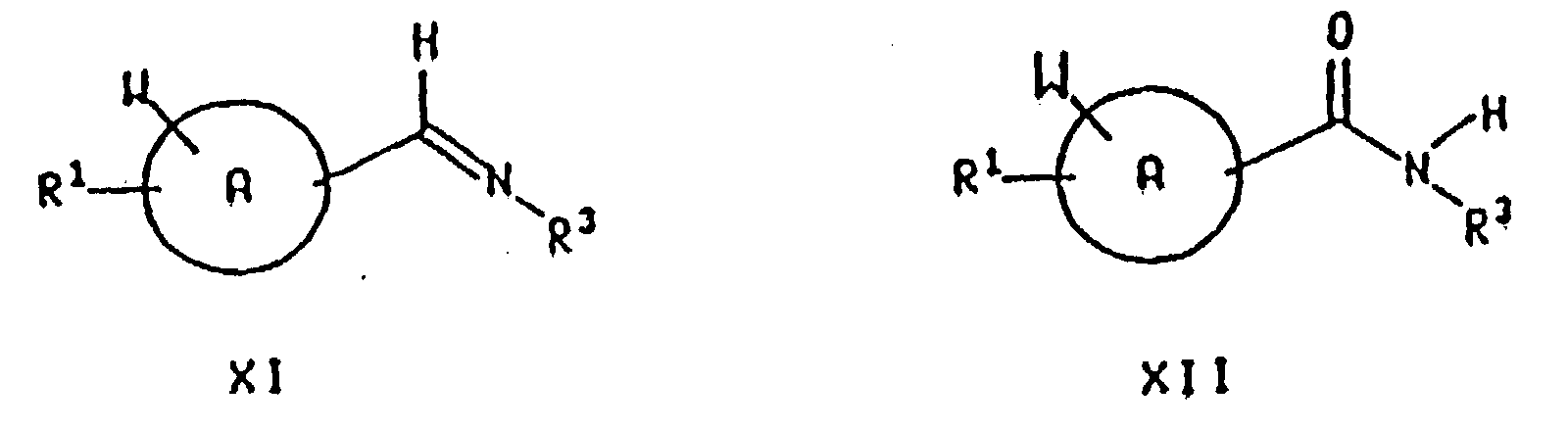
- reaction of a compound of the formula X with a compound of the formula NH 2 R 3 may be carried out in the presence of a dehydrating agent or by using an apparatus designed to remove azeotropically the water generated, to produce an imine of the formula which is then reacted with a reducing agent as described above, preferably with sodium triacetoxyborohydride in an acetic acid or 1,2-dichloroethane solvent at about room temperature.
- the preparation of the imine XI is generally carried out in a reaction inert solvent such as benzene, xylene or toluene, preferably toluene, at a temperature from about 25°C to about 110°C, preferably at about the reflux temperature of the solvent.
- Suitable dehydrating agents/solvent systems include titanium tetrachloride/dichloromethane, titanium isopropoxide/dichloromethane and molecular sieves. Titanium tetrachloride/dichloromethane is preferred.
- activating agents include carbonyldiimidazole, chloroformates such as isobutyl chloroformate, diethylphosphoryl cyanide and dicyclohexylcarbodiimide. Carbonyldiimidazole is preferred. This reaction is generally conducted at a temperature from about 0°C to about 50°C, preferably at about 25°C, in an inert solvent such as chloroform, diethyl ether, THF or dimethylformamide (DMF).
- chloroformates such as isobutyl chloroformate
- diethylphosphoryl cyanide diethylphosphoryl cyanide
- dicyclohexylcarbodiimide dicyclohexylcarbodiimide.
- Carbonyldiimidazole is preferred. This reaction is generally conducted at a temperature from about 0°C to about 50°C, preferably at about 25°C, in an inert solvent such as chloroform, diethyl ether, THF
- the reaction of the compound of formula X with the appropriate compound of formula NH 2 R 3 is typically carried out in the presence of an acid scavenger in an aprotic solvent at a temperature from about 0°C to about 100°C.
- Suitable acid scavengers include triethylamine (TEA), pyridine and inorganic salts such as sodium and potassium carbonate.
- Suitable solvents include methylene chloride (CH 2 Cl 2 ), chloroform (CHCl 3 ), benzene, toluene and tetrahydrofuran (THF).
- the reaction is conducted in CH 2 Cl 2 at room temperature using TEA as the acid scavenger.
- the reaction of the compound of formula NH 2 R 3 is usually conducted in an aprotic solvent such as benzene, toluene, chlorobenzene or xylenes, at a temperature from about 25°C to about 100°C, preferably at about the reflux temperature of the solvent.
- an aprotic solvent such as benzene, toluene, chlorobenzene or xylenes
- Reduction of the compound of formula XII so formed yields the corresponding compound of the formula I wherein R 2 is hydrogen.
- a reducing agent such as lithium, aluminum hydride, borane dimethylsulfide complex, borane-THF or diborane, in an aprotic solvent such as THF, dioxane or diethyl ether, at a temperature from about 0°C to about 70°C.
- the reducing agent is borane dimethylsulfide complex and the reaction is carried out at about room temperature in an ethereal solvent such as THF.
- R 2 is hydrogen
- R 2 is -CO 2 (C 1 -C 10 )alkyl
- a (C 1 -C 10 )alkyl halo-carbonate such as methyl or ethyl chloroformate
- an acid scavenger typically, this reaction is conducted in an polar solvent such as chloroform, methylene chloride, water or a water/acetone mixture, at a temperature from about 0°C to about 100°C, preferably at about room temperature.
- Suitable acid scavengers include triethylamine, pyridine and potassium and sodium carbonate or bicarbonate.
- R 3 is a group of the formula II
- the starting materials of the formula NH 2 R 3 may be prepared as described in United States Patent 5,162,339, which issued on November 11, 1992. This patent is incorporated herein in its entirety.
- R 3 is a group of the formula III
- the starting materials of the formula NH 2 R 3 may be prepared as described in United States Patent Application Serial No. 532,525, filed June 1, 1990 and PCT Patent Application PCT/US 91/02853, filed April 25, 1991. Both these applications are incorporated herein in their entirety.
- R 3 is a group of the formula IV, V or VI
- the starting materials of the formula NH 2 R 3 may be prepared as described in United States Patent Application Serial No. 557,442, filed July 23, 1990 and PCT Patent Application PCT/US 91/03369, filed May 14, 1991. Both these applications are incorporated herein in their entirety.
- R 3 is a group of the formula VII
- the starting materials of the formula NH 2 R 3 may be prepared as described in United States Patent Application Serial No. 724,268, filed July 1, 1991, United States Patent Application Serial No. 800,667, filed November 27, 1991 and PCT Patent Application PCT/US 92/00065, filed January 14, 1992. These applications are incorporated herein in their entirety.
- R 3 is a group of the formula VIII
- the starting materials of the formula NH 2 R 3 may be prepared as described in PCT Patent Application PCT/US 91/05776, filed August 20, 1991, United States Patent Application Serial No. 800,667, filed November 27, 1991 and PCT Patent Application PCT/US 92/00065, filed January 14, 1992. These applications are incorporated herein in their entirety.
- R 3 is a group of the formula IX
- the starting materials of the formula NH 2 R 3 may be prepared as described in United States Patent Application Serial No. 719,884, filed June 21, 1991. This application is incorporated herein in its entirety.
- Scheme 2 illustrates one method of preparing the starting materials of formula X wherein G is hydrogen. This is the preferred method of preparing compounds of the formula X wherein G is hydrogen and R 1 is thiazolyl, thiadiazolyl and oxazolyl. Once formed, these compounds can be converted into the corresponding compounds of the formula I or XI according to the procedures described above.
- a compound of the formula XIII is reacted with titanium tetrachloride (TiCl 4 ) or tin tetrachloride (SnCl 4 ) and dichloromethyl methyl ether (CHCl 2 -O-CH 3 ) at a temperature from about 0°C to about room temperature, preferably at about 0°C, in a methylene chloride or tetrachloroethylene solvent to yield the corresponding aldehyde of formula X wherein G is hydrogen.
- TiCl 4 titanium tetrachloride
- SnCl 4 tin tetrachloride
- CHCl 2 -O-CH 3 dichloromethyl methyl ether
- the compound of the formula XIII may be reacted with hexamethylene tetraamine and trifluoroacetic acid at a temperature from about 25°C to about 80°C, preferably at about 70°C, to yield the same product.
- Scheme 3 illustrates a preferred method of preparing compounds of the formula X wherein G is hydrogen and R 1 is a nitrogen containing heterocyclic group (e.g., a pyrrolyl, triazolyl or imidazolyl group).
- R 1 is a nitrogen containing heterocyclic group (e.g., a pyrrolyl, triazolyl or imidazolyl group).
- the -CHO group of a benzaldehyde of the formula XIV is protected by conversion to the corresponding 1,3-dioxolane of formula XV, wherein R 5 is a suitable leaving group such as iodine or bromine.
- This reaction is generally carried out by heating a mixture of the benzaldehyde and ethylene glycol in an inert solvent such as benzene or toluene, preferably in the presence of an acid catalyst such as p-toluenesulfonic acid, and preferably at the reflux temperature of the solvent to remove the water formed in the reaction.
- an inert solvent such as benzene or toluene
- an acid catalyst such as p-toluenesulfonic acid
- the resulting compound of formula XV is then reacted with a heterocyclic compound of the formula R 1 H to form the corresponding compound of formula XVI.
- the reaction is carried out in an aprotic, nonpolar solvent such as xylene or toluene, or in the absence of a solvent (e.g., as a melt of imidazole and the compound of the formula XV) at a temperature from about 100°C to about 300°C, in the presence of an inorganic metal catalyst such as copper metal or copper iodide, in a high pressure reactor at a pressure from about 1 atm to about 5 atm.
- the reaction is carried out neat using a copper metal catalyst, at a temperature from about 140°C to about 160°C and at a pressure from about 2 atm to about 3 atm.
- compounds of the formula X wherein G is hydrogen and R 1 does not contain an ionizable proton can be prepared by reacting a compound of the formula XV, as depicted in scheme 3 and defined above, wherein R 5 is bromine or iodine, with magnesium metal to form a Grignard reagent of the formula and then reacting the Grignard reagent in situ with a halogen substituted heterocyclic compound of the formula X''R 1 wherein X'' is chloro, bromo or iodo under standard Grignard conditions.
- reaction typically conducted in an ethereal solvent (e.g., diethyl ether or tetrahydrofuran), at a temperature from about 0°C to about 70°C. They are preferably conducted at the reflux temperature of the solvent in the presence of a catalyst (e.g., tetrakis (triphenylphosphine) palladium (0)).
- a catalyst e.g., tetrakis (triphenylphosphine) palladium (0).
- compounds of the formula X wherein G is other than hydrogen can be prepared from commercially available sources by methods well known to those skilled in the art.
- compounds of the formula X wherein G is hydroxy can be obtained by: (1) oxidizing the corresponding compounds of the formula wherein R 20 is methyl with potassium permanganate in a reaction inert solvent such as acetone; (2) oxidizing an alcohol of the formula XVII wherein R 20 is hydroxymethyl with manganese dioxide; or (3) subjecting a compound of the formula XVII wherein R 20 is chloro, bromo or iodo to Grignard reaction conditions (i.e., reacting the compound of formula XVII with magnesium metal to form an intermediate of the formula and then treating the intermediate with carbon dioxide.
- Carboxylic esters of the formula X wherein G is (C 1 -C 6 )alkoxy can be prepared by a variety of methods known in the art. One such method involves reacting the corresponding acid halide in a (C 1 -C 6 )alkanol in the presence of a catalytic amount of hydrochloric, sulfuric or para-toluenesulfonic acid at a temperature from about room temperature to about the boiling point of the alcohol employed.
- Compounds of the formula Ia wherein R 1 is pyrrolyl can also be prepared from the corresponding compounds wherein R 1 is replaced by an amino group.
- the corresponding amine may be obtained by reducing the corresponding nitro compound using one of several methods known to those skilled in the art.
- One such method involves catalytic hydrogenation of the nitro compound using hydrogen gas and a palladium on carbon catalyst in an inert solvent such as methanol or ethanol at about room temperature and a pressure of about 1-5 atm.
- the reduction can also be accomplished using a reducing agent such as borane/methyl sulfide in tetrahydrofuran at a temperature from about 25°C to about 70°C, preferably at the reflux temperature of the solvent.
- the latter reduction method is exemplified in Example 45 of United States Patent Application Serial No. 932,392, filed on August 19, 1992. This application is incorporated herein by reference in its entirety.
- pressure is not critical unless otherwise indicated. Pressures from about 0.5 atmospheres to about 5 atmospheres are generally acceptable, and ambient pressure, i.e. about 1 atmosphere, is preferred as a matter of convenience.
- novel compounds of the formula I and the pharmaceutically acceptable salts thereof are useful as substance P antagonists, i.e., they possess the ability to antagonize the effects of substance P at its receptor site in mammals, and therefore they are able to function as therapeutic agents in the treatment of the aforementioned disorders and diseases in an afflicted mammal.
- the compounds of the formula I which are basic in nature are capable of forming a wide variety of different salts with various inorganic and organic acids. Although such salts must be pharmaceutically acceptable for administration to animals, it is often desirable in practice to initially isolate a compound of the Formula I from the reaction mixture as a pharmaceutically unacceptable salt and then simply convert the latter back to the free base compound by treatment with an alkaline reagent and subsequently convert the latter free base to a pharmaceutically acceptable acid addition salt.
- the acid addition salts of the base compounds of this invention are readily prepared by treating the base compound with a substantially equivalent amount of the chosen mineral or organic acid in an aqueous solvent medium or in a suitable organic solvent, such as methanol or ethanol. Upon careful evaporation of the solvent, the desired solid salt is readily obtained.
- Those compounds of the formula I which are also acidic in nature, e.g., where R 6 or R 10 is carboxyphenyl, are capable of forming base salts with various pharmacologically acceptable cations.
- Such salts include the alkali metal or alkaline-earth metal salts and particularly, the sodium and potassium salts. These salts are all prepared by conventional techniques.
- the chemical bases which are used as reagents to prepare the pharmaceutically acceptable base salts of this invention are those which form non-toxic base salts with the acidic compounds of formula I.
- Such non-toxic base salts include those derived from such pharmacologically acceptable cations as sodium, potassium, calcium and magnesium, etc.
- salts can easily be prepared by treating the corresponding acidic compounds with an aqueous solution containing the desired pharmacologically acceptable cations, and then evaporating the resulting solution to dryness, preferably under reduced pressure.
- they may also be prepared by mixing lower alkanolic solutions of the acidic compounds and the desired alkali metal alkoxide together, and then evaporating the resulting solution to dryness in the same manner as before.
- stoichiometric quantities of reagents are preferably employed in order to ensure completeness of reaction and maximum yields of the desired final product.
- the compounds of formula I and their pharmaceutically acceptable salts exhibit substance P receptor-binding activity and therefore are of value in the treatment and prevention of a wide variety of clinical conditions the treatment or prevention of which are effected or facilitated by a decrease in substance P mediated neurotransmission.
- Such conditions include inflammatory diseases (e.g., arthritis, psoriasis, asthma and inflammatory bowel disease), anxiety, depression or dysthymic disorders, urinary incontinence, gastrointestinal disorders such as emesis and colitis, psychosis, pain, allergies such as eczema and rhinitis, chronic obstructive airways disease, hypersensitivity disorders such as poison ivy, vasospastic diseases such as angina, migraine and Reynaud's disease, fibrosing and collagen diseases such as scleroderma and eosinophilic fascioliasis, reflex sympathetic dystrophy such as shoulder/hand syndrome, addiction disorders such as alcoholism, stress related somatic disorders, peripheral neuropathy, neuralgia, neuropathological disorders such as Alzheimer's disease, AIDS related dementia, diabetic neuropathy and multiple sclerosis, disorders related to immune enhancement or suppression such as systemic lupus erythematosus, and rheumatic diseases such as fibrositis.
- the compounds of the formula I and the pharmaceutically acceptable salts thereof can be administered via either the oral, parenteral or topical routes.
- these compounds are most desirably administered in dosages ranging from about 5.0 mg up to about 1500 mg per day, although variations will necessarily occur depending upon the weight and condition of the subject being treated and the particular route of administration chosen.
- a dosage level that is in the range of about 0.07 mg to about 21 mg per kg of body weight per day is most desirably employed. Variations may nevertheless occur depending upon the species of animal being treated and its individual response to said medicament, as well as on the type of pharmaceutical formulation chosen and the time period and interval at which such administration is carried out.
- dosage levels below the lower limit of the aforesaid range may be more than adequate, while in other cases still larger doses may be employed without causing any harmful side effect, provided that such larger doses are first divided into several small doses for administration throughout the day.
- the compounds of the formula I and their pharmaceutically acceptable salts may be administered alone or in combination with pharmaceutically acceptable carriers or diluents by either of the three routes previously indicated, and such administration may be carried out in single or multiple doses.
- the novel therapeutic agents of this invention can be administered in a wide variety of different dosage forms, i.e., they may be combined with various pharmaceutically acceptable inert carriers in the form of tablets, capsules, lozenges, troches, hard candies, powders, sprays, creams, salves, suppositories, jellies, gels, pastes, lotions, ointments, aqueous suspensions, injectable solutions, elixirs, syrups, and the like.
- Such carriers include solid diluents or fillers, sterile aqueous media and various non-toxic organic solvents, etc.
- oral pharmaceutical compositions can be suitably sweetened and/or flavored.
- the therapeutic compounds of this invention are present in such dosage forms at concentration levels ranging from about 5.0% to about 70% by weight.
- tablets containing various excipients such as microcrystalline cellulose, sodium citrate, calcium carbonate, dicalcium phosphate and glycine may be employed along with various disintegrants such as starch (and preferably corn, potato or tapioca starch), alginic acid and certain complex silicates, together with granulation binders like polyvinylpyrrolidone, sucrose, gelatin and acacia.
- disintegrants such as starch (and preferably corn, potato or tapioca starch), alginic acid and certain complex silicates, together with granulation binders like polyvinylpyrrolidone, sucrose, gelatin and acacia.
- lubricating agents such as magnesium stearate, sodium lauryl sulfate and talc are often very useful for tabletting purposes.
- compositions of a similar type may also be employed as fillers in gelatin capsules; preferred materials in this connection also include lactose or milk sugar as well as high molecular weight polyethylene glycols.
- preferred materials in this connection also include lactose or milk sugar as well as high molecular weight polyethylene glycols.
- the active ingredient may be combined with various sweetening or flavoring agents, coloring matter or dyes, and, if so desired, emulsifying and/or suspending agents as well, together with such diluents as water, ethanol, propylene glycol, glycerin and various like combinations thereof.
- solutions of a therapeutic compound of the present invention in either sesame or peanut oil or in aqueous propylene glycol may be employed.
- the aqueous solutions should be suitably buffered if necessary and the liquid diluent first rendered isotonic.
- These aqueous solutions are suitable for intravenous injection purposes.
- the oily solutions are suitable for intraarticular, intramuscular and subcutaneous injection purposes. The preparation of all these solutions under sterile conditions is readily accomplished by standard pharmaceutical techniques well known to those skilled in the art.
- the therapeutic compounds of the present invention may preferably be done by way of creams, jellies, gels, pastes, ointments and the like, in accordance with standard pharmaceutical practice.
- the activity of the therapeutic compounds of the present invention as substance P receptor antagonists may be determined by their ability to inhibit the binding of substance P at its receptor sites in bovine caudate tissue, employing radioactive ligands to visualize the tachykinin receptors by means of autoradiography.
- the substance P antagonizing activity of the herein described compounds may be evaluated by using the standard assay procedure described by M. A. Cascieri et al., as reported in the Journal of Biological Chemistry , Vol. 258, p. 5158 (1983). This method essentially involves determining the concentration of the individual compound required to reduce by 50% the amount of radiolabelled substance P ligands at their receptor sites in said isolated cow tissues, thereby affording characteristic IC 50 values for each compound tested.
- bovine caudate tissue is removed from a -70°C freezer and homogenized in 50 volumes (w./v.) of an ice-cold 50 mM Tris (i.e., trimethamine which is 2-amino-2-hydroxymethyl-1,3-propanediol) hydrochloride buffer having a pH of 7.7.
- Tris i.e., trimethamine which is 2-amino-2-hydroxymethyl-1,3-propanediol
- the homogenate is centrifuged at 30,000 x G for a period of 20 minutes.
- the pellet is resuspended in 50 volumes of Tris buffer, rehomogenized and then recentrifuged at 30,000 x G for another twenty- minute period.
- the pellet is then resuspended in 40 volumes of ice-cold 50 mM Tris buffer (pH 7.7) containing 2 mM of calcium chloride, 2 mM of magnesium chloride, 4 ⁇ g/ml of bacitracin, 4 ⁇ g/ml of leupeptin, 2 ⁇ g of chymostatin and 200 g/ml of bovine serum albumin. This step completes the production of the tissue preparation.
- the radioligand binding procedure is then carried out in the following manner, viz., by initiating the reaction via the addition of 100 ⁇ l of the test compound made up to a concentration of 1 ⁇ M, followed by the addition of 100 ⁇ l of radioactive ligand made up to a final concentration 0.5 mM and then finally by the addition of 800 ⁇ l of the tissue preparation produced as described above.
- the final volume is thus 1.0 ml, and the reaction mixture is next vortexed and incubated at room temperature ( ca . 20°C) for a period of 20 minutes.
- the tubes are then filtered using a cell harvester, and the glass fiber filters (Whatman GF/B) are washed four times with 50 mM of Tris buffer (pH 7.7), with the filters having previously, been presoaked for a period of two hours prior to the filtering procedure. Radioactivity is then determined in a Beta counter at 53% counting efficiency, and the IC 50 values are calculated by using standard statistical methods.
- the glass fiber filters (Whatman GF/B) are washed four times with 50 mM of Tris buffer (pH 7.7), with the filters having previously, been presoaked for a period of two hours prior to the filtering procedure. Radioactivity is then determined in a Beta counter at 53% counting efficiency, and the IC 50 values are calculated by using standard statistical methods.
- Plasma extravasation is induced by intradermal administration of substance P (50 ⁇ l, 0.01% BSA-saline solution) in dorsal skin of pentobarbital (25 mg/kg i.p.) anesthetized male Hartley guinea pigs weighing 450-500 g.
- the compound to be tested is dissolved in 0.1% methyl cellulose-water (MC) and dosed p.o. 1 hour before substance P challenge (3 pmol/site).
- Evans blue dye (30 mg/kg) is administered intravenously 5 minutes before challenge. After 10 minutes, the animals are sacrificed, the dorsal skin is removed, and the blue spots are punched out using a cork borer (11.5 mm oral dose (o.d.)). Tissue dye content is quantitated after overnight formamide extraction at 600 nm absorbance.
- Plasma extravasation is induced by intraperitoneal injection of capsaicin (10 ml of 30 ⁇ M solution in 0.1% BSA/saline) into pentobarbital anesthetized (25 mg/kg i.p.) guinea pigs.
- capsaicin 10 ml of 30 ⁇ M solution in 0.1% BSA/saline
- pentobarbital anesthetized 25 mg/kg i.p.
- guinea pigs The compound to be tested is dissolved in 0.1% MC and dosed p.o. 1 hour before capsaicin challenge.
- Evans blue dye (30 mg/kg) is administered i.v. 5 minutes before challenge. After 10 minutes, the animals are sacrificed, and both right and left ureters are removed. Tissue dye content is quantitated as in "a" above.
- mice Male ddY mice (SLC, Japan), weighing 14-18 g, were fasted overnight.
- the compound to be tested is dissolved in 0.1% MC and dosed p.o. 0.5 hour before acetic acid (AA) injection (0.7%, 0.16 ml/10 g body weight).
- AA acetic acid
- the animals are placed in clear beakers (1 per beaker) and the stretching response is counted 10 to 20 minutes after the AA injection (10 minute interval).
- the anti-psychotic activity of the therapeutic compounds of the present invention as neuroleptic agents for the control of various psychotic disorders may be determined by a study of their ability to suppress substance P-induced or substance P agonist induced hypermotility in guinea pigs. This study is carried out by first dosing the guinea pigs with a control compound or with an appropriate test compound of the present invention, then injecting the guinea pigs with substance P or a substance P agonist by intracerebral administration via canula and thereafter measuring their individual locomotor response to said stimulus.
- Example 2 The title compounds of Examples 2 through 15 were prepared from (+)-(2S,3S)-3-amino-2-phenylpiperidine and the appropriate aldehyde using a procedure similar to that of Example 1.
- the oil was converted to the hydrochloride salt of the title compound by suspending the free base in CH 2 Cl 2 and treating it with 257 ⁇ L of 4M HCl in dioxane (2 equivalents), stirring at 25°C for 20 min, filtering and drying the solid in vacuo to give a light yellow solid, 0.19 grams.
Landscapes
- Health & Medical Sciences (AREA)
- Chemical & Material Sciences (AREA)
- Organic Chemistry (AREA)
- Public Health (AREA)
- Bioinformatics & Cheminformatics (AREA)
- Veterinary Medicine (AREA)
- General Health & Medical Sciences (AREA)
- Engineering & Computer Science (AREA)
- Chemical Kinetics & Catalysis (AREA)
- General Chemical & Material Sciences (AREA)
- Medicinal Chemistry (AREA)
- Nuclear Medicine, Radiotherapy & Molecular Imaging (AREA)
- Pharmacology & Pharmacy (AREA)
- Life Sciences & Earth Sciences (AREA)
- Animal Behavior & Ethology (AREA)
- Neurosurgery (AREA)
- Neurology (AREA)
- Biomedical Technology (AREA)
- Pain & Pain Management (AREA)
- Psychiatry (AREA)
- Pulmonology (AREA)
- Rheumatology (AREA)
- Anesthesiology (AREA)
- Immunology (AREA)
- Cardiology (AREA)
- Heart & Thoracic Surgery (AREA)
- Pharmaceuticals Containing Other Organic And Inorganic Compounds (AREA)
- Plural Heterocyclic Compounds (AREA)
- Nitrogen Condensed Heterocyclic Rings (AREA)
- Heterocyclic Carbon Compounds Containing A Hetero Ring Having Nitrogen And Oxygen As The Only Ring Hetero Atoms (AREA)
- Organic Low-Molecular-Weight Compounds And Preparation Thereof (AREA)
Claims (14)
- Composé de formule
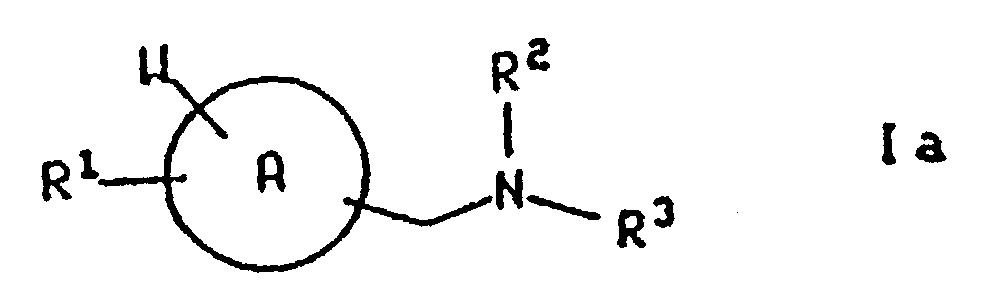 dans laquelle A est un système cyclique choisi entre phényle, naphtyle, thiényle, quinolinyle et indolinyle et dans laquelle la chaíne latérale contenant le groupe NR2R3 est liée à un atome de carbone du système cyclique A ;W est l'hydrogène, un groupe alkyle en C1 à C6 facultativement substitué avec un à trois atomes de fluor, un groupe -S(O)v-(alkyle en C1 à C6) dans lequel v a la valeur zéro, un ou deux, un groupe halogéno, benzyloxy ou alkoxy en C1 à C6 facultativement substitué avec un à trois atomes de fluor ;R1 est un noyau hétérocyclique de 4, 5 ou 6 atomes contenant un à trois hétéroatomes choisis entre oxygène, azote et soufre, ce noyau hétérocyclique pouvant contenir zéro à trois doubles liaisons et pouvant facultativement être substitué avec un ou plusieurs substituants, de préférence un ou deux substituants, choisis indépendamment entre alkyle en C1 à C6 facultativement substitué avec un à trois atomes de fluor et alkoxy en C1 à C6 facultativement substitué avec un à trois atomes de fluor ;R2 est l'hydrogène ou un groupe -CO2(alkyle en C1 à C10) ;R3 est choisi entre
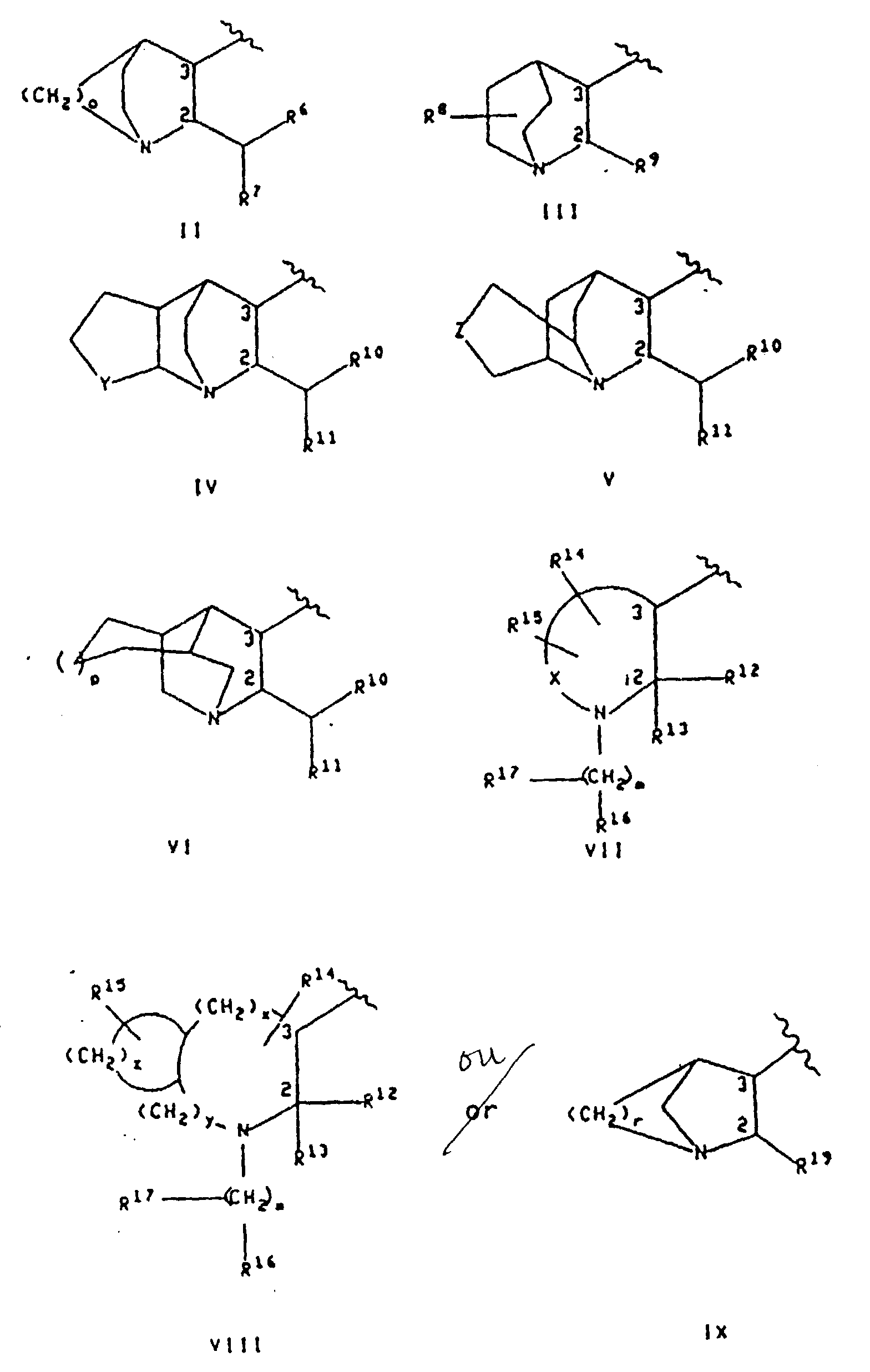 où R6 et R10 sont choisis indépendamment entre furyle, thiényle, pyridyle, indolyle, biphényle et phényle, le noyau phényle en question pouvant facultativement être substitué avec un ou deux substituants choisis indépendamment entre halogéno, alkyle en C1 à C10 facultativement substitué avec un à trois atomes de fluor, alkoxy en C1 à C10 facultativement substitué avec un à trois atomes de fluor, carboxy, benzyloxycarbonyle et (alkoxy en C1 à C3)-carbonyle ;R4 est un groupe alkyle en C1 à C6 ou phényle ;R7 est choisi entre un groupe alkyle ramifié en C3 ou C4, un groupe alcényle ramifié en C5 ou C6, un groupe cycloalkyle en C5 à C7 et les radicaux mentionnés dans la définition de R6 ;R8 représente l'hydrogène ou un groupe alkyle en C1 à C6 ;R9 et R19 sont choisis indépendamment entre phényle, biphényle, naphtyle, pyridyle, benzhydryle, thiényle et furyle, et R9 et R19 peuvent facultativement être substitués avec un à trois substituants choisis indépendamment entre halogéno, alkyle en C1 à C10 facultativement substitué avec un à trois atomes de fluor, et alkoxy en C1 à C10 facultativement substitué avec un à trois atomes de fluor ;Y est un groupe (CH2)l dans lequel l est un nombre entier de 1 à 3, ou bien Y est un groupe de formule :
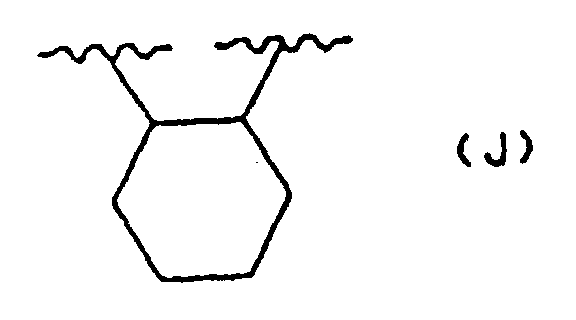 Z est l'oxygène, le soufre, un groupe amino, alkylamino en C1 à C3 ou (CH2)n dans lequel n a la valeur zéro, un ou deux ;x a la valeur zéro, un ou deux ;y a la valeur zéro, un ou deux ;z a la valeur trois, quatre ou cinq ;o a la valeur deux ou trois ;p a la valeur zéro ou un ;r a la valeur un, deux ou trois ;le noyau contenant (CH2)z peut contenir zéro à trois doubles liaisons, et l'un des atomes de carbone de (CH2)z peut facultativement être remplacé par de l'oxygène, du soufre ou de l'azote ;R11 est un groupe thiényle, biphényle ou phényle facultativement substitué avec un ou deux substituants choisis indépendamment entre halogéno, alkyle en C1 à C10 facultativement substitué avec un à trois atomes de fluor, et alkoxy en C1 à C10 facultativement substitué avec un à trois atomes de fluor ;X est un groupe (CH2)q dans lequel q est un nombre entier de 1 à 6 et l'une quelconque des liaisons simples carbone-à-carbone dans (CH2)q peut facultativement être remplacée par une double liaison carbone-à-carbone, et l'un quelconque des atomes de carbone de ce groupe (CH2)q peut facultativement porter un substituant R14, et l'un quelconque des atomes de carbone du groupe (CH2)q peut facultativement porter un substituant R15 ;m est un nombre entier de 0 à 8, et l'une quelconque des liaisons simples carbone-à-carbone de (CH2)m, liaison dont les deux atomes de carbone sont liés l'un à l'autre ou à un autre atome de carbone dans la chaíne (CH2)m, peut facultativement être remplacée par une double liaison carbone-à-carbone ou par une triple liaison carbone-à-carbone, et l'un quelconque des atomes de carbone du groupe (CH2)m peut facultativement porter un substituant R17 ;R12 est un radical choisi entre hydrogène, alkyle en C1 à C6 linéaire ou ramifié, cycloalkyle en C3 à C7 dont l'un des atomes de carbone peut facultativement être remplacé par de l'azote, de l'oxygène ou du soufre ; aryle choisi entre biphényle, phényle, indanyle et naphtyle ; hétéroaryle choisi entre thiényle, furyle, pyridyle, thiazolyle, isothiazolyle, oxazolyle, isoxazolyle, triazolyle, tétrazolyle et quinolyle ; phényl-(alkyle en C2 à C6), benzhydryle et benzyle, où le point de fixation sur R12 est un atome de carbone à moins que R12 ne soit l'hydrogène et où chacun des groupes aryle et hétéroaryle et des fragments phényle des groupes benzyle, phényl-(alkyle en C2 à C6) et benzhydryle en question peut facultativement porter un ou plusieurs substituants choisis indépendamment entre halogéno, nitro, alkyle en C1 à C10 facultativement substitué avec un à trois atomes de fluor, alkoxy en C1 à C10 facultativement substitué avec un à trois atomes de fluor, amino, hydroxy(alkyle en C1 à C6), (alkoxy en C1 à C6)-(alkyle en C1 à C6), alkylamino en C1 à C6,et l'un quelconque des fragments phényle du groupe benzhydryle en question peut facultativement être remplacé par un groupe naphtyle, thiényle, furyle ou pyridyle ;
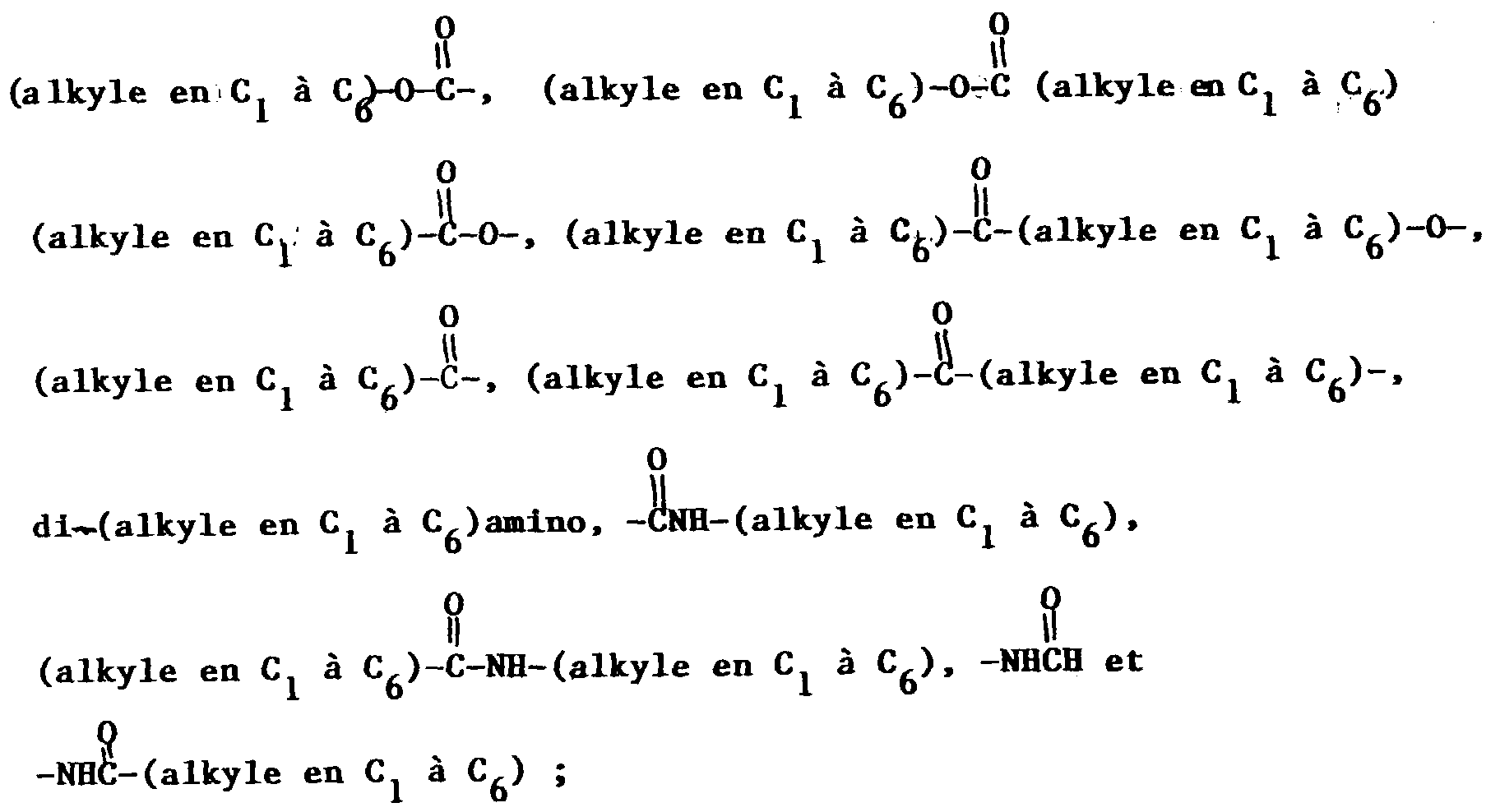 R13 est l'hydrogène, un groupe phényle ou alkyle en C1 à C6 ;ou bien R12 et R13 forment, conjointement avec l'atome de carbone auquel ils sont liés, un noyau carbocyclique saturé ayant 3 à 7 atomes de carbone dans lequel l'un de ces atomes de carbone qui n'est ni le point de fixation du noyau spiro, ni un atome de carbone contigu à ce point peut facultativement être remplacé par de l'oxygène, de l'azote ou du soufre ;R14 et R15 sont tous deux choisis indépendamment entre hydrogène, hydroxy, halogéno, amino, oxo (=O), cyano, hydroxy-(alkyle en C1 à C6), (alkoxy en C1 à C6)-(alkyle en C1 à C6), alkylamino en C1 à C6, di(alkyle en C1 à C6)amino, alkoxy en C1 à C6,et les radicaux indiqués dans la définition de R12 ;
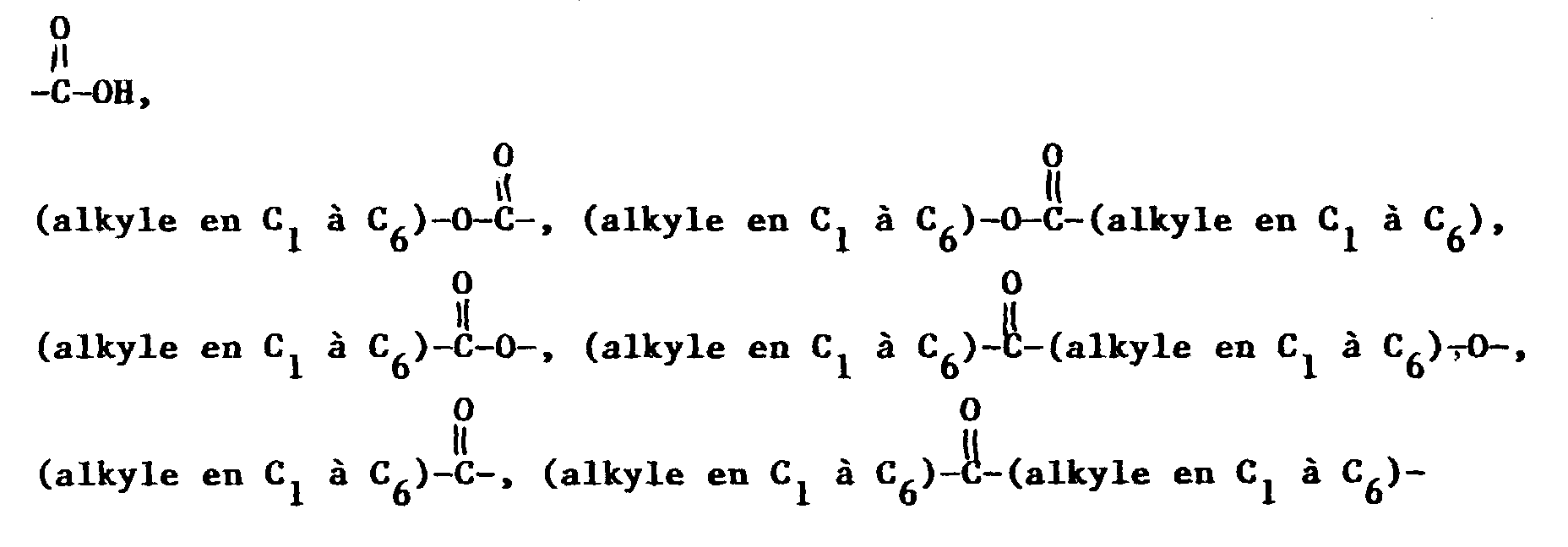 R16 est un groupeNHCH2R18, SO2R18, CO2H ou l'un des radicaux indiqués dans l'une quelconque des définitions de R12, R14 et R15 ;
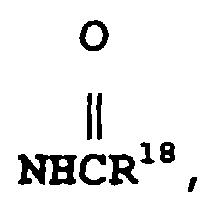 R17 est un groupe oximino (=NOH) ou l'un des radicaux indiqués dans l'une quelconque des définitions de R12, R14 et R15 ; etR18 est un groupe alkyle en C1 à C6, l'hydrogène, un groupe phényle ou phényl-(alkyle en C1 à C6) ; sous réserve que (a) lorsque m est égal à 0, l'un de R16 et R17 soit absent et l'autre soit l'hydrogène, (b) lorsque R3 est un groupe de formule VIII, R14 et R15 ne puissent pas être liés au même atome de carbone, (c) lorsque R14 et R15 sont liés au même atome de carbone, chacun de R14 et R15 soit choisi indépendamment entre hydrogène, fluoro, alkyle en C1 à C6, hydroxy(alkyle en C1 à C6) et (alkoxy en C1 à C6)-(alkyle en C1 à C6), ou bien R14 et R15, conjointement avec l'atome de carbone auquel ils sont liés, représentent un noyau carbocyclique saturé en C3 à C6 qui forme un composé spiro avec le noyau azoté auquel ils sont liés ; (d) R12 et R14 ne puissent pas être tous deux de l'hydrogène ; et (e) lorsque R14 ou R15 est lié à un atome de carbone de X ou de (CH2)y qui est adjacent à l'azote du noyau, R14 ou respectivement R15 doive être un substituant dont le point de fixation est un atome de carbone ;ou un sel pharmaceutiquement acceptable de ce composé.
 - Composé suivant la revendication 1, dans lequel R1 est choisi entre thiazolyle, azétidinyle, pyrrolyle, pyrazolyle, 1,2,3-triazolyle, 1,2,4-triazolyle, isothiazolyle, imidazolyle, isoxazolyle, oxazolyle, pyridyle, pyrimidinyle, pyrazolyle, thiadiazolyle et thiophényle.
- Composé suivant la revendication 1 ou la revendication 2, dans lequel les substituants en positions "2" et "3" du noyau azoté de R3 sont en configuration cis.
- Composé suivant l'une quelconque des revendications 1 à 3, dans lequel R3 est un groupe de formule III, VII ou IX ; R2 est l'hydrogène ; A est un groupe phényle ou indolinyle ; W est un groupe alkoxy en C1 à C3 facultativement substitué avec un à cinq atomes de fluor ; et R1 est un groupe thiazolyle, imidazolyle, thiadiazolyle, pyrrolyle, pyridyle, pyrimidinyle, pyrazolyle, thiophényle ou oxazolyle, R1 pouvant facultativement porter un ou deux substituants alkyle en C1 à C3.
- Composé suivant l'une quelconque des revendications 1 à 4, dans lequel : (a) R3 est un groupe de formule III et R9 est le groupe benzhydryle ; (b) R3 est un groupe de formule VII, R12 est le groupe phényle, chacun de R13, R14, R15 et R16 est l'hydrogène, m est égal à zéro et X est le groupe -(CH2)3- ; ou bien (c) R3 est un groupe de formule IX, r est égal à deux et R19 est le groupe benzhydryle.
- Composé suivant la revendication 1 ou la revendication 2, dans lequel R3 est un groupe de formule III dont les substituants en positions "2" et "3" du noyau azoté sont en configuration cis, R9 est le groupe benzhydryle et A est le groupe phényle.
- Composé suivant la revendication 1, dans lequel R3 est un groupe de formule VII dont R12 et le substituant en position "3" du noyau azoté sont en configuration cis, A est le groupe phényle, R12 est le groupe phényle, chacun de R2, R13, R14, R15 et R16 représente l'hydrogène, m est égal à zéro, W est un groupe méthoxy ou isopropoxy, X est le groupe -(CH2)3- et R1 est un groupe thiazolyle, imidazolyle, pyrrolyle, oxazolyle, pyridyle, pyrimidinyle, pyrazolyle, thiophényle ou thiadiazolyle.
- Composé suivant la revendication 1, dans lequel R3 est un groupe de formule VII, chacun de R13, R14, R15 et R16 est l'hydrogène, m est égal à zéro, X est le groupe -(CH2)3-, A est le groupe phényle, W est le groupe méthoxy et R1 est choisi entre thiazolyle, imidazolyle, thiadiazolyle, pyrrolyle, pyridyle, pyrimidinyle, pyrazolyle, thiophényle et oxazolyle.
- Composé de formule :dans laquelle W, A, R1 et R3 sont tels que définis dans la revendication 1.
- Composé suivant la revendication 1, choisi dans le groupe consistant en :(2S,3S)-[5-(2,5-diméthyl-pyrrole-1-yl)-2-méthoxybenzyl]-(2-phénylpipéridine-3-yl)amine ;(2S,3S)-3-[2-méthoxy-5-(2-thiazolyl)benzyl]amino-2-phénylpipéridine ;(2S,3S)-3-[5-imidazolyl-2-méthoxybenzyl]amino-2-phénylpipéridine ;(2S,3S)-3-[2-méthoxy-5-(2-oxopyrrolidinyl)benzyl]amino-2-phénylpipéridine ;(2S,3S)-3-[2-méthoxy-5-(4-méthyl-2-thiazolylbenzyl]amino-2-phénylpipéridine ;(2S,3S)-3-[2-méthoxy-5-(1,2,3-thiadiazole-4-yl)-benzyl]amino-2-phénylpipéridine ;(2S,3S)-3-[2-méthoxy-5-(5-oxazolyl)benzyl)amino-2-phénylpipéridine ;(2S,3S)-(2-méthoxy-5-pyridine-2-ylbenzyl)-(2-phénylpipéridine-3-yl)amine ;(2S,3S)-(2-méthoxy-5-pyrimidine-2-ylbenzyl)-(2-phénylpipéridine-3-yl)amine ;(2S,3S)-(2-méthoxy-5-pyridine-3-ylbenzyl)-(2-phénylpipéridine-3-yl)amine ;(2S,3S)-[2-méthoxy-5-(6-méthylpyridine-2-yl)benzyl]-(2-phénylpipéridine-3-yl)amine ;(2S,3S)-[5-(3,5-diméthylpyrazole-1-yl)-2-méthoxybenzyl]-(2-phénylpipéridine-3-yl)amine ;(2S,3S)-[2-méthoxy-5-(3,4,5-triméthylpyrazole-1-yl)-benzyl]-(2-phénylpipéridine-3-yl)amine ;(2S,3S)-[2-isopropoxy-5-(3,4,5-triméthylpyrazole-1-yl)benzyl]-(2-phénylpipéridine-3-yl)amine ;(2S,3S)-[5-(3,5-diisopropylpyrazole-1-yl)-2-méthoxybenzyl]-(2-phénylpipéridine-3-yl)amine ; et(2S,3S)-[5-(3,5-diméthylthiophène-2-yl)-2-méthoxybenzyl]-(2-phénylpipéridine-3-yl)amine.
- Composition pharmaceutique destinée au traitement curatif ou préventif d'une pathologie choisie dans le groupe consistant en troubles inflammatoires, anxiété, incontinence urinaire, troubles gastro-intestinaux, dépression ou troubles pathologiques de l'humeur, psychose, douleur, allergies, affections obstructives chroniques des voies respiratoires, troubles d'hypersensibilité, affections angiospastiques, formation de tissu fibreux et maladies du collagène, algodystrophie sympathique réflexe, toxicomanie, troubles somatiques en rapport avec le stress, neuropathie périphérique, névralgie, troubles neuropathologiques, troubles en rapport avec la facilitation immunologique ou l'immunosuppression et affections rhumatismales chez un mammifère, comprenant une quantité d'un composé suivant la revendication 1 efficace pour prévenir ou traiter la pathologie en question, et un support acceptable du point de vue pharmaceutique.
- Composition pharmaceutique destinée à antagoniser les effets de la substance P chez un mammifère, comprenant une quantité efficace pour antagoniser la substance P d'un composé suivant la revendication 1 et un support acceptable du point de vue pharmaceutique.
- Composition pharmaceutique destinée au traitement curatif ou préventif d'une pathologie chez un mammifère, dont le traitement curatif ou préventif est réalisé ou facilité par une réduction de la neurotransmission sous la médiation de la substance P, comprenant une quantité d'un composé suivant la revendication 1 efficace pour antagoniser l'effet de la substance P au niveau d'un site récepteur, et un support acceptable du point de vue pharmaceutique.
- Composition pharmaceutique destinée au traitement curatif ou préventif d'une pathologie chez un mammifère, dont le traitement ou la prévention est réalisé ou facilité par une réduction de la neurotransmission sous la médiation de la substance P, comprenant une quantité d'un composé suivant la revendication 1 ou d'un sel pharmaceutiquement acceptable de ce composé, efficace pour le traitement curatif ou préventif de cette pathologie, et un support acceptable du point de vue pharmaceutique.
Priority Applications (1)
| Application Number | Priority Date | Filing Date | Title |
|---|---|---|---|
| EP97202174A EP0806423A1 (fr) | 1992-12-10 | 1993-10-07 | Hétérocycles non aromatiques substitués par un groupe aminométhylène et leur utilisation comme antagonistes de la substance P |
Applications Claiming Priority (3)
| Application Number | Priority Date | Filing Date | Title |
|---|---|---|---|
| US98865392A | 1992-12-10 | 1992-12-10 | |
| US988653 | 1992-12-10 | ||
| PCT/US1993/009407 WO1994013663A1 (fr) | 1992-12-10 | 1993-10-07 | Heterocycles non aromatiques substitues par aminomethylene et leur utilisation comme antagonistes de substance p |
Related Child Applications (1)
| Application Number | Title | Priority Date | Filing Date |
|---|---|---|---|
| EP97202174A Division EP0806423A1 (fr) | 1992-12-10 | 1993-10-07 | Hétérocycles non aromatiques substitués par un groupe aminométhylène et leur utilisation comme antagonistes de la substance P |
Publications (2)
| Publication Number | Publication Date |
|---|---|
| EP0675886A1 EP0675886A1 (fr) | 1995-10-11 |
| EP0675886B1 true EP0675886B1 (fr) | 2000-07-05 |
Family
ID=25534364
Family Applications (2)
| Application Number | Title | Priority Date | Filing Date |
|---|---|---|---|
| EP93922821A Expired - Lifetime EP0675886B1 (fr) | 1992-12-10 | 1993-10-07 | Heterocycles non aromatiques substitues par aminomethylene et leur utilisation comme antagonistes de substance p |
| EP97202174A Withdrawn EP0806423A1 (fr) | 1992-12-10 | 1993-10-07 | Hétérocycles non aromatiques substitués par un groupe aminométhylène et leur utilisation comme antagonistes de la substance P |
Family Applications After (1)
| Application Number | Title | Priority Date | Filing Date |
|---|---|---|---|
| EP97202174A Withdrawn EP0806423A1 (fr) | 1992-12-10 | 1993-10-07 | Hétérocycles non aromatiques substitués par un groupe aminométhylène et leur utilisation comme antagonistes de la substance P |
Country Status (15)
| Country | Link |
|---|---|
| EP (2) | EP0675886B1 (fr) |
| JP (2) | JP2722279B2 (fr) |
| CN (1) | CN1092771A (fr) |
| AT (1) | ATE194340T1 (fr) |
| AU (1) | AU5169693A (fr) |
| CA (1) | CA2150123C (fr) |
| DE (1) | DE69328975T2 (fr) |
| DK (1) | DK0675886T3 (fr) |
| ES (1) | ES2147759T3 (fr) |
| FI (1) | FI935529L (fr) |
| GR (1) | GR3034329T3 (fr) |
| IL (1) | IL107843A0 (fr) |
| MX (1) | MX9307810A (fr) |
| PT (1) | PT675886E (fr) |
| WO (1) | WO1994013663A1 (fr) |
Families Citing this family (71)
| Publication number | Priority date | Publication date | Assignee | Title |
|---|---|---|---|---|
| US5393762A (en) * | 1993-06-04 | 1995-02-28 | Pfizer Inc. | Pharmaceutical agents for treatment of emesis |
| EP1209157A1 (fr) * | 1993-09-17 | 2002-05-29 | Pfizer Inc. | 3-Benzylaminométhyl-pipéridines à substitution hétéroarylamino et hétéroarylsulfonamido, et composés apparents |
| IS4208A (is) * | 1993-09-22 | 1995-03-23 | Glaxo Group Limited | 3-(tetrazólýl-benzyl)amínó-piperadidín afleiður |
| EP0653208A3 (fr) * | 1993-11-17 | 1995-10-11 | Pfizer | Antagonistes de la substance P pour le traitement et la prévention de l'erythème solaire. |
| EP0659409A3 (fr) * | 1993-11-23 | 1995-08-09 | Pfizer | Antagonistes de la substance P pour l'inhibition de l'angiogénése. |
| EP0655246A1 (fr) * | 1993-11-30 | 1995-05-31 | Pfizer Inc. | Antagonistes de la substance P pour le traitement des maladies causées par Helicobacter Pylori ou d'autres bacteries spirales, ureare-positives, gram-négatives |
| GB9505692D0 (en) * | 1995-03-21 | 1995-05-10 | Glaxo Group Ltd | Chemical compounds |
| KR19980703354A (ko) * | 1995-03-27 | 1998-10-15 | 나카토미히로타카 | 피페리딘 유도체 |
| US6288225B1 (en) | 1996-05-09 | 2001-09-11 | Pfizer Inc | Substituted benzolactam compounds as substance P antagonists |
| JP3042894B2 (ja) | 1995-07-07 | 2000-05-22 | ファイザー製薬株式会社 | サブスタンスpアンタゴニストとしての置換ベンゾラクタム化合物 |
| TW458774B (en) | 1995-10-20 | 2001-10-11 | Pfizer | Antiemetic pharmaceutical compositions |
| US6541669B1 (en) * | 1998-06-08 | 2003-04-01 | Theravance, Inc. | β2-adrenergic receptor agonists |
| HRP20010821A2 (en) * | 1999-05-06 | 2002-12-31 | Pfizer Prod Inc | Substituted benzolactam compounds |
| CA2324116A1 (fr) * | 1999-10-25 | 2001-04-25 | Susan Beth Sobolov-Jaynes | Antagonistes du recepteur nk-1 et eletriptan pour le traitement de la migraine |
| WO2001032625A1 (fr) | 1999-11-03 | 2001-05-10 | Du Pont Pharmaceuticals Company | Tetrahydroisoquinolines a substitution aryle et heteroaryle et utilisation de ces composes pour bloquer le recaptage de norepinephrine, de dopamine et de serotonine |
| US7163949B1 (en) | 1999-11-03 | 2007-01-16 | Amr Technology, Inc. | 4-phenyl substituted tetrahydroisoquinolines and use thereof |
| US7119207B2 (en) * | 2000-04-10 | 2006-10-10 | Pfizer Inc | Benzoamide piperidine containing compounds and related compounds |
| ATE275127T1 (de) * | 2000-04-19 | 2004-09-15 | Neurotech Co Ltd | Verbindungen, zusammensetzungen und verfahren zur vorbeugung der neurodegeneration bei akuten oder chronischen verletzungen des zentralen nervensystems |
| US6964982B2 (en) | 2000-04-20 | 2005-11-15 | Neurotech Co., Ltd. | Compounds, compositions and methods for preventing neurodegeneration in acute and chronic injuries in the central nervous system |
| JP5132864B2 (ja) | 2000-07-11 | 2013-01-30 | アルバニー モレキュラー リサーチ, インコーポレイテッド | 4−フェニル置換テトラヒドロイソキノリンおよびその使用方法 |
| US20020049211A1 (en) * | 2000-09-06 | 2002-04-25 | Sobolov-Jaynes Susan Beth | Combination treatment for depression and anxiety |
| EP1192952A3 (fr) * | 2000-09-28 | 2003-03-26 | Pfizer Products Inc. | Composition pour le traitement de la dépression et de l'anxieté contenant un antagoniste du recepteur NK-3 et un antagoniste du récepteur NK-1 |
| AU2001292320A1 (en) * | 2000-10-02 | 2002-04-15 | Tanabe Seiyaku Co., Ltd. | Benzylamine compound, process for producing the same, and intermediate therefor |
| WO2002070478A1 (fr) | 2001-03-06 | 2002-09-12 | Astrazeneca Ab | Dérivés indolone capable de dégrader des vaisseaux |
| JP4113957B2 (ja) | 2002-06-19 | 2008-07-09 | アムコア ファーマ, インコーポレイテッド | テトラフルオロベンジル誘導体及びこれを含有する急性及び退行性脳神経系疾患の予防及び治療用薬学的組成物 |
| AU2004270361B2 (en) * | 2003-09-09 | 2009-06-25 | F. Hoffmann-La Roche Ag | Malonamide derivatives blocking the activity of gama-secretase |
| AU2005274927B2 (en) | 2004-07-15 | 2011-11-03 | Albany Molecular Research, Inc. | Aryl-and heteroaryl-substituted tetrahydroisoquinolines and use thereof to block reuptake of norepinephrine, dopamine, and serotonin |
| US8362075B2 (en) | 2005-05-17 | 2013-01-29 | Merck Sharp & Dohme Corp. | Cyclohexyl sulphones for treatment of cancer |
| KR101594898B1 (ko) | 2005-07-15 | 2016-02-18 | 알바니 몰레큘라 리써치, 인크. | 아릴- 및 헤테로아릴-치환된 테트라히드로벤자제핀, 및 노르에피네프린, 도파민 및 세로토닌의 재흡수를 차단하기 위한 용도 |
| KR20080048502A (ko) | 2005-09-29 | 2008-06-02 | 머크 앤드 캄파니 인코포레이티드 | 멜라노코르틴-4 수용체 조절제로서의 아실화스피로피페리딘 유도체 |
| GB0603041D0 (en) | 2006-02-15 | 2006-03-29 | Angeletti P Ist Richerche Bio | Therapeutic compounds |
| ES2690205T3 (es) | 2006-04-13 | 2018-11-19 | Neurotech Pharmaceuticals Co., Ltd. | Composición farmacéutica para tratar o prevenir enfermedades inflamatorias |
| US8173629B2 (en) | 2006-09-22 | 2012-05-08 | Merck Sharp & Dohme Corp. | Method of treatment using fatty acid synthesis inhibitors |
| US20110218176A1 (en) | 2006-11-01 | 2011-09-08 | Barbara Brooke Jennings-Spring | Compounds, methods, and treatments for abnormal signaling pathways for prenatal and postnatal development |
| EA016079B1 (ru) | 2007-01-10 | 2012-01-30 | Институто Ди Ричерке Ди Биолоджиа Молеколаре П. Анджелетти Спа | Амидзамещенные индазолы в качестве ингибиторов поли(adp-рибоза)полимеразы (parp) |
| JP5319518B2 (ja) | 2007-04-02 | 2013-10-16 | Msd株式会社 | インドールジオン誘導体 |
| AU2008269154B2 (en) | 2007-06-27 | 2014-06-12 | Merck Sharp & Dohme Llc | 4-carboxybenzylamino derivatives as histone deacetylase inhibitors |
| KR100852962B1 (ko) | 2007-11-12 | 2008-08-20 | 주식회사 뉴로테크 | 2-하이드록시-5-페닐알킬아미노벤조산 유도체 및 이의 염의제조방법 |
| CN102014631A (zh) | 2008-03-03 | 2011-04-13 | 泰格尔医药科技公司 | 酪氨酸激酶抑制剂 |
| US9156812B2 (en) | 2008-06-04 | 2015-10-13 | Bristol-Myers Squibb Company | Crystalline form of 6-[(4S)-2-methyl-4-(2-naphthyl)-1,2,3,4-tetrahydroisoquinolin-7-yl]pyridazin-3-amine |
| KR101204108B1 (ko) * | 2009-02-09 | 2012-11-22 | 주식회사 지엔티파마 | 5-벤질아미노살리실산 유도체 또는 이의 염의 의약 용도 |
| WO2010114780A1 (fr) | 2009-04-01 | 2010-10-07 | Merck Sharp & Dohme Corp. | Inhibiteurs de l'activité akt |
| CN102458123A (zh) | 2009-05-12 | 2012-05-16 | 阿尔巴尼分子研究公司 | 芳基、杂芳基和杂环取代的四氢异喹啉及其用途 |
| WO2010132487A1 (fr) | 2009-05-12 | 2010-11-18 | Bristol-Myers Squibb Company | Formes cristallines de (s)-7-([1,2,4]triazolo[1,5-a] pyridin -6-yl)-4-(3,4-dichlorophenyl)-1,2,3,4-tetrahydroisoquinoline et leurs utilisations |
| US8802696B2 (en) | 2009-05-12 | 2014-08-12 | Albany Molecular Research, Inc. | 7-([1,2,4]triazolo[1,5-a]pyridin-6-yl)-4-(3,4-dichlorophenyl)-1,2,3,4-tetrahydroisoqu inoli and use thereof |
| JP5099731B1 (ja) | 2009-10-14 | 2012-12-19 | メルク・シャープ・アンド・ドーム・コーポレーション | p53活性を増大する置換ピペリジン及びその使用 |
| EP2584903B1 (fr) | 2010-06-24 | 2018-10-24 | Merck Sharp & Dohme Corp. | Nouveaux composés hétérocycliques utilisés comme inhibiteurs de erk |
| AU2011285909B2 (en) | 2010-08-02 | 2016-11-10 | Sirna Therapeutics, Inc. | RNA interference mediated inhibition of catenin (cadherin-associated protein), beta 1 (CTNNB1) gene expression using short interfering nucleic acid (siNA) |
| EP2606134B1 (fr) | 2010-08-17 | 2019-04-10 | Sirna Therapeutics, Inc. | Inhibition médiée par des arn interférents de l'expression génique du virus de l'hépatite b (vhb) à l'aide de petits acides nucléiques interférents (pani) |
| US8883801B2 (en) | 2010-08-23 | 2014-11-11 | Merck Sharp & Dohme Corp. | Substituted pyrazolo[1,5-a]pyrimidines as mTOR inhibitors |
| EP2613782B1 (fr) | 2010-09-01 | 2016-11-02 | Merck Sharp & Dohme Corp. | Dérivés d'indazole utilisables en tant qu'inhibiteurs de la voie erk |
| US9242981B2 (en) | 2010-09-16 | 2016-01-26 | Merck Sharp & Dohme Corp. | Fused pyrazole derivatives as novel ERK inhibitors |
| EP3766975A1 (fr) | 2010-10-29 | 2021-01-20 | Sirna Therapeutics, Inc. | Inhibition au moyen d'interférence arn d'une expression de gène utilisant des acides nucléiques à petit interférent (sina) |
| EP2654748B1 (fr) | 2010-12-21 | 2016-07-27 | Merck Sharp & Dohme Corp. | Dérivés d'indazole utiles en tant qu'inhibiteurs de erk |
| EP2699567A1 (fr) | 2011-04-21 | 2014-02-26 | Merck Sharp & Dohme Corp. | Inhibiteurs du récepteur du facteur de croissance 1 analogue à l'insuline |
| WO2013063214A1 (fr) | 2011-10-27 | 2013-05-02 | Merck Sharp & Dohme Corp. | Nouveaux composés qui sont des inhibiteurs d'erk |
| EP3358013B1 (fr) | 2012-05-02 | 2020-06-24 | Sirna Therapeutics, Inc. | Compositions d'acide nucléique interférent court (sina) |
| KR20150060724A (ko) | 2012-09-28 | 2015-06-03 | 머크 샤프 앤드 돔 코포레이션 | Erk 억제제인 신규 화합물 |
| WO2014078568A1 (fr) | 2012-11-14 | 2014-05-22 | The Johns Hopkins University | Méthodes et compositions pour le traitement de la schizophrénie |
| DK2925888T3 (en) | 2012-11-28 | 2017-12-18 | Merck Sharp & Dohme | COMPOSITIONS AND METHODS OF CANCER TREATMENT |
| EP2935263B1 (fr) | 2012-12-20 | 2018-12-05 | Merck Sharp & Dohme Corp. | Imidazopyridines substituées en tant qu'inhibiteurs d'hdm2 |
| US9540377B2 (en) | 2013-01-30 | 2017-01-10 | Merck Sharp & Dohme Corp. | 2,6,7,8 substituted purines as HDM2 inhibitors |
| WO2015034925A1 (fr) | 2013-09-03 | 2015-03-12 | Moderna Therapeutics, Inc. | Polynucléotides circulaires |
| WO2018071283A1 (fr) | 2016-10-12 | 2018-04-19 | Merck Sharp & Dohme Corp. | Inhibiteurs de kdm5 |
| US11098059B2 (en) | 2017-11-08 | 2021-08-24 | Merck Sharp & Dohme Corp. | PRMT5 inhibitors |
| WO2019094311A1 (fr) | 2017-11-08 | 2019-05-16 | Merck Sharp & Dohme Corp. | Inhibiteurs de prmt5 |
| EP3833668B1 (fr) | 2018-08-07 | 2025-03-19 | Merck Sharp & Dohme LLC | Inhibiteurs de prmt5 |
| EP3833667B1 (fr) | 2018-08-07 | 2024-03-13 | Merck Sharp & Dohme LLC | Inhibiteurs de prmt5 |
| BR112021002267A8 (pt) | 2018-08-07 | 2023-02-07 | Merck Sharp & Dohme | Inibidores de prmt5 |
| CN109174181B (zh) * | 2018-08-10 | 2021-05-25 | 华东师范大学 | 一种负载双功能离子液体介孔聚合物的制备及其应用 |
| KR20210107828A (ko) * | 2018-12-28 | 2021-09-01 | 주식회사 지엔티파마 | 신경퇴행성 질환 치료를 위한 조성물 및 방법 |
Family Cites Families (10)
| Publication number | Priority date | Publication date | Assignee | Title |
|---|---|---|---|---|
| WO1990005525A1 (fr) * | 1988-11-23 | 1990-05-31 | Pfizer Inc. | Derives de quinuclidine en tant qu'antagonsites de substance p |
| UA41251C2 (uk) * | 1990-01-04 | 2001-09-17 | Пфайзер, Інк. | Гідровані азотвмісні гетероциклічні сполуки, похідні піперидину, фармацевтична композиція та спосіб пригнічення активності речовини р в організмі |
| US5232929A (en) * | 1990-11-28 | 1993-08-03 | Pfizer Inc. | 3-aminopiperidine derivatives and related nitrogen containing heterocycles and pharmaceutical compositions and use |
| JPH0794439B2 (ja) * | 1990-05-31 | 1995-10-11 | フアイザー・インコーポレイテツド | 置換ピペリジンの製造法 |
| DK0540526T3 (da) * | 1990-07-23 | 1995-04-18 | Pfizer | Quinuclidinderivater |
| EP0550635B1 (fr) * | 1990-09-28 | 1995-04-19 | Pfizer Inc. | Analogues cycliques d'heterocycles non aromatiques contenant de l'azote |
| US5242930A (en) * | 1991-02-11 | 1993-09-07 | Merck Sharp & Dohme Ltd. | Azabicyclic compounds, pharmaceutical compositions containing them and their use in therapy |
| JPH0794440B2 (ja) * | 1991-03-26 | 1995-10-11 | フアイザー・インコーポレイテツド | 置換ピペリジンの立体選択的製造 |
| PL172069B1 (pl) * | 1991-05-22 | 1997-07-31 | Pfizer | Sposób wytwarzania nowych pochodnych podstawionej 3-aminochinuklidyny PL PL PL PL PL |
| TW202432B (fr) * | 1991-06-21 | 1993-03-21 | Pfizer |
-
1993
- 1993-10-07 EP EP93922821A patent/EP0675886B1/fr not_active Expired - Lifetime
- 1993-10-07 EP EP97202174A patent/EP0806423A1/fr not_active Withdrawn
- 1993-10-07 PT PT93922821T patent/PT675886E/pt unknown
- 1993-10-07 AU AU51696/93A patent/AU5169693A/en not_active Abandoned
- 1993-10-07 DE DE69328975T patent/DE69328975T2/de not_active Expired - Fee Related
- 1993-10-07 DK DK93922821T patent/DK0675886T3/da active
- 1993-10-07 ES ES93922821T patent/ES2147759T3/es not_active Expired - Lifetime
- 1993-10-07 CA CA002150123A patent/CA2150123C/fr not_active Expired - Fee Related
- 1993-10-07 WO PCT/US1993/009407 patent/WO1994013663A1/fr not_active Ceased
- 1993-10-07 AT AT93922821T patent/ATE194340T1/de not_active IP Right Cessation
- 1993-10-07 JP JP6514136A patent/JP2722279B2/ja not_active Expired - Fee Related
- 1993-12-02 IL IL10784393A patent/IL107843A0/xx unknown
- 1993-12-09 CN CN93120193A patent/CN1092771A/zh active Pending
- 1993-12-09 MX MX9307810A patent/MX9307810A/es unknown
- 1993-12-09 FI FI935529A patent/FI935529L/fi unknown
-
1997
- 1997-08-22 JP JP24030897A patent/JP3165401B2/ja not_active Expired - Fee Related
-
2000
- 2000-09-05 GR GR20000402017T patent/GR3034329T3/el not_active IP Right Cessation
Also Published As
| Publication number | Publication date |
|---|---|
| JPH1095780A (ja) | 1998-04-14 |
| JP2722279B2 (ja) | 1998-03-04 |
| ES2147759T3 (es) | 2000-10-01 |
| IL107843A0 (en) | 1994-04-12 |
| CA2150123C (fr) | 2004-12-07 |
| CA2150123A1 (fr) | 1994-06-23 |
| FI935529A7 (fi) | 1994-06-11 |
| WO1994013663A1 (fr) | 1994-06-23 |
| ATE194340T1 (de) | 2000-07-15 |
| EP0675886A1 (fr) | 1995-10-11 |
| DK0675886T3 (da) | 2000-09-18 |
| FI935529A0 (fi) | 1993-12-09 |
| MX9307810A (es) | 1994-07-29 |
| DE69328975T2 (de) | 2000-11-09 |
| PT675886E (pt) | 2000-12-29 |
| EP0806423A1 (fr) | 1997-11-12 |
| DE69328975D1 (de) | 2000-08-10 |
| AU5169693A (en) | 1994-07-04 |
| JP3165401B2 (ja) | 2001-05-14 |
| GR3034329T3 (en) | 2000-12-29 |
| FI935529L (fi) | 1994-06-11 |
| JPH07509490A (ja) | 1995-10-19 |
| CN1092771A (zh) | 1994-09-28 |
Similar Documents
| Publication | Publication Date | Title |
|---|---|---|
| CA2150123C (fr) | Derives de substitution aminomethylene d'heterocycles non aromatiques | |
| US5703065A (en) | Heteroarylamino and heteroarylsulfonamido substituted 3-benyzlaminomethyl piperidines and related compounds | |
| CA2157117C (fr) | Derives spirocycliques de la piperidine | |
| US5721255A (en) | Substituted benzylamino nitrogen containing non-aromatic heterocycles | |
| EP0613458B1 (fr) | Derives d'ethylenediamine acycliques utilises comme antagonistes du recepteur de substance p | |
| US5688804A (en) | 3-Benzylamino-2-phenyl-piperidine derivatives as substance P receptor antagonists | |
| EP0699199B1 (fr) | Alkyle benzylaminoquinuclidines a substitution heteroatomique utilisees comme antagonistes de substances p | |
| CA2180263C (fr) | Antagonistes diazabiclycliques de la neurokinine | |
| WO1994004496A9 (fr) | Benzylamino azote substitue renfermant des heterocycles non aromatiques | |
| WO1997014671A1 (fr) | Antagonistes des recepteurs de la cyclopentyle-tachykinine | |
| US7576105B2 (en) | Benzyl substituted (piperidin-4-yl)aminobenzamido derivatives | |
| AU630397B2 (en) | 4,5,6,7-tetrahydrobenzimidazole derivatives | |
| US6369074B1 (en) | Aminomethylene substituted non-aromatic heterocycles and use as substance P antagonists | |
| JP3752130B2 (ja) | 掻痒治療用新規4−アリールピペリジン誘導体 | |
| US5854262A (en) | Aminomethylene substituted non-aromatic heterocycles and use as substance P antagonists | |
| US20010023248A1 (en) | Aminomethylene substituted non-aromatic heterocycles and use as substance P antagonists | |
| CA2171972C (fr) | Derives de substitution heteroarylamino et heteroarylsulfonamido de 3-benzylaminomethylpiperidines et composes apparentes |
Legal Events
| Date | Code | Title | Description |
|---|---|---|---|
| PUAI | Public reference made under article 153(3) epc to a published international application that has entered the european phase |
Free format text: ORIGINAL CODE: 0009012 |
|
| 17P | Request for examination filed |
Effective date: 19950603 |
|
| AK | Designated contracting states |
Kind code of ref document: A1 Designated state(s): AT BE CH DE DK ES FR GB GR IE IT LI LU NL PT SE |
|
| 17Q | First examination report despatched |
Effective date: 19950928 |
|
| GRAG | Despatch of communication of intention to grant |
Free format text: ORIGINAL CODE: EPIDOS AGRA |
|
| GRAG | Despatch of communication of intention to grant |
Free format text: ORIGINAL CODE: EPIDOS AGRA |
|
| GRAH | Despatch of communication of intention to grant a patent |
Free format text: ORIGINAL CODE: EPIDOS IGRA |
|
| GRAH | Despatch of communication of intention to grant a patent |
Free format text: ORIGINAL CODE: EPIDOS IGRA |
|
| GRAA | (expected) grant |
Free format text: ORIGINAL CODE: 0009210 |
|
| ITF | It: translation for a ep patent filed | ||
| AK | Designated contracting states |
Kind code of ref document: B1 Designated state(s): AT BE CH DE DK ES FR GB GR IE IT LI LU NL PT SE |
|
| DX | Miscellaneous (deleted) | ||
| REF | Corresponds to: |
Ref document number: 194340 Country of ref document: AT Date of ref document: 20000715 Kind code of ref document: T |
|
| REG | Reference to a national code |
Ref country code: CH Ref legal event code: NV Representative=s name: ISLER & PEDRAZZINI AG Ref country code: CH Ref legal event code: EP |
|
| REG | Reference to a national code |
Ref country code: IE Ref legal event code: FG4D |
|
| ET | Fr: translation filed | ||
| REF | Corresponds to: |
Ref document number: 69328975 Country of ref document: DE Date of ref document: 20000810 |
|
| REG | Reference to a national code |
Ref country code: DK Ref legal event code: T3 |
|
| REG | Reference to a national code |
Ref country code: ES Ref legal event code: FG2A Ref document number: 2147759 Country of ref document: ES Kind code of ref document: T3 |
|
| REG | Reference to a national code |
Ref country code: PT Ref legal event code: SC4A Free format text: AVAILABILITY OF NATIONAL TRANSLATION Effective date: 20000921 |
|
| PLBE | No opposition filed within time limit |
Free format text: ORIGINAL CODE: 0009261 |
|
| STAA | Information on the status of an ep patent application or granted ep patent |
Free format text: STATUS: NO OPPOSITION FILED WITHIN TIME LIMIT |
|
| 26N | No opposition filed | ||
| REG | Reference to a national code |
Ref country code: CH Ref legal event code: NV Representative=s name: E. BLUM & CO. PATENTANWAELTE |
|
| REG | Reference to a national code |
Ref country code: GB Ref legal event code: IF02 |
|
| PGFP | Annual fee paid to national office [announced via postgrant information from national office to epo] |
Ref country code: AT Payment date: 20040914 Year of fee payment: 12 |
|
| PGFP | Annual fee paid to national office [announced via postgrant information from national office to epo] |
Ref country code: GB Payment date: 20040915 Year of fee payment: 12 Ref country code: DK Payment date: 20040915 Year of fee payment: 12 |
|
| PGFP | Annual fee paid to national office [announced via postgrant information from national office to epo] |
Ref country code: NL Payment date: 20040921 Year of fee payment: 12 |
|
| PGFP | Annual fee paid to national office [announced via postgrant information from national office to epo] |
Ref country code: PT Payment date: 20040929 Year of fee payment: 12 |
|
| PGFP | Annual fee paid to national office [announced via postgrant information from national office to epo] |
Ref country code: LU Payment date: 20041001 Year of fee payment: 12 |
|
| PGFP | Annual fee paid to national office [announced via postgrant information from national office to epo] |
Ref country code: FR Payment date: 20041004 Year of fee payment: 12 |
|
| PGFP | Annual fee paid to national office [announced via postgrant information from national office to epo] |
Ref country code: SE Payment date: 20041005 Year of fee payment: 12 |
|
| PGFP | Annual fee paid to national office [announced via postgrant information from national office to epo] |
Ref country code: IE Payment date: 20041022 Year of fee payment: 12 |
|
| PGFP | Annual fee paid to national office [announced via postgrant information from national office to epo] |
Ref country code: ES Payment date: 20041026 Year of fee payment: 12 |
|
| PGFP | Annual fee paid to national office [announced via postgrant information from national office to epo] |
Ref country code: GR Payment date: 20041027 Year of fee payment: 12 |
|
| PGFP | Annual fee paid to national office [announced via postgrant information from national office to epo] |
Ref country code: DE Payment date: 20041029 Year of fee payment: 12 |
|
| PGFP | Annual fee paid to national office [announced via postgrant information from national office to epo] |
Ref country code: BE Payment date: 20041105 Year of fee payment: 12 |
|
| PGFP | Annual fee paid to national office [announced via postgrant information from national office to epo] |
Ref country code: CH Payment date: 20050107 Year of fee payment: 12 |
|
| PG25 | Lapsed in a contracting state [announced via postgrant information from national office to epo] |
Ref country code: IT Free format text: LAPSE BECAUSE OF NON-PAYMENT OF DUE FEES Effective date: 20051007 Ref country code: IE Free format text: LAPSE BECAUSE OF NON-PAYMENT OF DUE FEES Effective date: 20051007 Ref country code: AT Free format text: LAPSE BECAUSE OF NON-PAYMENT OF DUE FEES Effective date: 20051007 |
|
| PG25 | Lapsed in a contracting state [announced via postgrant information from national office to epo] |
Ref country code: SE Free format text: LAPSE BECAUSE OF NON-PAYMENT OF DUE FEES Effective date: 20051008 Ref country code: ES Free format text: LAPSE BECAUSE OF NON-PAYMENT OF DUE FEES Effective date: 20051008 |
|
| PG25 | Lapsed in a contracting state [announced via postgrant information from national office to epo] |
Ref country code: LU Free format text: LAPSE BECAUSE OF NON-PAYMENT OF DUE FEES Effective date: 20051031 Ref country code: LI Free format text: LAPSE BECAUSE OF NON-PAYMENT OF DUE FEES Effective date: 20051031 Ref country code: DK Free format text: LAPSE BECAUSE OF NON-PAYMENT OF DUE FEES Effective date: 20051031 Ref country code: CH Free format text: LAPSE BECAUSE OF NON-PAYMENT OF DUE FEES Effective date: 20051031 Ref country code: BE Free format text: LAPSE BECAUSE OF NON-PAYMENT OF DUE FEES Effective date: 20051031 |
|
| PG25 | Lapsed in a contracting state [announced via postgrant information from national office to epo] |
Ref country code: PT Free format text: LAPSE BECAUSE OF NON-PAYMENT OF DUE FEES Effective date: 20060407 |
|
| PG25 | Lapsed in a contracting state [announced via postgrant information from national office to epo] |
Ref country code: NL Free format text: LAPSE BECAUSE OF NON-PAYMENT OF DUE FEES Effective date: 20060501 |
|
| PG25 | Lapsed in a contracting state [announced via postgrant information from national office to epo] |
Ref country code: DE Free format text: LAPSE BECAUSE OF NON-PAYMENT OF DUE FEES Effective date: 20060503 |
|
| REG | Reference to a national code |
Ref country code: DK Ref legal event code: EBP |
|
| REG | Reference to a national code |
Ref country code: CH Ref legal event code: PL |
|
| EUG | Se: european patent has lapsed | ||
| GBPC | Gb: european patent ceased through non-payment of renewal fee |
Effective date: 20051007 |
|
| PG25 | Lapsed in a contracting state [announced via postgrant information from national office to epo] |
Ref country code: FR Free format text: LAPSE BECAUSE OF NON-PAYMENT OF DUE FEES Effective date: 20060630 |
|
| REG | Reference to a national code |
Ref country code: PT Ref legal event code: MM4A Effective date: 20060407 |
|
| NLV4 | Nl: lapsed or anulled due to non-payment of the annual fee |
Effective date: 20060501 |
|
| REG | Reference to a national code |
Ref country code: IE Ref legal event code: MM4A |
|
| REG | Reference to a national code |
Ref country code: FR Ref legal event code: ST Effective date: 20060630 |
|
| REG | Reference to a national code |
Ref country code: ES Ref legal event code: FD2A Effective date: 20051008 |
|
| BERE | Be: lapsed |
Owner name: *PFIZER INC. Effective date: 20051031 |
|
| PG25 | Lapsed in a contracting state [announced via postgrant information from national office to epo] |
Ref country code: GR Free format text: LAPSE BECAUSE OF NON-PAYMENT OF DUE FEES Effective date: 20000705 |