EP0677536A2 - Verfahren zur Herstellung einer temperaturabhängig eintrübenden Polymermatrix - Google Patents
Verfahren zur Herstellung einer temperaturabhängig eintrübenden Polymermatrix Download PDFInfo
- Publication number
- EP0677536A2 EP0677536A2 EP95102616A EP95102616A EP0677536A2 EP 0677536 A2 EP0677536 A2 EP 0677536A2 EP 95102616 A EP95102616 A EP 95102616A EP 95102616 A EP95102616 A EP 95102616A EP 0677536 A2 EP0677536 A2 EP 0677536A2
- Authority
- EP
- European Patent Office
- Prior art keywords
- polymer matrix
- temperature
- frost
- mono
- components
- Prior art date
- Legal status (The legal status is an assumption and is not a legal conclusion. Google has not performed a legal analysis and makes no representation as to the accuracy of the status listed.)
- Granted
Links
- 238000004519 manufacturing process Methods 0.000 title claims abstract description 10
- 230000001419 dependent effect Effects 0.000 title claims abstract description 8
- 239000011159 matrix material Substances 0.000 title claims description 11
- 229920000642 polymer Polymers 0.000 title claims description 11
- 230000009969 flowable effect Effects 0.000 claims abstract description 8
- 239000000463 material Substances 0.000 claims abstract description 7
- 239000002736 nonionic surfactant Substances 0.000 claims abstract description 7
- 238000000034 method Methods 0.000 claims description 14
- 239000000178 monomer Substances 0.000 claims description 13
- 125000000217 alkyl group Chemical group 0.000 claims description 12
- XLYOFNOQVPJJNP-UHFFFAOYSA-N water Substances O XLYOFNOQVPJJNP-UHFFFAOYSA-N 0.000 claims description 10
- 239000000203 mixture Substances 0.000 claims description 9
- 239000000654 additive Substances 0.000 claims description 5
- 238000006116 polymerization reaction Methods 0.000 claims description 5
- 239000003381 stabilizer Substances 0.000 claims description 5
- 229920000151 polyglycol Polymers 0.000 claims description 4
- 239000010695 polyglycol Substances 0.000 claims description 4
- 230000002441 reversible effect Effects 0.000 claims description 4
- 150000005846 sugar alcohols Polymers 0.000 claims description 4
- 150000003863 ammonium salts Chemical class 0.000 claims description 3
- 229920006037 cross link polymer Polymers 0.000 claims description 3
- 239000008240 homogeneous mixture Substances 0.000 claims description 3
- 238000010526 radical polymerization reaction Methods 0.000 claims description 3
- XSQUKJJJFZCRTK-UHFFFAOYSA-N Urea Chemical compound NC(N)=O XSQUKJJJFZCRTK-UHFFFAOYSA-N 0.000 claims description 2
- 239000003513 alkali Substances 0.000 claims description 2
- 239000004202 carbamide Substances 0.000 claims description 2
- 150000001875 compounds Chemical class 0.000 claims description 2
- 239000000470 constituent Substances 0.000 claims description 2
- 238000009827 uniform distribution Methods 0.000 claims description 2
- 239000002563 ionic surfactant Substances 0.000 claims 1
- 239000000499 gel Substances 0.000 description 16
- 125000004432 carbon atom Chemical group C* 0.000 description 12
- IAYPIBMASNFSPL-UHFFFAOYSA-N Ethylene oxide Chemical compound C1CO1 IAYPIBMASNFSPL-UHFFFAOYSA-N 0.000 description 9
- HEMHJVSKTPXQMS-UHFFFAOYSA-M Sodium hydroxide Chemical compound [OH-].[Na+] HEMHJVSKTPXQMS-UHFFFAOYSA-M 0.000 description 9
- 239000000243 solution Substances 0.000 description 9
- INQDDHNZXOAFFD-UHFFFAOYSA-N 2-[2-(2-prop-2-enoyloxyethoxy)ethoxy]ethyl prop-2-enoate Chemical compound C=CC(=O)OCCOCCOCCOC(=O)C=C INQDDHNZXOAFFD-UHFFFAOYSA-N 0.000 description 8
- DNIAPMSPPWPWGF-UHFFFAOYSA-N Propylene glycol Chemical compound CC(O)CO DNIAPMSPPWPWGF-UHFFFAOYSA-N 0.000 description 6
- GOOHAUXETOMSMM-UHFFFAOYSA-N Propylene oxide Chemical compound CC1CO1 GOOHAUXETOMSMM-UHFFFAOYSA-N 0.000 description 6
- 150000001298 alcohols Chemical class 0.000 description 6
- -1 ether carboxylic acids Chemical class 0.000 description 6
- 150000002334 glycols Chemical class 0.000 description 6
- 125000002947 alkylene group Chemical group 0.000 description 5
- 239000004094 surface-active agent Substances 0.000 description 5
- SMZOUWXMTYCWNB-UHFFFAOYSA-N 2-(2-methoxy-5-methylphenyl)ethanamine Chemical compound COC1=CC=C(C)C=C1CCN SMZOUWXMTYCWNB-UHFFFAOYSA-N 0.000 description 4
- NIXOWILDQLNWCW-UHFFFAOYSA-N 2-Propenoic acid Natural products OC(=O)C=C NIXOWILDQLNWCW-UHFFFAOYSA-N 0.000 description 4
- 235000014113 dietary fatty acids Nutrition 0.000 description 4
- 239000000194 fatty acid Substances 0.000 description 4
- 229930195729 fatty acid Natural products 0.000 description 4
- 150000004665 fatty acids Chemical class 0.000 description 4
- 239000011521 glass Substances 0.000 description 4
- 150000003839 salts Chemical class 0.000 description 4
- RTZKZFJDLAIYFH-UHFFFAOYSA-N Diethyl ether Chemical compound CCOCC RTZKZFJDLAIYFH-UHFFFAOYSA-N 0.000 description 3
- LFQSCWFLJHTTHZ-UHFFFAOYSA-N Ethanol Chemical compound CCO LFQSCWFLJHTTHZ-UHFFFAOYSA-N 0.000 description 3
- LYCAIKOWRPUZTN-UHFFFAOYSA-N Ethylene glycol Chemical compound OCCO LYCAIKOWRPUZTN-UHFFFAOYSA-N 0.000 description 3
- PEDCQBHIVMGVHV-UHFFFAOYSA-N Glycerine Chemical compound OCC(O)CO PEDCQBHIVMGVHV-UHFFFAOYSA-N 0.000 description 3
- 239000003638 chemical reducing agent Substances 0.000 description 3
- 238000002156 mixing Methods 0.000 description 3
- 239000011347 resin Substances 0.000 description 3
- 229920005989 resin Polymers 0.000 description 3
- 239000000126 substance Substances 0.000 description 3
- OAYXUHPQHDHDDZ-UHFFFAOYSA-N 2-(2-butoxyethoxy)ethanol Chemical compound CCCCOCCOCCO OAYXUHPQHDHDDZ-UHFFFAOYSA-N 0.000 description 2
- LEJBBGNFPAFPKQ-UHFFFAOYSA-N 2-(2-prop-2-enoyloxyethoxy)ethyl prop-2-enoate Chemical compound C=CC(=O)OCCOCCOC(=O)C=C LEJBBGNFPAFPKQ-UHFFFAOYSA-N 0.000 description 2
- XFCMNSHQOZQILR-UHFFFAOYSA-N 2-[2-(2-methylprop-2-enoyloxy)ethoxy]ethyl 2-methylprop-2-enoate Chemical compound CC(=C)C(=O)OCCOCCOC(=O)C(C)=C XFCMNSHQOZQILR-UHFFFAOYSA-N 0.000 description 2
- HCLJOFJIQIJXHS-UHFFFAOYSA-N 2-[2-[2-(2-prop-2-enoyloxyethoxy)ethoxy]ethoxy]ethyl prop-2-enoate Chemical compound C=CC(=O)OCCOCCOCCOCCOC(=O)C=C HCLJOFJIQIJXHS-UHFFFAOYSA-N 0.000 description 2
- KUDUQBURMYMBIJ-UHFFFAOYSA-N 2-prop-2-enoyloxyethyl prop-2-enoate Chemical compound C=CC(=O)OCCOC(=O)C=C KUDUQBURMYMBIJ-UHFFFAOYSA-N 0.000 description 2
- CIWBSHSKHKDKBQ-JLAZNSOCSA-N Ascorbic acid Chemical compound OC[C@H](O)[C@H]1OC(=O)C(O)=C1O CIWBSHSKHKDKBQ-JLAZNSOCSA-N 0.000 description 2
- CERQOIWHTDAKMF-UHFFFAOYSA-N Methacrylic acid Chemical compound CC(=C)C(O)=O CERQOIWHTDAKMF-UHFFFAOYSA-N 0.000 description 2
- 239000004435 Oxo alcohol Substances 0.000 description 2
- 150000004703 alkoxides Chemical class 0.000 description 2
- 150000001408 amides Chemical class 0.000 description 2
- 150000001735 carboxylic acids Chemical class 0.000 description 2
- 239000007795 chemical reaction product Substances 0.000 description 2
- 239000003795 chemical substances by application Substances 0.000 description 2
- 230000000052 comparative effect Effects 0.000 description 2
- 229920001577 copolymer Polymers 0.000 description 2
- 238000001723 curing Methods 0.000 description 2
- 150000005690 diesters Chemical class 0.000 description 2
- ZBCBWPMODOFKDW-UHFFFAOYSA-N diethanolamine Chemical compound OCCNCCO ZBCBWPMODOFKDW-UHFFFAOYSA-N 0.000 description 2
- 150000002170 ethers Chemical class 0.000 description 2
- 230000005484 gravity Effects 0.000 description 2
- FQPSGWSUVKBHSU-UHFFFAOYSA-N methacrylamide Chemical class CC(=C)C(N)=O FQPSGWSUVKBHSU-UHFFFAOYSA-N 0.000 description 2
- 229920001515 polyalkylene glycol Polymers 0.000 description 2
- 238000012545 processing Methods 0.000 description 2
- 239000000047 product Substances 0.000 description 2
- 230000005855 radiation Effects 0.000 description 2
- 239000012966 redox initiator Substances 0.000 description 2
- XWGJFPHUCFXLBL-UHFFFAOYSA-M rongalite Chemical compound [Na+].OCS([O-])=O XWGJFPHUCFXLBL-UHFFFAOYSA-M 0.000 description 2
- GEHJYWRUCIMESM-UHFFFAOYSA-L sodium sulfite Chemical compound [Na+].[Na+].[O-]S([O-])=O GEHJYWRUCIMESM-UHFFFAOYSA-L 0.000 description 2
- MUTGBJKUEZFXGO-OLQVQODUSA-N (3as,7ar)-3a,4,5,6,7,7a-hexahydro-2-benzofuran-1,3-dione Chemical compound C1CCC[C@@H]2C(=O)OC(=O)[C@@H]21 MUTGBJKUEZFXGO-OLQVQODUSA-N 0.000 description 1
- 229920002818 (Hydroxyethyl)methacrylate Chemical class 0.000 description 1
- MYWOJODOMFBVCB-UHFFFAOYSA-N 1,2,6-trimethylphenanthrene Chemical compound CC1=CC=C2C3=CC(C)=CC=C3C=CC2=C1C MYWOJODOMFBVCB-UHFFFAOYSA-N 0.000 description 1
- VNQXSTWCDUXYEZ-UHFFFAOYSA-N 1,7,7-trimethylbicyclo[2.2.1]heptane-2,3-dione Chemical compound C1CC2(C)C(=O)C(=O)C1C2(C)C VNQXSTWCDUXYEZ-UHFFFAOYSA-N 0.000 description 1
- OGBWMWKMTUSNKE-UHFFFAOYSA-N 1-(2-methylprop-2-enoyloxy)hexyl 2-methylprop-2-enoate Chemical compound CCCCCC(OC(=O)C(C)=C)OC(=O)C(C)=C OGBWMWKMTUSNKE-UHFFFAOYSA-N 0.000 description 1
- ZDQNWDNMNKSMHI-UHFFFAOYSA-N 1-[2-(2-prop-2-enoyloxypropoxy)propoxy]propan-2-yl prop-2-enoate Chemical compound C=CC(=O)OC(C)COC(C)COCC(C)OC(=O)C=C ZDQNWDNMNKSMHI-UHFFFAOYSA-N 0.000 description 1
- VOBUAPTXJKMNCT-UHFFFAOYSA-N 1-prop-2-enoyloxyhexyl prop-2-enoate Chemical compound CCCCCC(OC(=O)C=C)OC(=O)C=C VOBUAPTXJKMNCT-UHFFFAOYSA-N 0.000 description 1
- NEBBLNDVSSWJLL-UHFFFAOYSA-N 2,3-bis(2-methylprop-2-enoyloxy)propyl 2-methylprop-2-enoate Chemical compound CC(=C)C(=O)OCC(OC(=O)C(C)=C)COC(=O)C(C)=C NEBBLNDVSSWJLL-UHFFFAOYSA-N 0.000 description 1
- PUGOMSLRUSTQGV-UHFFFAOYSA-N 2,3-di(prop-2-enoyloxy)propyl prop-2-enoate Chemical compound C=CC(=O)OCC(OC(=O)C=C)COC(=O)C=C PUGOMSLRUSTQGV-UHFFFAOYSA-N 0.000 description 1
- FALRKNHUBBKYCC-UHFFFAOYSA-N 2-(chloromethyl)pyridine-3-carbonitrile Chemical compound ClCC1=NC=CC=C1C#N FALRKNHUBBKYCC-UHFFFAOYSA-N 0.000 description 1
- HZAXFHJVJLSVMW-UHFFFAOYSA-N 2-Aminoethan-1-ol Chemical compound NCCO HZAXFHJVJLSVMW-UHFFFAOYSA-N 0.000 description 1
- JFZBUNLOTDDXNY-UHFFFAOYSA-N 2-[2-(2-methylprop-2-enoyloxy)propoxy]propyl 2-methylprop-2-enoate Chemical compound CC(=C)C(=O)OCC(C)OCC(C)OC(=O)C(C)=C JFZBUNLOTDDXNY-UHFFFAOYSA-N 0.000 description 1
- HWSSEYVMGDIFMH-UHFFFAOYSA-N 2-[2-[2-(2-methylprop-2-enoyloxy)ethoxy]ethoxy]ethyl 2-methylprop-2-enoate Chemical compound CC(=C)C(=O)OCCOCCOCCOC(=O)C(C)=C HWSSEYVMGDIFMH-UHFFFAOYSA-N 0.000 description 1
- OWDBMKZHFCSOOL-UHFFFAOYSA-N 2-[2-[2-(2-methylprop-2-enoyloxy)propoxy]propoxy]propyl 2-methylprop-2-enoate Chemical compound CC(=C)C(=O)OC(C)COC(C)COC(C)COC(=O)C(C)=C OWDBMKZHFCSOOL-UHFFFAOYSA-N 0.000 description 1
- LTHJXDSHSVNJKG-UHFFFAOYSA-N 2-[2-[2-[2-(2-methylprop-2-enoyloxy)ethoxy]ethoxy]ethoxy]ethyl 2-methylprop-2-enoate Chemical compound CC(=C)C(=O)OCCOCCOCCOCCOC(=O)C(C)=C LTHJXDSHSVNJKG-UHFFFAOYSA-N 0.000 description 1
- POAOYUHQDCAZBD-UHFFFAOYSA-N 2-butoxyethanol Chemical compound CCCCOCCO POAOYUHQDCAZBD-UHFFFAOYSA-N 0.000 description 1
- ZWVHTXAYIKBMEE-UHFFFAOYSA-N 2-hydroxyacetophenone Chemical class OCC(=O)C1=CC=CC=C1 ZWVHTXAYIKBMEE-UHFFFAOYSA-N 0.000 description 1
- OMIGHNLMNHATMP-UHFFFAOYSA-N 2-hydroxyethyl prop-2-enoate Chemical class OCCOC(=O)C=C OMIGHNLMNHATMP-UHFFFAOYSA-N 0.000 description 1
- SEILKFZTLVMHRR-UHFFFAOYSA-N 2-phosphonooxyethyl 2-methylprop-2-enoate Chemical compound CC(=C)C(=O)OCCOP(O)(O)=O SEILKFZTLVMHRR-UHFFFAOYSA-N 0.000 description 1
- FRIBMENBGGCKPD-UHFFFAOYSA-N 3-(2,3-dimethoxyphenyl)prop-2-enal Chemical compound COC1=CC=CC(C=CC=O)=C1OC FRIBMENBGGCKPD-UHFFFAOYSA-N 0.000 description 1
- GNSFRPWPOGYVLO-UHFFFAOYSA-N 3-hydroxypropyl 2-methylprop-2-enoate Chemical class CC(=C)C(=O)OCCCO GNSFRPWPOGYVLO-UHFFFAOYSA-N 0.000 description 1
- QZPSOSOOLFHYRR-UHFFFAOYSA-N 3-hydroxypropyl prop-2-enoate Chemical class OCCCOC(=O)C=C QZPSOSOOLFHYRR-UHFFFAOYSA-N 0.000 description 1
- NYYSPVRERVXMLJ-UHFFFAOYSA-N 4,4-difluorocyclohexan-1-one Chemical compound FC1(F)CCC(=O)CC1 NYYSPVRERVXMLJ-UHFFFAOYSA-N 0.000 description 1
- DBCAQXHNJOFNGC-UHFFFAOYSA-N 4-bromo-1,1,1-trifluorobutane Chemical compound FC(F)(F)CCCBr DBCAQXHNJOFNGC-UHFFFAOYSA-N 0.000 description 1
- JHWGFJBTMHEZME-UHFFFAOYSA-N 4-prop-2-enoyloxybutyl prop-2-enoate Chemical compound C=CC(=O)OCCCCOC(=O)C=C JHWGFJBTMHEZME-UHFFFAOYSA-N 0.000 description 1
- HRPVXLWXLXDGHG-UHFFFAOYSA-N Acrylamide Chemical class NC(=O)C=C HRPVXLWXLXDGHG-UHFFFAOYSA-N 0.000 description 1
- 229920001817 Agar Polymers 0.000 description 1
- OKTJSMMVPCPJKN-UHFFFAOYSA-N Carbon Chemical group [C] OKTJSMMVPCPJKN-UHFFFAOYSA-N 0.000 description 1
- VEXZGXHMUGYJMC-UHFFFAOYSA-M Chloride anion Chemical compound [Cl-] VEXZGXHMUGYJMC-UHFFFAOYSA-M 0.000 description 1
- 241000206672 Gelidium Species 0.000 description 1
- WOBHKFSMXKNTIM-UHFFFAOYSA-N Hydroxyethyl methacrylate Chemical class CC(=C)C(=O)OCCO WOBHKFSMXKNTIM-UHFFFAOYSA-N 0.000 description 1
- 239000011837 N,N-methylenebisacrylamide Substances 0.000 description 1
- WHNWPMSKXPGLAX-UHFFFAOYSA-N N-Vinyl-2-pyrrolidone Chemical compound C=CN1CCCC1=O WHNWPMSKXPGLAX-UHFFFAOYSA-N 0.000 description 1
- 101100276989 Neurospora crassa (strain ATCC 24698 / 74-OR23-1A / CBS 708.71 / DSM 1257 / FGSC 987) dbp-10 gene Proteins 0.000 description 1
- LGRFSURHDFAFJT-UHFFFAOYSA-N Phthalic anhydride Natural products C1=CC=C2C(=O)OC(=O)C2=C1 LGRFSURHDFAFJT-UHFFFAOYSA-N 0.000 description 1
- 239000002202 Polyethylene glycol Substances 0.000 description 1
- 244000028419 Styrax benzoin Species 0.000 description 1
- 235000000126 Styrax benzoin Nutrition 0.000 description 1
- 235000008411 Sumatra benzointree Nutrition 0.000 description 1
- DAKWPKUUDNSNPN-UHFFFAOYSA-N Trimethylolpropane triacrylate Chemical compound C=CC(=O)OCC(CC)(COC(=O)C=C)COC(=O)C=C DAKWPKUUDNSNPN-UHFFFAOYSA-N 0.000 description 1
- OKKRPWIIYQTPQF-UHFFFAOYSA-N Trimethylolpropane trimethacrylate Chemical compound CC(=C)C(=O)OCC(CC)(COC(=O)C(C)=C)COC(=O)C(C)=C OKKRPWIIYQTPQF-UHFFFAOYSA-N 0.000 description 1
- 238000003848 UV Light-Curing Methods 0.000 description 1
- 239000012963 UV stabilizer Substances 0.000 description 1
- 239000002253 acid Substances 0.000 description 1
- 150000007513 acids Chemical class 0.000 description 1
- 239000002318 adhesion promoter Substances 0.000 description 1
- 235000010419 agar Nutrition 0.000 description 1
- 238000004220 aggregation Methods 0.000 description 1
- 230000002776 aggregation Effects 0.000 description 1
- 229910052783 alkali metal Inorganic materials 0.000 description 1
- 150000001340 alkali metals Chemical class 0.000 description 1
- 125000003545 alkoxy group Chemical group 0.000 description 1
- 125000005037 alkyl phenyl group Chemical group 0.000 description 1
- 150000008064 anhydrides Chemical class 0.000 description 1
- 230000003712 anti-aging effect Effects 0.000 description 1
- 230000002528 anti-freeze Effects 0.000 description 1
- 239000007864 aqueous solution Substances 0.000 description 1
- 125000003118 aryl group Chemical group 0.000 description 1
- 235000010323 ascorbic acid Nutrition 0.000 description 1
- 229960005070 ascorbic acid Drugs 0.000 description 1
- 239000011668 ascorbic acid Substances 0.000 description 1
- WURBFLDFSFBTLW-UHFFFAOYSA-N benzil Chemical compound C=1C=CC=CC=1C(=O)C(=O)C1=CC=CC=C1 WURBFLDFSFBTLW-UHFFFAOYSA-N 0.000 description 1
- 229960002130 benzoin Drugs 0.000 description 1
- RWCCWEUUXYIKHB-UHFFFAOYSA-N benzophenone Chemical compound C=1C=CC=CC=1C(=O)C1=CC=CC=C1 RWCCWEUUXYIKHB-UHFFFAOYSA-N 0.000 description 1
- 239000012965 benzophenone Substances 0.000 description 1
- 229920001400 block copolymer Polymers 0.000 description 1
- 229930006711 bornane-2,3-dione Natural products 0.000 description 1
- BRXCDHOLJPJLLT-UHFFFAOYSA-N butane-2-sulfonic acid Chemical compound CCC(C)S(O)(=O)=O BRXCDHOLJPJLLT-UHFFFAOYSA-N 0.000 description 1
- JHIWVOJDXOSYLW-UHFFFAOYSA-N butyl 2,2-difluorocyclopropane-1-carboxylate Chemical compound CCCCOC(=O)C1CC1(F)F JHIWVOJDXOSYLW-UHFFFAOYSA-N 0.000 description 1
- 238000006243 chemical reaction Methods 0.000 description 1
- 238000011109 contamination Methods 0.000 description 1
- 238000004132 cross linking Methods 0.000 description 1
- 239000003431 cross linking reagent Substances 0.000 description 1
- 230000007423 decrease Effects 0.000 description 1
- 230000002950 deficient Effects 0.000 description 1
- 238000013461 design Methods 0.000 description 1
- 238000004807 desolvation Methods 0.000 description 1
- ISAOCJYIOMOJEB-UHFFFAOYSA-N desyl alcohol Natural products C=1C=CC=CC=1C(O)C(=O)C1=CC=CC=C1 ISAOCJYIOMOJEB-UHFFFAOYSA-N 0.000 description 1
- 238000011161 development Methods 0.000 description 1
- 125000004386 diacrylate group Chemical group 0.000 description 1
- 150000001991 dicarboxylic acids Chemical class 0.000 description 1
- 229940028356 diethylene glycol monobutyl ether Drugs 0.000 description 1
- 239000000539 dimer Substances 0.000 description 1
- 239000000975 dye Substances 0.000 description 1
- 230000000694 effects Effects 0.000 description 1
- STVZJERGLQHEKB-UHFFFAOYSA-N ethylene glycol dimethacrylate Substances CC(=C)C(=O)OCCOC(=O)C(C)=C STVZJERGLQHEKB-UHFFFAOYSA-N 0.000 description 1
- 238000002474 experimental method Methods 0.000 description 1
- 239000003925 fat Substances 0.000 description 1
- 150000002191 fatty alcohols Chemical class 0.000 description 1
- 238000011049 filling Methods 0.000 description 1
- 239000011888 foil Substances 0.000 description 1
- 238000007710 freezing Methods 0.000 description 1
- 230000008014 freezing Effects 0.000 description 1
- 238000001879 gelation Methods 0.000 description 1
- 235000019382 gum benzoic Nutrition 0.000 description 1
- 125000002887 hydroxy group Chemical group [H]O* 0.000 description 1
- 238000010348 incorporation Methods 0.000 description 1
- 238000009776 industrial production Methods 0.000 description 1
- 230000010354 integration Effects 0.000 description 1
- 239000005340 laminated glass Substances 0.000 description 1
- CDOSHBSSFJOMGT-UHFFFAOYSA-N linalool Chemical compound CC(C)=CCCC(C)(O)C=C CDOSHBSSFJOMGT-UHFFFAOYSA-N 0.000 description 1
- 239000007788 liquid Substances 0.000 description 1
- FPYJFEHAWHCUMM-UHFFFAOYSA-N maleic anhydride Chemical compound O=C1OC(=O)C=C1 FPYJFEHAWHCUMM-UHFFFAOYSA-N 0.000 description 1
- DCUFMVPCXCSVNP-UHFFFAOYSA-N methacrylic anhydride Chemical compound CC(=C)C(=O)OC(=O)C(C)=C DCUFMVPCXCSVNP-UHFFFAOYSA-N 0.000 description 1
- ZETYUTMSJWMKNQ-UHFFFAOYSA-N n,n',n'-trimethylhexane-1,6-diamine Chemical compound CNCCCCCCN(C)C ZETYUTMSJWMKNQ-UHFFFAOYSA-N 0.000 description 1
- ZIUHHBKFKCYYJD-UHFFFAOYSA-N n,n'-methylenebisacrylamide Chemical compound C=CC(=O)NCNC(=O)C=C ZIUHHBKFKCYYJD-UHFFFAOYSA-N 0.000 description 1
- 239000003921 oil Substances 0.000 description 1
- 230000003287 optical effect Effects 0.000 description 1
- JCGNDDUYTRNOFT-UHFFFAOYSA-N oxolane-2,4-dione Chemical compound O=C1COC(=O)C1 JCGNDDUYTRNOFT-UHFFFAOYSA-N 0.000 description 1
- 125000005702 oxyalkylene group Chemical group 0.000 description 1
- 239000002245 particle Substances 0.000 description 1
- 150000002978 peroxides Chemical class 0.000 description 1
- 125000005385 peroxodisulfate group Chemical group 0.000 description 1
- FSDNTQSJGHSJBG-UHFFFAOYSA-N piperidine-4-carbonitrile Chemical compound N#CC1CCNCC1 FSDNTQSJGHSJBG-UHFFFAOYSA-N 0.000 description 1
- 229920000233 poly(alkylene oxides) Polymers 0.000 description 1
- 229920000768 polyamine Polymers 0.000 description 1
- 229920001223 polyethylene glycol Polymers 0.000 description 1
- USHAGKDGDHPEEY-UHFFFAOYSA-L potassium persulfate Chemical compound [K+].[K+].[O-]S(=O)(=O)OOS([O-])(=O)=O USHAGKDGDHPEEY-UHFFFAOYSA-L 0.000 description 1
- ARJOQCYCJMAIFR-UHFFFAOYSA-N prop-2-enoyl prop-2-enoate Chemical compound C=CC(=O)OC(=O)C=C ARJOQCYCJMAIFR-UHFFFAOYSA-N 0.000 description 1
- FBCQUCJYYPMKRO-UHFFFAOYSA-N prop-2-enyl 2-methylprop-2-enoate Chemical compound CC(=C)C(=O)OCC=C FBCQUCJYYPMKRO-UHFFFAOYSA-N 0.000 description 1
- QTECDUFMBMSHKR-UHFFFAOYSA-N prop-2-enyl prop-2-enoate Chemical compound C=CCOC(=O)C=C QTECDUFMBMSHKR-UHFFFAOYSA-N 0.000 description 1
- 230000001105 regulatory effect Effects 0.000 description 1
- 238000005185 salting out Methods 0.000 description 1
- 239000003566 sealing material Substances 0.000 description 1
- 150000004756 silanes Chemical class 0.000 description 1
- HRZFUMHJMZEROT-UHFFFAOYSA-L sodium disulfite Chemical compound [Na+].[Na+].[O-]S(=O)S([O-])(=O)=O HRZFUMHJMZEROT-UHFFFAOYSA-L 0.000 description 1
- JVBXVOWTABLYPX-UHFFFAOYSA-L sodium dithionite Chemical compound [Na+].[Na+].[O-]S(=O)S([O-])=O JVBXVOWTABLYPX-UHFFFAOYSA-L 0.000 description 1
- 235000010262 sodium metabisulphite Nutrition 0.000 description 1
- 235000010265 sodium sulphite Nutrition 0.000 description 1
- AKHNMLFCWUSKQB-UHFFFAOYSA-L sodium thiosulfate Chemical compound [Na+].[Na+].[O-]S([O-])(=O)=S AKHNMLFCWUSKQB-UHFFFAOYSA-L 0.000 description 1
- 235000019345 sodium thiosulphate Nutrition 0.000 description 1
- 238000007614 solvation Methods 0.000 description 1
- 229940014800 succinic anhydride Drugs 0.000 description 1
- 150000003464 sulfur compounds Chemical class 0.000 description 1
- CIHOLLKRGTVIJN-UHFFFAOYSA-N tert‐butyl hydroperoxide Chemical compound CC(C)(C)OO CIHOLLKRGTVIJN-UHFFFAOYSA-N 0.000 description 1
- YRHRIQCWCFGUEQ-UHFFFAOYSA-N thioxanthen-9-one Chemical class C1=CC=C2C(=O)C3=CC=CC=C3SC2=C1 YRHRIQCWCFGUEQ-UHFFFAOYSA-N 0.000 description 1
- 229910052723 transition metal Inorganic materials 0.000 description 1
- 238000002834 transmittance Methods 0.000 description 1
- UFTFJSFQGQCHQW-UHFFFAOYSA-N triformin Chemical compound O=COCC(OC=O)COC=O UFTFJSFQGQCHQW-UHFFFAOYSA-N 0.000 description 1
- 230000001960 triggered effect Effects 0.000 description 1
- JSPLKZUTYZBBKA-UHFFFAOYSA-N trioxidane Chemical compound OOO JSPLKZUTYZBBKA-UHFFFAOYSA-N 0.000 description 1
Images
Classifications
-
- C—CHEMISTRY; METALLURGY
- C09—DYES; PAINTS; POLISHES; NATURAL RESINS; ADHESIVES; COMPOSITIONS NOT OTHERWISE PROVIDED FOR; APPLICATIONS OF MATERIALS NOT OTHERWISE PROVIDED FOR
- C09K—MATERIALS FOR MISCELLANEOUS APPLICATIONS, NOT PROVIDED FOR ELSEWHERE
- C09K9/00—Tenebrescent materials, i.e. materials for which the range of wavelengths for energy absorption is changed as a result of excitation by some form of energy
- C09K9/02—Organic tenebrescent materials
-
- G—PHYSICS
- G02—OPTICS
- G02F—OPTICAL DEVICES OR ARRANGEMENTS FOR THE CONTROL OF LIGHT BY MODIFICATION OF THE OPTICAL PROPERTIES OF THE MEDIA OF THE ELEMENTS INVOLVED THEREIN; NON-LINEAR OPTICS; FREQUENCY-CHANGING OF LIGHT; OPTICAL LOGIC ELEMENTS; OPTICAL ANALOGUE/DIGITAL CONVERTERS
- G02F1/00—Devices or arrangements for the control of the intensity, colour, phase, polarisation or direction of light arriving from an independent light source, e.g. switching, gating or modulating; Non-linear optics
- G02F1/01—Devices or arrangements for the control of the intensity, colour, phase, polarisation or direction of light arriving from an independent light source, e.g. switching, gating or modulating; Non-linear optics for the control of the intensity, phase, polarisation or colour
- G02F1/0147—Devices or arrangements for the control of the intensity, colour, phase, polarisation or direction of light arriving from an independent light source, e.g. switching, gating or modulating; Non-linear optics for the control of the intensity, phase, polarisation or colour based on thermo-optic effects
Definitions
- the invention relates to a process for the production of a non-flowable, temperature-dependent reversible translucent gel material which can be integrated into the usual manufacturing process of laminated glazing in the simplest possible manner and which provides frost-resistant glazing which can be used universally indoors and outdoors.
- Glazing of this type can be used wherever transparent glass surfaces are exposed to intensive radiation from e.g. B. Sunlight Exceeding certain temperatures are undesirable or even harmful. Transparent roofs and walls in industrial halls, greenhouses etc. are particularly worth mentioning here.
- So z. B. known to provide laminated glazing and in particular double glazing with temperature-dependent transparency by introducing differently constructed foils or gels into the space between glass panes arranged in parallel.
- thermosensitive systems for the applications mentioned, the phenomenon of the "cloud point” is used in many cases, which for many polymer solutions and nonionic surfactants at characteristic temperatures through reversible solvation / desolvation processes or this enables “entangling and uncoiling processes” to take place.
- incident light is reflected or scattered on particles with diameters above the wavelength of the visible light and z. T. absorbed.
- Water-swellable films based on various polymers are used, for. B. in the German patent application DE 32 10 378, the patent US 4 409 383 and the European application EP 0 311 566.
- the gels listed in the US Pat. No. 2,710,274 also contain an excessively high proportion of water in order to enable frost-stable systems.
- the gels thickened with agar-agar also have the disadvantage of leading to undesirable bulges of double glazing due to the force of gravity, particularly in the case of large vertical glazing due to their semi-liquid state of aggregation.
- Such bulged panes with an uneven gel layer thickness have optical distortions, particularly when viewed through, which are not acceptable in building glazing.
- the gel will flow out of the defective pane and cause contamination of the building surface that can only be removed with considerable effort.
- the low-viscosity systems of FR 2 090 036, in which the clouding is achieved by low-concentration solutions of surfactants (various alkyl or alkylphenyl polyglycol ethers) or of ethylene oxide / propylene oxide copolymers in water or butyl glycol, are due to their flowability for industrial use Suitable for processing using the cast resin process, but have an even more pronounced effect of bulging the panes.
- a further disadvantage of the aqueous settings is the aforementioned frost instability.
- the gels described in the patent specification DE 35 22 078 allow a frost-stable setting by increasing the proportion of glycols and alcohols, these gels also have the disadvantages of bulging double glazing.
- a further disadvantage is the high viscosity of the opacifying gels described (see Comparative Example 1), which allows the gel to be introduced quickly and without bubbles into the comparatively narrow spaces between typical double glazing, only with great technical effort. The required maturing time of the gels of up to 12 hours before use is also a handling disadvantage for an industrial production process.
- the system should have the lowest possible viscosity in the processing state, so that it can be processed by the cast resin process.
- the strength of the system should be so high that there is no longer any flow and therefore no bulging within the pane assembly or no longer running out is possible.
- the system should be frost-stable and stable against UV and temperature changes and should not lead to problems with the usual sealing materials for multiple glazing with regard to the edge bond.
- a frost-resistant cloud system is first mixed homogeneously with polymerizable monomers. This mixture, which is as low-viscosity as possible, is then subjected to a polymerization process after being introduced into the space between parallel glass plates, a polymer matrix which is no longer flowing and in which the cloud system, which is set to a certain cloud temperature, is uniformly distributed.
- the invention therefore relates to a process for the production of a non-flowable, temperature-dependent reversibly translucent gel material containing nonionic and / or nonionic surfactants as opacifying components, frost stabilizers, water and, if appropriate, conventional additives, characterized in that firstly a homogeneous mixture containing ethylenically unsaturated monomers with the The above-mentioned constituents are brought to the application site in a low-viscosity state and that a crosslinked polymer matrix is then produced by polymerization, which contains the other components in a uniform distribution.
- nonionic surfactants can be used as essential components of the turbidity systems according to the invention.
- Non-ionic surfactants that show cloud points in water either themselves or after the addition of salts can also be used.
- the frost-stable setting can be achieved in a simple manner by adding corresponding amounts of lower mono- or polyhydric alcohols (e.g. ethanol, ethylene glycol, glycerol, 1,2-propylene glycol) to the overall system. or glycol derivatives added.
- lower mono- or polyhydric alcohols e.g. ethanol, ethylene glycol, glycerol, 1,2-propylene glycol
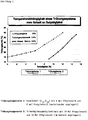
- Fig. 1 The nature of the surfactants and the amount of antifreezing agents added (such as diethylene glycol monobutyl ether) make it easy to design turbidity systems with just a few basic components, which alone allow the setting of defined turbidity temperatures to be varied over comparatively wide temperature ranges based on their mixing ratio. This is illustrated in Fig. 1 using the example of two different opacifying substances.
- Substances which have cloud points in the range from 10 to 90 ° C., preferably 10 to 70 ° C. in water-containing mixtures with alcohols and glycol derivatives, can be used as components of the cloud systems.
- the easiest way for the turbidity systems according to the invention is to use alcohols without problems (e.g. no salting out of surfactants) until Set at -30 ° C.
- alcohols and inorganic salts such as alkali, alkaline earth or ammonium salts is not excluded.
- the alcohols according to the invention are selected from the group of water-soluble mono- and polyhydric alcohols with 1 to 6 OH groups and with 1 to 6 carbon atoms, predominantly 2 to 4 carbon atoms, and / or from the group of water-soluble alkyl glycols with 1 to 4 carbon atoms in the alkyl chain and 1 to 20 alkylene oxide groups, and / or from the group of low molecular weight polyalkylene glycols in the molecular weight range from approx. 80 to 400 g / mol.
- the above-mentioned components can be used to set certain cloud temperatures depending on the respective mixing ratio of the components of the cloud system, as explained in FIG. 1.
- UV stabilizers as well as inorganic or organic dyes for certain light wavelength ranges, anti-aging agents, adhesion promoters, such as. B. functionalized silanes, and pH regulators, such as. B. sodium hydroxide solution can be added.
- turbidity systems according to the invention are mixed homogeneously with crosslinkable monomers for the claimed application, so that after introduction of this homogeneous mixture and subsequent polymerization, the respectively selected turbidity system is embedded in a polymer matrix which is no longer flowable and is uniformly distributed.
- the polymer matrix according to the invention consists of one or more polymerized monofunctional ethylenically unsaturated monomers and one or more polymerized polyfunctional ethylenically unsaturated monomers, the latter ensuring three-dimensional crosslinking.
- Water-soluble monomers are the most suitable. However, monomer mixtures can also contain water-insoluble monomers in an amount which does not decisively impair the hydrophilic properties of the polymer matrix.
- water-soluble monofunctional monomers are acrylic acid, methacrylic acid, alkali metal or ammonium salts of acrylic acid or methacrylic acid, Hydroxyethyl acrylate, hydroxyethyl methacrylate, hydroxypropyl acrylate, hydroxypropyl methacrylate, acrylamide, methacrylamide, N-alkylacrylamide, N, N-dialkylacrylamide, N-alkyl methacrylamide, N, N-dialkyl methacrylamide, 2-hydroxy-3-methacryloxypropyltrimethylammonamidium chloride, 3-methacrylamido-chloride, 3-methacrylamide methylpropanesulfonic acid, methacryloxyethyl phosphate and N-vinylpyrrolidone, although this list is not exhaustive.
- polyfunctional monomers are ethylene glycol diacrylate and dimethacrylate, butanediol diacrylate and dimethacrylate, hexanediol diacrylate and dimethacrylate, diethylene glycol diacrylate and dimethacrylate, triethylene glycol diacrylate and dimethacrylate, tetraethylene glycol diacrylate and dimethacrylate, polyethylene glycol diacrylate and dimethacrylate, dipropylene glycol diacrylate and dimethacrylate, tripropylene glycol diacrylate and dimethacrylate, Trimethylolpropane triacrylate and trimethacrylate, glycerol triacrylate and trimethacrylate, pentaerythritol tetraacrylate and tetramethacrylate, acrylic anhydride, methacrylic anhydride, allyl acrylate, allyl methacrylate and N, N-methylenebisacrylamide, but this list is not exhaustive.
- the polymer matrix is built up by free-radical polymerization of the aqueous solution of the monomers and crosslinking agents in the presence of the clouding system and the frost stabilizers and, if appropriate, the additives.
- the polymerization takes place with the addition of radical formers and is triggered by heat, redox initiators or by UV radiation.
- the radical formers are preferably also water-soluble. Examples of radical formers are peroxodisulfates, cumene hydroperoxide and t-butyl hydroperoxide.
- Sulfur compounds such as sodium sulfite, sodium dithionite, sodium disulfite, sodium thiosulfate, sodium hydroxymethyl sulfinate or formamidine sulfinic acid can be used as reducing agents in a redox initiator system.
- Ascorbic acid or transition metal salts are also suitable as reducing agents.
- Curing is preferably carried out at room temperature without additional heat.
- the gelation time can be varied within wide limits by the combination of peroxide compound and reducing agent or its concentration.
- photoinitiators are added instead of the peroxides.
- photoinitiators such.
- benzophenone, camphorquinone, ⁇ -diketones, thioxanthone derivatives, benzil ketals, benzoin ethers, ⁇ -hydroxyacetophenone derivatives and acylphosphine oxides can be used.
- a solution 3.9 parts by weight of an adduct of 5 mol of ethylene oxide and 8 mol of propylene oxide (added in succession) to 1 mol of C13-C15 oxo alcohol (surfactant 1) 28.5 parts by weight of 1,2-propylene glycol 10.8 parts by weight of butyl diglycol 5.0 parts by weight of acrylic acid 1.5 parts by weight of triethylene glycol diacrylate (TEGDA) 3.4 parts by weight of sodium hydroxide solution (20%)
- TAGDA triethylene glycol diacrylate
- demineralized water has a viscosity of less than 20 mPa ⁇ s at 20 ° C.
- the curing reaction is started by adding potassium peroxodisulfate and sodium hydroxymethyl sulfinate.
- the mixture is poured into a prepared pane assembly with the dimensions 50 cm x 50 cm and a space between the panes of 2 mm and cured in a horizontal position after the filling opening has been closed.
- the hardened pane has a haze temperature of 20 ° C, is frost-resistant and shows no difference in layer thickness in both vertical and horizontal positions.
- the gel described in Example 1 of DE 35 22 078 has a viscosity of more than 2,000 mPa ⁇ s at 20 ° C. and can only be introduced into a laminated pane as in Example 1 under great pressure and very slowly.
- a disk In contrast to the disk described in Example 1, such a disk is flat in the horizontal position and has no differences in layer thickness. In the vertical position, however, the gel sags under the influence of gravity and causes the disk to bulge. In the upper area, the layer thickness decreases by up to 0.5 mm, while in the lower area it increases by approximately the same amount.
- a pane produced according to Example 1 has a haze temperature of 41 ° C., is frost-stable and has no layer thickness differences in either the vertical or the horizontal position.
Landscapes
- Chemical & Material Sciences (AREA)
- Engineering & Computer Science (AREA)
- Materials Engineering (AREA)
- Organic Chemistry (AREA)
- Compositions Of Macromolecular Compounds (AREA)
- Processes Of Treating Macromolecular Substances (AREA)
- Colloid Chemistry (AREA)
- Polymerisation Methods In General (AREA)
- Polymerization Catalysts (AREA)
- Laminated Bodies (AREA)
- Joining Of Glass To Other Materials (AREA)
Abstract
Description
- Die Erfindung betrifft ein Verfahren zur Herstellung eines nicht fließfähigen, temperaturabhängig reversibel lichtdurchlässigen Gelmaterials, das auf möglichst einfache Weise in den üblichen Fertigungsprozeß von Verbundverglasungen integriert werden kann und das universell im Innen- und Außenbereich einsetzbare froststabile Verglasungen liefert.
- Derartige Verglasungen lassen sich überall dort einsetzen, wo hinter an sich transparenten Glasflächen bei intensiver Bestrahlung durch z. B. Sonnenlicht Überschreitungen bestimmter Temperaturen unerwünscht oder sogar schädlich sind. Hier sind insbesondere transparente Dächer und Wände in Industriehallen, Gewächshäusern usw. zu nennen.
- Es gibt zahlreiche Vorschläge, derartige Anforderungen durch automatisch und reversibel arbeitende Schattierungssysteme, die bei Überschreitung bestimmter Temperatur- oder Lichtintensitäten wirksam werden, zu erfüllen.
- So ist z. B. bekannt, Verbundverglasungen und insbesondere Doppelverglasungen mit temperaturabhängiger Transparenz auszustatten, indem man verschieden aufgebaute Folien bzw. Gele in den Zwischenraum zwischen parallel angeordnete Glasscheiben einbringt.
- Die bisher bekannten Lösungsvorschläge erfüllen jedoch nicht die genannte Anforderung nach einer unproblematischen Integration in den industriellen Fertigungsprozeß von Verbundverglasungen und einer möglichst universellen Einsetzbarkeit.
- Bei der Entwicklung thermoempfindlicher Systeme für die genannten Anwendungen wird in vielen Fällen das Phänomen des "Trübungspunktes" genutzt, das für viele Polymerlösungen sowie nichionische Tenside bei charakteristischen Temperaturen durch reversible Solvatierungs-/Desolvatierungsvorgänge bzw. hierdurch ermöglichte "Ver- und Entknäuelungsprozesse" erfolgt.
- Bei Erreichen des Trübungspunktes wird einfallendes Licht an Teilchen mit Durchmessern oberhalb der Wellenlänge des sichtbaren Lichtes reflektiert bzw. gestreut und z. T. absorbiert.
- Wasserquellbare Folien auf Basis verschiedener Polymerer werden z. B. in der deutschen Offenlegungsschrift DE 32 10 378, der Patentschrift US 4 409 383 und der europäischen Anmeldung EP 0 311 566 beschrieben.
- Der wesentliche Nachteil der in den o.a. Schriften vorgeschlagenen Systeme liegt in der fehlenden Froststabilität.
- Die fehlende Froststabilität schränkt auch die Verwendbarkeit von Systemen aus Polymeren und Hydratsalzen, wie sie in den Patentschriften DBP 11 54 905, DBP 10 12 752 und DBP 953 193 vorgeschlagen werden, ein.
- Auch die in der Patentschrift US-2 710 274 angeführten Gele enthalten neben Glykolen zur Trübungspunktregelung der wässrigen Methylpolyvinyletherlösungen noch einen zu hohen Wasseranteil, um froststabile Systeme zu ermöglichen. Die mit Agar-Agar verdickten Gele weisen darüberhinaus den Nachteil auf, speziell bei großflächigen senkrecht stehenden Verglasungen infolge ihres halbflüssigen Aggregatzustandes aufgrund der Schwerkraft zu unerwünschten Ausbauchungen von Doppelverglasungen zu führen.
- Derartig ausgebauchte Scheiben mit ungleichmäßiger Gelschichtdicke weisen insbesondere in der Durchsicht optische Verzerrungen auf, die in Gebäudeverglasungen nicht akzeptabel sind. Darüber hinaus wird im Falle eines Bruchs einer derartigen Scheibe das Gel aus der defekten Scheibe herausfließen und eine nur mit erheblichem Aufwand wieder zu beseitigende Verunreinigung der Gebäudeoberfläche verursachen.
- Obwohl die oben beschriebenen Gele noch fließfähig sind, sind sie doch bei weitem zu zähflüssig, als daß sie nach dem weitverbreiteten Gießharzverfahren, welches z. B. in der GB 2 155 856 beschrieben wird, in den engen Zwischenraum zwischen den zwei Glasscheiben einer Verbundglasscheibe eingebracht werden könnten.
- Die niedrigviskosen Systeme der FR 2 090 036, in der die Eintrübung durch niedrigkonzentrierte Lösungen von Tensiden (verschiedene Alkyl- bzw. Alkylphenylpolyglykolether) bzw. von Ethylenoxid-Propylenoxid-Copolymeren in Wasser bzw. Butylglykol erreicht wird, sind zwar aufgrund ihrer Fließfähigkeit für die industrielle Verarbeitung nach dem Gießharzverfahren geeignet, weisen dafür aber noch deutlicher den Effekt der Ausbauchung der Scheiben auf.
- Die wäßrigen Einstellungen weisen als weiteren Nachteil die bereits erwähnte Frostinstabilität auf. Die in der Patentschrift DE 35 22 078 beschriebenen Gele erlauben zwar eine froststabile Einstellung durch Erhöhung des Anteils an Glykolen und Alkoholen, die Nachteile des Ausbauchens großflächiger Doppelverglasungen weisen jedoch auch diese Gele auf. Als weiterer Nachteil ist auch hier die hohe Viskosität der beschriebenen Trübungsgele anzusehen (s. Vergleichsbeispiel 1), die eine schnelle und blasenfreie Einbringung des Gels in die vergleichweise engen Zwischenräume typischer Doppelverglasungen nur unter großem technischen Aufwand zuläßt. Auch die erforderliche Reifezeit der Gele von bis zu 12 Stunden vor der Anwendung ist ein Handhabungsnachteil für einen industriellen Produktionsablauf.
- Aufgabe der vorliegenden Erfindung ist es daher, ein Verfahren zur Herstellung eines nicht fließfähigen Gelmaterials mit über einen möglichst weiten Temperaturbereich einstellbarer temperaturabhängiger reversibler Lichtdurchlässigkeit ohne die oben genannten Nachteile zu entwickeln. Insbesondere soll das System im Verarbeitungszustand eine möglichst niedrige Viskosität aufweisen, so daß es nach dem Gießharzverfahren verarbeitet werden kann. Im Gebrauchszustand soll die Festigkeit des Systems dagegen so hoch sein, daß keinerlei Fließfähigkeit mehr gegeben ist und dadurch keine Ausbauchung innerhalb des Scheibenverbundes bzw. kein Herauslaufen mehr möglich ist.
- Darüber hinaus soll das System froststabil und stabil gegen UV- und Temperaturwechselbeanspruchungen sein und hinsichtlich des Randverbundes nicht zu Problemen mit den üblichen Dichtungsmaterialien für Mehrfachverglasungen führen.
- Die Aufgabe wird erfindungsgemäß dadurch gelöst, daß ein froststabil eingestelltes Trübungssystem zunächst mit grundsätzlich polymerisierbaren Monomeren homogen gemischt wird. Diese möglichst niedrigviskose Mischung wird dann nach Einbringung in den Zwischenraum von parallelen Glasplatten einem Polymerisationsvorgang unterworfen, wobei eine nicht mehr fließfähige Polymermatrix entsteht, in der das auf eine bestimmte Trübungstemperatur eingestellte Trübungssystem gleichmäßig verteilt ist.
- Gegenstand der Erfindung ist daher ein Verfahren zur Herstellung eines nicht fließfähigen, temperaturabhängig reversibel lichtdurchlässigen Gelmaterials enthaltend nichtionische und/oder nichtionisch wirkende Tenside als Trübungskomponenten, Froststabilisatoren, Wasser und gegebenenfalls übliche Additive, dadurch gekennzeichnet, daß zuerst eine ethylenisch ungesättigte Monomere enthaltende homogene Mischung mit den oben genannten Bestandteilen in niedrigviskosem Zustand an den Applikationsort gebracht wird und daß dann durch Polymerisation eine vernetzte Polymermatrix erzeugt wird, welche die übrigen Komponenten in gleichmäßiger Verteilung enthält.
- Als wesentliche Komponenten der erfindungsgemäßen Trübungssysteme können prinzipiell alle nichtionischen Tenside verwendet werden. Auch nichtionisch wirkende Tenside, die entweder selbst oder nach Zusatz von Salzen Trübungspunkte in Wasser aufzeigen, sind einsetzbar.
- Die froststabile Einstellung kann auf einfache Weise dadurch erreicht werden, daß man dem Gesamtsystem entsprechende Mengen an niederen ein- oder mehrwertigen Alkoholen (z. B. Ethanol, Ethylenglykol, Glycerin, 1,2-Propylenglykol) bzw. Glykolderivaten zusetzt.
- Über die Art der Tenside sowie die Menge von zugesetzten Gefrierschutzmitteln (wie z. B. Diethylenglykolmonobutylether) lassen sich auf einfache Weise mit wenigen Grundkomponenten Trübungssysteme konzipieren, die allein über ihr Mischungsverhältnis die Einstellung von definierten Trübungstemperaturen über vergleichsweise breite Temperaturbereiche zu variieren gestatten. Dies ist in Abb. 1 am Beispiel von zwei verschieden eintrübenden Substanzen erläutert.
- Bei einer praktischen Anwendung, d. h. Einarbeitung in ein polymerisierbares System, wie es weiter unten beschrieben wird, ist zu berücksichtigen, daß die in Abb. 1 angeführten Trübungstemperaturen verschoben werden. Da aber auch hier - wenn auch auf anderem Temperaturniveau - nahezu lineare Abhängigkeiten der Trübungstemperaturen von den Gehalten an "Frostschutzkomponenten" und Glykolderivaten bestehen, lassen sich die erforderlichen Mischungsverhältnisse für die unterschiedlichsten Mischungen durch wenige Versuche festlegen.
- Als Bestandteile der Trübungssysteme können Substanzen verwendet werden, die in wasserhaltigen Abmischungen mit Alkoholen und Glykolderivaten Trübungspunkte im Bereich von 10 bis 90 °C, vorzugsweise 10 bis 70 °C aufweisen.
- Hierzu gehören:
- a) Gegebenenfalls veretherte Fettalkoholalkoxylate, Alkylphenolalkoxylate und Alkoxylate synthetischer Alkohole (Oxo-Alkohole) der allgemeinen Formel

R₁ = R₂ = H oder R₁ = H und R₂ = -CH₃ oder R₂ = H und R₁ = -CH₃ und
R₃ H oder eine lineare oder verzweigte Alkylgruppe mit 1 bis 6 Kohlenstoffatomen sein kann und
x oder y gleich oder verschieden sein können und zwischen 0 und 20 liegen. Die Alkoxygruppen können dabei sowohl in zwei aufeinander folgenden Schritten wie auch als Gemisch an das Startmolekül R-OH angelagert werden. - b) Alkoxylate von nach gängigem Verfahren alkoxylierten natürlichen Fetten und Ölen, wobei insbesondere Ethylenoxid und/oder Propylenoxid als Alkoxide geeignet sind, und die alkoxylierten Produkte erfindungsgemäß pro Mol Triglycerid zwischen 10 und 70 Mol Alkylenoxid enthalten.
- c) Alkylpolyalkylenglykolester - auch Diester - von Fettsäuren und Dimerfettsäuren mit 8 bis 36 Kohlenstoffatomen und 4 bis 25 Alkylenoxidgruppen.
- d) Alkoxylate von Alkylmono- und Polycarbonsäuren.
- e) Alkoxylate von primären und sekundären Alkylmono- und -polyaminen mit 2 bis 36 Kohlenstoffatomen in der verzweigten oder linearen Alkylkette. Insbesondere sind Umsetzungsprodukte geeignet, deren Gehalt an Ethylenoxid (und/oder Propylenoxid) zwischen 20 und 80 Massenprozent liegt.
- f) Polyalkylenoxide mit Molekulargewichten von 400 bis 20 000 g/mol (vorwiegend 1 000 bis 6 000 g/mol), wobei im Fall von Copolymeren die fraglichen Produkte sowohl als Misch- wie auch als Blockcopolymerisate wirksam sind.
- g) Alkoxylate von Fettsäureamiden, wobei die Kohlenstoffkette der Carbonsäuren 8 bis 22 Kohlenstoffatome, vorzugsweise 12 bis 18 Kohlenstoffatome, enthält und die Amide nach üblichen Verfahren unter Verwendung von primären und sekundären Alkanolaminen, vorzugsweise Mono- bzw. Diethanolamin, hergestellt werden und anschließend mit Alkylenoxiden, vorzugsweise Ethylenoxid, alkoxyliert werden, wobei 1 bis 10 Mol Alkylenoxid pro Mol Fettsäureamid angelagert werden.
- h) Umsetzungsprodukte von Alkylpolyglykolethern mit Anhydriden von Dicarbonsäuren, insbesondere Maleinsäureanhydrid, Bernsteinsäureanhydrid, Phthalsäureanhydrid und Hexahydrophthalsäureanhydrid.
- i) Alkyl- bzw. Alkylarylpoly(oxyalkylen)-Carbonsäuren (Ethercarbonsäuren), wobei als Ausgangsalkoxylate die unter a genannten Verbindungen eingesetzt werden können.
- Obwohl eine gewisse Froststabilität auch mit Zusätzen von Salzen oder den Erstarrungspunkt von Wasser herabsetzenden Substanzen (z. B. Harnstoff) grundsätzlich möglich ist, lassen sich für die erfindungsgemäßen Trübungssysteme am einfachsten mit Alkoholen problemlos (z. B. keine Aussalzungen von Tensiden) Froststabilitäten bis -30 °C einstellen. Die Kombination von Alkoholen und anorganischen Salzen wie Alkali-, Erdalkali- oder Ammoniumsalzen ist aber nicht ausgeschlossen.
- Die erfindungsgemäßen Alkohole werden ausgewählt aus der Gruppe der wasserlöslichen ein- und mehrwertigen Alkohole mit 1 bis 6 OH-Gruppen und mit 1 bis 6 Kohlenstoffatomen, vorwiegend 2 bis 4 Kohlenstoffatomen, und/oder aus der Gruppe der wasserlöslichen Alkylglykole mit 1 bis 4 Kohlenstoffatomen in der Alkylkette und 1 bis 20 Alkylenoxidgruppen, und/oder aus der Gruppe der niedermolekularen Polyalkylenglykole im Molekulargewichtsbereich von ca. 80 bis 400 g/mol.
- Die vorstehend genannten Komponenten können verwendet werden, um abhängig vom jeweiligen Mischungsverhältnis der Komponenten des Trübungsystems bestimmte Trübungstemperaturen, wie in Abb. 1 erläutert, einzustellen.
- Als Additive können je nach Bedarf übliche UV-Stabilisatoren wie auch anorganische oder organische Farbstoffe für bestimmte Lichtwellenlängenbereiche, Alterungsschutzmittel, Haftverbesserer, wie z. B. funktionalisierte Silane, und pH-Regulatoren, wie z. B. Natronlauge, zugesetzt werden.
- Die erfindungsgemäßen Trübungssysteme werden für die beanspruchte Anwendung homogen mit vernetzbaren Monomeren gemischt, so daß nach Einbringung dieser homogenen Mischung und anschließender Polymerisation das jeweils ausgewählte Trübungssystem gleichmäßig verteilt in einer nicht mehr fließfähigen Polymermatrix eingebettet ist.
- Die erfindungsgemäße Polymermatrix besteht aus einem oder mehreren polymerisierten monofunktionellen ethylenisch ungesättigten Monomeren und einem oder mehreren polymerisierten mehrfunktionellen ethylenisch ungesättigten Monomeren, wobei letztere für die dreidimensionale Vernetzung sorgen. Am besten geeignet sind wasserlösliche Monomere. In Monomergemischen können jedoch auch wasserunlösliche Monomere in einer Menge enthalten sein, die die hydrophilen Eigenschaften der Polymermatrix nicht entscheidend beeinträchtigt.
- Beispiele für wasserlösliche monofunktionelle Monomere sind Acrylsäure, Methacrylsäure, Alkali- oder Ammoniumsalze der Acrylsäure oder Methacrylsäure, Hydroxyethylacrylat, Hydroxyethylmethacrylat, Hydroxypropylacrylat, Hydroxypropylmethacrylat, Acrylamid, Methacrylamid, N-Alkylacrylamid, N,N-Dialkylacrylamid, N-Alkylmethacrylamid, N,N-Dialkylmethacrylamid, 2-Hydroxy-3-methacryloxypropyltrimethylammoniumchlorid, 3-Methacrylamidopropyltrimethylammoniumchlorid, 2-Acrylamido-2-methylpropansulfonsäure, Methacryloxyethylphosphat und N-Vinylpyrrolidon, wobei diese Liste keinen Anspruch auf Vollständigkeit erhebt.
- Beispiele für mehrfunktionelle Monomere sind Ethylenglykoldiacrylat und -dimethacrylat, Butandioldiacrylat und -dimethacrylat, Hexandioldiacrylat und -dimethacrylat, Diethylenglykoldiacrylat und -dimethacrylat, Triethylenglykoldiacrylat und -dimethacrylat, Tetraethylenglykoldiacrylat und -dimethacrylat, Polyethylenglykoldiacrylat und -dimethacrylat, Dipropylenglykoldiacrylat und -dimethacrylat, Tripropylenglykoldiacrylat und -dimethacrylat, Trimethylolpropantriacrylat und -trimethacrylat, Glycerintriacrylat und -trimethacrylat, Pentaerythrittetraacrylat und -tetramethacrylat, Acrylsäureanhydrid, Methacrylsäureanhydrid, Allylacrylat, Allylmethacrylat und N,N-Methylenbisacrylamid, wobei diese Liste keinen Anspruch auf Vollständigkeit erhebt.
- Der Aufbau der Polymermatrix erfolgt durch radikalische Polymerisation der wäßrigen Lösung der Monomeren und Vernetzer in Gegenwart des Trübungssystems und der Froststabilisatoren und gegebenenfalls der Additive. Die Polymerisation erfolgt unter Zugabe von Radikalbildnern und wird durch Wärme, Redoxinitiatoren oder durch UV-Strahlung ausgelöst. Die Radikalbildner sind bevorzugt ebenfalls wasserlöslich. Beispiele für Radikalbildner sind Peroxodisulfate, Cumolhydroperoxid und t-Butylhydroperoxid. Als Reduktionsmittel in einem Redoxinitiatorsystem können Schwefelverbindungen wie Natriumsulfit, Natriumdithionit, Natriumdisulfit, Natriumthiosulfat, Natriumhydroxymethylsulfinat oder Formamidinsulfinsäure eingesetzt werden. Als Reduktionsmittel kommen weiterhin auch Ascorbinsäure oder Übergangsmetallsalze in Frage.
- Die Aushärtung erfolgt bevorzugt bei Raumtemperatur ohne zusätzliche Wärmezufuhr. Die Gelierzeit kann dabei durch die Kombination aus Peroxidverbindung und Reduktionsmittel bzw. deren Konzentration in weiten Grenzen variiert werden. Im Falle einer UV-Härtung werden anstelle der Peroxide Photoinitiatoren zugesetzt. Als Photoinitiatoren können z. B. Benzophenon, Campherchinon, α-Diketone, Thioxanthonderivate, Benzilketale, Benzoinether, α-Hydroxyacetophenonderivate und Acylphosphinoxide verwendet werden.
- Eine Lösung aus
3.9 Gew.-Teilen eines Addukts von 5 mol Ethylenoxid und 8 mol Propylenoxid (nacheinander angelagert) an 1 mol C₁₃-C₁₅-Oxoalkohol (Tensid 1)
28.5 Gew.-Teilen 1,2-Propylenglykol
10.8 Gew.-Teilen Butyldiglykol
5.0 Gew.-Teilen Acrylsäure
1.5 Gew.-Teilen Triethylenglykoldiacrylat (TEGDA)
3.4 Gew.-Teilen Natronlauge (20%ig)
46.9 Gew.-Teilen entmineralisiertem Wasser
hat bei 20 °C eine Viskosität von weniger als 20 mPa·s. Durch Zugabe von Kaliumperoxodisulfat und Natriumhydroxymethylsulfinat wird die Aushärtungsreaktion gestartet. Die Mischung wird in einen vorbereiteten Scheibenverbund mit den Abmessungen 50 cm x 50 cm und einem Scheibenzwischenraum von 2 mm gegossen und nach dem Verschließen der Einfüllöffnung in horizontaler Lage ausgehärtet. - Die ausgehärtete Scheibe hat eine Trübungstemperatur von 20 °C, ist froststabil und weist sowohl in vertikaler wie auch in horizontaler Lage keinerlei Schichtdickenunterschiede auf.
- Das im Beispiel 1 der DE 35 22 078 beschriebene Gel hat bei 20 °C eine Viskosität von mehr als 2 000 mPa·s und läßt sich nur unter großem Druck und sehr langsam in einen Scheibenverbund wie in Beispiel 1 einbringen. Im Gegensatz zu der in Beispiel 1 beschriebenen Scheibe ist eine derartige Scheibe zwar in horizontaler Lage eben und weist keine Schichtdickenunterschiede auf. In vertikaler Position sackt das Gel jedoch unter dem Einfluß der Schwerkraft ab und verursacht eine Ausbauchung der Scheibe. Im oberen Bereich nimmt die Schichtdicke dabei um bis zu 0.5 mm ab, während sie im unteren Bereich etwa um den gleichen Betrag zunimmt.
- Eine Lösung aus
4.3 Gew.-Teilen eines Addukts aus 70 mol Propylenoxyd und 10 mol Ethylenoxid (im Gemisch angelagert) an 1 mol Trimethylhexamethylendiamin (Tensid 2)
25.9 Gew.-Teilen 1,2-Propylenglykol
9.8 Gew.-Teilen Butyldiglykol
5.0 Gew.-Teilen Acrylsäure
1.5 Gew.-Teilen TEGDA
3.9 Gew.-Teilen Natronlauge (20%ig)
49.6 Gew.-Teilen entmineralisiertem Wasser
hat bei 20 °C eine Viskosität von weniger als 20 mPa·s. - Eine gemäß Beispiel 1 hergestellte Scheibe hat eine Trübungstemperatur von 41 °C, ist froststabil und weist sowohl in vertikaler wie auch in horizontaler Lage keinerlei Schichtdickenunterschiede auf.
Claims (6)
- Verfahren zur Herstellung eines nicht fließfähigen, temperaturabhängig reversibel lichtdurchlässigen Gelmaterials enthaltend nichtionische und/oder nichtionisch wirkende Tenside als Trübungskomponenten, Froststabilisatoren, Wasser und gegebenenfalls übliche Additive,
dadurch gekennzeichnet,
daß zuerst eine ethylenisch ungesättigte Monomere enthaltende homogene Mischung mit den oben genannten Bestandteilen in niedrigviskosem Zustand an den Applikationsort gebracht wird und daß dann durch Polymerisation eine vernetzte Polymermatrix erzeugt wird, welche die übrigen Komponenten in gleichmäßiger Verteilung enthält. - Verfahren nach Anspruch 1,
dadurch gekennzeichnet,
daß die Aushärtung zu einer dreidimensional vernetzten Polymermatrix durch eine radikalische Polymerisation von ethylenisch ungesättigten Monomeren bewirkt wird. - Verfahren nach den Ansprüchen 1 und 2,
dadurch gekennzeichnet,
daß Mischungen aus einfach und/oder mehrfach ethylenisch ungesättigten Verbindungen eingesetzt werden. - Verfahren nach den Ansprüchen 1 bis 3,
dadurch gekennzeichnet,
daß als Trübungskomponenten nichtionisch und/oder ionisch wirkende Tenside eingesetzt werden, die in wasserhaltigen Mischungen mit ein- und/oder mehrwertigen Alkoholen und/oder Alkylmono- oder -polyglykolen in der Polymermatrix Trübungspunkte im Bereich von 10 bis 90 °C aufweisen. - Verfahren nach den Ansprüchen 1 bis 4,
dadurch gekennzeichnet,
daß als Froststabilisatoren Kombinationen aus ein- oder mehrwertigen Alkoholen, Alkylmono- bzw. -polyglykolen und Alkali-, Erdalkali- oder Ammoniumsalzen oder Harnstoff eingesetzt werden. - Verwendung der nach den Ansprüchen 1 bis 5 hergestellten nicht fließfähigen Gelmaterialien als Trübungssystem für temperaturabhängig lichtdurchlässige Verbundverglasungen.
Applications Claiming Priority (2)
| Application Number | Priority Date | Filing Date | Title |
|---|---|---|---|
| DE4412588A DE4412588A1 (de) | 1994-04-13 | 1994-04-13 | Verfahren zur Herstellung einer temperaturabhängig eintrübenden Polymermatrix |
| DE4412588 | 1994-04-13 |
Publications (3)
| Publication Number | Publication Date |
|---|---|
| EP0677536A2 true EP0677536A2 (de) | 1995-10-18 |
| EP0677536A3 EP0677536A3 (de) | 1995-12-06 |
| EP0677536B1 EP0677536B1 (de) | 1998-07-15 |
Family
ID=6515201
Family Applications (1)
| Application Number | Title | Priority Date | Filing Date |
|---|---|---|---|
| EP95102616A Expired - Lifetime EP0677536B1 (de) | 1994-04-13 | 1995-02-24 | Verfahren zur Herstellung einer temperaturabhängig eintrübenden Polymermatrix |
Country Status (7)
| Country | Link |
|---|---|
| US (1) | US5674559A (de) |
| EP (1) | EP0677536B1 (de) |
| JP (1) | JPH0848706A (de) |
| AU (1) | AU682440B2 (de) |
| DE (2) | DE4412588A1 (de) |
| ES (1) | ES2120643T3 (de) |
| IL (1) | IL113340A (de) |
Cited By (3)
| Publication number | Priority date | Publication date | Assignee | Title |
|---|---|---|---|---|
| WO1997025358A1 (de) * | 1996-01-13 | 1997-07-17 | Basf Aktiengesellschaft | Gele mit thermotropen eigenschaften |
| WO1997025357A1 (de) * | 1996-01-13 | 1997-07-17 | Basf Aktiengesellschaft | Gele mit thermotropen eigenschaften |
| CN107829517A (zh) * | 2017-10-17 | 2018-03-23 | 昆明理工大学 | 一种基于叶片仿生结构的建筑外墙砖、其应用及滞尘减霾方法 |
Families Citing this family (5)
| Publication number | Priority date | Publication date | Assignee | Title |
|---|---|---|---|---|
| EP1618432A4 (de) * | 2003-04-09 | 2006-11-29 | Day Chahroudi | Herstellung von lichtventilen |
| TW200615424A (en) * | 2004-07-20 | 2006-05-16 | Schoeller Textil Ag | Finishings for textile fibres and babrics to give hydrophobic oleophobic and self-cleaning surfaces |
| CN101023213A (zh) * | 2004-07-20 | 2007-08-22 | 舍勒纺织股份公司 | 纺织纤维和织物上可再装填的整理剂 |
| US8617304B2 (en) * | 2010-02-23 | 2013-12-31 | Ben Wen | Bio-based coating |
| JP2023517343A (ja) * | 2020-03-11 | 2023-04-25 | ソルブコア テクノロジーズ,エルエルシー | 液-液相転移組成物および方法 |
Family Cites Families (16)
| Publication number | Priority date | Publication date | Assignee | Title |
|---|---|---|---|---|
| US2710274A (en) * | 1952-03-26 | 1955-06-07 | Kuehl Georg Walter | Multi-layer glass sheet |
| US3679592A (en) * | 1970-08-17 | 1972-07-25 | Monsanto Co | Cleansing and soil preventive composition |
| US3954691A (en) * | 1975-01-29 | 1976-05-04 | The Harshaw Chemical Company | Glass enamel medium |
| JPS6037836B2 (ja) * | 1977-08-05 | 1985-08-28 | 東亞合成株式会社 | 接着剤組成物 |
| JPS6182835A (ja) * | 1984-09-29 | 1986-04-26 | Ricoh Co Ltd | 微粒子体を含有するミクロゲル分散液 |
| US4810738A (en) * | 1985-04-29 | 1989-03-07 | Dresser Industries, Inc. | Coating composition and method to increase electrophoretic film thickness |
| DE3522078A1 (de) * | 1985-06-20 | 1987-01-02 | Fraunhofer Ges Forschung | Gel mit temperaturabhaengiger lichtdurchlaessigkeit, verfahren zu seiner herstellung und seine verwendung |
| DE3537276A1 (de) * | 1985-10-19 | 1987-04-23 | Basf Ag | Verfahren zur kontinuierlichen herstellung von vernetzten feinteiligen gelfoermigen polymerisaten |
| US4848353A (en) * | 1986-09-05 | 1989-07-18 | Minnesota Mining And Manufacturing Company | Electrically-conductive, pressure-sensitive adhesive and biomedical electrodes |
| US4871797A (en) * | 1986-12-30 | 1989-10-03 | Akzo N.V. | Aqueous dispersion of an addition polymer |
| DE3879608T2 (de) * | 1987-10-05 | 1993-10-14 | Ciba Geigy | Thermotrope biphilische Hydrogele und Wasser enthaltende Kunststoffe. |
| US4877675A (en) * | 1988-09-29 | 1989-10-31 | Waqidi Falicoff | Light transmitting or reflective sheet responsive to temperature variations |
| DE3843780A1 (de) * | 1988-12-24 | 1990-07-05 | Basf Ag | Verfahren zur herstellung von feinteiligen, gelfoermigen, wasserquellbaren copolymerisaten |
| US5004562A (en) * | 1989-02-01 | 1991-04-02 | Union Oil Company Of California | Latex/sol or gel systems |
| US5093396A (en) * | 1990-07-26 | 1992-03-03 | S. C. Johnson & Son, Inc. | Alkali-soluble hydrophilic polymer coatings |
| DE4311916A1 (de) * | 1993-04-10 | 1994-10-13 | Goldschmidt Ag Th | Poly(meth)acrylsäure-Dispersion |
-
1994
- 1994-04-13 DE DE4412588A patent/DE4412588A1/de not_active Withdrawn
-
1995
- 1995-02-24 EP EP95102616A patent/EP0677536B1/de not_active Expired - Lifetime
- 1995-02-24 ES ES95102616T patent/ES2120643T3/es not_active Expired - Lifetime
- 1995-02-24 DE DE59502796T patent/DE59502796D1/de not_active Expired - Fee Related
- 1995-04-12 JP JP7087255A patent/JPH0848706A/ja not_active Withdrawn
- 1995-04-12 AU AU16445/95A patent/AU682440B2/en not_active Ceased
- 1995-04-12 IL IL11334095A patent/IL113340A/xx not_active IP Right Cessation
- 1995-04-13 US US08/421,236 patent/US5674559A/en not_active Expired - Fee Related
Cited By (5)
| Publication number | Priority date | Publication date | Assignee | Title |
|---|---|---|---|---|
| WO1997025358A1 (de) * | 1996-01-13 | 1997-07-17 | Basf Aktiengesellschaft | Gele mit thermotropen eigenschaften |
| WO1997025357A1 (de) * | 1996-01-13 | 1997-07-17 | Basf Aktiengesellschaft | Gele mit thermotropen eigenschaften |
| US6140387A (en) * | 1996-01-13 | 2000-10-31 | Basf Aktiengesellschaft | Gels with thermotropic properties |
| CN107829517A (zh) * | 2017-10-17 | 2018-03-23 | 昆明理工大学 | 一种基于叶片仿生结构的建筑外墙砖、其应用及滞尘减霾方法 |
| CN107829517B (zh) * | 2017-10-17 | 2019-07-16 | 昆明理工大学 | 一种基于叶片仿生结构的建筑外墙砖、其应用及滞尘减霾方法 |
Also Published As
| Publication number | Publication date |
|---|---|
| IL113340A0 (en) | 1995-07-31 |
| US5674559A (en) | 1997-10-07 |
| JPH0848706A (ja) | 1996-02-20 |
| IL113340A (en) | 1999-06-20 |
| EP0677536B1 (de) | 1998-07-15 |
| EP0677536A3 (de) | 1995-12-06 |
| DE59502796D1 (de) | 1998-08-20 |
| AU682440B2 (en) | 1997-10-02 |
| AU1644595A (en) | 1995-10-26 |
| ES2120643T3 (es) | 1998-11-01 |
| DE4412588A1 (de) | 1995-10-19 |
Similar Documents
| Publication | Publication Date | Title |
|---|---|---|
| EP0417568B1 (de) | Wässrige Kunstharzzubereitungen | |
| DE69524183T2 (de) | Optisches Kunststoffilter | |
| EP0458144B1 (de) | Wässrige Kunstharzzubereitungen | |
| DE69118248T2 (de) | Verfahren zur Umwandlung von feinen Teilchen aus superabsorbierenden Polymeren in grossen Teilchen | |
| DE60111940T2 (de) | Härtbare zusammensetzung und photochrome gehärtete gegenstände | |
| DE69816684T2 (de) | Enteisungsflüssigkeiten | |
| DE4414088A1 (de) | Gele mit thermotropen Eigenschaften | |
| DE60008076T2 (de) | Verfahren zur Darstellung eines Latex mit photochromatischen Eigenschaften und dessen Anwendung insbesondere im ophthalmischen Bereich | |
| DE19646484A1 (de) | Flüssigkeitsabsorbierende Polymere, Verfahren zu deren Herstellung und deren Verwendung | |
| DE69613391T2 (de) | Polymere materialien für photochrome anwendungen | |
| EP0677536B1 (de) | Verfahren zur Herstellung einer temperaturabhängig eintrübenden Polymermatrix | |
| DE60318589T2 (de) | Photohärtbare harzzusammensetzung, die ein poröses material bildet, und gegenstand aus porösem gehärtetem harz | |
| EP0034331A2 (de) | Gel auf der Basis wasserlöslicher Poly(meth)acrylsäure-Derivate, Verfahren zu seiner Herstellung und seine Anwendung | |
| DE3917262C2 (de) | Kontaktlinse und Verfahren zur Herstellung der Kontaktlinse | |
| DE3811201B4 (de) | Verfahren zur Herstellung von Polyvinylalkohol mit hohem Polymerisationsgrad | |
| DE68916316T2 (de) | Verfahren zur Herstellung von feinkörnigem Eis und trockenem Clathrat-Wasser zur Herstellung von Beton/Mörtel, Verfahren zur Herstellung von Beton/Mörtel unter Verwendung von feinkörnigem Eis oder trockenem Clathrat-Wasser und daraus hergestellte Beton/Mörtel-Produkte. | |
| EP0031005A1 (de) | Verfahren zur Herstellung wasserlöslicher Polymer-Festprodukte | |
| DE2050988C3 (de) | Verfahren zur Herstellung von in festem Zustand wasserlöslichen Copolymerisaten von Acrylamid und Acrylsäure mit hohem Molekulargewicht | |
| DE2833934C2 (de) | Vorrichtung zur Sammlung von Licht und Herstellungsverfahren für eine solche Vorrichtung | |
| EP2164881B1 (de) | Verwendung eines quellbaren polymers zum abdichten | |
| EP2340274A1 (de) | KONTINUIERLICHE HERSTELLUNG VON SICH ALS FLIEßMITTEL EIGNENDEN COPOLYMEREN | |
| EP0873367B1 (de) | Verfahren zur herstellung von gelen mit thermotropen eigenschaften | |
| DE69624817T2 (de) | Carboxylgruppen enthaltende polymerzusammensetzung | |
| EP0228422B1 (de) | Gel mit temperaturabhängiger lichtdurchlässigkeit, verfahren zu seiner herstellung und seine verwendung | |
| DE102012220400A1 (de) | Superabsorber für Kabelanwendungen |
Legal Events
| Date | Code | Title | Description |
|---|---|---|---|
| PUAI | Public reference made under article 153(3) epc to a published international application that has entered the european phase |
Free format text: ORIGINAL CODE: 0009012 |
|
| PUAL | Search report despatched |
Free format text: ORIGINAL CODE: 0009013 |
|
| AK | Designated contracting states |
Kind code of ref document: A2 Designated state(s): BE CH DE ES FR GB IT LI NL |
|
| AK | Designated contracting states |
Kind code of ref document: A3 Designated state(s): BE CH DE ES FR GB IT LI NL |
|
| 17P | Request for examination filed |
Effective date: 19960219 |
|
| GRAG | Despatch of communication of intention to grant |
Free format text: ORIGINAL CODE: EPIDOS AGRA |
|
| GRAG | Despatch of communication of intention to grant |
Free format text: ORIGINAL CODE: EPIDOS AGRA |
|
| GRAH | Despatch of communication of intention to grant a patent |
Free format text: ORIGINAL CODE: EPIDOS IGRA |
|
| 17Q | First examination report despatched |
Effective date: 19971219 |
|
| GRAH | Despatch of communication of intention to grant a patent |
Free format text: ORIGINAL CODE: EPIDOS IGRA |
|
| GRAA | (expected) grant |
Free format text: ORIGINAL CODE: 0009210 |
|
| AK | Designated contracting states |
Kind code of ref document: B1 Designated state(s): BE CH DE ES FR GB IT LI NL |
|
| REG | Reference to a national code |
Ref country code: CH Ref legal event code: EP |
|
| GBT | Gb: translation of ep patent filed (gb section 77(6)(a)/1977) |
Effective date: 19980722 |
|
| ITF | It: translation for a ep patent filed | ||
| REF | Corresponds to: |
Ref document number: 59502796 Country of ref document: DE Date of ref document: 19980820 |
|
| REG | Reference to a national code |
Ref country code: CH Ref legal event code: NV Representative=s name: SCHMAUDER & PARTNER AG PATENTANWALTSBUERO |
|
| ET | Fr: translation filed | ||
| REG | Reference to a national code |
Ref country code: ES Ref legal event code: FG2A Ref document number: 2120643 Country of ref document: ES Kind code of ref document: T3 |
|
| NLR4 | Nl: receipt of corrected translation in the netherlands language at the initiative of the proprietor of the patent | ||
| PGFP | Annual fee paid to national office [announced via postgrant information from national office to epo] |
Ref country code: ES Payment date: 19990203 Year of fee payment: 5 |
|
| PGFP | Annual fee paid to national office [announced via postgrant information from national office to epo] |
Ref country code: CH Payment date: 19990219 Year of fee payment: 5 |
|
| PGFP | Annual fee paid to national office [announced via postgrant information from national office to epo] |
Ref country code: GB Payment date: 19990223 Year of fee payment: 5 |
|
| PGFP | Annual fee paid to national office [announced via postgrant information from national office to epo] |
Ref country code: FR Payment date: 19990226 Year of fee payment: 5 |
|
| PGFP | Annual fee paid to national office [announced via postgrant information from national office to epo] |
Ref country code: NL Payment date: 19990228 Year of fee payment: 5 |
|
| PGFP | Annual fee paid to national office [announced via postgrant information from national office to epo] |
Ref country code: BE Payment date: 19990323 Year of fee payment: 5 |
|
| PGFP | Annual fee paid to national office [announced via postgrant information from national office to epo] |
Ref country code: DE Payment date: 19990427 Year of fee payment: 5 |
|
| RAP4 | Party data changed (patent owner data changed or rights of a patent transferred) |
Owner name: CHEMETALL GMBH Owner name: HUELS AKTIENGESELLSCHAFT |
|
| PLBE | No opposition filed within time limit |
Free format text: ORIGINAL CODE: 0009261 |
|
| STAA | Information on the status of an ep patent application or granted ep patent |
Free format text: STATUS: NO OPPOSITION FILED WITHIN TIME LIMIT |
|
| 26N | No opposition filed | ||
| PG25 | Lapsed in a contracting state [announced via postgrant information from national office to epo] |
Ref country code: GB Free format text: LAPSE BECAUSE OF NON-PAYMENT OF DUE FEES Effective date: 20000224 |
|
| PG25 | Lapsed in a contracting state [announced via postgrant information from national office to epo] |
Ref country code: ES Free format text: LAPSE BECAUSE OF NON-PAYMENT OF DUE FEES Effective date: 20000225 |
|
| PG25 | Lapsed in a contracting state [announced via postgrant information from national office to epo] |
Ref country code: BE Free format text: LAPSE BECAUSE OF NON-PAYMENT OF DUE FEES Effective date: 20000228 |
|
| PG25 | Lapsed in a contracting state [announced via postgrant information from national office to epo] |
Ref country code: LI Free format text: LAPSE BECAUSE OF NON-PAYMENT OF DUE FEES Effective date: 20000229 Ref country code: CH Free format text: LAPSE BECAUSE OF NON-PAYMENT OF DUE FEES Effective date: 20000229 |
|
| BERE | Be: lapsed |
Owner name: CHEMETALL G.M.B.H. Effective date: 20000228 Owner name: HULS A.G. Effective date: 20000228 |
|
| PG25 | Lapsed in a contracting state [announced via postgrant information from national office to epo] |
Ref country code: NL Free format text: LAPSE BECAUSE OF NON-PAYMENT OF DUE FEES Effective date: 20000901 |
|
| GBPC | Gb: european patent ceased through non-payment of renewal fee |
Effective date: 20000224 |
|
| REG | Reference to a national code |
Ref country code: CH Ref legal event code: PL |
|
| PG25 | Lapsed in a contracting state [announced via postgrant information from national office to epo] |
Ref country code: FR Free format text: LAPSE BECAUSE OF NON-PAYMENT OF DUE FEES Effective date: 20001031 |
|
| NLV4 | Nl: lapsed or anulled due to non-payment of the annual fee |
Effective date: 20000901 |
|
| PG25 | Lapsed in a contracting state [announced via postgrant information from national office to epo] |
Ref country code: DE Free format text: LAPSE BECAUSE OF NON-PAYMENT OF DUE FEES Effective date: 20001201 |
|
| REG | Reference to a national code |
Ref country code: FR Ref legal event code: ST |
|
| REG | Reference to a national code |
Ref country code: ES Ref legal event code: FD2A Effective date: 20010910 |
|
| PG25 | Lapsed in a contracting state [announced via postgrant information from national office to epo] |
Ref country code: IT Free format text: LAPSE BECAUSE OF NON-PAYMENT OF DUE FEES Effective date: 20050224 |