EP0677586A1 - Rekombinante Collagenase Typ II aus Clostridium histolyticum und ihre Verwendung zur Isolierung von Zellen und Zellverbänden - Google Patents
Rekombinante Collagenase Typ II aus Clostridium histolyticum und ihre Verwendung zur Isolierung von Zellen und Zellverbänden Download PDFInfo
- Publication number
- EP0677586A1 EP0677586A1 EP95103015A EP95103015A EP0677586A1 EP 0677586 A1 EP0677586 A1 EP 0677586A1 EP 95103015 A EP95103015 A EP 95103015A EP 95103015 A EP95103015 A EP 95103015A EP 0677586 A1 EP0677586 A1 EP 0677586A1
- Authority
- EP
- European Patent Office
- Prior art keywords
- seq
- sequence
- collagenase
- amino acid
- cells
- Prior art date
- Legal status (The legal status is an assumption and is not a legal conclusion. Google has not performed a legal analysis and makes no representation as to the accuracy of the status listed.)
- Withdrawn
Links
Classifications
-
- C—CHEMISTRY; METALLURGY
- C12—BIOCHEMISTRY; BEER; SPIRITS; WINE; VINEGAR; MICROBIOLOGY; ENZYMOLOGY; MUTATION OR GENETIC ENGINEERING
- C12N—MICROORGANISMS OR ENZYMES; COMPOSITIONS THEREOF; PROPAGATING, PRESERVING, OR MAINTAINING MICROORGANISMS; MUTATION OR GENETIC ENGINEERING; CULTURE MEDIA
- C12N9/00—Enzymes; Proenzymes; Compositions thereof; Processes for preparing, activating, inhibiting, separating or purifying enzymes
- C12N9/14—Hydrolases (3)
- C12N9/48—Hydrolases (3) acting on peptide bonds (3.4)
- C12N9/50—Proteinases, e.g. Endopeptidases (3.4.21-3.4.25)
- C12N9/52—Proteinases, e.g. Endopeptidases (3.4.21-3.4.25) derived from bacteria or Archaea
-
- A—HUMAN NECESSITIES
- A61—MEDICAL OR VETERINARY SCIENCE; HYGIENE
- A61K—PREPARATIONS FOR MEDICAL, DENTAL OR TOILETRY PURPOSES
- A61K35/00—Medicinal preparations containing materials or reaction products thereof with undetermined constitution
- A61K35/12—Materials from mammals; Compositions comprising non-specified tissues or cells; Compositions comprising non-embryonic stem cells; Genetically modified cells
- A61K35/37—Digestive system
- A61K35/39—Pancreas; Islets of Langerhans
Definitions
- the invention relates to a recombinant type II collagenase from Clostridium histolyticum and its use for the isolation of cells and cell assemblies.
- Bacterial collagenases e.g. from Clostridium histolyticum, are used for the digestion of tissues and for the production of single cells or cell assemblies (e.g. islands) (islands: Sutton et al., Transplantation 42 (1986) 689-691; liver: Quibel et al., Anal. Biochem. 154 (1986) 26-28; Bones: Hefley et al., J. Bone Mineral Res. 2 (1987) 505-516; Umbilical cord: Holzinger et al., Immunol. Lett. 35 (1993) 109-118. From Clostridium histolyticum two different types of collagenase are known (MF French et al., J.
- CHC II Clostridium histolyticum
- EL Angleton and HE van Wart Biochemistry 27 (1988) 7413-7418 and 7406-7412.
- CHC II has been shown to be very sensitive to repeated freezing and thawing. After 12 freezing / thawing cycles, the activity of CHC II has practically completely disappeared (TJ Hefley , J. Bone and Mineral Res. 2 (1987) 505-516).
- the object of the present invention is to provide a freeze-stable collagenase class II from Clostridium histolyticum.
- the object is achieved by a polypeptide which has the properties of a Class II collagenase from Clostridium histolyticum, still has considerable collagenase activity after 12 freezing / thawing cycles and is obtainable by expression of an exogenous DNA sequence in prokaryotic or eukaryotic host cells and Isolation of the desired polypeptide, the DNA sequence containing in the region characteristic of this collagenase SEQ ID NO: 1 or a sequence which codes for the same amino acid sequence as part of the degeneration of the genetic code.
- a CHC II which is the product of a recombinant preparation, is substantially more stable to repeated freezing and thawing than the CHC II isolated from natural sources and still has a considerable amount of collagenase activity after 12 freezing / thawing cycles (preferably more than 50%, particularly preferably more than 80% of the starting activity).
- the recombinant CHC II can be prepared by the methods familiar to the person skilled in the art.
- a DNA sequence is first produced which is able to produce a protein which has the activity of CHC II.
- a DNA sequence in the sense of the invention is to be understood as an isolated DNA molecule.
- the sequence coding for the protein can be determined with the aid of SEQ ID NO: 1 by determining the reading frame on the basis of a comparison with known peptide sequences of collagenases and converting the DNA sequence thus determined into an amino acid sequence using the genetic code.
- the sequence encoding the active protein is about 2 to 3 times longer than SEQ ID NO: 1.
- the DNA sequence is cloned into a vector which can be transferred into a host cell and can be replicated there. In addition to the CHC II sequence, such a vector contains operator elements which are required for the expression of the DNA sequence.
- This vector which contains the CHC II sequence and the operator elements, is transferred into a vector which is able to express the DNA of CHC II.
- the host cell is cultured under conditions suitable for the amplification of the vector and CHC II is obtained. Appropriate measures are taken to ensure that the protein can have an active tertiary structure in which it shows CHC II properties.
- Another object of the invention is a process for the preparation of a polypeptide which has the properties of a class II collagenase from Clostridium histolyticum and still has considerable collagenase activity after 12 freezing / thawing cycles, by expression of an exogenous DNA sequence in prokaryotic or eukaryotic host cells and isolation of the desired polypeptide, the DNA sequence containing in the region characteristic of this collagenase SEQ ID NO: 1 or a sequence which codes for the same amino acid sequence as part of the degeneration of the genetic code.
- the protein is preferably expressed in microorganisms, in particular in prokaryotes, and there in E. coli.
- the expression vectors must contain a promoter which allows expression of the protein in the host organism.
- promoters are known to the person skilled in the art and are, for example, lac promoter (Chang et al., Nature 198 (1977) 1056), trp promoter (Goeddel et al., Nuc. Acids Res. 8 (1980) 4057), ⁇ PL promoter (Shimatake et al., Nature 292 (1981) 128) and T5 promoter (U.S. Patent No. 4,689,406).
- Synthetic promoters such as the tac promoter (US Pat. No. 4,551,433) are also suitable.
- Coupled promoter systems such as, for example, T7 RNA polymerase / promoter system (Studier et al., J. Mol. Biol. 189 (1986) 113) are also suitable.
- Hybrid promoters comprising a bacteriophage promoter and the operator region of the microorganism are also suitable (EP-A 0 267 851).
- An effective ribosome binding site is required in addition to the promoter.
- this ribosome binding site is referred to as the Shine-Dalgarno (SD) sequence (Sambrook et al., "Expression of cloned genes in E. coli” in Molecular Cloning: A laboratory manual (1989) Cold Spring Harbor Laboratory Press, New York, USA).
- a DNA sequence is usually used which is for the N-terminal part an endogenous bacterial protein or other stable protein, fused to the 5 'end of the sequence coding for CHC II.
- Examples include lacZ (Phillips and Silhavy, Nature 344 (1990) 882-884), trpE (Yansura, Meth. Enzymol. 185 (1990) 161-166).
- the fusion proteins are preferably cleaved with enzymes (e.g. factor Xa) (Nagai et al., Nature 309 (1984) 810).
- enzymes e.g. factor Xa
- Further examples of the cleavage sites are the IgA protease cleavage site (WO 91/11520, EP-A 0 495 398) and the ubiquitin cleavage site (Miller et al., Bio / Technology 7 (1989) 698).
- the proteins expressed in this way in bacteria are obtained in a conventional manner by digesting the bacteria and isolating the proteins.
- a fusion product which consists of the signal sequence which is suitable for the secretion of proteins in the host organisms used, and the nucleic acid which codes for the protein.
- the protein is either secreted into the medium (for gram-positive bacteria) or into the periplasmic space (for gram-negative bacteria).
- a cleavage site is expediently arranged between the signal sequence and the sequence coding for CHC II, which allows the protein to be split off either during processing or in an additional step.
- signal sequences originate, for example, from ompA (Ghrayeb et al., EMBO J. 3 (1984) 2437), phoA (Oka et al., Proc. Natl. Acad. Sci. USA 82 (1985) 7212).
- Terminators are DNA sequences that signal the end of a transcription process. They are usually characterized by two structural peculiarities: an inverted repetitive G / C-rich region that can intramolecularly form a double helix, and a number of U (or T) residues. Examples are the main terminator in the DNA of phage fd (Beck and Zink, Gene 16 (1981) 35-58) and rrnB (Brosius et al., J. Mol. Biol. 148 (1981) 107-127).
- the expression vectors usually contain a selectable marker to select transformed cells.
- selectable markers are, for example, the resistance genes for ampicillin, chloramphenicol, erythromycin, kanamycin, neomycin and tetracycline (Davies et al., Ann. Rev. Microbiol. 32 (1978) 469).
- Suitable selectable ones Markers are the genes for essential substances in the biosynthesis of substances necessary for the cell, such as histidine, tryptophan and leucine.
- Suitable bacterial vectors are known.
- vectors have been described for the following bacteria: Bacillus subtilis (Palva et al., Proc. Natl. Acad. Sci. USA 79 (1982) 5582), E. coli (Aman et al., Gene 40 (1985) 183; Studier et al., J. Mol. Biol. 189 (1986) 113), Streptococcus cremoris (Powell et al., Appl. Environ. Microbiol. 54 (1988) 655), Streptococcus lividans and Streptomyces lividans (U.S. Patent No. 4,747,056 ).
- recombinant CHC II can also be expressed in eukaryotes (such as CHO cells, yeast or insect cells).
- eukaryotes such as CHO cells, yeast or insect cells.
- the yeast system or insect cells is preferred as the eukaryotic expression system.
- Expression in yeast can be three types of yeast vectors (integrating YI P (yeast integrating plasmids) vectors, replicating YR P (yeast replicon plasmids) vectors and episomal YE P (yeast episomal plasmids) vectors take place. More details of this example, SM Kingsman et al, Tibtech 5 (1987) 53-57.
- Another object of the invention is a method for dissolving cell tissue and releasing cells or cell clusters contained therein by incubating the cell tissue with a collagenase class II from Clostridium histolyticum, which after 12 freezing / thawing cycles still has considerable collagenase activity and in one contains characteristic sub-area SEQ ID NO: 2 or in this area from SEQ ID NO: 1 or a sequence which is encoded in the context of the degeneration of the genetic code for the same amino acid sequence and which is the product of a prokaryotic or eukaryotic expression of an exogenous DNA until to release the cells or cell groups to the desired extent and to separate the cells or cell groups from the cell tissue components.
- the cells or cell assemblies are separated from the cell tissue portions preferably by centrifugation with a density gradient.
- Isolation of cells or cell clusters from tissues is generally carried out by incubating organs, organ parts or tissues with enzymes that surround the extracellular tissue Dissolve connective tissue matrix (Insel: Sutton et al., Transplantation 42 (1986) 689-691; liver: Quibel et al., Anal. Biochem. 154 (1986) 26-28; bone: Hefley et al., J. Bone Mineral Res. 2 (1987) 505-516; umbilical cord: Holzinger et al., Immunol. Lett. 35 (1993) 109-118.
- Tumor cells isolated in this way can advantageously be used for tumor vaccination and / or adoptive immunotherapy.
- Tissue integration can also be achieved by Perfusion of the entire organ (Ricordi et al, Diabetes 37 (1988) 413 - 420) with enzyme solution, in addition to the composition of the enzyme mixture, the duration, the pH value and the temperature of the digestion as well as the mechanical action, for example by Shaking and addition of metal balls: Since extracellular connective tissue matrix often has a high collagen content, the collagenases, and here in particular collagenase type II, play a special role (Wolters, Hormone and Metabolic Research 26 (1994) p. 80)
- the method according to the invention is preferably used to isolate islets or islet cells from pancreatic tissue.
- proteinases e.g. neutral protease, see Example 5, or other metalloproteases; serine proteases, such as trypsin, chymotrypsin, plasmin, etc .; cysteine proteases; aspartate proteases), elastases, hyaluronidases, lipases or other collagenases may be beneficial for the quality of the digestion.
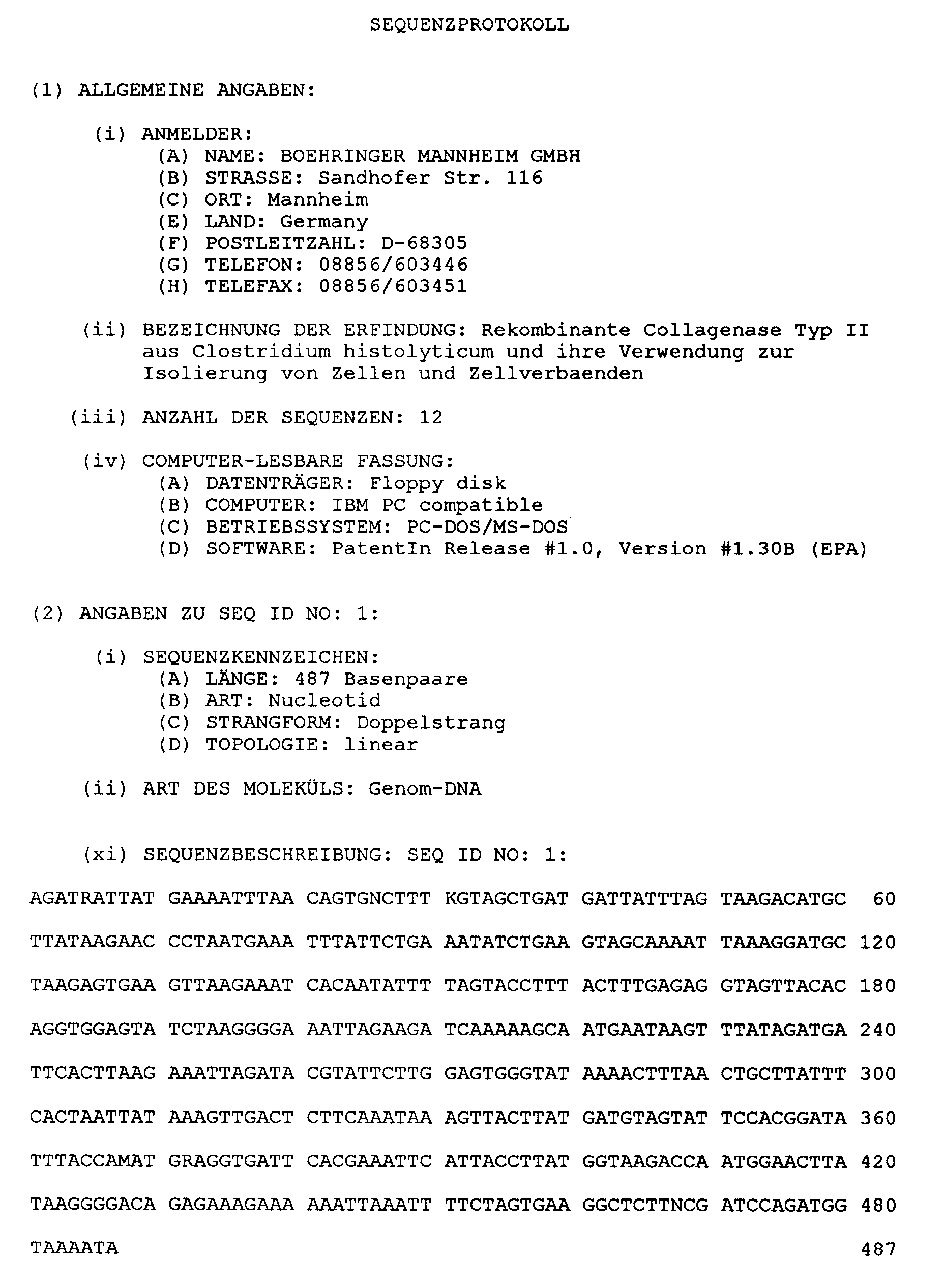
- SEQ ID NO: 1 DNA fragment from CHC II
- SEQ ID NO: 2 derived protein fragment
- SEQ ID NO: 3 - 8 primer sequences
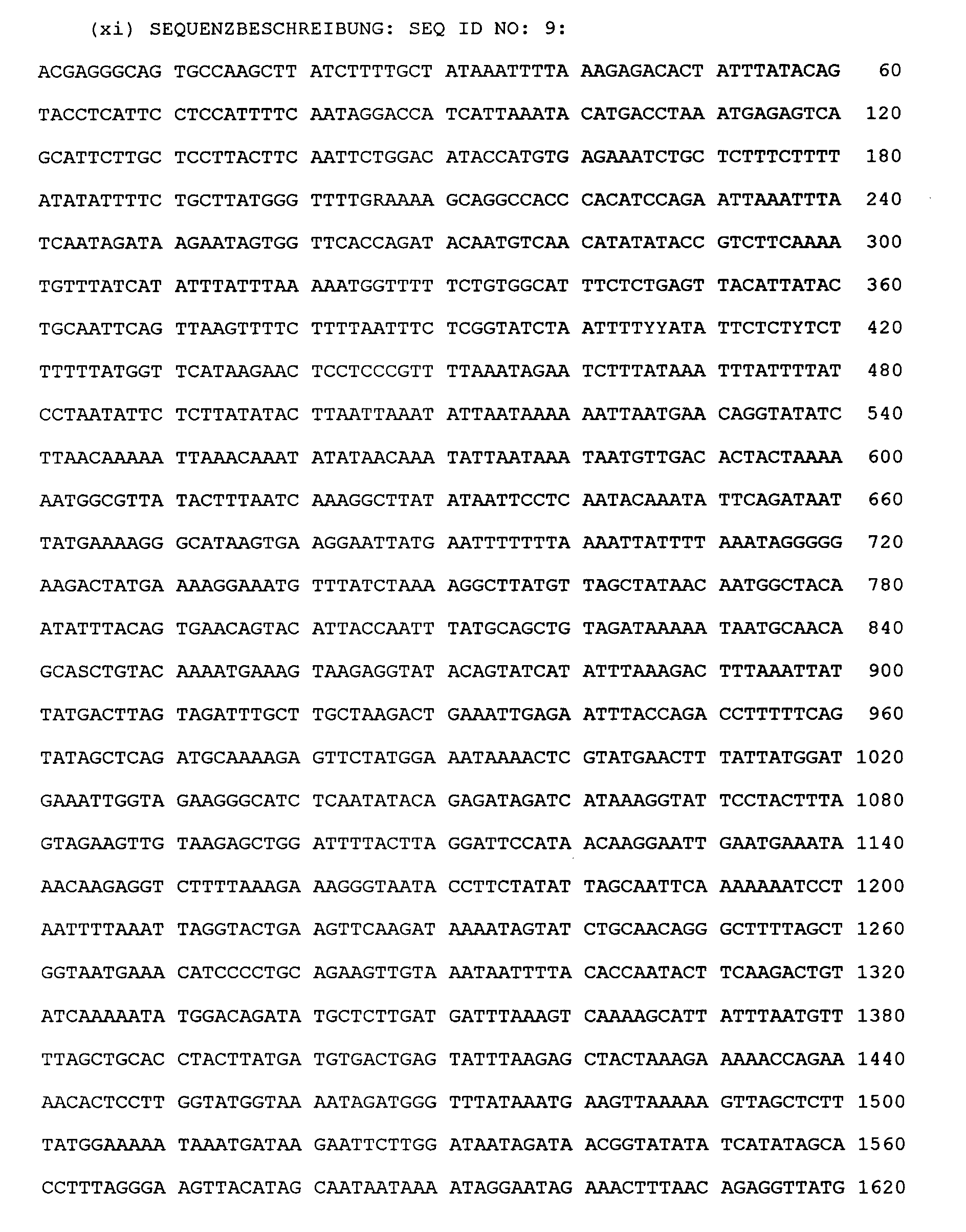
- SEQ ID NO: 9 CHC II cDNA
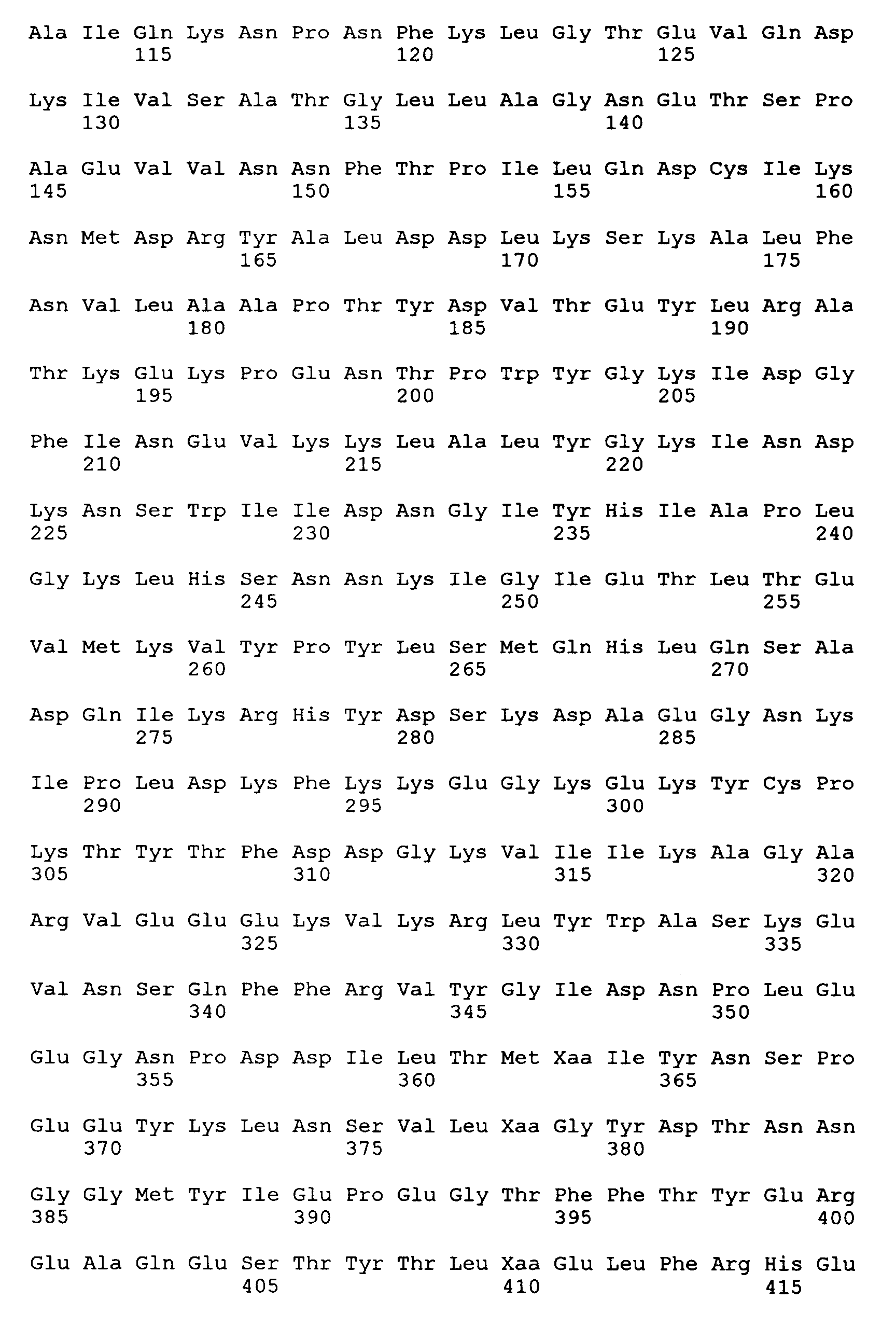
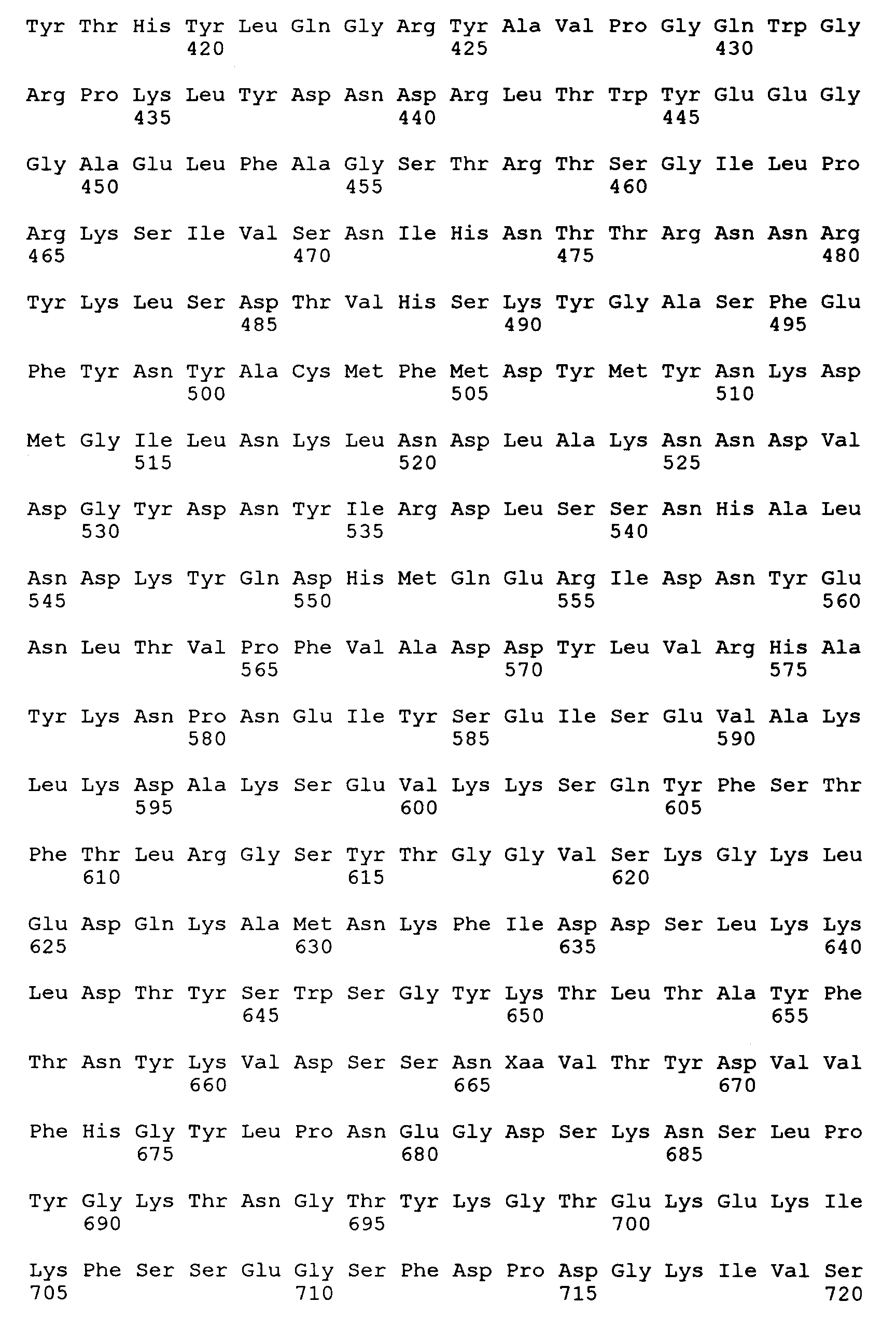
- SEQ ID NO: 10 protein sequence of CHC II SEQ ID NO: 11/12: Primer
- the SDS gel shows a strong accumulation of the bands in the range> 85 kD, further proteins (MW between 40 and 85 kD) and a few smaller bands are recognizable.
- the CHC II-containing fractions were further passed on a MonoQ column (FPLC) in 10 mM Tris-HCl, pH 8.0 using a linear NaCl gradient in 30 min from 0 to 0.3 M NaCl in 10 mM Tris-HCl, pH 8.0 separated.
- FPLC MonoQ column
- the peaks containing CHC II activity are further purified by reversed-phase HPLC (mobile phase A: 0.12% TFA / H2O; mobile phase B: 0.12% TFA (trifluoroacetic acid) / 100% acetonitrile).
- a total of 4 peaks are collected, evaporated to dryness and, after carboxymethylation, subjected to LysC digestion.
- the peptides were also separated using reversed-phase HPLC on a C4 column with a gradient of 5-45% acetonitrile / 0.12% TFA.
- the chromatograms of all digests were identical except for minimal differences. They differed significantly from the LysC peptide maps of Collagenase I (purified by gel filtration on Superdex HiLoad S 200 or subsequent cleaning of the Zn chelate Sepharose run).
- the peptides were collected, evaporated to dryness and sequenced.
- the associated (degenerate) DNA sequence is derived from the peptide sequences determined after the purification of the CHC II in accordance with Example 1. Sequences showing advantageous (low) denaturation are used to e.g. to produce a labeled DNA sample via PCR for screening gene banks.
- Two peptides Coll-2-60 and Coll-2-51 are particularly suitable: Peptide Coll-2-60 (SEQ ID NO: 3) Primer Coll-2-60F (SEQ ID NO: 4) Primer Coll-2-60R (SEQ ID NO: 5) Peptide Coll-2-51 (SEQ ID NO: 6) Primer Coll-2-51F (SEQ ID NO: 7) Primer Coll-2-51R (SEQ ID NO: 8) With primers 60F and 51R, fragments of approx. 500 and approx. 750 bp in length are obtained after PCR with DNA isolated from Clostridium histolyticum isolated according to conventional methods.
- the 500 bp fragment is labeled with dig-dUTP (produced according to WO 89/06698, EP-A 0 324 468), e.g. also in a PCR reaction, and is used to identify positive clones from a gene bank.
- dig-dUTP produced according to WO 89/06698, EP-A 0 324 468
- the gene bank can be produced in a generally known manner from Clostridium histolyticum DNA after digestion with restriction enzymes.
- the 500 bp fragment was sequenced and contains DNA of the sequence SEQ ID NO: 1.
- the 750 bp fragment can be broken down into an approximately 600 bp and a 150 bp fragment using PstI.
- the 600 bp fragment also contains SEQ ID NO: 1.
- a vector that Containing 600 bp fragment is pC2-600 and was deposited under DSM 8996 on February 24, 1994 at the DSM (German Collection of Microorganisms and Cell Cultures GmbH, Mascheroder Weg 1b, D-38124 Braunschweig).
- amino acid sequence shows approximately 25% homology to a collagenase from Vibrio alginolyticus and is shown in SEQ ID NO: 2.
- SEQ ID NO: 2 is encoded by nucleotides 2 - 487 from SEQ ID NO: 1.
- the missing parts of the coding region and the untranslated regions of the gene can be amplified and sequenced by inverse PCR.
- the coding region of the gene (approx. 3 kB) is contained in SEQ ID NO: 1.
- the reading frame of SEQ ID NO: 9 can be uniquely determined with the aid of peptide sequences found by protein sequencing and the sequence can be translated into the peptide sequence SEQ ID NO: 10.
- the ends of the coding region from nucleotide 688 to nucleotide 3792 were modified using two primers (SEQ ID NO: 11 and 12) and cloned into pUCBM 20 via XmaI and NotI.
- the resulting plasmid pC2-Ex1 / 3-23 was deposited under DSM 9579 at the German Collection of Microorganisms and Cell Cultures GmbH, Mascheroder Weg 1b, D-38124 Braunschweig, on December 9, 1994.
- DNA fragments which contain the gene for CHC II or parts thereof are sequenced and appropriately modified at the ends (for example via PCR) and used as a whole or in combination in an expression vector for E. coli.
- the tac promoter is used as the promoter. However, it is also possible to use other, preferably well-regulated promoters.
- a fragment of SEQ ID NO: 9, which begins at position 688 or 757 and ends in the region from position 3792 - position 390 °, can be used for expression under the control of one of the customary promoters.
- a fragment that begins at position 847 and ends in the region from position 3792 - position 3900 can be provided with the sequence for a heterologous signal peptide beforehand and then placed behind the usual promoters.
- Vectors with a high copy number such as those of the pUC series, are suitable as vectors.
- vectors with a lower copy number derived from pACYC 177 or pACYC 184 can also be used if the selected host cell does not tolerate the expression in high copy number.
- a range of 25 - 37 0C is preferred as the growth temperature.
- An E. coli strain that has been transformed with an expression plasmid is grown either in minimal medium or LB medium with antibiotic selection overnight at 30 or 37 ° C (e.g. in 5 ml culture).
- the overnight culture is inoculated into a larger volume (e.g. 1 l) and allowed to continue growing. If this volume is already used for biomass production, one can induce with an OD550 of 0.2 to 2 with IPTG and let the cells continue to grow until the OD and / or the enzyme activity formed does not increase any further. At this point, centrifugation is carried out and the biomass is used to purify collagenase.
- the medium is also collected and collagenase is purified therefrom.
- the pancreas is prepared from a freshly slaughtered pig and cooled in ice-cold HBSS buffer (Gibco) until further processing.
- a Braunulse is inserted and fastened into the pancreatic duct, the tightness of the pancreas is checked with HBSS buffer.
- An enzyme solution in HBSS buffer + Ca2+ which contains the purified recombinant collagenase type II alone or in conjunction with a purified native or recombinant neutral protease from Clostridium histolyticum , is injected.
- the pancreas treated in this way is connected to the perfusion unit (discontinuous perfusion) which also contains the above enzyme solution.
- the digestion takes place between 4 ° C - 37 ° C in a period of 5 to 120 minutes. After the time assumed to be optimal, the Pump stopped and the vessel containing the pancreas gently shaken by hand for 3 to 20 minutes. If necessary, previously added metal balls also facilitate the mechanical dissociation of the tissue and the release of the islands from the surrounding exocrine tissue.
- the digestion is stopped by adding ice-cold HBSS / 10% FCS (fetal calf serum) and the suspension is filtered through a sieve (mesh size 300 ⁇ m) in order to separate the coarse particles.
- FCS fetal calf serum
- the islands in the flow are centrifuged at 100 g in 250 ml Nalgene round-bottom bottles for 10 minutes. The supernatant is removed and the pellet containing the islets is resuspended in 50 ml FCS.
- a further purification of the islands can be done using a density gradient made by hand.
- the fraction with the highest specific casinolytic activity (determined via resorufin-labeled casein, Boehringer Mannheim GmbH) contained a protein with a MW of 30-35 kDa (SDS gel) Carboxymethylation and LysC digestion, the resulting peptides were separated by reverse phase HPLC on a C8 column, concentrated to dryness and sequenced, or the protein fractions with high caseinolytic activity were separated on an SDS gel, on PVDF membranes (Millipore) transferred (Western blot; transfer buffer 50 mM Tris, 50 mM boric acid, pH 8.3) and after appropriate amido
Landscapes
- Health & Medical Sciences (AREA)
- Life Sciences & Earth Sciences (AREA)
- Chemical & Material Sciences (AREA)
- Engineering & Computer Science (AREA)
- Zoology (AREA)
- Organic Chemistry (AREA)
- General Health & Medical Sciences (AREA)
- Biomedical Technology (AREA)
- Biotechnology (AREA)
- Genetics & Genomics (AREA)
- Bioinformatics & Cheminformatics (AREA)
- Wood Science & Technology (AREA)
- Cell Biology (AREA)
- Medicinal Chemistry (AREA)
- Gastroenterology & Hepatology (AREA)
- Virology (AREA)
- Biochemistry (AREA)
- Molecular Biology (AREA)
- Microbiology (AREA)
- Nutrition Science (AREA)
- Physiology (AREA)
- Developmental Biology & Embryology (AREA)
- Immunology (AREA)
- General Engineering & Computer Science (AREA)
- Pharmacology & Pharmacy (AREA)
- Epidemiology (AREA)
- Animal Behavior & Ethology (AREA)
- Public Health (AREA)
- Veterinary Medicine (AREA)
- Micro-Organisms Or Cultivation Processes Thereof (AREA)
- Enzymes And Modification Thereof (AREA)
- Peptides Or Proteins (AREA)
Abstract
Verfahren zur Auflösung von Zellgewebe und Freisetzung von darin enthaltenen Zellen oder Zellverbänden durch Inkubation des Zellgewebes mit einer Collagenase Class II aus Clostridium histolyticum, welche nach 12 Einfrier-/Auftauzyklen noch in beträchtlichem Umfang Collagenase-Aktivität besitzt und in einem charakteristischen Teilbereich SEQ ID NO:2 oder 10 enthält oder in diesem Bereich von SEQ ID NO:1, SEQ ID NO: 9 oder einer Sequenz, welche im Rahmen der Degeneration des genetischen Codes für die gleiche Aminosäuresequenz codiert wird und das Produkt einer prokaryontischen oder eukaryontischen Expression einer exogenen DNA ist, bis zur Freisetzung der Zellen oder Zellverbände im gewünschten Umfang und Abtrennung der Zellen oder der Zellverbände von den Zellgewebeanteilen.
Description
- Gegenstand der Erfindung ist eine rekombinante Collagenase Typ II aus Clostridium histolyticum und ihre Verwendung zur Isolierung von Zellen und Zellverbänden.
- Bakterielle Collagenasen, z.B. aus Clostridium histolyticum, werden zum Verdau von Geweben und zur Gewinnung von Einzelzellen oder Zellverbänden (z.B. Inseln) verwendet (Inseln: Sutton et al., Transplantation 42 (1986) 689 - 691; Leber: Quibel et al., Anal. Biochem. 154 (1986) 26 - 28; Knochen: Hefley et al., J. Bone Mineral Res. 2 (1987) 505 - 516; Nabelschnur: Holzinger et al., Immunol. Lett. 35 (1993) 109 - 118. Aus Clostridium histolyticum sind zwei verschiedene Collagenase-Typen bekannt (M.F. French et al., J. Protein Chemistry 11 (1992) 83 - 97). Die Herstellung von Collagenase Class II aus Clostridium histolyticum (CHC II) ist beispielsweise beschrieben in E.L. Angleton und H.E. van Wart, Biochemistry 27 (1988) 7413 - 7418 und 7406 - 7412. Es hat sich jedoch gezeigt, daß CHC II sehr empfindlich auf wiederholtes Einfrieren und Auftauen ist. Nach 12 Einfrier-/Auftauzyklen ist die Aktivität von CHC II praktisch vollständig verschwunden (T.J. Hefley, J. Bone and Mineral Res. 2 (1987) 505-516).
- Aufgabe der vorliegenden Erfindung ist die Bereitstellung einer gefrierstabilen Collagenase Class II aus Clostridium histolyticum.
- Die Aufgabe wird gelöst durch ein Polypeptid, welches die Eigenschaften einer Collagenase Class II aus Clostridium histolyticum hat, nach 12 Einfrier-/Auftauzyklen noch in beträchtlichem Umfang Collagenase-Aktivität besitzt und erhältlich ist durch Expression einer exogenen DNA-Sequenz in prokaryontischen oder eukaryontischen Wirtszellen und Isolierung des gewünschten Polypeptids, wobei die DNA-Sequenz im für diese Collagenase charakteristischen Bereich SEQ ID NO:1 oder eine Sequenz, welche im Rahmen der Degeneration des genetischen Codes für die gleiche Aminosäuresequenz codiert, enthält.
- Es hat sich überraschenderweise gezeigt, daß eine CHC II, welche das Produkt einer rekombinanten Herstellung ist, gegenüber wiederholtem Einfrieren und Auftauen wesentlich stabiler als die aus natürlichen Quellen isolierte CHC II ist und nach 12 Einfrier-/Auftauzyklen noch in beträchtlichem Umfang Collagenase-Aktivität besitzt (vorzugsweise mehr als 50%, besonders bevorzugt mehr als 80% der Ausgangsaktivität).
- Die Herstellung der rekombinanten CHC II kann nach den dem Fachmann geläufigen Methoden erfolgen.
- Dazu wird zunächst eine DNA-Sequenz hergestellt, welche in der Lage ist, ein Protein zu produzieren, welches die Aktivität von CHC II besitzt. Unter einer solchen DNA-Sequenz im Sinne der Erfindung ist ein isoliertes DNA-Molekül zu verstehen. Die das Protein codierende Sequenz kann mit Hilfe von SEQ ID NO:1 ermittelt werden, indem man den Leserahmen anhand eines Vergleichs mit bekannten Peptidsequenzen von Collagenasen festlegt und die so ermittelte DNA-Sequenz mit Hilfe des genetischen Codes in eine Aminosäuresequenz umsetzt. Die das aktive Protein codierende Sequenz ist ca. 2 bis 3 mal länger als SEQ ID NO:1. Die DNA-Sequenz wird in einen Vektor kloniert, der in eine Wirtszelle transferiert werden kann und dort replizierbar ist. Ein derartiger Vektor enthält zusätzlich zur CHC II-Sequenz Operator-Elemente, die zur Expression der DNA-Sequenz erforderlich sind. Dieser Vektor, der die CHC II-Sequenz und die Operator-Elemente enthält, wird in einen Vektor transferiert, der in der Lage ist, die DNA von CHC II zu exprimieren. Die Wirtszelle wird unter Bedingungen, die zur Amplifikation des Vektors geeignet sind, kultiviert und CHC II gewonnen. Dabei wird durch geeignete Maßnahmen sichergestellt, daß das Protein eine aktive tertiäre Struktur einnehmen kann, in der es CHC II-Eigenschaften zeigt.
- Die Klonierung und die Nukleotidsequenz von CHC II ist in der nachveröffentlichten Publikation K. Yoshihara et al., J. Bacteriol. 176 (Nov. 1994) 6489 - 6494 beschrieben.
- Dabei ist es nicht erforderlich, daß das exprimierte Protein die exakte CHC II-Aminosäuresequenz mit dem Teilbereich SEQ ID NO: 2 enthält. Ebenso geeignet sind Proteine, welche im wesentlichen die gleiche Sequenz enthalten und analoge Eigenschaften zeigen.
- Auch die Nukleinsäuresequenz des Proteins kann modifiziert sein. Derartige Modifikationen sind beispielsweise:
- Veränderung der Nukleinsäure, um verschiedene Erkennungssequenzen von Restriktionsenzymen zur Erleichterung der Schritte der Ligation, Klonierung und Mutagenese einzuführen
- Veränderung der Nukleinsäure zum Einbau von bevorzugten Codons für die Wirtszelle
- Ergänzung der Nukleinsäure um zusätzliche Operator-Elemente, um die Expression in der Wirtszelle zu optimieren.
- Ein weiterer Gegenstand der Erfindung ist ein Verfahren zur Herstellung eines Polypeptids, welches die Eigenschaften einer Collagenase Class II aus Clostridium histolyticum hat und nach 12 Einfrier-/Auftauzyklen noch in beträchtlichem Umfang Collagenase-Aktivität besitzt, durch Expression einer exogenen DNA-Sequenz in prokaryontischen oder eukaryontischen Wirtszellen und Isolierung des gewünschten Polypeptids, wobei die DNA-Sequenz im für diese Collagenase charakteristischen Bereich SEQ ID NO:1 oder eine Sequenz, welche im Rahmen der Degeneration des genetischen Codes für die gleiche Aminosäuresequenz codiert, enthält.
- Die Expression des Proteins erfolgt vorzugsweise in Mikroorganismen, insbesondere in Prokaryonten, und dort in E. coli.
- Die Expressionsvektoren müssen einen Promotor enthalten, der die Expression des Proteins im Wirtsorganismus erlaubt. Derartige Promotoren sind dem Fachmann bekannt und sind beispielsweise lac Promotor (Chang et al., Nature 198 (1977) 1056), trp Promotor (Goeddel et al., Nuc. Acids Res. 8 (1980) 4057), λPL Promotor (Shimatake et al., Nature 292 (1981) 128) und T5 Promotor (US-Patent Nr. 4,689,406). Ebenfalls geeignet sind synthetische Promotoren wie beispielsweise tac Promotor (US-Patent Nr. 4,551,433). Ebenso geeignet sind gekoppelte Promotorsysteme wie beispielsweise T7-RNA-Polymerase/Promotorsystem (Studier et al., J. Mol. Biol. 189 (1986) 113). Ebenso geeignet sind hybride Promotoren aus einem Bacteriophagen-Promotor und der Operator-Region des Mikroorganismus (EP-A 0 267 851). Zusätzlich zum Promotor ist eine effektive Ribosomenbindungsstelle erforderlich. Für E. coli wird diese Ribosomenbindungsstelle als Shine-Dalgarno (SD)-Sequenz bezeichnet (Sambrook et al., "Expression of cloned genes in E. coli" in Molecular Cloning: A laboratory manual (1989) Cold Spring Harbor Laboratory Press, New York, USA).
- Zur Verbesserung der Expression ist es möglich, das Protein als Fusionsprotein zu exprimieren. In diesem Fall wird üblicherweise eine DNA-Sequenz, welche für den N-terminalen Teil eines endogenen bakteriellen Proteins oder ein anderes stabiles Protein codiert, an das 5'-Ende der für CHC II codierenden Sequenz fusioniert. Beispiele hierfür sind beispielsweise lacZ (Phillips and Silhavy, Nature 344 (1990) 882 - 884), trpE (Yansura , Meth. Enzymol. 185 (1990) 161-166).
- Nach Expression des Vektors, vorzugsweise eines biologisch funktionellen Plasmids oder eines viralen Vektors, werden die Fusionsproteine vorzugsweise mit Enzymen (z.B. Faktor Xa) gespalten (Nagai et al., Nature 309 (1984) 810). Weitere Beispiele für die Spaltstellen die IgA-Protease-Spaltstelle (WO 91/11520, EP-A 0 495 398) und die Ubiquitin-Spaltstelle (Miller et al., Bio/Technology 7 (1989) 698).
- Die auf diese Weise in Bakterien exprimierten Proteine werden durch Aufschluß der Bakterien und Proteinisolierung in üblicher Weise gewonnen.
- In einer weiteren Ausführungsform ist es möglich, die Proteine als aktive Proteine aus den Mikroorganismen zu sezernieren. Hierzu wird vorzugsweise ein Fusionsprodukt verwendet, welches aus der Signalsequenz, die für die Sekretion von Proteinen in den verwendeten Wirtsorganismen geeignet ist, und der Nukleinsäure, welche für das Protein codiert, besteht. Das Protein wird dabei entweder in das Medium (bei grampositiven Bakterien) oder in den periplasmatischen Raum (bei gramnegativen Bakterien) sezerniert. Zwischen der Signalsequenz und der für CHC II codierenden Sequenz ist zweckmäßig eine Spaltstelle angebracht, die entweder bei der Prozessierung oder in einem zusätzlichen Schritt die Abspaltung des Proteins erlaubt. Derartige Signalsequenzen stammen beispielsweise von ompA (Ghrayeb et al., EMBO J. 3 (1984) 2437), phoA (Oka et al., Proc. Natl. Acad. Sci. USA 82 (1985) 7212).
- Zusätzlich enthalten die Vektoren noch Terminatoren. Terminatoren sind DNA-Sequenzen, die das Ende eines Transkriptionsvorganges signalisieren. Sie zeichnen sich meist durch zwei strukturelle Eigenarten aus: eine umgekehrt repetitive G/C-reiche Region, die intramolekular eine Doppelhelix bilden kann, sowie eine Anzahl von U(bzw. T)-Resten. Beispiele sind der Haupt-Terminator in der DNA des Phagen fd (Beck und Zink, Gene 16 (1981) 35-58) sowie rrnB (Brosius et al., J. Mol. Biol. 148 (1981) 107 - 127).
- Zusätzlich enthalten die Expressionsvektoren üblicherweise einen selektierbaren Marker, um transformierte Zellen zu selektieren. Derartige selektierbare Marker sind beispielsweise die Resistenzgene für Ampicillin, Chloramphenicol, Erythromycin, Kanamycin, Neomycin und Tetracyclin (Davies et al., Ann. Rev. Microbiol. 32 (1978) 469). Ebenso geeignete selektierbare Marker sind die Gene für essentielle Substanzen der Biosynthese von für die Zelle notwendigen Stoffen wie z.B. Histidin, Tryptophan und Leucin.
- Es sind eine Vielzahl von geeigneten bakteriellen Vektoren bekannt. Beispielsweise sind für die folgenden Bakterien Vektoren beschrieben: Bacillus subtilis (Palva et al., Proc. Natl. Acad. Sci. USA 79 (1982) 5582), E. coli (Aman et al., Gene 40 (1985) 183; Studier et al., J. Mol. Biol. 189 (1986) 113), Streptococcus cremoris (Powell et al., Appl. Environ. Microbiol. 54 (1988) 655), Streptococcus lividans und Streptomyces lividans (US-Patent Nr. 4,747,056).
- Weitere gentechnologische Verfahren zur Herstellung und Expression von geeigneten Vektoren sind in J. Sambrook et al., Molecular Cloning: a laboratory manual (1989), Cold Spring Harbor Laboratory Press, New York, N.Y. beschrieben.
- Eine Expression von rekombinanter CHC II ist außer in prokaryontischen Mikroorganismen auch in Eukaryonten (wie beispielsweise CHO-Zellen, Hefe oder Insektenzellen) möglich. Als eukaryontisches Expressionssystem wird das Hefesystem oder Insektenzellen bevorzugt. Die Expression in Hefe kann über drei Arten von Hefevektoren (integrierende YIP (yeast integrating plasmids)-Vektoren, replizierende YRP (yeast replicon plasmids)-Vektoren und episomale YEP (yeast episomal plasmids)-Vektoren erfolgen. Näheres hierzu ist beispielsweise in S.M. Kingsman et al, Tibtech 5 (1987) 53-57 beschrieben.
- Ein weiterer Gegenstand der Erfindung ist ein Verfahren zur Auflösung von Zellgewebe und Freisetzung von darin enthaltenen Zellen oder Zellverbänden durch Inkubation des Zellgewebes mit einer Collagenase Class II aus Clostridium histolyticum, welche nach 12 Einfrier/Auftauzyklen noch in beträchtlichem Umfang Collagenase-Aktivität besitzt und in einem charakteristischen Teilbereich SEQ ID NO:2 enthält oder in diesem Bereich von SEQ ID NO: 1 oder einer Sequenz, welche im Rahmen der Degeneration des genetischen Codes für die gleiche Aminosäuresequenz codiert wird und das Produkt einer prokaryontischen oder eukaryontischen Expression einer exogenen DNA ist, bis zur Freisetzung der Zellen oder Zellverbände im gewünschten Umfang und Abtrennung der Zellen oder der Zellverbände von den Zellgewebeanteilen. Die Abtrennung der Zellen oder Zellverbände von den Zellgewebsanteilen erfolgt bevorzugt durch Zentrifugation mit einem Dichtegradienten.
- Eine Isolierung von Zellen bzw. Zellverbänden aus Geweben (z.B. Pankreas, Leber, Haut, Endothel, Nabelschnur, Knochen, Tumorgewebe) erfolgt im allgemeinen durch Inkubation von Organen, Organteilen oder Geweben mit Enzymen, die die umgebende extrazelluläre Bindegewebe-Matrix auflösen (Inseln: Sutton et al., Transplantation 42 (1986) 689 - 691; Leber: Quibel et al., Anal. Biochem. 154 (1986) 26 - 28; Knochen: Hefley et al., J. Bone Mineral Res. 2 (1987) 505 - 516; Nabelschnur: Holzinger et al., Immunol. Lett. 35 (1993) 109 - 118. Derartig isolierte Tumorzellen können vorteilhaft zur Tumorvakzinierung und/oder adoptiven Immuntherapie verwendet werden. Eine Gewebsintegration kann auch durch Perfusion des gesamten Organs (Ricordi et al, Diabetes 37 (1988) 413 - 420) mit Enzymlösung erfolgen. Entscheidend neben der Zusammensetzung des Enzymgemisches ist dabei die Dauer, der pH-Wert und die Temperatur des Verdaus sowie auch die mechanische Einwirkung, z.B. durch Schütteln und Zusatz von Metallkugeln. Da extrazelluläre Bindegewebsmatrix oft einen hohen Collagen-Anteil aufweist, kommt den Collagenasen, und hier speziell der Collagenase Typ II, eine besondere Rolle zu. (Wolters, Hormone and Metabolic Research 26 (1994) p. 80)
- Vorzugsweise wird das erfindungsgemäße Verfahren zur Isolierung von Inseln oder Inselzellen aus Pankreasgewebe verwendet.
- Daneben kann der Zusatz weiterer Enzyme, wie Proteinasen (z. B. neutrale Protease, vgl. Bsp. 5, oder andere Metalloproteasen; Serinproteasen, wie Trypsin, Chymotrypsin, Plasmin etc.; Cysteinproteasen; Aspartat-Proteasen), Elastasen, Hyaluronidasen, Lipasen oder anderer Collagenasen für die Qualität des Verdaus von Vorteil sein.
- Die Erfindung wird durch folgende Beispiele und Sequenzprotokolle näher erläutert.
- In den Sequenzprotokollen bedeuten:
SEQ ID NO: 1: DNA-Fragment von CHC II
SEQ ID NO: 2: abgeleitetes Proteinfragment
SEQ ID NO: 3 - 8: Primersequenzen
SEQ ID NO: 9: cDNA von CHC II
SEQ ID NO: 10: Proteinsequenz von CHC II
SEQ ID NO: 11/12: Primer - 1 g Collagenase P (aus Clostridium histolyticum, Boehringer Mannheim GmbH, Best.-Nr. 1213857) wurde in 20 ml H₂O (Milli Q-Qualität) gelöst und partikuläre Bestandteile durch Zentrifugation abgetrennt. Nach 60% Ammoniumsulfat-Fällung wurde der Niederschlag in 9.5 ml H₂O aufgenommen und über Nacht bei 4°C gegen 10 mM Tris-HCl, pH 7,5 dialysiert.
- Das Dialysat wurde bei Raumtemperatur auf eine Zn-Chelat-Sepharose-Säule (Säulenvolumen SV = 50 ml, 2 cm Durchmesser) mit einem Fluß von 1,5 SV (75 ml/h ) aufgetragen. Danach wurde die Säule mit 10 mM Tris-HCl, pH 7,5 gewaschen, bis die Grundlinie im UV-Chromatogramm wieder erreicht war. Die Elution der an die Affinitätsmatrix gebundenen CHC II erfolgte mit einem linearen Gradienten (10 SV = 500 ml) bis 50 mM Tris, pH 7,5, 50 mM Imidazol. Die aktiven Fraktionen (Bestimmung durch Spaltung synthetischer Peptidsubstrate) wurden gegen 10 mM Tris, pH 8,0, 1 mM CaCl₂ dialysiert und bei -20°C gelagert.
- Im SDS-Gel tritt eine starke Anreicherung der Banden im Bereich > 85 kD hervor, weitere Proteine (MW zwischen 40 und 85 kD) sowie wenige kleinere Banden sind erkennbar.
- Die CHC II-enthaltenden Fraktionen wurden über eine MonoQ-Säule (FPLC) in 10 mM Tris-HCl, pH 8.0 unter Verwendung eines linearen NaCl-Gradienten in 30 min von 0 auf 0.3 M NaCl in 10 mM Tris-HCl, pH 8.0 weiter aufgetrennt. Die CHC II-Aktivität enthaltenden Peaks werden über Reversed-Phase-HPLC weiter gereinigt (Laufmittel A: 0,12% TFA / H₂O; Laufmittel B: 0,12% TFA (Trifluoressigsäure) / 100% Acetonitril). Insgesamt werden 4 Peaks gesammelt, zur Trockene eingeengt und nach Carboxymethylierung einem LysC-Verdau unterworfen. Die Trennung der Peptide erfolgte ebenfalls über Reversed-Phase-HPLC an einer C₄ Säule mit einem Gradienten von 5 - 45% Acetonitril / 0.12% TFA. Die Chromatogramme aller Verdaus waren bis auf minimale Unterschiede identisch. Sie unterschieden sich deutlich von den LysC-Peptide-Maps der Collagenase I (gereinigt über Gelfiltration an Superdex HiLoad S 200 bzw. Nachreinigung des Durchlaufs der Zn-Chelat-Sepharose). Die Peptide wurden gesammelt, zur Trockene eingeengt und sequenziert.
- Von nach der Aufreinigung der CHC II gemäß Beispiel 1 ermittelten Peptidsequenzen ausgehend wird die zugehörige (degenerierte) DNA-Sequenz abgeleitet. Sequenzen, die eine vorteilhafte (geringe) Denaturierung zeigen, werden verwendet, um z.B. via PCR eine markierte DNA Probe zum Screenen von Genbanken herzustellen.
- Besonders geeignet sind z.B. 2 Peptide Coll-2-60 und Coll-2-51, von denen sich folgende Primer ableiten lassen:
Peptid Coll-2-60 (SEQ ID NO:3)
Primer Coll-2-60F (SEQ ID NO:4)
Primer Coll-2-60R (SEQ ID NO:5)
Peptid Coll-2-51 (SEQ ID NO:6)
Primer Coll-2-51F (SEQ ID NO:7)
Primer Coll-2-51R (SEQ ID NO:8)
Mit Primer 60F und 51R erhält man nach PCR mit nach herkömmlichen Methoden isolierter DNA aus Clostridium histolyticum Fragmente von ca. 500 und ca. 750 bp Länge. - Das 500 bp Fragment wird mit dig-dUTP (hergestellt nach WO 89/06698, EP-A 0 324 468) markiert, z.B. ebenfalls in einer PCR Reaktion, und dient zur Identifizierung positiver Klone aus einer Genbank. Die Genbank kann in allgemein bekannter Weise aus Clostridium histolyticum DNA nach Verdau mit Restriktionsenzymen hergestellt werden.
- Das 500 bp Fragment wurde sequenziert und enthält DNA der Sequenz SEQ ID NO:1.
- Das 750 bp Fragment kann mit PstI in ein ca. 600 bp großes und ein 150 bp großes Fragment zerlegt werden. Das 600 bp Fragment enthält ebenfalls SEQ ID NO:1. Ein Vektor, der das 600 bp Fragment enthält ist pC2-600 und wurde unter DSM 8996 am 24.02.1994 bei der DSM (Deutsche Sammlung von Mikroorganismen und Zellkulturen GmbH, Mascheroder Weg 1b, D-38124 Braunschweig) hinterlegt.
- Die Aminosäuresequenz zeigt zu ca. 25 % Homologie zu einer Collagenase aus Vibrio alginolyticus und ist in SEQ ID NO:2 dargestellt. SEQ ID NO:2 wird von den Nukleotiden 2 - 487 aus SEQ ID NO:1 codiert.
- Durch inverse PCR können nach Verdau der genomischen DNA von Clostridium histolyticum mit geeigneten Restriktionsenzymen mit aus SEQ ID NO: 1 abgeleiteten Primern die fehlenden Teile der codierenden Region und der untranslatierten Bereiche des Gens amplifiziert und sequenziert werden. Die codierende Region des Gens (ca. 3 kB) ist in SEQ ID NO: 1 enthalten.
- Der Leserahmen von SEQ ID NO: 9 kann mit Hilfe von durch Proteinsequenzierung gefundenen Peptidsequenzen eindeutig festgelegt werden und die Sequenz kann in die Peptidsequenz SEQ ID NO: 10 übersetzt werden.
- Die Enden des codierenden Bereichs von Nukleotid 688 bis Nukleotid 3792 wurden mit Hilfe zweier Primer (SEQ ID NO: 11 und 12) modifiziert und via XmaI und NotI in pUCBM 20 kloniert. Das resultierende Plasmid pC2-Ex1/3-23 wurde unter DSM 9579 bei der Deutschen Sammlung von Mikroorganismen und Zellkulturen GmbH, Mascheroder Weg 1b, D-38124 Braunschweig, am 09.12.1994 hinterlegt.
- DNA-Fragmente, die das Gen für CHC II oder Teile davon enthalten, werden sequenziert und in geeigneter Weise an den Enden modifiziert (z.B. via PCR) und als Ganzes oder in Kombination in einen Expressionsvektor für E. coli eingesetzt. Als Promotor wird der tac Promotor verwendet. Die Verwendung anderer, vorzugsweise gut regulierbarer Promotoren ist jedoch auch möglich.
- Zur Expression kann ein Fragment von SEQ ID NO: 9 verwendet werden, das an Position 688 oder 757 beginnt und im Bereich von Position 3792 - Position 390° endet, unter der Kontrolle eines der üblichen Promotoren gebracht werden. Alternativ dazu kann ein Fragment, das an Position 847 beginnt und im Bereich von Position 3792 - Position 3900 endet, zuvor noch mit der Sequenz für ein heterologes Signalpeptid versehen werden und dann hinter die üblichen Promotoren gesetzt werden. Als Vektoren sind solche mit hoher Kopienzahl, wie die der pUC-Serie geeignet. Ebenso können aber auch Vektoren mit niedrigerer Kopienzahl abgeleitet von pACYC 177oder pACYC 184 benutzt werden, wenn die gewählte Wirtszelle die Expression in hoher Kopienzahl nicht toleriert. Als Wachstumstemperatur ist ein Bereich von 25 - 37 ⁰C bevorzugt.
- Ein E. coli Stamm, der mit einem Expressionsplasmid transformiert worden ist, wird entweder in Minimalmedium oder LB Medium unter Antibiotika-Selektion über Nacht bei 30 oder 37 °C angezogen (z.B. in 5 ml Kultur). Die Übernachtkultur wird in ein größeres Volumen (z.B. 1 l) überimpft und weiterwachsen lassen. Verwendet man dieses Volumen bereits zur Biomassengewinnung kann man bei einer OD⁵⁵⁰ von 0.2 bis 2 mit IPTG induzieren und die Zellen weiterwachsen lassen, bis die OD und/oder die gebildete Enzymaktivität nicht weiter zunimmt. Zu diesem Zeitpunkt wird abzentrifugiert und die Biomasse zur Aufreinigung von Collagenase verwendet.
- Falls sich ein erheblicher Teil der Collagenase-Aktivität im Medium befindet; wird auch das Medium gesammelt und Collagenase daraus aufgereinigt.
- Aus einem frisch geschlachteten Schwein wird der Pankreas präpariert und in eiskaltem HBSS-Puffer (Gibco) bis zur weiteren Verarbeitung gekühlt. In den Ductus pancreaticus wird eine Braunüle eingeführt und befestigt, die Dichtigkeit des Pankreas wird mit HBSS-Puffer geprüft. Eine Enzymlösung in HBSS-Puffer + Ca²⁺, die die gereinigte rekombinante Collagenase Typ II allein oder in Verbindung mit einer gereinigten nativen oder rekombinanten neutralen Protease aus Clostridium histolyticum enthält, wird eingespritzt. Der so behandelte Pankreas wird an die ebenfalls obige Enzymlösung enthaltende Perfusionseinheit (diskontinuierliche Perfusion) angeschlossen. Der Verdau erfolgt zwischen 4°C - 37°C in einem Zeitraum von 5 bis 120 Minuten. Nach der als optimal angenommenen Zeit wird die Pumpe gestoppt und das den Pankreas enthaltende Gefaß 3 bis 20 Minuten lang vorsichtig per Hand geschüttelt. Im Bedarfsfall vorher zugegebene Metallkugeln erleichtern zusätzlich die mechanische Dissoziation des Gewebes und die Freisetzung der Inseln aus dem umgebenden exokrinen Gewebe.
- Der Verdau wird durch Zugabe von eiskaltem HBSS/10 % FKS (fötales Kälberserum) gestoppt und die Suspension durch ein Sieb (Maschengröße 300 µm) filtriert, um die Grobteile abzutrennen. Die im Durchfluß befindlichen Inseln werden 10 Minuten bei 100 g in 250 ml Nalgene-Rundbodenflaschen abzentrifugiert. Der Überstand wird abgenommen und das die Inseln enthaltende Pellet in 50 ml FKS resuspendiert.
- Eine weitere Aufreinigung der Inseln kann über einen per Hand hergestellten Dichtegradienten erfolgen. In 250 ml Nalgene-Rundbodenflaschen werden zunächst 7 ml der Inselsuspension gegeben. Diese wird zunächst mit 93 ml einer Ficoll-Lösung® (φ = 1.077 g/cm³), darauffolgend mit 50 ml Medium (RPMI 1640) überschichtet. Diese Gradienten werden im Ausschwingrotor bei 100 g für 10 Minuten zentrifugiert. Fraktionen á 10 ml werden abgenommen, die Größe, Reinheit und Ausbeute der mit Dithizon gefärbten Inseln wird in jeder Fraktion mikroskopisch oder mit Hilfe der Bildanalytik bestimmt.
- Collagenase P wird in 5 mM HEPES-Puffer, pH 7.5, 1 mM CaCl₂ gelöst (c = 50 mg/ml und abzentrifugiert. Ein Aliquot (10 mg) wird auf eine MonoQ-Säule (Pharmacia) aufgespritzt (FPLC) und mit einem CaCl₂-Gradienten (bis 150 mM in 20 min) eluiert. Die Fraktion mit der höchsten spezifischen casinolytischen Aktivität (bestimmt über Resorufin-markiertes Casein, Boehringer Mannheim GmbH) enthielt ein Protein mit einem MW von 30 - 35 kDa (SDS-Gel). Nach Carboxymethylierung und LysC-Verdau wurden die entstandenen Peptide über Reversed-Phase HPLC an einer C₈-Säule aufgetrennt, zur Trockene eingeengt und sequenziert. Alternativ dazu wurden die Proteinfraktionen mit hoher caseinolytischer Aktivität über ein SDS-Gel aufgetrennt, auf PVDF-Membranen (Millipore) transferiert (Western-Blot; Transferpuffer 50 mM Tris, 50 mM Borsäure, pH 8.3) und nach Amidoschwarz-Färbung die entsprechende Bande ausgeschnitten. Nach LysC-Verdau des immobilisierten Proteins wurden die Peptide mit HCOOH abgelöst und, wie oben beschrieben, getrennt und sequenziert.






Claims (15)
- Verfahren zur Auflösung von Zellgewebe und Freisetzung von darin enthaltenen Zellen oder Zellverbänden durch Inkubation des Zellgewebes mit einer Collagenase Class II aus Clostridium histolyticum, welche nach 12 Einfrier-/Auftauzyklen noch in beträchtlichem Umfang Collagenase-Aktivität besitzt und in einem charakteristischen Teilbereich SEQ ID NO:2 enthält oder in diesem Bereich von SEQ ID NO:1 oder einer Sequenz, welche im Rahmen der Degeneration des genetischen Codes für die gleiche Aminosäuresequenz codiert wird und das Produkt einer prokaryontischen oder eukaryontischen Expression einer exogenen DNA ist, bis zur Freisetzung der Zellen oder Zellverbände im gewünschten Umfang und Abtrennung der Zellen oder der Zellverbände von den Zellgewebeanteilen.
- Verfahren nach Anspruch 1, dadurch gekennzeichnet, daß eine Collagenase Class II verwendet wird, welche die Aminosäuresequenz SEQ ID NO: 10 besitzt oder von SEQ ID NO: 9 oder einer Sequenz, welche im Rahmen der Degeneration des genetischen Codes für die gleiche Aminosäuresequenz codiert.
- Verfahren nach den Ansprüchen 1 oder 2, dadurch gekennzeichnet, daß als Gewebe Pankreasgewebe verwendet wird, die isolierten Zellen Inselzellen und die Zellverbände Inseln sind.
- Verwendung einer Collagenase Class II aus Clostridium histolyticum, welche in einem charakteristischen Teilbereich SEQ ID NO:2 enthält oder von SEQ ID NO:1 oder einer Sequenz, welche im Rahmen der Degeneration des genetischen Codes für die gleiche Aminosäuresequenz codiert, codiert wird und das Produkt einer prokaryontischen oder eukaryontischen Expression einer exogenen DNA-Sequenz ist, zur Auflösung von Zellgewebe und Freisetzung von darin enthaltenen Zellen oder Zellverbänden.
- Verwendung einer Collagenase Class II nach Anspruch 4, dadurch gekennzeichnet, daß eine Collagenase Class II verwendet wird, welche die Aminosäuresequenz SEQ ID NO: 10 besitzt oder von SEQ ID NO: 9 oder einer Sequenz, welche im Rahmen der Degeneration des genetischen Codes für die gleiche Aminosäuresequenz codiert.
- Verfahren zur Herstellung eines Polypeptids, welches die Eigenschaften einer Collagenase Class II aus Clostridium histolyticum hat und nach 12 Einfrier-/Auftauzyklen noch in beträchtlichem Umfang Collagenase-Aktivität besitzt, durch Expression einer exogenen DNA-Sequenz in prokaryontischen oder eukaryontischen Wirtszellen und Isolierung des gewünschten Polypeptids, wobei die DNA-Sequenz im für diese Collagenase charakteristischen Bereich SEQ ID NO:1 oder eine Sequenz, welche im Rahmen der Degeneration des genetischen Codes für die gleiche Aminosäuresequenz codiert, enthält.
- Verfahren nach Anspruch 6, dadurch gekennzeichnet, daß die DNA-Sequenz die Teilsequenz SEQ ID NO:1 enthält.
- Verfahren nach den Ansprüchen 6 oder 7, dadurch gekennzeichnet, daß eine Collagenase Class II verwendet wird, welche die Aminosäuresequenz SEQ ID NO: 10 besitzt oder von SEQ ID NO: 9 oder einer Sequenz, welche im Rahmen der Degeneration des genetischen Codes für die gleiche Aminosäuresequenz codiert.
- DNA-Sequenz, welche als Teilsequenz SEQ ID NO:1 enthält und für ein Polypeptid mit Collagenase-Aktivität codiert.
- DNA-Sequenz SEQ ID NO:1.
- DNA-Sequenz SEQ ID NO: 9.
- Biologisch funktionelles Plasmid oder viraler DNA-Vektor, der eine DNA-Sequenz nach den Ansprüchen 9 bis 11 enthält.
- Prokaryontische oder eukaryontische Wirtszelle, welche mit einem DNA-Vektor nach Anspruch 12 stabil transformiert oder transfiziert ist.
- Polypeptid, welches die Eigenschaften einer Collagenase Class II aus Clostridium histolyticum hat, nach 12 Einfrier-/Auftauzyklen noch in beträchtlichem Umfang Collagenase-Aktivität besitzt und erhältlich ist durch Expression einer exogenen DNA-Sequenz in prokaryontischen oder eukaryontischen Wirtszellen und Isolierung des gewünschten Polypeptids, wobei die DNA-Sequenz im für diese Collagenase charakteristischen Bereich SEQ ID NO:1 oder eine Sequenz, welche im Rahmen der Degeneration des genetischen Codes für die gleiche Aminosäuresequenz codiert, enthält.
- Polypeptid nach Anspruch 14, dadurch gekennzeichnet, daß es die Proteinsequenz SEQ ID NO: 10 besitzt, oder von SEQ ID NO: 9 codiert wird, oder codiert wird von einer Sequenz, welche im Rahmen der Degeneration des genetischen Codes für die gleiche Aminosäuresequenz codiert.
Applications Claiming Priority (2)
| Application Number | Priority Date | Filing Date | Title |
|---|---|---|---|
| DE4408940 | 1994-03-16 | ||
| DE4408940A DE4408940A1 (de) | 1994-03-16 | 1994-03-16 | Rekombinante Collagenase Typ II aus Clostridium histolyticum und ihre Verwendung zur Isolierung von Zellen und Zellverbänden |
Publications (1)
| Publication Number | Publication Date |
|---|---|
| EP0677586A1 true EP0677586A1 (de) | 1995-10-18 |
Family
ID=6512956
Family Applications (1)
| Application Number | Title | Priority Date | Filing Date |
|---|---|---|---|
| EP95103015A Withdrawn EP0677586A1 (de) | 1994-03-16 | 1995-03-03 | Rekombinante Collagenase Typ II aus Clostridium histolyticum und ihre Verwendung zur Isolierung von Zellen und Zellverbänden |
Country Status (4)
| Country | Link |
|---|---|
| EP (1) | EP0677586A1 (de) |
| JP (1) | JP2634782B2 (de) |
| CA (1) | CA2144601C (de) |
| DE (1) | DE4408940A1 (de) |
Cited By (5)
| Publication number | Priority date | Publication date | Assignee | Title |
|---|---|---|---|---|
| WO1998022574A3 (de) * | 1996-11-19 | 1998-07-09 | Boehringer Mannheim Gmbh | Rekombinante collagenase typ i aus clostridium histolyticum und ihre verwendung zur isolierung von zellen und zellverbänden |
| WO1999016865A1 (en) * | 1997-09-26 | 1999-04-08 | Novo Nordisk A/S | Use of proteases in passaging of adherent animal or human cell cultures |
| EP1932536A3 (de) * | 2006-12-13 | 2011-10-12 | DePuy Mitek, Inc. | Gewebefusionsverfahren mit Kollagenase zur Reparatur von Weichgewebe |
| US9636385B2 (en) | 2012-10-24 | 2017-05-02 | The Research Foundation For The State University Of New York | Use of collagenase to treat glaucoma |
| US10071143B1 (en) | 2007-05-03 | 2018-09-11 | The Research Foundation For The State University Of New York | Methods for non-surgical treatment of carpal tunnel syndrome |
Families Citing this family (1)
| Publication number | Priority date | Publication date | Assignee | Title |
|---|---|---|---|---|
| DE10331171A1 (de) | 2003-07-09 | 2005-01-27 | Nordmark Arzneimittel Gmbh & Co. Kg | Neutrale Protease (NP) und Produkt unter Verwendung von neutraler Protease für Gewebedissoziation sowie Verfahren zu dessen Herstellung |
Citations (2)
| Publication number | Priority date | Publication date | Assignee | Title |
|---|---|---|---|---|
| WO1991014447A1 (en) * | 1990-03-22 | 1991-10-03 | Lin Hun Chi | MOLECULAR CLONING OF THE GENES RESPONSIBLE FOR COLLAGENASE PRODUCTION FROM $i(CLOSTRIDIUM HISTOLYTICUM) |
| WO1994000580A1 (en) * | 1992-06-22 | 1994-01-06 | Trigen, Inc. | Molecular cloning of the genes reponsible for collagenase production from clostridium histolyticum |
-
1994
- 1994-03-16 DE DE4408940A patent/DE4408940A1/de not_active Withdrawn
-
1995
- 1995-03-03 EP EP95103015A patent/EP0677586A1/de not_active Withdrawn
- 1995-03-14 CA CA002144601A patent/CA2144601C/en not_active Expired - Fee Related
- 1995-03-15 JP JP7055676A patent/JP2634782B2/ja not_active Expired - Fee Related
Patent Citations (2)
| Publication number | Priority date | Publication date | Assignee | Title |
|---|---|---|---|---|
| WO1991014447A1 (en) * | 1990-03-22 | 1991-10-03 | Lin Hun Chi | MOLECULAR CLONING OF THE GENES RESPONSIBLE FOR COLLAGENASE PRODUCTION FROM $i(CLOSTRIDIUM HISTOLYTICUM) |
| WO1994000580A1 (en) * | 1992-06-22 | 1994-01-06 | Trigen, Inc. | Molecular cloning of the genes reponsible for collagenase production from clostridium histolyticum |
Non-Patent Citations (2)
| Title |
|---|
| HEFLEY, T.J.: "Utilization of FPLC-purified bacterial collagenase for the isolation of cells from bone", J. BONE MINERAL RES., vol. 2, no. 6, pages 505 - 516, XP002061750 * |
| YOSHIHARA, K. ET AL.: "Cloning and nucleotide sequence analysis of the colH gene from Clostridium histolyticum encoding a collagenase and a gelatinase", J. BACTERIOL., vol. 176, no. 21, pages 6489 - 6496, XP008150460 * |
Cited By (7)
| Publication number | Priority date | Publication date | Assignee | Title |
|---|---|---|---|---|
| WO1998022574A3 (de) * | 1996-11-19 | 1998-07-09 | Boehringer Mannheim Gmbh | Rekombinante collagenase typ i aus clostridium histolyticum und ihre verwendung zur isolierung von zellen und zellverbänden |
| US6475764B1 (en) | 1996-11-19 | 2002-11-05 | Roche Diagnostics Gmbh | Recombinant collagenase type I from clostridium histolyticum and its use for isolating cells and groups of cells |
| WO1999016865A1 (en) * | 1997-09-26 | 1999-04-08 | Novo Nordisk A/S | Use of proteases in passaging of adherent animal or human cell cultures |
| EP1932536A3 (de) * | 2006-12-13 | 2011-10-12 | DePuy Mitek, Inc. | Gewebefusionsverfahren mit Kollagenase zur Reparatur von Weichgewebe |
| US8323642B2 (en) | 2006-12-13 | 2012-12-04 | Depuy Mitek, Inc. | Tissue fusion method using collagenase for repair of soft tissue |
| US10071143B1 (en) | 2007-05-03 | 2018-09-11 | The Research Foundation For The State University Of New York | Methods for non-surgical treatment of carpal tunnel syndrome |
| US9636385B2 (en) | 2012-10-24 | 2017-05-02 | The Research Foundation For The State University Of New York | Use of collagenase to treat glaucoma |
Also Published As
| Publication number | Publication date |
|---|---|
| CA2144601C (en) | 2002-05-14 |
| JPH07313159A (ja) | 1995-12-05 |
| DE4408940A1 (de) | 1995-10-05 |
| JP2634782B2 (ja) | 1997-07-30 |
| CA2144601A1 (en) | 1995-09-17 |
Similar Documents
| Publication | Publication Date | Title |
|---|---|---|
| EP0941311B1 (de) | Rekombinante collagenase typ i aus clostridium histolyticum und ihre verwendung zur isolierung von zellen und zellverbänden | |
| US5853976A (en) | Recombinant proteinase from clostridium histolyticum and its use for isolating cells and groups of cells | |
| JPH04126084A (ja) | 蛋白質の製造法 | |
| DE69532646T2 (de) | Verfahren zur herstellung extrazellulärer proteine in bakterien | |
| Li et al. | Molecular cloning and nucleotide sequence of the beta-lytic protease gene from Achromobacter lyticus | |
| EP0677586A1 (de) | Rekombinante Collagenase Typ II aus Clostridium histolyticum und ihre Verwendung zur Isolierung von Zellen und Zellverbänden | |
| DE60029968T2 (de) | Proteinherstellung | |
| CA2159079C (en) | Methods and dna expression systems for over-expression of proteins in host cells | |
| EP0495398A1 (de) | Rekombinante IgA-Protease | |
| JPH04108387A (ja) | β―リティック プロテアーゼ遺伝子及びその遺伝子産物の製造法 | |
| RU2143492C1 (ru) | Рекомбинантная плазмида, кодирующая гибридный белок - предшественник инсулина человека (варианты), штамм бактерий e.coli - продуцент гибридного белка - предшественника инсулина человека (варианты), способ получения инсулина человека | |
| Ybe et al. | Periplasmic fractionation of Escherichia coli yields recombinant plastocyanin despite the absence of a signal sequence | |
| EP0819173B1 (de) | Mutant des inhibitors des erythrina caffra typs und dessen verwendung zur reinigung von serinproteasen | |
| EP0750667B1 (de) | Verwendung von rekombinantem inhibitor aus erythrina caffra zur reinigung von serinproteasen | |
| WO1999010483A2 (de) | Autokatalytisch aktivierbare vorstufen von proteasen und deren verwendung | |
| JP2003079379A (ja) | 成長ホルモンの高発現用dnaおよびその使用 | |
| FR2667612A1 (fr) | Production stable de polypeptide actif m-csf. | |
| MXPA97004586A (en) | Recombinant proteinase of clostridium histolyticum and the use of it to insulate cells and celu groups | |
| DE4424171A1 (de) | Verwendung von rekombinantem Inhibitor aus Erythrina caffra zur Reinigung von Serinproteasen | |
| Wu et al. | Cost-Effective Expression of Human Bio-Identical Basic Fibroblast Growth Factor in Bacillus subtilis by Employing Asp DnaE Protein Intron | |
| JPH06107689A (ja) | 魚類の生殖腺刺激ホルモン | |
| MXPA99004600A (en) | Type i recombinant clostridium histolyticum collagenase and its use for isolating cells and cell aggregates | |
| DE19649233A1 (de) | Prozessierte Polypeptide mit IL-16 Aktivität, Verfahren zu ihrer Herstellung und Verwendung | |
| DE19617203A1 (de) | Prozessierte Polypeptide mit IL-16-Aktivität, Verfahren zu ihrer Herstellung und Verwendung | |
| DE19502525A1 (de) | Neue Gene und Genprodukte zur Diagnostik und Regeneration degenerativer Nervenschädigungen |
Legal Events
| Date | Code | Title | Description |
|---|---|---|---|
| PUAI | Public reference made under article 153(3) epc to a published international application that has entered the european phase |
Free format text: ORIGINAL CODE: 0009012 |
|
| AK | Designated contracting states |
Kind code of ref document: A1 Designated state(s): AT BE CH DE DK ES FR GB GR IE IT LI LU NL PT SE |
|
| 17P | Request for examination filed |
Effective date: 19960418 |
|
| RAP3 | Party data changed (applicant data changed or rights of an application transferred) |
Owner name: ROCHE DIAGNOSTICS GMBH |
|
| 17Q | First examination report despatched |
Effective date: 19991220 |
|
| STAA | Information on the status of an ep patent application or granted ep patent |
Free format text: STATUS: THE APPLICATION IS DEEMED TO BE WITHDRAWN |
|
| 18D | Application deemed to be withdrawn |
Effective date: 20061001 |