EP0684312A2 - Herstellung eines naturliches Süssungsmittel-Proteins - Google Patents
Herstellung eines naturliches Süssungsmittel-Proteins Download PDFInfo
- Publication number
- EP0684312A2 EP0684312A2 EP95105973A EP95105973A EP0684312A2 EP 0684312 A2 EP0684312 A2 EP 0684312A2 EP 95105973 A EP95105973 A EP 95105973A EP 95105973 A EP95105973 A EP 95105973A EP 0684312 A2 EP0684312 A2 EP 0684312A2
- Authority
- EP
- European Patent Office
- Prior art keywords
- thaumatin
- sequence
- dna sequence
- gene
- aspergillus niger
- Prior art date
- Legal status (The legal status is an assumption and is not a legal conclusion. Google has not performed a legal analysis and makes no representation as to the accuracy of the status listed.)
- Granted
Links
- 108090000623 proteins and genes Proteins 0.000 title claims abstract description 81
- 102000004169 proteins and genes Human genes 0.000 title claims abstract description 25
- 235000003599 food sweetener Nutrition 0.000 title abstract description 4
- 239000003765 sweetening agent Substances 0.000 title abstract description 4
- 238000002360 preparation method Methods 0.000 title description 6
- 239000013612 plasmid Substances 0.000 claims abstract description 119
- 101710135323 Thaumatin II Proteins 0.000 claims abstract description 72
- 241000233866 Fungi Species 0.000 claims abstract description 68
- 241000228245 Aspergillus niger Species 0.000 claims abstract description 41
- 238000000034 method Methods 0.000 claims abstract description 34
- 101710135233 Thaumatin I Proteins 0.000 claims abstract description 26
- 230000014509 gene expression Effects 0.000 claims abstract description 25
- 240000000064 Penicillium roqueforti Species 0.000 claims abstract description 20
- 235000020054 awamori Nutrition 0.000 claims abstract description 18
- 230000008569 process Effects 0.000 claims abstract description 15
- 230000028327 secretion Effects 0.000 claims abstract description 8
- 238000000926 separation method Methods 0.000 claims abstract description 8
- 108091028043 Nucleic acid sequence Proteins 0.000 claims description 39
- 108020004705 Codon Proteins 0.000 claims description 31
- 150000001413 amino acids Chemical group 0.000 claims description 29
- 108010073178 Glucan 1,4-alpha-Glucosidase Proteins 0.000 claims description 24
- FDDDEECHVMSUSB-UHFFFAOYSA-N sulfanilamide Chemical compound NC1=CC=C(S(N)(=O)=O)C=C1 FDDDEECHVMSUSB-UHFFFAOYSA-N 0.000 claims description 19
- 229940124530 sulfonamide Drugs 0.000 claims description 19
- 239000003550 marker Substances 0.000 claims description 16
- 238000004519 manufacturing process Methods 0.000 claims description 15
- 239000002773 nucleotide Substances 0.000 claims description 15
- 125000003729 nucleotide group Chemical group 0.000 claims description 15
- 102100022624 Glucoamylase Human genes 0.000 claims description 13
- 101150108358 GLAA gene Proteins 0.000 claims description 11
- 239000013604 expression vector Substances 0.000 claims description 11
- 108020001507 fusion proteins Proteins 0.000 claims description 11
- 239000001963 growth medium Substances 0.000 claims description 11
- 102000037865 fusion proteins Human genes 0.000 claims description 10
- 230000009466 transformation Effects 0.000 claims description 10
- 108010076504 Protein Sorting Signals Proteins 0.000 claims description 7
- 241000351920 Aspergillus nidulans Species 0.000 claims description 6
- 125000006850 spacer group Chemical group 0.000 claims description 6
- 238000012986 modification Methods 0.000 claims description 5
- 230000004048 modification Effects 0.000 claims description 5
- 238000012545 processing Methods 0.000 claims description 5
- -1 46-Asn Chemical class 0.000 claims description 4
- 101150045458 KEX2 gene Proteins 0.000 claims description 4
- 108020004511 Recombinant DNA Proteins 0.000 claims description 4
- 238000005516 engineering process Methods 0.000 claims description 4
- 102000006602 glyceraldehyde-3-phosphate dehydrogenase Human genes 0.000 claims description 4
- 108020004445 glyceraldehyde-3-phosphate dehydrogenase Proteins 0.000 claims description 4
- 238000003780 insertion Methods 0.000 claims description 4
- 230000037431 insertion Effects 0.000 claims description 4
- 238000000746 purification Methods 0.000 claims description 4
- QIVBCDIJIAJPQS-UHFFFAOYSA-N Tryptophan Natural products C1=CC=C2C(CC(N)C(O)=O)=CNC2=C1 QIVBCDIJIAJPQS-UHFFFAOYSA-N 0.000 claims description 3
- 235000015097 nutrients Nutrition 0.000 claims description 3
- QIVBCDIJIAJPQS-VIFPVBQESA-N L-tryptophane Chemical compound C1=CC=C2C(C[C@H](N)C(O)=O)=CNC2=C1 QIVBCDIJIAJPQS-VIFPVBQESA-N 0.000 claims description 2
- 229960004799 tryptophan Drugs 0.000 claims 2
- 239000006035 Tryptophane Substances 0.000 claims 1
- 125000000430 tryptophan group Chemical group [H]N([H])C(C(=O)O*)C([H])([H])C1=C([H])N([H])C2=C([H])C([H])=C([H])C([H])=C12 0.000 claims 1
- 235000010436 thaumatin Nutrition 0.000 abstract description 42
- 108700005078 Synthetic Genes Proteins 0.000 abstract description 41
- 239000000892 thaumatin Substances 0.000 abstract description 33
- 230000002538 fungal effect Effects 0.000 abstract description 8
- 241001465754 Metazoa Species 0.000 abstract description 5
- 235000021474 generally recognized As safe (food) Nutrition 0.000 abstract description 5
- 235000021473 generally recognized as safe (food ingredients) Nutrition 0.000 abstract description 5
- 238000009776 industrial production Methods 0.000 abstract 1
- 239000012634 fragment Substances 0.000 description 57
- 239000000243 solution Substances 0.000 description 31
- 108020004414 DNA Proteins 0.000 description 30
- 108091034117 Oligonucleotide Proteins 0.000 description 29
- 210000001938 protoplast Anatomy 0.000 description 24
- JLCPHMBAVCMARE-UHFFFAOYSA-N [3-[[3-[[3-[[3-[[3-[[3-[[3-[[3-[[3-[[3-[[3-[[5-(2-amino-6-oxo-1H-purin-9-yl)-3-[[3-[[3-[[3-[[3-[[3-[[5-(2-amino-6-oxo-1H-purin-9-yl)-3-[[5-(2-amino-6-oxo-1H-purin-9-yl)-3-hydroxyoxolan-2-yl]methoxy-hydroxyphosphoryl]oxyoxolan-2-yl]methoxy-hydroxyphosphoryl]oxy-5-(5-methyl-2,4-dioxopyrimidin-1-yl)oxolan-2-yl]methoxy-hydroxyphosphoryl]oxy-5-(6-aminopurin-9-yl)oxolan-2-yl]methoxy-hydroxyphosphoryl]oxy-5-(6-aminopurin-9-yl)oxolan-2-yl]methoxy-hydroxyphosphoryl]oxy-5-(6-aminopurin-9-yl)oxolan-2-yl]methoxy-hydroxyphosphoryl]oxy-5-(6-aminopurin-9-yl)oxolan-2-yl]methoxy-hydroxyphosphoryl]oxyoxolan-2-yl]methoxy-hydroxyphosphoryl]oxy-5-(5-methyl-2,4-dioxopyrimidin-1-yl)oxolan-2-yl]methoxy-hydroxyphosphoryl]oxy-5-(4-amino-2-oxopyrimidin-1-yl)oxolan-2-yl]methoxy-hydroxyphosphoryl]oxy-5-(5-methyl-2,4-dioxopyrimidin-1-yl)oxolan-2-yl]methoxy-hydroxyphosphoryl]oxy-5-(5-methyl-2,4-dioxopyrimidin-1-yl)oxolan-2-yl]methoxy-hydroxyphosphoryl]oxy-5-(6-aminopurin-9-yl)oxolan-2-yl]methoxy-hydroxyphosphoryl]oxy-5-(6-aminopurin-9-yl)oxolan-2-yl]methoxy-hydroxyphosphoryl]oxy-5-(4-amino-2-oxopyrimidin-1-yl)oxolan-2-yl]methoxy-hydroxyphosphoryl]oxy-5-(4-amino-2-oxopyrimidin-1-yl)oxolan-2-yl]methoxy-hydroxyphosphoryl]oxy-5-(4-amino-2-oxopyrimidin-1-yl)oxolan-2-yl]methoxy-hydroxyphosphoryl]oxy-5-(6-aminopurin-9-yl)oxolan-2-yl]methoxy-hydroxyphosphoryl]oxy-5-(4-amino-2-oxopyrimidin-1-yl)oxolan-2-yl]methyl [5-(6-aminopurin-9-yl)-2-(hydroxymethyl)oxolan-3-yl] hydrogen phosphate Polymers Cc1cn(C2CC(OP(O)(=O)OCC3OC(CC3OP(O)(=O)OCC3OC(CC3O)n3cnc4c3nc(N)[nH]c4=O)n3cnc4c3nc(N)[nH]c4=O)C(COP(O)(=O)OC3CC(OC3COP(O)(=O)OC3CC(OC3COP(O)(=O)OC3CC(OC3COP(O)(=O)OC3CC(OC3COP(O)(=O)OC3CC(OC3COP(O)(=O)OC3CC(OC3COP(O)(=O)OC3CC(OC3COP(O)(=O)OC3CC(OC3COP(O)(=O)OC3CC(OC3COP(O)(=O)OC3CC(OC3COP(O)(=O)OC3CC(OC3COP(O)(=O)OC3CC(OC3COP(O)(=O)OC3CC(OC3COP(O)(=O)OC3CC(OC3COP(O)(=O)OC3CC(OC3COP(O)(=O)OC3CC(OC3COP(O)(=O)OC3CC(OC3CO)n3cnc4c(N)ncnc34)n3ccc(N)nc3=O)n3cnc4c(N)ncnc34)n3ccc(N)nc3=O)n3ccc(N)nc3=O)n3ccc(N)nc3=O)n3cnc4c(N)ncnc34)n3cnc4c(N)ncnc34)n3cc(C)c(=O)[nH]c3=O)n3cc(C)c(=O)[nH]c3=O)n3ccc(N)nc3=O)n3cc(C)c(=O)[nH]c3=O)n3cnc4c3nc(N)[nH]c4=O)n3cnc4c(N)ncnc34)n3cnc4c(N)ncnc34)n3cnc4c(N)ncnc34)n3cnc4c(N)ncnc34)O2)c(=O)[nH]c1=O JLCPHMBAVCMARE-UHFFFAOYSA-N 0.000 description 21
- 239000000203 mixture Substances 0.000 description 20
- 239000007983 Tris buffer Substances 0.000 description 15
- LENZDBCJOHFCAS-UHFFFAOYSA-N tris Chemical compound OCC(N)(CO)CO LENZDBCJOHFCAS-UHFFFAOYSA-N 0.000 description 15
- 239000002609 medium Substances 0.000 description 14
- LFQSCWFLJHTTHZ-UHFFFAOYSA-N Ethanol Chemical compound CCO LFQSCWFLJHTTHZ-UHFFFAOYSA-N 0.000 description 12
- 239000011543 agarose gel Substances 0.000 description 12
- 241000588724 Escherichia coli Species 0.000 description 11
- 235000002233 Penicillium roqueforti Nutrition 0.000 description 11
- 239000000872 buffer Substances 0.000 description 10
- 238000006243 chemical reaction Methods 0.000 description 10
- 238000010276 construction Methods 0.000 description 10
- 239000000499 gel Substances 0.000 description 10
- HEDRZPFGACZZDS-UHFFFAOYSA-N Chloroform Chemical compound ClC(Cl)Cl HEDRZPFGACZZDS-UHFFFAOYSA-N 0.000 description 8
- ISWSIDIOOBJBQZ-UHFFFAOYSA-N Phenol Chemical compound OC1=CC=CC=C1 ISWSIDIOOBJBQZ-UHFFFAOYSA-N 0.000 description 8
- DBMJMQXJHONAFJ-UHFFFAOYSA-M Sodium laurylsulphate Chemical compound [Na+].CCCCCCCCCCCCOS([O-])(=O)=O DBMJMQXJHONAFJ-UHFFFAOYSA-M 0.000 description 8
- YBYRMVIVWMBXKQ-UHFFFAOYSA-N phenylmethanesulfonyl fluoride Chemical compound FS(=O)(=O)CC1=CC=CC=C1 YBYRMVIVWMBXKQ-UHFFFAOYSA-N 0.000 description 8
- 235000019333 sodium laurylsulphate Nutrition 0.000 description 8
- 230000003834 intracellular effect Effects 0.000 description 7
- 239000000523 sample Substances 0.000 description 7
- QTBSBXVTEAMEQO-UHFFFAOYSA-N Acetic acid Chemical compound CC(O)=O QTBSBXVTEAMEQO-UHFFFAOYSA-N 0.000 description 6
- 108091003079 Bovine Serum Albumin Proteins 0.000 description 6
- 108010017826 DNA Polymerase I Proteins 0.000 description 6
- 102000004594 DNA Polymerase I Human genes 0.000 description 6
- KCXVZYZYPLLWCC-UHFFFAOYSA-N EDTA Chemical compound OC(=O)CN(CC(O)=O)CCN(CC(O)=O)CC(O)=O KCXVZYZYPLLWCC-UHFFFAOYSA-N 0.000 description 6
- ZMXDDKWLCZADIW-UHFFFAOYSA-N N,N-Dimethylformamide Chemical compound CN(C)C=O ZMXDDKWLCZADIW-UHFFFAOYSA-N 0.000 description 6
- PXIPVTKHYLBLMZ-UHFFFAOYSA-N Sodium azide Chemical compound [Na+].[N-]=[N+]=[N-] PXIPVTKHYLBLMZ-UHFFFAOYSA-N 0.000 description 6
- 229940098773 bovine serum albumin Drugs 0.000 description 6
- 238000002474 experimental method Methods 0.000 description 6
- 230000008929 regeneration Effects 0.000 description 6
- 238000011069 regeneration method Methods 0.000 description 6
- 102000002260 Alkaline Phosphatase Human genes 0.000 description 5
- 108020004774 Alkaline Phosphatase Proteins 0.000 description 5
- 102000004190 Enzymes Human genes 0.000 description 5
- 108090000790 Enzymes Proteins 0.000 description 5
- 239000002202 Polyethylene glycol Substances 0.000 description 5
- 239000007984 Tris EDTA buffer Substances 0.000 description 5
- 238000004458 analytical method Methods 0.000 description 5
- 230000000903 blocking effect Effects 0.000 description 5
- 230000000295 complement effect Effects 0.000 description 5
- 238000010586 diagram Methods 0.000 description 5
- 238000003119 immunoblot Methods 0.000 description 5
- 239000007788 liquid Substances 0.000 description 5
- 229920001223 polyethylene glycol Polymers 0.000 description 5
- 239000000047 product Substances 0.000 description 5
- 238000010561 standard procedure Methods 0.000 description 5
- XLYOFNOQVPJJNP-UHFFFAOYSA-N water Substances O XLYOFNOQVPJJNP-UHFFFAOYSA-N 0.000 description 5
- 102000012410 DNA Ligases Human genes 0.000 description 4
- 108010061982 DNA Ligases Proteins 0.000 description 4
- 108010014303 DNA-directed DNA polymerase Proteins 0.000 description 4
- 102000016928 DNA-directed DNA polymerase Human genes 0.000 description 4
- 241000196324 Embryophyta Species 0.000 description 4
- KDXKERNSBIXSRK-YFKPBYRVSA-N L-lysine Chemical compound NCCCC[C@H](N)C(O)=O KDXKERNSBIXSRK-YFKPBYRVSA-N 0.000 description 4
- KDXKERNSBIXSRK-UHFFFAOYSA-N Lysine Natural products NCCCCC(N)C(O)=O KDXKERNSBIXSRK-UHFFFAOYSA-N 0.000 description 4
- FAPWRFPIFSIZLT-UHFFFAOYSA-M Sodium chloride Chemical compound [Na+].[Cl-] FAPWRFPIFSIZLT-UHFFFAOYSA-M 0.000 description 4
- 229930006000 Sucrose Natural products 0.000 description 4
- CZMRCDWAGMRECN-UGDNZRGBSA-N Sucrose Chemical compound O[C@H]1[C@H](O)[C@@H](CO)O[C@@]1(CO)O[C@@H]1[C@H](O)[C@@H](O)[C@H](O)[C@@H](CO)O1 CZMRCDWAGMRECN-UGDNZRGBSA-N 0.000 description 4
- 238000010367 cloning Methods 0.000 description 4
- 235000013681 dietary sucrose Nutrition 0.000 description 4
- 235000013305 food Nutrition 0.000 description 4
- 238000009396 hybridization Methods 0.000 description 4
- 238000005457 optimization Methods 0.000 description 4
- 108091008146 restriction endonucleases Proteins 0.000 description 4
- 239000007787 solid Substances 0.000 description 4
- 238000000527 sonication Methods 0.000 description 4
- 229960004793 sucrose Drugs 0.000 description 4
- OPIFSICVWOWJMJ-AEOCFKNESA-N 5-bromo-4-chloro-3-indolyl beta-D-galactoside Chemical compound O[C@@H]1[C@@H](O)[C@@H](O)[C@@H](CO)O[C@H]1OC1=CNC2=CC=C(Br)C(Cl)=C12 OPIFSICVWOWJMJ-AEOCFKNESA-N 0.000 description 3
- ZKHQWZAMYRWXGA-UHFFFAOYSA-N Adenosine triphosphate Natural products C1=NC=2C(N)=NC=NC=2N1C1OC(COP(O)(=O)OP(O)(=O)OP(O)(O)=O)C(O)C1O ZKHQWZAMYRWXGA-UHFFFAOYSA-N 0.000 description 3
- 229920001817 Agar Polymers 0.000 description 3
- 102000053602 DNA Human genes 0.000 description 3
- WQZGKKKJIJFFOK-GASJEMHNSA-N Glucose Natural products OC[C@H]1OC(O)[C@H](O)[C@@H](O)[C@@H]1O WQZGKKKJIJFFOK-GASJEMHNSA-N 0.000 description 3
- PEDCQBHIVMGVHV-UHFFFAOYSA-N Glycerine Chemical compound OCC(O)CO PEDCQBHIVMGVHV-UHFFFAOYSA-N 0.000 description 3
- OKKJLVBELUTLKV-UHFFFAOYSA-N Methanol Chemical compound OC OKKJLVBELUTLKV-UHFFFAOYSA-N 0.000 description 3
- 239000000020 Nitrocellulose Substances 0.000 description 3
- 238000010222 PCR analysis Methods 0.000 description 3
- 102000004160 Phosphoric Monoester Hydrolases Human genes 0.000 description 3
- 108090000608 Phosphoric Monoester Hydrolases Proteins 0.000 description 3
- 108010006785 Taq Polymerase Proteins 0.000 description 3
- IVPOQXWRUMMORK-UHFFFAOYSA-N Thaumatin b, recombinant Chemical compound C1=CC(NC(=O)C)=CC=C1S(=O)(=O)N1CCN(C2CCCCCC2)CC1 IVPOQXWRUMMORK-UHFFFAOYSA-N 0.000 description 3
- 239000008272 agar Substances 0.000 description 3
- AVKUERGKIZMTKX-NJBDSQKTSA-N ampicillin Chemical compound C1([C@@H](N)C(=O)N[C@H]2[C@H]3SC([C@@H](N3C2=O)C(O)=O)(C)C)=CC=CC=C1 AVKUERGKIZMTKX-NJBDSQKTSA-N 0.000 description 3
- 229960000723 ampicillin Drugs 0.000 description 3
- 230000008901 benefit Effects 0.000 description 3
- 230000015572 biosynthetic process Effects 0.000 description 3
- 244000309466 calf Species 0.000 description 3
- 229940041514 candida albicans extract Drugs 0.000 description 3
- 210000004027 cell Anatomy 0.000 description 3
- SUYVUBYJARFZHO-RRKCRQDMSA-N dATP Chemical compound C1=NC=2C(N)=NC=NC=2N1[C@H]1C[C@H](O)[C@@H](COP(O)(=O)OP(O)(=O)OP(O)(O)=O)O1 SUYVUBYJARFZHO-RRKCRQDMSA-N 0.000 description 3
- SUYVUBYJARFZHO-UHFFFAOYSA-N dATP Natural products C1=NC=2C(N)=NC=NC=2N1C1CC(O)C(COP(O)(=O)OP(O)(=O)OP(O)(O)=O)O1 SUYVUBYJARFZHO-UHFFFAOYSA-N 0.000 description 3
- RGWHQCVHVJXOKC-SHYZEUOFSA-N dCTP Chemical compound O=C1N=C(N)C=CN1[C@@H]1O[C@H](CO[P@](O)(=O)O[P@](O)(=O)OP(O)(O)=O)[C@@H](O)C1 RGWHQCVHVJXOKC-SHYZEUOFSA-N 0.000 description 3
- HAAZLUGHYHWQIW-KVQBGUIXSA-N dGTP Chemical compound C1=NC=2C(=O)NC(N)=NC=2N1[C@H]1C[C@H](O)[C@@H](COP(O)(=O)OP(O)(=O)OP(O)(O)=O)O1 HAAZLUGHYHWQIW-KVQBGUIXSA-N 0.000 description 3
- NHVNXKFIZYSCEB-XLPZGREQSA-N dTTP Chemical compound O=C1NC(=O)C(C)=CN1[C@@H]1O[C@H](COP(O)(=O)OP(O)(=O)OP(O)(O)=O)[C@@H](O)C1 NHVNXKFIZYSCEB-XLPZGREQSA-N 0.000 description 3
- 235000013399 edible fruits Nutrition 0.000 description 3
- 238000001914 filtration Methods 0.000 description 3
- 239000008103 glucose Substances 0.000 description 3
- 238000011534 incubation Methods 0.000 description 3
- 230000000968 intestinal effect Effects 0.000 description 3
- 229910052943 magnesium sulfate Inorganic materials 0.000 description 3
- 229920001220 nitrocellulos Polymers 0.000 description 3
- 239000011541 reaction mixture Substances 0.000 description 3
- 230000000717 retained effect Effects 0.000 description 3
- 238000012360 testing method Methods 0.000 description 3
- 239000013598 vector Substances 0.000 description 3
- 238000001262 western blot Methods 0.000 description 3
- 239000012138 yeast extract Substances 0.000 description 3
- DLFVBJFMPXGRIB-UHFFFAOYSA-N Acetamide Chemical compound CC(N)=O DLFVBJFMPXGRIB-UHFFFAOYSA-N 0.000 description 2
- 101100009548 Arabidopsis thaliana DHFS gene Proteins 0.000 description 2
- 241000228212 Aspergillus Species 0.000 description 2
- 241001513093 Aspergillus awamori Species 0.000 description 2
- 240000006439 Aspergillus oryzae Species 0.000 description 2
- IJGRMHOSHXDMSA-UHFFFAOYSA-N Atomic nitrogen Chemical compound N#N IJGRMHOSHXDMSA-UHFFFAOYSA-N 0.000 description 2
- 108010010803 Gelatin Proteins 0.000 description 2
- 101710126949 Lysin Proteins 0.000 description 2
- CSNNHWWHGAXBCP-UHFFFAOYSA-L Magnesium sulfate Chemical compound [Mg+2].[O-][S+2]([O-])([O-])[O-] CSNNHWWHGAXBCP-UHFFFAOYSA-L 0.000 description 2
- 241000283973 Oryctolagus cuniculus Species 0.000 description 2
- 239000008118 PEG 6000 Substances 0.000 description 2
- 229920002584 Polyethylene Glycol 6000 Polymers 0.000 description 2
- 229920001213 Polysorbate 20 Polymers 0.000 description 2
- 240000004808 Saccharomyces cerevisiae Species 0.000 description 2
- 235000014680 Saccharomyces cerevisiae Nutrition 0.000 description 2
- 101100216053 Saccharomycopsis fibuligera GLA1 gene Proteins 0.000 description 2
- 244000061456 Solanum tuberosum Species 0.000 description 2
- 235000002595 Solanum tuberosum Nutrition 0.000 description 2
- 101100370749 Streptomyces coelicolor (strain ATCC BAA-471 / A3(2) / M145) trpC1 gene Proteins 0.000 description 2
- XSQUKJJJFZCRTK-UHFFFAOYSA-N Urea Chemical compound NC(N)=O XSQUKJJJFZCRTK-UHFFFAOYSA-N 0.000 description 2
- ZKHQWZAMYRWXGA-KNYAHOBESA-N [[(2r,3s,4r,5r)-5-(6-aminopurin-9-yl)-3,4-dihydroxyoxolan-2-yl]methoxy-hydroxyphosphoryl] dihydroxyphosphoryl hydrogen phosphate Chemical compound C1=NC=2C(N)=NC=NC=2N1[C@@H]1O[C@H](COP(O)(=O)OP(O)(=O)O[32P](O)(O)=O)[C@@H](O)[C@H]1O ZKHQWZAMYRWXGA-KNYAHOBESA-N 0.000 description 2
- 230000009471 action Effects 0.000 description 2
- NGPGDYLVALNKEG-UHFFFAOYSA-N azanium;azane;2,3,4-trihydroxy-4-oxobutanoate Chemical compound [NH4+].[NH4+].[O-]C(=O)C(O)C(O)C([O-])=O NGPGDYLVALNKEG-UHFFFAOYSA-N 0.000 description 2
- 108010058966 bacteriophage T7 induced DNA polymerase Proteins 0.000 description 2
- 238000005119 centrifugation Methods 0.000 description 2
- 239000007795 chemical reaction product Substances 0.000 description 2
- 238000005520 cutting process Methods 0.000 description 2
- OPTASPLRGRRNAP-UHFFFAOYSA-N cytosine Chemical compound NC=1C=CNC(=O)N=1 OPTASPLRGRRNAP-UHFFFAOYSA-N 0.000 description 2
- 239000000284 extract Substances 0.000 description 2
- 238000000605 extraction Methods 0.000 description 2
- 239000008273 gelatin Substances 0.000 description 2
- 229920000159 gelatin Polymers 0.000 description 2
- 235000019322 gelatine Nutrition 0.000 description 2
- 235000011852 gelatine desserts Nutrition 0.000 description 2
- 238000010353 genetic engineering Methods 0.000 description 2
- UYTPUPDQBNUYGX-UHFFFAOYSA-N guanine Chemical compound O=C1NC(N)=NC2=C1N=CN2 UYTPUPDQBNUYGX-UHFFFAOYSA-N 0.000 description 2
- PHTQWCKDNZKARW-UHFFFAOYSA-N isoamylol Chemical compound CC(C)CCO PHTQWCKDNZKARW-UHFFFAOYSA-N 0.000 description 2
- 229910052603 melanterite Inorganic materials 0.000 description 2
- 235000019629 palatability Nutrition 0.000 description 2
- 238000003752 polymerase chain reaction Methods 0.000 description 2
- 239000000256 polyoxyethylene sorbitan monolaurate Substances 0.000 description 2
- 235000010486 polyoxyethylene sorbitan monolaurate Nutrition 0.000 description 2
- 229920000136 polysorbate Polymers 0.000 description 2
- 239000012266 salt solution Substances 0.000 description 2
- 238000012163 sequencing technique Methods 0.000 description 2
- 210000002966 serum Anatomy 0.000 description 2
- 238000012868 site-directed mutagenesis technique Methods 0.000 description 2
- 239000011780 sodium chloride Substances 0.000 description 2
- VWDWKYIASSYTQR-UHFFFAOYSA-N sodium nitrate Chemical compound [Na+].[O-][N+]([O-])=O VWDWKYIASSYTQR-UHFFFAOYSA-N 0.000 description 2
- 239000007858 starting material Substances 0.000 description 2
- 239000000725 suspension Substances 0.000 description 2
- 235000019605 sweet taste sensations Nutrition 0.000 description 2
- RWQNBRDOKXIBIV-UHFFFAOYSA-N thymine Chemical group CC1=CNC(=O)NC1=O RWQNBRDOKXIBIV-UHFFFAOYSA-N 0.000 description 2
- 238000012546 transfer Methods 0.000 description 2
- 230000009261 transgenic effect Effects 0.000 description 2
- 229910000406 trisodium phosphate Inorganic materials 0.000 description 2
- 101150016309 trpC gene Proteins 0.000 description 2
- NWONKYPBYAMBJT-UHFFFAOYSA-L zinc sulfate Chemical compound [Zn+2].[O-]S([O-])(=O)=O NWONKYPBYAMBJT-UHFFFAOYSA-L 0.000 description 2
- 229910000368 zinc sulfate Inorganic materials 0.000 description 2
- 239000011686 zinc sulphate Substances 0.000 description 2
- QRBLKGHRWFGINE-UGWAGOLRSA-N 2-[2-[2-[[2-[[4-[[2-[[6-amino-2-[3-amino-1-[(2,3-diamino-3-oxopropyl)amino]-3-oxopropyl]-5-methylpyrimidine-4-carbonyl]amino]-3-[(2r,3s,4s,5s,6s)-3-[(2s,3r,4r,5s)-4-carbamoyl-3,4,5-trihydroxy-6-(hydroxymethyl)oxan-2-yl]oxy-4,5-dihydroxy-6-(hydroxymethyl)- Chemical compound N=1C(C=2SC=C(N=2)C(N)=O)CSC=1CCNC(=O)C(C(C)=O)NC(=O)C(C)C(O)C(C)NC(=O)C(C(O[C@H]1[C@@]([C@@H](O)[C@H](O)[C@H](CO)O1)(C)O[C@H]1[C@@H]([C@](O)([C@@H](O)C(CO)O1)C(N)=O)O)C=1NC=NC=1)NC(=O)C1=NC(C(CC(N)=O)NCC(N)C(N)=O)=NC(N)=C1C QRBLKGHRWFGINE-UGWAGOLRSA-N 0.000 description 1
- JKMHFZQWWAIEOD-UHFFFAOYSA-N 2-[4-(2-hydroxyethyl)piperazin-1-yl]ethanesulfonic acid Chemical compound OCC[NH+]1CCN(CCS([O-])(=O)=O)CC1 JKMHFZQWWAIEOD-UHFFFAOYSA-N 0.000 description 1
- ZKHQWZAMYRWXGA-KQYNXXCUSA-J ATP(4-) Chemical compound C1=NC=2C(N)=NC=NC=2N1[C@@H]1O[C@H](COP([O-])(=O)OP([O-])(=O)OP([O-])([O-])=O)[C@@H](O)[C@H]1O ZKHQWZAMYRWXGA-KQYNXXCUSA-J 0.000 description 1
- 229930024421 Adenine Natural products 0.000 description 1
- GFFGJBXGBJISGV-UHFFFAOYSA-N Adenine Chemical compound NC1=NC=NC2=C1N=CN2 GFFGJBXGBJISGV-UHFFFAOYSA-N 0.000 description 1
- 102000007698 Alcohol dehydrogenase Human genes 0.000 description 1
- 108010021809 Alcohol dehydrogenase Proteins 0.000 description 1
- 239000004382 Amylase Substances 0.000 description 1
- 101000765308 Aspergillus niger N-(5'-phosphoribosyl)anthranilate isomerase Proteins 0.000 description 1
- 241000972773 Aulopiformes Species 0.000 description 1
- 244000063299 Bacillus subtilis Species 0.000 description 1
- 235000014469 Bacillus subtilis Nutrition 0.000 description 1
- 241000894006 Bacteria Species 0.000 description 1
- 108010077805 Bacterial Proteins Proteins 0.000 description 1
- FBPFZTCFMRRESA-FSIIMWSLSA-N D-Glucitol Natural products OC[C@H](O)[C@H](O)[C@@H](O)[C@H](O)CO FBPFZTCFMRRESA-FSIIMWSLSA-N 0.000 description 1
- 108010054576 Deoxyribonuclease EcoRI Proteins 0.000 description 1
- QXNVGIXVLWOKEQ-UHFFFAOYSA-N Disodium Chemical compound [Na][Na] QXNVGIXVLWOKEQ-UHFFFAOYSA-N 0.000 description 1
- 241001452028 Escherichia coli DH1 Species 0.000 description 1
- 108050001049 Extracellular proteins Proteins 0.000 description 1
- 108700007698 Genetic Terminator Regions Proteins 0.000 description 1
- 102000005720 Glutathione transferase Human genes 0.000 description 1
- 108010070675 Glutathione transferase Proteins 0.000 description 1
- 241000238631 Hexapoda Species 0.000 description 1
- GRRNUXAQVGOGFE-UHFFFAOYSA-N Hygromycin-B Natural products OC1C(NC)CC(N)C(O)C1OC1C2OC3(C(C(O)C(O)C(C(N)CO)O3)O)OC2C(O)C(CO)O1 GRRNUXAQVGOGFE-UHFFFAOYSA-N 0.000 description 1
- DGAQECJNVWCQMB-PUAWFVPOSA-M Ilexoside XXIX Chemical compound C[C@@H]1CC[C@@]2(CC[C@@]3(C(=CC[C@H]4[C@]3(CC[C@@H]5[C@@]4(CC[C@@H](C5(C)C)OS(=O)(=O)[O-])C)C)[C@@H]2[C@]1(C)O)C)C(=O)O[C@H]6[C@@H]([C@H]([C@@H]([C@H](O6)CO)O)O)O.[Na+] DGAQECJNVWCQMB-PUAWFVPOSA-M 0.000 description 1
- 108060003951 Immunoglobulin Proteins 0.000 description 1
- 239000006137 Luria-Bertani broth Substances 0.000 description 1
- 229910004729 Na2 MoO4 Inorganic materials 0.000 description 1
- 239000004677 Nylon Substances 0.000 description 1
- 229910019142 PO4 Inorganic materials 0.000 description 1
- 241000228143 Penicillium Species 0.000 description 1
- LTQCLFMNABRKSH-UHFFFAOYSA-N Phleomycin Natural products N=1C(C=2SC=C(N=2)C(N)=O)CSC=1CCNC(=O)C(C(O)C)NC(=O)C(C)C(O)C(C)NC(=O)C(C(OC1C(C(O)C(O)C(CO)O1)OC1C(C(OC(N)=O)C(O)C(CO)O1)O)C=1NC=NC=1)NC(=O)C1=NC(C(CC(N)=O)NCC(N)C(N)=O)=NC(N)=C1C LTQCLFMNABRKSH-UHFFFAOYSA-N 0.000 description 1
- 108010035235 Phleomycins Proteins 0.000 description 1
- 108010021757 Polynucleotide 5'-Hydroxyl-Kinase Proteins 0.000 description 1
- 102000008422 Polynucleotide 5'-hydroxyl-kinase Human genes 0.000 description 1
- 238000012300 Sequence Analysis Methods 0.000 description 1
- VMHLLURERBWHNL-UHFFFAOYSA-M Sodium acetate Chemical compound [Na+].CC([O-])=O VMHLLURERBWHNL-UHFFFAOYSA-M 0.000 description 1
- 241000187398 Streptomyces lividans Species 0.000 description 1
- 240000007326 Thaumatococcus daniellii Species 0.000 description 1
- 239000002253 acid Substances 0.000 description 1
- 150000007513 acids Chemical class 0.000 description 1
- 229960000643 adenine Drugs 0.000 description 1
- BFNBIHQBYMNNAN-UHFFFAOYSA-N ammonium sulfate Chemical compound N.N.OS(O)(=O)=O BFNBIHQBYMNNAN-UHFFFAOYSA-N 0.000 description 1
- 229910052921 ammonium sulfate Inorganic materials 0.000 description 1
- 239000001166 ammonium sulphate Substances 0.000 description 1
- 235000011130 ammonium sulphate Nutrition 0.000 description 1
- 238000000137 annealing Methods 0.000 description 1
- 238000013459 approach Methods 0.000 description 1
- 239000008346 aqueous phase Substances 0.000 description 1
- 230000001580 bacterial effect Effects 0.000 description 1
- 239000007640 basal medium Substances 0.000 description 1
- UDSAIICHUKSCKT-UHFFFAOYSA-N bromophenol blue Chemical compound C1=C(Br)C(O)=C(Br)C=C1C1(C=2C=C(Br)C(O)=C(Br)C=2)C2=CC=CC=C2S(=O)(=O)O1 UDSAIICHUKSCKT-UHFFFAOYSA-N 0.000 description 1
- 239000007853 buffer solution Substances 0.000 description 1
- 239000004202 carbamide Substances 0.000 description 1
- 210000002421 cell wall Anatomy 0.000 description 1
- 239000003153 chemical reaction reagent Substances 0.000 description 1
- 239000003593 chromogenic compound Substances 0.000 description 1
- 239000007376 cm-medium Substances 0.000 description 1
- 239000002299 complementary DNA Substances 0.000 description 1
- 235000009508 confectionery Nutrition 0.000 description 1
- 229940104302 cytosine Drugs 0.000 description 1
- 238000001514 detection method Methods 0.000 description 1
- 238000011161 development Methods 0.000 description 1
- 230000018109 developmental process Effects 0.000 description 1
- 230000029087 digestion Effects 0.000 description 1
- CEYULKASIQJZGP-UHFFFAOYSA-L disodium;2-(carboxymethyl)-2-hydroxybutanedioate Chemical compound [Na+].[Na+].[O-]C(=O)CC(O)(C(=O)O)CC([O-])=O CEYULKASIQJZGP-UHFFFAOYSA-L 0.000 description 1
- 239000012153 distilled water Substances 0.000 description 1
- VHJLVAABSRFDPM-QWWZWVQMSA-N dithiothreitol Chemical group SC[C@@H](O)[C@H](O)CS VHJLVAABSRFDPM-QWWZWVQMSA-N 0.000 description 1
- 229960001484 edetic acid Drugs 0.000 description 1
- 238000001962 electrophoresis Methods 0.000 description 1
- 229910052564 epsomite Inorganic materials 0.000 description 1
- 238000011156 evaluation Methods 0.000 description 1
- 238000001704 evaporation Methods 0.000 description 1
- 239000013613 expression plasmid Substances 0.000 description 1
- 239000011536 extraction buffer Substances 0.000 description 1
- 239000000796 flavoring agent Substances 0.000 description 1
- 235000019634 flavors Nutrition 0.000 description 1
- 238000007667 floating Methods 0.000 description 1
- 239000012737 fresh medium Substances 0.000 description 1
- 230000004927 fusion Effects 0.000 description 1
- 235000021472 generally recognized as safe Nutrition 0.000 description 1
- 239000011521 glass Substances 0.000 description 1
- 239000011491 glass wool Substances 0.000 description 1
- XLYOFNOQVPJJNP-ZSJDYOACSA-N heavy water Substances [2H]O[2H] XLYOFNOQVPJJNP-ZSJDYOACSA-N 0.000 description 1
- GRRNUXAQVGOGFE-NZSRVPFOSA-N hygromycin B Chemical compound O[C@@H]1[C@@H](NC)C[C@@H](N)[C@H](O)[C@H]1O[C@H]1[C@H]2O[C@@]3([C@@H]([C@@H](O)[C@@H](O)[C@@H](C(N)CO)O3)O)O[C@H]2[C@@H](O)[C@@H](CO)O1 GRRNUXAQVGOGFE-NZSRVPFOSA-N 0.000 description 1
- 229940097277 hygromycin b Drugs 0.000 description 1
- 230000003053 immunization Effects 0.000 description 1
- 238000002649 immunization Methods 0.000 description 1
- 102000018358 immunoglobulin Human genes 0.000 description 1
- 229940072221 immunoglobulins Drugs 0.000 description 1
- 238000010348 incorporation Methods 0.000 description 1
- 238000004255 ion exchange chromatography Methods 0.000 description 1
- BPHPUYQFMNQIOC-NXRLNHOXSA-N isopropyl beta-D-thiogalactopyranoside Chemical compound CC(C)S[C@@H]1O[C@H](CO)[C@H](O)[C@H](O)[C@H]1O BPHPUYQFMNQIOC-NXRLNHOXSA-N 0.000 description 1
- 235000019341 magnesium sulphate Nutrition 0.000 description 1
- SQQMAOCOWKFBNP-UHFFFAOYSA-L manganese(II) sulfate Chemical compound [Mn+2].[O-]S([O-])(=O)=O SQQMAOCOWKFBNP-UHFFFAOYSA-L 0.000 description 1
- 229910000357 manganese(II) sulfate Inorganic materials 0.000 description 1
- 239000000463 material Substances 0.000 description 1
- 239000012528 membrane Substances 0.000 description 1
- 239000002480 mineral oil Substances 0.000 description 1
- 235000010446 mineral oil Nutrition 0.000 description 1
- 238000010369 molecular cloning Methods 0.000 description 1
- 229910000402 monopotassium phosphate Inorganic materials 0.000 description 1
- 239000004570 mortar (masonry) Substances 0.000 description 1
- 230000035772 mutation Effects 0.000 description 1
- 229930014626 natural product Natural products 0.000 description 1
- 239000013642 negative control Substances 0.000 description 1
- 125000000449 nitro group Chemical group [O-][N+](*)=O 0.000 description 1
- 229910052757 nitrogen Inorganic materials 0.000 description 1
- 231100000252 nontoxic Toxicity 0.000 description 1
- 230000003000 nontoxic effect Effects 0.000 description 1
- 108020004707 nucleic acids Proteins 0.000 description 1
- 102000039446 nucleic acids Human genes 0.000 description 1
- 150000007523 nucleic acids Chemical class 0.000 description 1
- 229920001778 nylon Polymers 0.000 description 1
- 230000003204 osmotic effect Effects 0.000 description 1
- 239000012071 phase Substances 0.000 description 1
- 239000010452 phosphate Substances 0.000 description 1
- NBIIXXVUZAFLBC-UHFFFAOYSA-K phosphate Chemical compound [O-]P([O-])([O-])=O NBIIXXVUZAFLBC-UHFFFAOYSA-K 0.000 description 1
- 125000002467 phosphate group Chemical group [H]OP(=O)(O[H])O[*] 0.000 description 1
- 230000010152 pollination Effects 0.000 description 1
- 229920002401 polyacrylamide Polymers 0.000 description 1
- 229920001184 polypeptide Polymers 0.000 description 1
- 229910052573 porcelain Inorganic materials 0.000 description 1
- 239000013641 positive control Substances 0.000 description 1
- 239000002244 precipitate Substances 0.000 description 1
- 230000001376 precipitating effect Effects 0.000 description 1
- 108090000765 processed proteins & peptides Proteins 0.000 description 1
- 102000004196 processed proteins & peptides Human genes 0.000 description 1
- 235000019515 salmon Nutrition 0.000 description 1
- 239000012723 sample buffer Substances 0.000 description 1
- 230000001953 sensory effect Effects 0.000 description 1
- 238000002741 site-directed mutagenesis Methods 0.000 description 1
- 239000011734 sodium Substances 0.000 description 1
- 229910052708 sodium Inorganic materials 0.000 description 1
- 239000001632 sodium acetate Substances 0.000 description 1
- 235000017281 sodium acetate Nutrition 0.000 description 1
- 239000001509 sodium citrate Substances 0.000 description 1
- NLJMYIDDQXHKNR-UHFFFAOYSA-K sodium citrate Chemical compound O.O.[Na+].[Na+].[Na+].[O-]C(=O)CC(O)(CC([O-])=O)C([O-])=O NLJMYIDDQXHKNR-UHFFFAOYSA-K 0.000 description 1
- FQENQNTWSFEDLI-UHFFFAOYSA-J sodium diphosphate Chemical compound [Na+].[Na+].[Na+].[Na+].[O-]P([O-])(=O)OP([O-])([O-])=O FQENQNTWSFEDLI-UHFFFAOYSA-J 0.000 description 1
- 229940048086 sodium pyrophosphate Drugs 0.000 description 1
- 239000000600 sorbitol Substances 0.000 description 1
- 241000894007 species Species 0.000 description 1
- 239000003381 stabilizer Substances 0.000 description 1
- 238000010186 staining Methods 0.000 description 1
- 239000012192 staining solution Substances 0.000 description 1
- 239000008223 sterile water Substances 0.000 description 1
- 238000003756 stirring Methods 0.000 description 1
- 239000012089 stop solution Substances 0.000 description 1
- 239000006228 supernatant Substances 0.000 description 1
- 235000019818 tetrasodium diphosphate Nutrition 0.000 description 1
- 239000001577 tetrasodium phosphonato phosphate Substances 0.000 description 1
- 229940113082 thymine Drugs 0.000 description 1
- 238000011426 transformation method Methods 0.000 description 1
- YNJBWRMUSHSURL-UHFFFAOYSA-N trichloroacetic acid Chemical compound OC(=O)C(Cl)(Cl)Cl YNJBWRMUSHSURL-UHFFFAOYSA-N 0.000 description 1
- 229960004319 trichloroacetic acid Drugs 0.000 description 1
- RYFMWSXOAZQYPI-UHFFFAOYSA-K trisodium phosphate Chemical compound [Na+].[Na+].[Na+].[O-]P([O-])([O-])=O RYFMWSXOAZQYPI-UHFFFAOYSA-K 0.000 description 1
- LQCLVBQBTUVCEQ-QTFUVMRISA-N troleandomycin Chemical compound O1[C@@H](C)[C@H](OC(C)=O)[C@@H](OC)C[C@@H]1O[C@@H]1[C@@H](C)C(=O)O[C@H](C)[C@H](C)[C@H](OC(C)=O)[C@@H](C)C(=O)[C@@]2(OC2)C[C@H](C)[C@H](O[C@H]2[C@@H]([C@H](C[C@@H](C)O2)N(C)C)OC(C)=O)[C@H]1C LQCLVBQBTUVCEQ-QTFUVMRISA-N 0.000 description 1
- 229960005041 troleandomycin Drugs 0.000 description 1
- 239000012137 tryptone Substances 0.000 description 1
- 238000003828 vacuum filtration Methods 0.000 description 1
- 239000011534 wash buffer Substances 0.000 description 1
- 238000005406 washing Methods 0.000 description 1
- 235000009529 zinc sulphate Nutrition 0.000 description 1
- DGVVWUTYPXICAM-UHFFFAOYSA-N β‐Mercaptoethanol Chemical compound OCCS DGVVWUTYPXICAM-UHFFFAOYSA-N 0.000 description 1
Images







Classifications
-
- C—CHEMISTRY; METALLURGY
- C07—ORGANIC CHEMISTRY
- C07K—PEPTIDES
- C07K14/00—Peptides having more than 20 amino acids; Gastrins; Somatostatins; Melanotropins; Derivatives thereof
- C07K14/415—Peptides having more than 20 amino acids; Gastrins; Somatostatins; Melanotropins; Derivatives thereof from plants
- C07K14/43—Sweetening agents, e.g. thaumatin, monellin
-
- C—CHEMISTRY; METALLURGY
- C12—BIOCHEMISTRY; BEER; SPIRITS; WINE; VINEGAR; MICROBIOLOGY; ENZYMOLOGY; MUTATION OR GENETIC ENGINEERING
- C12N—MICROORGANISMS OR ENZYMES; COMPOSITIONS THEREOF; PROPAGATING, PRESERVING, OR MAINTAINING MICROORGANISMS; MUTATION OR GENETIC ENGINEERING; CULTURE MEDIA
- C12N15/00—Mutation or genetic engineering; DNA or RNA concerning genetic engineering, vectors, e.g. plasmids, or their isolation, preparation or purification; Use of hosts therefor
- C12N15/09—Recombinant DNA-technology
- C12N15/63—Introduction of foreign genetic material using vectors; Vectors; Use of hosts therefor; Regulation of expression
- C12N15/79—Vectors or expression systems specially adapted for eukaryotic hosts
- C12N15/80—Vectors or expression systems specially adapted for eukaryotic hosts for fungi
-
- C—CHEMISTRY; METALLURGY
- C07—ORGANIC CHEMISTRY
- C07K—PEPTIDES
- C07K2319/00—Fusion polypeptide
-
- C—CHEMISTRY; METALLURGY
- C07—ORGANIC CHEMISTRY
- C07K—PEPTIDES
- C07K2319/00—Fusion polypeptide
- C07K2319/01—Fusion polypeptide containing a localisation/targetting motif
- C07K2319/02—Fusion polypeptide containing a localisation/targetting motif containing a signal sequence
Definitions
- This invention is based on genetic engineering or recombinant DNA technology and refers to a process for obtaining natural proteinaceous sweeteners of the thaumatin type, to new DNA sequences which have been optimized for expression in filamentous fungi and which codify these proteins, and to the use of these sequences in the transformation of filamentous fungi for the production of thaumatins.
- the thaumatins are proteins with a very sweet taste and the capacity to increase the palatability (upgrading or improving other flavours) of food; in industry they are currently extracted from the arils of the fruit of the plant Thaumatoccocus daniellii Benth.
- Thaumatins can be isolated from these arils in at least five different forms (I, II, III, b and c), which can be separated using ion-exchange chromatography. These forms are all single-chain polypeptides with 207 amino acids and a molecular weight of approximately 22,000 Daltons.
- Thaumatins I and II which predominate in the arils and have very similar sequences of amino acids, are much sweeter than saccharose (100,000 times sweeter according to one estimate). Besides being natural products, thaumatins I and II are non-toxic, making them a good substitute for common sweeteners in the animal and human food industries.
- T. daniellii not only requires a tropical climate and pollination by insects, but it must also be cultivated among other trees and yet 75% of its flowers do not bear fruit.
- This invention solves the problem of preparing thaumatins II and I through their expression in filamentous fungi but without using natural DNA (or derived cDNA) as described for the fungus Aspergillus oryzae. Rather, artificial, synthetic and substantially optimized genes are used for expression in filamentous fungi according to specific rules.
- the filamentous fungi used belong to those considered innocuous, particularly to those included on the GRAS list (Generally Recognized as Safe).
- Preferred GRAS fungi include the Penicillium genus, especially the species Penicillium roquefortii, or the Aspergillus genus, especially the niger species and the niger variant awamori.
- This invention encompasses obtaining thaumatins I and II secreted or produced extracellularly (for which an appropriate secretion signal must be introduced in the plasmid), and obtaining thaumatins I and II intracellularly, which allows for their use in animal food, without prior separation of the mycelium from the fungi.
- Amino acids are designated by their standard abbreviations. For plasmids, the published notation in each case is used.
- One part of the subject-matter of this invention is a gene for codifying thaumatin II which is artificial, synthetic and more than 50% optimized for expression in filamentous fungi; this gene consists of a DNA sequence which codifies the sequence of amino acids of Sequence ID No. 1 (corresponding to the 207 amino acids of the protein thaumatin II), followed by n stop sequences, where integer n is greater than or equal to 1; this DNA sequence is the result of making more than 50% of the possible modifications of the DNA sequence of the natural gene which codifies the 207 amino acids of thaumatin II (gene described in the literature and also included in Sequence ID No. 1) through the addition of one or more (n in Sequence ID No.
- Another part of the subject-matter of this invention is a gene for codifying thaumatin I which is artificial, synthetic and more than 50% optimized for its expression in filamentous fungi; this gene consists of a DNA sequence which codifies the sequence of amino acids corresponding to the 207 amino acids of the protein thaumatin I (sequence of 207 amino acids which differs from those of Sequence ID No.
- any gene optimized more than 50%, more than 75% or up to 100% is called without distinction a "substantially optimized gene”.
- Subject-matter of this invention are also the recombinant plasmids made up of: (i) a substantially optimized gene for obtaining thaumatin I or II, (ii) an expression cassette for filamentous fungi containing an appropriate promoter sequence and a terminating sequence for this type of fungi, (iii) an appropriate selection marker, and (iv) an optional secretion signal DNA sequence for producing the protein extracellularly.
- recombinant plasmids characterized in that the promoter sequence of the expression cassette comes from the gene of the enzyme glyceraldehyde 3-phosphate dehydrogenase of Aspergillus nidulans; the terminating sequence of the expression cassette is the tryptophan C sequence of Aspergillus nidulans; and the selection marker is that of resistance to sulfanilamide.
- the recombinant analogue plasmids where the promoter sequence of the expression cassette comes from the gene of the enzyme glucoamylase of Aspergillus niger.
- the recombinant plasmids used express the fusion protein thaumatin-glucoamylase, and they are characterized by comprising: (i) an appropriate selection marker; (ii) a DNA sequence made up of (a) a substantially optimized gene for the expression of thaumatin I or II, (b) a spacer sequence which in turn contains a KEX2 processing sequence, and (c) the complete gene of the glucoamylase of Aspergillus niger or the awamori (glaA) variant of Aspergillus niger; and (iii) the "pre” and "pro” signal sequences of the glaA gene.
- Part of the subject-matter of this invention are also the cultures of filamentous fungi capable of producing the proteins thaumatin I or II, which have been transformed with any of the abovementioned plasmids.
- the filamentous fungi of the species Penicillium roquefortii, Aspergillus niger and the awamori variant of Aspergillus niger are preferred.
- Part of the subject-matter of this invention are also the production processes for thaumatin I or II which include the following steps:
- the filamentous fungus is selected from the species Penicillium roquefortii, Aspergillus niger or the awamori variant of Aspergillus niger.
- pThll recombinant plasmids are preferred, which can be obtained through the method described in the examples and illustrated in Figure 6, which can be summarized as follows: a) starting with plasmid pTZ18RN(3/4), a fragment (3/4) of the DNA sequence of the substantially optimized gene which codifies thaumatin II is obtained; b) this fragment is ligated with plasmid pAN52-3, generating plasmid pTh(3/4); c) starting with plasmid pTZ18RN(1/2), the remaining fragment (1/2) of the DNA sequence of the substantially optimized gene which codifies thaumatin II is obtained; d) this fragment is ligated to plasmid pTh(3/4), generating plasmid pTh; e) a DNA fragment is inserted to provide resistance to sulfanilamide, Su r , thus obtaining plasmid pThll ( Figure 6). With this plasmid, thaumat
- pThlll plasmids are preferred, the preparation of which is described in Example 2 and is outlined in Figure 9. To prepare it in the awamori variant of Aspergillus niger, the process described in Example 3 is used.
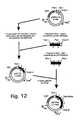
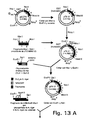
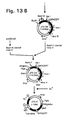
- pECThlI and pThIX plasmids can be used, preparation of which is described in the examples and outlined in Figures 12, 13A and 13B.
- pThl plasmids are used which are obtained as follows: a) Starting with plasmid pTZ18RN(1/2), the fragment (1/2) of the substantially optimized gene sequence is obtained which codifies thaumatin II; b) this fragment is ligated to plasmid pTZ18RN(3/4) linearized with Ncol, thus generating plasmid PTZ18RN(Th); c) starting with plasmid pTZ18RN(Th) in single-stranded form and using site-directed mutagenesis techniques, the following changes are carried out on the sequence of the synthetic and artificial gene of thaumatin II, where the symbol -> joins the replaced (original) and the replacement (final) in this order:
- This plasmid is called pTZI8RN(Thl); d) starting with plasmid PTZ18RN(Thl) a DNA fragment of the complete sequence of the substantially optimized gene which codifies thaumatin I is obtained; e) this fragment is ligated to plasmid pAN52-3, thus generating plasmid pTh'; f) a DNA fragment containing resistance to sulfanilamide, Su R , is inserted, thus obtaining plasmid pThl.
- the plasmids are replicated and amplified in Escherichia coli.
- the processes for isolating thaumatin I or II together with the fungal mycelium are particularly interesting.
- a part of the subject-matter of this invention is also the use of mixtures of thaumatin I or II and fungal mycelium obtained in this way to increase the sweetness or palatability of animal food.
- the expression vector When it is necessary to obtain purified thaumatin I or II, it is particularly important for the expression vector to be a plasmid which also contains a secretion signal sequence in the DNA so that the filamentous fungus produces thaumatin I or II extracellularly.
- thaumatin I or II can be increased by obtaining the fusion protein with glucoamylase.
- the promoter sequence of the expression cassette can come from any gene from the following enzymes of filamentous fungi: glyceraldehyde 3-phosphate dehydrogenase, ⁇ -glucoamylase, alcohol dehydrogenase, glucoamylase or a-amylase.
- the terminating sequence of the expression cassette can be the sequence corresponding to the promoter sequence in question.
- the selection marker can be of the type which is resistent to sulfanilamide, oleomycin, hygromycin B, phleomycin or acetamide.
- this invention makes it possible to obtain thaumatin I or II for industry with satisfactory phenotypical characteristics, and with high productivity, which represents a considerable advantage over the state of the art.
- the thaumatin can be administered together with the mycelium, a fact which saves time in the purification process and, therefore, represents a considerable additional advantage, especially for use in animal feed.
- the optimized sequence of Sequence ID No. 2 was obtained by performing the maximum number of changes on the codons of Sequence ID No. 1, replacing the original codons with the codons indicated in parenthesis on the following list of amino acid codons, when the latter where different from the originals:
- Ncol restriction site was inserted in the multiple cloning site (MCS) of the multifunctional plasmid pTZ18R (supplied by Pharmacia Inc.).
- MCS multiple cloning site
- plasmid pTZ18RN was generated ("N" for Ncol), the restriction site of which is shown in Figure 1.
- the insertion of the Ncol restriction site was performed using the site-directed mutagenesis technique described below:
- Candidate colonies were replated in nitrocellulose filters (Schleicher & Schuell). The filters were placed in LB/amp dishes and incubated overnight at 37 °C. The next day the cells were lysed by successively washing the filters in three solutions:
- the filters were then dried at 80°C for 90 minutes. Once they were dry, the filters were washed three times in 3X SSC, 0.1% SDS. Pre-hybridization took place in a solution containing 6X SSC, 5X Denhardt solution, 0.05% sodium pyrophosphate, 100 ⁇ g/ml of boiled salmon sperm DNA, and 0.5% SDS. Filters were pre-hybridized for one hour at 37 °C. Hybridization took place overnight in 50 mL of the same solution, to which 33 ng of labelled p115 probe was added. The hybridization temperature was 50 °C. On the next day the filters were washed as follows:
- the filters were exposed to an X-ray film for 2 hours at -20 °C. Various colonies with DNA showing marked hybridization to probe 115 were identified and DNA was extracted from each one.
- the final identity of the clones was verified by testing if the DNA could be cut or not cut with Ncol and by analyzing its sequence.
- the plasmid containing the Ncol restriction site between the BamHl and Pstl restriction sites ( Figure 1) was called pTZ18RN and was the parent vector used in the construction of the artificial, synthetic and totally optimized gene of thaumatin II.
- the method chosen for assembling the synthetic gene of thaumatin II is shown in Figure 2.
- the eight long oligonucleotides whose sequences are shown in Figure 3 were supplied by Isogen Bioscience, Inc. (Netherlands).
- the single-stranded oligonucleotides, which occur in pairs, can be paired because of the complementary nature of the sequences. They were labelled la, 1b,; 2a, 2b; 3a, 3b; and 4a, 4b.
- the single-stranded areas were filled with the modified T7 DNA polymerase (the Taq DNA polymerase can also be used).
- the resulting double-stranded fragments were digested with the appropriate restriction enzymes to obtain cohesive ends or blunt ends and then ligated to the desired vector.
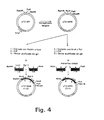
- Figure 4 shows the strategy used to build the synthetic gene in 2 fragments which were then joined to an expression vector.
- the oligonucleotides 1 a, 1 b, 2a and 2b were joined to obtain a DNA fragment with 332 base pairs which could be inserted into the pTZ18RN plasmid.
- oligonucleotide 1a and 1 ⁇ g of 1b were mixed in a buffer solution containing 40 mM Tris.HCI, pH 8.0, 10mM MgCI 2 , 5mM DTT, 50 mM NaCl and 50 ⁇ g/mL of bovine serum albumin (BSA).
- BSA bovine serum albumin
- the 2a and 2b oligonucleotides were processed in the same way except that the final products were digested with Bgl II and Nco I.
- Plasmid pTZ18RN was digested sequentially with Bam HI and Nco I and was dephosphorylated with calf intestinal phosphatase (CIP). The linearized fragment of 2871 pairs of bases was recovered from a 0.8% agarose gel and then purified.
- CIP calf intestinal phosphatase
- oligonucleotides 3b and 4a were labelled at their 5' ends with a phosphate group using standard techniques. The oligonucleotides were called 3b * and 4a *.
- the PCRs were as follows: 1 minute at 94 °C; 1 minute at 55 °C; and 1 minute at 72 °C for 30 cycles, followed by a final extension at 72 °C for 5 minutes.
- the samples were then extracted with phenol:chloroform and resuspended in 10 ⁇ L of TE buffer and incubated with Nco I at 37°C for 3 hours. After extracting and precipitating with ethanol, the DNAs were dissolved in TE buffer and frozen at -20 °C until later use.
- Ligation of the three fragments was done as per the same process mentioned above, except that pTZ18RN was used which was cut with Nco I and Pst I, treated with calf intestinal phosphatase and finally purified from an agarose gel.
- the ligation reactions contained 15% polyethylene glycol (PEG), which stimulates ligations with blunt ends.
- PEG polyethylene glycol
- the ligation products are used to transform E. coli NM 522.
- a white/blue selection was made again of the recombinants on dishes with LB/amp medium supplemented with X-gal and IPTG. After analyzing the transformants, one clone was isolated which contained the 305 pb fragment of the second part of the thaumatin II gene. This plasmid was called pTZ18RN (3/4).
- the identity of the synthetic gene was verified by analyzing its sequence using the Sanger method (Sanger, F. et al., Proc. Nat. Acad. Sci. USA 1977, vol. 74, p. 5463-67). A sequentiation kit was used (version 2.0) from United States Biochemical Corp. The sequence of the synthetic gene was determined without ambiguity by: (1) sequentiation of the two gene strands; and (2) performing parallel sequentiation reactions with dlTP to destabilize the potential secondary structures which could form due to the areas rich in GC. Representative autoradiographs are shown in Figure 5.
- the pAN52-3 plasmid (described in Punt, P. J. et al., Journal of Biotechnology, 1990, vol. 17, pp. 19-34; called “starting plasmid” hereinafter) was the starting plasmid for construction of the expression vector in filamentous fungi (pThll) used to transform Penicillium roquefortii. Ligating the synthetic gene to this starting plasmid was performed in three stages described below.
- Plasmid pTZ18RN(1/2) was cut with Nco I and a Ncol-Ncol fragment containing the first part of the gene was purified in a 4% agarose gel. Plasmid pTh(3/4) was linearized with Nco I and processed with alkaline phosphatase. It was then ligated with the Ncol-Ncol fragment from pTZ18RN(1/2). The resulting plasmid was called pTh.
- the pTh plasmid was cut with Bal I and Hind III. In the clones with the appropriate orientation, a fragment of 625 bp was obtained while those with inappropriate orientation produced a fragment of 300 bp.
- the pTh plasmid was then cut with Eco RI and the 5' ends were filled with the Klenow fragment of DNA polymerase I. This treated plasmid was then purified in a 0.8% agarose gel.
- plasmid pEcoliR388 N Datta, Saint Mary's Hospital, London
- the sequence of resistance to sulfanilamide was obtained and a construction was made eliminating the procaryote promotor and terminator; then the structural gene was placed under the control of a promotor and a terminator of filamentous fungi (TrpC).
- the sulfanilamide resistance sequence obtained in this way was cut with Smal and Xbal; the 5' ends were filled with Klenow and dNTP and a 1.75 Kb fragment was isolated from a 4% agarose gel. Then the fragment obtained in this way was ligated with pTh and transformation was carried out in E. coli DH1. The resulting plasmid was called pThll.
- This plasmid contains: (i) the synthetic gene which codifies thaumatin II under the control of a fungal promotor, and (ii) a sulfanilamide resistance marker. The final identity of the plasmid was verified by sequentiation as described in section 1.3.3.
- the protoplasts of Penicillium roquefortii used in the transformation experiments were prepared according to the following process, starting with the MUCL 29148 strain. Its conidia were inoculated in 50 mL of MSDPM liquid medium (medium semi-defined for mycelium production, the composition of which is described below). The culture was incubated for 44 hours at 28 ° C in a mechanical stirrer at 270 rpm. The mycelium was recovered by filtration, washed with sterile water and resuspended in a 1.2M KCI solution containing 40 mg of Lysin Enzyme (Sigma) per gram of mycelium. After 4 hours of incubation at 28°C at moderate stirring speed, protoplasts were obtained.
- the protoplasts were centrifuged (2000 rpm, 10 min.) and then resuspended (5 x 10 8 protoplasts/mL) in solution I: 1.2 M KCI; 50 mM Tris.HCI (pH 8), 50 mM CaC1 2 and 20% of solution II (see below). They were incubated for 10 minutes at 28 ° C. Aliquots of 0.1 mL were mixed with DNA (10 ⁇ g) from the expression plasmid, which contained the thaumatin II gene. Immediately afterward, 2 mL of solution II [1.2 M KCI; 50 mM Tris.HCI (pH 8), 50 mM CaC1 2 and 30% PEG 6000] was added.
- T1 and T2 oligonucleotides were used, the sequences of which are included in section (1.4.1.2).
- T1 is complementary to nucleotides 605 and 624 of the upper strand of the synthetic gene of thaumatin II
- T2 is complementary to nucleotides 21 to 46 of the lower strand. Therefore, with these two oligonucleotides it was possible to amplify a fragment of 604 pairs of bases corresponding to oligonucleotides 21 to 624 of the synthetic gene of thaumatin II.
- Figure 7 shows the success of the results, indicating that in the untransformed fungus (control), no bands appear of the size corresponding to the synthetic gene (lane 2), while in two of the transformant genes (M0901 and T0901) bands appear with the same number of bases as the band corresponding to the synthetic gene inserted in the pThll plasmid (lanes 3 to 5).
- the starting material was 5 g of mycelium which had been vacuum filtered using a Buchner funnel and which came from a 5-day MSDPM culture (0.6% NaNO 3 ; 0.052% MgSO4 ⁇ 7H2 0; 0.052 KCI; 1% glucose; 0.5% yeast extract; 0.5% casamino acids; FeSO 4 ⁇ 7H 2 O traces; ZnSO 4 ⁇ 7H 2 O traces).
- the mycelium was ground in liquid nitrogen with a porcelain mortar.
- the mycelium was resuspended in the extraction buffer (10 mM Hepes, pH 6.9; 0.3 M saccharose; 20 mM EDTA, pH 8.0; 0.5% SDS) at a ratio of 10 mL of buffer per gram of mycelium. It was incubated for 15 minutes at 65°C and centrifuged for 5 minutes at 7000 rpm (Beckman JA20 rotor) at room temperature to eliminate cell debris; the supernatant was collected and treated twice with phenol/chloroform/isoamyl alcohol (49:49:2) to eliminate proteins.
- the aqueous phase was precipitated with 0.3 M sodium acetate and 2.5 volumes of ethanol for 20 minutes at -20 °C.
- the precipitated volume was centrifuged at 7000 rpm for 20 minutes.
- the precipitate was resuspended in 1 mL of TE buffer, pH 8.0.
- the sample underwent a cycle at 94 ° C for 5 minutes to separate the two DNA strands. Thirty chain reactions were then performed: first the DNA was denatured for 1 minute at 94°C; the temperature was lowered to 55°C for 30 seconds to allow the specific primers to join with the denatured DNA strand; the temperature was then increased again to 72°C for 1 minute to allow the new strand (in formation) to elongate. When all the cycles were completed, a final elongation was performed for 5 minutes at 72 °C. The products of each PCR were analyzed in 0.8% agarose gel (Figure 7). Using this method two strains were identified called M0901 and T0901, the genomes of which contained the synthetic gene of thaumatin II.
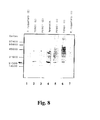
- Figure 8 shows the outcome of the results obtained, indicating that no bands of the size corresponding to thaumatin II appear in the untransformed fungus (control), while in two of the transformed fungi a band appears having the same molecular weight as commercial thaumatin II.
- the starting material was 2 g of mycelium which had been vacuum filtered using a BUchner funnel and which came from a 5-day culture at 28°C in MSDPM medium. Both the mycelium retained in the funnel (solid fraction) and in the culture medium (liquid fraction) were analyzed.
- the protein gels used were 14% polyacrilamide and 18% urea. Electrophoresis was performed at 150 volts and stopped when the front of the sample was 3 or 5 mm from the end of the gel.
- the gel was transferred to nitrocellulose paper (NC). To do so, the Bio-Rad Trans-blot SD Semidry Unit was used. Transfer took 30 minutes at 15 volts.
- the NC paper was taken out of the blocking solution, washed with TBS and incubated with serum: immune IgG fraction (0.37 mg/mL) diluted (1:500) in blocking solution (with sodium azide).
- immune IgG fraction (0.37 mg/mL) diluted (1:500) in blocking solution (with sodium azide).
- the normal preimmune IgG fraction was used (0.35 mg/mL) diluted (1:500) in blocking solution (with sodium azide). The solution was stirred and incubated for 4 hours at room temperature.
- TBS-Tween TBS 1X + Tween-20, 0.05%). It was stirred and incubated for 4 hours at room temperature with the secondary antibody: anti-rabbit IgG-phosphatase alkaline conjugate diluted (1:500) in blocking solution (without sodium azide). Three 10-minute washes were performed in TBS-Tween.
- the alkaline phosphatase reaction was performed: a) the NC was equilibrated with alkaline phosphatase buffer (100 mM Tris.HCI, pH 9.5 100; 100mM NaCI; 50 mM MgC1 2 ); b) the NC was placed in the development reaction mix (15 mL of alkaline phosphatase buffer, 66 ⁇ L of nitro blue tetrazodium, NBT) (75 mg/mL in 70% dimethyl formamide), 99 ⁇ L of 5-bromo-4-chloro-3-indole phosphate (BCIP) (25 mg/mL in 100% dimethyl formamide) until the bands turned dark; c) the reaction was stopped with alkaline phosphate stop solution (20 mM Tris.HCI, pH 8.0 and 20 mM EDTa, pH 8.0).
- alkaline phosphatase buffer 100 mM Tris.HCI, pH 9.5 100; 100mM NaCI; 50 mM MgC
- the gels were stained for 1 hour with staining solution and stirred gently (25 ethanol; 10% acetic acid; 0.1% Comassie blue). They were destained with destaining solution (25% methanol; 7.5% acetic acid) until the blue color faded from the gel base.
- EXAMPLE 2 EXTRACELLULAR PRODUCTION OF THAUMATIN IN PENICILLIUM ROQUEFORTII
- Penicillium roquefortii was transformed with plasmid pThlll, which was constructed as described below and outlined in Figure 9.
- Plasmid pThll described above, (section 1.2.3) was purified using standard techniques and resuspended in TE buffer at a final concentration of 1 ⁇ g/ ⁇ l. Thirty micrograms ( ⁇ g) of this plasmid were cut with restriction enzymes Mscl and Hindlll, and a fragment of 646 base pairs containing the complete gene of thaumatin II was isolated in a 0.8% agarose gel. The ends of the fragment were converted to blunt ends with the Klenow fragment from DNA polymerase I.
- Plasmid pAN52-6B containing approximately 7.5 Kb and derived from pAN52-6 Not 1 (cf. Van den Hondel et al., "Heterologous Gene Expression in filamentous fungi”; in Bennett and Lasvre, "More Gene Manipulation in Fungi”; Academic Press, 1991, chapter 18, pp. 396-428) was digested with BssHll and its ends were converted to blunt ends through the action of the Klenow fragment of DNA polymerase I.
- the following step was to cut the pThll-bis plasmid (8.1 Kb) with Xbal and to isolate a fragment of approximately 5.5 Kb in length containing the thaumatin gene and the promoter sequence and glucoamylase signal sequence of Aspergillus niger.
- the trpC terminator sequence of Aspergillus nidulans was also present in this fragment.
- the aforementioned 5.5 Kb fragment was ligated with a plasmid containing the sulfanilamide resistance sequence, previously cut with Xbal (the only cutting site on this plasmid).
- the ligating mix was used to transform E. coli. strain DH5aF'.
- the resulting plasmid was called pThlll, as indicated in Figure 9.
- the pThlll plasmid contained: (i) the synthetic gene which codifies thaumatin II under the control of the glucoamylase promoter of Aspergillus niger; (ii) the signal sequence ("pre") and the "pro” sequence of the glucoamylase gene of Aspergillus niger; (iii) a sulfanilamide resistance marker; and (iv) the trpC terminator of Aspergillus nidulans. The final identity of this construction was verified by sequencing.
- a strain of Penicillium roquefortii was transformed with plasmid pThlll according to the same method described in Example 1 (sections 1.3.1 and 1.3.2). The colonies resistant to sulfanilamide were tested to see if their genomes contained the substantially modified gene codifying thaumatin II. The methods used (PCR) were analogous to those described in Example 1 (section 1.4.1).
- Figure 10 shows the result of a PCR experiment.
- the two oligonucleotides used to detect the thaumatin gene were the same ones used before (T1 and T2). With these two oligonucleotides, a fragment of 604 pairs of bases can be amplified corresponding to nucleotides 21 to 624 of the synthetic gene encoding thaumatin II.
- Figure 10 shows that when DNA from an untransformed fungus ("control", lane 2) is used, none of the bands corresponding to the synthetic gene are amplified, whereas when DNA is used from a fungus transformed with pThlll, a band of the expected size is amplified (lane 3). This fungus was called transformant a2. For control purposes, the reaction products obtained when plasmid pThlll was used were also run through the gel (lane 4).
- the experiment was started with 1 liter of a2 strain of Penicillium roquefortii which was grown for 8 days at 28 ° C in a semidefined medium for mycelium production (MSDPM). After vacuum filtration with a BUchner funnel, producing 45 g of mycelium per liter of culture, both the culture medium (liquid fraction) and the retained mycelium (solid fraction, 4.5 g) were analyzed.
- the solid fraction was processed using the methods outlined in section (1.4.2.1), including sonication, thus obtaining 13.5 mL of mycelium extract in sonication solution.
- Lane 11 (14% SDS-polyacrylamide gel).
- Lane 7 in this figure contains proteins of known molecular weight (markers). The molecular weight corresponding to each protein is listed on the right of the figure.
- Lane 2 contains a sample of culture medium where fungus T0901 was grown. As described in Example 1, this fungus is a producer of intracellular thaumatin.
- Lanes 3 and 5 contain samples of culture medium (E for extracellular) and mycelium (I for intracellular) corresponding to transformant a2.
- Lanes 4 and 6 contain the same samples (E and I) corresponding to untransformed Penicillium roquefortii.
- transformant a2 turned out to be a good producer and secretor of thaumatin.
- EXAMPLE 3 EXTRACELLULAR PRODUCTION OF THAUMATIN IN THE AWAMORI VARIANT OF ASPERGILLUS NIGER
- Strain NRRL312 of the awamori variant of Aspergillus niger was transformed in the presence of polyethylene glycol, as described in the literature (Yelton et al., Proc. Natl. Acad. Sci. USA, 1984, vol. 81, pp. 1470-4), with some modifications.
- CM medium malt extract, 5 g/L; yeast extract, 5 g/L; glucose, 5 g/L
- CM medium malt extract, 5 g/L
- yeast extract 5 g/L
- glucose 5 g/L
- the mycelium was collected by filtration through a sterile gauze and washed with 100 mL of wash buffer (0.6 M MgS0 4 , 10 mM Na 3 PO 4 , pH 5.8). The mycelium was pressed in sterile paper towels and produced 2.5 grams.
- the mycelium was resuspended in 15 mL/g of cold protoplast buffer (1.2 M MgS0 4 , 10 mM Na 3 P0 4 , pH 5.8). At this point, 40 mg of Lysin enzyme (Sigma) was added per g of mycelium and the mixture was placed in ice for five minutes. After this incubation, 1 mL of BSA solution was added (12 mg/mL in protoplast buffer) and the solution was incubated for 3 or 4 hours at 30 °C. Protoplast formation was monitored using a microscope. The mixture was filtered through nylon or a glass membrane and washed with the protoplast buffer.
- the protoplasts were centrifuged at 2000 rpm at 4 ° C for 15 minutes with a floating rotor (Beckman GPR centrifuge). The protoplasts were resuspended in 15 mL of ST solution (1 M sorbitol, 10 mN Tris-HCI, pH 7.5), centrifuged again and resuspended in 1 mL of ST. The solution was centrifuged again and washed twice with 1 mL of STC (ST plus 0.01 M CaC1 2 ). The protoplasts were counted under the microscope, centrifuged again and resuspended in sufficient volume of STC to obtain a concentration of 10 8 protoplasts/mL. Each 400-mL culture generally produced 10 8 protoplasts. At that point, the protoplasts were directly plated in regeneration medium, in 5-mL tubes of 0.7% soft agar with saccharose osmotic stabilizer (1 M), and were plated in basal medium with 1.5% agar.
- the pGEX-KG plasmid (5.0 Kb) (Pharmacia Biotech) was sequentially controlled with Ncol and Hind III, thus generating a fragment of approximately 4900 bp. This fragment, which no longer contained the Sall restriction site of the pGEX-KG polylinker, was purified in a 0.8% agarose gel.
- Plasmid pECThlI contained the synthetic gene of thaumatin under the control of the tac promoter of Escherichia coli. This construction made it possible to obtain intracellular production of recombinant thaumatin in Escherichia coli.
- pECThl The starting point for the construction of pThIX was the pECThl plasmid (of approximately 5.3 Kb). To eliminate the only Mscl restriction site present in this plasmid, pECThl was sequentially treated with Mscl and EcoRV (enzymes which produce blunt ends), thus releasing two fragments of 4.1 Kb and 1.2 Kb. The 4.1-Kb fragment was purified in a 0.8% agarose gel and religated through the action of DNA ligase. The result was plasmid pThIV.
- This plasmid was linearized with Ncol and the linear fragment was ligated with a Ncol-Ncol fragment from plasmid pTZ18RN(1/2), which contained the first half of the synthetic gene of thaumatin, thus generating plasmid pThV.
- GLA1 and GLA2 The single-stranded oligonucleotides, GLA1 and GLA2, were commercially bought (Ingenasa S.A) and have the following sequences (included in those of Figure 14):
- GLA1 5'-AATTCTGCGGAACGTCGACCGCGACGGTGACTGACACCTGGCGGC GAATGGATAAAAGGG-3'
- GLA2 5'-CCCTTTTATCCATTCGCCGCCAGGTGTCAGTCACCGTCGCGGTCG ACGTTCCGCAG-3'
- the next step was to insert the complete gene of glucoamylase (glaA) of Aspergillus niger or the awamori variant of Aspergillus niger, respectively, in phase with the complete gene of thaumatin II so that a glucoamylase-thaumatin fusion protein could be formed.
- glucoamylase glaA
- Plasmid pFGA2 obtained from the Belgian collection of cultures and LMBP plasmids (Ghent, Belgium, number 1728), contained the complete gene of glucoamylase (glaA) of Aspergillus niger.
- the plasmid was digested with EcoRl and Sall, and a fragment of approximately 2.3 Kb was isolated containing the complete gene of glucoamylase except for the last 10 amino acids of the protein. This fragment was ligated with plasmid pThVI which had previously been digested with EcoRl and Sall, thus generating plasmid pThVll (the junctions are described in Figure 14).
- glucoamylase gene of the awamori variant of Aspergillus niger was obtained by total DNA of the NRRL312 strain of this fungus was prepared according to the protocol in section (1.4.1.1) . Two oligonucleotides, complementary to the 5' and 3' ends of the glucoamylase gene were used to amplify the complete gene. The fragment thus amplified was purified in a 0.8% agarose gel and digested with EcoRl and Sall.
- the pThVll plasmid was digested with the restriction enzymes BssHll (partial digestion) and Hindlll, and a fragment of approximately 3.0 Kb was isolated. This fragment was ligated with pAN52-6B which had previously been digested with BssHll and Hindlll, thus obtaining plasmid pThVlll. Finally, the sulfanilamide resistance gene (S U R ) was inserted as described in Example 2, thus generating pThIX.
- Plasmid pThIX contained: (i) a sulfanilamide resistance marker; (ii) a DNA sequence which encodes a fusion protein formed by (a) the synthetic gene of thaumatin II, (b) a spacer sequence which in turn contains a KEX2 processing sequence, and (c) the complete glucoamylase gene of Aspergillus niger; and finally, (iii) the signal sequence ("pre") and the "pro” sequence of the glucoamylase gene (glaA) of Aspergillus niger.
- Plasmid pThIX was used to transform the awamori variant of Aspergillus niger as per the protocols specified in Example 3. Transformants which correctly secreted and processed thaumatin were obtained, and it was determined that the protein was sweet.
- an analogue plasmid of pThIX was obtained containing the gla sequence of A. awamori instead of that of A. niger. Similarly, this plasmid was also used to transform a strain of A. awamori, with similar results.
- Sequence ID No.1 Amino-acid sequence of the protein thaumatin II, and nucleotide sequence of the natural gene.
- Sequence ID No. 2 Amino-acid sequence of thaumatin II and nucleotide sequence of the artificial, synthetic and completely optimized gene, used in the examples of this invention, to which the n codons with TAA termination (n ⁇ 1) were added.
Landscapes
- Health & Medical Sciences (AREA)
- Life Sciences & Earth Sciences (AREA)
- Genetics & Genomics (AREA)
- Chemical & Material Sciences (AREA)
- Organic Chemistry (AREA)
- Engineering & Computer Science (AREA)
- Biophysics (AREA)
- General Health & Medical Sciences (AREA)
- Biomedical Technology (AREA)
- Bioinformatics & Cheminformatics (AREA)
- Molecular Biology (AREA)
- General Engineering & Computer Science (AREA)
- Wood Science & Technology (AREA)
- Biotechnology (AREA)
- Zoology (AREA)
- Biochemistry (AREA)
- Physics & Mathematics (AREA)
- Mycology (AREA)
- Proteomics, Peptides & Aminoacids (AREA)
- Plant Pathology (AREA)
- Medicinal Chemistry (AREA)
- Microbiology (AREA)
- Gastroenterology & Hepatology (AREA)
- Botany (AREA)
- Micro-Organisms Or Cultivation Processes Thereof (AREA)
- Seasonings (AREA)
- Enzymes And Modification Thereof (AREA)
- Preparation Of Compounds By Using Micro-Organisms (AREA)
- Peptides Or Proteins (AREA)
Applications Claiming Priority (2)
| Application Number | Priority Date | Filing Date | Title |
|---|---|---|---|
| ES09400836A ES2080689B1 (es) | 1994-04-21 | 1994-04-21 | Procedimiento de obtencion de un edulcorante natural proteico. |
| ES9400836 | 1994-04-21 |
Publications (3)
| Publication Number | Publication Date |
|---|---|
| EP0684312A2 true EP0684312A2 (de) | 1995-11-29 |
| EP0684312A3 EP0684312A3 (de) | 1996-07-31 |
| EP0684312B1 EP0684312B1 (de) | 2000-07-05 |
Family
ID=8285957
Family Applications (1)
| Application Number | Title | Priority Date | Filing Date |
|---|---|---|---|
| EP95105973A Expired - Lifetime EP0684312B1 (de) | 1994-04-21 | 1995-04-21 | Herstellung eines natürlichen Süssungsmittel-Proteins |
Country Status (11)
| Country | Link |
|---|---|
| US (1) | US5932438A (de) |
| EP (1) | EP0684312B1 (de) |
| JP (1) | JPH0847396A (de) |
| AT (1) | ATE194386T1 (de) |
| CA (1) | CA2147541C (de) |
| DE (1) | DE69517750T2 (de) |
| DK (1) | DK0684312T3 (de) |
| ES (2) | ES2080689B1 (de) |
| FI (1) | FI112794B (de) |
| GR (1) | GR3034500T3 (de) |
| PT (1) | PT684312E (de) |
Cited By (5)
| Publication number | Priority date | Publication date | Assignee | Title |
|---|---|---|---|---|
| ES2143408A1 (es) * | 1998-04-02 | 2000-05-01 | Urquima Sa | Promotor y construcciones para expresion de proteinas recombinantes en hongos filamentosos. |
| WO2003070957A3 (en) * | 2002-02-20 | 2003-12-24 | Novozymes As | Plant polypeptide production |
| WO2004050695A3 (en) * | 2002-12-05 | 2004-07-22 | Novozymes As | Expression of polypeptides in filamentous fungi |
| US7833743B2 (en) | 2001-10-31 | 2010-11-16 | Phytex, Llc | Phytase-containing animal food and method |
| EP4490169A4 (de) * | 2022-03-09 | 2026-03-18 | Phyx44 Labs Private Ltd | Neue proteinzusammensetzung und ihre verwendung bei der formulierung von milchprodukten |
Families Citing this family (4)
| Publication number | Priority date | Publication date | Assignee | Title |
|---|---|---|---|---|
| EP1724341A4 (de) * | 2004-01-28 | 2007-08-01 | Mitsukan Group Corp | Neuartiges, die geschmackswahrnehmung modifizierendes peptid nas, dessen dna und dessen verwendung |
| DK4171199T3 (da) * | 2020-06-25 | 2026-04-13 | Mycotechnology Inc | Sødt protein fra trøffel |
| JP2024529755A (ja) * | 2021-08-20 | 2024-08-08 | ノマド バイオサイエンス ゲゼルシャフト ミット ベシュレンクテル ハフツング | タウマチン及び1種又は複数種のレバウジオシドを含む甘味料ブレンド |
| WO2023021220A1 (en) * | 2021-08-20 | 2023-02-23 | Nomad Bioscience Gmbh | Sweetening composition comprising thaumatin and mogrosides |
Family Cites Families (10)
| Publication number | Priority date | Publication date | Assignee | Title |
|---|---|---|---|---|
| DE3175357D1 (en) * | 1980-12-12 | 1986-10-23 | Unilever Nv | Dna sequences encoding various allelic forms of mature thaumatin, recombinant plasmids comprising said dna's and a process for their preparation, bacterial cultures comprising said recombinant plasmids, and method for producing mature thaumatin |
| DE3177281T2 (de) * | 1980-12-12 | 1992-12-10 | Unilever Nv | Strukturgene, die fuer die verschiedenen allelischen und reifungsformen von praeprothaumatin und deren mutanten kodieren, diese strukturgene enthaltende klonierungsvektoren und deren expression in mikrobiellen wirtzellen. |
| JPS59501572A (ja) * | 1982-05-19 | 1984-09-06 | ユニリーバー ナームローゼ ベンノートシヤープ | クルイベロミセス属酵母およびその製造法 |
| AU577334B2 (en) * | 1983-10-11 | 1988-09-22 | International Genetic Engineering, Inc. | Synthetic thaumatin genes |
| ATE253119T1 (de) * | 1985-04-15 | 2003-11-15 | Dsm Ip Assets Bv | Verwendung des glucoamylasepromotors aus apergillus |
| CA1310923C (en) * | 1985-11-13 | 1992-12-01 | Joachim Ludwig Weickmann | Dna encoding [asp --] and [lys -, asp --] thaumatin i |
| GB2200118A (en) * | 1987-01-23 | 1988-07-27 | Allelix Inc | Synthetic chymosin-and prochymosin-encoding DNA segments |
| EP0396612B1 (de) * | 1988-01-11 | 1996-07-24 | Xoma Corporation | Plasmidvektor mit pectatlyase-signalsequenz |
| US5221624A (en) * | 1988-11-08 | 1993-06-22 | International Genetic Engineering, Inc. | DNA encoding (Lys46, Asp97, Asp113) and (Lys46, Asp.sup.137) thaumatin I polypeptides |
| JP3986929B2 (ja) * | 2002-08-27 | 2007-10-03 | 富士通株式会社 | 電力線搬送通信における漏洩電磁界抑圧送信方法及び漏洩電磁界抑圧送信装置 |
-
1994
- 1994-04-21 ES ES09400836A patent/ES2080689B1/es not_active Expired - Fee Related
-
1995
- 1995-04-19 FI FI951868A patent/FI112794B/fi not_active IP Right Cessation
- 1995-04-21 US US08/426,599 patent/US5932438A/en not_active Expired - Fee Related
- 1995-04-21 DK DK95105973T patent/DK0684312T3/da active
- 1995-04-21 AT AT95105973T patent/ATE194386T1/de not_active IP Right Cessation
- 1995-04-21 CA CA002147541A patent/CA2147541C/en not_active Expired - Fee Related
- 1995-04-21 DE DE69517750T patent/DE69517750T2/de not_active Expired - Fee Related
- 1995-04-21 JP JP7120674A patent/JPH0847396A/ja not_active Withdrawn
- 1995-04-21 EP EP95105973A patent/EP0684312B1/de not_active Expired - Lifetime
- 1995-04-21 ES ES95105973T patent/ES2149901T3/es not_active Expired - Lifetime
- 1995-04-21 PT PT95105973T patent/PT684312E/pt unknown
-
2000
- 2000-09-28 GR GR20000402190T patent/GR3034500T3/el not_active IP Right Cessation
Cited By (6)
| Publication number | Priority date | Publication date | Assignee | Title |
|---|---|---|---|---|
| ES2143408A1 (es) * | 1998-04-02 | 2000-05-01 | Urquima Sa | Promotor y construcciones para expresion de proteinas recombinantes en hongos filamentosos. |
| WO1999051756A3 (en) * | 1998-04-02 | 2001-01-18 | Urquima Sa | Promoter and constructions for expression of recombinant proteins in filamentous fungi |
| US7833743B2 (en) | 2001-10-31 | 2010-11-16 | Phytex, Llc | Phytase-containing animal food and method |
| WO2003070957A3 (en) * | 2002-02-20 | 2003-12-24 | Novozymes As | Plant polypeptide production |
| WO2004050695A3 (en) * | 2002-12-05 | 2004-07-22 | Novozymes As | Expression of polypeptides in filamentous fungi |
| EP4490169A4 (de) * | 2022-03-09 | 2026-03-18 | Phyx44 Labs Private Ltd | Neue proteinzusammensetzung und ihre verwendung bei der formulierung von milchprodukten |
Also Published As
| Publication number | Publication date |
|---|---|
| ES2149901T3 (es) | 2000-11-16 |
| JPH0847396A (ja) | 1996-02-20 |
| DE69517750D1 (de) | 2000-08-10 |
| PT684312E (pt) | 2000-12-29 |
| FI951868A0 (fi) | 1995-04-19 |
| EP0684312B1 (de) | 2000-07-05 |
| EP0684312A3 (de) | 1996-07-31 |
| CA2147541A1 (en) | 1995-10-22 |
| US5932438A (en) | 1999-08-03 |
| ATE194386T1 (de) | 2000-07-15 |
| ES2080689A1 (es) | 1996-02-01 |
| FI951868L (fi) | 1995-10-22 |
| DK0684312T3 (da) | 2000-11-13 |
| GR3034500T3 (en) | 2000-12-29 |
| CA2147541C (en) | 2000-10-24 |
| DE69517750T2 (de) | 2001-03-01 |
| FI112794B (fi) | 2004-01-15 |
| ES2080689B1 (es) | 1996-09-01 |
Similar Documents
| Publication | Publication Date | Title |
|---|---|---|
| US6175060B1 (en) | Phosphate-deficiency inducible promoter | |
| KR101337016B1 (ko) | 옥수수 이벤트 das-59122-7 및 그의 탐지 방법 | |
| DE69535181T2 (de) | Öl-körper proteine als träger von hochwertigen peptiden in pflanzen | |
| Parlati et al. | The calnexin homologue cnx1+ in Schizosaccharomyces pombe, is an essential gene which can be complemented by its soluble ER domain. | |
| DK175822B1 (da) | Renset DNA-sekvens, som koder for en gæralkoholoxidase II-genregulatorregion | |
| CN110462047B (zh) | 晚疫病抗性基因及使用方法 | |
| CA2694006C (en) | Late blight resistance genes and methods | |
| AU614933B2 (en) | Functional DNA block and plasmid coding for hirudin, transformed yeast, method for preparing hirudin, hirudin obtained and its pharmaceutical use | |
| JPH08508162A (ja) | ハロバクテリアにおける異種ポリペプチドの発現 | |
| EP0684312B1 (de) | Herstellung eines natürlichen Süssungsmittel-Proteins | |
| DE69836075T2 (de) | Verfahren zur spaltung von fusionproteinen | |
| CN115135142A (zh) | 控制籽粒大小和粒重的方法 | |
| US6461837B1 (en) | Methods for producing a polypeptide using a consensus translational initiator sequence | |
| DK175534B1 (da) | Rekombinant DNA-molekyle, fremgangsmåde til dets fremstilling, transformeret vært, fremgangsmåde til dens fremstilling, fremgangsmåde til fremstilling af et polypeptid samt pectinlyaser | |
| EP0139501A2 (de) | Herstellung und Expression von Genen für Thaumatin | |
| Lazarus et al. | Characterization of a strawberry gene for auxin-binding protein, and its expression in insect cells | |
| AU645768B2 (en) | Novel fungal expression system | |
| US5770371A (en) | Modification of cryptic splice sites in heterologous genes expressed in fungi | |
| US6566588B1 (en) | Plants transformed with a nucleic acid encoding the hypersensitive response associated protein amphipathetic protein-1 | |
| JP2001157586A (ja) | プロモーター遺伝子 | |
| US20240011044A1 (en) | Plant regulatory elements and uses thereof | |
| WO1992014826A1 (en) | Bacillus thuringiensis-promoter | |
| CN121518559A (zh) | 与植物白粉病抗性相关的ShWRKY41蛋白及其编码基因与应用 | |
| CN121538257A (zh) | ShRPW8-like蛋白质及其相关生物材料在提高植物白粉病抗性中的应用 | |
| US20050227357A1 (en) | Recombinant Penicillium funiculosum for homologous and heterologous protein production |
Legal Events
| Date | Code | Title | Description |
|---|---|---|---|
| PUAI | Public reference made under article 153(3) epc to a published international application that has entered the european phase |
Free format text: ORIGINAL CODE: 0009012 |
|
| AK | Designated contracting states |
Kind code of ref document: A2 Designated state(s): AT BE CH DE DK ES FR GB GR IE IT LI LU MC NL PT SE |
|
| RIN1 | Information on inventor provided before grant (corrected) |
Inventor name: BLADE-PIQUE, JOAN Inventor name: DEL-RIO-PERICACHO, JOSE-LUIS Inventor name: FAUS-SANTASUSANA, IGNACIO Inventor name: DEL-MORAL-JUAREZ, CATALINA Inventor name: IOSSIF KALO-KOENOVA, ELIZA Inventor name: PATINO-MARTIN, CRISTINA Inventor name: RUBIO-SUSAN, VICTOR Inventor name: URIACH-MARSAL, JUAN |
|
| K1C3 | Correction of patent application (complete document) published |
Effective date: 19951129 |
|
| PUAL | Search report despatched |
Free format text: ORIGINAL CODE: 0009013 |
|
| AK | Designated contracting states |
Kind code of ref document: A3 Designated state(s): AT BE CH DE DK ES FR GB GR IE IT LI LU MC NL PT SE |
|
| 17P | Request for examination filed |
Effective date: 19960927 |
|
| 17Q | First examination report despatched |
Effective date: 19971202 |
|
| GRAG | Despatch of communication of intention to grant |
Free format text: ORIGINAL CODE: EPIDOS AGRA |
|
| GRAG | Despatch of communication of intention to grant |
Free format text: ORIGINAL CODE: EPIDOS AGRA |
|
| GRAG | Despatch of communication of intention to grant |
Free format text: ORIGINAL CODE: EPIDOS AGRA |
|
| GRAH | Despatch of communication of intention to grant a patent |
Free format text: ORIGINAL CODE: EPIDOS IGRA |
|
| GRAH | Despatch of communication of intention to grant a patent |
Free format text: ORIGINAL CODE: EPIDOS IGRA |
|
| GRAA | (expected) grant |
Free format text: ORIGINAL CODE: 0009210 |
|
| AK | Designated contracting states |
Kind code of ref document: B1 Designated state(s): AT BE CH DE DK ES FR GB GR IE IT LI LU MC NL PT SE |
|
| REF | Corresponds to: |
Ref document number: 194386 Country of ref document: AT Date of ref document: 20000715 Kind code of ref document: T |
|
| REG | Reference to a national code |
Ref country code: CH Ref legal event code: EP |
|
| REG | Reference to a national code |
Ref country code: IE Ref legal event code: FG4D |
|
| REF | Corresponds to: |
Ref document number: 69517750 Country of ref document: DE Date of ref document: 20000810 |
|
| REG | Reference to a national code |
Ref country code: CH Ref legal event code: NV Representative=s name: SCHMAUDER & PARTNER AG PATENTANWALTSBUERO |
|
| ITF | It: translation for a ep patent filed | ||
| ET | Fr: translation filed | ||
| REG | Reference to a national code |
Ref country code: DK Ref legal event code: T3 |
|
| REG | Reference to a national code |
Ref country code: ES Ref legal event code: FG2A Ref document number: 2149901 Country of ref document: ES Kind code of ref document: T3 |
|
| REG | Reference to a national code |
Ref country code: PT Ref legal event code: SC4A Free format text: AVAILABILITY OF NATIONAL TRANSLATION Effective date: 20000919 |
|
| PLBE | No opposition filed within time limit |
Free format text: ORIGINAL CODE: 0009261 |
|
| STAA | Information on the status of an ep patent application or granted ep patent |
Free format text: STATUS: NO OPPOSITION FILED WITHIN TIME LIMIT |
|
| 26N | No opposition filed | ||
| REG | Reference to a national code |
Ref country code: GB Ref legal event code: IF02 |
|
| PGFP | Annual fee paid to national office [announced via postgrant information from national office to epo] |
Ref country code: GB Payment date: 20050329 Year of fee payment: 11 |
|
| PGFP | Annual fee paid to national office [announced via postgrant information from national office to epo] |
Ref country code: PT Payment date: 20050330 Year of fee payment: 11 Ref country code: GR Payment date: 20050330 Year of fee payment: 11 |
|
| PGFP | Annual fee paid to national office [announced via postgrant information from national office to epo] |
Ref country code: MC Payment date: 20050401 Year of fee payment: 11 |
|
| PGFP | Annual fee paid to national office [announced via postgrant information from national office to epo] |
Ref country code: ES Payment date: 20050407 Year of fee payment: 11 |
|
| PGFP | Annual fee paid to national office [announced via postgrant information from national office to epo] |
Ref country code: AT Payment date: 20050418 Year of fee payment: 11 |
|
| PGFP | Annual fee paid to national office [announced via postgrant information from national office to epo] |
Ref country code: SE Payment date: 20050419 Year of fee payment: 11 Ref country code: FR Payment date: 20050419 Year of fee payment: 11 |
|
| PGFP | Annual fee paid to national office [announced via postgrant information from national office to epo] |
Ref country code: BE Payment date: 20050421 Year of fee payment: 11 |
|
| PGFP | Annual fee paid to national office [announced via postgrant information from national office to epo] |
Ref country code: NL Payment date: 20050425 Year of fee payment: 11 Ref country code: LU Payment date: 20050425 Year of fee payment: 11 Ref country code: DK Payment date: 20050425 Year of fee payment: 11 Ref country code: CH Payment date: 20050425 Year of fee payment: 11 |
|
| PGFP | Annual fee paid to national office [announced via postgrant information from national office to epo] |
Ref country code: IE Payment date: 20050426 Year of fee payment: 11 |
|
| PGFP | Annual fee paid to national office [announced via postgrant information from national office to epo] |
Ref country code: DE Payment date: 20050630 Year of fee payment: 11 |
|
| PG25 | Lapsed in a contracting state [announced via postgrant information from national office to epo] |
Ref country code: IE Free format text: LAPSE BECAUSE OF NON-PAYMENT OF DUE FEES Effective date: 20060421 Ref country code: GB Free format text: LAPSE BECAUSE OF NON-PAYMENT OF DUE FEES Effective date: 20060421 Ref country code: AT Free format text: LAPSE BECAUSE OF NON-PAYMENT OF DUE FEES Effective date: 20060421 |
|
| PG25 | Lapsed in a contracting state [announced via postgrant information from national office to epo] |
Ref country code: SE Free format text: LAPSE BECAUSE OF NON-PAYMENT OF DUE FEES Effective date: 20060422 Ref country code: ES Free format text: LAPSE BECAUSE OF NON-PAYMENT OF DUE FEES Effective date: 20060422 |
|
| PG25 | Lapsed in a contracting state [announced via postgrant information from national office to epo] |
Ref country code: MC Free format text: LAPSE BECAUSE OF NON-PAYMENT OF DUE FEES Effective date: 20060430 Ref country code: LU Free format text: LAPSE BECAUSE OF NON-PAYMENT OF DUE FEES Effective date: 20060430 Ref country code: LI Free format text: LAPSE BECAUSE OF NON-PAYMENT OF DUE FEES Effective date: 20060430 Ref country code: CH Free format text: LAPSE BECAUSE OF NON-PAYMENT OF DUE FEES Effective date: 20060430 Ref country code: BE Free format text: LAPSE BECAUSE OF NON-PAYMENT OF DUE FEES Effective date: 20060430 |
|
| PGFP | Annual fee paid to national office [announced via postgrant information from national office to epo] |
Ref country code: IT Payment date: 20060430 Year of fee payment: 12 |
|
| PG25 | Lapsed in a contracting state [announced via postgrant information from national office to epo] |
Ref country code: DK Free format text: LAPSE BECAUSE OF NON-PAYMENT OF DUE FEES Effective date: 20060501 |
|
| PG25 | Lapsed in a contracting state [announced via postgrant information from national office to epo] |
Ref country code: PT Free format text: LAPSE BECAUSE OF NON-PAYMENT OF DUE FEES Effective date: 20061023 |
|
| PG25 | Lapsed in a contracting state [announced via postgrant information from national office to epo] |
Ref country code: NL Free format text: LAPSE BECAUSE OF NON-PAYMENT OF DUE FEES Effective date: 20061101 Ref country code: DE Free format text: LAPSE BECAUSE OF NON-PAYMENT OF DUE FEES Effective date: 20061101 |
|
| REG | Reference to a national code |
Ref country code: DK Ref legal event code: EBP |
|
| REG | Reference to a national code |
Ref country code: CH Ref legal event code: PL |
|
| EUG | Se: european patent has lapsed | ||
| GBPC | Gb: european patent ceased through non-payment of renewal fee |
Effective date: 20060421 |
|
| REG | Reference to a national code |
Ref country code: PT Ref legal event code: MM4A Free format text: LAPSE DUE TO NON-PAYMENT OF FEES Effective date: 20061023 |
|
| NLV4 | Nl: lapsed or anulled due to non-payment of the annual fee |
Effective date: 20061101 |
|
| REG | Reference to a national code |
Ref country code: IE Ref legal event code: MM4A |
|
| REG | Reference to a national code |
Ref country code: FR Ref legal event code: ST Effective date: 20061230 |
|
| REG | Reference to a national code |
Ref country code: ES Ref legal event code: FD2A Effective date: 20060422 |
|
| BERE | Be: lapsed |
Owner name: S.A. *URQUIMA Effective date: 20060430 |
|
| PG25 | Lapsed in a contracting state [announced via postgrant information from national office to epo] |
Ref country code: FR Free format text: LAPSE BECAUSE OF NON-PAYMENT OF DUE FEES Effective date: 20060502 |
|
| PG25 | Lapsed in a contracting state [announced via postgrant information from national office to epo] |
Ref country code: GR Free format text: LAPSE BECAUSE OF NON-PAYMENT OF DUE FEES Effective date: 20061102 |
|
| PG25 | Lapsed in a contracting state [announced via postgrant information from national office to epo] |
Ref country code: IT Free format text: LAPSE BECAUSE OF NON-PAYMENT OF DUE FEES Effective date: 20070421 |