EP0695320B1 - Verfahren zur herstellung eines vernetzten extrudierten polymerproduktes - Google Patents
Verfahren zur herstellung eines vernetzten extrudierten polymerproduktes Download PDFInfo
- Publication number
- EP0695320B1 EP0695320B1 EP94913598A EP94913598A EP0695320B1 EP 0695320 B1 EP0695320 B1 EP 0695320B1 EP 94913598 A EP94913598 A EP 94913598A EP 94913598 A EP94913598 A EP 94913598A EP 0695320 B1 EP0695320 B1 EP 0695320B1
- Authority
- EP
- European Patent Office
- Prior art keywords
- polymer
- liquid
- powder
- process according
- cross
- Prior art date
- Legal status (The legal status is an assumption and is not a legal conclusion. Google has not performed a legal analysis and makes no representation as to the accuracy of the status listed.)
- Expired - Lifetime
Links
- 238000000034 method Methods 0.000 title claims abstract description 31
- 238000001125 extrusion Methods 0.000 title claims abstract description 12
- 229920006037 cross link polymer Polymers 0.000 title abstract 2
- 229920000642 polymer Polymers 0.000 claims abstract description 69
- 239000007788 liquid Substances 0.000 claims abstract description 47
- 239000000654 additive Substances 0.000 claims abstract description 25
- 238000004132 cross linking Methods 0.000 claims abstract description 22
- 239000000843 powder Substances 0.000 claims abstract description 20
- 238000002156 mixing Methods 0.000 claims abstract description 17
- 230000000996 additive effect Effects 0.000 claims abstract description 15
- 239000000203 mixture Substances 0.000 claims abstract description 12
- 239000002245 particle Substances 0.000 claims abstract 2
- 230000008569 process Effects 0.000 claims description 17
- 239000004698 Polyethylene Substances 0.000 claims description 13
- -1 polyethylene Polymers 0.000 claims description 13
- 229920000573 polyethylene Polymers 0.000 claims description 13
- 239000002861 polymer material Substances 0.000 claims description 7
- 150000002978 peroxides Chemical class 0.000 claims description 3
- 238000006482 condensation reaction Methods 0.000 claims description 2
- 150000004756 silanes Chemical class 0.000 claims description 2
- SCPYDCQAZCOKTP-UHFFFAOYSA-N silanol Chemical compound [SiH3]O SCPYDCQAZCOKTP-UHFFFAOYSA-N 0.000 claims description 2
- 238000003756 stirring Methods 0.000 claims description 2
- 238000002360 preparation method Methods 0.000 claims 1
- 150000003254 radicals Chemical class 0.000 claims 1
- 238000009826 distribution Methods 0.000 abstract description 5
- 230000001788 irregular Effects 0.000 abstract description 3
- 239000003431 cross linking reagent Substances 0.000 abstract 1
- 239000008187 granular material Substances 0.000 description 31
- 239000000463 material Substances 0.000 description 10
- 239000000047 product Substances 0.000 description 7
- 239000000126 substance Substances 0.000 description 6
- BLRPTPMANUNPDV-UHFFFAOYSA-N Silane Chemical group [SiH4] BLRPTPMANUNPDV-UHFFFAOYSA-N 0.000 description 5
- 229910000077 silane Inorganic materials 0.000 description 5
- BIISIZOQPWZPPS-UHFFFAOYSA-N 2-tert-butylperoxypropan-2-ylbenzene Chemical compound CC(C)(C)OOC(C)(C)C1=CC=CC=C1 BIISIZOQPWZPPS-UHFFFAOYSA-N 0.000 description 4
- 239000003963 antioxidant agent Substances 0.000 description 4
- 230000003078 antioxidant effect Effects 0.000 description 4
- 238000006243 chemical reaction Methods 0.000 description 4
- 238000002347 injection Methods 0.000 description 4
- 239000007924 injection Substances 0.000 description 4
- 239000007858 starting material Substances 0.000 description 4
- 230000008901 benefit Effects 0.000 description 3
- 239000000470 constituent Substances 0.000 description 3
- 238000009736 wetting Methods 0.000 description 3
- 230000002745 absorbent Effects 0.000 description 2
- 239000002250 absorbent Substances 0.000 description 2
- 238000010521 absorption reaction Methods 0.000 description 2
- 230000035508 accumulation Effects 0.000 description 2
- 238000009825 accumulation Methods 0.000 description 2
- 238000009749 continuous casting Methods 0.000 description 2
- 230000002349 favourable effect Effects 0.000 description 2
- 238000000265 homogenisation Methods 0.000 description 2
- 238000002844 melting Methods 0.000 description 2
- 230000008018 melting Effects 0.000 description 2
- 239000011541 reaction mixture Substances 0.000 description 2
- 239000003381 stabilizer Substances 0.000 description 2
- XMNIXWIUMCBBBL-UHFFFAOYSA-N 2-(2-phenylpropan-2-ylperoxy)propan-2-ylbenzene Chemical compound C=1C=CC=CC=1C(C)(C)OOC(C)(C)C1=CC=CC=C1 XMNIXWIUMCBBBL-UHFFFAOYSA-N 0.000 description 1
- RYGMFSIKBFXOCR-UHFFFAOYSA-N Copper Chemical compound [Cu] RYGMFSIKBFXOCR-UHFFFAOYSA-N 0.000 description 1
- 229920000426 Microplastic Polymers 0.000 description 1
- 150000001336 alkenes Chemical class 0.000 description 1
- 239000007795 chemical reaction product Substances 0.000 description 1
- 239000003795 chemical substances by application Substances 0.000 description 1
- 238000007872 degassing Methods 0.000 description 1
- IUMUPSSGZXFAMG-UHFFFAOYSA-N ethenyl(trimethoxy)silane;2-(2-phenylpropan-2-ylperoxy)propan-2-ylbenzene Chemical compound CO[Si](OC)(OC)C=C.C=1C=CC=CC=1C(C)(C)OOC(C)(C)C1=CC=CC=C1 IUMUPSSGZXFAMG-UHFFFAOYSA-N 0.000 description 1
- 238000000227 grinding Methods 0.000 description 1
- 238000010438 heat treatment Methods 0.000 description 1
- 238000010327 methods by industry Methods 0.000 description 1
- 239000000178 monomer Substances 0.000 description 1
- 230000006855 networking Effects 0.000 description 1
- 238000005453 pelletization Methods 0.000 description 1
- 229920003023 plastic Polymers 0.000 description 1
- 239000004033 plastic Substances 0.000 description 1
- 238000006116 polymerization reaction Methods 0.000 description 1
- 239000011148 porous material Substances 0.000 description 1
- 230000009257 reactivity Effects 0.000 description 1
- 239000000243 solution Substances 0.000 description 1
Images

Classifications
-
- C—CHEMISTRY; METALLURGY
- C08—ORGANIC MACROMOLECULAR COMPOUNDS; THEIR PREPARATION OR CHEMICAL WORKING-UP; COMPOSITIONS BASED THEREON
- C08J—WORKING-UP; GENERAL PROCESSES OF COMPOUNDING; AFTER-TREATMENT NOT COVERED BY SUBCLASSES C08B, C08C, C08F, C08G or C08H
- C08J3/00—Processes of treating or compounding macromolecular substances
- C08J3/20—Compounding polymers with additives, e.g. colouring
- C08J3/203—Solid polymers with solid and/or liquid additives
-
- C—CHEMISTRY; METALLURGY
- C08—ORGANIC MACROMOLECULAR COMPOUNDS; THEIR PREPARATION OR CHEMICAL WORKING-UP; COMPOSITIONS BASED THEREON
- C08J—WORKING-UP; GENERAL PROCESSES OF COMPOUNDING; AFTER-TREATMENT NOT COVERED BY SUBCLASSES C08B, C08C, C08F, C08G or C08H
- C08J3/00—Processes of treating or compounding macromolecular substances
- C08J3/20—Compounding polymers with additives, e.g. colouring
-
- B—PERFORMING OPERATIONS; TRANSPORTING
- B01—PHYSICAL OR CHEMICAL PROCESSES OR APPARATUS IN GENERAL
- B01F—MIXING, e.g. DISSOLVING, EMULSIFYING OR DISPERSING
- B01F23/00—Mixing according to the phases to be mixed, e.g. dispersing or emulsifying
- B01F23/50—Mixing liquids with solids
- B01F23/565—Mixing liquids with solids by introducing liquids in solid material, e.g. to obtain slurries
-
- B—PERFORMING OPERATIONS; TRANSPORTING
- B01—PHYSICAL OR CHEMICAL PROCESSES OR APPARATUS IN GENERAL
- B01F—MIXING, e.g. DISSOLVING, EMULSIFYING OR DISPERSING
- B01F35/00—Accessories for mixers; Auxiliary operations or auxiliary devices; Parts or details of general application
- B01F35/71—Feed mechanisms
- B01F35/717—Feed mechanisms characterised by the means for feeding the components to the mixer
- B01F35/7176—Feed mechanisms characterised by the means for feeding the components to the mixer using pumps
-
- B—PERFORMING OPERATIONS; TRANSPORTING
- B29—WORKING OF PLASTICS; WORKING OF SUBSTANCES IN A PLASTIC STATE IN GENERAL
- B29B—PREPARATION OR PRETREATMENT OF THE MATERIAL TO BE SHAPED; MAKING GRANULES OR PREFORMS; RECOVERY OF PLASTICS OR OTHER CONSTITUENTS OF WASTE MATERIAL CONTAINING PLASTICS
- B29B7/00—Mixing; Kneading
- B29B7/30—Mixing; Kneading continuous, with mechanical mixing or kneading devices
- B29B7/58—Component parts, details or accessories; Auxiliary operations
- B29B7/60—Component parts, details or accessories; Auxiliary operations for feeding, e.g. end guides for the incoming material
-
- B—PERFORMING OPERATIONS; TRANSPORTING
- B29—WORKING OF PLASTICS; WORKING OF SUBSTANCES IN A PLASTIC STATE IN GENERAL
- B29B—PREPARATION OR PRETREATMENT OF THE MATERIAL TO BE SHAPED; MAKING GRANULES OR PREFORMS; RECOVERY OF PLASTICS OR OTHER CONSTITUENTS OF WASTE MATERIAL CONTAINING PLASTICS
- B29B7/00—Mixing; Kneading
- B29B7/30—Mixing; Kneading continuous, with mechanical mixing or kneading devices
- B29B7/58—Component parts, details or accessories; Auxiliary operations
- B29B7/72—Measuring, controlling or regulating
- B29B7/726—Measuring properties of mixture, e.g. temperature or density
-
- B—PERFORMING OPERATIONS; TRANSPORTING
- B29—WORKING OF PLASTICS; WORKING OF SUBSTANCES IN A PLASTIC STATE IN GENERAL
- B29B—PREPARATION OR PRETREATMENT OF THE MATERIAL TO BE SHAPED; MAKING GRANULES OR PREFORMS; RECOVERY OF PLASTICS OR OTHER CONSTITUENTS OF WASTE MATERIAL CONTAINING PLASTICS
- B29B7/00—Mixing; Kneading
- B29B7/74—Mixing; Kneading using other mixers or combinations of mixers, e.g. of dissimilar mixers ; Plant
- B29B7/7476—Systems, i.e. flow charts or diagrams; Plants
- B29B7/7485—Systems, i.e. flow charts or diagrams; Plants with consecutive mixers, e.g. with premixing some of the components
-
- B—PERFORMING OPERATIONS; TRANSPORTING
- B29—WORKING OF PLASTICS; WORKING OF SUBSTANCES IN A PLASTIC STATE IN GENERAL
- B29B—PREPARATION OR PRETREATMENT OF THE MATERIAL TO BE SHAPED; MAKING GRANULES OR PREFORMS; RECOVERY OF PLASTICS OR OTHER CONSTITUENTS OF WASTE MATERIAL CONTAINING PLASTICS
- B29B7/00—Mixing; Kneading
- B29B7/80—Component parts, details or accessories; Auxiliary operations
- B29B7/82—Heating or cooling
- B29B7/826—Apparatus therefor
-
- B—PERFORMING OPERATIONS; TRANSPORTING
- B29—WORKING OF PLASTICS; WORKING OF SUBSTANCES IN A PLASTIC STATE IN GENERAL
- B29B—PREPARATION OR PRETREATMENT OF THE MATERIAL TO BE SHAPED; MAKING GRANULES OR PREFORMS; RECOVERY OF PLASTICS OR OTHER CONSTITUENTS OF WASTE MATERIAL CONTAINING PLASTICS
- B29B7/00—Mixing; Kneading
- B29B7/80—Component parts, details or accessories; Auxiliary operations
- B29B7/88—Adding charges, i.e. additives
- B29B7/94—Liquid charges
-
- B—PERFORMING OPERATIONS; TRANSPORTING
- B29—WORKING OF PLASTICS; WORKING OF SUBSTANCES IN A PLASTIC STATE IN GENERAL
- B29B—PREPARATION OR PRETREATMENT OF THE MATERIAL TO BE SHAPED; MAKING GRANULES OR PREFORMS; RECOVERY OF PLASTICS OR OTHER CONSTITUENTS OF WASTE MATERIAL CONTAINING PLASTICS
- B29B9/00—Making granules
-
- B—PERFORMING OPERATIONS; TRANSPORTING
- B29—WORKING OF PLASTICS; WORKING OF SUBSTANCES IN A PLASTIC STATE IN GENERAL
- B29B—PREPARATION OR PRETREATMENT OF THE MATERIAL TO BE SHAPED; MAKING GRANULES OR PREFORMS; RECOVERY OF PLASTICS OR OTHER CONSTITUENTS OF WASTE MATERIAL CONTAINING PLASTICS
- B29B9/00—Making granules
- B29B9/12—Making granules characterised by structure or composition
-
- B—PERFORMING OPERATIONS; TRANSPORTING
- B29—WORKING OF PLASTICS; WORKING OF SUBSTANCES IN A PLASTIC STATE IN GENERAL
- B29C—SHAPING OR JOINING OF PLASTICS; SHAPING OF MATERIAL IN A PLASTIC STATE, NOT OTHERWISE PROVIDED FOR; AFTER-TREATMENT OF THE SHAPED PRODUCTS, e.g. REPAIRING
- B29C48/00—Extrusion moulding, i.e. expressing the moulding material through a die or nozzle which imparts the desired form; Apparatus therefor
-
- B—PERFORMING OPERATIONS; TRANSPORTING
- B29—WORKING OF PLASTICS; WORKING OF SUBSTANCES IN A PLASTIC STATE IN GENERAL
- B29B—PREPARATION OR PRETREATMENT OF THE MATERIAL TO BE SHAPED; MAKING GRANULES OR PREFORMS; RECOVERY OF PLASTICS OR OTHER CONSTITUENTS OF WASTE MATERIAL CONTAINING PLASTICS
- B29B9/00—Making granules
- B29B9/16—Auxiliary treatment of granules
- B29B2009/163—Coating, i.e. applying a layer of liquid or solid material on the granule
-
- B—PERFORMING OPERATIONS; TRANSPORTING
- B29—WORKING OF PLASTICS; WORKING OF SUBSTANCES IN A PLASTIC STATE IN GENERAL
- B29B—PREPARATION OR PRETREATMENT OF THE MATERIAL TO BE SHAPED; MAKING GRANULES OR PREFORMS; RECOVERY OF PLASTICS OR OTHER CONSTITUENTS OF WASTE MATERIAL CONTAINING PLASTICS
- B29B7/00—Mixing; Kneading
- B29B7/30—Mixing; Kneading continuous, with mechanical mixing or kneading devices
- B29B7/34—Mixing; Kneading continuous, with mechanical mixing or kneading devices with movable mixing or kneading devices
- B29B7/38—Mixing; Kneading continuous, with mechanical mixing or kneading devices with movable mixing or kneading devices rotary
- B29B7/40—Mixing; Kneading continuous, with mechanical mixing or kneading devices with movable mixing or kneading devices rotary with single shaft
- B29B7/42—Mixing; Kneading continuous, with mechanical mixing or kneading devices with movable mixing or kneading devices rotary with single shaft with screw or helix
-
- B—PERFORMING OPERATIONS; TRANSPORTING
- B29—WORKING OF PLASTICS; WORKING OF SUBSTANCES IN A PLASTIC STATE IN GENERAL
- B29C—SHAPING OR JOINING OF PLASTICS; SHAPING OF MATERIAL IN A PLASTIC STATE, NOT OTHERWISE PROVIDED FOR; AFTER-TREATMENT OF THE SHAPED PRODUCTS, e.g. REPAIRING
- B29C48/00—Extrusion moulding, i.e. expressing the moulding material through a die or nozzle which imparts the desired form; Apparatus therefor
- B29C48/03—Extrusion moulding, i.e. expressing the moulding material through a die or nozzle which imparts the desired form; Apparatus therefor characterised by the shape of the extruded material at extrusion
-
- B—PERFORMING OPERATIONS; TRANSPORTING
- B29—WORKING OF PLASTICS; WORKING OF SUBSTANCES IN A PLASTIC STATE IN GENERAL
- B29C—SHAPING OR JOINING OF PLASTICS; SHAPING OF MATERIAL IN A PLASTIC STATE, NOT OTHERWISE PROVIDED FOR; AFTER-TREATMENT OF THE SHAPED PRODUCTS, e.g. REPAIRING
- B29C48/00—Extrusion moulding, i.e. expressing the moulding material through a die or nozzle which imparts the desired form; Apparatus therefor
- B29C48/25—Component parts, details or accessories; Auxiliary operations
- B29C48/285—Feeding the extrusion material to the extruder
- B29C48/288—Feeding the extrusion material to the extruder in solid form, e.g. powder or granules
-
- B—PERFORMING OPERATIONS; TRANSPORTING
- B29—WORKING OF PLASTICS; WORKING OF SUBSTANCES IN A PLASTIC STATE IN GENERAL
- B29C—SHAPING OR JOINING OF PLASTICS; SHAPING OF MATERIAL IN A PLASTIC STATE, NOT OTHERWISE PROVIDED FOR; AFTER-TREATMENT OF THE SHAPED PRODUCTS, e.g. REPAIRING
- B29C48/00—Extrusion moulding, i.e. expressing the moulding material through a die or nozzle which imparts the desired form; Apparatus therefor
- B29C48/25—Component parts, details or accessories; Auxiliary operations
- B29C48/285—Feeding the extrusion material to the extruder
- B29C48/29—Feeding the extrusion material to the extruder in liquid form
-
- B—PERFORMING OPERATIONS; TRANSPORTING
- B29—WORKING OF PLASTICS; WORKING OF SUBSTANCES IN A PLASTIC STATE IN GENERAL
- B29K—INDEXING SCHEME ASSOCIATED WITH SUBCLASSES B29B, B29C OR B29D, RELATING TO MOULDING MATERIALS OR TO MATERIALS FOR MOULDS, REINFORCEMENTS, FILLERS OR PREFORMED PARTS, e.g. INSERTS
- B29K2023/00—Use of polyalkenes or derivatives thereof as moulding material
- B29K2023/04—Polymers of ethylene
- B29K2023/06—PE, i.e. polyethylene
-
- B—PERFORMING OPERATIONS; TRANSPORTING
- B29—WORKING OF PLASTICS; WORKING OF SUBSTANCES IN A PLASTIC STATE IN GENERAL
- B29K—INDEXING SCHEME ASSOCIATED WITH SUBCLASSES B29B, B29C OR B29D, RELATING TO MOULDING MATERIALS OR TO MATERIALS FOR MOULDS, REINFORCEMENTS, FILLERS OR PREFORMED PARTS, e.g. INSERTS
- B29K2105/00—Condition, form or state of moulded material or of the material to be shaped
- B29K2105/0005—Condition, form or state of moulded material or of the material to be shaped containing compounding ingredients
Definitions
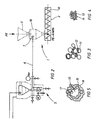
- the invention relates to a process for producing a crosslinked extruded polymer product, the polymer to be crosslinked being processed in granular or powder form with liquid additives by extrusion.
- the invention is therefore based on the object of developing a method of the type mentioned at the outset so that better wetting of the granules and thus better mixing until melting is achieved.
- the process according to the invention for producing a crosslinked extruded polymer product is provided, the polymer to be crosslinked being processed with liquid additives by extrusion, characterized in that a polymer granulate or polymer powder with a fissured porous surface is used.
- Polyethylene is preferably used for crosslinking. It is particularly favorable to use a polymer granulate / polymer powder, especially a polyethylene, with a density of approximately 0.89 to 1 g / cm 3 to use.
- the grain size of the polymer material is advantageously approximately 10 ⁇ m to 2 mm.
- the polymer granules / polymer powder to be crosslinked with a fissured porous surface are fed via the feed device to a mixing zone into which at least one liquid additive for crosslinking the polymer is injected, and the mixture is processed in a downstream caster.
- An advantage of this method is that, in addition to the liquid additive, other liquid agents can also be added, such as. B. stabilizers and the like.
- the polyethylene material with a fissured porous surface is crosslinked by adding a hydrolyzable unsaturated silane through a silanol condensation reaction.
- the polyethylene material can be crosslinked radically with the addition of a peroxided.
- the liquid additives introduced into the system have an absorbent, open-pored, large surface into which the liquid can penetrate, in order to ensure optimal mixing.
- the polymer granules used to date had a smooth surface with a relatively large grain size, with which no absorbency was associated and which was therefore difficult to wet.
- the novel polymer material used in the process according to the invention with a fissured, highly liquid-absorbing surface is a granulate or powder which is produced by a special polymerization process.
- the material preferably consists of polyethylene or other polymeric olefins or their modified products.
- Such polymer granules / polymer powders are sold, for example, by Montecatini under the name "Spherilene".
- Such polymers are produced, for example, using a fluidized bed gas phase reactor with subsequent degassing with removal of all monomer constituents and are used in the process of the invention without being subjected to the pelletizing measures which have been customary hitherto (which resulted in a smooth, round surface).
- the material thus represents a preliminary product, which, however, can be used directly in the present process, which is associated with further advantages in terms of saving additional process measures and costs.
- a further development of the present invention provides, whether for reasons of cost savings or for process engineering reasons, not only to use the polymer granules / polymer powder according to the invention with a porous surface as the starting material of the method, but also any mixing ratio of porous polymer granules according to the invention and conventional ones jagged polymer material. Depending on requirements, a starting material can therefore be used which contains only a certain percentage of fissured, porous polymer material.
- a device consisting of a feed device for the polymer material, a feed device for at least one additive and a continuous casting device is suitable for carrying out the method according to the invention, a mixing device 4 being provided between the feed device 3 for the polymer granulate / polymer powder and the continuous casting device 2, which is provided in a feed device 5, 6, 7 opens for at least one liquid additive.
- an inlet connection 18 can also be provided.
- FIG. 1 schematically shows the structure of the extrusion device 1 used for the method according to the invention, with a screw extruder 2, a feed hopper 3 arranged above the extruder 2 for receiving the polymer granulate / polymer powder with a fissured porous surface (preferably polyethylene) and one between the feed hopper 3 and the mixer 4 arranged in the extruder 2.
- a feed line 6 coming from the metering pump unit 5 for the liquid additives to be injected (specifically a silane solution), which are introduced into the interior of the mixer 4 via an injection nozzle 7, also opens into the mixer 4.
- a stirring rod 8 is arranged in the interior of the container 4 and can be driven via a drive 9.
- the screw extruder 2 is an extruder known for plastic extrusion with an overall screw ratio of length. Diameter of about 26: 1.
- the polymer reaction mixture to be processed is already optimally premixed to the screw extruder 2 directly from the mixer 4 above.
- FIG. 2 shows a modified embodiment, according to which the liquid additives conveyed from the metering pump unit 5 via the feed line 6 directly into an inlet nozzle 18 arranged below the feed funnel 3 can be injected.
- FIG. 3 shows the liquid distribution on the polymer granule grain 11 according to the prior art. It can be seen from this that relatively large granules 11 with a smooth surface are exposed to the liquid 12. The smooth surface of the granules is not suitable for binding the liquid 12 to itself, which therefore accumulates more in the spaces between the granules 11 and less wets the surface of the granules. This results in the known disadvantages of inadequate mixing and concentration differences described above.
- FIG. 4 shows the arrangement of the fissured polymer granules 13 wetted with liquid 14 and used according to the invention.
- the significantly smaller granules or powder granules 13 compared to the granules used hitherto have an irregular surface, so that the liquid 14 accumulates around the polymer grain 13 in an optimal manner and in this way the liquid 14 with the polymer grain 13 is transported on the one hand in the intermediate space and on the other hand seeps into the polymer grain itself and accumulates there.
- FIG. 5 in which a section through a polymer grain 13 is shown. Below the irregularly shaped surface, ie within the polymer grain 13, the liquid forms a liquid seepage boundary 17. Because of this binding, the liquid optimally settles on the surface 15 and forms an external liquid surface 16. This results in a finely distributed accumulation the liquid to the polymer grain, that could not be achieved so far.
- the liquid injected into the mixer 4 or into the inlet nozzle 18 is mixed with the polymer granulate / polymer powder coming from the feed hopper with a fissured, irregularly structured and thus enlarged surface. There is an optimal liquid deposit on the grain and the mixture is then introduced in finely divided form into the screw extruder 2, in which the further processing takes place with intimate mixing of the entire material.
- the optimal liquid distribution produced on the basis of the invention leads to a more uniform grafting during processing before the crosslinking reaction.
- suitable molecules for crosslinking for example silane molecules
- the measures according to the invention result in a more homogeneous grafting reaction, as a result of which the subsequent crosslinking takes place extremely homogeneously, and the quality of the end product is thus significantly improved.
- silane crosslinking and peroxide crosslinking are given below. However, these examples should not be interpreted as limitations.
Landscapes
- Engineering & Computer Science (AREA)
- Mechanical Engineering (AREA)
- Chemical & Material Sciences (AREA)
- Chemical Kinetics & Catalysis (AREA)
- Health & Medical Sciences (AREA)
- Medicinal Chemistry (AREA)
- Polymers & Plastics (AREA)
- Organic Chemistry (AREA)
- Dispersion Chemistry (AREA)
- Processes Of Treating Macromolecular Substances (AREA)
- Processing And Handling Of Plastics And Other Materials For Molding In General (AREA)
- Extrusion Moulding Of Plastics Or The Like (AREA)
- Compositions Of Macromolecular Compounds (AREA)
- Addition Polymer Or Copolymer, Post-Treatments, Or Chemical Modifications (AREA)
- Graft Or Block Polymers (AREA)
- Heating, Cooling, Or Curing Plastics Or The Like In General (AREA)
Description
- Die Erfindung betrifft ein Verfahren zur Herstellung eines vernetzten extrudierten Polymerproduktes, wobei das zu vernetzende Polymere in Granulat- oder Pulverform mit flüssigen Additiven durch Extrudieren verarbeitet wird.
- Aus der DE-OS 25 54 525 sind ein Verfahren und eine Vorrichtung zur Herstellung eines vernetzten extrudierten Polymerproduktes bekannt, wobei das zu vernetzende Polymere über einen Extruder-Aufgabetrichter einer Schneckenstrangpreßmaschine zugeführt wird und die weiteren zur Vernetzung notwendigen Komponenten in flüssiger Form in den unteren Teil des Aufgabetrichters oder direkt in das Halsstück des Extruders eingespritzt werden.
- Für das vollständige und gleichmäßige Quervernetzen der Polymeren ist es wichtig, daß ein ausreichendes Mischen sämtlicher Komponenten erzielt werden kann. Dieses Vermischen konnte jedoch mit den bisherigen Mitteln nicht zufriedenstellend gelöst werden. Das bloße Einspritzen bestimmter Bestandteile in das im Extruder-Aufgabetrichter bzw. im Extruderhals befindliche Polymere ermöglicht lediglich im Bereich um den Einspritzpunkt herum die Erzielung einer hohen Zusatzstoffkonzentration. Anschließend muß das Reaktionsgemisch im Extruder durch eine aufwendig gestaltete Extruderschnecke sogar noch während des Homogenisierens vermischt werden. Es ergeben sich somit ungünstige Voraussetzungen für eine gute Vernetzung und darüber hinaus ist eine aufwendig gestaltete und nur mit großem Aufwand herzustellende Extruderschnecke erforderlich.
- Ferner hat sich gezeigt, daß mit der Verarbeitung eines herkömmlichen Kunststoffgranulats unter Einspritzung der notwendigen Additive zur Vernetzung nur eine ungenügende Oberflächenbenetzung des Granulats stattfindet, was mit gravierenden Nachteilen verbunden ist. Es wurden zwar Versuche durchgeführt, diese Nachteile zu vermeiden, indem man vor dem Einbringen des Materials in die Extruderschnecke einen Mischer anordnete, um auf diese Weise eine günstige Durchmischung und Benetzung des Granulats zu erreichen. Es hat sich jedoch gezeigt, daß das üblicherweise verwendete Granulat wegen seiner glatten Oberfläche und aufgrund seines relativ großen Volumens nur schwer zu benetzen ist. Daraus ergibt sich der Nachteil, daß bis zur Aufschmelzphase des Materials die flüssigen Bestandteile getrennt vor dem Polymergranulat in der Extruderschnecke gefördert werden, was zu örtlichen Flüssigkeitsansammlungen und damit Konzentrationsunterschieden führt, was schließlich die Homogenität des daraus hergestellten Materials stark beeinträchtigt.
- Ein weiterentwickeltes Verfahren zur Bearbeitung und zur Vernetzung eines Polymers mit anderen Stoffen beschreibt die US 4,703,093. Hierbei wird das Polymer zur Vergrößerung der Oberfläche und zur Bildung von Spalten in der Oberfläche klein gemahlen und erhitzt. Durch das Mahlen und Erhitzen wird die Aufnahmefähigkeit des Polymers für die Vernetzungsstoffe erhöht. Nach dem Mischen des Polymergranulats mit den Vernetzungsstoffen erfolgt eine Abkühlung.
- Auch bei diesem weiterentwickelten Verfahren ist die Vermischung des Polymers mit den Zusatz- bzw. Vernetzungsstoffen noch ungenügend, obwohl das Stoffgemisch zur Steigerung der Reaktionsfähigkeit erhitzt wird, um eine bessere Durchmischung der Stoffe zu erreichen.
- Der Erfindung liegt daher die Aufgabe zugrunde, ein Verfahren der eingangs genannten Art so weiterzubilden, daß eine bessere Benetzung des Granulats und somit eine bessere Vermischung bis zum Aufschmelzen erreicht wird.
- Zur Lösung der gestellten Aufgabe ist das erfindungsgemässe Verfahren zur Herstellung eines vernetzten extrudierten Polymerprodukts vorgesehen, wobei das zu vernetzende Polymer mit flüssigen Additiven durch Extrudieren verarbeitet wird, dadurch gekennzeichnet, daß ein Polymegranulat oder Polymerpulver mit zerklüfteter poröser Oberfläche eingesetzt wird.
- Dabei wird vorzugsweise Polyethylen zur Vernetzung verwendet. Es ist besonders günstig, ein Polymergranulat/Polymerpulver, speziell ein Polyethylen, mit einer Dichte von etwa 0,89 bis 1 g/cm3 zu verwenden. Die Korngröße des Polymermaterials beträgt zweckmäßig etwa 10µm bis 2 mm.
- Bei der Durchführung des Verfahrens wird das zu vernetzende Polymergranulat/Polymerpulver mit zerklüfteter poröser Oberfläche über die Zuführeinrichtung einer Mischzone zugeführt, in die mindestens ein flüssiges Additiv zur Vernetzung des Polymeren eingespritzt wird,und das Gemisch wird in einer nachgeordneten Stranggießvorrichtung verarbeitet.
- Ein Vorteil dieses Verfahrens ist im übrigen, daß neben dem flüssigen Additiv auch weitere flüssige Mittel zugeführt werden können, wie z. B. Stabilisatoren und dgl.
- In spezieller Ausführungsform wird das Polyethylenmaterial mit zerklüfteter poröser Oberfläche unter Zusatz eines hydrolysierbaren ungesättigten Silans durch eine Silanol-Kondensationsreaktion vernetzt.
- Es ist aber nicht nur eine Silanvernetzung des Polyethylenmaterials vorgesehen, sondern erfindungsgemäß kann das Polyethylenmaterial unter Zusatz eines Peroxided radikalisch vernetzt werden.
- Durch die Verwendung eines Polymergranulats/Polymerpulvers mit zerklüfteter poröser Oberfläche bietet sich den in das System eingebrachten flüssigen Additiven eine saugfähige offenporige große Oberfläche, in welche die Flüssigkeit eindringen kann, um somit eine optimale Vermischung zu gewährleisten. Die bisher eingesetzten Polymergranulate wiesen bei relativ großer Korngröße eine glatte Oberfläche auf, mit der keinerlei Saugfähigkeit verbunden war und die daher schlecht zu benetzen war. Somit konnte bei der Vernetzungsreaktion von Polymeren unter Verwendung der bisher üblichen Granulate mit glatter Oberfläche und auch relativ großen Korngrößen im Bereich von 3 bis 4 mm sogar ein Auspressen der in den Extruder eingebrachten Flüssigkeit, verbunden mit unzuträglichen Konzentrationsunterschieden, auftreten.
- Das im Rahmen des erfindungsgemäßen Verfahrens eingesetzte neuartige Polymermaterial mit zerklüfteter, stark flüssigkeitsaufnehmender Oberfläche, ist ein Granulat oder Pulver, das durch einen speziellen Polymerisationsprozeß hergestellt wird. Vorzugsweise besteht das Material aus Polyethylen oder auch anderen polymeren Olefinen bzw. deren modifizierten Produkten. Solche Polymergranulate/Polymerpulver werden beispielsweise von der Firma Montecatini unter der Bezeichnung "Spherilene" vertrieben. Derartige Polymere werden beispielsweise unter Verwendung eines Fließbettgasphasenreaktors mit anschließender Entgasung unter Entfernung sämtlicher Monomerbestandteile hergestellt und werden, ohne den bisher üblichen Pelletisierungsmaßnahmen (die zu einer glatten runden Oberfläche führten) unterzogen zu werden, im Verfahren der Erfindung eingesetzt. Das Material stellt somit nach bisherigen Begriffen ein Vorprodukt dar, das jedoch im vorliegenden Verfahren direkt einsetzbar ist, was im Hinblick auf Einsparung an zusätzlichen Verfahrensmaßnahmen und Kosten mit weiteren Vorteilen verbunden ist.
- Aufgrund der unregelmäßigen, saugfähigen, offenporigen und stark flüssigkeitsaufnehmenden Oberfläche des zu vernetzenden Materials, die in idealer Weise geeignet ist, die Flüssigkeit an sich zu binden und zu transportieren, ergibt sich darüberhinaus der Vorteil, daß man eine geringere Menge flüssiger Additive zudosieren muß, als es bei der Verwendung herkömmlicher glatter Polymergranulate notwendig war. Durch die besondere Art der Oberflächenstrukturierung des erfindungsgemäß eingesetzten Polymermaterials ist eine bessere Aufnahme von Flüssigkeit in dem Granulat gewährleistet, damit eine bessere Verteilung gegeben, und es geht keine Flüssigkeit verloren.
- Eine Weiterbildung der vorliegenden Erfindung sieht vor, sei es aus Gründen der Kostenersparnis oder aus verfahrenstechnischen Gründen, als Ausgangsmaterial des Verfahrens nicht nur das erfindungsgemäße Polymergranulat/Polymerpulver mit poröser Oberfläche zu verwenden, sondern ein beliebiges Mischungsverhältnis von porösem Polymergranualt gemäß der Erfindung und herkömmlichem, nicht zerklüfteten Polymermaterial. Es kann also je nach Bedarf ein Ausgangsmaterial verwendet werden, das nur einen gewissen Prozentsatz an zerklüftetem, porösem Polymermaterial enthält.
- Zur Durchführung des erfindungsgemäßen Verfahrens eignet sich eine Vorrichtung, bestehend aus einer Zuführeinrichtung für das Polymermaterial, einer Zuführeinrichtung für mindestens ein Additiv und einer Stranggießvorrichtung, wobei zwischen der Zuführeinrichtung 3 für das Polymergranulat/Polymerpulver und der Stranggießvorrichtung 2 eine Mischeinrichtung 4 vorgesehen ist, die in eine Zuführeinrichtung 5, 6, 7 für mindestens ein flüssiges Additiv mündet.
- Anstelle der Mischeinrichtung 4 kann auch ein Einlaufstutzen 18 vorgesehen sein.
- Zur näheren Erläuterung der Erfindung dienen die nachfolgenden Zeichnungen, in denen
- Figur 1: schematisiert eine Vorrichtung gemäß einer ersten Ausführungsform zur Durchführung des erfindungsgemäßen Verfahrens,
- Figur 2: schematisiert eine abgewandelte Ausführungsform der Vorrichtung nach Figur 1,
- Figur 3: die Anordnung von Flüssigkeit und Granulatkorn nach dem Stand der Technik,
- Figur 4: die Anordnung von Flüssigkeit und Polymerkorn nach der Erfindung, und
- Figur 5: die vergrößerte Darstellung eines Polymerkorns der Erfindung im Schnitt wiedergeben.
- In Figur 1 ist schematisch der Aufbau der für das erfindungsgemäße Verfahren verwendelen Extrudiervorrichtung 1 dargestellt, mit einem Schneckenextruder 2, einem oberhalb des Extruders 2 angeordneten Aufgabetrichter 3 zur Aufnahme des Polymergranulats/Polymerpulvers mit zerklüfteter poröser Oberfläche (vorzugsweise Polyethylen) und einem zwischen dem Aufgabetrichter 3 und dem Extruder 2 angeordneten Mischer 4. In den Mischer 4 mündet ferner eine von der Dosierpumpeneinheit 5 kommende Zuführleitung 6 für die einzuspritzenden flüssigen Additive (speziell eine Silanlösung), die über eine Einspritzdüse 7 in das Innere des Mischers 4 eingebracht werden.
- Im Inneren des Behälters 4 ist ein Rührgestänge 8 angeordnet, welches über einen Antrieb 9 antreibbar ist. Der Schneckenextruder 2 ist ein zum Kunststoffstrangpressen bekannter Extruder mit einem Schneckengesamtverhältnis von Länge . Durchmesser von etwa 26 : 1. Dem Schneckenextruder 2 wird das zu verarbeitende Polymerreaktionsgemisch unmittelbar aus dem darüberliegenden Mischer 4 bereits optimal vorgemischt zugegeben.
- In Figur 2 ist eine abgewandelte Ausführungsform dargestellt, wonach die aus der Dosierpumpeneinheit 5 über die Zuführleitung 6 geförderten flüssigen Additive direkt in einen unterhalb des Aufgabetrichters 3 angeordneten Einlaufstutzen 18 eingespritzt werden.
- In Figur 3 ist die nach dem Stand der Technik vorliegende Flüssigkeitsverteilung am Polymergranulatkorn 11 gezeigt. Daraus ist ersichtlich, daß relativ große Granulatkörner 11 mit glatter Oberfläche der Flüssigkeit 12 ausgesetzt sind. Die glatte Oberfläche des Granulats ist nicht geeignet, die Flüssigkeit 12 an sich zu binden, die sich deshalb mehr in den Zwischenräumen zwischen dem Granulatkorn 11 anreichert und weniger die Oberfläche des Granulatkorns benetzt. Auf diese Weise ergeben sich die bekannten, vorstehend beschriebenen Nachteile einer unzureichenden Vermischung und von Konzentrationsunterschieden.
- In Figur 4 ist die Anordnung der mit Flüssigkeit 14 benetzten, erfindungsgemäß eingesetzten zerklüfteten Polymerkörner 13 wiedergegeben. Die gegenüber den bisher verwendeten Granulaten wesentlich kleineren Granulatkörner oder Pulverkörner 13 zeigen eine unregelmäßige Oberfläche, so daß sich die Flüssigkeit 14 um das Polymerkorn 13 herum in optimaler Weise anreichert und auf diese Weise die Flüssigkeit 14 mit dem Polymerkorn 13 einerseits im Zwischenraum mittransportiert wird und andererseits im Polymerkorn selbst einsickert und sich dort anlagert.
- Dies wird besonders deutlich in Figur 5 dargestellt, in der ein Schnitt durch ein Polymerkorn 13 gezeigt ist. Unterhalb der unregelmäßig ausgebildeten Oberfläche, d.h. also innerhalb des Polymerkorns 13, bildet die Flüssigkeit eine Flüssigkeitssickergrenze 17. Aufgrund dieser Bindung lagert sich die Flüssigkeit in optimaler Weise an der Oberfläche 15 an und bildet eine außenliegende Flüssigkeitsoberfläche 16. Es kommt damit zu einer fein verteilten Anlagerung der Flüssigkeit an das Polymerkorn, die bisher nicht erzielt werden konnte.
- Bei der Durchführung des erfindungsgemäßen Verfahrens wird die in den Mischer 4 bzw. in den Einlaufstutzen 18 eingespritzte Flüssigkeit mit dem aus den Aufgabetrichter kommenden Polymergranulat/Polymerpulver mit zerklüfteter, unregelmäßig strukturierter und damit vergrößerter Oberfläche vermischt. Es findet eine optimale Flüssigkeitsanlagerurg an das Korn statt und das Gemisch wird dann in fein verteilter Forn in den Schneckenextruder 2 eingebracht, in den die weitere Verarbeiturg unter inniger Durchmischung des gesamten Materials stattfindet.
- Die aufgrund der Erfindung erzeugte optimale Flüssigkeitsverteilung führt zu einer gleichmäßigeren Aufpfropfung bei der Verarbeitung vor der Vernetzungsreaktion. Bei der Aufpfropfreaktion werden zur Vernetzung geeignete Moleküle beispielsweise Silanmoleküle, auf die Polymmergrundlage, beispielsweise Polyethylen, aufgepfropft. Durch die erfindungsgemäßen Maßnahmen kommmt es aufgrund der besseren Flüssigkeitsverteilung zu einer homogeneren Aufpfropfreaktion, wodurch die nachfolgende Vernetzung äußerst homogen abläuft, und somit die Qualität des Endproduktes wesentlich verbessert wird.
- Nachfolgend wird noch je ein Beispiel für eine Silan-Vernetzung bzw. Peroxid-Vernetzung gegeben. Diese Beispiele sind aber nicht als Einschränkungen aufzufassen.
-
- Ausgangsmaterial:
- Spherilene
Dichte: 0,926 g/cm3
MIFI 190°C/2,16kp=2,8g/10 Minuten
Schüttdichte: 370g/l - Flüssigadditiv :
- Vinyltrimethoxysilan
Dicumyl Peroxid (DI-CUP)
Dibutylin-Dilaurat (DBTDL)
Stabilisatoren - Mischung :
- 98,2 % Spherilene
1,8 % Flüssigadditiv - Anlage :
- Gravimetrische Dosierung für Spherilene und Flüssigadditiv mit Mischer. Extruder mit einer Schneckenlänge von 25 D mit guter Homogenisierung
- Verarbeitung :
- Temperaturprofil am Extruder 170,190,210, 220°C; Temperaturprofil am Werkzeug 220-230°C
- Produkt :
- Kabel mit Kupfer-Draht
- Prüfergebnisse :
- Zugfestigkeit nach ISO R 527: 21,4 Mpa Reißdehnung nach ISO R 527: 526% Wärmedehnung nach ICE 811.2-1: 60%/0%
-
- Ausgangsmaterial :
- Spherilene
Dichte: 0,926 g/cm3
MIFI 190°C/2,16kp=2,8g/10 Minuten
Schüttdichte: 370 g/l - Flüssigadditiv :
- t-Butyl-cumyl-peroxid
Antioxydant - Mischung A :
- 1,0% t-Butyl-cumyl-peroxid
0,6% Antioxidant
98,4% Spherilene - Mischung B :
- 1,2% t-Butyl-cumyl-peroxid
0,6% Antioxidant
98,2% Spherilene - Mischung C :
- 1,5% t-Butyl-cumyl-peroxid
0,6% Antioxidant
97,9% Spherilene - Anlage :
- Brabender/Presse
- Verarbeitung :
- 10 Minuten auf Brabender bei 140°C
12 Minuten auf Presse bei 120 bar und 190°C - Produkt :
- Platte
- Prüfergebnisse Mischung A:
- Zugfestigkeit nach ISO R 527:
20,3 Mpa;
Reißdehnung nach ISO R 527:
566%;
Wärmedehnung nach ICE 811.2-1:
125%/15% - Prüfergebnisse Mischung B:
- Zugfestigkeit nach ISO R 527:
25,2 Mpa;
Reißdehnung nach ISO R 527:
562%;
Wärmedehnung nach ICE 811.2-1:
45%/0% - Prüfergebnisse Mischung C:
- Zugfestigkeit nach ISO R 527:
26,0 Mpa;
Reißdehnung nach ISO R 527:
575%;
Wärmedehnung nach ICE 811.2-1:
25%/0%
Claims (9)
- Verfahren zur Herstellung eines vernetzten extrudierten Polymerproduktes, wobei das zu vernetzende Polymer mit flüssigen Additiven durch Extrudieren verarbeitet wird und eine zerklüftete Oberfläche aufweist, dadurch gekennzeichnet, daß ein Polymergranulat oder ein Polymerpulver mit poröser Oberfläche eingesetzt wird.
- Verfahren nach Anspruch 1, dadurch gekennzeichnet, daß Polyethylen zur Vernetzung verwendet wird.
- Verfahren nach Anspruch 1 oder 2, dadurch gekennzeichnet, daß ein Polymermaterial mit einer Dichte von 0,89 bis 1 g/cm3 und einer Korngröße von etwa 10µm bis 2 mm zur Vernetzung verwendet wird.
- Verfahren nach Anspruch 1 bis 3, dadurch gekennzeichnet, daß das zu vernetzende Polymergranulat oder Polymerpulver mit zerklüfteter poröser oberfläche über eine Zuführeinrichtung einer Mischzone zugeführt wird, in die mindestens ein flüssiges Additiv zur Vernetzung des Polymeren eingespritzt wird und das Gemisch in einer nachgeordneten Stranggießvorrichtung verarbeitet wird.
- Verfahren nach Anspruch 1 bis 4, dadurch gekennzeichnet, daß Polyethylengranulat oder Polyethylenpulver mit zerklüfteter poröser Oberfläche unter Zusatz eines hydrolysierbaren ungesättigten Silans durch eine Silanol-Kondensationsreaktion vernetzt wird .
- Verfahren nach Anspruch 1 bis 4, dadurch gekennzeichnet, daß Polyethylengranulat oder Polyethylenpulver mit zerklüfteter poröser Oberfläche unter Zusatz eines Peroxides radikalisch vernetzt wird.
- Verfahren nach einem der Ansprüche 1 bis 6, dadurch gekennzeichnet, daß das Polymergranulat/Polymerpulver einer Mischeinrichtung (4), die zwischen der Zuführeinrichtung für das Polymer und der Stranggießvorrichtung (2) vorgesehen ist, zugeführt wird, und in dieser mit mindestens einem über eine Zuführeinrichtung (5,6,7) eingebrachten flüssigen Additiv vermischt wird.
- Verfahren nach Anspruch 7, dadurch gekennzeichnet, daß das Polymergranulat/Polymerpulver und das eingebrachte flüssige Additiv mittels einer in der Mischeinrichtung (4) vorgesehenen Rühreinrichtung (8) vermischt werden.
- Verfahren nach einem der Ansprüche 1 bis 6, dadurch gekennzeichnet, daß das Polymergranulat/Polymerpulver mit mindestens einem über eine Zuführeinrichtung (5,6,7) eingebrachten flüssigen Additiv vermischt wird, wobei die Zufuhr des Additivs zwischen Zuführvorrichtung für das Polymer und der Stranggießvorrichtung (2) erfolgt.
Applications Claiming Priority (3)
| Application Number | Priority Date | Filing Date | Title |
|---|---|---|---|
| DE4313290A DE4313290A1 (de) | 1993-04-23 | 1993-04-23 | Verfahren und Vorrichtung zur Herstellung eines vernetzten extrudierten Polymerproduktes |
| DE4313290 | 1993-04-23 | ||
| PCT/EP1994/001152 WO1994025509A1 (de) | 1993-04-23 | 1994-04-14 | Verfahren und vorrichtung zur herstellung eines vernetzten extrudierten polymerproduktes |
Publications (3)
| Publication Number | Publication Date |
|---|---|
| EP0695320A1 EP0695320A1 (de) | 1996-02-07 |
| EP0695320B1 true EP0695320B1 (de) | 1997-06-04 |
| EP0695320B2 EP0695320B2 (de) | 2001-12-12 |
Family
ID=6486181
Family Applications (1)
| Application Number | Title | Priority Date | Filing Date |
|---|---|---|---|
| EP94913598A Expired - Lifetime EP0695320B2 (de) | 1993-04-23 | 1994-04-14 | Verfahren zur herstellung eines vernetzten extrudierten polymerproduktes |
Country Status (13)
| Country | Link |
|---|---|
| US (1) | US5744553A (de) |
| EP (1) | EP0695320B2 (de) |
| JP (1) | JP3266201B2 (de) |
| KR (1) | KR100274264B1 (de) |
| CN (1) | CN1046297C (de) |
| AT (1) | ATE154052T1 (de) |
| CH (1) | CH685931A5 (de) |
| DE (2) | DE4313290A1 (de) |
| DK (1) | DK0695320T4 (de) |
| ES (1) | ES2105692T5 (de) |
| GR (1) | GR3024583T3 (de) |
| PL (1) | PL173553B1 (de) |
| WO (1) | WO1994025509A1 (de) |
Families Citing this family (17)
| Publication number | Priority date | Publication date | Assignee | Title |
|---|---|---|---|---|
| DE19724317C1 (de) * | 1997-06-10 | 1998-08-27 | Pcd Polymere Ag | Segmentierte Polyolefine |
| US5972267A (en) * | 1998-03-30 | 1999-10-26 | Union Carbide Chemicals & Plastics Technology Corporation | Process for the production of a thermosetting composition |
| DE19824958B4 (de) * | 1998-06-03 | 2004-02-05 | Werner Kempter | Verfahren zur Herstellung eines vernetzten, extrudierten Polymerproduktes |
| CZ302375B6 (cs) | 1998-06-22 | 2011-04-20 | General Electric Company | Termoplastická vulkanizacní kompozice a zpusob její prípravy |
| EP1148518B1 (de) * | 2000-04-17 | 2003-11-26 | Nexans | Verfahren zur Herstellung von mit vernetztem Polyethylen überzogenen Leitungsdrähten |
| CA2422302A1 (en) * | 2000-09-14 | 2002-03-21 | Charles F. Williams | Liquid additive spray injection to polymeric powders |
| US20040028808A1 (en) * | 2001-09-13 | 2004-02-12 | Williams Charles F. | Liquid additive spray injection to polymeric powders |
| US7064163B2 (en) * | 2002-09-04 | 2006-06-20 | Msi Technology Llc | Polyolefin-based adhesive resins and method of making adhesive resins |
| US7202309B2 (en) * | 2003-09-12 | 2007-04-10 | Momentive Performance Materials Inc. | Process for crosslinking thermoplastic polymers with silanes employing peroxide blends and the resulting crosslinked thermoplastic polymers |
| ES2247910B2 (es) * | 2004-02-04 | 2007-02-01 | Govoni Iberica, S.A. | Procedimiento para la produccion de granza basicamente de polietileno reticulable, directamente extrudible, e instalacion para la realizacion del mismo. |
| ATE385246T1 (de) * | 2004-07-30 | 2008-02-15 | Silon S R O Plana Nad Lu Znici | Verfahren zum mischen eines kunststoffgranulats mit einem additiv sowie mischeinrichtung zur durchführung des verfahrens und vorrichtung mit der mischeinrichtung |
| US7326753B2 (en) * | 2005-02-08 | 2008-02-05 | Momentive Performance Materials Inc. | Process for the production of crosslinked polymer employing low VOC-producing silane crosslinker and resulting crosslinked polymer |
| US7810986B2 (en) * | 2005-11-21 | 2010-10-12 | Process Control Corporation | Systems and methods for liquid dosing of material in a blender system |
| EP2069424A2 (de) * | 2006-10-04 | 2009-06-17 | Silon s.r.o. Planá nad Lu'znici | Verfahren zur herstellung eines vorzugsweise vernetzten, extrudierten polymerproduktes |
| US20080114134A1 (en) * | 2006-11-14 | 2008-05-15 | General Electric Company | Process for crosslinking thermoplastic polymers with silanes employing peroxide blends, the resulting crosslinked thermoplastic polymer composition and articles made therefrom |
| AT504709B1 (de) | 2006-11-23 | 2008-09-15 | Erema | Verfahren und vorrichtung zur einbringung von zusatzstoffen |
| CN106166804B (zh) * | 2016-10-14 | 2019-01-08 | 江苏华兴橡胶科技有限公司 | 一种再生胶用粗炼塑化系统及其粗炼方法 |
Family Cites Families (14)
| Publication number | Priority date | Publication date | Assignee | Title |
|---|---|---|---|---|
| GB863732A (en) * | 1958-04-18 | 1961-03-22 | Phillips Petroleum Co | Method of dispersing additives in solid polymers |
| DE2411141A1 (de) * | 1974-03-08 | 1975-09-18 | Kabel Metallwerke Ghh | Verfahren zur herstellung von umhuellungen aus in anwesenheit von fluessigkeit vernetzbaren thermoplasten fuer langgestrecktes gut |
| DE3035709A1 (de) † | 1978-07-21 | 1982-04-29 | Kabel- und Metallwerke Gutehoffnungshütte AG, 3000 Hannover | Verfahren zur herstellung von extrudierbaren und feuchtigkeitsvernetzbaren mischungen |
| IT1099761B (it) * | 1978-10-05 | 1985-09-28 | Montedison Spa | Procedimento per ottenere composizioni omogenee di polimeri olefinici in forma granulare e di additivi vari |
| DE2856381A1 (de) * | 1978-12-27 | 1980-07-10 | Kabel Metallwerke Ghh | Verfahren zur aufbereitung gefuellter und vernetzbarer polymerer werkstoffe |
| US4564349A (en) * | 1983-06-01 | 1986-01-14 | Union Carbide Corporation | Extruder assembly for extruding water-curable silane modified polymers |
| US4703093A (en) * | 1985-01-16 | 1987-10-27 | Colonial Rubber Works, Inc. | Method of preparing a polymer for cross-link rotational molding and a polymer prepared by said method |
| DE3506164A1 (de) * | 1985-02-22 | 1986-08-28 | kabelmetal electro GmbH, 3000 Hannover | Verfahren zur herstellung von vernetzbaren mischungen |
| GB8919895D0 (en) † | 1989-09-04 | 1989-10-18 | Du Pont Canada | Moisture cross-linking of polymers |
| US5112919A (en) † | 1989-10-30 | 1992-05-12 | Union Carbide Chemicals & Plastics Technology Corporation | Solid feeding of silane crosslinking agents into extruder |
| US5076988A (en) † | 1990-03-09 | 1991-12-31 | Union Carbide Chemicals And Plastics Technology Corporation | Process for the extrusion of low density polyethylene |
| NL9000840A (nl) * | 1990-04-10 | 1991-11-01 | Wavin Bv | Werkwijze en installatie voor het vervaardigen van kunststofvoortbrengsels met behulp van een warm mengsel van pvc-poeder en additieven, alsmede een voor toepassing bij deze werkwijze geschikte warmmenger. |
| DE4103602A1 (de) * | 1991-02-07 | 1992-08-13 | Wacker Chemie Gmbh | Verfahren zur kontinuierlichen herstellung von htv-siliconmassen |
| US5238635A (en) * | 1992-04-16 | 1993-08-24 | Himont Incorporated | Process for treatment of particulate olefin polymer, resulting treated particles and method for using treating particles |
-
1993
- 1993-04-23 DE DE4313290A patent/DE4313290A1/de not_active Withdrawn
-
1994
- 1994-04-14 DK DK94913598T patent/DK0695320T4/da active
- 1994-04-14 EP EP94913598A patent/EP0695320B2/de not_active Expired - Lifetime
- 1994-04-14 KR KR1019950704594A patent/KR100274264B1/ko not_active Expired - Fee Related
- 1994-04-14 AT AT94913598T patent/ATE154052T1/de not_active IP Right Cessation
- 1994-04-14 PL PL94311229A patent/PL173553B1/pl not_active IP Right Cessation
- 1994-04-14 CN CN94192176A patent/CN1046297C/zh not_active Expired - Fee Related
- 1994-04-14 CH CH1195A patent/CH685931A5/de not_active IP Right Cessation
- 1994-04-14 WO PCT/EP1994/001152 patent/WO1994025509A1/de not_active Ceased
- 1994-04-14 DE DE59403038T patent/DE59403038D1/de not_active Expired - Fee Related
- 1994-04-14 ES ES94913598T patent/ES2105692T5/es not_active Expired - Lifetime
- 1994-04-14 US US08/535,164 patent/US5744553A/en not_active Expired - Fee Related
- 1994-04-14 JP JP52381594A patent/JP3266201B2/ja not_active Expired - Fee Related
-
1997
- 1997-08-29 GR GR970402226T patent/GR3024583T3/el unknown
Also Published As
| Publication number | Publication date |
|---|---|
| WO1994025509A1 (de) | 1994-11-10 |
| GR3024583T3 (en) | 1997-12-31 |
| CN1046297C (zh) | 1999-11-10 |
| PL311229A1 (en) | 1996-02-05 |
| ES2105692T3 (es) | 1997-10-16 |
| JP3266201B2 (ja) | 2002-03-18 |
| DE59403038D1 (de) | 1997-07-10 |
| KR960701926A (ko) | 1996-03-28 |
| CN1124032A (zh) | 1996-06-05 |
| ATE154052T1 (de) | 1997-06-15 |
| DK0695320T3 (da) | 1997-12-22 |
| US5744553A (en) | 1998-04-28 |
| DE4313290A1 (de) | 1994-10-27 |
| ES2105692T5 (es) | 2002-07-01 |
| EP0695320A1 (de) | 1996-02-07 |
| KR100274264B1 (ko) | 2000-12-15 |
| DK0695320T4 (da) | 2002-03-11 |
| JPH08509262A (ja) | 1996-10-01 |
| CH685931A5 (de) | 1995-11-15 |
| EP0695320B2 (de) | 2001-12-12 |
| PL173553B1 (pl) | 1998-03-31 |
Similar Documents
| Publication | Publication Date | Title |
|---|---|---|
| EP0695320B1 (de) | Verfahren zur herstellung eines vernetzten extrudierten polymerproduktes | |
| EP0313603B1 (de) | Verfahren zur herstellung von bitumenmassen | |
| DE69413419T2 (de) | Verfahren zur behandlung eines talkumpuders bei dem einbringen in eine kunststoffmasse | |
| EP0118847B1 (de) | Verfahren und Vorrichtung zum Füllen von thermoplastichem Material mit Verstärkungsstoff | |
| DE69906737T2 (de) | Mischvorrichtung | |
| EP2957412A1 (de) | Mischung von kunststoff mit holzpartikeln | |
| DE3241395A1 (de) | Granulat | |
| DE2711260A1 (de) | Verfahren zur herstellung von beschichteten elektrischen leitungskabeln | |
| DE2025778B2 (de) | Verfahren zur extrusionsformung von thermoplastischen, insbesondere pulverfoermigen, kunststoffen und extruder zur durchfuehrung des verfahrens | |
| DE102012104375A1 (de) | Verfahren und Vorrichtung zur Herstellung eines WPC-Compounds | |
| WO1994025509B1 (de) | Verfahren und vorrichtung zur herstellung eines vernetzten extrudierten polymerproduktes | |
| DE10134701A1 (de) | Verfahren und Vorrichtung zur kontinuierlichen Herstellung von Kautschukmischungen | |
| DE2226287B2 (de) | Verfahren zur Herstellung und Formung einer Mischung aus thermoplastischen Kunststoffen und festen Füllstoffen | |
| DE4122382C2 (de) | Verfahren zur Aufbereitung von Kunststoffmischungen sowie Verwendung des danach herstellbaren Gemisches | |
| DE1669569B2 (de) | Verfahren zur herstellung von pigmentierten hochpolymeren formmassen | |
| DE68904739T2 (de) | Duengemittel mit langsamer oxamid-abgabe. | |
| DE3544979A1 (de) | Verfahren zum herstellen von kunststoffgranulat und vorrichtung zur durchfuehrung des verfahrens | |
| DE602004010999T2 (de) | Verfahren zur Entfernung von flüchtigen Komponenten aus einem gefüllten thermoplastischen Polymer | |
| DE69319729T2 (de) | Verfahren und vorrichtung zum mischen von russ und polymermaterial | |
| EP0425527B1 (de) | Verfahren zur herstellung eines mit thermoplastischem kunststoff modifizierten bituminösen bindemittels für baustoffe | |
| DE3716041C2 (de) | ||
| EP0564713A2 (de) | Verfahren zur Verfestigung von lockeren metallhaltigen Substanzen, Verfestigungsvorrichtung sowie Verfestigungsprodukt | |
| DE102004018436A1 (de) | Verfahren sowie Vorrichtung zur Bereitstellung eines Polymer-Granulats | |
| DE1803972C3 (de) | Verfahren zum Herstellen von härtbaren Polyolefingranulaten | |
| DE1288293B (de) | Verfahren zum Herstellen von Polyaethylen-Polyisobutylen-Mischungen |
Legal Events
| Date | Code | Title | Description |
|---|---|---|---|
| PUAI | Public reference made under article 153(3) epc to a published international application that has entered the european phase |
Free format text: ORIGINAL CODE: 0009012 |
|
| 17P | Request for examination filed |
Effective date: 19951028 |
|
| AK | Designated contracting states |
Kind code of ref document: A1 Designated state(s): AT BE CH DE DK ES FR GB GR IE IT LI LU MC NL PT SE |
|
| GRAG | Despatch of communication of intention to grant |
Free format text: ORIGINAL CODE: EPIDOS AGRA |
|
| 17Q | First examination report despatched |
Effective date: 19960812 |
|
| GRAH | Despatch of communication of intention to grant a patent |
Free format text: ORIGINAL CODE: EPIDOS IGRA |
|
| GRAH | Despatch of communication of intention to grant a patent |
Free format text: ORIGINAL CODE: EPIDOS IGRA |
|
| GRAA | (expected) grant |
Free format text: ORIGINAL CODE: 0009210 |
|
| AK | Designated contracting states |
Kind code of ref document: B1 Designated state(s): AT BE CH DE DK ES FR GB GR IE IT LI LU MC NL PT SE |
|
| REF | Corresponds to: |
Ref document number: 154052 Country of ref document: AT Date of ref document: 19970615 Kind code of ref document: T |
|
| REG | Reference to a national code |
Ref country code: CH Ref legal event code: EP |
|
| REF | Corresponds to: |
Ref document number: 59403038 Country of ref document: DE Date of ref document: 19970710 |
|
| REG | Reference to a national code |
Ref country code: CH Ref legal event code: NV Representative=s name: PATENTANWALTSBUERO JEAN HUNZIKER |
|
| ET | Fr: translation filed | ||
| GBT | Gb: translation of ep patent filed (gb section 77(6)(a)/1977) |
Effective date: 19970829 |
|
| REG | Reference to a national code |
Ref country code: ES Ref legal event code: FG2A Ref document number: 2105692 Country of ref document: ES Kind code of ref document: T3 |
|
| REG | Reference to a national code |
Ref country code: PT Ref legal event code: SC4A Free format text: AVAILABILITY OF NATIONAL TRANSLATION Effective date: 19970806 Ref country code: GR Ref legal event code: FG4A Free format text: 3024583 |
|
| REG | Reference to a national code |
Ref country code: DK Ref legal event code: T3 |
|
| PLBQ | Unpublished change to opponent data |
Free format text: ORIGINAL CODE: EPIDOS OPPO |
|
| PLBI | Opposition filed |
Free format text: ORIGINAL CODE: 0009260 |
|
| PLBF | Reply of patent proprietor to notice(s) of opposition |
Free format text: ORIGINAL CODE: EPIDOS OBSO |
|
| 26 | Opposition filed |
Opponent name: WITCO CORPORATION Effective date: 19980223 |
|
| PGFP | Annual fee paid to national office [announced via postgrant information from national office to epo] |
Ref country code: MC Payment date: 19980424 Year of fee payment: 5 |
|
| PGFP | Annual fee paid to national office [announced via postgrant information from national office to epo] |
Ref country code: LU Payment date: 19980522 Year of fee payment: 5 |
|
| NLR1 | Nl: opposition has been filed with the epo |
Opponent name: WITCO CORPORATION |
|
| PLBF | Reply of patent proprietor to notice(s) of opposition |
Free format text: ORIGINAL CODE: EPIDOS OBSO |
|
| PLBF | Reply of patent proprietor to notice(s) of opposition |
Free format text: ORIGINAL CODE: EPIDOS OBSO |
|
| PLBF | Reply of patent proprietor to notice(s) of opposition |
Free format text: ORIGINAL CODE: EPIDOS OBSO |
|
| PLBF | Reply of patent proprietor to notice(s) of opposition |
Free format text: ORIGINAL CODE: EPIDOS OBSO |
|
| PG25 | Lapsed in a contracting state [announced via postgrant information from national office to epo] |
Ref country code: LU Free format text: LAPSE BECAUSE OF NON-PAYMENT OF DUE FEES Effective date: 19990414 |
|
| PG25 | Lapsed in a contracting state [announced via postgrant information from national office to epo] |
Ref country code: MC Free format text: LAPSE BECAUSE OF NON-PAYMENT OF DUE FEES Effective date: 19991031 |
|
| PLAW | Interlocutory decision in opposition |
Free format text: ORIGINAL CODE: EPIDOS IDOP |
|
| APAC | Appeal dossier modified |
Free format text: ORIGINAL CODE: EPIDOS NOAPO |
|
| APAE | Appeal reference modified |
Free format text: ORIGINAL CODE: EPIDOS REFNO |
|
| PLAW | Interlocutory decision in opposition |
Free format text: ORIGINAL CODE: EPIDOS IDOP |
|
| APAC | Appeal dossier modified |
Free format text: ORIGINAL CODE: EPIDOS NOAPO |
|
| PUAH | Patent maintained in amended form |
Free format text: ORIGINAL CODE: 0009272 |
|
| STAA | Information on the status of an ep patent application or granted ep patent |
Free format text: STATUS: PATENT MAINTAINED AS AMENDED |
|
| 27A | Patent maintained in amended form |
Effective date: 20011212 |
|
| AK | Designated contracting states |
Kind code of ref document: B2 Designated state(s): AT BE CH DE DK ES FR GB GR IE IT LI LU MC NL PT SE |
|
| REG | Reference to a national code |
Ref country code: CH Ref legal event code: AEN Free format text: AUFRECHTERHALTUNG DES PATENTES IN GEAENDERTER FORM |
|
| REG | Reference to a national code |
Ref country code: GB Ref legal event code: IF02 |
|
| GBTA | Gb: translation of amended ep patent filed (gb section 77(6)(b)/1977) |
Effective date: 20011212 |
|
| NLR2 | Nl: decision of opposition | ||
| NLR3 | Nl: receipt of modified translations in the netherlands language after an opposition procedure | ||
| PG25 | Lapsed in a contracting state [announced via postgrant information from national office to epo] |
Ref country code: GR Free format text: THE PATENT HAS BEEN ANNULLED BY A DECISION OF A NATIONAL AUTHORITY Effective date: 20020228 |
|
| REG | Reference to a national code |
Ref country code: DK Ref legal event code: T4 |
|
| ET3 | Fr: translation filed ** decision concerning opposition | ||
| REG | Reference to a national code |
Ref country code: ES Ref legal event code: DC2A Kind code of ref document: T5 Effective date: 20020308 |
|
| REG | Reference to a national code |
Ref country code: GR Ref legal event code: EP Ref document number: 20020400833 Country of ref document: GR |
|
| APAH | Appeal reference modified |
Free format text: ORIGINAL CODE: EPIDOSCREFNO |
|
| PGFP | Annual fee paid to national office [announced via postgrant information from national office to epo] |
Ref country code: IE Payment date: 20090331 Year of fee payment: 16 |
|
| PGFP | Annual fee paid to national office [announced via postgrant information from national office to epo] |
Ref country code: PT Payment date: 20090120 Year of fee payment: 16 |
|
| PGFP | Annual fee paid to national office [announced via postgrant information from national office to epo] |
Ref country code: GR Payment date: 20090202 Year of fee payment: 16 |
|
| PGFP | Annual fee paid to national office [announced via postgrant information from national office to epo] |
Ref country code: ES Payment date: 20090417 Year of fee payment: 16 Ref country code: DK Payment date: 20090406 Year of fee payment: 16 |
|
| PGFP | Annual fee paid to national office [announced via postgrant information from national office to epo] |
Ref country code: SE Payment date: 20090416 Year of fee payment: 16 Ref country code: NL Payment date: 20090429 Year of fee payment: 16 Ref country code: IT Payment date: 20090127 Year of fee payment: 16 Ref country code: DE Payment date: 20090529 Year of fee payment: 16 Ref country code: AT Payment date: 20090430 Year of fee payment: 16 |
|
| PGFP | Annual fee paid to national office [announced via postgrant information from national office to epo] |
Ref country code: BE Payment date: 20090408 Year of fee payment: 16 |
|
| PGFP | Annual fee paid to national office [announced via postgrant information from national office to epo] |
Ref country code: FR Payment date: 20090227 Year of fee payment: 16 Ref country code: CH Payment date: 20090427 Year of fee payment: 16 |
|
| PGFP | Annual fee paid to national office [announced via postgrant information from national office to epo] |
Ref country code: GB Payment date: 20090403 Year of fee payment: 16 |
|
| BERE | Be: lapsed |
Owner name: BERNHARD *RUSTIGE G.M.B.H. UND CO. K.G. Effective date: 20100430 |
|
| REG | Reference to a national code |
Ref country code: NL Ref legal event code: V1 Effective date: 20101101 |
|
| EUG | Se: european patent has lapsed | ||
| REG | Reference to a national code |
Ref country code: CH Ref legal event code: PL |
|
| REG | Reference to a national code |
Ref country code: DK Ref legal event code: EBP |
|
| GBPC | Gb: european patent ceased through non-payment of renewal fee |
Effective date: 20100414 |
|
| REG | Reference to a national code |
Ref country code: IE Ref legal event code: MM4A |
|
| REG | Reference to a national code |
Ref country code: FR Ref legal event code: ST Effective date: 20101230 |
|
| PG25 | Lapsed in a contracting state [announced via postgrant information from national office to epo] |
Ref country code: NL Free format text: LAPSE BECAUSE OF NON-PAYMENT OF DUE FEES Effective date: 20101101 Ref country code: IE Free format text: LAPSE BECAUSE OF NON-PAYMENT OF DUE FEES Effective date: 20100414 Ref country code: AT Free format text: LAPSE BECAUSE OF NON-PAYMENT OF DUE FEES Effective date: 20100414 |
|
| PG25 | Lapsed in a contracting state [announced via postgrant information from national office to epo] |
Ref country code: PT Free format text: LAPSE BECAUSE OF NON-PAYMENT OF DUE FEES Effective date: 20101014 Ref country code: LI Free format text: LAPSE BECAUSE OF NON-PAYMENT OF DUE FEES Effective date: 20100430 Ref country code: DE Free format text: LAPSE BECAUSE OF NON-PAYMENT OF DUE FEES Effective date: 20101103 Ref country code: CH Free format text: LAPSE BECAUSE OF NON-PAYMENT OF DUE FEES Effective date: 20100430 |
|
| PG25 | Lapsed in a contracting state [announced via postgrant information from national office to epo] |
Ref country code: IT Free format text: LAPSE BECAUSE OF NON-PAYMENT OF DUE FEES Effective date: 20100414 Ref country code: BE Free format text: LAPSE BECAUSE OF NON-PAYMENT OF DUE FEES Effective date: 20100430 Ref country code: GB Free format text: LAPSE BECAUSE OF NON-PAYMENT OF DUE FEES Effective date: 20100414 |
|
| PG25 | Lapsed in a contracting state [announced via postgrant information from national office to epo] |
Ref country code: DK Free format text: LAPSE BECAUSE OF NON-PAYMENT OF DUE FEES Effective date: 20100503 |
|
| REG | Reference to a national code |
Ref country code: ES Ref legal event code: FD2A Effective date: 20110715 |
|
| PG25 | Lapsed in a contracting state [announced via postgrant information from national office to epo] |
Ref country code: ES Free format text: LAPSE BECAUSE OF NON-PAYMENT OF DUE FEES Effective date: 20110705 |
|
| PG25 | Lapsed in a contracting state [announced via postgrant information from national office to epo] |
Ref country code: ES Free format text: LAPSE BECAUSE OF NON-PAYMENT OF DUE FEES Effective date: 20100415 |
|
| PG25 | Lapsed in a contracting state [announced via postgrant information from national office to epo] |
Ref country code: FR Free format text: LAPSE BECAUSE OF NON-PAYMENT OF DUE FEES Effective date: 20100430 |
|
| PG25 | Lapsed in a contracting state [announced via postgrant information from national office to epo] |
Ref country code: SE Free format text: LAPSE BECAUSE OF NON-PAYMENT OF DUE FEES Effective date: 20100415 |