EP0695580A2 - Verfahren zur Herstellung eines Abgasreinigungskatalysators - Google Patents
Verfahren zur Herstellung eines Abgasreinigungskatalysators Download PDFInfo
- Publication number
- EP0695580A2 EP0695580A2 EP95112102A EP95112102A EP0695580A2 EP 0695580 A2 EP0695580 A2 EP 0695580A2 EP 95112102 A EP95112102 A EP 95112102A EP 95112102 A EP95112102 A EP 95112102A EP 0695580 A2 EP0695580 A2 EP 0695580A2
- Authority
- EP
- European Patent Office
- Prior art keywords
- loaded
- ingredient
- catalyst
- alumina powder
- process according
- Prior art date
- Legal status (The legal status is an assumption and is not a legal conclusion. Google has not performed a legal analysis and makes no representation as to the accuracy of the status listed.)
- Granted
Links
- 239000003054 catalyst Substances 0.000 title claims abstract description 226
- 238000000034 method Methods 0.000 title claims abstract description 37
- 230000008569 process Effects 0.000 title claims abstract description 37
- 239000004615 ingredient Substances 0.000 claims abstract description 93
- 229910000510 noble metal Inorganic materials 0.000 claims abstract description 68
- 239000011148 porous material Substances 0.000 claims abstract description 25
- 230000001590 oxidative effect Effects 0.000 claims abstract description 15
- PNEYBMLMFCGWSK-UHFFFAOYSA-N aluminium oxide Inorganic materials [O-2].[O-2].[O-2].[Al+3].[Al+3] PNEYBMLMFCGWSK-UHFFFAOYSA-N 0.000 claims description 148
- BASFCYQUMIYNBI-UHFFFAOYSA-N platinum Chemical compound [Pt] BASFCYQUMIYNBI-UHFFFAOYSA-N 0.000 claims description 144
- 239000000843 powder Substances 0.000 claims description 111
- 239000007864 aqueous solution Substances 0.000 claims description 61
- 239000000758 substrate Substances 0.000 claims description 42
- 229910052697 platinum Inorganic materials 0.000 claims description 38
- 239000010948 rhodium Substances 0.000 claims description 37
- 239000010953 base metal Substances 0.000 claims description 32
- 239000000126 substance Substances 0.000 claims description 23
- 229910052703 rhodium Inorganic materials 0.000 claims description 22
- XLYOFNOQVPJJNP-UHFFFAOYSA-N water Substances O XLYOFNOQVPJJNP-UHFFFAOYSA-N 0.000 claims description 22
- MHOVAHRLVXNVSD-UHFFFAOYSA-N rhodium atom Chemical compound [Rh] MHOVAHRLVXNVSD-UHFFFAOYSA-N 0.000 claims description 17
- 239000000243 solution Substances 0.000 claims description 17
- PXHVJJICTQNCMI-UHFFFAOYSA-N nickel Substances [Ni] PXHVJJICTQNCMI-UHFFFAOYSA-N 0.000 claims description 15
- 239000003575 carbonaceous material Substances 0.000 claims description 14
- 239000011248 coating agent Substances 0.000 claims description 13
- 238000000576 coating method Methods 0.000 claims description 13
- 239000004372 Polyvinyl alcohol Substances 0.000 claims description 8
- 229920002451 polyvinyl alcohol Polymers 0.000 claims description 8
- 229920000609 methyl cellulose Polymers 0.000 claims description 6
- 239000001923 methylcellulose Substances 0.000 claims description 6
- 239000011261 inert gas Substances 0.000 claims description 5
- 229910052759 nickel Inorganic materials 0.000 claims description 5
- 239000011347 resin Substances 0.000 claims description 4
- 229920005989 resin Polymers 0.000 claims description 4
- 229910052742 iron Inorganic materials 0.000 claims description 3
- 229920000084 Gum arabic Polymers 0.000 claims description 2
- 241000978776 Senegalia senegal Species 0.000 claims description 2
- 239000000205 acacia gum Substances 0.000 claims description 2
- 235000010489 acacia gum Nutrition 0.000 claims description 2
- 238000010000 carbonizing Methods 0.000 claims description 2
- 239000003960 organic solvent Substances 0.000 claims description 2
- 238000005245 sintering Methods 0.000 abstract description 20
- 239000012808 vapor phase Substances 0.000 abstract description 4
- 238000011068 loading method Methods 0.000 description 54
- 238000006243 chemical reaction Methods 0.000 description 35
- 238000007669 thermal treatment Methods 0.000 description 32
- 230000000052 comparative effect Effects 0.000 description 30
- MWUXSHHQAYIFBG-UHFFFAOYSA-N nitrogen oxide Inorganic materials O=[N] MWUXSHHQAYIFBG-UHFFFAOYSA-N 0.000 description 29
- 229930195733 hydrocarbon Natural products 0.000 description 26
- 150000002430 hydrocarbons Chemical class 0.000 description 26
- 238000012360 testing method Methods 0.000 description 25
- 238000004519 manufacturing process Methods 0.000 description 24
- 239000002245 particle Substances 0.000 description 22
- 239000002002 slurry Substances 0.000 description 21
- 239000007789 gas Substances 0.000 description 20
- MRELNEQAGSRDBK-UHFFFAOYSA-N lanthanum(3+);oxygen(2-) Chemical compound [O-2].[O-2].[O-2].[La+3].[La+3] MRELNEQAGSRDBK-UHFFFAOYSA-N 0.000 description 18
- 229910002091 carbon monoxide Inorganic materials 0.000 description 17
- UGFAIRIUMAVXCW-UHFFFAOYSA-N Carbon monoxide Chemical compound [O+]#[C-] UGFAIRIUMAVXCW-UHFFFAOYSA-N 0.000 description 15
- 239000000446 fuel Substances 0.000 description 13
- BNGXYYYYKUGPPF-UHFFFAOYSA-M (3-methylphenyl)methyl-triphenylphosphanium;chloride Chemical compound [Cl-].CC1=CC=CC(C[P+](C=2C=CC=CC=2)(C=2C=CC=CC=2)C=2C=CC=CC=2)=C1 BNGXYYYYKUGPPF-UHFFFAOYSA-M 0.000 description 11
- 230000003197 catalytic effect Effects 0.000 description 10
- 238000002360 preparation method Methods 0.000 description 10
- 239000011247 coating layer Substances 0.000 description 9
- GRYLNZFGIOXLOG-UHFFFAOYSA-N Nitric acid Chemical compound O[N+]([O-])=O GRYLNZFGIOXLOG-UHFFFAOYSA-N 0.000 description 8
- 230000000694 effects Effects 0.000 description 8
- 229910017604 nitric acid Inorganic materials 0.000 description 8
- QVGXLLKOCUKJST-UHFFFAOYSA-N atomic oxygen Chemical compound [O] QVGXLLKOCUKJST-UHFFFAOYSA-N 0.000 description 7
- 229910052878 cordierite Inorganic materials 0.000 description 7
- JSKIRARMQDRGJZ-UHFFFAOYSA-N dimagnesium dioxido-bis[(1-oxido-3-oxo-2,4,6,8,9-pentaoxa-1,3-disila-5,7-dialuminabicyclo[3.3.1]nonan-7-yl)oxy]silane Chemical compound [Mg++].[Mg++].[O-][Si]([O-])(O[Al]1O[Al]2O[Si](=O)O[Si]([O-])(O1)O2)O[Al]1O[Al]2O[Si](=O)O[Si]([O-])(O1)O2 JSKIRARMQDRGJZ-UHFFFAOYSA-N 0.000 description 7
- 239000001301 oxygen Substances 0.000 description 7
- 229910052760 oxygen Inorganic materials 0.000 description 7
- 229940068984 polyvinyl alcohol Drugs 0.000 description 7
- KFZMGEQAYNKOFK-UHFFFAOYSA-N Isopropanol Chemical compound CC(C)O KFZMGEQAYNKOFK-UHFFFAOYSA-N 0.000 description 6
- DDPNPTNFVDEJOH-UHFFFAOYSA-N [O-2].[Zr+4].[O-2].[Ce+3] Chemical compound [O-2].[Zr+4].[O-2].[Ce+3] DDPNPTNFVDEJOH-UHFFFAOYSA-N 0.000 description 6
- 239000002131 composite material Substances 0.000 description 6
- 239000010410 layer Substances 0.000 description 6
- 239000000203 mixture Substances 0.000 description 6
- 238000001035 drying Methods 0.000 description 5
- 239000007787 solid Substances 0.000 description 5
- 238000002441 X-ray diffraction Methods 0.000 description 4
- MCMNRKCIXSYSNV-UHFFFAOYSA-N Zirconium dioxide Chemical compound O=[Zr]=O MCMNRKCIXSYSNV-UHFFFAOYSA-N 0.000 description 4
- ANBBXQWFNXMHLD-UHFFFAOYSA-N aluminum;sodium;oxygen(2-) Chemical compound [O-2].[O-2].[Na+].[Al+3] ANBBXQWFNXMHLD-UHFFFAOYSA-N 0.000 description 4
- 238000010586 diagram Methods 0.000 description 4
- 238000011156 evaluation Methods 0.000 description 4
- 239000001307 helium Substances 0.000 description 4
- 229910052734 helium Inorganic materials 0.000 description 4
- SWQJXJOGLNCZEY-UHFFFAOYSA-N helium atom Chemical compound [He] SWQJXJOGLNCZEY-UHFFFAOYSA-N 0.000 description 4
- KDLHZDBZIXYQEI-UHFFFAOYSA-N palladium Substances [Pd] KDLHZDBZIXYQEI-UHFFFAOYSA-N 0.000 description 4
- 229910001388 sodium aluminate Inorganic materials 0.000 description 4
- 229910019020 PtO2 Inorganic materials 0.000 description 3
- YKIOKAURTKXMSB-UHFFFAOYSA-N adams's catalyst Chemical compound O=[Pt]=O YKIOKAURTKXMSB-UHFFFAOYSA-N 0.000 description 3
- 230000003287 optical effect Effects 0.000 description 3
- 238000006722 reduction reaction Methods 0.000 description 3
- LFQSCWFLJHTTHZ-UHFFFAOYSA-N Ethanol Chemical compound CCO LFQSCWFLJHTTHZ-UHFFFAOYSA-N 0.000 description 2
- VYPSYNLAJGMNEJ-UHFFFAOYSA-N Silicium dioxide Chemical compound O=[Si]=O VYPSYNLAJGMNEJ-UHFFFAOYSA-N 0.000 description 2
- GWEVSGVZZGPLCZ-UHFFFAOYSA-N Titan oxide Chemical compound O=[Ti]=O GWEVSGVZZGPLCZ-UHFFFAOYSA-N 0.000 description 2
- 230000009471 action Effects 0.000 description 2
- 229910045601 alloy Inorganic materials 0.000 description 2
- 239000000956 alloy Substances 0.000 description 2
- SMZOGRDCAXLAAR-UHFFFAOYSA-N aluminium isopropoxide Chemical compound [Al+3].CC(C)[O-].CC(C)[O-].CC(C)[O-] SMZOGRDCAXLAAR-UHFFFAOYSA-N 0.000 description 2
- 238000004873 anchoring Methods 0.000 description 2
- 238000001354 calcination Methods 0.000 description 2
- VTVVPPOHYJJIJR-UHFFFAOYSA-N carbon dioxide;hydrate Chemical compound O.O=C=O VTVVPPOHYJJIJR-UHFFFAOYSA-N 0.000 description 2
- 230000015556 catabolic process Effects 0.000 description 2
- 150000001875 compounds Chemical class 0.000 description 2
- 238000010276 construction Methods 0.000 description 2
- 230000008602 contraction Effects 0.000 description 2
- 238000006731 degradation reaction Methods 0.000 description 2
- 239000012153 distilled water Substances 0.000 description 2
- 238000009826 distribution Methods 0.000 description 2
- 238000001704 evaporation Methods 0.000 description 2
- 238000010438 heat treatment Methods 0.000 description 2
- 239000003112 inhibitor Substances 0.000 description 2
- 230000002401 inhibitory effect Effects 0.000 description 2
- 229910052809 inorganic oxide Inorganic materials 0.000 description 2
- 229910052751 metal Inorganic materials 0.000 description 2
- 239000002184 metal Substances 0.000 description 2
- 230000005012 migration Effects 0.000 description 2
- 238000013508 migration Methods 0.000 description 2
- 239000011259 mixed solution Substances 0.000 description 2
- 229910052763 palladium Inorganic materials 0.000 description 2
- 239000002244 precipitate Substances 0.000 description 2
- SONJTKJMTWTJCT-UHFFFAOYSA-K rhodium(iii) chloride Chemical compound [Cl-].[Cl-].[Cl-].[Rh+3] SONJTKJMTWTJCT-UHFFFAOYSA-K 0.000 description 2
- 239000012258 stirred mixture Substances 0.000 description 2
- 229910018967 Pt—Rh Inorganic materials 0.000 description 1
- NINIDFKCEFEMDL-UHFFFAOYSA-N Sulfur Chemical compound [S] NINIDFKCEFEMDL-UHFFFAOYSA-N 0.000 description 1
- 150000004703 alkoxides Chemical class 0.000 description 1
- 238000005275 alloying Methods 0.000 description 1
- 238000004458 analytical method Methods 0.000 description 1
- 229910052799 carbon Inorganic materials 0.000 description 1
- CETPSERCERDGAM-UHFFFAOYSA-N ceric oxide Chemical compound O=[Ce]=O CETPSERCERDGAM-UHFFFAOYSA-N 0.000 description 1
- 229910000420 cerium oxide Inorganic materials 0.000 description 1
- 229910000422 cerium(IV) oxide Inorganic materials 0.000 description 1
- 238000000975 co-precipitation Methods 0.000 description 1
- 229910017052 cobalt Inorganic materials 0.000 description 1
- 239000010941 cobalt Substances 0.000 description 1
- GUTLYIVDDKVIGB-UHFFFAOYSA-N cobalt atom Chemical compound [Co] GUTLYIVDDKVIGB-UHFFFAOYSA-N 0.000 description 1
- 238000002485 combustion reaction Methods 0.000 description 1
- 239000013078 crystal Substances 0.000 description 1
- 238000006073 displacement reaction Methods 0.000 description 1
- 230000001771 impaired effect Effects 0.000 description 1
- 229910044991 metal oxide Inorganic materials 0.000 description 1
- 238000012986 modification Methods 0.000 description 1
- 230000004048 modification Effects 0.000 description 1
- 238000007254 oxidation reaction Methods 0.000 description 1
- BMMGVYCKOGBVEV-UHFFFAOYSA-N oxo(oxoceriooxy)cerium Chemical compound [Ce]=O.O=[Ce]=O BMMGVYCKOGBVEV-UHFFFAOYSA-N 0.000 description 1
- 239000008188 pellet Substances 0.000 description 1
- 230000000704 physical effect Effects 0.000 description 1
- 238000001556 precipitation Methods 0.000 description 1
- 230000009467 reduction Effects 0.000 description 1
- 239000000377 silicon dioxide Substances 0.000 description 1
- 229910052717 sulfur Inorganic materials 0.000 description 1
- 239000011593 sulfur Substances 0.000 description 1
- RUDFQVOCFDJEEF-UHFFFAOYSA-N yttrium(III) oxide Inorganic materials [O-2].[O-2].[O-2].[Y+3].[Y+3] RUDFQVOCFDJEEF-UHFFFAOYSA-N 0.000 description 1
Images



Classifications
-
- B—PERFORMING OPERATIONS; TRANSPORTING
- B01—PHYSICAL OR CHEMICAL PROCESSES OR APPARATUS IN GENERAL
- B01D—SEPARATION
- B01D53/00—Separation of gases or vapours; Recovering vapours of volatile solvents from gases; Chemical or biological purification of waste gases, e.g. engine exhaust gases, smoke, fumes, flue gases, aerosols
- B01D53/34—Chemical or biological purification of waste gases
- B01D53/92—Chemical or biological purification of waste gases of engine exhaust gases
- B01D53/94—Chemical or biological purification of waste gases of engine exhaust gases by catalytic processes
- B01D53/9445—Simultaneously removing carbon monoxide, hydrocarbons or nitrogen oxides making use of three-way catalysts [TWC] or four-way-catalysts [FWC]
- B01D53/945—Simultaneously removing carbon monoxide, hydrocarbons or nitrogen oxides making use of three-way catalysts [TWC] or four-way-catalysts [FWC] characterised by a specific catalyst
-
- B—PERFORMING OPERATIONS; TRANSPORTING
- B01—PHYSICAL OR CHEMICAL PROCESSES OR APPARATUS IN GENERAL
- B01J—CHEMICAL OR PHYSICAL PROCESSES, e.g. CATALYSIS OR COLLOID CHEMISTRY; THEIR RELEVANT APPARATUS
- B01J23/00—Catalysts comprising metals or metal oxides or hydroxides, not provided for in group B01J21/00
- B01J23/38—Catalysts comprising metals or metal oxides or hydroxides, not provided for in group B01J21/00 of noble metals
- B01J23/40—Catalysts comprising metals or metal oxides or hydroxides, not provided for in group B01J21/00 of noble metals of the platinum group metals
-
- B—PERFORMING OPERATIONS; TRANSPORTING
- B01—PHYSICAL OR CHEMICAL PROCESSES OR APPARATUS IN GENERAL
- B01J—CHEMICAL OR PHYSICAL PROCESSES, e.g. CATALYSIS OR COLLOID CHEMISTRY; THEIR RELEVANT APPARATUS
- B01J23/00—Catalysts comprising metals or metal oxides or hydroxides, not provided for in group B01J21/00
- B01J23/70—Catalysts comprising metals or metal oxides or hydroxides, not provided for in group B01J21/00 of the iron group metals or copper
- B01J23/89—Catalysts comprising metals or metal oxides or hydroxides, not provided for in group B01J21/00 of the iron group metals or copper combined with noble metals
-
- B—PERFORMING OPERATIONS; TRANSPORTING
- B01—PHYSICAL OR CHEMICAL PROCESSES OR APPARATUS IN GENERAL
- B01J—CHEMICAL OR PHYSICAL PROCESSES, e.g. CATALYSIS OR COLLOID CHEMISTRY; THEIR RELEVANT APPARATUS
- B01J37/00—Processes, in general, for preparing catalysts; Processes, in general, for activation of catalysts
- B01J37/0009—Use of binding agents; Moulding; Pressing; Powdering; Granulating; Addition of materials ameliorating the mechanical properties of the product catalyst
- B01J37/0018—Addition of a binding agent or of material, later completely removed among others as result of heat treatment, leaching or washing,(e.g. forming of pores; protective layer, desintegrating by heat)
-
- B—PERFORMING OPERATIONS; TRANSPORTING
- B01—PHYSICAL OR CHEMICAL PROCESSES OR APPARATUS IN GENERAL
- B01J—CHEMICAL OR PHYSICAL PROCESSES, e.g. CATALYSIS OR COLLOID CHEMISTRY; THEIR RELEVANT APPARATUS
- B01J37/00—Processes, in general, for preparing catalysts; Processes, in general, for activation of catalysts
- B01J37/02—Impregnation, coating or precipitation
- B01J37/0201—Impregnation
-
- B—PERFORMING OPERATIONS; TRANSPORTING
- B01—PHYSICAL OR CHEMICAL PROCESSES OR APPARATUS IN GENERAL
- B01J—CHEMICAL OR PHYSICAL PROCESSES, e.g. CATALYSIS OR COLLOID CHEMISTRY; THEIR RELEVANT APPARATUS
- B01J37/00—Processes, in general, for preparing catalysts; Processes, in general, for activation of catalysts
- B01J37/02—Impregnation, coating or precipitation
- B01J37/0201—Impregnation
- B01J37/0203—Impregnation the impregnation liquid containing organic compounds
-
- Y—GENERAL TAGGING OF NEW TECHNOLOGICAL DEVELOPMENTS; GENERAL TAGGING OF CROSS-SECTIONAL TECHNOLOGIES SPANNING OVER SEVERAL SECTIONS OF THE IPC; TECHNICAL SUBJECTS COVERED BY FORMER USPC CROSS-REFERENCE ART COLLECTIONS [XRACs] AND DIGESTS
- Y02—TECHNOLOGIES OR APPLICATIONS FOR MITIGATION OR ADAPTATION AGAINST CLIMATE CHANGE
- Y02T—CLIMATE CHANGE MITIGATION TECHNOLOGIES RELATED TO TRANSPORTATION
- Y02T10/00—Road transport of goods or passengers
- Y02T10/10—Internal combustion engine [ICE] based vehicles
- Y02T10/12—Improving ICE efficiencies
Definitions
- the present invention relates to a process for producing an exhaust-gas-purifying catalyst which is capable of simultaneously purify three components, such as hydrocarbons (HC), carbon monoxide (CO) and nitrogen oxides (NO x ), included in exhaust gases emitted from internal combustion engines for automobiles etc.
- An exhaust-gas-purifying catalyst produced in accordance with the present invention is especially useful for applications in fuel-lean atmosphere in which oxygen is included in an amount of the stoichiometric point, or more than required for oxidizing carbon monoxide (CO) and hydrocarbons (HC) in exhaust gases.
- the 3-way catalysts As catalysts for purifying automotive exhaust gases, there have been employed 3-way catalysts so far which oxidize CO and HC and reduce NO x simultaneously to purify exhaust gases.
- the 3-way catalysts have been known widely which comprise a heat resistant support formed of cordierite, a porous catalyst carrier layer formed of gamma-alumina and disposed on the support, and a noble metal catalyst ingredient selected from the group consisting of Pt, Pd and Rh and loaded on the porous catalyst carrier layer.
- Japanese Unexamined Patent Publication (KOKAI) No. 4-122,441 discloses a novel process for producing an exhaust-gas-purifying catalyst.
- alumina is utilized which has been thermally treated in advance, and a noble metal catalyst ingredient is loaded on the thermally-treated alumina. Since the alumina has been thermally treated in advance by the novel production process, the thermal degradation is hardly developed in the resulting exhaust-gas-purifying catalyst even when it is exposed to elevated temperatures, and accordingly the noble metal catalyst ingredient is little sintered. Thus, the resulting exhaust-gas-purifying catalyst can stably exhibit its catalytic capability.
- the present invention has been developed in view of the aforementioned circumstances. It is therefore an object of the present invention to provide a process for producing an exhaust-gas-purifying catalyst whose noble metal catalyst ingredient is securely inhibited from sintering when the exhaust-gas-purifying catalyst is operated under the fuel-lean conditions and when it is subjected to elevated temperatures of 800 °C or more.
- an exhaust-gas-purifying catalyst production process comprises the steps of: immersing a porous support into a solution including a noble metal catalyst ingredient, thereby preparing a support with a noble metal catalyst ingredient loaded thereon; and thermally treating the noble-metal-catalyst-loaded support at a temperature of 800 °C or more in non-oxidizing atmosphere.
- the noble-metal-catalyst-loaded support is thermally treated at a temperature of 800 °C or more, preferably in a temperature range of from 900 to 1,200 °C, in non-oxidizing atmosphere after loading a noble metal catalyst ingredient.
- a porous support 1 is sintered to contract its pores 10, and the loaded noble metal catalyst ingredient 2 is closely surrounded by the porous support 1. As a result, the noble metal catalyst ingredient is unlikely to migrate.
- a noble metal catalyst ingredient is hardly oxidized to its oxide (e.g., PtO2), and thereby no vapor-phase migration occurs. Accordingly, the noble metal catalyst ingredient is virtually inhibited from sintering, and it is primarily subjected to the reaction in which it is surrounded closely by the porous support. As a result, in the resulting exhaust-gas-purifying catalyst, the noble metal catalyst ingredient is prevented from migrating, and thereby it is inhibited from sintering even in fuel-lean atmosphere.
- oxide e.g., PtO2
- the porous support has an average pore diameter in a range of from 1 to 5 nm, further preferably from 2 to 4 nm, before the thermal treatment.
- the porous support has an average pore diameter of less than 1 nm, the noble metal catalyst ingredient is less likely to be loaded in the pores.
- the pores might be closed by the contraction resulting from the thermal treatment, and thereby the catalytic capability of the resulting exhaust-gas-purifying catalyst might be deteriorated.
- the porous support comes to have a reduced surface area and degraded holding ability for the noble metal catalyst ingredient or the like.
- the pores of such a large average diameter allows the novel metal catalyst ingredient to migrate.
- the noble metal catalyst ingredient is closely surrounded by the porous support.
- the noble metal catalyst ingredient can be inhibited from migrating, and consequently it can be prevented from sintering.
- an exhaust-gas-purifying catalyst production process comprises the steps of: immersing a porous support into a first solution including a noble metal catalyst ingredient, thereby preparing a support with a noble metal catalyst ingredient loaded thereon; immersing the noble-metal-catalyst-ingredient-loaded support further into a second solution including an organic substance, thereby preparing a noble-metal-catalyst-ingredient-loaded support with an organic substance loaded thereon; and thermally treating the noble-metal-catalyst-ingredient-and-organic-substance-loaded support under a condition where the organic substance is carbonized.
- an organic substance is further loaded on the noble-metal-catalyst-loaded support after loading a noble metal catalyst ingredient, and the noble-metal-catalyst-ingredient-and-organic-substance-loaded support is thermally treated under a condition where the organic substance is carbonized.
- the carbonized organic substance gets into the clearances between the porous support and the noble metal catalyst ingredient, and functions as an inhibitor for inhibiting the noble metal catalyst ingredient from migrating by means of anchoring effect.
- the amount of carbonaceous substances resulting from the carbonizing preferably falls in a range of from three times to ten times, preferably from three to five times, as much as the loaded noble metal catalyst ingredient by mole. When the amount of carbonaceous substances is less than three times, the resulting carbonaceous substances are less likely to effect the advantages. When the amount of carbonaceous substances is more than ten times, the resulting carbonaceous substances unfavorably inhibit the noble metal catalyst ingredient from effecting its catalytic action.
- the carbonaceous substances go between the porous support and the noble metal catalyst ingredient so as to produce the anchoring effect.
- the noble metal catalyst ingredient can be kept from migrating, and accordingly it can be prevented from sintering.
- an exhaust-gas-purifying catalyst production process comprises the steps of: immersing a porous support into a first aqueous solution including a noble metal catalyst ingredient, thereby preparing a support with a noble metal catalyst ingredient loaded thereon; immersing the noble-metal-catalyst-ingredient-loaded support further into a second aqueous solution including at least one base metal selected from the group consisting of Fe, Ni and Co, the base metal, included in the second aqueous solution, forming a complex which is similar to a complex formed by the noble metal catalyst ingredient included in the first aqueous solution, thereby preparing a noble-metal-catalyst-ingredient-loaded support with a base metal loaded thereon; and thermally treating the noble-metal-catalyst-ingredient-and-base-metal-loaded support.
- the noble-metal-catalyst-ingredient-loaded support is further immersed into a second aqueous solution including at least one base metal selected from the group consisting of Fe, Ni and Co so as to load the base metal thereon after loading a noble metal catalyst ingredient.
- the base metal is dissolved in the second aqueous solution so as to form a complex which is similar to a complex formed by the noble metal catalyst ingredient included in a first aqueous solution including a noble metal catalyst ingredient.
- the base-metal complex of similar configuration includes a metal which is different from a noble metal catalyst ingredient, it exhibits physical properties and electric properties which are similar to those of the noble-metal-catalyst-ingredient complex.
- the base-metal complex is adsorbed and loaded on the porous support while following a process similar to the adsorbing and loading of the noble-metal-catalyst-ingredient complex.
- the base-metal complex is loaded adjacent to the noble-metal-catalyst-ingredient complex on the porous support.
- the base metal is loaded adjacent to the noble-metal-catalyst-ingredient complex, and it is superior in terms of heat resistance.
- the base metal operates as an inhibitor for inhibiting the noble metal catalyst ingredient from migrating.
- the noble metal catalyst ingredient is prohibited from sintering.
- the loading amount of the base metal preferably falls in a range of from equal to 2.5 times, preferably from equal to two times, as much as that of the loaded noble metal catalyst ingredient by mole.
- the base metal is less likely to effect the advantages.
- the base metal inhibits the noble metal catalyst ingredient from effecting its catalytic action.
- the base metal of good heat-resistance is disposed adjacent to the noble metal catalyst ingredient.
- the base metal operates as obstacle so as to inhibit the noble metal catalyst from migrating, and consequently the noble metal catalyst ingredient can be prevented from sintering.
- an exhaust-gas-purifying catalyst production process comprises the steps of: immersing an alumina powder into a platinum solution, thereby preparing an alumina powder with platinum loaded thereon; thermally treating the platinum-loaded alumina powder at a temperature of 800 °C or more in non-oxidizing atmosphere, thereby preparing an alumina powder with platinum fixed thereon; immersing an alumina powder into a rhodium solution, thereby preparing an alumina powder with rhodium loaded thereon; and coating the platinum-fixed alumina powder and the rhodium-loaded alumina powder on a surface of a support substrate.
- platinum (Pt) and rhodium (Rh) are loaded on an independent alumina powder, respectively. Then, the independent alumina powders with Pt and Rh loaded respectively thereon are coated on a support substrate. Accordingly, Pt and Rh encounter with a reduced probability.
- the platinum-loaded alumina powder is further subjected to the thermal treatment in non-oxidizing atmosphere in order to prepare the platinum-fixed alumina powder. Consequently, due to actions similar to that of the first aspect of the present invention, Pt is closely surrounded by alumina.
- the platinum elements and the rhodium elements are loaded independently. As a result, the platinum elements and the rhodium elements can be kept from making Pt-Rh alloys. Moreover, similarly to the first aspect of the present exhaust-gas-purifying catalyst production process, the platinum elements are closely surrounded by the alumina powder, and accordingly they can be prevented from sintering.
- the noble metal catalyst ingredient can be prevented from sintering.
- the first through fourth aspects of the present exhaust-gas-purifying catalyst production process enable to securely and easily produce an exhaust-gas-purifying catalyst of superb heat-resistance.
- the porous support or the support substrate can be refractory inorganic oxide which has a large specific surface area.
- the refractory inorganic oxide can be alumina, silica, titania, or zirconia, etc. It is especially preferred that the porous support or the support substrate be active alumina which exhibits high heat-resistance and has a large specific surface area.
- the porous support or the support substrate can be formed as a honeycomb shape, or it can be coated on a surface of refractory substrate which is formed as a pellet shape.
- the refractory substrate itself can be formed of the porous support.
- the noble metal catalyst ingredient can be at least one element selected from the group consisting of platinum (Pt), palladium (Pd) and rhodium (Rh).
- a loading amount of the noble metal catalyst ingredient can preferably be 0.1% by weight or more, further preferably from 0.5 to 20% by weight, with respect to the weight of the porous support or the support substrate taken as 100%.
- the loading amount of the noble metal catalyst ingredient is less than 0.1% by weight, the resulting exhaust-gas-purifying catalyst effects deteriorated CO and HC oxidation reactions, and it particularly effects degraded NO x reduction reactions at low temperatures unfavorably.
- the non-oxidizing atmosphere means atmosphere which is free from the inclusion of oxygen.
- atmosphere can be reducing atmosphere, inert gas atmosphere, and vacuum atmosphere.
- the porous support or the support substrate can be processed to have the average pore diameter of from 1 to 5 nm by the following process; namely: hydrated alumina is first produced by a pH-swinging process, a coprecipitation process, an alkoxide process, or a compound precipitation process. Then, the resulting hydrated alumina is thermally treated at a temperature of from 400 to 700 °C.
- the second solution including an organic substance can be an aqueous solution including gum arabic, polyvinyl alcohol or methylcellulose, or a solution including a resin and an organic solvent capable of dissolving the resin.
- the organic-substance-carbonizable condition means a thermal treatment which is carried out in non-oxidizing atmosphere, such as reducing atmosphere, inert atmosphere, and vacuum atmosphere.
- non-oxidizing atmosphere such as reducing atmosphere, inert atmosphere, and vacuum atmosphere.
- the carbonziation can be carried out in non-oxidizing atmosphere which partly includes oxygen.
- This thermal treatment can be carried out in a temperature range in which the organic substance decomposes thermally, for example, it can be carried out in a temperature range of from 400 to 1,000 °C, preferably from 500 to 700 °C.
- the noble-metal-catalyst-ingredient-and-base-metal-loaded support can be thermally treated at a temperature of 300 °C or more, preferably in a temperature range of from 300 to 500 °C.
- the platinum-fixed alumina powder and the rhodium-loaded alumina powder when coating the platinum-fixed alumina powder and the rhodium-loaded alumina powder on a surface of a support substrate, they can be coated thereon compositely, or they can be coated thereon independently in two layers. When they are coated thereon independently in two layers, it is preferred that, in order to inhibit Pt from being poisoned by sulfur, the rhodium-loaded alumina powder be disposed at the top layer, and the platinum-fixed alumina powder be disposed at the bottom layer.
- the exhaust-gas-purifying catalyst produced in accordance with the present invention can further include an extra component such as the following metallic oxides: ceria, zirconia, lanthana, and yttria. It is needless to mention that, when the resulting exhaust-gas-purifying catalyst includes the extra component, it operates to produce additional advantageous effects which are inherent to the extra components.
- An aluminum nitrate aqueous solution and a sodium aluminate aqueous solution were alternately mixed ten times so that the resulting mixed solution exhibited pH values, 3 and 10, alternately.
- the aluminum nitrate aqueous solution and the sodium aluminate aqueous solution had a pH value of 1 and 12, respectively.
- the resulting precipitate was filtered, and washed with distilled water.
- the resulting powder was calcinated at 500 °C, thereby preparing an alumina powder.
- the resulting alumina powder had an average pore diameter of 2 nm, and exhibited a sharp pore-diameter distribution.
- the alumina powder was immersed into a predetermined amount of a platinum dinitrodiammine aqueous solution which had a predetermined concentration, and which was acidified by nitric acid. Then, the water content of the aqueous solution was evaporated to dry the alumina powder. Thereafter, the alumina powder was thermally treated at 300 °C for 2 hours, thereby loading Pt thereon. The loading amount of Pt was 2% by weight.
- the Pt-loaded alumina powder was calcinated at 1,000 °C in vacuum of 10 ⁇ 3 Torr for 5 hours. After the calcination, the alumina powder was subjected to an X-ray diffraction analysis. According to the results of this analysis, it was verified that no peak resulting from Pt was appeared in the X-ray diffraction chart, and no Pt elements were crystallized.
- honeycomb substrates formed of cordierite were immersed into and taken out of the resulting slurry, and thereafter each of them was blown to blow away the slurry in excess.
- the honeycomb substrates had a volume of 1.5 liter.
- Each of the substrates was dried at 120 °C, and thereafter each of them was calcinated at 500 °C.
- a plurality of exhaust-gas-purifying catalysts were thus produced by the First Preferred Embodiment of the present exhaust-gas-purifying catalyst production process.
- An alumina powder was prepared by the alumina preparation step of the First Preferred Embodiment.
- the resulting alumina powder free from Pt loading was calcinated at 1,000 °C in air for 5 hours.
- the thus calcinated alumina powder was immersed into a predetermined amount of a platinum dinitrodiammine aqueous solution which had a predetermined concentration, and which was acidified by nitric acid.
- the water content of the aqueous solution was evaporated to dry the alumina powder. Thereafter, the alumina powder was thermally treated at 300 °C for 2 hours, thereby loading Pt thereon.
- the loading amount of Pt was 2% by weight.
- Each of the exhaust-gas-purifying catalysts produced by the First Preferred Embodiment and Comparative Example No. 1 was subjected to a durability test using a model gas.
- the model gas simulated an exhaust gas having an air/fuel (A/F) ratio of 18, and included gaseous components in amounts as recited in Table 1 below.
- Each of the catalysts was exposed to the model gas flow of 25 liter/minute, and degraded at 900 °C for 5 hours.
- each of the catalysts were examined for its HC conversions before and after the durability test.
- another model gas was used which simulated an exhaust gas having an A/F ratio of 14.5 +/- 1, and included gaseous components in amounts as recited in Table 2 below. Note that each of the catalysts were subjected a pretreatment; namely: it was exposed to the model gas which was flowed at a space velocity (SV) of 1.0 x 10⁵/hour, and it was held therein at 500 °C for 20 minutes.
- SV space velocity
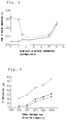
- each of the catalysts produced by the First Preferred Embodiment and Comparative Example No. 1 were thermally treated in air for 5 hours at various temperatures, and, after this thermal treatment, it was observed for its Pt particle diameter by an optical microscope. The results of this observation are illustrated in Figure 2. As can be seen from Figure 2, the catalysts produced by the First Preferred Embodiment had a Pt particle diameter smaller than that of the catalysts produced by Comparative Example No. 1, and their Pt elements were inhibited from sintering. It is believed that this durability difference resulted from the difference in the thermal treatment atmosphere for the Pt-loaded alumina powder.
- exhaust-gas-purifying catalysts were prepared.
- the resulting catalysts were also subjected to the durability test, and were similarly examined for their HC conversions before and after the durability test.
- the results of this examination are illustrated as T50 with respect to alumina pore diameter in Figure 3.
- solid circles ( ⁇ ) and solid lines specify initial T50 (i.e., T50 before the durability test), and blank circles ( ⁇ ) and dotted lines specify T50 after the durability test.
- thermal treatment condition was varied in order to prepare alumina powders having a variety of average pore diameters which fell in a range of from 0.5 to 10 nm.
- various exhaust-gas-catalysts were prepared with these alumina powders, and were similarly examined for their HC conversions before and after the durability test. The results of this examination are also illustrated in Figure 3.
- An active alumina powder was immersed into a predetermined amount of a platinum dinitrodiammine aqueous solution which had a predetermined concentration, and which was acidified by nitric acid.
- the active alumina powder included lanthanum oxide in an amount of 4% by weight, had a specific surface area of 140 m2/gram, and had been treated at 1,000 °C in advance. Then, the water content of the aqueous solution was evaporated to dry the active alumina powder. Thereafter, the active alumina powder was thermally treated at 300 °C for 2 hours, thereby loading Pt thereon. The loading amount of Pt was 2% by weight.
- the resulting Pt-loaded active alumina powder was immersed into an aqueous solution which included polyvinyl alcohol in a concentration of 5% by weight.
- the polyvinyl alcohol had a weight-average molecular weight of 22,000.
- the Pt-loaded active alumina powder was dispersed evenly in the aqueous solution by an ultrasonic homogenizer, and it was subjected to reduced-pressure drying using an aspirator to dry. After drying, the polyvinyl alcohol was deposited in an amount of 5% by weight with respect to the Pt-loaded active alumina powder.
- the Pt-and-polyvinyl-alcohol-loaded active alumina powder was thermally treated at 1,000 °C in vacuum of 10 ⁇ 3 Torr for 5 hours. After the thermal treatment, carbonaceous substances were deposited in an amount of 0.6% by weight on the Pt-loaded active alumina powder, and they were amounted to as much as five times as that of loaded Pt by mole.
- honeycomb substrates formed of cordierite were immersed into and taken out of the resulting slurry, and thereafter each of them was blown to blow away the slurry in excess.
- the honeycomb substrates had a volume of 1.5 liter.
- Each of the substrates was dried at 120 °C, and thereafter each of them was calcinated at 500 °C.
- a plurality of exhaust-gas-purifying catalysts were thus produced by the Third Preferred Embodiment of the present exhaust-gas-purifying catalyst production process.
- the noble-metal-catalyst-ingredient loading step and the organic-substance loading step of the Third Preferred Embodiment were followed in a Fourth Preferred Embodiment of the present exhaust-gas-purifying catalyst production process.
- an aqueous solution which included methylcellulose in a concentration of 3% by weight was used instead of the polyvinyl alcohol aqueous solution. Note that the methylcellulose had a weight-average molecular weight of 350,000, and that, after drying, the methylcellulose was deposited in an amount of 5% by weight with respect to the Pt-loaded active alumina powder.
- the Pt-and-methylcellulose-loaded active alumina powder was thermally treated at 1,000 °C in a helium gas for 5 hours.
- the helium gas included H2 in an amount of 10% by volume.
- carbonaceous substances are deposited in an amount of 0.8% by weight on the Pt-loaded active alumina powder, and they resided thereon 6.7 times as much as that of loaded Pt by mole.
- the Pt-loaded active alumina powder prepared by the noble-metal-catalyst-ingredient loading step of the Third Preferred Embodiment was thermally treated at 1,000 °C in vacuum of 10 ⁇ 3 Torr for 5 hours. Then, the exhaust-gas-purifying-catalyst preparation step of the Third Preferred Embodiment was followed, exhaust-gas-purifying catalysts were thus prepared by Comparative Example No. 2. Note that the exhaust-gas-purifying catalysts prepared by Comparative Example No. 2 were produced in a manner similar to the First Preferred Embodiment of the present exhaust-gas-purifying catalyst production process.
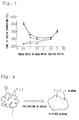
- each of the catalysts produced by the Third Preferred Embodiment and Comparative Example No. 2 was thermally treated in air for 5 hours at various temperatures, and, after this heat treatment, it was observed for its Pt particle diameter by an optical microscope.
- the results of this observation are illustrated in Figure 4.
- the catalysts produced by the Third Preferred Embodiment had a Pt particle diameter smaller than that of the catalysts produced by Comparative Example No. 2 at a variety of thermal-treatment temperatures, and that their Pt elements were further inhibited from sintering. It is believed that the difference in T50 resulted from the difference in the thermal treatment atmosphere for the Pt-loaded active alumina powder, and the heat-resistance difference resulted from the presence of carbonaceous substances.
- Each of the resulting exhaust-gas-purifying catalysts was examined for its HC conversions before and after the durability test in the same manner as aforementioned.
- blank circles ( ⁇ ) and solid lines specify initial T50
- blank squares ( ⁇ ) and dotted lines specify T50 after the durability test.
- An active alumina powder was immersed into a predetermined amount of a platinum dinitrodiammine aqueous solution which had a predetermined concentration, and which was acidified by nitric acid.
- the active alumina powder included lanthanum oxide in an amount of 4% by weight, had a specific surface area of 140 m2/gram, and had been treated at 1,000 °C in advance. Then, the water content of the aqueous solution was evaporated to dry the active alumina powder. Thereafter, the active alumina powder was thermally treated at 300 °C for 2 hours, thereby loading Pt thereon. The loading amount of Pt was 2% by weight.
- the Pt-loaded active alumina powder was immersed into a predetermined amount of a nickel dinitrodiammine aqueous solution which had a predetermined concentration, and which was acidified by nitric acid. Then, the water content of the aqueous solution was evaporated to dry the active alumina powder. Thereafter, the active alumina powder was thermally treated at 300 °C for 2 hours, thereby loading Ni thereon.
- the loading amount of Ni was 0.9% by weight, and was 1.5 times as much as that of loaded Pt by mole.
- the resulting Pt-and-Ni-loaded active alumina powder was thermally treated at 300 °C in air for 2 hours.
- honeycomb substrates formed of cordierite were immersed into and taken out of the resulting slurry, and thereafter each of them was blown to blow away the slurry in excess.
- the honeycomb substrates had a volume of 1.5 liter.
- Each of the substrates was dried at 120 °C, and thereafter each of them was calcinated at 500 °C.
- a plurality of exhaust-gas-purifying catalysts were thus produced by the Sixth Preferred Embodiment of the present exhaust-gas-purifying catalyst production process.
- exhaust-gas-purifying catalysts were prepared by Comparative Example No. 3 similarly to the Sixth Preferred Embodiment.
- each of the catalysts produced by the Sixth and Seventh Preferred Embodiments, and by Comparative Example No. 3 was thermally treated in air for 5 hours at various temperatures, and, after this heat treatment, it was observed for its Pt particle diameter by an optical microscope.
- the results of this observation are illustrated in Figure 6.
- solid circles ( ⁇ ) and solid lines specify the results on the Sixth Preferred Embodiment
- solid triangles ( ⁇ ) and alternate-long-and-short-dash lines specify the results on the Seventh Preferred Embodiment
- blank triangles ( ⁇ ) and dotted lines specify the results on Comparative Example No. 3.
- the catalysts produced by the Sixth and Seventh Preferred Embodiments had a Pt particle diameter smaller than that of the catalysts produced by Comparative Example No. 3 at a variety of thermal-treatment temperatures, and that their Pt elements were further inhibited from sintering. It is believed that the difference in T50 resulted from the difference in the thermal treatment atmosphere for the Pt-loaded active alumina powder, and the heat-resistance difference resulted from the presence of base-metal loading.
- Each of the resulting exhaust-gas-purifying catalysts was examined for its HC conversions before and after the durability test in the same manner as the First Preferred Embodiment.
- the results of this examination are illustrated as T50 with respect to molar-ratio of base-metal-coating per loaded-Pt in Figure 7, along with the results on the exhaust-gas-purifying catalysts produced by the Sixth and Seventh Preferred Embodiments.
- blank circles ( ⁇ ) and solid lines specify initial T50 exhibited by the exhaust-gas-purifying catalysts with Ni loaded
- solid circles ( ⁇ ) and solid lines specify T50 exhibited by the exhaust-gas-purifying catalysts with Ni loaded after the durability test
- blank triangles ( ⁇ ) and dotted lines specify initial T50 exhibited by the exhaust-gas-purifying catalysts with Co loaded
- solid triangles ( ⁇ ) and dotted lines specify T50 exhibited by the exhaust-gas-purifying catalysts with Co loaded after the durability test.
- the resulting exhaust-gas-purifying catalysts preferably exhibited reduced HC conversion difference before and after the durability test when the loading amount of Ni fell in a range of from 1 to 2.5 times as much as that of loaded Pt by mole, and when the loading amount of Co fell in a range of from 0.5 to 2.5 times as much as that of loaded Pt by mole.
- An aluminum nitrate aqueous solution and a sodium aluminate aqueous solution were alternately mixed ten times so that the resulting mixed solution exhibited pH values, 3 and 10, alternately.
- the aluminum nitrate aqueous solution and the sodium aluminate aqueous solution had a pH value of 1 and 12, respectively.
- the resulting precipitate was filtered, and washed with distilled water.
- the resulting powder was calcinated at 500 °C, thereby preparing an alumina powder.
- the resulting alumina powder had an average pore diameter of 2 nm, and exhibited a sharp pore-diameter distribution.
- the alumina powder was immersed into a predetermined amount of a platinum dinitrodiammine aqueous solution which had a predetermined concentration, and which was acidified by nitric acid. Then, the water content of the aqueous solution was evaporated to dry the alumina powder. Thereafter, the alumina powder was thermally treated at 300 °C for 2 hours, thereby loading Pt thereon. The loading amount of Pt was 2% by weight.
- the Pt-loaded alumina powder was thermally treated at 1,000 °C in vacuum of 10 ⁇ 3 Torr for 5 hours. Thus, an alumina powder with Pt fixed was prepared.
- FIG 8 schematically illustrates the changes in this thermal treatment step; namely: platinum elements Pt2 are loaded in pores 10 of an alumina powder 1. Since there exists no oxygen, the platinum elements Pt2 are inhibited from migrating in vapor phase. As a result, when the pores 10 are shrunk by the calcination, the platinum elements Pt2 are surrounded by and fixed closely in the alumina powder 1.
- active alumina With respect to 50 parts by weight of active alumina, 50 parts by weight of rhodium chloride aqueous solution having a predetermined concentration was added to mix. Then, the water content of the aqueous solution was evaporated to dry the active alumina. Thereafter, the active alumina was dried at 150 °C for 8 hours, and further it is calcinated at 500 °C for 1 hour, thereby preparing an Rh-loaded active alumina powder. The loading amount of Rh was 0.6% by weight.
- honeycomb substrates formed of cordierite were immersed into and taken out of the resulting slurry, and thereafter each of them was blown to blow away the slurry in excess.
- the honeycomb substrates had a volume of 1.5 liter.
- Each of the substrates was dried at 250 °C for 1 hour, and thereafter calcinated at 500 °C for 1 hour.
- a plurality of exhaust-gas-purifying catalysts were thus produced by the Ninth Preferred Embodiment of the present exhaust-gas-purifying catalyst production process.
- Figure 9 schematically illustrates one of the exhaust-gas-purifying catalysts thus prepared; namely: in the exhaust-gas-purifying catalyst, Pt-fixed alumina particles 3, Rh-loaded active alumina particles 4, cerium oxide-zirconium oxide composite oxide particles 5, and lanthanum oxide particles 6 are mixed and coated on a surface of a support substrate.
- the alumina powder was immersed into a predetermined amount of a platinum dinitrodiammine aqueous solution which had a predetermined concentration, and which was acidified by nitric acid. Then, the water content of the aqueous solution was evaporated to dry the alumina powder. Thereafter, the alumina powder was thermally treated at 300 °C for 2 hours, thereby loading Pt thereon. The loading amount of Pt was 2% by weight.
- the resulting Pt-loaded alumina powder was thermally treated at 1,000 °C in a helium gas for 5 hours.
- the helium gas included H2 in an amount of 10% by volume.
- honeycomb substrates formed of cordierite was immersed into and taken out of the resulting first slurry, and thereafter each of them was blown to blow away the first slurry in excess, thereby forming a Pt-fixed coating layer.
- the honeycomb substrates had a volume of 1.5 liter.
- Rh-loaded active alumina powder which was identical with the one prepared by the Ninth Preferred Embodiment, 30 parts by weight of an aluminum nitrate aqueous solution having a concentration of 40% by weight, 5 parts by weight of an alumina sol having an alumina content of 10% by weight, 20 parts by weight of a cerium oxide-zirconium oxide composite oxide powder, 10 parts by weight of a lanthanum oxide powder, and 40 parts by weight of pure water were mixed and stirred so as to prepare a second slurry.
- each of the honeycomb substrates having the Pt-fixed coating layer was immersed into and taken out of the resulting second slurry, and thereafter each of them was blown to blow away the second slurry in excess.
- Each of the substrates was dried 80 °C for 20 minutes, and thereafter each of them was calcinated at 600 °C for 1 hour, and thereby exhaust-gas-purifying catalysts were prepared by the Eleventh Preferred Embodiment.
- Figure 10 schematically illustrates one of the exhaust-gas-purifying catalysts thus prepared; namely: in the exhaust-gas-purifying catalyst, a first coating layer 70 is disposed on a surface of a support substrate, and a second coating layer 71 is disposed on the first coating layer 70.
- the first coating layer 70 includes Pt-fixed alumina particles 3, cerium oxide-zirconium oxide composite oxide particles 5, and lanthanum oxide particles 6.
- the second coating layer 71 includes Rh-loaded active alumina particles 4, cerium oxide-zirconium oxide composite oxide particles 5, and lanthanum oxide particles 6.
- an active alumina powder 100 parts by weight of an active alumina powder, 60 parts by weight of an aluminum nitrate aqueous solution having a concentration of 40% by weight, 10 parts by weight of an alumina sol having an alumina content of 10% by weight, 40 parts by weight of a cerium oxide powder, and 80 parts by weight of pure water were mixed and stirred so as to prepare a slurry.
- honeycomb substrates formed of cordierite were immersed into and taken out of the resulting slurry, and thereafter each of them was blown to blow away the slurry in excess.
- the honeycomb substrates had a volume of 1.5 liter.
- Each of the substrates was dried at 80 °C for 20 minutes, and thereafter calcinated at 600 °C for 1 hour, thereby preparing honeycomb substrates with a coating layer formed thereon.
- Each of the honeycomb substrates with the coating layer formed thereon was immersed into a predetermined amount of a platinum dinitrodiammine aqueous solution which had a predetermined concentration, and which was acidified by nitric acid. After evaporating the water content of the aqueous solution to dry each of the substrates, each of them was further dried at 250 °C, thereby loading Pt thereon.
- the loading amount of Pt was 1.5 grams with respect to 1 liter of the substrate.
- each of the honeycomb substrates with Pt loaded thereon was immersed into a rhodium chloride aqueous solution having a predetermined concentration. After evaporating the water content of the aqueous solution to dry each of the substrates, each of them was further dried at 250 °C, thereby loading Rh thereon. The loading amount of Rh was 0.3 grams with respect to 1 liter of the substrate.
- the five kinds of the exhaust-gas-purifying catalysts produced by the Ninth, Tenth, Eleventh and Twelfth Preferred Embodiments, and by Comparative Example No. 4 were subjected to a durability test; namely: the catalysts were respectively accommodated in a catalyst converter.
- Each of the catalyst converters was disposed in an exhaust line of an engine.
- the engine had a displacement of 2 liters.
- each of the catalysts were examined for its temperatures at 50% HC, CO and NO x conversions.
- the results of this examination are summarized in Table 6 below.
- the inlet temperatures at which the catalysts exhibited 50% HC, CO and NO x conversions were taken as the temperatures at 50% HC, CO and NO x conversions.
- the cross-conversions were determined as follows; namely: while the air fuel ratio of air-fuel mixture was fluctuated in a range of from 13.5 to 15.0 and an inlet temperature was fixed at 400 °C, the catalysts were examined for HC, CO and NO x conversions. When the CO conversion and the NO x conversion crossed (i.e., when they are equal) at a certain A/F ratio, the CO conversion and the NO x conversion are taken as the CO-NO x conversion, and HC conversion was measured at the A/F ratio. TABLE 6 50% Conversion Temp. (° C) Cross-Conversion (%) HC CO NOx CO-NOx HC 9th Pref. Embodiment 325 324 327 89 94 10th Pref.
- the catalysts produced by the Ninth through Twelfth Preferred Embodiments exhibited lower 50% conversion temperatures and higher cross conversions than those produced by Comparative Example No. 4 did.
- these catalysts were superb in terms of durability.
- the Pt elements and the Rh elements were disposed so as to separate from each other, and accordingly the Pt elements were accordingly inhibited from sintering. As a result, the durability of these catalysts was upgraded evidently.
Landscapes
- Chemical & Material Sciences (AREA)
- Engineering & Computer Science (AREA)
- Chemical Kinetics & Catalysis (AREA)
- Organic Chemistry (AREA)
- Materials Engineering (AREA)
- Health & Medical Sciences (AREA)
- Analytical Chemistry (AREA)
- General Chemical & Material Sciences (AREA)
- Oil, Petroleum & Natural Gas (AREA)
- Environmental & Geological Engineering (AREA)
- Biomedical Technology (AREA)
- Combustion & Propulsion (AREA)
- Catalysts (AREA)
- Exhaust Gas Treatment By Means Of Catalyst (AREA)
Applications Claiming Priority (3)
| Application Number | Priority Date | Filing Date | Title |
|---|---|---|---|
| JP18254494 | 1994-08-03 | ||
| JP182544/94 | 1994-08-03 | ||
| JP18254494A JP3314897B2 (ja) | 1994-08-03 | 1994-08-03 | 排気ガス浄化用触媒の製造方法 |
Publications (3)
| Publication Number | Publication Date |
|---|---|
| EP0695580A2 true EP0695580A2 (de) | 1996-02-07 |
| EP0695580A3 EP0695580A3 (de) | 1997-07-09 |
| EP0695580B1 EP0695580B1 (de) | 2003-03-19 |
Family
ID=16120148
Family Applications (1)
| Application Number | Title | Priority Date | Filing Date |
|---|---|---|---|
| EP95112102A Expired - Lifetime EP0695580B1 (de) | 1994-08-03 | 1995-08-01 | Verfahren zur Herstellung eines Abgasreinigungskatalysators |
Country Status (4)
| Country | Link |
|---|---|
| US (1) | US5866500A (de) |
| EP (1) | EP0695580B1 (de) |
| JP (1) | JP3314897B2 (de) |
| DE (1) | DE69529946T2 (de) |
Cited By (5)
| Publication number | Priority date | Publication date | Assignee | Title |
|---|---|---|---|---|
| US6165429A (en) * | 1997-01-10 | 2000-12-26 | Toyota Jidosha Kabushiki Kaisha | Exhaust gas purifying catalyst and exhaust gas purifying method |
| US9827562B2 (en) | 2015-10-05 | 2017-11-28 | GM Global Technology Operations LLC | Catalytic converters with age-suppressing catalysts |
| US9855547B2 (en) | 2015-10-05 | 2018-01-02 | GM Global Technology Operations LLC | Low-temperature oxidation catalysts |
| US9901907B1 (en) | 2016-08-31 | 2018-02-27 | GM Global Technology Operations LLC | Catalytic converters with age-suppressing catalysts |
| US10422036B2 (en) | 2015-10-23 | 2019-09-24 | GM Global Technology Operations LLC | Suppressing aging of platinum group metal particles in a catalytic converter |
Families Citing this family (23)
| Publication number | Priority date | Publication date | Assignee | Title |
|---|---|---|---|---|
| JPH11123330A (ja) * | 1997-08-20 | 1999-05-11 | Hino Motors Ltd | 排ガス浄化触媒及びその製法 |
| JP3956273B2 (ja) | 1997-12-22 | 2007-08-08 | トヨタ自動車株式会社 | 排ガス浄化用触媒とその製造方法及び排ガス浄化方法 |
| US20040228792A1 (en) * | 1998-06-30 | 2004-11-18 | Assink Gerrit Jan Barend | Catalyst comprising two catalytically-active metals |
| US6559094B1 (en) * | 1999-09-09 | 2003-05-06 | Engelhard Corporation | Method for preparation of catalytic material for selective oxidation and catalyst members thereof |
| JP4525879B2 (ja) * | 1999-10-14 | 2010-08-18 | 戸田工業株式会社 | 多孔性機能粉体及びその製造法 |
| DE50106490T2 (de) * | 2000-03-28 | 2006-03-30 | Umicore Ag & Co. Kg | Einschichtiger Hochleistungskatalysator |
| GB0214383D0 (en) * | 2002-06-21 | 2002-07-31 | Isis Innovation | Catalyst |
| US7569508B2 (en) * | 2004-11-17 | 2009-08-04 | Headwaters Technology Innovation, Llc | Reforming nanocatalysts and method of making and using such catalysts |
| US7655137B2 (en) * | 2003-07-14 | 2010-02-02 | Headwaters Technology Innovation, Llc | Reforming catalysts having a controlled coordination structure and methods for preparing such compositions |
| JP5217072B2 (ja) * | 2003-11-14 | 2013-06-19 | トヨタ自動車株式会社 | 排ガス浄化用触媒およびその製法 |
| US7632775B2 (en) * | 2004-11-17 | 2009-12-15 | Headwaters Technology Innovation, Llc | Multicomponent nanoparticles formed using a dispersing agent |
| US7541309B2 (en) * | 2006-05-16 | 2009-06-02 | Headwaters Technology Innovation, Llc | Reforming nanocatalysts and methods of making and using such catalysts |
| JP5112966B2 (ja) * | 2008-06-20 | 2013-01-09 | 旭化成株式会社 | リーンバーン排ガス浄化用触媒 |
| KR20100016819A (ko) * | 2008-08-05 | 2010-02-16 | 삼성전기주식회사 | 마그네슘 바나듐 복합산화물 나노입자 제조방법 및그로부터 제조된 마그네슘 바나듐 복합산화물 나노입자 |
| KR20100073704A (ko) * | 2008-12-23 | 2010-07-01 | 삼성전기주식회사 | 복합산화물 나노 입자의 제조방법 및 그로부터 제조된 복합산화물 나노입자 |
| WO2011162030A1 (ja) | 2010-06-24 | 2011-12-29 | エヌ・イー ケムキャット株式会社 | 選択還元触媒を用いた排気ガス浄化触媒装置、排気ガス浄化方法、および排気ガス浄化触媒装置を搭載したディーゼル自動車 |
| WO2012147376A1 (ja) | 2011-04-28 | 2012-11-01 | エヌ・イー ケムキャット株式会社 | 排気ガス浄化装置 |
| US20160045905A1 (en) * | 2014-08-12 | 2016-02-18 | Umicore Ag & Co. Kg | Application of methyl cellulose on washcoats and precious metal solution |
| KR101619248B1 (ko) * | 2014-12-02 | 2016-05-10 | 현대자동차 주식회사 | 하이브리드 차량의 배기 가스 촉매 활성화 장치 및 방법 |
| JP6398918B2 (ja) * | 2015-09-02 | 2018-10-03 | マツダ株式会社 | 排気ガス浄化用触媒材の製造方法及び排気ガス浄化用触媒材並びに同排気ガス浄化用触媒材を含む排気ガス浄化用触媒 |
| US10046310B2 (en) | 2015-10-05 | 2018-08-14 | GM Global Technology Operations LLC | Catalytic converters with age-suppressing catalysts |
| US10159960B2 (en) | 2016-10-25 | 2018-12-25 | GM Global Technology Operations LLC | Catalysts with atomically dispersed platinum group metal complexes |
| US10035133B2 (en) | 2016-10-25 | 2018-07-31 | GM Global Technology Operations LLC | Catalysts with atomically dispersed platinum group metal complexes and a barrier disposed between the complexes |
Citations (1)
| Publication number | Priority date | Publication date | Assignee | Title |
|---|---|---|---|---|
| JPH04122441A (ja) | 1990-09-12 | 1992-04-22 | Toyota Motor Corp | 排ガス浄化用触媒の製造方法 |
Family Cites Families (15)
| Publication number | Priority date | Publication date | Assignee | Title |
|---|---|---|---|---|
| US3993572A (en) * | 1972-08-04 | 1976-11-23 | Engelhard Minerals & Chemicals Corporation | Rare earth containing catalyst composition |
| US4165276A (en) * | 1977-09-14 | 1979-08-21 | Uop Inc. | Hydrocarbon conversion with a superactive multimetallic catalytic composite |
| US4284531A (en) * | 1979-09-05 | 1981-08-18 | Union Oil Co. Of California | Methanation catalysts and process for their preparation |
| DE3223500A1 (de) * | 1982-06-24 | 1983-12-29 | Degussa Ag, 6000 Frankfurt | Katalysator zur reinigung der abgase von verbrennungskraftmaschinen, verfahren zur herstellung des katalysators und verwendung |
| FR2546078B1 (fr) * | 1983-05-19 | 1987-05-07 | Pro Catalyse | Procede de fabrication de catalyseurs pour le traitement des gaz d'echappement des moteurs a combustion interne |
| JPS62282641A (ja) * | 1986-06-02 | 1987-12-08 | Nissan Motor Co Ltd | 排ガス浄化用触媒の製造方法 |
| DE3803122C1 (de) * | 1988-02-03 | 1989-07-13 | Degussa Ag, 6000 Frankfurt, De | |
| EP0411173B1 (de) * | 1989-07-31 | 1992-12-23 | Siemens Aktiengesellschaft | Anordnung und Verfahren zur Fehlererkennung bei einem Tankentlüftungssystem |
| JP2895114B2 (ja) * | 1989-11-02 | 1999-05-24 | バブコツク日立株式会社 | 排ガス浄化用触媒体 |
| DE4003939A1 (de) * | 1990-02-09 | 1991-08-14 | Degussa | Katalysator fuer die reinigung der abgase von brennkraftmaschinen |
| US5064803A (en) * | 1990-08-31 | 1991-11-12 | Allied-Signal Inc. | Preparation of three-way catalysts with highly dispersed ceria |
| JPH057778A (ja) * | 1991-07-05 | 1993-01-19 | Toyota Motor Corp | 排気ガス浄化用触媒の製造方法 |
| JP3433956B2 (ja) * | 1992-09-21 | 2003-08-04 | トヨタ自動車株式会社 | 排気ガス浄化方法 |
| JP3229054B2 (ja) * | 1993-01-20 | 2001-11-12 | ダイハツ工業株式会社 | 排ガス浄化用触媒及びその製造方法 |
| JPH06210174A (ja) * | 1993-01-20 | 1994-08-02 | Daihatsu Motor Co Ltd | 排ガス浄化用触媒及びその製造方法 |
-
1994
- 1994-08-03 JP JP18254494A patent/JP3314897B2/ja not_active Expired - Fee Related
-
1995
- 1995-07-27 US US08/508,328 patent/US5866500A/en not_active Expired - Fee Related
- 1995-08-01 EP EP95112102A patent/EP0695580B1/de not_active Expired - Lifetime
- 1995-08-01 DE DE69529946T patent/DE69529946T2/de not_active Expired - Fee Related
Patent Citations (1)
| Publication number | Priority date | Publication date | Assignee | Title |
|---|---|---|---|---|
| JPH04122441A (ja) | 1990-09-12 | 1992-04-22 | Toyota Motor Corp | 排ガス浄化用触媒の製造方法 |
Cited By (5)
| Publication number | Priority date | Publication date | Assignee | Title |
|---|---|---|---|---|
| US6165429A (en) * | 1997-01-10 | 2000-12-26 | Toyota Jidosha Kabushiki Kaisha | Exhaust gas purifying catalyst and exhaust gas purifying method |
| US9827562B2 (en) | 2015-10-05 | 2017-11-28 | GM Global Technology Operations LLC | Catalytic converters with age-suppressing catalysts |
| US9855547B2 (en) | 2015-10-05 | 2018-01-02 | GM Global Technology Operations LLC | Low-temperature oxidation catalysts |
| US10422036B2 (en) | 2015-10-23 | 2019-09-24 | GM Global Technology Operations LLC | Suppressing aging of platinum group metal particles in a catalytic converter |
| US9901907B1 (en) | 2016-08-31 | 2018-02-27 | GM Global Technology Operations LLC | Catalytic converters with age-suppressing catalysts |
Also Published As
| Publication number | Publication date |
|---|---|
| JPH0838897A (ja) | 1996-02-13 |
| EP0695580A3 (de) | 1997-07-09 |
| JP3314897B2 (ja) | 2002-08-19 |
| DE69529946T2 (de) | 2003-12-24 |
| EP0695580B1 (de) | 2003-03-19 |
| US5866500A (en) | 1999-02-02 |
| DE69529946D1 (de) | 2003-04-24 |
Similar Documents
| Publication | Publication Date | Title |
|---|---|---|
| US5866500A (en) | Process for producing exhaust-gas-purifying catalyst | |
| US4738947A (en) | Three-way catalysts of improved efficiency | |
| US5989507A (en) | Catalyst composition | |
| US4157316A (en) | Polyfunctional catalysts | |
| EP0885657B1 (de) | Katalysatorzusammensetzung | |
| KR100361417B1 (ko) | 적층촉매복합물 | |
| KR101797252B1 (ko) | 소형 엔진 층상 촉매 물품 및 제조 방법 | |
| US4678770A (en) | Three-way catalyst for lean exhaust systems | |
| US6248688B1 (en) | Catalyst composition containing oxygen storage components | |
| US4675308A (en) | Three-way catalyst for lean operating engines | |
| JP2979809B2 (ja) | 排ガス浄化用触媒及びその製造方法 | |
| EP2045010B1 (de) | Abgasreinigungskatalysator | |
| EP1332787B1 (de) | Katalysator zur Reinigung von Abgasen | |
| US4552733A (en) | Polyfunctional catalysts and method of use | |
| EP2078562B1 (de) | Abgasreinigungskatalysator | |
| US5951956A (en) | Catalyst for purifying exhaust gas and method for purifying exhaust gas | |
| KR101432331B1 (ko) | 배출 가스 정화용 촉매 | |
| US5593933A (en) | Refractory oxides based silver-tungsten lean-NOx catalyst | |
| US5618505A (en) | Method for converting lean-burn engine exhust gases using a two stage catalyst system | |
| JPH1176819A (ja) | 排ガス浄化用触媒 | |
| JPH10309461A (ja) | 排気ガス浄化用触媒の製造方法 | |
| JPH07136510A (ja) | 排気ガス浄化用触媒の製造方法 | |
| JPH0478441A (ja) | 排気浄化用触媒 | |
| JPH10272357A (ja) | 排気ガス浄化用触媒 |
Legal Events
| Date | Code | Title | Description |
|---|---|---|---|
| PUAI | Public reference made under article 153(3) epc to a published international application that has entered the european phase |
Free format text: ORIGINAL CODE: 0009012 |
|
| 17P | Request for examination filed |
Effective date: 19950801 |
|
| AK | Designated contracting states |
Kind code of ref document: A2 Designated state(s): DE FR GB |
|
| PUAL | Search report despatched |
Free format text: ORIGINAL CODE: 0009013 |
|
| AK | Designated contracting states |
Kind code of ref document: A3 Designated state(s): DE FR GB |
|
| 17Q | First examination report despatched |
Effective date: 19970924 |
|
| GRAH | Despatch of communication of intention to grant a patent |
Free format text: ORIGINAL CODE: EPIDOS IGRA |
|
| GRAH | Despatch of communication of intention to grant a patent |
Free format text: ORIGINAL CODE: EPIDOS IGRA |
|
| GRAA | (expected) grant |
Free format text: ORIGINAL CODE: 0009210 |
|
| AK | Designated contracting states |
Designated state(s): DE FR GB |
|
| REG | Reference to a national code |
Ref country code: GB Ref legal event code: FG4D |
|
| REF | Corresponds to: |
Ref document number: 69529946 Country of ref document: DE Date of ref document: 20030424 Kind code of ref document: P |
|
| ET | Fr: translation filed | ||
| PLBE | No opposition filed within time limit |
Free format text: ORIGINAL CODE: 0009261 |
|
| STAA | Information on the status of an ep patent application or granted ep patent |
Free format text: STATUS: NO OPPOSITION FILED WITHIN TIME LIMIT |
|
| 26N | No opposition filed |
Effective date: 20031222 |
|
| REG | Reference to a national code |
Ref country code: GB Ref legal event code: 746 Effective date: 20061025 |
|
| PGFP | Annual fee paid to national office [announced via postgrant information from national office to epo] |
Ref country code: DE Payment date: 20080814 Year of fee payment: 14 |
|
| PGFP | Annual fee paid to national office [announced via postgrant information from national office to epo] |
Ref country code: FR Payment date: 20080818 Year of fee payment: 14 |
|
| PGFP | Annual fee paid to national office [announced via postgrant information from national office to epo] |
Ref country code: GB Payment date: 20080813 Year of fee payment: 14 |
|
| GBPC | Gb: european patent ceased through non-payment of renewal fee |
Effective date: 20090801 |
|
| REG | Reference to a national code |
Ref country code: FR Ref legal event code: ST Effective date: 20100430 |
|
| PG25 | Lapsed in a contracting state [announced via postgrant information from national office to epo] |
Ref country code: FR Free format text: LAPSE BECAUSE OF NON-PAYMENT OF DUE FEES Effective date: 20090831 Ref country code: DE Free format text: LAPSE BECAUSE OF NON-PAYMENT OF DUE FEES Effective date: 20100302 |
|
| PG25 | Lapsed in a contracting state [announced via postgrant information from national office to epo] |
Ref country code: GB Free format text: LAPSE BECAUSE OF NON-PAYMENT OF DUE FEES Effective date: 20090801 |