EP0701245A2 - Spracherkenner - Google Patents
Spracherkenner Download PDFInfo
- Publication number
- EP0701245A2 EP0701245A2 EP95114127A EP95114127A EP0701245A2 EP 0701245 A2 EP0701245 A2 EP 0701245A2 EP 95114127 A EP95114127 A EP 95114127A EP 95114127 A EP95114127 A EP 95114127A EP 0701245 A2 EP0701245 A2 EP 0701245A2
- Authority
- EP
- European Patent Office
- Prior art keywords
- input pattern
- pattern
- reference patterns
- recognition
- input
- Prior art date
- Legal status (The legal status is an assumption and is not a legal conclusion. Google has not performed a legal analysis and makes no representation as to the accuracy of the status listed.)
- Granted
Links
- 230000006978 adaptation Effects 0.000 claims abstract description 109
- 239000013598 vector Substances 0.000 claims abstract description 89
- 238000000034 method Methods 0.000 claims description 46
- 230000008569 process Effects 0.000 claims description 18
- 238000011524 similarity measure Methods 0.000 claims description 10
- 238000012790 confirmation Methods 0.000 claims description 8
- 238000012937 correction Methods 0.000 claims description 6
- 238000001228 spectrum Methods 0.000 description 119
- 230000004044 response Effects 0.000 description 5
- 230000000593 degrading effect Effects 0.000 description 3
- 230000006870 function Effects 0.000 description 2
- 238000012549 training Methods 0.000 description 2
- 239000000654 additive Substances 0.000 description 1
- 230000000996 additive effect Effects 0.000 description 1
- 230000005540 biological transmission Effects 0.000 description 1
- 238000010276 construction Methods 0.000 description 1
- 230000010485 coping Effects 0.000 description 1
- 230000000694 effects Effects 0.000 description 1
- 230000007613 environmental effect Effects 0.000 description 1
- 230000003340 mental effect Effects 0.000 description 1
- 238000012986 modification Methods 0.000 description 1
- 230000004048 modification Effects 0.000 description 1
- 238000013139 quantization Methods 0.000 description 1
- 230000009467 reduction Effects 0.000 description 1
Images





Classifications
-
- G—PHYSICS
- G10—MUSICAL INSTRUMENTS; ACOUSTICS
- G10L—SPEECH ANALYSIS TECHNIQUES OR SPEECH SYNTHESIS; SPEECH RECOGNITION; SPEECH OR VOICE PROCESSING TECHNIQUES; SPEECH OR AUDIO CODING OR DECODING
- G10L15/00—Speech recognition
- G10L15/06—Creation of reference templates; Training of speech recognition systems, e.g. adaptation to the characteristics of the speaker's voice
- G10L15/065—Adaptation
-
- G—PHYSICS
- G10—MUSICAL INSTRUMENTS; ACOUSTICS
- G10L—SPEECH ANALYSIS TECHNIQUES OR SPEECH SYNTHESIS; SPEECH RECOGNITION; SPEECH OR VOICE PROCESSING TECHNIQUES; SPEECH OR AUDIO CODING OR DECODING
- G10L15/00—Speech recognition
- G10L15/20—Speech recognition techniques specially adapted for robustness in adverse environments, e.g. in noise, of stress induced speech
Definitions
- the present invention relates to a speech recognition system having an adaptation function.
- Method 1 proposes a method of speaker adaptation by obtaining a histogram between speaker's and reference speaker's codebooks from the result of time axis correspondence between a vector quantized input pattern and a reference pattern.
- Method 2 discloses an adaptation method of different input environments by obtaining adaptation parameters concerning transmission distortions in spectrum region and additive noise through the likelihood estimation. In these systems, it is necessary to execute the adaptation with a certain volume of speech produced as the speech data for the adaptation prior to recognition with a new speaker or in new environment.
- the speech of the same speaker is affected by his or her physical condition, mental status and so forth.
- line characteristics and the level of background noise vary call by call. Therefore, it is desirable in the adaptation of the speaker and environment to use the input speech itself as the adaptation data.
- the adaptation using such recognition subject is difficult because of the facts that certain speech data is necessary for the adaptation and that the adaptation process takes a certain period of time.
- Speech waveform supplied to an input terminal 810 is converted in an analyzer 820 into a feature vector series.
- the feature vector series thus obtained is supplied via a signal line 821 to an input pattern memory 830 and stored therein as an input pattern.
- a switch 840 connects a signal line 831 to a signal line 842.
- a reference pattern adapter 870 executes the adaptation after reading out the input pattern through the signal line 842 and a reference pattern through a signal line 851.
- the resultant adapted reference pattern is stored in a reference pattern memory 850.
- the switch 840 connects the signal line 831 to a signal line 841.
- a recognizor 880 develops similarity measure through matching of the input pattern and the reference pattern which are read out through the signal line 841 and a signal line 852, respectively, the recognition result being output to an output terminal 890.
- adaptation is made by using speech to be recognized (recognition subject speech) to ensure sufficient response characteristic while obtaining a high recognition rate.
- the result of adaptation made by using previous input speech is used for preliminary recognition of the speech to be recognized, thereby making preliminary selection of words, while making adaptation by using the speech to be recognized.
- regular recognition is made.
- the operation according to the present invention comprises the following steps:
- an analysis process and a speech recognition process may be executed in synchronism to the input speech.
- the adaptation process in the step 4 and the re-recognition in the step 5 have effects on the response characteristic of the speech recognition system.
- the amount of process in the step 4 varies with the adaptation system used; for example, the process amount may be very small in case of using method 3.
- N preliminarily selected words are used, and thus by denoting the number of the recognition subject words by M the process amount is N/M.
- the factor of reduction of the process amount depends on the accuracy of the preliminary selection.
- the preliminary selection is made by using patterns that have been adapted using input speech until the preceding speech. It is thus possible to expect highly accurate preliminary selection even in case when the background noise and line characteristics are different from those at the time of the training.
- the process amount in the step 5 is 1/100 of the amount in the step 3.
- 2-second input speech can be re-recognized in 20 msec. This process time gives rise to no problem in practice.
- the adaptation that can be utilized in this system is not limited to System 3, in which reference patterns are adapted for input environments, but various other adaptation systems are conceivable as well. For example, it is possible to use a system of adapting an input pattern to an environment which incorporates the training of reference patterns or a system of adapting both of reference and input patterns. Further, regarding the utilization of the result of preliminary selection in the adaptation, while the method 3 uses first candidates, it is possible as well to use a plurality of candidates or use no preliminary selection result. Further, it is possible to make adaptation afresh by utilizing the higher accuracy result of the regular recognition.
- Fig. 1 shows a first embodiment of the present invention.
- Speech waveform (X1, ..., X N ) supplied to an input terminal 110 is converted by an analyzer 120 into feature vector series.
- the feature vectors may be used cepstrums or LPC coefficients obtainable through FFT analysis, linear prediction analysis, etc. or time variations of these parameters.
- the feature vectors thus obtained are supplied via a signal line 121 to an input pattern memory 130 and stored therein as the input pattern, and are also supplied via a signal line 122 to a preliminary recognizer 160.
- the preliminary recognizer 160 executes a preliminary recognition based on the feature vectors supplied through a signal line 122 and all reference patterns read out from a reference pattern memory 150 through a signal line 153 to obtain top N candidates in the order of higher similarities.
- a reference pattern adapter 170 executes the adaptation based on the input pattern read out through a signal line 132, top N candidates as a result of the preliminary recognition supplied through a signal line 161 and reference patterns read out through a signal line 151.
- adapted reference patterns are stored in a reference pattern memory 150.
- a time axis correspondence between the top candidate reference pattern and the input pattern is executed to obtain mean spectrum S v in a speech period of the input pattern, mean spectrum N v in a noise period of the input pattern, mean spectrum S w in a speech period of the reference pattern and mean spectrum N w in a noise period of the reference pattern.
- the time axis correspondence between the top candidate reference pattern and-the input pattern is executed to obtain mean feature vector S v in a speech period of the input pattern, mean feature vector N v in a noise period of the input pattern, mean feature vector S w in a speech period of the reference pattern and mean feature vector N w in a noise period of the reference pattern.
- a final or second recognizer 180 obtains similarity measure through the matching process for the input pattern read out through a signal line 131, top N candidates as a result of preliminary recognition supplied through a signal line 162, and the reference patterns supplied through a signal line 152.
- the result recognition is output to an output terminal 190.
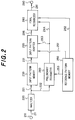
- Fig. 2 shows a second embodiment of the present invention.
- Speech waveform (X1, ..., X N ) supplied to an input terminal 210 is converted by an analyzer 220 into feature vector series.
- feature vectors are supplied via a signal line 221 to an input pattern memory 230 and stored therein as the input pattern, and are also supplied via a signal line 232 to a preliminary recognizer 260.
- the preliminary recognizer 260 executes a preliminary recognition based on the feature vectors supplied through a signal line 222 and all reference patterns read out from a reference pattern memory 250 through a signal line 253 to obtain top N candidates in the order of higher similarities.
- An input pattern adapter 295 executes the adaptation of input pattern based on the input pattern through a signal line 231, top N candidates as a result of preliminary recognition through a signal line 263 and reference patterns through a signal line 251.
- adapted input pattern is output to a signal line 296.
- a time axis correspondence between the top candidate reference pattern and the input pattern is executed to obtain mean spectrum S v in a speech period of the input pattern, mean spectrum N v in a noise period of the input pattern, mean spectrum S w in a speech period of the reference pattern and mean spectrum N w in a noise period of the reference pattern.
- the time axis correspondence between the top candidate reference pattern and the input pattern is executed to obtain mean feature vector S v of the input pattern and mean feature vector S w of the reference pattern.
- a final or second recognizer 280 reads out the adapted input pattern through a signal line 296, top N candidates as a result of preliminary recognition supplied through a signal line 264, and the top candidate reference patterns through a signal line 252 and executes the recognition by the matching.
- the recognition result is output to an output terminal 290.
- Fig. 3 shows a third embodiment of the present invention.
- Speech waveform (X1, ..., X N ) supplied to an input terminal 310 is converted by an analyzer 320 into feature vector series.
- feature vectors are supplied via a signal line 321 to an input pattern memory 330 and stored therein as the input pattern, and are also supplied via a signal line 322 to a preliminary recognizer 360.
- the preliminary recognizer 360 executes a preliminary recognition based on the feature vectors supplied through a signal line 322 and all reference patterns read out from a reference pattern memory 350 through a signal line 353 to obtain top N candidates in the order of higher similarities.
- An input pattern adapter 395 executes the adaptation of input pattern based on the input pattern through a signal line 331, top N candidates as a result of preliminary recognition through a signal line 363 and reference patterns through a signal line 354. Thus adapted input pattern is output to a signal line 396.
- a time axis correspondence between the top candidate reference pattern and the input pattern is executed to obtain mean spectrum S v in a speech period of the input pattern, mean spectrum N v in a noise period of the input pattern, mean spectrum S w in a speech period of the reference pattern and mean spectrum N w in a noise period of the reference pattern.
- the time axis correspondence between the top candidate reference pattern and the input pattern is executed to obtain mean feature vector S v of the input pattern and mean feature vector S w of the reference pattern.
- a reference pattern adapter 370 executes the adaptation based on the input pattern read out through a signal line 332, top N candidates as a result of the preliminary recognition supplied through a signal line 361 and reference patterns read out through a signal line 351.
- adapted reference patterns are stored in a reference pattern memory 350.
- a time axis correspondence between the top candidate reference pattern and the input pattern is executed to obtain mean spectrum S v in a speech period of the input pattern, mean spectrum N v in a noise period of the input pattern, mean spectrum S w in a speech period of the reference pattern and mean spectrum N w in a noise period of the reference pattern.
- the time axis correspondence between the top candidate reference pattern and the input pattern is executed to obtain mean feature vector S v in a speech period of the input pattern, mean feature vector N v in a noise period of the input pattern, mean feature vector S w in a speech period of the reference pattern and mean feature vector N w in a noise period of the reference pattern.
- a final or second recognizer 380 obtains similarity measure through the matching by reading out the adapted input pattern through a signal line 396, top N candidates as a result of preliminary recognition supplied through a signal line 362, and the top candidate reference patterns through a signal line 352. The result recognition is output to an output terminal 390.
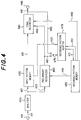
- Fig. 4 shows a fourth embodiment of the present invention.
- Speech waveform (X1, ..., X N ) supplied to an input terminal 410 is converted by an analyzer 420 into feature vector series.
- the feature vectors thus obtained are supplied via a signal line 421 to an input pattern memory 430 and stored therein as the input pattern, and are also supplied via a signal line 422 to a preliminary recognizer 460.
- the preliminary recognizer 460 executes a preliminary recognition based on the feature vectors supplied through a signal line 422 and all reference patterns read out from a reference pattern memory 450 through a signal line 453 to obtain top N candidates in the order of higher similarities.
- a reference pattern adapter 470 executes the adaptation by connecting a switch 479 to a signal line 461 and reading out top N candidates as a result of preliminary recognition through the signal line 461, the input pattern through a signal line 433 and the reference patterns through a signal line 451.
- adapted reference patterns are stored in a reference pattern memory 450.
- a time axis correspondence between the top candidate reference pattern and the input pattern is executed to obtain mean spectrum S v in a speech period of the input pattern, mean spectrum N v in a noise period of the input pattern, mean spectrum S w in a speech period of the reference pattern and mean spectrum N w in a noise period of the reference pattern.
- the time axis correspondence between the top candidate reference pattern and the input pattern is executed to obtain mean feature vector S v in a speech period of the input pattern, mean feature vector N v in a noise period of the input pattern, mean feature vector S w in a speech period of the reference pattern and mean feature vector N w in a noise period of the reference pattern.
- a final or second recognizer 480 obtains similarity measure through matching for the input pattern read out through a signal line 431, top N candidates as a result of preliminary recognition supplied through a signal line 462, and the top candidate reference patterns supplied through a signal line 452. The result recognition is output to an output terminal 490.
- a reference pattern adapter 470 then executes the adaptation once again by connecting a switch 479 to a signal line 482 and reading out the recognition result in the final or second recognizor 480 through a signal line 482, the input pattern through a signal line 433 and the reference patterns through the signal line 451, the adapted reference patterns being stored in the reference pattern memory 450 to be ready for the next input.
- the adaptation system While two examples of the adaptation system were given above as systems capable of utilization, they are by no means limitative, and it is possible to use various other adaptation systems as well for adapting reference patterns. Particularly, in this case the adaptation may be completed until the next speech input, and thus it is possible to utilize an adaptation system which deals with a great process amount. Further, in lieu of utilizing the result of the final recognition, it is possible to utilize the results of user's confirmation or correction of the result of the final recognizor.
- Fig. 5 shows a fifth embodiment of the present invention.
- Speech waveform (X1, ..., X N ) supplied to an input terminal 510 is converted by an analyzer 520 into feature vector series.
- the feature vectors thus obtained are supplied via a signal line 521 to an input pattern memory 530 and stored therein as the input pattern, and are also supplied via a signal line 522 to a preliminary recognizer 560.
- the preliminary recognizer 560 executes a preliminary recognition based on the feature vectors supplied through a signal line 522 and all reference patterns read out from a reference pattern memory 550 through a signal line 553 to obtain top N candidates in the order of higher similarities.
- An input pattern adapter 595 executes the adaptation of input pattern based on the input pattern through a signal line 531, top N candidates as a result of preliminary recognition through a signal line 563 and the reference patterns through a signal line 551.
- adapted input pattern is output to a signal line 596.
- a time axis correspondence between the top candidate reference pattern and the input pattern is executed to obtain mean spectrum S v in a speech period of the input pattern, mean spectrum N v in a noise period of the input pattern, mean spectrum S w in a speech period of the reference pattern and mean spectrum N w in a noise period of the reference pattern.
- the time axis correspondence between the top candidate reference pattern and the input pattern is executed to obtain mean feature vector S v of the input pattern and mean feature vector S w of the reference pattern.
- a final recognizer 580 receives the input pattern through a signal line 596, top N candidates as a result of preliminary recognition through a signal line 562, and the top candidate reference patterns through a signal line 552, and executes the matching for the recognition.
- the recognition result is output to an output terminal 590.
- a reference pattern adapter 570 then executes the adaptation based on the recognition result in the final 580 through a signal line 582, the input pattern through a signal line 533 and the reference patterns through a signal line 554.
- adapted reference patterns are stored in a reference pattern memory 550 to be ready for the next input.
- a time axis correspondence between the top candidates reference pattern and the input pattern is executed to obtain mean spectrum S v in a speech period of the input pattern, mean spectrum N v in a noise period of the input pattern, mean spectrum S w in a speech period of the reference pattern and mean spectrum N w in a noise period of the reference pattern.
- the time axis correspondence between the top candidate reference pattern and the input pattern is executed to obtain mean feature vector S v of the input pattern and mean feature vector S w of the reference pattern.
- the adaptation may be completed until the next speech input, and thus it is possible to utilize an adaptation system which deals with a great process amount. Further, in lieu of utilizing the result of the final or second recognition, it is possible to utilize the results of user's confirmation or correction of the result of the final or second recognizor.
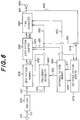
- Fig. 6 shows a sixth embodiment of the present invention.
- Speech waveform (X1, ..., X N ) supplied to an input terminal 610 is converted by an analyzer 620 into feature vector series.
- feature vectors are supplied via a signal line 621 to an input pattern memory 630 and stored therein as the input pattern, and are also supplied via a signal line 622 to a preliminary recognizer 660.
- the preliminary recognizer 660 executes a preliminary recognition based on the feature vectors supplied through a signal line 622 and all reference patterns read out from a reference pattern memory 650 to obtain top N candidates in the order of higher similarities.
- An input pattern adapter 695 executes the adaptation of input pattern based on the input pattern through a signal line 631, top N candidates as a result of preliminary recognition through a signal line 663 and the reference patterns through a signal line 651.
- adapted input pattern is output to a signal line 696.
- a time axis correspondence between the top candidate reference pattern and the input pattern is executed to obtain mean spectrum S v in a speech period of the input pattern, mean spectrum N v in a noise period of the input pattern, mean spectrum S w in a speech period of the reference pattern and mean spectrum N w in a noise period of the reference pattern.
- the time axis correspondence between the top candidate reference pattern and the input pattern is executed to obtain mean feature vector S v of the input pattern and mean feature vector S w of the reference pattern.
- a reference pattern adapter 670 executes the adaptation by connecting a switch 679 to a signal line 661 and reading out the input pattern through a signal line 632, top N candidates as a result of preliminary recognition supplied through the signal line 661 and the reference patterns through a signal line 654.
- the adapted reference patterns are stored in the reference pattern memory 650.
- a time axis correspondence between the top candidate reference pattern and the input pattern is executed to obtain mean spectrum S v in a speech period of the input pattern, mean spectrum N v in a noise period of the input pattern, mean spectrum S w in a speech period of the reference pattern and mean spectrum N w in a noise period of the reference pattern.
- a final or second recognizer 680 receives the adapted input pattern through a signal line 696, top N candidates as a result of preliminary recognition through a signal line 662, and the top N candidate reference patterns through a signal line 652 and executes the matching for the recognition.
- the recognition result is output to an output terminal 690.
- a reference pattern adapter 670 then executes the adaptation by connecting a switch 679 to a signal line 682 and reading out the result of recognition in the final or second recognizor 680 through the signal line 682, the input pattern through a signal line 632 and the reference patterns through a signal line 654.
- the adapted reference patterns are stored in the reference pattern memory 650 to be ready for the next input.
- a time axis correspondence between the top result candidate reference pattern and the input pattern is executed to obtain mean spectrum S v in a speech period of the input pattern, mean spectrum N v in a noise period of the input pattern, mean spectrum S w in a speech period of the reference pattern and mean spectrum N w in a noise period of the reference pattern.
- the time axis correspondence between the top candidate reference pattern and the input pattern is executed to obtain mean feature vector S v in a speech period of the input pattern, mean feature vector N v in a noise period of the input pattern, mean feature vector S w in a speech period of the reference pattern and mean feature vector N w in a noise period of the reference pattern.
- Fig. 7 shows a seventh embodiment of the present invention.
- Speech waveform (X1, ..., X N ) supplied to an input terminal 710 is converted by an analyzer 720 into feature vector series.
- the feature vectors thus obtained are supplied via a signal line 721 to an input pattern memory 730 and stored therein as the input pattern, and are also supplied via a signal line 722 to a preliminary recognizer 760.
- the preliminary recognizer 760 executes a preliminary recognition based on the feature vectors supplied through a signal line 722 and all reference patterns read out from a reference pattern memory 750 to obtain top N candidates in the order of higher similarities.
- An input pattern adapter 795 executes the adaptation of input pattern based on the input pattern through a signal line 731, the top N candidates as a result of preliminary recognition through a signal line 763 and the reference patterns through a signal line 751.
- adapted input pattern is output to a signal line 786.
- a time axis correspondence between the top candidate reference pattern and the input pattern is executed to obtain mean spectrum S v in a speech period of the input pattern, mean spectrum N v in a noise period of the input pattern, mean spectrum S w in a speech period of the reference pattern and mean spectrum N w in a noise period of the reference pattern.
- the time axis correspondence between the top candidate reference pattern and the input pattern is executed to obtain mean feature vector S v of the input pattern and mean feature vector S w of the reference pattern.
- a reference pattern adapter 770 connects a switch 779 to a signal line 761 to read out the input pattern through a signal line 732, top N candidates as a result of preliminary recognition through a signal line 761 and reference patterns through a signal line 754 and executes the adaptation based on them.
- adapted reference patterns are stored in a reference pattern memory 750.
- a time axis correspondence between the top candidate reference pattern and the input pattern is executed to obtain mean spectrum S v in a speech period of the input pattern, mean spectrum N v in a noise period of the input pattern, mean spectrum S w in a speech period of the reference pattern and mean spectrum N w in a noise period of the reference pattern.
- the time axis correspondence between the top candidate reference pattern and the input pattern is executed to obtain mean feature vector S v in a speech period of the input pattern, mean feature vector N v in a noise period of the input pattern, mean feature vector S w in a speech period of the reference pattern and mean feature vector N w in a noise period of the reference pattern.
- a final or second recognizer 780 receives the adapted input pattern through a signal line 786, top N candidates as a result of preliminary recognition through a signal line 762, and the candidate reference patterns through a signal line 752 and executes the matching for the recognition.
- the recognition result is output to an output terminal 790.
- a confirmer 740 receives the final recognition result through a signal line 782 and a user's confirmation result for the recognition result in the final or second recognizer 780 through a terminal 745, corrects the final recognition result if the final recognition result is wrong and outputs the correct recognition result to a signal line 741.
- a reference pattern adapter 770 then executes the adaptation by connecting a switch 779 to a signal line 741 and reading out the right recognition result through the signal line 741, the input pattern through a signal line 732 and the reference patterns through a signal line 754.
- the adapted reference patterns are stored in the reference pattern memory 750 to be ready for the next input.
- a time axis correspondence between the top candidate reference pattern and the input pattern is executed to obtain mean spectrum S v in a speech period of the input pattern, mean spectrum N v in a noise period of the input pattern, mean spectrum S w in a speech period of the reference pattern and mean spectrum N w in a noise period of the reference pattern.
- the time axis correspondence between the top candidate reference pattern and the input pattern is executed to obtain mean feature vector S v in a speech period of the input pattern, mean feature vector N v in a noise period of the input pattern, mean feature vector S w in a speech period of the reference pattern and mean feature vector N w in a noise period of the reference pattern.
- the adaptation is executed using the input speech up to a certain instant of time, the preliminary recognition of the speech to be recognized of the next time instant is executed for the preliminary selection of words, and the adaptation is executed by using the speech to be recognized. It is thus possible to obtain final recognition with respect to the preliminarily selected words, thus permitting high recognition rate without degrading the response feature of the system even in case of an environment different from that of reference pattern trained.
Landscapes
- Engineering & Computer Science (AREA)
- Artificial Intelligence (AREA)
- Computational Linguistics (AREA)
- Health & Medical Sciences (AREA)
- Audiology, Speech & Language Pathology (AREA)
- Human Computer Interaction (AREA)
- Physics & Mathematics (AREA)
- Acoustics & Sound (AREA)
- Multimedia (AREA)
- Telephonic Communication Services (AREA)
- Image Analysis (AREA)
Applications Claiming Priority (3)
| Application Number | Priority Date | Filing Date | Title |
|---|---|---|---|
| JP21483694 | 1994-09-08 | ||
| JP214836/94 | 1994-09-08 | ||
| JP6214836A JP2768274B2 (ja) | 1994-09-08 | 1994-09-08 | 音声認識装置 |
Publications (3)
| Publication Number | Publication Date |
|---|---|
| EP0701245A2 true EP0701245A2 (de) | 1996-03-13 |
| EP0701245A3 EP0701245A3 (de) | 1997-11-05 |
| EP0701245B1 EP0701245B1 (de) | 2001-12-05 |
Family
ID=16662349
Family Applications (1)
| Application Number | Title | Priority Date | Filing Date |
|---|---|---|---|
| EP95114127A Expired - Lifetime EP0701245B1 (de) | 1994-09-08 | 1995-09-08 | Spracherkenner |
Country Status (4)
| Country | Link |
|---|---|
| US (1) | US5778340A (de) |
| EP (1) | EP0701245B1 (de) |
| JP (1) | JP2768274B2 (de) |
| DE (1) | DE69524321T2 (de) |
Cited By (1)
| Publication number | Priority date | Publication date | Assignee | Title |
|---|---|---|---|---|
| EP0750292A3 (de) * | 1995-06-23 | 1998-04-08 | Nec Corporation | Verfahren und System zur Spracherkennung mit verringerter Erkennungszeit Berücksichtigung von Veränderungen der Hintergrundgeräusche |
Families Citing this family (23)
| Publication number | Priority date | Publication date | Assignee | Title |
|---|---|---|---|---|
| JPH10143191A (ja) * | 1996-11-13 | 1998-05-29 | Hitachi Ltd | 音声認識システム |
| JPH10254486A (ja) * | 1997-03-13 | 1998-09-25 | Canon Inc | 音声認識装置および方法 |
| US6076057A (en) * | 1997-05-21 | 2000-06-13 | At&T Corp | Unsupervised HMM adaptation based on speech-silence discrimination |
| US5960397A (en) * | 1997-05-27 | 1999-09-28 | At&T Corp | System and method of recognizing an acoustic environment to adapt a set of based recognition models to the current acoustic environment for subsequent speech recognition |
| US6757652B1 (en) * | 1998-03-03 | 2004-06-29 | Koninklijke Philips Electronics N.V. | Multiple stage speech recognizer |
| US6826350B1 (en) * | 1998-06-01 | 2004-11-30 | Nippon Telegraph And Telephone Corporation | High-speed signal search method device and recording medium for the same |
| JP3156668B2 (ja) * | 1998-06-19 | 2001-04-16 | 日本電気株式会社 | 音声認識装置 |
| US6223155B1 (en) * | 1998-08-14 | 2001-04-24 | Conexant Systems, Inc. | Method of independently creating and using a garbage model for improved rejection in a limited-training speaker-dependent speech recognition system |
| JP4659311B2 (ja) * | 1999-07-08 | 2011-03-30 | ニュアンス コミュニケーションズ オーストリア ゲーエムベーハー | 転送手段を有するスピーチ認識装置 |
| KR100408524B1 (ko) * | 2001-08-22 | 2003-12-06 | 삼성전자주식회사 | 음성인식방법 및 그 장치 |
| ATE362165T1 (de) * | 2003-10-08 | 2007-06-15 | Koninkl Philips Electronics Nv | Anpassung einer umgebungsfehlanpassung für spracherkennungssysteme |
| US20060031067A1 (en) * | 2004-08-05 | 2006-02-09 | Nissan Motor Co., Ltd. | Sound input device |
| CA2594929A1 (en) * | 2005-01-14 | 2006-07-20 | Tremor Media Llc | Dynamic advertisement system and method |
| WO2007056344A2 (en) * | 2005-11-07 | 2007-05-18 | Scanscout, Inc. | Techiques for model optimization for statistical pattern recognition |
| CN101390156B (zh) * | 2006-02-27 | 2011-12-07 | 日本电气株式会社 | 标准模式适应装置、标准模式适应方法 |
| US20080109391A1 (en) * | 2006-11-07 | 2008-05-08 | Scanscout, Inc. | Classifying content based on mood |
| US8549550B2 (en) | 2008-09-17 | 2013-10-01 | Tubemogul, Inc. | Method and apparatus for passively monitoring online video viewing and viewer behavior |
| US8577996B2 (en) * | 2007-09-18 | 2013-11-05 | Tremor Video, Inc. | Method and apparatus for tracing users of online video web sites |
| US20090259551A1 (en) * | 2008-04-11 | 2009-10-15 | Tremor Media, Inc. | System and method for inserting advertisements from multiple ad servers via a master component |
| US9612995B2 (en) | 2008-09-17 | 2017-04-04 | Adobe Systems Incorporated | Video viewer targeting based on preference similarity |
| US20110093783A1 (en) * | 2009-10-16 | 2011-04-21 | Charles Parra | Method and system for linking media components |
| US8615430B2 (en) * | 2009-11-20 | 2013-12-24 | Tremor Video, Inc. | Methods and apparatus for optimizing advertisement allocation |
| DE102014210716A1 (de) * | 2014-06-05 | 2015-12-17 | Continental Automotive Gmbh | Assistenzsystem, das mittels Spracheingaben steuerbar ist, mit einer Funktionseinrichtung und mehreren Spracherkennungsmodulen |
Family Cites Families (7)
| Publication number | Priority date | Publication date | Assignee | Title |
|---|---|---|---|---|
| US4941178A (en) * | 1986-04-01 | 1990-07-10 | Gte Laboratories Incorporated | Speech recognition using preclassification and spectral normalization |
| US4843562A (en) * | 1987-06-24 | 1989-06-27 | Broadcast Data Systems Limited Partnership | Broadcast information classification system and method |
| JP2733955B2 (ja) * | 1988-05-18 | 1998-03-30 | 日本電気株式会社 | 適応型音声認識装置 |
| US5127055A (en) * | 1988-12-30 | 1992-06-30 | Kurzweil Applied Intelligence, Inc. | Speech recognition apparatus & method having dynamic reference pattern adaptation |
| US5040213A (en) * | 1989-01-27 | 1991-08-13 | Ricoh Company, Ltd. | Method of renewing reference pattern stored in dictionary |
| JP2852298B2 (ja) * | 1990-07-31 | 1999-01-27 | 日本電気株式会社 | 標準パターン適応化方式 |
| US5278942A (en) * | 1991-12-05 | 1994-01-11 | International Business Machines Corporation | Speech coding apparatus having speaker dependent prototypes generated from nonuser reference data |
-
1994
- 1994-09-08 JP JP6214836A patent/JP2768274B2/ja not_active Expired - Lifetime
-
1995
- 1995-09-07 US US08/524,807 patent/US5778340A/en not_active Expired - Fee Related
- 1995-09-08 DE DE69524321T patent/DE69524321T2/de not_active Expired - Fee Related
- 1995-09-08 EP EP95114127A patent/EP0701245B1/de not_active Expired - Lifetime
Cited By (2)
| Publication number | Priority date | Publication date | Assignee | Title |
|---|---|---|---|---|
| EP0750292A3 (de) * | 1995-06-23 | 1998-04-08 | Nec Corporation | Verfahren und System zur Spracherkennung mit verringerter Erkennungszeit Berücksichtigung von Veränderungen der Hintergrundgeräusche |
| US5854999A (en) * | 1995-06-23 | 1998-12-29 | Nec Corporation | Method and system for speech recognition with compensation for variations in the speech environment |
Also Published As
| Publication number | Publication date |
|---|---|
| EP0701245A3 (de) | 1997-11-05 |
| US5778340A (en) | 1998-07-07 |
| DE69524321T2 (de) | 2002-07-18 |
| JPH0876785A (ja) | 1996-03-22 |
| EP0701245B1 (de) | 2001-12-05 |
| JP2768274B2 (ja) | 1998-06-25 |
| DE69524321D1 (de) | 2002-01-17 |
Similar Documents
| Publication | Publication Date | Title |
|---|---|---|
| EP0701245B1 (de) | Spracherkenner | |
| US6278970B1 (en) | Speech transformation using log energy and orthogonal matrix | |
| US5046099A (en) | Adaptation of acoustic prototype vectors in a speech recognition system | |
| US5651094A (en) | Acoustic category mean value calculating apparatus and adaptation apparatus | |
| EP0689194A1 (de) | Verfahren und Vorrichtung zur Signalerkennung unter Kompensation von Fehlzusammensetzung | |
| EP0342630A2 (de) | Spracherkennung mit Sprecheranpassung durch Lernprozess | |
| US6922668B1 (en) | Speaker recognition | |
| US5890113A (en) | Speech adaptation system and speech recognizer | |
| EP0453649A2 (de) | Verfahren und Einrichtung zur Wortmodellierung mittels zusammengesetzten Markov-Modellen | |
| JPS62231997A (ja) | 音声認識システム及びその方法 | |
| WO1998043237A1 (en) | Recognition system | |
| EP0118484B1 (de) | Lpc spracherkennungseinrichtung unter anwendung von energiemerkmalen | |
| US5860062A (en) | Speech recognition apparatus and speech recognition method | |
| EP0724251B1 (de) | Sprachanpassungsgerät | |
| US6499011B1 (en) | Method of adapting linguistic speech models | |
| US5751898A (en) | Speech recognition method and apparatus for use therein | |
| US6253180B1 (en) | Speech recognition apparatus | |
| US6993484B1 (en) | Speech synthesizing method and apparatus | |
| JP2531227B2 (ja) | 音声認識装置 | |
| JP3011421B2 (ja) | 音声認識装置 | |
| EP0731447B1 (de) | Trainingssystem für Referenzmuster und dieses Trainingssystem benutzendes Spracherkennungssystem | |
| JP2790808B2 (ja) | 音声認識装置 | |
| JPH04332000A (ja) | 音声認識方法 | |
| JPH04271397A (ja) | 音声認識装置 | |
| US20010047257A1 (en) | Noise immune speech recognition method and system |
Legal Events
| Date | Code | Title | Description |
|---|---|---|---|
| PUAI | Public reference made under article 153(3) epc to a published international application that has entered the european phase |
Free format text: ORIGINAL CODE: 0009012 |
|
| AK | Designated contracting states |
Kind code of ref document: A2 Designated state(s): BE DE FR GB |
|
| PUAL | Search report despatched |
Free format text: ORIGINAL CODE: 0009013 |
|
| AK | Designated contracting states |
Kind code of ref document: A3 Designated state(s): BE DE FR GB |
|
| 17P | Request for examination filed |
Effective date: 19980212 |
|
| 17Q | First examination report despatched |
Effective date: 19991223 |
|
| GRAG | Despatch of communication of intention to grant |
Free format text: ORIGINAL CODE: EPIDOS AGRA |
|
| RIC1 | Information provided on ipc code assigned before grant |
Free format text: 7G 10L 15/06 A |
|
| RIC1 | Information provided on ipc code assigned before grant |
Free format text: 7G 10L 15/06 A |
|
| GRAG | Despatch of communication of intention to grant |
Free format text: ORIGINAL CODE: EPIDOS AGRA |
|
| GRAH | Despatch of communication of intention to grant a patent |
Free format text: ORIGINAL CODE: EPIDOS IGRA |
|
| GRAH | Despatch of communication of intention to grant a patent |
Free format text: ORIGINAL CODE: EPIDOS IGRA |
|
| GRAA | (expected) grant |
Free format text: ORIGINAL CODE: 0009210 |
|
| AK | Designated contracting states |
Kind code of ref document: B1 Designated state(s): BE DE FR GB |
|
| REG | Reference to a national code |
Ref country code: GB Ref legal event code: IF02 |
|
| REF | Corresponds to: |
Ref document number: 69524321 Country of ref document: DE Date of ref document: 20020117 |
|
| PGFP | Annual fee paid to national office [announced via postgrant information from national office to epo] |
Ref country code: BE Payment date: 20020823 Year of fee payment: 8 |
|
| PGFP | Annual fee paid to national office [announced via postgrant information from national office to epo] |
Ref country code: GB Payment date: 20020904 Year of fee payment: 8 |
|
| PGFP | Annual fee paid to national office [announced via postgrant information from national office to epo] |
Ref country code: FR Payment date: 20020910 Year of fee payment: 8 |
|
| PGFP | Annual fee paid to national office [announced via postgrant information from national office to epo] |
Ref country code: DE Payment date: 20020911 Year of fee payment: 8 |
|
| PLBE | No opposition filed within time limit |
Free format text: ORIGINAL CODE: 0009261 |
|
| STAA | Information on the status of an ep patent application or granted ep patent |
Free format text: STATUS: NO OPPOSITION FILED WITHIN TIME LIMIT |
|
| 26N | No opposition filed | ||
| PG25 | Lapsed in a contracting state [announced via postgrant information from national office to epo] |
Ref country code: GB Free format text: LAPSE BECAUSE OF NON-PAYMENT OF DUE FEES Effective date: 20030908 |
|
| PG25 | Lapsed in a contracting state [announced via postgrant information from national office to epo] |
Ref country code: BE Free format text: LAPSE BECAUSE OF NON-PAYMENT OF DUE FEES Effective date: 20030930 |
|
| BERE | Be: lapsed |
Owner name: *NEC CORP. Effective date: 20030930 |
|
| PG25 | Lapsed in a contracting state [announced via postgrant information from national office to epo] |
Ref country code: DE Free format text: LAPSE BECAUSE OF NON-PAYMENT OF DUE FEES Effective date: 20040401 |
|
| GBPC | Gb: european patent ceased through non-payment of renewal fee |
Effective date: 20030908 |
|
| PG25 | Lapsed in a contracting state [announced via postgrant information from national office to epo] |
Ref country code: FR Free format text: LAPSE BECAUSE OF NON-PAYMENT OF DUE FEES Effective date: 20040528 |
|
| REG | Reference to a national code |
Ref country code: FR Ref legal event code: ST |