EP0701818A2 - Procédés thérapeutiques utilisant des anticorps catalytiques - Google Patents
Procédés thérapeutiques utilisant des anticorps catalytiques Download PDFInfo
- Publication number
- EP0701818A2 EP0701818A2 EP95111577A EP95111577A EP0701818A2 EP 0701818 A2 EP0701818 A2 EP 0701818A2 EP 95111577 A EP95111577 A EP 95111577A EP 95111577 A EP95111577 A EP 95111577A EP 0701818 A2 EP0701818 A2 EP 0701818A2
- Authority
- EP
- European Patent Office
- Prior art keywords
- bond
- antibody
- peptide
- cleaved
- cleavage
- Prior art date
- Legal status (The legal status is an assumption and is not a legal conclusion. Google has not performed a legal analysis and makes no representation as to the accuracy of the status listed.)
- Granted
Links
Images

Classifications
-
- C—CHEMISTRY; METALLURGY
- C07—ORGANIC CHEMISTRY
- C07D—HETEROCYCLIC COMPOUNDS
- C07D207/00—Heterocyclic compounds containing five-membered rings not condensed with other rings, with one nitrogen atom as the only ring hetero atom
- C07D207/02—Heterocyclic compounds containing five-membered rings not condensed with other rings, with one nitrogen atom as the only ring hetero atom with only hydrogen or carbon atoms directly attached to the ring nitrogen atom
- C07D207/30—Heterocyclic compounds containing five-membered rings not condensed with other rings, with one nitrogen atom as the only ring hetero atom with only hydrogen or carbon atoms directly attached to the ring nitrogen atom having two double bonds between ring members or between ring members and non-ring members
- C07D207/34—Heterocyclic compounds containing five-membered rings not condensed with other rings, with one nitrogen atom as the only ring hetero atom with only hydrogen or carbon atoms directly attached to the ring nitrogen atom having two double bonds between ring members or between ring members and non-ring members with hetero atoms or with carbon atoms having three bonds to hetero atoms with at the most one bond to halogen, e.g. ester or nitrile radicals, directly attached to ring carbon atoms
- C07D207/36—Oxygen or sulfur atoms
- C07D207/40—2,5-Pyrrolidine-diones
- C07D207/404—2,5-Pyrrolidine-diones with only hydrogen atoms or radicals containing only hydrogen and carbon atoms directly attached to other ring carbon atoms, e.g. succinimide
-
- A—HUMAN NECESSITIES
- A61—MEDICAL OR VETERINARY SCIENCE; HYGIENE
- A61P—SPECIFIC THERAPEUTIC ACTIVITY OF CHEMICAL COMPOUNDS OR MEDICINAL PREPARATIONS
- A61P31/00—Antiinfectives, i.e. antibiotics, antiseptics, chemotherapeutics
-
- A—HUMAN NECESSITIES
- A61—MEDICAL OR VETERINARY SCIENCE; HYGIENE
- A61P—SPECIFIC THERAPEUTIC ACTIVITY OF CHEMICAL COMPOUNDS OR MEDICINAL PREPARATIONS
- A61P31/00—Antiinfectives, i.e. antibiotics, antiseptics, chemotherapeutics
- A61P31/04—Antibacterial agents
-
- A—HUMAN NECESSITIES
- A61—MEDICAL OR VETERINARY SCIENCE; HYGIENE
- A61P—SPECIFIC THERAPEUTIC ACTIVITY OF CHEMICAL COMPOUNDS OR MEDICINAL PREPARATIONS
- A61P31/00—Antiinfectives, i.e. antibiotics, antiseptics, chemotherapeutics
- A61P31/12—Antivirals
-
- A—HUMAN NECESSITIES
- A61—MEDICAL OR VETERINARY SCIENCE; HYGIENE
- A61P—SPECIFIC THERAPEUTIC ACTIVITY OF CHEMICAL COMPOUNDS OR MEDICINAL PREPARATIONS
- A61P31/00—Antiinfectives, i.e. antibiotics, antiseptics, chemotherapeutics
- A61P31/12—Antivirals
- A61P31/14—Antivirals for RNA viruses
- A61P31/18—Antivirals for RNA viruses for HIV
-
- A—HUMAN NECESSITIES
- A61—MEDICAL OR VETERINARY SCIENCE; HYGIENE
- A61P—SPECIFIC THERAPEUTIC ACTIVITY OF CHEMICAL COMPOUNDS OR MEDICINAL PREPARATIONS
- A61P35/00—Antineoplastic agents
-
- A—HUMAN NECESSITIES
- A61—MEDICAL OR VETERINARY SCIENCE; HYGIENE
- A61P—SPECIFIC THERAPEUTIC ACTIVITY OF CHEMICAL COMPOUNDS OR MEDICINAL PREPARATIONS
- A61P37/00—Drugs for immunological or allergic disorders
-
- A—HUMAN NECESSITIES
- A61—MEDICAL OR VETERINARY SCIENCE; HYGIENE
- A61P—SPECIFIC THERAPEUTIC ACTIVITY OF CHEMICAL COMPOUNDS OR MEDICINAL PREPARATIONS
- A61P37/00—Drugs for immunological or allergic disorders
- A61P37/08—Antiallergic agents
-
- A—HUMAN NECESSITIES
- A61—MEDICAL OR VETERINARY SCIENCE; HYGIENE
- A61P—SPECIFIC THERAPEUTIC ACTIVITY OF CHEMICAL COMPOUNDS OR MEDICINAL PREPARATIONS
- A61P43/00—Drugs for specific purposes, not provided for in groups A61P1/00-A61P41/00
-
- A—HUMAN NECESSITIES
- A61—MEDICAL OR VETERINARY SCIENCE; HYGIENE
- A61P—SPECIFIC THERAPEUTIC ACTIVITY OF CHEMICAL COMPOUNDS OR MEDICINAL PREPARATIONS
- A61P9/00—Drugs for disorders of the cardiovascular system
- A61P9/12—Antihypertensives
-
- C—CHEMISTRY; METALLURGY
- C07—ORGANIC CHEMISTRY
- C07C—ACYCLIC OR CARBOCYCLIC COMPOUNDS
- C07C229/00—Compounds containing amino and carboxyl groups bound to the same carbon skeleton
- C07C229/46—Compounds containing amino and carboxyl groups bound to the same carbon skeleton having amino or carboxyl groups bound to carbon atoms of rings other than six-membered aromatic rings of the same carbon skeleton
-
- C—CHEMISTRY; METALLURGY
- C07—ORGANIC CHEMISTRY
- C07C—ACYCLIC OR CARBOCYCLIC COMPOUNDS
- C07C229/00—Compounds containing amino and carboxyl groups bound to the same carbon skeleton
- C07C229/46—Compounds containing amino and carboxyl groups bound to the same carbon skeleton having amino or carboxyl groups bound to carbon atoms of rings other than six-membered aromatic rings of the same carbon skeleton
- C07C229/48—Compounds containing amino and carboxyl groups bound to the same carbon skeleton having amino or carboxyl groups bound to carbon atoms of rings other than six-membered aromatic rings of the same carbon skeleton with amino groups and carboxyl groups bound to carbon atoms of the same non-condensed ring
-
- C—CHEMISTRY; METALLURGY
- C07—ORGANIC CHEMISTRY
- C07C—ACYCLIC OR CARBOCYCLIC COMPOUNDS
- C07C235/00—Carboxylic acid amides, the carbon skeleton of the acid part being further substituted by oxygen atoms
- C07C235/70—Carboxylic acid amides, the carbon skeleton of the acid part being further substituted by oxygen atoms having carbon atoms of carboxamide groups and doubly-bound oxygen atoms bound to the same carbon skeleton
- C07C235/72—Carboxylic acid amides, the carbon skeleton of the acid part being further substituted by oxygen atoms having carbon atoms of carboxamide groups and doubly-bound oxygen atoms bound to the same carbon skeleton with the carbon atoms of the carboxamide groups bound to acyclic carbon atoms
- C07C235/74—Carboxylic acid amides, the carbon skeleton of the acid part being further substituted by oxygen atoms having carbon atoms of carboxamide groups and doubly-bound oxygen atoms bound to the same carbon skeleton with the carbon atoms of the carboxamide groups bound to acyclic carbon atoms of a saturated carbon skeleton
-
- C—CHEMISTRY; METALLURGY
- C07—ORGANIC CHEMISTRY
- C07C—ACYCLIC OR CARBOCYCLIC COMPOUNDS
- C07C271/00—Derivatives of carbamic acids, i.e. compounds containing any of the groups, the nitrogen atom not being part of nitro or nitroso groups
- C07C271/06—Esters of carbamic acids
- C07C271/08—Esters of carbamic acids having oxygen atoms of carbamate groups bound to acyclic carbon atoms
- C07C271/24—Esters of carbamic acids having oxygen atoms of carbamate groups bound to acyclic carbon atoms with the nitrogen atom of at least one of the carbamate groups bound to a carbon atom of a ring other than a six-membered aromatic ring
-
- C—CHEMISTRY; METALLURGY
- C07—ORGANIC CHEMISTRY
- C07C—ACYCLIC OR CARBOCYCLIC COMPOUNDS
- C07C311/00—Amides of sulfonic acids, i.e. compounds having singly-bound oxygen atoms of sulfo groups replaced by nitrogen atoms, not being part of nitro or nitroso groups
- C07C311/01—Sulfonamides having sulfur atoms of sulfonamide groups bound to acyclic carbon atoms
- C07C311/02—Sulfonamides having sulfur atoms of sulfonamide groups bound to acyclic carbon atoms of an acyclic saturated carbon skeleton
- C07C311/03—Sulfonamides having sulfur atoms of sulfonamide groups bound to acyclic carbon atoms of an acyclic saturated carbon skeleton having the nitrogen atoms of the sulfonamide groups bound to hydrogen atoms or to acyclic carbon atoms
- C07C311/06—Sulfonamides having sulfur atoms of sulfonamide groups bound to acyclic carbon atoms of an acyclic saturated carbon skeleton having the nitrogen atoms of the sulfonamide groups bound to hydrogen atoms or to acyclic carbon atoms to acyclic carbon atoms of hydrocarbon radicals substituted by carboxyl groups
-
- C—CHEMISTRY; METALLURGY
- C07—ORGANIC CHEMISTRY
- C07C—ACYCLIC OR CARBOCYCLIC COMPOUNDS
- C07C317/00—Sulfones; Sulfoxides
- C07C317/44—Sulfones; Sulfoxides having sulfone or sulfoxide groups and carboxyl groups bound to the same carbon skeleton
-
- C—CHEMISTRY; METALLURGY
- C07—ORGANIC CHEMISTRY
- C07D—HETEROCYCLIC COMPOUNDS
- C07D205/00—Heterocyclic compounds containing four-membered rings with one nitrogen atom as the only ring hetero atom
- C07D205/02—Heterocyclic compounds containing four-membered rings with one nitrogen atom as the only ring hetero atom not condensed with other rings
- C07D205/06—Heterocyclic compounds containing four-membered rings with one nitrogen atom as the only ring hetero atom not condensed with other rings having one double bond between ring members or between a ring member and a non-ring member
- C07D205/08—Heterocyclic compounds containing four-membered rings with one nitrogen atom as the only ring hetero atom not condensed with other rings having one double bond between ring members or between a ring member and a non-ring member with one oxygen atom directly attached in position 2, e.g. beta-lactams
- C07D205/085—Heterocyclic compounds containing four-membered rings with one nitrogen atom as the only ring hetero atom not condensed with other rings having one double bond between ring members or between a ring member and a non-ring member with one oxygen atom directly attached in position 2, e.g. beta-lactams with a nitrogen atom directly attached in position 3
-
- C—CHEMISTRY; METALLURGY
- C07—ORGANIC CHEMISTRY
- C07F—ACYCLIC, CARBOCYCLIC OR HETEROCYCLIC COMPOUNDS CONTAINING ELEMENTS OTHER THAN CARBON, HYDROGEN, HALOGEN, OXYGEN, NITROGEN, SULFUR, SELENIUM OR TELLURIUM
- C07F9/00—Compounds containing elements of Groups 5 or 15 of the Periodic Table
- C07F9/02—Phosphorus compounds
- C07F9/06—Phosphorus compounds without P—C bonds
- C07F9/22—Amides of acids of phosphorus
- C07F9/24—Esteramides
- C07F9/2454—Esteramides the amide moiety containing a substituent or a structure which is considered as characteristic
- C07F9/2458—Esteramides the amide moiety containing a substituent or a structure which is considered as characteristic of aliphatic amines
-
- C—CHEMISTRY; METALLURGY
- C07—ORGANIC CHEMISTRY
- C07F—ACYCLIC, CARBOCYCLIC OR HETEROCYCLIC COMPOUNDS CONTAINING ELEMENTS OTHER THAN CARBON, HYDROGEN, HALOGEN, OXYGEN, NITROGEN, SULFUR, SELENIUM OR TELLURIUM
- C07F9/00—Compounds containing elements of Groups 5 or 15 of the Periodic Table
- C07F9/02—Phosphorus compounds
- C07F9/28—Phosphorus compounds with one or more P—C bonds
- C07F9/30—Phosphinic acids [R2P(=O)(OH)]; Thiophosphinic acids ; [R2P(=X1)(X2H) (X1, X2 are each independently O, S or Se)]
- C07F9/301—Acyclic saturated acids which can have further substituents on alkyl
-
- C—CHEMISTRY; METALLURGY
- C07—ORGANIC CHEMISTRY
- C07F—ACYCLIC, CARBOCYCLIC OR HETEROCYCLIC COMPOUNDS CONTAINING ELEMENTS OTHER THAN CARBON, HYDROGEN, HALOGEN, OXYGEN, NITROGEN, SULFUR, SELENIUM OR TELLURIUM
- C07F9/00—Compounds containing elements of Groups 5 or 15 of the Periodic Table
- C07F9/02—Phosphorus compounds
- C07F9/28—Phosphorus compounds with one or more P—C bonds
- C07F9/30—Phosphinic acids [R2P(=O)(OH)]; Thiophosphinic acids ; [R2P(=X1)(X2H) (X1, X2 are each independently O, S or Se)]
- C07F9/32—Esters thereof
- C07F9/3205—Esters thereof the acid moiety containing a substituent or a structure which is considered as characteristic
- C07F9/3211—Esters of acyclic saturated acids which can have further substituents on alkyl
-
- C—CHEMISTRY; METALLURGY
- C07—ORGANIC CHEMISTRY
- C07F—ACYCLIC, CARBOCYCLIC OR HETEROCYCLIC COMPOUNDS CONTAINING ELEMENTS OTHER THAN CARBON, HYDROGEN, HALOGEN, OXYGEN, NITROGEN, SULFUR, SELENIUM OR TELLURIUM
- C07F9/00—Compounds containing elements of Groups 5 or 15 of the Periodic Table
- C07F9/02—Phosphorus compounds
- C07F9/28—Phosphorus compounds with one or more P—C bonds
- C07F9/38—Phosphonic acids [RP(=O)(OH)2]; Thiophosphonic acids ; [RP(=X1)(X2H)2(X1, X2 are each independently O, S or Se)]
- C07F9/40—Esters thereof
- C07F9/4003—Esters thereof the acid moiety containing a substituent or a structure which is considered as characteristic
- C07F9/4006—Esters of acyclic acids which can have further substituents on alkyl
-
- C—CHEMISTRY; METALLURGY
- C07—ORGANIC CHEMISTRY
- C07F—ACYCLIC, CARBOCYCLIC OR HETEROCYCLIC COMPOUNDS CONTAINING ELEMENTS OTHER THAN CARBON, HYDROGEN, HALOGEN, OXYGEN, NITROGEN, SULFUR, SELENIUM OR TELLURIUM
- C07F9/00—Compounds containing elements of Groups 5 or 15 of the Periodic Table
- C07F9/02—Phosphorus compounds
- C07F9/547—Heterocyclic compounds, e.g. containing phosphorus as a ring hetero atom
- C07F9/553—Heterocyclic compounds, e.g. containing phosphorus as a ring hetero atom having one nitrogen atom as the only ring hetero atom
- C07F9/5537—Heterocyclic compounds, e.g. containing phosphorus as a ring hetero atom having one nitrogen atom as the only ring hetero atom the heteroring containing the structure -C(=O)-N-C(=O)- (both carbon atoms belong to the heteroring)
-
- C—CHEMISTRY; METALLURGY
- C07—ORGANIC CHEMISTRY
- C07K—PEPTIDES
- C07K16/00—Immunoglobulins [IG], e.g. monoclonal or polyclonal antibodies
-
- C—CHEMISTRY; METALLURGY
- C07—ORGANIC CHEMISTRY
- C07K—PEPTIDES
- C07K16/00—Immunoglobulins [IG], e.g. monoclonal or polyclonal antibodies
- C07K16/08—Immunoglobulins [IG], e.g. monoclonal or polyclonal antibodies against material from viruses
- C07K16/10—RNA viruses
- C07K16/112—Retroviridae (F), e.g. leukemia viruses
- C07K16/114—Lentivirus (G), e.g. human immunodeficiency virus [HIV], feline immunodeficiency virus [FIV] or simian immunodeficiency virus [SIV]
- C07K16/1145—Env proteins, e.g. gp41, gp110/120, gp160, V3, principal neutralising domain [PND] or CD4-binding site
-
- C—CHEMISTRY; METALLURGY
- C12—BIOCHEMISTRY; BEER; SPIRITS; WINE; VINEGAR; MICROBIOLOGY; ENZYMOLOGY; MUTATION OR GENETIC ENGINEERING
- C12N—MICROORGANISMS OR ENZYMES; COMPOSITIONS THEREOF; PROPAGATING, PRESERVING, OR MAINTAINING MICROORGANISMS; MUTATION OR GENETIC ENGINEERING; CULTURE MEDIA
- C12N9/00—Enzymes; Proenzymes; Compositions thereof; Processes for preparing, activating, inhibiting, separating or purifying enzymes
- C12N9/0002—Antibodies with enzymatic activity, e.g. abzymes
-
- C—CHEMISTRY; METALLURGY
- C12—BIOCHEMISTRY; BEER; SPIRITS; WINE; VINEGAR; MICROBIOLOGY; ENZYMOLOGY; MUTATION OR GENETIC ENGINEERING
- C12Q—MEASURING OR TESTING PROCESSES INVOLVING ENZYMES, NUCLEIC ACIDS OR MICROORGANISMS; COMPOSITIONS OR TEST PAPERS THEREFOR; PROCESSES OF PREPARING SUCH COMPOSITIONS; CONDITION-RESPONSIVE CONTROL IN MICROBIOLOGICAL OR ENZYMOLOGICAL PROCESSES
- C12Q1/00—Measuring or testing processes involving enzymes, nucleic acids or microorganisms; Compositions therefor; Processes of preparing such compositions
- C12Q1/25—Measuring or testing processes involving enzymes, nucleic acids or microorganisms; Compositions therefor; Processes of preparing such compositions involving enzymes not classifiable in groups C12Q1/26 - C12Q1/66
-
- G—PHYSICS
- G01—MEASURING; TESTING
- G01N—INVESTIGATING OR ANALYSING MATERIALS BY DETERMINING THEIR CHEMICAL OR PHYSICAL PROPERTIES
- G01N33/00—Investigating or analysing materials by specific methods not covered by groups G01N1/00 - G01N31/00
- G01N33/48—Biological material, e.g. blood, urine; Haemocytometers
- G01N33/50—Chemical analysis of biological material, e.g. blood, urine; Testing involving biospecific ligand binding methods; Immunological testing
- G01N33/53—Immunoassay; Biospecific binding assay; Materials therefor
- G01N33/531—Production of immunochemical test materials
-
- G—PHYSICS
- G01—MEASURING; TESTING
- G01N—INVESTIGATING OR ANALYSING MATERIALS BY DETERMINING THEIR CHEMICAL OR PHYSICAL PROPERTIES
- G01N33/00—Investigating or analysing materials by specific methods not covered by groups G01N1/00 - G01N31/00
- G01N33/48—Biological material, e.g. blood, urine; Haemocytometers
- G01N33/50—Chemical analysis of biological material, e.g. blood, urine; Testing involving biospecific ligand binding methods; Immunological testing
- G01N33/53—Immunoassay; Biospecific binding assay; Materials therefor
- G01N33/577—Immunoassay; Biospecific binding assay; Materials therefor involving monoclonal antibodies binding reaction mechanisms characterised by the use of monoclonal antibodies
-
- C—CHEMISTRY; METALLURGY
- C07—ORGANIC CHEMISTRY
- C07C—ACYCLIC OR CARBOCYCLIC COMPOUNDS
- C07C2601/00—Systems containing only non-condensed rings
- C07C2601/04—Systems containing only non-condensed rings with a four-membered ring
-
- C—CHEMISTRY; METALLURGY
- C07—ORGANIC CHEMISTRY
- C07C—ACYCLIC OR CARBOCYCLIC COMPOUNDS
- C07C2602/00—Systems containing two condensed rings
- C07C2602/36—Systems containing two condensed rings the rings having more than two atoms in common
- C07C2602/42—Systems containing two condensed rings the rings having more than two atoms in common the bicyclo ring system containing seven carbon atoms
-
- G—PHYSICS
- G01—MEASURING; TESTING
- G01N—INVESTIGATING OR ANALYSING MATERIALS BY DETERMINING THEIR CHEMICAL OR PHYSICAL PROPERTIES
- G01N2333/00—Assays involving biological materials from specific organisms or of a specific nature
- G01N2333/005—Assays involving biological materials from specific organisms or of a specific nature from viruses
- G01N2333/08—RNA viruses
- G01N2333/15—Retroviridae, e.g. bovine leukaemia virus, feline leukaemia virus, feline leukaemia virus, human T-cell leukaemia-lymphoma virus
- G01N2333/155—Lentiviridae, e.g. visna-maedi virus, equine infectious virus, FIV, SIV
- G01N2333/16—HIV-1, HIV-2
-
- G—PHYSICS
- G01—MEASURING; TESTING
- G01N—INVESTIGATING OR ANALYSING MATERIALS BY DETERMINING THEIR CHEMICAL OR PHYSICAL PROPERTIES
- G01N2333/00—Assays involving biological materials from specific organisms or of a specific nature
- G01N2333/90—Enzymes; Proenzymes
- G01N2333/914—Hydrolases (3)
- G01N2333/948—Hydrolases (3) acting on peptide bonds (3.4)
- G01N2333/95—Proteinases, i.e. endopeptidases (3.4.21-3.4.99)
- G01N2333/964—Proteinases, i.e. endopeptidases (3.4.21-3.4.99) derived from animal tissue
- G01N2333/96425—Proteinases, i.e. endopeptidases (3.4.21-3.4.99) derived from animal tissue from mammals
- G01N2333/96427—Proteinases, i.e. endopeptidases (3.4.21-3.4.99) derived from animal tissue from mammals in general
- G01N2333/9643—Proteinases, i.e. endopeptidases (3.4.21-3.4.99) derived from animal tissue from mammals in general with EC number
- G01N2333/96472—Aspartic endopeptidases (3.4.23)
Definitions
- This invention relates generally to methods for achieving changes in biological function by enhancing the rate of cleavage or formation of specific bonds in biomolecules in vivo . More particularly, this invention relates to enhancing the rate of cleavage or formation of specific amide, peptide, or ester bonds within proteins by introducing into an animal an antibody capable of enhancing the said rate of cleavage or formation, or by introducing into an animal an immunogen which elicits the desired rate-enhancing antibody.
- Antibodies typically bind to a molecule or antigen so that the antigen is marked as foreign to the organism that produced the antibody. The binding of the antibody to the antigen enables the antigen to be removed from the organism. Enzymes are biological catalysts which bind a molecule in such a way that the activation energy of a reaction involving a molecule or substrate is lowered, thereby increasing the rate of the reaction.
- Antibodies bind molecules in their ground states most strongly while enzymes bind molecules in higher energy states most strongly.
- a tetrahedral carbon atom is bonded to: a carbon atom of the acid portion of the peptide linkage or ester bond; two oxygen atoms, one corresponding to the carbonyl group and the other corresponding to a hydroxyl ion or water molecule of the medium; and either the oxygen atom of the alcohol portion of an ester or the nitrogen atom of the amine portion of the peptide linkage.
- the transition state can be neither isolated nor detected since it exists for only about 10 ⁇ 13 seconds.
- transition states reflect changes in bond lengths and bond angles as well as the formation and breakage of bonds.
- the energy required to achieve a transition state is denoted as the activation energy which may also be considered as the difference in energy between the energy of the transition state and the energy of the reactants.
- an enzyme preferentially binds the transition state of a reaction, thereby stabilizing it relative to the substrate and products and reducing the activation energy of the reaction, thus increasing the reaction rate.
- transition state analog might be used to describe an inhibitor of this kind (1).
- a transition state analog mimicking the transition state for ester bond cleavage was used to elicit a monoclonal antibody which acted as a catalytic esterase (2).
- the monoclonal antibody elicited accelerated by a factor of 15,000 the hydrolysis of an aryl ester of acetic acid.
- a transition state analog mimicking an intramolecular 6-member ring cyclization transition state was used to elicit a monoclonal antibody which acted as a stereospecific, enzyme-like catalyst (3).
- the monoclonal antibody so elicited accelerated, by about a factor of 800, the formation of a single enantiomer of a ⁇ -lactone from the corresponding racemic ⁇ -hydroxyester.
- monoaryl phosphonamidate esters designated as analogs of the transition state in the hydrolysis of aryl amides, were synthesized and used as haptens to elicit specific monoclonal antibodies capable of catalyzing the hydrolysis of aryl amides (4). Certain of the antibodies elicited were reportedly found to be catalytic and selective for the hydrolysis of particular aryl esters, with a rate acceleration of 250,000.
- Phosphonamidates or phosphonate analog-ligands having conformations that substantially correspond to the conformation of a hydrolytic transition state of an amide or ester ligand and which have been used to produce antibodies are described in U.S. Patent 4,659,567 to Tramontano et al. (Tramontano).
- Antibodies so produced purportedly include a paratope that binds to and stabilizes the tetrahedral carbon atom of the ester hydrolysis transition state of the ligand to hydrolyze the ligand at a predetermined site.
- Analog ligands have been designed in accordance with a rational design approach which maximizes stabilization of the transition state and optimizes atomic relationships within the proteolytic transition state analog, thereby enabling the elicitation of antibodies capable of producing the two dramatic effects of enzyme catalysis, i.e., molecular recognition and rate acceleration.
- Antigens, immunogens, and immunological processes for the production of catalytic antibodies are disclosed in commonly assigned parent application Ser. No. 190,271, filed May 4, 1988, the contents of which are incorporated by reference, and in commonly owned application Ser. No. , filed on even date with this application, the contents of which are likewise incorporated by reference.
- antibodies raised against peptides are able to bond to the same sequence when the latter are located within an intact protein.
- antibodies elicited against a peptide comprising amino acids 1-15 of tumor necrosis factor (TNF) are able to bind to native tumor necrosis factor and in doing so, inhibit its interaction with a cell surface receptor (1).
- antibodies against a peptide comprising amino acids of the gp 120 coat protein from HIV cross-react with the intact virus and inhibit the interaction of the virus with its cellular receptor, CD4 (2).
- monoclonal antibodies raised against a peptide comprising amino acids 67-83 of hen egg lysozyme were able to cross-react with the intact protein and are able to recognize other avian species of lysozyme whose sequences within the epitope are substantially similar (3).
- certain biological functions e.g., the reduction of allergic symptoms, the reduction of infectivity of viruses, the detoxification of lipopolysaccharide, the mitigation of the effects of tumor necrosis factor, and the reduction of hypertension by decreasing the amount of human renin in vivo .
- the biomolecule that is desired to be formed or cleaved in vivo is identified, the sequence thereof containing the bond to be formed or cleaved is identified by reference to various algorithms, and an immunogen is rationally designed which, when introduced into the animal, will elicit by action on the animal's immune system antibodies having the desired function.
- immunogens are analogous to vaccines as have been used in the prior art.
- the invention is also directed to the treatment of certain physiological and disease conditions, e.g., the treatment of Acquired Immune Deficiency Syndrome, by inhibiting the causative virus by treating a patient with an effective amount of an antibody capable of enhancing the rate of cleavage of a certain peptide bond in the virus coat protein.
- certain physiological and disease conditions e.g., the treatment of Acquired Immune Deficiency Syndrome
- the invention is also in methods for treating hypertension by inhibiting human renin by enhancing the rate of cleavage of a peptide bond in human renin.
- the invention is likewise in the activation of pro-drugs by selective rate-enhanced cleavage of certain bonds in the prodrug, thereby releasing the active principle.
- the invention is also in methods for detoxifying lipopolysaccharide by cleaving a bond therein, in methods for decreasing the biological effects of tumor necrosis factor, and for reducing symptoms of allergies by cleaving IgE and thereby deactivating it.
- the term "antigen” is defined as a molecule which induces the formation of an antibody.
- the term “antigen” means a molecule which is inherently immunogenic, a hapten according to the invention or an immunogen which comprises a hapten according to the invention coupled to a carrier molecule by a suitable coupling moiety.
- Carrier molecules include, for example, keyhole limpet hemocyanin (KLH), thyroglobulin, chicken immunoglobulin, ovalbumin, bovine serum albumin (BSA), T-helper peptides, etc.
- Coupling moieties refer to biotechnological cross-linking reagents well known in the art (e.g., commercially available from Pierce, Rockford, Illinois) and include, for example, Trout's reagent, dissuccinyl suberate, etc.
- antibody includes whole immunoglobulins and fragments thereof which contain the binding site for the antigen.
- transition state analog refers to an array of atoms which is designed to approximate or “mimic” the configuration of an amide bond or an ester bond as such bonds exist in a hydrolytic transition state.
- dipeptide analog refers to a structure which comprises a transition state analog or strained ground state analog or elements of both having side chains of two amino acids which are in positions analogous to those of the dipeptide being mimicked.
- the normal amide bond i.e., -CO-NH-
- additional amino acid residues may be incorporated to surround the dipeptide analog to form a polypeptide.
- the dipeptide analog replaces the peptide bond "targeted" for cleavage in the substrate molecule.
- the terms "some or all” refer to a portion of the target molecule including at least the amide, ester or glycosidic bond to be cleaved or all of the target molecule.
- haptens designed for the purpose of eliciting antibodies to catalyze the cleavage of a specific peptide bond in a protein molecule comprising a polypeptide of many amino acid residues the dipeptide analog corresponding to the target peptide bond need only be surrounded by not more than about eight amino acid residues.
- the target molecule is a relatively short peptide, it is advantageous to surround the peptide bond analog with all the amino acid residues of the target molecule.
- One of ordinary skill in the art will realize that the desired specificity, the nature of the target molecule and other factors will dictate the ideal number of amino acid residues needed to surround the dipeptide analog.
- substantially corresponds refers to moieties which are similar in charge and/or size to moieties in the antigen containing the analog of the bond to be cleaved.
- the moieties are identical in size and charge, although such identity is not necessary for the hapten of the invention.
- Haptens may contain one or more asymmetric centers and therefore exist in enantiomeric and/or diastereomeric forms. In general, haptens are obtained in the form of racemates or mixtures of diastereomers. If desired, techniques well known in the art for the separation of the mixtures into sterically homogeneous constituents may be used. Preparation of the optical isomers in a pure state is also possible by using sterically homogeneous starting materials.
- hapten as used herein is defined as a molecule which can act as an epitope. Haptens incorporate an amide, peptide, ester, or glycosidic bond to be cleaved or formed.
- Physiologically acceptable salts include salts of mineral acids, for example, hydrochloric acid, sulfuric acid, nitric acid and the like, salts of monobasic carboxylic acids such as, for example, acetic acid, propionic acid and the like, salts of dibasic carboxylic acids such as, for example, maleic acid, fumaric acid and the like, and salts of tribasic carboxylic acids such as, for example, citric acid and the like.
- naturally occurring amino acid includes the twenty essential alpha-amino acids and other alpha-amino acids which may or may not be found in proteins. These amino acids include alanine, arginine, asparagine, aspartic acid, cysteine, glutamine, glutamic acid, glycine, histidine, isoleucine, leucine, lysine, methionine, phenylalanine, proline, serine, threonine, tryptophan, tyrosine, valine, 4-hydroxyproline, 5-hydroxylysine, epsilon-N-methyllysine, 3-methylhistidine, beta-alanine, gamma-aminobutyric acid, homocysteine, homoserine, citrulline, ornithine, canavanine, djenkolic acid and beta-cyanoalanine.
- An amino acid consists of a carbon atom to which is bonded an amino group, a carboxyl group, a hydrogen atom and a distinctive group referred to as a "side chain.”
- the term "analog of said side chain” as used herein is defined as a side chain of a naturally occurring amino acid in which one or more moieties of the naturally occurring side chain is replaced by one or more different moieties which substantially corresponds to the naturally occurring moiety.
- Those side chains containing a hydroxy group can be glycosylated, phosphorylated, sulphonylated or protected by a hydroxy protecting group.
- the hydroxy group of any of the side chains may be protected by any number of suitable hydroxy protecting groups well known in the art. These include, for example, a tertiary butyl group.
- terminal amino protecting group means any group capable of protecting the terminal amino moiety of a peptide or amino acid. Therefore, terminal amino protecting groups include acetyl, succinyl, biphenylcarbonyl, benzoyl, t-butyloxycarbonyl, carbobenzyloxy, tosyl, dansyl, isovaleryl, phthalyl, 1-adamantanesulphonyl, acetimido, benzimido, amidino, carbamyl and the functional equivalents thereof.
- terminal carboxyl protecting group means any group capable of protecting the terminal carboxyl moiety of a peptide or amino acid.
- Terminal carboxyl protecting groups include (C1-C9)alkyl, phenyl, substituted methyl esters such as methoxymethyl and phenacyl esters, 2- substituted ethyl esters such as cyclohexyl and allyl, substituted benzyl esters such as para-methoxybenzyl and para-bromobenzyl, amides such as piperidinyl and hydrazide and functional equivalents thereof.
- biomolecule is defined as any molecule which affects a biological system in vivo or in vitro .
- Biomolecules may be synthesized by cells or chemically synthesized. Examples of biomolecules include proteins, glycoproteins, peptides, steroids, nucleic acids, and oligo- or polysaccharides. Also included are synthetic organic analogs of peptides, steroids, nucleic acids, etc. Pharmaceutically active compounds such as theophylline, capoten, cyclosporin, etc., are also considered to be biomolecules.
- a catalytic antibody is an antibody which is capable of changing the rate of a chemical reaction, all other conditions (e.g., temperature, reactant/substrate concentration, etc.) being the same, which does not enter into the chemical reaction and therefore is not consumed in the reaction, and which has the capability of converting multiple moles of reactant/substrate per mole of catalytic antibody. From a mechanistic viewpoint, it binds the reactant/substrate, effects the accelerated conversion of the reactant/substrate to the product and then releases the product, changes the rate of the chemical reaction without shifting the position of the equilibrium.
- the aforementioned definitions are characteristics of ideal catalysts.
- a stoichiometric antibody is an antibody which enhances the rate of the chemical reaction stoichiometrically, i.e., it enhances the rate of the reaction, but unlike a catalytic antibody, is stoichiometrically consumed during the reaction.
- the transition state analog is located somewhere within the sequence which leads to induction of a catalytic monoclonal antibody with a peptidase activity.
- the specificity of the antibody is determined by the amino acids flanking the transition state analog structure. The antibody so elicited will hydrolyze the peptide specifically, while peptides having similar but not identical sequences or structures would not be hydrolyzed.
- Such a catalytic antibody will also hydrolyze the peptide when that peptide is part of a protein, provided (a) the peptide sequence in question when present in a native protein is available for binding to the catalytic antibody, i.e., the epitope is surface located, and (b) if the peptide sequence in question is available, it is able to assume the conformation in the protein exhibited by the full oligopeptide in its free, substrate active form.
- sequences containing the following amino acid combinations, ASN-GLY, ASN-PRO, ASP-GLY, and ASP-PRO when present in a protein or peptide chain, are a preferred site of a catalytic cleavage.
- sequences containing glutamic acid and glutamine i.e., GLN-X and GLU-X wherein X is any amino acid, are preferred cleavage sites.
- a further alternative for designing cleavage of a protein when no other information is available is to follow the purely random approach in which antibodies are raised to various peptides along the protein sequence until a region of cross-reactivity between antibody and protein is located.
- the monoclonal antibody In order to effect therapeutic applications of monoclonal antibody technology, the monoclonal antibody must bind to, and not dissociate from, its antigen.
- the antigen may be a soluble protein, virus, or other toxic molecule, or may be the surface of a cell. After binding, the antibody-antigen complex either triggers the activation of lytic enzyme cascades or is removed by phagocytic cells.
- Catalytic antibodies operate by a fundamentally different mechanism. Since a catalytic antibody, protease, for example, is able to "cut" the protein at its site of binding, the location and design of the epitope must be such that, on proteolysis and subsequent dissociation of the catalytic antibody from its target, the biological function of the target is irreversibly lost. Thus, a noncatalytic antibody directed against an epitope within the receptor binding region of gp 120 from HIV may inhibit binding of the virus to its CD4 receptor (4). This inhibition will arise because the large bulk of the antibody will prevent the virus and its receptor from coming into contact.
- the methods of the invention can also be used to effect a cleavage that leads to the activation of some biological function.
- Such reactions include the cleavage of peptide bonds, but may also include ester bonds or glycosidic bonds or other types of bonds.
- cleavage of a biomolecule which leads to the activation of a biological function is the treatment of insulin-dependent diabetes. Patients self-administer insulin by injection.
- the art has searched for a formulation of insulin whose release into the circulation mimics the pharmacokinetics of the release of natural pancreatic insulin. Insulin exists in the pancreas in a pro-form, proinsulin, whose activity is many orders of magnitude lower than insulin itself.
- An antibody protease specific for the peptide bond that leads to conversion of proinsulin to insulin can be designed so that its kinetic characteristics allow release of insulin in vivo after injection of proinsulin plus antibody protease. This is an example of prodrug activation where the drug in this instance is a natural protein hormone.
- Prodrugs may include any therapeutically active molecule which leads to the activation of a biological function.
- the pro-form may either take advantage of a natural modification of the drug or any suitable synthetic modification thereof.
- Suitable drug derivatives with low activity (therapeutically beneficial or toxic), which, on modification with a suitable catalytic antibody, are converted to an active form. A particular example of this process is given below.
- Rate-enhancing antibodies i.e., stoichiometric and catalytic rate enhancers
- elicited means elicitation of catalytic antibodies by antigens according to the invention through both in vitro and in vivo techniques.
- the haptens according to the invention by themselves, may be used to elicit the catalytic antibodies.
- immunogens comprising haptens complexed to a suitable carrier molecule are used to elicit the catalytic antibodies.
- the antigen comprises a hapten designed to elicit the appropriate hypervariable binding region in an antibody molecule to express intrinsic binding energy for the transition- state of a chemical reaction, particularly a hydrolytic reaction. Arrangement of amino-acid side chains generated in the combining-site will be appropriate for performing chemical modification of an epitope of interest. Additional improvements in catalytic efficiency can be achieved by site-directed mutagenesis.
- the method comprises exposing cells capable of producing antibodies to the antigen and thereby generating antibody producing cells; hybridizing the antibody producing cells with myeloma cells and thereby producing a plurality of hybridoma cells each producing monoclonal antibodies; and screening the plurality of monoclonal antibodies to identify a monoclonal antibody which catalyzes the chemical reaction of interest.
- the monoclonal antibody so identified may then be replicated, again by either in vivo or in vitro techniques, to obtain a quantity sufficient to catalyze the chemical reaction of interest.
- the detection of antibodies with the desired catalytic activity and specificity is achieved by screening the hybridomas once they have been elicited. For example, screening may be achieved by high performance liquid chromatography (HPLC) or spectrophotometric methods (ELISA).
- HPLC high performance liquid chromatography
- ELISA spectrophotometric methods
- Catalytic monoclonal antibodies are elicited " in vivo " by modification of the technique disclosed by Koprowski et al. in U.S. Patent No. 4,196,265, issued April 1, 1980, which is hereby incorporated by reference. The details of that process are known in the art.
- a series of monoclonal antibodies directed to a specific molecule are prepared under suitable conditions. This involves first immunizing BALB/C mice with an appropriate antigen.
- the antigen comprises a hapten according to the invention bound to a peptide or other carrier molecule.
- Antibody-producing lymphocytes are then removed from the spleens of the immunized mice and hybridized with myeloma cells such as SP2/0 cells to produce hybridoma cells. These hybridoma cells are then plated in the wells of microtiter plates. The series of monoclonal antibodies being produced by the hybridoma cells is screened under appropriate conditions to identify monoclonal antibodies which catalyze the desired reaction under appropriate conditions. Alternatively, the medium may be tested for antibodies that bind to the immunogen and the hybridomas producing these antibodies then expanded in tissue culture or grown in vivo .
- Screening may be conveniently accomplished by treating a standardized solution of the reactant with an aliquot of medium withdrawn from a microtiter well and measuring the presence of the desired product by conventional instrumental methods. This measurement may be readily conducted, for example by spectrophotometric methods or by gas-liquid or high pressure liquid chromatography. By comparison with standardized samples of the desired product or reactant, rates of reaction may be quantified. In this manner, wells containing hybridoma cells producing catalytic monoclonal antibodies are identified. The selected hybridoma cells are then cultured to yield colonies.
- mice such as syngeneic BALB/C mice are inoculated intraperitoneally with the selected hybridoma cells and produce tumors, generally within two or three weeks. These tumors are accompanied by the production of ascites fluid which contains the desired monoclonal antibodies. The monoclonal antibodies are then separately recovered from the ascites fluid by conventional methods such as ultrafiltration, ultracentrifugation, dialysis and immunaffinity chromatography.
- the separately recovered monoclonal antibodies are introduced to an animal in vivo under suitable conditions permitting the formation of a complex between the monoclonal antibody and the target molecule.
- concentration of the catalytic antibodies used is less than the equivalent concentration of the target molecule and may be in the picomolar range.
- the antibodies should function under normal physiologic conditions in vivo . The skilled artisan will appreciate that the conditions suitable for complex formation may vary depending on the particular molecule and antibody under consideration.
- Antibodies produced by any of the processes described above may be produced via an immortalized cell line, in vitro .
- a suitable form of the antibody for example, a "humanized” mouse monoclonal antibody
- the reactants undergo one or more transitions through structures which are energetically less favorable than either the reactant or product.
- these transition states reflect changes in bond lengths and bond angles as well as formations and breakages of bonds.
- the energy required to achieve a transition state is denoted as the activation energy, which may also be considered as the difference in energy between the energy of the transition state and the energy of the reactants.
- Catalysts increase chemical reaction rates by lowering the activation energy of a reaction.
- Antibodies elicited to a hapten or antigen which antigens are chosen because, inter alia , they resemble the presumed transition state structure (i.e., a transition state analog, a strained ground state structure or both), can catalyze reactions.
- the antibody thus produced should stabilize the energy of the transition state relative to reactants and products. This approach has been successfully demonstrated in the generation of several catalytic monoclonal antibodies.
- Catalytic antibodies elicited with rationally designed haptens are "site specific" in that they are deliberately designed only to catalyze cleavage of bonds having certain structural conformations at specific sites in a biomolecule. Likewise, these catalytic antibodies are designed only to catalyze the formation of bonds from the termini of moieties having certain structural conformations at those termini. Therefore, rationally designed haptens according to the invention may be used to elicit a site specific catalytic antibody capable of cleaving bonds at specific sites in a biomolecule to produce two or more cleavage products. The same catalytic antibody can then catalyze the formation of bonds wherein those cleavage products having the right structural conformation are joined.
- the haptens are designed to mimic the transition states for a variety of chemical reactions.
- the reactions are the cleavage or formation of a peptide, ester, amide, or glycosidic bond.
- a hapten as shown below incorporates not only the dipeptide analog [CD] but also sub-site amino acid residues A, B, E, F. These subsite amino acid residues can be part of a cyclic structure as well as a linear structure. The optimum number of subsite residues is determined by the size of the antibody combining site. It is likely that the only essential criterion for effective binding of antibody to a peptide is that complementarity between the antigen combining site of the antibody and the molecular surface of the binding peptide is maintained with regard to both shape and charge.
- the haptens are designed in such a way such that antibodies raised against these haptens can selectively stabilize one or any of the high energy intermediates or transition states in the cleavage or formation of an amide, peptide, ester or glycosidic bond.
- haptens fall into three general classes: one, those in which the hybridization of the atom corresponding to the carbonyl carbon of the scissile bond of the amide or ester bond is converted from sp2 to sp3 hybridization; two, those in which any of the atoms corresponding to the amide, ester or glycosidic bond is replaced by a different atom; and three, those in which the atoms corresponding to the amide, ester or glycosidic bond are part of a monocyclic or bicyclic system.
- Peptide sequences containing dipeptide analogs at the bond that is required to be hydrolyzed by the catalytic antibodies of one aspect of the present invention define a sequence that the catalytic antibody will hydrolyze in a native protein.
- the binding energy of the antibody is distributed in such a way as to allow both sequence specific recognition and chemical reactivity with the native protein or peptide of interest.
- the catalytic antibodies elicited with these haptens can then be utilized, for example, to digest epitopes on viral proteins or tumor derived growth factors or other peptides involved in life-threatening situations (e.g., tumor necrosis factor in bacterial sepsis, etc.).
- the haptens are rationally designed from knowledge of mechanistic features of enzyme catalysis and provide suitable templates for generating antibody combining sites endowed with catalytic properties. Consequently, they incorporate all the necessary features to provide for antibodies capable of molecular recognition and catalytic function.
- a cyclic carbohydrate hapten of formula [1] would provide a good mimic of the proposed transition state [2] (11) for hydrolysis of a glycosidic bond in a typical O-linked glycoside [3], as illustrated below:
- Catalytic antibodies have site-specific proteolysis capabilities in, e.g., the immunotherapy of viral infection. Viruses utilize their external coat proteins to attach to cellular receptors and invade the cell after attachment.
- human immunodeficiency virus uses a portion of the gp120 protein at its surface to attach to CD4 receptors on lymphocytes.
- the sequence for this cell attachment has been mapped to a region on the viral protein.
- antibodies can be generated by the methodology described in this invention to bind to this peptide sequence and cleave it in a site-specific manner.
- such antibodies preferably bind to the "native" sequence in the protein as opposed to a linear sequence (which would occur in a denatured protein).
- the antigenic determinants or epitopes in the "native" protein are often conformational (i.e., three-dimensional) rather than random linear arrangements.
- haptens may be designed to have the same structural features of the epitopes, rather than random conformations. These structural features can be adopted by simple linear peptides, the lowest energy conformer being the preferred structure in solution. Secondary structural features may be introduced by crosslinking of amino-acid side chains or the use of -turn mimetics. Conformationally constrained haptens incorporating structures which are compatible with the epitope in the native protein may be essential for inducing the correct motif within the tertiary structure of the catalytic antibody hypervariable binding region. The advantages of conformationally constrained haptens are that they mimic the native structure in the protein and tend to mimic regions of the protein which are susceptible to cleavage.
- Oligopeptides having variable lengths with sequences from the receptor-binding regions of viruses which employ a specific cellular receptor for penetration of the host cell and having a transition state analog dipeptide isostere in a critical region of the sequence induce on immunization, optionally after coupling to a suitable carrier protein, catalytic antibodies that cleave the viral coat protein and prevent virus penetrating the cell.
- the dimensional structure of Rhino 14 and Polio 1 virus particles has been charted by X-ray scattering. Regions have been identified which are binding sites to cellular receptors.
- oligopeptides which contain partial sequences from the envelope proteins of viruses critical for host cell attachment and a transition-state dipeptide isostere selected from the haptens according to the invention.
- the resultant peptide analogs are used to induce catalytic antibodies that inactivate viruses by proteolysing segments (epitopes) of the viral coat protein critical for infectivity.
- oligopeptides are used having sequences from the receptor binding region of retroviruses, e.g., HIV I, HIV II and picorna viruses, e.g., Rhino 14, viral polypeptides, inflammatory proteins, anaphylactic proteins, lymphokines, cytakines and other polypeptide mediators of host infection or toxic syndromes.
- retroviruses e.g., HIV I, HIV II and picorna viruses, e.g., Rhino 14, viral polypeptides, inflammatory proteins, anaphylactic proteins, lymphokines, cytakines and other polypeptide mediators of host infection or toxic syndromes.
- Catalytic antibodies elicited with the antigens of the invention may be useful in the treatment of autoimmune disease, cancer and thrombolytic disease.
- the catalytic antibodies may also be useful for treatment of cardiovascular disease eliminating high density lipoproteins and for the detoxification of bacterial endotoxins.
- a hapten is designed to include a transition state analog for cleavage at a particular location. Immunization with this hapten would then activate certain B-cells, some of which would produce antibodies with catalytic activity. On exposure to the "normal" antigen (substrate), the primed cells in the animal would then respond giving rise to a catalytic antibody in vivo , thus obviating the need for parenteral administration.
- These "catalytic" vaccines might have very general applications in activation of catalytic antibodies having activities against viruses and other pathogens, toxic agents, drugs of abuse, naturally occurring proteins, therapeutically useful prodrugs.
- renin an aspartic proteinase whose action initiates the renin-angiotensin cascade has been the object of intense investigation in recent years.
- the potential for treatment of hypertension through the inhibition of renin has resulted in the synthesis of a variety of potent renin inhibitors based on the peptide sequence of the natural substrate angiotensinogen.
- An alternative approach is the use of a proteolytic antibody to renin.
- flap region of human renin is a hairpin with a loop region of four amino acid residues leading to the carbonyl group of Tyr 83 interacting with the amino groups of Thr 85 and Gly 86 (12).
- the cyclic decapeptide human renin was found to adopt this same hairpin structure.
- monoclonal antibodies are elicited with a difluoroketone containing immunogen according to the invention.
- the monoclonal antibodies will catalyze the cleavage of the peptide sequence in the human renin molecule between residues 85 and 86. Cleavage causes disruption of the catalytic machinery of the enzyme since residues 85 and 86 constitute the "flap" region which holds the substrate in the catalytic site (13). It has previously been demonstrated that rabbit polyclonal antiserum elicited to a synthetic peptide fragment (sequence 81-90) could inhibit human renin activity by 40% as measured by its reaction with synthetic human tetradecapeptide substrate (14).
- the cyclic peptide hapten where (TS) represents the transition state analog, is synthesized.
- the synthesis of the cyclic peptide hapten follows the solid-phase approach (15) wherein ST(TS)G corresponds to a transition state analog tripeptide according to the invention, and is incorporated into the assembled peptide through its anhydride (15).
- the completed peptide is fully deprotected and cleaved from the solid support using trifluoroacetic acid.
- Cyclization of the peptide is achieved by allowing the peptide to stand at low concentration for one hour in an aqueous solution (pH 8) in order to generate a disulfide bridge between the two terminal cysteine residues.
- the N-terminal amino group of the peptide allows it to be attached to a carrier protein for immunization of mice.
- the peptide hapten is synthesized by the solid phase technique using the polyamide-Kieselguhr composite resin (35).
- the side chain protecting groups are the following: O-tert-butyl (tyrosine, glutamic acid, serine, threonine); N-4-methoxy-2,3,6-trimethyl benzenesulphonyl (arginine); and S-trityl (cysteine).
- the temporary protection of the N function is by fluorenylmethoxycarbonyl which is removed in 10 minutes with piperidine/DMF : 20/80.
- the coupling reactions are carried out using FMOC- amino acid anhydrides (35).
- the protected peptidyl-resin is fully deprotected by treatment with trifluoroacetic acid/thioanisole/m-cresol/thiophenol/ethanedithiol solution: 90/2/2/2/4 for 3 hrs. After filtration the filtrate is concentrated under vacuum to a small volume. Ether is added to give a precipitate of the peptide. The ethereal supernatant is removed and the peptidic precipitate is washed twice with ether to yield the peptide hapten wherein the bracketed moiety is a difluoroketone transition state analog tripeptide isostere.
- the peptide hapten is cyclized to obtain the " ⁇ -hairpin" conformation by forming a disulfide bond between the two terminal cysteine residues.
- the disulfide bond is completed in one hour by air oxidation of an aqueous solution (pH 8) at a concentration of 0.3 mg of peptide per milliliter.
- the oxidized product is then removed by lyophilization and purified by HPLC.
- the cyclic peptide hapten is conjugated to keyhole limpet hemocyanin (KLH) using glutaraldehyde (36). Coupling efficiency is 50-80% as estimated by binding of a trace amount of I125 peptide added to the reaction mixture.
- KLH conjugated peptide 50 ⁇ g in complete Freund's adjuvant is injected into BALB/c mice.
- Hybridoma fusions are carried out by standard methods using SP2/0 myeloma as the fusion partner. Polyclonal antiserum response and hybridoma secreting cells resulting from the fusion are screened for binding activity by ELISA.
- Plates are first incubated for 30 minutes at 37°C and then overnight at room temperature. After washing three times with Tween- containing phosphate-buffered saline (PBS-Tween 0.1%, pH 7.4), 50 ⁇ L of serial dilutions of antisera in PBS-BSA 1% pH 7.4 are added in peptide-coated duplicate wells and incubated for 2 hours at 37°C. Plates are washed three times again with PBS-Tween 0.1% and wells are then treated with 50 ⁇ L of alkaline phosphatase-labelled goat anti-mouse IgG diluted 1:500 (Sigma, MO, USA). Incubation is carried out for 1 hour at 37°C.
- Absorbance is read at 405 nm in a Titerteck Multiskan ELISA reader (Flow laboratories). Titer expression is determined by multiplying the optical density by the maximal dilution giving an absorbance three times as high as the negative control (consisting of pooled normal mouse sera diluted 1:100).
- Hybridomas giving a positive reaction in this screening assay are chosen for further study.
- IgG is purified from ascites fluid by HPLC with a Bakerbond ABx HPLC column.
- the decapeptide substrate H2N-Leu-Arg-Tyr-Ser-Thr-Gly-Thr-Val-Ser-Gly-CO2H (2.7 uM) is incubated with the catalytic antibodies produced by the procedure outlined above and the reaction monitored by reverse phase HPLC analysis of the mixture.
- the reaction is carried out at pH values optimal for high Kcat by the catalytic antibody (optimum pH is determined employing the chromogenic p-nitroanilide substrate or the fluorescent coumarin substrate and taking into account the binding energy of the catalytic antibody for the residues on the C-terminal side of the cleavage site with change in pH).
- Antibodies that show the best Kcat values for cleavage of the decapeptide substrate are tested for their ability to inhibit human renin.
- Inhibition of plasma renin activity the ability of the catalytic antibodies to inhibit renin activity -- is tested on a pool of human plasma having a high renin activity (40 ng of angiotensin I/h/mL).
- Plasma 25 ul is pre-incubated with 100 ul of the catalytic antibody in PBS (pH 7.5) containing 1% EDTA (final volume 0.2 mL) for various periods of time.
- an excess of plasma renin substrate 200 pmol
- the final dilution of the catalytic antibody is 1:5 and 1:50.
- the angiotensin I generated is measured by radioimmunoassay (17). A blank is included using the same dilutions of the corresponding abzymes. The amount of angiotensin I generated is less than that observed with intact renin, thus indicating cleavage of residues 85-86 in the "flap" region and inhibition.
- the octapeptide sequence -Ala-Ser-Thr-Thr-Thr-Asn-Tyr-Thr- from HIV gp120 coat protein is important for virus interaction with the OKT4 antigen of T4 helper/inducer cells.
- Synthetic peptides identical or very similar in sequence to this octapeptide strongly inhibit attachment of HIV to the antigen receptor (18).
- Computer assisted searches have demonstrated homology to a peptide found in the envelope region of the Epstein-Barr virus.
- strong homologies exist between the HIV octapeptide and peptides which occur in human lymphoadenopathy virus (LAV) and in human T-cell leukemia virus (HTLV-IIIb) isolates.
- HIV peptide An additional homology exists between the HIV peptide and a sequence comprising residues 19-26 of bovine pancreatic ribonuclease A (RNase A). This sequence contains the exposed subtilisin cleavage sites of RNase A between residues 20 and 21 and 21 and 22 (39).
- RNase A bovine pancreatic ribonuclease A
- Peptide haptens according to the invention are:
- mice are immunized with the KLH-peptide analog conjugates emulsified in complete Freund's adjuvant.
- a blood sample is obtained from each mouse and the serum separated by centrifugation and stored at 4°C.
- Sera obtained in this way are screened for binding activity to the original transition-state analog immunogen by standard ELISA procedures.
- Antibody producing mice immunized as described above and assayed for reactivity with the transition state analog peptide immunogens are sacrificed and their spleens removed and hybridoma cells are prepared using SP2/0 myeloma cells as described in Example 1B above.
- the dipeptide transition state isostere wherein A is an analog of the amide bond to be cleaved, is incorporated into a peptide as described in Example 1 to give the hapten
- the resulting hapten is designed to mimic a portion of the HIV gp120 coat protein.
- the synthetic peptide is used in an in vitro immunization procedure using a modification of a literature procedure (21). Spleen cells are cultured at 106 cell/ml in a medium consisting of 50% fresh Eagle's MEM with 20% fetal bovine serum 5 x 10 ⁇ 5M ⁇ -mercaptoethanol, 2mM glutamine and 50% conditioned medium from BALB/c mouse thymocytes.
- thymocytes are cultured at 3-5 x 10⁶ cells/mL in the same Eagles MEM medium as above. After 48-72 hours the medium is removed, sterilized by filtration and used immediately for in vitro activation.
- the antigen is added to the spleen cell culture medium at concentrations equivalent to approximately 1 ⁇ g peptide/ml. Spleen cells are cultured in the presence of antigen for four days without a change in the medium and are later hybridized.
- Hybridizations are carried out with the mouse plasmacytoma cell line 45 6TGL.7 (22) obtained from the Cell Distribution Center of the Salk Institute. Spleen cells (either freshly isolated or from in vitro activation cultures) and plasmacytoma cells are washed twice in serin-free Eagles MEM, then fused using PEG 1000 as previously described in the literature (43). Hybrids are selected by treatment of the cultures with HAT (44). Hybrid cells which produce antibody reactive with the peptide transition state analog (as judged by an ELISA assay) are cloned and re-cloned by limiting dilution in conditioned medium from parental plasmacytoma cells.
- the virus replication assay is carried out essentially as described in the literature (25), except that cultures are propagated in microtube wells containing 200 ⁇ L. Graded concentrations of purified antibodies obtained from the in vitro immunization procedure or buffer alone, each in 25 ⁇ L, are preincubated for 1 hr. at 37°C in 5% CO2 with 50 TCID50 HTLV-IIIB in 25 ⁇ L. Following preincubation, H9 cells (1 x 10⁵ cells in 150 ⁇ L RPM1-040 supplemented with 20% heat-inactivated FCS) are added to the wells, yielding final antibody concentrations ranging from 0.1 ⁇ gm1-1 to 10 ⁇ gm1 ⁇ 1.
- Microtiter plates are incubated at 37°C in 5% CO2 for 14 days. Cells are fed by exchanging 100 ⁇ L cell-free supernatant fluid on days 3, 7 and 10 with fresh medium, and no further antibody is added during this period. Cell-free supernatant fluid (100 ⁇ L) is analyzed for p24 antigen by RIA (Dupont, NEK-040).
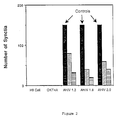
- the C8166 fusion assay is described in the literature (46). Three monoclonal antibodies (clone AHIV1.6; AHIV1.3 and AHIV2.0) are tested in 2 hr. assays. H9 cells (1 x 10⁴) infected chronically with HTLV-IIIB are preincubated with varying concentrations of antibody in 150 ⁇ L medium in 96-well plates. All assays are done in triplicate. After 1 hr. incubation at 37°C in 5% CO2, 3 x 10⁴ C8166 cells (HTLV-I transformed umbilical cord lymphocytes) in 50 ⁇ L are added to the wells. Final well concentrations of antibodies are 41 ⁇ g ml ⁇ 1 and 5 ⁇ g m ⁇ 1.
- Fig. 1 shows the dose dependent inhibition by clone AHIV 1.3 of HIV-1 p. 24 gag production in infected H9 cells.
- Fig. 2 shows the dose dependent inhibition by clones AHIV 1.3, AHIV 1.6 and AHIV 2.0 of HIV-induced cell fusion.
- the catalytic monoclonal antibodies elicited by in vitro immunization with the transition state dipeptide isostere analog incorporated into the exposed peptide sequence of HIV gp120 can prevent infection by HIV virus by causing rupture of an important region of the viral coprotein involved in binding to the CD4 receptor on lymphocytes.
- the catalytic monoclonal antibodies break the peptide bond in the chosen sequence (i.e., between the first two threonine residues from the left of the octapeptide shown in Example 2) in a manner analogous to the action of proteolytic enzymes.
- the mechanism of the antibody catalyzed hydrolysis of the octapeptide does not involve a metal ion and consequently may involve either a nucleophile in the active site of the antibody or nucleophilic addition of water activated by amino acid residues in the antibody combining site.
- Tumor necrosis factor is a cytokine secreted by activated macrophages.
- TNF has been shown to mediate a variety of biological effects including endotoxin-induced shock, suppression of lipoprotein lipase (LPL) activity in preadipocytes, stimulation of collagenase activity and prostaglandin E2 production by synovial cells, stimulation of interleukin 1 production, and induction of cachexia in nude mice.
- LPL lipoprotein lipase
- TNF-specific cell-surface receptors are present on several types of cells. The binding of TNF to these receptors is believed necessary for induction of the biological effects of TNF. It has been shown that antibodies against amino acids 1-15 of hTNF block its binding to cell-surface receptors (Socher et al., Proc.
- N-terminal eight amino acids of hTNF are not required for receptor recognition. Consequently, the critical region for receptor binding may involve residues 9-15.
- the formula below shows the N-terminal 25 amino acids of TNF, the critical residues 9-15( * ) and a metastable site NP, Asn-Pro. Synthesis of the peptide analog containing the transition-state dipeptide isostere is performed essentially as previously described in Example 1. Immunogen preparation, immunization, and screening for catalytic antibodies is performed essentially as described except that a bioassay is employed to determine TNF abzyme proteolysis and inactivation.
- Murine L-929 fibroblast cells (30,000 per well) are cultured in 96-well tissue culture plates in the presence of 1 ⁇ g/ml actinomycin D. Serial dilutions of TNF before and after treatment with the catalytic antibody are added to the wells and incubated for 18h. The culture medium is then removed and the cells stained with a 0.5% crystal violet solution in 25% methanol. The absorbance at 540 nm is measured on a Biotek ELISA microplate reader. The cells with medium alone are considered to have 0% lysis and the cells treated with 3M guanidine-HCL are considered to be completely lysed.
- One unit of TNF is defined as the amount required to give 50% cell lysis.
- the primary event in the infection of cells by HIV is the interaction between the viral envelope glycoprotein, gp 120, and its cellular receptor, CD4. Monoclonal antibodies have been produced that block the interaction between gp 120 and CD4.
- the gp 120 epitope has been shown to be contained within the amino acids 397-439. Deletion of 12 amino acids from this region by in vitro mutagenesis leads to a complete loss of binding and a single amino acid substitution in this region results in significantly decreased binding.
- the epitope 397-439 has the sequence: The sequence also shows a tryptic peptide from residues 406 to 414 (*) that further delineates the Mab-binding epitope.
- the 410-421 deletion mutant is also shown (
- the data presented by Lask et al. (Cell, 1987, 50 , 975-985) implies that this polypeptide region is a critical contact site for receptor binding and it was consequently chosen as a potential candidate peptide for preparation of an immunogen to elicit catalytic antibodies that induce proteolysis of this region in the intact HIV gp 120 envelope.
- LPS lipopolysaccharide
- Gram-negative bacteria have a characteristic membrane consisting of lipoprotein, lipopolysaccharide, mucocomplex, and cytoplasmic membrane layers.
- outer surface structures and proteins are a means by which to classify the organisms into serogroups or serotypes.
- the capsule is used to serogroup the meningococci into groups A, B, C, etc.
- Another structural component that is antigenic and is used for serotyping (O-Antigen) is LPS.
- Polysaccharide moieties comprise the outer core and are responsible for the observed antigenic variation.
- the LPS also has an inner core of 1-glycero-D-mannoheptose and KDO (2-keto-3-deoxy manno-octulosonic acid) units which are common to gram-negative bacteria (except for a few mutant strains).
- KDO (2-keto-3-deoxy manno-octulosonic acid) units
- Within the bacterial membrane is the lipid A core (I) that is conserved and composed of glucosamine disaccharide, fatty acid chains, and phosphate units. It is the lipid A core which is important structurally as well in creating the determined symptoms described previously.
- Lipid X a monosaccharide precursor to lipid A (II) is not toxic at doses greater than 3 mg for mice and 1 mg/kg in sheep, and protects mice from a lethal dose of endotoxin (Munford and Hall, 1986).
- This example outlines a method whereby this acyloxyacyl hydrolysis will be catalyzed by a catalytic antibody.
- Scheme 1 outlines the possible synthetic reactions needed to synthesize the antigen (III), which partly follows the method used by Kusumoto et al. (1984).
- the lipid X analog (III) is incorporated into liposomes of different sizes and lipid composition, or coated onto sheep erythrocytes for optimal antigen presentation before injection into BALB/c mice according to the method described by Brade et al. (1987).
- Hybridomas producing antibody against the acyloxyacyl hydrolase transition state analog (III) are produced by standard methods.
- the hybridoma supernatant fluids are assayed for antibody which binds to the lipid X analog by ELISA and/or passive hemolysis inhibition.
- the catalytic activity is assayed by the methods described later.
- Biosynthetically labeled LPS is prepared by culturing S. typhimurium PR 122 (gal Em nag-) with [3H]-acetate and N-acetyl-1-[14C]-glucosamine (New England Nuclear Corp., Boston, Mass.).
- S. typhimurium PR 122 gal Em nag-
- [3H]-acetate and N-acetyl-1-[14C]-glucosamine New England Nuclear Corp., Boston, Mass.
- R-LPS low molecular weight LPS
- the S. typhimurium is cultured in the absence of D-galactose. These cells are divided into aliquots, of which one is stored as a suspension in 50% glycerol at -70°C and are extracted, using phenol/chloroform/pet ether 2:5:8 (Vol/Vol).
- LPS smooth LPS
- Treated and contol LPS are tested for pyrogenicity in rabbits. At least 3 rabbits (1.7 to 2.3 kg) are injected with the LPS preparations and their temperature changes recorded. Initially, 5 ⁇ g of the control LPS, and 50, 100, and 200 ⁇ g of the treated LPS are tested.
- C57BL/6 mice are injected (I.P.) with 16 mg of D-galactosamine to induce susceptibility to LPS.
- the treated and untreated LPS are injected (I.V.) and the LD50 determined. Concentrations between 2 ng and 20 ⁇ g are tested.
- Macrophages are cultured in the presence and in the absence of treated and control LPS.
- the percentage of macrophages spreading [which equals the (number spreading/number of total attached cells) x 100] is calculated. Macrophages are defined as spreading if their membrane apron covers an area double that of unspread cells.
- Stimulation of murine splenocytes is monitored by thymidine uptake.
- Splenocytes of BALB/c nu/nu, C3H/HeN, and C3H/HeJ mice are incubated with [3H]-thymidine and treated and control LPS, at several concentrations.
- a control culture without LPS is also prepared. The stimulatory effect is expressed as a ratio of the test culture cpm to the control culture.
- Example 7 Methodology for the production, screening, and isolation of monoclonal antibodies that cleave human IgE and prevent allergic reactions
- IgE The role of IgE in initiation of allergic responses has been the subject of extensive study for over 60 years. These studies have led to detailed understanding of the pathway for the allergic reaction.
- the primary event in the initiation of the allergic reaction is the binding of the allergen (antigen) to IgE. This results in crosslinking of the IgE on the surface of mast cells and basophil cells, the IgE being bound via its Fc region to Fc receptors present on the target cells. The consequence of this crosslinking is to trigger the release of histamine, SRS-A and other vasoactive amines which ultimately lead to the deleterious effects of an allergic response via their effect on other tissues in the body.
- the IgE molecule has been functionally divided into two parts defined by their binding activities. This is demonstrated when the molecule is subjected to papain proteolysis which generates two fragments. The consequences of this proteolysis is to inactivate the IgE with respect to its ability to elicit allergic reactions. In fact, it becomes an inhibitor via blockade of Fc receptors with Fc fragments.
- catalytic antibodies are prepared which are able to specifically cleave IgE and inactivate it without other deleterious effects.
- monoclonal antibodies are elicited with a cyclic dipeptide analog (Fig. 1) contained within the sequence of interest.
- Catalytic monoclonal antibodies so elicited will cause cleavage of the native IgE peptide sequence at the position shown: This sequence is located between the CH2 and CH3 domains of IgE, cleavage of which will disrupt the activity of the IgE molecule and inhibit generation of an allergic response.
- the peptide hapten ADS(X)RGV where (X) represents the cyclic dipeptide analog shown below, is synthesized by standard solid or solution phase methods.
- the completed peptide is fully deprotected and, if solid phase is used, cleaved from the solid support using trifluoroacetic acid.
- the N-terminal amino group of the peptide allows it to be attached to a carrier protein for immunization of mice.
- the peptide hapten is synthesized by the solid phase technique using the polyamide-Kieselguhr composite resin.
- the side chain protection groups are the following: O-tert-butyl (tyrosine, aspartic acid, glutamic acid, serine, threonine); N-4-methoxy-2,3,6,-trimethyl benzenesulphonyl (arginine).
- the temporary protection of the N- function is by fluorenylmethoxycarbonyl which is removed in 10 minutes with piperidine/DMF: 20/80.
- the coupling reactions are carried out using FMOC-amino acid anhydrides.
- the protected peptidyl-resin is fully deprotected by treatment with trifluoroacetic acid/thioanisole/m-cresol/thiophenol/ethanedithiol solution: 90/2/2/2/4 for three hrs. After filtration, the filtrate is concentrated under vacuum to a small volume. Ether is added to give a precipitate of the peptide. The ethereal supernatant is removed and the peptidic precipitate is washed twice with ether to yield the peptide hapten Ala-Asp-Ser-(X)-Arg-Gly-Val wherein the bracketed moiety is the cyclic dipeptide analog shown below.
- the peptide hapten as above is conjugated to keyhole limpet hemocyanin (KLH) using glutaraldehyde. Coupling efficiency is 50-80% as estimated by binding of a trace amount of Iodine-125 labeled peptide added to the reaction mixture.
- KLH keyhole limpet hemocyanin
- KLH conjugate peptide 50 ⁇ g in complete Freund's adjuvant is injected into BALB/c mice.
- Hybridoma fusions are carried out by standard methods using SP2/0 myeloma as the fusion partner. Polyclonal antiserum response and hybridoma screening cells resulting from the fusion are screened for binding activity by ELISA.
- Plates are first incubated for 30 minutes at 37°C and then overnight at room temperature. After washing three times with Tween-containing phosphate-buffered saline (PBS-Tween 0.1% pH 7.4), 50 ⁇ l of serial dilutions of antisera in PBS-BSA 1% pH 7.4 are added in peptide-coated duplicate wells and incubated for 2 hrs. at 37°C. Plates are washed three times again with PBS-Tween 0.1% and wells are then treated with 50 ⁇ l of alkaline phosphatase-labeled goat anti-mouse IgG diluted 1:500 (Sigma, MO, USA). Incubation is carried out for 1 hour at 37°C.
- Absorbance is read at 405 nm in a Titertech Multiskan ELISA Reader (Flow Laboratories). Titer expression is determined by multiplying the optical density by the maximal dilution giving an absorbance three times as high as the negative control (consisting of pooled normal mouse sera diluted at 1:100).
- Hybridomas giving a positive reaction in this screening assay are chosen for further study.
- IgG is purified from ascites fluid by HPLC with a Bakerbond AB x HPLC column.
- the peptide Substrate ADSNPRGV (2.7 ⁇ M) is incubated with the catalytic antibodies produced by the procedure outlined above and the reaction monitored by reverse phase HPLC analysis of the mixture. Antibodies that show catalytic peptidase activity against the peptide substrate are treated for their ability to cleave IgE.
- Purified IgE anti-NP is subjected to digestion by the purified catalytic antibody, using 1 ⁇ g of IgE with 1 ⁇ g of catalytic antibody.
- the incubation is carried out in PBS(pH &.5) for varying periods (hours to days) at 37°C.
- noncatalytic monoclonal antibodies are included in parallel reactions.
- Antimetabolites are compounds that interfere in either the biosynthesis, utilization, or metabolic function of normal cellular metabolites. To be successfully selective in the chemotherapy of tumors, an antimetabolite should adversely affect one or more vital metabolic reactions in the tumor without seriously endangering normal tissues.
- Some of the most successful anticancer drugs have been those based on purine or pyrimidine analogs whose activity is dependent on their ability to inhibit DNA or RNA synthesis.
- One such drug is arabinosyl cytosine (I) (cytaribine, Ara C or CA) whose activity as an inhibitor of DNA synthesis derives from the presence of arabinose in place of ribose, the difference being in the stereochemistry of the 2' hydroxy group.
- Ara C is administered in the free 5'-hydroxl form and only becomes activated after entry into cells by phosphorylation to the 5'-triphosphate form.
- it is already a prodrug, but when administered systemically, its activation can take place in any cell, tumor or normal, into which the drug enters.
- numerous side effects occur, such as nausea, vomiting, alopecia, myelosuppression, etc.
- Ara C can be modified to a prodrug form in which spontaneous intracellular activation would be reduced.
- an antitumor monoclonal antibody is targeted to the tumor, carrying with it a catalytic antibody, the two being either chemically or genetically linked.
- the pro form of Ara C is administered and its activation is then restricted to those tissues bearing the abzyme activity.
- Ara C has a very short plasma half-life, diffusion of the activated drug away from the tumor site is followed by rapid deactivation before significant systemic toxicity results.
- the ⁇ -galactonolactam (13) is prepared by first treating 2,3,4,6-tetra-D-benzyl-2-d-galactopyranose (11) with dimethyl sulfoxide and acetic anhydride to give 2,3,4,6,-tetra-O-benzyl-D-Galactono-1,5-lactone (12) which is then condensed with aqueous ammonia (25% w/w) solution in the presence of trace amounts of Amberlite 1R 120 H+ in dioxane for 6 hrs to afford (13).
- Monoclonal antibodies to (15) in Scheme 4, after conjugation to a suitable carrier, are produced essentially as described in Example 1.
- Antibody-producing clones are first screened for their ability to bind to the Ara C analog (15) by methods similar to those described in Example 1.
- Those antibody clones displaying binding activity for (15) are screened for their ability to cleave the galactosyl moiety from the Ara C substrate (5) by an assay essentially as described in Koerner and Nieman (J. Chromatography 449, 216-228 (1988), but substituting galactose oxidase for glucose oxidase.
- the principle of the assay is the detection of galactose as it is released from the prodrug by the catalytic antibody using a galactose oxidase/luminol chemiluminescence procedure.
Landscapes
- Chemical & Material Sciences (AREA)
- Health & Medical Sciences (AREA)
- Organic Chemistry (AREA)
- Life Sciences & Earth Sciences (AREA)
- General Health & Medical Sciences (AREA)
- Immunology (AREA)
- Molecular Biology (AREA)
- Engineering & Computer Science (AREA)
- Medicinal Chemistry (AREA)
- Biochemistry (AREA)
- Chemical Kinetics & Catalysis (AREA)
- Nuclear Medicine, Radiotherapy & Molecular Imaging (AREA)
- General Chemical & Material Sciences (AREA)
- Pharmacology & Pharmacy (AREA)
- Animal Behavior & Ethology (AREA)
- Public Health (AREA)
- Veterinary Medicine (AREA)
- Bioinformatics & Cheminformatics (AREA)
- Biomedical Technology (AREA)
- Virology (AREA)
- Genetics & Genomics (AREA)
- Biotechnology (AREA)
- Proteomics, Peptides & Aminoacids (AREA)
- Zoology (AREA)
- Oncology (AREA)
- Communicable Diseases (AREA)
- Wood Science & Technology (AREA)
- Urology & Nephrology (AREA)
- Hematology (AREA)
- Microbiology (AREA)
- Physics & Mathematics (AREA)
- Analytical Chemistry (AREA)
- Biophysics (AREA)
- General Engineering & Computer Science (AREA)
- Food Science & Technology (AREA)
- General Physics & Mathematics (AREA)
- Pathology (AREA)
- Cell Biology (AREA)
- AIDS & HIV (AREA)
- Heart & Thoracic Surgery (AREA)
Applications Claiming Priority (3)
| Application Number | Priority Date | Filing Date | Title |
|---|---|---|---|
| US19027188A | 1988-05-04 | 1988-05-04 | |
| US190271 | 1988-05-04 | ||
| EP89906520A EP0436545B1 (fr) | 1988-05-04 | 1989-05-04 | Procedes therapeutiques utilisant des anticorps catalytiques |
Related Parent Applications (2)
| Application Number | Title | Priority Date | Filing Date |
|---|---|---|---|
| EP89906520.5 Division | 1989-05-04 | ||
| EP89906520A Division EP0436545B1 (fr) | 1988-05-04 | 1989-05-04 | Procedes therapeutiques utilisant des anticorps catalytiques |
Publications (3)
| Publication Number | Publication Date |
|---|---|
| EP0701818A2 true EP0701818A2 (fr) | 1996-03-20 |
| EP0701818A3 EP0701818A3 (fr) | 1997-06-04 |
| EP0701818B1 EP0701818B1 (fr) | 2003-07-30 |
Family
ID=22700646
Family Applications (3)
| Application Number | Title | Priority Date | Filing Date |
|---|---|---|---|
| EP89906570A Expired - Lifetime EP0413762B1 (fr) | 1988-05-04 | 1989-05-04 | Analogues de peptides et leur utilisation comme haptenes pour mettre en lumiere des anticorps catalytiques |
| EP95111577A Expired - Lifetime EP0701818B1 (fr) | 1988-05-04 | 1989-05-04 | Procédés thérapeutiques utilisant des anticorps catalytiques |
| EP89906520A Expired - Lifetime EP0436545B1 (fr) | 1988-05-04 | 1989-05-04 | Procedes therapeutiques utilisant des anticorps catalytiques |
Family Applications Before (1)
| Application Number | Title | Priority Date | Filing Date |
|---|---|---|---|
| EP89906570A Expired - Lifetime EP0413762B1 (fr) | 1988-05-04 | 1989-05-04 | Analogues de peptides et leur utilisation comme haptenes pour mettre en lumiere des anticorps catalytiques |
Family Applications After (1)
| Application Number | Title | Priority Date | Filing Date |
|---|---|---|---|
| EP89906520A Expired - Lifetime EP0436545B1 (fr) | 1988-05-04 | 1989-05-04 | Procedes therapeutiques utilisant des anticorps catalytiques |
Country Status (9)
| Country | Link |
|---|---|
| EP (3) | EP0413762B1 (fr) |
| JP (3) | JP2931609B2 (fr) |
| AT (3) | ATE246004T1 (fr) |
| AU (2) | AU643186B2 (fr) |
| CA (2) | CA1340485C (fr) |
| DE (3) | DE68929230T2 (fr) |
| IL (1) | IL90200A (fr) |
| WO (2) | WO1989010961A1 (fr) |
| ZA (1) | ZA893284B (fr) |
Cited By (1)
| Publication number | Priority date | Publication date | Assignee | Title |
|---|---|---|---|---|
| WO1998057657A1 (fr) * | 1997-06-18 | 1998-12-23 | The Rockefeller University | Procedes d'identification d'anticorps et de peptides utiles dans le traitement du choc septique et de l'arthrite experimentale; utilisation de ces derniers |
Families Citing this family (53)
| Publication number | Priority date | Publication date | Assignee | Title |
|---|---|---|---|---|
| US5229272A (en) * | 1989-04-25 | 1993-07-20 | Igen, Inc. | Catalytic antibody components |
| US6702705B1 (en) | 1988-05-04 | 2004-03-09 | Igen International, Inc. | Prodrugs activated by targeted catalytic proteins |
| US6521432B1 (en) | 1988-05-04 | 2003-02-18 | Igen International, Inc. | Methods for enhancing the rate of modification of metastable bonds |
| CA2025899A1 (fr) * | 1989-01-23 | 1990-07-24 | Reinhard Bredehorst | Activation in vivo au niveau d'un site donne de medicaments therapeutiques |
| US6048717A (en) * | 1989-04-25 | 2000-04-11 | Igen International, Inc. | Inhibitors of catalytic antibodies |
| US5194585A (en) * | 1989-04-25 | 1993-03-16 | Igen, Inc. | Inhibitors of catalytic antibodies |
| US5236836A (en) * | 1989-04-25 | 1993-08-17 | Igen, Inc. | Autoantibodies which enhance the rate of a chemical reaction |
| US5658753A (en) * | 1989-04-25 | 1997-08-19 | Paul; Sudhir | Catalytic antibody components |
| US5599538A (en) * | 1989-04-25 | 1997-02-04 | Igen, Inc. | Autoantibodies which enhance the rate of a chemical reaction |
| US6258360B1 (en) | 1989-05-04 | 2001-07-10 | Igen International, Inc. | Prodrugs activated by targeted catalytic proteins |
| DE69025761T2 (de) * | 1989-06-08 | 1996-07-18 | Igen Inc | Verfahren zur erhöhung der rate der modifikation metastabiler bindungen |
| WO1991012021A2 (fr) * | 1990-02-13 | 1991-08-22 | Oxford Virology Plc | Agents therapeutiques et intermediaires permettant leur synthese |
| CA2079802C (fr) * | 1990-04-05 | 2001-09-18 | Roberto Crea | Mutagenese dirigee |
| WO1993006838A1 (fr) * | 1991-10-02 | 1993-04-15 | The Scripps Research Institute | Molecules avec sites de combinaison d'anticorps qui catalysent des reactions glycosidiques |
| US5302707A (en) * | 1992-03-26 | 1994-04-12 | Affymax Technologies N.V. | 5-fluorouridine nucleoside phosphate compounds |
| IL105131A (en) * | 1992-03-27 | 2000-06-01 | Igen Inc | Compounds and compositions containing such compounds comprising lipid-A analogs for eliciting therapeutic antibodies |
| CA2161114A1 (fr) * | 1993-04-23 | 1994-11-10 | Andrew D. Napper | Anticorps catalytiques hydrolysant des amides primaires; methodes d'elicitation de ces anticorps |
| EP0871485B1 (fr) * | 1995-07-21 | 2007-02-21 | University Of Nebraska Board Of Regents | COMPOSITIONS ET PROCEDES DE CATALYSE DE L'HYDROLYSE DE LA PROTEINE gp120 DU VIH |
| IT1293511B1 (it) * | 1997-07-30 | 1999-03-01 | Gentili Ist Spa | Anticorpi monoclonali catalitici ad attivita' proteasica per la lisi selettiva della componente proteica di placche e aggregati correlati |
| JP5249482B2 (ja) * | 1999-06-16 | 2013-07-31 | ボストン・バイオメデイカル・リサーチ・インステイテユート | インビボのβ−アミロイドレベルの免疫学的制御 |
| HUP0304058A2 (hu) | 2001-01-30 | 2004-04-28 | Bristol-Myers Squibb Company | Xa faktor szulfonamid-laktám inhibitorok és alkalmazásuk és ezeket tartalmazó gyógyszerkészítmények |
| WO2005077984A1 (fr) * | 2004-02-13 | 2005-08-25 | Osaka Industrial Promotion Organization | Processus pour fabriquer un composé organique et anticorps en vue d'une utilisation dans celui-ci |
| GB2418427A (en) | 2004-09-02 | 2006-03-29 | Univ Cambridge Tech | Ligands for G-protein coupled receptors |
| JP4861019B2 (ja) * | 2006-01-31 | 2012-01-25 | 独立行政法人科学技術振興機構 | ヒトTNF−αに対する抗体酵素およびその利用 |
| GB2452696B (en) | 2007-08-02 | 2009-09-23 | Cambridge Entpr Ltd | 3-(2',2'-dimethylpropanoylamino)-tetrahydropyridin-2-one and its use in pharmaceutical compositions |
| US7662967B2 (en) | 2007-08-02 | 2010-02-16 | Cambridge Enterprise Limited | Anti-inflammatory compounds and compositions |
| RU2481332C2 (ru) | 2007-09-25 | 2013-05-10 | Эбботт Лэборетриз | Октагидропенталеновые соединения в качестве антагонистов хемокиновых рецепторов |
| RU2599791C2 (ru) | 2010-08-10 | 2016-10-20 | Ремпекс Фармасьютикэлз, Инч. | Циклические бороновые кислотно-эфирные производные и их использование в терапии |
| CA2818308A1 (fr) | 2010-11-18 | 2012-05-24 | Yale University | Molecules bifonctionnelles dotees d'une activite de recrutement d'anticorps et d'inhibition de l'entree du virus dirigees contre le virus de l'immunodeficience humaine |
| WO2013033461A1 (fr) | 2011-08-31 | 2013-03-07 | Rempex Pharmaceuticals, Inc. | Dérivés d'ester d'acide boronique hétérocyclique et leurs utilisations thérapeutiques |
| WO2013149376A1 (fr) | 2012-04-02 | 2013-10-10 | Abbott Laboratories | Antagonistes de récepteurs de chimiokines |
| US9156858B2 (en) | 2012-05-23 | 2015-10-13 | Rempex Pharmaceuticals, Inc. | Boronic acid derivatives and therapeutic uses thereof |
| US10561675B2 (en) | 2012-06-06 | 2020-02-18 | Rempex Pharmaceuticals, Inc. | Cyclic boronic acid ester derivatives and therapeutic uses thereof |
| US9101638B2 (en) | 2013-01-04 | 2015-08-11 | Rempex Pharmaceuticals, Inc. | Boronic acid derivatives and therapeutic uses thereof |
| AU2014204045B2 (en) | 2013-01-04 | 2018-10-18 | Rempex Pharmaceuticals, Inc. | Boronic acid derivatives and therapeutic uses thereof |
| KR20150103270A (ko) | 2013-01-04 | 2015-09-09 | 렘펙스 파머수티클스 인코퍼레이티드 | 보론산 유도체 및 그의 치료적 용도 |
| US9241947B2 (en) | 2013-01-04 | 2016-01-26 | Rempex Pharmaceuticals, Inc. | Boronic acid derivatives and therapeutic uses thereof |
| WO2014160305A1 (fr) * | 2013-03-14 | 2014-10-02 | Albany Molecular Research, Inc. | Conjugués ligand-agent thérapeutiques et lieurs à base de silicium |
| JP6417421B2 (ja) | 2014-02-28 | 2018-11-07 | ハンジョウ ディーエーシー バイオテック シーオー.,エルティディ.Hangzhou Dac Biotech Co.,Ltd. | 荷電連結体及び共役体のためのその使用 |
| WO2015171398A1 (fr) | 2014-05-05 | 2015-11-12 | Rempex Pharmaceuticals, Inc. | Sels et polymorphes de dérivés cycliques d'ester d'acide boronique, et leurs utilisations thérapeutiques |
| US10385074B2 (en) | 2014-05-05 | 2019-08-20 | Rempex Pharmaceuticals, Inc. | Synthesis of boronate salts and uses thereof |
| AU2015264418A1 (en) | 2014-05-19 | 2016-11-10 | Rempex Pharmaceuticals, Inc. | Boronic acid derivatives and therapeutic uses thereof |
| AU2015284307A1 (en) | 2014-07-01 | 2017-02-02 | Rempex Pharmaceuticals, Inc. | Boronic acid derivatives and therapeutic uses thereof |
| WO2016081297A1 (fr) | 2014-11-18 | 2016-05-26 | Rempex Pharmaceuticals, Inc. | Dérivés d'esters d'acide boronique cycliques et leurs utilisations thérapeutiques |
| ES2761778T3 (es) | 2014-12-19 | 2020-05-21 | Rempex Pharmaceuticals Inc | Aparato y proceso de flujo continuo para la producción de derivados de ácido borónico |
| WO2016149393A1 (fr) | 2015-03-17 | 2016-09-22 | Rempex Pharmaceuticals, Inc. | Dérivés d'acide boronique et leurs utilisations thérapeutiques |
| AU2017290060B2 (en) | 2016-06-30 | 2021-07-22 | Qpex Biopharma, Inc | Boronic acid derivatives and therapeutic uses thereof |
| BR112020007138B1 (pt) | 2017-10-11 | 2023-03-21 | Qpex Biopharma, Inc | Derivados de ácido borônico, métodos de síntese, composição farmacêutica e uso dos mesmos |
| CN112424209A (zh) | 2018-04-20 | 2021-02-26 | Qpex生物制药有限公司 | 硼酸衍生物及其治疗用途 |
| US12636297B2 (en) | 2019-06-19 | 2026-05-26 | Qpex Biopharma, Inc. | Boronic acid derivatives and therapeutic uses thereof |
| US12637481B2 (en) | 2020-03-18 | 2026-05-26 | Qpex Biopharma, Inc. | Boronic acid derivatives and therapeutic uses thereof |
| IL297458A (en) | 2020-05-05 | 2022-12-01 | Qpex Biopharma Inc | Boronic acid derivatives and their synthesis, polymorphic forms and medicinal uses |
| CN113307863B (zh) * | 2021-05-25 | 2022-12-16 | 华南农业大学 | 一种聚天冬氨酸及其盐类抗体的制备方法和应用 |
Citations (3)
| Publication number | Priority date | Publication date | Assignee | Title |
|---|---|---|---|---|
| US4196265A (en) | 1977-06-15 | 1980-04-01 | The Wistar Institute | Method of producing antibodies |
| US4659567A (en) | 1984-09-07 | 1987-04-21 | Scripps Clinic & Research Foundation | Molecules with antibody combining sites that bind to hydrolytic transition states |
| EP0251093A2 (fr) | 1986-06-23 | 1988-01-07 | Igen, Inc. | Production d'anticorps catalyseurs |
Family Cites Families (6)
| Publication number | Priority date | Publication date | Assignee | Title |
|---|---|---|---|---|
| WO1985002414A1 (fr) * | 1983-11-29 | 1985-06-06 | Igen, Inc. | Procede de catalyse de reactions chimiques |
| US5030717A (en) * | 1986-09-17 | 1991-07-09 | Scripps Clinic And Research Foundation | Antibodies which catalyze hydrolysis of ester bonds |
| US4792446A (en) * | 1986-06-23 | 1988-12-20 | Igen, Inc. | Production of antibody catalysts |
| US5079152A (en) * | 1987-05-28 | 1992-01-07 | Scripps Clinic And Research Foundation | Antibody combining sites that exhibit stereoselective synthase activity, and methods using the same |
| DE3889041T2 (de) * | 1987-09-02 | 1994-10-27 | Igen Inc | Herstellung von Immunonähe-Katalysatoren. |
| US5236836A (en) * | 1989-04-25 | 1993-08-17 | Igen, Inc. | Autoantibodies which enhance the rate of a chemical reaction |
-
1989
- 1989-05-03 ZA ZA893284A patent/ZA893284B/xx unknown
- 1989-05-04 CA CA000598754A patent/CA1340485C/fr not_active Expired - Fee Related
- 1989-05-04 EP EP89906570A patent/EP0413762B1/fr not_active Expired - Lifetime
- 1989-05-04 WO PCT/US1989/001951 patent/WO1989010961A1/fr not_active Ceased
- 1989-05-04 CA CA000598697A patent/CA1341478C/fr not_active Expired - Fee Related
- 1989-05-04 DE DE68929230T patent/DE68929230T2/de not_active Expired - Fee Related
- 1989-05-04 AT AT95111577T patent/ATE246004T1/de not_active IP Right Cessation
- 1989-05-04 DE DE68925972T patent/DE68925972T2/de not_active Expired - Fee Related
- 1989-05-04 AT AT89906520T patent/ATE135235T1/de not_active IP Right Cessation
- 1989-05-04 AT AT89906570T patent/ATE194649T1/de not_active IP Right Cessation
- 1989-05-04 AU AU37393/89A patent/AU643186B2/en not_active Ceased
- 1989-05-04 EP EP95111577A patent/EP0701818B1/fr not_active Expired - Lifetime
- 1989-05-04 EP EP89906520A patent/EP0436545B1/fr not_active Expired - Lifetime
- 1989-05-04 JP JP1505991A patent/JP2931609B2/ja not_active Expired - Fee Related
- 1989-05-04 WO PCT/US1989/001950 patent/WO1989010754A1/fr not_active Ceased
- 1989-05-04 AU AU37304/89A patent/AU638405B2/en not_active Ceased
- 1989-05-04 IL IL90200A patent/IL90200A/xx not_active IP Right Cessation
- 1989-05-04 DE DE68929479T patent/DE68929479T2/de not_active Expired - Fee Related
- 1989-05-04 JP JP1506288A patent/JP2772088B2/ja not_active Expired - Fee Related
-
1998
- 1998-07-27 JP JP10211311A patent/JPH11152232A/ja active Pending
Patent Citations (3)
| Publication number | Priority date | Publication date | Assignee | Title |
|---|---|---|---|---|
| US4196265A (en) | 1977-06-15 | 1980-04-01 | The Wistar Institute | Method of producing antibodies |
| US4659567A (en) | 1984-09-07 | 1987-04-21 | Scripps Clinic & Research Foundation | Molecules with antibody combining sites that bind to hydrolytic transition states |
| EP0251093A2 (fr) | 1986-06-23 | 1988-01-07 | Igen, Inc. | Production d'anticorps catalyseurs |
Non-Patent Citations (30)
| Title |
|---|
| A. FERSHT: "Enzyme Structure and Mechanism", 1985, W.H. FREEMAN AND CO., NEW YORK, pages: 433 - 436 |
| A. TRAMONTANO ET AL.: "Chemical Reactivity at an Antibody Binding Site Elicited By Mechanistic Design of a Synthetic Antigen", PROC. NATL. ACAD. SCI. USA, vol. 83, 1986, pages 6736 - 6740 |
| A.D. NAPPER ET AL.: "A Stereospecific Cyclization Catalyzed by an Antibody", SCIENCE, vol. 237, 1987, pages 1041 - 1043, XP000617227, DOI: doi:10.1126/science.3616626 |
| ANDERSON ET AL., CRU, vol. 10, 1977, pages 27 |
| B.D. WALKER ET AL., PROC. NATL. ACAD. SCI. USA, vol. 84, 1987, pages 8120 |
| C. MILSTEIN ET AL., NATURE, vol. 266, 1977, pages 550 |
| C.B. PERT ET AL., PROC. NATL. ACAD. SCI. USA, vol. 83, 1986, pages 9254 - 9258 |
| D. HO, J. VIROL., vol. 61, 1987, pages 2024 |
| D.M. KATZ ET AL., BIOCHEMISTRY, vol. 18, 1979, pages 690 - 697 |
| E. ATHERTON, R.J. SHEPPARD, J. CHEM. SOC. COMMUN., 1981, pages 1151 - 1152 |
| GISH ET AL., J. MED. CHEM., vol. 14, 1971, pages 1159 - 1162 |
| H. WHITE ET AL., J. BIOL. CHEM., vol. 252, 1976, pages 1700 |
| H. WHITE, W.P. JENCKS, J. BIOL. CHEM., vol. 252, 1976, pages 1688 |
| H.M. GEYSEN ET AL., J. IMMUNOLOGICAL METHODS, vol. 102, 1987, pages 259 - 274 |
| H.M. GEYSEN ET AL., PROC. NATL. ACAD. SCI. USA, vol. 82, 1985, pages 178 - 182 |
| H.M. GEYSEN ET AL., SCIENCE, vol. 235, 1978, pages 1184 |
| J. BLUNDELL ET AL., NATURE, vol. 304, 1983, pages 273 - 275 |
| J. MENARD, K.J. CATT, ENDOCRINOLOGY, vol. 90, 1972, pages 422 - 430 |
| J. NOVOTNY ET AL., PROC. NATL. ACAD. SCI. USA, vol. 226, 1986 |
| J.A. BERZOFSKY, SCIENCE, vol. 229, 1985, pages 932 - 940 |
| J.W. LITTLEFIELD, EXPT'L. CELL RES., vol. 41, 1966, pages 190 |
| KOERNER, NIEMAN, J. CHROMATOGRAPHY, vol. 449, 1988, pages 216 - 228 |
| LASK ET AL., CELL, vol. 50, 1987, pages 975 - 985 |
| M. WILCHEK, S. BANNIGER, METHODS ENZYMOL., vol. 70, 1980, pages 151 - 159 |
| M.D. SCHAFF ET AL., CELL, vol. 8, 1976, pages 405 |
| M.I. PAGE: "The Chemistry of Enzyme Action", 1984, ELSEVIER, AMSTERDAM |
| M.R. PINCUS ET AL., BIOCHEM. BIOPHYS. RES. COMMUN., vol. 143(A), 1987, pages 248 - 251 |
| P. CORVOL ET AL., J. BIOL. CHEM., vol. 262, no. 6, 1987, pages 2913 - 2918 |
| SOCHER ET AL., PROC. NATL. ACAD. SCI. USA, vol. 84, 1987, pages 8829 - 8833 |
| T.P. HOPP, K.R. WOODS, PROC. NATL. ACAD. SCI. USA, vol. 78, 1981, pages 3824 - 3828 |
Cited By (1)
| Publication number | Priority date | Publication date | Assignee | Title |
|---|---|---|---|---|
| WO1998057657A1 (fr) * | 1997-06-18 | 1998-12-23 | The Rockefeller University | Procedes d'identification d'anticorps et de peptides utiles dans le traitement du choc septique et de l'arthrite experimentale; utilisation de ces derniers |
Also Published As
| Publication number | Publication date |
|---|---|
| EP0413762A1 (fr) | 1991-02-27 |
| EP0701818B1 (fr) | 2003-07-30 |
| EP0413762A4 (en) | 1992-01-15 |
| ATE194649T1 (de) | 2000-07-15 |
| DE68929230T2 (de) | 2001-02-22 |
| DE68929479T2 (de) | 2004-04-15 |
| WO1989010754A1 (fr) | 1989-11-16 |
| AU643186B2 (en) | 1993-11-11 |
| CA1341478C (fr) | 2005-04-05 |
| JPH05501948A (ja) | 1993-04-15 |
| EP0436545A4 (fr) | 1991-05-30 |
| WO1989010961A1 (fr) | 1989-11-16 |
| DE68925972D1 (de) | 1996-04-18 |
| ZA893284B (en) | 1990-03-28 |
| CA1340485C (fr) | 1999-04-06 |
| JP2931609B2 (ja) | 1999-08-09 |
| ATE246004T1 (de) | 2003-08-15 |
| DE68929479D1 (de) | 2003-09-04 |
| AU3739389A (en) | 1989-11-29 |
| ATE135235T1 (de) | 1996-03-15 |
| JPH11152232A (ja) | 1999-06-08 |
| AU638405B2 (en) | 1993-07-01 |
| EP0436545B1 (fr) | 1996-03-13 |
| EP0436545A1 (fr) | 1991-07-17 |
| EP0413762B1 (fr) | 2000-07-12 |
| DE68929230D1 (de) | 2000-08-17 |
| JPH03504130A (ja) | 1991-09-12 |
| IL90200A (en) | 1997-04-15 |
| DE68925972T2 (de) | 1996-07-25 |
| JP2772088B2 (ja) | 1998-07-02 |
| AU3730489A (en) | 1989-11-29 |
| EP0701818A3 (fr) | 1997-06-04 |
Similar Documents
| Publication | Publication Date | Title |
|---|---|---|
| EP0701818B1 (fr) | Procédés thérapeutiques utilisant des anticorps catalytiques | |
| US6946272B1 (en) | Transition state analogs | |
| EP1064308B1 (fr) | Methodes pour identifier des inducteurs et des inhibiteurs d'anticorps proteolytiques, et compositions et leurs utilisations | |
| Abbenante et al. | Regioselective structural and functional mimicry of peptides. Design of hydrolytically-stable cyclic peptidomimetic inhibitors of HIV-1 protease. | |
| US5334702A (en) | Compositions which are immunologically crossreactive with antibodies and preparative methods therefor | |
| JP2011105724A (ja) | 非共有結合により誘導される求核性タンパク質へのリガンドの共有結合 | |
| US20030078203A1 (en) | Covalently reactive transition state analogs and methods of use thereof | |
| PT92885B (pt) | Processo de preparacao de moleculas cataliticas compreendendo um sitio de ligacao com anticorpos e contendo ioes metalicos polivalentes e de composicoes contendo as mesmas bem como processo de realizacao de uma reaccao quimica predeterminada | |
| US6479265B1 (en) | Catalytic antibodies which hydrolyze primary amides and methods for eliciting and use of such antibodies | |
| US5952462A (en) | Transition state analogs | |
| JPH06505496A (ja) | 活性因子x111の活性化を阻害するための組成物と方法 | |
| EP4190799A1 (fr) | Séquence d'acides aminés dérivée de sars-cov-2 et son utilisation | |
| WO1993007872A1 (fr) | Inhibiteurs d'enzymes lysosomes pour le traitement de maladies neurodegeneratives | |
| EP0476059B1 (fr) | Procedes d'amelioration de la vitesse de modification de liaisons metastables | |
| US6521432B1 (en) | Methods for enhancing the rate of modification of metastable bonds | |
| JPH0597895A (ja) | ヒト免疫欠損ウイルスエンベロープ糖タンパク質gp120の配座エピトープ | |
| AU735176B2 (en) | Catalytic antibodies which hydrolyze primary amides and methods for eliciting such antibodies | |
| US20020045231A1 (en) | Catalytic antibodies which hydrolyze primary amides and methods for eliciting such antibodies | |
| Camp | Design and synthesis of inhibitors for the HIV-1 protease | |
| Fischer | An immunological and genetic analysis of the human antithrombin III heparin binding site |
Legal Events
| Date | Code | Title | Description |
|---|---|---|---|
| PUAI | Public reference made under article 153(3) epc to a published international application that has entered the european phase |
Free format text: ORIGINAL CODE: 0009012 |
|
| 17P | Request for examination filed |
Effective date: 19950724 |
|
| AC | Divisional application: reference to earlier application |
Ref document number: 436545 Country of ref document: EP |
|
| AK | Designated contracting states |
Kind code of ref document: A2 Designated state(s): AT BE CH DE FR GB IT LI LU NL SE |
|
| PUAL | Search report despatched |
Free format text: ORIGINAL CODE: 0009013 |
|
| AK | Designated contracting states |
Kind code of ref document: A3 Designated state(s): AT BE CH DE FR GB IT LI LU NL SE |
|
| RAP1 | Party data changed (applicant data changed or rights of an application transferred) |
Owner name: IGEN INTERNATIONAL, INC. |
|
| 17Q | First examination report despatched |
Effective date: 20001215 |
|
| GRAH | Despatch of communication of intention to grant a patent |
Free format text: ORIGINAL CODE: EPIDOS IGRA |
|
| GRAH | Despatch of communication of intention to grant a patent |
Free format text: ORIGINAL CODE: EPIDOS IGRA |
|
| GRAA | (expected) grant |
Free format text: ORIGINAL CODE: 0009210 |
|
| AC | Divisional application: reference to earlier application |
Ref document number: 0436545 Country of ref document: EP Kind code of ref document: P |
|
| AK | Designated contracting states |
Designated state(s): AT BE CH DE FR GB IT LI LU NL SE |
|
| REG | Reference to a national code |
Ref country code: GB Ref legal event code: FG4D |
|
| REG | Reference to a national code |
Ref country code: CH Ref legal event code: EP |
|
| REF | Corresponds to: |
Ref document number: 68929479 Country of ref document: DE Date of ref document: 20030904 Kind code of ref document: P |
|
| REG | Reference to a national code |
Ref country code: SE Ref legal event code: TRGR |
|
| REG | Reference to a national code |
Ref country code: CH Ref legal event code: NV Representative=s name: ICB INGENIEURS CONSEILS EN BREVETS SA |
|
| ET | Fr: translation filed | ||
| PLBE | No opposition filed within time limit |
Free format text: ORIGINAL CODE: 0009261 |
|
| STAA | Information on the status of an ep patent application or granted ep patent |
Free format text: STATUS: NO OPPOSITION FILED WITHIN TIME LIMIT |
|
| 26N | No opposition filed |
Effective date: 20040504 |
|
| PGFP | Annual fee paid to national office [announced via postgrant information from national office to epo] |
Ref country code: NL Payment date: 20070524 Year of fee payment: 19 |
|
| PGFP | Annual fee paid to national office [announced via postgrant information from national office to epo] |
Ref country code: SE Payment date: 20070529 Year of fee payment: 19 |
|
| PGFP | Annual fee paid to national office [announced via postgrant information from national office to epo] |
Ref country code: CH Payment date: 20070530 Year of fee payment: 19 |
|
| PGFP | Annual fee paid to national office [announced via postgrant information from national office to epo] |
Ref country code: AT Payment date: 20070601 Year of fee payment: 19 |
|
| PGFP | Annual fee paid to national office [announced via postgrant information from national office to epo] |
Ref country code: LU Payment date: 20070605 Year of fee payment: 19 |
|
| PGFP | Annual fee paid to national office [announced via postgrant information from national office to epo] |
Ref country code: BE Payment date: 20070615 Year of fee payment: 19 |
|
| PGFP | Annual fee paid to national office [announced via postgrant information from national office to epo] |
Ref country code: DE Payment date: 20070702 Year of fee payment: 19 |
|
| REG | Reference to a national code |
Ref country code: CH Ref legal event code: PCAR Free format text: ISLER & PEDRAZZINI AG;POSTFACH 1772;8027 ZUERICH (CH) |
|
| PGFP | Annual fee paid to national office [announced via postgrant information from national office to epo] |
Ref country code: GB Payment date: 20070525 Year of fee payment: 19 |
|
| PGFP | Annual fee paid to national office [announced via postgrant information from national office to epo] |
Ref country code: IT Payment date: 20070608 Year of fee payment: 19 |
|
| PGFP | Annual fee paid to national office [announced via postgrant information from national office to epo] |
Ref country code: FR Payment date: 20070530 Year of fee payment: 19 |
|
| BERE | Be: lapsed |
Owner name: *IGEN INTERNATIONAL INC. Effective date: 20080531 |
|
| REG | Reference to a national code |
Ref country code: CH Ref legal event code: PL |
|
| GBPC | Gb: european patent ceased through non-payment of renewal fee |
Effective date: 20080504 |
|
| PG25 | Lapsed in a contracting state [announced via postgrant information from national office to epo] |
Ref country code: NL Free format text: LAPSE BECAUSE OF NON-PAYMENT OF DUE FEES Effective date: 20081201 Ref country code: LI Free format text: LAPSE BECAUSE OF NON-PAYMENT OF DUE FEES Effective date: 20080531 Ref country code: CH Free format text: LAPSE BECAUSE OF NON-PAYMENT OF DUE FEES Effective date: 20080531 |
|
| PG25 | Lapsed in a contracting state [announced via postgrant information from national office to epo] |
Ref country code: AT Free format text: LAPSE BECAUSE OF NON-PAYMENT OF DUE FEES Effective date: 20080504 |
|
| REG | Reference to a national code |
Ref country code: FR Ref legal event code: ST Effective date: 20090119 |
|
| PG25 | Lapsed in a contracting state [announced via postgrant information from national office to epo] |
Ref country code: BE Free format text: LAPSE BECAUSE OF NON-PAYMENT OF DUE FEES Effective date: 20080531 |
|
| PG25 | Lapsed in a contracting state [announced via postgrant information from national office to epo] |
Ref country code: FR Free format text: LAPSE BECAUSE OF NON-PAYMENT OF DUE FEES Effective date: 20080602 Ref country code: DE Free format text: LAPSE BECAUSE OF NON-PAYMENT OF DUE FEES Effective date: 20081202 |
|
| PG25 | Lapsed in a contracting state [announced via postgrant information from national office to epo] |
Ref country code: GB Free format text: LAPSE BECAUSE OF NON-PAYMENT OF DUE FEES Effective date: 20080504 |
|
| PG25 | Lapsed in a contracting state [announced via postgrant information from national office to epo] |
Ref country code: IT Free format text: LAPSE BECAUSE OF NON-PAYMENT OF DUE FEES Effective date: 20080504 |
|
| PG25 | Lapsed in a contracting state [announced via postgrant information from national office to epo] |
Ref country code: LU Free format text: LAPSE BECAUSE OF NON-PAYMENT OF DUE FEES Effective date: 20080504 |
|
| PG25 | Lapsed in a contracting state [announced via postgrant information from national office to epo] |
Ref country code: SE Free format text: LAPSE BECAUSE OF NON-PAYMENT OF DUE FEES Effective date: 20080505 |