EP0702667B1 - Verfahren zur herstellung von hoch enantiomerenreinen difunktionellen verbindungen - Google Patents
Verfahren zur herstellung von hoch enantiomerenreinen difunktionellen verbindungen Download PDFInfo
- Publication number
- EP0702667B1 EP0702667B1 EP94918893A EP94918893A EP0702667B1 EP 0702667 B1 EP0702667 B1 EP 0702667B1 EP 94918893 A EP94918893 A EP 94918893A EP 94918893 A EP94918893 A EP 94918893A EP 0702667 B1 EP0702667 B1 EP 0702667B1
- Authority
- EP
- European Patent Office
- Prior art keywords
- process according
- coreactant
- compound
- compounds
- chosen
- Prior art date
- Legal status (The legal status is an assumption and is not a legal conclusion. Google has not performed a legal analysis and makes no representation as to the accuracy of the status listed.)
- Expired - Lifetime
Links
- 150000001875 compounds Chemical class 0.000 title claims abstract description 39
- 238000000034 method Methods 0.000 title claims abstract description 37
- 230000008569 process Effects 0.000 claims abstract description 25
- -1 sodium borohydride) Chemical class 0.000 claims abstract description 24
- 239000002904 solvent Substances 0.000 claims abstract description 9
- 238000009835 boiling Methods 0.000 claims abstract description 6
- 125000002887 hydroxy group Chemical group [H]O* 0.000 claims abstract description 6
- 239000002243 precursor Substances 0.000 claims abstract description 6
- 239000012279 sodium borohydride Substances 0.000 claims abstract description 4
- 229910000033 sodium borohydride Inorganic materials 0.000 claims abstract description 4
- 229910052987 metal hydride Inorganic materials 0.000 claims abstract description 3
- 150000004681 metal hydrides Chemical class 0.000 claims abstract description 3
- DNIAPMSPPWPWGF-UHFFFAOYSA-N monopropylene glycol Natural products CC(O)CO DNIAPMSPPWPWGF-UHFFFAOYSA-N 0.000 claims description 16
- 230000009467 reduction Effects 0.000 claims description 16
- 150000004678 hydrides Chemical class 0.000 claims description 15
- CTQNGGLPUBDAKN-UHFFFAOYSA-N O-Xylene Chemical compound CC1=CC=CC=C1C CTQNGGLPUBDAKN-UHFFFAOYSA-N 0.000 claims description 13
- 125000000217 alkyl group Chemical group 0.000 claims description 11
- 239000001257 hydrogen Substances 0.000 claims description 10
- 229910052739 hydrogen Inorganic materials 0.000 claims description 10
- 235000013772 propylene glycol Nutrition 0.000 claims description 9
- UFHFLCQGNIYNRP-UHFFFAOYSA-N Hydrogen Chemical compound [H][H] UFHFLCQGNIYNRP-UHFFFAOYSA-N 0.000 claims description 8
- 239000003960 organic solvent Substances 0.000 claims description 8
- 239000008096 xylene Substances 0.000 claims description 8
- 239000000470 constituent Substances 0.000 claims description 7
- NINIDFKCEFEMDL-UHFFFAOYSA-N Sulfur Chemical compound [S] NINIDFKCEFEMDL-UHFFFAOYSA-N 0.000 claims description 6
- QVGXLLKOCUKJST-UHFFFAOYSA-N atomic oxygen Chemical compound [O] QVGXLLKOCUKJST-UHFFFAOYSA-N 0.000 claims description 6
- 239000003638 chemical reducing agent Substances 0.000 claims description 6
- 239000001301 oxygen Substances 0.000 claims description 6
- 229910052760 oxygen Inorganic materials 0.000 claims description 6
- 238000002360 preparation method Methods 0.000 claims description 6
- 150000003573 thiols Chemical class 0.000 claims description 6
- UHOVQNZJYSORNB-UHFFFAOYSA-N Benzene Chemical compound C1=CC=CC=C1 UHOVQNZJYSORNB-UHFFFAOYSA-N 0.000 claims description 5
- ZOXJGFHDIHLPTG-UHFFFAOYSA-N Boron Chemical compound [B] ZOXJGFHDIHLPTG-UHFFFAOYSA-N 0.000 claims description 5
- 125000003118 aryl group Chemical group 0.000 claims description 5
- 229910052796 boron Inorganic materials 0.000 claims description 5
- 150000001735 carboxylic acids Chemical class 0.000 claims description 5
- 125000002496 methyl group Chemical group [H]C([H])([H])* 0.000 claims description 5
- 239000000203 mixture Substances 0.000 claims description 5
- DNIAPMSPPWPWGF-GSVOUGTGSA-N (R)-(-)-Propylene glycol Chemical compound C[C@@H](O)CO DNIAPMSPPWPWGF-GSVOUGTGSA-N 0.000 claims description 4
- 125000001931 aliphatic group Chemical group 0.000 claims description 4
- 125000003545 alkoxy group Chemical group 0.000 claims description 4
- 229930195733 hydrocarbon Natural products 0.000 claims description 4
- 229910052751 metal Inorganic materials 0.000 claims description 4
- 239000002184 metal Substances 0.000 claims description 4
- 239000011541 reaction mixture Substances 0.000 claims description 4
- 239000004215 Carbon black (E152) Substances 0.000 claims description 3
- JVTAAEKCZFNVCJ-UHFFFAOYSA-M Lactate Chemical compound CC(O)C([O-])=O JVTAAEKCZFNVCJ-UHFFFAOYSA-M 0.000 claims description 3
- 125000002723 alicyclic group Chemical group 0.000 claims description 3
- 150000002739 metals Chemical class 0.000 claims description 3
- 229920001223 polyethylene glycol Polymers 0.000 claims description 3
- GKQXPTHQTXCXEV-UHFFFAOYSA-N (4-chlorophenyl)methanethiol Chemical class SCC1=CC=C(Cl)C=C1 GKQXPTHQTXCXEV-UHFFFAOYSA-N 0.000 claims description 2
- 125000000008 (C1-C10) alkyl group Chemical group 0.000 claims description 2
- 150000001298 alcohols Chemical class 0.000 claims description 2
- 125000000484 butyl group Chemical group [H]C([*])([H])C([H])([H])C([H])([H])C([H])([H])[H] 0.000 claims description 2
- 125000001495 ethyl group Chemical group [H]C([H])([H])C([H])([H])* 0.000 claims description 2
- 229910052736 halogen Inorganic materials 0.000 claims description 2
- 150000002367 halogens Chemical class 0.000 claims description 2
- 239000012454 non-polar solvent Substances 0.000 claims description 2
- 230000000737 periodic effect Effects 0.000 claims description 2
- 239000002798 polar solvent Substances 0.000 claims description 2
- 229920005862 polyol Polymers 0.000 claims description 2
- 150000003077 polyols Chemical class 0.000 claims description 2
- NBOMNTLFRHMDEZ-UHFFFAOYSA-N thiosalicylic acid Chemical compound OC(=O)C1=CC=CC=C1S NBOMNTLFRHMDEZ-UHFFFAOYSA-N 0.000 claims description 2
- 229940103494 thiosalicylic acid Drugs 0.000 claims description 2
- WVDDGKGOMKODPV-UHFFFAOYSA-N Benzyl alcohol Chemical compound OCC1=CC=CC=C1 WVDDGKGOMKODPV-UHFFFAOYSA-N 0.000 claims 3
- 125000000027 (C1-C10) alkoxy group Chemical group 0.000 claims 1
- 125000006282 2-chlorobenzyl group Chemical group [H]C1=C([H])C(Cl)=C(C([H])=C1[H])C([H])([H])* 0.000 claims 1
- 239000005864 Sulphur Substances 0.000 claims 1
- LDCNDOIWKUOLEO-UHFFFAOYSA-N benzene-1,2-diol;benzene-1,3-diol;benzene-1,4-diol Chemical compound OC1=CC=C(O)C=C1.OC1=CC=CC(O)=C1.OC1=CC=CC=C1O LDCNDOIWKUOLEO-UHFFFAOYSA-N 0.000 claims 1
- 235000019445 benzyl alcohol Nutrition 0.000 claims 1
- 150000002430 hydrocarbons Chemical class 0.000 claims 1
- 125000002510 isobutoxy group Chemical group [H]C([H])([H])C([H])(C([H])([H])[H])C([H])([H])O* 0.000 claims 1
- 238000003786 synthesis reaction Methods 0.000 abstract description 13
- 150000002148 esters Chemical class 0.000 abstract description 10
- 239000000376 reactant Substances 0.000 abstract description 10
- YCIMNLLNPGFGHC-UHFFFAOYSA-N catechol Chemical compound OC1=CC=CC=C1O YCIMNLLNPGFGHC-UHFFFAOYSA-N 0.000 abstract description 8
- 239000012429 reaction media Substances 0.000 abstract description 8
- 150000001299 aldehydes Chemical class 0.000 abstract description 5
- 150000002576 ketones Chemical class 0.000 abstract description 5
- LFQSCWFLJHTTHZ-UHFFFAOYSA-N Ethanol Chemical compound CCO LFQSCWFLJHTTHZ-UHFFFAOYSA-N 0.000 abstract description 4
- 239000003905 agrochemical Substances 0.000 abstract description 3
- 150000004662 dithiols Chemical class 0.000 abstract description 3
- 229920000642 polymer Polymers 0.000 abstract description 3
- 239000007858 starting material Substances 0.000 abstract 2
- PXQLVRUNWNTZOS-UHFFFAOYSA-N sulfanyl Chemical class [SH] PXQLVRUNWNTZOS-UHFFFAOYSA-N 0.000 abstract 2
- 150000000190 1,4-diols Chemical class 0.000 abstract 1
- 150000001408 amides Chemical class 0.000 abstract 1
- 239000003814 drug Substances 0.000 abstract 1
- 238000004519 manufacturing process Methods 0.000 abstract 1
- 125000003396 thiol group Chemical group [H]S* 0.000 abstract 1
- OKKJLVBELUTLKV-UHFFFAOYSA-N Methanol Chemical compound OC OKKJLVBELUTLKV-UHFFFAOYSA-N 0.000 description 24
- ULWHHBHJGPPBCO-UHFFFAOYSA-N propane-1,1-diol Chemical compound CCC(O)O ULWHHBHJGPPBCO-UHFFFAOYSA-N 0.000 description 19
- HBAQYPYDRFILMT-UHFFFAOYSA-N 8-[3-(1-cyclopropylpyrazol-4-yl)-1H-pyrazolo[4,3-d]pyrimidin-5-yl]-3-methyl-3,8-diazabicyclo[3.2.1]octan-2-one Chemical class C1(CC1)N1N=CC(=C1)C1=NNC2=C1N=C(N=C2)N1C2C(N(CC1CC2)C)=O HBAQYPYDRFILMT-UHFFFAOYSA-N 0.000 description 16
- 239000000047 product Substances 0.000 description 16
- 238000004821 distillation Methods 0.000 description 15
- 238000006722 reduction reaction Methods 0.000 description 14
- 230000015572 biosynthetic process Effects 0.000 description 12
- 230000003287 optical effect Effects 0.000 description 12
- 150000003254 radicals Chemical class 0.000 description 10
- 239000002253 acid Substances 0.000 description 8
- 229960004063 propylene glycol Drugs 0.000 description 8
- 238000006243 chemical reaction Methods 0.000 description 7
- 150000002009 diols Chemical class 0.000 description 7
- 239000000126 substance Substances 0.000 description 7
- 239000000758 substrate Substances 0.000 description 7
- XKRFYHLGVUSROY-UHFFFAOYSA-N Argon Chemical compound [Ar] XKRFYHLGVUSROY-UHFFFAOYSA-N 0.000 description 6
- 239000004146 Propane-1,2-diol Substances 0.000 description 6
- 150000007513 acids Chemical class 0.000 description 5
- 230000009466 transformation Effects 0.000 description 5
- XLYOFNOQVPJJNP-UHFFFAOYSA-N water Substances O XLYOFNOQVPJJNP-UHFFFAOYSA-N 0.000 description 5
- LYCAIKOWRPUZTN-UHFFFAOYSA-N Ethylene glycol Chemical compound OCCO LYCAIKOWRPUZTN-UHFFFAOYSA-N 0.000 description 4
- URLKBWYHVLBVBO-UHFFFAOYSA-N Para-Xylene Chemical group CC1=CC=C(C)C=C1 URLKBWYHVLBVBO-UHFFFAOYSA-N 0.000 description 4
- SIPUZPBQZHNSDW-UHFFFAOYSA-N bis(2-methylpropyl)aluminum Chemical compound CC(C)C[Al]CC(C)C SIPUZPBQZHNSDW-UHFFFAOYSA-N 0.000 description 4
- 238000010531 catalytic reduction reaction Methods 0.000 description 4
- 239000003153 chemical reaction reagent Substances 0.000 description 4
- 125000004122 cyclic group Chemical group 0.000 description 4
- 238000001704 evaporation Methods 0.000 description 4
- 238000000605 extraction Methods 0.000 description 4
- 239000000543 intermediate Substances 0.000 description 4
- JVTAAEKCZFNVCJ-UHFFFAOYSA-N lactic acid Chemical compound CC(O)C(O)=O JVTAAEKCZFNVCJ-UHFFFAOYSA-N 0.000 description 4
- 239000003507 refrigerant Substances 0.000 description 4
- 229910052717 sulfur Inorganic materials 0.000 description 4
- 239000011593 sulfur Substances 0.000 description 4
- BTBUEUYNUDRHOZ-UHFFFAOYSA-N Borate Chemical compound [O-]B([O-])[O-] BTBUEUYNUDRHOZ-UHFFFAOYSA-N 0.000 description 3
- PEDCQBHIVMGVHV-UHFFFAOYSA-N Glycerine Chemical compound OCC(O)CO PEDCQBHIVMGVHV-UHFFFAOYSA-N 0.000 description 3
- HEMHJVSKTPXQMS-UHFFFAOYSA-M Sodium hydroxide Chemical compound [OH-].[Na+] HEMHJVSKTPXQMS-UHFFFAOYSA-M 0.000 description 3
- FEWJPZIEWOKRBE-UHFFFAOYSA-N Tartaric Acid Chemical compound [H+].[H+].[O-]C(=O)C(O)C(O)C([O-])=O FEWJPZIEWOKRBE-UHFFFAOYSA-N 0.000 description 3
- YXFVVABEGXRONW-UHFFFAOYSA-N Toluene Chemical compound CC1=CC=CC=C1 YXFVVABEGXRONW-UHFFFAOYSA-N 0.000 description 3
- 229910052786 argon Inorganic materials 0.000 description 3
- 230000008901 benefit Effects 0.000 description 3
- 230000008020 evaporation Effects 0.000 description 3
- LPEKGGXMPWTOCB-VKHMYHEASA-N methyl (S)-lactate Chemical compound COC(=O)[C@H](C)O LPEKGGXMPWTOCB-VKHMYHEASA-N 0.000 description 3
- 239000000178 monomer Substances 0.000 description 3
- 229940078552 o-xylene Drugs 0.000 description 3
- 230000006340 racemization Effects 0.000 description 3
- 239000000243 solution Substances 0.000 description 3
- 238000003756 stirring Methods 0.000 description 3
- KBPLFHHGFOOTCA-UHFFFAOYSA-N 1-Octanol Chemical compound CCCCCCCCO KBPLFHHGFOOTCA-UHFFFAOYSA-N 0.000 description 2
- LPEKGGXMPWTOCB-UHFFFAOYSA-N 8beta-(2,3-epoxy-2-methylbutyryloxy)-14-acetoxytithifolin Natural products COC(=O)C(C)O LPEKGGXMPWTOCB-UHFFFAOYSA-N 0.000 description 2
- HEDRZPFGACZZDS-UHFFFAOYSA-N Chloroform Chemical compound ClC(Cl)Cl HEDRZPFGACZZDS-UHFFFAOYSA-N 0.000 description 2
- JVTAAEKCZFNVCJ-UWTATZPHSA-N D-lactic acid Chemical compound C[C@@H](O)C(O)=O JVTAAEKCZFNVCJ-UWTATZPHSA-N 0.000 description 2
- AEMRFAOFKBGASW-UHFFFAOYSA-N Glycolic acid Chemical compound OCC(O)=O AEMRFAOFKBGASW-UHFFFAOYSA-N 0.000 description 2
- JVTAAEKCZFNVCJ-REOHCLBHSA-N L-lactic acid Chemical compound C[C@H](O)C(O)=O JVTAAEKCZFNVCJ-REOHCLBHSA-N 0.000 description 2
- 238000005481 NMR spectroscopy Methods 0.000 description 2
- 239000002202 Polyethylene glycol Substances 0.000 description 2
- ZLMJMSJWJFRBEC-UHFFFAOYSA-N Potassium Chemical compound [K] ZLMJMSJWJFRBEC-UHFFFAOYSA-N 0.000 description 2
- ATUOYWHBWRKTHZ-UHFFFAOYSA-N Propane Chemical compound CCC ATUOYWHBWRKTHZ-UHFFFAOYSA-N 0.000 description 2
- QQONPFPTGQHPMA-UHFFFAOYSA-N Propene Chemical compound CC=C QQONPFPTGQHPMA-UHFFFAOYSA-N 0.000 description 2
- WYURNTSHIVDZCO-UHFFFAOYSA-N Tetrahydrofuran Chemical compound C1CCOC1 WYURNTSHIVDZCO-UHFFFAOYSA-N 0.000 description 2
- 239000004480 active ingredient Substances 0.000 description 2
- 238000004458 analytical method Methods 0.000 description 2
- 239000006227 byproduct Substances 0.000 description 2
- BVKZGUZCCUSVTD-UHFFFAOYSA-N carbonic acid Chemical class OC(O)=O BVKZGUZCCUSVTD-UHFFFAOYSA-N 0.000 description 2
- 230000007812 deficiency Effects 0.000 description 2
- 238000006073 displacement reaction Methods 0.000 description 2
- LQZZUXJYWNFBMV-UHFFFAOYSA-N dodecan-1-ol Chemical compound CCCCCCCCCCCCO LQZZUXJYWNFBMV-UHFFFAOYSA-N 0.000 description 2
- ODQWQRRAPPTVAG-GZTJUZNOSA-N doxepin Chemical compound C1OC2=CC=CC=C2C(=C/CCN(C)C)/C2=CC=CC=C21 ODQWQRRAPPTVAG-GZTJUZNOSA-N 0.000 description 2
- 230000008030 elimination Effects 0.000 description 2
- 238000003379 elimination reaction Methods 0.000 description 2
- 230000002255 enzymatic effect Effects 0.000 description 2
- 239000012467 final product Substances 0.000 description 2
- 239000006260 foam Substances 0.000 description 2
- 210000000540 fraction c Anatomy 0.000 description 2
- 238000004508 fractional distillation Methods 0.000 description 2
- 238000004817 gas chromatography Methods 0.000 description 2
- 238000010438 heat treatment Methods 0.000 description 2
- 150000002431 hydrogen Chemical class 0.000 description 2
- WGCNASOHLSPBMP-UHFFFAOYSA-N hydroxyacetaldehyde Natural products OCC=O WGCNASOHLSPBMP-UHFFFAOYSA-N 0.000 description 2
- 239000004310 lactic acid Substances 0.000 description 2
- 235000014655 lactic acid Nutrition 0.000 description 2
- LPEKGGXMPWTOCB-GSVOUGTGSA-N methyl (R)-lactate Chemical compound COC(=O)[C@@H](C)O LPEKGGXMPWTOCB-GSVOUGTGSA-N 0.000 description 2
- 229940057867 methyl lactate Drugs 0.000 description 2
- 229940068886 polyethylene glycol 300 Drugs 0.000 description 2
- 229910052700 potassium Inorganic materials 0.000 description 2
- 239000011591 potassium Substances 0.000 description 2
- GHMLBKRAJCXXBS-UHFFFAOYSA-N resorcinol Chemical compound OC1=CC=CC(O)=C1 GHMLBKRAJCXXBS-UHFFFAOYSA-N 0.000 description 2
- 150000003463 sulfur Chemical class 0.000 description 2
- 238000011282 treatment Methods 0.000 description 2
- 229940011654 (+)- methyl lactate Drugs 0.000 description 1
- DNIAPMSPPWPWGF-VKHMYHEASA-N (+)-propylene glycol Chemical compound C[C@H](O)CO DNIAPMSPPWPWGF-VKHMYHEASA-N 0.000 description 1
- QBYIENPQHBMVBV-HFEGYEGKSA-N (2R)-2-hydroxy-2-phenylacetic acid Chemical compound O[C@@H](C(O)=O)c1ccccc1.O[C@@H](C(O)=O)c1ccccc1 QBYIENPQHBMVBV-HFEGYEGKSA-N 0.000 description 1
- JJTUDXZGHPGLLC-QWWZWVQMSA-N (3r,6r)-3,6-dimethyl-1,4-dioxane-2,5-dione Chemical compound C[C@H]1OC(=O)[C@@H](C)OC1=O JJTUDXZGHPGLLC-QWWZWVQMSA-N 0.000 description 1
- 229940083957 1,2-butanediol Drugs 0.000 description 1
- 150000000180 1,2-diols Chemical class 0.000 description 1
- MFEVGQHCNVXMER-UHFFFAOYSA-L 1,3,2$l^{2}-dioxaplumbetan-4-one Chemical compound [Pb+2].[O-]C([O-])=O MFEVGQHCNVXMER-UHFFFAOYSA-L 0.000 description 1
- QMYGFTJCQFEDST-UHFFFAOYSA-N 3-methoxybutyl acetate Chemical group COC(C)CCOC(C)=O QMYGFTJCQFEDST-UHFFFAOYSA-N 0.000 description 1
- JJTUDXZGHPGLLC-IMJSIDKUSA-N 4511-42-6 Chemical compound C[C@@H]1OC(=O)[C@H](C)OC1=O JJTUDXZGHPGLLC-IMJSIDKUSA-N 0.000 description 1
- MRABAEUHTLLEML-UHFFFAOYSA-N Butyl lactate Chemical compound CCCCOC(=O)C(C)O MRABAEUHTLLEML-UHFFFAOYSA-N 0.000 description 1
- 229910000003 Lead carbonate Inorganic materials 0.000 description 1
- 229910010082 LiAlH Inorganic materials 0.000 description 1
- 239000012448 Lithium borohydride Substances 0.000 description 1
- IWYDHOAUDWTVEP-UHFFFAOYSA-N R-2-phenyl-2-hydroxyacetic acid Natural products OC(=O)C(O)C1=CC=CC=C1 IWYDHOAUDWTVEP-UHFFFAOYSA-N 0.000 description 1
- 239000007868 Raney catalyst Substances 0.000 description 1
- NPXOKRUENSOPAO-UHFFFAOYSA-N Raney nickel Chemical compound [Al].[Ni] NPXOKRUENSOPAO-UHFFFAOYSA-N 0.000 description 1
- 229910000564 Raney nickel Inorganic materials 0.000 description 1
- RHQKKJPJCHGKQO-UHFFFAOYSA-N [Cu+2].[O-][Cr]([O-])=O Chemical class [Cu+2].[O-][Cr]([O-])=O RHQKKJPJCHGKQO-UHFFFAOYSA-N 0.000 description 1
- 230000002378 acidificating effect Effects 0.000 description 1
- 230000001476 alcoholic effect Effects 0.000 description 1
- 229940061720 alpha hydroxy acid Drugs 0.000 description 1
- 150000001280 alpha hydroxy acids Chemical class 0.000 description 1
- WNROFYMDJYEPJX-UHFFFAOYSA-K aluminium hydroxide Chemical compound [OH-].[OH-].[OH-].[Al+3] WNROFYMDJYEPJX-UHFFFAOYSA-K 0.000 description 1
- 239000007864 aqueous solution Substances 0.000 description 1
- 238000006256 asymmetric dihydroxylation reaction Methods 0.000 description 1
- 125000004429 atom Chemical group 0.000 description 1
- 230000001588 bifunctional effect Effects 0.000 description 1
- 150000001642 boronic acid derivatives Chemical class 0.000 description 1
- BMRWNKZVCUKKSR-UHFFFAOYSA-N butane-1,2-diol Chemical compound CCC(O)CO BMRWNKZVCUKKSR-UHFFFAOYSA-N 0.000 description 1
- 150000001720 carbohydrates Chemical class 0.000 description 1
- 229910052799 carbon Inorganic materials 0.000 description 1
- 238000005266 casting Methods 0.000 description 1
- 239000003054 catalyst Substances 0.000 description 1
- 238000006555 catalytic reaction Methods 0.000 description 1
- 238000004587 chromatography analysis Methods 0.000 description 1
- 239000012141 concentrate Substances 0.000 description 1
- 150000004696 coordination complex Chemical class 0.000 description 1
- JGDFBJMWFLXCLJ-UHFFFAOYSA-N copper chromite Chemical compound [Cu]=O.[Cu]=O.O=[Cr]O[Cr]=O JGDFBJMWFLXCLJ-UHFFFAOYSA-N 0.000 description 1
- 238000002425 crystallisation Methods 0.000 description 1
- 230000008025 crystallization Effects 0.000 description 1
- 238000001212 derivatisation Methods 0.000 description 1
- 238000010586 diagram Methods 0.000 description 1
- 238000007865 diluting Methods 0.000 description 1
- 239000000539 dimer Substances 0.000 description 1
- 238000004090 dissolution Methods 0.000 description 1
- 229940082150 encore Drugs 0.000 description 1
- DQYBDCGIPTYXML-UHFFFAOYSA-N ethoxyethane;hydrate Chemical compound O.CCOCC DQYBDCGIPTYXML-UHFFFAOYSA-N 0.000 description 1
- 238000000855 fermentation Methods 0.000 description 1
- 230000004151 fermentation Effects 0.000 description 1
- 238000007210 heterogeneous catalysis Methods 0.000 description 1
- 239000008241 heterogeneous mixture Substances 0.000 description 1
- 230000007062 hydrolysis Effects 0.000 description 1
- 238000006460 hydrolysis reaction Methods 0.000 description 1
- 125000000687 hydroquinonyl group Chemical group C1(O)=C(C=C(O)C=C1)* 0.000 description 1
- 230000001939 inductive effect Effects 0.000 description 1
- 239000007788 liquid Substances 0.000 description 1
- 239000004973 liquid crystal related substance Substances 0.000 description 1
- 239000012280 lithium aluminium hydride Substances 0.000 description 1
- 229960002510 mandelic acid Drugs 0.000 description 1
- 230000007246 mechanism Effects 0.000 description 1
- WCYWZMWISLQXQU-UHFFFAOYSA-N methyl Chemical class [CH3] WCYWZMWISLQXQU-UHFFFAOYSA-N 0.000 description 1
- CWKLZLBVOJRSOM-UHFFFAOYSA-N methyl pyruvate Chemical compound COC(=O)C(C)=O CWKLZLBVOJRSOM-UHFFFAOYSA-N 0.000 description 1
- GRVDJDISBSALJP-UHFFFAOYSA-N methyloxidanyl Chemical group [O]C GRVDJDISBSALJP-UHFFFAOYSA-N 0.000 description 1
- 230000004048 modification Effects 0.000 description 1
- 238000012986 modification Methods 0.000 description 1
- SYSQUGFVNFXIIT-UHFFFAOYSA-N n-[4-(1,3-benzoxazol-2-yl)phenyl]-4-nitrobenzenesulfonamide Chemical class C1=CC([N+](=O)[O-])=CC=C1S(=O)(=O)NC1=CC=C(C=2OC3=CC=CC=C3N=2)C=C1 SYSQUGFVNFXIIT-UHFFFAOYSA-N 0.000 description 1
- 229940017144 n-butyl lactate Drugs 0.000 description 1
- 238000005457 optimization Methods 0.000 description 1
- 229910000489 osmium tetroxide Inorganic materials 0.000 description 1
- 230000037361 pathway Effects 0.000 description 1
- 229940113115 polyethylene glycol 200 Drugs 0.000 description 1
- 239000002244 precipitate Substances 0.000 description 1
- 238000001556 precipitation Methods 0.000 description 1
- 238000000746 purification Methods 0.000 description 1
- 239000002994 raw material Substances 0.000 description 1
- 238000007363 ring formation reaction Methods 0.000 description 1
- 238000000926 separation method Methods 0.000 description 1
- 239000007787 solid Substances 0.000 description 1
- 230000000707 stereoselective effect Effects 0.000 description 1
- 125000001424 substituent group Chemical group 0.000 description 1
- 235000002906 tartaric acid Nutrition 0.000 description 1
- 239000011975 tartaric acid Substances 0.000 description 1
- YLQBMQCUIZJEEH-UHFFFAOYSA-N tetrahydrofuran Natural products C=1C=COC=1 YLQBMQCUIZJEEH-UHFFFAOYSA-N 0.000 description 1
- 238000005809 transesterification reaction Methods 0.000 description 1
Classifications
-
- C—CHEMISTRY; METALLURGY
- C07—ORGANIC CHEMISTRY
- C07C—ACYCLIC OR CARBOCYCLIC COMPOUNDS
- C07C31/00—Saturated compounds having hydroxy or O-metal groups bound to acyclic carbon atoms
- C07C31/18—Polyhydroxylic acyclic alcohols
- C07C31/20—Dihydroxylic alcohols
-
- C—CHEMISTRY; METALLURGY
- C07—ORGANIC CHEMISTRY
- C07B—GENERAL METHODS OF ORGANIC CHEMISTRY; APPARATUS THEREFOR
- C07B53/00—Asymmetric syntheses
-
- C—CHEMISTRY; METALLURGY
- C07—ORGANIC CHEMISTRY
- C07C—ACYCLIC OR CARBOCYCLIC COMPOUNDS
- C07C29/00—Preparation of compounds having hydroxy or O-metal groups bound to a carbon atom not belonging to a six-membered aromatic ring
- C07C29/132—Preparation of compounds having hydroxy or O-metal groups bound to a carbon atom not belonging to a six-membered aromatic ring by reduction of an oxygen containing functional group
- C07C29/136—Preparation of compounds having hydroxy or O-metal groups bound to a carbon atom not belonging to a six-membered aromatic ring by reduction of an oxygen containing functional group of >C=O containing groups, e.g. —COOH
- C07C29/147—Preparation of compounds having hydroxy or O-metal groups bound to a carbon atom not belonging to a six-membered aromatic ring by reduction of an oxygen containing functional group of >C=O containing groups, e.g. —COOH of carboxylic acids or derivatives thereof
Definitions
- the field of the invention is that of enantiomers, in particular difunctional, high optical purity.
- the present invention relates to the synthesis enantiomers of high optical purity comprising at least two functions hydroxyls (diols) or two thiol functions (dithiols).
- a nonlimiting example of a diol is (+) (S) 1,2 propane-diol or (-) (R) 1.2 propane diol.
- enantiomers of high optical purity takes place, traditionally, by resolution of the racemic: chemical or enzymatic way.
- the chemical pathway is essentially that of the conversion of the racemic into two separable diastereoisomers. Mention may be made of the separation by phase chromatography. liquid or by crystallization.
- Another, more advantageous, possibility of obtaining compounds of high enantiomeric purity, industrially exploitable consists in using, as starting products, chiral compounds, such as for example those corresponding to the formula (Id) given above. and reducing them so as to produce the hydrogenated derivatives of high enantiomeric purity targeted (If) .
- chiral products are inexpensive because they are readily available or accessible. They can be products present in nature and easily extractable, or alternatively compounds which can be produced in industrial quantities, eg by fermentation or doubling. These products (Id) are, for example, esters of acids, ⁇ , ⁇ or ⁇ hydroxycarboxylic or other derivatives thereof, such as ketones or aldehydes, and their equivalents, when substituted sulfur to oxygen in the radicals X, Y.
- the catalysts used in catalysis heterogeneous generally are Raney nickel and copper chromites.
- reaction conditions imposed by the catalytic reduction are too drastic and lead, in fact, to racemization or loss of chirality of final products obtained by reduction of acids hydroxycarboxylics. their esters, hydroxyketones or hydroxyaldehydes.
- the hydrides mainly concerned are lithium borohydride (LiBH 4 ), sodium borohydride (NaBH 4 ), potassium borohydride (KBH 4 ), lithium aluminum hydride (LiAlH 4 ) or diisobutyl aluminum hydride (DiBAH).
- the final product is extracted by training with an ether-water solvent system and fractional distillation.
- MELCHIORRE describes, in "Chemistry and Industry, 6 march 1976, page 218 ", a synthesis of S (+) propane 1,2 diol from S (+) lactic acid and presence of diborane.
- the solvent medium used is tetrahydrofuran.
- the elimination of excess diborane takes place by adding water and moving boron / propanediol complex by rinsing with anhydrous methanol, this solvent inducing transesterification and formation of trimethylated borate.
- the solvent is then evaporated. This dilution-evaporation operation is repeated until elimination complete with boron.
- One of the objects of the present invention is therefore to remedy this deficiency in proposing a process for the preparation of difunctional compounds of high enantiomeric purity, of the type of those set out above and, in particular but not limitatively, 1,2-chiral diol, from ⁇ -hydroxy acid derivatives corresponding, said process allowing the gentle reduction of the chiral substrate, so as to avoid racemization and to offer optimal conditions quick and easy extraction of the intended pure enantiomer, in particular by avoiding use of water, which inevitably disrupts the extraction.
- the starting products of formula (Id) targeted can be derivatives (esters, cyclic or non-cyclic dimers, oligo or polycondensates, aldehydes, ketones) of carboxylic acids ⁇ , ⁇ or ⁇ hydroxylated, preferably ⁇ , as well as the sulfur counterparts of these oxygenated compounds.
- the starting substrate is a cyclic dimer or not, an oligo or polycondensate
- this corresponds to: with n 1 to 1000.
- the: of the nth monomer is connected to the X of the first monomer.
- the starting substrates of di, oligo and polymeric nature can in fact to be considered as precursors of the real starting substrates of the reaction reduction (a), which are the monomers.
- the present invention aims esters of ⁇ -hydroxycarboxylic acids, D or L enantiomers of an ester lactic acid being more particularly preferred.
- steps a), b), c), characteristics of the method according to the invention can accommodate some variants as to the chronology of their implementation. Preferably, they are successive.
- the co-reactant is one of the essential elements of the method according to the invention.
- this co-reactant is chosen from thiols, such as thiosalicylic acid and / or 2 or 4-chlorobenzylmercaptans and / or from alcohols, such as aromatic alcohols and / or aliphatic alcohols and / or alicyclic alcohols and / or polyols, in particular those of a carbohydrate nature and / or carboxylic acids comprising at least one hydroxyl group, preferably from aromatic alcohols and / or hydroxylated carboxylic acids having from 4 to 10 carbons.
- the coreagent advantageously comprises two radicals XH and / or YH, preferably 2 to 4 atoms apart by the shortest route.
- Diphenols, substituted or not, and in particular pyrocatechol, resorcinol and hydroquinone form a class of preferred co-reactants.
- anhydrous organic solvent medium it is desirable that it is made up of polar solvents in accordance with a first variant of implementation work of the invention and, in particular, that the constituent (s) of said medium are chosen from glymes or their precursors, such as polyethylene glycol.
- the constituent (s) of said medium is selected among non-polar solvents, preferably among alkyls, optionally hydroxylated and / or aryls substituted or not, in particular by alkyls and / or halogens; benzene carbides, such as xylene, being particularly favorite.
- the Applicant has had the advantage of providing an advantageous arrangement according to which at least one of the constituents of the anhydrous organic solvent medium is of a nature such that it forms an azeotrope with the above enantiomer (If) .
- the constituent of the solvent considered and thus be recoverable more easily and more quickly, since the boiling point of the mixture at normal atmospheric pressure is lower than that of (If) and, a fortiori, than that of the coreagent and of the other residues of the reaction medium.
- Such an arrangement also provides the advantage of reducing, so notable, the cost price of the process.
- the hydride useful as a reducing agent, is chosen from metal hydrides, taking into account technical and economic considerations.
- the above metals are preferably metals from column IIIA of the periodic table, bearing in mind that boron is particularly preferred and, even more preferably, the hydride selected is NaBH 4 .
- step c) of direct distillation is carried out under vacuum, with a view to optimization.
- X and Y represent oxygen
- L a single bond ⁇
- R 1 is a C 1 to C 10 alkyl, preferably a methyl, ethyl or butyl
- R 2 is a C 1 to C 10 alkoxyl, preferably methoxyl, ethoxyl, butoxyl, isobutoxyl.
- (Id) is, for example, an alkyl lactate, preferably methyl and (If) one of the enantiomers of 1,2-propane diol.
- the stoichiometry of the reactions is advantageously such that the hydride and the co-reactant are in excess relative to the substrate (If) .
- the ratio in normality (If) : hydride varies, preferably, from 1: 1 to 1: 2.
- this normality ratio preferably varies from 1: 2 to 1: 3.
- the process according to the invention gives access to large enantiomers optical purity (ee ⁇ 95%) and at low cost compared to those obtained previously. Hitherto limited for economic reasons, outlets and the valuations of such pure enantiomers should increase, particularly in the field of stereoselective synthesis as synthesis intermediates or well again in the pharmaceutical and agrochemical fields, as active ingredients and, finally, as a precursor in the preparation of polymers special liquid crystal type.
- the refrigerant is replaced by a Vigreux column of 20 cm + thermometer + condenser + collector + vacuum connection.
- the methyl lactate is dissolved in polyethylene glycol 200 under argon.
- the borohydride is added slowly (for 8 hours) with stirring and under argon, so as to maintain the temperature between 40 and 60 ° C and to limit the foams due to the evolution of hydrogen (after 2 h 25 min, the addition is interrupted for 1 h, during which the temperature spontaneously fell to 28 ° C).
- the pyrocatechin is added in several portions (over 1 h) to the thick white reaction medium, then the whole is heated at 100 ° C. for 2 h.
- the quantitative and qualitative analyzes of the fractions obtained by distillation are carried out by gas chromatography on a VARIAN 6000 type chromatograph.
- the derivatization is of the O.TFA type.
- the enantiomeric purity of R (-) propanediol-1,2 is 97.16%, while that of the R (+) methyl lactate used was 97.48%.
- the optical efficiency is therefore 99.7%.
- Polyethylene glycol 300 is replaced by xylene, of the type marketed by PROLABO under the name "NORMAPUR" (mixture of isomers).
- the NMR confirms the structure of the products obtained and the CPG makes it possible to calculate, for the second fraction, a chemical yield of propanediol of 100% pure and an optical yield of 100% pure of S (+) propanediol.
Landscapes
- Chemical & Material Sciences (AREA)
- Organic Chemistry (AREA)
- Organic Low-Molecular-Weight Compounds And Preparation Thereof (AREA)
Claims (13)
- Verfahren zur Herstellung von Verbindungen mit hoher Enantiomerenreinheit der Formel:in der:
 aus reinen chiralen Verbindungen, die der Formel (ld) gleichkommen, die der Formel (If) entspricht, in der:
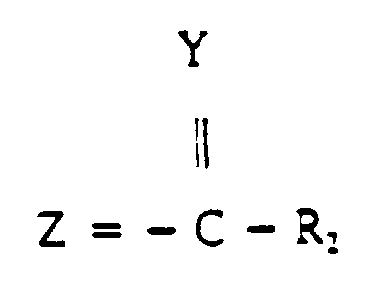
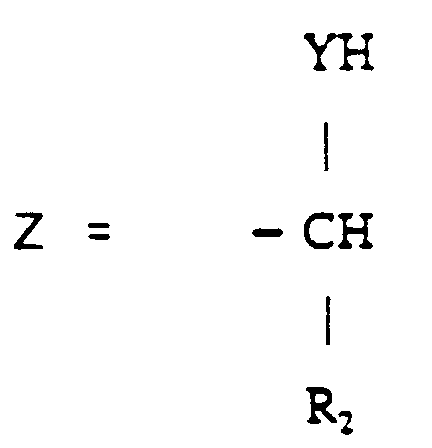 R1, R2 gleich oder verschieden sind und Wasserstoff oder einen aliphatischen und/oder alicyclischen und/oder aromatischen und/oder heterocyclischen Kohlenwasserstoffrest vorzugsweise ein Wasserstoffatom oder einen Alkylrest darstellen,X und Y gleich oder verschieden sind und Sauerstoff oder Schwefel darstellen,und L eine kovalente σ-Einfachbindung oder eine Alkylgruppe mit 1 oder 2 C darstellt,mit R2 und Y wie oben definiert, wobei R2 außerdem einen NH2-, Alkoxy-, S-Alkyl-Rest oder:
 mit n = 1 bis 1 000, darstellen kann,
ein Verfahren vom Typ derjenigen, bei denen eine Reduktion der Verbindung (Id) mit Hilfe wenigstens eines Reduktionsmittels vom Hydrid-Typ beteiligt ist.
dadurch gekennzeichnet, daß in wasserfreiem Medium:a) - man die Reduktion der Verbindung (Id) zur Verbindung (If) in einem organischen Lösungsmittelmedium ausführt,b) - man dem Reaktionsmedium wenigstens ein Co-Reagens hinzufügt:das mit wenigstens einem XH- oder YH-Rest, vorzugsweise mit wenigstens zwei, substituiert ist,das fähig ist, die Verbindung (If) in dem aus dem vorhergehenden Schritt a hervorgegangenen Zwischenprodukt zu ersetzen,und das eine Siedetemperatur bei Normalluftdruck Patm besitzt, die höher als die der Verbindung (If) ist,c) - man das Reaktionsmedium direkt destilliert, um diese Verbindung (If) zu gewinnen. - Verfahren gemäß Anspruch 1, dadurch gekennzeichnet, daß die Schritte a), b) und c) aufeinander folgen.
- Verfahren gemäß Anspruch 1 oder Anspruch 2, dadurch gekennzeichnet, daß man das Co-Reagens unter den Thiolen, wie Thiosalicylsäure und/oder 2- oder 4-Chlorbenzylmercaptan, und/oder den Alkoholen, wie den aromatischen Alkoholen und/oder den aliphatischen Alkoholen und/oder den alicyclischen Alkoholen und/oder den Polyolen, insbesondere den zuckerartigen, und/oder den Carbonsäuren mit wenigstens einer Hydroxylgruppe, vorzugsweise unter den aromatischen Alkoholen und/oder den Hydroxycarbonsäuren mit 4 bis 10 Kohlenstoffatomen auswählt.
- Verfahren gemäß Anspruch 3, dadurch gekennzeichnet, daß das Co-Reagens zwei XH- und/oder YH-Reste umfaßt, die auf dem kürzesten Weg vorzugsweise 2 bis 4 Kohlenstoffatome entfernt sind.
- Verfahren gemäß Anspruch 4, dadurch gekennzeichnet, daß das Co-Reagens unter den substituierten oder nicht substituierten Diphenolen und vorzugsweise unter den folgenden Verbindungen ausgewählt ist:
Brenzcatechin - Resorcin - Hydrochinon - Verfahren gemäß Anspruch 3, dadurch gekennzeichnet, daß das Co-Reagens aus der folgenden Liste von Verbindungen ausgewählt ist:
Benzylalkohol - 1-Octanol - 1-Dodecanol - Glycerin - Glykolsäure - Weinsäure - Mandelsäure - Verfahren gemäß einem der Ansprüche 1 bis 6, dadurch gekennzeichnet, daß man den (oder die) Bestandteil(e) des wasserfreien organischen Lösungsmittelmediums unter den polaren Lösungsmitteln, vorzugsweise unter den Glykolethem oder deren Vorstufen, wie den Polyethylenglykolen, auswählt.
- Verfahren gemäß einem der Ansprüche 1 bis 6, dadurch gekennzeichnet, daß man den (oder die) Bestandteil(e) des wasserfreien organischen Lösungmittelmediums unter den unpolaren Lösungsmitteln, vorzugsweise unter den gegebenenfalls hydroxylierten Alkylen und/oder den insbesondere durch Alkyle und/oder Halogenide substituierten oder nicht substituierten Arylen auswählt; die Benzol-Kohlenwasserstoffe, wie Xylol, sind besonders bevorzugt.
- Verfahren gemäß einem der Ansprüche 1 bis 8, dadurch gekennzeichnet, daß wenigstens einer der Bestandteile des Lösungsmittelmediums so gewählt ist, daß er mit der Verbindung (If), wenn diese in dem aus dem Schritt a hervorgegangenen Zwischenprodukt einmal durch das Co-Reagens ersetzt ist, ein Azeotrop bildet.
- Verfahren gemäß einem der Ansprüche 1 bis 9, dadurch gekennzeichnet, daß man ein Hydrid einsetzt, das unter den Hydriden der Metalle, vorzugsweise der Metalle der Gruppe IIIA des Periodensystems ausgewählt ist, wobei Bor ganz besonders bevorzugt ist, und man noch stärker bevorzugt NaBH4 auswählt.
- Verfahren gemäß einem der Ansprüche 1 bis 10, dadurch gekennzeichnet, daß sich der Schritt c unter Vakuum vollzieht.
- Verfahren gemäß einem der Ansprüche 1 bis 11, dadurch gekennzeichnet, daß in den Formeln (If) und (Id):X, Y Sauerstoff darstellen,L eine σ-Einfachbindung darstellt,R1 ein C1- bis C10-Alkylrest, vorzugsweise ein Methyl-, Ethyl- oder Butylrest ist,R2 ein C1- bis C10-Alkoxyrest, vorzugsweise ein Methoxy-, Ethoxy-, Butoxy-, Isobutoxyrest ist.
- Verfahren gemäß einem der Ansprüche 1 bis 12, dadurch gekennzeichnet, daß:(Id) = Alkyl-, vorzugsweise Methyllactat,(If) = Propan-1,2-diol.
Applications Claiming Priority (3)
| Application Number | Priority Date | Filing Date | Title |
|---|---|---|---|
| FR9307280A FR2706450B1 (fr) | 1993-06-11 | 1993-06-11 | Procédé de préparation de composés difonctionnels de haute pureté énantiomérique. |
| FR9307280 | 1993-06-11 | ||
| PCT/FR1994/000673 WO1994029253A1 (fr) | 1993-06-11 | 1994-06-08 | Procede de preparation de composes difonctionnels de haute purete enantiomerique |
Publications (2)
| Publication Number | Publication Date |
|---|---|
| EP0702667A1 EP0702667A1 (de) | 1996-03-27 |
| EP0702667B1 true EP0702667B1 (de) | 1998-01-21 |
Family
ID=9448213
Family Applications (1)
| Application Number | Title | Priority Date | Filing Date |
|---|---|---|---|
| EP94918893A Expired - Lifetime EP0702667B1 (de) | 1993-06-11 | 1994-06-08 | Verfahren zur herstellung von hoch enantiomerenreinen difunktionellen verbindungen |
Country Status (10)
| Country | Link |
|---|---|
| US (1) | US5981809A (de) |
| EP (1) | EP0702667B1 (de) |
| JP (1) | JPH10507996A (de) |
| AT (1) | ATE162510T1 (de) |
| AU (1) | AU7001694A (de) |
| CA (1) | CA2164724A1 (de) |
| DE (1) | DE69408136T2 (de) |
| ES (1) | ES2111935T3 (de) |
| FR (1) | FR2706450B1 (de) |
| WO (1) | WO1994029253A1 (de) |
Families Citing this family (2)
| Publication number | Priority date | Publication date | Assignee | Title |
|---|---|---|---|---|
| EP1146032A4 (de) | 1999-11-19 | 2005-04-13 | Ihara Chemical Ind Co | Verfahren zur herstellung von alkandiolderivaten |
| CN103458928B (zh) * | 2011-01-18 | 2015-09-30 | 魏德烽 | (r)-1,2-丙二醇用作治疗性冷却剂组合物中的溶剂 |
Family Cites Families (3)
| Publication number | Priority date | Publication date | Assignee | Title |
|---|---|---|---|---|
| US4088666A (en) * | 1969-03-18 | 1978-05-09 | Exxon Research & Engineering Co. | Reductions with chelated lithium hydridoaluminates or hydridoborates |
| DE3823787C1 (de) * | 1988-07-14 | 1989-05-24 | Boehringer Ingelheim Kg, 6507 Ingelheim, De | |
| US5196601A (en) * | 1989-12-26 | 1993-03-23 | Kao Corporation | Process for producing alcohol or amine |
-
1993
- 1993-06-11 FR FR9307280A patent/FR2706450B1/fr not_active Expired - Fee Related
-
1994
- 1994-06-08 CA CA002164724A patent/CA2164724A1/fr not_active Abandoned
- 1994-06-08 US US08/553,675 patent/US5981809A/en not_active Expired - Fee Related
- 1994-06-08 AT AT94918893T patent/ATE162510T1/de not_active IP Right Cessation
- 1994-06-08 DE DE69408136T patent/DE69408136T2/de not_active Expired - Fee Related
- 1994-06-08 ES ES94918893T patent/ES2111935T3/es not_active Expired - Lifetime
- 1994-06-08 EP EP94918893A patent/EP0702667B1/de not_active Expired - Lifetime
- 1994-06-08 AU AU70016/94A patent/AU7001694A/en not_active Abandoned
- 1994-06-08 JP JP7501411A patent/JPH10507996A/ja active Pending
- 1994-06-08 WO PCT/FR1994/000673 patent/WO1994029253A1/fr not_active Ceased
Also Published As
| Publication number | Publication date |
|---|---|
| EP0702667A1 (de) | 1996-03-27 |
| ATE162510T1 (de) | 1998-02-15 |
| US5981809A (en) | 1999-11-09 |
| DE69408136T2 (de) | 1998-07-30 |
| FR2706450B1 (fr) | 1995-10-06 |
| WO1994029253A1 (fr) | 1994-12-22 |
| JPH10507996A (ja) | 1998-08-04 |
| AU7001694A (en) | 1995-01-03 |
| FR2706450A1 (fr) | 1994-12-23 |
| CA2164724A1 (fr) | 1994-12-22 |
| ES2111935T3 (es) | 1998-03-16 |
| DE69408136D1 (de) | 1998-02-26 |
Similar Documents
| Publication | Publication Date | Title |
|---|---|---|
| EP2097431B1 (de) | Katalytische komplexe auf rutheniumbasis und die anwendung solcher komplexe in der olefinmetathese | |
| CH636848A5 (fr) | Procede de production de n,n-di(ethyl)-meta-toluamide. | |
| CN110078605B (zh) | 有机硼酸与α,β-不饱和酮的不对称共轭加成反应合成光学活性三氟甲基化合物的方法 | |
| EP2651866B1 (de) | Verfahren zur herstellung eines polyolethers | |
| EP2523940B1 (de) | Verfahren zur herstellung von aminoethyl-imidazolidinone oder dem thiocarbonyl davon | |
| EP0805800A1 (de) | Verfahren zur herstellung von (+)compactin und (+)mevinolin derivaten mit beta-hydroxy-delta-lactonresten | |
| EP0715615B1 (de) | Verfahren zur herstellung von (+)-(1r)-cis-3-oxo-2-pentyl-1-cyclopentanessigsäure | |
| FR2723946A1 (fr) | Procede de fabrication d'un diester de l'acide 2,5-furane dicarboxylique | |
| EP1625108B1 (de) | Trennung von glyoxaldiacetalen durch flüssig-flüssig-gegenstromextraktion | |
| EP1458729B1 (de) | (aryl) (amino)boranen und verfahren zur deren herstellung | |
| EP0030528B1 (de) | Verfahren zur Einführung von Alkyl-Aralkyl-Cycloalkylgruppen in eine Funktionsgruppe enthaltende Kohlenstoffkette | |
| EP0702667A1 (de) | Verfahren zur herstellung von hoch enantiomerenreiner difunktioneller verbindungen | |
| EP2616452A1 (de) | Verfahren zur herstellung von dioxolan | |
| EP1056741B1 (de) | Verfahren zur herstellung von dimeren zyklischen estern | |
| EP0841331B1 (de) | Neue Epoxiden, Verfahren zu ihrer Herstellung und ihre Verwendung für die Herstellung von Riechstoff-Bestandteilen | |
| EP3481812B1 (de) | Verfahren zur umwandlung von levoglucosenon in 4-hydroxymethyl-butyrolacton und 4-hydroxymethyl-butenolid ohne verwendung eines beliebigen organischen lösungsmittels und katalysators | |
| FR2525590A1 (fr) | Preparation en phase liquide d'esters d'acides delta-cetocarboxyliques utilisant un catalyseur insoluble dans la phase liquide | |
| WO2023232427A1 (fr) | Synthese de l'acide levulinique par hydratation d'alcool furfurylque en presence d'un catalyseur homogene acide et d'un solvant a base d'ether et/ou d'acetals | |
| WO2006114492A1 (fr) | Procede de preparation d'adenine hydroxypropylenee optiquement active | |
| FR2643636A1 (fr) | Procede de preparation de lactones (alpha)-alkylidene substituees a partir de lactones (alpha)-acetyl substituees | |
| JP2003012593A (ja) | o−フタルアルデヒドを精製及び製剤化するための改善された方法 | |
| FR2643635A1 (fr) | Procede de preparation d'(alpha)-alkyl-lactones | |
| FR2934997A1 (fr) | Derives cyclopropyl-et cyclobutyl-dioxazaborocanes ou dioxazaborecanes | |
| WO1998054121A1 (fr) | Nouveau procede de preparation de 2-trifluoro-methoxy-aniline | |
| FR3135979A1 (fr) | Procede de separation de l’acide levulinique par separation thermique en presence d’un fluxant |
Legal Events
| Date | Code | Title | Description |
|---|---|---|---|
| PUAI | Public reference made under article 153(3) epc to a published international application that has entered the european phase |
Free format text: ORIGINAL CODE: 0009012 |
|
| 17P | Request for examination filed |
Effective date: 19951123 |
|
| AK | Designated contracting states |
Kind code of ref document: A1 Designated state(s): AT BE CH DE DK ES FR GB GR IE IT LI LU MC NL PT SE |
|
| GRAG | Despatch of communication of intention to grant |
Free format text: ORIGINAL CODE: EPIDOS AGRA |
|
| 17Q | First examination report despatched |
Effective date: 19961227 |
|
| GRAG | Despatch of communication of intention to grant |
Free format text: ORIGINAL CODE: EPIDOS AGRA |
|
| GRAH | Despatch of communication of intention to grant a patent |
Free format text: ORIGINAL CODE: EPIDOS IGRA |
|
| GRAH | Despatch of communication of intention to grant a patent |
Free format text: ORIGINAL CODE: EPIDOS IGRA |
|
| ITF | It: translation for a ep patent filed | ||
| GRAA | (expected) grant |
Free format text: ORIGINAL CODE: 0009210 |
|
| AK | Designated contracting states |
Kind code of ref document: B1 Designated state(s): AT BE CH DE DK ES FR GB GR IE IT LI LU MC NL PT SE |
|
| PG25 | Lapsed in a contracting state [announced via postgrant information from national office to epo] |
Ref country code: GR Free format text: LAPSE BECAUSE OF FAILURE TO SUBMIT A TRANSLATION OF THE DESCRIPTION OR TO PAY THE FEE WITHIN THE PRESCRIBED TIME-LIMIT Effective date: 19980121 |
|
| REF | Corresponds to: |
Ref document number: 162510 Country of ref document: AT Date of ref document: 19980215 Kind code of ref document: T |
|
| REG | Reference to a national code |
Ref country code: CH Ref legal event code: EP |
|
| GBT | Gb: translation of ep patent filed (gb section 77(6)(a)/1977) |
Effective date: 19980202 |
|
| REF | Corresponds to: |
Ref document number: 69408136 Country of ref document: DE Date of ref document: 19980226 |
|
| REG | Reference to a national code |
Ref country code: CH Ref legal event code: NV Representative=s name: KIRKER & CIE SA |
|
| REG | Reference to a national code |
Ref country code: ES Ref legal event code: FG2A Ref document number: 2111935 Country of ref document: ES Kind code of ref document: T3 |
|
| RAP2 | Party data changed (patent owner data changed or rights of a patent transferred) |
Owner name: RHODIA CHIMIE |
|
| PG25 | Lapsed in a contracting state [announced via postgrant information from national office to epo] |
Ref country code: SE Free format text: LAPSE BECAUSE OF FAILURE TO SUBMIT A TRANSLATION OF THE DESCRIPTION OR TO PAY THE FEE WITHIN THE PRESCRIBED TIME-LIMIT Effective date: 19980421 Ref country code: PT Free format text: LAPSE BECAUSE OF FAILURE TO SUBMIT A TRANSLATION OF THE DESCRIPTION OR TO PAY THE FEE WITHIN THE PRESCRIBED TIME-LIMIT Effective date: 19980421 Ref country code: DK Free format text: LAPSE BECAUSE OF FAILURE TO SUBMIT A TRANSLATION OF THE DESCRIPTION OR TO PAY THE FEE WITHIN THE PRESCRIBED TIME-LIMIT Effective date: 19980421 |
|
| PG25 | Lapsed in a contracting state [announced via postgrant information from national office to epo] |
Ref country code: LU Free format text: LAPSE BECAUSE OF NON-PAYMENT OF DUE FEES Effective date: 19980608 |
|
| REG | Reference to a national code |
Ref country code: IE Ref legal event code: FG4D Free format text: 78587 |
|
| NLT2 | Nl: modifications (of names), taken from the european patent patent bulletin |
Owner name: RHODIA CHIMIE |
|
| PLBE | No opposition filed within time limit |
Free format text: ORIGINAL CODE: 0009261 |
|
| STAA | Information on the status of an ep patent application or granted ep patent |
Free format text: STATUS: NO OPPOSITION FILED WITHIN TIME LIMIT |
|
| PG25 | Lapsed in a contracting state [announced via postgrant information from national office to epo] |
Ref country code: MC Free format text: LAPSE BECAUSE OF NON-PAYMENT OF DUE FEES Effective date: 19981231 |
|
| 26N | No opposition filed | ||
| PGFP | Annual fee paid to national office [announced via postgrant information from national office to epo] |
Ref country code: DE Payment date: 20000605 Year of fee payment: 7 |
|
| PGFP | Annual fee paid to national office [announced via postgrant information from national office to epo] |
Ref country code: GB Payment date: 20000607 Year of fee payment: 7 |
|
| PGFP | Annual fee paid to national office [announced via postgrant information from national office to epo] |
Ref country code: IE Payment date: 20000612 Year of fee payment: 7 |
|
| PGFP | Annual fee paid to national office [announced via postgrant information from national office to epo] |
Ref country code: ES Payment date: 20000623 Year of fee payment: 7 |
|
| PGFP | Annual fee paid to national office [announced via postgrant information from national office to epo] |
Ref country code: FR Payment date: 20000628 Year of fee payment: 7 |
|
| PGFP | Annual fee paid to national office [announced via postgrant information from national office to epo] |
Ref country code: NL Payment date: 20000630 Year of fee payment: 7 Ref country code: AT Payment date: 20000630 Year of fee payment: 7 |
|
| PGFP | Annual fee paid to national office [announced via postgrant information from national office to epo] |
Ref country code: BE Payment date: 20000801 Year of fee payment: 7 |
|
| PGFP | Annual fee paid to national office [announced via postgrant information from national office to epo] |
Ref country code: CH Payment date: 20000914 Year of fee payment: 7 |
|
| PG25 | Lapsed in a contracting state [announced via postgrant information from national office to epo] |
Ref country code: IE Free format text: LAPSE BECAUSE OF NON-PAYMENT OF DUE FEES Effective date: 20010608 Ref country code: GB Free format text: LAPSE BECAUSE OF NON-PAYMENT OF DUE FEES Effective date: 20010608 Ref country code: AT Free format text: LAPSE BECAUSE OF NON-PAYMENT OF DUE FEES Effective date: 20010608 |
|
| PG25 | Lapsed in a contracting state [announced via postgrant information from national office to epo] |
Ref country code: ES Free format text: LAPSE BECAUSE OF NON-PAYMENT OF DUE FEES Effective date: 20010609 |
|
| PG25 | Lapsed in a contracting state [announced via postgrant information from national office to epo] |
Ref country code: LI Free format text: LAPSE BECAUSE OF NON-PAYMENT OF DUE FEES Effective date: 20010630 Ref country code: CH Free format text: LAPSE BECAUSE OF NON-PAYMENT OF DUE FEES Effective date: 20010630 Ref country code: BE Free format text: LAPSE BECAUSE OF NON-PAYMENT OF DUE FEES Effective date: 20010630 |
|
| BERE | Be: lapsed |
Owner name: RHONE-POULENC CHIMIE Effective date: 20010630 |
|
| PG25 | Lapsed in a contracting state [announced via postgrant information from national office to epo] |
Ref country code: NL Free format text: LAPSE BECAUSE OF NON-PAYMENT OF DUE FEES Effective date: 20020101 |
|
| GBPC | Gb: european patent ceased through non-payment of renewal fee |
Effective date: 20010608 |
|
| REG | Reference to a national code |
Ref country code: CH Ref legal event code: PL |
|
| PG25 | Lapsed in a contracting state [announced via postgrant information from national office to epo] |
Ref country code: FR Free format text: LAPSE BECAUSE OF NON-PAYMENT OF DUE FEES Effective date: 20020228 |
|
| NLV4 | Nl: lapsed or anulled due to non-payment of the annual fee |
Effective date: 20020101 |
|
| PG25 | Lapsed in a contracting state [announced via postgrant information from national office to epo] |
Ref country code: DE Free format text: LAPSE BECAUSE OF NON-PAYMENT OF DUE FEES Effective date: 20020403 |
|
| REG | Reference to a national code |
Ref country code: ES Ref legal event code: FD2A Effective date: 20030203 |
|
| PG25 | Lapsed in a contracting state [announced via postgrant information from national office to epo] |
Ref country code: IT Free format text: LAPSE BECAUSE OF NON-PAYMENT OF DUE FEES Effective date: 20050608 |