EP0705904A1 - Microorganismes nitrifiant et luminescents - Google Patents
Microorganismes nitrifiant et luminescents Download PDFInfo
- Publication number
- EP0705904A1 EP0705904A1 EP95113492A EP95113492A EP0705904A1 EP 0705904 A1 EP0705904 A1 EP 0705904A1 EP 95113492 A EP95113492 A EP 95113492A EP 95113492 A EP95113492 A EP 95113492A EP 0705904 A1 EP0705904 A1 EP 0705904A1
- Authority
- EP
- European Patent Office
- Prior art keywords
- vector
- bioluminescent
- plasmid
- nitrosomonas
- microorganisms
- Prior art date
- Legal status (The legal status is an assumption and is not a legal conclusion. Google has not performed a legal analysis and makes no representation as to the accuracy of the status listed.)
- Granted
Links
- 230000001546 nitrifying effect Effects 0.000 title claims abstract description 25
- 244000005700 microbiome Species 0.000 title claims description 16
- 241000894006 Bacteria Species 0.000 claims abstract description 38
- 238000000034 method Methods 0.000 claims abstract description 25
- 230000002068 genetic effect Effects 0.000 claims abstract description 12
- 239000013612 plasmid Substances 0.000 claims description 32
- 241000605122 Nitrosomonas Species 0.000 claims description 23
- 239000013598 vector Substances 0.000 claims description 23
- 238000004020 luminiscence type Methods 0.000 claims description 22
- QGZKDVFQNNGYKY-UHFFFAOYSA-N Ammonia Chemical compound N QGZKDVFQNNGYKY-UHFFFAOYSA-N 0.000 claims description 17
- 230000004927 fusion Effects 0.000 claims description 12
- 239000003112 inhibitor Substances 0.000 claims description 12
- 239000007800 oxidant agent Substances 0.000 claims description 9
- 229910021529 ammonia Inorganic materials 0.000 claims description 8
- 230000008569 process Effects 0.000 claims description 8
- 108060001084 Luciferase Proteins 0.000 claims description 7
- 239000010865 sewage Substances 0.000 claims description 7
- 238000012546 transfer Methods 0.000 claims description 7
- 239000005089 Luciferase Substances 0.000 claims description 5
- 238000004519 manufacturing process Methods 0.000 claims description 5
- 238000013518 transcription Methods 0.000 claims description 5
- 230000035897 transcription Effects 0.000 claims description 5
- 241001453382 Nitrosomonadales Species 0.000 claims description 4
- 108700008625 Reporter Genes Proteins 0.000 claims 1
- 238000005415 bioluminescence Methods 0.000 abstract description 8
- 230000029918 bioluminescence Effects 0.000 abstract description 8
- 108090000623 proteins and genes Proteins 0.000 description 24
- 101150066555 lacZ gene Proteins 0.000 description 17
- 229930027917 kanamycin Natural products 0.000 description 13
- 229960000318 kanamycin Drugs 0.000 description 13
- 229930182823 kanamycin A Natural products 0.000 description 13
- IJGRMHOSHXDMSA-UHFFFAOYSA-N Atomic nitrogen Chemical compound N#N IJGRMHOSHXDMSA-UHFFFAOYSA-N 0.000 description 12
- 102000005936 beta-Galactosidase Human genes 0.000 description 12
- 108010005774 beta-Galactosidase Proteins 0.000 description 12
- SBUJHOSQTJFQJX-NOAMYHISSA-N kanamycin Chemical compound O[C@@H]1[C@@H](O)[C@H](O)[C@@H](CN)O[C@@H]1O[C@H]1[C@H](O)[C@@H](O[C@@H]2[C@@H]([C@@H](N)[C@H](O)[C@@H](CO)O2)O)[C@H](N)C[C@@H]1N SBUJHOSQTJFQJX-NOAMYHISSA-N 0.000 description 12
- 239000002609 medium Substances 0.000 description 11
- 241000588724 Escherichia coli Species 0.000 description 10
- 230000001580 bacterial effect Effects 0.000 description 10
- 239000012634 fragment Substances 0.000 description 10
- QGZKDVFQNNGYKY-UHFFFAOYSA-O Ammonium Chemical compound [NH4+] QGZKDVFQNNGYKY-UHFFFAOYSA-O 0.000 description 8
- 108020004414 DNA Proteins 0.000 description 8
- 238000005259 measurement Methods 0.000 description 8
- 230000014509 gene expression Effects 0.000 description 7
- HTKFORQRBXIQHD-UHFFFAOYSA-N allylthiourea Chemical compound NC(=S)NCC=C HTKFORQRBXIQHD-UHFFFAOYSA-N 0.000 description 6
- 229960001748 allylthiourea Drugs 0.000 description 6
- 229910052757 nitrogen Inorganic materials 0.000 description 6
- 230000009467 reduction Effects 0.000 description 6
- 239000002351 wastewater Substances 0.000 description 6
- IOVCWXUNBOPUCH-UHFFFAOYSA-M Nitrite anion Chemical compound [O-]N=O IOVCWXUNBOPUCH-UHFFFAOYSA-M 0.000 description 5
- 239000004098 Tetracycline Substances 0.000 description 5
- 230000000694 effects Effects 0.000 description 5
- DCUJJWWUNKIJPH-UHFFFAOYSA-N nitrapyrin Chemical compound ClC1=CC=CC(C(Cl)(Cl)Cl)=N1 DCUJJWWUNKIJPH-UHFFFAOYSA-N 0.000 description 5
- 230000003647 oxidation Effects 0.000 description 5
- 238000007254 oxidation reaction Methods 0.000 description 5
- 229960002180 tetracycline Drugs 0.000 description 5
- 229930101283 tetracycline Natural products 0.000 description 5
- 235000019364 tetracycline Nutrition 0.000 description 5
- 150000003522 tetracyclines Chemical class 0.000 description 5
- OPIFSICVWOWJMJ-AEOCFKNESA-N 5-bromo-4-chloro-3-indolyl beta-D-galactoside Chemical compound O[C@@H]1[C@@H](O)[C@@H](O)[C@@H](CO)O[C@H]1OC1=CNC2=CC=C(Br)C(Cl)=C12 OPIFSICVWOWJMJ-AEOCFKNESA-N 0.000 description 4
- CURLTUGMZLYLDI-UHFFFAOYSA-N Carbon dioxide Chemical compound O=C=O CURLTUGMZLYLDI-UHFFFAOYSA-N 0.000 description 4
- 229910002651 NO3 Inorganic materials 0.000 description 4
- NHNBFGGVMKEFGY-UHFFFAOYSA-N Nitrate Chemical compound [O-][N+]([O-])=O NHNBFGGVMKEFGY-UHFFFAOYSA-N 0.000 description 4
- 230000008901 benefit Effects 0.000 description 4
- HFJRKMMYBMWEAD-UHFFFAOYSA-N dodecanal Chemical compound CCCCCCCCCCCC=O HFJRKMMYBMWEAD-UHFFFAOYSA-N 0.000 description 4
- 238000012360 testing method Methods 0.000 description 4
- OKTJSMMVPCPJKN-UHFFFAOYSA-N Carbon Chemical compound [C] OKTJSMMVPCPJKN-UHFFFAOYSA-N 0.000 description 3
- 206010010144 Completed suicide Diseases 0.000 description 3
- WQZGKKKJIJFFOK-GASJEMHNSA-N Glucose Natural products OC[C@H]1OC(O)[C@H](O)[C@@H](O)[C@@H]1O WQZGKKKJIJFFOK-GASJEMHNSA-N 0.000 description 3
- ONIBWKKTOPOVIA-BYPYZUCNSA-N L-Proline Chemical compound OC(=O)[C@@H]1CCCN1 ONIBWKKTOPOVIA-BYPYZUCNSA-N 0.000 description 3
- ONIBWKKTOPOVIA-UHFFFAOYSA-N Proline Natural products OC(=O)C1CCCN1 ONIBWKKTOPOVIA-UHFFFAOYSA-N 0.000 description 3
- JZRWCGZRTZMZEH-UHFFFAOYSA-N Thiamine Natural products CC1=C(CCO)SC=[N+]1CC1=CN=C(C)N=C1N JZRWCGZRTZMZEH-UHFFFAOYSA-N 0.000 description 3
- QVGXLLKOCUKJST-UHFFFAOYSA-N atomic oxygen Chemical compound [O] QVGXLLKOCUKJST-UHFFFAOYSA-N 0.000 description 3
- WQZGKKKJIJFFOK-VFUOTHLCSA-N beta-D-glucose Chemical compound OC[C@H]1O[C@@H](O)[C@H](O)[C@@H](O)[C@@H]1O WQZGKKKJIJFFOK-VFUOTHLCSA-N 0.000 description 3
- 230000015572 biosynthetic process Effects 0.000 description 3
- 229910052799 carbon Inorganic materials 0.000 description 3
- 238000006243 chemical reaction Methods 0.000 description 3
- 239000003795 chemical substances by application Substances 0.000 description 3
- 238000010367 cloning Methods 0.000 description 3
- 239000008103 glucose Substances 0.000 description 3
- 238000011534 incubation Methods 0.000 description 3
- 230000005764 inhibitory process Effects 0.000 description 3
- 230000002906 microbiologic effect Effects 0.000 description 3
- 238000002703 mutagenesis Methods 0.000 description 3
- 231100000350 mutagenesis Toxicity 0.000 description 3
- 229960000210 nalidixic acid Drugs 0.000 description 3
- MHWLWQUZZRMNGJ-UHFFFAOYSA-N nalidixic acid Chemical compound C1=C(C)N=C2N(CC)C=C(C(O)=O)C(=O)C2=C1 MHWLWQUZZRMNGJ-UHFFFAOYSA-N 0.000 description 3
- 229910052760 oxygen Inorganic materials 0.000 description 3
- 239000001301 oxygen Substances 0.000 description 3
- 239000000523 sample Substances 0.000 description 3
- 239000006152 selective media Substances 0.000 description 3
- 239000000758 substrate Substances 0.000 description 3
- KYMBYSLLVAOCFI-UHFFFAOYSA-N thiamine Chemical compound CC1=C(CCO)SCN1CC1=CN=C(C)N=C1N KYMBYSLLVAOCFI-UHFFFAOYSA-N 0.000 description 3
- 229960003495 thiamine Drugs 0.000 description 3
- 235000019157 thiamine Nutrition 0.000 description 3
- 239000011721 thiamine Substances 0.000 description 3
- XLYOFNOQVPJJNP-UHFFFAOYSA-N water Substances O XLYOFNOQVPJJNP-UHFFFAOYSA-N 0.000 description 3
- 241000607620 Aliivibrio fischeri Species 0.000 description 2
- 108010020056 Hydrogenase Proteins 0.000 description 2
- 229930193140 Neomycin Natural products 0.000 description 2
- MWUXSHHQAYIFBG-UHFFFAOYSA-N Nitric oxide Chemical compound O=[N] MWUXSHHQAYIFBG-UHFFFAOYSA-N 0.000 description 2
- 241000607618 Vibrio harveyi Species 0.000 description 2
- 229960000723 ampicillin Drugs 0.000 description 2
- AVKUERGKIZMTKX-NJBDSQKTSA-N ampicillin Chemical compound C1([C@@H](N)C(=O)N[C@H]2[C@H]3SC([C@@H](N3C2=O)C(O)=O)(C)C)=CC=CC=C1 AVKUERGKIZMTKX-NJBDSQKTSA-N 0.000 description 2
- 230000003115 biocidal effect Effects 0.000 description 2
- 229910002092 carbon dioxide Inorganic materials 0.000 description 2
- 239000001569 carbon dioxide Substances 0.000 description 2
- 230000001413 cellular effect Effects 0.000 description 2
- 229960005091 chloramphenicol Drugs 0.000 description 2
- WIIZWVCIJKGZOK-RKDXNWHRSA-N chloramphenicol Chemical compound ClC(Cl)C(=O)N[C@H](CO)[C@H](O)C1=CC=C([N+]([O-])=O)C=C1 WIIZWVCIJKGZOK-RKDXNWHRSA-N 0.000 description 2
- 150000001875 compounds Chemical class 0.000 description 2
- 238000012217 deletion Methods 0.000 description 2
- 230000037430 deletion Effects 0.000 description 2
- 238000001514 detection method Methods 0.000 description 2
- 230000008030 elimination Effects 0.000 description 2
- 238000003379 elimination reaction Methods 0.000 description 2
- 238000005516 engineering process Methods 0.000 description 2
- 239000013604 expression vector Substances 0.000 description 2
- 238000010353 genetic engineering Methods 0.000 description 2
- 230000030414 genetic transfer Effects 0.000 description 2
- 238000001727 in vivo Methods 0.000 description 2
- BPHPUYQFMNQIOC-NXRLNHOXSA-N isopropyl beta-D-thiogalactopyranoside Chemical compound CC(C)S[C@@H]1O[C@H](CO)[C@H](O)[C@H](O)[C@H]1O BPHPUYQFMNQIOC-NXRLNHOXSA-N 0.000 description 2
- 230000007246 mechanism Effects 0.000 description 2
- 230000000813 microbial effect Effects 0.000 description 2
- 229960004927 neomycin Drugs 0.000 description 2
- 150000002894 organic compounds Chemical class 0.000 description 2
- 230000035806 respiratory chain Effects 0.000 description 2
- 108091008146 restriction endonucleases Proteins 0.000 description 2
- 230000035945 sensitivity Effects 0.000 description 2
- 239000000126 substance Substances 0.000 description 2
- 238000010998 test method Methods 0.000 description 2
- 229920001817 Agar Polymers 0.000 description 1
- 241000589158 Agrobacterium Species 0.000 description 1
- 241000131971 Bradyrhizobiaceae Species 0.000 description 1
- 0 CC(C)C(C1)*2(C3C2)C3(C)C(C)C1C1CC1 Chemical compound CC(C)C(C1)*2(C3C2)C3(C)C(C)C1C1CC1 0.000 description 1
- 108091027551 Cointegrate Proteins 0.000 description 1
- 241000252867 Cupriavidus metallidurans Species 0.000 description 1
- 102100030497 Cytochrome c Human genes 0.000 description 1
- 108010052832 Cytochromes Proteins 0.000 description 1
- 102000018832 Cytochromes Human genes 0.000 description 1
- 108010075031 Cytochromes c Proteins 0.000 description 1
- ZAQJHHRNXZUBTE-UHFFFAOYSA-N D-threo-2-Pentulose Natural products OCC(O)C(O)C(=O)CO ZAQJHHRNXZUBTE-UHFFFAOYSA-N 0.000 description 1
- 102000053602 DNA Human genes 0.000 description 1
- 238000012270 DNA recombination Methods 0.000 description 1
- 108010054576 Deoxyribonuclease EcoRI Proteins 0.000 description 1
- 108010001394 Disaccharidases Proteins 0.000 description 1
- 108091006149 Electron carriers Proteins 0.000 description 1
- 241000605159 Nitrobacter Species 0.000 description 1
- 241000510692 Nitrosomonas aestuarii Species 0.000 description 1
- 241000180628 Nitrosomonas communis Species 0.000 description 1
- 241000605121 Nitrosomonas europaea Species 0.000 description 1
- 241000605120 Nitrosomonas eutropha Species 0.000 description 1
- 241000180643 Nitrosomonas halophila Species 0.000 description 1
- 241000605119 Nitrosomonas marina Species 0.000 description 1
- 241000510691 Nitrosomonas nitrosa Species 0.000 description 1
- 241000143419 Nitrosomonas oligotropha Species 0.000 description 1
- 241000143395 Nitrosomonas sp. Species 0.000 description 1
- 241000180645 Nitrosomonas ureae Species 0.000 description 1
- BELBBZDIHDAJOR-UHFFFAOYSA-N Phenolsulfonephthalein Chemical compound C1=CC(O)=CC=C1C1(C=2C=CC(O)=CC=2)C2=CC=CC=C2S(=O)(=O)O1 BELBBZDIHDAJOR-UHFFFAOYSA-N 0.000 description 1
- 241000493790 Photobacterium leiognathi Species 0.000 description 1
- 108700005075 Regulator Genes Proteins 0.000 description 1
- 241000589636 Xanthomonas campestris Species 0.000 description 1
- 238000009825 accumulation Methods 0.000 description 1
- 230000002378 acidificating effect Effects 0.000 description 1
- 241001148470 aerobic bacillus Species 0.000 description 1
- 239000008272 agar Substances 0.000 description 1
- 150000001299 aldehydes Chemical class 0.000 description 1
- 230000003698 anagen phase Effects 0.000 description 1
- 238000013459 approach Methods 0.000 description 1
- 238000003556 assay Methods 0.000 description 1
- 230000001651 autotrophic effect Effects 0.000 description 1
- 230000033228 biological regulation Effects 0.000 description 1
- 230000005540 biological transmission Effects 0.000 description 1
- 238000011138 biotechnological process Methods 0.000 description 1
- 239000001045 blue dye Substances 0.000 description 1
- 238000004113 cell culture Methods 0.000 description 1
- 108091092356 cellular DNA Proteins 0.000 description 1
- 230000008859 change Effects 0.000 description 1
- 238000012512 characterization method Methods 0.000 description 1
- 230000021615 conjugation Effects 0.000 description 1
- 238000010276 construction Methods 0.000 description 1
- 239000013601 cosmid vector Substances 0.000 description 1
- 238000000354 decomposition reaction Methods 0.000 description 1
- 238000010790 dilution Methods 0.000 description 1
- 239000012895 dilution Substances 0.000 description 1
- 230000002349 favourable effect Effects 0.000 description 1
- 230000012010 growth Effects 0.000 description 1
- 238000004128 high performance liquid chromatography Methods 0.000 description 1
- 230000001771 impaired effect Effects 0.000 description 1
- 230000006872 improvement Effects 0.000 description 1
- 239000000411 inducer Substances 0.000 description 1
- 230000006698 induction Effects 0.000 description 1
- 238000003780 insertion Methods 0.000 description 1
- 230000037431 insertion Effects 0.000 description 1
- 230000003993 interaction Effects 0.000 description 1
- 238000002955 isolation Methods 0.000 description 1
- 101150109249 lacI gene Proteins 0.000 description 1
- 238000002386 leaching Methods 0.000 description 1
- 239000007788 liquid Substances 0.000 description 1
- 101150046454 luxG gene Proteins 0.000 description 1
- 101150016512 luxR gene Proteins 0.000 description 1
- 230000001404 mediated effect Effects 0.000 description 1
- 239000000203 mixture Substances 0.000 description 1
- YBVAXJOZZAJCLA-UHFFFAOYSA-N nitric acid nitrous acid Chemical compound ON=O.O[N+]([O-])=O YBVAXJOZZAJCLA-UHFFFAOYSA-N 0.000 description 1
- 229910017464 nitrogen compound Inorganic materials 0.000 description 1
- 150000002830 nitrogen compounds Chemical class 0.000 description 1
- 238000004172 nitrogen cycle Methods 0.000 description 1
- QJGQUHMNIGDVPM-UHFFFAOYSA-N nitrogen group Chemical group [N] QJGQUHMNIGDVPM-UHFFFAOYSA-N 0.000 description 1
- 239000005416 organic matter Substances 0.000 description 1
- 230000001590 oxidative effect Effects 0.000 description 1
- 230000036284 oxygen consumption Effects 0.000 description 1
- 230000020477 pH reduction Effects 0.000 description 1
- 230000007918 pathogenicity Effects 0.000 description 1
- 239000007793 ph indicator Substances 0.000 description 1
- 229960003531 phenolsulfonphthalein Drugs 0.000 description 1
- 230000035479 physiological effects, processes and functions Effects 0.000 description 1
- 230000000644 propagated effect Effects 0.000 description 1
- 150000003222 pyridines Chemical class 0.000 description 1
- 238000011160 research Methods 0.000 description 1
- 238000012552 review Methods 0.000 description 1
- 239000013535 sea water Substances 0.000 description 1
- 239000002689 soil Substances 0.000 description 1
- 239000007787 solid Substances 0.000 description 1
- 241000894007 species Species 0.000 description 1
- 239000000725 suspension Substances 0.000 description 1
- 231100000331 toxic Toxicity 0.000 description 1
- 230000002588 toxic effect Effects 0.000 description 1
- 239000003440 toxic substance Substances 0.000 description 1
- 231100000419 toxicity Toxicity 0.000 description 1
- 230000001988 toxicity Effects 0.000 description 1
- 231100000041 toxicology testing Toxicity 0.000 description 1
- 230000017105 transposition Effects 0.000 description 1
- 238000000825 ultraviolet detection Methods 0.000 description 1
Images






Classifications
-
- C—CHEMISTRY; METALLURGY
- C12—BIOCHEMISTRY; BEER; SPIRITS; WINE; VINEGAR; MICROBIOLOGY; ENZYMOLOGY; MUTATION OR GENETIC ENGINEERING
- C12N—MICROORGANISMS OR ENZYMES; COMPOSITIONS THEREOF; PROPAGATING, PRESERVING, OR MAINTAINING MICROORGANISMS; MUTATION OR GENETIC ENGINEERING; CULTURE MEDIA
- C12N9/00—Enzymes; Proenzymes; Compositions thereof; Processes for preparing, activating, inhibiting, separating or purifying enzymes
- C12N9/0004—Oxidoreductases (1.)
- C12N9/0071—Oxidoreductases (1.) acting on paired donors with incorporation of molecular oxygen (1.14)
-
- C—CHEMISTRY; METALLURGY
- C02—TREATMENT OF WATER, WASTE WATER, SEWAGE, OR SLUDGE
- C02F—TREATMENT OF WATER, WASTE WATER, SEWAGE, OR SLUDGE
- C02F3/00—Biological treatment of water, waste water, or sewage
- C02F3/34—Biological treatment of water, waste water, or sewage characterised by the microorganisms used
-
- C—CHEMISTRY; METALLURGY
- C12—BIOCHEMISTRY; BEER; SPIRITS; WINE; VINEGAR; MICROBIOLOGY; ENZYMOLOGY; MUTATION OR GENETIC ENGINEERING
- C12N—MICROORGANISMS OR ENZYMES; COMPOSITIONS THEREOF; PROPAGATING, PRESERVING, OR MAINTAINING MICROORGANISMS; MUTATION OR GENETIC ENGINEERING; CULTURE MEDIA
- C12N15/00—Mutation or genetic engineering; DNA or RNA concerning genetic engineering, vectors, e.g. plasmids, or their isolation, preparation or purification; Use of hosts therefor
- C12N15/09—Recombinant DNA-technology
- C12N15/63—Introduction of foreign genetic material using vectors; Vectors; Use of hosts therefor; Regulation of expression
- C12N15/74—Vectors or expression systems specially adapted for prokaryotic hosts other than E. coli, e.g. Lactobacillus, Micromonospora
-
- C—CHEMISTRY; METALLURGY
- C12—BIOCHEMISTRY; BEER; SPIRITS; WINE; VINEGAR; MICROBIOLOGY; ENZYMOLOGY; MUTATION OR GENETIC ENGINEERING
- C12Q—MEASURING OR TESTING PROCESSES INVOLVING ENZYMES, NUCLEIC ACIDS OR MICROORGANISMS; COMPOSITIONS OR TEST PAPERS THEREFOR; PROCESSES OF PREPARING SUCH COMPOSITIONS; CONDITION-RESPONSIVE CONTROL IN MICROBIOLOGICAL OR ENZYMOLOGICAL PROCESSES
- C12Q1/00—Measuring or testing processes involving enzymes, nucleic acids or microorganisms; Compositions therefor; Processes of preparing such compositions
- C12Q1/66—Measuring or testing processes involving enzymes, nucleic acids or microorganisms; Compositions therefor; Processes of preparing such compositions involving luciferase
Definitions
- the nitrogen is released in the form of ammonium.
- the conversion of ammonium to nitrate, nitrification is caused by the nitrifying bacteria in the soil as well as in the water.
- This process closes the global nitrogen cycle: the elementary nitrogen, which is fixed by microbial activity and organically bound as a result of subsequent reactions, is Ammonium release is converted by nitrification into products that are recycled into gaseous nitrogen compounds by the so-called denitrifying bacteria.
- the nitrificants are Gram-negative aerobic bacteria, which are grouped into the family of Nitrobacteraceae. Two groups of bacteria work together: ammonium is first oxidized to nitrite by the ammonium oxidants in the presence of oxygen, which is then converted by the nitrite oxidants with oxygen to nitrate.
- the oxidation of ammonium or nitrite is the only source of energy for the ammonia oxidants or nitrite oxidants with the exception of some nitrite-oxidizing strains of Nitrobacter . This form of energy production is called obligatory chemolithotrophy.
- the carbon required to build up cellular matter is introduced by the fixation of carbon dioxide. It is therefore an autotrophic bacteria.
- the chemolithotrophic bacteria have a monopoly on their nitrification performance.
- lithoautotrophic bacteria Allgemeine Mikrobiologie", HG Schlegel, Georg-Thieme Verlag, 1992.
- the lithotrophic bacteria are of great importance for biological nitrogen elimination in sewage treatment plants ("The use of nitrifying bacteria for biological nitrogen removal", E. Bock, M. Pohl, M. Bewernick, J. Lorenz, correspondence waste water 1/91 , Pages 34-39).
- nitrifying bacteria show a sensitive behavior towards various organic compounds ("Nitrification”, JI Prosser, IRS Press, Oxford-Washington DC, 1986) as they can also occur in wastewater, for example. Above all, they have a pronounced sensitivity to compounds such as allylthiourea or 2-chloro-6-trichloromethylpyridine (nitrapyrin), which specifically inhibit nitrification in very low concentrations (micromolar range) ("British Library cataloging in Publication Data: Nitrification Inhibition in the Treatment of Sewage ", M. Richardson, Thames Water Authority, Nugent House, Reading, RG1 8DB, 1985.” Nitrification and Nitrogen Removal ", B. Sharma and RC Ahlert in: Water Research Vol.
- nitric acid nitrite
- the inhibition of the nitrifiers can also be determined by measuring the cell number or using specific gene probes for ammonia-oxidizing bacteria (EP 045 6047).
- specific inhibitors of nitrification within a very short time with high Sensitivity and ease of automation, we set our the task of producing bioluminescent nitrifiers.
- Luminous bacteria have been used for toxicity testing of chemical compounds for many years (see, for example, "Bioluminescence Assays", A.A. Bulich, CRC Press, Boca-Raton, Florida, USA, 1986, pages 57-74). Such a test is based on the fact that bacteria-toxic substances lead to a reduction in bacterial luminescence. This is related to the fact that cellular energy and reducing power in the form of reduced electron carriers are required for the luminescence mentioned.
- the natural luminescent bacteria are a limited group of bacteria that are predominantly found in sea water. Natural luminescent nitrifying bacteria are not known.
- the object of the invention is to take advantage of the advantages that a toxicity measurement with luminous test strains also offers in nitrification.
- nitrifying bacteria are in an extremely unfavorable position from an energetic point of view. Their substrates have a very strong positive redox potential, so that their oxidation cannot be directly linked to the reduction of NAD.
- reduced NAD is required for the reduction of carbon dioxide in the ribulose bisphosphate cycle to build up cell substance. It is also involved in the bacterial luminescence reaction.
- the electrons occurring during substrate oxidation are introduced into the respiratory chain at the level of cytochrome c or a, which results in a correspondingly low energy gain and cell yield.
- the genetic information for biological glowing has been transferred to obligatory chemolithoautotrophic nitrifying microorganisms.
- plasmid or transposon vectors were produced, with the help of which the genetic information for the bacterial glow ( lux -DNA) was transferred into obligatory chemolithoautotrophic nitrifiers and a successful transmission event and a successful reading of the lux -genetic information were easily recognized and the desired genetically can select modified nitrifier.
- Vector systems consisting of an autonomously replicable wide-range plasmid or a suicide plasmid with a wide host range or a transposable element were used as part of a suicide plasmid with a wide host range.
- the invention further relates to the use of the bioluminescent, nitrifying microorganisms obtainable by the above-mentioned methods for determining the vitality of the microorganisms in a nitrifying process by measuring the decrease in luminescence.
- the bioluminescent microorganisms are used as an indicator of any inhibitors present.
- inhibitors can be detected in this way in a nitrifying biological sewage treatment plant.
- a successful genetic transfer event and an expression of the genetic information should be phenotypically recognizable on the colonies on agar plates with 5-bromo-4-chloro-3-indolyl-ß-D-galactopyranoside (X-Gal).
- X-Gal 5-bromo-4-chloro-3-indolyl-ß-D-galactopyranoside
- the suicide wide-range vector pSUP202 (“A broad host range mobilization system for in vivo genetic engineering: transposon mutagenesis in Gram-negative bacteria"), R. Simon, U. Priefer, A. Pühler, Bio / Technology 1, 1983, pages 784-791).
- this vector mediates resistance to ampicillin, chloramphenicol and tetracycline.
- Nitrosomonas RST41-3 none of these resistances offered themselves, especially under the long and acidic incubation conditions for selection.
- the resistance to kanamycin which was found to be favorable, was cloned.
- the Tn 903- kanamycin resistance gene from the plasmid pRME1 (Dr. W. Messer, MPI for Molecular Genetics, Berlin), which had proven to be easy to handle in previous work ("Regulation of hydrogenase gene expression and formation of catalytically active hydrogenase in Alcaligenes eutrophus " , G. Eberz, thesis for obtaining a doctorate from the Free University of Berlin, 1989) was cloned into the chloramphenicol resistance gene of pSUP202. The derivative produced was named pSUP202-1.
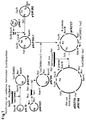
- the promoterless, but carrying a ribosome binding site carrying luciferase gene sequence of the right luciferase operon from Vibrio fischeri , which consists of the luxCDABEG genes ("Molecular Biology of Bacterial Bioluminescence", EA Meighen, Microbiological Reviews 55, 1991, pages 123) -142; "Physiological, Biochemical and Genetic Control of Bacterial Bioluminescence", EA Meighen and PV Dunlap, in: Advances in Microbial Physiology 34, 1993, 1-67) as Bam HI fragment in the E. coli expression vector pUC18 in the orientation cloned that the genetic information for lighting in relevant transformants was switched on.
- the hybrid plasmid produced was given the name pEBZ110.
- the luciferase DNA originated from the transposon Tn 4431 ("Transposon Tn 4431 Mutagenesis of Xanthomonas campestris pv. Campestris : Characterization of a nonpathogenic Mutant and Cloning of a Locus for Pathogenicity", JJ Shaw, LG Settles, CI Kado, Molecular Plant-Microbe Interactions, 1, 1985, pages 39-45).
- the lux DNA used contains an Nco I interface which is located in the luxG gene, which is not necessary even for the expression of the luminescence.
- the vector pUC18 contains no such recognition sequence.
- Nco I interface within the polylinker could be used to clone the lacZ cassette into the Nco I interface of pEBZ110 described above.
- the hybrid plasmid produced was named pEBZ119. In E. coli, it mediates both luminescence and ⁇ -galactosidase activity with a deletion in the lacZ gene in the presence of IPTG, the inducer of the promoter of the pUC18 expression vector used.
- the lux - lacZ transcription fusion was cut out as a Bam HI fragment from pEBZ119 and inserted into the Bam HI site of the tetracycline resistance gene of pSUP202-1 in such a way that the tetracycline resistance gene promoter initiated the expression of the operon fusion.
- the plasmid pEBZ127 thus produced mediates both luminescence and ⁇ -galactosidase activity in E. coli .
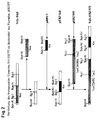
- the Tn 5 derivative B60 (“New derivatives of transposon Tn 5 suitable for mobilization of replicons, generation of operon fusions and induction of genes in Gram-negative bacteria", R. Simon, J. Schweizert, W. Klipp, Gene 80, 1989, pages 161-169).
- the neomycin resistance gene including an outward-directed tac promoter both of which are located on a Bam HI fragment of the transposon portion of pSUP-Tn 5 -B60, was first deleted.
- the kanamycin resistance gene was inserted into the Bgl II site of the modified transposon cloned from pRME1 (see above) as a Bam HI fragment; it can no longer be cut out of the resulting construct (pEBZ140) by Bam HI restriction.
- the lux - lacZ fusion from pEBZ119 is inserted in such a way that the transcription can be initiated from the left end of the transposon.
- the transposon plasmid pEBZ177 thus produced consists of one lux - lacZ promoter search transposon, which is located in a suicide wide range vector.
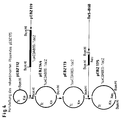
- the production of the replicable in various Gram-negative bacteria lux - lacZ vector was carried out as follows (Figs. 3 and 4): in a first step, the cosmid vector pVK102 ("Wide host range cloning vectors: a cosmid clone bank of an Agrobacterium Ti plasmid", VC Knauf, EW Nester, plasmid 8, 1982, pages 45-54) linearized with Xho I and ligated with the Xho I cut plasmid pRME1 (Fig. 3).
- the plasmid pPME1 consists of pBR322, which contains a kanamycin resistance gene cassette, which is delimited on both sides with a polylinker, in the Hin dIII interface of the tetracycline resistance gene.
- This polylinker contains several recognition sites for restriction endonucleases, such as Eco RI, Bam HI Sal I or Pst I (Fig. 3).
- Eco RI Eco RI
- Bam HI Sal I or Pst I (Fig. 3).
- One of the ligation products obtained (pVK102-2) was double-cut with Bgl II and Pst I and the largest digest product obtained was isolated and religated after pretreatment with Klenow polymerase.
- the vector (pEBZ112) thus produced carrying a small multiple cloning site (mcs) directly adjacent to the kanamycin resistance gene.
- the kanamycin resistance gene in pEBZ112 consists of parts of the kanamycin resistance gene from pVK102 as well as parts of the kanamycin resistance gene cassette from pRME1.
- This mcs contains, among other things, a singular Bam HI interface (Fig. 4), into which the lux - lacZ fusion could be inserted as Bam HI fragment (pEBZ144).
- This vector was incompletely cut with Bam HI, filled in with Klenow polymerase and religated in order to obtain the at the end of the lux - to destroy the Bam HI interface lying lacZ -Operons.
- the vector pEBZ173 produced by this method carries only one Bam HI recognition sequence which is in the mcs before the lux - lacZ operon.
- the Bam HI fragment from the suicide transposon was inserted into this unique Bam HI site
- Plasmid pSUP-Tn 5 -B60 which carries the neomycin resistance gene and the outward-facing tac promoter, is cloned in such a way that the tac promoter transcribes the lux - lacZ fusion initiated.
- the latter plasmid (pEBZ175) mediates corresponding lacI q E. coli bacteria the ability to luminescence and ⁇ -galactosidase activity which can be induced with IPTG.
- the entire lux rule from V. fischeri consisting of the regulatory genes luxR and I and the above-mentioned lux structural genes, was cloned as a Sal I fragment in the vector pVK102.
- the lux DNA was derived from the recombinant plasmid pJE202 ("Identification of genes and gene products necessary for bacterial bioluminescence", J. Engebrecht and M. Silverman, Proc. Natl. Acad. Sci. USA, 1984, pages 4154-4158).
- the plasmid produced was given the name pEBZ145. Genetic transfer of the lux - lacZ fusion constructs in Nitrosomonas sp. RST41-3
- the plasmids encoding luciferase produced could be used in a two-parent cross with the Escherichia coli strain S17-1 as donor ("A broad host range mobilization system for in vivo genetic engineering: transposon mutagenesis in Gram-negative bacteria ", R. Simon, U. Priefer, A. Pühler, Bio / Technology 1, 1983, pages 784-791) according to Nitrosomonas RST41-3.
- the following conjugation conditions were chosen: As a non-selective step, an incubation of 80 ⁇ l of a well-grown and washed culture of the Nitrosomonas recipient, adjusted to approx.
- the selective plates consisted of the above-mentioned minimal medium without glucose, proline and thiamine, but with nalidixic acid in a concentration of 50 ⁇ g / ml and kanamycin in a concentration of 15 ⁇ g / ml and X-Gal.
- the Nitrosomonas strain used shows a pronounced resistance to nalidixic acid. Only plasmid-bearing descendants of this strain also have plasmid-encoded resistance to kanamycin. After approximately two months, Nitrosomona's transconjugants appeared.
- transconjugants after transfer of the lux plasmid pEBZ145 could only be recognized as recombinant clones based on their kanamycin-resistant phenotype on the selective medium.
- the blue transconjugants prepared and the Nitrosomonas RST41-3 / pEBZ145 transconjugants were purified on selective medium, inoculated in 20 ml of liquid selective medium without X-Gal and cultured at 28 ° C. for several days. After apparent growth, 200 ml of the same medium were inoculated with this preculture and incubated in a corresponding manner.
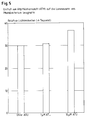
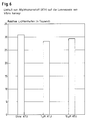
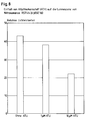
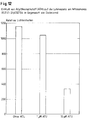
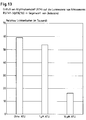
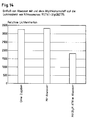
- RST41-3 / pEBZ154 and N illustrates, by giving low concentrations of the nitrification inhibitor allylthiourea significantly reduce (Fig. 7 and 8).
- Luminescent nitrifiers open up the possibility to selectively and sensitively identify inhibitors of nitrification using a simple, automatable process. Toxic impacts of a nitrification inhibitor in the wastewater can be quickly registered, which results in a correspondingly long period for measures to protect a sewage treatment plant.
- the manufactured nitrifiers to investigate and optimize the initial step of biological nitrogen elimination in sewage treatment plants or other complex matrices via a simple measurement of the luminescence. This is possible because bioluminescence reflects the vitality of the microorganism cell.
- biotechnological processes in which chemolithotrophic bacteria are involved can be optimized in an analogous manner.
- z. B. to think of a leaching process.
Landscapes
- Life Sciences & Earth Sciences (AREA)
- Chemical & Material Sciences (AREA)
- Health & Medical Sciences (AREA)
- Organic Chemistry (AREA)
- Engineering & Computer Science (AREA)
- Genetics & Genomics (AREA)
- Zoology (AREA)
- Wood Science & Technology (AREA)
- Bioinformatics & Cheminformatics (AREA)
- Microbiology (AREA)
- General Engineering & Computer Science (AREA)
- Biotechnology (AREA)
- Biomedical Technology (AREA)
- Biochemistry (AREA)
- Molecular Biology (AREA)
- General Health & Medical Sciences (AREA)
- Proteomics, Peptides & Aminoacids (AREA)
- Physics & Mathematics (AREA)
- Biophysics (AREA)
- Plant Pathology (AREA)
- Water Supply & Treatment (AREA)
- Environmental & Geological Engineering (AREA)
- Hydrology & Water Resources (AREA)
- Biodiversity & Conservation Biology (AREA)
- Analytical Chemistry (AREA)
- Medicinal Chemistry (AREA)
- Immunology (AREA)
- Micro-Organisms Or Cultivation Processes Thereof (AREA)
- Measuring Or Testing Involving Enzymes Or Micro-Organisms (AREA)
- Purification Treatments By Anaerobic Or Anaerobic And Aerobic Bacteria Or Animals (AREA)
- Preparation Of Compounds By Using Micro-Organisms (AREA)
Applications Claiming Priority (2)
| Application Number | Priority Date | Filing Date | Title |
|---|---|---|---|
| DE4431964 | 1994-09-08 | ||
| DE4431964A DE4431964A1 (de) | 1994-09-08 | 1994-09-08 | Lumineszente nitrifizierende Mikroorganismen |
Publications (2)
| Publication Number | Publication Date |
|---|---|
| EP0705904A1 true EP0705904A1 (fr) | 1996-04-10 |
| EP0705904B1 EP0705904B1 (fr) | 1998-11-04 |
Family
ID=6527695
Family Applications (1)
| Application Number | Title | Priority Date | Filing Date |
|---|---|---|---|
| EP95113492A Expired - Lifetime EP0705904B1 (fr) | 1994-09-08 | 1995-08-28 | Microorganismes nitrifiant et luminescents |
Country Status (5)
| Country | Link |
|---|---|
| US (1) | US5900362A (fr) |
| EP (1) | EP0705904B1 (fr) |
| AT (1) | ATE173019T1 (fr) |
| DE (2) | DE4431964A1 (fr) |
| DK (1) | DK0705904T3 (fr) |
Cited By (1)
| Publication number | Priority date | Publication date | Assignee | Title |
|---|---|---|---|---|
| WO1998049337A1 (fr) * | 1997-05-01 | 1998-11-05 | Eastman Chemical Company | Bacterie de marquage bioluminescente et procedes de surveillance de toxicite dans des systemes de traitement d'eaux usees biologiques |
Families Citing this family (8)
| Publication number | Priority date | Publication date | Assignee | Title |
|---|---|---|---|---|
| JPH10108697A (ja) * | 1996-10-08 | 1998-04-28 | Kurita Water Ind Ltd | アンモニア酸化細菌の硝化活性阻害の測定方法 |
| DE69838175T2 (de) * | 1997-02-07 | 2008-04-17 | Sumitomo Chemical Co., Ltd. | Plasmide aus ammonium oxidierenden bakterien und ihre verwendung |
| US6737245B1 (en) | 1999-09-08 | 2004-05-18 | Xenogen Corporation | Luciferase expression cassettes and methods of use |
| US7056728B2 (en) * | 2000-07-06 | 2006-06-06 | Xenogen Corporation | Compositions and methods for use thereof in modifying the genomes of microorganisms |
| WO2002008431A1 (fr) * | 2000-07-06 | 2002-01-31 | Xenogen Corporation | Compositions et procédés d'utilisation de ces compositions pour modifier les génomes de micro-organismes |
| RU2366953C2 (ru) * | 2007-10-23 | 2009-09-10 | Государственное образовательное учреждение высшего профессионального образования "Оренбургский государственный университет" | Биохемилюминесцентный способ определения фагоцитарной активности нейтрофилов |
| US11591376B2 (en) * | 2017-10-11 | 2023-02-28 | Wisconsin Alumni Research Foundation (Warf) | Over-expression of AZF1 improves the rate of anaerobic xylose fermentation in engineered yeast strains |
| CN114426933B (zh) * | 2020-10-29 | 2023-07-04 | 中国石油化工股份有限公司 | 一种提高亚硝酸细菌细胞产率的方法 |
Family Cites Families (4)
| Publication number | Priority date | Publication date | Assignee | Title |
|---|---|---|---|---|
| US4626504A (en) * | 1983-07-01 | 1986-12-02 | Lubrizol Genetics, Inc. | DNA transfer vector for gram-negative bacteria |
| US4861709A (en) * | 1985-05-31 | 1989-08-29 | Technicon Research A.G. | Detection and/or identification of microorganisms in a test sample using bioluminescence or other exogenous genetically-introduced marker |
| US5186800A (en) * | 1988-04-18 | 1993-02-16 | Bio-Rad Laboratories, Inc. | Electroporation of prokaryotic cells |
| DE3833628A1 (de) * | 1988-10-03 | 1990-04-12 | Genlux Forschungsgesellschaft | Verfahren zum nachweis und zur identifikation toxischer substanzen mit hilfe klonierter mikroorganismen |
-
1994
- 1994-09-08 DE DE4431964A patent/DE4431964A1/de not_active Withdrawn
-
1995
- 1995-08-28 DK DK95113492T patent/DK0705904T3/da active
- 1995-08-28 AT AT95113492T patent/ATE173019T1/de not_active IP Right Cessation
- 1995-08-28 DE DE59504132T patent/DE59504132D1/de not_active Expired - Lifetime
- 1995-08-28 EP EP95113492A patent/EP0705904B1/fr not_active Expired - Lifetime
- 1995-09-01 US US08/522,765 patent/US5900362A/en not_active Expired - Fee Related
Non-Patent Citations (3)
| Title |
|---|
| B. BITTON AND B. KOOPMAN: "Bacterial and enzymatic bioassays for toxicity testing in the environment", REVIEWS OF ENVIRONMENTAL CONTAMINATION AND TOXICOLOGY, vol. 125, pages 1 - 22, XP009073370 * |
| J.M. COLLARD ET AL.: "Plasmids for heavy metal resistance in Alcaligenes eutrophus CH34: mechanisms and applications", FEMS MICROBIOLOGY REVIEWS, vol. 14, pages 405 - 414, XP023708193, DOI: doi:10.1111/j.1574-6976.1994.tb00115.x * |
| R. KANNE ET AL.: "Analytik bakterientoxischer Effekte mit Hilfe genetisch konstruierter Leuchtbakterien", FRESENIUS Z. ANAL. CHEM., vol. 325, pages 136 - 139 * |
Cited By (2)
| Publication number | Priority date | Publication date | Assignee | Title |
|---|---|---|---|---|
| WO1998049337A1 (fr) * | 1997-05-01 | 1998-11-05 | Eastman Chemical Company | Bacterie de marquage bioluminescente et procedes de surveillance de toxicite dans des systemes de traitement d'eaux usees biologiques |
| US6110661A (en) * | 1997-05-01 | 2000-08-29 | Eastman Chemical Company | Bioluminescent reporter bacterium |
Also Published As
| Publication number | Publication date |
|---|---|
| DE59504132D1 (de) | 1998-12-10 |
| DE4431964A1 (de) | 1996-03-14 |
| DK0705904T3 (da) | 1999-07-19 |
| US5900362A (en) | 1999-05-04 |
| EP0705904B1 (fr) | 1998-11-04 |
| ATE173019T1 (de) | 1998-11-15 |
Similar Documents
| Publication | Publication Date | Title |
|---|---|---|
| Mota et al. | Effects of aeration cycles on nitrifying bacterial populations and nitrogen removal in intermittently aerated reactors | |
| DE68927486T2 (de) | Verfahren zur Integration eines bestimmten Gens ins bakterielle Chromosom und durch dieses Verfahren erhaltenes Bakterium | |
| Rainey | Adaptation of Pseudomonas fluorescens to the plant rhizosphere | |
| EP0334841B1 (fr) | Micro-organismes et plasmides pour la formation de mono-oxygenase d'acide acetique de 2,4-dichlorophenoxy (2,4-d), et procede pour la fabrication de ces plasmides et souches | |
| DE69721282T2 (de) | In vitro transpositionsystem unter verwendung einer modifizierten tn5 transposase | |
| DE69225221T2 (de) | Fusionierte Gene sowie deren Verwendungzur Bestimmung von Metall- und Xenobiotikagehalten | |
| Wagner et al. | Combining fluorescent in situ hybridization (FISH) with cultivation and mathematical modeling to study population structure and function of ammonia-oxidizing bacteria in activated sludge | |
| DE3833628A1 (de) | Verfahren zum nachweis und zur identifikation toxischer substanzen mit hilfe klonierter mikroorganismen | |
| Mergel et al. | Seasonal fluctuations in the population of denitrifying and N2-fixing bacteria in an acid soil of a Norway spruce forest | |
| DE69527850T2 (de) | Bioluminiscente lyophilisierte bakterien-reagenz zur giftstoff nachweit | |
| EP0705904B1 (fr) | Microorganismes nitrifiant et luminescents | |
| DE69322166T2 (de) | Prüfung auf ein vielfache resistenz gegen antibiotika verursachendes operon | |
| Kragelund et al. | Isolation of lux reporter gene fusions in Pseudomonas fluorescens DF57 inducible by nitrogen or phosphorus starvation | |
| EP0391022A2 (fr) | Peptide signal pour la sécrétion des peptides chez Escherichia coli, méthode pour l'obtenir et son utilisation | |
| Gordon et al. | Physiological function and regulation of flavocytochrome c3, the soluble fumarate reductase from Shewanella putrefaciens NCIMB 400 | |
| EP0798384A1 (fr) | Procédé biotechnologique de préparation de biotine | |
| EP0303925B1 (fr) | Séquence très répressible pour le contrôle de l'expression | |
| DE60014640T2 (de) | Genetische kaskaderegulierte expression von klonierten genen | |
| DE69013495T2 (de) | Regulierung der genexpression. | |
| DE102009000989A1 (de) | Mikrobielle Siderophorsynthese | |
| EP0477828B1 (fr) | Hydroxylation de groupes méthyle dans des composés heterocycliques aromatiques par des microorganismes | |
| EP0456667B1 (fr) | Procede de depistage du mercure au moyen de micro-organismes dont la bioluminescence augmente en presence de mercure | |
| DE69835984T2 (de) | Oligonukleotide geeignet für den Nachweis von Milchsäurebakterien | |
| EP0456047A1 (fr) | Méthode pour déceler et déterminer quantitativement des souches de nitrosomonas dans les eaux résiduaires ou dans le terrain | |
| DE69232114T2 (de) | Für ein Enzym mit flavinreduzierender und Nitroreduktase-Aktivität kodierendes Gen |
Legal Events
| Date | Code | Title | Description |
|---|---|---|---|
| PUAI | Public reference made under article 153(3) epc to a published international application that has entered the european phase |
Free format text: ORIGINAL CODE: 0009012 |
|
| AK | Designated contracting states |
Kind code of ref document: A1 Designated state(s): AT BE CH DE DK LI NL |
|
| 17P | Request for examination filed |
Effective date: 19960903 |
|
| 17Q | First examination report despatched |
Effective date: 19970120 |
|
| GRAG | Despatch of communication of intention to grant |
Free format text: ORIGINAL CODE: EPIDOS AGRA |
|
| GRAG | Despatch of communication of intention to grant |
Free format text: ORIGINAL CODE: EPIDOS AGRA |
|
| GRAG | Despatch of communication of intention to grant |
Free format text: ORIGINAL CODE: EPIDOS AGRA |
|
| GRAH | Despatch of communication of intention to grant a patent |
Free format text: ORIGINAL CODE: EPIDOS IGRA |
|
| GRAH | Despatch of communication of intention to grant a patent |
Free format text: ORIGINAL CODE: EPIDOS IGRA |
|
| GRAA | (expected) grant |
Free format text: ORIGINAL CODE: 0009210 |
|
| AK | Designated contracting states |
Kind code of ref document: B1 Designated state(s): AT BE CH DE DK LI NL |
|
| REF | Corresponds to: |
Ref document number: 173019 Country of ref document: AT Date of ref document: 19981115 Kind code of ref document: T |
|
| REG | Reference to a national code |
Ref country code: CH Ref legal event code: NV Representative=s name: E. BLUM & CO. PATENTANWAELTE Ref country code: CH Ref legal event code: EP |
|
| REF | Corresponds to: |
Ref document number: 59504132 Country of ref document: DE Date of ref document: 19981210 |
|
| REG | Reference to a national code |
Ref country code: DK Ref legal event code: T3 |
|
| PLBE | No opposition filed within time limit |
Free format text: ORIGINAL CODE: 0009261 |
|
| STAA | Information on the status of an ep patent application or granted ep patent |
Free format text: STATUS: NO OPPOSITION FILED WITHIN TIME LIMIT |
|
| 26N | No opposition filed | ||
| PGFP | Annual fee paid to national office [announced via postgrant information from national office to epo] |
Ref country code: DK Payment date: 20050812 Year of fee payment: 11 |
|
| PGFP | Annual fee paid to national office [announced via postgrant information from national office to epo] |
Ref country code: CH Payment date: 20050818 Year of fee payment: 11 |
|
| PGFP | Annual fee paid to national office [announced via postgrant information from national office to epo] |
Ref country code: AT Payment date: 20050829 Year of fee payment: 11 |
|
| PGFP | Annual fee paid to national office [announced via postgrant information from national office to epo] |
Ref country code: NL Payment date: 20050831 Year of fee payment: 11 Ref country code: BE Payment date: 20050831 Year of fee payment: 11 |
|
| PG25 | Lapsed in a contracting state [announced via postgrant information from national office to epo] |
Ref country code: AT Free format text: LAPSE BECAUSE OF NON-PAYMENT OF DUE FEES Effective date: 20060828 |
|
| PG25 | Lapsed in a contracting state [announced via postgrant information from national office to epo] |
Ref country code: LI Free format text: LAPSE BECAUSE OF NON-PAYMENT OF DUE FEES Effective date: 20060831 Ref country code: DK Free format text: LAPSE BECAUSE OF NON-PAYMENT OF DUE FEES Effective date: 20060831 Ref country code: CH Free format text: LAPSE BECAUSE OF NON-PAYMENT OF DUE FEES Effective date: 20060831 Ref country code: BE Free format text: LAPSE BECAUSE OF NON-PAYMENT OF DUE FEES Effective date: 20060831 |
|
| PG25 | Lapsed in a contracting state [announced via postgrant information from national office to epo] |
Ref country code: NL Free format text: LAPSE BECAUSE OF NON-PAYMENT OF DUE FEES Effective date: 20070301 |
|
| REG | Reference to a national code |
Ref country code: DK Ref legal event code: EBP |
|
| REG | Reference to a national code |
Ref country code: CH Ref legal event code: PL |
|
| NLV4 | Nl: lapsed or anulled due to non-payment of the annual fee |
Effective date: 20070301 |
|
| BERE | Be: lapsed |
Owner name: *BAYER A.G. Effective date: 20060831 |
|
| PGFP | Annual fee paid to national office [announced via postgrant information from national office to epo] |
Ref country code: DE Payment date: 20090723 Year of fee payment: 15 |
|
| REG | Reference to a national code |
Ref country code: DE Ref legal event code: R119 Ref document number: 59504132 Country of ref document: DE Effective date: 20110301 |
|
| PG25 | Lapsed in a contracting state [announced via postgrant information from national office to epo] |
Ref country code: DE Free format text: LAPSE BECAUSE OF NON-PAYMENT OF DUE FEES Effective date: 20110301 |