EP0707957B1 - Feuille multicouche à rétraction élevée dont les propriétés optiques sont maintenues pendant la rétraction - Google Patents
Feuille multicouche à rétraction élevée dont les propriétés optiques sont maintenues pendant la rétraction Download PDFInfo
- Publication number
- EP0707957B1 EP0707957B1 EP95307037A EP95307037A EP0707957B1 EP 0707957 B1 EP0707957 B1 EP 0707957B1 EP 95307037 A EP95307037 A EP 95307037A EP 95307037 A EP95307037 A EP 95307037A EP 0707957 B1 EP0707957 B1 EP 0707957B1
- Authority
- EP
- European Patent Office
- Prior art keywords
- layer
- film
- ethylene
- copolymer
- alpha
- Prior art date
- Legal status (The legal status is an assumption and is not a legal conclusion. Google has not performed a legal analysis and makes no representation as to the accuracy of the status listed.)
- Expired - Lifetime
Links
- VGGSQFUCUMXWEO-UHFFFAOYSA-N Ethene Chemical compound C=C VGGSQFUCUMXWEO-UHFFFAOYSA-N 0.000 claims abstract description 144
- 239000005977 Ethylene Substances 0.000 claims abstract description 144
- 239000004711 α-olefin Substances 0.000 claims abstract description 114
- 229920000089 Cyclic olefin copolymer Polymers 0.000 claims abstract description 67
- 239000012792 core layer Substances 0.000 claims abstract description 11
- 239000010410 layer Substances 0.000 claims description 373
- 229920000642 polymer Polymers 0.000 claims description 100
- 229920001577 copolymer Polymers 0.000 claims description 85
- 239000004519 grease Substances 0.000 claims description 50
- 239000005033 polyvinylidene chloride Substances 0.000 claims description 28
- 229920001328 Polyvinylidene chloride Polymers 0.000 claims description 27
- 238000012360 testing method Methods 0.000 claims description 15
- 239000000155 melt Substances 0.000 claims description 14
- -1 polybutylene Polymers 0.000 claims description 14
- 229920000092 linear low density polyethylene Polymers 0.000 claims description 12
- 239000004707 linear low-density polyethylene Substances 0.000 claims description 12
- QQONPFPTGQHPMA-UHFFFAOYSA-N propylene Natural products CC=C QQONPFPTGQHPMA-UHFFFAOYSA-N 0.000 claims description 12
- 125000004805 propylene group Chemical group [H]C([H])([H])C([H])([*:1])C([H])([H])[*:2] 0.000 claims description 12
- 235000013622 meat product Nutrition 0.000 claims description 11
- 229920001748 polybutylene Polymers 0.000 claims description 10
- 230000004888 barrier function Effects 0.000 claims description 9
- IAQRGUVFOMOMEM-UHFFFAOYSA-N butene Natural products CC=CC IAQRGUVFOMOMEM-UHFFFAOYSA-N 0.000 claims description 9
- 235000013372 meat Nutrition 0.000 claims description 9
- 239000004716 Ethylene/acrylic acid copolymer Substances 0.000 claims description 6
- 229920000554 ionomer Polymers 0.000 claims description 6
- 229920001155 polypropylene Polymers 0.000 claims description 5
- QVGXLLKOCUKJST-UHFFFAOYSA-N atomic oxygen Chemical compound [O] QVGXLLKOCUKJST-UHFFFAOYSA-N 0.000 claims description 4
- 235000013351 cheese Nutrition 0.000 claims description 4
- 229920006242 ethylene acrylic acid copolymer Polymers 0.000 claims description 4
- 229920001038 ethylene copolymer Polymers 0.000 claims description 4
- 229920001684 low density polyethylene Polymers 0.000 claims description 4
- 229920003145 methacrylic acid copolymer Polymers 0.000 claims description 4
- 229940117841 methacrylic acid copolymer Drugs 0.000 claims description 4
- 239000001301 oxygen Substances 0.000 claims description 4
- 229910052760 oxygen Inorganic materials 0.000 claims description 4
- 239000004702 low-density polyethylene Substances 0.000 claims description 3
- 229920002126 Acrylic acid copolymer Polymers 0.000 claims description 2
- CERQOIWHTDAKMF-UHFFFAOYSA-N Methacrylic acid Chemical compound CC(=C)C(O)=O CERQOIWHTDAKMF-UHFFFAOYSA-N 0.000 claims description 2
- 229920001400 block copolymer Polymers 0.000 claims description 2
- 229920005996 polystyrene-poly(ethylene-butylene)-polystyrene Polymers 0.000 claims description 2
- 229920000346 polystyrene-polyisoprene block-polystyrene Polymers 0.000 claims description 2
- 229920000468 styrene butadiene styrene block copolymer Polymers 0.000 claims description 2
- 229920006037 cross link polymer Polymers 0.000 claims 1
- 239000000203 mixture Substances 0.000 description 44
- 239000000047 product Substances 0.000 description 44
- 239000000126 substance Substances 0.000 description 38
- 229920001200 poly(ethylene-vinyl acetate) Polymers 0.000 description 35
- 239000000178 monomer Substances 0.000 description 28
- 230000003287 optical effect Effects 0.000 description 27
- 238000006116 polymerization reaction Methods 0.000 description 27
- 238000004806 packaging method and process Methods 0.000 description 25
- 238000000034 method Methods 0.000 description 24
- 239000000463 material Substances 0.000 description 18
- 230000000052 comparative effect Effects 0.000 description 16
- 230000008569 process Effects 0.000 description 16
- 238000002844 melting Methods 0.000 description 15
- 230000008018 melting Effects 0.000 description 15
- 239000003054 catalyst Substances 0.000 description 13
- VXNZUUAINFGPBY-UHFFFAOYSA-N 1-Butene Chemical compound CCC=C VXNZUUAINFGPBY-UHFFFAOYSA-N 0.000 description 12
- 238000009826 distribution Methods 0.000 description 12
- 238000007789 sealing Methods 0.000 description 12
- 230000002087 whitening effect Effects 0.000 description 12
- 238000007334 copolymerization reaction Methods 0.000 description 11
- XLYOFNOQVPJJNP-UHFFFAOYSA-N water Substances O XLYOFNOQVPJJNP-UHFFFAOYSA-N 0.000 description 11
- 229920006257 Heat-shrinkable film Polymers 0.000 description 10
- BAPJBEWLBFYGME-UHFFFAOYSA-N acrylic acid methyl ester Natural products COC(=O)C=C BAPJBEWLBFYGME-UHFFFAOYSA-N 0.000 description 9
- 235000013305 food Nutrition 0.000 description 9
- XTXRWKRVRITETP-UHFFFAOYSA-N Vinyl acetate Chemical compound CC(=O)OC=C XTXRWKRVRITETP-UHFFFAOYSA-N 0.000 description 8
- 150000008064 anhydrides Chemical class 0.000 description 8
- 230000032798 delamination Effects 0.000 description 8
- LIKMAJRDDDTEIG-UHFFFAOYSA-N 1-hexene Chemical compound CCCCC=C LIKMAJRDDDTEIG-UHFFFAOYSA-N 0.000 description 7
- 150000001336 alkenes Chemical class 0.000 description 7
- 230000005540 biological transmission Effects 0.000 description 7
- JRZJOMJEPLMPRA-UHFFFAOYSA-N olefin Natural products CCCCCCCC=C JRZJOMJEPLMPRA-UHFFFAOYSA-N 0.000 description 7
- 239000004952 Polyamide Substances 0.000 description 6
- YXFVVABEGXRONW-UHFFFAOYSA-N Toluene Chemical compound CC1=CC=CC=C1 YXFVVABEGXRONW-UHFFFAOYSA-N 0.000 description 6
- 239000000654 additive Substances 0.000 description 6
- 239000011248 coating agent Substances 0.000 description 6
- 238000000576 coating method Methods 0.000 description 6
- 229920006225 ethylene-methyl acrylate Polymers 0.000 description 6
- 229920002647 polyamide Polymers 0.000 description 6
- 230000005855 radiation Effects 0.000 description 6
- 229920005989 resin Polymers 0.000 description 6
- 239000011347 resin Substances 0.000 description 6
- 238000003851 corona treatment Methods 0.000 description 5
- 239000007789 gas Substances 0.000 description 5
- 229920001519 homopolymer Polymers 0.000 description 5
- 230000005865 ionizing radiation Effects 0.000 description 5
- 238000005259 measurement Methods 0.000 description 5
- 239000002480 mineral oil Substances 0.000 description 5
- 235000010446 mineral oil Nutrition 0.000 description 5
- 229920000098 polyolefin Polymers 0.000 description 5
- 239000000565 sealant Substances 0.000 description 5
- KWKAKUADMBZCLK-UHFFFAOYSA-N 1-octene Chemical compound CCCCCCC=C KWKAKUADMBZCLK-UHFFFAOYSA-N 0.000 description 4
- IJGRMHOSHXDMSA-UHFFFAOYSA-N Atomic nitrogen Chemical compound N#N IJGRMHOSHXDMSA-UHFFFAOYSA-N 0.000 description 4
- VZCYOOQTPOCHFL-OWOJBTEDSA-N Fumaric acid Chemical compound OC(=O)\C=C\C(O)=O VZCYOOQTPOCHFL-OWOJBTEDSA-N 0.000 description 4
- VEXZGXHMUGYJMC-UHFFFAOYSA-N Hydrochloric acid Chemical group Cl VEXZGXHMUGYJMC-UHFFFAOYSA-N 0.000 description 4
- 239000000853 adhesive Substances 0.000 description 4
- 230000001070 adhesive effect Effects 0.000 description 4
- 150000001875 compounds Chemical class 0.000 description 4
- 238000001816 cooling Methods 0.000 description 4
- 238000004132 cross linking Methods 0.000 description 4
- 230000000694 effects Effects 0.000 description 4
- JBKVHLHDHHXQEQ-UHFFFAOYSA-N epsilon-caprolactam Chemical compound O=C1CCCCCN1 JBKVHLHDHHXQEQ-UHFFFAOYSA-N 0.000 description 4
- 238000011156 evaluation Methods 0.000 description 4
- 238000001125 extrusion Methods 0.000 description 4
- 239000007788 liquid Substances 0.000 description 4
- 238000004519 manufacturing process Methods 0.000 description 4
- 239000003921 oil Substances 0.000 description 4
- 235000019198 oils Nutrition 0.000 description 4
- 229920003023 plastic Polymers 0.000 description 4
- 230000009467 reduction Effects 0.000 description 4
- 229920001169 thermoplastic Polymers 0.000 description 4
- VZCYOOQTPOCHFL-UHFFFAOYSA-N trans-butenedioic acid Natural products OC(=O)C=CC(O)=O VZCYOOQTPOCHFL-UHFFFAOYSA-N 0.000 description 4
- SOGAXMICEFXMKE-UHFFFAOYSA-N Butylmethacrylate Chemical compound CCCCOC(=O)C(C)=C SOGAXMICEFXMKE-UHFFFAOYSA-N 0.000 description 3
- 229920003345 Elvax® Polymers 0.000 description 3
- UFHFLCQGNIYNRP-UHFFFAOYSA-N Hydrogen Chemical compound [H][H] UFHFLCQGNIYNRP-UHFFFAOYSA-N 0.000 description 3
- 239000004698 Polyethylene Substances 0.000 description 3
- 230000000996 additive effect Effects 0.000 description 3
- 230000002411 adverse Effects 0.000 description 3
- 229910052799 carbon Inorganic materials 0.000 description 3
- 230000015556 catabolic process Effects 0.000 description 3
- 230000008859 change Effects 0.000 description 3
- 208000028659 discharge Diseases 0.000 description 3
- 238000007765 extrusion coating Methods 0.000 description 3
- 239000003925 fat Substances 0.000 description 3
- 238000012685 gas phase polymerization Methods 0.000 description 3
- 238000010438 heat treatment Methods 0.000 description 3
- 239000002638 heterogeneous catalyst Substances 0.000 description 3
- 239000001257 hydrogen Substances 0.000 description 3
- 229910052739 hydrogen Inorganic materials 0.000 description 3
- 230000001788 irregular Effects 0.000 description 3
- VLKZOEOYAKHREP-UHFFFAOYSA-N n-Hexane Chemical compound CCCCCC VLKZOEOYAKHREP-UHFFFAOYSA-N 0.000 description 3
- 239000005022 packaging material Substances 0.000 description 3
- 239000002245 particle Substances 0.000 description 3
- 239000004033 plastic Substances 0.000 description 3
- 239000002985 plastic film Substances 0.000 description 3
- 229920006255 plastic film Polymers 0.000 description 3
- 229920000728 polyester Polymers 0.000 description 3
- 229920000573 polyethylene Polymers 0.000 description 3
- 229920005638 polyethylene monopolymer Polymers 0.000 description 3
- 229920006300 shrink film Polymers 0.000 description 3
- 239000002002 slurry Substances 0.000 description 3
- 229920001866 very low density polyethylene Polymers 0.000 description 3
- YNQLUTRBYVCPMQ-UHFFFAOYSA-N Ethylbenzene Chemical compound CCC1=CC=CC=C1 YNQLUTRBYVCPMQ-UHFFFAOYSA-N 0.000 description 2
- 229920000219 Ethylene vinyl alcohol Polymers 0.000 description 2
- 235000019687 Lamb Nutrition 0.000 description 2
- TWRXJAOTZQYOKJ-UHFFFAOYSA-L Magnesium chloride Chemical compound [Mg+2].[Cl-].[Cl-] TWRXJAOTZQYOKJ-UHFFFAOYSA-L 0.000 description 2
- VVQNEPGJFQJSBK-UHFFFAOYSA-N Methyl methacrylate Chemical compound COC(=O)C(C)=C VVQNEPGJFQJSBK-UHFFFAOYSA-N 0.000 description 2
- OFOBLEOULBTSOW-UHFFFAOYSA-N Propanedioic acid Natural products OC(=O)CC(O)=O OFOBLEOULBTSOW-UHFFFAOYSA-N 0.000 description 2
- 238000004458 analytical method Methods 0.000 description 2
- 239000011324 bead Substances 0.000 description 2
- 235000015278 beef Nutrition 0.000 description 2
- 230000015572 biosynthetic process Effects 0.000 description 2
- 150000001732 carboxylic acid derivatives Chemical class 0.000 description 2
- 230000009849 deactivation Effects 0.000 description 2
- 238000006731 degradation reaction Methods 0.000 description 2
- 230000001419 dependent effect Effects 0.000 description 2
- 230000001627 detrimental effect Effects 0.000 description 2
- 238000011161 development Methods 0.000 description 2
- UODXSCCNACAPCE-UHFFFAOYSA-N draft:flumetramide Chemical compound C1=CC(C(F)(F)F)=CC=C1C1OCC(=O)NC1 UODXSCCNACAPCE-UHFFFAOYSA-N 0.000 description 2
- 239000000975 dye Substances 0.000 description 2
- 210000005069 ears Anatomy 0.000 description 2
- 229920001971 elastomer Polymers 0.000 description 2
- 238000010828 elution Methods 0.000 description 2
- 150000002148 esters Chemical class 0.000 description 2
- UFRKOOWSQGXVKV-UHFFFAOYSA-N ethene;ethenol Chemical compound C=C.OC=C UFRKOOWSQGXVKV-UHFFFAOYSA-N 0.000 description 2
- 239000004715 ethylene vinyl alcohol Substances 0.000 description 2
- 230000001747 exhibiting effect Effects 0.000 description 2
- 238000005194 fractionation Methods 0.000 description 2
- 239000001530 fumaric acid Substances 0.000 description 2
- 239000002815 homogeneous catalyst Substances 0.000 description 2
- 230000007062 hydrolysis Effects 0.000 description 2
- 238000006460 hydrolysis reaction Methods 0.000 description 2
- 230000000977 initiatory effect Effects 0.000 description 2
- 238000003475 lamination Methods 0.000 description 2
- VZCYOOQTPOCHFL-UPHRSURJSA-N maleic acid Chemical compound OC(=O)\C=C/C(O)=O VZCYOOQTPOCHFL-UPHRSURJSA-N 0.000 description 2
- 239000011976 maleic acid Substances 0.000 description 2
- 229910052751 metal Chemical class 0.000 description 2
- 239000002184 metal Chemical class 0.000 description 2
- TVMXDCGIABBOFY-UHFFFAOYSA-N n-Octanol Natural products CCCCCCCC TVMXDCGIABBOFY-UHFFFAOYSA-N 0.000 description 2
- 229910052757 nitrogen Inorganic materials 0.000 description 2
- 239000012785 packaging film Substances 0.000 description 2
- 229920006280 packaging film Polymers 0.000 description 2
- 230000000704 physical effect Effects 0.000 description 2
- 239000002954 polymerization reaction product Substances 0.000 description 2
- 229920005672 polyolefin resin Polymers 0.000 description 2
- 229920000915 polyvinyl chloride Polymers 0.000 description 2
- 239000004800 polyvinyl chloride Substances 0.000 description 2
- 235000015277 pork Nutrition 0.000 description 2
- 244000144977 poultry Species 0.000 description 2
- 235000013594 poultry meat Nutrition 0.000 description 2
- 238000010791 quenching Methods 0.000 description 2
- 230000000171 quenching effect Effects 0.000 description 2
- 239000002516 radical scavenger Substances 0.000 description 2
- 230000000630 rising effect Effects 0.000 description 2
- 150000003839 salts Chemical class 0.000 description 2
- 239000002356 single layer Substances 0.000 description 2
- 239000007787 solid Substances 0.000 description 2
- 235000012424 soybean oil Nutrition 0.000 description 2
- 239000003549 soybean oil Substances 0.000 description 2
- 229920001897 terpolymer Polymers 0.000 description 2
- 239000004416 thermosoftening plastic Substances 0.000 description 2
- 229920001862 ultra low molecular weight polyethylene Polymers 0.000 description 2
- 238000011144 upstream manufacturing Methods 0.000 description 2
- 239000002023 wood Substances 0.000 description 2
- OEPOKWHJYJXUGD-UHFFFAOYSA-N 2-(3-phenylmethoxyphenyl)-1,3-thiazole-4-carbaldehyde Chemical compound O=CC1=CSC(C=2C=C(OCC=3C=CC=CC=3)C=CC=2)=N1 OEPOKWHJYJXUGD-UHFFFAOYSA-N 0.000 description 1
- NIXOWILDQLNWCW-UHFFFAOYSA-M Acrylate Chemical compound [O-]C(=O)C=C NIXOWILDQLNWCW-UHFFFAOYSA-M 0.000 description 1
- 241000251468 Actinopterygii Species 0.000 description 1
- 241000283707 Capra Species 0.000 description 1
- OKTJSMMVPCPJKN-UHFFFAOYSA-N Carbon Chemical compound [C] OKTJSMMVPCPJKN-UHFFFAOYSA-N 0.000 description 1
- 229920000742 Cotton Polymers 0.000 description 1
- 241000283073 Equus caballus Species 0.000 description 1
- XEEYBQQBJWHFJM-UHFFFAOYSA-N Iron Chemical group [Fe] XEEYBQQBJWHFJM-UHFFFAOYSA-N 0.000 description 1
- 229920010126 Linear Low Density Polyethylene (LLDPE) Polymers 0.000 description 1
- 239000004594 Masterbatch (MB) Substances 0.000 description 1
- 239000006057 Non-nutritive feed additive Substances 0.000 description 1
- CTQNGGLPUBDAKN-UHFFFAOYSA-N O-Xylene Chemical compound CC1=CC=CC=C1C CTQNGGLPUBDAKN-UHFFFAOYSA-N 0.000 description 1
- 235000008331 Pinus X rigitaeda Nutrition 0.000 description 1
- 235000011613 Pinus brutia Nutrition 0.000 description 1
- 241000018646 Pinus brutia Species 0.000 description 1
- 229920000034 Plastomer Polymers 0.000 description 1
- 239000004743 Polypropylene Substances 0.000 description 1
- 239000004372 Polyvinyl alcohol Substances 0.000 description 1
- BQCADISMDOOEFD-UHFFFAOYSA-N Silver Chemical compound [Ag] BQCADISMDOOEFD-UHFFFAOYSA-N 0.000 description 1
- 239000004708 Very-low-density polyethylene Substances 0.000 description 1
- 238000005299 abrasion Methods 0.000 description 1
- 150000001252 acrylic acid derivatives Chemical class 0.000 description 1
- 150000001335 aliphatic alkanes Chemical class 0.000 description 1
- 125000001931 aliphatic group Chemical group 0.000 description 1
- 229910052782 aluminium Inorganic materials 0.000 description 1
- XAGFODPZIPBFFR-UHFFFAOYSA-N aluminium Chemical compound [Al] XAGFODPZIPBFFR-UHFFFAOYSA-N 0.000 description 1
- 239000003963 antioxidant agent Substances 0.000 description 1
- 239000002216 antistatic agent Substances 0.000 description 1
- 150000004945 aromatic hydrocarbons Chemical class 0.000 description 1
- 125000003118 aryl group Chemical group 0.000 description 1
- 230000005250 beta ray Effects 0.000 description 1
- 238000007664 blowing Methods 0.000 description 1
- 235000020996 boneless meat Nutrition 0.000 description 1
- CQEYYJKEWSMYFG-UHFFFAOYSA-N butyl acrylate Chemical compound CCCCOC(=O)C=C CQEYYJKEWSMYFG-UHFFFAOYSA-N 0.000 description 1
- 230000003197 catalytic effect Effects 0.000 description 1
- 238000006555 catalytic reaction Methods 0.000 description 1
- 238000006243 chemical reaction Methods 0.000 description 1
- 239000007795 chemical reaction product Substances 0.000 description 1
- 239000003426 co-catalyst Substances 0.000 description 1
- 238000004737 colorimetric analysis Methods 0.000 description 1
- 125000004122 cyclic group Chemical group 0.000 description 1
- 150000001924 cycloalkanes Chemical class 0.000 description 1
- 238000000354 decomposition reaction Methods 0.000 description 1
- 238000000113 differential scanning calorimetry Methods 0.000 description 1
- 238000002845 discoloration Methods 0.000 description 1
- 238000004980 dosimetry Methods 0.000 description 1
- 239000000806 elastomer Substances 0.000 description 1
- 125000000816 ethylene group Chemical group [H]C([H])([*:1])C([H])([H])[*:2] 0.000 description 1
- 239000005043 ethylene-methyl acrylate Substances 0.000 description 1
- 239000000945 filler Substances 0.000 description 1
- 238000010096 film blowing Methods 0.000 description 1
- 235000013332 fish product Nutrition 0.000 description 1
- 230000005251 gamma ray Effects 0.000 description 1
- 238000005227 gel permeation chromatography Methods 0.000 description 1
- 230000006872 improvement Effects 0.000 description 1
- 239000012535 impurity Substances 0.000 description 1
- 239000003701 inert diluent Substances 0.000 description 1
- 238000005304 joining Methods 0.000 description 1
- 230000001050 lubricating effect Effects 0.000 description 1
- 229910001629 magnesium chloride Inorganic materials 0.000 description 1
- 230000014759 maintenance of location Effects 0.000 description 1
- 229920001179 medium density polyethylene Polymers 0.000 description 1
- 229910001507 metal halide Inorganic materials 0.000 description 1
- 150000005309 metal halides Chemical class 0.000 description 1
- 238000012986 modification Methods 0.000 description 1
- 230000004048 modification Effects 0.000 description 1
- 231100000989 no adverse effect Toxicity 0.000 description 1
- 125000002524 organometallic group Chemical group 0.000 description 1
- 230000003647 oxidation Effects 0.000 description 1
- 238000007254 oxidation reaction Methods 0.000 description 1
- 235000021485 packed food Nutrition 0.000 description 1
- 239000003348 petrochemical agent Substances 0.000 description 1
- 239000000049 pigment Substances 0.000 description 1
- 229920006112 polar polymer Polymers 0.000 description 1
- 229920002239 polyacrylonitrile Polymers 0.000 description 1
- 229920001083 polybutene Polymers 0.000 description 1
- 229920000306 polymethylpentene Polymers 0.000 description 1
- 239000011116 polymethylpentene Substances 0.000 description 1
- 229920005629 polypropylene homopolymer Polymers 0.000 description 1
- 229920002635 polyurethane Polymers 0.000 description 1
- 239000004814 polyurethane Substances 0.000 description 1
- 229920002451 polyvinyl alcohol Polymers 0.000 description 1
- 235000020991 processed meat Nutrition 0.000 description 1
- 238000012545 processing Methods 0.000 description 1
- 238000010926 purge Methods 0.000 description 1
- 239000005060 rubber Substances 0.000 description 1
- 238000000926 separation method Methods 0.000 description 1
- 238000012163 sequencing technique Methods 0.000 description 1
- 229910052709 silver Inorganic materials 0.000 description 1
- 239000004332 silver Substances 0.000 description 1
- 239000012748 slip agent Substances 0.000 description 1
- 239000007921 spray Substances 0.000 description 1
- 239000003381 stabilizer Substances 0.000 description 1
- 238000007655 standard test method Methods 0.000 description 1
- 238000006467 substitution reaction Methods 0.000 description 1
- 239000002344 surface layer Substances 0.000 description 1
- 230000003746 surface roughness Effects 0.000 description 1
- 239000000725 suspension Substances 0.000 description 1
- 239000000454 talc Substances 0.000 description 1
- 229910052623 talc Inorganic materials 0.000 description 1
- 238000002076 thermal analysis method Methods 0.000 description 1
- 239000003017 thermal stabilizer Substances 0.000 description 1
- 239000012815 thermoplastic material Substances 0.000 description 1
- 229920002397 thermoplastic olefin Polymers 0.000 description 1
- 229920006345 thermoplastic polyamide Polymers 0.000 description 1
- XJDNKRIXUMDJCW-UHFFFAOYSA-J titanium tetrachloride Chemical compound Cl[Ti](Cl)(Cl)Cl XJDNKRIXUMDJCW-UHFFFAOYSA-J 0.000 description 1
- 238000002834 transmittance Methods 0.000 description 1
- VOITXYVAKOUIBA-UHFFFAOYSA-N triethylaluminium Chemical compound CC[Al](CC)CC VOITXYVAKOUIBA-UHFFFAOYSA-N 0.000 description 1
- 125000000391 vinyl group Chemical group [H]C([*])=C([H])[H] 0.000 description 1
- 229920002554 vinyl polymer Polymers 0.000 description 1
- 230000000007 visual effect Effects 0.000 description 1
- 239000011800 void material Substances 0.000 description 1
- 230000037303 wrinkles Effects 0.000 description 1
- 239000008096 xylene Substances 0.000 description 1
Images


Classifications
-
- B—PERFORMING OPERATIONS; TRANSPORTING
- B32—LAYERED PRODUCTS
- B32B—LAYERED PRODUCTS, i.e. PRODUCTS BUILT-UP OF STRATA OF FLAT OR NON-FLAT, e.g. CELLULAR OR HONEYCOMB, FORM
- B32B27/00—Layered products comprising a layer of synthetic resin
- B32B27/06—Layered products comprising a layer of synthetic resin as the main or only constituent of a layer, which is next to another layer of the same or of a different material
- B32B27/08—Layered products comprising a layer of synthetic resin as the main or only constituent of a layer, which is next to another layer of the same or of a different material of synthetic resin
-
- B—PERFORMING OPERATIONS; TRANSPORTING
- B32—LAYERED PRODUCTS
- B32B—LAYERED PRODUCTS, i.e. PRODUCTS BUILT-UP OF STRATA OF FLAT OR NON-FLAT, e.g. CELLULAR OR HONEYCOMB, FORM
- B32B27/00—Layered products comprising a layer of synthetic resin
- B32B27/30—Layered products comprising a layer of synthetic resin comprising vinyl (co)polymers; comprising acrylic (co)polymers
- B32B27/302—Layered products comprising a layer of synthetic resin comprising vinyl (co)polymers; comprising acrylic (co)polymers comprising aromatic vinyl (co)polymers, e.g. styrenic (co)polymers
-
- B—PERFORMING OPERATIONS; TRANSPORTING
- B32—LAYERED PRODUCTS
- B32B—LAYERED PRODUCTS, i.e. PRODUCTS BUILT-UP OF STRATA OF FLAT OR NON-FLAT, e.g. CELLULAR OR HONEYCOMB, FORM
- B32B27/00—Layered products comprising a layer of synthetic resin
- B32B27/30—Layered products comprising a layer of synthetic resin comprising vinyl (co)polymers; comprising acrylic (co)polymers
- B32B27/304—Layered products comprising a layer of synthetic resin comprising vinyl (co)polymers; comprising acrylic (co)polymers comprising vinyl halide (co)polymers, e.g. PVC, PVDC, PVF, PVDF
-
- B—PERFORMING OPERATIONS; TRANSPORTING
- B32—LAYERED PRODUCTS
- B32B—LAYERED PRODUCTS, i.e. PRODUCTS BUILT-UP OF STRATA OF FLAT OR NON-FLAT, e.g. CELLULAR OR HONEYCOMB, FORM
- B32B27/00—Layered products comprising a layer of synthetic resin
- B32B27/30—Layered products comprising a layer of synthetic resin comprising vinyl (co)polymers; comprising acrylic (co)polymers
- B32B27/306—Layered products comprising a layer of synthetic resin comprising vinyl (co)polymers; comprising acrylic (co)polymers comprising vinyl acetate or vinyl alcohol (co)polymers
-
- B—PERFORMING OPERATIONS; TRANSPORTING
- B32—LAYERED PRODUCTS
- B32B—LAYERED PRODUCTS, i.e. PRODUCTS BUILT-UP OF STRATA OF FLAT OR NON-FLAT, e.g. CELLULAR OR HONEYCOMB, FORM
- B32B27/00—Layered products comprising a layer of synthetic resin
- B32B27/30—Layered products comprising a layer of synthetic resin comprising vinyl (co)polymers; comprising acrylic (co)polymers
- B32B27/308—Layered products comprising a layer of synthetic resin comprising vinyl (co)polymers; comprising acrylic (co)polymers comprising acrylic (co)polymers
-
- B—PERFORMING OPERATIONS; TRANSPORTING
- B32—LAYERED PRODUCTS
- B32B—LAYERED PRODUCTS, i.e. PRODUCTS BUILT-UP OF STRATA OF FLAT OR NON-FLAT, e.g. CELLULAR OR HONEYCOMB, FORM
- B32B27/00—Layered products comprising a layer of synthetic resin
- B32B27/32—Layered products comprising a layer of synthetic resin comprising polyolefins
-
- B—PERFORMING OPERATIONS; TRANSPORTING
- B65—CONVEYING; PACKING; STORING; HANDLING THIN OR FILAMENTARY MATERIAL
- B65D—CONTAINERS FOR STORAGE OR TRANSPORT OF ARTICLES OR MATERIALS, e.g. BAGS, BARRELS, BOTTLES, BOXES, CANS, CARTONS, CRATES, DRUMS, JARS, TANKS, HOPPERS, FORWARDING CONTAINERS; ACCESSORIES, CLOSURES, OR FITTINGS THEREFOR; PACKAGING ELEMENTS; PACKAGES
- B65D75/00—Packages comprising articles or materials partially or wholly enclosed in strips, sheets, blanks, tubes or webs of flexible sheet material, e.g. in folded wrappers
- B65D75/002—Packages comprising articles or materials partially or wholly enclosed in strips, sheets, blanks, tubes or webs of flexible sheet material, e.g. in folded wrappers in shrink films
-
- B—PERFORMING OPERATIONS; TRANSPORTING
- B32—LAYERED PRODUCTS
- B32B—LAYERED PRODUCTS, i.e. PRODUCTS BUILT-UP OF STRATA OF FLAT OR NON-FLAT, e.g. CELLULAR OR HONEYCOMB, FORM
- B32B2305/00—Condition, form or state of the layers or laminate
- B32B2305/72—Cured, e.g. vulcanised, cross-linked
-
- B—PERFORMING OPERATIONS; TRANSPORTING
- B32—LAYERED PRODUCTS
- B32B—LAYERED PRODUCTS, i.e. PRODUCTS BUILT-UP OF STRATA OF FLAT OR NON-FLAT, e.g. CELLULAR OR HONEYCOMB, FORM
- B32B2307/00—Properties of the layers or laminate
- B32B2307/50—Properties of the layers or laminate having particular mechanical properties
- B32B2307/514—Oriented
- B32B2307/518—Oriented bi-axially
-
- B—PERFORMING OPERATIONS; TRANSPORTING
- B32—LAYERED PRODUCTS
- B32B—LAYERED PRODUCTS, i.e. PRODUCTS BUILT-UP OF STRATA OF FLAT OR NON-FLAT, e.g. CELLULAR OR HONEYCOMB, FORM
- B32B2307/00—Properties of the layers or laminate
- B32B2307/70—Other properties
- B32B2307/718—Weight, e.g. weight per square meter
-
- B—PERFORMING OPERATIONS; TRANSPORTING
- B32—LAYERED PRODUCTS
- B32B—LAYERED PRODUCTS, i.e. PRODUCTS BUILT-UP OF STRATA OF FLAT OR NON-FLAT, e.g. CELLULAR OR HONEYCOMB, FORM
- B32B2307/00—Properties of the layers or laminate
- B32B2307/70—Other properties
- B32B2307/724—Permeability to gases, adsorption
- B32B2307/7242—Non-permeable
- B32B2307/7244—Oxygen barrier
-
- B—PERFORMING OPERATIONS; TRANSPORTING
- B32—LAYERED PRODUCTS
- B32B—LAYERED PRODUCTS, i.e. PRODUCTS BUILT-UP OF STRATA OF FLAT OR NON-FLAT, e.g. CELLULAR OR HONEYCOMB, FORM
- B32B2307/00—Properties of the layers or laminate
- B32B2307/70—Other properties
- B32B2307/732—Dimensional properties
- B32B2307/734—Dimensional stability
- B32B2307/736—Shrinkable
-
- B—PERFORMING OPERATIONS; TRANSPORTING
- B32—LAYERED PRODUCTS
- B32B—LAYERED PRODUCTS, i.e. PRODUCTS BUILT-UP OF STRATA OF FLAT OR NON-FLAT, e.g. CELLULAR OR HONEYCOMB, FORM
- B32B2323/00—Polyalkenes
- B32B2323/04—Polyethylene
- B32B2323/046—LDPE, i.e. low density polyethylene
-
- B—PERFORMING OPERATIONS; TRANSPORTING
- B32—LAYERED PRODUCTS
- B32B—LAYERED PRODUCTS, i.e. PRODUCTS BUILT-UP OF STRATA OF FLAT OR NON-FLAT, e.g. CELLULAR OR HONEYCOMB, FORM
- B32B2439/00—Containers; Receptacles
- B32B2439/70—Food packaging
Definitions
- Heat-shrinkable film can be used to obtain a tight package by placing the product in, for example, a bag made from the heat-shrinkable film, followed by sealing the bag and thereafter passing the product, in the sealed bag, through a shrink tunnel in which the bag shrinks to form a tight package around the product.
- EP-A-0,597,502 discloses similar heat shrinkable films containing single site catalysed ethylene-olefin copolymers. Again the oriented films are said to possess improved physical properties. Certain oriented multilayer films with a low haze are disclosed.
- the packaging of food products of irregular shape allows the film in the bag “corners” (after shrinking in the shrink tunnel, the bag corners are often referred to as “dog ears"), and other excess portions of the package, to undergo “unrestrained shrink", i.e., these portions of the package which do not contact the product and are free to shrink to a very high degree.
- unrestrained shrink i.e., these portions of the package which do not contact the product and are free to shrink to a very high degree.
- the film of that portion of the bag in contact with the meat product undergoes "restrained shrinkage” because the product restrains the amount which the film can shrink.
- the degree of whitening and the degree of loss of gloss are both directly proportional to the amount of shrinkage the film undergoes. As a result, those portions of a bag which undergo unrestrained shrinkage exhibit more whitening and less gloss, relative to other portions of the same bag which undergo restrained shrinkage. The appearance of dog ears exhibiting substantial whitening creates package characteristics consumers find to be undesirable. Furthermore, the substantial whitening and substantial loss of gloss of film which has undergone restrained shrink undermines the ability of the consumer to observe the characteristics of the food product within the package.
- the film further comprises a second layer which is a core O 2 -barrier layer comprising polyvinylidene chloride (PVDC).
- PVDC polyvinylidene chloride
- the PVDC is present in the second layer in an amount of at least 50 percent, i.e., from 50 to 100 percent, based on the weight of the second layer; more preferably, from 50 to 99 percent; still more preferably, from about 75 to 98 percent; yet still more preferably, from about 90 to 98 percent; and even more preferably, about 96 weight percent.
- the first layer of the multilayer film comprises ethylene/alpha-olefin copolymer in an amount of from about 50 to 100 weight percent, based on the weight of the first layer; and preferably, the ethylene/alpha-olefin copolymer comprises homogeneous ethylene/alpha-olefin copolymer in an amount of from about 50 to 100 weight percent, based on the weight of ethylene/alpha-olefin copolymer, the homogeneous ethylene/alphaolefin copolymer having a major DSC peak of less than 105°C.
- the first layer is an outer layer
- the multilayer film further comprises a third layer, the third layer being an outer layer, the third layer comprising at least one member selected from the group consisting of ionomer, homogeneous ethylene/alpha-olefin copolymer, ethylene/acrylic acid copolymer, ethylene/methyl acrylic acid copolymer, ethylene/vinyl acetate copolymer, and propylene/ethylene copolymer having an ethylene content of at least 10 percent.
- the multilayer film further comprises a fourth layer, the fourth layer being a tie layer, the fourth layer being between the first layer and the second layer, the fourth layer comprising at least one member selected from the group consisting of ethylene/vinyl acetate copolymer, ethylene/methacrylic acid copolymer, ethylene/ethyl acrylate copolymer, low density polyethylene, and linear low density polyethylene.
- the fourth layer being a tie layer, the fourth layer being between the first layer and the second layer, the fourth layer comprising at least one member selected from the group consisting of ethylene/vinyl acetate copolymer, ethylene/methacrylic acid copolymer, ethylene/ethyl acrylate copolymer, low density polyethylene, and linear low density polyethylene.
- the multilayer film further comprises a fifth layer, the fifth layer being a tie layer, the fifth layer being between the second layer and the third layer, the fifth layer comprising at least one member selected from the group consisting of ethylene/vinyl acetate copolymer, ethylene/methacrylic acid copolymer, ethylene/ethyl acrylate copolymer, low density polyethylene, and linear low density polyethylene.
- the multilayer film further comprises at least one outer layer which is a grease-resistant layer; more preferably, both outer layers are grease-resistant layers.
- the invention pertains to a bag comprising the heat-shrinkable, biaxially-oriented, multilayer film of the present invention.
- the present invention pertains to a packaged product comprising a sealed bag comprising the heat-shrinkable, biaxially-oriented, multilayer film of the present invention and a product in said bag, the product comprising meat or cheese.
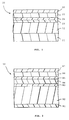
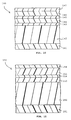
- Figure 1 illustrates a schematic cross-sectional view of a multilayer Film Nos. 1, 2, and 3, described below.
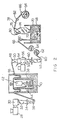
- Figure 2 illustrates a schematic view of a preferred process for making a multilayer film according to Figure 1, as well as other multilayer films according to the present invention.
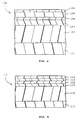
- Figure 3 illustrates a schematic cross-sectional view of a multilayer Film Nos. 4, 5, 6, and 7, described below.
- Figure 4 illustrates a schematic cross-sectional view of a multilayer Film No. 8, described below.
- Figure 5 illustrates a schematic cross-sectional view of a multilayer Film Nos. 9 and 10, described below.
- Figure 7 illustrates a schematic cross-sectional view of a multilayer Film Nos. 11, 12, and 13, described below.
- Figure 8 illustrates a schematic cross-sectional view of a multilayer Film Nos. 14, described below.
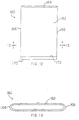
- Figure 12 illustrates a schematic of an end-seal bag in accordance with the present invention, in lay-flat view.
- Figure 13 illustrates a cross-sectional view of the end-seal bag illustrated in Figure 12, taken through section 13-13 of Figure 12.
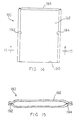
- Figure 14 illustrates a schematic of a side-seal bag in accordance with the present invention, in lay-flat view.
- Figure 15 illustrates a cross-sectional view of the side-seal bag illustrated in Figure 14, taken through section 15-15 of Figure 14.
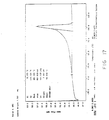
- Figure 17 is a differential scanning calorimeter (DSC) curve of a polymer having a major DSC peak less than 105°C.
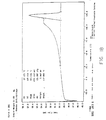
- Figure 18 is a differential scanning calorimeter (DSC) curve of a polymer having a major DSC peak greater than 105°C.
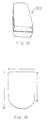
- Figure 19 is a face view of a block of wood used in a standardized shrink-compatibility test as described hereinbelow.
- a first layer refers to the fact that at least one layer of the multilayer film comprises ethylene/alpha-olefin copolymer having a major DSC peak of less than 105°C.
- the phrase "a first layer” is not intended to indicate any specific location of the first layer relative to the other layers of the film, or any manner in which the film can be built up. Rather, this phrase is included merely to provide a convenient method of identifying layers which differ in chemical composition.
- free shrink refers to the percent dimensional change in a 10 cm x 10 cm specimen of film, when shrunk at 85°C (185°F), with the quantitative determination being carried out according to ASTM D 2732, as set forth in the 1990 Annual Book of ASTM Standards, Vol. 08.02, pp.368-371, which is hereby incorporated, in its entirety, by reference thereto.
- the multilayer film according to the present invention has a "total free shrink" of at least 80 percent.
- Total free shrink is determined by summing the percent free shrink in the machine direction with the percentage of free shrink in the transverse direction. For example, a film which exhibits 50% free shrink in the transverse direction and 60% free shrink in the machine direction, has a “total free shrink” of 110%.
- the phrase "free shrink”, as used herein, refers to total free shrink.
- the multilayer film of the present invention has a free shrink of from 80 to 200 percent; more preferably, 85 to 120 percent; still more preferably, 90 to 120 percent; yet still more preferably 100 to 110 percent.
- shrink compatible layers include: (a) a layer comprising polymer having a major DSC peak below 105°C; (b) a layer so thin that upon conducting a standardized restrained shrinkage, the thin layer "zig-zags" in a manner that does not result in a haze level of at least 40 percent; and, (c) a layer comprising polymer having a melt point less than 80°C.
- just one of the layers of the multilayer film comprises a polymer having a major DSC peak of at least 105°C, or does not have a major DSC peak within 5°C of the remaining film layers (with the exceptions of thin layers which zig-zag and layers comprising polymer having a melt point less than 80°C), all the layers of the multilayer film are not shrink-compatible with respect to one another.
- shrink-compatibility can be achieved by ensuring that all the layers of a multilayer film have a melting point (or a major DSC peak) of less than 105°C and within a 5°C range, with the exception of: (a) a thin layer which "zig-zags" upon restrained shrinkage, and, (b) other layers comprising polymers having a major melt peak below 80°C.
- all the layers of the multilayer film have a melting point within a 4°C range; still more preferably, within a 3°C range; and yet still more preferably, within a 2°C range.
- Such multilayer films contain layers which tend to shrink concurrently and to the same degree, so that delamination, disturbances, voids, rough surfaces, etc., are not formed.
- the multilayer film comprises shrink-compatible layers comprising at least one polymer having a major DSC peak less than 105°C; more preferably, the polymer having a major DSC peak less than 105°C comprises at least one member selected from the group consisting of ethylene/alpha-olefin copolymer, ethylene/vinyl acetate copolymer, ionomer, and ethylene/acrylic acid copolymer; still more preferably, homogeneous ethylene/alpha-olefin copolymer and ethylene/vinyl acetate copolymer having a vinyl acetate content of at least 15 weight percent.
- polymer having a major DSC peak less than 105°C makes up at least 50 weight percent of the shrink-compatible layer; more preferably, such polymer makes up at least 70 percent of the shrink-compatible layer; and still more preferably, such polymer makes up at least about 90 percent of the shrink compatible layer.
- a film layer can be shrink-compatible even though it contains a layer which does not comprise a polymer having a major DSC peak of less than 105°C, provided the layer is either: (a) an inner layer thin enough that neither disturbances, delamination, nor voids are formed upon the restrained shrinkage in the shrink-compatibility test; or (b) comprises a polymer having a major melt peak below 80°C.
- a core layer composed of substantially 100% polyvinylidene chloride is shrink-compatible provided it has a thickness, before shrinkage in the shrink-compatibility test, of 8.9 ⁇ m (0.35 mil) or less.
- the polyvinylidene chloride has a thickness of from about 3.8 to 8.9 ⁇ m (0.15 to 0.35 mil); more preferably, about 5.1 ⁇ m (0.2 mil). It has been found that such a thin polyvinylidene chloride core layer is forced to effectively "shrink" by the shrinkage of the remainder of the film layers on both sides of the polyvinylidene chloride core layer.
- the thin polyvinylidene chloride core layer can, at least in some instances, be compressed into a "zig-zag” configuration, while having no substantial adverse effect upon the optical properties of the film.
- Shrink-compatibility of the thin polyvinylidene chloride layer can also be dependent upon having a tie layer of adequate thickness adjacent each side of the polyvinylidene chloride layer, these tie layers conforming to the zig-zag configuration of the polyvinylidene chloride layer, to prevent the film from hazing up.
- shrink-compatible layers comprise ethylene/alphaolefin copolymer having a major melt peak below 105°C, in an amount of from about 50 to 100 weight percent, based on the weight of the layer; more preferably, from about 70-100 weight percent; still more preferably, from about 85-100 weight percent; yet still more preferably, from about 90-100 weight percent. It has been found that multilayer films comprising such polymers in such amounts can be used to produce films having a free shrink of at least 80 percent while maintaining a relatively high level of optical characteristics, such as transparency, haze, and gloss.
- each of the layers in the multilayer film according to the present invention with the exception of core layer(s) comprising polyvinylidene chloride, comprise ethylene/alpha-olefin copolymer having a major DSC melt peak below 92°C.
- Figure 18 is a differential scanning calorimeter (DSC) plot of heat flow vs. temperature, taken at 10.0°C per minute, for DOWLEX 2045.03 (TM) linear low density polyethylene (“LLDPE”), also obtained from The Dow Chemical Company, of Midland, Michigan.
- DOWLEX 2045.03 (TM) LLDPE has a major DSC peak at 123.5°C, indicating that this LLDPE contains a fraction of high polyethylene homopolymer, in stark contrast to homogeneous ethylene/alpha-olefin copolymers.
- the standard test for shrink-compatibility which can be used to determine whether all layers of a multilayer film are shrink-compatible with respect to one another, is carried out by first forming a rectangular bag (either end-seal or side-seal, depending upon whether a film tube of the appropriate size is available) having a length of 380 mm (15 inches) (between bottom seal and open top, or bottom edge and open top) and a width of 178 mm (7 inches) (between side edges or side seals).
- the bag is formed from a film having a standardized thickness of about 51 ⁇ m (2 mils), and the standard film must have a free shrink, at 85°C (185°F), of at least 80 percent.
- the temperature at which the film exhibits a free shrink of 100% should be determined.
- the bag, having the block therein is placed in water at 85°C (185°F), or the temperature at which the bag film exhibits a free shrink of 100%, whichever is higher.
- the bag, having the block therein is held immersed in the water for a period of 10 seconds. Thereafter, the shrunken bag, having the block therein, is removed from the hot water, and an optics analysis is performed to determine the percent haze exhibited by that portion of the bag film covering either of the "main faces" of the block.
- the film which remains over the block is subjected to "restrained shrink” in that this portion of the bag film is not permitted to shrink as much as it otherwise would without the presence of the block within the bag.
- the "excess” film, which is not in contact with the block is subjected to "unrestrained shrink", in that it undergoes shrinkage which is not "restrained” by the presence of the block.
- the phrase "bulk layer” refers to any layer of a film which is present for the purpose of increasing the abuse-resistance, toughness, modulus, etc., of a multilayer film.
- Bulk layers generally comprise polymers which are inexpensive relative to other polymers in the film which provide some specific purpose unrelated to abuse-resistance, modulus, etc.
- food-contact surface and “meat-contact surface” refers to an outer surface of a food-contact layer/meat-contact layer, this outer surface being in direct contact with the food/meat within the package.
- EVOH refers to ethylene/vinyl alcohol copolymer.
- EVOH includes saponified or hydrolyzed ethylene/vinyl acetate copolymers, and refers to a vinyl alcohol copolymer having an ethylene comonomer, and prepared by, for example, hydrolysis of vinyl acetate copolymers, or by chemical reactions with polyvinyl alcohol. The degree of hydrolysis is preferably at least 50% and more preferably at least 85%.
- laminate refers to the process, and resulting product, made by bonding together two or more layers of film or other materials. Lamination can be accomplished by joining layers with adhesives, joining with heat and pressure, and even spread coating and extrusion coating.
- laminate is also inclusive of coextruded multilayer films comprising one or more tie layers.
- the term "oriented” refers to a polymer-containing material which has been stretched at an elevated temperature (the orientation temperature), followed by being “set” in the stretched configuration by cooling the material while substantially retaining the stretched dimensions. Upon subsequently heating unrestrained, unannealed, oriented polymer-containing material to its orientation temperature, heat shrinkage is produced almost to the original unstretched, i.e., pre-oriented dimensions. More particularly, the term "oriented”, as used herein, refers to oriented films, wherein the orientation can be produced in one or more of a variety of manners.
- the phrase "orientation ratio" refers to the multiplication product of the extent to which the plastic film material is expanded in several directions, usually two directions perpendicular to one another. Expansion in the machine direction is herein referred to as “drawing”, whereas expansion in the transverse direction is herein referred to as “stretching". For films extruded through an annular die, stretching is obtained by “blowing” the film to produce a bubble. For such films, drawing is obtained by passing the film through two sets of powered nip rolls, with the downstream set having a higher surface speed than the upstream set, with the resulting draw ratio being the surface speed of the downstream set of nip rolls divided by the surface speed of the upstream set of nip rolls. The degree of orientation is also referred to as the orientation ratio, or sometimes as the "racking ratio".
- the term "monomer” refers to a relatively simple compound, usually containing carbon and of low molecular weight, which can react to form a polymer by combining with itself or with other similar molecules or compounds.
- polymerization is inclusive of homopolymerizations, copolymerizations, terpolymerizations, etc., and includes all types of copolymerizations such as random, graft, block, etc.
- the polymers in the films used in accordance with the present invention can be prepared in accordance with any suitable polymerization process, including slurry polymerization, gas phase polymerization, and high pressure polymerization processes.
- High pressure polymerization processes utilize a catalyst system comprising a cyclopentadienyl-transition metal compound and an alumoxane compound. It is important, in the high-pressure process, that the polymerization temperature be above about 120°C., but below the decomposition temperature of the polymer product. It is also important that the polymerization pressure be above about 500 bar (kg/cm 2 ). In those situations wherein the molecular weight of the polymer product that would be produced at a given set of operating conditions is higher than desired, any of the techniques known in the art for control of molecular weight, such as the use of hydrogen or reactor temperature, may be used in the process of this invention.
- copolymerization refers to the simultaneous polymerization of two or more monomers.
- ethylene alpha-olefin copolymer is the equivalent of "ethylene/alpha-olefin copolymer.”
- heterogeneous catalyst refers to a catalyst suitable for use in the polymerization of heterogeneous polymers, as defined above.
- Heterogeneous catalysts are comprised of several kinds of active sites which differ in Lewis acidity and steric environment.
- Ziegler-Natta catalysts are heterogeneous catalysts. Examples of Ziegler-Natta heterogeneous systems include metal halides activated by an organometallic co-catalyst, such as titanium chloride, optionally containing magnesium chloride, complexed to trialkyl aluminum, as is disclosed in patents such as U.S. Patent No. 4,302,565, to GOEKE, et. al., and U.S. Patent No. 4,302,566, to KAROL, et. al..
- the homogeneous ethylene/alpha-olefin copolymers have a CDBI greater than about 70%, i.e., a CDBI of from about 70% to 99%.
- the homogeneous ethylene/alpha-olefin copolymers in the multilayer films of the present invention also exhibit a relatively narrow melting point range, in comparison with "heterogeneous copolymers", i.e., polymers having a CDBI of less than 55%.
- the homogeneous ethylene/alpha-olefin copolymers exhibit an essentially singular melting point characteristic, with a peak melting point (T m ), as determined by Differential Scanning Colorimetry (DSC), of from about 60°C to 105°C.
- the homogeneous copolymer has a DSC peak T m of from about 80°C to 100°C.
- T m peak melting point
- the phrase "essentially single melting point" means that at least about 80%, by weight, of the material corresponds to a single T m peak at a temperature within the range of from about 60°C to 105°C, and essentially no substantial fraction of the material has a peak melting point in excess of about 115°C., as determined by DSC analysis.
- DSC measurements are made on a Perkin Elmer System 7 Thermal Analysis System. Melting information reported are second melting data, i.e., the sample is heated at a programmed rate of 10°C./min. to a temperature below its critical range. The sample is then reheated (2nd melting) at a programmed rate of 10°C/min. The presence of higher melting peaks is detrimental to film properties such as haze, and compromises the chances for meaningful reduction in the seal initiation temperature of the final film.
- a homogeneous ethylene/alpha-olefin copolymer can, in general, be prepared by the copolymerization of ethylene and any one or more alpha-olefin.
- the alpha-olefin is a C 3 -C 20 alpha-monoolefin, more preferably, a C 4 -C 12 alpha-monoolefin, still more preferably, a C 4 -C 8 alpha-monoolefin.
- the alpha-olefin comprises at least one member selected from the group consisting of butene-1, hexene-1, and octene-1, i.e., 1-butene, 1-hexene, and 1-octene, respectively. Most preferably, the alpha-olefin comprises octene-1, and/or a blend of hexene-1 and butene-1.
- homogeneous catalyst refers to a catalyst suitable for use in the polymerization of homogeneous polymers, as defined above.
- homogeneous catalysts are also referred to as “single site catalysts", due to the fact that such catalysts typically have only one type of catalytic site, which is believed to be the basis for the homogeneity of the polymers they catalyze the polymerization of.
- polyolefin refers to any polymerized olefin, which can be linear, branched, cyclic, aliphatic, aromatic, substituted, or unsubstituted. More specifically, included in the term polyolefin are homopolymers of olefin, copolymers of olefin, copolymers of an olefin and an non-olefinic comonomer copolymerizable with the olefin, such as vinyl monomers, modified polymers thereof, and the like.
- polyethylene homopolymer polypropylene homopolymer, polybutene, ethylene/alpha-olefin copolymer, propylene/alpha-olefin copolymer, butene/alpha-olefin copolymer, ethylene/vinyl acetate copolymer, ethylene/ethyl acrylate copolymer, ethylene/butyl acrylate copolymer, ethylene/methyl acrylate copolymer, ethylene/acrylic acid copolymer, ethylene/methacrylic acid copolymer, modified polyolefin resin, ionomer resin, polymethylpentene, etc.
- Modified polyolefin resin is inclusive of modified polymer prepared by copolymerizing the homopolymer of the olefin or copolymer thereof with an unsaturated carboxylic acid, e.g., maleic acid, fumaric acid or the like, or a derivative thereof such as the anhydride, ester or metal salt or the like. It could also be obtained by incorporating into the olefin homopolymer or copolymer, an unsaturated carboxylic acid, e.g., maleic acid, fumaric acid or the like, or a derivative thereof such as the anhydride, ester or metal salt or the like.
- an unsaturated carboxylic acid e.g., maleic acid, fumaric acid or the like
- a derivative thereof such as the anhydride, ester or metal salt or the like.
- identifying polymers such as “polyamide”, “polyester”, “polyurethane”, etc. are inclusive of not only polymers comprising repeating units derived from monomers known to polymerize to form a polymer of the named type, but are also inclusive of comonomers, derivatives, etc. which can copolymerize with monomers known to polymerize to produce the named polymer.
- modified polymer as well as more specific phrases such as “modified ethylene/vinyl acetate copolymer”, and “modified polyolefin” refer to such polymers having an anhydride functionality, as defined immediately above, grafted thereon and/or copolymerized therewith and/or blended therewith.
- modified polymers Preferably, such modified polymers have the anhydride functionality grafted on or polymerized therewith, as opposed to merely blended therewith.
- ethylene alpha-olefin copolymer and “ethylene/alpha-olefin copolymer” refer to such heterogeneous materials as linear low density polyethylene (LLDPE), and very low and ultra low density polyethylene (VLDPE and ULDPE); and homogeneous polymers such as metallocene-catalyzed EXACT (TM) linear homogeneous ethylene/alpha olefin copolymer resins obtainable from the Exxon Chemical Company, of Baytown, Texas, and TAFMER (TM) linear homogeneous ethylene/alpha-olefin copolymer resins obtainable from the Mitsui Petrochemical Corporation.
- LLDPE linear low density polyethylene
- VLDPE and ULDPE very low and ultra low density polyethylene
- homogeneous polymers such as metallocene-catalyzed EXACT (TM) linear homogeneous ethylene/alpha olefin copolymer resins obtainable from the Exxon Chemical Company, of Bay
- All these materials generally include copolymers of ethylene with one or more comonomers selected from C 4 to C 10 alpha-olefin such as butene-1 (i.e., 1-butene), hexene-1, octene-1, etc. in which the molecules of the copolymers comprise long chains with relatively few side chain branches or cross-linked structures.
- This molecular structure is to be contrasted with conventional low or medium density polyethylenes which are more highly branched than their respective counterparts.
- the heterogeneous ethylene/alpha-olefin commonly known as LLDPE has a density usually in the range of from about 0.91 grams per cubic centimeter to about 0.94 grams per cubic centimeter.
- the ethylene/alpha-olefin copolymer comprises a copolymer resulting from the copolymerization of from about 80 to 99 weight percent ethylene and from 1 to 20 weight percent alpha-olefin.
- the ethylene/alpha-olefin copolymer comprises a copolymer resulting from the copolymerization of from about 85 to 95 weight percent ethylene and from 5 to 15 weight percent alpha-olefin.
- the phrases “inner layer” and “internal layer” refer to any layer, of a multilayer film, having both of its principal surfaces directly adhered to another layer of the film.
- the term "adhered” is inclusive of films which are directly adhered to one another using a heat seal or other means, as well as films which are adhered to one another using an adhesive which is between the two films.
- the term "extrusion” is used with reference to the process of forming continuous shapes by forcing a molten plastic material through a die, followed by cooling or chemical hardening. Immediately prior to extrusion through the die, the relatively high-viscosity polymeric material is fed into a rotating screw of variable pitch, i.e., an extruder, which forces the polymeric material through the die.
- machine direction refers to a direction “along the length” of the film, i.e., in the direction of the film as the film is formed during extrusion and/or coating.
- free shrink refers to the percent dimensional change in a 10 cm x 10 cm specimen of film, when subjected to selected heat, as measured by ASTM D 2732, as known to those of skill in the art.
- PVDC Blend #1 was a composition comprising: (a) about 96 weight percent DOW MA134 (TM) vinylidene chloride/methyl acrylate copolymer having a methyl acrylate content of 8.5%, obtained from The Dow Chemical Company, of Midland, Michigan; (b) about 2 weight percent PLAS CHEK 775 (TM) epoxidized soybean oil, obtained from Ferro Chemicals, of Bedford, Ohio; and, (c) about 2 weight percent METABLEN L1000 (TM) acrylate blend, obtained from Elf Atochem, of Philadelphia, Pennsylvania.
- METABLEN L1000 (TM) comprises about 53 weight percent methyl methacrylate (“MMA"), 29 weight percent butyl methacrylate (“BMA”), and 19 weight percent butyl acrylate (“BA”).
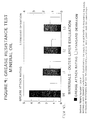
- the purpose of the following standard grease-resistance test is to determine the ability of different packaging materials to resist grease attack to the outer film layer when run at the recommended shrink tunnel conditions after being contaminated by fats and oils.
- the procedure is as follows:
- FIG 12 is a schematic of a preferred end seal bag 160, in a lay-flat position, this bag being in accord with the present invention
- Figure 13 is a cross-sectional view of bag 160 taken through section 13-13 of Figure 12.
- bag 160 comprises bag film 162, top edge 164 defining an open top, first bag side edge 166, second bag side edge 168, bottom edge 170, and end seal 172.
Landscapes
- Engineering & Computer Science (AREA)
- Mechanical Engineering (AREA)
- Laminated Bodies (AREA)
- Wrappers (AREA)
- Packages (AREA)
- Packging For Living Organisms, Food Or Medicinal Products That Are Sensitive To Environmental Conditiond (AREA)
- Coating Of Shaped Articles Made Of Macromolecular Substances (AREA)
- Shaping By String And By Release Of Stress In Plastics And The Like (AREA)
Claims (21)
- Film multicouche thermorétractable biaxialement orienté ayant un total de 4 à 20 couches, lequel film comprend une première couche comprenant un copolymère d'éthylène/alpha-oléfine ayant une crête majeure au calorimètre à balayage différentiel (DSC) de moins de 105°C, où le film multicouche a un retrait total libre à 85°C (185°F), d'au moins 80 pour cent et toutes les couches du film multicouche sont compatibles au retrait les unes par rapport aux autres, chaque couche étantet où chaque couche du type (a) dans le film comprend un polymère qui a une crête majeure par DSC dans les limites de 5°C par rapport à toute autre couche du type (a).(a) une couche comprenant un polymère ayant une crête majeure par DSC en dessous de 105°C ;(b) une couche suffisamment mince pour que lorsque l'on entreprend un retrait retenu standardisé, la couche mince se mette en zigzag d'une manière qui a pour résultat un niveau de voile de 0 à 40 pour cent ; ou(c) une couche comprenant un polymère ayant un point de fusion inférieur à 80°C ;
- Film multicouche biaxialement orienté thermorétractable comprenant une première couche comprenant un copolymère d'éthylène/alpha-oléfine en une quantité d'au moins 90 pour cent en poids en se basant sur le poids de la première couche et ayant une crête majeure par DSC de moins de 105°C, où le film multicouche a un retrait total libre, à 85°C (185°F), d'au moins 80 pour cent et toutes les couches du film multicouche sont compatibles au retrait les unes par rapport aux autres, chaque couche étantet où chaque couche du type (a) dans le film comprend un polymère qui a une crête majeure par DSC dans les limites de 5°C de toute autre couche du type (a).(a) une couche comprenant un polymère ayant une crête majeure par DSC en dessous de 105°C ;(b) une couche suffisamment mince pour que, lorsque l'on entreprend un retrait retenu standardisé, la couche mince se mette en zigzag d'une manière qui a pour résultat un niveau de voile de 0 à 40 pour cent ; ou(c) une couche comprenant un polymère ayant un point de fusion inférieur à 80°C ;
- Film selon la revendication 1 ou 2, comprenant de plus une seconde couche formant barrière contre l'oxygène.
- Film selon la revendication 3, où la couche formant barrière contre l'oxygène est une couche de coeur comprenant du chlorure de polyvinylidène.
- Film selon la revendication 1, 2, 3 ou 4, oùla première couche comprend un copolymère d'éthylène/alpha-oléfine en une quantité de 50 à 100 pour cent en poids en se basant sur le poids de la première couche ; etle copolymère d'éthylène/alpha-oléfine comprend un copolymère homogène d'éthylène/alpha-oléfine en une quantité de 5 à 100 pour cent en poids en se basant sur le poids du copolymère d'éthylène/alpha-oléfine, le copolymère homogène d'éthylène/alpha-oléfine ayant une crête majeure par DSC de moins de 105°C.
- Film selon l'une quelconque des revendications précédentes, où le retrait total libre à 85°C (185°F) est de 80 à 200 pour cent.
- Film selon la revendication 5 où le retrait total libre à 85°C (185°F) est de 100 à 110 pour cent.
- Film selon l'une quelconque des revendications 3 à 7, où la première couche est une couche externe et le film multicouche comprend de plus une deuxième couche qui est une couche de coeur formant barrière contre l'oxygène et une troisième couche, la troisième couche étant une couche externe comprenant au moins un polymère sélectionné parmi :
ionomère, copolymère homogène d'éthylène/alpha-oléfine, copolymère d'éthylène/ acide acrylique, copolymère d'éthylène/ acide méthylacrylique, copolymère /d'éthylène acétate de vinyle et copolymère de propylène/éthylène ayant une teneur en éthylène d'au moins 10%. - Film selon la revendication 8, où au moins une couche du film comprend un polymère réticulé.
- Film selon la revendication 8 ou 9 comprenant de plus :des quatrième et cinquième couches, la quatrième couche étant une couche d'attache placée entre la première couche et la deuxième couche, la cinquième couche étant une couche d'attache placée entre la deuxième couche et la troisième couche ;les quatrième et cinquième couches étant identiques ou différentes et chacune comprenant au moins un polymère sélectionné parmi un copolymère d'éthylène/acétate de vinyle, un copolymère d'éthylène/acide méthacrylique, un copolymère d'éthylène/acrylate d'éthyle, du polyéthylène faible densité et du polyéthylène linéaire faible densité.
- Film selon l'une quelconque des revendications précédentes, où une portion de retenue du retrait du film a un voile de 0 à 30 pour cent après thermorétrécissement brut restreint, selon un test standard de compatibilité au retrait.
- Film selon l'une quelconque des revendications précédentes, comprenant une couche externe résistant aux graisses.
- Film selon la revendication 12, où la couche externe résistant aux graisses comprend un copolymère réticulé, homogène d'éthylène/alpha-oléfine.
- Film selon la revendication 13, où la couche externe résistant aux graisses comprend(A) un premier composant comprenant un copolymère homogène d'éthylène/alpha-oléfine en une quantité d'au moins 50 pour cent en poids en se basant sur le poids de la couche résistant aux graisses ; et(B) un second composant en une quantité à 20 pour cent en poids en se basant sur le poids de la couche résistant aux graisses, le second composant comprenant au moins un polymère sélectionné parmi(i) copolymère d'éthylène/propylène ;(ii) copolymère de propylène/butène ;(iii) polybutylène ;(iv) ionomère ;(v) copolymère d'éthylène/acide acrylique;(vi) copolymère séquencé de styrène-butadiène-styrène ;(vii) copolymère séquencé de styrène-isoprène-styrène;(viii) copolymère séquencé de styrène-éthylène/butylène-styrène ;(ix) copolymère d'éthylène/alpha-oléfine ;et(x) polybutène-1.
- Film selon la revendication 14, où :le premier composant (A) est présent, dans la couche externe résistant aux graisses, en une quantité de 50 à 80 pour cent en poids en se basant sur le poids de la couche résistant aux graisses ; etle second composant (B) est présent, dans la couche externe résistant aux graisses, en une quantité de 20 à 50 pour cent en poids en se basant sur le poids de la couche résistant aux graisses.
- Film selon la revendication 15, où :le premier composant (A) comprend de l'éthylène/alpha-oléfine homogène en une quantité de 50 à 75 pour cent en poids en se basant sur le poids de la couche résistant aux graisses ; etle second composant (B) comprend un copolymère d'éthylène/propylène en une quantité de 25 à 50 pour cent en poids en se basant sur le poids de la couche résistant aux graisses.
- Film selon l'une quelconque des revendications 14 à 16, comprenant deux couches externes résistant aux graisses, où la première couche résistant aux graisses comprend de l'éthylène/alpha-oléfine homogène réticulé compatible au retrait et la seconde couche résistant aux graisses comprend les premier et second composants (A) et (B).
- Film selon l'une quelconque des revendications précédentes, où le copolymère d'éthylène/alpha-oléfine comprend un copolymère d'éthylène/alpha-oléfine catalysé au métallocène.
- Sac comprenant un film multicouche thermorétractable biaxialement orienté selon l'une quelconque des revendications précédentes.
- Produit d'emballage comprenant un sac scellé comprenant un film multicouche thermorétractable biaxialement orienté selon l'une quelconque des revendications 1 à 18 et un produit dans ledit sac, le produit comprenant de la viande ou du fromage.
- Produit emballé selon la revendication 1, où le produit est un produit de viande fraíche.
Priority Applications (1)
| Application Number | Priority Date | Filing Date | Title |
|---|---|---|---|
| EP99119037A EP0976547B1 (fr) | 1994-10-04 | 1995-10-03 | Feuilles multicouches à rétraction élevée |
Applications Claiming Priority (4)
| Application Number | Priority Date | Filing Date | Title |
|---|---|---|---|
| US31750994A | 1994-10-04 | 1994-10-04 | |
| US317509 | 1994-10-04 | ||
| US33299094A | 1994-11-01 | 1994-11-01 | |
| US332990 | 1994-11-01 |
Related Child Applications (1)
| Application Number | Title | Priority Date | Filing Date |
|---|---|---|---|
| EP99119037A Division EP0976547B1 (fr) | 1994-10-04 | 1995-10-03 | Feuilles multicouches à rétraction élevée |
Publications (2)
| Publication Number | Publication Date |
|---|---|
| EP0707957A1 EP0707957A1 (fr) | 1996-04-24 |
| EP0707957B1 true EP0707957B1 (fr) | 2000-05-10 |
Family
ID=26980996
Family Applications (2)
| Application Number | Title | Priority Date | Filing Date |
|---|---|---|---|
| EP95307037A Expired - Lifetime EP0707957B1 (fr) | 1994-10-04 | 1995-10-03 | Feuille multicouche à rétraction élevée dont les propriétés optiques sont maintenues pendant la rétraction |
| EP99119037A Expired - Lifetime EP0976547B1 (fr) | 1994-10-04 | 1995-10-03 | Feuilles multicouches à rétraction élevée |
Family Applications After (1)
| Application Number | Title | Priority Date | Filing Date |
|---|---|---|---|
| EP99119037A Expired - Lifetime EP0976547B1 (fr) | 1994-10-04 | 1995-10-03 | Feuilles multicouches à rétraction élevée |
Country Status (10)
| Country | Link |
|---|---|
| EP (2) | EP0707957B1 (fr) |
| JP (1) | JPH08187814A (fr) |
| AT (2) | ATE192694T1 (fr) |
| AU (1) | AU702611B2 (fr) |
| BR (1) | BR9504273A (fr) |
| CA (1) | CA2159792C (fr) |
| DE (2) | DE69532774T2 (fr) |
| ES (1) | ES2216400T3 (fr) |
| NZ (1) | NZ280151A (fr) |
| TW (1) | TW369478B (fr) |
Cited By (1)
| Publication number | Priority date | Publication date | Assignee | Title |
|---|---|---|---|---|
| US7147930B2 (en) | 2003-12-16 | 2006-12-12 | Curwood, Inc. | Heat-shrinkable packaging films with improved sealing properties and articles made thereof |
Families Citing this family (21)
| Publication number | Priority date | Publication date | Assignee | Title |
|---|---|---|---|---|
| US5837335A (en) * | 1994-10-04 | 1998-11-17 | Cryovac, Inc. | High shrink multilayer film which maintains optics upon shrinking |
| JPH08169094A (ja) * | 1994-12-19 | 1996-07-02 | Sumitomo Chem Co Ltd | 熱収縮包装用フィルム |
| US5925454A (en) * | 1995-07-11 | 1999-07-20 | W.R. Grace & Co.-Conn. | Film having modified surface characteristics through use of combination of spherical and lamellar particulates |
| EP0756931B2 (fr) * | 1995-07-31 | 2011-06-22 | Kureha Corporation | Feuille multicouche |
| DE19535503A1 (de) * | 1995-09-25 | 1997-03-27 | Wolff Walsrode Ag | Siegelbare Kaschierfolie enthaltend mit Metallocen-Katalysatoren hergestellte Copolymere |
| DE69739294D1 (de) * | 1996-05-28 | 2009-04-23 | Kureha Corp | Heissschrumpfbare Mehrschichtfolie |
| JPH1177927A (ja) * | 1997-09-05 | 1999-03-23 | Okamoto Ind Inc | 食品包装用ストレッチフィルム |
| EP1060077B1 (fr) | 1998-03-04 | 2003-06-18 | Cryovac, Inc. | Film d'emballage multicouche thermoretrecissable soudable en superposition |
| US6610392B1 (en) | 1998-03-04 | 2003-08-26 | Cryovac, Inc. | Heat-shrinkable multilayer packaging film comprising inner layer comprising a polyester |
| CA2329488A1 (fr) * | 1998-04-20 | 1999-10-28 | Cryovac Inc. | Film d'emballage multicouche et sachet fait de ce film |
| DE19823142C2 (de) * | 1998-05-23 | 2001-02-22 | Inst Polymerforschung Dresden | Elastische Fäden, Folien, textile Flächengebilde und Hybridstrukturen mit hohem Schrumpfvermögen bei niedrigen Temperaturen und hoher Temperaturstabilität und Verfahren zu ihrer Herstellung |
| US6355287B2 (en) | 1998-06-22 | 2002-03-12 | Cryovac, Inc. | Packaged food product having added liquid |
| DE69933563T2 (de) * | 1998-06-22 | 2007-05-31 | Cryovac, Inc. | Verpacktes nahrungsmittel mit hinzugefügter flüssigkeit und verfahren zu seiner herstellung |
| US7273629B2 (en) | 2000-11-28 | 2007-09-25 | Cryovac, Inc. | Meat package with reduced leaker rates |
| US7235607B2 (en) | 2002-09-05 | 2007-06-26 | Exxonmobil Chemical Patents Inc. | Shrink film |
| DE202007018690U1 (de) | 2006-04-14 | 2009-02-19 | Bio-Tec Biologische Naturverpackungen Gmbh & Co.Kg | Mehrschichtfolie |
| US7951873B2 (en) | 2006-05-05 | 2011-05-31 | Exxonmobil Chemical Patents Inc. | Linear low density polymer blends and articles made therefrom |
| JP4991260B2 (ja) * | 2006-10-26 | 2012-08-01 | グンゼ株式会社 | 筒状熱収縮性ラベル、その製造方法およびラベル付き容器 |
| US8815360B2 (en) | 2007-08-28 | 2014-08-26 | Cryovac, Inc. | Multilayer film having passive and active oxygen barrier layers |
| US9452592B2 (en) | 2007-08-28 | 2016-09-27 | Cryovac, Inc. | Multilayer film having an active oxygen barrier layer with radiation enhanced active barrier properties |
| US9828475B2 (en) | 2009-11-20 | 2017-11-28 | Dow Global Technologies Llc | Printable monolayer polyvinylidene chloride structures |
Family Cites Families (3)
| Publication number | Priority date | Publication date | Assignee | Title |
|---|---|---|---|---|
| US5298302A (en) * | 1992-08-21 | 1994-03-29 | W. R. Grace & Co.-Conn. | Film with improved lap seal |
| DE69333773T2 (de) * | 1992-11-13 | 2006-04-06 | Cryovac, Inc. | Wärmeschrumpfbare, durch Single-site-Katalyse hergestellte Copolymere enthaltende Folien. |
| US5604043A (en) * | 1993-09-20 | 1997-02-18 | W.R. Grace & Co.-Conn. | Heat shrinkable films containing single site catalyzed copolymers having long chain branching |
-
1995
- 1995-10-02 NZ NZ280151A patent/NZ280151A/en not_active IP Right Cessation
- 1995-10-03 DE DE69532774T patent/DE69532774T2/de not_active Expired - Lifetime
- 1995-10-03 ES ES99119037T patent/ES2216400T3/es not_active Expired - Lifetime
- 1995-10-03 EP EP95307037A patent/EP0707957B1/fr not_active Expired - Lifetime
- 1995-10-03 DE DE69516796T patent/DE69516796T2/de not_active Expired - Lifetime
- 1995-10-03 AT AT95307037T patent/ATE192694T1/de active
- 1995-10-03 AU AU32996/95A patent/AU702611B2/en not_active Ceased
- 1995-10-03 CA CA002159792A patent/CA2159792C/fr not_active Expired - Fee Related
- 1995-10-03 EP EP99119037A patent/EP0976547B1/fr not_active Expired - Lifetime
- 1995-10-03 AT AT99119037T patent/ATE262414T1/de not_active IP Right Cessation
- 1995-10-04 JP JP7257957A patent/JPH08187814A/ja active Pending
- 1995-10-04 BR BR9504273A patent/BR9504273A/pt not_active Application Discontinuation
- 1995-12-15 TW TW084110467A patent/TW369478B/zh active
Cited By (1)
| Publication number | Priority date | Publication date | Assignee | Title |
|---|---|---|---|---|
| US7147930B2 (en) | 2003-12-16 | 2006-12-12 | Curwood, Inc. | Heat-shrinkable packaging films with improved sealing properties and articles made thereof |
Also Published As
| Publication number | Publication date |
|---|---|
| DE69532774D1 (de) | 2004-04-29 |
| DE69532774T2 (de) | 2005-03-17 |
| DE69516796D1 (de) | 2000-06-15 |
| EP0976547A2 (fr) | 2000-02-02 |
| NZ280151A (en) | 1997-12-19 |
| ATE262414T1 (de) | 2004-04-15 |
| EP0976547A3 (fr) | 2000-03-22 |
| JPH08187814A (ja) | 1996-07-23 |
| CA2159792A1 (fr) | 1996-04-05 |
| DE69516796T2 (de) | 2000-11-16 |
| AU3299695A (en) | 1996-04-18 |
| ES2216400T3 (es) | 2004-10-16 |
| ATE192694T1 (de) | 2000-05-15 |
| EP0976547B1 (fr) | 2004-03-24 |
| EP0707957A1 (fr) | 1996-04-24 |
| TW369478B (en) | 1999-09-11 |
| CA2159792C (fr) | 2007-08-28 |
| BR9504273A (pt) | 1996-10-01 |
| AU702611B2 (en) | 1999-02-25 |
Similar Documents
| Publication | Publication Date | Title |
|---|---|---|
| US5837335A (en) | High shrink multilayer film which maintains optics upon shrinking | |
| US5834077A (en) | High shrink multilayer film which maintains optics upon shrinking | |
| EP0976547B1 (fr) | Feuilles multicouches à rétraction élevée | |
| US6287613B1 (en) | Patch bag comprising homogeneous ethylene/alpha-olefin copolymer | |
| US6514583B1 (en) | High impact strength film containing single site catalyzed copolymer | |
| US5925454A (en) | Film having modified surface characteristics through use of combination of spherical and lamellar particulates | |
| US5545419A (en) | Patch bag having supplemental seal | |
| US6383537B1 (en) | Patch bag having overhanging bonded patches | |
| EP0756931A2 (fr) | Feuille multicouche | |
| US6372274B2 (en) | Process for making a packaged product | |
| AU2004217906B2 (en) | Thick shrink film having high oxygen transmission rate | |
| EP0874872B2 (fr) | Film presentant une excellente adhesivite de l'encre associee a une amelioration des proprietes de glissement, antibuee et/ou antistatiques | |
| WO1998036903A1 (fr) | Film d'emballage multicouche contenant du noir de carbone | |
| GB2328673A (en) | Patch bag comprising homogeneous ethylene/alpha-olefin copolymer | |
| CA2193982C (fr) | Sac dote de pieces de protection | |
| EP1089921B1 (fr) | Produit alimentaire emballe incluant un liquide ajoute, et procede d'elaboration |
Legal Events
| Date | Code | Title | Description |
|---|---|---|---|
| PUAI | Public reference made under article 153(3) epc to a published international application that has entered the european phase |
Free format text: ORIGINAL CODE: 0009012 |
|
| AK | Designated contracting states |
Kind code of ref document: A1 Designated state(s): AT BE CH DE DK ES FR GB GR IE IT LI LU NL PT SE |
|
| 17P | Request for examination filed |
Effective date: 19961010 |
|
| 17Q | First examination report despatched |
Effective date: 19971218 |
|
| RAP1 | Party data changed (applicant data changed or rights of an application transferred) |
Owner name: CRYOVAC, INC. |
|
| GRAG | Despatch of communication of intention to grant |
Free format text: ORIGINAL CODE: EPIDOS AGRA |
|
| GRAG | Despatch of communication of intention to grant |
Free format text: ORIGINAL CODE: EPIDOS AGRA |
|
| GRAH | Despatch of communication of intention to grant a patent |
Free format text: ORIGINAL CODE: EPIDOS IGRA |
|
| GRAH | Despatch of communication of intention to grant a patent |
Free format text: ORIGINAL CODE: EPIDOS IGRA |
|
| GRAA | (expected) grant |
Free format text: ORIGINAL CODE: 0009210 |
|
| AK | Designated contracting states |
Kind code of ref document: B1 Designated state(s): AT BE CH DE DK ES FR GB GR IE IT LI LU NL PT SE |
|
| PG25 | Lapsed in a contracting state [announced via postgrant information from national office to epo] |
Ref country code: LI Free format text: LAPSE BECAUSE OF FAILURE TO SUBMIT A TRANSLATION OF THE DESCRIPTION OR TO PAY THE FEE WITHIN THE PRESCRIBED TIME-LIMIT Effective date: 20000510 Ref country code: GR Free format text: LAPSE BECAUSE OF NON-PAYMENT OF DUE FEES Effective date: 20000510 Ref country code: ES Free format text: THE PATENT HAS BEEN ANNULLED BY A DECISION OF A NATIONAL AUTHORITY Effective date: 20000510 Ref country code: CH Free format text: LAPSE BECAUSE OF FAILURE TO SUBMIT A TRANSLATION OF THE DESCRIPTION OR TO PAY THE FEE WITHIN THE PRESCRIBED TIME-LIMIT Effective date: 20000510 Ref country code: BE Free format text: LAPSE BECAUSE OF FAILURE TO SUBMIT A TRANSLATION OF THE DESCRIPTION OR TO PAY THE FEE WITHIN THE PRESCRIBED TIME-LIMIT Effective date: 20000510 Ref country code: AT Free format text: LAPSE BECAUSE OF FAILURE TO SUBMIT A TRANSLATION OF THE DESCRIPTION OR TO PAY THE FEE WITHIN THE PRESCRIBED TIME-LIMIT Effective date: 20000510 |
|
| REF | Corresponds to: |
Ref document number: 192694 Country of ref document: AT Date of ref document: 20000515 Kind code of ref document: T |
|
| REG | Reference to a national code |
Ref country code: CH Ref legal event code: EP |
|
| REG | Reference to a national code |
Ref country code: IE Ref legal event code: FG4D |
|
| REF | Corresponds to: |
Ref document number: 69516796 Country of ref document: DE Date of ref document: 20000615 |
|
| ITF | It: translation for a ep patent filed | ||
| PG25 | Lapsed in a contracting state [announced via postgrant information from national office to epo] |
Ref country code: SE Free format text: LAPSE BECAUSE OF FAILURE TO SUBMIT A TRANSLATION OF THE DESCRIPTION OR TO PAY THE FEE WITHIN THE PRESCRIBED TIME-LIMIT Effective date: 20000810 Ref country code: PT Free format text: LAPSE BECAUSE OF FAILURE TO SUBMIT A TRANSLATION OF THE DESCRIPTION OR TO PAY THE FEE WITHIN THE PRESCRIBED TIME-LIMIT Effective date: 20000810 Ref country code: DK Free format text: LAPSE BECAUSE OF FAILURE TO SUBMIT A TRANSLATION OF THE DESCRIPTION OR TO PAY THE FEE WITHIN THE PRESCRIBED TIME-LIMIT Effective date: 20000810 |
|
| ET | Fr: translation filed | ||
| PG25 | Lapsed in a contracting state [announced via postgrant information from national office to epo] |
Ref country code: LU Free format text: LAPSE BECAUSE OF NON-PAYMENT OF DUE FEES Effective date: 20001003 Ref country code: IE Free format text: LAPSE BECAUSE OF NON-PAYMENT OF DUE FEES Effective date: 20001003 |
|
| REG | Reference to a national code |
Ref country code: CH Ref legal event code: PL |
|
| PLBE | No opposition filed within time limit |
Free format text: ORIGINAL CODE: 0009261 |
|
| STAA | Information on the status of an ep patent application or granted ep patent |
Free format text: STATUS: NO OPPOSITION FILED WITHIN TIME LIMIT |
|
| 26N | No opposition filed | ||
| REG | Reference to a national code |
Ref country code: IE Ref legal event code: MM4A |
|
| REG | Reference to a national code |
Ref country code: GB Ref legal event code: IF02 |
|
| PGFP | Annual fee paid to national office [announced via postgrant information from national office to epo] |
Ref country code: DE Payment date: 20091028 Year of fee payment: 15 |
|
| PGFP | Annual fee paid to national office [announced via postgrant information from national office to epo] |
Ref country code: NL Payment date: 20091024 Year of fee payment: 15 |
|
| PGFP | Annual fee paid to national office [announced via postgrant information from national office to epo] |
Ref country code: IT Payment date: 20091028 Year of fee payment: 15 Ref country code: GB Payment date: 20091026 Year of fee payment: 15 Ref country code: FR Payment date: 20091029 Year of fee payment: 15 |
|
| REG | Reference to a national code |
Ref country code: NL Ref legal event code: V1 Effective date: 20110501 |
|
| GBPC | Gb: european patent ceased through non-payment of renewal fee |
Effective date: 20101003 |
|
| PG25 | Lapsed in a contracting state [announced via postgrant information from national office to epo] |
Ref country code: FR Free format text: LAPSE BECAUSE OF NON-PAYMENT OF DUE FEES Effective date: 20101102 |
|
| REG | Reference to a national code |
Ref country code: FR Ref legal event code: ST Effective date: 20110630 |
|
| PG25 | Lapsed in a contracting state [announced via postgrant information from national office to epo] |
Ref country code: NL Free format text: LAPSE BECAUSE OF NON-PAYMENT OF DUE FEES Effective date: 20110501 Ref country code: GB Free format text: LAPSE BECAUSE OF NON-PAYMENT OF DUE FEES Effective date: 20101003 |
|
| REG | Reference to a national code |
Ref country code: DE Ref legal event code: R119 Ref document number: 69516796 Country of ref document: DE Effective date: 20110502 |
|
| PG25 | Lapsed in a contracting state [announced via postgrant information from national office to epo] |
Ref country code: IT Free format text: LAPSE BECAUSE OF NON-PAYMENT OF DUE FEES Effective date: 20101003 |
|
| PG25 | Lapsed in a contracting state [announced via postgrant information from national office to epo] |
Ref country code: DE Free format text: LAPSE BECAUSE OF NON-PAYMENT OF DUE FEES Effective date: 20110502 |