EP0712837B1 - 2-Amino-1,2,3,4-tétrahydronaphtalènes et 3-aminochromanes substitués au noyau - Google Patents
2-Amino-1,2,3,4-tétrahydronaphtalènes et 3-aminochromanes substitués au noyau Download PDFInfo
- Publication number
- EP0712837B1 EP0712837B1 EP96200393A EP96200393A EP0712837B1 EP 0712837 B1 EP0712837 B1 EP 0712837B1 EP 96200393 A EP96200393 A EP 96200393A EP 96200393 A EP96200393 A EP 96200393A EP 0712837 B1 EP0712837 B1 EP 0712837B1
- Authority
- EP
- European Patent Office
- Prior art keywords
- tetrahydronaphthalene
- mixture
- propylamino
- mmol
- added
- Prior art date
- Legal status (The legal status is an assumption and is not a legal conclusion. Google has not performed a legal analysis and makes no representation as to the accuracy of the status listed.)
- Expired - Lifetime
Links
Classifications
-
- C—CHEMISTRY; METALLURGY
- C07—ORGANIC CHEMISTRY
- C07D—HETEROCYCLIC COMPOUNDS
- C07D261/00—Heterocyclic compounds containing 1,2-oxazole or hydrogenated 1,2-oxazole rings
- C07D261/02—Heterocyclic compounds containing 1,2-oxazole or hydrogenated 1,2-oxazole rings not condensed with other rings
- C07D261/06—Heterocyclic compounds containing 1,2-oxazole or hydrogenated 1,2-oxazole rings not condensed with other rings having two or more double bonds between ring members or between ring members and non-ring members
- C07D261/10—Heterocyclic compounds containing 1,2-oxazole or hydrogenated 1,2-oxazole rings not condensed with other rings having two or more double bonds between ring members or between ring members and non-ring members with hetero atoms or with carbon atoms having three bonds to hetero atoms with at the most one bond to halogen, e.g. ester or nitrile radicals, directly attached to ring carbon atoms
-
- C—CHEMISTRY; METALLURGY
- C07—ORGANIC CHEMISTRY
- C07D—HETEROCYCLIC COMPOUNDS
- C07D261/00—Heterocyclic compounds containing 1,2-oxazole or hydrogenated 1,2-oxazole rings
- C07D261/02—Heterocyclic compounds containing 1,2-oxazole or hydrogenated 1,2-oxazole rings not condensed with other rings
- C07D261/06—Heterocyclic compounds containing 1,2-oxazole or hydrogenated 1,2-oxazole rings not condensed with other rings having two or more double bonds between ring members or between ring members and non-ring members
-
- A—HUMAN NECESSITIES
- A61—MEDICAL OR VETERINARY SCIENCE; HYGIENE
- A61K—PREPARATIONS FOR MEDICAL, DENTAL OR TOILETRY PURPOSES
- A61K31/00—Medicinal preparations containing organic active ingredients
- A61K31/33—Heterocyclic compounds
- A61K31/395—Heterocyclic compounds having nitrogen as a ring hetero atom, e.g. guanethidine or rifamycins
- A61K31/41—Heterocyclic compounds having nitrogen as a ring hetero atom, e.g. guanethidine or rifamycins having five-membered rings with two or more ring hetero atoms, at least one of which being nitrogen, e.g. tetrazole
- A61K31/42—Oxazoles
-
- A—HUMAN NECESSITIES
- A61—MEDICAL OR VETERINARY SCIENCE; HYGIENE
- A61P—SPECIFIC THERAPEUTIC ACTIVITY OF CHEMICAL COMPOUNDS OR MEDICINAL PREPARATIONS
- A61P1/00—Drugs for disorders of the alimentary tract or the digestive system
-
- A—HUMAN NECESSITIES
- A61—MEDICAL OR VETERINARY SCIENCE; HYGIENE
- A61P—SPECIFIC THERAPEUTIC ACTIVITY OF CHEMICAL COMPOUNDS OR MEDICINAL PREPARATIONS
- A61P1/00—Drugs for disorders of the alimentary tract or the digestive system
- A61P1/14—Prodigestives, e.g. acids, enzymes, appetite stimulants, antidyspeptics, tonics, antiflatulents
-
- A—HUMAN NECESSITIES
- A61—MEDICAL OR VETERINARY SCIENCE; HYGIENE
- A61P—SPECIFIC THERAPEUTIC ACTIVITY OF CHEMICAL COMPOUNDS OR MEDICINAL PREPARATIONS
- A61P13/00—Drugs for disorders of the urinary system
- A61P13/02—Drugs for disorders of the urinary system of urine or of the urinary tract, e.g. urine acidifiers
-
- A—HUMAN NECESSITIES
- A61—MEDICAL OR VETERINARY SCIENCE; HYGIENE
- A61P—SPECIFIC THERAPEUTIC ACTIVITY OF CHEMICAL COMPOUNDS OR MEDICINAL PREPARATIONS
- A61P15/00—Drugs for genital or sexual disorders; Contraceptives
-
- A—HUMAN NECESSITIES
- A61—MEDICAL OR VETERINARY SCIENCE; HYGIENE
- A61P—SPECIFIC THERAPEUTIC ACTIVITY OF CHEMICAL COMPOUNDS OR MEDICINAL PREPARATIONS
- A61P25/00—Drugs for disorders of the nervous system
-
- A—HUMAN NECESSITIES
- A61—MEDICAL OR VETERINARY SCIENCE; HYGIENE
- A61P—SPECIFIC THERAPEUTIC ACTIVITY OF CHEMICAL COMPOUNDS OR MEDICINAL PREPARATIONS
- A61P25/00—Drugs for disorders of the nervous system
- A61P25/18—Antipsychotics, i.e. neuroleptics; Drugs for mania or schizophrenia
-
- A—HUMAN NECESSITIES
- A61—MEDICAL OR VETERINARY SCIENCE; HYGIENE
- A61P—SPECIFIC THERAPEUTIC ACTIVITY OF CHEMICAL COMPOUNDS OR MEDICINAL PREPARATIONS
- A61P25/00—Drugs for disorders of the nervous system
- A61P25/20—Hypnotics; Sedatives
-
- A—HUMAN NECESSITIES
- A61—MEDICAL OR VETERINARY SCIENCE; HYGIENE
- A61P—SPECIFIC THERAPEUTIC ACTIVITY OF CHEMICAL COMPOUNDS OR MEDICINAL PREPARATIONS
- A61P25/00—Drugs for disorders of the nervous system
- A61P25/22—Anxiolytics
-
- A—HUMAN NECESSITIES
- A61—MEDICAL OR VETERINARY SCIENCE; HYGIENE
- A61P—SPECIFIC THERAPEUTIC ACTIVITY OF CHEMICAL COMPOUNDS OR MEDICINAL PREPARATIONS
- A61P25/00—Drugs for disorders of the nervous system
- A61P25/24—Antidepressants
-
- A—HUMAN NECESSITIES
- A61—MEDICAL OR VETERINARY SCIENCE; HYGIENE
- A61P—SPECIFIC THERAPEUTIC ACTIVITY OF CHEMICAL COMPOUNDS OR MEDICINAL PREPARATIONS
- A61P25/00—Drugs for disorders of the nervous system
- A61P25/26—Psychostimulants, e.g. nicotine, cocaine
-
- A—HUMAN NECESSITIES
- A61—MEDICAL OR VETERINARY SCIENCE; HYGIENE
- A61P—SPECIFIC THERAPEUTIC ACTIVITY OF CHEMICAL COMPOUNDS OR MEDICINAL PREPARATIONS
- A61P25/00—Drugs for disorders of the nervous system
- A61P25/30—Drugs for disorders of the nervous system for treating abuse or dependence
- A61P25/32—Alcohol-abuse
-
- A—HUMAN NECESSITIES
- A61—MEDICAL OR VETERINARY SCIENCE; HYGIENE
- A61P—SPECIFIC THERAPEUTIC ACTIVITY OF CHEMICAL COMPOUNDS OR MEDICINAL PREPARATIONS
- A61P43/00—Drugs for specific purposes, not provided for in groups A61P1/00-A61P41/00
-
- A—HUMAN NECESSITIES
- A61—MEDICAL OR VETERINARY SCIENCE; HYGIENE
- A61P—SPECIFIC THERAPEUTIC ACTIVITY OF CHEMICAL COMPOUNDS OR MEDICINAL PREPARATIONS
- A61P9/00—Drugs for disorders of the cardiovascular system
- A61P9/12—Antihypertensives
-
- C—CHEMISTRY; METALLURGY
- C07—ORGANIC CHEMISTRY
- C07C—ACYCLIC OR CARBOCYCLIC COMPOUNDS
- C07C225/00—Compounds containing amino groups and doubly—bound oxygen atoms bound to the same carbon skeleton, at least one of the doubly—bound oxygen atoms not being part of a —CHO group, e.g. amino ketones
- C07C225/20—Compounds containing amino groups and doubly—bound oxygen atoms bound to the same carbon skeleton, at least one of the doubly—bound oxygen atoms not being part of a —CHO group, e.g. amino ketones having amino groups bound to carbon atoms of rings other than six-membered aromatic rings of the carbon skeleton
-
- C—CHEMISTRY; METALLURGY
- C07—ORGANIC CHEMISTRY
- C07D—HETEROCYCLIC COMPOUNDS
- C07D261/00—Heterocyclic compounds containing 1,2-oxazole or hydrogenated 1,2-oxazole rings
- C07D261/02—Heterocyclic compounds containing 1,2-oxazole or hydrogenated 1,2-oxazole rings not condensed with other rings
- C07D261/06—Heterocyclic compounds containing 1,2-oxazole or hydrogenated 1,2-oxazole rings not condensed with other rings having two or more double bonds between ring members or between ring members and non-ring members
- C07D261/08—Heterocyclic compounds containing 1,2-oxazole or hydrogenated 1,2-oxazole rings not condensed with other rings having two or more double bonds between ring members or between ring members and non-ring members with only hydrogen atoms, hydrocarbon or substituted hydrocarbon radicals, directly attached to ring carbon atoms
-
- C—CHEMISTRY; METALLURGY
- C07—ORGANIC CHEMISTRY
- C07D—HETEROCYCLIC COMPOUNDS
- C07D261/00—Heterocyclic compounds containing 1,2-oxazole or hydrogenated 1,2-oxazole rings
- C07D261/02—Heterocyclic compounds containing 1,2-oxazole or hydrogenated 1,2-oxazole rings not condensed with other rings
- C07D261/06—Heterocyclic compounds containing 1,2-oxazole or hydrogenated 1,2-oxazole rings not condensed with other rings having two or more double bonds between ring members or between ring members and non-ring members
- C07D261/10—Heterocyclic compounds containing 1,2-oxazole or hydrogenated 1,2-oxazole rings not condensed with other rings having two or more double bonds between ring members or between ring members and non-ring members with hetero atoms or with carbon atoms having three bonds to hetero atoms with at the most one bond to halogen, e.g. ester or nitrile radicals, directly attached to ring carbon atoms
- C07D261/12—Oxygen atoms
-
- C—CHEMISTRY; METALLURGY
- C07—ORGANIC CHEMISTRY
- C07D—HETEROCYCLIC COMPOUNDS
- C07D311/00—Heterocyclic compounds containing six-membered rings having one oxygen atom as the only hetero atom, condensed with other rings
- C07D311/02—Heterocyclic compounds containing six-membered rings having one oxygen atom as the only hetero atom, condensed with other rings ortho- or peri-condensed with carbocyclic rings or ring systems
- C07D311/04—Benzo[b]pyrans, not hydrogenated in the carbocyclic ring
- C07D311/58—Benzo[b]pyrans, not hydrogenated in the carbocyclic ring other than with oxygen or sulphur atoms in position 2 or 4
-
- C—CHEMISTRY; METALLURGY
- C07—ORGANIC CHEMISTRY
- C07D—HETEROCYCLIC COMPOUNDS
- C07D413/00—Heterocyclic compounds containing two or more hetero rings, at least one ring having nitrogen and oxygen atoms as the only ring hetero atoms
- C07D413/02—Heterocyclic compounds containing two or more hetero rings, at least one ring having nitrogen and oxygen atoms as the only ring hetero atoms containing two hetero rings
- C07D413/10—Heterocyclic compounds containing two or more hetero rings, at least one ring having nitrogen and oxygen atoms as the only ring hetero atoms containing two hetero rings linked by a carbon chain containing aromatic rings
-
- C—CHEMISTRY; METALLURGY
- C07—ORGANIC CHEMISTRY
- C07C—ACYCLIC OR CARBOCYCLIC COMPOUNDS
- C07C2602/00—Systems containing two condensed rings
- C07C2602/02—Systems containing two condensed rings the rings having only two atoms in common
- C07C2602/04—One of the condensed rings being a six-membered aromatic ring
- C07C2602/10—One of the condensed rings being a six-membered aromatic ring the other ring being six-membered, e.g. tetraline
-
- Y—GENERAL TAGGING OF NEW TECHNOLOGICAL DEVELOPMENTS; GENERAL TAGGING OF CROSS-SECTIONAL TECHNOLOGIES SPANNING OVER SEVERAL SECTIONS OF THE IPC; TECHNICAL SUBJECTS COVERED BY FORMER USPC CROSS-REFERENCE ART COLLECTIONS [XRACs] AND DIGESTS
- Y02—TECHNOLOGIES OR APPLICATIONS FOR MITIGATION OR ADAPTATION AGAINST CLIMATE CHANGE
- Y02P—CLIMATE CHANGE MITIGATION TECHNOLOGIES IN THE PRODUCTION OR PROCESSING OF GOODS
- Y02P20/00—Technologies relating to chemical industry
- Y02P20/50—Improvements relating to the production of bulk chemicals
- Y02P20/582—Recycling of unreacted starting or intermediate materials
Definitions
- 5-HT receptors There are multiple types of 5-HT receptors. These receptors have been classified as 5-HT 1 , 5-HT 2 , and 5-HT 3 receptors, with the former being further divided into the sub-classes 5-HT 1A , 5-HT 1B , 5-HT 1C , and 5-HT 1D .
- the compounds are novel ring-substituted 2-amino-1,2,3,4-tetrahydronaphthalenes having in the 8-position of the tetrahydronaphthalene a defined isoxazol-3-yl or isoxazol-5-yl substituent.
- the compounds have partial agonist and antagonist activity at the 5-HT 1A receptor.
- the preferred compound is: 2-di-n-propylamino-8-(isoxazol-5-yl)-1,2,3,4-tetrahydronaphthalene.
- each of the compounds exists as its individual d- and 1-stereoisomers and also as the racemic mixture of such isomers. Accordingly, the compounds include not only the d1-racemates but also their respective optically active d- and 1-isomers.
- Pharmaceutically acceptable acid addition salts of the compounds defined by the above formula exist. Since the compounds are amines, they are basic in nature and accordingly react with any of a number of inorganic and organic acids to form pharmaceutically acceptable acid addition salts. Since the free amines of the compounds of this invention are typically oils at room temperature, it is preferable to convert the free amines to their corresponding pharmaceutically acceptable acid addition salts for ease of handling and administration, since the latter are routinely solid at room temperature.
- Acids commonly employed to form such salts are inorganic acids such as hydrochloric acid, hydrobromic acid, hydroiodic acid, sulfuric acid, phosphoric acid, and the like, and organic acids such as p -toluenesulfonic, methanesulfonic acid, oxalic acid, p -bromophenylsulfonic acid, carbonic acid, succinic acid, citric acid, benzoic acid, acetic acid, and the like.
- inorganic acids such as hydrochloric acid, hydrobromic acid, hydroiodic acid, sulfuric acid, phosphoric acid, and the like
- organic acids such as p -toluenesulfonic, methanesulfonic acid, oxalic acid, p -bromophenylsulfonic acid, carbonic acid, succinic acid, citric acid, benzoic acid, acetic acid, and the like.
- salts thus are the sulfate, pyrosulfate, bisulfate, sulfite, bisulfite, phosphate, monohydrogenphosphate, dihydrogenphosphate, metaphosphate, pyrophosphate, chloride, bromide, iodide, acetate, propionate, decanoate, caprylate, acrylate, formate, isobutyrate, caproate, heptanoate, propiolate, oxalate, malonate, succinate, suberate, sebacate, fumarate, maleate, butyne-1,4-dioate; hexyne-1,6-dioate, benzoate, chlorobenzoate, methylbenzoate, dinitrobenzoate, hydroxybenzoate, methoxybenzoate, phthalate, sulfonate, xylenesulfonate, phenylacetate, phenylpropionate, pheny
- salts may form solvates with water or organic solvents such as ethanol.
- Optically active isomers may be prepared from their respective optically active precursors by the procedures described above, or by resolving the racemic mixtures. This resolution can be carried out in the presence of a resolving agent, by chromatography or by repeated crystallization.
- Particularly useful resolving agents are d- and l-tartaric acids, d- and 1-ditoluoyl-tartaric acids, and the like.
- One particularly useful method for producing optically active isomers of the compounds of this invention is via an 8-substituted-2-tetralone or a 5-substituted-3-chromanone.
- Either of these intermediates may be reductively alkylated with an optically active ⁇ -phenethylamine after which the resulting mixture of diastereomers is separated by recognized methodology, such as chromatography. Cleavage of the ⁇ -phenethyl moiety produces a correspondingly substituted, optically active 2-amino-1,2,3,4-tetrahydronaphthalene or 3-aminochromane.
- Cleavage of the p -nitro- ⁇ -phenethyl moiety is achieved by reduction of the p-nitro group followed by acid-catalyzed solvolysis of the resulting p-amino- ⁇ -phenethyl moiety.
- Reduction of the nitro group can be accomplished by a wide range of reducing agents including, for example, titanium trichloride, lithium aluminum hydride, or zinc/acetic acid, or by catalytic hydrogenation.
- Solvolytic cleavage takes place when the monohydrochloride (or other monobasic salt) of the reduction product is treated with water or an alcohol at room temperature or, in some instances, at elevated temperatures.
- a particularly convenient condition for removing the p-nitro- ⁇ -phenethyl moiety is hydrogenation of the amine monohydrochloride in methanol over a platinum catalyst.
- the invention particularly provides a novel intermediate compound employed in the above processes, of the formula in which
- the pharmaceutically acceptable acid addition salts of this invention are typically formed by reacting a 1,2,3,4-tetrahydronaphthalene of this invention with an equimolar or excess amount of acid.
- the reactants are generally combined in a mutual solvent such as diethyl ether or benzene, and the salt normally precipitates out of solution without about one hour to 10 days, and can be isolated by filtration.
- n-butyllithium (1.6 M in hexane, 15.1 ml, 24.2 mmol) was added to a solution of 8-bromo-2-di-n-propylamino-1,2,3,4-tetrahydronaphthalene (5.0 g, 16.1 mmol) in THF (50 ml) at -78° and the reaction stirred at -78° for one hour. Gaseous carbon dioxide was bubbled through the reaction at -78° until the deep violet color which forms dissipates. Methyllithium (1.4 M in ether, 23 ml) was added. The reaction was stirred at -78° for 30 minutes and warmed to room temperature.
- the reaction was stirred for an additional ten minutes at room temperature at which time the pink color had been lost. An additional 10 ml of the methyllithium solution was added and the reaction became pink once again. After 15 minutes, the pink color was lost and an additional 10 ml of the methyllithium solution added.
- the reaction was poured onto ice, made acidic with hydrochloric acid and extracted with ether. The aqueous layer was made basic and extracted with methylenechloride. The basic extracts were dried (Na 2 SO 4 ) and concentrated to give 3.8 g of crude product.
- a LDA solution was formed from 17 mmol of 2.42 ml diisopropylamine and 17 mmol (17 ml, 1 M) nBuli at -78°C.
- the LDA solution was warmed to -20°C for 30 minutes and cooled back to -78°C before adding 2.83 ml (20.96 mmol) of t-butyl acetate.
- 440 mg (1.47 mmol) of 2-di-n-propylamino-8-methoxycarbonyl-1,2,3,4-tetrahydronaphthalene was added in 20 ml of dry THF. This reaction was warmed to room temperature and allowed to stir for 3 days.
- 2-Di-n-propylamino-8-propionyl-1,2,3,4-tetrahydronaphthalene (1.5 g; 5.2 mmol) was dissolved in 50 ml toluene, and 2.2 ml of tris(dimethylamino)methane was added. The mixture was heated to 80°C overnight. The mixture was then evaporated and the residue was taken up in 15 ml of acetic acid. Hydroxylamine hydrochloride (730 mg; 10.4 mmol) was added, and the mixture was stirred at room temperature overnight. The mixture was poured onto water, the pH was adjusted to 11 with ammonium hydroxide, and the resulting mixture was extracted with methylene chloride. The extract was dried over sodium sulfate and evaporated to give 1.5 g of an orange oil.
- 2-Di-n-propylamino-8-bromo-1,2,3,4-tetrahydronaphthalene (5.0 g; 16.1 mmol) was dissolved in 50 ml of THF, and the mixture was cooled to -78°C after which 21.0 ml of n-butyllithium (0.92 M in hexane) were added. The mixture was stirred for 30 minutes, and 1.85 ml (21.0 mmol) of butyraldehyde were added. The mixture was allowed to warm to room temperature and was stirred overnight after which it was poured into water and extracted with methylene chloride. The extract was dried over sodium sulfate and evaporated to give 6.4 g of a residue.
- the oil was placed on a silica gel column and was eluted with a mixture of 3% methanol and methylene chloride containing a trace of ammonium hydroxide. The appropriate fractions were combined to obtain an oil which, when dissolved in ether, caused a brown precipitate to form. The precipitate was removed by filtration, and the filtrate was evaporated to give 3.0 g of 2-di-n-propylamino-8-butyryl-1,2,3,4-tetrahydronaphthalene as a light brown oil.
- the mixture then was extracted with a 3:1 mixture of chloroform and isopropyl alcohol.
- the extract was dried over sodium sulfate and evaporated to give 450 mg of a solid.
- the solid was dissolved in toluene, a small amount of p-toluenesulfonic acid was added, and the mixture was refluxed for two hours.
- the mixture then was poured into water, the pH adjusted to 12 with ammonium hydroxide, and the mixture extracted with methylene chloride.
- the methylene chloride extract was dried over sodium sulfate and evaporated to give 390 mg of a brown oil.
- another embodiment of the present invention is a method of modulating the activity of the 5-HT 1a receptors which comprises administering to a mammal in need thereof a pharmaceutically effective amount of a compound of the invention.
- pharmaceutically effective amount represents an amount of a compound of the invention which is capable of binding to serotonin la receptors.
- the specific dose of compound administered according to this invention will, of course, be determined by the particular circumstances surrounding the case, including, for example, the compound administered, the route of administration, and the condition being treated.
- a typical daily dose generally will contain from about 0.01 mg/kg to about 20 mg/kg of the active compound of this invention.
- Preferred daily doses generally will be from about 0.05 to about 10 mg/kg, and ideally from about 0.1 to about 5 mg/kg.
- the compounds can be administered by a variety of routes including oral, rectal, transdermal, subcutaneous, intravenous, intramuscular, and intranasal.
- the compounds of this invention are believed to have the ability to treat in mammals a variety of 5-HT mediated states and disorders such as sexual disorders, eating disorders, depression, alcoholism, pain, senile dementia, anxiety, gastrointestinal disorders, hypertension, and smoking. Therefore, the present invention also provides methods of treating the above disorders at rates set forth above for action in mammals at 5-HT receptors.
- mice Male Sprague-Dawley rats (110-150 g) from Harlan Industries (Cumberland, IN) were fed a Purina Chow ad libitum for at least 3 days before being used in the studies. Rats were killed by decapitation. The brains were rapidly removed, and the cerebral cortices were dissected out at 4°C.
- Binding of 3 H-8-OH-DPAT was performed according to the previously described method [Wong et al ., J. Neural Transm. 64 :251-269 (1985)]. Briefly, synaptosomal membranes isolated from cerebral cortex were incubated at 37°C for 10 min. in 2 ml of 50 mM Tris-HCl, pH 7.4; 10 mM pargyline; 0.6 mM ascorbic acid; 5 mM CaCl 2 ; 2 nM 3 H-8-OH-DPAT and 0.1 to 1000 nm of the compound of interest. Binding was terminated by filtering samples under reduced pressure through glass fiber (GFB) filters.
- GFB glass fiber
- the filters were washed twice with 5 ml of ice cold buffer and placed in scintillation vials with 10 ml of PCS (Amersham/Searle) scintillation fluid. Radioactivity was measured with a liquid scintillation spectrometer. Unlabeled 8-OH-DPAT at 10 ⁇ M was also included in separate samples to establish non-specific binding. Specific binding of 3 H-8-OH-DPAT is defined as the difference of radioactivity bound in the absence and in the presence of 10 ⁇ M unlabeled 8-OH-DPAT.
- Table I The results of the evaluation of various compounds of the present invention are set forth below in Table I.
- the first column provides the Example Number of the compound evaluated;
- the second column provides the amount of the test compound expressed in nanomolar concentration required to inhibit the binding of 3 H-8-OH-DPAT by 50%, indicated as IC 50 ;
- the third column provides the minimum effective dose (MED) of the test compound administered subcutaneously in lowering brain 5-HIAA levels;
- the fourth column provides the MED of the test compound administered subcutaneously in elevating serum corticosterone levels;
- the fifth column provides the same information as the third column except that the test compound is administered orally.
- the results provided in columns 3-5 are indicative of 5-HT 1A agonist activity.
- Another embodiment of the present invention is a pharmaceutical formulation comprising a compound of the invention and a pharmaceutically acceptable carrier, diluent or excipient therefor.
- the active ingredient will usually be mixed with a carrier, or diluted by a carrier, or enclosed within a carrier which may be in the form of a capsule, sachet, paper or other container.
- a carrier which may be in the form of a capsule, sachet, paper or other container.
- the carrier serves as a diluent, it may be a solid, semisolid or liquid material which acts as a vehicle, excipient or medium for the active ingredient.
- compositions can be in the form of tablets, pills, powders, lozenges, sachets, cachets, elixirs, suspensions, emulsions, solutions, syrups, aerosols (as a solid or in a liquid medium), ointments containing, for example, up to 10% by weight of the active compound, soft and hard gelatin capsules, suppositories, sterile injectable solutions, sterile packaged powders, and the like.
- Suitable carriers, excipients, and diluents are lactose, dextrose, sucrose, sorbitol, mannitol, starches, gum acacia, calcium phosphate, alginates, tragacanth, gelatin, calcium silicate, microcrystalline cellulose, polyvinylpyrrolidone, cellulose, water syrup, methyl cellulose, methyl-hydroxybenzoates, propyl hydroxybenzoates, talc, magnesium stearate, and mineral oil.
- the formulations may additionally include lubricating agents, wetting agents, emulsifying agents, suspending agents, preserving agents, sweetening agents, flavoring agents, and the like.
- the compositions of the invention may be formulated so as to provide quick, sustained or delayed release of the active ingredient after administration to the patient by employing procedures well known in the art.
- compositions are preferably formulated in a unit dosage form, each dosage generally containing from about 0.1 to about 500 mg, and preferably from about 1 to about 250 mg, of the active ingredient.
- unit dosage form refers to physically discrete units suitable as unitary dosages for human subjects and other mammals, each unit containing a predetermined quantity of active material calculated to produce the desired therapeutic effect, in association with a suitable pharmaceutical carrier.
- Hard gelatin capsules are prepared using the following ingredients: Quantity (mg/capsule) 2-di- n -propylamino-8-(isoxazol-3-yl) 1,2,3,4-tetrahydronaphthalene hydrochloride 250 starch, dried 200 magnesium stearate 10 Total 460 mg
- the above ingredients are mixed and filled into hard gelatin capsules in 460 mg quantities.
- a tablet is prepared using the ingredients below: Quantity (mg/tablet) 2-di- n -propylamino-8-(4-methylisoxazol-3-yl) 1,2,3,4-tetrahydronaphthalene hydrochloride 250 cellulose, microcrystalline 400 silicon dioxide, fumed 10 stearic acid 5 Total 665 mg The components are blended and compressed to form tablets each weighing 665 mg.
- An aerosol solution is prepared containing the following components: Weight (%) 2-diisopropylamino-8-(4-methoxyisoxazol-3-yl)-1,2,3,4-tetrahydronaphthalene hydrochloride 0.25 ethanol 29.75 Propellant 22 (chlorodifluoromethane) 70.00 Total 100.00
- the active compound is mixed with ethanol and the mixture added to a portion of the propellant 22, cooled to -30°C. and transferred to a filling device. The required amount is then fed to a stainless steel container and diluted with the remainder of the propellant. The valve units are then fitted to the container.
- Tablets each containing 60 mg of active ingredient, are made as follows: 2-methylethylamino-8-(3-methylthioisoxazol-5-yl)-1,2,3,4-tetrahydronaphthalene maleate 60 mg starch 45 mg microcrystalline cellulose 35 mg polyvinylpyrrolidone (as 10% solution in water) 4 mg sodium carboxymethyl starch 4.5 mg magnesium stearate 0.5 mg talc 1 mg Total 150 mg
- the active ingredient, starch and cellulose are passed through a No. 45 mesh U.S. sieve and mixed thoroughly.
- the aqueous solution containing polyvinylpyrrolidone is mixed with the resultant powder, and the mixture then is passed through a No. 14 mesh U.S. sieve.
- the granules so produced are dried at 50°C and passed through a No. 18 mesh U.S. sieve.
- the sodium carboxymethyl starch, magnesium stearate and talc, previously passed through a No. 60 mesh U.S. sieve, are then added to the granules which, after mixing, are compressed on a tablet machine to yield tablets each weighing 150 mg.
- Capsules each containing 80 mg of active ingredient, are made as follows: 2-propylamino-8-(4-ethylisoxazol-3-yl)-1,2,3,4-tetrahydronaphthalene hydrochloride 80 mg starch 59 mg microcrystalline cellulose 59 mg magnesium stearate 2 mg Total 200 mg
- the active ingredient, cellulose, starch, and magnesium stearate are blended, passed through a No. 45 mesh U.S. sieve, and filled into hard gelatin capsules in 200 mg quantities.
- Suppositories each containing 225 mg of active ingredient, are made as follows: 2-di- n -propylamino-8-(5-hydroxyisoxazol-3-yl)-1,2,3,4-tetrahydronaphthalene hydrochloride 225 mg saturated fatty acid glycerides 2,000 mg Total 2,225 mg
- the active ingredient is passed through a No. 60 mesh U.S. sieve and suspended in the saturated fatty acid glycerides previously melted using the minimum heat necessary. The mixture is then poured into a suppository mold of nominal 2 g capacity and allowed to cool.
- Suspensions each containing 50 mg of active ingredient per 5 ml dose, are made as follows: 2-diallylamino-8-(3-phenylisoxazol-5-yl)-1,2,3,4-tetrahydronaphthalene hydrochloride 50 mg sodium carboxymethyl cellulose 50 mg syrup 1.25 ml benzoic acid solution 0.10 ml flavor q.v. color q.v. purified water to total 5 ml
- the active ingredient is passed through a No. 45 mesh U.S. sieve and mixed with the sodium carboxymethyl cellulose and syrup to form a smooth paste.
- the benzoic acid solution, flavor and color are diluted with a portion of the water and added, with stirring. Sufficient water is then added to produce the required volume.
- An intravenous formulation may be prepared as follows: 2-diethylamino-8-(isoxazol-5-yl)-1,2,3,4-tetrahydronaphthalene hydrochloride 100 mg isotonic saline 1000 ml
- the solution of the above ingredients generally is administered intravenously at a rate of 1 ml per minute to a subject suffering from depression.
Landscapes
- Chemical & Material Sciences (AREA)
- Organic Chemistry (AREA)
- Health & Medical Sciences (AREA)
- Bioinformatics & Cheminformatics (AREA)
- Medicinal Chemistry (AREA)
- Pharmacology & Pharmacy (AREA)
- Life Sciences & Earth Sciences (AREA)
- Animal Behavior & Ethology (AREA)
- General Health & Medical Sciences (AREA)
- Public Health (AREA)
- Veterinary Medicine (AREA)
- Engineering & Computer Science (AREA)
- General Chemical & Material Sciences (AREA)
- Chemical Kinetics & Catalysis (AREA)
- Nuclear Medicine, Radiotherapy & Molecular Imaging (AREA)
- Neurosurgery (AREA)
- Biomedical Technology (AREA)
- Neurology (AREA)
- Psychiatry (AREA)
- Addiction (AREA)
- Anesthesiology (AREA)
- Urology & Nephrology (AREA)
- Cardiology (AREA)
- Heart & Thoracic Surgery (AREA)
- Endocrinology (AREA)
- Reproductive Health (AREA)
- Pain & Pain Management (AREA)
- Epidemiology (AREA)
- Nutrition Science (AREA)
- Pharmaceuticals Containing Other Organic And Inorganic Compounds (AREA)
- Organic Low-Molecular-Weight Compounds And Preparation Thereof (AREA)
- Heterocyclic Carbon Compounds Containing A Hetero Ring Having Nitrogen And Oxygen As The Only Ring Hetero Atoms (AREA)
- Acyclic And Carbocyclic Compounds In Medicinal Compositions (AREA)
- Macromolecular Compounds Obtained By Forming Nitrogen-Containing Linkages In General (AREA)
- Polysaccharides And Polysaccharide Derivatives (AREA)
- Plural Heterocyclic Compounds (AREA)
- Lubricants (AREA)
- Solid-Sorbent Or Filter-Aiding Compositions (AREA)
- Pyrane Compounds (AREA)
- Indole Compounds (AREA)
Claims (4)
- Composé répondant à la formuledans laquelle
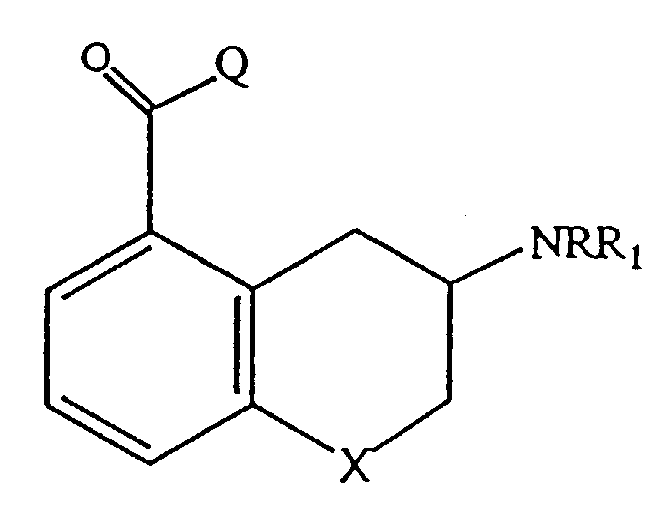 R représente un groupe alkyle en C1-C4, un groupe allyle ou un groupe cyclopropylméthyle;R1 représente un atome d'hydrogène, un groupe alkyle en C1-C4, un groupe allyle, un groupe cyclopropylméthyle ou un groupe aryl(alkyle en C1-C4);X représente un groupe -CH2-;Q représenteou
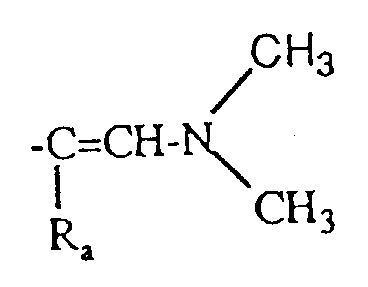 et
et
chaque radical Ra représente, de manière indépendante, un atome d'hydrogène, un groupe alkyle en C1-C4, un groupe alcoxy en C1-C4 ou un groupe alkyl(en C1-C4)thio. - Composé selon la revendication 1, dans lequel R et R1 représentent tous deux un groupe alkyle en C1-C4.
- Composé selon la revendication 1 ou 2, dans lequel Ra représente un atome d'hydrogène.
- Composé selon la revendication 3, ledit composé étant le 2-di-n-propylamino-8-[1-oxo-3-(diméthylamino)-prop-2-ényl]-1,2,3,4-tétrahydronaphtalène.
Applications Claiming Priority (3)
| Application Number | Priority Date | Filing Date | Title |
|---|---|---|---|
| US65358391A | 1991-02-08 | 1991-02-08 | |
| US653583 | 1991-02-08 | ||
| EP92300887A EP0498590B1 (fr) | 1991-02-08 | 1992-02-03 | 2-Amino-1,2,3,4-tétrahydronaphthalènes substitués au noyau |
Related Parent Applications (1)
| Application Number | Title | Priority Date | Filing Date |
|---|---|---|---|
| EP92300887.4 Division | 1992-02-03 |
Publications (3)
| Publication Number | Publication Date |
|---|---|
| EP0712837A2 EP0712837A2 (fr) | 1996-05-22 |
| EP0712837A3 EP0712837A3 (fr) | 1997-05-21 |
| EP0712837B1 true EP0712837B1 (fr) | 2000-10-25 |
Family
ID=24621480
Family Applications (2)
| Application Number | Title | Priority Date | Filing Date |
|---|---|---|---|
| EP96200393A Expired - Lifetime EP0712837B1 (fr) | 1991-02-08 | 1992-02-03 | 2-Amino-1,2,3,4-tétrahydronaphtalènes et 3-aminochromanes substitués au noyau |
| EP92300887A Expired - Lifetime EP0498590B1 (fr) | 1991-02-08 | 1992-02-03 | 2-Amino-1,2,3,4-tétrahydronaphthalènes substitués au noyau |
Family Applications After (1)
| Application Number | Title | Priority Date | Filing Date |
|---|---|---|---|
| EP92300887A Expired - Lifetime EP0498590B1 (fr) | 1991-02-08 | 1992-02-03 | 2-Amino-1,2,3,4-tétrahydronaphthalènes substitués au noyau |
Country Status (26)
| Country | Link |
|---|---|
| US (2) | US5426226A (fr) |
| EP (2) | EP0712837B1 (fr) |
| JP (1) | JP3283892B2 (fr) |
| KR (1) | KR100219995B1 (fr) |
| CN (2) | CN1036392C (fr) |
| AT (2) | ATE197145T1 (fr) |
| AU (2) | AU653197B2 (fr) |
| BR (1) | BR9200426A (fr) |
| CA (1) | CA2060815C (fr) |
| CZ (1) | CZ288067B6 (fr) |
| DE (2) | DE69218813T2 (fr) |
| DK (2) | DK0498590T3 (fr) |
| ES (2) | ES2102456T3 (fr) |
| FI (1) | FI920526L (fr) |
| GR (2) | GR3023601T3 (fr) |
| HU (3) | HU221184B1 (fr) |
| IE (1) | IE920417A1 (fr) |
| IL (3) | IL114760A (fr) |
| MX (1) | MX9200505A (fr) |
| MY (1) | MY116454A (fr) |
| NO (1) | NO301825B1 (fr) |
| NZ (2) | NZ241495A (fr) |
| PT (1) | PT712837E (fr) |
| RU (2) | RU2057751C1 (fr) |
| YU (1) | YU48927B (fr) |
| ZA (1) | ZA92767B (fr) |
Families Citing this family (19)
| Publication number | Priority date | Publication date | Assignee | Title |
|---|---|---|---|---|
| DK0471515T3 (da) * | 1990-08-15 | 1997-07-21 | Lilly Co Eli | Ringsubstituerede 2-amino-1,2,3,4-tetrahydronphtalener, 3-aminochromaner og 3-aminothiochromaner |
| NZ241495A (en) * | 1991-02-08 | 1994-10-26 | Lilly Co Eli | 2-amino-1,2,3,4-tetrahydronaphthalene and 3-aminochromane derivative, preparation and pharmaceutical compositions thereof |
| US5434174A (en) * | 1992-07-17 | 1995-07-18 | Eli Lilly And Company | Isoxazole derivatives for the treatment of irritable bowel syndrome |
| WO1994022495A1 (fr) * | 1993-03-31 | 1994-10-13 | The Trustees Of The University Of Pennsylvania | Ligands de recepteurs de la dopamine d-3 et de la serotonine (5-ht1a) et agents d'imagerie |
| IL110857A0 (en) * | 1993-09-09 | 1994-11-28 | Lilly Co Eli | Cessation of tobacco use |
| SE9601110D0 (sv) * | 1996-03-22 | 1996-03-22 | Astra Ab | Substituted 1,2,3,4-tetrahydronaphthalene derivatives |
| US6355674B1 (en) | 1997-04-30 | 2002-03-12 | Eli Lilly And Company | Aminotetralins as 5-HT1D α Agonists |
| EP1052982A4 (fr) * | 1997-04-30 | 2004-10-06 | Lilly Co Eli | AMINOTETRALINES SERVANT D'AGONISTES DE 5-HT 1D$g(a)? |
| WO1999001121A1 (fr) | 1997-07-01 | 1999-01-14 | Pfizer Inc. | Sels de sertraline et formes posologiques de sertraline, a liberation prolongee |
| US7189753B1 (en) | 1997-11-06 | 2007-03-13 | Cady Roger K | Preemptive prophylaxis of migraine |
| AU6018799A (en) | 1998-09-09 | 2000-03-27 | Ishihara Sangyo Kaisha Ltd. | Fused-benzene derivatives useful as herbicides |
| FR2792529B1 (fr) * | 1999-04-26 | 2001-09-28 | Sod Conseils Rech Applic | Nouvelles compositions pharmaceutiques comprenant des derives de 2-isoxazole-8-aminotetralines |
| US6792563B1 (en) * | 2000-04-28 | 2004-09-14 | Intel Corporation | Method and apparatus for bus activity tracking |
| EP1474141A1 (fr) * | 2002-02-13 | 2004-11-10 | Pharmagene Laboratories Ltd | Antagonistes du recepteur 5-ht2b |
| SE0301795D0 (sv) * | 2003-06-19 | 2003-06-19 | Astrazeneca Ab | New use I |
| SE0301796D0 (sv) * | 2003-06-19 | 2003-06-19 | Astrazeneca Ab | New use II |
| SE0301794D0 (sv) * | 2003-06-19 | 2003-06-19 | Astrazeneca Ab | New use III |
| SE0301798D0 (sv) * | 2003-06-19 | 2003-06-19 | Astrazeneca Ab | New use IV |
| RU2377556C1 (ru) * | 2008-04-02 | 2009-12-27 | ФГУП "Научно-исследовательский институт прикладной акустики" | Способ установления отличительных признаков в химическом составе моногенных линий подсолнечника |
Family Cites Families (17)
| Publication number | Priority date | Publication date | Assignee | Title |
|---|---|---|---|---|
| NZ192641A (en) * | 1979-01-26 | 1984-10-19 | Hoffmann La Roche | Substituted acetophenones and pharmaceutical compositions |
| SE8004002L (sv) * | 1980-05-29 | 1981-11-30 | Arvidsson Folke Lars Erik | Terapeutiskt anvendbara tetralinderivat |
| US4801605A (en) * | 1986-08-29 | 1989-01-31 | Ciba-Geigy Corporation | 3-amino-dihydro-[1]-benzopyrans and benzothiopyrans |
| SE8605504D0 (sv) * | 1986-12-19 | 1986-12-19 | Astra Laekemedel Ab | Novel chroman derivatives |
| DE3719924A1 (de) * | 1986-12-22 | 1988-06-30 | Bayer Ag | 8-substituierte 2-aminotetraline |
| US5214156A (en) * | 1988-03-25 | 1993-05-25 | The Upjohn Company | Therapeutically useful tetralin derivatives |
| CA1335591C (fr) * | 1988-05-23 | 1995-05-16 | James Arthur Nixon | Derives de subtitution sur le cycle de 2-amino-1,2,3,4-tetrahydronaphtalenes |
| CA1335106C (fr) * | 1989-02-27 | 1995-04-04 | John Mehnert Schaus | 2-amino-1,2,3,4-tetrahydronaphtalenes a substituants sur le cycle |
| FR2647365B1 (fr) * | 1989-05-24 | 1991-08-30 | Inst Francais Du Petrole | Catalyseur multifonctionnel pour le traitement des gaz d'echappement des moteurs a combustion interne, contenant de l'uranium, au moins un promoteur de l'uranium et au moins un metal precieux et sa preparation |
| SE8901889D0 (sv) * | 1989-05-26 | 1989-05-26 | Astra Ab | Novel 8-substituted-2-aminotetralines |
| DE69032725T2 (de) * | 1989-05-31 | 1999-04-08 | Pharmacia & Upjohn Co., Kalamazoo, Mich. | ZNS-wirksame 8-Heterocyclyl-2-aminotetralin Derivate |
| DE3919624A1 (de) * | 1989-06-15 | 1990-12-20 | Boehringer Ingelheim Kg | Neue 2,5-diaminotetraline, verfahren zu ihrer herstellung und ihre verwendung als arzneimittel |
| CA2028341A1 (fr) * | 1989-10-23 | 1991-04-24 | Junichi Sato | Derives de 5-substituee-2,4-diphenylpyrimidine, production et utilisation |
| SE8904361D0 (sv) * | 1989-12-22 | 1989-12-22 | Astra Ab | New chroman and thiochroman derivatives |
| US5420151A (en) * | 1989-12-22 | 1995-05-30 | Aktiebolaget Astra | Chroman derivatives |
| DK0471515T3 (da) * | 1990-08-15 | 1997-07-21 | Lilly Co Eli | Ringsubstituerede 2-amino-1,2,3,4-tetrahydronphtalener, 3-aminochromaner og 3-aminothiochromaner |
| NZ241495A (en) * | 1991-02-08 | 1994-10-26 | Lilly Co Eli | 2-amino-1,2,3,4-tetrahydronaphthalene and 3-aminochromane derivative, preparation and pharmaceutical compositions thereof |
-
1992
- 1992-02-03 NZ NZ241495A patent/NZ241495A/en not_active IP Right Cessation
- 1992-02-03 PT PT96200393T patent/PT712837E/pt unknown
- 1992-02-03 DE DE69218813T patent/DE69218813T2/de not_active Expired - Fee Related
- 1992-02-03 DK DK92300887.4T patent/DK0498590T3/da active
- 1992-02-03 EP EP96200393A patent/EP0712837B1/fr not_active Expired - Lifetime
- 1992-02-03 ES ES92300887T patent/ES2102456T3/es not_active Expired - Lifetime
- 1992-02-03 EP EP92300887A patent/EP0498590B1/fr not_active Expired - Lifetime
- 1992-02-03 ZA ZA92767A patent/ZA92767B/xx unknown
- 1992-02-03 ES ES96200393T patent/ES2153071T3/es not_active Expired - Lifetime
- 1992-02-03 DE DE69231538T patent/DE69231538T2/de not_active Expired - Fee Related
- 1992-02-03 AT AT96200393T patent/ATE197145T1/de not_active IP Right Cessation
- 1992-02-03 DK DK96200393T patent/DK0712837T3/da active
- 1992-02-03 IL IL11476092A patent/IL114760A/xx not_active IP Right Cessation
- 1992-02-03 IL IL10085892A patent/IL100858A/en not_active IP Right Cessation
- 1992-02-03 AT AT92300887T patent/ATE151419T1/de not_active IP Right Cessation
- 1992-02-05 CZ CS1992332A patent/CZ288067B6/cs not_active IP Right Cessation
- 1992-02-06 AU AU10775/92A patent/AU653197B2/en not_active Ceased
- 1992-02-06 KR KR1019920001720A patent/KR100219995B1/ko not_active Expired - Fee Related
- 1992-02-06 JP JP02109892A patent/JP3283892B2/ja not_active Expired - Fee Related
- 1992-02-06 NO NO920489A patent/NO301825B1/no unknown
- 1992-02-06 MY MYPI92000186A patent/MY116454A/en unknown
- 1992-02-06 MX MX9200505A patent/MX9200505A/es not_active IP Right Cessation
- 1992-02-07 HU HU9200396A patent/HU221184B1/hu not_active IP Right Cessation
- 1992-02-07 YU YU12992A patent/YU48927B/sh unknown
- 1992-02-07 HU HU9500495A patent/HU225163B1/hu not_active IP Right Cessation
- 1992-02-07 RU SU925011019A patent/RU2057751C1/ru not_active IP Right Cessation
- 1992-02-07 BR BR929200426A patent/BR9200426A/pt not_active Application Discontinuation
- 1992-02-07 CA CA002060815A patent/CA2060815C/fr not_active Expired - Fee Related
- 1992-02-07 FI FI920526A patent/FI920526L/fi not_active IP Right Cessation
- 1992-02-07 IE IE041792A patent/IE920417A1/en not_active IP Right Cessation
- 1992-02-07 CN CN92100794A patent/CN1036392C/zh not_active Expired - Fee Related
-
1993
- 1993-10-21 US US08/140,903 patent/US5426226A/en not_active Expired - Fee Related
-
1994
- 1994-08-24 NZ NZ264302A patent/NZ264302A/en not_active IP Right Cessation
- 1994-12-20 RU RU94044322A patent/RU2105756C1/ru not_active IP Right Cessation
- 1994-12-22 AU AU81687/94A patent/AU664520B2/en not_active Ceased
-
1995
- 1995-06-22 HU HU95P/P00389P patent/HU211848A9/hu unknown
- 1995-07-27 IL IL11476095A patent/IL114760A0/xx unknown
- 1995-08-22 US US08/517,781 patent/US5571942A/en not_active Expired - Fee Related
-
1996
- 1996-02-06 CN CN96103586A patent/CN1052218C/zh not_active Expired - Fee Related
-
1997
- 1997-05-30 GR GR970401244T patent/GR3023601T3/el unknown
-
2001
- 2001-01-04 GR GR20010400008T patent/GR3035190T3/el not_active IP Right Cessation
Also Published As
Similar Documents
| Publication | Publication Date | Title |
|---|---|---|
| EP0712837B1 (fr) | 2-Amino-1,2,3,4-tétrahydronaphtalènes et 3-aminochromanes substitués au noyau | |
| EP0471515B1 (fr) | 2-Amino-1,2,3,4-tétrahydronaphthalènes, 3-aminochromanes et 3-aminothiochromanes au noyau | |
| US5434174A (en) | Isoxazole derivatives for the treatment of irritable bowel syndrome | |
| CA1335106C (fr) | 2-amino-1,2,3,4-tetrahydronaphtalenes a substituants sur le cycle | |
| US5637624A (en) | Ring-substituted 2-amino-1,2,3,4-tetrahydronaphthalenes and 3-aminochromanes | |
| US5292766A (en) | Method for improving primary memory and/or learning | |
| IE83295B1 (en) | Ring-substituted 2-amino-1, 2, 3, 4-tetra-hydronaphthalenes and 3-aminochromanes | |
| IE19970857A1 (en) | Ring-substituted 2-amino-1, 2, 3, 4-tetra-hydronaphthalenes and 3-aminochromanes | |
| HK1013795B (en) | Isoxazole derivatives for the treatment of irritable bowel syndrome |
Legal Events
| Date | Code | Title | Description |
|---|---|---|---|
| PUAI | Public reference made under article 153(3) epc to a published international application that has entered the european phase |
Free format text: ORIGINAL CODE: 0009012 |
|
| 17P | Request for examination filed |
Effective date: 19960216 |
|
| AC | Divisional application: reference to earlier application |
Ref document number: 498590 Country of ref document: EP |
|
| AK | Designated contracting states |
Kind code of ref document: A2 Designated state(s): AT BE CH DE DK ES FR GB GR IT LI LU NL PT SE |
|
| RIN1 | Information on inventor provided before grant (corrected) |
Inventor name: TITUS, ROBERT D. Inventor name: SCHAUS, JOHN M. Inventor name: HUSER, DIANE L. Inventor name: HOECHSTETTER, CRAIG S. |
|
| PUAL | Search report despatched |
Free format text: ORIGINAL CODE: 0009013 |
|
| AK | Designated contracting states |
Kind code of ref document: A3 Designated state(s): AT BE CH DE DK ES FR GB GR IT LI LU NL PT SE |
|
| 17Q | First examination report despatched |
Effective date: 19990201 |
|
| GRAG | Despatch of communication of intention to grant |
Free format text: ORIGINAL CODE: EPIDOS AGRA |
|
| GRAG | Despatch of communication of intention to grant |
Free format text: ORIGINAL CODE: EPIDOS AGRA |
|
| GRAG | Despatch of communication of intention to grant |
Free format text: ORIGINAL CODE: EPIDOS AGRA |
|
| GRAH | Despatch of communication of intention to grant a patent |
Free format text: ORIGINAL CODE: EPIDOS IGRA |
|
| GRAH | Despatch of communication of intention to grant a patent |
Free format text: ORIGINAL CODE: EPIDOS IGRA |
|
| GRAA | (expected) grant |
Free format text: ORIGINAL CODE: 0009210 |
|
| AC | Divisional application: reference to earlier application |
Ref document number: 498590 Country of ref document: EP |
|
| AK | Designated contracting states |
Kind code of ref document: B1 Designated state(s): AT BE CH DE DK ES FR GB GR IT LI LU NL PT SE |
|
| REF | Corresponds to: |
Ref document number: 197145 Country of ref document: AT Date of ref document: 20001115 Kind code of ref document: T |
|
| REG | Reference to a national code |
Ref country code: CH Ref legal event code: NV Representative=s name: E. BLUM & CO. PATENTANWAELTE Ref country code: CH Ref legal event code: EP |
|
| REG | Reference to a national code |
Ref country code: DK Ref legal event code: T3 |
|
| REF | Corresponds to: |
Ref document number: 69231538 Country of ref document: DE Date of ref document: 20001130 |
|
| ET | Fr: translation filed | ||
| ITF | It: translation for a ep patent filed | ||
| REG | Reference to a national code |
Ref country code: ES Ref legal event code: FG2A Ref document number: 2153071 Country of ref document: ES Kind code of ref document: T3 |
|
| REG | Reference to a national code |
Ref country code: PT Ref legal event code: SC4A Free format text: AVAILABILITY OF NATIONAL TRANSLATION Effective date: 20001207 |
|
| PLBE | No opposition filed within time limit |
Free format text: ORIGINAL CODE: 0009261 |
|
| STAA | Information on the status of an ep patent application or granted ep patent |
Free format text: STATUS: NO OPPOSITION FILED WITHIN TIME LIMIT |
|
| 26N | No opposition filed | ||
| REG | Reference to a national code |
Ref country code: GB Ref legal event code: IF02 |
|
| PGFP | Annual fee paid to national office [announced via postgrant information from national office to epo] |
Ref country code: LU Payment date: 20041220 Year of fee payment: 14 |
|
| PGFP | Annual fee paid to national office [announced via postgrant information from national office to epo] |
Ref country code: PT Payment date: 20050106 Year of fee payment: 14 |
|
| PGFP | Annual fee paid to national office [announced via postgrant information from national office to epo] |
Ref country code: NL Payment date: 20050110 Year of fee payment: 14 Ref country code: GB Payment date: 20050110 Year of fee payment: 14 Ref country code: AT Payment date: 20050110 Year of fee payment: 14 |
|
| PGFP | Annual fee paid to national office [announced via postgrant information from national office to epo] |
Ref country code: DK Payment date: 20050111 Year of fee payment: 14 |
|
| PGFP | Annual fee paid to national office [announced via postgrant information from national office to epo] |
Ref country code: GR Payment date: 20050118 Year of fee payment: 14 |
|
| PGFP | Annual fee paid to national office [announced via postgrant information from national office to epo] |
Ref country code: FR Payment date: 20050202 Year of fee payment: 14 |
|
| PGFP | Annual fee paid to national office [announced via postgrant information from national office to epo] |
Ref country code: SE Payment date: 20050203 Year of fee payment: 14 |
|
| PGFP | Annual fee paid to national office [announced via postgrant information from national office to epo] |
Ref country code: ES Payment date: 20050211 Year of fee payment: 14 |
|
| PGFP | Annual fee paid to national office [announced via postgrant information from national office to epo] |
Ref country code: DE Payment date: 20050228 Year of fee payment: 14 |
|
| PGFP | Annual fee paid to national office [announced via postgrant information from national office to epo] |
Ref country code: BE Payment date: 20050304 Year of fee payment: 14 |
|
| PGFP | Annual fee paid to national office [announced via postgrant information from national office to epo] |
Ref country code: CH Payment date: 20050317 Year of fee payment: 14 |
|
| PG25 | Lapsed in a contracting state [announced via postgrant information from national office to epo] |
Ref country code: GB Free format text: LAPSE BECAUSE OF NON-PAYMENT OF DUE FEES Effective date: 20060203 Ref country code: AT Free format text: LAPSE BECAUSE OF NON-PAYMENT OF DUE FEES Effective date: 20060203 |
|
| PG25 | Lapsed in a contracting state [announced via postgrant information from national office to epo] |
Ref country code: SE Free format text: LAPSE BECAUSE OF NON-PAYMENT OF DUE FEES Effective date: 20060204 Ref country code: ES Free format text: LAPSE BECAUSE OF NON-PAYMENT OF DUE FEES Effective date: 20060204 |
|
| PG25 | Lapsed in a contracting state [announced via postgrant information from national office to epo] |
Ref country code: LU Free format text: LAPSE BECAUSE OF NON-PAYMENT OF DUE FEES Effective date: 20060228 Ref country code: LI Free format text: LAPSE BECAUSE OF NON-PAYMENT OF DUE FEES Effective date: 20060228 Ref country code: DK Free format text: LAPSE BECAUSE OF NON-PAYMENT OF DUE FEES Effective date: 20060228 Ref country code: CH Free format text: LAPSE BECAUSE OF NON-PAYMENT OF DUE FEES Effective date: 20060228 Ref country code: BE Free format text: LAPSE BECAUSE OF NON-PAYMENT OF DUE FEES Effective date: 20060228 |
|
| PGFP | Annual fee paid to national office [announced via postgrant information from national office to epo] |
Ref country code: IT Payment date: 20060228 Year of fee payment: 15 |
|
| PG25 | Lapsed in a contracting state [announced via postgrant information from national office to epo] |
Ref country code: PT Free format text: LAPSE BECAUSE OF NON-PAYMENT OF DUE FEES Effective date: 20060803 |
|
| PG25 | Lapsed in a contracting state [announced via postgrant information from national office to epo] |
Ref country code: NL Free format text: LAPSE BECAUSE OF NON-PAYMENT OF DUE FEES Effective date: 20060901 Ref country code: DE Free format text: LAPSE BECAUSE OF NON-PAYMENT OF DUE FEES Effective date: 20060901 |
|
| REG | Reference to a national code |
Ref country code: DK Ref legal event code: EBP |
|
| REG | Reference to a national code |
Ref country code: PT Ref legal event code: MM4A Effective date: 20060803 |
|
| REG | Reference to a national code |
Ref country code: CH Ref legal event code: PL |
|
| EUG | Se: european patent has lapsed | ||
| GBPC | Gb: european patent ceased through non-payment of renewal fee |
Effective date: 20060203 |
|
| NLV4 | Nl: lapsed or anulled due to non-payment of the annual fee |
Effective date: 20060901 |
|
| REG | Reference to a national code |
Ref country code: FR Ref legal event code: ST Effective date: 20061031 |
|
| REG | Reference to a national code |
Ref country code: ES Ref legal event code: FD2A Effective date: 20060204 |
|
| BERE | Be: lapsed |
Owner name: *ELI LILLY AND CY Effective date: 20060228 |
|
| PG25 | Lapsed in a contracting state [announced via postgrant information from national office to epo] |
Ref country code: FR Free format text: LAPSE BECAUSE OF NON-PAYMENT OF DUE FEES Effective date: 20060228 |
|
| PG25 | Lapsed in a contracting state [announced via postgrant information from national office to epo] |
Ref country code: GR Free format text: LAPSE BECAUSE OF NON-PAYMENT OF DUE FEES Effective date: 20060904 |
|
| PG25 | Lapsed in a contracting state [announced via postgrant information from national office to epo] |
Ref country code: IT Free format text: LAPSE BECAUSE OF NON-PAYMENT OF DUE FEES Effective date: 20070203 |