EP0724641B1 - Anti-microbial proteins - Google Patents
Anti-microbial proteins Download PDFInfo
- Publication number
- EP0724641B1 EP0724641B1 EP94931533A EP94931533A EP0724641B1 EP 0724641 B1 EP0724641 B1 EP 0724641B1 EP 94931533 A EP94931533 A EP 94931533A EP 94931533 A EP94931533 A EP 94931533A EP 0724641 B1 EP0724641 B1 EP 0724641B1
- Authority
- EP
- European Patent Office
- Prior art keywords
- protein
- proteins
- cys
- seq
- sequence
- Prior art date
- Legal status (The legal status is an assumption and is not a legal conclusion. Google has not performed a legal analysis and makes no representation as to the accuracy of the status listed.)
- Expired - Lifetime
Links
Images




Classifications
-
- C—CHEMISTRY; METALLURGY
- C12—BIOCHEMISTRY; BEER; SPIRITS; WINE; VINEGAR; MICROBIOLOGY; ENZYMOLOGY; MUTATION OR GENETIC ENGINEERING
- C12N—MICROORGANISMS OR ENZYMES; COMPOSITIONS THEREOF; PROPAGATING, PRESERVING, OR MAINTAINING MICROORGANISMS; MUTATION OR GENETIC ENGINEERING; CULTURE MEDIA
- C12N15/00—Mutation or genetic engineering; DNA or RNA concerning genetic engineering, vectors, e.g. plasmids, or their isolation, preparation or purification; Use of hosts therefor
- C12N15/09—Recombinant DNA-technology
- C12N15/63—Introduction of foreign genetic material using vectors; Vectors; Use of hosts therefor; Regulation of expression
- C12N15/79—Vectors or expression systems specially adapted for eukaryotic hosts
- C12N15/82—Vectors or expression systems specially adapted for eukaryotic hosts for plant cells, e.g. plant artificial chromosomes (PACs)
- C12N15/8241—Phenotypically and genetically modified plants via recombinant DNA technology
- C12N15/8261—Phenotypically and genetically modified plants via recombinant DNA technology with agronomic (input) traits, e.g. crop yield
- C12N15/8271—Phenotypically and genetically modified plants via recombinant DNA technology with agronomic (input) traits, e.g. crop yield for stress resistance, e.g. heavy metal resistance
- C12N15/8279—Phenotypically and genetically modified plants via recombinant DNA technology with agronomic (input) traits, e.g. crop yield for stress resistance, e.g. heavy metal resistance for biotic stress resistance, pathogen resistance, disease resistance
- C12N15/8282—Phenotypically and genetically modified plants via recombinant DNA technology with agronomic (input) traits, e.g. crop yield for stress resistance, e.g. heavy metal resistance for biotic stress resistance, pathogen resistance, disease resistance for fungal resistance
-
- A—HUMAN NECESSITIES
- A01—AGRICULTURE; FORESTRY; ANIMAL HUSBANDRY; HUNTING; TRAPPING; FISHING
- A01N—PRESERVATION OF BODIES OF HUMANS OR ANIMALS OR PLANTS OR PARTS THEREOF; BIOCIDES, e.g. AS DISINFECTANTS, AS PESTICIDES OR AS HERBICIDES; PEST REPELLANTS OR ATTRACTANTS; PLANT GROWTH REGULATORS
- A01N65/00—Biocides, pest repellants or attractants, or plant growth regulators containing material from algae, lichens, bryophyta, multi-cellular fungi or plants, or extracts thereof
- A01N65/08—Magnoliopsida [dicotyledons]
-
- C—CHEMISTRY; METALLURGY
- C07—ORGANIC CHEMISTRY
- C07K—PEPTIDES
- C07K14/00—Peptides having more than 20 amino acids; Gastrins; Somatostatins; Melanotropins; Derivatives thereof
- C07K14/415—Peptides having more than 20 amino acids; Gastrins; Somatostatins; Melanotropins; Derivatives thereof from plants
Definitions
- the present invention relates to anti-microbial proteins isolatable from sugar beet.
- anti-microbial protein comprising a peptide having the amino acid sequence: AA 1 -AA 2 -AA 3 -Cys-AA 5 -AA 6 -AA 7 -AA 8 -AA 9 -Cys-AA 11 -AA 12 -AA 13 -AA 14 -Cys-Cys-AA 17 -AA 18 -AA 19 -AA 20 -AA 21 -Cys-AA 23 -AA 24 -AA 25 -AA 26 -AA 27 -AA 28 -Cys-AA 30 , wherein "AA” designates any one of the commonly found 20 amino acids. It is preferred that AA 7 is tyr; AA 14 is tyr; and AA 18 is lys. In addition it is still more preferred that AA 24 is val; AA 26 is arg; and AA 27 is ala.
- An anti-microbial protein includes a protein (alone or in combination with another material) which is toxic or growth inhibitory under any circumstances to any micro-organism, including bacteria, (most particularly Gram positive bacteria), viruses and particularly fungi.
- Such anti-microbial proteins include those that exhibit anti-microbial activity upon contact with a micro-organism and those that are anti-microbial as a consequence of assimilation or respiration thereof.
- WO 92/21699 discloses biocidal proteins isolated from amaranthus. The proteins show a wide range of antifungal activity and are active against gram-positive bacteria.
- WO92/17591 discloses the sugar beet chitinase 4, which has antifungal activity.
- the invention also includes an anti-microbial protein having the sequence depicted in any one of SEQ ID Nos. 1-3.
- specific activity is a measurement of the amount of growth or replication inhibition produced by a specified quantity of the protein on a specified quantity of a specified micro-organism.
- the invention still further includes said pure proteins in combination with at least one protein selected from the group consisting of those depicted in SEQ ID Nos. 4-6.
- Such combined proteins may be further combined with one or more of the known "pathogenesis-related proteins".
- PR proteins homologous pathogenesis-related proteins
- PR-proteins have been classified into 5 groups.
- the PR-2, PR-3 and PR-5 proteins are beta-1,3-glucanase, chitinases and thaumatin-like proteins respectively. Specific functions have not been assigned to the PR-1 and PR-4 groups of proteins.
- the PR-4 proteins are similar to C-terminal domains of prohevein and the putative wound-induced WIN proteins of potato, thus lacking the N-terminal hevein domain. It is particularly preferred that the proteins according to the invention are combined with one or more proteins which are the basic counter parts of the P-R 4 group of proteins, meaning the basic counter part of proteins similar to the C-terminal domains of prohevein and the putative wound-induced WIN proteins of potato. It is particularly preferred that the basic counter-part of the said pathogenesis-related proteins is a chitin-binding WIN protein, in particular that produced by barley grain or stressed barley leaves.
- the invention still further includes recombinant DNA comprising a sequence encoding a protein having the amino acid sequence of the above disclosed anti-microbial proteins.
- the DNA may encode at least one of the proteins the sequences of which are depicted in SEQ ID Nos. 1-3, optionally in addition to at least one of the proteins the sequences of which are depicted in SEQ ID Nos. 4-6.
- the recombinant DNA may further encode a protein having herbicide resistance, plant growth-promoting, anti-fungal, anti bacterial, anti-viral and/or anti-nematode properties.
- the DNA is to be introduced into a heterologous organism it may be modified to remove known mRNA instability motifs (such as AT-rich regions) and polyadenylation signals (if any are present), and/or codons which are preferred by the organism into which the recombinant DNA is to be inserted may be used so that expression of the thus modified DNA in the said organism yields substantially similar protein to that obtained by expression of the unmodified recombinant DNA in the organism in which the anti-microbial protein according to the invention is endogenous. followed by rinsing of the support at the same temperature but with a buffer having a reduced SSC concentration.
- known mRNA instability motifs such as AT-rich regions
- polyadenylation signals if any are present
- such reduced concentration buffers are typically single strength SSC containing 0.1%SDS, half strength SSC containing 0.1%SDS and one tenth strength SSC containing 01.%SDS. Sequences having the greatest degree of similarity are those the hybridisation of which is least affected by washing in buffers of reduced concentration. It is most preferred that the test and inventive sequences are so similar that the hybridisation between them is substantially unaffected by washing or incubation in one tenth strength sodium citrate buffer containing 0.1%SDS.
- Also included in the present invention is a vector which contains the above disclosed DNA which is expressible in plants and linked to a plant operable promoter and terminator.
- Plants may be transformed with such DNA using known methods and plant cells or protoplasts transformed with the DNA of the invention may be regenerated according to a variety of known methods (Agrobacterium Ti and Ri plasmids, electroporation, micro-injection, micro-projectile gun etc).
- the transformed cell may in suitable cases be regenerated into whole plants in which the nuclear material is stably incorporated into the genome. Both monocot and dicot plants may be obtained in this way.
- transformed plants include: fruits, including tomatoes, mangoes, peaches, apples, pears, strawberries, bananas, and melons; field crops such as canola, sunflower, tobacco, sugar beet, small grain cereals such as wheat, barley and rice, maize and cotton, and vegetables such as potato, carrot, lettuce, cabbage and onion.
- fruits including tomatoes, mangoes, peaches, apples, pears, strawberries, bananas, and melons
- field crops such as canola, sunflower, tobacco, sugar beet, small grain cereals such as wheat, barley and rice, maize and cotton
- vegetables such as potato, carrot, lettuce, cabbage and onion.
- the invention still further includes protein derived from expression of the said DNA, and anti-microbial protein produced by expression of the recombinant DNA within plants transformed therewith.
- the invention still further includes an anti-microbial composition containing one or more of the proteins according to the invention; a process for combatting fungi which comprises exposing them to such proteins. It will be appreciated that the anti-microbial protein exhibits little, if any, anti-microbial effect on the micro-organism which is the source of the organic material referred to in the previous sentence.
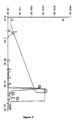
- SEQ ID No. 1 shows the amino acid sequence of protein represented by peak 3.1 in Figure 3
- SEQ ID No. 2 shows the amino acid sequence of protein represented by peak 3.2 in Figure 3
- SEQ ID No. 3 shows the amino acid sequence of protein represented by peaks 1 and 2 in Figure 6
- SEQ ID Nos. 4-6 show the amino acid sequences of three known anti-fungal proteins
- SEQ ID No. 7 shows the nucleotide sequence of the cDNA encoding the protein depicted in SEQ ID No. 3
- SEQ ID No. 8 shows the translation product of the transcript encoded by the cDNA sequence depicted in SEQ ID No. 7, which product includes N- and C- terminal extensions of the protein depicted in SEQ ID No. 3.
- IWF is isolated from 500-700 gram sugar beet leaves by submerging them in 20mM HAc (pH 4.5). The thus submerged leaves are then placed in an exicator and vacuum infiltrated for 5 min at 4 torr (max). Following air-drying of the leaf surface, the IWF is collected by centrifugation at 500g for 15 min in 500 ml centrifuge tubes.
- IWF is fractionated by cation exchange chromatography on a 10 ml CM-Sepharose column (Pharmacia LKB) pre-equilibrated in starting buffer (20mM HAc (pH 4.5)). The fractionation is performed at 4°C at a flow rate of 25 ml/h. Fractions of 3 ml are collected. Proteins not bound to the column are removed by extensive washing of the column with starting buffer. Bound proteins are eluted by applying to the column further starting buffer comprising stepwise increased salt concentrations: viz, 0.1 M NaCl, 0.3 M NACl and 0.5 M NaCl.
- FIG. 1 A typical elution profile is shown in Fig. 1.
- the eluates resulting from application to the column of starting buffer comprising the 0.3M NaCl and 0.1M NaCl are further purified as described below.
- the 0.3M NaCl protein fraction is desalted by overnight dialysis (MW cut off: 3 kDa) against 20mM HAc (pH 4.5) at 4°C. Betaine is added at a concentration of 5% (w/v) to the thus dialysed protein fraction.
- FPLC cation exchange fast protein liquid chromatography
- Bound proteins are eluted with a linear salt gradient from 0 to 0.3 M NaCl in 30 ml of the A-buffer followed by a step elution with 1.0 M NaCl in the same buffer.
- Flow rate is 1 ml/min.
- Figure 2 shows that the 0.3M NaCl fraction contains a number of distinct proteins, the quantitatively most significant of which are designated as peaks 1-5.
- peaks 1-5 When separated by SDS-PAGE using the Phast System (Pharmacia LKB), silver stained 10-15% gradient Phast gels or High Density gels (Pharmacia LKB) reveal that each of the peaks 1-5 contains 2-5 protein bands.
- Protein peak 3 (depicted in Figure 2) from the Mono S column is further purified by reverse phase (RP-) HPLC on a Vydac C 4 silica column (The Separations Group, CA, USA).
- the solvent system is A: 0.1% TFA in water and B: 0.1% TFA in acetonitrile. Proteins are eluted with a linear gradient of 5 to 45% of the B-buffer applied in 18 min after sample loading followed by 60% B-buffer in 2 min. Flow rate is 0.7 ml/min. Protein is detected by monitoring the absorbance of the eluate at 214 and 280nm. Discrete protein peaks are collected and lyophilized. The thus lyophilized proteins are washed twice with water, relyophilized and subsequently resolved in 10mM Tris-HCl (pH 8.0), prior to analysis of purity and anti-fungal activity.
- RP- reverse phase
- Figure 3 shows that peak 3 from Figure 2 is separated into four peaks (designated as 3.1-3.4 in Figure 3) on the RP column. SDS-PAGE of peaks 3.1-3.4 reveals that each is composed of pure proteins having a molecular weight of about 7 kDa (peaks 3.1, 3.2 and 3.3) and 2.5-3 kD (3.4).
- Pool V (shown in Figure 5) from the Sephadex G-75 column is loaded onto a Mono S FPLC column equilibrated in buffer A: 50 mM MES (pH 6.0), containing 5% betaine (w/v). After washing with the A-buffer, bound proteins are eluted at a flow rate of 1ml/min with a linear gradient from 0 to 0.5 M NaCl in 30 ml of the A-buffer ( Figure 6). When protein represented by peaks 1 and 2 is subjected to SDS gel electrophoresis in the presence of DTT two distinct bands are observed. The first band has a molecular weight of between 2.5 and 3kDa, and the second band, which represents an unreduced dimer of the protein of the first band, has a molecular weight of about 5kDa.
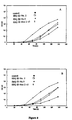
- Figures 4, and 7-9 show that the proteins represented by peaks 3.1 and 3.2 (SEQ ID Nos 1 and 2 respectively) in Figure 3 and peaks 1 and 2 (SED ID No 3) in Figure 6 have significant anti-fungal activity, inter alia , against C. beticola .
- the inhibition of fungal growth is measured in 96 well micro-titre plates at 620nm, essentially as described in WO 92/17591.
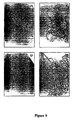
- Figure 9 shows that C. beticola treated with such protein possess stunted hyphae which are thickened and more branched (Fig 9C, 9D) when compared to those of fungus grown in the absence of the anti-microbial proteins ( Figures 9A, 9B).
- the proteins either alone or in combination with WIN N (which is purified from barley grain or stressed barley leaf as described by Hejgaard et al (FEBS Letters, 307, 389-392 (1992)), and/or a protein having a sequence corresponding to at least one of those given in SEQ ID Nos. 4-6, are incubated with spores of C. beticola .
- the assay mix (240ul) contains 100ul of potato dextrose broth (Difco), 40ul protein sample (or buffer control) in 100mM Tris and 20mM NaCl (pH 8.0) as well as approximately 400 spores in 100ul water.
- micro-titre plates are sealed with tape to avoid evaporation and contamination and subsequently incubated at room temperature on an agitator operated at 200 rpm.
- the absorbance at 620nm is measured each day for 8 days and plotted for each concentration of protein vs time.
- the purified antifungal proteins corresponding to peaks 3.1 and 3.2 in Figure 3 (SEQ ID Nos 1 and 2 respectively) which originate from the 0.3 M NaCl eluate from the CM-Sepharose column, ( Figure 1); and protein corresponding to peaks 1 and 2 in Figure 6 (SEQ ID No 3) which originates from the 0.1M NaCl eluate from the said CM-Sepharose column are carboxymethylated and subjected to RP-HPLC on a Vydac C 4 column.
- the solvent system is A: 0.1% TFA in water and B: 0.1% TFA in acetonitrile.
- the proteins elute as single peaks with slightly different retention times.
- the C-terminal sequences of the proteins is obtained by cleavage thereof with endo -R-proteinase and subsequent purification by RP-HPLC on a Vydac C 18 column.
- the genes encoding proteins according to the invention are introduced into plants. Based on gene specific primers, the coding regions of the genes encoding the proteins are synthesized from corresponding mRNA using PCR. After addition of promoter and terminator sequences, the genes encoding the said proteins are introduced into a plant transformation vector.
- the vector may optionally include a gene encoding a WIN protein, such as that obtained from stressed barley leaf or barley grain, and/or a gene encoding a protein depicted in SEQ ID No. 4, SEQ ID No. 5 and/or SEQ ID No. 6, and/or a gene encoding a chitinase and or a glucanase.
- the preferred chitinase is the chitinase 4 described in PCT Patent Application No. PCT/DK92/00108 (Publication No. WO 92/17591).
- Agrobacterium tumefaciens may be transformed with these vectors. Plant cells are then treated with such transformed Agrobacterium , and the thus transformed plant cells are regenerated into whole plants, in which the new nuclear material is stably incorporated into the genome.
- DNA encoding a protein according to the present invention may be introduced into plant cells by other known methods, including use of a micro-projectile gun, electroporation, electro-transformation, and micro-injection etc, and that regeneration of transformed plant cells is carried out according to methods known to the skilled man, including treatment of the cells with cytokines where this is necessary or desirable in order to improve the regeneration frequency.
- suitable micro-organisms may be transformed with a vector comprising the gene (or genes) encoding the protein so that the transformed micro-organisms produce such protein.
- the micro-organisms may further comprise the genes encoding other proteins, such as a WIN protein and/or a protein the sequence of which is depicted in one or more of SEQ IDs No. 4 - 6.
- such other proteins may further comprise various chitinases and/or glucanases.
- a particularly preferred such other protein is the chitinase 4 as described in PCT Patent Application No. PCT/DK92/00108 (Publication No. WO 92/17591).
- micro-organisms may then be used to combat plant pathogens.
- the transformed micro-organisms may be dried and sprayed onto infected plants or plants at risk of infection.
Landscapes
- Health & Medical Sciences (AREA)
- Life Sciences & Earth Sciences (AREA)
- Genetics & Genomics (AREA)
- Chemical & Material Sciences (AREA)
- Engineering & Computer Science (AREA)
- Organic Chemistry (AREA)
- General Health & Medical Sciences (AREA)
- Biotechnology (AREA)
- Molecular Biology (AREA)
- Wood Science & Technology (AREA)
- Zoology (AREA)
- Biomedical Technology (AREA)
- General Engineering & Computer Science (AREA)
- Plant Pathology (AREA)
- Bioinformatics & Cheminformatics (AREA)
- Microbiology (AREA)
- Biophysics (AREA)
- Biochemistry (AREA)
- Mycology (AREA)
- Medicinal Chemistry (AREA)
- Natural Medicines & Medicinal Plants (AREA)
- Agronomy & Crop Science (AREA)
- Physics & Mathematics (AREA)
- Dentistry (AREA)
- Environmental Sciences (AREA)
- Botany (AREA)
- Gastroenterology & Hepatology (AREA)
- Cell Biology (AREA)
- Proteomics, Peptides & Aminoacids (AREA)
- Peptides Or Proteins (AREA)
- Medicines Containing Material From Animals Or Micro-Organisms (AREA)
- Micro-Organisms Or Cultivation Processes Thereof (AREA)
- Agricultural Chemicals And Associated Chemicals (AREA)
- Medicines That Contain Protein Lipid Enzymes And Other Medicines (AREA)
- Nitrogen Condensed Heterocyclic Rings (AREA)
- Preparation Of Compounds By Using Micro-Organisms (AREA)
- Breeding Of Plants And Reproduction By Means Of Culturing (AREA)
- Medicinal Preparation (AREA)
Applications Claiming Priority (3)
| Application Number | Priority Date | Filing Date | Title |
|---|---|---|---|
| GB939321714A GB9321714D0 (en) | 1993-10-21 | 1993-10-21 | Improvements in or relating to organic compounds |
| GB9321714 | 1993-10-21 | ||
| PCT/EP1994/003449 WO1995011306A1 (en) | 1993-10-21 | 1994-10-20 | Anti-microbial proteins |
Publications (2)
| Publication Number | Publication Date |
|---|---|
| EP0724641A1 EP0724641A1 (en) | 1996-08-07 |
| EP0724641B1 true EP0724641B1 (en) | 2003-12-10 |
Family
ID=10743902
Family Applications (1)
| Application Number | Title | Priority Date | Filing Date |
|---|---|---|---|
| EP94931533A Expired - Lifetime EP0724641B1 (en) | 1993-10-21 | 1994-10-20 | Anti-microbial proteins |
Country Status (14)
| Country | Link |
|---|---|
| US (2) | US6218508B1 (cs) |
| EP (1) | EP0724641B1 (cs) |
| JP (1) | JPH09504427A (cs) |
| AT (1) | ATE256193T1 (cs) |
| AU (1) | AU683952B2 (cs) |
| CA (1) | CA2170506A1 (cs) |
| CZ (1) | CZ112296A3 (cs) |
| DE (1) | DE69433407T2 (cs) |
| DK (1) | DK0724641T3 (cs) |
| GB (1) | GB9321714D0 (cs) |
| HU (1) | HU223367B1 (cs) |
| PL (1) | PL181851B1 (cs) |
| RU (1) | RU2158762C2 (cs) |
| WO (1) | WO1995011306A1 (cs) |
Families Citing this family (44)
| Publication number | Priority date | Publication date | Assignee | Title |
|---|---|---|---|---|
| GB9526238D0 (en) * | 1995-12-21 | 1996-02-21 | Sandoz Ltd | Improvements in or relating to organic compounds |
| US6121436A (en) | 1996-12-13 | 2000-09-19 | Monsanto Company | Antifungal polypeptide and methods for controlling plant pathogenic fungi |
| US8071703B2 (en) | 2007-03-22 | 2011-12-06 | Novartis Ag | Silicone-containing prepolymers with dangling hydrophilic polymer chains |
| RU2380374C1 (ru) * | 2008-07-15 | 2010-01-27 | Учреждение Российской академии наук Институт биоорганической химии им. академиков М.М. Шемякина и Ю.А. Овчинникова РАН | Пептид, обладающий антимикробной активностью |
| US8357760B2 (en) | 2008-07-21 | 2013-01-22 | Novartis Ag | Silicone hydrogel contact lenses with convertible comfort agents |
| ES2423914T3 (es) | 2010-07-30 | 2013-09-25 | Novartis Ag | Lentes de hidrogel de silicona con superficies ricas en agua |
| US8835525B2 (en) | 2010-10-06 | 2014-09-16 | Novartis Ag | Chain-extended polysiloxane crosslinkers with dangling hydrophilic polymer chains |
| EP2625216B1 (en) | 2010-10-06 | 2019-06-05 | Novartis AG | Polymerisable chain-extended polysiloxanes with pendant hydrophilic groups |
| CN103168067B (zh) | 2010-10-06 | 2015-08-05 | 诺华股份有限公司 | 可水处理的含硅氧烷预聚物及其用途 |
| JP5990579B2 (ja) | 2011-06-09 | 2016-09-14 | ノバルティス アーゲー | ナノテクスチャー表面を持つシリコーンヒドロゲルレンズ |
| SG11201400228WA (en) | 2011-10-12 | 2014-05-29 | Novartis Ag | Method for making uv-absorbing ophthalmic lenses by coating |
| HUE027313T2 (en) | 2011-11-15 | 2016-10-28 | Novartis Ag | Silicone hydrogel lens with cross-linked hydrophilic coating |
| US9261626B2 (en) | 2011-12-08 | 2016-02-16 | Novartis Ag | Contact lenses with enzymatically degradable coatings thereon |
| RU2483109C1 (ru) * | 2011-12-12 | 2013-05-27 | Федеральное государственное бюджетное учреждение науки Институт общей генетики им.Н.И.Вавилова Российской академии наук (ИОГенРАН) | ГЕНЫ ПШЕНИЦЫ Triticum kiharae, КОДИРУЮЩИЕ АНТИМИКРОБНЫЕ ПЕПТИДЫ |
| NZ700848A (en) | 2012-06-14 | 2016-08-26 | Novartis Ag | Azetidinium-containing copolymers and uses thereof |
| US9395468B2 (en) | 2012-08-27 | 2016-07-19 | Ocular Dynamics, Llc | Contact lens with a hydrophilic layer |
| EP2931790B1 (en) | 2012-12-14 | 2017-02-15 | Novartis AG | Actinically-crosslinkable amphiphilic prepolymers |
| CN104871036B (zh) | 2012-12-17 | 2019-12-10 | 诺华股份有限公司 | 制备改进的uv吸收性眼用透镜的方法 |
| CN105917270A (zh) | 2013-11-15 | 2016-08-31 | 视觉力学有限责任公司 | 具有亲水层的接触透镜 |
| HUE038809T2 (hu) | 2013-12-17 | 2018-11-28 | Novartis Ag | Térhálósított hidrofíl bevonattal ellátott szilikon hidrogél lencse |
| EP3134461B1 (en) | 2014-04-25 | 2018-02-14 | Novartis AG | Hydrophilized carbosiloxane vinylic monomers |
| EP3186070B1 (en) | 2014-08-26 | 2019-09-25 | Novartis AG | Method for applying stable coating on silicone hydrogel contact lenses |
| BR112017003447B1 (pt) | 2014-08-26 | 2021-10-26 | Alcon Inc | Copolímero de poli(oxazolina-co-etilenoimina)-epicloridrina, material polimérico hidrofílico reticulável termicamente e solúvel em água, e métodos para produzir lentes de contato revestidas |
| JP6774947B2 (ja) | 2014-12-09 | 2020-10-28 | タンジブル サイエンス インコーポレイテッド | 生体適合性層を有する医療デバイスコーティング |
| US10266445B2 (en) | 2015-05-07 | 2019-04-23 | Novartis Ag | Method for producing contact lenses with durable lubricious coatings thereon |
| WO2017037611A1 (en) | 2015-09-04 | 2017-03-09 | Novartis Ag | Soft silicone medical devices with durable lubricious coatings thereon |
| CA2992823C (en) | 2015-09-04 | 2019-10-29 | Novartis Ag | Method for producing contact lenses with durable lubricious coatings thereon |
| KR102604468B1 (ko) | 2015-12-15 | 2023-11-22 | 알콘 인코포레이티드 | 실리콘 하이드로겔 콘택트 렌즈 상에 안정한 코팅을 적용하기 위한 방법 |
| RU2645070C2 (ru) * | 2016-06-06 | 2018-02-15 | Федеральное государственное бюджетное учреждение науки Институт клеточного и внутриклеточного симбиоза Уральского отделения Российской академии наук | Способ получения антимикробных пептидов из тромбоцитов курицы домашней |
| MY189895A (en) | 2016-09-20 | 2022-03-18 | Novartis Ag | Process for producing contact lenses with durable lubricious coatings thereon |
| EP3516430B1 (en) | 2016-09-20 | 2021-02-17 | Alcon Inc. | Hydrogel contact lenses with lubricious coating thereon |
| HUE053707T2 (hu) | 2016-09-20 | 2021-07-28 | Alcon Inc | Színezett hidrogél kontaktlencsék rajtuk síkosító bevonattal |
| SG11201900553PA (en) | 2016-09-20 | 2019-04-29 | Novartis Ag | Method for producing a water-soluble thermally-crosslinkable polymeric material |
| US10782450B2 (en) | 2016-10-26 | 2020-09-22 | Alcon Inc. | Soft contact lenses with a lubricious coating covalently-attached thereon |
| HUE053839T2 (hu) | 2016-10-31 | 2021-07-28 | Alcon Inc | Eljárás felületi bevonattal ellátott, viselési kényelemmel rendelkezõ kontaktlencsék elõállítására |
| US10830923B2 (en) | 2017-12-13 | 2020-11-10 | Alcon Inc. | Method for producing MPS-compatible water gradient contact lenses |
| US11448796B2 (en) | 2018-04-13 | 2022-09-20 | Alcon Inc. | Evaluation method for the coverage of a coating on a contact lens surface |
| EP3890952B1 (en) | 2018-12-03 | 2023-07-05 | Alcon Inc. | Method for making coated silicone hydrogel contact lenses |
| US11099300B2 (en) | 2018-12-03 | 2021-08-24 | Alcon Inc. | Method for producing coated silicone hydrogel contact lenses |
| SG11202108875UA (en) | 2019-04-10 | 2021-10-28 | Alcon Inc | Method for producing coated contact lenses |
| CN117716262A (zh) | 2021-09-01 | 2024-03-15 | 爱尔康公司 | 用于生产可润湿硅酮水凝胶接触镜片的方法 |
| EP4658491A1 (en) | 2023-02-02 | 2025-12-10 | Alcon Inc. | Water gradient silicone hydrogel contact lenses |
| US20240293985A1 (en) | 2023-02-27 | 2024-09-05 | Alcon Inc. | Method for producing wettable silicone hydrogel contact lenses |
| CN121175595A (zh) | 2023-05-25 | 2025-12-19 | 爱尔康公司 | 涂层硅酮水凝胶接触镜片及其制备方法 |
Family Cites Families (5)
| Publication number | Priority date | Publication date | Assignee | Title |
|---|---|---|---|---|
| JPS62135492A (ja) * | 1985-12-10 | 1987-06-18 | Takara Shuzo Co Ltd | 新規キラ−トキシン |
| DK61691D0 (da) * | 1991-04-08 | 1991-04-08 | Danisco | Genetiske konstruktioner |
| GB9112300D0 (en) * | 1991-06-07 | 1991-07-24 | Ici Plc | Biocidal proteins |
| US5514779A (en) * | 1991-06-07 | 1996-05-07 | Zeneca Limited | Biocidal proteins from plants |
| DE69333781T2 (de) * | 1992-11-12 | 2006-05-11 | Syngenta Ltd., Guildford | Biozide chitin bindende proteine |
-
1993
- 1993-10-21 GB GB939321714A patent/GB9321714D0/en active Pending
-
1994
- 1994-10-20 CZ CZ961122A patent/CZ112296A3/cs unknown
- 1994-10-20 DK DK94931533T patent/DK0724641T3/da active
- 1994-10-20 WO PCT/EP1994/003449 patent/WO1995011306A1/en not_active Ceased
- 1994-10-20 EP EP94931533A patent/EP0724641B1/en not_active Expired - Lifetime
- 1994-10-20 US US08/632,511 patent/US6218508B1/en not_active Expired - Fee Related
- 1994-10-20 DE DE69433407T patent/DE69433407T2/de not_active Expired - Fee Related
- 1994-10-20 AT AT94931533T patent/ATE256193T1/de not_active IP Right Cessation
- 1994-10-20 HU HU9601040A patent/HU223367B1/hu not_active IP Right Cessation
- 1994-10-20 RU RU96109325/13A patent/RU2158762C2/ru not_active IP Right Cessation
- 1994-10-20 CA CA002170506A patent/CA2170506A1/en not_active Abandoned
- 1994-10-20 PL PL94313526A patent/PL181851B1/pl not_active IP Right Cessation
- 1994-10-20 AU AU80587/94A patent/AU683952B2/en not_active Ceased
- 1994-10-20 JP JP7511335A patent/JPH09504427A/ja active Pending
-
2000
- 2000-01-19 US US09/488,200 patent/US6300103B1/en not_active Expired - Fee Related
Also Published As
| Publication number | Publication date |
|---|---|
| CA2170506A1 (en) | 1995-04-27 |
| US6300103B1 (en) | 2001-10-09 |
| WO1995011306A1 (en) | 1995-04-27 |
| US6218508B1 (en) | 2001-04-17 |
| DE69433407T2 (de) | 2004-06-09 |
| HU9601040D0 (en) | 1996-06-28 |
| PL313526A1 (en) | 1996-07-08 |
| DK0724641T3 (da) | 2004-04-13 |
| GB9321714D0 (en) | 1993-12-15 |
| PL181851B1 (en) | 2001-09-28 |
| RU2158762C2 (ru) | 2000-11-10 |
| AU683952B2 (en) | 1997-11-27 |
| HU223367B1 (hu) | 2004-06-28 |
| AU8058794A (en) | 1995-05-08 |
| CZ112296A3 (en) | 1997-05-14 |
| HUT74395A (en) | 1996-12-30 |
| JPH09504427A (ja) | 1997-05-06 |
| EP0724641A1 (en) | 1996-08-07 |
| DE69433407D1 (de) | 2004-01-22 |
| ATE256193T1 (de) | 2003-12-15 |
Similar Documents
| Publication | Publication Date | Title |
|---|---|---|
| EP0724641B1 (en) | Anti-microbial proteins | |
| US6271438B1 (en) | Transgenic pathogen-resistant plant | |
| EP0736096B1 (en) | Antimicrobial proteins | |
| AU718274B2 (en) | Antifungal proteins, DNA coding therefore, and hosts incorporating same | |
| AU685920B2 (en) | Antimicrobial proteins from aralia and impatiens | |
| CA2166309A1 (en) | Antimicrobial proteins | |
| US5608151A (en) | Anti-microbial proteins | |
| AU663500B2 (en) | Biocidal proteins capable of isolation from amaranthus | |
| CA2147122A1 (en) | Biocidal chitin binding proteins | |
| AU710346B2 (en) | Anti-microbial proteins |
Legal Events
| Date | Code | Title | Description |
|---|---|---|---|
| PUAI | Public reference made under article 153(3) epc to a published international application that has entered the european phase |
Free format text: ORIGINAL CODE: 0009012 |
|
| AK | Designated contracting states |
Kind code of ref document: A1 Designated state(s): AT BE CH DE DK ES FR GB GR IE IT LI LU NL PT SE |
|
| 17P | Request for examination filed |
Effective date: 19960129 |
|
| RAP1 | Party data changed (applicant data changed or rights of an application transferred) |
Owner name: SANDOZ-ERFINDUNGEN VERWALTUNGSGESELLSCHAFT M.B.H. Owner name: SANDOZ-PATENT-GMBH Owner name: NOVARTIS AG |
|
| RAP1 | Party data changed (applicant data changed or rights of an application transferred) |
Owner name: SANDOZ-ERFINDUNGEN VERWALTUNGSGESELLSCHAFT M.B.H. Owner name: NOVARTIS AG |
|
| RAP1 | Party data changed (applicant data changed or rights of an application transferred) |
Owner name: NOVARTIS-ERFINDUNGEN VERWALTUNGSGESELLSCHAFT M.B. Owner name: NOVARTIS AG |
|
| 17Q | First examination report despatched |
Effective date: 20000602 |
|
| RAP1 | Party data changed (applicant data changed or rights of an application transferred) |
Owner name: SYNGENTA PARTICIPATIONS AG |
|
| GRAH | Despatch of communication of intention to grant a patent |
Free format text: ORIGINAL CODE: EPIDOS IGRA |
|
| GRAH | Despatch of communication of intention to grant a patent |
Free format text: ORIGINAL CODE: EPIDOS IGRA |
|
| GRAA | (expected) grant |
Free format text: ORIGINAL CODE: 0009210 |
|
| AK | Designated contracting states |
Kind code of ref document: B1 Designated state(s): AT BE CH DE DK ES FR GB GR IE IT LI LU NL PT SE |
|
| PG25 | Lapsed in a contracting state [announced via postgrant information from national office to epo] |
Ref country code: IT Free format text: LAPSE BECAUSE OF FAILURE TO SUBMIT A TRANSLATION OF THE DESCRIPTION OR TO PAY THE FEE WITHIN THE PRE;WARNING: LAPSES OF ITALIAN PATENTS WITH EFFECTIVE DATE BEFORE 2007 MAY HAVE OCCURRED AT ANY TIME BEFORE 2007. THE CORRECT EFFECTIVE DATE MAY BE DIFFERENT FROM THE ONE RECORDED.SCRIBED TIME-LIMIT Effective date: 20031210 Ref country code: BE Free format text: LAPSE BECAUSE OF FAILURE TO SUBMIT A TRANSLATION OF THE DESCRIPTION OR TO PAY THE FEE WITHIN THE PRESCRIBED TIME-LIMIT Effective date: 20031210 |
|
| REG | Reference to a national code |
Ref country code: GB Ref legal event code: FG4D |
|
| REG | Reference to a national code |
Ref country code: CH Ref legal event code: EP |
|
| REG | Reference to a national code |
Ref country code: IE Ref legal event code: FG4D |
|
| REF | Corresponds to: |
Ref document number: 69433407 Country of ref document: DE Date of ref document: 20040122 Kind code of ref document: P |
|
| PG25 | Lapsed in a contracting state [announced via postgrant information from national office to epo] |
Ref country code: SE Free format text: LAPSE BECAUSE OF FAILURE TO SUBMIT A TRANSLATION OF THE DESCRIPTION OR TO PAY THE FEE WITHIN THE PRESCRIBED TIME-LIMIT Effective date: 20040310 Ref country code: GR Free format text: LAPSE BECAUSE OF FAILURE TO SUBMIT A TRANSLATION OF THE DESCRIPTION OR TO PAY THE FEE WITHIN THE PRESCRIBED TIME-LIMIT Effective date: 20040310 |
|
| PG25 | Lapsed in a contracting state [announced via postgrant information from national office to epo] |
Ref country code: ES Free format text: LAPSE BECAUSE OF FAILURE TO SUBMIT A TRANSLATION OF THE DESCRIPTION OR TO PAY THE FEE WITHIN THE PRESCRIBED TIME-LIMIT Effective date: 20040321 |
|
| REG | Reference to a national code |
Ref country code: DK Ref legal event code: T3 |
|
| ET | Fr: translation filed | ||
| PLBE | No opposition filed within time limit |
Free format text: ORIGINAL CODE: 0009261 |
|
| STAA | Information on the status of an ep patent application or granted ep patent |
Free format text: STATUS: NO OPPOSITION FILED WITHIN TIME LIMIT |
|
| PG25 | Lapsed in a contracting state [announced via postgrant information from national office to epo] |
Ref country code: LU Free format text: LAPSE BECAUSE OF NON-PAYMENT OF DUE FEES Effective date: 20041020 |
|
| 26N | No opposition filed |
Effective date: 20040913 |
|
| PGFP | Annual fee paid to national office [announced via postgrant information from national office to epo] |
Ref country code: NL Payment date: 20051003 Year of fee payment: 12 |
|
| PGFP | Annual fee paid to national office [announced via postgrant information from national office to epo] |
Ref country code: FR Payment date: 20051010 Year of fee payment: 12 |
|
| PGFP | Annual fee paid to national office [announced via postgrant information from national office to epo] |
Ref country code: IE Payment date: 20051012 Year of fee payment: 12 Ref country code: AT Payment date: 20051012 Year of fee payment: 12 |
|
| PGFP | Annual fee paid to national office [announced via postgrant information from national office to epo] |
Ref country code: DK Payment date: 20051014 Year of fee payment: 12 Ref country code: DE Payment date: 20051014 Year of fee payment: 12 |
|
| PGFP | Annual fee paid to national office [announced via postgrant information from national office to epo] |
Ref country code: GB Payment date: 20051019 Year of fee payment: 12 |
|
| PGFP | Annual fee paid to national office [announced via postgrant information from national office to epo] |
Ref country code: CH Payment date: 20051027 Year of fee payment: 12 |
|
| PG25 | Lapsed in a contracting state [announced via postgrant information from national office to epo] |
Ref country code: IE Free format text: LAPSE BECAUSE OF NON-PAYMENT OF DUE FEES Effective date: 20061020 Ref country code: AT Free format text: LAPSE BECAUSE OF NON-PAYMENT OF DUE FEES Effective date: 20061020 |
|
| PG25 | Lapsed in a contracting state [announced via postgrant information from national office to epo] |
Ref country code: LI Free format text: LAPSE BECAUSE OF NON-PAYMENT OF DUE FEES Effective date: 20061031 Ref country code: DK Free format text: LAPSE BECAUSE OF NON-PAYMENT OF DUE FEES Effective date: 20061031 Ref country code: CH Free format text: LAPSE BECAUSE OF NON-PAYMENT OF DUE FEES Effective date: 20061031 |
|
| PG25 | Lapsed in a contracting state [announced via postgrant information from national office to epo] |
Ref country code: NL Free format text: LAPSE BECAUSE OF NON-PAYMENT OF DUE FEES Effective date: 20070501 Ref country code: DE Free format text: LAPSE BECAUSE OF NON-PAYMENT OF DUE FEES Effective date: 20070501 |
|
| REG | Reference to a national code |
Ref country code: CH Ref legal event code: PL |
|
| GBPC | Gb: european patent ceased through non-payment of renewal fee |
Effective date: 20061020 |
|
| NLV4 | Nl: lapsed or anulled due to non-payment of the annual fee |
Effective date: 20070501 |
|
| REG | Reference to a national code |
Ref country code: IE Ref legal event code: MM4A |
|
| REG | Reference to a national code |
Ref country code: FR Ref legal event code: ST Effective date: 20070629 |
|
| PG25 | Lapsed in a contracting state [announced via postgrant information from national office to epo] |
Ref country code: GB Free format text: LAPSE BECAUSE OF NON-PAYMENT OF DUE FEES Effective date: 20061020 |
|
| PG25 | Lapsed in a contracting state [announced via postgrant information from national office to epo] |
Ref country code: PT Free format text: LAPSE BECAUSE OF NON-PAYMENT OF DUE FEES Effective date: 20040510 |
|
| PG25 | Lapsed in a contracting state [announced via postgrant information from national office to epo] |
Ref country code: FR Free format text: LAPSE BECAUSE OF NON-PAYMENT OF DUE FEES Effective date: 20061031 |