EP0725148A2 - Amplification et détection d'acides nucléiques mycobactériens - Google Patents
Amplification et détection d'acides nucléiques mycobactériens Download PDFInfo
- Publication number
- EP0725148A2 EP0725148A2 EP95118623A EP95118623A EP0725148A2 EP 0725148 A2 EP0725148 A2 EP 0725148A2 EP 95118623 A EP95118623 A EP 95118623A EP 95118623 A EP95118623 A EP 95118623A EP 0725148 A2 EP0725148 A2 EP 0725148A2
- Authority
- EP
- European Patent Office
- Prior art keywords
- seq
- species
- amplification
- assay
- sequence
- Prior art date
- Legal status (The legal status is an assumption and is not a legal conclusion. Google has not performed a legal analysis and makes no representation as to the accuracy of the status listed.)
- Withdrawn
Links
- 238000003199 nucleic acid amplification method Methods 0.000 title claims abstract description 145
- 230000003321 amplification Effects 0.000 title claims abstract description 143
- 150000007523 nucleic acids Chemical class 0.000 title claims description 18
- 108020004707 nucleic acids Proteins 0.000 title claims description 12
- 102000039446 nucleic acids Human genes 0.000 title claims description 12
- 238000001514 detection method Methods 0.000 title abstract description 36
- 238000003556 assay Methods 0.000 claims abstract description 111
- 239000000523 sample Substances 0.000 claims abstract description 98
- 238000009396 hybridization Methods 0.000 claims abstract description 67
- 230000000903 blocking effect Effects 0.000 claims abstract description 60
- 108091034117 Oligonucleotide Proteins 0.000 claims abstract description 59
- 238000000034 method Methods 0.000 claims abstract description 29
- 238000011895 specific detection Methods 0.000 claims abstract description 12
- 241000894007 species Species 0.000 claims description 78
- 239000002773 nucleotide Substances 0.000 claims description 32
- 125000003729 nucleotide group Chemical group 0.000 claims description 32
- 230000027455 binding Effects 0.000 claims description 18
- 241001502334 Mycobacterium avium complex bacterium Species 0.000 claims description 16
- 230000000295 complement effect Effects 0.000 claims description 7
- 230000003100 immobilizing effect Effects 0.000 claims 1
- JLCPHMBAVCMARE-UHFFFAOYSA-N [3-[[3-[[3-[[3-[[3-[[3-[[3-[[3-[[3-[[3-[[3-[[5-(2-amino-6-oxo-1H-purin-9-yl)-3-[[3-[[3-[[3-[[3-[[3-[[5-(2-amino-6-oxo-1H-purin-9-yl)-3-[[5-(2-amino-6-oxo-1H-purin-9-yl)-3-hydroxyoxolan-2-yl]methoxy-hydroxyphosphoryl]oxyoxolan-2-yl]methoxy-hydroxyphosphoryl]oxy-5-(5-methyl-2,4-dioxopyrimidin-1-yl)oxolan-2-yl]methoxy-hydroxyphosphoryl]oxy-5-(6-aminopurin-9-yl)oxolan-2-yl]methoxy-hydroxyphosphoryl]oxy-5-(6-aminopurin-9-yl)oxolan-2-yl]methoxy-hydroxyphosphoryl]oxy-5-(6-aminopurin-9-yl)oxolan-2-yl]methoxy-hydroxyphosphoryl]oxy-5-(6-aminopurin-9-yl)oxolan-2-yl]methoxy-hydroxyphosphoryl]oxyoxolan-2-yl]methoxy-hydroxyphosphoryl]oxy-5-(5-methyl-2,4-dioxopyrimidin-1-yl)oxolan-2-yl]methoxy-hydroxyphosphoryl]oxy-5-(4-amino-2-oxopyrimidin-1-yl)oxolan-2-yl]methoxy-hydroxyphosphoryl]oxy-5-(5-methyl-2,4-dioxopyrimidin-1-yl)oxolan-2-yl]methoxy-hydroxyphosphoryl]oxy-5-(5-methyl-2,4-dioxopyrimidin-1-yl)oxolan-2-yl]methoxy-hydroxyphosphoryl]oxy-5-(6-aminopurin-9-yl)oxolan-2-yl]methoxy-hydroxyphosphoryl]oxy-5-(6-aminopurin-9-yl)oxolan-2-yl]methoxy-hydroxyphosphoryl]oxy-5-(4-amino-2-oxopyrimidin-1-yl)oxolan-2-yl]methoxy-hydroxyphosphoryl]oxy-5-(4-amino-2-oxopyrimidin-1-yl)oxolan-2-yl]methoxy-hydroxyphosphoryl]oxy-5-(4-amino-2-oxopyrimidin-1-yl)oxolan-2-yl]methoxy-hydroxyphosphoryl]oxy-5-(6-aminopurin-9-yl)oxolan-2-yl]methoxy-hydroxyphosphoryl]oxy-5-(4-amino-2-oxopyrimidin-1-yl)oxolan-2-yl]methyl [5-(6-aminopurin-9-yl)-2-(hydroxymethyl)oxolan-3-yl] hydrogen phosphate Polymers Cc1cn(C2CC(OP(O)(=O)OCC3OC(CC3OP(O)(=O)OCC3OC(CC3O)n3cnc4c3nc(N)[nH]c4=O)n3cnc4c3nc(N)[nH]c4=O)C(COP(O)(=O)OC3CC(OC3COP(O)(=O)OC3CC(OC3COP(O)(=O)OC3CC(OC3COP(O)(=O)OC3CC(OC3COP(O)(=O)OC3CC(OC3COP(O)(=O)OC3CC(OC3COP(O)(=O)OC3CC(OC3COP(O)(=O)OC3CC(OC3COP(O)(=O)OC3CC(OC3COP(O)(=O)OC3CC(OC3COP(O)(=O)OC3CC(OC3COP(O)(=O)OC3CC(OC3COP(O)(=O)OC3CC(OC3COP(O)(=O)OC3CC(OC3COP(O)(=O)OC3CC(OC3COP(O)(=O)OC3CC(OC3COP(O)(=O)OC3CC(OC3CO)n3cnc4c(N)ncnc34)n3ccc(N)nc3=O)n3cnc4c(N)ncnc34)n3ccc(N)nc3=O)n3ccc(N)nc3=O)n3ccc(N)nc3=O)n3cnc4c(N)ncnc34)n3cnc4c(N)ncnc34)n3cc(C)c(=O)[nH]c3=O)n3cc(C)c(=O)[nH]c3=O)n3ccc(N)nc3=O)n3cc(C)c(=O)[nH]c3=O)n3cnc4c3nc(N)[nH]c4=O)n3cnc4c(N)ncnc34)n3cnc4c(N)ncnc34)n3cnc4c(N)ncnc34)n3cnc4c(N)ncnc34)O2)c(=O)[nH]c1=O JLCPHMBAVCMARE-UHFFFAOYSA-N 0.000 abstract description 14
- 108020004414 DNA Proteins 0.000 description 40
- 239000000047 product Substances 0.000 description 34
- 241000187478 Mycobacterium chelonae Species 0.000 description 32
- 241000186367 Mycobacterium avium Species 0.000 description 27
- 241000186364 Mycobacterium intracellulare Species 0.000 description 25
- 238000006243 chemical reaction Methods 0.000 description 20
- FAPWRFPIFSIZLT-UHFFFAOYSA-M Sodium chloride Chemical compound [Na+].[Cl-] FAPWRFPIFSIZLT-UHFFFAOYSA-M 0.000 description 16
- PEDCQBHIVMGVHV-UHFFFAOYSA-N Glycerine Chemical compound OCC(O)CO PEDCQBHIVMGVHV-UHFFFAOYSA-N 0.000 description 15
- 241000187482 Mycobacterium avium subsp. paratuberculosis Species 0.000 description 14
- 201000008827 tuberculosis Diseases 0.000 description 14
- YBJHBAHKTGYVGT-ZKWXMUAHSA-N (+)-Biotin Chemical compound N1C(=O)N[C@@H]2[C@H](CCCCC(=O)O)SC[C@@H]21 YBJHBAHKTGYVGT-ZKWXMUAHSA-N 0.000 description 12
- TWRXJAOTZQYOKJ-UHFFFAOYSA-L Magnesium chloride Chemical compound [Mg+2].[Cl-].[Cl-] TWRXJAOTZQYOKJ-UHFFFAOYSA-L 0.000 description 10
- 241000187490 Mycobacterium scrofulaceum Species 0.000 description 10
- 241000186363 Mycobacterium kansasii Species 0.000 description 9
- 241000187693 Rhodococcus rhodochrous Species 0.000 description 9
- 102000002812 Heat-Shock Proteins Human genes 0.000 description 8
- 108010004889 Heat-Shock Proteins Proteins 0.000 description 8
- PXIPVTKHYLBLMZ-UHFFFAOYSA-N Sodium azide Chemical compound [Na+].[N-]=[N+]=[N-] PXIPVTKHYLBLMZ-UHFFFAOYSA-N 0.000 description 8
- 239000000872 buffer Substances 0.000 description 8
- 238000013461 design Methods 0.000 description 8
- 239000011780 sodium chloride Substances 0.000 description 8
- 108091003079 Bovine Serum Albumin Proteins 0.000 description 7
- AHCYMLUZIRLXAA-SHYZEUOFSA-N Deoxyuridine 5'-triphosphate Chemical group O1[C@H](COP(O)(=O)OP(O)(=O)OP(O)(O)=O)[C@@H](O)C[C@@H]1N1C(=O)NC(=O)C=C1 AHCYMLUZIRLXAA-SHYZEUOFSA-N 0.000 description 7
- IAZDPXIOMUYVGZ-UHFFFAOYSA-N Dimethylsulphoxide Chemical compound CS(C)=O IAZDPXIOMUYVGZ-UHFFFAOYSA-N 0.000 description 7
- 229940098773 bovine serum albumin Drugs 0.000 description 7
- 101150042441 K gene Proteins 0.000 description 6
- 241001467553 Mycobacterium africanum Species 0.000 description 6
- 241001509451 Mycobacterium genavense Species 0.000 description 6
- 241000187494 Mycobacterium xenopi Species 0.000 description 6
- 238000004458 analytical method Methods 0.000 description 6
- 229960002685 biotin Drugs 0.000 description 6
- 235000020958 biotin Nutrition 0.000 description 6
- 239000011616 biotin Substances 0.000 description 6
- 108091008146 restriction endonucleases Proteins 0.000 description 6
- 238000002864 sequence alignment Methods 0.000 description 6
- 239000000243 solution Substances 0.000 description 6
- 102000004190 Enzymes Human genes 0.000 description 5
- 108090000790 Enzymes Proteins 0.000 description 5
- 241000186366 Mycobacterium bovis Species 0.000 description 5
- 241000186365 Mycobacterium fortuitum Species 0.000 description 5
- 241000187484 Mycobacterium gordonae Species 0.000 description 5
- 241000186362 Mycobacterium leprae Species 0.000 description 5
- 108010090804 Streptavidin Proteins 0.000 description 5
- 150000001413 amino acids Chemical class 0.000 description 5
- 230000035931 haemagglutination Effects 0.000 description 5
- 229910001629 magnesium chloride Inorganic materials 0.000 description 5
- 108090000623 proteins and genes Proteins 0.000 description 5
- HDTRYLNUVZCQOY-UHFFFAOYSA-N α-D-glucopyranosyl-α-D-glucopyranoside Natural products OC1C(O)C(O)C(CO)OC1OC1C(O)C(O)C(O)C(CO)O1 HDTRYLNUVZCQOY-UHFFFAOYSA-N 0.000 description 4
- 241000186227 Corynebacterium diphtheriae Species 0.000 description 4
- 206010062207 Mycobacterial infection Diseases 0.000 description 4
- 241001147830 Mycobacterium lufu Species 0.000 description 4
- 108091028043 Nucleic acid sequence Proteins 0.000 description 4
- HDTRYLNUVZCQOY-WSWWMNSNSA-N Trehalose Natural products O[C@@H]1[C@@H](O)[C@@H](O)[C@@H](CO)O[C@@H]1O[C@@H]1[C@H](O)[C@@H](O)[C@@H](O)[C@@H](CO)O1 HDTRYLNUVZCQOY-WSWWMNSNSA-N 0.000 description 4
- 101710172430 Uracil-DNA glycosylase inhibitor Proteins 0.000 description 4
- 239000002253 acid Substances 0.000 description 4
- 150000007513 acids Chemical class 0.000 description 4
- HDTRYLNUVZCQOY-LIZSDCNHSA-N alpha,alpha-trehalose Chemical compound O[C@@H]1[C@@H](O)[C@H](O)[C@@H](CO)O[C@@H]1O[C@@H]1[C@H](O)[C@@H](O)[C@H](O)[C@@H](CO)O1 HDTRYLNUVZCQOY-LIZSDCNHSA-N 0.000 description 4
- 239000003153 chemical reaction reagent Substances 0.000 description 4
- RGWHQCVHVJXOKC-SHYZEUOFSA-J dCTP(4-) Chemical compound O=C1N=C(N)C=CN1[C@@H]1O[C@H](COP([O-])(=O)OP([O-])(=O)OP([O-])([O-])=O)[C@@H](O)C1 RGWHQCVHVJXOKC-SHYZEUOFSA-J 0.000 description 4
- HAAZLUGHYHWQIW-KVQBGUIXSA-N dGTP Chemical compound C1=NC=2C(=O)NC(N)=NC=2N1[C@H]1C[C@H](O)[C@@H](COP(O)(=O)OP(O)(=O)OP(O)(O)=O)O1 HAAZLUGHYHWQIW-KVQBGUIXSA-N 0.000 description 4
- 230000003247 decreasing effect Effects 0.000 description 4
- 238000003745 diagnosis Methods 0.000 description 4
- 238000005516 engineering process Methods 0.000 description 4
- UEGPKNKPLBYCNK-UHFFFAOYSA-L magnesium acetate Chemical compound [Mg+2].CC([O-])=O.CC([O-])=O UEGPKNKPLBYCNK-UHFFFAOYSA-L 0.000 description 4
- 239000011654 magnesium acetate Substances 0.000 description 4
- 229940069446 magnesium acetate Drugs 0.000 description 4
- 235000011285 magnesium acetate Nutrition 0.000 description 4
- 208000027531 mycobacterial infectious disease Diseases 0.000 description 4
- 230000035945 sensitivity Effects 0.000 description 4
- LENZDBCJOHFCAS-UHFFFAOYSA-N tris Chemical compound OCC(N)(CO)CO LENZDBCJOHFCAS-UHFFFAOYSA-N 0.000 description 4
- 102000002260 Alkaline Phosphatase Human genes 0.000 description 3
- 108020004774 Alkaline Phosphatase Proteins 0.000 description 3
- 108091093088 Amplicon Proteins 0.000 description 3
- 241001467552 Mycobacterium bovis BCG Species 0.000 description 3
- 241001147828 Mycobacterium haemophilum Species 0.000 description 3
- 241000187919 Mycobacterium microti Species 0.000 description 3
- 241001302239 Mycobacterium tuberculosis complex Species 0.000 description 3
- 241000187678 Nocardia asteroides Species 0.000 description 3
- 238000012408 PCR amplification Methods 0.000 description 3
- 102100037111 Uracil-DNA glycosylase Human genes 0.000 description 3
- 210000004027 cell Anatomy 0.000 description 3
- 230000001010 compromised effect Effects 0.000 description 3
- 238000011156 evaluation Methods 0.000 description 3
- 238000002474 experimental method Methods 0.000 description 3
- 238000010438 heat treatment Methods 0.000 description 3
- 208000015181 infectious disease Diseases 0.000 description 3
- 239000000203 mixture Substances 0.000 description 3
- 238000011160 research Methods 0.000 description 3
- 238000012163 sequencing technique Methods 0.000 description 3
- 239000000758 substrate Substances 0.000 description 3
- 238000012360 testing method Methods 0.000 description 3
- 238000011144 upstream manufacturing Methods 0.000 description 3
- FWMNVWWHGCHHJJ-SKKKGAJSSA-N 4-amino-1-[(2r)-6-amino-2-[[(2r)-2-[[(2r)-2-[[(2r)-2-amino-3-phenylpropanoyl]amino]-3-phenylpropanoyl]amino]-4-methylpentanoyl]amino]hexanoyl]piperidine-4-carboxylic acid Chemical compound C([C@H](C(=O)N[C@H](CC(C)C)C(=O)N[C@H](CCCCN)C(=O)N1CCC(N)(CC1)C(O)=O)NC(=O)[C@H](N)CC=1C=CC=CC=1)C1=CC=CC=C1 FWMNVWWHGCHHJJ-SKKKGAJSSA-N 0.000 description 2
- 208000030507 AIDS Diseases 0.000 description 2
- 241000186041 Actinomyces israelii Species 0.000 description 2
- 241000972773 Aulopiformes Species 0.000 description 2
- 241000894006 Bacteria Species 0.000 description 2
- 241000186427 Cutibacterium acnes Species 0.000 description 2
- 241000588724 Escherichia coli Species 0.000 description 2
- ZHNUHDYFZUAESO-UHFFFAOYSA-N Formamide Chemical compound NC=O ZHNUHDYFZUAESO-UHFFFAOYSA-N 0.000 description 2
- 241000187486 Mycobacterium flavescens Species 0.000 description 2
- 241000187485 Mycobacterium gastri Species 0.000 description 2
- 241000187492 Mycobacterium marinum Species 0.000 description 2
- 241000187491 Mycobacterium nonchromogenicum Species 0.000 description 2
- 241000187480 Mycobacterium smegmatis Species 0.000 description 2
- 241000187496 Mycobacterium szulgai Species 0.000 description 2
- 241000187495 Mycobacterium terrae Species 0.000 description 2
- 241000187477 Mycobacterium thermoresistibile Species 0.000 description 2
- VYPSYNLAJGMNEJ-UHFFFAOYSA-N Silicium dioxide Chemical compound O=[Si]=O VYPSYNLAJGMNEJ-UHFFFAOYSA-N 0.000 description 2
- 241001221452 Staphylococcus faecalis Species 0.000 description 2
- 239000000427 antigen Substances 0.000 description 2
- 102000036639 antigens Human genes 0.000 description 2
- 108091007433 antigens Proteins 0.000 description 2
- 238000000376 autoradiography Methods 0.000 description 2
- 239000007795 chemical reaction product Substances 0.000 description 2
- 230000001351 cycling effect Effects 0.000 description 2
- SUYVUBYJARFZHO-RRKCRQDMSA-N dATP Chemical compound C1=NC=2C(N)=NC=NC=2N1[C@H]1C[C@H](O)[C@@H](COP(O)(=O)OP(O)(=O)OP(O)(O)=O)O1 SUYVUBYJARFZHO-RRKCRQDMSA-N 0.000 description 2
- SUYVUBYJARFZHO-UHFFFAOYSA-N dATP Natural products C1=NC=2C(N)=NC=NC=2N1C1CC(O)C(COP(O)(=O)OP(O)(=O)OP(O)(O)=O)O1 SUYVUBYJARFZHO-UHFFFAOYSA-N 0.000 description 2
- 238000006073 displacement reaction Methods 0.000 description 2
- 230000000694 effects Effects 0.000 description 2
- 239000000499 gel Substances 0.000 description 2
- 230000010354 integration Effects 0.000 description 2
- 239000003446 ligand Substances 0.000 description 2
- 238000004020 luminiscence type Methods 0.000 description 2
- 230000003169 placental effect Effects 0.000 description 2
- 102000004169 proteins and genes Human genes 0.000 description 2
- 235000019515 salmon Nutrition 0.000 description 2
- 230000009870 specific binding Effects 0.000 description 2
- 239000011592 zinc chloride Substances 0.000 description 2
- JIAARYAFYJHUJI-UHFFFAOYSA-L zinc dichloride Chemical compound [Cl-].[Cl-].[Zn+2] JIAARYAFYJHUJI-UHFFFAOYSA-L 0.000 description 2
- 108020004465 16S ribosomal RNA Proteins 0.000 description 1
- QKNYBSVHEMOAJP-UHFFFAOYSA-N 2-amino-2-(hydroxymethyl)propane-1,3-diol;hydron;chloride Chemical compound Cl.OCC(N)(CO)CO QKNYBSVHEMOAJP-UHFFFAOYSA-N 0.000 description 1
- KMEMIMRPZGDOMG-UHFFFAOYSA-N 2-cyanoethoxyphosphonamidous acid Chemical compound NP(O)OCCC#N KMEMIMRPZGDOMG-UHFFFAOYSA-N 0.000 description 1
- 241001135518 Acinetobacter lwoffii Species 0.000 description 1
- 108090001008 Avidin Proteins 0.000 description 1
- 229920002799 BoPET Polymers 0.000 description 1
- 241000588832 Bordetella pertussis Species 0.000 description 1
- 101100327819 Caenorhabditis elegans chl-1 gene Proteins 0.000 description 1
- 241000222122 Candida albicans Species 0.000 description 1
- 101100507655 Canis lupus familiaris HSPA1 gene Proteins 0.000 description 1
- 241000186216 Corynebacterium Species 0.000 description 1
- 241000918600 Corynebacterium ulcerans Species 0.000 description 1
- 101100125027 Dictyostelium discoideum mhsp70 gene Proteins 0.000 description 1
- KCXVZYZYPLLWCC-UHFFFAOYSA-N EDTA Chemical compound OC(=O)CN(CC(O)=O)CCN(CC(O)=O)CC(O)=O KCXVZYZYPLLWCC-UHFFFAOYSA-N 0.000 description 1
- 241000588697 Enterobacter cloacae Species 0.000 description 1
- 241000206602 Eukaryota Species 0.000 description 1
- 108010010803 Gelatin Proteins 0.000 description 1
- 101150031823 HSP70 gene Proteins 0.000 description 1
- 241000606768 Haemophilus influenzae Species 0.000 description 1
- 108010001336 Horseradish Peroxidase Proteins 0.000 description 1
- 241000588915 Klebsiella aerogenes Species 0.000 description 1
- 241000186779 Listeria monocytogenes Species 0.000 description 1
- 241001478294 Moraxella osloensis Species 0.000 description 1
- 241000588772 Morganella morganii Species 0.000 description 1
- 241000513886 Mycobacterium avium complex (MAC) Species 0.000 description 1
- 208000031888 Mycoses Diseases 0.000 description 1
- 239000005041 Mylar™ Substances 0.000 description 1
- 241000588652 Neisseria gonorrhoeae Species 0.000 description 1
- 241000588649 Neisseria lactamica Species 0.000 description 1
- 241000588650 Neisseria meningitidis Species 0.000 description 1
- 241001503696 Nocardia brasiliensis Species 0.000 description 1
- 241000187679 Nocardia otitidiscaviarum Species 0.000 description 1
- 244000110797 Polygonum persicaria Species 0.000 description 1
- 108010066717 Q beta Replicase Proteins 0.000 description 1
- 108091081021 Sense strand Proteins 0.000 description 1
- 241000607715 Serratia marcescens Species 0.000 description 1
- 241000607766 Shigella boydii Species 0.000 description 1
- 241000607762 Shigella flexneri Species 0.000 description 1
- 241000607760 Shigella sonnei Species 0.000 description 1
- 238000002105 Southern blotting Methods 0.000 description 1
- 241000191963 Staphylococcus epidermidis Species 0.000 description 1
- 241000193996 Streptococcus pyogenes Species 0.000 description 1
- 241000187747 Streptomyces Species 0.000 description 1
- 241000187392 Streptomyces griseus Species 0.000 description 1
- CCPIKNHZOWQALM-DLQJRSQOSA-N [[(2r,3s,5r)-5-(6-aminopurin-9-yl)-3-hydroxyoxolan-2-yl]methoxy-hydroxyphosphinothioyl] phosphono hydrogen phosphate Chemical compound C1=NC=2C(N)=NC=NC=2N1[C@H]1C[C@H](O)[C@@H](COP(O)(=S)OP(O)(=O)OP(O)(O)=O)O1 CCPIKNHZOWQALM-DLQJRSQOSA-N 0.000 description 1
- 230000001154 acute effect Effects 0.000 description 1
- 125000003275 alpha amino acid group Chemical group 0.000 description 1
- 230000000692 anti-sense effect Effects 0.000 description 1
- 238000010256 biochemical assay Methods 0.000 description 1
- UDSAIICHUKSCKT-UHFFFAOYSA-N bromophenol blue Chemical compound C1=C(Br)C(O)=C(Br)C=C1C1(C=2C=C(Br)C(O)=C(Br)C=2)C2=CC=CC=C2S(=O)(=O)O1 UDSAIICHUKSCKT-UHFFFAOYSA-N 0.000 description 1
- 101150039352 can gene Proteins 0.000 description 1
- 230000008859 change Effects 0.000 description 1
- 239000005081 chemiluminescent agent Substances 0.000 description 1
- 108091036078 conserved sequence Proteins 0.000 description 1
- 238000011109 contamination Methods 0.000 description 1
- 238000012136 culture method Methods 0.000 description 1
- 238000012258 culturing Methods 0.000 description 1
- 125000004122 cyclic group Chemical group 0.000 description 1
- 238000003936 denaturing gel electrophoresis Methods 0.000 description 1
- 230000001419 dependent effect Effects 0.000 description 1
- 239000002274 desiccant Substances 0.000 description 1
- 239000012895 dilution Substances 0.000 description 1
- 238000010790 dilution Methods 0.000 description 1
- 201000010099 disease Diseases 0.000 description 1
- 231100000676 disease causative agent Toxicity 0.000 description 1
- 208000037265 diseases, disorders, signs and symptoms Diseases 0.000 description 1
- 101150052825 dnaK gene Proteins 0.000 description 1
- 239000008273 gelatin Substances 0.000 description 1
- 229920000159 gelatin Polymers 0.000 description 1
- 235000019322 gelatine Nutrition 0.000 description 1
- 235000011852 gelatine desserts Nutrition 0.000 description 1
- 244000052637 human pathogen Species 0.000 description 1
- 230000036039 immunity Effects 0.000 description 1
- 238000011534 incubation Methods 0.000 description 1
- 230000003993 interaction Effects 0.000 description 1
- 238000011901 isothermal amplification Methods 0.000 description 1
- 230000007246 mechanism Effects 0.000 description 1
- 239000002480 mineral oil Substances 0.000 description 1
- 235000010446 mineral oil Nutrition 0.000 description 1
- 238000012986 modification Methods 0.000 description 1
- 230000004048 modification Effects 0.000 description 1
- 102000042567 non-coding RNA Human genes 0.000 description 1
- 238000007899 nucleic acid hybridization Methods 0.000 description 1
- 238000002515 oligonucleotide synthesis Methods 0.000 description 1
- 244000039328 opportunistic pathogen Species 0.000 description 1
- 238000005457 optimization Methods 0.000 description 1
- 239000013612 plasmid Substances 0.000 description 1
- 229920002401 polyacrylamide Polymers 0.000 description 1
- 238000003752 polymerase chain reaction Methods 0.000 description 1
- 229940055019 propionibacterium acne Drugs 0.000 description 1
- 238000000746 purification Methods 0.000 description 1
- 230000010076 replication Effects 0.000 description 1
- 239000000377 silicon dioxide Substances 0.000 description 1
- 239000007790 solid phase Substances 0.000 description 1
- 238000002764 solid phase assay Methods 0.000 description 1
- 238000010186 staining Methods 0.000 description 1
- 239000011550 stock solution Substances 0.000 description 1
- 239000012089 stop solution Substances 0.000 description 1
- 238000006467 substitution reaction Methods 0.000 description 1
- 238000013518 transcription Methods 0.000 description 1
- 230000035897 transcription Effects 0.000 description 1
- 241000701161 unidentified adenovirus Species 0.000 description 1
- 239000011534 wash buffer Substances 0.000 description 1
- NLIVDORGVGAOOJ-MAHBNPEESA-M xylene cyanol Chemical compound [Na+].C1=C(C)C(NCC)=CC=C1C(\C=1C(=CC(OS([O-])=O)=CC=1)OS([O-])=O)=C\1C=C(C)\C(=[NH+]/CC)\C=C/1 NLIVDORGVGAOOJ-MAHBNPEESA-M 0.000 description 1
Images


Classifications
-
- C—CHEMISTRY; METALLURGY
- C12—BIOCHEMISTRY; BEER; SPIRITS; WINE; VINEGAR; MICROBIOLOGY; ENZYMOLOGY; MUTATION OR GENETIC ENGINEERING
- C12Q—MEASURING OR TESTING PROCESSES INVOLVING ENZYMES, NUCLEIC ACIDS OR MICROORGANISMS; COMPOSITIONS OR TEST PAPERS THEREFOR; PROCESSES OF PREPARING SUCH COMPOSITIONS; CONDITION-RESPONSIVE CONTROL IN MICROBIOLOGICAL OR ENZYMOLOGICAL PROCESSES
- C12Q1/00—Measuring or testing processes involving enzymes, nucleic acids or microorganisms; Compositions therefor; Processes of preparing such compositions
- C12Q1/68—Measuring or testing processes involving enzymes, nucleic acids or microorganisms; Compositions therefor; Processes of preparing such compositions involving nucleic acids
- C12Q1/6876—Nucleic acid products used in the analysis of nucleic acids, e.g. primers or probes
- C12Q1/6888—Nucleic acid products used in the analysis of nucleic acids, e.g. primers or probes for detection or identification of organisms
- C12Q1/689—Nucleic acid products used in the analysis of nucleic acids, e.g. primers or probes for detection or identification of organisms for bacteria
Definitions
- the present invention relates to amplification and detection of target nucleic acid sequences.
- the invention relates to amplification and detection of target nucleic acid sequences in Mycobacteria.
- the Mycobacteria are a genus of bacteria which are acid-fast, non-motile, gram-positive rods.
- the genus comprises several species which include, but are not limited to, Mycobacterium africanum, M. avium, M. bovis, M. bovis-BCG, M. chelonae, M. fortuitum, M. gordonae, M. intracellulare, M. kansasii, M. microti, M. scrofulaceum, M. paratuberculosis and M. tuberculosis . Certain of these organisms are the causative agents of disease. For the first time since 1953, cases of mycobacterial infections are increasing in the United States.
- tuberculosis is of particular concern, other mycobacterial infections are also increasing as a result of an increase in the number of immune compromised patients. Many of these new cases are related to the AIDS epidemic, which provides an immune compromised population which is particularly susceptible to infection by Mycobacteria.
- Mycobacterium avium, Mycobacterium kansasii and other non-tuberculosis mycobacteria are found as opportunistic pathogens in HIV infected and other immune compromised patients.
- M. avium and M. intracellulare are members of the Mycobacterium avium complex (MAC). These species have become important in recent years because of the high prevalence of disseminated MAC infection in AIDS patients.
- nucleic acid amplification technologies are Polymerase Chain Reaction (PCR: U.S. Patent Nos. 4,683,195; 4,683,202; 4,800,159; 4,965,188), Strand Displacement Amplification (SDA) (G. Walker, et al. 1992. Proc. Nat. Acad Sci. USA 89, 392-396; G. Walker, et al. 1992. Nucl. Acids Res. 20, 1691-1696; U.S. Patent No. 5,270,184 which is hereby incorporated by reference), nucleic acid sequence based amplification (NASBA: U.S. Patent No. 5,130,238 to Cangene), transcription based amplification (D. Kwoh, et al. 1989.
- PCR Polymerase Chain Reaction
- SDA Strand Displacement Amplification
- NASBA U.S. Patent No. 5,130,238 to Cangene
- transcription based amplification D. Kwoh, et al. 1989.
- Isothermal amplification methods such as SDA and 3SR have particular advantages in diagnostics, as they do not require the high/low temperature cycling characteristic of methods such as PCR. They are therefore simpler protocols and require less specialized equipment to perform.
- a target sequence which can be amplified with the desired type and degree of specificity must be identified before the technology can be applied.
- the sequence of a selected target may not necessarily allow design of appropriate amplification primers for the selected amplification method and may not necessarily be amplified and detected with a degree of sensitivity and specificity suitable for diagnosis.
- European Patent Application 0 528 306 describes PCR amplification of a target sequence in the 16S ribosomal RNA gene of Mycobacteria using amplification primers directed to conserved regions of the gene.
- the amplification product which is approximately 583 base-pairs in length, contains conserved sequence regions which hybridize to genus-specific probes and variable regions which can be used to identify species using species-specific probes. While the assay system described in EPO 0 528 306 is based on species non-specific amplification followed by species-specific detection of the amplification products, it is significant that the amplification product produced is very large.
- Amplification methods such as SDA at this time are not capable of amplifying targets as large as those amplifiable by PCR.
- Small target sequences severely restrict the ability to design non-cross-hybridizing, species-specific probes for a given target because there is less sequence available in the amplification product for probe design.
- the problem of developing species-specific hybridization systems is particularly acute when small target sequences are being detected.
- the problem is compounded when the selection of the target is further restricted by the requirement for sequences flanking a variable assay region which are not only close enough together for amplification but which also are highly conserved among species, thereby allowing species non-specific amplification of the assay region prior to species-, complex- or group-specific detection.
- the heat shock proteins are a family of proteins which are expressed in elevated amounts when an organism is challenged by an increase in temperature.
- the heat shock proteins are highly conserved (R. J. Garcia, et al. 1989. Infection and Immunity 57, 204-212; R. S. Gupta, et al. 1992. J. Bacteriology 174, 4594-4605).
- One such heat shock protein which is highly conserved in all living cells is approximately 70kD in size and is referred to as hsp70.
- Hsp70 has been identified in M. tuberculosis (R. B. Lathigra, et al. 1988. Nucleic Acids Res. 16, 1636), M. leprae (K. R. McKenzie, et al. 1991. J.
- An "amplification primer” is a primer for amplification of a target sequence by primer extension or ligation of adjacent primers hybridized to the target sequence.
- the amplification primers are preferably selected such that the GC content is low, preferably less than 70% of the total nucleotide composition of the probe.
- the target sequence preferably has a low GC content to minimize secondary structure.
- the 3' end of an SDA amplification primer hybridizes at the 3' end of the target sequence.
- the target binding sequence confers target specificity on the amplification primer.
- the SDA amplification primer further comprises a recognition site for a restriction endonuclease near its 5' end.
- the recognition site is for a restriction endonuclease which will nick one strand of a DNA duplex when the recognition site is hemimodified, as described by Walker, et al. (1992. PNAS 89, 392-396).
- the amplification primer is responsible for exponential amplification of the target sequence.
- the SDA amplification primer may also be referred to as the "S" primer, e.g., S 1 and S 2 when a pair of amplification primers is used for amplification of a double stranded sequence.
- the amplification primer generally consists essentially of only the target binding sequence.
- amplification of a target sequence by PCR will employ amplification primers consisting of the target binding sequences of the SDA primers described herein. These amplification primers are hybridized to the target sequence and extended by polymerase in the conventional PCR. The extension products are then displaced from the target sequence by heating, and a second cycle of primer hybridization and extension is initiated as is customary for PCR.
- a “bumper primer” or “external primer” is a primer used in SDA which anneals to a target sequence upstream of the amplification primer such that extension of the bumper primer displaces the downstream amplification primer and its extension product.
- Bumper primers may also be referred to as "B" primers, e.g., B 1 and B 2 when a pair of bumper primers is used to displace the extension products of a pair of amplification primers.
- Extension of bumper primers is one method for displacing the extension products of amplification primers, but heating is also suitable.
- target refers to nucleic acid sequences to be amplified by amplification primers. These include the original nucleic acid sequence to be amplified, the complementary second strand of the original nucleic acid sequence to be amplified, and either strand of a copy of the original sequence which is produced by the amplification reaction. These copies also serve as amplifiable target sequences by virtue of the fact that they also contain copies of the original target sequences to which the amplification primers hybridize.
- amplification products Copies of the target sequence which are generated during the amplification reaction are referred to as "amplification products", “amplimers” or “amplicons”.
- extension product refers to the single-stranded copy of a target sequence produced by hybridization of an amplification primer and extension of the amplification primer by polymerase using the target sequence as a template.
- assay probe refers to any of the oligonucleotides used in the detection or identification portion of an assay.
- the assay probes are probes used for complex-, group- or species-specific detection or identification of Mycobacteria.
- Detector probes, blocking oligonucleotides and capture probes are assay probes.
- the "assay region” or “assay region sequence” is the portion of a target sequence, or other nucleic acid, to which an assay probe hybridizes.
- a specific assay region or assay region sequence is the assay region of the target sequence, or other nucleic acid, which it is desired to detect.
- a cross-hybridizing assay region or assay region sequence is the assay region of a target sequence, or other nucleic acid, which it is not desired to detect and to which an assay probe non-specifically cross-hybridizes.
- the cross-hybridizing assay region comprises a nucleotide sequence which varies by at least one nucleotide from the nucleotide sequence of the specific assay region.
- the term "species-specific” refers to detection or amplification in a species of organism without substantial detection or amplification in other species of the same genus or species of a different genus.
- “Genus-specific” refers to detection or amplification in the majority of the species of a genus, without substantial detection or amplification in the species of a different genus.
- “Group-” or “complex-specific” detection refers to detection or amplification in a selected group of related species (e.g., MAC) without substantial detection or amplification in other species of the same genus or species of a different genus.
- the present invention provides methods for identification or detection of a species of organism or a group of related species by 1) species non-specific amplification of a target sequence followed by 2) species-, complex- or group-specific detection of the amplification products. Also provided is a target sequence which is amplifiable in multiple species of Mycobacteria using a single pair of amplification primers. The species from which the amplification products are derived is then identified by hybridization to specific assay probes which are capable of discriminating among the amplified targets of various species or groups of related organisms. Blocking oligonucleotides are employed to allow discrimination among species in which the assay regions of the amplified target sequences are sufficiently similar that they cross-hybridize with an assay probe.
- the blocking oligonucleotide reduces cross-hybridization sufficiently to allow as much as 100-fold discrimination among species which have as little as one variant nucleotide in the assay region.
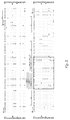
- Fig. 1 illustrates the sequence alignments of the DNA K genes of thirteen species of Mycobacteria and Rhodococcus rhodochrous.
- Fig. 2 illustrates the sequence alignments of a portion of the DNA K genes of thirteen species of Mycobacteria and Rhodococcus rhodochrous. The hybridization sites of amplification primers, bumper primers, capture probes, detector probes and blocking oligonucleotides are also shown.
- Fig. 3 illustrates the DNA K target sequence in M. avium (top sequence), M. intracellulare (M.int.), M. chelonae (M.ch) and M. scrofulaceum (M. scrof).
- top sequence M. intracellulare
- M. chelonae M.ch
- M. scrofulaceum M. scrof.
- the sequences and hybridization sites of the amplification primers, capture and detector probes and blocking oligonucleotide exemplified in Example 4 are also shown.
- the inventive methods provide a means for amplifying analogous targets from multiple species using a single pair of amplification primers. Species-specificity is provided by the assay probes. The methods are capable of distinguishing or identifying species or related groups of species based on single nucleotide discrimination in the assay region by use of a blocking oligonucleotide.
- the blocking oligonucleotide may be applied to hybridization detection of any nucleotide sequence, whether previously amplified or not, to suppress cross-hybridization in situations where the assay regions of two species to be distinguished are not identical but are sufficiently similar that an assay probe cross-hybridizes to the assay region of the species not desired to be detected (i.e., the cross-hybridizing assay region) as well as the assay region of the species desired to be detected (i.e., the specific assay region).
- leprae nucleotide sequence was not available in GENBANK69 for comparison.
- two primers were selected for use in PCR amplification.
- the first primer was derived from the sense strand of the M. paratuberculosis sequence from nucleotides 1415-1434.
- the second primer was derived from the antisense strand of the M . paratuberculosis sequence from nucleotides 1763-1744.
- These primers were used in a PCR amplification reaction using several mycobacterial and non-mycobacterial DNAs as templates.
- PCR primers were synthesized on an Applied Biosystems 380B Synthesizer as recommended by the manufacturer, deprotected at 50°C and purified through an Oligonucleotide Purification Cartridge (Applied Biosystems, Inc.).
- PCR was performed in 25-100 ⁇ l reaction volumes consisting of 10mM Tris-HCl pH 8.3, 50mM KCl, 1.5mM MgCl 2 , .001% (w/v) gelatin, 200 ⁇ M dATP, 200 ⁇ M dCTP, 200 ⁇ M dGTP, 200 ⁇ M TTP, 1.0 ⁇ M of each primer, 100ng/100 ⁇ l of genomic DNA as template or 50ng/100 ⁇ l plasmid DNA as template.
- the reactions were overlaid with mineral oil and heated to 95°C for 5 min. 2.5 Units/100 ⁇ l of AMPLITAQ polymerase (Perkin Elmer Cetus, Norwalk, CT) were added and the cycling was started.
- the samples were typically incubated at 94°C for 1 min. 30 sec., 37-50°C for 2 min., 72°C for 3 min. for 25-30 cycles. This was followed by a 7 min. incubation at 72°C and storage at 4°C.
- the 349 bp amplification product (corresponding to nucleotides 1415-1763 of M. paratuberculosis ) was subcloned and sequenced from the eleven Mycobacteria species (M. africanum, M. avium, M. bovis M. bovis-BCG, M. chelonae, M. fortuitum, M. gordonae, M. intracellulare, M kansasii, M. scrofulaceum, and M. tuberculosis). Sequencing was done using the Applied Biosystems 373A DNA sequencer using the Taq Dye Primer Cycle Sequencing Kit as recommended by the manufacturer.
- Additional upstream (5') sequences of DNA K gene were obtained by analysis of sequence homologies between the 70K protein of M. paratuberculosis and M. leprae. conserveed regions were used to design degenerate PCR primers which amplified a 204 bp product from M. avium, M. gordonae , M. kansasii and M. tuberculosis. This product was subcloned into the Eco R1 site of pUC18 (Pharmacia). The clones were sequenced on an Applied Biosystems 373A sequencer using the Taq Dye Primer Cycle Sequencing Kit as recommended by the manufacturer. Upstream and downstream nucleotide sequences obtained in this manner were overlapped and aligned to generate complete sequences for each Mycobacteria species.
- Amplification primers were designed based on analysis of sequence alignments of the DNA K gene for the various Mycobacteria species. Sequence alignments and the hybridization sites of the oligonucleotides of the invention are shown in Figs. 1 and 2, illustrating the nucleotide differences in the target sequence among the species. Ideally, primers were to be designed such that: 1) a single pair of amplification primers would amplify the target in multiple species of Mycobacteria, and 2) the resulting amplification products would include sequences between the primers (an assay region) with sequence variability which would allow species-, group- or complex-specific detection by hybridization of assay probes to the assay region.
- the purpose was to develop an assay system in which the amplification was relatively species non-specific (i.e., the DNA K target would be amplified in most mycobacteria and possibly some closely related non-mycobacteria or, ideally, amplification would be genus-specific for Mycobacteria), but in which detection of the amplification products would be highly species-specific, group-specific or complex-specific.
- the amplification was relatively species non-specific (i.e., the DNA K target would be amplified in most mycobacteria and possibly some closely related non-mycobacteria or, ideally, amplification would be genus-specific for Mycobacteria), but in which detection of the amplification products would be highly species-specific, group-specific or complex-specific.
- Such a system would be particularly useful for identifying, in a single amplification reaction, which species of a genus are present. Further, such a system would be useful where species-specific amplification primers cannot be designed for a particular
- the amplification primers of the invention are useful in conventional nucleic acid amplification protocols such as PCR, SDA (lower-temperature or thermophilic) and 3SR.
- any amplification protocol which utilizes cyclic, specific hybridization of primers to the target sequence, extension of the primers using the target sequence as a template and displacement of the extension products from the target sequence may employ the amplification primers of the invention.
- the amplification primers may consist of the target binding sequences only.
- Amplification methods which require different specialized, non-target binding sequences than those given in the SEQUENCE LISTING (e.g., 3SR) may employ amplification primers comprising the target binding sequences of the amplification primers listed, with substitution of the sequence or structure required by the particular amplification method for the HincII site.
- Another restriction endonuclease recognition site appropriate for lower temperature SDA may also be substituted for the HincII site as is known in the art, or a restriction endonuclease recognition site appropriate for thermophilic SDA may be substituted when the target is amplified by thermophilic SDA.
- Amplification primers were designed which amplified the region corresponding to nucleotides 1422-1475 of the M. paratuberculosis ( M.Ptb ) DNA K sequence (see Fig. 2). They were tested in an assay system for detection of the species of the MAC complex ( M. avium and M. intracellulare, M.a/i ). The predicted amplification product was generated in all of the MAC isolates described by Frothingham et.al. (1993. J. Bacteriology 175, 2818-2825), with detection of as few as 1-10 genomes of M. avium and M. intracellulare. In addition, the DNA K target sequence was amplified in all species of Mycobacteria tested except M. xenopi and M.
- the Mycobacteria species from which the amplification products are generated, or from which unamplified nucleic acids are derived, are identified or distinguished by hybridization to assay probes which confer species-, group- or complex-specificity on the detection portion of the assay.
- the detector probes are typically tagged with a detectable label.
- the detectable label is a moiety which can be detected either directly or indirectly as an indication of hybridization of the probe to the target nucleic acid.
- probes may be tagged with a radioisotope and detected by autoradiography or tagged with a fluorescent moiety and detected by fluorescence as is known in the art.
- the probes may be indirectly detected by tagging with a label which requires additional reagents to render it detectable.
- Indirectly detectable labels include, for example, chemiluminescent agents, enzymes which produce visible reaction products and ligands (e.g., haptens, antibodies or antigens) which may be detected by binding to labeled specific binding partners (e.g., antibodies or antigens/haptens).
- Particularly useful labels include biotin (detectable by binding to labeled avidin or streptavidin) and enzymes such as horseradish peroxidase or alkaline phosphatase (detectable by addition of enzyme substrates to produce colored reaction products).
- Biotin and other ligands are also useful for tagging capture probes to allow immobilization of the capture probe and the complex to which it is hybridized on a solid phase by binding to the appropriate specific binding partner.
- Methods for adding such labels to, or including such labels in, oligonucleotides are well known in the art and any of these methods are suitable for use in the present invention.
- One method for detecting the amplification products is by polymerase extension of a primer specifically hybridized to the target sequence.
- the primer is labeled as described above, e.g., with a radioisotope, so that the label of the primer is incorporated with the primer into the amplification product. This method is described in more detail by Walker, et al. (1992) Nuc. Acids Res. and PNAS, supra.
- a second method for detecting amplified target and control sequences is a chemiluminescent assay method in which amplified products are detected using a biotinylated oligonucleotide capture probe and an enzyme-conjugated oligonucleotide detector probe as as described by Spargo, et al. (1993.
- Molec. Cell. Probes 7 , 395-404 After hybridization of these two probes to different sites on an amplified target sequence, the complex is captured on a streptavidin-coated microwell plate, and the chemiluminescent signal is developed and read in a luminometer. This detection method can be performed in less than two hours and is sensitive enough to detect as few as one pre-amplification target sequence.
- the DNA K amplification products generated by the amplification primers comprise unique assay region sequences which allow identification of the Tb complex organisms, MAC organisms, M. kansasii strains and others by hybridization of the assay region to assay probes which confer species-specificity or complex-specificity. Analysis of sequence alignments showed that discrimination of single nucleotide variations in the assay region would be necessary to specifically detect MAC organisms. Such discrimination was not possible using hybridization of the detector probe alone.
- the first assay experiments indicated cross-hybridization between MAC species and M. chelonae. The difference between the M. chelonae and M.
- intracellulare assay regions i.e., between the cross-hybridizing assay region and the specific assay region
- This cross-hybridization in the detection portion of the assay was significantly reduced by the addition of a blocking oligonucleotide, which improved the specificity of the assay so that as little as a single nucleotide sequence difference could be discriminated.
- the mechanism by which the blocking oligonucleotide improves assay specificity has not been rigorously demonstrated, it may be that the blocking oligonucleotide hybridizes preferentially to the cross-hybridizing M.
- the blocking oligonucleotide is not biotinylated and has a sequence that is the exact Watson-Crick complement of the cross-hybridizing M. chelonae assay region at the site where the non-specific hybridization of the capture probe occurs.
- a DNA duplex formed by the hybridization of two perfectly complementary strands is at least several kcal/mol more stable than the corresponding duplex containing a single mismatch.
- the blocking oligonucleotide may therefore hybridize preferentially to the cross-hybridizing M.
- the presence of the blocking oligonucleotide does not appear to interfere with hybridization of the capture probe to the specific assay region of M. intracellulare .
- the blocking oligonucleotide thus renders the M. chelonae target undetectable by preventing its hybridization to the capture probe and subsequent immobilization through streptavidin.
- the blocking oligonucleotide does not appreciably diminish the sensitivity of M. intracellulare detection When using the blocking oligonucleotide in the assay, a 100-fold discrimination of the single nucleotide change was achieved.
- blocking oligonucleotides may be applied to nucleic acid hybridization assays of all kinds to reduce cross-hybridization (i.e., non-specific hybridization) of an assay probe to assay regions of targets which it is not desired to detect.
- cross-hybridization i.e., non-specific hybridization
- the specificity of hybridization in solid phase assays such as dot blots and Southern blots, or solution hybridizations may be improved by employing blocking oligonucleotides according to the invention which hybridize preferentially to the cross-hybridizing assay region - with or without prior amplification of the target sequence.
- a blocking oligonucleotide will be necessary depends on a complex interaction of the nature and extent of the sequence differences between the cross-hybridizing assay region and the specific assay region. However, if cross-hybridization is detected in any particular hybridization assay, the appropriate blocking oligonucleotide can be designed as described herein, without the use of further inventive skill, based on the sequence of the cross-hybridizing assay region to be eliminated from detection.
- the target binding sequences of the amplification primers exemplified herein hybridize to conserved regions of the DNA K gene, thereby providing amplification of the target sequence in multiple species of Mycobacteria (i.e., species non-specific amplification).
- the assay region flanked by the amplification primers contains sequence variations among the species. The variations may be as little as a single nucleotide difference between species to be distinguished. Given the DNA K sequence alignments for the mycobacteria set forth in Fig.
- species non-specific amplification primers may be designed which hybridize to the conserved regions at nucleotides 1665-1684 and 1745-1763.
- M. kansasii differs from species of the M. tuberculosis complex by a single nucleotide at position 1708.
- a blocking oligonucleotide which is the exact complement of the M.
- tuberculosis sequence in this region can be used to reduce or eliminate non-specific cross-hybridization of an assay probe to M. tuberculosis complex targets when M. kansasii is to be detected.
- the single nucleotide difference between M. africanum and the species of the M. tuberculosis complex at nucleotide 1720 can be used for design of a blocking oligonucleotide to reduce cross-hybridization of assay probes directed to this region.
- M. intracellulare and M. scrofulaceum can be distinguished on the basis of the single nucleotide difference at position 1701 using the appropriate blocking oligonucleotide. Further, these criteria can easily be applied to other targets (in Myocbacteria or other species) for which the nucleotide sequence is known, to design analogous non-specific amplification/specific detection assay systems.
- the following experimental examples are provided to illustrate certain embodiments of the invention but are not to be construed as limiting the invention as defined by the appended claims.
- the oligonucleotides referred to in the examples are described below.
- the target binding sequences of the amplification primers (S 1 and S 2 ) are underlined.
- the synthetic target sequences have a 3' poly A tail in order to reduce the possibility that these sequences could be used as templates for amplification.
- the above amplification primers include the specialized sequences required for SDA.
- the target binding sequences of the amplification primers are shown in Fig. 3 with their hybridization sites on the DNA K gene sequence.
- the sequences of the capture and detector probes and blocking oligonucleotide used in Example 4 are also shown in Fig. 3, with their hybridization sites.
- SDA was performed generally as described by Walker, et.al., Nucl. Acids Res. , supra , substituting dUTP for TTP to allow removal of contaminating amplicons.
- the final concentration of components was 45mM K i PO 4 pH 7.6, 6mM magnesium acetate (MgAc), 0.1mg/ml BSA, 15%(v/v) dimethylsulfoxide, 3%(v/v) glycerol (supplied by the stock solutions of exo- klenow and HincII), 50ng human placental DNA, 0.5mM dUTP, 0.2mM dGTP, 0.2mM dCTP, 0.2mM dAsTP (2'-deoxyadenosine 5'-O-(1-thiotriphosphate)), 0.5 ⁇ M primers (SEQ ID NO: 1 (S 1 ) and SEQ ID NO: 2 (S 2 )), 0.05 ⁇ M bumpers (SEQ ID NO: 3 (B 1
- thermophilic SDA (SDA conducted at increased reaction temperature using heat-tolerant enzymes) is also a suitable SDA system.
- dUTP may be substituted for TTP in thermophilic SDA as in conventional SDA to allow removal of contaminating amplicons as in lower-temperature SDA.
- thermophilic SDA may be performed as follows: 25mM K i PO 4 pH 7.6, 6.7mM MgCl 2 , 0.1mg/ml BSA, 5% (v/v) dimethylsulfoxide, 5% (v/v) glycerol, 50 or 500 ng human placental DNA, 1.4mM dCsTP (thio-substituted dCTP), 0.5mM dGTP, 0.5mM dATP, 0.5mM dUTP, 0.5 ⁇ M amplification primers, 0.05 ⁇ M bumper primers, 60 units Bst polymerase, 20 units BsoB1 restriction endonuclease, and mycobacterial genomic DNA.
- Other suitable heat-stable polymerases and restriction endonucleases may be substituted as is known in the art.
- Thermophilic SDA reactions are prepared in a manner similar to lower-temperature SDA reactions.
- all reagents except Bst, BsoBl, glycerol and MgCl 2 were mixed in a volume of 42 ⁇ l. This solution was heated at 95°C for 3 minutes to denature the genomic DNA and then at 55°C for 5 minutes to allow the amplification and bumper primers to anneal.
- Eight microliters containing Bst, BsoBl, MgCl 2 and glycerol were added and mixed. The final volume was 50 ⁇ l and this was incubated at 55°C for 30 minutes. The amplification reaction was stopped by heating to 95°C for 3 minutes.
- thermophilic SDA The amplification products of thermophilic SDA were detected by extension of the detector primer as described above. Ten genomes of M. avium could be detected in thermophilic SDA reactions, giving a sensitivity of between 1 and 10 genomes. In the presence of 50 ng human DNA the reaction appeared to be complete within 30 minutes. In the presence of 500 ng human DNA the reaction was completed within 20 minutes. Amplification factors in both reactions were about 10 9 , whereas lower-temperature SDA (as in Example 1) generally resulted in amplification factors of about 10 7 . If dUTP is not substituted for TTP in thermophilic SDA, higher amplification factors may be obtained, on the order of about 10 10 .
- Capture probes labeled at the 5' terminus with three biotin residues and detector probes labeled at the 3' terminus with alkaline phosphatase (AP) were prepared as described by Spargo, et al. (1993. Molec. Cell. Probes 7 , 395-404).
- Biotin*BSA biotinylated bovine serum albumin
- the wells were washed twice (375 ⁇ L/wash) using FTA hemagglutination buffer (Becton Dickinson Microbiology Systems, Cockeysville, MD) pH 7.2. The wash buffer was discarded by inversion. Streptavidin (Scripps, 10 ⁇ g/ml) in hemagglutination buffer was added to the biotin*BSA coated microtiter wells (100 ⁇ L/well, 1 ⁇ g/well). Plates were covered and incubated overnight at room temperature.
- Unbound streptavidin was discarded by inversion and blocking buffer (300 ⁇ L/well) (hemagglutination buffer pH 7.2, 0.05% w/v bovine serum albumin - Sigma Chemical Co., St.Louis, Mo.) was added. The plates were covered, incubated overnight at room temperature, and the blocking buffer was discarded by inversion. Wells were washed twice with hemagglutination buffer (375 ⁇ L/well), then once using hemagglutination buffer with 2% w/v trehalose (375 ⁇ L/well) (Fluka, Ronkonkoma, N.Y.). The FTA/Trehalose buffer was discarded by inversion.
- blocking buffer 300 ⁇ L/well
- Single stranded synthetic target DNAs (SEQ ID NO:12, SEQ ID NO:13, SEQ ID NO: 14), containing dU in place of dT, were synthesized as exact complements of target strands generated by amplification. These were diluted into 45mM KPO 4 pH 7.6, 3% glycerol, 0.1mg/ml bovine serum albumin, 15% DMSO, 5 ⁇ M each SEQ ID NO: 1 and SEQ ID NO: 2, 0.5 ⁇ M each SEQ ID NO: 3 and SEQ ID NO: 4.
- Amplification and bumper primers for SDA were synthesized using an ABI 380B synthesizer using B cyanoethyl phosphoramidite chemistry as recommended by the manufacturer.
- the oligonucleotides were deprotected at 55°C and gel purified as previously described (F. M. Ausubel, et.al. 1987. Current Protocols in Molecular Biology , Greene Publishing Associates and Wiley-Interscience, NY). Blocking oligonucleotides were synthesized as described for the SDA primers.
- the concentrations of capture and detector nucleotides were optimized for reagent lot to reduce backgrounds and maximize the difference between signal and background.
- Synthetic targets were used in the chemiluminescent assay system for detection of the MAC complex mycobacteria to evaluate the effect of blocking oligonucleotides on cross-hybridization in the detection portion of the assay.
- M. chelonae was used as the cross-hybridizing control.
- Synthetic targets (SEQ ID NO: 12, SEQ ID NO: 13, SEQ ID NO: 14) were diluted and heated at 95 o C for 3 minutes to denature the DNA. The solutions were cooled for 5 minutes at room temperature and 10 ⁇ L of the denatured sample was added to each well of a prepared microwell plate.
- hybridization mix 0.051M Trizma base (Sigma), 0.9M or 0.25M NaCl (Fisher), 0.05mM ZnCl 2 (Sigma), 0.1% bovine serum albumin (Sigma), 0.2% NaN 3 , 10.2 ⁇ g/ml salmon sperm DNA (Sigma), 2% Trehalose (Quadrant), pH 7.0, capture probe SEQ ID NO: 6 10nM, detector probes SEQ ID NO: 7 at 5nM and SEQ ID NO: 8 at 10nM, blocking probe SEQ ID NO: 9 at 10nM (if required) was added. The microwell plate was covered and incubated for 45 minutes at 37 o C.
- SEQ ID NO: 7 is the specific detector probe for M. avium. This detector probe in combination with the capture probe does not cause significant cross-hybridization with the assay region of the M. chelonae target sequence. However, addition of the blocking oligonucleotide completely eliminates the minor cross-hybridization seen without affecting the specific signal.
- SEQ ID NO: 8 is the M. intracellulare specific detector probe.
- This detector probe in combination with the capture probe cross-hybridizes significantly with the assay region of the M. chelonae target sequence.
- Addition of the blocking oligonucleotide (SEQ ID NO: 9) decreased cross-hybridization 4-fold without decreasing sensitivity, and provided 10-fold discrimination between signal from the specific target ( M. intracellulare ) and signal from the non-specific target ( M. chelonae ).
- hybridization temperature on cross-hybridization in the detection portion of the assay was evaluated as in Example 2, testing SEQ ID NO: 11 as the M. chelonae blocking oligonucleotide in place of SEQ ID NO: 9.
- the capture probe and blocking oligonucleotide were present at a concentration of 5 nM each.
- Capture probe, detector probes, synthetic target and the blocking oligonucleotide were incubated in the prepared microwell plate for 45 min. at 30°C, 37°C, 42.5°C, 45°C, or 50°C.
- Table 3 In general, higher hybridization temperatures resulted in reduced signal from M. avium and M. intracellulare , and increased signal from M. chelonae.
- Target Attomoles Syn. Target Molecules of Target Relative Light Units M. avium 0 0 19 250 1.5 x 10 8 84 500 3 x 10 8 185 32000 2 x 10 10 9117 M. intracellulare 0 0 9 250 1.5 x 10 8 95 500 3 x 10 8 205 32000 2 x 10 10 8273 M. chelonae 0 0 11 250 1.5 x 10 8 11 500 3 x 10 8 14 32000 2 x 10 10 73
- Cross-hybridization was evaluated in amplification reactions containing 10 5 genomes from each of a variety of mycobacterial species, 10 6 genomes of each of a variety of non-mycobacterial species or the synthetic targets (controls). Each SDA reaction was run in duplicate as described above and each synthetic target control was also run in duplicate. Completed SDA reactions and/or synthetic target dilutions were heated at 95 o C for 3 minutes to denature the DNA. The solutions were cooled for 5 minutes at room temperature and 10 ⁇ L of the denatured sample was added to each well of a prepared microwell plate.
- hybridization mix 0.051M Trizma base (Sigma), 0.25M NaCl (Fisher), 0.05mM ZnCl 2 (Sigma), 0.1% bovine serum albumin (Sigma), 0.2% NaN 3 , 10.2 ⁇ g/ml salmon sperm DNA (Sigma), 2% Trehalose (Quadrant), pH 7.0, capture probe SEQ ID NO: 6 at 5nM, detector probes SEQ ID NO: 7 at 5nM and SEQ ID NO: 8 at 10nM, blocking oligonucleotide SEQ ID NO: 11 at 5nM were added.
- the microwell plate was covered and incubated for 45 minutes at 42.5 o C.
- the Mycobacteria species tested were M. intracellulare, M. tuberculosis, M. bovis, M. bovis BCG, M. kansasii, M. fortuitum, M. paratuberculosis, M. gordonae, M. chelonae, M. microti, M. africanum, M. flavescens, M. genavense, M. gastri, M. haemophilum, M. avium, M. avium Complex, M. marinum, M. scrofulaceum, M. szulgai, M. terrae, M. xenopi, M. dienhoferi, M. lufu, M.
- acnes N. asteroides, N. brasiliensis, A. israelii, Streptomyces, R. rhodochrous, Adenovirus, A. lwoffi, B. pertussis, C. albicans, C. ulcerans, E. aerogenes, E. cloacae, E. coli, F. meningisepticum, H. influenza, K. pneumoniae, L. monocytogenes, M. osloensis, M. morganii, N. otitidiscaviarum, N. gonorrhoeae, N. lactamica, N. meningitidis, O. turlata, P. aeruginosa, P.
- Amplification of 10 6 copies/rxn of genomic DNA from these closely related organisms produced amplification products only in C. diptheriae, R. rhodochrous and S. pneumoniae.
Landscapes
- Chemical & Material Sciences (AREA)
- Life Sciences & Earth Sciences (AREA)
- Analytical Chemistry (AREA)
- Proteomics, Peptides & Aminoacids (AREA)
- Organic Chemistry (AREA)
- Zoology (AREA)
- Wood Science & Technology (AREA)
- Health & Medical Sciences (AREA)
- Engineering & Computer Science (AREA)
- Microbiology (AREA)
- Immunology (AREA)
- Molecular Biology (AREA)
- Biotechnology (AREA)
- Biophysics (AREA)
- Physics & Mathematics (AREA)
- Biochemistry (AREA)
- Bioinformatics & Cheminformatics (AREA)
- General Engineering & Computer Science (AREA)
- General Health & Medical Sciences (AREA)
- Genetics & Genomics (AREA)
- Measuring Or Testing Involving Enzymes Or Micro-Organisms (AREA)
- Saccharide Compounds (AREA)
Applications Claiming Priority (2)
| Application Number | Priority Date | Filing Date | Title |
|---|---|---|---|
| US34755194A | 1994-11-30 | 1994-11-30 | |
| US347551 | 1994-11-30 |
Publications (2)
| Publication Number | Publication Date |
|---|---|
| EP0725148A2 true EP0725148A2 (fr) | 1996-08-07 |
| EP0725148A3 EP0725148A3 (fr) | 1998-01-07 |
Family
ID=23364201
Family Applications (1)
| Application Number | Title | Priority Date | Filing Date |
|---|---|---|---|
| EP95118623A Withdrawn EP0725148A3 (fr) | 1994-11-30 | 1995-11-27 | Amplification et détection d'acides nucléiques mycobactériens |
Country Status (5)
| Country | Link |
|---|---|
| US (1) | US5723296A (fr) |
| EP (1) | EP0725148A3 (fr) |
| JP (1) | JP2787017B2 (fr) |
| AU (1) | AU705286B2 (fr) |
| CA (1) | CA2163393C (fr) |
Cited By (4)
| Publication number | Priority date | Publication date | Assignee | Title |
|---|---|---|---|---|
| WO1998024933A1 (fr) * | 1996-12-04 | 1998-06-11 | Boston Probes, Inc. | Procedes, kits et compositions permettant de supprimer la fixation de sondes detectables a des sequences non-cibles d'acide nucleique dans des dosages d'hybridation |
| WO2001068900A3 (fr) * | 2000-03-15 | 2002-08-22 | Vermicon Ag | Procede pour la detection specifique de micro-organismes par reaction en chaine de la polymerase |
| US6962778B1 (en) | 1997-09-25 | 2005-11-08 | Boston Probes, Inc. | Methods, kits and compositions for suppressing the binding of detectable probes to non-target sequences in hybridization assays |
| WO2009019008A1 (fr) * | 2007-08-08 | 2009-02-12 | Roche Diagnostics Gmbh | Suppression de l'amplification en utilisant un oligonucléotide et une polymérase significativement dépourvue d'activité exonucléase 5'-3' |
Families Citing this family (3)
| Publication number | Priority date | Publication date | Assignee | Title |
|---|---|---|---|---|
| US7439016B1 (en) * | 2000-06-15 | 2008-10-21 | Digene Corporation | Detection of nucleic acids by type-specific hybrid capture method |
| JP4974899B2 (ja) * | 2004-12-10 | 2012-07-11 | ジェネラ バイオシステムズ リミテッド | 組成物および検出方法 |
| US8278429B2 (en) * | 2007-04-05 | 2012-10-02 | Genera Biosystems Limited | Oligonucleotide amplification primers for targeting oncogenic HPV |
Family Cites Families (17)
| Publication number | Priority date | Publication date | Assignee | Title |
|---|---|---|---|---|
| US4478629A (en) * | 1981-07-08 | 1984-10-23 | Ball Corporation | Power failure detection system for a glassware forming machine |
| FI63596C (fi) * | 1981-10-16 | 1983-07-11 | Orion Yhtymae Oy | Mikrobdiagnostiskt foerfarande som grundar sig pao skiktshybridisering av nukleinsyror och vid foerfarandet anvaenda kombinationer av reagenser |
| US4683194A (en) * | 1984-05-29 | 1987-07-28 | Cetus Corporation | Method for detection of polymorphic restriction sites and nucleic acid sequences |
| US4725537A (en) * | 1985-09-19 | 1988-02-16 | Allied Corporation | Assay, reagent and kit employing nucleic acid strand displacement and restriction endonuclease cleavage |
| EP0286642A4 (fr) * | 1985-12-17 | 1990-06-27 | Genetics Inst | Procede d'analyse de polynucleotides base sur le deplacement des brins, et complexe reactif. |
| DE3851810T2 (de) * | 1987-07-31 | 1995-02-09 | Gen Probe Inc | Polynukleotidentest unter Benutzung von Oligonukleotiden zur Eliminierung von unerwünschten Kreuzreaktionen. |
| US5232829A (en) * | 1989-09-29 | 1993-08-03 | Hoffmann-La Roche Inc. | Detection of chlamydia trachomatis by polymerase chain reaction using biotin labelled lina primers and capture probes |
| FR2663033B1 (fr) * | 1990-06-08 | 1992-09-04 | Pasteur Institut | Detection specifique du mycobacterium tuberculosis. |
| US5726014A (en) * | 1991-06-27 | 1998-03-10 | Genelabs Technologies, Inc. | Screening assay for the detection of DNA-binding molecules |
| EP0528306B1 (fr) * | 1991-08-15 | 1999-11-17 | F. Hoffmann-La Roche Ag | Paire d'amorces pour la détection de mycobactérium |
| US5387510A (en) * | 1991-10-02 | 1995-02-07 | Eastman Kodak Company | Detection of amplified nucleic acid using secondary capture oligonucleotides and test kit |
| US5348853A (en) * | 1991-12-16 | 1994-09-20 | Biotronics Corporation | Method for reducing non-specific priming in DNA amplification |
| EP0642589A4 (fr) * | 1992-05-11 | 1997-05-21 | Ribozyme Pharm Inc | Procede et reactif d'inhibition de la replication virale. |
| US5314801A (en) * | 1992-11-06 | 1994-05-24 | Becton, Dickinson And Company | Probes to Mycobacterium avium, Mycobacterium intracellulare, and Mycobacterium paratuberculosis |
| CA2119188A1 (fr) * | 1993-04-05 | 1994-10-06 | Patricia A. Spears | Detection et identification de mycobacteries |
| US5470723A (en) * | 1993-05-05 | 1995-11-28 | Becton, Dickinson And Company | Detection of mycobacteria by multiplex nucleic acid amplification |
| US5352580A (en) * | 1993-05-26 | 1994-10-04 | Becton, Dickinson And Company | Selective detection of mycobacteria by nucleicacid probes derived from Mycobacterium kansasii |
-
1995
- 1995-11-21 CA CA002163393A patent/CA2163393C/fr not_active Expired - Fee Related
- 1995-11-22 AU AU39000/95A patent/AU705286B2/en not_active Ceased
- 1995-11-27 EP EP95118623A patent/EP0725148A3/fr not_active Withdrawn
- 1995-11-28 JP JP7309022A patent/JP2787017B2/ja not_active Expired - Fee Related
-
1996
- 1996-05-10 US US08/644,729 patent/US5723296A/en not_active Expired - Lifetime
Cited By (6)
| Publication number | Priority date | Publication date | Assignee | Title |
|---|---|---|---|---|
| WO1998024933A1 (fr) * | 1996-12-04 | 1998-06-11 | Boston Probes, Inc. | Procedes, kits et compositions permettant de supprimer la fixation de sondes detectables a des sequences non-cibles d'acide nucleique dans des dosages d'hybridation |
| US6110676A (en) * | 1996-12-04 | 2000-08-29 | Boston Probes, Inc. | Methods for suppressing the binding of detectable probes to non-target sequences in hybridization assays |
| US6962778B1 (en) | 1997-09-25 | 2005-11-08 | Boston Probes, Inc. | Methods, kits and compositions for suppressing the binding of detectable probes to non-target sequences in hybridization assays |
| WO2001068900A3 (fr) * | 2000-03-15 | 2002-08-22 | Vermicon Ag | Procede pour la detection specifique de micro-organismes par reaction en chaine de la polymerase |
| WO2009019008A1 (fr) * | 2007-08-08 | 2009-02-12 | Roche Diagnostics Gmbh | Suppression de l'amplification en utilisant un oligonucléotide et une polymérase significativement dépourvue d'activité exonucléase 5'-3' |
| US8071338B2 (en) | 2007-08-08 | 2011-12-06 | Roche Molecular Systems, Inc. | Suppression of amplification using an oligonucleotide and a polymerase significantly lacking 5′-3′ nuclease activity |
Also Published As
| Publication number | Publication date |
|---|---|
| EP0725148A3 (fr) | 1998-01-07 |
| CA2163393A1 (fr) | 1996-05-31 |
| AU705286B2 (en) | 1999-05-20 |
| JP2787017B2 (ja) | 1998-08-13 |
| CA2163393C (fr) | 2003-04-22 |
| JPH08214887A (ja) | 1996-08-27 |
| US5723296A (en) | 1998-03-03 |
| AU3900095A (en) | 1996-06-06 |
Similar Documents
| Publication | Publication Date | Title |
|---|---|---|
| US5561044A (en) | Detection of mycobacteria by multiplex strand displacement nucleic acid amplification | |
| US5614390A (en) | Species-specific detection of Mycobacterium kansasii | |
| US5681705A (en) | Amplification and detection of mycobacterium avium complex species | |
| EP0707075B1 (fr) | Détection spécifique de l'espèce de Mycobactérium kansasii | |
| US5811269A (en) | Detection of mycobacteria by multiplex nucleic acid amplification | |
| EP0792937B1 (fr) | Amplification et détection d'espèce de mycobacterium avium complexe | |
| AU666200B2 (en) | Nucleic acid process probes to (mycobacterium tuberculosis) | |
| CA2142156C (fr) | Sequences d'acide nucleique specifique a mycobacterium kansasii | |
| JP3048340B2 (ja) | Micobacterium kansasii核酸の種特異的検出に関する材料および方法 | |
| US5723296A (en) | Amplification and detection of mycobacterial DNA K nucleic acids | |
| EP1176215B1 (fr) | Amplification et détection de Mycoplasma pneumoniae | |
| MXPA97002990A (en) | Amplification and detection of complex species of mycobacterium av |
Legal Events
| Date | Code | Title | Description |
|---|---|---|---|
| PUAI | Public reference made under article 153(3) epc to a published international application that has entered the european phase |
Free format text: ORIGINAL CODE: 0009012 |
|
| AK | Designated contracting states |
Kind code of ref document: A2 Designated state(s): DE FR GB IT |
|
| PUAL | Search report despatched |
Free format text: ORIGINAL CODE: 0009013 |
|
| AK | Designated contracting states |
Kind code of ref document: A3 Designated state(s): DE FR GB IT |
|
| 17P | Request for examination filed |
Effective date: 19980611 |
|
| 17Q | First examination report despatched |
Effective date: 20000324 |
|
| STAA | Information on the status of an ep patent application or granted ep patent |
Free format text: STATUS: THE APPLICATION IS DEEMED TO BE WITHDRAWN |
|
| 18D | Application deemed to be withdrawn |
Effective date: 20010522 |